Western KY Leads State With Most Untested for HIV. How One Org Is Working to Fix That.


LivWell Community Health Services knows how important it is to be aware of your HIV status, and they aren’t afraid to squeeze in wherever they’re allowed to administer a test.
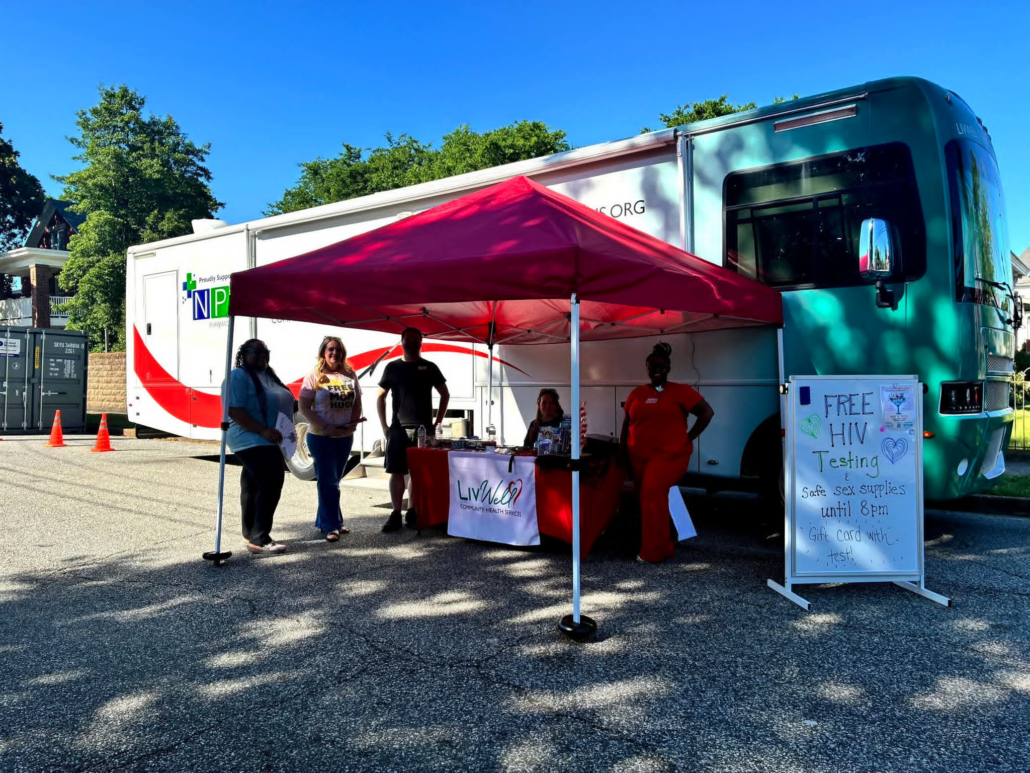
“We’ve tested in the parking lots of convenience stores, the storage room of a comic shop, and in the back of a motorcycle club’s clubhouse before a big party they had,” explained Outreach Director A.J. Garnett in an email to Queer Kentucky. “We work with anyone that will have us. Our mainstays are organizations that work with low income or unhoused individuals, substance abuse recovery centers, colleges, jails, bars, drag shows, and any sort of resource or community fair.”
Western Kentucky at highest risk of not knowing HIV status
LivWell is based in Paducah, nestled in Western Kentucky, which leads the state with the largest percentage of people who have never been tested for HIV. According to the 2025 Queer Kentucky Survey, “67.2% of Western Kentucky respondents have never been tested for HIV – 19 percentage points above the statewide respondents’ rate of 48.2%.”
The study goes on to explain why HIV testing is so vital: “Testing is the entry point to the sexual health system; where access is lowest, the entire system fails downstream. The testing gap is largest where the access barriers are highest.”
For those living in rural Western Kentucky, barriers to HIV testing can express themselves in a myriad of ways. Many simply do not live close to a facility that provides HIV testing, and they may lack the transportation required to get them to where they need to go. Some providers may not be well-informed about HIV and determine that an HIV test isn’t necessary. Stigma in the region also plays a huge role: Some people would rather not be seen going to an HIV clinic, fearing the judgments others may have about them. And time is a simple factor that can affect so many in rural Kentucky: Long commutes can make it difficult or impossible to fit in a time to get a scheduled test.
LivWell is working to break down as many of those barriers as possible. “We often reach out to local LGBTQIA+ groups and healthcare alliances to make sure we’re showing up just about anywhere that will have us,” said Garnett. “It’s rare for us to turn testing opportunities down, and we cover anywhere from Clinton to Glasgow.”
Getting tested for HIV can become increasingly difficult the further one lives outside the urban core. LivWell employs different tactics to make testing accessible for rural Kentuckians, including using multiple mobile units that travel around the Western part of the state.
“Typically, our mobile unit gets set up in Paducah, Hopkinsville, Benton, and other nearby areas,” Garnett explained. “It’s a fairly large, converted RV, so it can be difficult to find places to set it up sometimes, but we’ve been working with a large van, as well, and are having a much easier time finding spots to set that up.”
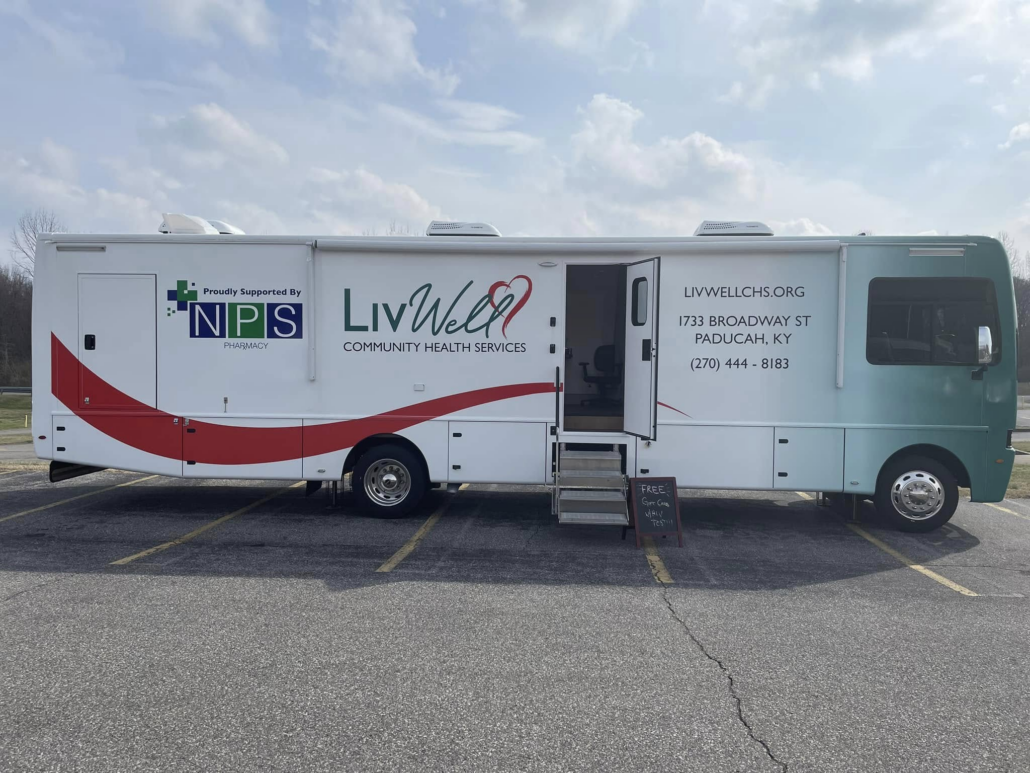
LivWell’s mobile unit, a converted RV, travels to testing sites around Western Kentucky. Supplied by LivWell
Beyond geography into stigma
While logistics and geography can make HIV testing unreachable for many rural Kentuckians, the stigma attached to HIV also acts as a barrier. LivWell is aware that HIV stigma is alive and well, and provides as much confidentiality as possible while administering tests.
“We’re currently in the early phases of passing out free take-home self-tests for people who are concerned about being seen getting one done with us, or unable to fit an in-person test into their schedule,” said Garnett. “We’re in the early stages of this program, but I know similar organizations have had luck with this, and we’ve had a lot of interest from local businesses to help us hand them out.”
This story exists because of readers like you. Give $5 a month to keep Queer Kentucky free.
These take-home self-tests are a great option for increasing access, though Garnett recommends getting tested by a professional if at all possible: “I maintain that testing with a trained HIV tester is preferable since we can answer questions and quickly link people to care if they need it. But I’m for anything that helps people to know their status.”
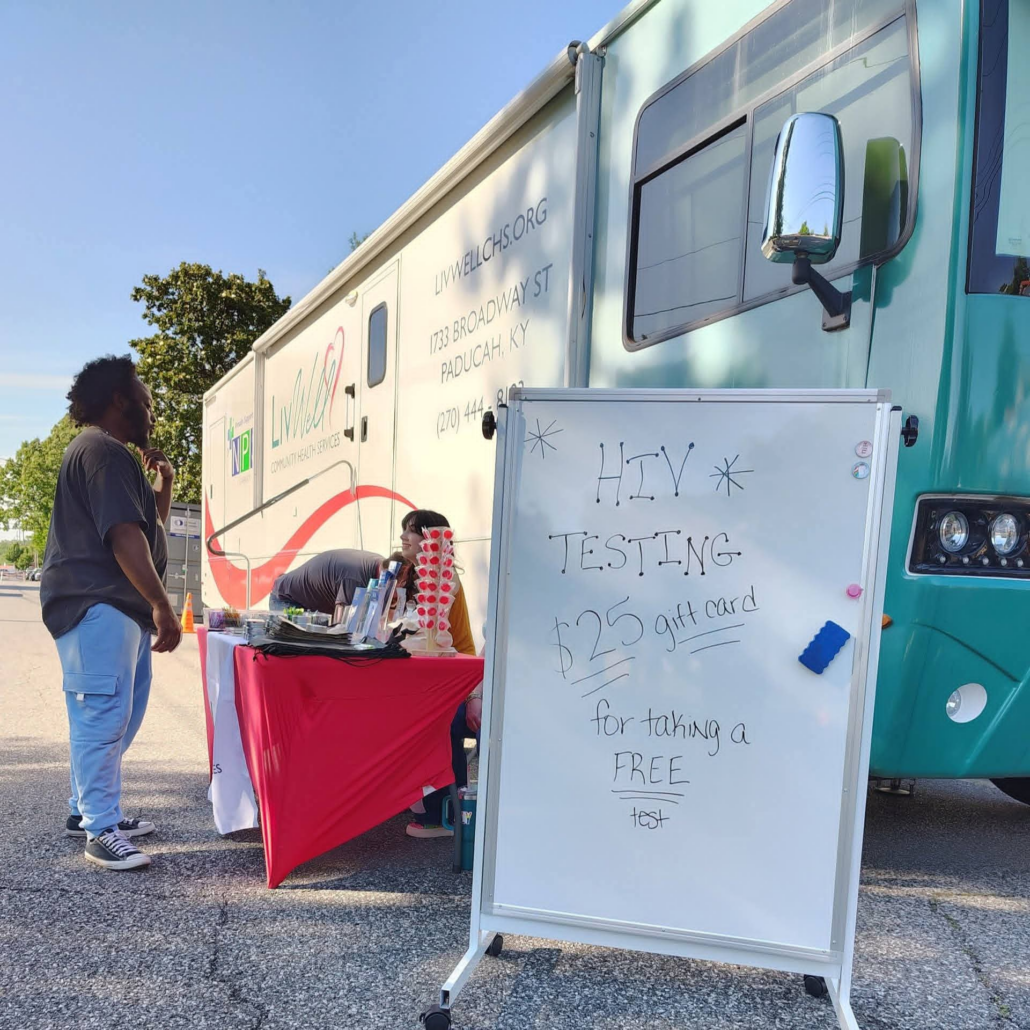
A LivWell HIV testing stop set up beside the organization’s mobile unit. Supplied by LivWell
While discussing what keeps people from finding out their HIV status, Garnett reflected on the fear and avoidance that can spring up around HIV awareness, but how, at the same time, not knowing ultimately works against us.
“I’ve had quite a few people tell me that they don’t get tested because they’re too scared to know. That always reminds me of when I used to refuse to check my bank account because I was afraid of what it was,” Garnett said. “A friend of mine would tease me, because it’s not like not knowing made me magically less broke. I was just denying myself the ability to work with that knowledge. In this case, someone who’s living with HIV will be doing so regardless of them knowing about it. But once they find out, we can use that knowledge to improve their health and their lives overall in many cases.”
Garnett stressed why knowing your HIV status is so vital: “It’s incredibly important for people to know their HIV status. I know it can be scary, but with modern medicine we can either work to get HIV under control if the test is positive, or help set people up with preventative things like PrEP or a huge variety of condoms to help them stay safe if it’s negative.”
How to get tested at LivWell
Anyone interested can schedule an appointment for an HIV test at the LivWell Prevention & Outreach Center by phone by calling (270) 444-8183 or by emailing [email protected]. Some walk-in appointments may be available, but Garnett said it’s best to call ahead to confirm availability. Tests are quick, confidential, and administered by a trained staff member. There’s a brief intake before the test and you’ll receive your results at the time of the appointment. Staff helps get you linked up with the resources you need depending on the results of your test.
Keep reading
 S.G. Goodman Brings Her Kentucky Tour Home This Week
 Lexington Herald-Leader Layoffs Put Kentucky Local News at Risk
 From Appalachia to Western Kentucky, Drag Artists Are Building Queer Community Across the Commonwealth
 Western Kentucky’s LGBTQ+ Crisis: The Most Harm, the Least Protection
 No Doctor, No Test, Refused at the Door: What the Data Shows About LGBTQ+ Health Care in Western Kentucky