KEEP. Function. What a story DOES: points a reader somewhere that can help them. Can ride with any story type.

Tag Archive for: Function: Resources

Illustration by Kami Pankey of two faces in profile with a speech bubble that reads Protect Black Trans Women

“We Don’t Need Allies That Are Going to Wave a Flag”: A Trans Leader on What Real Support Looks Like

This story first appeared in Queer Cincinnati: Beyond the Binary, published Oct. 23, 2026.

For many transgender Ohioans, recent legislation has reshaped the conversation around healthcare, education, and safety. At the center of these conversations, with a central mission to provide facts around these sometimes confusing subjects, is TransOhio. In the summer of 2026, I conducted an interview with Dara Adkison, the Executive Director of TransOhio, a nonbinary, genderqueer, trans-masculine person who previously served on the TransOhio Board of Directors for two years.

What was the driving force that led to the start of TransOhio?

TransOhio has been around for 21 years in a variety of different iterations. We started in 2005 when there wasn’t a trans organization in the state. We started off as a Zine actually, providing resources, community spaces, and message board kind of stuff. It was a place for different kinds of voices to be heard. We started making zines again recently. We have a rolling admission for when we have enough submissions to put together something cool.

What are some of the tangible ways in which you’ve been able to carry out your mission of protecting and advancing the rights of trans, nonbinary, intersex, and gender nonconforming people in Ohio?

We are hard focused on what is tangible. We don’t do performative at TransOhio. We have a longstanding (over 10 years now) legal clinic for anyone who needs care, all free for any trans person who needs it. We’ve helped over 4000 trans people in Ohio with name changes and gender marker changes. We also have an emergency fund which has exponentially scaled in the last two years. We provide emergency help for people who reach out and might be in a dangerous situation. We have recently passed out $250,000 out to our community statewide. If people are trans in Ohio and are in need of help, we’re gonna help them.

TransOhio’s vision mentions wanting to increase lesbian, gay, bisexual, heterosexual, and ally understanding/cultural awareness of the Ohio transgender community. In your eyes, what does being a good ally to the trans community mean today?

I think that being an ally today is not being afraid to stick your neck out. We don’t need allies that are going to wave a flag, but then be silent when they see a trans person getting yelled at on the street. We don’t need allies that will wear a love wins pin, but then when they see the gender expansive person at their job getting discriminated against they don’t say anything. We need people to be vocal in those small moments that are very large for the people being directly impacted by them. We need people to be vocal with their legislators. That’s where I see allyship.

Your brochure mentions advocating for laws and policies which best protect our most vulnerable community members. In what ways do you advocate for those with intersecting identities, especially when factors other than transphobia (like racism and sexism) are sometimes still very present within trans communities?

At TransOhio, whenever we ourselves are running a program or partnering on an event, we do everything we can to not just make the spaces inclusive, but welcoming. We are very intentional about making sure people from a variety of intersecting identities are in our leadership, and also in the room when we are figuring out plans and programs. As a white trans leader, I am personally very vocal about making sure doors are open. You won’t find me doing an all white panel.

The Cleveland clinic recently agreed to a 20 year ban of gender affirming treatment for patients under the age of 18. This includes puberty blockers, hormone therapy, and other treatments. You’ve made efforts to put out many facts about this settlement. As there are unfortunately more laws being put out very similar to this settlement, how do you counteract the ambiguity? How do you lessen the confusion surrounding them?

Our main tactic for lessening confusion is to try and put out as much correct information as possible. We kind of consider ourselves the disinformation assistance for trans people in Ohio, because we are always going to say what’s correct. I know that can sound a little obnoxious, but we put a lot of time and effort into making sure we are sharing correct information. We also know how much people trust us to be giving them correct information.

For the Cleveland clinic stuff, our main conversation moving forward is what we can do about it? HB68 is still in active litigation, but even if that litigation ends up going our way, then we now have this settlement in place that will affect Cleveland clinic in perpetuity for 20 years. There’s nothing that the courts can do about that. What we can do is make Cleveland Clinic look like idiots for complying in an effort to have no other hospital want to comply excessively in the way that they have. They did not NEED to make this settlement. We don’t want our hospitals caving into the Department of Justice, not about trans healthcare, and not about anyone’s healthcare. Coming back to talking about things good allies can do: Allies who have financial power are the ones that end up getting listened to. This is a great moment for those people to step up and talk to the hospitals and say that we don’t want this kind of compliance. The Cleveland Clinic has made a very intentional choice about who they want to be as a medical leader, not just in Ohio but globally, and they should be shamed for it.

Do people often reach out to your organization for clarity regarding these things? If so, in what manner?

I think it depends what kind of clarity folks are looking for. We definitely have a fairly substantial social media footprint. Regardless of my personal opinion of social media, it is still a very efficient and active way of getting information out, especially in some more rural areas. When we’ve had complex bill conversations, we’ll have discord sessions for open community discussion about potential impacts, potential contingency planning, and generally just answering questions. People also reach out to us with more personal questions. You can reach out via email, messenger, and different chats on various platforms. We don’t recommend approaching myself, or any of our board members if you see us just trying to exist as a queer person out in the world please. Our main inbox [email protected] is a good one.

Aside from the plethora of information that your own organization provides, what other organizations or resources do you often find yourself recommending to trans individuals struggling with staying informed about their rights?

In Cincinnati specifically, Transform provides some really fantastic support services, groups, social programming, or even their free closet. Trans Masc Cincy is [another group] really focusing on trans youth. They have some really great support groups for masc presenting folks. In terms of other places for staying on top of the ever-changing landscape of things, Advocates for Trans Equality (A4TE) nationally advocates for trans rights. They have great information, particularly other kinds of guides existing outside of Ohio. If folks were born in other places sometimes we will send them over to A4TE’s guides.

In your mission you also mention providing social activities that are inclusive and foster pride in the Ohio transgender community. What can someone who might be anxious about attending these events expect from them? What’s a specific and successful activity that you’ve put together?

We are in the 27th year of our annual gathering, the TransOhio Symposium. We are actually having it in Cincinnati this year for the first time. It’s the gathering of about 200-400 trans people over the course of a weekend. It’s a really unique kind of environment. There aren’t a lot of other opportunities to have a social and informational sharing community meal with that many other trans people. When we’re looking at what a successful symposium would look like, it sometimes can be very overwhelming. We have people that come and it’s their first time presenting as themselves in a community space. We have people who it’s their first time meeting other trans people. We have folks who drive in from other states with a parent or friends because they don’t have anything like this near them. We really take responsibility in knowing the kind of safe space that we’re trying to create. It’s all community and trans driven. There’s always a lot of food and quiet spaces. It’s super accessible for people to just relax and take a sec, and you can come and go as you please. This is a core program for us and a major undertaking.

With this magazine we are focused on reaching trans youth. What personal advice do you find yourself giving to trans youth that are particularly struggling with fear and acceptance right now?

I don’t think there’s one perfect thing to say, just because everyone’s experience with their understanding of their gender is so different from person to person. Speaking personally for what I would have said to my younger self is that being unapologetic sooner is extremely freeing. For people that don’t have accepting families it can be so complicated, but giving yourself permission to exist with multiple feelings at once is also okay. You can be frustrated with a parent, and also love them, and also want to be respected, and also be okay with having all those complex feelings and knowing exactly who you are at the same time. It doesn’t have to be binary, just like our genders don’t have to be binary. It’s okay to give yourself permission to evolve and grow and change. I would also strongly encourage reading queer history, because I know I didn’t learn ANY in school. My three favorite quick crash course recommendations would be “Saving Our Own Lives”, “Queer Trans and Mostly Black: a Mutual Aid Story from the Last 50 Years”, “Black on Both Sides”, and “Before we Were Trans”.

The Our People Our Vote logo on a bright yellow background with orange and teal stripes, above the words Free, nonpartisan election help for Kentucky voters

Early Voting Starts Oct. 29. Our People Our Vote Wants Kentucky Voters to Have Help at the Polls.

With early voting set for Oct. 29-31, Our People Our Vote is working to make sure Kentucky voters have the help they need at the polls. Organizers call it the largest community-led nonpartisan Election Protection program in the state.

Our People Our Vote, founded in 2022 by Common Ground Kentucky, is a statewide civic engagement program with over 20 partners across the Commonwealth.

Partners of the program are trying to get people to the polls and provide nonpartisan voter education, according to Alicia Hurle, 46, co-executive director of Common Ground.

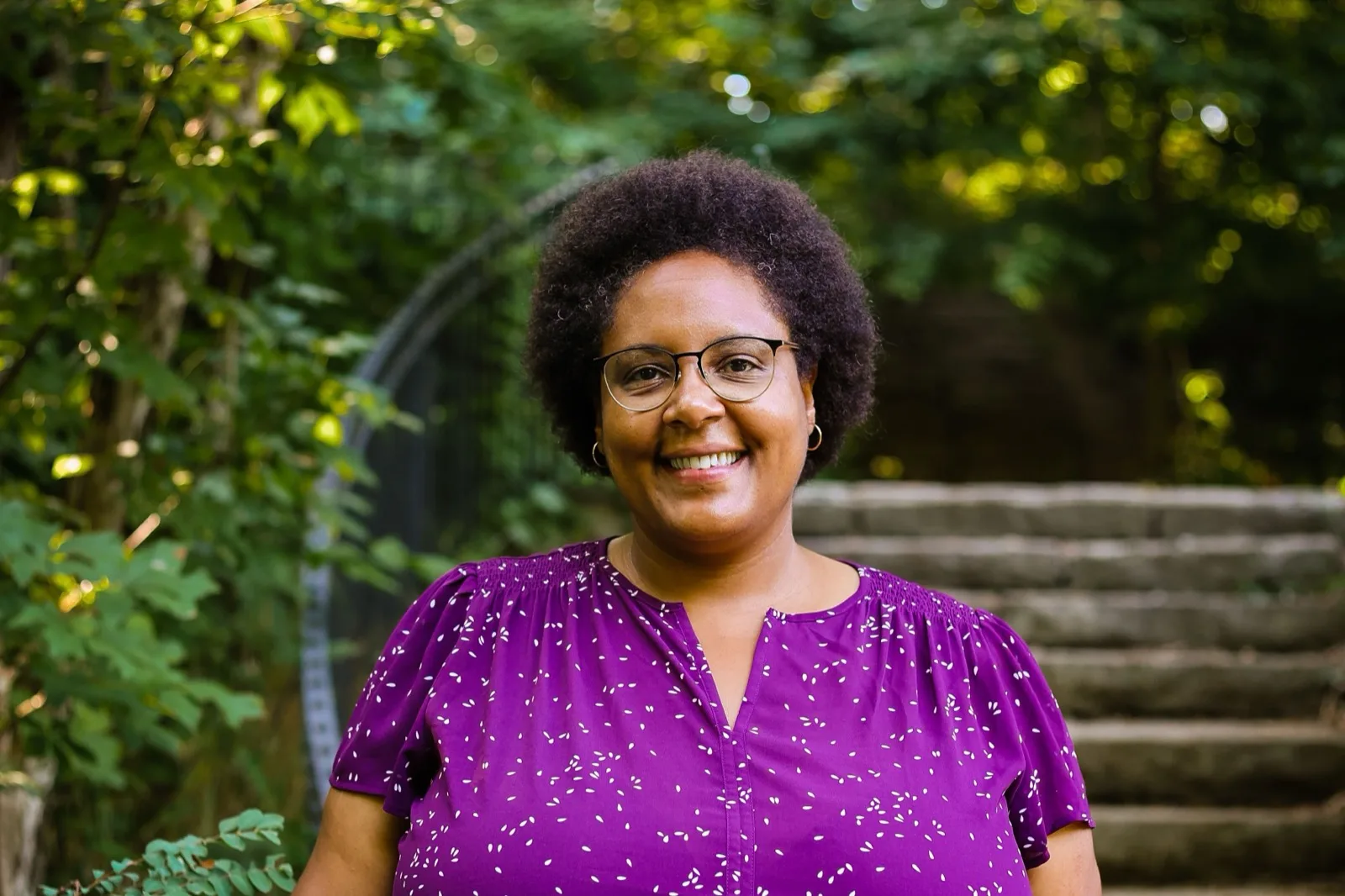
Alicia Hurle, co-executive director of Common Ground Kentucky, smiling outdoors in a purple top in front of stone steps and trees

Alicia Hurle, co-executive director of Common Ground Kentucky. Photo courtesy of Alicia Hurle

“We really want voters to know that they can be here in Kentucky and they can be supported,” Hurle said. “It really is non-partisan information focused on supporting people to make the choices that they want in the ballot box.”

Education will be provided through door-to-door canvassing, phone calls, texts and postcards.

More nonpartisan education is available on the program’s website, where people can find information and answers about the voting process. A nonpartisan guide is available with candidate information, allowing voters to make informed decisions at the polls.

Hurle said it’s important for voters to check their voter registration and polling location, which can be found on the website.

Volunteers with the program aim to reach out to marginalized communities across the state, according to Hurle. Those include people of color, LGBTQ+ folks, new Americans who are eligible to vote, working-class Kentuckians and people with felony convictions who have had voting rights restored through Gov. Andy Beshear’s 2019 executive order. “Our goal is to focus on those folks that have been locked out of the process and who are not turning out at high rates,” Hurle said. “We really want to support them … we call it voter care.”

Our People Our Vote aims beyond voter registration. It also works to help people get to the polls so that they have a higher chance of voting. “We’re trying to change the electorate in Kentucky through this program,” Hurle said.

Local volunteers will be on the ground in certain polling places for people facing issues such as intimidation or suppression at the polls, and help will be available from the program’s office as well, Hurle said. She added that she loves seeing volunteers working with possible voters, and knowing that support can make a difference for people wanting to get involved. “One person, one vote at a time,” she said.

Volunteers are recruited by partner organizations in Common Ground’s coalition, Hurle said. These groups include the League of Women Voters of Kentucky, the Louisville Urban League, the New Americans Initiative and the Americana Community Center.

Common Ground provides these groups with a list of voters to talk to, as well as digital tools. It also handles mailers so that organizations don’t have to use their own budget, according to Hurle.

“Once folks are plugged in, they’ll be invited to participate in community initiatives either connected to the legislative sessions or local campaigns,” Hurle said.

Hurle reminded voters that early voting is available to all Kentuckians, with polls open Thursday, Friday and Saturday, Oct. 29-31, before Election Day on Nov. 3. During early voting, hours and locations vary by county, and in counties that use vote centers, people can vote at any center instead of an assigned polling place.

“I’ve seen the power of folks getting involved in this way. Voting is the first step in a longer journey to get civically engaged,” Hurle said. “My entry point into this work was knowing that it was my duty to vote, but when I got deeper into the democratic process, I found there’s so many other ways to get involved.”

In recent years, Hurle said she has seen a change where more young and working-class voters have been going to the polls, and she finds joy and motivation in knowing that Our People Our Vote is changing Kentucky to be more representative of its population.

Hurle said there’s a lot of fear and confusion surrounding this election following changes from the federal government, which she thinks can be discouraging for potential voters.

“We’re really encouraging people to defend their vote this year, to show up and to make sure their vote is counted,” Hurle said. “This isn’t a time to shrink away from the process. It’s really a time to lean in.”

Disclosure: Queer Kentucky Executive Director Missy Spears serves as board co-president of Common Ground Kentucky, which founded and runs Our People Our Vote.

A red AIDS ribbon lays on a white background with a syringe of blood next to it.

AVOL Kentucky Is Adding Injectable PrEP. One Shot Can Replace Two Months of Pills.

AVOL Kentucky has worked to support Kentuckians living with HIV for almost four decades. Now, it’s taking its work to the next level and will soon start to offer injectable pre-exposure prophylaxis, most commonly known as PrEP, the newest and longest-lasting option for HIV prevention.

PrEP is a medication that reduces a person’s chances of contracting HIV and can reduce the risk of getting the virus by about 99 percent when taken as prescribed, according to the U.S. Centers for Disease Control and Prevention.

PrEP can be taken in pill form or administered via injection, which provides longer-lasting protection against HIV, according to the Department of Health and Human Services. The Food and Drug Administration has approved two types of injectable PrEP. One is given every two months, and another is administered once every six months.

Some of the benefits of the injectable medication are that users are less likely to miss a dose due to its intermittent schedule, according to Jon Parker, CEO of AVOL Kentucky.

The method also offers more privacy since there are “no medication bottles with patient information,” he added.

The Lexington-based nonprofit has worked hard so it could expand its programs and services for its patients.

AVOL launched nearly 40 years ago as a program of the Gay and Lesbian Services, now the Pride Center, providing services for people living with HIV.

In its early days, AVOL offered “just basic social services and support, and then over time we added housing, support services and permanent housing for people living with HIV,” said Parker.

By about 1993 to 1994, the organization had started to get more involved in HIV prevention and began working to educate communities about the virus and how it could be prevented. The nonprofit offered HIV prevention supplies, Parker said, and drove people to local health departments to get tested. Parker noted that sometimes people had to wait two weeks to get the results of the test and see if they had contracted the virus.

The organization eventually began offering on-site testing so that people could find out their HIV status in minutes.

“So, we’ve come a long way,” said Parker.

Right around the onset of the COVID-19 pandemic, Parker said AVOL Kentucky had learned that other similar organizations in North America were beginning to offer PrEP services and wanted to learn how to do the same.

Initially, he said, the organization said offering PrEP services was “out of reach” for them since at the time they did not provide any other medical services apart from bringing people to get tested for HIV.

“We learned that we could do a lot with contracts with pharmacies and with medical staff, so that we didn’t have to perform the services ourselves,” Parker said. “We could contract and kind of pull together, curate a system that could be responsive to the people we see and get them connected to PrEP.”

AVOL Kentucky was, in part, able to provide PrEP services at this time because of the 340B Drug Price Program, a federal program that requires pharmaceutical manufacturers that participate with Medicaid to sell outpatient prescription drugs at discounted prices to some healthcare organizations that serve low-income and uninsured people.

Parker said that AVOL Kentucky receives some revenue through the program, which is then used to offset operational costs, which has helped them build out their sexual-health services without requiring uninsured clients to pay.

In November 2025, the organization decided that it was time to hire a nurse practitioner to help provide more immediate access to PrEP, HIV, and sexually transmitted infection treatment, according to Parker. And that same month, AVOL Kentucky held its first-ever in-person clinic.

At the end of this past August, AVOL Kentucky had 70 clients who received PrEP services through their in-house, on-site clinic. The organization partners with Q Care Plus, a telehealth provider, to provide another 134 Kentuckians with PrEP and PrEP-related services, according to Parker.

“AVOL’s PrEP navigators work across both telehealth and in-house patients, tracking follow-up timing, scheduling appointments, offering interim HIV and STI testing, and providing ongoing access to prevention supplies,” he told Queer Kentucky.

And more people are turning to AVOL Kentucky for HIV care every month. In September, another 25 people joined the list of regular AVOL Kentucky clients, he added.

“There is no one route for everyone,” Parker said when it comes to connecting people to care. “Every person is unique, and you have to find the route that’s appropriate and achievable for them.”

AVOL Kentucky offers walk-in appointments Monday through Friday and provides most of its STI and HIV prevention and treatment services free of charge, according to its website.

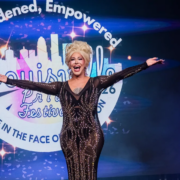
A drag performer in a sequined black gown raises their arms on stage in front of the 2026 Louisville Pride Festival sign reading "Emboldened, Empowered."

Louisville Pride Put Mental Health Front and Center. The Need Doesn’t End When the Tents Come Down.

Queens took the stage. Artists sold their colorful wares. Vendors of all kinds passed out pamphlets. Louisville Pride returned this year, with queers from all walks of life bustling through a blocked-off section of Bardstown Road on Saturday, September 12.

Louisville Pride Foundation, which also runs the Louisville Pride Center in Old Louisville, organized the event.

National acts performed near tables of local organizations ranging from healthcare organizations, such as Planned Parenthood, to political organizations.
Among those who participated were organizations helping LGBTQ+ people with their mental health or pointing them in the direction of mental health services.

According to the 2025 Queer Kentucky Community Health Survey, roughly 7 in 10 LGBTQ+ Kentuckians have had negative experiences with their mental health due to the current political environment, such as debates around LGBTQ+ rights.

Of queer Louisvillians who responded to the survey, about 32% attributed thoughts of suicide to policy debates around LGBTQ+ people. In fact, the number is 3.9% above the state average. Because of these debates, 8.1% of respondents said they left Kentucky because of it. The survey also found that trans women reported higher rates of suicidal ideation.

Louisville has more queer services than most of Kentucky, but Queer Kentucky’s data suggests they may not be enough because there are also high levels of health risks in the community.

Mandala House Provides Mental Healthcare to Queer Louisville

One featured booth at Louisville Pride was Mandala House, which provides mental healthcare to the community of Louisville. Mandala House has several therapy groups that address the psychological health of minority groups and their various intersectional needs.

“It’s a special place in our hearts, the work we get to do with queer people,” said Mandala House therapist Rachel Archer.

Archer said Mandala House currently runs a variety of therapy groups, such as an adult gender-journey group for individuals 18+ who are questioning their gender or who identify as trans or gender non-conforming. The space provides communal support for one another.

Archer noted that she couldn’t say that the lack of queer-specific spaces as a barrier to queer healthcare’s accessibility was unique to Louisville alone.

Mandala House also provides support letters for trans individuals seeking gender-affirming care, which is often required by providers and insurance companies. For many queer Kentuckians, finding a provider for their healthcare can be a challenge. According to the 2025 Queer Kentucky Community Health Survey, while Louisville has better healthcare access than most of the state for LGBTQ+ Kentuckians, provider refusal still happens.

Kentucky Psychological Foundation: Evidence-Based Connections

Among the vendors, the Kentucky Psychological Foundation was doing outreach. The organization focuses on bringing free mental health resources across Kentucky. It also supports researchers and graduate students with funds to conduct research with marginalized communities.

“We know there is a lot of specifically psychological information that is based in science and research…out there, but it’s not always easily accessible in the community,” board member Dr. Courtney Keim told Queer Kentucky.

“What we really focus on is educating the public about the science in ways that can better the lives of Kentuckians,” Keim said.

The Kentucky Psychological Foundation doesn’t provide mental healthcare, but its sister organization, the Kentucky Psychological Association, is the state professional association for psychologists, whose members provide care.

The Kentucky Psychological Foundation’s site provides a link to a database of members of the Kentucky Psychological Association that are using evidence-based research and follow the American Psychological Association’s guidelines and ethics. This can help address the needs of marginalized communities to find competent care.

“Our foundation is going to provide things based in evidence and research. We are very much against therapies that are not evidence-based. So for example, conversion therapy is not evidence-based. We don’t support that. We only provide evidence-based and culturally competent therapists that understand the marginalized communities they are serving,” said Keim.

So-called “conversion therapy” is a discredited practice and is referred to by the American Psychological Association as attempting “to change a person’s sexual orientation, gender identity, or related behaviors” with practices that “stem from the scientifically discredited belief that being LGBTQ+ is a mental illness that should be cured.” The organization says it causes a significant risk of self-harm, depression, and substance use.

The topic of ‘conversion therapy’ has been a battleground issue statewide between Democratic Governor Andy Beshear and the Republican dominated state legislature when Beshear tried to restrict the harmful practice, but Republicans overturned his attempt.

“A lot of times it is because people who are getting that ‘therapy’ don’t feel that person providing that therapy truly understands them,” said Keim. “One of the things that has been important in psychology is those cultural competencies and making sure those folks who are marginalized find someone who truly sees them.”

At the end of the day, the booths came down. The tents emptied. As the night wound down, a queen took the main stage to perform Dolly Parton’s “I Will Always Love You,” and Louisville Pride ended the way it began, with queens and with community.

If you or someone you know is in crisis, The Trevor Project’s counselors are available 24/7 at 1-866-488-7386, by texting START to 678-678, or by chat at thetrevorproject.org/get-help.

If you or someone you know is struggling, call or text the 988 Suicide & Crisis Lifeline at 988. LGBTQ+ young people can press 3 to reach counselors trained in LGBTQ+ care, an option that returned on Sept. 30, 2026 after it was cut in July 2025. The Trevor Project also offers 24/7 support at 1-866-488-7386 or by texting START to 678-678.

A field of corn glowing in the sun.

At Black Soil KY’s Farmacy Markets, Narcan Sits Beside the Produce

From the war on drugs to the legacy of the crack era, Black people in the U.S. have been systemically and perpetually harmed by both drug use and public health disparities. That sobering reality is also true in Kentucky, where a Lexington nonprofit is working to build safer futures by changing how support is delivered, integrating harm reduction into already effective agricultural programming.

“We are trying to think outside of the box around crafting unique, one-of-a-kind programming while providing a critical community need,” said Ashley C. Smith, Executive Director and Co-founder of Black Soil KY.

Established in 2017 by Smith and her husband, Trevor Claiborn Sr., the organization’s mission is to “reconnect Black Kentuckians to their heritage and legacy in agriculture” through programming, events, and community building.

From food access to harm reduction

Since its founding, Black Soil KY has worked with farmers and community partners to host events that make agricultural education and fresh food more accessible to Black communities across the state. While the organization was effective at increasing access and education around food, Smith saw an opportunity to develop programming rooted in the idea that drug abuse, food insecurity, and public health are intersectional problems that demand intersectional solutions.

In 2023, the number of drug overdose deaths in Kentucky declined for the first time since 2018, according to the Kentucky Injury Prevention and Research Center, but not every community felt that progress. That same year, Black Kentuckians experienced an 8% rise in overdose deaths. More broadly, Black people in America are 46% more likely to die from a drug overdose compared to other groups, the U.S. Department of Health and Human Services reports.

The opioid crisis is not the only harm felt more intensely by Black communities in the state. Kentucky currently ranks as the state with the second-highest rate of food insecurity in the country, the Kentucky Center for Economic Policy reports. Data indicates that Black communities across the state are nearly twice as likely to be food insecure, compared to White Kentuckians, according to Feeding America.

These are the disparities that Black Soil KY intended to close with a new approach to community care.

In 2024, in partnership with The Foundation for a Healthy Kentucky, a nonprofit that works to reduce health disparities while promoting health equity across the state, Black Soil KY acquired funding from Vital Strategies, a global public health organization, to begin integrating harm reduction into its already effective portfolio of programming.

Harm reduction is a spectrum of strategies that are intended to minimize the harmful nature of drug use. Such strategies include providing clean syringes, sexual health testing, contraceptives, fentanyl testing strips, counseling, mental health support programs, and more. Harm reduction aims to minimize the harmful effects of drug use rather than ignore them.

First, the organization went to the farmers. In 2024, the nonprofit trained 30 small and mid-size farms on harm reduction, including signs of overdose, Narcan usage, and how to respond to the substance abuse they might come across in their work. The organization saw farmers as a priority because of how inseparable their work is from the communities they serve, and how intrinsically connected they are to an individual’s well-being, according to Smith.

“We trained Kentucky small- to mid-sized farms: farmers, farm operators, and their families around how to be harm reduction first responders,” Smith said. “They oftentimes live in rural communities, but travel to urban communities to make deliveries… And we were hearing stories from farmers who make deliveries in communities afflicted by substance use and abuse disorders.”

After they built the training model for farmers, Black Soil KY expanded their harm reduction programs into their other community-centered events. In 2024, the group first began including harm reduction supplies as part of their free food distribution in Central Kentucky. After seeing the success of these resources, Black Soil KY opened two neighborhood “farmacy market” locations in Lexington in 2025.

The “farmacy markets” were a first-of-its-kind concept, providing harm reduction supplies and educational materials right alongside fresh food directly within communities. Alongside fresh produce, these markets provide communities with tampons, condoms, and harm reduction necessities, including Narcan and fentanyl testing strips.

“All of these steps, these multidisciplinary, interdisciplinary approaches are really seeing people for who they are and meeting them where they’re at, while also increasing their recovery capital around their nutrition and their health and their wellness,” Smith said.

This year, the organization launched its “Shop N’ Learn Community Series,” a partnership with Vital Strategies and the Kentucky Department of Public Health, part of a broader effort to combat rising overdose rates among BIPOC and underserved populations. The monthly event is “focused on expanding awareness and implementation of harm reduction strategies to often overlooked, hard-to-reach, underrepresented communities in relation to harm reduction and recovery care.” Individuals who attend a “Shop N’ Learn” event also receive a $40 gift card.

The series has been hosted in part by guest speakers, who share their own testimonies and expertise around recovery and healing.

“I am from the community, and I had an opportunity to go share my lived experience with the same community that I was brought up in — as terrifying as that is for me being only three years sober,” said Tywanna White, a recovery coach with Voices of Hope, a recovery community center in Lexington. “I said yes to an opportunity to be able to carry the message. The people in the audience had so many questions, and I was able to educate them on some things that I was taught from this same community.”

White was one of the featured speakers at a “Shop N’ Learn” event in June. According to White, this programming is exactly what it takes to dismantle health disparities facing Black Kentuckians.

“Seeing those faces looking right back at me wanting to be open, it shifted something. It told me that there’s a need for this…” said White. “I didn’t have any voices trying to help educate me on my substance use. It was so normalized. So no one even knew that I was struggling because it’s so normalized in the Black community.”

According to Smith, around 10,000 community members showed up at their events in 2024 and 2025. The impact, beyond attendance, speaks for itself. Smith said attendees of their programs report progress.

“We’ve really been able to see a lot of positive outcomes like reducing interpersonal and inter-communal violence,” Smith said.

Civic engagement as harm reduction

This programming is just the beginning of how Black Soil KY plans to build deeper inroads across communities that need care. Civic engagement is among the many solutions Black Soil KY is exploring to heighten awareness of health disparities.

In 2024, just 48% of Black Kentuckians voted in the general election. That is compared to over 70% of White Kentuckians. There is a growing body of research pointing to a strong correlation between civic engagement and public health: The more engaged a community is, the healthier they are. Black Soil KY identified these disparities and created new programming to empower Black communities in Kentucky to have a stronger say in what policies and people are given a platform.

In September, Black Soil KY, in partnership with the Lexington Urban League Young Professionals, a network of young professionals advancing public service and professional development, is exploring how civic engagement will take center stage as a new harm reduction topic in their “Shop N’ Learn” series.

For the first time, the workshop will focus on how to participate in elections and the importance of voting. The workshop will bring folks together who have overcome or are currently working through substance abuse, and support them in getting registered to vote while providing educational materials on the choices they have in November.

“We can really facilitate getting everyone active and engaged. And we truly believe that’s also a part of harm reduction: being active in your community,” said Smith.

Black Soil KY’s programming has become a staple in communities, with leaders celebrating how the organization addresses both a person’s material needs while safeguarding their emotional and physical well-being.

“A person wants to be heard, they want to be seen, they want to feel like they’re human. And so it starts with getting to know the people off paper, knowing what it is they need at that moment, and then focusing on removing the substance later…” said White. “I think it’s a beautiful thing to incorporate harm reduction in these same communities where harm happens and also center it around food. That is the medicine.”
This work was supported by the 2026 CNP Media Fund. #CNPMediaFund

A red HIV awareness ribbon on a white surface beside a pen, keyboard, and stethoscope.

Here’s How You Can Find an HIV-Competent Doctor in Kentucky

Since reporting began in 1982, more than 12,700 people have been diagnosed with HIV in Kentucky. Of those diagnoses, 58 percent of those reported infections progressed to AIDS, according to a 2025 state HIV/AIDS Surveillance Report.
Being diagnosed with HIV can feel overwhelming, and recent federal policy changes, funding cuts, and proposed budget reductions have raised concerns about the future of HIV care and prevention across the country.

But there are still resources out there to connect people who have recently been diagnosed with the virus with good care.

Here is what some health care providers recommend HIV positive Kentuckians do to find the care they need.

Reach out to a primary care provider

Reaching out to a primary care provider for recommendations on how to find HIV-related care is a good first step, according to the National Library of Medicine.

However, some people in rural parts of Kentucky might struggle to find local providers with knowledge of treating a person living with HIV, or they may experience social stigma, according to Alice Thornton, a professor at the University of Kentucky, chief of its division of infectious diseases at its college of medicine and the project director for the Kentucky AIDS Education and Training Center.

“If they have a trusted local provider, they should be able to help,” she told Queer Kentucky. “Their primary care physician may be aware of options in their area and could be a starting place.”

Turn to The Bluegrass Care Clinic at the University of Kentucky

The Bluegrass Care Clinic at the University of Kentucky provides HIV-related care to 2,200 people across 63 counties, with about half of those patients living in rural areas, according to Thornton. The clinic offers a breadth of services for those with HIV and other infectious diseases, including transportation.

Prospective patients can reach a navigator nurse at (859) 323-1688.

Thornton added that the University of Kentucky also recently launched the LINK Project, a community health initiative meant to help those at increased risk for contracting HIV and Hepatitis C receive medical care and continue to get the care they need.

People with HIV can request information about HIV providers in their area by emailing [email protected].

“The LINK team can help with the handoff to care and can assist in removing barriers that the person may have in accessing services,” Thornton said.

Check out The Ryan White HIV/AIDS Program

The Bluegrass Care Clinic is part of a national, federally funded program called the Ryan White HIV/AIDS Program, which provides a system of HIV primary medical care, medications, and essential support services for low-income people with the virus, according to the program’s website.

Thornton recommends that people looking for HIV care do some research on the program and what it provides because of the wealth of resources it supports. The program funds cities, counties, states, and local community-based organizations to provide HIV care, treatment, and services to more than 600,000 people across the country.

“All of our Ryan White Clinics across Kentucky are nationally renowned for their high-quality care, retention in care, and achievement of viral suppression,” said Jon Parker, CEO of AVOL Kentucky.

Every state and U.S. territory has a Health Resources & Services Administration-funded Ryan White Part B program, and Kentuckians can find a map of case managers and qualifying clinics on the state’s Cabinet for Health and Family Services website.

Kentucky is one of many U.S. states that also have Ryan White Part C and Part D programs, which deliver HIV care at greatly reduced or no cost to patients, Thornton said.

People can also find HIV testing sites and HIV care services provided through the Ryan White program via this national website. Those looking for a Ryan White HIV/AIDS Program medical provider can find one here.

The website allows users to enter a ZIP code and find a provider within a defined radius. Thornton urged rural Kentuckians to search for providers via the website within a 60- to 80-mile radius of their homes to help the site find programs close to their location.

Nathan Wilson smiling in sunglasses and a neon cap in front of a Matthew25 mobile health clinic truck

How Rural Kentucky HIV Care Saved Nathan Wilson

He was an HIV patient in Rural Kentucky. Now he helps run the nonprofit that saved his life. Nathan Wilson is on a mission to fight against the stigma of living with HIV in Kentucky and beyond. 

Before Nathan Wilson worked at HIV health nonprofit Matthew25, he was a patient. He was a convicted felon and was in active addiction for more than a decade. Now, Wilson oversees patient experiences as the facilities and project manager for the organization. He serves the same rural Kentucky communities where he once struggled to find care himself.

Matthew25, which celebrates its 30th anniversary this year, works with those living with, at risk of, or affected by HIV and other sexually transmitted infections. With four clinics across Southern Indiana and Western Kentucky, the organization serves 25 counties in Kentucky and 12 in Indiana.

Wilson became a patient with Matthew25 in 2019. He found out he was living with HIV while at a Suboxone clinic. He recalls being told: “Hey, your blood test shows this. You should probably reach out to these people.”

He admits that he wasn’t the best patient at Matthew25 in the first year, but the workers at the organization were patient with him. He made up for it, and four years later, he began working at the nonprofit, first as a driver, transporting patients to appointments and then working the group’s food pantry. He now oversees facilities operations for all four of Matthew25’s clinics. 

“Matthew 25 has changed my life since day one — not only changed it, but saved it,” Wilson says. He said the organization fought for him to get his HIV medications when he was incarcerated. While the group didn’t succeed, the fact that they worked hard to help him had an effect on Wilson.

When he first started working at Matthew25, he wasn’t sure he was “a healthcare facility would hire somebody” like him. 

But now he sees his various roles with the group as a full-circle moment. 

“I spent every day on the road with patients — young, old, different ethnicities, different backgrounds — and it changed my view of how broadly HIV affects people,” Wilson says. “It also broke down a lot of barriers between me and patients, because I am one of them.” 

He says many people he’s met also living with HIV don’t have such robust support systems. 

“A lot of times, you’re just there to listen. People don’t necessarily want advice; they just need somebody to hear them,” Wilson says. “Matthew25 has recognized that from the beginning: that we support system. Sometimes they just need to get something off their chest.”

 Wilson believes his work is a part of a greater impact on their patients.

“I work to make sure we have the best possible experience for both clients and employees. That’s the van someone rides in, the exam room they sit in, the quality of our medical equipment. I want people to feel welcomed and cared for in every detail of their environment.”

He says it’s that care that he was shown at Matthew25 that still stays with him.

“Everywhere else I went, I was treated like an addict or a criminal. I never felt that way here. They strive so hard to meet people where they’re at — without judgment, just focused on providing the medical care you need and whatever support you want,” Wilson says.

Matthew25 is one of a few providers supporting Western Kentucky, offering services in locations outside large urban centers. Geography, Wilson says, plays a large role in obstacles to care for HIV-positive Kentuckians. The organization itself travels about a 200-mile radius to pick a patient up to get them to their HIV care, but also any other medical care they need. 

Another obstacle, Wilson says, is fear. He remembers thinking it was a death sentence when he was told he had HIV. 

“I think a lot of people avoid getting tested because they’re scared of what they’ll find, and worried about cost. What they don’t always know is how many resources exist specifically to help with treatment and suppressing viral load,” he explains. “If we can suppress viral loads in people already living with HIV to the point where there’s no transmission risk, then eventually this ends.” 

Wilson says there’s still stigma surrounding living in the area and a misconception that HIV is only a virus gay men get. He said that while he is a gay man, he also was an IV drug user. Male-on-male sexual intercourse is not the only way a person can contract HIV. 

“I think transmission is still deeply misunderstood, and that misunderstanding costs lives.”

The stigma from the gay community also comes to Wilson’s mind. 

“There’s still so much shame and secrecy around it. I’ve been undetectable for years, but people still treat HIV-positive individuals as if we’re diseased,” Wilson says. “You would think that people who have experienced so much oppression themselves would be more willing to accept others.”

He adds that it’s that specific stigma that makes him want to be open about his status and history: “to show that life doesn’t end with an HIV diagnosis.”

Wilson believes the only way to overcome this stigma and to work to stop the transmission of HIV is to recognize each other’s humanity. 

“People with diabetes aren’t stigmatized for their condition. People with cancer are treated with compassion. People living with HIV deserve the same. And the most important thing to hold onto is this: We could actually see the end of this disease, in my lifetime, or the next,” he says, explaining the need to support HIV medications and PrEP. “Transmission can be stopped. Why would we not want to do everything in our power to make that happen?”

A young performer in red sings on the Viva Glam stage at NYC Youth Pride, part of The Future Perfect Project's programming

Queer Youth Podcast ‘I’m Feeling Queer Today’ Returns for Season 4

Queer youth take the mic in the podcast “I’m Feeling Queer Today,” which returns for its fourth season on July 30.

The podcast is one of the tentpole offerings from “The Future Perfect Project,” a nonprofit co-founded by Celeste Lecesne, who also co-founded The Trevor Project.

But while The Trevor Project offers crisis intervention and advocacy for queer youth, its sister organization focuses on a different goal: free professional artistic mentorship to give queer youth a creative and artistic outlet.

“We cannot forget about the arts,” said The Future Perfect executive director David Artavia. “Our big mission is showing that the arts are crisis intervention and always have been. We’re trying to remind the world to give young people an opportunity [for artistic expression] so that it doesn’t turn into a crisis. Art has always been that for people, and when it gets defunded, those opportunities become fewer.”

“I’m Feeling Queer Today” is hosted and produced by LGBTQ+ young people ages 16 to 22 who live all over the U.S. Over 12 episodes, the hosts sit down with artists shaping queer culture like drag queen Pattie Gonia, actor and comedian Oscar Montoya (“Dimension 20,” “Minx”), writers Armistead Maupin, Tessa Barcelo and Gio Navas (“The Bookish Songs Collective”) and archivist and historian Donna Albino.

“The young people who find their way to The Future Perfect Project come because they have something to say to the world,” said co-founder Lecesne in an email interview. “Art is this deep driving desire that motivates them to reach out beyond themselves and become part of our ever-expanding network. No one needs to tell young people that creativity is a human right; they are living proof. They feel it in their bodies and they live it with their lives. All you have to do is take a look at some of their work on our website to know that this is true. By daring to express themselves, they are showing us what the future looks like, sounds like, feels like.”

What’s on season 4 of the “I’m Feeling Queer Today” podcast?

Season 4 of the podcast is broken into four sections of episodes airing every other week, focusing on queer literature, drag, queer fantasticals and journalism and radio. The hosts of this season are Alex K. Masse, Eric Eubank, Lily Ariel Mueller, Parker Mackenzie, Samuel Smalls Jr., and Zorian Edwards. The outline is as follows:

  • Queer Lit (July 30 to Aug. 27): Featuring writers Armistead Maupin, Tessa Barcelo and Gio Navas of “The Bookish Songs Collective” on LGBTQ+ people in books
  • Drag (Sept. 10 – Sept. 24): Featuring drag artist Pattie Gonia, Junior Mintt, drag archivist Sarah Calise, The Lexapro, Klondyke, and Paradox, on craft and joy in the drag art form
  • Queer Fantasticals (Oct. 8 – Nov. 19): Featuring actor and comedian Oscar Montoya, speaking on fantasy writers building worlds where queer kids get to be heroes
  • Journalism and Radio (Dec. 3 – Dec. 31): Featuring archivist and historian Donna Albino, speaking on telling queer stories for a living

In each season of the podcast, the cohort records for eight months and coordinates with producers to complete the project. By the end of the season, participants can use the podcast as clips to continue their artistic careers.

“These young people are so talented,” Artavia said. “They are so creative and they have nowhere to put it, because there’s nothing around them that is supportive of their creative obsessions. We help them develop their voice, whatever their artistic expression is. That’s why we really give them the mic here for the podcast, and encourage them to find the topics they’re passionate about.”

Artavia also said he hopes to push The Future Perfect Project into more of a spotlight this season and “tell the world what we’ve been doing all this time.” Ideally, the nonprofit will be able to form more coalitions with other partner organizations and facilitate more incubators.

“We are in a defunding crisis, and now is the time for everyone to say this,” Artavia said. “So many kids have told us, ‘adults care about me dying but no one seems to care about me living.’ Queer youth need expression and activities and something to do. That’s where we’re trying to fill that gap.”

You can find “I’m Feeling Queer Today” on Spotify, Apple Podcasts or wherever you get your podcasts. If you’re interested in The Future Perfect Project’s programming, you can sign up for the mailing list here. To apply for the fall 2026 Writer’s Room, click here. For more information on The Future Perfect Project or to apply for upcoming programs, visit thefutureperfectproject.org.

Ron Clemons, Cincinnati community activist and retired social worker, seated on outdoor steps in a black-and-white portrait photograph.

Beyond the Bar: How Cincinnati/NKY Queer Spaces Are Evolving

In an online discussion that recently came up among members of the local queer community in Cincinnati there was one question that stood out: “Why are all of the queer spaces disappearing?”

In recent years, many LGBTQ+ bars have shuttered due to rising costs of rent and, in some cases, a decrease in patrons. 

Notably in Cincinnati, we’ve lost a few bars over the past few years, but there are still more than a dozen bars that identify as queer and/or queer-friendly. While the number of actual queer-owned establishments has lessened over the years, what constitutes a queer-friendly space is evolving — both taking on the roles of serving the community in material ways, and creating spaces of joy and communion. 

In some ways, what’s perplexing is the limiting definition of queer spaces to just bars as the glue that binds the community. Today, the breadth of queer spaces includes sports leagues, queer choruses and sober bars, and they provide home spaces for other organizations doing mutual aid and organizing work.

When I first moved to Cincinnati in the spring of 1975, bars and a few churches were some of the only places we had to congregate, socialize and strategize. Organizations and clubs would begin appearing a few years later, such as the  Cincinnati Bowling League in 1980 and Stonewall Cincinnati in 1982. The bars were instrumental in helping build those and other organizations by providing meeting space and resources for fundraising. They did help to lay the foundations for many of the activities we enjoy today. Queer life started to show itself more outside of bar spaces. In the early 80’s, as it became less dangerous to be out, more and more organizations began to pop up around the city. Social clubs and political organizations became a large part of the queer landscape, and that trend continues today. The organizations give people more options to socialize and connect with other queers and expand the definition of community. 

According to local author, Covington School Board member and business consultant, Kareem Simpson, a black queer man, this is a natural process and necessary for the community to grow and for businesses to survive.

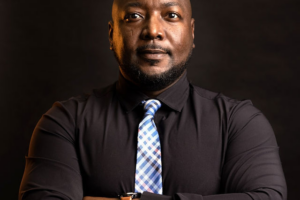
A formal portrait of Kareem Simpson, Covington School Board member and business consultant. He stands with his arms crossed against a dark background, wearing a black button-down shirt and a blue plaid tie. He looks directly into the camera with a composed expression.

Kareem Simpson, Covington School Board member and business consultant, and a Black queer man. Photo courtesy: Kareem Simpson

“Community landscapes have expanded so the community looks different. There are about the same number of bars, but now there are more options in addition to bars,” he said.

“Some bars have changed their programming to stay current and attract more customers, such as Bloom providing a space for BIPOC drag performers and their followers. Others in the community have created spaces that feel more safe to marginalized community members, which in addition to younger people consuming less alcohol, can explain why bars are less busy. People want to feel safe, seen and included so they seek out spaces that provide that element,” Simpson said.

And Joshua Petty-Kayes, member of the newly created Cincinnati LGBTQ City Council Commission, a founder of Treehouse Cincinnati and an accessibility advocate emphasizes that community members want to go to spaces that are accessible. And accessibility isn’t just limited to physical access.

“Accessibility barriers can be based on gender identities, racial as well as physical. People want to be in spaces that feel welcoming and reflect their reality, aka being around others who look like them and share similar experiences. TreeHouse was created to meet that need and provide an alternative community space,” Petty-Kayes explained.

TreeHouse Cincinnati, according to their vision statement, is a resource space that uplifts the programming of the LGBTQ+ Community to promote collaboration, diversity, and intersectionality. Petty-Kayes described providing space for community organizations such as PFLAG, Black Power Initiative, Cincinnati Black Pride and Cincinnati Prime Timers. There’s also a plan to create a library of books being banned by the current federal administration.  

Transform Cincy is another organization that not only provides an alternative to bar spaces. It addresses the growing need for affirming spaces and resources for transgender, nonbinary and gender non-conforming youth and young adults. Co-founded in October 2019 by Tristan Vaught and Nancy Dawson, what began as a free clothing and accessory program has grown into a thriving LGBTQ+ community center serving individuals and families throughout Greater Cincinnati. 

Transform Cincy, Vaught said, serves the community through their CARES model: Community Center, Advocacy, Resources, Education, and Support.

“We continue to provide free, curated wardrobes for transgender and gender-diverse youth and young adults while also offering support groups, legal clinics, social and educational programming, community meals, resource navigation, and opportunities for connection that foster belonging, resilience, and hope,” Vaught said.

Transform Cincy also holds an annual Trans Pride Adult Prom, their signature fundraising event, bringing together LGBTQ+ community members and allies to celebrate while supporting the organization’s life-changing work.

And queer organizations here don’t work in silos. Transform Cincy, for example, partners with organizations including NAMI Southwest Ohio, Beech Acres Parenting Center, Community Shares of Greater Cincinnati, Equality Ohio, and many other community partners to provide professional, affirming services. 

As we witness the rollbacks of our rights and freedoms, expanding the way we view and define Cincinnati LGBTQ+ spaces to be more inclusive of BIPOC and marginalized communities helps to ensure we have safe places to gather, be in community, and celebrate our existence. 

Seven Counties Services logo on a soft blue and pink gradient background, featuring a gold sunburst icon and navy blue serif text.

Seven Counties Services Hosts Free LGBTQ+ Wellness Event in La Grange

Behavioral health center Seven Counties Services will host “Rooted for Wellness,” a free event that includes music, connection, snacks, refreshments, and a safe welcoming space for the LGBTQ+ community to come together, relax and feel at home. 

Brydie Harris, community impact director, Seven Counties Services, says, “Rooted for Wellness is an annual LGBTQ+ centered open house and safe space we host at our La Grange site. We invite the community to join us to learn about our full range of behavioral health services in a warm, welcoming environment. Drop in anytime to tour the space, meet staff, ask questions, sign up for services, and enjoy arts and crafts, along with light refreshments.”

The event will be held on June 27, from 10 a.m. to 2 p.m. at 2141 Spencer Court, La Grange. 

Seven Counties Services is a Certified Community Mental Health Center that offers a full range of mental and behavioral health services, substance use treatment, and intellectual and developmental disabilities services in a seven-county region in Kentucky. Counties served include Jefferson, Oldham, Bullitt, Shelby, Spencer, Trimble, and Henry. Seven Counties Services is fully accredited by The Joint Commission and nationally recognized for effective services and treatments. 

A collage featuring a gloved hand holding multiple syringes against a pink and blue torn paper background with faded text reading "I'm not surprised by the lack of education anymore. I'm just tired. Does this feel safe to me right now?" On the right, a person in sunglasses and a keffiyeh blows bubbles at a protest, shown in a blue-pink duotone.

Barriers, burnout, and resistance: Trans Kentuckians and the fight for healthcare

When clients walk into one of psychotherapist Sebastian Hamilton’s Louisville offices, they enter a cozy haven filled with soft lighting and pillows, nature posters, art supplies, and baskets of fidget toys. A linocut art print hanging on the wall features the Mary Oliver quote: “You only have to let the soft animal of your body love what it loves.”

Hamilton, whose pronouns are he/they, strives to create the kind of supportive environment he experienced with a trans mental health professional when he was exploring his own gender identity. This work has been complicated over the past year amid growing anxieties about state and federal anti-transgender legislation.

Hamilton, who became a Licensed Clinical Social Worker in 2023 — the same year the Kentucky state legislature passed a sweeping ban on gender affirming care for minors — said, “I’ve been seeing an increase in anxiety and exhaustion, especially since Trump’s second term. I see a lot more hopelessness and weariness.”

He has also seen a rise in the primary contributing factors that lead to suicidal ideation: perceived burdensomeness and thwarted belongingness, which he attributed to “this administration’s policies and the ways the administration has made local communities feel less safe for us.”

“I see people at all stages of their transition journey, and there is still so much joy in our community, so much strength. But sometimes, the joy is harder to access because of the ways things are impacting us on the interpersonal and national level when we have new, harmful legislation coming at us daily,” he said.

The impact on trans health and healthcare

2025 marked the sixth consecutive record-breaking year of anti-trans legislation. In Kentucky alone, 18 bills were introduced, including KY HB 495, which banned Medicaid from covering trans healthcare.

Kentucky, 2025

18 anti-trans bills
introduced in 2025
KY HB 495 — banned Medicaid from covering transgender healthcare

Trans Legislation Tracker, translegislation.com

Anti-trans legislation introduced, 2022–2025

State bills vs. national bills — six consecutive record-breaking years

State bills National bills
900
600
300
174
 
2022
556
 
 
2023
716
 
 
2024
1,131
 
 
2025

Trans Legislation Tracker, translegislation.com

In this environment, patients seeking gender-affirming care, such as hormone replacement therapy (HRT) or surgery, are nervous about medical documentation. Colby R. Loew, MD, whose pronouns are she/they, is a queer family medicine physician in Kentucky who is passionate about trans healthcare.

“I love getting to care for my people, my community. I love getting to care for people who, in the past, maybe weren’t so excited about going to the doctor or who were too nervous to even access care,” she said.

However, over the past year, she has noticed increased anxiety in her gender diverse patients regarding medical documentation of pronouns, gender (if it differs from the one assigned at birth), and gender dysphoria.

As a result, Dr. Loew has also become more cautious about the medical codes she uses when charting. Medical codes, or ICD (International Classification of Diseases) codes, are part of an alphanumeric system for documenting patient symptoms and diagnoses.

Loew told Queer Kentucky, “I haven’t really even been using gender dysphoria much as a code because I don’t need to document it that way. I just use hormone replacement therapy.”

Loew sees this as less of a risk. While a diagnosis of gender dysphoria could identify a patient as transgender, cisgender people also receive hormone replacement therapy, such as cisgender women who take testosterone during menopause.

The U.S. Department of Justice’s July subpoena of medical records related to trans healthcare from over 20 healthcare institutions demonstrates that these records are not private or safe from government overreach. Additionally, given the government’s classification of trans people as “Nihilistic Violent Extremists (NVEs)” and extremists who adhere to “radical gender ideology” as seen in a leaked Intelligence Bulletin and a DOJ memo first published by independent journalist Ken Klippenstein, the hesitation to have one’s trans identity documented in medical records makes sense.

“People are scared. They don’t want the government to know they are trans. They don’t want the government coming after them,” Loew said.

Loew mentioned that she also practices more caution when recording names and pronouns in medical charts, asking patients, “Is it okay if I put this on your chart?” Loew explained that “a lot of people are still like ‘hell yeah!’ but lately I’ve had more people saying ‘maybe not right now.’”

Ari, whose pronouns are they/them, is a Louisville-based genderfluid death care worker who spoke with Queer Kentucky under a pseudonym for privacy and safety. At recent doctor’s appointments, they have felt anxious about documentation — not just as a trans person, but as the child of an immigrant navigating a political climate that has targeted multiple minorities at once.

“Some of my anxiety over visiting doctors is not ‘Will I be treated poorly?’ It is ‘Will I be notated in a way that’s going to come back to bite me in the ass later down the line?’”

When a doctor recently switched their name in the system to “Ari (they/them),” it showed up on their prescription. “That partially makes me happy, but also puts up more question marks than anything else. Does this feel safe to me right now?”

Barriers to access

Transgender adults and medical discrimination

1 in 3
delayed or avoided medical care due to fear of discrimination
1 in 2
experienced medical discrimination due to their transgender identity

University of Chicago & Center for American Progress

Genderqueer photographer Emmett Valentín, whose pronouns are they/them, is no stranger to that discrimination. During their teen years in foster care in Kentucky, the state forced them to take birth control despite negative side effects. They suffered from severe endometriosis and PCOS for years before opting for sterilization as treatment. Valentín’s Indigenous identity compounded this mistreatment, they said, recalling America’s legacy of reproductive violence against Indigenous, Black, and marginalized communities.

When Valentín began pursuing HRT, they faced invasive questions, unnecessary testing, and pressure to recount their trauma. “I was terrified of having a health care provider be shitty to me because I’ve had enough healthcare trauma from being assigned female at birth.”

They explained that when they switched from the gender-affirming online prescription service FOLX to an in-person endocrinologist, “She did the whole ‘tell me about all of your trauma,’” to which Emmett replied, “I’m not doing that. You’re not my therapist. I’ve been on this for two years now, and it’s doing great. I just need refill.”

Emmett Valentín’s endocrinologist experience

A timeline of barriers


Step 1
Switched from FOLX to in-person endocrinologist. Faced invasive questions and pressure to recount trauma.
 
Step 2
Slight increase in red blood cell levels. Doctor refuses HRT refill. Refers Emmett to Transform Health Clinic.
 
Step 3
Earliest Transform Health appointment: 9 months away.
 
Weeks later — 12:15 pm
Doctor calls with a cancellation at the Lexington clinic — appointment at 1:30 pm, 75 minutes away.
 
Emmett’s response
“So let me get this straight. You refused to give me a refill, and you’re telling me now, if I drop everything in the middle of my workday and drive over there in record time, then I’m worthy of having healthcare.”

“You have been singlehandedly, absolutely the most invalidating healthcare experience I’ve ever had, and I want you to sit with that.”

Medical providers across all levels have felt the chilling effect of these federal and state level threats. However, both Hamilton and Loew, the mental health and medical providers who spoke with Queer Kentucky, stressed the importance of not caving in to threats or executive orders, which are not legally binding.

Lack of trained physicians

Dr. Loew told Queer Kentucky that trans healthcare was not part of her medical school curriculum. During her residency, supervising physicians were often unwilling to prescribe hormones to trans patients. “It depended on who was there with me as my supervising physician on whether the patient could get what they needed,” she said.

Research corroborates her experience. While studies show that many medical schools do discuss the topic of transgender healthcare, a 2023 study from the Baylor University Medical Center found that this coverage is not comprehensive. A 2025 study with the Journal of Medical Education and Curricular Development found that medical education on transgender health is now at heightened risk of inadequate preparation for future physicians in the wake of Executive Order 14168.

Residency programs

How trans healthcare is covered in medical education

Periodically throughout curriculum52.5%
 
Discrete modules only34.4%
 
Not covered at all10.6%
 

Baylor University Medical Center, 2023 · 160 programs surveyed

Loew disclosed that much of her trans healthcare practice has been self-taught. “The minute I could get my DEA so I could prescribe testosterone, I did.” A DEA, or Drug Enforcement Administration number, allows medical providers to prescribe controlled substances like testosterone.

The training gap

Recognition of the problem vs. action taken

82.4%
of providers named lack of training as a key barrier (National Coalition for LGBTQ+ Health, 2023)

By 2025, providers who sought training:

Any affirming training30%
 
Clinical technique training22%
 

National Coalition for LGBTQ+ Health, 2023 & 2025

23%
of trans people
have found themselves educating their own medical providers about transgender healthcare

Center for American Progress

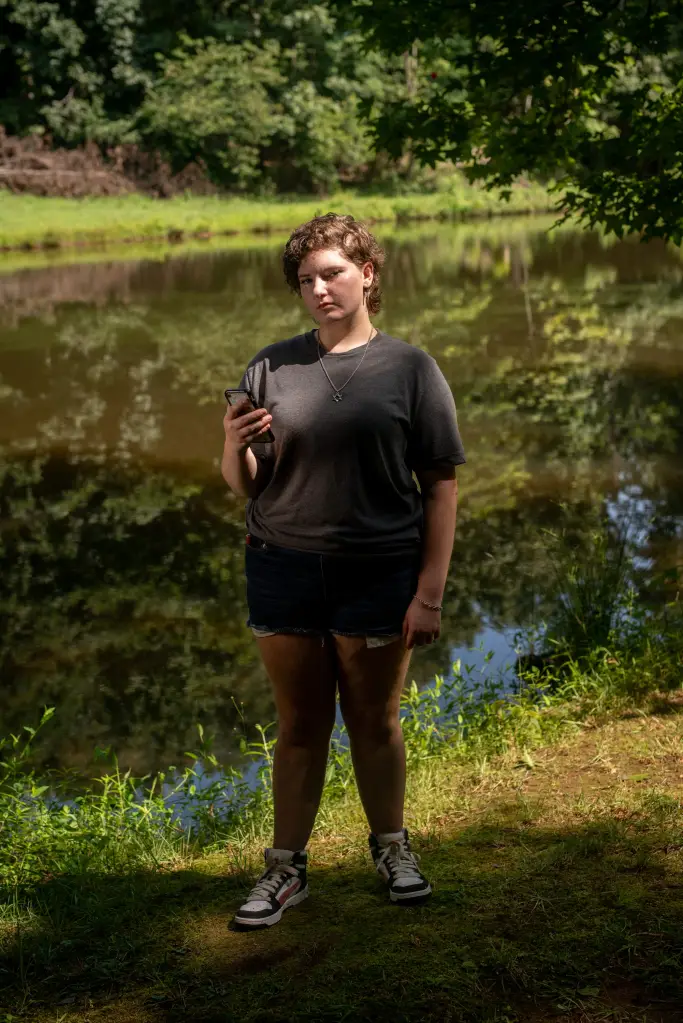
Tammy, a Louisville resident whose pronouns are she/her, asked to use a pseudonym for safety. At a recent appointment, a nurse questioned how she had breasts without implants, asked how to spell “vaginoplasty” multiple times, then swiveled her chair around and asked, “How do they do that?”

Tammy tried to keep it light: “You should probably ask my doctor. I wasn’t paying attention at the time.”

Years earlier, an endocrinologist told her, “Oh, I guess the estrogen is working” — apparently unaware that estrogen does not eliminate active facial hair follicles, and many trans women like Tammy use electrolysis or laser hair removal to eliminate unwanted body hair. “This wasn’t even just a primary care physician. He was an endocrinologist. At a basic level, he should know how different hormones impact the body, and he just didn’t.”

“I’m not surprised by the lack of education anymore. I’m just tired.”

Trans Kentuckians fear experiences like Valentín’s and Tammy’s could become more common with threats to federal funding for institutions that provide gender-affirming care and empowerment from state and federal governments to deny such care.

Trans Kentuckians refuse to disappear

Despite everything, many trans Kentuckians are hopeful — and organizing.

“Trans people are the least nihilistic people I know,” said Jaz Brown, whose pronouns are he/him. Brown started hormones in March and had top surgery in November. As Trans Health Coordinator for the Kentucky Health Justice Network, he helps people buy binders, apply for medical grants, find housing, and pay electricity bills.

Jaz Brown, Trans Health Coordinator, Kentucky Health Justice Network
“To pursue transition, to pursue gender affirming care is to say ‘Life has meaning. I want to live.’”

Brown urged those struggling to afford care to apply for a grant through KHJN, and drew on a longer history of resistance: “None of this is new. People need to look to their Black elders, their Black trans elders. The government is not going to save us. Organizations are not going to save us. Nonprofits are not going to save us. We have to save ourselves and each other.”

“I think that anticipatory compliance is what the federal administration” wants, Hamilton said. He continued, “Let’s see how many threats we can make to get people to do what we want to do without actually making it a law. Because some of this, we know, if it’s thrown to the courts is going to be thrown back out.”

Valentín finds empowerment in activism. Arrested in 2023 at the Kentucky state capitol while protesting KY SB 150, they shared their mugshot — wearing what they call a “shit-eating grin.” “I would love to see a full socialist revolution in my lifetime, and I am doing all I can to gear towards that.”

Ari hopes to begin microdosing testosterone this year. They limit media consumption, root themselves in community, and draw perspective from their Chinese identity. “This is the year of the Fire Horse. Fire Horse years historically have marked a disruption of the existing order. The last time this cycle occurred was in 1966, the start of China’s Cultural Revolution.”

Looking to past epochs of political upheaval and change is a stirring reminder to trans people, cisgender members of the queer community, and LGBTQ+ allies that oppressors do not grant freedom to the oppressed. Instead, the people must unite, build coalitions, and seize their rights through collective action.

As Leslie Feinberg reminds us in Trans Liberation: Beyond Pink or Blue, “Genuine bonds of solidarity can be forged between people who respect each other’s differences and are willing to fight their enemy together. We are the class that does the work of the world, and can revolutionize it. We can win true liberation.”

If you or someone you know is struggling, call or text the 988 Suicide & Crisis Lifeline at 988. LGBTQ+ young people can press 3 to reach counselors trained in LGBTQ+ care, an option that returned on Sept. 30, 2026 after it was cut in July 2025. The Trevor Project also offers 24/7 support at 1-866-488-7386 or by texting START to 678-678.

JustChoice staff at JustCenter for Reproductive Health in Louisville, Kentucky

Opinion | We See You: JustChoice Is Opening JustCenter for Reproductive Health

The views and opinions expressed in submissions to Queer Kentucky are those of the authors and do not necessarily reflect the official policy or position of Queer Kentucky. Any content provided by our submissions or regular columnists are of their opinion. As a reader, you are always welcome to submit your op-eds through our submission form.

Let’s imagine something.

Imagine walking into a reproductive health clinic in Kentucky and not having to brace yourself.

Imagine reproductive healthcare that was designed with LGBTQ+ people in mind from the beginning.

Reproductive health is too often reduced to “pro-choice” versus “pro-life.” But for many people in queer and trans communities, reproductive justice is even more complex and personal than ever.

That’s part of why JustChoice is opening the JustCenter for Reproductive Health.

For nearly everyone, walking into a reproductive health clinic already comes with a lot: excitement, fear, shame, hope, grief, relief, sometimes all at once. Add in the realities many people face when abortion or other care is involved: protecting privacy, missing work, finding childcare, arranging transportation, and covering costs. It’s a lot to carry.

For queer and trans people, there’s an even deeper layer: wondering if you’ll be made to feel unsafe in a space that’s supposed to help you.

We’re not here to speak for the queer community; we are simply here to say: we see you, and we’re building something different.

At JustCenter, our commitment is extremely simple: accessible care rooted in dignity, respect, and kindness. That means welcoming families in all their forms, and reducing barriers wherever we can, including things like offering childcare when visits take time and using a sliding, pay-what-you-can scale.

JustChoice understands that reproductive justice does not end with a procedure. People need support before, during, and after pregnancy, whether that pregnancy continues or not. That’s why services at JustCenter also include:

  • Free pregnancy counseling and ultrasounds
  • Miscarriage management and emotional support
  • Free birth control, including IUDs, condoms, and Plan B
  • Parenting and adoption support, including baby supplies and mutual aid
  • Help navigating community resources in hostile or under-resourced environments

This is an invitation. We want to learn from your experiences and build the antidote of what’s caused harm. Join us so we can build systems of care together.

Follow along or learn more on Instagram at @_justchoice or visit www.justchoice.org and click the green button to subscribe to their newsletter.

Interior of the Kentucky State Capitol in Frankfort where lawmakers debate and pass legislation

What is a shell bill? And other sneaky ways Kentucky Lawmakers pass legislation.

What is a shell bill? Kentucky’s legislative process follows a set of rules, but there are several common ways lawmakers can reshape or fast-track bills.

Fun fact: Kentucky lawmakers can’t just go around filing new legislation throughout the entire legislative session. 

They have a deadline to file new bills each year, weeks before the end of the legislative session. 

This helps you know exactly what could possibly be considered during the height of the session, without fear of some sort of surprise — or at least, that’s what it is supposed to do. 

Kentucky’s Republican-dominated legislature has plenty of ways to get around that concept to legally spring new legislation on you at the last second, or to rush things through when you’re not expecting it.

Let me break down a few of the most common ways, so you can think like they do. 

What is the bill filing deadline in Kentucky?

Lawmakers typically have until late February or early March to file new legislation during Kentucky’s legislative sessions. 

The exact date depends on the year. Filing deadlines tend to be earlier in odd-numbered years, when Kentucky’s legislative session lasts 30 legislative days from the first week in January until the end of March. 

In even-numbered years, lawmakers meet almost daily from January until mid-April, so the deadlines tend to be a bit later. 

But basically, the idea is all bills for that year must be filed by the deadline set. Typically, the House and Senate have slightly different deadlines, but they’re generally in the same week. 

What is a shell bill?

A shell bill is a bill filed before the filing deadline, but doesn’t actually do anything because it is meant to be stuffed with an actual bill after the deadline.

Shell bills can typically be identified by bills that are just supposed to insert gender-neutral language (so, expanding “he” in current law to “he or she” but not changing anything else) or ones meant to make technical corrections and … nothing else. 

You’ll often see lawmakers file a few of these in a clump in the week or so before the filing deadline — especially if they’re committee chairs in charge of legislation around a certain topic. 

Basically, it is a signal they could file something on a certain topic, but they don’t have it ready yet. Many of the shell bills that get filed don’t turn into anything — they’re simply potential placeholders. 

But, technically, as long as the bill is filed in time, it can turn into anything.

What is a committee sub?

One of the big ways a bill could take on a new life at the last second is through a committee substitute — typically just called a committee sub.

This is when a bill’s sponsor changes the bill before it gets a committee vote. (You can run through the whole legislative process, step-by-step, using our explainer.) Bills need to get a committee vote in both the House and the Senate, so bills can have multiple committee subs throughout its lifespan. 

A committee must approve of the new version of the bill before it passes the bill itself. Only rarely do committees reject committee subs. 

Committee subs can be used for any type of change, from a quick technical fix to a major redesign. And they don’t always have to stick exactly to the concept of the initial bill — a measure about wastewater can be gutted to overhaul the state’s pension system, for example. (Yes, that example really did happen.)

Committee subs — particularly late in the legislative session — also don’t typically get shared publicly before they’re voted on. Sometimes, lawmakers on the committees don’t get a copy in time for them to read it and vote on it. 

Rushing legislation

Another thing to watch for: Timing. 

Each bill needs three “readings” on the House and Senate floors across three different days before getting a vote. (They don’t actually read the full bill; they just acknowledge it.)

Ideally, a bill would pass out of a committee and then get its first reading that afternoon — giving lawmakers and the public a chance to read and sit with the bill, and for the public to contact lawmakers about it if needed before it gets a House or Senate vote.

But sometimes — again, typically late in session, when pressure is high and time is short — they’ll give a bill two of its three readings, then propose a committee sub in the morning, get the committee’s approval, and then pass it out of the House or Senate just a few hours later. 

This means they can — and frequently do — quickly overhaul legislation, and then clear multiple legislative hurdles before the bill is even posted online for the public to view. 

Floor amendments

Floor amendments are also a way — albeit a less successful and less used way — to quickly change a bill. Think of this option as the Hail Mary, last ditch attempt at getting your way. 

Basically, a lawmaker can file a floor amendment — some proposed change, large or small — to a bill and then try to have the chamber vote to make those changes to the bill before voting on the bill itself in the House or Senate. 

One common late-session type of floor amendment is called “piggybacking” — basically when a lawmaker knows their bill isn’t going anywhere, so they’re going to try adding it to a radically different bill. 

But unless the amendment is coming from the bill’s sponsor, it typically doesn’t go anywhere. 

What you can do

All of this can be difficult to track. Here are a few ways to stay on top of what’s happening in Frankfort:


Period Y’all founder Skylar Davis stands in front of a truck filled with donated menstrual products while supporting efforts to combat period poverty in Kentucky.

Period Y’all founder Skylar Davis leads Kentucky fight against period poverty

What started as an extension of the Garrard County Food Bank has grown into Kentucky’s leading defense against period poverty: the lack of access to products, resources, and educational materials which ensure a safe and comfortable menstrual cycle. 

Skylar Davis is the founder of Period Y’all, a nonprofit initiative advocating for reproductive justice and accessible period products for all Kentuckians. Founded in 2022, Period Y’all has established period pantries – boxes stocked with period products free for the public – in three counties, donated products to over a hundred schools in the Appalachian region, and educated countless members of the community about the importance of reproductive autonomy. 

Previously, Davis poured her passion for advocacy and reproductive justice into policy work, hoping to combat bills threatening reproductive rights. She found herself disheartened by the constant negativity and decided to search for a way to “bring some joy.”

A bright pink Period Y’all pantry stocked with free menstrual products stands outside a building in Kentucky to provide public access to period supplies.

A Period Y’all pantry stocked with free menstrual products provides public access to pads and tampons for community members in Kentucky. Photo provided by Skylar Davis.

“I really wanted to do something that was meaningful,” Davis said. “To be able to fight for something more positive. Even if it takes years to pass.”

Inspired by Change Today, Change Tomorrow’s “Friday Period” project, which encouraged members of the community to claim free period supplies every Friday, Davis returned to her hometown in Garrard County to establish Period Y’all.

“The first time, I came with one folding table and probably 40 boxes of pads and tampons that people had donated,” Davis said. “And then it grew once I realized how great the need was. It wasn’t just period products, but hygiene products and incontinence products for the elderly.”

Now, with period pantries in Paducah, Berea, and Garrard, dozens of communities can access products, information, and assistance to help manage their menstrual cycles.

“It’s cool to see the variety of people that are thankful for the products,” Davis said. “It’s not just women in the community. It’s grandmothers who are caring for their grandchildren; maybe they’re on a fixed income, so they don’t have the extra money for the products. It’s mothers. It’s teens that come through and ask us for stuff. Men will ask for their partners and know what their partners use.”

McKenna Newman, a Period Y’all volunteer and fellow Garrard County native, teamed up with Davis to “help bring menstrual equality to anyone in need.”

“Growing up in Garrard County, many girls, including myself, had to get creative managing our periods,” Newman said. “Whether it be financially or the mental and physical burden we all had dealing with it. It is a shame rooted in women and no one should be embarrassed of this natural process.”

Reusable pink pouches filled with menstrual products labeled Period Y’all sit inside a tote bag as part of efforts to distribute free period supplies in Kentucky.

Reusable pouches filled with menstrual products prepared by Period Y’all for distribution to communities across Kentucky. Photo provided by Skylar Davis.

Following its success in Garrard County, over 30 requests for pantries arose across the Commonwealth. Davis plans to open 13 additional period pantries in locations such as Richmond, Somerset, Morehead, Hazard, Louisville, and more.

“When Period Y’all first started, we were doing monthly pop-ups… The products we had, we were able to source through donations, cold calling, and advertising on social media,” Newman said. “All it took was one Facebook post, and now, here we are, four years later, providing hygiene products to schools across Kentucky.”

Recalling her experience with policy work, Davis hopes to empower students to make informed choices about their bodies, health, and their administration.

“Within the next few years, I’m really hoping to get more students involved in shaping the education side of the work,” Davis said. “They’re the ones that are experiencing this in school. They don’t have access to products because it’s not in their school’s budget.”

Since the implementation of Senate Bill 150, schools have restricted students from discussions surrounding gender and sexuality – something that affects all students, regardless of identity. Students experiencing their period in school are only allowed to receive certain pre-approved products, while their teachers have been warned to avoid explaining what periods are.

“People don’t realize the correlation between attacks on trans people and LGBTQ people and those who have periods,” Davis said. “These attacks hurt all of us, not just a marginalized group of people. We can fight back against all of this harmful legislation.”

To join Period Y’all’s crusade against period poverty, Davis and Newman encourage volunteers to participate in “packing parties” – where packages of free pads and tampons are assembled – or to host a product drive. 

“If you ever wanted to get involved with reproductive advocacy… Create a conversation. Make a post. Start a group. Connect with other people,” Newman said. “Your voice is your best tool. Be loud, be proud, and don’t be ashamed! Societal shame around periods is one of the many reasons we have a crisis surrounding women’s health.”

Interested in establishing a Period Pantry in your city, hosting a product drive, or donating menstrual products to support underserved Kentuckians? Contact Skylar Davis to support Period Y’all!


A performer sings passionately into a handheld microphone on a small stage under blue lighting, backed by a live band with guitars and drums. Colorful posters hang behind the musicians, creating a vibrant, community theater atmosphere.

National Queer Theater accepting applications for expanded Criminal Queerness Studio global playwriting program

National Queer Theater is accepting applications for its free Criminal Queerness Studio playwriting program. Trans Americans, queer writers living outside the United States, and those who have left their home countries as immigrants, refugees or asylum seekers are encouraged to apply to the seven-week virtual program.

The program will be led by Ugandan playwright Achiro P. Olwoch and is designed to create a supportive space for global queer artists. Criminal Queerness Studio includes seven weekly two-hour Zoom workshops in April and May 2026 with queer writers and activists from around the world. Participants will work toward completing an original 10-minute play to be performed by professional actors.

Three actors sit around a small table onstage during a theater performance. One wears a military uniform with a rifle resting beside his chair, while the two others wear civilian clothing. They share a meal together under warm stage lighting, with a modest set and framed artwork in the background.

Left to right: Odera Adimorah, Natasha Hakata, and Shiro Kihagi in Jedidiah Mugarura’s Tomorrow Never Came as part of National Queer Theater’s ‘Criminal Queerness Festival’ at HERE Arts Center, June 2025. Photo by HanJie Chow.

“Criminal Queerness Studio invites queer artists to write from the places they’ve been told to hide,” Olwoch said. “It honors queerness as a site of knowledge, survival and creative power, where making art becomes an act of refusal and care.”

Workshop times will be scheduled based on participants’ availability and time zones. Writers may participate from anywhere in the world, provided they have access to Wi-Fi and can attend all sessions.

Applications for Criminal Queerness Studio are available online.

Criminal Queerness Studio is a project of National Queer Theater. More information about National Queer Theater’s programs supporting LGBTQ+ artists, youth and seniors, as well as donation opportunities, is available at nationalqueertheater.org.

Three actors perform an intimate scene onstage under dramatic blue and red lighting. Two stand close together in the foreground holding hands, while a third sits in the background watching, creating a tense and emotional moment within a minimalist theater set.

Left to right: B Bastian, Julyana Soelistyo, and Debbie Tjong in Dena Igusti’s What You Are To Me as part of National Queer Theater’s ‘Criminal Queerness Festival’ at HERE Arts Center, June 2025. Photo by HanJie Chow.

About National Queer Theater

National Queer Theater is a Brooklyn-based nonprofit that uses live performance to imagine a more just and joyful future. Working alongside social justice movements, the organization uplifts queer communities through theater productions and education programs that celebrate free expression in the United States and internationally. Programs include the Obie Award-winning Criminal Queerness Festival and Staging Pride: Queer Youth Theater. More information is available at nationalqueertheater.org.


Dr. Bobbie Glass with shoulder-length light brown hair takes a selfie in a school hallway. She is wearing a teal top and layered necklaces. Behind her on a cinderblock wall is a black sign reading “106 Classroom Dr. Glass” with Braille beneath it, and a plaque that says “A Gift by WHAS Crusade for Children.”

Louisville Advocate Dr. Bobbie Glass Joins The Trevor Project’s Sharing Space Mental Health Series

Louisville educator and transgender advocate Dr. Bobbie Glass has been invited to appear on Sharing Space, a national series produced by The Trevor Project that centers conversations on LGBTQ+ mental health and lived experience.

Sharing Space brings LGBTQ+ people with lived experience into facilitated conversations with licensed mental health professionals. Episodes focus on topics including suicide prevention, crisis response, and the impact of conversion therapy. 

Glass said the series is urgently needed.

“A series like Sharing Space is needed right now because silence is still killing people- quietly, privately, and often without witnesses,” she said. A Queer Kentucky 2024 survey of over 3,600 LGBTQ Kentuckians, found that 26% of trans Kentuckians felt extremely unsafe in public due to political debate and rhetoric around anti-LGBTQ legislation. That number rises to 40% in for trans Appalachians.  

With anti-transgender legislation at historic levels, the question of how transgender youth are supported has become increasingly important.

“The most important thing to understand is this: supporting trans youth does not require expertise, special language, or perfection. It requires presence, courage, and consistency.

A colorful illustrated graphic divided into four panels featuring cartoon portraits labeled Rajee Narinesingh, Ella Marques, Dr. Bobbie Glass, and Jimi. The words “Trans Gurus” appear in the center. One panel includes a background with the transgender pride flag and the words “Trans Girl.”

One of the simplest and most powerful things people can do is interrupt harm when they hear it,” Glass says. 

“Allyship sometimes looks as simple as saying, “That’s not okay,” and refusing to let cruelty pass as normal.”

At the same time, renewed attention has focused on conversion therapy and the ongoing debate over how, and whether, the practice should be regulated. Dr Glass is a survivor of conversion therapy and uses that language intentionally.

“Conversion therapy doesn’t try to change behavior,” Dr Glass said. “It tries to replace a human being. For many of us, that replacement demand creates a level of despair that is difficult to describe unless you’ve lived inside it.”

She described the harm caused by those practices as ongoing and personal.

“I’m horrified by the number of times I tried to end my life under the weight of being told that my authentic self was completely incompatible with love, faith, and belonging,” she said.

“I am alive today not because conversion therapy worked, but because I survived it,” she said. “Others did not.”

The Trevor Project reported that 13% of LGBTQ youth nationally are exposed to conversion therapy. 

Kentucky currently has no statewide ban on conversion therapy. In 2024, Governor Andy Beshear issued an executive order prohibiting state or federal funds from going to conversion therapy practices for minors. The following year, state legislators passed HB495, which reversed his executive order. 

Glass said Sharing Space differs from many mental health discussions by centering people with lived experience rather than speaking about LGBTQ+ communities from the outside.

Screenshot of Dr. Bobbie Glass speaking in a video for The Trevor Project. She is seated on a couch wearing a navy blue dress, gesturing with one finger raised as she talks. On-screen text reads, “There’s no therapy in telling kids.” The YouTube Shorts interface is visible, showing the account @TheTrevorProject and engagement icons along the right side.

Screenshot of Dr. Bobbie Glass speaking in a video for The Trevor Project. She is seated on a couch wearing a navy blue dress, gesturing with one finger raised as she talks. On-screen text reads, “There’s no therapy in telling kids.” The YouTube Shorts interface is visible, showing the account @TheTrevorProject and engagement icons along the right side.

“Instead of experts speaking about LGBTQ+ people, Sharing Space allows people with lived experience to speak from inside the reality, in the presence of licensed mental health professionals who understand the risks involved,” she said.

“The harm of conversion therapy isn’t theoretical,” Dr Glass said. “It lives in bodies, in fear, and in years stolen from people who were never broken.”

According to data from The Trevor Project’s national youth mental health survey, 45 percent of LGBTQ+ youth seriously considered attempting suicide in the past year. Rates are significantly higher among transgender and nonbinary youth.

Dr Glass also addressed the conditions facing transgender and gender diverse youth in Kentucky.

“Supporting trans youth in Kentucky is not optional, symbolic, or political- it is lifesaving,” she said.

“Trans youth do not need to be ‘fixed,’” Dr Glass said. “They need to be protected, believed, and allowed to exist without fear.”

Dr Glass’s appearance on Sharing Space comes alongside her ongoing work in Kentucky. She was recently named an ambassador with the Mayor’s Office for Women in Louisville, a six-month civic engagement and training program focused on city policy and systems. “Being named an ambassador isn’t symbolic- it’s an invitation into the work of changing systems,” Dr Glass explains. She also serves on the boards of the Fairness Campaign in Louisville and CHNK Behavioral Health/One Quest Health in Covington. She is also a co-host of Trans Gurus on YouTube, a global platform with over 135,000 subscribers that offers affirmation and support to transgender people worldwide.

“At its best, Sharing Space does something simple and radical,” Dr Glass said. “It reminds people that they are not broken, not alone, and not required to disappear in order to be loved.”


If you or someone you know is struggling, call or text the 988 Suicide & Crisis Lifeline at 988. LGBTQ+ young people can press 3 to reach counselors trained in LGBTQ+ care, an option that returned on Sept. 30, 2026 after it was cut in July 2025. The Trevor Project also offers 24/7 support at 1-866-488-7386 or by texting START to 678-678.

The Kentucky State Capitol in Frankfort, symbolizing the legislative process and how bills become law in Kentucky.

How a Bill Becomes a Law in Kentucky: A Step-by-Step Guide to the Legislative Process

How does a bill become a law in Kentucky? 

Kentucky’s legislative process — aka how a bill becomes a law — has several steps, and a fair amount of rules and caveats, and all of it can be tricky to figure out, learn, memorize and apply to what you’re seeing in Frankfort when it isn’t your full-time job. 

That’s where I come in. Hi, I’m Olivia — Queer Kentucky’s lead political writer. I’m an award-winning writer, and 2026 will be my ninth regular legislative session as a reporter. 

Consider this the first installment of a rolling, occasional series from Queer Kentucky on how to navigate and understand the basics of Kentucky politics and policy.

My goal is to catch anyone who needs it at the ground level, or to just provide an easy-to-understand reference guide, so everyone knows what they need to know in order to understand what’s going on. 

Let’s begin.

The bill gets filed

Basically, a lawmaker has an idea for a new law or a way to improve an existing law, so they work with a bill drafter to put it into legalese and file it as a bill. 

The bill gets assigned to a committee

Once filed, a bill goes to a place called the Committee on Committees, which, yes, is a real thing. 

The Committee on Committees is a group of leaders in either the House or Senate, depending on where the bill is, and they decide which committee should be the first round of vetting for this bill.

Committees are topic-based, so, a bill dealing with drivers’ licenses would go to the transportation committee, and a bill dealing with how students learn to read would go to the education committee. 

First committee meeting = first vote

Committee meetings are the first big hurdle for legislation. After being assigned to a committee, a bill needs to then end up on that committee’s agenda — a call typically made by the committee chair, all of whom are Republicans thanks to the GOP’s supermajority in Frankfort. 

Once on the agenda, a bill will get “heard” by the committee. A lawmaker supporting the bill will present the bill to committee members and answer any questions they have about the measure. Sometimes, they may bring supporters of the bill to explain why the bill is important. 

They can also offer up something called a committee sub — short for a committee substitute bill. It is exactly what it sounds like: A different version of the bill that is getting subbed in for the existing version of the bill. If the committee approves to accept the committee sub, then that is the version of the bill they’ll vote on. 

Opponents to the bill can — but not always — testify against the bill in the committee meeting. This is typically at the discretion of the chair. 

After all of that, the committee will then vote on the bill. If it passes, it advances in the legislative process. If it doesn’t, it can be reheard in committee, but that isn’t guaranteed. 

Three readings, three days

Each bill must get three “readings” on the chamber floor, each one on a separate day. (“Chamber” means the House or the Senate.) 

They don’t actually read the entire bill on the chamber floor (can you imagine?). It is just an acknowledgement that the bill exists and is moving through the legislative process. 

The readings can happen before and after the committee vote, and the third reading happens at the same time as the full floor vote on the bill. 

Floor vote

A floor vote is when a bill faces an entire chamber for a vote. Each chamber has slightly different rules on how floor debates and votes go, but typically, a bill comes up for a vote, and the bill sponsor or another lawmaker backing it speaks briefly on what it is and why it should pass. 

Then other lawmakers can ask to speak on the bill and/or ask questions about it. Anyone can also bring up floor amendments — proposals to change the bill in question that will be decided, you guessed it, on the floor. But floor amendments need to be filed beforehand, and if they haven’t been filed to the exact copy of the bill being voted on at least 24 hours ahead of time, they’re typically a nonstarter. (In many situations, the exact version of the bill hasn’t been the working version of the bill for 24 hours, but that is the way things are run.)

The chamber eventually votes on the bill. If it passes, it heads to the other chamber. 

Repeating the process

After passing its first chamber, the bill will then need to repeat much of the same process in the second chamber. (So, if it started in the House, it does the process over again in the Senate, and vice versa.)

It needs to get assigned to a committee, pass out of committee, get three readings on the chamber floor and then pass out of the entire chamber. 

There is one situation where this doesn’t happen, though. Sometimes, lawmakers will file mirror legislation: Copies of the same bills, with one in the House and one in the Senate. If they both pass the same bill out of their chambers, they can shrink how long the overall legislative process takes. 

Concurrence

Once the second chamber votes to pass the bill, things can get a little wonky. 

If the bill did not change between the two chambers, it is considered passed and goes to the governor’s desk.

But if it did change between chambers, it needs to go back to the first chamber and they need to approve of the changes. If they do, to the governor’s desk it goes.

But if they don’t, the second chamber is asked to get rid of their changes to the bill. If they say yes, to the governor. If they don’t, then the bill goes to a place called a conference committee — basically when a bunch of folks look at the existing bill and come to a compromise about what it should look like, within the confines of the bill’s existing language. 

And if that still doesn’t work, the bill goes to a free conference committee — basically a group of folks free to do whatever they want to the legislation to strike some sort of agreement that both chambers will approve and then send to the governor. 

Once both sides come to an agreement

The bill heads to Gov. Andy Beshear’s desk for approval. He has 10 days to either sign the measure into law, veto it, or let it become law without his signature. 

What if Beshear vetoes a bill? 

If he vetoes a bill before the veto period — a break in late March and early April for Beshear to go through all of the bills and veto/sign them — the bill will then go back to the GOP-dominated legislature, which can and almost always overrides his veto. Both the House and the Senate need to vote to override a veto, and they need a simple majority of members of the chamber to vote to override. 

At that point, the bill then goes to the Kentucky Secretary of State, who is required to put the new law on the books. 

But if a bill gets vetoed after the veto period, the legislature cannot override it because they’re no longer in session. This situation rarely happens, though, because the GOP legislature works to make sure all of their controversial legislation gets passed before the veto period.

How long does all of this take?

Each bill is required to receive three readings on three separate days in each chamber, so the whole process typically takes about six legislative days — but they can make it five days by giving a bill a final vote in one chamber and then its first reading in the second chamber on the same day.

There are loopholes, though, to get things through faster, like the mirror legislation tactic. They can also take an existing bill that’s already advanced through some votes, swap out its language, and clear it that way. 

Illustration of the U.S. Capitol representing Kentucky’s 2026 federal ballot, including U.S. House and Senate races voters will decide who takes over the United States House and Senate.

What Will Be on Your 2026 Federal Ballot? Who’s Running for United States House and Senate

Editor’s note: This story was published in January 2026. Some details may have changed since then.

Who should represent Kentucky in Washington, D.C.?

All six of Kentucky’s seats in the U.S. House, plus soon-to-be-former Sen. Mitch McConnell’s seat in the U.S. Senate, will be on Kentuckians’ ballots in 2026. So what will Kentucky’s impact be on the United States?

At stake: Control over the currently Republican-controlled Congress, potentially providing a stronger check to the Trump administration which has already proven harmful to LGBTQ+ people and their rights.

Republican and Democratic candidates had until Jan. 9 to file to run, and voters will narrow the field during Kentucky’s 2026 primary elections on May 19. (Third-party candidates have until June to file to run.)

Kentucky has closed primaries, so Democrats can only vote for Dems in May, and Republicans can only vote for Republicans. The state goes by what political party you’re registered as, as of Dec. 31. Registered third-party? Sorry, you’ll probably need to wait until November to weigh in.

Senate candidates are running to represent the entire state, while House seats are based on where you live. Not sure which Congressional district you’re in? Try checking out this map or plug in your address here to find out. 

Queer Kentucky has put together a few tools to help you know who is running for federal office in 2026. One is a searchable list of folks who have filed to run for the Senate, and the other is focused on people running for one of Kentucky’s six U.S. House seats.

Looking for similar info about Kentucky’s state-level races? We’ve got you covered here.

Who is running for U.S. Senate in Kentucky in 2026?

Who is running for U.S. House in Kentucky in 2026?

Gov. Andy Beshear, in a blue suit claps while standing inside a marble government building during a Fairness Rally, as people around him hold protest signs advocating for LGBTQ+ protections.

Queer Kentucky 2026 Bill Tracker: Key Legislation to Watch in Frankfort — KYGA26

Editor’s note: This story was published in January 2026 and last updated Oct. 27, 2026, with each bill’s final status. The 2026 legislative session ended April 15, 2026, and none of the bills listed here became law. House Bill 759 never received a final Senate vote, so the anti-trans teacher amendment did not pass.

Kentucky’s 2026 legislative session is gonna be a long one, and Queer Kentucky is here to help.

Meet Queer Kentucky’s #KYGA26 Bill Tracker. For the second year in a row, this will be your go-to spot for real-time updates on key bills impacting Kentucky’s LGBTQ+ community.

We’ll comb through all of the legislation as it gets filed, flag bills to watch, explain what they mean and why they’re important, and then monitor them as they move through Frankfort. We’ll also watch for any last-second bill changes y’all need to know about.

To better help cut through the chaos of Frankfort, this bill tracker has two parts. (Both parts are on this page, so go ahead and bookmark it and make plans to check it regularly.)

First, we’ll have a searchable database of a larger selection of bills folks are talking about, are big legislative priorities, or are just things y’all might find interesting.

Then, we’ll have written blurbs diving deeper — but still keeping things concise — into the absolute must-watch bills impacting LGBTQ+ rights and people.

The 2026 legislative session kicks off Jan. 6 and lasts until April 15. Lawmakers have until the first week of March to submit new bills (but they can change existing bills however they want until the end of session).

Got a certain bill or topic you want us to monitor? Email lead politics reporter Olivia Krauth at [email protected] or fill out this anonymous survey.

This story was last updated Oct. 27, 2026, with each bill’s final status.

Search through key legislation

Bill Sponsor What it does Status
Senate Bill 72 Sen. Donald Douglas Health care professionals could not be discriminated against for refusing to do procedures that would violate their conscience Dead.
Senate Bill 351 Sen. Gex Williams Prohibit transgender people from teaching Withdrawn.
Senate Bill 179 Sen. Lindsey Tichenor Public entities could only use “male” or “female” labels Dead.
House Bill 867 Rep. Bill Wesley “Bathroom ban” in public buildings Dead.
House Bill 759 Rep. J.T. Payne A floor amendment would keep trans people from teaching Dead.
House Bill 553 Rep. Josh Calloway Prohibit gender transition-related health care from being covered by taxpayer-funded health plans. Dead.
House Bill 475 Rep. Ryan Dotson Require Kentucky to only recognize male and female as genders Dead.
House Bill 468 Rep. Daniel Elliott Make it harder to enforce local fairness ordinances, among other things. Dead.
House Bill 360 Rep. Scott Sharp Would make it a crime to perform in drag in public Dead.
House Bill 170 Rep. T.J. Roberts Gov could not “substantially burden” someone’s freedom of religion Dead.
Show the other 18 bills we tracked
Bill Sponsor What it does Status
House Bill 500 Rep. Jason Petrie The next state budget (at least, the most important parts of it). Line item vetoed, some overridden.
Senate Bill 4 Sen. Stephen West Change school board for JCPS. Veto overridden, now law.
Senate Bill 1 Sen. David Givens Strip JCPS school board of power, shift it to JCPS superintendent Veto overridden, now law.
House Bill 1 Rep. Kim Moser Allow Kentucky to participate in federal scholarship tax credit Veto overridden, now law.
Senate Bill 104 Sen. Matt Nunn Would make it a crime to “harass” first responders, including ICE agents Became law without Beshear.
House Bill 4 Rep. Marianne Proctor Make grooming a minor a crime Signed into law.
House Bill 11 Rep. Jared Bauman Creates a process to split up JCPS Dead.
House Bill 110 Rep. Stephanie Dietz Would prohibit unmarried couples from adopting children. Dead.
House Bill 334 Rep. Candy Massaroni Public entities could only use “male” or “female” labels Dead.
House Bill 653 Rep. Mary Lou Marzian Create a statewide fairness ordinance Dead.
House Bill 664 Rep. Lisa Willner Allow someone to sue over forced conversion therapy Dead.
House Bill 714 Rep. Josh Calloway Would allow people who get abortions to be charged with homicide Dead.
House Bill 717 Rep. Lisa Willner Require statewide sex ed classes, including age-appropriate information on gender identity and sexual orientation Dead.
Senate Bill 252 Sen. Karen Berg Allow someone to sue over forced conversion therapy Dead.
Senate Bill 115 Sen. Gerald Neal Create a statewide fairness ordinance. Dead.
Senate Bill 143 Sen. Cassie Chambers Armstrong Make sexual harassment an ethical violation for lawmakers Dead.
Senate Bill 239 Sen. Karen Berg Would largely repeal SB 150 from 2023 Dead.
Senate Bill 26 Sen. Lindsey Tichenor Prohibits DEI at the K-12 level Dead.

Bills that have been withdrawn

Senate Bill 351: Transgender teachers couldn’t teach

  • Sponsor: Sen. Gex Williams (R-Verona)
  • Quickly, what’s going on here?: Anyone treated for or diagnosed with outdated criteria around gender identity disorders would no longer be allowed to be certified to teach in Kentucky classrooms.
  • Here’s a link to the full bill.
  • Where is the bill: Withdrawn March 26.

Bills that are dead

House Bill 759: Anti-trans teacher floor amendment

  • Sponsor: Rep. J.T. Payne (R-Henderson)
  • Quickly, what’s going on here?: A floor amendment wants to add language to keep transgender teachers out of Kentucky classrooms. The floor amendment would need to be voted on by the full Senate, but it is expected to be withdrawn because it breaks a Senate rule around adding the contents of a bill to a different one.
  • Here’s a link to the full bill.
  • Where is the bill: Passed the House and a Senate committee, but never got a final Senate vote. Died when the session ended April 15.

House Bill 468: Cripple ability to enforce fairness ordinances

  • Sponsor: Rep. Daniel Elliott (R-Danville)
  • Quickly, what’s going on here?: In the initial version of the bill, local Human Rights Commissions would have a harder time enforcing local fairness ordinances or go after allegations of discrimination, among other things. Newer versions of the bill have weakened those concerns.
  • Here’s a link to the full bill.
  • Where is the bill: Passed the House March 11, then died waiting for a Senate committee assignment when the session ended April 15.

Senate Bill 72: Health care professionals’ conscience

  • Sponsor: Sen. Donald Douglas (R-Nicholasville)
  • Quickly, what’s going on here?: Health care professionals could not be discriminated against for refusing certain treatments or procedures that violate their conscience.
  • Here’s a link to the full bill.
  • Where is the bill: Passed the Senate, but never moved in the House. Died when the session ended April 15.

House Bill 867: “Bathroom ban” in public buildings

  • Sponsor: Rep. Bill Wesley (R-Ravenna)
  • Quickly, what’s going on here?: People using bathrooms in public buildings would be required to use the bathroom tied to their sex assigned at birth.
  • Here’s a link to the full bill.
  • Where is the bill: Assigned to the House State Government Committee, but never got a vote. Died when the session ended April 15.

House Bill 553: No funding for gender transition health care

  • Sponsor: Rep. Josh Calloway (R-Irvington)
  • Quickly, what’s going on here?: HB 553 would block any sort of taxpayer-funded health plans — including those for state and local government employees — from covering gender transition-related health services. It would also require licensing boards for health care providers who violate the law to revoke those providers’ licenses.
  • Here’s a link to the full bill.
  • Where is the bill: Assigned to the House State Government Committee, but never got a vote. Died when the session ended April 15.

House Bill 360: Make drag a crime

  • Sponsor: Rep. Scott Sharp (R-Ashland)
  • Quickly, what’s going on here?: HB 360 would make performing in drag in public or other places where minors could be present a crime. The first two offenses would be a misdemeanor, before the third and additional offenses become Class D felonies.
  • Here’s a link to the full bill.
  • Where is the bill: Assigned to the House Judiciary Committee, but never got a vote. Died when the session ended April 15.

House Bill 475: Male and female only

  • Sponsor: Rep. Ryan Dotson (R-Winchester)
  • Quickly, what’s going on here?: HB 475 would put it in Kentucky law that a person only has one gender: male or female.
  • Here’s a link to the full bill.
  • Where is the bill: Assigned to the House Health Services Committee, but never got a vote. Died when the session ended April 15.

Senate Bill 239: Undo most of 2023’s SB 150

  • Sponsor: Sen. Karen Berg (D-Louisville)
  • Quickly, what’s going on here?: SB 239 would undo much of Kentucky’s 2023 sweeping anti-trans legislation, instead requiring schools to provide bathrooms tied to a student’s gender identity and use the student’s preferred pronouns if they provide a doctor’s note showing they have gender dysphoria. It would still outlaw gender-affirming surgeries for minors, but would allow those with gender dysphoria and a parent’s permission to receive nonsurgical medical treatments.
  • Here’s a link to the full bill.
  • Where is the bill: Dead. The session ended April 15 without the bill becoming law.

Senate Bill 252: Allow lawsuits over sexual orientation, gender identity change attempts

  • Sponsor: Sen. Karen Berg (D-Louisville)
  • Quickly, what’s going on here?: SB 252 would allow someone to sue if someone tries to change their sexual orientation or gender identity against their will, for example, with conversion therapy.
  • Here’s a link to the full bill.
  • Where is the bill: Dead. The session ended April 15 without the bill becoming law.

House Bill 664: Allow lawsuits over sexual orientation, gender identity change attempts

  • Sponsor: Rep. Lisa Willner (D-Louisville)
  • Quickly, what’s going on here?: Same thing as SB 252 — it would allow someone to sue if someone tries to change their sexual orientation or gender identity against their will, for example, with conversion therapy.
  • Here’s a link to the full bill.
  • Where is the bill: Dead. The session ended April 15 without the bill becoming law.

House Bill 170: Protecting “religious liberty”

  • Sponsor: Rep. TJ Roberts (R-Burlington)
  • Quickly, what’s going on here?: HB 170 says the government could not “substantially burden” someone’s freedom of religion, including but not limited to forcing someone to serve LGBTQ+ people or having a local fairness ordinance. LGBTQ+ advocates often refer to measures like these as “jackpot justice” bills.
  • Here’s a link to the full bill.
  • Where is the bill: Assigned to the House Judiciary Committee, but never got a vote. Died when the session ended April 15.

House Bill 334: Male and female only

  • Sponsor: Rep. Candy Massaroni (R-Bardstown)
  • Quickly, what’s going on here?: HB 334 would establish a “Kentucky Women’s Bill of Rights,” which would allow public entities to distinguish between male and female based on biological sex and require several such entities that keep vital statistics to only use male or female.
  • Here’s a link to the full bill.
  • Where is the bill: Dead. The session ended April 15 without the bill becoming law.

Senate Bill 179: Male and female only

  • Sponsor: Sen. Lindsey Tichenor (R-Smithfield)
  • Quickly, what’s going on here?: SB 179 generally does the same things as HB 334.
  • Here’s a link to the full bill.
  • Where is the bill: Never received a committee assignment. Died when the session ended April 15.

Senate Bill 115: Statewide fairness ordinance

  • Sponsor: Sen. Gerald Neal (D-Louisville)
  • Quickly, what’s going on here?: SB 115 would create a statewide fairness ordinance, blocking discrimination based on sexual orientation or gender identity.
  • Here’s a link to the full bill.
  • Where is the bill: Dead. The session ended April 15 without the bill becoming law.

House Bill 653: Statewide fairness ordinance

  • Sponsor: Rep. Mary Lou Marzian (D-Louisville)
  • Quickly, what’s going on here?: HB 653 would create a statewide fairness ordinance, blocking discrimination based on sexual orientation or gender identity.
  • Here’s a link to the full bill.
  • Where is the bill: Dead. The session ended April 15 without the bill becoming law.
Illustration symbolizing Kentucky’s 2026 ballot, representing Republican and Democratic parties and Kentucky House and Senate candidates.

What Will Be on Your 2026 Ballot? Know your Kentucky House and Senate Candidates

Editor’s note: This story was published in January 2026. Some details may have changed since then.

Nearly every seat in Frankfort will be up for grabs in 2026, and Queer Kentucky is here to help you make sense of what Kentucky House and Senate candidates could be on your ballot

Kentucky’s state legislature has 138 seats — 38 in the Senate and 100 in the House. All of the spots in the House and half of those in the Senate are up for election in 2026.

It can be a lot to track, so we’re rolling out a set of searchable databases so you can see who is running, who isn’t, and which districts might be especially interesting to watch over the next few months.

Candidates had until Jan. 9 to file to run. Kentucky’s 2026 primaries are May 19, and that’s when Democratic and Republican voters will pick their respective party’s candidates for the November election. (Third-party folks, you may not have anything to vote on in May, but your candidates do get until early June to file to run.)

Both Kentucky’s state House and Senate districts are based on where you live. You can find out which districts you live in here, and then search through our databases to see who is running to represent you. Only the even-numbered state Senate districts will be on the ballot in 2026.

Looking for similar info about Kentucky’s federal races? We’ve got you covered here.

Who is running for Kentucky state Senate?

Who is running for Kentucky state House?

Which Kentucky state Senators are running again in 2026?

Which Kentucky state Representatives are running again in 2026?

A group of people at Creative House of Art and Design in Covington, Kentucky, pose with their finished winter-themed paintings during a guided art class. The group stands in front of shelves filled with colorful art supplies and craft materials.

10 LGBTQ+-Affirming Businesses Helping Shape Northern Kentucky’s Growing Inclusive Community

Northern Kentucky is the gateway to the Bourbon Trail, full of historic river cities, and has an identity all its own. Some Queer-owned and Queer-affirming businesses have been around for decades, others have just opened. They all show a growing community of LGBTQ+ entrepreneurs and increasing support for Queer spaces.

This isn’t an exhaustive list, so let us know your favorite Queer-owned or -affirming businesses in Northern Kentucky!

Roebling Books

Exterior of Roebling Books & Coffee in Newport, Kentucky, showing the shop’s blue sign on a brick wall and a Progress Pride flag with American stars hanging above the entrance on a sunny day.

photo provided by Roebling Books

306 Greenup Street – Covington
601 Overton Street – Newport

Roebling Books & Coffee, with welcoming locations in Covington and Newport, is a cozy, LGBTQ-friendly bookstore and café that truly bridges books, beans and being. Both locations host an array of community-driven events: Drag Storytimes, meet the author events featuring LGBTQ+ writers like Nico Lang, book-club discussions, and celebrations like Bookstore Romance Day. It’s a warm spot to browse thoughtfully curated titles—especially LGBTQ+ genres—sip fair-trade organic coffee, connect, and feel fully seen.

roeblingbooks.com

Creative House of Art and Design

A group of people at Creative House of Art and Design in Covington, Kentucky, pose with their finished winter-themed paintings during a guided art class. The group stands in front of shelves filled with colorful art supplies and craft materials.

Photo provided by Creative House of Art and Design.

609 Main Street – Covington

On Covington’s Mainstrasse, there’s an arts store that features classes, summer camps, drag drawing events, and a secret bar. “Mr.” Chad Cruz opened the store in December 2020 to be the space he wanted as a kid and found he still wanted as an adult: a space where people could be creative and be themselves. Even when the store isn’t open, Cruz and his team can be found leading art classes around the region.

creativehousead.com

Rekas Butchery and Delicatessen

Exterior of Rekas Butchery and Delicatessen in Covington, Kentucky, with a sidewalk sign reading “We Are Open Today” in front of the shop’s black storefront and glass door.

Photo provided by Rekas Butchery and Delicatessen.

401 Scott Street – Covington

Established in fall 2024, this woman-owned butcher shop set out to fill a void in the river cities. All the meat comes from a 90-mile radius, with a specialty in Ohio-raised wagyu. All the produce is local too. Shelbi Nation and her wife Ashley bring their years of experience running their sister shop, the Wyoming Meat Market, to this and bring an inclusive, knowledgeable butcher to the growing river cities.

instagram.com/rekas_butcher

Wagz n Pawz Pet Supplies

Exterior of Wagz n Pawz Pet Supplies in Newport, Kentucky, featuring a sidewalk chalkboard sign that reads “Life is short… Spoil your dog!” in front of the shop’s brick storefront.

Photo provided by Wagz n Pawz.

609 York Street – Newport

Jaron Byrum saw an opportunity in 2024 to continue to develop his and his husband’s neighborhood while pursuing a dream of opening a pet store and grooming business. Specializing in customer service, the store offers private shopping for anxious dogs, human-grade treats, free food delivery, custom orders, a rewards/loyalty program, a self-wash station, and the brand new 1-to-1 grooming.

shopwagz.com

The Crazy Fox Saloon

Exterior of The Crazy Fox Saloon in Newport, Kentucky, showing its historic corner building with patio seating and black Tito’s-branded umbrellas.

Photo provided by Crazy Fox Saloon.

901 Washington Avenue – Newport

When Carl Fox bought “The Saloon” in 1999, he brought the same philosophy that served him well at the bar he had just sold: Rosie’s Tavern in Covington. He calls it an “everybody-bar” because it’s neighborhood-focused and accessible (and affordable) to all. The philosophy is based on the belief that walls break down when people get together over a drink. Fox says he has been welcomed in the neighborhood for the past 26 years.

The 859 Taproom

Front exterior of The 859 Taproom and Grill in Florence, Kentucky, with brick facade, black awnings, and pink ribbon decals displayed on the windows.

Photo provided by 859 Taproom

8720 Bankers Street – Florence

A suburban sports bar that flies a Pride flag. Owners Jeff and Mandy Kaplan worked in hospitality for years and dreamed of running their own restaurant: one where everyone feels comfortable and supports every aspect of its community. Inclusion is factored into everything–from the menu to the bar to the workplace culture. That includes support for the Queer community and closing for NKY Pride so the staff can be part of the parade and festivities.

the859taproom.com

Piper’s Ice Cream Bar

Exterior of Piper’s Ice Cream Bar in Covington, Kentucky, featuring a bright red awning, a walk-up service window, and a Progress Pride flag above the entrance.

Photo provided by Piper’s Ice Cream Bar.

520 W 6th Street – Covington

In a prime location near Goebel Park’s festivities, Piper’s opened as a cafe on Oktoberfest weekend 2012. Since 2020, owner Chip Adkins and his husband have doubled down on frozen treats, expanding their menu this year to include vegan ice cream. They get customers of all stripes, but keep a rainbow painting up year round as a sign the cafe is a safe space where everyone is welcome.

pipersicecreambar.com

Rosie’s Tavern

Exterior of Rosie’s Tavern in Covington, Kentucky, showing its brick facade, vintage painted signage, maroon awning, and outdoor seating with green chairs.

Photo provided by Rosie’s Tavern.

643 Bakewell Street – Covington

Affordable drinks in an approachable setting. Rosie’s was built as a bar in 1869 and has been a welcoming space since the 1990s. Owner Dianne Gamble says she’s seen the area get more accepting of a neighborhood bar that’s a staple in the Queer community. It’s considered one of the friendliest bars in the area, and it’s been around long enough to outlast any naysayers.

rosiestavernky.com

Revival Vintage Bottle Shop and Bar

A woman signs a bourbon bottle at Revival Vintage Bottle Shop and Bar in Covington, Kentucky, while a staff member smiles beside her. Shelves of vintage spirits are visible in the background.

Photo provided by Revival Vintage Bottle Shop and Bar.

614 Madison Avenue – Covington

You can taste bourbon history inside this two-story love letter to Kentucky’s native spirit. Started in a smaller location in August 2020, Revival Vintage Spirits provides an intimate and affordable (and legal) way to take part in the booming vintage and rare spirits craze. It’s a combination of passions for co-owner Shannon Smith, who started her law firm in 2013 and got interested in vintage spirits a few years later. She says the goal is to make it accessible to more people – and the store has been getting international attention ever since.

revivalky.com

Artmarkit

Exterior of Artmarkit in Covington, Kentucky, featuring a yellow storefront, outdoor seating with a checkered table, and a sidewalk sign advertising it as a creative reuse hub.

Photo provided by Artmarkit.

1131 Holman Street – Covington

Former middle school art teacher Katie Kit Threet calls her business a creative reuse hub and inclusive third space. It’s equal parts a secondhand art supply store, classroom, creator space, and event space. Her approach to private events and workshops is all personal, letting kids and customers decide what type of art to create. She says her eight years in the classroom showed her that children need safe, affordable spaces to be creative, and small businesses can help build that community.

artmarkitcov.com

Jerry’s Jug House

Exterior of Jerry’s Jug House in Newport, Kentucky, featuring a vintage Wiedemann Beer sign, striped awning, and outdoor seating along the tree-lined sidewalk.

Photo provided by Jerry’s Jug House

414 E 7th Street – Newport

More than just a neighborhood bar, Jerry’s has been a package wine and liquor store in the East Row since the 1930s. An extensive renovation in 2019 revitalized the staple, which co-owner Mark Ramler says brought much of the neighborhood back. He says the managing philosophy is to be a bar that is welcoming to everyone. The bar is also featured on NKY’s B-Line bourbon trail.

jerrysjughouse.com

Galerie Candy

Exterior of the Galerie Candy Clearance Center in Hebron, Kentucky, showing its large colorful storefront sign inviting the public to shop discounted candy.

Photo provided by Galerie Candy.

3380 Langley Drive – Hebron

At age 16, Rick Ross helped his mom’s store become the second distributor of Jelly Belly. Now, his company is the 21st largest candy company in the country. Galerie’s products can be found in every major retailer, as well as on its own website and colorful outlet store at the company’s Hebron facility. Some of its creative confectionery treats and toys feature beloved brands. And all of its products are designed to create smiles, memories, and joy.

galeriecandy.com

An Interview with Em Joy: Program Director for Louisville Youth Group

This story is part of Queer Kentucky’s digital issue surrounding the trans youth experience in the Bluegrass state, featuring personal essays to educational information. Read the full issue here.

With the recent removal of many DEI initiatives from larger organizations and school districts, the future of queer safe spaces in Kentucky has become uncertain. During this time, organizations that uphold queer acceptance and advocate for systemic change are crucial. One organization, Louisville Youth Group (LYG), provides safe spaces for queer youth while also pushing for broader social justice. I sat down with Em Joy, LYG’s program director, to discuss their work and mission.

Our conversation began regarding how LYG addresses the unique needs and experiences of queer youth. Joy had this to say…

We’ve recently expanded our age range downward for younger kids and families—and upward to support young adults. After COVID, many felt unprepared for adulthood. Most queer spaces are bars or clubs, which aren’t accessible or appropriate for everyone, so we wanted LYG to be a place where young adults could find friends, support, and mentorship.

In addition to age-based support, we offer identity-specific groups. Our trans, non-binary, and intersex group focuses on social and emotional well-being, giving youth space to discuss gender identity, expression, and bodily autonomy.

We also run Melanin MagiQ, a group for Black and Brown youth. It’s a space without white peers to talk openly about intersecting identities and how racism impacts their lives. The group was developed with input from our youth of color, especially in response to BLM and the push for racial justice.

We also run our Beyond Labels Resource Closet, where youth can access gender-affirming items—like binders, tuckwear, dresses, and makeup—free of charge. Everything is donated or grant-funded. We help youth explore identity in a supportive environment.

As our conversation continued, our discussion moved towards the subject of trust, and how it’s built between LYG and the youth they serve. When building trust with young people who may feel isolated or misunderstood, Joy says that…

I’ve worked with young people most of my career. The biggest thing is to meet them exactly where they are. Kids—and adults—have big feelings. I try to offer guidance and coping tools. I’m trained in therapeutic approaches and remind youth they’re not alone. If no other adult affirms them, I want to be the one who does—and show them there are others who will, too.

As we were chatting about how organizations reflect the diversity of queer youth, Joy poses the question of “what social or systemic barriers are preventing access?” We discussed Louisville Youth Group’s approach in addressing these barriers…

One thing I’m constantly considering is: who are we serving—and who aren’t we reaching? What social or systemic barriers are preventing access?

We continually evaluate our services to meet our community’s needs. We’re also intentional about how we recruit mentors. It’s not just about being good with youth—we reduce barriers so marginalized mentors can get involved. Volunteering requires financial stability many BIPOC, disabled, or low-income folks don’t have. We offer financial incentives for Black and Brown mentors.

Our main space is in an older church building, so unfortunately, it’s not fully accessible—especially for those who can’t use stairs. But for off-site events, we choose fully accessible locations.

Inside our space, we’ve made it as sensory-friendly as possible. Many of our youth are neurodivergent, so we offer fidget toys, soft lighting, weighted blankets, and a sensory room to decompress with mentor or peer support.

Having discussed the ways LYG serves its community of queer youth, we began examining how LYG simultaneously pushes for broader systemic changes.

One major way we push for systemic change is through training and outreach. We offer professional development to nonprofits, churches, and businesses—any space youth might show up. We teach LGBTQ+ basics and help audit internal policies. Discrimination is often systemic. We help institutions become more inclusive.

And while we work on systems, we stay grounded in our core: creating safe space. If a kid can’t be safe at home, school, or church—they can come to us. We will always be that space.

Even as a small organization, we’re very active. We’ve been around since 1990, and for most of our history, we were entirely volunteer-run. Paid staff only came in the last 10–15 years.

We table at community events, schools, and festivals to build visibility—local Pride events, farmers markets, high school career fairs, and more. We want young people and families to know we exist. And honestly, we’re often the most popular table—because we’re one of the only visibly queer groups there. That visibility matters.

This year, we’re proud to partner with Louisville Public Media and WFPK for Waterfront Wednesdays. We’re sponsoring the kids’ activity space with crafts, games, and support—while wearing our “Protect Trans Youth” shirts and showing families what affirming adults look like.

Parents come up to us all the time—some hearing about us for the first time, some already familiar and grateful. It’s affirming to see how much community support we have, despite what the media suggests.

Finally, we talked through ways our readers can get involved, both in the work of LYG and the broader objectives they pursue…

There are a few big ways. First: volunteer. We’re always looking for mentors and folks to help grow our community relationships. Second: donate. That doesn’t just mean money. Donations of snacks, books, clothes, and art supplies go directly to our youth. Even a few boxes of chips can help feed our kids. We also have a wish list at Carmichael’s Bookstore—if you order from it, you get 20% off. And finally—advocate. Show up to school board meetings. Speak out for trans youth. Go to Frankfort. Meet with legislators—not just during big bills, but all year. If you share identities with those in power, use that to push for real change.

Most importantly, make every space you’re in more inclusive. Listen to kids. Respect their self-determination. Support their autonomy. Be the adult they can trust.

Through my conversation with Joy, the vital role LYG plays in the lives of queer youth in Kentucky became undeniably clear. Between the resources they offer, the diverse community they foster, and the guidance they provide, Louisville Youth Group remains an indispensable asset of Kentucky’s queer community.

While we closed out the interview, Joy shared a message of hope with us…

“To close, I want to share a message of hope. We’ve been here a long time. No matter what happens in government or culture, we will continue to exist. We’re here, we’re queer, and we’re not going anywhere.”

Undead Voice launches free three-week training to help Kentuckians begin voice transition

Kentuckians seeking gender-affirming voice support can access a free, three-week virtual training from Undead Voice, a queer-owned company that partners with local nonprofits, including the Louisville Pride Center, to help residents begin or deepen a voice transition. The Jumpstart cohort is open to all ages and identities and provides a structured on-ramp without referrals, waitlists or travel. 

Founder and CEO Nicole Gress, a licensed speech-language pathologist, launched Undead Voice after seeing traditional clinic methods fall short for trans clients. 

“Think of a time when you heard yourself on a voicemail and thought, ‘No way that’s what I sound like,’” Gress said. “For 85% of our community, that disconnect happens every time they speak—and they often don’t have a reliable way to change it.” 

Jumpstart offers three live classes covering vocal health and Undead Voice’s five core skills of vocal weight, tilt, resonance, pitch and dynamics along with session recordings, expert coaching and a simple practice plan participants can use immediately. After the cohort, every participant receives a $1,000 tuition credit toward Undead Voice Lab, the company’s lifetime-membership program with unlimited coaching and self-paced courses. 

Nicole Gress

“We’re offering Jumpstart at no cost to any trans or gender-diverse person who needs it for at least the next five years,” Gress said. “All participants get $1,000 in tuition assistance if they want to continue in our full program.”   

The model is designed to close access gaps. Post-program surveys show 91% of attendees reported increased knowledge, 93% greater vocal confidence and 88% reduced dysphoria.

“Referrals exist; qualified providers often do not,” Gress said. “That’s why programs like Jumpstart and Undead Voice Lab are essential—because we fill the gap that traditional care can’t.”   

Gress emphasizes that voice transition is behavioral training, not hormones or surgery. 

“Voices don’t have gender—people do,” she said. “Our goal isn’t to ‘feminize’ or ‘masculinize’ anyone; it’s to help you build a voice that actually sounds like you, whether that’s brighter, darker or fluid.” 

Undead Voice also works on the culture around trans voices. “It’s not enough to help someone build an affirming voice if they don’t feel safe and comfortable using it,” Gress said. 

The company offers allyship education for employers, healthcare providers, parents and caregiver  so people can use their voices without fear of misgendering or harassment. 

Cost assistance is built in. The $1,000 Jumpstart credit cuts tuition for Undead Voice Lab by half, with additional payment plans and need-based scholarships available year-round. “We believe in economic justice and community care,” Gress said. “To date, we’ve awarded $1.4 million in need-based scholarships and scholarships are always open.” 

How Kentuckians can participate

For Kentuckians navigating hostile policy climates or long medical waitlists, Jumpstart provides a practical, immediate way to build an affirming voice and a path to continue with sustained coaching and community. 

Crossing the River for Community: Why NAMI Southwest Ohio’s LGBTQIA+ Support Group Is Worth the Journey

by Sara Hughes

The following is an opinion piece and reflects the views of the author, not those of Queer Kentucky. Our op-ed section exists to uplift diverse LGBTQ+ voices and perspectives across the state. We publish these submissions as part of our mission to encourage cultural critique, thoughtful commentary and dialogue that matters to our community.

Being queer in Northern Kentucky has always felt complicated. This region is home, full of family ties and familiar landmarks, but it can also feel isolating when you’re LGBTQIA+. Sometimes it seems like our stories exist in the shadows, rarely reflected in local politics, media, or even in the casual conversations of daily life. 

Being out in Northern Kentucky has meant combating the stigma, the side-eye, and the hate. What has stood out the most to me, though, has been the many wonderfully supportive and loving humans I’ve met along the way. We’ve created community through music, art, and play. Being loud and proud in public and the privacy of our homes, we’ve helped each other feel safe and seen. Still, I wondered if I’d ever find a space nearby where I could show up fully as myself for the support I needed to keep showing up strong for others.

That’s why it’s worth it to make the trip across the river to Cincinnati for NAMI Southwest Ohio’s LGBTQIA+ Support Group at Transform Cincinnati. It’s been a joy throughout my life to be that rock for friends, family, and our community, and sometimes it’s nice to let someone else be the rock for me.

Support groups might sound simple on the surface. People gather, share stories, and listen. But in a place where queer and trans people are often told—sometimes subtly, sometimes outright—that we don’t belong, walking into a room where your identity is celebrated without question can feel radical.

Our group is open to anyone in the LGBTQIA+ community, and the conversations are as diverse as the people who attend. One night, folks might be talking about how to navigate healthcare systems that too often fail us. Another night, we might be unpacking the strain of family rejection, or celebrating a member’s first Pride, or laughing about the small joys of queer culture in the Midwest. What connects every meeting is the understanding that no one has to explain or defend who they are.

As someone from Northern Kentucky, this space matters because it bridges distance and difference. Our facilitators have sat alongside trans folks from rural counties, queer parents raising kids, BIPOC leaders carving out visibility, and young adults just beginning to name their identities. Each person adds to the mosaic of what it means to be LGBTQIA+ in this region, and hearing their stories reminds me that queerness here is both resilient and expansive.

The urgency for spaces like this cannot be overstated. In recent years, both Kentucky and Ohio have seen a wave of legislation targeting LGBTQIA+ people, especially trans youth. At the same time, mental health challenges in our community remain disproportionately high. According to The Trevor Project, more than 40% of LGBTQIA+ youth seriously considered suicide in the past year. 50% of LGBTQ+ young people who wanted mental health care in the past year were not able to get it. Local adults face higher rates of depression, anxiety, and social isolation compared to the general population. Against this backdrop, an affirming space to connect and heal isn’t just nice to have, it’s essential.

NAMI Southwest Ohio’s group is also intentional about intersectionality. We know that queerness doesn’t exist in a vacuum—it intersects with race, disability, class, geography, and more. By centering those voices, we build a stronger, more authentic community.

The group meets at Transform in Cincinnati, and it’s free to attend. For me, crossing the river from Northern Kentucky is a small act of care for myself and a reminder that I don’t have to do this alone. 

In a world that too often tells LGBTQIA+ people to shrink themselves, NAMI Southwest Ohio’s support group is a place where we can expand, connect, and breathe. That kind of space doesn’t just change individuals—it transforms entire communities.

To anyone reading this who’s hesitant to come (maybe because you’re not out, or you’ve been burned by exclusion in other spaces) I want to say this clearly: you already belong. There’s no “right way” to be queer or trans, and there’s no requirement other than showing up as you are.


NAMI Connection Recovery Support Group

For LGBTQIA+ adults who have experienced symptoms of a mental health condition.

2nd and 4th Mondays from 6:00 to 7:30 pm

This support group is done in partnership with Transform Cincinnati

6839 Montgomery Rd
Cincinnati, OH 45236.


Author Bio:  

Sara Hughes (she/they) is a queer Northern Kentuckian, musician, artist, designer, and the Marketing & Communications Manager for NAMI Southwest Ohio. They are passionate about mental health advocacy and building welcoming spaces for LGBTQIA+ people in the Midwest to fully express themselves.


If you or someone you know is struggling, call or text the 988 Suicide & Crisis Lifeline at 988. LGBTQ+ young people can press 3 to reach counselors trained in LGBTQ+ care, an option that returned on Sept. 30, 2026 after it was cut in July 2025. The Trevor Project also offers 24/7 support at 1-866-488-7386 or by texting START to 678-678.

Northern Kentucky LGBTQ+ Culture & Community Guide

From the Queer Kentucky archive. This digital special issue is one of our past special projects. Today Queer Kentucky is Kentucky’s LGBTQ+ newsroom, reporting every day. Read the latest news.

Digital special issue, 2025

A Love Letter & an Invitation

Cover of The Northern Kentucky Issue

Queer Kentucky’s Northern Kentucky Special Issue celebrates the queer people and places of the NKY region, from Covington and Newport to Boone County. Executive Director Missy Spears calls the region her sleeper pick in the state and frames the issue as a love letter to Northern Kentucky and an invitation to come see its river cities through local eyes.

Inside, Katie Eelman writes about finding radical joy after moving to Covington, Richie Goff goes inside The Carnegie’s queer-centered season, Evan Millward rounds up LGBTQ+-affirming businesses, and drag artists Penny Tration and Molly Mormen sit down at Rosie’s Tavern. Kelsey Ference, The Midwestern Lesbian, recaps Bourbon & Belonging, alongside Logan Oleson’s street art photos and art by Kara Henry, Jack Manion and Kyle Kaffman. The issue was curated and edited by Editor-in-Chief Spencer Jenkins and designed by Marcus Carson Design.

Inside this issue

5 stories you can read online, free.

See all special projects

First Steps for Transitioning: Getting into HRT

Editor’s note: This guide was published in September 2025. Laws, insurance rules, prices and provider details may have changed since then, so check with the providers and organizations listed for the latest information.

This story is part of Queer Kentucky’s digital issue surrounding the trans youth experience in the Bluegrass state, featuring personal essays to educational information. Read the full issue here.

Healthcare is tricky for everyone, but as trans people, we have extra hurdles in the way of our transition journeys and general health-related needs.

Gender affirming care includes mental health care (therapy, support groups)and medical health care (HRT, surgeries). This care is available to Kentuckians who are 18 years and older, but it’s hard to figure out where and how to start. For now, let’s talk about Hormone Replacement Therapy (HRT) through the experience of two young trans women and the routes they took.  


Pearl & Informed Consent HRT

Pearl, a trans woman in rural southeastern Kentucky, began transitioning on her 18th birthday when she called her general practitioner to schedule an appointment for HRT. Her practitioner gave her the phone number for Planned Parenthood.

“Planned Parenthood is an informed consent clinic, meaning they don’t have you go through a diagnosis process for gender dysphoria or get a therapist’s recommendation letter,” Pearl said. “They tell you what the medication’s effects are, and you sign that you understand (the effects) and are okay with what they do.”

Through Planned Parenthood, Pearl scheduled an appointment three months after her call. She said while it felt like a long time, she felt lucky because Planned Parenthood has a limit on how many new patients they can take per month, and patients often experience a much longer wait time. 

Photo provided by Pearl.

“I am happy with how it progressed, but I feel like things move very slowly,” she said. “When you’re looking for gender affirming care, it feels very life or death in the moment, and it took a lot of hanging on and waiting for me.”

A doctor at Planned Parenthood’s Lexington location prescribed Pearl with a pill method estrogen, Estradiol, to start at a low dosage and progressively increase. Pearl said out of the available methods for taking estrogen— injections, pills, and gels— she preferred pills as a “middle of the road” option in terms of maximizing the estrogen’s effectiveness. After six months on estrogen, she started Spironolactone, an antiandrogen that blocks masculine hormone receptors. 

“I feel like I’m gonna be happy with the progress from regular HRT,” Pearl said. “In terms of gender right now, I feel fulfilled having people around me who treat and see me as I’d like to be treated and seen… I’m satisfied with what I’ve been able to accomplish for myself.”

Pearl’s HRT has been covered by Medicaid so far. Still, she said her doctor warned her about legislative meddling with Medicaid’s coverage of gender affirming care, which is being threatened at the state and federal levels. Pearl said she may have to pay out of pocket for the informed consent route or look into other resources like Kentucky Health Justice Network’s transition financial support fund or DIY.


June & DIY HRT

When June, a trans University of Kentucky student, explored informed consent routes through Planned Parenthood and UK’s Transform Health, the wait time wasn’t realistic for her. She said her best option at the time was to get DIY HRT, an admittedly trickier route through countries with over-the-counter hormones. 

“You have to do a lot more research into what you’re doing,” June said. “You don’t have a doctor to guide you, you’re completely on your own. That being said, though, it’s not really hard. You just need to do your research.”

June started her research with a blood test to see how much testosterone her body had and what the appropriate doses of estrogen and antiandrogen would be. She used resources like DIY HRT Directory and YouTube videos to learn about HRT and how to safely use it. Then she bought her medications through “admittedly very shady-looking websites” that buy them in other countries and send them to the U.S.

“It’s pretty much a legal loophole,” she said. “Technically, you have to have a prescription to be on estrogen and testosterone blockers, but because in other countries it’s completely over the counter and legal to ship medications to the United States, you can get them in a way that’s not illegal.”

 June said the first time she ordered her HRT, two weeks’ worth of estrogen and a month of testosterone blockers, was around $70. More recently, she buys a couple of months’ worth, with the price ranging from $150 to $200. 

“It’s not too terribly expensive, but I’m also not someone who’s in a desperate financial situation for a college student,” June said.

June said ordering isn’t very simple because of the research it takes to find a functional, reputable site and deal with foreign currency exchange, and she can see DIY orders being impacted by tariffs implemented by and in response to the Trump administration.

“I’m definitely trying to get into prescription models, mostly because it’s safer if policies do affect the availability of DIY,” she said. “Obviously, in general, gender affirming care is under attack right now, so even legal methods could be harder to obtain.”

June said she is interested in facial feminization and laser hair removal procedures in the future, but she knows they may not be financially viable and is satisfied with the results she’s seeing from HRT.

“The best thing is just to be informed, regardless of whether you’re going to get a diagnosis, informed consent, or go DIY,” June said. “It’s important to know the effects of HRT and other kinds of gender affirming care.”

Pearl and June’s experiences aren’t a comprehensive explanation of HRT treatment, but they’re good examples of what to expect when you start your transition journey. Getting what you need from the healthcare system isn’t easy, but that doesn’t mean there aren’t resources out there for you, like:

Pearl gave some keen advice on those who are beginning their HRT journey by saying, “Everywhere you go is going to try to make it seem like you can’t go forward at all with this and it’s a bad idea, but you know what’s best for yourself.. There are options and ways to get what you need. Don’t let people convince you otherwise.”

Gender-affirming care in Kentucky: What’s available and where to find it

Editor’s note: This guide was published in August 2025. Laws, insurance rules, programs and contact details may have changed since then, so check with the providers and organizations listed for the latest information.

It comes as no surprise to say that the Kentucky LGBTQ+ community has been under a series of relentless attacks lately. Gender affirming care is no longer available to trans and gender diverse youth in the state. Medicaid cannot be used for gender affirming care. And Trump’s just-passed Big Beautiful Bill further cuts Medicaid and healthcare funding for millions of people. It’s no exaggeration to say that these laws and rulings have a catastrophic effect on our community. 

It’s more important than ever to equip LGBTQ+ Kentuckians with the knowledge of what healthcare is available to them, and how they can access that healthcare. This is especially pertinent for our queer and trans siblings in rural Kentucky. Outside of urban areas, LGBTQ-friendly healthcare can often be scarce.

Popular opinion may lead you to believe that queer and gender diverse people exist only in places like Louisville or Lexington. But there are significant swaths of LGBTQ+ folk in the vast bluegrass between our populous cities and towns. It’s imperative that healthcare be accessible for all LGBTQ+ Kentuckians, regardless of where they live. 


Paying for healthcare costs

Earlier this year Kentucky lawmakers voted to rescind Medicaid funding for gender affirming care, and the Trump administration is restricting Medicaid even further. This is a devastating blow to those living in rural areas, where many people rely on Medicaid to pay for their healthcare. Because so many rural Kentuckians are dependent on Medicaid, the hospitals that serve these rural areas may soon be at risk of closure if the vital pipeline of Medicaid funding runs dry. Many LGBTQ+ Americans rely on Medicaid, including 21% of trans people and 40% of people living with HIV. Medicaid is the single largest funder for HIV healthcare in the country. 

In light of these setbacks, organizations have cropped up to help support LGBTQ+ Kentuckians in continuing to access healthcare. The Kentucky Health Justice Network provides financial assistance to trans and non-binary Kentuckians for gender affirming care and gender affirming items. They also offer advice and assistance for navigating the confusing and heternormative world of healthcare insurance. 

Southern Equality helps families with grants so trans and gender diverse youth can travel to access gender affirming care out-of-state. Southern Equality also assists with navigating the ins-and-outs of insurance, and provides connections with community support groups and providers in your area.


Finding an LGBTQ-affirming doctor

Not all healthcare practitioners are created equal. Many of us know through experience that not all providers have the knowledge and sensitivity to tend to the needs of the LGBTQ+ community. Finding someone that you’re comfortable with and who has LGBTQ-know-how can feel like an uphill battle. This search can be especially tiresome in rural areas where healthcare resources can already be in short supply. 

It may feel confusing to know where to start. It’s important to think about your goals. What are you looking for: A therapist? A general practitioner? Hormones? Surgery? HIV care? Do you need to find someone who takes your insurance, or can you afford to pay out of pocket? OutCare can help you navigate the practitioners that are available to you based on your location and your insurance. The best part is, everyone listed on the site is qualified to care for LGBTQ+ patients.  

If you are trans or non-binary, it can help to look for clinicians who use a model of informed consent. Providers that operate with a model of informed consent inform patients about the potential risks of gender affirming care, and allow them to access care if the patient decides that they are comfortable with the risks. Clinicians who do not operate with a model of informed consent require letters from mental health specialists before allowing patients access to gender affirming care. Operating on a model of informed consent lessens barriers and makes care more accessible and less stressful to attain. 

A user on reddit compiled a map of every informed consent clinic in the country. Unfortunately, all of the in-person Kentucky providers are in cities, and would require travel for trans and non-binary Kentuckians based in rural areas. Many virtual healthcare providers that offer gender affirming care also operate with a model of informed consent.


In-person care

LGBTQ+ healthcare outside of urban areas may be sparse, but it’s not a total fantasy. The Phyllis D Corbitt Community Health Center is located in Wilmore and has a nurse practitioner that provides LGBTQ+ care one day a week. This clinic helps with primary care, surgery referrals, mental health referrals, hormone therapy for adults, PrEP, and general care/referrals for children and adolescents. 


HIV care

There are a multitude of Ryan White Part B services available to people living with HIV in Kentucky. Every area of the state is serviced by a care organization and each clinic provides comprehensive care for people living with HIV. While many people in rural areas live far away from the HIV services that they need, these outpatient organizations can often provide transportation for clients if the care they are traveling for is HIV related. 

These clinics offer a gamut of healthcare services including HIV medical care, medical case management, primary care, labs and testing, nutrition services, oral healthcare, and mental health services. In addition to healthcare needs, they also help people connect to food, housing, transportation, and legal services.

The Kentucky AIDS Drug Assistance Program helps low-income Kentuckians purchase HIV-related, FDA-approved medications. They are delivered through a mail order service. The Kentucky Health Insurance Continuation Program can help eligible individuals pay for their insurance costs if they are at risk of losing their benefits because of an HIV-related disease. 


Online healthcare options

If you are queer or trans in rural Kentucky and can’t find a LGBTQ+ affirming provider in your area, you may be able to find one online.  The COVID pandemic blew the world of telehealth wide open, and you can now connect with a provider online for primary care concerns, counseling, prescriptions, and a myriad of other healthcare needs. This is a huge boon for rural Kentuckians who can now find an affirming doctor or therapist without the burden of travel. 

If you are searching for a LGBTQ+ affirming therapist or counselor, InclusiveTherapists.com is a good place to start. Open Path Collective is another resource that offers affordable online appointments with vetted therapists ranging $40-$70 per session.

Companies like Folx Health and Plume are virtual healthcare platforms that provide a variety of services including hormone replacement therapy, mental health support, sexual health resources, and primary care services. They will mail hormones and supplies directly to you, or a location close to you where you can pick them up. These companies can be more expensive than many in-person providers, but if you live in a rural area that doesn’t have any LGTBQ-friendly practitioners, these virtual providers can be a literal life-saver. 


Accessing support through hotlines


It’s easy to see healthcare through merely a physical lens and think of it as care that only applies to our body. But tending to our mental health is an indispensable part of our healthcare too. Supportive LGBTQ+ hotlines can be an uplifting place to turn to if you are struggling with your mental health – whether the topic be gender identity, sexual orientation. or something else entirely. The Trump administration is shutting down the National LGBTQ+ Suicide Lifeline on July 17th, which makes these remaining hotlines all the more crucial. 

Catered specifically to the LGBTQ+ community, The Trevor Project is a hotline that offers counseling support for LGBTQ+ youth. Their services are available 24/7 and 365 days a year. You can call to speak with a trained counselor, but you can also text or chat if that feels more comfortable. If you are dealing with issues of identity, coming out, depression, or suicide, please consider reaching out. While this hotline is promoted towards LGBTQ+ youth, it appears that you can still call if you are older. No one will be turned away due to age. It’s important to know that this hotline is a non-consensual active rescue hotline. This means that they will call rescue measures or your local police without your consent if they believe you or someone else may be in danger.

Run by and for trans people, Trans Lifeline is a peer support, suicide prevention hotline. Trans Lifeline encourages you to reach out even if you are not in a crisis, even if you do not identify as trans or non-binary. When you call, your identity is kept anonymous and anything discussed is confidential. This hotline is divested from police and does not engage in non-consensual active rescue. This means that they will not contact the police or an ambulance unless you direct them to do so. When you call there are no intake questions, and they will not ask for any identifying information. They also have a microgrant program (currently paused) that helps redistribute funds to trans and non-binary people. Trans Lifeline’s operating hours are limited. They also have operators who speak Spanish.


Links to resources

Kentucky Health Justice Network 

Southern Equality 

OutCare

A map of every informed consent clinic

Phyllis D Corbitt Community Health Center

Kentucky Outpatient Healthcare and Support Services

Kentucky AIDS Drug Assistance Program

Kentucky Health Insurance Continuation Program

InclusiveTherapists.com

Folx Health

Plume

Trans Lifeline

The Trevor Project

LGBT National Coming Out Support Hotline

Tbuddy – 24/7 peer support and professional mental health services for transmasculine people

Desi LGBTQ+ Helpline for South Asians

Point of Pride – microgrants for accessing gender affirming care and gender affirming items

Black Trans Travel Fund – offering financial support to Black trans women to safely travel

Elevated Access – a program that pairs private pilots with people who need to travel to access gender affirming care

Open Path Collective – affordable online and in-person psychotherapy appointments with vetted therapists ranging $40-$70 per session

Trans Advocacy & Care Team – peer counseling and support groups

If you or someone you know is struggling, call or text the 988 Suicide & Crisis Lifeline at 988. LGBTQ+ young people can press 3 to reach counselors trained in LGBTQ+ care, an option that returned on Sept. 30, 2026 after it was cut in July 2025. The Trevor Project also offers 24/7 support at 1-866-488-7386 or by texting START to 678-678.

Queer Kentucky launches harm reduction lockers across the Bluegrass State

When Crickett Diggs was working his opening shift at the Old Louisville Coffee Co Op last month, a customer alerted him of a man slumped over a table on the coffee shop’s outdoor patio—seemingly unconscious from a drug overdose.

“They were turning blue,” Diggs said. “I know what the death rattle sounds like and I heard it.”

Fortunately, the Old Louisville Coffee Co Op keeps naloxone, a medication used to rapidly reverse the effects of an opioid overdose, on hand for emergencies. Diggs and the customer administered naloxone several times before paramedics arrived to stabilize the man.

“I thought I was going to have a deceased person on my patio,” Diggs said. “If we wouldn’t have gotten Narcan in his system he would’ve died.”

The Old Louisville Coffee Co Op is among many businesses across the country that have begun carrying naloxone and other harm reduction supplies as a reaction to the increase of overdoses in public spaces. Because of the increase in demand for harm reduction supplies, organizations like Queer Kentucky are now keeping businesses across the Bluegrass State stocked and ready for overdose emergencies.

A Queer Kentucky Harm Reduction Locker.

In 2024, 1,410 Kentuckians lost their lives to overdose deaths marking a 30.2% decrease from the previous year. The sharp decline continues a downward trend in overdose deaths, which dropped by 9.8% in 2023 and 2.5% in 2022. Kentucky Gov. Andy Beshear credits harm reduction practices, including the distribution of Narcan, as playing a role in decreasing overdose deaths.

“As a journalism organization, we’ve really expanded our content around substance use in the Queer community, including a full digital issue on harm reduction earlier this year,” said Missy Spears, Queer Kentucky’s executive director. “Providing direct resources is not in our normal workday, but we view these lockers as our way of giving back to the community and filling a critical need that we saw being unmet.”

Each locker is designed for discretion as they are about the height of an end table and placed in inconspicuous areas of local businesses that serve at-risk populations. Each locker contains basic harm reduction supplies including free naloxone (generic Narcan), test strips for both fentanyl and xylazine, bandages, condoms, HIV self-testing kits, pregnancy tests, sunscreen, and aloe. 

Harm reduction supplies in a QKY harm reduction locker.

“Someone can overdose at any time and fentanyl is in everything,” Diggs said. “Everyone deserves a second chance and everyone deserves to be able to change their life. No one deserves to die from a drug overdose.”

In addition to the basic supplies, businesses can also opt to carry safer smoking and snorting kits too. These kits decrease the risk of spreading diseases including HIV and hepatitis.

So far, Queer Kentucky has installed six harm reduction lockers in Northern Kentucky at both Roebling Books locations, Old Kentucky Bourbon Bar, and OLLA Taqueria. Some participating businesses have chosen not to market their harm reduction lockers.

Critics of harm reduction lockers argue that providing access to clean pipes and other supplies encourages drug use and increases substance use in their communities, calling the practice unsafe.

“Some of our partners are operating on a ‘if you know, you know’ basis to avoid harassment,” Spears said. “Some businesses serve communities that have less experience around harm reduction models, so we feel like it’s better to quietly exist for those who need it in those spaces versus bring a lot of attention to it, along with the potential for pushback.” 

Queer Kentucky Executive Director Missy Spears with a QKY harm reduction locker.

Julia Keister, owner of Roebling Books, says she wants everyone to know that harm reduction supplies can be found under their roof.

“Everyone can benefit from the lockers, so I believe they should be as accessible and public as possible,” she said. “Oftentimes, taking precautions to prevent harm is not something that can be planned or predicted, so being able to see where the lockers are located is important and could even be life-saving.”

In a 2024 NPR article, it was reported that a study conducted in southern Nevada suggests Narcan in vending machines contributed to a 15% reduction in overdose deaths in the first year of operations. In Cincinnati, research found 24/7 access to supplies was associated with a slower spread of HIV.

Keister understands the research and says she’s acting accordingly.

“Much like offering people a bathroom, or a cup of water, being able to provide free and safe harm reduction seems like a basic human right that every business should want to make readily available,” she said.

LGBTQ+ youth have lost a lifeline. What now?

If you or a loved one are in crisis, please call the National Suicide Prevention Lifeline at 1-800-273-TALK (8255), or contact the Crisis Text Line by texting TALK to 74174.

This story was originally published in Uncloseted Media, an LGBTQ-focused investigative news outlet.

When Arden was 16, they called a suicide crisis hotline “thinking their life was over.”

They were in an abusive relationship, regularly self-harming, and felt that nothing was helping. “It was terrifying,” they told Uncloseted Media.

“If it weren’t for the hotline, I would have killed myself.”

Since that day, Arden, now 24 years old and living in Brooklyn, has used various crisis helplines. When the 988 national suicide prevention hotline launched a “Press 3” option in 2022 for LGBTQ+ youth, they immediately started using the resource.

Arden, who identifies as nonbinary, says the LGBTQ+ hotline workers “respected their identity” and were understanding that they are not a woman. “It was really affirming for a very troubling time in my life.”

Since then, Arden has “Pressed 3” more times than they can remember, seeking help for everything from dealing with the loss of their friend, who died by suicide, to “stupid cliquey gay people stuff.”

“I remember when my friend had killed himself and I was dealing with a lot. I called them and they talked to me for over an hour because I was really upset,” they say. “When I called the hotline, it was a last resort. I was really at my wits’ end.”

Arden — whose last call to the lifeline was two weeks ago — is one of 1.3 million callers and chatters the LGBTQ+ youth hotline has served since it launched, according to federal data. The legislation that greenlit the national program, signed by Trump in 2020 during his first term, explicitly recognized that LGBTQ+ youth are more than “4 times more likely to contemplate suicide than their peers, with 1 in 5 LGBTQ+ youth and more than 1 in 3 transgender youth reporting attempting suicide.”

A close up of a hand holding a phone.
Kaoly Gutierrez/Uncloseted Media

This new option to “Press 3” allowed queer youth in crisis the ability to directly connect with counselors from a set of specialized LGBTQ+ crisis centers. These counselors are trained in cultural competency and often bring lived experience, providing identity‑affirming, empathetic support for challenges like coming out, discrimination or mental health crises.

Despite the hotline’s success, the Trump administration announced last month that they would be shutting it down on July 17, claiming that the service had run out of congressionally directed funding. The Substance Abuse and Mental Health Services Administration said in an email to Uncloseted Media that “continued funding of the Press 3 option threatened to put the entire 988 Suicide & Crisis Lifeline in danger of massive reductions in service.”

There are no plans, however, to shut down the other hotline options, including the Veterans Crisis Line, the Spanish Language Line and the Native and Strong Lifeline. And while Congress spent $33 million on the LGBTQ+ service last year, the cost of continuing it represents merely 0.006 percent of the $510 billion that suicide and self-harm costs the U.S. yearly.

“This is absolutely a mistake,” a suicide prevention call center director told Uncloseted Media. “We are concerned that this will result in increased suicide rates for LGBTQ+ youth.”

Why we need option 3

The director’s concern is supported by a 2022 research brief that found that queer college students with access to LGBTQ-specific services were 44% less likely to attempt suicide than those without it. Research also shows that a hotline specific to LGBTQ+ services increases the likelihood of queer youth calling.

“It’s true for any direct service,” Harmony Rhoades, associate research professor of sociology at Washington University, told Uncloseted Media. “People who are in substance use recovery want to work with people who’ve gone through recovery themselves because they understand what that experience is. Culturally, there is not a lot of understanding of the specific experiences of someone who is LGBTQ+ and without specific training, a crisis counselor isn’t going to be able to know the language that’s going to feel affirming.”

A person stands holding a phone by a pond.
Kaoly Gutierrez/Uncloseted Media

“Connecting with someone who gets it was really helpful. … Because at home, I was so isolated and I didn’t really interact with other queer people,” says Genna Brown, who used the Trevor Project’s chat function at 10 years old.

“I was an extremely self-loathing, suicidal kid who was under the impression that God hated me and I was gonna burn in hell for eternity,” Brown, now 15 and living in High Point, North Carolina, told Uncloseted Media.

“I only used the chat feature because I was scared my parents would hear me. We shared a wall,” she says. “I was spiraling really bad. I’d just realized I was crushing on girls, and I thought I was going to burn in hell for all eternity because that is what we are taught.”

Raised in a Southern Baptist church, Brown never felt safe at home, where her father would regularly spit slurs like “faggots” and “queers.” At church, every sermon was about Sodom and Gomorrah or about how “real love” only existed between a man and a woman.

“I grew up knowing the number one thing not to be was one of the ‘dirty queers,’” she says. “I kept thinking, I can kill myself now and go to hell, or live longer and still go to hell. I used to have panic attacks at 9, 10 years old, just thinking about burning in hell perpetually.”

Brown remembers Caitlin, the chat counselor who helped her, being the first ever to tell her that queer love was valid.

“She told me she’d been with her girlfriend for seven years. I didn’t even believe queer people could be happy. … It broke my brain in the best possible way,” says Brown, who is now out and proud to her parents, who have come around, and to most of her friends on social media.

A person sits at the bottom of outside stairs, with another person standing at the top of them.
Genna and her Mom, Melanie.
Kaoly Gutierrez/Uncloseted Media

Arden had a similar experience. “The queer line is better than the regular line,” they say. “I feel like it’s less like going through a checklist on the queer line.”

As a survivor of sexual assault, Arden says knowing that the counselors on the other line were trained in LGBTQ-specific trauma made it easier to reach out for help. “My voice doesn’t pass per se but they still respected my identity,” they say.

LGBTQ-specific resources for youth are critical, with 41 percent seriously considering suicide in 2024. In addition, queer youth are disproportionately affected by a litany of mental health issues and trauma, including physical and sexual assault, anxiety, depression, eating disorders, bullying and addiction.

“It’s not like we’re cherry-picking some random group,” says Rhoades. “If we are going to fund [suicide prevention], there is no reason we should do it inefficiently by not effectively targeting the people who need it most. So yes, they need specific suicide prevention services.”

While the hotline focuses on LGBTQ+ youth, they don’t turn away adults who need help. Joshua Dial, 36, says that when he called 988, he was often connected to the LGBTQ+ youth hotline after mentioning that he’s gay.

“I always walked away feeling better after I called,” he says. “There have been times when I spoke to the regular 988 crisis people, and they helped too. But they didn’t understand quite as much.”

Dial, a Lutheran who lives in Stillwater, Oklahoma, says he wasn’t always comfortable being open about his sexual orientation to his religious community and that the only way to meet other gay people was on hook-up and dating apps, which he notes are “not for emotional support.”

“I wouldn’t be talking to my pastor about getting on Grindr. I can’t go to my pastor and tell them what I did last weekend,” he says.

Dial, who was raised to believe that homosexuality is a sin, has experienced depression since the age of 16 and has also struggled with bipolar disorder, addiction and PTSD. “My addiction was getting worse, and the only constant was that the line was always available,” he says. “I didn’t have any other options, but I knew that if I called the hotline, I would get help.”

Dial says the emotional support he received through these phone calls kept him from self-harm and suicide. “There are times when I called that number and was this close to taking a handful of pills, this close to slitting my wrist, this close to buying a gun to shoot myself. And I talked to those people, and they not only understood, but they gave me the empowerment of knowing that someone had my back.”

How cutting option 3 affects the whole system

While the cuts are only meant to affect the hotline’s support for LGBTQ+ youth, crisis center employees say they’ll impact the entire 988 network.

“This being rifted does very much mean less capacity for 988 as a whole,” says the suicide prevention call center director. “Everyone will be affected.”

“When the LGBTQ+ hotline opened up, it really lowered the volume on the mainstream counselors,” a 988 hotline counselor in Washington state told Uncloseted Media. “It seemed really helpful, and I didn’t get a lot of LGBTQ+ chats after that point.”

The counselor at the Washington state center says they are about to lay off 42 counselors from their LGBTQ+ hotline. They say these roles won’t be replaced on the main 988 line due to a hiring freeze. Because of this, counselors expect the number of calls they receive to double, which could dramatically increase wait times. The Washington state center did not respond to a request for comment.

Even without the cuts, wait times are an issue. A 17-year-old caller from Virginia says that even the 10 minutes they had to wait for their call to be answered were painful. “I was worried that nobody would want to talk to me. I was just feeling hopeless,” they say. “There’s this one resource that I’m supposed to be able to have access to 24/7, but it just isn’t as accessible as it should be. For some people, those 10 minutes are crucial.”

In a 2009 study of 82 patients referred to a psychiatric university hospital after a suicide attempt, nearly half reported that the period between their first thought of suicide and their actual attempt had lasted 10 minutes or less, underscoring how shorter wait times can be a matter of life and death.

“If we are not able to catch someone during the time that suicidal thoughts have appeared and intervene as quickly as possible, they could start figuring out how they’re going to kill themselves and make it happen,” says the suicide prevention call center director. “And a lot of folks have access to means that can result in instant death like firearms.”

What can be done?

With the “Press 3” option gone, Rhoades worries that the current spate of anti-LGBTQ+ legislation and hateful rhetoric toward the community will affect how counselors without queer-specific training will provide care.

“We’re living in an unprecedented time where anti-LGBTQ+ hatred is being normalized,” she says. “It absolutely affects how young people are treated. And it filters down to crisis counselors.”

As Congress and the Trump administration prepare to shut down “Press 3” on July 17 in an effort to save money, many believe that it will have the reverse effect.

“They just want these people to die. … That’s the message I got,” says a hotline operator in Washington state, adding that the administration is “not looking at the bigger picture.”

Representatives and advocates are fighting for more LGBTQ+ mental health services. Kansas Rep. Sharice Davids reintroduced a bill last month dedicated to LGBTQ+ mental health resources. “By increasing access to mental health support for our children and teens, we can save lives,” Davids said in a press release. And last weekend, hundreds of people protested in front of Trump Tower in an effort to save the hotline.

Arden says they wouldn’t be here today without the line’s support. “I’ve been struggling for a long time in my life [with] self-harm and I’ve been clean almost two years now,” they say. “I would definitely not be clean if it weren’t for the hotline and I would probably hurt myself again.”

If you or someone you know is struggling, call or text the 988 Suicide & Crisis Lifeline at 988. LGBTQ+ young people can press 3 to reach counselors trained in LGBTQ+ care, an option that returned on Sept. 30, 2026 after it was cut in July 2025. The Trevor Project also offers 24/7 support at 1-866-488-7386 or by texting START to 678-678.

Boosting Confidence With Gender Affirming Haircuts Through Queers With Shears

Editor’s note: This story was published in June 2025. Some details may have changed since then.

The expression of identity for LGBTQ+ folks varies from person to person, from the ways one dresses, the ways of interacting with one another, and even the ways of styling one’s hair. For queer people, expressions of identity are often something valued down to the core. 

Kris Mattingly, 27, founder of Queers With Shears Kentucky, has had a huge impact on helping LGBTQ+ people express themselves through their hair. The featured project brings together queer hair stylists from different salons to create a safe, accepting network for clients to find exactly what they need. 

Mattingly specializes in masculine barber services such as fades, tapers, mohawks, mullets, and beard trims, and has been a licensed barber since 2022. They operate from Cuts on Lime Barbershop, located in Lexington. In July of this year, they will be switching to appointment only services, with prices at $33 for a haircut or beard trim. 

Mattingly grew up in a conservative, rural town in Kentucky. As a teenager, they were not allowed to express their identity, namely through their desire for a masculine haircut. 

“In high school I always wanted to cut off my hair to fit my masculine style,” they said. 

Some years after high school graduation, they were finally able to take the step to style their hair in a way congruent with their identity. 

“It was the most liberating experience. I felt so confident in myself,” they said, “This feeling is something I wanted to do for other people, and help them experience the confidence that I felt.”

Kris Mattingly cuts a client’s hair. Photo by Gus Dickman.

This led to their becoming a barber, and eventually to an experience that birthed the beginning of Queers With Shears Kentucky: an interaction with a queer client hoping for a haircut that Mattingly wasn’t well-versed in styling. After recommending them to a queer friendly salon, they started the network to ensure clients could get exactly the look they desire. 

“The greatest feeling as a barber or stylist is seeing that big smile on your client’s face after a service, and knowing that you made a difference in how they feel about themselves,” Mattingly said. 

Queers With Shears Kentucky is in its very early stages, but Mattingly has several ideas to bring the project to its maximum potential. They are hoping to do workshops, as well as a “meet-and-greet” event to connect barbers and stylists statewide. 

They want to host interviews of these stylists, and to involve a photographer for a weekly feature of individual hairdressers on their Instagram page, @queerswithshearsky. They are looking for ways to generate positive change in queer communities. 

“I would also like to come up with a plan on how to give back to the queer community at pride festivals, and host events throughout the year where we can do free services for clients, or education for others in the hair and beauty industry,” they said. 

Mattingly says that for them, “The sky is the limit!”

One of this project’s main goals is to build a network of queer (and allied) stylists and barbers. If you are a barber or stylist and would like to be featured on the Queers With Shears Kentucky page, Mattingly asks that people follow the account, and invite the page to be a collaborator. After these steps, they’ll be able to repost your work to their Instagram feed. 

“All work on our page is done by local queer artists or allies,” they said, “This is the safe space you’ve been looking for!”

This project has the potential to be transformative for queer folks in Kentucky, both clientele and for the involved barbers and hairdressers. This is another portion of a community being built across Kentucky consisting of queer people supporting queer people. To see and support more of Kris’ work, you can check out their business page on Instagram @krisxcuts.