QUEER KENTUCKY | KENTUCKY'S ONLY LGBTQ+ NEWSROOM

KEEP. Modifier. Never alone. Always use alongside a region. The story is specifically about rural Kentucky, distance, or small-town life.

Tag Archive for: Modifier: Rural

The exterior entrance of AVOL Kentucky, Suite 100, photographed at dusk. A black A-frame chalkboard sign in front of the brick and gray-sided building reads "Free AVOL HIV STI Testing" in colorful lettering. String lights hang above the entrance, and bare winter shrubs line the base of the building.

No Doctor, No Test, Refused at the Door: What the Data Shows About LGBTQ+ Health Care in Western Kentucky Survey data points to a crisis in access, education, and trust — and the organizations working to close the gap.

From Mayfield to Paducah to Murray, Western Kentucky is full of life, history, and unique challenges, but when it comes to accessing reliable, informed, and specific health care, LGBTQ+ people in the region face obstacles that other Kentuckians might never feel.

Want Queer Kentucky’s latest in your inbox? Sign up for our newsletter here.

Recently published data from the 2025 Queer Kentucky Community Health Survey reveals that LGBTQ+ people in Western Kentucky are significantly less likely to be receiving routine health care. The survey, which collected data from 559 LGBTQ+ Kentuckians, indicated that 58.2% of respondents in Western Kentucky have no regular healthcare provider.

That number grows even more concerning when you dig into disparities in reference to sexual health. The rate statewide for those who have never tested for HIV is 48.2%. In Western Kentucky, it’s 67.2%.

Related: How Rural Kentucky HIV Care Saved Nathan Wilson

According to community organizers, these numbers illustrate how education can affect public health. It’s also tied to legislation. In 2023, Kentucky’s Republican State Senate majority passed Senate Bill 150, which implemented anti-trans policies including forcing trans students to use bathrooms and locker rooms that conflict with their gender identity, but it also made teaching about sex education or puberty virtually impossible for certain age groups.

“A lot of the schools still really push an abstinence-only sexual health education… and that has a real limiting and long-lasting impact on people’s view of sex in general,” said Christine Lindner, President of West KY NOW, a local chapter of the National Organization for Women, a feminist membership organization that advances economic justice, reproductive justice, and civil rights.

Without education or access to care, communities are left without the necessary resources to thrive, according to health care providers in the region.

“If people don’t know about things they don’t know to be tested, they don’t know what to look for,” said AJ Garnett, Outreach Director at LivWell, a nonprofit organization providing healthcare, support services, prevention education, and HIV testing to communities in the region. “Being able to educate people when they’re younger, whether it be middle school or high school, would make a world of difference.”

Another contributing factor behind these numbers is the limited resources available in the Western section of the state. The more densely populated areas of Louisville, Lexington, and Bowling Green are all in Central or South Central Kentucky. These areas experience higher concentrations of hospitals, clinics, and places of care. About one in five people in the US live in rural areas, but only 9% of physicians practice in rural communities.

While there are resources in Western Kentucky, including LivWell, they are limited and some LGBTQ+ people in these communities are not comfortable seeking care. Data from the 2025 Queer Kentucky Community Health Survey also indicates deeper issues than just seeing a doctor regularly; the survey also pointed to high levels of discrimination in the region. Almost 13% of respondents statewide reported a provider refusing care due to their LGBTQ+ identity, but in Western Kentucky this number jumps to 30%, the highest in the state.

“No amount of shaking hands and assuring people is going to alleviate years of distrust that they’ve built up for good reason,” said Garnett. “…Sometimes in those very rural areas, people just don’t even know we exist.”

The isolation of LGBTQ+ in rural Kentucky presents real challenges to reaching these communities, but queer people are still finding ways to thrive and build stronger futures.

“I think people don’t realize how large the community is out here in Western Kentucky, but we are really under-resourced and underfunded,” said Lindner. “I think there’s a desire for healthier queer existence, but there’s just a lot of pressure out here.”

West KY NOW regularly creates inclusive events and programming with the intention of building stronger communities in the region, including a feminist bowling night.

This data presents an opportunity for deeper investments by community groups, care providers, and educators. According to Garnett, closing these gaps looks like building deeper inroads with communities to establish trust between provider and patient.

Other Kentucky-based organizations working to close that trust gap with rural LGBTQ+ communities include AVOL, an organization committed to ending HIV through testing, medical intervention, and community support, and Matthew25, which works with those living with, at risk of, or affected by HIV and other sexually transmitted infections. With four clinics across Southern Indiana and Western Kentucky, Matthew25 serves 25 counties in Kentucky and 12 in Indiana.

“I know a lot of people are scared because of the way they’ve been treated in the past… I’m not going to sit here and pretend like there aren’t doctors and nurses out there that give people hell every time they come in to talk about HIV or other STIs,” said Garnett. “But I can tell you with us, with organizations like AVOL, with Matthew25, everyone I speak to in these organizations is so eager and anxious to help, and excited to be part of people’s lives and make them better.”

Nathan Wilson smiling in sunglasses and a neon cap in front of a Matthew25 mobile health clinic truck

How Rural Kentucky HIV Care Saved Nathan Wilson

He was an HIV patient in Rural Kentucky. Now he helps run the nonprofit that saved his life. Nathan Wilson is on a mission to fight against the stigma of living with HIV in Kentucky and beyond. 

Before Nathan Wilson worked at HIV health nonprofit Matthew25, he was a patient. He was a convicted felon and was in active addiction for more than a decade. Now, Wilson oversees patient experiences as the facilities and project manager for the organization. He serves the same rural Kentucky communities where he once struggled to find care himself.

Matthew25, which celebrates its 30th anniversary this year, works with those living with, at risk of, or affected by HIV and other sexually transmitted infections. With four clinics across Southern Indiana and Western Kentucky, the organization serves 25 counties in Kentucky and 12 in Indiana.

Wilson became a patient with Matthew25 in 2019. He found out he was living with HIV while at a Suboxone clinic. He recalls being told: “Hey, your blood test shows this. You should probably reach out to these people.”

He admits that he wasn’t the best patient at Matthew25 in the first year, but the workers at the organization were patient with him. He made up for it, and four years later, he began working at the nonprofit, first as a driver, transporting patients to appointments and then working the group’s food pantry. He now oversees facilities operations for all four of Matthew25’s clinics. 

“Matthew 25 has changed my life since day one — not only changed it, but saved it,” Wilson says. He said the organization fought for him to get his HIV medications when he was incarcerated. While the group didn’t succeed, the fact that they worked hard to help him had an effect on Wilson.

Related: An overview of HIV history and its queer criminalization

When he first started working at Matthew25, he wasn’t sure he was “a healthcare facility would hire somebody” like him. 

But now he sees his various roles with the group as a full-circle moment. 

“I spent every day on the road with patients — young, old, different ethnicities, different backgrounds — and it changed my view of how broadly HIV affects people,” Wilson says. “It also broke down a lot of barriers between me and patients, because I am one of them.” 

He says many people he’s met also living with HIV don’t have such robust support systems. 

“A lot of times, you’re just there to listen. People don’t necessarily want advice; they just need somebody to hear them,” Wilson says. “Matthew25 has recognized that from the beginning: that we support system. Sometimes they just need to get something off their chest.”

 Wilson believes his work is a part of a greater impact on their patients.

“I work to make sure we have the best possible experience for both clients and employees. That’s the van someone rides in, the exam room they sit in, the quality of our medical equipment. I want people to feel welcomed and cared for in every detail of their environment.”

He says it’s that care that he was shown at Matthew25 that still stays with him.

“Everywhere else I went, I was treated like an addict or a criminal. I never felt that way here. They strive so hard to meet people where they’re at — without judgment, just focused on providing the medical care you need and whatever support you want,” Wilson says.

Related: The Staggering Scale of Trump’s ‘War on HIV’

Matthew25 is one of a few providers supporting Western Kentucky, offering services in locations outside large urban centers. Geography, Wilson says, plays a large role in obstacles to care for HIV-positive Kentuckians. The organization itself travels about a 200-mile radius to pick a patient up to get them to their HIV care, but also any other medical care they need. 

Another obstacle, Wilson says, is fear. He remembers thinking it was a death sentence when he was told he had HIV. 

“I think a lot of people avoid getting tested because they’re scared of what they’ll find, and worried about cost. What they don’t always know is how many resources exist specifically to help with treatment and suppressing viral load,” he explains. “If we can suppress viral loads in people already living with HIV to the point where there’s no transmission risk, then eventually this ends.” 

Wilson says there’s still stigma surrounding living in the area and a misconception that HIV is only a virus gay men get. He said that while he is a gay man, he also was an IV drug user. Male-on-male sexual intercourse is not the only way a person can contract HIV. 

“I think transmission is still deeply misunderstood, and that misunderstanding costs lives.”

The stigma from the gay community also comes to Wilson’s mind. 

“There’s still so much shame and secrecy around it. I’ve been undetectable for years, but people still treat HIV-positive individuals as if we’re diseased,” Wilson says. “You would think that people who have experienced so much oppression themselves would be more willing to accept others.”

He adds that it’s that specific stigma that makes him want to be open about his status and history: “to show that life doesn’t end with an HIV diagnosis.”

Wilson believes the only way to overcome this stigma and to work to stop the transmission of HIV is to recognize each other’s humanity. 

“People with diabetes aren’t stigmatized for their condition. People with cancer are treated with compassion. People living with HIV deserve the same. And the most important thing to hold onto is this: We could actually see the end of this disease, in my lifetime, or the next,” he says, explaining the need to support HIV medications and PrEP. “Transmission can be stopped. Why would we not want to do everything in our power to make that happen?”

Sandra Carpenter, Executive Director of Louisville Youth Group, smiling in front of a brick wall. The Louisville Youth Group logo appears to the right.

Louisville Youth Group Director Wants to Reach Rural Kentucky’s Youth

While attending Eastern Kentucky University (EKU), Sandra Carpenter came out as lesbian and joined queer and feminist organizations. That’s where her love for providing support to both LGBTQIA+ youth in metropolitan and rural areas began.

Carpenter was recently appointed as the Executive Director of the Louisville Youth Group, one of Kentucky’s well known LGBTQ+ organizations, and the oldest queer QTBIPOC organization for youth in the south. Now, her mission as director is to reach more rural parts of the state.

“I continued throughout my entire adult life as an out lesbian, so that has been something that has been interesting in terms of reconciling my rural roots with kind of more of the metropolitan queer culture. That is where a lot of my focus is on making sure that we are resources for both kids here in Louisville and continue to also try to build out that network of brave spaces for kids who may also be in more rural parts of the state,” said Carpenter. 

Louisville Youth Group (LYG) is a Kentucky-based nonprofit dedicated to empowering and protecting LGBTQIA+ youth and has been active for 35 years providing youth with brave, safe and affirming spaces in which they can connect, develop leadership skills and advocate for themselves. 

Carpenter has a decade worth of experience in management and communications that she plans to bring into this role. 

“Whenever I came back to Louisville, my big goal was really to get back into this scene where I could use both my research and communication skills alongside my nonprofit experience,” said Carpenter. “I really just wanted to find a professional home where I could merge both in terms of what my values are and what the work is.” 

Her background ranges from working with Greater Louisville Inc. as the Community and Talent Engagement Manager to serving as the Communications Coordinator for the Louisville Pride Foundation. 

Carpenter believes in the strong impact that strategic storytelling has on extending reach and highlighting LGBTQIA+ communities’ voices. 

Carpenter said LYG’s storied history is hugely important in terms of making sure that the actual experiences of youth they serve are being heard.  

“Be that through advocacy, in terms of allowing experiences to be shared so that we can advocate for the best interest, but also just allowing folks in our organization, like through our youth leadership council, to have a real voice within the organization,” said Carpenter.

With growing political discrimination against the LGBTQIA+ community across the country, especially in the south, the importance of extending the reach of available resources to more communities is important to Carpenter. That’s why she wants to expand LYG’s footprint to include more rural areas in Kentucky to bridge the urban-rural divide that exists.

“Being from Eastern Kentucky, and realizing that LYG has such a presence here in the Louisville community, I think that we can become more known as a resource,” said Carpenter. “We could see more queer and trans youth organizations and resources being developed throughout Kentucky and Southern Indiana.”

While still in the works, Sandra  said she has strong intentions to work with existing GSAs (Gay Straight Alliance) groups across the state and to provide additional assistance to creating GSAs in other communities that request those resources. 

“My personal mission is to continue to create safe and brave spaces. These spaces are going to challenge folks in ways that help them grow,” said Carpenter. 

Carpenter’s work is driven by giving youth the space to become exactly who they are without fear. She draws from experiences she faced when she was aware of her identity as a high-schooler in rural Kentucky but felt unsafe for her to come out at that time, even with a supportive family.

“It was tricky for me to come out until I was able to find a community where I could see other people and hear from other people who shared my experiences,” said Carpenter.

Carpenter hasn’t been in this role long, but hearing of the years of impact LYG has had on the community feels heartening. “I’ve already heard from folks who’ve said if it weren’t for LYG, I would not be where I am today and it gave them the space to become exactly who they are,” said Carpenter. 

“For whatever work that I’m doing,” Carpenter said, “I want it to be intersectional and not just like in kind of the buzzwordy way. I actually want voices to be heard and to matter to actually have a stake in the decisions that we make. I want to make sure that we are both intergenerational and diverse.”


Rebecca Chastain smiles at the camera wearing a Corbin Pride t-shirt, overlaid against a purple-tinted photo of vendor tents and attendees at a previous Corbin Pride event.

She Almost Canceled Corbin Pride. White Nationalists Won’t Stop Her Now.

A couple of weeks ago, Rebecca Chastain was ready to cancel Corbin Pride. 

In her second year running the event, Chastain already faced a growing anti-LGBTQ+ political environment nationally. Locally, Corbin Pride had also faced backlash from online harassment last year and a separate protest supporting LGBTQ+ rights in 2023 was targeted by alleged Ku Klux Klan (KKK) members.

The last straw for Chastain was when a community member told her they had heard rumors that white nationalists were already planning to target the Pride event whenever it was going to be held. 

The white nationalists, Chastain said, were supposedly going to “remind us who Corbin belongs to.”

Combined with organizing the event largely alone, the rumor pushed Chastain to consider canceling Corbin Pride altogether. “If I’m busy helping someone over here, I can’t deal with a threat by myself at the same time,” she said.

“It really is hearsay,” Chastain admitted. But because of Corbin’s history and her own experience, she decided she needed to take it seriously and made an announcement with her concerns on Corbin Pride’s Facebook Page. 

Corbin’s history of white nationalism


Corbin, Kentucky’s history is rife with the legacy of white nationalism. It has a reputation for being a sundown town — a locale that was once known to be dangerous for Black people at night. In 1919, an armed group of hundreds of white people racially cleansed more than 200 Black people from Corbin. Going home to home, the mob forced Black residents from their houses and into rail cars out of the city. 

It’s a legacy that many in Corbin still grapple with today. Some have organized racial justice events through a group called the Sunup Initiative since 2018. In 2019, Corbin officially recognized the 100th anniversary of the racial violence.

But clashes with white supremacists still occur.

In June 2023, several Corbin residents gathered at a local park to protest anti-LGBTQ+ legislation. It was disrupted when a couple of men approached some participants, hurled homophobic slurs and one flashed a Ku Klux Klan membership card before reaching for a gun. 

“They wanted to come there and bait us into fighting them so they could get away with murder,” one of the protesters told Queer Kentucky at the time.

The man told one of those protesting, “I’ll burn you and that sign,” referring to a Pride flag.

That recent history isn’t lost on Chastain. In a recent interview, Chastain told Queer Kentucky that she received death threats and harassing messages last year and had her and a fellow organizer’s social media accounts hacked.

“Corbin is a sundown town,” Chastain said, “so it’s not a surprise to get harassed online.”

The Pride, Chastain said, seems to be “ruffling some feathers.” 

This upcoming event will be the third Corbin Pride. “I think people want a change. That’s the response I’ve gotten from so many people, not just from Corbin, but from across the state,” she explained.

Corbin Pride usually brings in between 100 and 150 people. It’s a place where people can experience a safe space in an area where those are few and far between. The event hosts drag performances, has HIV screenings from a local health department, and features LGBTQ+ vendors selling their goods. 

“Every person that I’ve talked to in this area, they all feel the same way — that we don’t have any representation, there’s nowhere for us to be visible,” Chastain said.

“The price of community is inconvenience”


Thinking that people would be upset at her posts announcing her plans to scrap Corbin Pride this year, Chastain instead found a community looking to provide her the support to go on. 

She tells Queer Kentucky that people from Louisville and Lexington have offered their support and so have organizers from other Pride events across the state who are facing similar challenges. 

“I’m honestly at the point of burnout in year two. It’s exhausting to try to do this by yourself while dealing with threats and having your accounts hacked,” Chastain said. The offers of support have comforted her.

“Especially in rural areas, the demographic for queer focus is just so much smaller. If we can all kind of come together and help each other out whenever we’re putting on our events, I think that goes a long way,” Chastain said.

Chastain is hoping that those who have come forward will be able to push Corbin Pride to new heights.She said she’s found people who are sincere in wanting to help and that she’s helping to form a committee for future events. 

“The price of community is inconvenience,” she said. “Money will come. But we have to have the people.”

For Chastain, the answer to the targeting of Corbin Pride and the current anti-LGBTQ+ sentiment lies in queer organizing inspired by Marsha P. Johnson, a prominent queer liberation activist, and her fight on the frontlines of Stonewall. In places like Corbin where local ordinances and policies often don’t carve out protections for LGBTQ+ people, community members coming together and showing up is crucial, she says. 

“I think the first line of defense is building that mutual aid, is building that community,” Chastain said.

Corbin Pride 2026 is scheduled for September 26 from 12 p.m. to 4 p.m. Those wanting to be involved can message the Corbin Pride Facebook page.

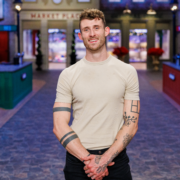
Chase Maus, a Kentucky pastry chef and Season 12 contestant on Food Network’s Holiday Baking Championship, smiles on the show’s holiday themed kitchen set.

Kentucky Pastry Chef Chase Maus Competes on Food Network’s Season 12 of “Holiday Baking Championship”

Kentucky-bred pastry chef Chase Maus grew up watching Food Network after school. This holiday season, the 31-year-old is competing on its biggest stage.

Maus, a former Covington bakery owner now living in Santa Fe, New Mexico, is a contestant on Season 12 of Food Network’s “Holiday Baking Championship,” which premiered Nov. 3. The season centers on a “Naughty vs. Nice” holiday village, where bakers face fast-paced technical challenges and elaborate main-heat builds.

“It is such a vulnerable experience,” Maus told Queer Kentucky. “You are putting not only your personality on display, because it is reality television, but also the work you are doing and the work your life is based around.”

From Covington’s Rose & Mary Bakery to the National Baking Stage

Before he was crafting mulled-spice tarts and coconut chess pie for a national audience, Maus was drawing weekend lines down the block in Northern Kentucky.

He co-owned and ran Rose & Mary Bakery in Covington, where customers routinely waited in freezing temperatures for a chance at his croissants, pies and pastries.

“The line at the bakery was so insane that I do not even think I would stand in it,” he said. “People were dedicated. They stood outside in 10-degree weather for an hour. At that point I thought, holy crap. We have created something out of our hands.”

Freshly baked croissants sit on display inside Rose and Mary Bakery in Covington, Kentucky, the former bakery run by pastry chef Chase Maus.

Fresh croissants rest on a tray at Rose and Mary Bakery in Covington, Kentucky. The shop, once operated by pastry chef Chase Maus, became known for its long weekend lines and creative pastries.

The success of Rose & Mary created an unsustainable workload for Maus. He lived above the bakery and sometimes worked from 2 a.m. to 7 p.m. He said friendships and family relationships suffered, and the partnership with the bakery’s investor grew sour — eventually leading to the closure of the bakery.

“I felt like I had shot my ego in the face,” he said. “The namesake of the bakery was no longer mine. I left with nothing.”

After closing Rose & Mary, he took several months off to take a break from his passion and mourn his loss. He eventually joined the Otto’s Restaurant Group, where he helped open a small bakery inside Mama’s and handled desserts and bread service for the company. The job, he said, helped him recover.

“It was an awesome kitchen and a good group of people,” he said. “It allowed me to lick my wounds and get back into the kitchen.”

Inside Season 12 of Holiday Baking Championship and How the Competition Works

“Holiday Baking Championship” is one of Food Network’s flagship competition shows. Each season, professional and home bakers face themed preheat challenges and larger main-heat bakes requiring multiple components and elaborate holiday displays. Judges taste and critique each dish, sending one baker home nearly every week.

During Season 12, bakers are divided into Team Naughty and Team Nice in a holiday village setting, with team wins occasionally providing immunity.

On paper, bakers have about two and a half hours for most main heats. In reality, Maus said, the clock feels crushing.

“Watching the show, it is easy to think, ‘Two and a half hours is plenty of time,’” he said. “But it does not feel that way. You are in a kitchen you do not know, with one walk-through before baking. Everyone is equally scared.”

He added the emotional vulnerability is even more intense than the technical pressure.

“It is really hard to stand in front of Food Network personalities and famous pastry chefs and have them pick apart your plate,” he said.

In the first episode, Maus bakes a brown butter coconut chess pie, a spin on a traditional Kentucky dessert, helping Team Nice win the week and secure immunity. As the season continues, bakers tackle themes ranging from holiday cocktails to Chrismukkah, blending Christmas and Hanukkah elements into plated desserts.

What Competing on Holiday Baking Championship Really Feels Like

Contestants from Season 12 of Food Network’s Holiday Baking Championship pose together on the show’s festive holiday kitchen set.

Season 12 contestants of Food Network’s Holiday Baking Championship gather on the show’s holiday village set, where they compete in the Naughty vs. Nice themed baking competition.

When Muas watched Episode 3 with friends, an installment he said he does not feel he “shines in.”

“Watching it again is so hard,” he said. “It is such a vulnerable experience. You know exactly what happened, but reliving it is tough.”

He wishes viewers better understood the emotional reality of competition baking.

“I wish people could see the humans running around and thinking,” he said. “Some people online can be so harsh. If I had the bravery to dive into Reddit, which I do not, I know people would have a lot to say about contestants’ mess ups or their looks.”

He hopes fans cheering for him will extend empathy to the entire cast.

“If you are watching the show and you are a fan of Chase, do not be so hard on the other contestants,” he said. “It is still television. It is edited, even though the baking is real.”

Keeping results secret has been one of the season’s biggest challenges.

“It is so hard,” he said. “You want to justify things or explain what happens next, and you just cannot. I have to sit on my hands.”

How Kentucky Roots and Queer Identity Shape Chase Maus’ Baking Style

Tray of blueberry crumble cheesecake danishes topped with powdered sugar at a bakery.

Blueberry crumble cheesecake danishes sit freshly baked and dusted with powdered sugar at a local bakery, showcasing one of its popular laminated pastries.

Maus’ baking is grounded in Kentucky traditions and French pastry mechanics. He gravitates toward pies, laminated doughs and anything built around cold butter and mechanical leavening.

“Pie would be one thing I am known for, but croissants were the backbone of Rose & Mary,” he said.

He often incorporates bourbon into recipes, citing Woodford Reserve, Basil Hayden, Elijah Craig and Wild Turkey 101 as family staples.

“Bourbon is a rite of passage in my family,” he said.

Maus said his queerness also shaped his path into food.

“At the same time that I was coming out as a gay man, I was also deciding to leave behind everything I thought I wanted to do and lean into food,” he said. “As I developed my queer self, I stepped into this world of artistry and creation.”

That influence shows most clearly in his plating and decoration.

“There is a very clear, colorful, expressive way in which I decorate or plate something,” he said. “It ties to my queerness and my desire to be different and not fit into a box.”

Community support and next steps

Since the season premiered, Maus’ phone has been flooded with messages from former classmates, teachers and longtime Covington customers.

“It has been overwhelming in the best ways,” he said. “People I have not heard from in years are reaching out. It has been really fun to host watch parties with my friends and my boyfriend.”

Santa Fe slows down in the winter, giving him time to plan what comes next. Maus is at work on a pie-focused cookbook he describes as “fun, sassy, creative” and partly self-help inspired. 

He is also exploring additional competitions, pursuing awards and thinking about where he and his boyfriend may eventually settle.

“I am very open to what that looks like,” he said. “In the long run, there might be a move in my future. One day I want to get back to having my own thing.”

Where that future lands, he said, is still unfolding. But stepping onto the Food Network stage has reminded him of something he needed to feel again after closing his first bakery.

“I grew up watching these shows,” he said. “I felt like I should push myself to dream again. Now I am just trying to enjoy it and see where it takes me.”

Painting a Picture of HIV Prevalence in Rural Kentucky

The article is from our special issue on Mpox. You can access the full issue here.

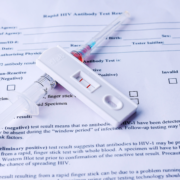
In a previous article, we saw that only an estimated 28.8% of Kentuckians have been tested for HIV at least once in their lives. This means that around a quarter of Kentuckians know their status … or have known it. STI testing, like any other form of responsible self-improvement, is best performed routinely and with intention. One doesn’t go to therapy once and declare himself trauma-free or take a look at the weather one day and declare that it’s always sunny from now on—so why are we so quick to take one test and be done with the whole affair? The answer is a complex web of cultural stigma and access to healthcare in the Bluegrass state. 

Stigma around HIV rages strong due to its connection with the LGBTQ+ community (let’s not forget that HIV/AIDS was originally called “gay cancer“) and intravenous drug users. In the United States, anti-LGBTQ+ sentiment rages strong due to flame-fanning from right-wing evangelicals, politicians, and social media personalities. Similarly, the public’s association with intravenous drug users and those living with addiction is very negative—particularly in areas where drug use is pervasive and heavily associated with violent crime. The negative associations people have with these two communities translates to stigma—literally “a mark of shame.” If one’s only understanding of HIV is that it’s a disease for “queers and addicts,” but your math teacher or your congressman comes out as HIV+, one is likely to transfer those associations onto them: to stigmatize them, or apply that mark of shame. The prospect of suddenly losing reputation or standing within one’s community is terrifying, and that deters people from getting necessary care. While there are some protections in place for people taking and receiving results of an HIV test, they may not be enough to ensure people feel safe enough to test in the first place. 

Add to this fear of stigma to the legal ramifications of knowingly spreading HIV—which is still a Class-D felony offense in the state—and there are very real ramifications to being diagnosed with HIV. You can’t unknow something like that, so diagnosis opens up a whole can of worms beyond one’s individual health. 

All of these compounding issues mean that getting tested isn’t as simple as it may seem for Kentuckians. Up until June 2023, even selling or distributing home HIV tests was considered a felony. This was overturned thanks to the work of the HIV Is Not A Crime Coalition, powered by the Fairness Campaign. At-home testing provides the privacy, ease, and accuracy necessary for more Kentuckians to be regularly informed about their status, and to act accordingly.

Beyond the issues of stigmatization, legal persecution, and access to testing, Kentucky faces an additional barrier to effective HIV treatment and prevention: an epidemic of intravenous drug use. A 2019 by Kentucky Public Health and the CDC found that of 220 U.S. counties at risk for an HIV/HepC outbreak among intravenous drug users, 54 of those (24.5%) were in Kentucky. 

via TheKentuckyLantern

A number of concrete steps have been taken to reduce harm within the region, namely increasing the accessibility of syringe services programs (SSPs). Syringes are single-use tools—they should not be used more than once or, even worse, shared. Generally speaking, people using intravenous drugs are focused on other things and don’t have tens of spare needles lying around in sterile conditions. SSPs allow them to reduce the potential harm associated with these activities by safely disposing of used needles, getting access to clean ones, and ultimately offering screening, treatment, and support. These, too, were illegal until 2015. 

As we’ve seen, the statistics paint a negative picture of HIV in Kentucky—low STI literacy rates, stigmatization, legal barriers, and other factors have often blocked meaningful progress. But in the last decade, Kentucky residents on both the local and state levels have organized to make meaningful strides in preventing, treating, and destigmatizing HIV across the state. But there is still work to do! If you’re inspired by all this progress and want to ensure we keep moving forward, join local activist groups like the Fairness Campaign or AVOL and carry on the work that has been done in the name of health and wellbeing. 

The article is from our special issue on Mpox. You can access the full issue here.

Pin It on Pinterest