KEEP. Subject. Additive. No regular provider, never tested, refused at the door, distance or cost barriers to care. Our strongest recurring health frame.

Tag Archive for: Subject: Access

Willow, with long, wind-blown reddish hair and glasses, smiles in a selfie outdoors under a cloudy sky, headphones around her neck.

Op-ed: Being trans in Flemingsburg, Kentucky, isn’t just isolating. It’s also freeing.

The views and opinions expressed in submissions to Queer Kentucky are those of the authors and do not necessarily reflect the official policy or position of Queer Kentucky. Any content provided by our submissions or regular columnists are of their opinion. As a reader, you are always welcome to submit your op-eds through our submission form.

Medically transitioning while living in Flemingsburg is horrifying. You wonder not if people are going to notice the changes but when; there is only so long that you can hide it or at least for me the need to express myself as who I am. Towns like this have a monoculture. Most of them expect certain things: everyone is cis, heterosexual, and a misogynistic God. For most people this is a very comfortable life, but that is not how my brain is wired. Your brain wonders: Will people accept me? When you have political ads, preachers condemning us as abominations, the one thing that sticks with me is I witnessed people believe the litter box rumors. Even before I knew that I was a trans girl, this drove me insane.

How does one find community here of all places? Most of us have to look outside, usually to a college town or a major city, for it. But why must it be that way? Can we change hearts and minds here? I would like to think that but sadly I don’t think that will happen anytime soon. There are not a lot of us, society is a numbers game and we are the prey. All of us have to find safety in each other. Maybe one day there will be a support network for LGBT+ people for small towns like this one, but I fear that it will be met with othering and hostility.

So why am I writing this if it’s so dire out there? I personally believe that one voice can make a difference to at least one person. It is worth it! Or maybe it’s just me trying to tell the world, “Hey, I am here.” Will you take my hand and go on this journey with me? Some of you might not understand it but can I at least have your empathy? I’m not hurting anyone. I can’t believe adults are out here demonizing trans children not because of their moral values but because of a media campaign.

At the end of the day, we all just want our voices heard. Maybe one day Kentucky will grow to accept us for who we are but that is not the reality we live in, so we must find each other. As a group, we tell each other our struggles and our experiences. I am just one voice but it is my voice and I just want it to be heard. I got lucky that I had help getting started on this journey, but I can’t afford an Uber to Planned Parenthood every three months, so I am forced to use the local hospital for blood work to send out there. It’s been a bit of a headache but worth it in the end even if I end up having to go back there the next week because for some reason they have not sent it.

This life has been a bit isolated but very freeing. The one thing that I can say for certain is that this path has been very freeing. I never thought I would ever reach a point where I am happy for myself for the first time. No matter what happens this is who I am and nothing can change that.

About the author: Willow (she/her) has lived in Flemingsburg for nine years and has been medically transitioning for about nine months.
Illustration by Kami Pankey of two faces in profile with a speech bubble that reads Protect Black Trans Women

“We Don’t Need Allies That Are Going to Wave a Flag”: A Trans Leader on What Real Support Looks Like

This story first appeared in Queer Cincinnati: Beyond the Binary, published Oct. 23, 2026.

For many transgender Ohioans, recent legislation has reshaped the conversation around healthcare, education, and safety. At the center of these conversations, with a central mission to provide facts around these sometimes confusing subjects, is TransOhio. In the summer of 2026, I conducted an interview with Dara Adkison, the Executive Director of TransOhio, a nonbinary, genderqueer, trans-masculine person who previously served on the TransOhio Board of Directors for two years.

What was the driving force that led to the start of TransOhio?

TransOhio has been around for 21 years in a variety of different iterations. We started in 2005 when there wasn’t a trans organization in the state. We started off as a Zine actually, providing resources, community spaces, and message board kind of stuff. It was a place for different kinds of voices to be heard. We started making zines again recently. We have a rolling admission for when we have enough submissions to put together something cool.

What are some of the tangible ways in which you’ve been able to carry out your mission of protecting and advancing the rights of trans, nonbinary, intersex, and gender nonconforming people in Ohio?

We are hard focused on what is tangible. We don’t do performative at TransOhio. We have a longstanding (over 10 years now) legal clinic for anyone who needs care, all free for any trans person who needs it. We’ve helped over 4000 trans people in Ohio with name changes and gender marker changes. We also have an emergency fund which has exponentially scaled in the last two years. We provide emergency help for people who reach out and might be in a dangerous situation. We have recently passed out $250,000 out to our community statewide. If people are trans in Ohio and are in need of help, we’re gonna help them.

TransOhio’s vision mentions wanting to increase lesbian, gay, bisexual, heterosexual, and ally understanding/cultural awareness of the Ohio transgender community. In your eyes, what does being a good ally to the trans community mean today?

I think that being an ally today is not being afraid to stick your neck out. We don’t need allies that are going to wave a flag, but then be silent when they see a trans person getting yelled at on the street. We don’t need allies that will wear a love wins pin, but then when they see the gender expansive person at their job getting discriminated against they don’t say anything. We need people to be vocal in those small moments that are very large for the people being directly impacted by them. We need people to be vocal with their legislators. That’s where I see allyship.

Your brochure mentions advocating for laws and policies which best protect our most vulnerable community members. In what ways do you advocate for those with intersecting identities, especially when factors other than transphobia (like racism and sexism) are sometimes still very present within trans communities?

At TransOhio, whenever we ourselves are running a program or partnering on an event, we do everything we can to not just make the spaces inclusive, but welcoming. We are very intentional about making sure people from a variety of intersecting identities are in our leadership, and also in the room when we are figuring out plans and programs. As a white trans leader, I am personally very vocal about making sure doors are open. You won’t find me doing an all white panel.

The Cleveland clinic recently agreed to a 20 year ban of gender affirming treatment for patients under the age of 18. This includes puberty blockers, hormone therapy, and other treatments. You’ve made efforts to put out many facts about this settlement. As there are unfortunately more laws being put out very similar to this settlement, how do you counteract the ambiguity? How do you lessen the confusion surrounding them?

Our main tactic for lessening confusion is to try and put out as much correct information as possible. We kind of consider ourselves the disinformation assistance for trans people in Ohio, because we are always going to say what’s correct. I know that can sound a little obnoxious, but we put a lot of time and effort into making sure we are sharing correct information. We also know how much people trust us to be giving them correct information.

For the Cleveland clinic stuff, our main conversation moving forward is what we can do about it? HB68 is still in active litigation, but even if that litigation ends up going our way, then we now have this settlement in place that will affect Cleveland clinic in perpetuity for 20 years. There’s nothing that the courts can do about that. What we can do is make Cleveland Clinic look like idiots for complying in an effort to have no other hospital want to comply excessively in the way that they have. They did not NEED to make this settlement. We don’t want our hospitals caving into the Department of Justice, not about trans healthcare, and not about anyone’s healthcare. Coming back to talking about things good allies can do: Allies who have financial power are the ones that end up getting listened to. This is a great moment for those people to step up and talk to the hospitals and say that we don’t want this kind of compliance. The Cleveland Clinic has made a very intentional choice about who they want to be as a medical leader, not just in Ohio but globally, and they should be shamed for it.

Do people often reach out to your organization for clarity regarding these things? If so, in what manner?

I think it depends what kind of clarity folks are looking for. We definitely have a fairly substantial social media footprint. Regardless of my personal opinion of social media, it is still a very efficient and active way of getting information out, especially in some more rural areas. When we’ve had complex bill conversations, we’ll have discord sessions for open community discussion about potential impacts, potential contingency planning, and generally just answering questions. People also reach out to us with more personal questions. You can reach out via email, messenger, and different chats on various platforms. We don’t recommend approaching myself, or any of our board members if you see us just trying to exist as a queer person out in the world please. Our main inbox [email protected] is a good one.

Aside from the plethora of information that your own organization provides, what other organizations or resources do you often find yourself recommending to trans individuals struggling with staying informed about their rights?

In Cincinnati specifically, Transform provides some really fantastic support services, groups, social programming, or even their free closet. Trans Masc Cincy is [another group] really focusing on trans youth. They have some really great support groups for masc presenting folks. In terms of other places for staying on top of the ever-changing landscape of things, Advocates for Trans Equality (A4TE) nationally advocates for trans rights. They have great information, particularly other kinds of guides existing outside of Ohio. If folks were born in other places sometimes we will send them over to A4TE’s guides.

In your mission you also mention providing social activities that are inclusive and foster pride in the Ohio transgender community. What can someone who might be anxious about attending these events expect from them? What’s a specific and successful activity that you’ve put together?

We are in the 27th year of our annual gathering, the TransOhio Symposium. We are actually having it in Cincinnati this year for the first time. It’s the gathering of about 200-400 trans people over the course of a weekend. It’s a really unique kind of environment. There aren’t a lot of other opportunities to have a social and informational sharing community meal with that many other trans people. When we’re looking at what a successful symposium would look like, it sometimes can be very overwhelming. We have people that come and it’s their first time presenting as themselves in a community space. We have people who it’s their first time meeting other trans people. We have folks who drive in from other states with a parent or friends because they don’t have anything like this near them. We really take responsibility in knowing the kind of safe space that we’re trying to create. It’s all community and trans driven. There’s always a lot of food and quiet spaces. It’s super accessible for people to just relax and take a sec, and you can come and go as you please. This is a core program for us and a major undertaking.

With this magazine we are focused on reaching trans youth. What personal advice do you find yourself giving to trans youth that are particularly struggling with fear and acceptance right now?

I don’t think there’s one perfect thing to say, just because everyone’s experience with their understanding of their gender is so different from person to person. Speaking personally for what I would have said to my younger self is that being unapologetic sooner is extremely freeing. For people that don’t have accepting families it can be so complicated, but giving yourself permission to exist with multiple feelings at once is also okay. You can be frustrated with a parent, and also love them, and also want to be respected, and also be okay with having all those complex feelings and knowing exactly who you are at the same time. It doesn’t have to be binary, just like our genders don’t have to be binary. It’s okay to give yourself permission to evolve and grow and change. I would also strongly encourage reading queer history, because I know I didn’t learn ANY in school. My three favorite quick crash course recommendations would be “Saving Our Own Lives”, “Queer Trans and Mostly Black: a Mutual Aid Story from the Last 50 Years”, “Black on Both Sides”, and “Before we Were Trans”.

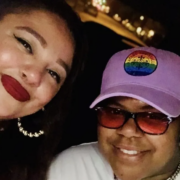
Paulina Helm-Hernández, in red lipstick and a jeweled necklace, and Ashe Helm-Hernandez, in a lavender cap with a rainbow patch and tinted glasses, smile together in a nighttime selfie.

The Information Game: Women’s Soccer, HIV and Belonging for LGBTQIA+ People of Color in Kentucky

On May 29, 1995, R&B group TLC released the song “Waterfalls.” It was the first No. 1 song ever to refer directly to AIDS, spending seven weeks at the Billboard 100 chart’s top spot: a song by three Black women to break the stigma surrounding HIV and to promote safer sex practices.

That same year was also one of the most important years in the history of professional women’s soccer. In 1995, it was the second year of FIFA’s Women’s World Cup, held just two months after TLC released “Waterfalls.” According to the U.S. Soccer archives, women’s soccer had almost no professional leagues in 1995. Most successful American players were competing for colleges and universities; salaries were nearly non-existent, and it was still a year before the Summer Olympics would welcome women’s soccer as a medal event. Women’s soccer at that time was still in its infancy.

Much like women’s soccer athletes from around the world were just beginning to be seen and taken seriously on the world stage, a deadly virus was expanding across LGBTQIA+ communities, at a time when effective treatment remained limited. Thirty years later, these two histories have intersected in a conversation about the National Women’s Soccer League (NWSL), the evolution of HIV treatment and healthcare, and what it truly means to belong. As women’s professional soccer continues to grow, so does the opportunity to examine how the league’s relationship with LGBTQIA+ communities can extend beyond visibility and representation to include education, access to sexual healthcare, and meaningful support.

According to a first-person account by Kevin Garner, published last year by Queer Kentucky, “In [19]80s and ‘90s Kentucky, HIV/AIDS services were concentrated in urban areas such as Louisville and Lexington. As a conservative state, political attitudes and action were slowly emerging.”

Garner pointed to Nazareth Home and Lyndon Lane Nursing Facility as “the only two facilities that would take clients under 40 who were affected by this disease during this time.

“There was a push for prevention.”

An unmet need unevenly shared

In 1995, more than 500,000 AIDS cases were reported nationally, and about 62% of those diagnosed had died by October. A 1992 study found that one in three Kentuckians diagnosed with AIDS in the 12 months between July 1990 and June 1991 died within three months of their diagnosis. Researchers concluded that many patients had not received consistent HIV care before developing AIDS, and they pointed to missed diagnoses, fragmented medical care (across dozens of hospitals and physicians), and gaps in follow-up treatment as major contributors to poor outcomes.

From the 1990s to today, the highest burden of HIV/AIDS deaths in the U.S. has not been evenly shared. Data from the Centers for Disease Control and Prevention (CDC) show, in the early years of the epidemic, AIDS deaths were heavily concentrated among men, especially gay and bisexual men, and the epidemic was especially severe in places like New York, New Jersey, California, and Florida.

By the mid-1990s, AIDS deaths reached their peak: The CDC reported that about 50,628 people died of AIDS in 1995, just before combination HIV treatment became widely available. After those stronger drug combinations arrived in 1996, deaths dropped sharply. Across race, Black Americans became increasingly overrepresented in HIV/AIDS illness and death, and that disparity continues today.

In plain terms, Black communities have carried a much higher share of HIV-related deaths than their share of the U.S. population. By region, the burden shifted over time: Early in the epidemic, AIDS was particularly concentrated in the Northeast, but today the South carries the largest share of both new HIV diagnoses and HIV-related deaths. In 2024, the South accounted for 51% of HIV diagnoses and 53% of HIV-related deaths nationwide.

Community in the crowd

From the 1990s to today, as HIV/AIDS prevention and treatment has changed considerably, so has the sport of women’s soccer in Kentucky. In 2021, Racing Louisville FC began play in the National Women’s Soccer League (NWSL), bringing a major-league professional sports franchise to Louisville for the first time in 41 years. Today, the club plays at the 15,304-seat Lynn Family Stadium, where more than 11,000 people attended a single NWSL match in 2024.

In recent years, increased investment in women’s sports has also meant more “third spaces” – what sociologist Ray Oldenburg described in 1989 as informal gathering spaces outside the home (first place) and work (second place), where people build relationships and community. For longtime LGBTQIA+ fans, who have long existed as the foundation of women’s sports fandoms around the world, stadiums and the communities that gather around us can function as third spaces, offering opportunities to build relationships, express our identities freely, and experience a sense of belonging that may not always be available in other parts of our lives.

I met two of these fans, Paulina Helm-Hernández and Ashe Helm-Hernandez, on a Wednesday night in Louisville. Paulina is a feminist philanthropic advocate whose work spans the Southeast, LGBTQ+, feminist and migrant rights movements. Born in Mexico City, with family from Veracruz, Mexico, she grew up in eastern North Carolina. Ashe, a philanthropic advocate for trans movement work, is originally from Louisville. Their family has been in the city for a century, and they attended Jefferson County Public Schools and the University of Louisville. After spending time away, they returned home with their wife, Paulina, to be closer to family.

Both had been to prior Racing Louisville matches, but Paulina still remembers what struck her the first time friends invited her to a match.

“I attended with some friends that invited us specifically because they’re also Racing Louisville fans, and we made an outing of it as a group of friends,” Paulina said. “It was my first time. My family also grew up, you know, as Mexican, as a Chicana woman, like following and watching soccer, and also one of the favorite sports of the Latino community, and I was a little bit surprised by the lack of racial diversity, to be honest, because I was like, ‘Wait, where are my people at?’ Because my people love soccer, and more and more girls are playing soccer.

“So I do feel like there’s like a little bit of a disconnect between the community and who attended those games,” she said. “Or who attended the games at the time was a couple years ago. So to be fair, I hope that that’s changed.”
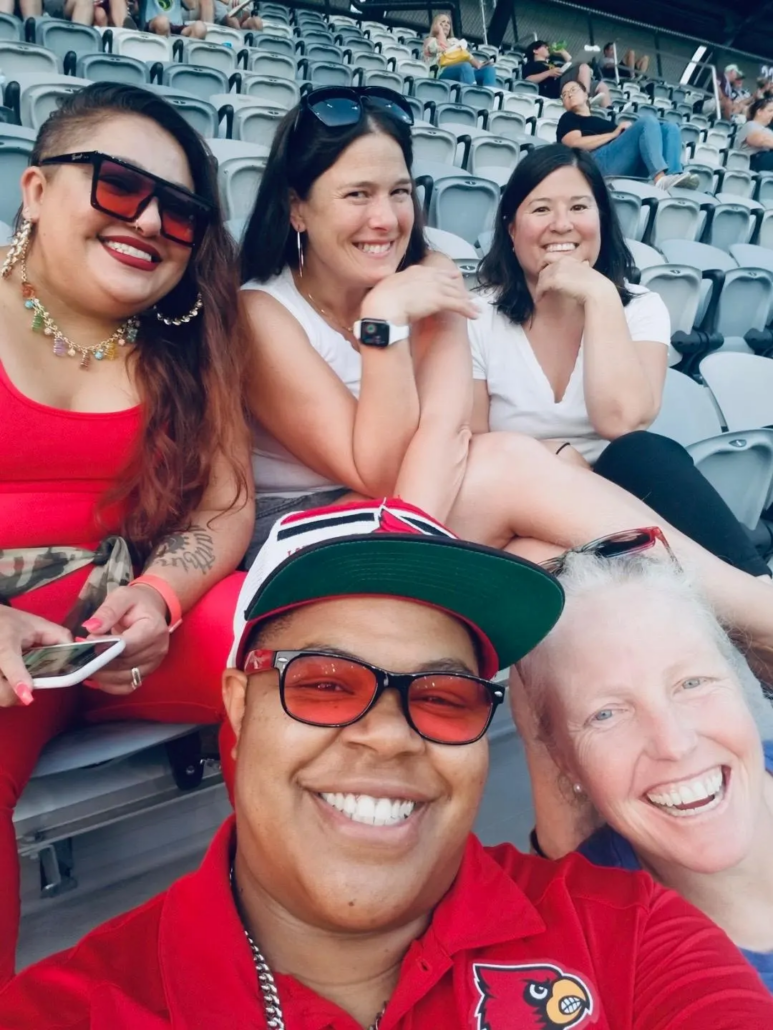
Paulina Helm-Hernández and Ashe Helm-Hernandez smile for a selfie with three friends in the stadium seats at a Racing Louisville game.

Paulina Helm-Hernández, left, and Ashe Helm-Hernandez, front, with friends at a Racing Louisville game. Supplied by Paulina Helm-Hernández and Ashe Helm-Hernandez

Paulina observed a crowd of fans that day considerably less diverse than the city’s larger population. Black residents make up about 23% of the Louisville-Jefferson County metro’s population, and Latino residents about 9%. But Louisville’s diversity has never been evenly distributed across the city. Decades of racial zoning, redlining and other discriminatory housing practices helped produce geographic divisions that remain visible today, with Louisville Metro’s own housing research finding that the city remains segregated by race and ethnicity.

Those divisions also intersect with Louisville’s LGBTQIA+ history. Researchers at the University of Louisville’s Anne Braden Institute have documented race as an important part of understanding queer life and history across Kentucky. Today, Louisville contains some of the state’s strongest LGBTQIA+ community and health infrastructure, but recent survey data from Queer Kentucky suggests that access and belonging remain uneven, even within the state’s largest urban center. Queer Kentucky’s 2025 Community Health Survey found that 65.5% of its 559 LGBTQIA+ respondents reported a strong sense of community belonging, while 11.4% reported low belonging. Respondents living with HIV reported an average belonging score of 3.98, compared with a statewide average of 4.86, the lowest average belonging score of any group measured.

Belonging is a primary indicator of good health. People need access to doctors, medicine, testing and treatment to be well, but research increasingly recognizes that people also need relationships, community and places where they can meaningfully connect with other people. The CDC names social connection an important determinant of physical and mental health, while research cited by the U.S. Surgeon General found that people with a strong sense of community belonging were 2.6 times more likely to report being in good or excellent health than people with a low sense of belonging.

This is especially important for LGBTQIA+ communities, whose rights to love, marry, build families and openly exist continue to be challenged and questioned by elected leaders. For communities whose belonging in public life has repeatedly been contested, having spaces where people can safely gather, build relationships and see themselves reflected is not just about having somewhere to go. Those spaces can become part of what people need to feel connected, supported and well.

That makes the places where LGBTQIA+ people gather part of the conversation about community health, too. A stadium cannot replace a doctor’s office, a testing site or a public health program. But it can do something those institutions cannot always do on their own: regularly bring queer and trans people together around a shared experience and create opportunities for LGBTQIA+ people to feel like they are part of fandom that affirms who they are and who they wish to be in the world.

Still, what Paulina encountered inside the stadium suggested to her that Racing already had much of what it needed to reach a broader community.

“I remember thinking, you know, as a fan of women’s sports, I thought it was a great atmosphere. But I do think, you know, it lacked the cultural diversity that I’m used to in terms of being able to enjoy like those kinds of sporting events, knowing that they’re also a reflection of like not just fanhood, but like what does it actually mean to have infrastructure that like is actually focused on women’s sports and women athletes so that to me you know it’s a mixed bag,” she said. “But I do remember enjoying the game, we had a great time, everybody that worked at the stadium was very welcoming and very warm, and I feel like the space in and of itself… It’s a beautiful arena, and so to me, they have everything in space in terms of the infrastructure, you know, to be able to welcome more people.”

Ashe’s first experience with Racing started differently. A lifelong Louisville sports fan, they showed up dressed for the Louisville team they already knew, but whose colors didn’t match this home team.

“I can go ahead and admit that I totally had on red,” they said. “I had on a University of Louisville ball cap, and my friends busted out laughing at my appearance and quickly took me to the Racing store to get some gear. And so, you know, I was shy. I was like, I didn’t look this team up. My friends invited me out, and I was like, ‘Let’s go! It’s Louisville,’ and I am a diehard University of Louisville fan, and I got that mixed up a bit. So yeah, but lavender is a beautiful color, and I appreciate it very much having some new gear.”
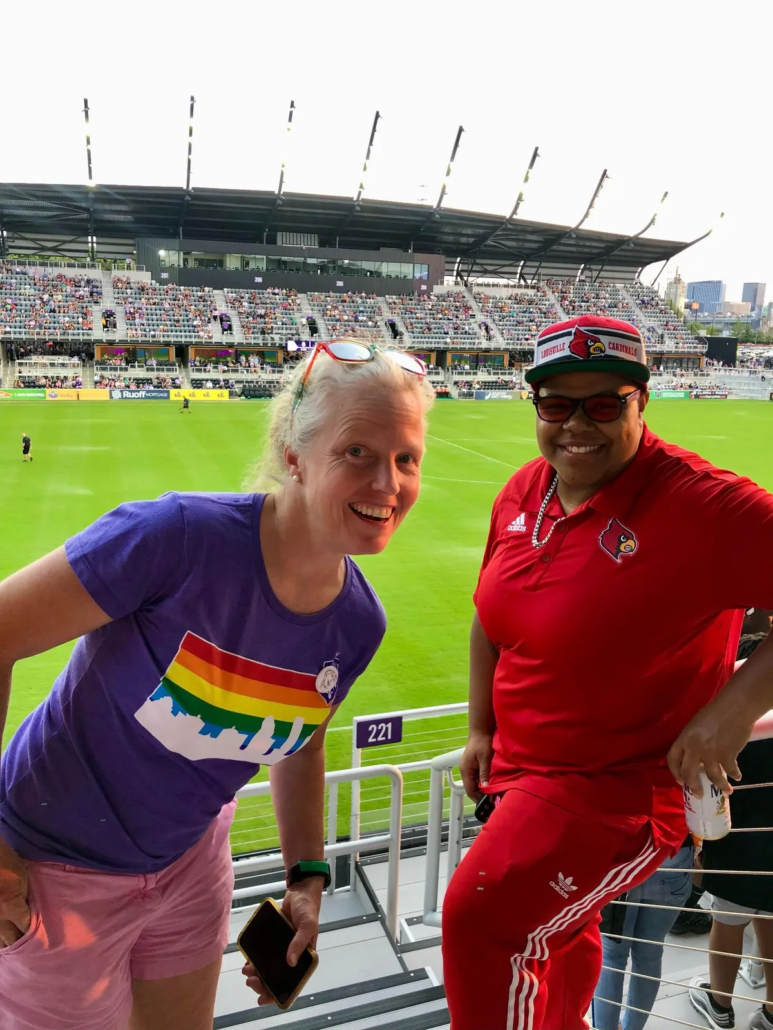
Ashe Helm-Hernandez, wearing a red University of Louisville polo and cap, stands with a friend in a rainbow shirt above the field at a Racing Louisville game.

Ashe Helm-Hernandez, right, in University of Louisville red with a friend at a Racing Louisville game in 2021. Supplied by Paulina Helm-Hernández and Ashe Helm-Hernandez

Soccer as belonging, belonging as care

Their experiences point toward something larger than fandom. In 1995, Kentucky did not have a top-tier professional women’s soccer team or a stadium capable of regularly gathering thousands of women’s soccer fans. Today it does. That growth creates an opportunity that did not exist three decades ago. Professional women’s soccer now has the physical infrastructure, cultural visibility and audience to bring thousands of people together at a time. And some of the communities gathering around women’s sports are the same communities Kentucky’s existing healthcare infrastructure is still struggling to reach.

Queer Kentucky’s 2025 Community Health Survey found that 48.2% of its 559 LGBTQIA+ respondents had never been tested for HIV. Among cisgender women, that figure was 53.6%. Among transgender women, it was 57.7%, and among nonbinary respondents, 50.6%. At the same time, more than one in three respondents statewide reported having no regular healthcare provider, while the U.S. Department of Health and Human Services reports that approximately 1.2 million people in the United States are living with HIV, and one in eight do not know they have the disease.

The relationship between community and HIV prevention is not theoretical. The U.S. Surgeon General’s advisory on social connection notes that stigma surrounding HIV can create barriers to both healthcare and social inclusion, while National Institutes of Health research has found a link between stronger community connections and people taking steps to prevent HIV.

That raises a different question about the economic and social value of professional women’s sports in Kentucky. What if the value of a stadium is not limited to what happens on the field? What if the same infrastructure, built to gather thousands of fans around women athletes, can also become infrastructure for connecting communities to information, testing, prevention and care?

There is already another professional women’s sports league that offers a glimpse of what can happen when that kind of infrastructure is given time to grow.

For Paulina and Ashe, the Women’s National Basketball Association (WNBA) has never been just basketball. Both came of age alongside a league that has now existed for 30 years and watched women’s professional basketball become a place where Black women, queer people and generations of women’s sports fans could see themselves reflected.

Some of Paulina’s earliest experiences in LGBTQ+ movement spaces were already intertwined with women’s basketball. She remembers older lesbians gathering around games and using basketball itself as a language for thinking about organizing and movement building.

“I grew up in an era where people were very like: This is one of the lenses to understand, you know, movement building,” she said.

Three decades later, she sees what women’s professional basketball has become, as more than commercial growth. She called the rise of the WNBA a “social and political win,” describing women’s sports as one of the places where fans can now see “queer excellence” and “feminist excellence” at the highest level.

Ashe remembers that history differently. Growing up playing basketball, some of the women they watched in the earliest years of the WNBA became their heroes.

“I was able to look up to Cheryl Swoopes, and I was able to look up to Cynthia Cooper as people and role models,” they said. “That I could be, that Black women could do that, that they could be on television, that they could play sports, that they could play basketball, that they could sweat, they could be fierce.”

Today, Ashe sees younger players learning whose footsteps they are following, while the players they grew up watching are finally being recognized as living legends.

Their experiences show what can happen when a professional women’s sports league has enough time to become part of a generation’s lives. The NWSL is still building that history. The WNBA was founded in 1996 and began play the following year. In 2026, the league celebrated its 30th season. The NWSL, by comparison, was founded in 2012 and played its first season in 2013. In just over a decade, professional women’s soccer has grown considerably, but that’s still only half the time the WNBA has had to become part of the lives, traditions and communities of its fans.

That difference in time matters when thinking about what Paulina and Ashe described. The impact of the WNBA on their lives cannot be measured only through attendance, television audiences or revenue. They are describing what happens when a professional women’s sports league exists long enough for people to grow up alongside it. Players become childhood heroes. Games become traditions. Fans build relationships with one another.

Queer people find spaces where they see themselves reflected. Over time, a sports league can become part of the social infrastructure of a community.

For Paulina, women’s basketball was woven into LGBTQ+ community life long before the WNBA became a mainstream cultural phenomenon. She remembers gathering at people’s homes to watch games, where basketball brought people together for more than just the competition.

“You just had to get with the program and you had to watch games and you had to go to people’s houses and know that the meetings happen after the game and know you were not allowed to talk through it,” she recalled.

For Ashe, the league’s history is personal. During a recent presentation at work, they shared a photograph of WNBA players from three decades ago with their colleagues: “I told my team that these were my heroes,” Ashe said. Those same athletes who inspired Ashe as a young basketball player are now being celebrated by another generation.

“For me, it’s a very serious moment where players are getting their due, and where younger players are learning whose footsteps they walk in, and they too are being able to recognize living legends,” Ashe said.

Paulina remembers the relationships and organizing that happened around games; Ashe remembers the athletes who showed them what was possible for Black women in professional sports. Together, their experiences illustrate how a league can become part of a community’s history, creating relationships, traditions and a sense of belonging that develop over generations.

Racing Louisville, which joined the league in 2021, is part of a story that is still unfolding, as fans begin building those traditions and relationships that future generations may one day inherit. But just five years after the club began playing in Kentucky, questions have emerged about its long-term future in Louisville.

That possibility raises another question about how communities measure the value of women’s sports institutions. Five years may be enough time to count tickets, calculate attendance and measure revenue. It may not be enough time to measure what happens when a generation grows up with a professional women’s team in its city, when queer fans build traditions around going to games together, when Black and Latine children begin seeing the stadium as somewhere they belong – when community organizations begin treating that stadium as another place where people can be reached.

Lynn Family Stadium represents physical infrastructure. It has more than 15,000 seats and the ability to bring thousands of people together at once. But what Paulina and Ashe describe through their experiences with women’s sports is another kind of infrastructure that takes much longer to build. Relationships, traditions, information networks, chosen family, representation, belonging and trust develop over years as LGBTQIA+ people repeatedly gather in the same places and around the same women’s sports teams.

This work was supported by the 2026 CNP Media Fund. #CNPMediaFund

Side-by-side portraits of Louisville mayoral candidates Craig Greenberg, left, and Shameka Parrish-Wright, right, both smiling.

Where do the candidates for Louisville mayor stand on LGBTQ+ issues?

Here’s where Louisville mayoral candidates Craig Greenberg and Shameka Parrish-Wright stand on LGBTQ+ issues ahead of the Nov. 3 election.

This is the first Louisville mayor’s race without party labels on the ballot. A 2024 state law made mayor and Metro Council elections nonpartisan starting this year, so a straight-party vote won’t cover either race. Voters have to pick each one individually. Candidates can still share their party affiliation while campaigning.

Early in-person voting starts Thursday, Oct. 29.

There are five candidates vying for Louisville mayor this year. Mayor Greenberg, who was first elected in 2022, and Parrish-Wright, the District 3 Metro Council member, are both Democrats and will appear on the ballot. Dave Biggers, JusAustin R. Lane, and Jeff Yocum are also running as write-in options for Louisville mayor.

Queer Kentucky reached out to all five candidates and asked them the same six questions about health, education, and other issues important to the LGBTQ+ community. Only Greenberg and Parrish-Wright responded to those questions in writing by publication time. The questions and candidate responses have been lightly edited for style, grammar, and clarity.

Question: What is your stance on gender-affirming care bans?

Greenberg: I do not support bans on gender-affirming care. Everyone deserves access to medical care free from political interference. Decisions about healthcare should remain between individuals, their families, and their doctors.

Parrish-Wright: I oppose bans on gender-affirming care. Healthcare decisions belong with patients, families, and their medical providers, not politicians. As mayor, I would support access to affirming care through city services and speak out against efforts to restrict it.

Question: What is your stance on Medicaid defunding?

Parrish-Wright: I oppose cuts that take healthcare away from people who depend on Medicaid. I would advocate for strong state and federal support and work with local providers to help residents connect with coverage and care.

Greenberg: I strongly oppose cuts to Medicaid that jeopardize access to quality, affordable healthcare. Medicaid is a lifeline for children, seniors, people with disabilities, and their families. We have already seen the impact of Medicaid cuts as a result of chaos in Washington, and these reductions are putting Kentucky families — in both rural and urban communities — at risk. I firmly believe that elected officials should be looking to expand access to affordable healthcare, not take it away from those who depend on it most.

Question: What is your stance on rural healthcare access?

Greenberg: Access to quality, comprehensive healthcare should never depend on where someone lives. Rural Kentucky faces significant barriers to care, including doctor shortages, long distances to receive treatment, and hospital closures. Addressing these challenges requires that we protect Medicaid access, support the providers treating rural communities, and invest in the services that keep people healthy. Addressing this issue should be a top priority for candidates running for office across the Commonwealth.

Parrish-Wright: People in rural communities deserve timely, affordable care. Louisville can be a partner by supporting regional healthcare providers, improving transportation connections, and advocating for the resources rural communities need.

Question: What will you do about the passage of anti-LGBTQ+ legislation?

Parrish-Wright: I would use the mayor’s office to oppose discriminatory legislation publicly, protect LGBTQ+ residents in city services and employment, and work with community organizations to connect people with support. Louisville should be a welcoming city where everyone can live safely and openly.

Greenberg: As mayor, I have consistently stood up for LGBTQ+ Louisvillians through both policy and direct action. Louisville Metro Government has received a 100% score on the Human Rights Campaign’s Municipal Equality Index every year since I took office, reflecting our commitment to nondiscrimination and equitable access to city services.

As mayor, I directed Metro Government to defend Louisville’s Fairness Ordinance in court against a challenge involving a business owner who refused to serve LGBTQ+ clients. In terms of policy, we have worked in coordination with advocates at the Fairness Campaign to oppose legislation that threatens local nondiscrimination protections, including HB 468 during the 2026 legislative session.

My administration also recognizes that representation matters, which is why I have worked intentionally to cultivate a culture in Metro Government that embraces and supports LGBTQ+ employees at all levels of government. I am proud to have appointed the first openly gay deputy mayor in Louisville history, and we proudly fly the Pride flag every day outside of Metro Hall. This effort also extends to supporting LGBTQ+ employees and their families by ensuring our benefits include comprehensive health coverage that fits their needs.

I am committed to improving the lives of LGBTQ+ residents, employees, and families in Louisville. That means embedding equality into our policies, our advocacy, and our leadership. That is a standard I have set and will continue to uphold as mayor of Louisville.

Editor’s note: The case Greenberg refers to was filed in 2019 by Louisville wedding photographer Chelsey Nelson, who sued to avoid having to photograph same-sex weddings. A federal judge ruled in her favor, and in March 2026 Metro Government agreed to pay $800,000 in attorneys’ fees and costs.

Question: What is your stance on “Don’t Say LGBTQ+” classroom policies?

Greenberg: I oppose policies that stigmatize LGBTQ+ people or prevent students from learning in inclusive environments. Every student deserves to feel safe in school, and every family should know their child will be treated with dignity in the classroom. The government should be focused on delivering a quality education for every child, not targeting LGBTQ+ people.

Parrish-Wright: I oppose policies that erase LGBTQIA people from classroom conversations or make students and educators feel unsafe. JCPS is an independent school district, so the mayor cannot set its curriculum, but I would speak up for inclusive, age-appropriate education and support LGBTQIA students and families.

Question: What is your stance on pronouns and bathroom policies?

Parrish-Wright: People should be addressed by the names and pronouns they use, and students should be able to use facilities consistent with their gender identity. I support policies that protect students’ privacy, safety, and dignity.

Greenberg: Students should be free to fully participate in school without fear of harassment or discrimination. School policies should acknowledge students’ identities, uphold privacy, and ensure all students have access to the appropriate facilities. We should focus on creating welcoming environments for all students, and that includes respecting students’ identities.

A red AIDS ribbon lays on a white background with a syringe of blood next to it.

AVOL Kentucky Is Adding Injectable PrEP. One Shot Can Replace Two Months of Pills.

AVOL Kentucky has worked to support Kentuckians living with HIV for almost four decades. Now, it’s taking its work to the next level and will soon start to offer injectable pre-exposure prophylaxis, most commonly known as PrEP, the newest and longest-lasting option for HIV prevention.

PrEP is a medication that reduces a person’s chances of contracting HIV and can reduce the risk of getting the virus by about 99 percent when taken as prescribed, according to the U.S. Centers for Disease Control and Prevention.

PrEP can be taken in pill form or administered via injection, which provides longer-lasting protection against HIV, according to the Department of Health and Human Services. The Food and Drug Administration has approved two types of injectable PrEP. One is given every two months, and another is administered once every six months.

Some of the benefits of the injectable medication are that users are less likely to miss a dose due to its intermittent schedule, according to Jon Parker, CEO of AVOL Kentucky.

The method also offers more privacy since there are “no medication bottles with patient information,” he added.

The Lexington-based nonprofit has worked hard so it could expand its programs and services for its patients.

AVOL launched nearly 40 years ago as a program of the Gay and Lesbian Services, now the Pride Center, providing services for people living with HIV.

In its early days, AVOL offered “just basic social services and support, and then over time we added housing, support services and permanent housing for people living with HIV,” said Parker.

By about 1993 to 1994, the organization had started to get more involved in HIV prevention and began working to educate communities about the virus and how it could be prevented. The nonprofit offered HIV prevention supplies, Parker said, and drove people to local health departments to get tested. Parker noted that sometimes people had to wait two weeks to get the results of the test and see if they had contracted the virus.

The organization eventually began offering on-site testing so that people could find out their HIV status in minutes.

“So, we’ve come a long way,” said Parker.

Right around the onset of the COVID-19 pandemic, Parker said AVOL Kentucky had learned that other similar organizations in North America were beginning to offer PrEP services and wanted to learn how to do the same.

Initially, he said, the organization said offering PrEP services was “out of reach” for them since at the time they did not provide any other medical services apart from bringing people to get tested for HIV.

“We learned that we could do a lot with contracts with pharmacies and with medical staff, so that we didn’t have to perform the services ourselves,” Parker said. “We could contract and kind of pull together, curate a system that could be responsive to the people we see and get them connected to PrEP.”

AVOL Kentucky was, in part, able to provide PrEP services at this time because of the 340B Drug Price Program, a federal program that requires pharmaceutical manufacturers that participate with Medicaid to sell outpatient prescription drugs at discounted prices to some healthcare organizations that serve low-income and uninsured people.

Parker said that AVOL Kentucky receives some revenue through the program, which is then used to offset operational costs, which has helped them build out their sexual-health services without requiring uninsured clients to pay.

In November 2025, the organization decided that it was time to hire a nurse practitioner to help provide more immediate access to PrEP, HIV, and sexually transmitted infection treatment, according to Parker. And that same month, AVOL Kentucky held its first-ever in-person clinic.

At the end of this past August, AVOL Kentucky had 70 clients who received PrEP services through their in-house, on-site clinic. The organization partners with Q Care Plus, a telehealth provider, to provide another 134 Kentuckians with PrEP and PrEP-related services, according to Parker.

“AVOL’s PrEP navigators work across both telehealth and in-house patients, tracking follow-up timing, scheduling appointments, offering interim HIV and STI testing, and providing ongoing access to prevention supplies,” he told Queer Kentucky.

And more people are turning to AVOL Kentucky for HIV care every month. In September, another 25 people joined the list of regular AVOL Kentucky clients, he added.

“There is no one route for everyone,” Parker said when it comes to connecting people to care. “Every person is unique, and you have to find the route that’s appropriate and achievable for them.”

AVOL Kentucky offers walk-in appointments Monday through Friday and provides most of its STI and HIV prevention and treatment services free of charge, according to its website.

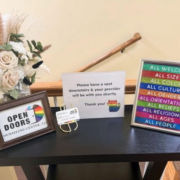
Mental health care for trans Kentuckians: Open Doors Counseling Center's entry table with a rainbow "All Welcome" board.

Trans Kentuckians Are Staying Home. The Data Says Community Is What Helps.

Mental health trends in transgender and nonbinary Kentuckians have displayed shifts during recent policy debates.

A 2025 Queer Kentucky survey showed that 34.5% of respondents reported that these recent policy debates have very negatively impacted their mental health.

Some gender expansive Kentuckians told Queer Kentucky that policy debates have led to them feeling like they are at the focal point of society right now, making the simple act of going into public feel daunting.
Hayes Farris, a nonbinary Kentuckian, said when they step out in public, it feels like transgender people are what sit at the forefront of people’s minds.

Farris said part of it is not knowing what people are thinking.

“Is that person looking at me because they are seething inside and hate that I exist? Are they curious? That’s just a heavy mental load to carry around,” they said.

Delgonna Cole, a transgender woman, said she is constantly thinking about what might make her easy to “clock” as transgender in public.

“I’ve had people come up to me at Kroger saying, ‘Hey, I have a question. Are you trans?’” she said. In reference to policy debates about the rights of transgender people, Cole said, “If it wasn’t pushed so intensely, I think I wouldn’t be so constantly afraid of going outside.”

Even healthcare providers for transgender and nonbinary Kentuckians reported seeing changes or responses from their patients reflecting these negative effects.

Dr. Keisa Fallin-Bennett’s practice has included transgender people for around 10 years, and for most of her career, she has been providing her services in Kentucky.

Fallin-Bennett said the impact varies from person to person, but she has heard from several patients that the impacts of recent policy debates have been devastating.

She said there has been a lot of policy debate prior to 2023, but that is where it all really took off.

“People start in a difficult state because of the world and having to accept that the institutions are kind of actively working against them,” Fallin-Bennett said.

Policy changes have led to decreased federal funding for her place of employment, and these changes have altered what is allowed to be provided to transgender patients, according to Fallin-Bennett.

According to the survey, when transgender women are denied healthcare in any aspect, they are more likely to avoid all healthcare. Some of this avoidance may be due to shaken trust in the healthcare system.

Fallin-Bennett discussed the issues that a 2023 Kentucky law stated that neither hormones nor surgery could be provided to transgender patients under 18, but an executive order to cut federal funding for institutions that treat individuals under 19 was signed in 2025 under President Donald Trump.

Under the threat of losing federal funding, Fallin-Bennett’s practice could no longer treat people under 19 years old, and people under that age limit who were already on hormones had to be weaned off.

“Frustrations are really building, and it really erodes the trust that people have in us,” Fallin-Bennett said.

For Cole, after struggling to get endocrinologists to properly prescribe her gender-affirming hormones, she took matters into her own hands.

“They wanted to stop my HRT dose because it got too high… but the levels were lower than a cis teenager’s,” she said. “So I just stopped seeing them, and I started doing DIY.”

Cole said she buys everything online, did extensive research, and measures her blood levels all on her own.

Transgender women report provider refusal at rates of 38.5%, far above the 12.6% statewide average for queer people, according to the QKY survey.

Another factor that gender expansive Kentuckians must think about when it comes to healthcare is finding understanding in their providers.

“I don’t think it’s ever been a question of safety, but more comfortability. I haven’t had any issues where I have felt unsafe, but even then, my therapist doesn’t know what questions to ask,” Jordan Gaither, a nonbinary Kentuckian, said.

Transgender and nonbinary Kentuckians are finding it difficult to cope with the world as it is right now, whether they are coping with self-medication, isolation, therapy or something else.

Gaither said they have had to figure out what they need on their own and come to their therapist with it, rather than being provided the necessary tools to cope.

This points to a potential lack of LGBTQ+ education for mental healthcare providers in Kentucky, but organizations like Open Doors Counseling Center are centered around providing care to queer people and have a queer staff.

Tanya Stephens, who uses no pronouns, only a name, says Open Doors is a great place for finding care as a queer person in Kentucky.

“They do a lot of good things to try to help. I did find a safe feeling place there,” Stephens, a local nurse practitioner, said.

Open Doors Counseling Center is part of a nonprofit organization called Caritas Care Solutions. The center provides identity counseling, trauma and grief counseling, financial therapy and more, and focuses on creating a safe space for LGBTQ+ people.

Finding mental health resources can be difficult in Kentucky. Eve “Sylvie” Derrington, who is nonbinary, said monetary restrictions can be part of the struggle.

“If there were more programs where you pay what you can based on your income, especially oriented to specific communities, that kind of thing would be helpful,” they said.

Derrington said coping is complicated, but it can help: “Trying to find community is a big coping mechanism. We’re not very good at it, but when we do have it, it’s beneficial.”

The Queer Kentucky survey showed that those with a lack of community reported significantly more severe outcomes in every policy impact measure.

Fallin-Bennett echoes that finding. She said that while it might seem easier to isolate right now, community is a crucial coping skill for queer people.

“People have been hit by this issue, and it makes everybody want to stay home. I think it’s the exact time that people need to be gathering with other people as much as their mental health allows,” she said. “We need to be outside of our houses for our mental health and have interaction with other humans… hopefully humans that are in the same boat.”

For Farris, policy debates have had an impact on them and their friends, but the conflict has helped them pull each other closer.

“I think it’s almost made us closer, and we know that community is everything right now,” they said. “I wish more people knew that it’s not a burden to lean on people you love.”

If you or someone you know is in crisis, the 988 Suicide and Crisis Lifeline is available 24/7 by call or text at 988, and restored its specialized “Press 3” service for LGBTQ+ youth on September 30, 2026, after a 14-month shutdown. Trans Lifeline’s peer support hotline is at (877) 565-8860, staffed Monday through Friday, 1 p.m. to 9 p.m. Eastern. The Trevor Project’s counselors are available 24/7 for LGBTQ+ young people at 1-866-488-7386, or by texting START to 678-678.

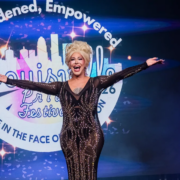
A drag performer in a sequined black gown raises their arms on stage in front of the 2026 Louisville Pride Festival sign reading "Emboldened, Empowered."

Louisville Pride Put Mental Health Front and Center. The Need Doesn’t End When the Tents Come Down.

Queens took the stage. Artists sold their colorful wares. Vendors of all kinds passed out pamphlets. Louisville Pride returned this year, with queers from all walks of life bustling through a blocked-off section of Bardstown Road on Saturday, September 12.

Louisville Pride Foundation, which also runs the Louisville Pride Center in Old Louisville, organized the event.

National acts performed near tables of local organizations ranging from healthcare organizations, such as Planned Parenthood, to political organizations.
Among those who participated were organizations helping LGBTQ+ people with their mental health or pointing them in the direction of mental health services.

According to the 2025 Queer Kentucky Community Health Survey, roughly 7 in 10 LGBTQ+ Kentuckians have had negative experiences with their mental health due to the current political environment, such as debates around LGBTQ+ rights.

Of queer Louisvillians who responded to the survey, about 32% attributed thoughts of suicide to policy debates around LGBTQ+ people. In fact, the number is 3.9% above the state average. Because of these debates, 8.1% of respondents said they left Kentucky because of it. The survey also found that trans women reported higher rates of suicidal ideation.

Louisville has more queer services than most of Kentucky, but Queer Kentucky’s data suggests they may not be enough because there are also high levels of health risks in the community.

Mandala House Provides Mental Healthcare to Queer Louisville

One featured booth at Louisville Pride was Mandala House, which provides mental healthcare to the community of Louisville. Mandala House has several therapy groups that address the psychological health of minority groups and their various intersectional needs.

“It’s a special place in our hearts, the work we get to do with queer people,” said Mandala House therapist Rachel Archer.

Archer said Mandala House currently runs a variety of therapy groups, such as an adult gender-journey group for individuals 18+ who are questioning their gender or who identify as trans or gender non-conforming. The space provides communal support for one another.

Archer noted that she couldn’t say that the lack of queer-specific spaces as a barrier to queer healthcare’s accessibility was unique to Louisville alone.

Mandala House also provides support letters for trans individuals seeking gender-affirming care, which is often required by providers and insurance companies. For many queer Kentuckians, finding a provider for their healthcare can be a challenge. According to the 2025 Queer Kentucky Community Health Survey, while Louisville has better healthcare access than most of the state for LGBTQ+ Kentuckians, provider refusal still happens.

Kentucky Psychological Foundation: Evidence-Based Connections

Among the vendors, the Kentucky Psychological Foundation was doing outreach. The organization focuses on bringing free mental health resources across Kentucky. It also supports researchers and graduate students with funds to conduct research with marginalized communities.

“We know there is a lot of specifically psychological information that is based in science and research…out there, but it’s not always easily accessible in the community,” board member Dr. Courtney Keim told Queer Kentucky.

“What we really focus on is educating the public about the science in ways that can better the lives of Kentuckians,” Keim said.

The Kentucky Psychological Foundation doesn’t provide mental healthcare, but its sister organization, the Kentucky Psychological Association, is the state professional association for psychologists, whose members provide care.

The Kentucky Psychological Foundation’s site provides a link to a database of members of the Kentucky Psychological Association that are using evidence-based research and follow the American Psychological Association’s guidelines and ethics. This can help address the needs of marginalized communities to find competent care.

“Our foundation is going to provide things based in evidence and research. We are very much against therapies that are not evidence-based. So for example, conversion therapy is not evidence-based. We don’t support that. We only provide evidence-based and culturally competent therapists that understand the marginalized communities they are serving,” said Keim.

So-called “conversion therapy” is a discredited practice and is referred to by the American Psychological Association as attempting “to change a person’s sexual orientation, gender identity, or related behaviors” with practices that “stem from the scientifically discredited belief that being LGBTQ+ is a mental illness that should be cured.” The organization says it causes a significant risk of self-harm, depression, and substance use.

The topic of ‘conversion therapy’ has been a battleground issue statewide between Democratic Governor Andy Beshear and the Republican dominated state legislature when Beshear tried to restrict the harmful practice, but Republicans overturned his attempt.

“A lot of times it is because people who are getting that ‘therapy’ don’t feel that person providing that therapy truly understands them,” said Keim. “One of the things that has been important in psychology is those cultural competencies and making sure those folks who are marginalized find someone who truly sees them.”

At the end of the day, the booths came down. The tents emptied. As the night wound down, a queen took the main stage to perform Dolly Parton’s “I Will Always Love You,” and Louisville Pride ended the way it began, with queens and with community.

If you or someone you know is in crisis, The Trevor Project’s counselors are available 24/7 at 1-866-488-7386, by texting START to 678-678, or by chat at thetrevorproject.org/get-help.

If you or someone you know is struggling, call or text the 988 Suicide & Crisis Lifeline at 988. LGBTQ+ young people can press 3 to reach counselors trained in LGBTQ+ care, an option that returned on Sept. 30, 2026 after it was cut in July 2025. The Trevor Project also offers 24/7 support at 1-866-488-7386 or by texting START to 678-678.

A field of corn glowing in the sun.

At Black Soil KY’s Farmacy Markets, Narcan Sits Beside the Produce

From the war on drugs to the legacy of the crack era, Black people in the U.S. have been systemically and perpetually harmed by both drug use and public health disparities. That sobering reality is also true in Kentucky, where a Lexington nonprofit is working to build safer futures by changing how support is delivered, integrating harm reduction into already effective agricultural programming.

“We are trying to think outside of the box around crafting unique, one-of-a-kind programming while providing a critical community need,” said Ashley C. Smith, Executive Director and Co-founder of Black Soil KY.

Established in 2017 by Smith and her husband, Trevor Claiborn Sr., the organization’s mission is to “reconnect Black Kentuckians to their heritage and legacy in agriculture” through programming, events, and community building.

From food access to harm reduction

Since its founding, Black Soil KY has worked with farmers and community partners to host events that make agricultural education and fresh food more accessible to Black communities across the state. While the organization was effective at increasing access and education around food, Smith saw an opportunity to develop programming rooted in the idea that drug abuse, food insecurity, and public health are intersectional problems that demand intersectional solutions.

In 2023, the number of drug overdose deaths in Kentucky declined for the first time since 2018, according to the Kentucky Injury Prevention and Research Center, but not every community felt that progress. That same year, Black Kentuckians experienced an 8% rise in overdose deaths. More broadly, Black people in America are 46% more likely to die from a drug overdose compared to other groups, the U.S. Department of Health and Human Services reports.

The opioid crisis is not the only harm felt more intensely by Black communities in the state. Kentucky currently ranks as the state with the second-highest rate of food insecurity in the country, the Kentucky Center for Economic Policy reports. Data indicates that Black communities across the state are nearly twice as likely to be food insecure, compared to White Kentuckians, according to Feeding America.

These are the disparities that Black Soil KY intended to close with a new approach to community care.

In 2024, in partnership with The Foundation for a Healthy Kentucky, a nonprofit that works to reduce health disparities while promoting health equity across the state, Black Soil KY acquired funding from Vital Strategies, a global public health organization, to begin integrating harm reduction into its already effective portfolio of programming.

Harm reduction is a spectrum of strategies that are intended to minimize the harmful nature of drug use. Such strategies include providing clean syringes, sexual health testing, contraceptives, fentanyl testing strips, counseling, mental health support programs, and more. Harm reduction aims to minimize the harmful effects of drug use rather than ignore them.

First, the organization went to the farmers. In 2024, the nonprofit trained 30 small and mid-size farms on harm reduction, including signs of overdose, Narcan usage, and how to respond to the substance abuse they might come across in their work. The organization saw farmers as a priority because of how inseparable their work is from the communities they serve, and how intrinsically connected they are to an individual’s well-being, according to Smith.

“We trained Kentucky small- to mid-sized farms: farmers, farm operators, and their families around how to be harm reduction first responders,” Smith said. “They oftentimes live in rural communities, but travel to urban communities to make deliveries… And we were hearing stories from farmers who make deliveries in communities afflicted by substance use and abuse disorders.”

After they built the training model for farmers, Black Soil KY expanded their harm reduction programs into their other community-centered events. In 2024, the group first began including harm reduction supplies as part of their free food distribution in Central Kentucky. After seeing the success of these resources, Black Soil KY opened two neighborhood “farmacy market” locations in Lexington in 2025.

The “farmacy markets” were a first-of-its-kind concept, providing harm reduction supplies and educational materials right alongside fresh food directly within communities. Alongside fresh produce, these markets provide communities with tampons, condoms, and harm reduction necessities, including Narcan and fentanyl testing strips.

“All of these steps, these multidisciplinary, interdisciplinary approaches are really seeing people for who they are and meeting them where they’re at, while also increasing their recovery capital around their nutrition and their health and their wellness,” Smith said.

This year, the organization launched its “Shop N’ Learn Community Series,” a partnership with Vital Strategies and the Kentucky Department of Public Health, part of a broader effort to combat rising overdose rates among BIPOC and underserved populations. The monthly event is “focused on expanding awareness and implementation of harm reduction strategies to often overlooked, hard-to-reach, underrepresented communities in relation to harm reduction and recovery care.” Individuals who attend a “Shop N’ Learn” event also receive a $40 gift card.

The series has been hosted in part by guest speakers, who share their own testimonies and expertise around recovery and healing.

“I am from the community, and I had an opportunity to go share my lived experience with the same community that I was brought up in — as terrifying as that is for me being only three years sober,” said Tywanna White, a recovery coach with Voices of Hope, a recovery community center in Lexington. “I said yes to an opportunity to be able to carry the message. The people in the audience had so many questions, and I was able to educate them on some things that I was taught from this same community.”

White was one of the featured speakers at a “Shop N’ Learn” event in June. According to White, this programming is exactly what it takes to dismantle health disparities facing Black Kentuckians.

“Seeing those faces looking right back at me wanting to be open, it shifted something. It told me that there’s a need for this…” said White. “I didn’t have any voices trying to help educate me on my substance use. It was so normalized. So no one even knew that I was struggling because it’s so normalized in the Black community.”

According to Smith, around 10,000 community members showed up at their events in 2024 and 2025. The impact, beyond attendance, speaks for itself. Smith said attendees of their programs report progress.

“We’ve really been able to see a lot of positive outcomes like reducing interpersonal and inter-communal violence,” Smith said.

Civic engagement as harm reduction

This programming is just the beginning of how Black Soil KY plans to build deeper inroads across communities that need care. Civic engagement is among the many solutions Black Soil KY is exploring to heighten awareness of health disparities.

In 2024, just 48% of Black Kentuckians voted in the general election. That is compared to over 70% of White Kentuckians. There is a growing body of research pointing to a strong correlation between civic engagement and public health: The more engaged a community is, the healthier they are. Black Soil KY identified these disparities and created new programming to empower Black communities in Kentucky to have a stronger say in what policies and people are given a platform.

In September, Black Soil KY, in partnership with the Lexington Urban League Young Professionals, a network of young professionals advancing public service and professional development, is exploring how civic engagement will take center stage as a new harm reduction topic in their “Shop N’ Learn” series.

For the first time, the workshop will focus on how to participate in elections and the importance of voting. The workshop will bring folks together who have overcome or are currently working through substance abuse, and support them in getting registered to vote while providing educational materials on the choices they have in November.

“We can really facilitate getting everyone active and engaged. And we truly believe that’s also a part of harm reduction: being active in your community,” said Smith.

Black Soil KY’s programming has become a staple in communities, with leaders celebrating how the organization addresses both a person’s material needs while safeguarding their emotional and physical well-being.

“A person wants to be heard, they want to be seen, they want to feel like they’re human. And so it starts with getting to know the people off paper, knowing what it is they need at that moment, and then focusing on removing the substance later…” said White. “I think it’s a beautiful thing to incorporate harm reduction in these same communities where harm happens and also center it around food. That is the medicine.”
This work was supported by the 2026 CNP Media Fund. #CNPMediaFund

HIV self testing kits sitting on a ledge.

Federal Cuts “Handcuffed” BIPOC Harm Reduction in Kentucky. Communities Are Stepping Up.

In April, the Substance Abuse and Mental Health Services Administration (SAMHSA) released a letter notifying funding recipients that the agency is taking a “clear shift away from harm reduction,” including eliminating funding for fentanyl testing strips, clean syringes and needles, and “overdose hotlines.”

Harm reduction at its core is “a set of practical strategies and ideas aimed at reducing negative consequences associated with drug use,” according to the National Harm Reduction Coalition. The organization further details that some of those strategies could include the safer use, managed use, abstinence, meeting people who use drugs “where they’re at,” and addressing conditions of use along with the use itself.

SAMHSA’s decision has had immediate and life-threatening consequences for Kentucky organizations doing the work to close critical gaps in care for those in need, including for marginalized people.
“When they put this letter out there, they literally just handcuffed a lot of people,” said Shreeta Waldon, executive director of the Kentucky Harm Reduction Coalition (KyHRC), a Louisville-based nonprofit that works to reduce substance use disorder overdoses and deaths.

The letter cited a White House executive order from July 2025 to justify the policy changes. The order, “Ending Crime And Disorder On America’s Streets,” details those changes among a list of other line items including homelessness and crime. “Do not fund programs that fail to achieve adequate outcomes, including so-called ‘harm reduction’ or ‘safe consumption’ efforts,” the order reads.

It describes such strategies like harm reduction as ineffective; however, harm reduction is actually an evidence-backed practice that has been backed by scientific research.

What Kentucky Lost When SAMHSA Cut Harm Reduction Funding

These changes and attacks on harm reduction initiatives have hit the already limited ecosystem of harm reduction services built by and for Black and brown communities.

“SAMHSA award terms are now prohibiting federal grant funds from supporting several traditional harm reduction supplies, including syringes for illicit injection, safer smoking supplies, and fentanyl and other substance test strips,” Waldon explains. “That means that organizations are now navigating a much narrower definition of what federally funded harm reduction can include and not include.”

Recent research revealed that Trump’s elimination of federal funding for programs that provide syringe exchange and other harm reduction interventions will directly contribute to an increase in overdose deaths and non-fatal overdoses. Outcomes that Black and brown communities already feel more intensely.

KyHRC is one of the few groups in the state still delivering harm reduction care and resources for BIPOC communities, despite these concerning changes. In addition to new limitations, Waldon’s group immediately lost a $400,000 grant after the SAMHSA decision. However, instead of deferring programs or shortening their impact, the organization found new ways to deliver care to communities.

KyHRC began working with partners across the country to source harm reduction resources that they no longer could get from federal funding. Waldon mentioned that, among other groups, the Connecticut-based organization Reduce Harm Inc. has supported KyHRC with clean syringes, testing strips, and other supplies that are no longer accessible.

The redefinition of what the government will fund comes after a well-documented body of evidence pointing to harm reduction as a key strategy to prevent drug-related deaths. Studies show that fentanyl testing strips prevent overdoses, and research shows that providing clean syringes prevents the transfer of blood-borne diseases. A 2025 study including 67 communities, some of which were in Kentucky, found that when offered harm reduction strategies, those communities experienced a 15% reduction in non-fatal opioid overdoses and an estimated savings of $190,100 in healthcare spending per community.

Why Black Kentuckians Feel the Cuts Hardest

For Black communities in Kentucky, these new limitations are felt even more deeply than their neighbors. In 2023, the overall number of drug overdose deaths in Kentucky declined for the first time in years, while Black Kentuckians experienced an 8% rise in overdose deaths. Black Kentuckians continue to face worse health outcomes, less access to regular health care, and higher mortality rates compared to other groups. It is these realities that make harm reduction and community resources for Black and brown people all the more critical, according to the organizers delivering care despite greater obstacles.

“If you are trying to give me aid and help me based on the statistics that you have for white people, it’s not going to help me because it’s not made for me,” said Adria (AD) Shouse, a master barber at Well Groomed Barbershop Parlor.

Shouse is a barber with the African American Barbershop and Beauty Salon Initiative (BBSI), a public health program part of Project Ricochet, a nonprofit organization working to improve outcomes for minority youth in Lexington and beyond. BBSI transforms “relationship-rich environments” like barbershops and beauty salons into spaces where communities can get care and education related to diabetes, sexual health, mental health, drug use, and harm reduction.

“I’ve seen changed behavior in people that I’ve been cutting for years that have utilized resources through BBSI,” said Shouse.

BBSI provides community events based out of these safe spaces that bring care, including harm reduction resources, right to the communities who need it. This direct level of intervention is what Shouse says is missing in much of the conversation around BIPOC public health funding.

“The funding is different when it comes to people of color or minorities,” said Shouse. “They’re trying to keep certain communities and certain people in certain places because it works to their advantage.”

Shouse’s clients are predominantly Black men and young people, and in her work she fulfills a material need while offering support for other challenges.

Doulas Trained in Harm Reduction

It is that same model that other community leaders are implementing to provide support for Black pregnant people as well.

Granny’s Birth Initiative (GBI) is a nonprofit based in Louisville that supports Black parental health, partnering the care a pregnant person needs with the harm reduction resources they are unable to find elsewhere. That starts with training their doulas on harm reduction strategies, including trauma-informed care and Narcan usage.

“We make sure that our doulas are trained in that because doulas do provide resource navigation and it should always be non-judgmental support,” said doula Alexa Scisney, founder and executive director of GBI. “We want them to be well trained on not just keeping a straight face, but genuinely and truly understanding the type of resources that are needed.”

Black pregnant people are at least three times more likely to die due to a pregnancy-related condition, compared to their White counterparts. In Kentucky specifically, 82% of pregnancy-related deaths are deemed preventable. About 1 in 20 pregnant people use illicit drugs during pregnancy. This puts the work that GBI does as ground zero for public health progress and reducing harm.

“I know that doulas are an industry that is new to Kentucky, but a doula is somebody that’s supposed to be providing physical, mental, and emotional, non-judgmental support,” said Scisney. “And here at GBI, that non-judgment is something that we really highlight because it is not our job to do harm to people already seeking harm reduction resources. Our doors are always open.”

In addition to the SAMHSA decision, resources for harm reduction in Kentucky have been rocked by funding cuts and lack of consideration for how harm reduction impacts public health. In May, the University of Kentucky announced that it would formally end its HIV/AIDS prevention and treatment organization. The Target4 Project was part of this elimination, which provided HIV/AIDS intervention and services in addition to harm reduction supplies and targeted outreach.

Kentucky public health leaders say they will continue to step up in their communities, despite the new obstacles in front of them.

“Let us be the voice because we are the people who have experienced it. We’re the closest to it. We’re the closest because we live it every day,” said Waldon.

While the Trump administration and SAMHSA cut opportunities and funding, harm reductionists and community leaders continue to show up in new ways for their neighbors. While groups still hope for more permanent and sustainable funding, it is the promise of safer, stronger communities that pushes them forward, they said.

“For me, harm reduction has always been the radical decision to believe that every human being is worth keeping alive before they change, before they recover, before they become who somebody else thinks they should be,” said Waldon.
This work was supported by the 2026 CNP Media Fund. #CNPMediaFund

A red HIV awareness ribbon on a white surface beside a pen, keyboard, and stethoscope.

Here’s How You Can Find an HIV-Competent Doctor in Kentucky

Since reporting began in 1982, more than 12,700 people have been diagnosed with HIV in Kentucky. Of those diagnoses, 58 percent of those reported infections progressed to AIDS, according to a 2025 state HIV/AIDS Surveillance Report.
Being diagnosed with HIV can feel overwhelming, and recent federal policy changes, funding cuts, and proposed budget reductions have raised concerns about the future of HIV care and prevention across the country.

But there are still resources out there to connect people who have recently been diagnosed with the virus with good care.

Here is what some health care providers recommend HIV positive Kentuckians do to find the care they need.

Reach out to a primary care provider

Reaching out to a primary care provider for recommendations on how to find HIV-related care is a good first step, according to the National Library of Medicine.

However, some people in rural parts of Kentucky might struggle to find local providers with knowledge of treating a person living with HIV, or they may experience social stigma, according to Alice Thornton, a professor at the University of Kentucky, chief of its division of infectious diseases at its college of medicine and the project director for the Kentucky AIDS Education and Training Center.

“If they have a trusted local provider, they should be able to help,” she told Queer Kentucky. “Their primary care physician may be aware of options in their area and could be a starting place.”

Turn to The Bluegrass Care Clinic at the University of Kentucky

The Bluegrass Care Clinic at the University of Kentucky provides HIV-related care to 2,200 people across 63 counties, with about half of those patients living in rural areas, according to Thornton. The clinic offers a breadth of services for those with HIV and other infectious diseases, including transportation.

Prospective patients can reach a navigator nurse at (859) 323-1688.

Thornton added that the University of Kentucky also recently launched the LINK Project, a community health initiative meant to help those at increased risk for contracting HIV and Hepatitis C receive medical care and continue to get the care they need.

People with HIV can request information about HIV providers in their area by emailing [email protected].

“The LINK team can help with the handoff to care and can assist in removing barriers that the person may have in accessing services,” Thornton said.

Check out The Ryan White HIV/AIDS Program

The Bluegrass Care Clinic is part of a national, federally funded program called the Ryan White HIV/AIDS Program, which provides a system of HIV primary medical care, medications, and essential support services for low-income people with the virus, according to the program’s website.

Thornton recommends that people looking for HIV care do some research on the program and what it provides because of the wealth of resources it supports. The program funds cities, counties, states, and local community-based organizations to provide HIV care, treatment, and services to more than 600,000 people across the country.

“All of our Ryan White Clinics across Kentucky are nationally renowned for their high-quality care, retention in care, and achievement of viral suppression,” said Jon Parker, CEO of AVOL Kentucky.

Every state and U.S. territory has a Health Resources & Services Administration-funded Ryan White Part B program, and Kentuckians can find a map of case managers and qualifying clinics on the state’s Cabinet for Health and Family Services website.

Kentucky is one of many U.S. states that also have Ryan White Part C and Part D programs, which deliver HIV care at greatly reduced or no cost to patients, Thornton said.

People can also find HIV testing sites and HIV care services provided through the Ryan White program via this national website. Those looking for a Ryan White HIV/AIDS Program medical provider can find one here.

The website allows users to enter a ZIP code and find a provider within a defined radius. Thornton urged rural Kentuckians to search for providers via the website within a 60- to 80-mile radius of their homes to help the site find programs close to their location.

A county map of Kentucky showing which communities have local LGBTQ+ fairness ordinances, with western Kentucky counties highlighted in pink to show the region's lack of protections.

Western Kentucky’s LGBTQ+ Crisis: The Most Harm, the Least Protection Queer Kentucky's survey data reveals a region where nearly every measure of harm is at its worst, and state law still leaves trans Kentuckians out entirely.

LGBTQ+ people living in western Kentucky are experiencing a substantially more dangerous environment than anywhere else in the state, reporting being physically attacked at nearly twice the statewide rate. For trans folks, it goes even further: Kentucky’s hate crime statute has no name for what happens to them when they are attacked. A trans Kentuckian can be assaulted for being trans, and the state may prosecute the harm, but not the reason it was done.

Across the Queer Kentucky survey, western Kentucky ranks first or near first on nearly every measure of harm: LGBTQ+ residents with no health care provider, never tested for HIV, refused care by a provider, physical assault, suicidal ideation, drug use, smoking, feeling unsafe at home and deciding to move away. This is a region where nearly every measure of harm, access and community is at risk. And state policy and protections have failed them time and time again.
29.2% of queer residents in western Kentucky reported at least one instance of physical assault, which they attributed to the overarching anti-LGBTQ+ climate in the state. Overall, the statewide rate of physical assault stands at 15.2%.

54.5% of queer individuals report feeling physically unsafe at home, and 52.2% report feeling unsafe in public. Both are the highest of any region.

But it doesn’t stop at physical assault. In most of western Kentucky, a person who discriminates against and refuses an LGBTQ+ person a job, an apartment or service at a counter faces no legal consequences in doing so.

Across all of Kentucky, 24 communities have local Fairness Ordinances — including western Kentucky’s Paducah in 2018 and Henderson in 2019 — but that’s two of the 24, and they sit 130 miles apart. In between and beyond them, Owensboro, Bowling Green, Hopkinsville, Madisonville, Murray and Mayfield have no local fairness ordinances. On a map of who Kentucky has agreed to protect, most of western Kentucky isn’t on it.

What about larger state protections in Kentucky? It turns out that the state of Kentucky does have a hate crime law that protects sexual orientation. But it’s still reliant on individual judgment, and it still doesn’t protect trans people.

KRS 532.031, passed in 1998, applies when someone commits offenses because of a person’s race, color, religion, sexual orientation or national origin. In 2017, the legislature amended the statute to add a category, extending it to victims targeted for their actual or perceived employment as a peace officer, firefighter or emergency medical services worker.

Gender identity is not on the list.

Nine years ago, when the state legislature reopened the statute to add police and first responders, it still left trans Kentuckians out. For example, if a gay man is assaulted in Paducah, it can legally qualify as a hate crime. But if a trans woman is assaulted on the same block, both the state and law enforcement officers can choose to do nothing. The statute, by not including gender identity, allows law enforcement to turn a blind eye and delegitimize incidents against trans people.

Even within the bounds of discrimination against sexual orientation, this hate crime law does “protect,” the statute has no teeth and the law still does far less than what it implies. It might look and sound substantial, but functions as a performative exercise in the court system. As a result, there are many opportunities to create distance between the assault and any consequence for it. For instance, a judge decides at sentencing whether bias was a primary factor. A finding of bias permits denying probation instead of requiring it. The parole board may delay or deny parole.

It’s subject to discretion and personal biases that could creep in all the way down.

The laws already on the books are only part of it. Kentucky’s 2026 General Assembly may not have passed any anti-LGBTQ+ bills, but the climate in western Kentucky still hasn’t improved.

A bill doesn’t have to pass to embolden violence in its communities. Another factor behind why the climate in Western Kentucky still hasn’t improved. A bill only has to be filed, assigned, debated and covered on the local news, which are all separate moments of exposing a Kentuckian to hear whether or not their queer neighbor has the same rights as they do.

For example, Senate Bill 72 would have let health care providers refuse any treatment that violated their conscience. House Bill 468, pitched as a routine civil rights update, would have stripped the enforcement power from the Kentucky Commission on Human Rights and the 22 local commissions that actually enforce fairness ordinances. Both cleared their chamber of origin before stalling.

If House Bill 468 had passed, it would have taken away the only fairness ordinance protections two cities in Western Kentucky have.

And people are responding the only way the law leaves open to them: they blend in, censor their identity and opinions, or leave the state altogether.

According to the same survey, 18.5% of LGBTQ+ individuals living in Western Kentucky have decided to move out of state due to anti-LGBTQ+ policies; statewide, only 8.1% decide to leave. The compounding burden of assault, health care gaps, housing stress, and drug use appears to translate into a concrete intention to leave. One respondent wrote:

“Currently planning to move out of [the] states to a blue state. I have a lot of trans friends that I am scared for. I want them to go somewhere more blue, more safe, more open minded.”

In the face of so much hardship, western Kentucky remains home to LGBTQ+ advocates who keep showing up anyway. In May 2019, 55 residents in Bowling Green spoke in favor of a Fairness Ordinance, while 31 spoke against it. The commission voted it down 3-2. Advocates put it back on the agenda and have continued pushing for it. When a Fairness Ordinance was voted on in January 2018 in Paducah, residents flooded the city commission meeting, forcing the fire marshal to move the overflow into the adjacent hall to listen through open doors. That ordinance passed 4-1.

The people of western Kentucky continue to fight for the safety of their LGBTQ+ neighbors. But with so few fairness ordinances and statewide protections that stop short of covering them, many LGBTQ+ western Kentuckians remain at risk.

If you or someone you know is struggling, call or text the 988 Suicide & Crisis Lifeline at 988. LGBTQ+ young people can press 3 to reach counselors trained in LGBTQ+ care, an option that returned on Sept. 30, 2026 after it was cut in July 2025. The Trevor Project also offers 24/7 support at 1-866-488-7386 or by texting START to 678-678.

The exterior entrance of AVOL Kentucky, Suite 100, photographed at dusk. A black A-frame chalkboard sign in front of the brick and gray-sided building reads "Free AVOL HIV STI Testing" in colorful lettering. String lights hang above the entrance, and bare winter shrubs line the base of the building.

No Doctor, No Test, Refused at the Door: What the Data Shows About LGBTQ+ Health Care in Western Kentucky Survey data points to a crisis in access, education, and trust — and the organizations working to close the gap.

From Mayfield to Paducah to Murray, Western Kentucky is full of life, history, and unique challenges, but when it comes to accessing reliable, informed, and specific health care, LGBTQ+ people in the region face obstacles that other Kentuckians might never feel.

Recently published data from the 2025 Queer Kentucky Community Health Survey reveals that LGBTQ+ people in Western Kentucky are significantly less likely to be receiving routine health care. The survey, which collected data from 559 LGBTQ+ Kentuckians, indicated that 58.2% of respondents in Western Kentucky have no regular healthcare provider.

That number grows even more concerning when you dig into disparities in reference to sexual health. The rate statewide for those who have never tested for HIV is 48.2%. In Western Kentucky, it’s 67.2%.

According to community organizers, these numbers illustrate how education can affect public health. It’s also tied to legislation. In 2023, Kentucky’s Republican State Senate majority passed Senate Bill 150, which implemented anti-trans policies including forcing trans students to use bathrooms and locker rooms that conflict with their gender identity, but it also made teaching about sex education or puberty virtually impossible for certain age groups.

“A lot of the schools still really push an abstinence-only sexual health education… and that has a real limiting and long-lasting impact on people’s view of sex in general,” said Christine Lindner, President of West KY NOW, a local chapter of the National Organization for Women, a feminist membership organization that advances economic justice, reproductive justice, and civil rights.

Without education or access to care, communities are left without the necessary resources to thrive, according to health care providers in the region.

“If people don’t know about things they don’t know to be tested, they don’t know what to look for,” said AJ Garnett, Outreach Director at LivWell, a nonprofit organization providing healthcare, support services, prevention education, and HIV testing to communities in the region. “Being able to educate people when they’re younger, whether it be middle school or high school, would make a world of difference.”

Another contributing factor behind these numbers is the limited resources available in the Western section of the state. The more densely populated areas of Louisville, Lexington, and Bowling Green are all in Central or South Central Kentucky. These areas experience higher concentrations of hospitals, clinics, and places of care. About one in five people in the US live in rural areas, but only 9% of physicians practice in rural communities.

While there are resources in Western Kentucky, including LivWell, they are limited and some LGBTQ+ people in these communities are not comfortable seeking care. Data from the 2025 Queer Kentucky Community Health Survey also indicates deeper issues than just seeing a doctor regularly; the survey also pointed to high levels of discrimination in the region. Almost 13% of respondents statewide reported a provider refusing care due to their LGBTQ+ identity, but in Western Kentucky this number jumps to 30%, the highest in the state.

“No amount of shaking hands and assuring people is going to alleviate years of distrust that they’ve built up for good reason,” said Garnett. “…Sometimes in those very rural areas, people just don’t even know we exist.”

The isolation of LGBTQ+ in rural Kentucky presents real challenges to reaching these communities, but queer people are still finding ways to thrive and build stronger futures.

“I think people don’t realize how large the community is out here in Western Kentucky, but we are really under-resourced and underfunded,” said Lindner. “I think there’s a desire for healthier queer existence, but there’s just a lot of pressure out here.”

West KY NOW regularly creates inclusive events and programming with the intention of building stronger communities in the region, including a feminist bowling night.

This data presents an opportunity for deeper investments by community groups, care providers, and educators. According to Garnett, closing these gaps looks like building deeper inroads with communities to establish trust between provider and patient.

Other Kentucky-based organizations working to close that trust gap with rural LGBTQ+ communities include AVOL, an organization committed to ending HIV through testing, medical intervention, and community support, and Matthew25, which works with those living with, at risk of, or affected by HIV and other sexually transmitted infections. With four clinics across Southern Indiana and Western Kentucky, Matthew25 serves 25 counties in Kentucky and 12 in Indiana.

“I know a lot of people are scared because of the way they’ve been treated in the past… I’m not going to sit here and pretend like there aren’t doctors and nurses out there that give people hell every time they come in to talk about HIV or other STIs,” said Garnett. “But I can tell you with us, with organizations like AVOL, with Matthew25, everyone I speak to in these organizations is so eager and anxious to help, and excited to be part of people’s lives and make them better.”

Nathan Wilson smiling in sunglasses and a neon cap in front of a Matthew25 mobile health clinic truck

How Rural Kentucky HIV Care Saved Nathan Wilson

He was an HIV patient in Rural Kentucky. Now he helps run the nonprofit that saved his life. Nathan Wilson is on a mission to fight against the stigma of living with HIV in Kentucky and beyond. 

Before Nathan Wilson worked at HIV health nonprofit Matthew25, he was a patient. He was a convicted felon and was in active addiction for more than a decade. Now, Wilson oversees patient experiences as the facilities and project manager for the organization. He serves the same rural Kentucky communities where he once struggled to find care himself.

Matthew25, which celebrates its 30th anniversary this year, works with those living with, at risk of, or affected by HIV and other sexually transmitted infections. With four clinics across Southern Indiana and Western Kentucky, the organization serves 25 counties in Kentucky and 12 in Indiana.

Wilson became a patient with Matthew25 in 2019. He found out he was living with HIV while at a Suboxone clinic. He recalls being told: “Hey, your blood test shows this. You should probably reach out to these people.”

He admits that he wasn’t the best patient at Matthew25 in the first year, but the workers at the organization were patient with him. He made up for it, and four years later, he began working at the nonprofit, first as a driver, transporting patients to appointments and then working the group’s food pantry. He now oversees facilities operations for all four of Matthew25’s clinics. 

“Matthew 25 has changed my life since day one — not only changed it, but saved it,” Wilson says. He said the organization fought for him to get his HIV medications when he was incarcerated. While the group didn’t succeed, the fact that they worked hard to help him had an effect on Wilson.

When he first started working at Matthew25, he wasn’t sure he was “a healthcare facility would hire somebody” like him. 

But now he sees his various roles with the group as a full-circle moment. 

“I spent every day on the road with patients — young, old, different ethnicities, different backgrounds — and it changed my view of how broadly HIV affects people,” Wilson says. “It also broke down a lot of barriers between me and patients, because I am one of them.” 

He says many people he’s met also living with HIV don’t have such robust support systems. 

“A lot of times, you’re just there to listen. People don’t necessarily want advice; they just need somebody to hear them,” Wilson says. “Matthew25 has recognized that from the beginning: that we support system. Sometimes they just need to get something off their chest.”

 Wilson believes his work is a part of a greater impact on their patients.

“I work to make sure we have the best possible experience for both clients and employees. That’s the van someone rides in, the exam room they sit in, the quality of our medical equipment. I want people to feel welcomed and cared for in every detail of their environment.”

He says it’s that care that he was shown at Matthew25 that still stays with him.

“Everywhere else I went, I was treated like an addict or a criminal. I never felt that way here. They strive so hard to meet people where they’re at — without judgment, just focused on providing the medical care you need and whatever support you want,” Wilson says.

Matthew25 is one of a few providers supporting Western Kentucky, offering services in locations outside large urban centers. Geography, Wilson says, plays a large role in obstacles to care for HIV-positive Kentuckians. The organization itself travels about a 200-mile radius to pick a patient up to get them to their HIV care, but also any other medical care they need. 

Another obstacle, Wilson says, is fear. He remembers thinking it was a death sentence when he was told he had HIV. 

“I think a lot of people avoid getting tested because they’re scared of what they’ll find, and worried about cost. What they don’t always know is how many resources exist specifically to help with treatment and suppressing viral load,” he explains. “If we can suppress viral loads in people already living with HIV to the point where there’s no transmission risk, then eventually this ends.” 

Wilson says there’s still stigma surrounding living in the area and a misconception that HIV is only a virus gay men get. He said that while he is a gay man, he also was an IV drug user. Male-on-male sexual intercourse is not the only way a person can contract HIV. 

“I think transmission is still deeply misunderstood, and that misunderstanding costs lives.”

The stigma from the gay community also comes to Wilson’s mind. 

“There’s still so much shame and secrecy around it. I’ve been undetectable for years, but people still treat HIV-positive individuals as if we’re diseased,” Wilson says. “You would think that people who have experienced so much oppression themselves would be more willing to accept others.”

He adds that it’s that specific stigma that makes him want to be open about his status and history: “to show that life doesn’t end with an HIV diagnosis.”

Wilson believes the only way to overcome this stigma and to work to stop the transmission of HIV is to recognize each other’s humanity. 

“People with diabetes aren’t stigmatized for their condition. People with cancer are treated with compassion. People living with HIV deserve the same. And the most important thing to hold onto is this: We could actually see the end of this disease, in my lifetime, or the next,” he says, explaining the need to support HIV medications and PrEP. “Transmission can be stopped. Why would we not want to do everything in our power to make that happen?”

A collage featuring a gloved hand holding multiple syringes against a pink and blue torn paper background with faded text reading "I'm not surprised by the lack of education anymore. I'm just tired. Does this feel safe to me right now?" On the right, a person in sunglasses and a keffiyeh blows bubbles at a protest, shown in a blue-pink duotone.

Barriers, burnout, and resistance: Trans Kentuckians and the fight for healthcare

When clients walk into one of psychotherapist Sebastian Hamilton’s Louisville offices, they enter a cozy haven filled with soft lighting and pillows, nature posters, art supplies, and baskets of fidget toys. A linocut art print hanging on the wall features the Mary Oliver quote: “You only have to let the soft animal of your body love what it loves.”

Hamilton, whose pronouns are he/they, strives to create the kind of supportive environment he experienced with a trans mental health professional when he was exploring his own gender identity. This work has been complicated over the past year amid growing anxieties about state and federal anti-transgender legislation.

Hamilton, who became a Licensed Clinical Social Worker in 2023 — the same year the Kentucky state legislature passed a sweeping ban on gender affirming care for minors — said, “I’ve been seeing an increase in anxiety and exhaustion, especially since Trump’s second term. I see a lot more hopelessness and weariness.”

He has also seen a rise in the primary contributing factors that lead to suicidal ideation: perceived burdensomeness and thwarted belongingness, which he attributed to “this administration’s policies and the ways the administration has made local communities feel less safe for us.”

“I see people at all stages of their transition journey, and there is still so much joy in our community, so much strength. But sometimes, the joy is harder to access because of the ways things are impacting us on the interpersonal and national level when we have new, harmful legislation coming at us daily,” he said.

The impact on trans health and healthcare

2025 marked the sixth consecutive record-breaking year of anti-trans legislation. In Kentucky alone, 18 bills were introduced, including KY HB 495, which banned Medicaid from covering trans healthcare.

Kentucky, 2025

18 anti-trans bills
introduced in 2025
KY HB 495 — banned Medicaid from covering transgender healthcare

Trans Legislation Tracker, translegislation.com

Anti-trans legislation introduced, 2022–2025

State bills vs. national bills — six consecutive record-breaking years

State bills National bills
900
600
300
174
 
2022
556
 
 
2023
716
 
 
2024
1,131
 
 
2025

Trans Legislation Tracker, translegislation.com

In this environment, patients seeking gender-affirming care, such as hormone replacement therapy (HRT) or surgery, are nervous about medical documentation. Colby R. Loew, MD, whose pronouns are she/they, is a queer family medicine physician in Kentucky who is passionate about trans healthcare.

“I love getting to care for my people, my community. I love getting to care for people who, in the past, maybe weren’t so excited about going to the doctor or who were too nervous to even access care,” she said.

However, over the past year, she has noticed increased anxiety in her gender diverse patients regarding medical documentation of pronouns, gender (if it differs from the one assigned at birth), and gender dysphoria.

As a result, Dr. Loew has also become more cautious about the medical codes she uses when charting. Medical codes, or ICD (International Classification of Diseases) codes, are part of an alphanumeric system for documenting patient symptoms and diagnoses.

Loew told Queer Kentucky, “I haven’t really even been using gender dysphoria much as a code because I don’t need to document it that way. I just use hormone replacement therapy.”

Loew sees this as less of a risk. While a diagnosis of gender dysphoria could identify a patient as transgender, cisgender people also receive hormone replacement therapy, such as cisgender women who take testosterone during menopause.

The U.S. Department of Justice’s July subpoena of medical records related to trans healthcare from over 20 healthcare institutions demonstrates that these records are not private or safe from government overreach. Additionally, given the government’s classification of trans people as “Nihilistic Violent Extremists (NVEs)” and extremists who adhere to “radical gender ideology” as seen in a leaked Intelligence Bulletin and a DOJ memo first published by independent journalist Ken Klippenstein, the hesitation to have one’s trans identity documented in medical records makes sense.

“People are scared. They don’t want the government to know they are trans. They don’t want the government coming after them,” Loew said.

Loew mentioned that she also practices more caution when recording names and pronouns in medical charts, asking patients, “Is it okay if I put this on your chart?” Loew explained that “a lot of people are still like ‘hell yeah!’ but lately I’ve had more people saying ‘maybe not right now.’”

Ari, whose pronouns are they/them, is a Louisville-based genderfluid death care worker who spoke with Queer Kentucky under a pseudonym for privacy and safety. At recent doctor’s appointments, they have felt anxious about documentation — not just as a trans person, but as the child of an immigrant navigating a political climate that has targeted multiple minorities at once.

“Some of my anxiety over visiting doctors is not ‘Will I be treated poorly?’ It is ‘Will I be notated in a way that’s going to come back to bite me in the ass later down the line?’”

When a doctor recently switched their name in the system to “Ari (they/them),” it showed up on their prescription. “That partially makes me happy, but also puts up more question marks than anything else. Does this feel safe to me right now?”

Barriers to access

Transgender adults and medical discrimination

1 in 3
delayed or avoided medical care due to fear of discrimination
1 in 2
experienced medical discrimination due to their transgender identity

University of Chicago & Center for American Progress

Genderqueer photographer Emmett Valentín, whose pronouns are they/them, is no stranger to that discrimination. During their teen years in foster care in Kentucky, the state forced them to take birth control despite negative side effects. They suffered from severe endometriosis and PCOS for years before opting for sterilization as treatment. Valentín’s Indigenous identity compounded this mistreatment, they said, recalling America’s legacy of reproductive violence against Indigenous, Black, and marginalized communities.

When Valentín began pursuing HRT, they faced invasive questions, unnecessary testing, and pressure to recount their trauma. “I was terrified of having a health care provider be shitty to me because I’ve had enough healthcare trauma from being assigned female at birth.”

They explained that when they switched from the gender-affirming online prescription service FOLX to an in-person endocrinologist, “She did the whole ‘tell me about all of your trauma,’” to which Emmett replied, “I’m not doing that. You’re not my therapist. I’ve been on this for two years now, and it’s doing great. I just need refill.”

Emmett Valentín’s endocrinologist experience

A timeline of barriers


Step 1
Switched from FOLX to in-person endocrinologist. Faced invasive questions and pressure to recount trauma.
 
Step 2
Slight increase in red blood cell levels. Doctor refuses HRT refill. Refers Emmett to Transform Health Clinic.
 
Step 3
Earliest Transform Health appointment: 9 months away.
 
Weeks later — 12:15 pm
Doctor calls with a cancellation at the Lexington clinic — appointment at 1:30 pm, 75 minutes away.
 
Emmett’s response
“So let me get this straight. You refused to give me a refill, and you’re telling me now, if I drop everything in the middle of my workday and drive over there in record time, then I’m worthy of having healthcare.”

“You have been singlehandedly, absolutely the most invalidating healthcare experience I’ve ever had, and I want you to sit with that.”

Medical providers across all levels have felt the chilling effect of these federal and state level threats. However, both Hamilton and Loew, the mental health and medical providers who spoke with Queer Kentucky, stressed the importance of not caving in to threats or executive orders, which are not legally binding.

Lack of trained physicians

Dr. Loew told Queer Kentucky that trans healthcare was not part of her medical school curriculum. During her residency, supervising physicians were often unwilling to prescribe hormones to trans patients. “It depended on who was there with me as my supervising physician on whether the patient could get what they needed,” she said.

Research corroborates her experience. While studies show that many medical schools do discuss the topic of transgender healthcare, a 2023 study from the Baylor University Medical Center found that this coverage is not comprehensive. A 2025 study with the Journal of Medical Education and Curricular Development found that medical education on transgender health is now at heightened risk of inadequate preparation for future physicians in the wake of Executive Order 14168.

Residency programs

How trans healthcare is covered in medical education

Periodically throughout curriculum52.5%
 
Discrete modules only34.4%
 
Not covered at all10.6%
 

Baylor University Medical Center, 2023 · 160 programs surveyed

Loew disclosed that much of her trans healthcare practice has been self-taught. “The minute I could get my DEA so I could prescribe testosterone, I did.” A DEA, or Drug Enforcement Administration number, allows medical providers to prescribe controlled substances like testosterone.

The training gap

Recognition of the problem vs. action taken

82.4%
of providers named lack of training as a key barrier (National Coalition for LGBTQ+ Health, 2023)

By 2025, providers who sought training:

Any affirming training30%
 
Clinical technique training22%
 

National Coalition for LGBTQ+ Health, 2023 & 2025

23%
of trans people
have found themselves educating their own medical providers about transgender healthcare

Center for American Progress

Tammy, a Louisville resident whose pronouns are she/her, asked to use a pseudonym for safety. At a recent appointment, a nurse questioned how she had breasts without implants, asked how to spell “vaginoplasty” multiple times, then swiveled her chair around and asked, “How do they do that?”

Tammy tried to keep it light: “You should probably ask my doctor. I wasn’t paying attention at the time.”

Years earlier, an endocrinologist told her, “Oh, I guess the estrogen is working” — apparently unaware that estrogen does not eliminate active facial hair follicles, and many trans women like Tammy use electrolysis or laser hair removal to eliminate unwanted body hair. “This wasn’t even just a primary care physician. He was an endocrinologist. At a basic level, he should know how different hormones impact the body, and he just didn’t.”

“I’m not surprised by the lack of education anymore. I’m just tired.”

Trans Kentuckians fear experiences like Valentín’s and Tammy’s could become more common with threats to federal funding for institutions that provide gender-affirming care and empowerment from state and federal governments to deny such care.

Trans Kentuckians refuse to disappear

Despite everything, many trans Kentuckians are hopeful — and organizing.

“Trans people are the least nihilistic people I know,” said Jaz Brown, whose pronouns are he/him. Brown started hormones in March and had top surgery in November. As Trans Health Coordinator for the Kentucky Health Justice Network, he helps people buy binders, apply for medical grants, find housing, and pay electricity bills.

Jaz Brown, Trans Health Coordinator, Kentucky Health Justice Network
“To pursue transition, to pursue gender affirming care is to say ‘Life has meaning. I want to live.’”

Brown urged those struggling to afford care to apply for a grant through KHJN, and drew on a longer history of resistance: “None of this is new. People need to look to their Black elders, their Black trans elders. The government is not going to save us. Organizations are not going to save us. Nonprofits are not going to save us. We have to save ourselves and each other.”

“I think that anticipatory compliance is what the federal administration” wants, Hamilton said. He continued, “Let’s see how many threats we can make to get people to do what we want to do without actually making it a law. Because some of this, we know, if it’s thrown to the courts is going to be thrown back out.”

Valentín finds empowerment in activism. Arrested in 2023 at the Kentucky state capitol while protesting KY SB 150, they shared their mugshot — wearing what they call a “shit-eating grin.” “I would love to see a full socialist revolution in my lifetime, and I am doing all I can to gear towards that.”

Ari hopes to begin microdosing testosterone this year. They limit media consumption, root themselves in community, and draw perspective from their Chinese identity. “This is the year of the Fire Horse. Fire Horse years historically have marked a disruption of the existing order. The last time this cycle occurred was in 1966, the start of China’s Cultural Revolution.”

Looking to past epochs of political upheaval and change is a stirring reminder to trans people, cisgender members of the queer community, and LGBTQ+ allies that oppressors do not grant freedom to the oppressed. Instead, the people must unite, build coalitions, and seize their rights through collective action.

As Leslie Feinberg reminds us in Trans Liberation: Beyond Pink or Blue, “Genuine bonds of solidarity can be forged between people who respect each other’s differences and are willing to fight their enemy together. We are the class that does the work of the world, and can revolutionize it. We can win true liberation.”

If you or someone you know is struggling, call or text the 988 Suicide & Crisis Lifeline at 988. LGBTQ+ young people can press 3 to reach counselors trained in LGBTQ+ care, an option that returned on Sept. 30, 2026 after it was cut in July 2025. The Trevor Project also offers 24/7 support at 1-866-488-7386 or by texting START to 678-678.

A collage of the Louisville Metro Council chamber tinted in pink and blue, with a torn paper effect overlaid, symbolizing the divided community response to Louisville's proposed Trans Safe Haven ordinance.

A Louisville Ordinance Promises to Protect The Transgender Community. Some Advocates Aren’t So Sure.

Editor’s note: This story was published in June 2026. Some details may have changed since then.

A Louisville ordinance meant to protect transgender people from state and federal crackdowns is heading to a committee hearing this week. The law would declare Louisville a safe haven for transgender people.

But discussions between those who wrote the ordinance, LGBTQ+ organizations and other stakeholders across the city have been fraught. A debate has raged over whether or not the ordinance will actually help the community it aims to protect.

It continues to face what two local leaders in talks called “an impasse”.

In a press conference in April this year, District 6 Louisville Metro Democratic Councilmember and Democratic Socialists of America (DSA) member J.P. Lyninger (he/him) introduced the “Safe Haven Law,” that would protect the rights of transgender and gender non-conforming people” He highlighted the support for the ordinance by quoting more than 3,000 signatures from local organizations and residents.

What the Trans Safe Haven Ordinance Would Do

Ordinances like the Trans Safe Haven come on the heels of real concerns that impact gender non-conforming and BIPOC transgender communities as state legislatures continue to introduce and pass anti-LGBTQ+ legislation and normalize anti-trans rhetoric. The Buckeye Flame, an LGBTQ+ news organization covering Ohio’s communities, reported Cleveland Heights and Athens were two cities that voted to enact trans safe haven resolutions.

An ordinance differs from a resolution in that a resolution is a formal statement of a city’s position or policy on an issue, while ordinances are permanent laws that govern jurisdictions and agencies and include penalties. Resolutions are largely symbolic gestures, and ordinances regulate people and property in the city.

The ordinance, drafted in collaboration with Lyninger’s legislative assistant Nick Conder (they/them) and Dare (she/her), a staffer who is a member of the DSA, aims to do approximately five things to offer protections to trans people. Conder said it was modeled on sanctuary city ordinances that were passed in cities to protect immigrants and their rights.

According to the ordinance, Louisville Metro would not use city resources, defined in the ordinance as “time spent by Metro employees, officers, or contractors while on duty, or the use of Metro Government property,” to:

  • Detaining persons for seeking or providing gender-affirming healthcare.
  • Providing information about a person’s gender identity as a transgender or gender non-conforming person to the federal government or any state or local government.
  • Restricting the ability of transgender or gender non-conforming people to access any public accommodations, programs, or services provided by Louisville Metro Government, based on their gender identity.
  • Not to prohibit entertainment by male or female impersonators or prohibitions on performers wearing non-stereotypical dress or costume based upon the entertainer’s actual or perceived gender.
  • Sections V, VI and VII detail training on provisions that would be provided to Metro Government employees, and disciplinary policies up to and including termination for employees who violate the ordinance. 

The ordinance defines gender non-conforming clothing as “Clothing, hairstyles, makeup, or accessories that deviate from traditional societal expectations of how a person should appear based upon their assigned sex at birth.”

But significant gaps persist.

The extent of what constitutes “gender-affirming care” has not been detailed, and how this would impact medical providers and grassroots groups working to bring healthcare to trans and gender non-conforming people. What constitutes “sensitive information” is undefined under the ordinance, which could span medical records, legal documents, birth certificates. But there are no further specifics on training, agencies involved and disciplinary measures.

From Resolution to Ordinance: How the Draft Took Shape

Meetings with community members, DSA members and LGBTQ+ organizations in the city were described as “contentious” by attendees who spoke to Queer Kentucky. Discussions about the ordinance first emerged in 2025 and have evolved around the strategy, approach and language within it.

While organizers and grassroots groups acknowledged that the intentions behind the ordinance were good, an overarching concern remains: whether the draft ordinance – numbering five pages – is robust enough to ensure the safety of the community, the timing of the legislation and the potential for blowback from anti-trans conservatives at the state and local level, regardless of the legislation passing or failing.  

Nick Conder, Lyninger’s legislative assistant who co-authored the ordinance, said it was initially submitted as a resolution, but was rewritten as an ordinance, with input from the Jefferson County Attorney’s Office, and introduced at the end of March 2026.

The idea of a trans safe haven sanctuary policy received attention soon after December 2024, shortly after President Trump was elected. 

“Especially in the beginning of last year, there was a flurry of executive orders that seemed to be kind of confusing, and states were passing laws. Kentucky has relatively unfriendly laws towards trans people,” Conder said. 

In early conversations about the ordinance, Conder said they got the impression that people mostly wanted to see the city take a stance on using the city government to enforce transphobic federal policies or to comply with out-of-state transphobic policies. The DSA has also received the backing of many student groups, has members and representatives who are transgender

But timing matters, said many LGBTQ+ groups and nonprofits in the city. Discussions around the timing of the legislation have gone by the wayside, according to some community members, leaders and activists of organizations that have had a long-standing presence in the LGBTQ+ community.

“Why Now?” The Debate Over Timing and Risk

For many years, a familiar face has emerged at rallies, legislators’ offices and the Kentucky State Capitol’s rotunda. Chris Hartman, executive director of the Fairness Campaign, has been part of the coalition of leading advocacy and lobbying efforts to thwart anti-LGBTQ+ bills, engage with communities and legislators, and push for laws that protect LGBTQ+ Kentuckians.

The Kentucky Legislature has, according to Hartman, been using the LGBTQ+ community as a boogeyman. And the possibility of being hypervisible due to the proposed Louisville ordinance, “could put a target on our backs.”

“Upon deep analysis, this is a symbolic piece of local legislation only, and it is not worth the risk of what could happen in Frankfort to pass a straw man ordinance,” Hartman said.

“As we look at the proposed ordinance and particularly in consultation with transgender leaders, and leaning on the leadership on Black trans leaders in Kentucky, we determined that the ordinance would not have an impact on their lives.”

He added, “It is trying to pre-empt state and federal laws, the likely, and instead the likeliest outcome that a successful ordinance passage would have would be retribution from conservative lawmakers in Frankfort who would see it as an opportunity to advance really egregious anti-trans legislation, which they are always considering doing, but as this year, you know, we can have success even in trying times.

Conder, co-author of the legislation, views this impasse as a clash of political strategies. Playing defense and trying not to provoke the legislature, they said, works most of the time, but it doesn’t work 100% of the time. They see trying and failing to pass legislation as a part of the process.

“If you’re not ever gaining any ground, you’re dying by inches,” Conder said.

Some Trans Leaders Say the Ordinance Misses the Mark

When Alden Jones (they/them), a trans academic based in Louisville, first asked people if they’d heard of the trans safe haven ordinance, they heard positive responses. They were excited at the prospect of an ordinance that would protect trans people in Louisville.

“People had signed on, but [I asked] “did you read it?” and then I read it, and then I wasn’t anymore,” they said.

They attended the most recent meeting in April and said they had noticed a power differential. 

They said they were concerned about the lack of voices in community input around the ordinance. They’re also in favor of solutions like a needs assessment or wider study around concerns of transgender Kentuckians across socio-economic classes, race, and material realities. But the space for that conversation, Alden finds, is limited.

“If you are trying to get something done, and you meet resistance, you don’t wait for the resistance to come to you with solutions. You seek out the solutions and the amendments from established organizations,” they said.

The lack of definition on terms like “gender affirming care” or “information” or how they would be used against trans people without further explanation worries Jones.

“I think we can work together to get something going socially and work on an ordinance that helps real things. I just want the things that help us to benefit everyone so it helps them,” Jones said.

Jaz Williams, (he/him), Trans Health Director at the Kentucky Health Justice Network and a Black trans person, directly works in providing resources for gender-affirming care, which is mentioned in the ordinance.

The fundamental disagreement he has with the DSA is the lack of an intersectional approach to the ordinance. “Being trans and being seen as trans is different for Black and brown communities. The biggest harm is visibility.” In one meeting, Williams said he observed an unequal racial dynamic in a DSA meeting that included trans members. 

Gender affirming care is hard to get. One thing Williams pointed out was the sudden mention of Flock cameras brought up in meetings by DSA members that could potentially be used to track trans people getting gender affirming care, though there is no documented evidence of it happening, nor is it in the current ordinance.

“It doesn’t make sense. Because anyone who is getting subpoenaed from another state for travel for healthcare, unless that state they’re travelling to they get the healthcare in, isn’t going to comply. The mom of the trans kid who takes her kid to Illinois once every couple of months for puberty blockers: It doesn’t matter that she goes dark in Louisville, say we even comply with that. The moment she ends up in Indiana and Illinois, they’re not going to comply. What does it do to protect people?” he said.

The DSA members who authored the legislation did not reach out to KHJN, he said. “It’s problems that aren’t there. It’s a problem that we haven’t experienced yet. And if these are problems, we don’t have the apparatus for it.”

“It only fearmongers and creates problems where they’re not there. And if anything, it gives their enemies the playbook that they didn’t know they had,” he said.

What a Stronger Ordinance Could Look Like

For Tamarra Wieder, the Director of Planned Parenthood Kentucky, any legislation that could potentially impact rural communities by a new preemption from the Kentucky legislature should be centered around marginalized and impacted communities, even if it’s a Louisville Metro Council ordinance.

“I think when there are Black and brown trans Kentuckians, when there are rural voices who are not feeling centered in a conversation, who are especially not centered in a conversation that is going to impact their futures. I think that’s when we take a pause, and we need to find a middle ground on making sure that whatever is being moved forward best centers their needs, especially on a piece of legislation that is going to get a lot of attention from the opposition.” 

For over 25 years, Louisville has had a Fairness Ordinance in place, thanks to a coalition of organizers across the state. The ordinance has now spread to 23 other cities in Kentucky. Wieder says fairness is a successful movement-building model that focuses on building coalitions.

“There’s still the Fairness Coalition that is across the Commonwealth, you know. We haven’t really seen DSA [operate] in the same way that Fairness has,” Wieder added.

Wieder doesn’t see this process as an impasse, but she’s been trying to push for more discussion and a potential redraft.

“We can listen to the Trans Health Kentucky Network, see what they’re hearing, and see what’s needed. We can look at what the students are feeling. We can see where the gaps from the fairness ordinances are,” she said.

The ordinance is set to come up in a Louisville Metro Council committee hearing on Wednesday, June 3. 


JustChoice staff at JustCenter for Reproductive Health in Louisville, Kentucky

Opinion | We See You: JustChoice Is Opening JustCenter for Reproductive Health

The views and opinions expressed in submissions to Queer Kentucky are those of the authors and do not necessarily reflect the official policy or position of Queer Kentucky. Any content provided by our submissions or regular columnists are of their opinion. As a reader, you are always welcome to submit your op-eds through our submission form.

Let’s imagine something.

Imagine walking into a reproductive health clinic in Kentucky and not having to brace yourself.

Imagine reproductive healthcare that was designed with LGBTQ+ people in mind from the beginning.

Reproductive health is too often reduced to “pro-choice” versus “pro-life.” But for many people in queer and trans communities, reproductive justice is even more complex and personal than ever.

That’s part of why JustChoice is opening the JustCenter for Reproductive Health.

For nearly everyone, walking into a reproductive health clinic already comes with a lot: excitement, fear, shame, hope, grief, relief, sometimes all at once. Add in the realities many people face when abortion or other care is involved: protecting privacy, missing work, finding childcare, arranging transportation, and covering costs. It’s a lot to carry.

For queer and trans people, there’s an even deeper layer: wondering if you’ll be made to feel unsafe in a space that’s supposed to help you.

We’re not here to speak for the queer community; we are simply here to say: we see you, and we’re building something different.

At JustCenter, our commitment is extremely simple: accessible care rooted in dignity, respect, and kindness. That means welcoming families in all their forms, and reducing barriers wherever we can, including things like offering childcare when visits take time and using a sliding, pay-what-you-can scale.

JustChoice understands that reproductive justice does not end with a procedure. People need support before, during, and after pregnancy, whether that pregnancy continues or not. That’s why services at JustCenter also include:

  • Free pregnancy counseling and ultrasounds
  • Miscarriage management and emotional support
  • Free birth control, including IUDs, condoms, and Plan B
  • Parenting and adoption support, including baby supplies and mutual aid
  • Help navigating community resources in hostile or under-resourced environments

This is an invitation. We want to learn from your experiences and build the antidote of what’s caused harm. Join us so we can build systems of care together.

Follow along or learn more on Instagram at @_justchoice or visit www.justchoice.org and click the green button to subscribe to their newsletter.

Period Y’all founder Skylar Davis stands in front of a truck filled with donated menstrual products while supporting efforts to combat period poverty in Kentucky.

Period Y’all founder Skylar Davis leads Kentucky fight against period poverty

What started as an extension of the Garrard County Food Bank has grown into Kentucky’s leading defense against period poverty: the lack of access to products, resources, and educational materials which ensure a safe and comfortable menstrual cycle. 

Skylar Davis is the founder of Period Y’all, a nonprofit initiative advocating for reproductive justice and accessible period products for all Kentuckians. Founded in 2022, Period Y’all has established period pantries – boxes stocked with period products free for the public – in three counties, donated products to over a hundred schools in the Appalachian region, and educated countless members of the community about the importance of reproductive autonomy. 

Previously, Davis poured her passion for advocacy and reproductive justice into policy work, hoping to combat bills threatening reproductive rights. She found herself disheartened by the constant negativity and decided to search for a way to “bring some joy.”

A bright pink Period Y’all pantry stocked with free menstrual products stands outside a building in Kentucky to provide public access to period supplies.

A Period Y’all pantry stocked with free menstrual products provides public access to pads and tampons for community members in Kentucky. Photo provided by Skylar Davis.

“I really wanted to do something that was meaningful,” Davis said. “To be able to fight for something more positive. Even if it takes years to pass.”

Inspired by Change Today, Change Tomorrow’s “Friday Period” project, which encouraged members of the community to claim free period supplies every Friday, Davis returned to her hometown in Garrard County to establish Period Y’all.

“The first time, I came with one folding table and probably 40 boxes of pads and tampons that people had donated,” Davis said. “And then it grew once I realized how great the need was. It wasn’t just period products, but hygiene products and incontinence products for the elderly.”

Now, with period pantries in Paducah, Berea, and Garrard, dozens of communities can access products, information, and assistance to help manage their menstrual cycles.

“It’s cool to see the variety of people that are thankful for the products,” Davis said. “It’s not just women in the community. It’s grandmothers who are caring for their grandchildren; maybe they’re on a fixed income, so they don’t have the extra money for the products. It’s mothers. It’s teens that come through and ask us for stuff. Men will ask for their partners and know what their partners use.”

McKenna Newman, a Period Y’all volunteer and fellow Garrard County native, teamed up with Davis to “help bring menstrual equality to anyone in need.”

“Growing up in Garrard County, many girls, including myself, had to get creative managing our periods,” Newman said. “Whether it be financially or the mental and physical burden we all had dealing with it. It is a shame rooted in women and no one should be embarrassed of this natural process.”

Reusable pink pouches filled with menstrual products labeled Period Y’all sit inside a tote bag as part of efforts to distribute free period supplies in Kentucky.

Reusable pouches filled with menstrual products prepared by Period Y’all for distribution to communities across Kentucky. Photo provided by Skylar Davis.

Following its success in Garrard County, over 30 requests for pantries arose across the Commonwealth. Davis plans to open 13 additional period pantries in locations such as Richmond, Somerset, Morehead, Hazard, Louisville, and more.

“When Period Y’all first started, we were doing monthly pop-ups… The products we had, we were able to source through donations, cold calling, and advertising on social media,” Newman said. “All it took was one Facebook post, and now, here we are, four years later, providing hygiene products to schools across Kentucky.”

Recalling her experience with policy work, Davis hopes to empower students to make informed choices about their bodies, health, and their administration.

“Within the next few years, I’m really hoping to get more students involved in shaping the education side of the work,” Davis said. “They’re the ones that are experiencing this in school. They don’t have access to products because it’s not in their school’s budget.”

Since the implementation of Senate Bill 150, schools have restricted students from discussions surrounding gender and sexuality – something that affects all students, regardless of identity. Students experiencing their period in school are only allowed to receive certain pre-approved products, while their teachers have been warned to avoid explaining what periods are.

“People don’t realize the correlation between attacks on trans people and LGBTQ people and those who have periods,” Davis said. “These attacks hurt all of us, not just a marginalized group of people. We can fight back against all of this harmful legislation.”

To join Period Y’all’s crusade against period poverty, Davis and Newman encourage volunteers to participate in “packing parties” – where packages of free pads and tampons are assembled – or to host a product drive. 

“If you ever wanted to get involved with reproductive advocacy… Create a conversation. Make a post. Start a group. Connect with other people,” Newman said. “Your voice is your best tool. Be loud, be proud, and don’t be ashamed! Societal shame around periods is one of the many reasons we have a crisis surrounding women’s health.”

Interested in establishing a Period Pantry in your city, hosting a product drive, or donating menstrual products to support underserved Kentuckians? Contact Skylar Davis to support Period Y’all!


Sen. Donald Douglas, R-Nicholasville, speaks at a microphone during a Kentucky Senate Committee on Health Services meeting in Frankfort, presenting Senate Bill 72 (SB 72). He sits at a desk with papers in front of him, wearing a dark suit and red patterned tie, as attendees listen in the background.

Kentucky Senate Advances SB 72 Allowing Health Care Employees and Providers to Refuse Services on Religious Grounds

Kentucky lawmakers are again trying to allow health care providers a way out of performing procedures or services that “violate their conscience” — potentially impacting thousands of Kentuckians, particularly those who are LGBTQ+. 

Senate Bill 72 (SB 72) — sponsored by Republican Sen. Donald Douglas, a Nicholasville-based doctor — cleared Kentucky’s Senate Friday on a 28-5 vote. All five votes against the bill came from Democrats. 

It now heads to the House, which almost passed the same bill last year before running out of time. Kentucky’s GOP-dominated legislature, though, has more time this year, with weeks left in the session. 

As written, the bill would let a range of people involved in health care — from doctors and nurses, to social workers and medical researchers, to anyone deemed a “hospital employee” — along with both public and private health care institutions — including hospitals, pharmacies, nursing homes and medical schools — to refuse to perform services if they feel it violates their “sincerely held religious, moral, or ethical” beliefs. 

The list of protected services listed in the bill is equally broad, with SB 72 allowing providers to object to everything from testing and diagnostics, to direct medical care, to filling prescriptions, to recordkeeping. 

The bill also largely prohibits any sort of discrimination or adverse consequence for those who object to providing services on those grounds.

SB 72 still requires health care workers to provide emergency medical assistance, as well as examinations and tests for sexual assault survivors, as mandated under federal law. 

A range of people, from religious leaders to LGBTQ+ advocates to the ACLU of Kentucky, testified against the bill in committee Wednesday. 

Jacks Gilles, a Louisville-based psychologist who frequently works with the LGBTQ+ community, said he’s heard countless stories of patients facing discrimination in health care settings during his more than 20 years of practice.

“The harm goes deeper than an instance of denied or inadequate treatment,” he said. “It elevates anxiety and avoidance of health care settings that can exacerbate illness and prevent life-saving treatment.” 

Gilles said the Kentucky Psychological Association strongly opposes SB 72. A 2024 poll found 76% of Kentuckians — including people from across ideological lines — oppose legislation like SB 72 that would allow health care providers to deny service on religious or moral grounds. 

In the bill and during Wednesday’s Senate committee vote, Douglas defended the measure, pointing to Kentucky’s statewide hospital workforce vacancy rate and arguing the bill will help recruit and keep workers.

“Forcing health care professionals to violate their conscience could force them out of their profession and prevent or discourage students from entering the medical field,” the bill reads. 

Kentucky’s hospital staffing levels, though, have been on an upswing in recent years, moving from a statewide vacancy rate of 15.3% in 2023 to 8.9% in the most recent report from the Kentucky Hospital Association. 

SB 72 has an emergency clause, meaning if it is passed into law, it would immediately go into effect. (Bills passed during Kentucky’s legislative session typically go into effect 90 days after the last day of session.) 

This story has been updated.

People hold a Progress Pride flag during an LGBTQ+ gathering as Kentucky lawmakers consider House Bill 553 affecting gender-affirming care.

Kentucky House Bill 553 could strip insurance coverage for gender-affirming care from thousands

Access to gender-affirming health care for LGBTQ+ Kentuckians may be further restricted under a new bill filed Tuesday.

A 2025 law in Kentucky prohibited Medicaid dollars from covering gender-affirming hormone treatments and surgeries. This year’s House Bill 553, filed by Republican Rep. Josh Calloway, seeks to expand those restrictions to most taxpayer-funded health plans and to far more services. 

If passed as written, that would mean those on state and local government employee health plans, those working at public colleges and universities, KCHIP and Medicaid, and more, would no longer be able to have such services covered under their health insurance. 

HB 553 also uses a much more broad definition of what counts as a “gender transition service,” blocking basically every “surgical, medical, mental health, or pharmaceutical” service “performed for the purpose of altering the appearance of an individual’s sex or validating or affirming an individual’s perception of the individual’s sex, if that appearance or perception is inconsistent with the individual’s sex.” 

This includes any drug and any sort of counseling or therapy, the bill says. 

There are specific carveouts for intersex people and those who wish to detransition. 

The bill also would require licensing boards for health care providers to revoke providers’ licenses if found to be in violation of the law, and prohibits resource centers in schools from giving referrals for gender transition services. 

As of Tuesday night, an impact statement examining exactly how many people tied to state-level health plans the bill could impact and any potential savings or extra costs could result from the bill was still being prepared. 

Calloway filed a similar bill last year, but it never got a committee hearing — the first big step in the legislative process for House bills. 

Undead Voice launches free three-week training to help Kentuckians begin voice transition

Kentuckians seeking gender-affirming voice support can access a free, three-week virtual training from Undead Voice, a queer-owned company that partners with local nonprofits, including the Louisville Pride Center, to help residents begin or deepen a voice transition. The Jumpstart cohort is open to all ages and identities and provides a structured on-ramp without referrals, waitlists or travel. 

Founder and CEO Nicole Gress, a licensed speech-language pathologist, launched Undead Voice after seeing traditional clinic methods fall short for trans clients. 

“Think of a time when you heard yourself on a voicemail and thought, ‘No way that’s what I sound like,’” Gress said. “For 85% of our community, that disconnect happens every time they speak—and they often don’t have a reliable way to change it.” 

Jumpstart offers three live classes covering vocal health and Undead Voice’s five core skills of vocal weight, tilt, resonance, pitch and dynamics along with session recordings, expert coaching and a simple practice plan participants can use immediately. After the cohort, every participant receives a $1,000 tuition credit toward Undead Voice Lab, the company’s lifetime-membership program with unlimited coaching and self-paced courses. 

Nicole Gress

“We’re offering Jumpstart at no cost to any trans or gender-diverse person who needs it for at least the next five years,” Gress said. “All participants get $1,000 in tuition assistance if they want to continue in our full program.”   

The model is designed to close access gaps. Post-program surveys show 91% of attendees reported increased knowledge, 93% greater vocal confidence and 88% reduced dysphoria.

“Referrals exist; qualified providers often do not,” Gress said. “That’s why programs like Jumpstart and Undead Voice Lab are essential—because we fill the gap that traditional care can’t.”   

Gress emphasizes that voice transition is behavioral training, not hormones or surgery. 

“Voices don’t have gender—people do,” she said. “Our goal isn’t to ‘feminize’ or ‘masculinize’ anyone; it’s to help you build a voice that actually sounds like you, whether that’s brighter, darker or fluid.” 

Undead Voice also works on the culture around trans voices. “It’s not enough to help someone build an affirming voice if they don’t feel safe and comfortable using it,” Gress said. 

The company offers allyship education for employers, healthcare providers, parents and caregiver  so people can use their voices without fear of misgendering or harassment. 

Cost assistance is built in. The $1,000 Jumpstart credit cuts tuition for Undead Voice Lab by half, with additional payment plans and need-based scholarships available year-round. “We believe in economic justice and community care,” Gress said. “To date, we’ve awarded $1.4 million in need-based scholarships and scholarships are always open.” 

How Kentuckians can participate

For Kentuckians navigating hostile policy climates or long medical waitlists, Jumpstart provides a practical, immediate way to build an affirming voice and a path to continue with sustained coaching and community. 

Anti-Trans Legislation: A Time of Uncertainty for Queer People in America

This story is part of Queer Kentucky’s digital issue surrounding the trans youth experience in the Bluegrass state, featuring personal essays to educational information. Read the full issue here.

While 2025 is only halfway over, it has already broken the record for anti-trans legislation in the US. A second Trump administration, and annual record breaking numbers of anti-LGBTQ+ legislation are threatening years of legislative progress. This year, more than 940 anti-trans bills have been proposed in legislatures in nearly every state so far, according to the Trans Legislation Tracker.

Several anti-trans and anti-LGBTQ+ legislation trackers are in circulation, and all have different definitions of what is considered to be anti-trans or anti-LGBTQ+. The Trans Legislation Tracker, which this article references, tracks legislation that aims to block trans people’s access to education, healthcare, legal recognition, and to exist in the public sphere without fear of discrimination or harassment. 

The highest number of bills this year introduced surround education, with more than 250 legislative acts that have been filed. These bills focus on denying students the use of preferred names and pronouns, forcing students out of the closet, and banning education on gender identity in schools. Healthcare is another target, with 194 bills under review. These work to limit or deny gender-affirming care for minors and adults. 

Texas saw the highest number of anti-trans bills so far this year, with a total of 130 bills filed — nearly double that of the second-highest state, Missouri. One of these bills in Texas, which was passed by the House, excludes transgender people from the state records. House Bill 229, labeled “Women’s Bill of Rights,” explicitly defines gender as the sex assigned at birth based on reproductive organs. Only one amendment submitted by democrats was accepted, which clarifies how intersex individuals fit into these categories. 

Kentucky’s legislature considered 18 anti-trans bills, according to the Trans Legislation Tracker, during its 2025 legislative session, which ended in late March.

Transgender and gender non-conforming people can no longer use state or federal programs like Medicaid to cover gender-affirming care. Legislation filed to remove strides made by LGBTQ+ activists were bills like HB154, which would prevent healthcare providers from accepting payment for gender-affirming care from state or federal programs like Medicaid. For transgender Kentuckians, this poses a major financial problem, as Kentucky is often listed in the top 10 of most impoverished states, with about 1 in 6 Kentuckians living in poverty. Cutting access to government-assisted insurance for gender-affirming care is a threat to its accessibility. A different bill passed into law blocks incarcerated individuals from accessing such care.

Another major legislative decision in Kentucky was a bill that reversed Gov. Andy Beshear’s executive order, which banned conversion therapy in the state. This bill went as far as to block him from attempting to ban it again for the remainder of his time in office. 

While the record-breaking number of filed anti-trans legislation is alarming, only 12.4% has become law thus far. The majority of these attempted bills don’t make it to law. That being said, the 12.4% that have passed have had devastating consequences for the trans community, limiting accessibility to education and healthcare.

The influx of regressive legislation has caused a culture of fear and unrest in the hearts of the transgender community. Hormone replacement therapy and other forms of gender-affirming care have been said to save the lives of many, for both adults and transgender youth. Protests are occurring regularly around the United States to stand up for the rights of transgender people nationwide, such as the “Hands off!” protests. Many people are pursuing legal action to combat anti-trans legislation. Checking in on trans friends, neighbors, and family is becoming more crucial, as well as participating in protests and communicating with representatives. 


First Steps for Transitioning: Getting into HRT

Editor’s note: This guide was published in September 2025. Laws, insurance rules, prices and provider details may have changed since then, so check with the providers and organizations listed for the latest information.

This story is part of Queer Kentucky’s digital issue surrounding the trans youth experience in the Bluegrass state, featuring personal essays to educational information. Read the full issue here.

Healthcare is tricky for everyone, but as trans people, we have extra hurdles in the way of our transition journeys and general health-related needs.

Gender affirming care includes mental health care (therapy, support groups)and medical health care (HRT, surgeries). This care is available to Kentuckians who are 18 years and older, but it’s hard to figure out where and how to start. For now, let’s talk about Hormone Replacement Therapy (HRT) through the experience of two young trans women and the routes they took.  


Pearl & Informed Consent HRT

Pearl, a trans woman in rural southeastern Kentucky, began transitioning on her 18th birthday when she called her general practitioner to schedule an appointment for HRT. Her practitioner gave her the phone number for Planned Parenthood.

“Planned Parenthood is an informed consent clinic, meaning they don’t have you go through a diagnosis process for gender dysphoria or get a therapist’s recommendation letter,” Pearl said. “They tell you what the medication’s effects are, and you sign that you understand (the effects) and are okay with what they do.”

Through Planned Parenthood, Pearl scheduled an appointment three months after her call. She said while it felt like a long time, she felt lucky because Planned Parenthood has a limit on how many new patients they can take per month, and patients often experience a much longer wait time. 

Photo provided by Pearl.

“I am happy with how it progressed, but I feel like things move very slowly,” she said. “When you’re looking for gender affirming care, it feels very life or death in the moment, and it took a lot of hanging on and waiting for me.”

A doctor at Planned Parenthood’s Lexington location prescribed Pearl with a pill method estrogen, Estradiol, to start at a low dosage and progressively increase. Pearl said out of the available methods for taking estrogen— injections, pills, and gels— she preferred pills as a “middle of the road” option in terms of maximizing the estrogen’s effectiveness. After six months on estrogen, she started Spironolactone, an antiandrogen that blocks masculine hormone receptors. 

“I feel like I’m gonna be happy with the progress from regular HRT,” Pearl said. “In terms of gender right now, I feel fulfilled having people around me who treat and see me as I’d like to be treated and seen… I’m satisfied with what I’ve been able to accomplish for myself.”

Pearl’s HRT has been covered by Medicaid so far. Still, she said her doctor warned her about legislative meddling with Medicaid’s coverage of gender affirming care, which is being threatened at the state and federal levels. Pearl said she may have to pay out of pocket for the informed consent route or look into other resources like Kentucky Health Justice Network’s transition financial support fund or DIY.


June & DIY HRT

When June, a trans University of Kentucky student, explored informed consent routes through Planned Parenthood and UK’s Transform Health, the wait time wasn’t realistic for her. She said her best option at the time was to get DIY HRT, an admittedly trickier route through countries with over-the-counter hormones. 

“You have to do a lot more research into what you’re doing,” June said. “You don’t have a doctor to guide you, you’re completely on your own. That being said, though, it’s not really hard. You just need to do your research.”

June started her research with a blood test to see how much testosterone her body had and what the appropriate doses of estrogen and antiandrogen would be. She used resources like DIY HRT Directory and YouTube videos to learn about HRT and how to safely use it. Then she bought her medications through “admittedly very shady-looking websites” that buy them in other countries and send them to the U.S.

“It’s pretty much a legal loophole,” she said. “Technically, you have to have a prescription to be on estrogen and testosterone blockers, but because in other countries it’s completely over the counter and legal to ship medications to the United States, you can get them in a way that’s not illegal.”

 June said the first time she ordered her HRT, two weeks’ worth of estrogen and a month of testosterone blockers, was around $70. More recently, she buys a couple of months’ worth, with the price ranging from $150 to $200. 

“It’s not too terribly expensive, but I’m also not someone who’s in a desperate financial situation for a college student,” June said.

June said ordering isn’t very simple because of the research it takes to find a functional, reputable site and deal with foreign currency exchange, and she can see DIY orders being impacted by tariffs implemented by and in response to the Trump administration.

“I’m definitely trying to get into prescription models, mostly because it’s safer if policies do affect the availability of DIY,” she said. “Obviously, in general, gender affirming care is under attack right now, so even legal methods could be harder to obtain.”

June said she is interested in facial feminization and laser hair removal procedures in the future, but she knows they may not be financially viable and is satisfied with the results she’s seeing from HRT.

“The best thing is just to be informed, regardless of whether you’re going to get a diagnosis, informed consent, or go DIY,” June said. “It’s important to know the effects of HRT and other kinds of gender affirming care.”

Pearl and June’s experiences aren’t a comprehensive explanation of HRT treatment, but they’re good examples of what to expect when you start your transition journey. Getting what you need from the healthcare system isn’t easy, but that doesn’t mean there aren’t resources out there for you, like:

Pearl gave some keen advice on those who are beginning their HRT journey by saying, “Everywhere you go is going to try to make it seem like you can’t go forward at all with this and it’s a bad idea, but you know what’s best for yourself.. There are options and ways to get what you need. Don’t let people convince you otherwise.”

Navigating health care in an anti-fat and anti-Black world

At the time, I couldn’t name the feeling. How can a child, no older than ten-years-old, articulate the unique discomfort of a cold, sterile exam room while adults discuss her weight? Already so used to bottling up my feelings, I sat there trying to choke back tears, the tingle in the back of my throat intensifying with every word that made me fold into myself. High cholesterol. Diet. Lose weight. By the end of the appointment, my pediatrician became another person who made me ashamed of my weight. Another reason to cower and fold into myself. Another lived experience to build onto my impenetrable walls of safety. Those words, dripped in concern and laced with disdain, hurt me.

I walked out of the office with my head hung low in shame and my own weight on my shoulders, almost like the innocence of childhood was taken from me. I had to grow up with a big, fat monster hovering over me, reminding me that I’m not like others. I’m damaged and should be ashamed for the way my body looks. Negative body image has entered the chat, right at the start of my adolescence and the “Childhood Obesity Epidemic.”

On October 26, 1999, the CDC (Centers for Disease Control and Prevention) posted a press release to name and address the problem that needed to be eradicated by any means. In the press release, then CDC director, Jeffrey P. Koplan, expressed grave concern about overweight and physically inactive Americans, stating “obesity is an epidemic and should be taken as seriously as any infectious disease epidemic” (CDC, 1999). Suddenly, fat bodies are classified as diseased and inherently bad, a moral failing of the people living in those bodies. Additionally, this classification created a more acute fear of “catching” fatness, and a desperation to police and get rid of fatness, and opened an even larger market for the weight loss industry.


Art by Andy Mendoza

Although the extremities taken to treat obesity puts the lives of fat people at risk, Cardel and Taveras (2020) suggests a cost-benefit analysis of treatment and potential risks of those treatments. They specifically name disordered eating as a risk, and despite the fact that eating disorders “carry one of the highest mortality risks of any psychiatric disorder,” they continue to suggest that “obesity treatment programs must consider the balance between the harms of excess weight and those that may occur from weight management.” When weight is used as a measure of health, losing weight is always the “cure”. Scientific conclusions like those that prioritize weight loss over lives, aid in the dehumanization of fat people, and lead to medical professionals disregarding symptoms and misdiagnoses for fat people.

Within minutes of my first appointment with a new primary care physician, I was asked if I want to lose weight because I’m a great candidate for weight loss surgery. After reluctantly saying yes (because that’s what I should want, right?), he gave a list of documentaries to watch. One of those being Fat, Sick, and Nearly Dead, a documentary about a man drinking only fruit and vegetable juice for 60 days. A healthcare professional suggested a documentary that showed disordered eating habits. After a few more visits I stopped going, and that experience aided in my reluctance to seek treatment, which significantly informs my slight case of hypochondria.

That anxiety I experience about any health symptoms is one of the main causes of my panic attacks. Knowing that my Blackness and fatness will cause health professionals to not take my symptoms seriously and make me feel embarrassed about my weight, I hesitated on seeking help until I start thinking about my ignored symptoms possibly leading to my death. I now feel comfortable with most of my physicians; that feeling of shame is not so haunting, and I am more equipped with the knowledge and more confident in advocating for myself. Not everyone has those tools, nor should they be expected to fight systemic health inequities.

The onus should be on health professionals, teaching more compassionate care, and educating them on the ways systemic discrimination impacts the healthcare marginalized communities receive.

Gender-affirming care in Kentucky: What’s available and where to find it

Editor’s note: This guide was published in August 2025. Laws, insurance rules, programs and contact details may have changed since then, so check with the providers and organizations listed for the latest information.

It comes as no surprise to say that the Kentucky LGBTQ+ community has been under a series of relentless attacks lately. Gender affirming care is no longer available to trans and gender diverse youth in the state. Medicaid cannot be used for gender affirming care. And Trump’s just-passed Big Beautiful Bill further cuts Medicaid and healthcare funding for millions of people. It’s no exaggeration to say that these laws and rulings have a catastrophic effect on our community. 

It’s more important than ever to equip LGBTQ+ Kentuckians with the knowledge of what healthcare is available to them, and how they can access that healthcare. This is especially pertinent for our queer and trans siblings in rural Kentucky. Outside of urban areas, LGBTQ-friendly healthcare can often be scarce.

Popular opinion may lead you to believe that queer and gender diverse people exist only in places like Louisville or Lexington. But there are significant swaths of LGBTQ+ folk in the vast bluegrass between our populous cities and towns. It’s imperative that healthcare be accessible for all LGBTQ+ Kentuckians, regardless of where they live. 


Paying for healthcare costs

Earlier this year Kentucky lawmakers voted to rescind Medicaid funding for gender affirming care, and the Trump administration is restricting Medicaid even further. This is a devastating blow to those living in rural areas, where many people rely on Medicaid to pay for their healthcare. Because so many rural Kentuckians are dependent on Medicaid, the hospitals that serve these rural areas may soon be at risk of closure if the vital pipeline of Medicaid funding runs dry. Many LGBTQ+ Americans rely on Medicaid, including 21% of trans people and 40% of people living with HIV. Medicaid is the single largest funder for HIV healthcare in the country. 

In light of these setbacks, organizations have cropped up to help support LGBTQ+ Kentuckians in continuing to access healthcare. The Kentucky Health Justice Network provides financial assistance to trans and non-binary Kentuckians for gender affirming care and gender affirming items. They also offer advice and assistance for navigating the confusing and heternormative world of healthcare insurance. 

Southern Equality helps families with grants so trans and gender diverse youth can travel to access gender affirming care out-of-state. Southern Equality also assists with navigating the ins-and-outs of insurance, and provides connections with community support groups and providers in your area.


Finding an LGBTQ-affirming doctor

Not all healthcare practitioners are created equal. Many of us know through experience that not all providers have the knowledge and sensitivity to tend to the needs of the LGBTQ+ community. Finding someone that you’re comfortable with and who has LGBTQ-know-how can feel like an uphill battle. This search can be especially tiresome in rural areas where healthcare resources can already be in short supply. 

It may feel confusing to know where to start. It’s important to think about your goals. What are you looking for: A therapist? A general practitioner? Hormones? Surgery? HIV care? Do you need to find someone who takes your insurance, or can you afford to pay out of pocket? OutCare can help you navigate the practitioners that are available to you based on your location and your insurance. The best part is, everyone listed on the site is qualified to care for LGBTQ+ patients.  

If you are trans or non-binary, it can help to look for clinicians who use a model of informed consent. Providers that operate with a model of informed consent inform patients about the potential risks of gender affirming care, and allow them to access care if the patient decides that they are comfortable with the risks. Clinicians who do not operate with a model of informed consent require letters from mental health specialists before allowing patients access to gender affirming care. Operating on a model of informed consent lessens barriers and makes care more accessible and less stressful to attain. 

A user on reddit compiled a map of every informed consent clinic in the country. Unfortunately, all of the in-person Kentucky providers are in cities, and would require travel for trans and non-binary Kentuckians based in rural areas. Many virtual healthcare providers that offer gender affirming care also operate with a model of informed consent.


In-person care

LGBTQ+ healthcare outside of urban areas may be sparse, but it’s not a total fantasy. The Phyllis D Corbitt Community Health Center is located in Wilmore and has a nurse practitioner that provides LGBTQ+ care one day a week. This clinic helps with primary care, surgery referrals, mental health referrals, hormone therapy for adults, PrEP, and general care/referrals for children and adolescents. 


HIV care

There are a multitude of Ryan White Part B services available to people living with HIV in Kentucky. Every area of the state is serviced by a care organization and each clinic provides comprehensive care for people living with HIV. While many people in rural areas live far away from the HIV services that they need, these outpatient organizations can often provide transportation for clients if the care they are traveling for is HIV related. 

These clinics offer a gamut of healthcare services including HIV medical care, medical case management, primary care, labs and testing, nutrition services, oral healthcare, and mental health services. In addition to healthcare needs, they also help people connect to food, housing, transportation, and legal services.

The Kentucky AIDS Drug Assistance Program helps low-income Kentuckians purchase HIV-related, FDA-approved medications. They are delivered through a mail order service. The Kentucky Health Insurance Continuation Program can help eligible individuals pay for their insurance costs if they are at risk of losing their benefits because of an HIV-related disease. 


Online healthcare options

If you are queer or trans in rural Kentucky and can’t find a LGBTQ+ affirming provider in your area, you may be able to find one online.  The COVID pandemic blew the world of telehealth wide open, and you can now connect with a provider online for primary care concerns, counseling, prescriptions, and a myriad of other healthcare needs. This is a huge boon for rural Kentuckians who can now find an affirming doctor or therapist without the burden of travel. 

If you are searching for a LGBTQ+ affirming therapist or counselor, InclusiveTherapists.com is a good place to start. Open Path Collective is another resource that offers affordable online appointments with vetted therapists ranging $40-$70 per session.

Companies like Folx Health and Plume are virtual healthcare platforms that provide a variety of services including hormone replacement therapy, mental health support, sexual health resources, and primary care services. They will mail hormones and supplies directly to you, or a location close to you where you can pick them up. These companies can be more expensive than many in-person providers, but if you live in a rural area that doesn’t have any LGTBQ-friendly practitioners, these virtual providers can be a literal life-saver. 


Accessing support through hotlines


It’s easy to see healthcare through merely a physical lens and think of it as care that only applies to our body. But tending to our mental health is an indispensable part of our healthcare too. Supportive LGBTQ+ hotlines can be an uplifting place to turn to if you are struggling with your mental health – whether the topic be gender identity, sexual orientation. or something else entirely. The Trump administration is shutting down the National LGBTQ+ Suicide Lifeline on July 17th, which makes these remaining hotlines all the more crucial. 

Catered specifically to the LGBTQ+ community, The Trevor Project is a hotline that offers counseling support for LGBTQ+ youth. Their services are available 24/7 and 365 days a year. You can call to speak with a trained counselor, but you can also text or chat if that feels more comfortable. If you are dealing with issues of identity, coming out, depression, or suicide, please consider reaching out. While this hotline is promoted towards LGBTQ+ youth, it appears that you can still call if you are older. No one will be turned away due to age. It’s important to know that this hotline is a non-consensual active rescue hotline. This means that they will call rescue measures or your local police without your consent if they believe you or someone else may be in danger.

Run by and for trans people, Trans Lifeline is a peer support, suicide prevention hotline. Trans Lifeline encourages you to reach out even if you are not in a crisis, even if you do not identify as trans or non-binary. When you call, your identity is kept anonymous and anything discussed is confidential. This hotline is divested from police and does not engage in non-consensual active rescue. This means that they will not contact the police or an ambulance unless you direct them to do so. When you call there are no intake questions, and they will not ask for any identifying information. They also have a microgrant program (currently paused) that helps redistribute funds to trans and non-binary people. Trans Lifeline’s operating hours are limited. They also have operators who speak Spanish.


Links to resources

Kentucky Health Justice Network 

Southern Equality 

OutCare

A map of every informed consent clinic

Phyllis D Corbitt Community Health Center

Kentucky Outpatient Healthcare and Support Services

Kentucky AIDS Drug Assistance Program

Kentucky Health Insurance Continuation Program

InclusiveTherapists.com

Folx Health

Plume

Trans Lifeline

The Trevor Project

LGBT National Coming Out Support Hotline

Tbuddy – 24/7 peer support and professional mental health services for transmasculine people

Desi LGBTQ+ Helpline for South Asians

Point of Pride – microgrants for accessing gender affirming care and gender affirming items

Black Trans Travel Fund – offering financial support to Black trans women to safely travel

Elevated Access – a program that pairs private pilots with people who need to travel to access gender affirming care

Open Path Collective – affordable online and in-person psychotherapy appointments with vetted therapists ranging $40-$70 per session

Trans Advocacy & Care Team – peer counseling and support groups

If you or someone you know is struggling, call or text the 988 Suicide & Crisis Lifeline at 988. LGBTQ+ young people can press 3 to reach counselors trained in LGBTQ+ care, an option that returned on Sept. 30, 2026 after it was cut in July 2025. The Trevor Project also offers 24/7 support at 1-866-488-7386 or by texting START to 678-678.

Queer Kentucky launches harm reduction lockers across the Bluegrass State

When Crickett Diggs was working his opening shift at the Old Louisville Coffee Co Op last month, a customer alerted him of a man slumped over a table on the coffee shop’s outdoor patio—seemingly unconscious from a drug overdose.

“They were turning blue,” Diggs said. “I know what the death rattle sounds like and I heard it.”

Fortunately, the Old Louisville Coffee Co Op keeps naloxone, a medication used to rapidly reverse the effects of an opioid overdose, on hand for emergencies. Diggs and the customer administered naloxone several times before paramedics arrived to stabilize the man.

“I thought I was going to have a deceased person on my patio,” Diggs said. “If we wouldn’t have gotten Narcan in his system he would’ve died.”

The Old Louisville Coffee Co Op is among many businesses across the country that have begun carrying naloxone and other harm reduction supplies as a reaction to the increase of overdoses in public spaces. Because of the increase in demand for harm reduction supplies, organizations like Queer Kentucky are now keeping businesses across the Bluegrass State stocked and ready for overdose emergencies.

A Queer Kentucky Harm Reduction Locker.

In 2024, 1,410 Kentuckians lost their lives to overdose deaths marking a 30.2% decrease from the previous year. The sharp decline continues a downward trend in overdose deaths, which dropped by 9.8% in 2023 and 2.5% in 2022. Kentucky Gov. Andy Beshear credits harm reduction practices, including the distribution of Narcan, as playing a role in decreasing overdose deaths.

“As a journalism organization, we’ve really expanded our content around substance use in the Queer community, including a full digital issue on harm reduction earlier this year,” said Missy Spears, Queer Kentucky’s executive director. “Providing direct resources is not in our normal workday, but we view these lockers as our way of giving back to the community and filling a critical need that we saw being unmet.”
Each locker is designed for discretion as they are about the height of an end table and placed in inconspicuous areas of local businesses that serve at-risk populations. Each locker contains basic harm reduction supplies including free naloxone (generic Narcan), test strips for both fentanyl and xylazine, bandages, condoms, HIV self-testing kits, pregnancy tests, sunscreen, and aloe. 

Harm reduction supplies in a QKY harm reduction locker.

“Someone can overdose at any time and fentanyl is in everything,” Diggs said. “Everyone deserves a second chance and everyone deserves to be able to change their life. No one deserves to die from a drug overdose.”

In addition to the basic supplies, businesses can also opt to carry safer smoking and snorting kits too. These kits decrease the risk of spreading diseases including HIV and hepatitis.

So far, Queer Kentucky has installed six harm reduction lockers in Northern Kentucky at both Roebling Books locations, Old Kentucky Bourbon Bar, and OLLA Taqueria. Some participating businesses have chosen not to market their harm reduction lockers.

Critics of harm reduction lockers argue that providing access to clean pipes and other supplies encourages drug use and increases substance use in their communities, calling the practice unsafe.

“Some of our partners are operating on a ‘if you know, you know’ basis to avoid harassment,” Spears said. “Some businesses serve communities that have less experience around harm reduction models, so we feel like it’s better to quietly exist for those who need it in those spaces versus bring a lot of attention to it, along with the potential for pushback.” 

Queer Kentucky Executive Director Missy Spears with a QKY harm reduction locker.

Julia Keister, owner of Roebling Books, says she wants everyone to know that harm reduction supplies can be found under their roof.

“Everyone can benefit from the lockers, so I believe they should be as accessible and public as possible,” she said. “Oftentimes, taking precautions to prevent harm is not something that can be planned or predicted, so being able to see where the lockers are located is important and could even be life-saving.”

In a 2024 NPR article, it was reported that a study conducted in southern Nevada suggests Narcan in vending machines contributed to a 15% reduction in overdose deaths in the first year of operations. In Cincinnati, research found 24/7 access to supplies was associated with a slower spread of HIV.

Keister understands the research and says she’s acting accordingly.

“Much like offering people a bathroom, or a cup of water, being able to provide free and safe harm reduction seems like a basic human right that every business should want to make readily available,” she said.

LGBTQ+ youth have lost a lifeline. What now?

If you or a loved one are in crisis, please call the National Suicide Prevention Lifeline at 1-800-273-TALK (8255), or contact the Crisis Text Line by texting TALK to 74174.

This story was originally published in Uncloseted Media, an LGBTQ-focused investigative news outlet.

When Arden was 16, they called a suicide crisis hotline “thinking their life was over.”

They were in an abusive relationship, regularly self-harming, and felt that nothing was helping. “It was terrifying,” they told Uncloseted Media.

“If it weren’t for the hotline, I would have killed myself.”

Since that day, Arden, now 24 years old and living in Brooklyn, has used various crisis helplines. When the 988 national suicide prevention hotline launched a “Press 3” option in 2022 for LGBTQ+ youth, they immediately started using the resource.

Arden, who identifies as nonbinary, says the LGBTQ+ hotline workers “respected their identity” and were understanding that they are not a woman. “It was really affirming for a very troubling time in my life.”

Since then, Arden has “Pressed 3” more times than they can remember, seeking help for everything from dealing with the loss of their friend, who died by suicide, to “stupid cliquey gay people stuff.”

“I remember when my friend had killed himself and I was dealing with a lot. I called them and they talked to me for over an hour because I was really upset,” they say. “When I called the hotline, it was a last resort. I was really at my wits’ end.”

Arden — whose last call to the lifeline was two weeks ago — is one of 1.3 million callers and chatters the LGBTQ+ youth hotline has served since it launched, according to federal data. The legislation that greenlit the national program, signed by Trump in 2020 during his first term, explicitly recognized that LGBTQ+ youth are more than “4 times more likely to contemplate suicide than their peers, with 1 in 5 LGBTQ+ youth and more than 1 in 3 transgender youth reporting attempting suicide.”

A close up of a hand holding a phone.
Kaoly Gutierrez/Uncloseted Media

This new option to “Press 3” allowed queer youth in crisis the ability to directly connect with counselors from a set of specialized LGBTQ+ crisis centers. These counselors are trained in cultural competency and often bring lived experience, providing identity‑affirming, empathetic support for challenges like coming out, discrimination or mental health crises.

Despite the hotline’s success, the Trump administration announced last month that they would be shutting it down on July 17, claiming that the service had run out of congressionally directed funding. The Substance Abuse and Mental Health Services Administration said in an email to Uncloseted Media that “continued funding of the Press 3 option threatened to put the entire 988 Suicide & Crisis Lifeline in danger of massive reductions in service.”

There are no plans, however, to shut down the other hotline options, including the Veterans Crisis Line, the Spanish Language Line and the Native and Strong Lifeline. And while Congress spent $33 million on the LGBTQ+ service last year, the cost of continuing it represents merely 0.006 percent of the $510 billion that suicide and self-harm costs the U.S. yearly.

“This is absolutely a mistake,” a suicide prevention call center director told Uncloseted Media. “We are concerned that this will result in increased suicide rates for LGBTQ+ youth.”

Why we need option 3

The director’s concern is supported by a 2022 research brief that found that queer college students with access to LGBTQ-specific services were 44% less likely to attempt suicide than those without it. Research also shows that a hotline specific to LGBTQ+ services increases the likelihood of queer youth calling.

“It’s true for any direct service,” Harmony Rhoades, associate research professor of sociology at Washington University, told Uncloseted Media. “People who are in substance use recovery want to work with people who’ve gone through recovery themselves because they understand what that experience is. Culturally, there is not a lot of understanding of the specific experiences of someone who is LGBTQ+ and without specific training, a crisis counselor isn’t going to be able to know the language that’s going to feel affirming.”

A person stands holding a phone by a pond.
Kaoly Gutierrez/Uncloseted Media

“Connecting with someone who gets it was really helpful. … Because at home, I was so isolated and I didn’t really interact with other queer people,” says Genna Brown, who used the Trevor Project’s chat function at 10 years old.

“I was an extremely self-loathing, suicidal kid who was under the impression that God hated me and I was gonna burn in hell for eternity,” Brown, now 15 and living in High Point, North Carolina, told Uncloseted Media.

“I only used the chat feature because I was scared my parents would hear me. We shared a wall,” she says. “I was spiraling really bad. I’d just realized I was crushing on girls, and I thought I was going to burn in hell for all eternity because that is what we are taught.”

Raised in a Southern Baptist church, Brown never felt safe at home, where her father would regularly spit slurs like “faggots” and “queers.” At church, every sermon was about Sodom and Gomorrah or about how “real love” only existed between a man and a woman.

“I grew up knowing the number one thing not to be was one of the ‘dirty queers,’” she says. “I kept thinking, I can kill myself now and go to hell, or live longer and still go to hell. I used to have panic attacks at 9, 10 years old, just thinking about burning in hell perpetually.”

Brown remembers Caitlin, the chat counselor who helped her, being the first ever to tell her that queer love was valid.

“She told me she’d been with her girlfriend for seven years. I didn’t even believe queer people could be happy. … It broke my brain in the best possible way,” says Brown, who is now out and proud to her parents, who have come around, and to most of her friends on social media.

A person sits at the bottom of outside stairs, with another person standing at the top of them.
Genna and her Mom, Melanie.
Kaoly Gutierrez/Uncloseted Media

Arden had a similar experience. “The queer line is better than the regular line,” they say. “I feel like it’s less like going through a checklist on the queer line.”

As a survivor of sexual assault, Arden says knowing that the counselors on the other line were trained in LGBTQ-specific trauma made it easier to reach out for help. “My voice doesn’t pass per se but they still respected my identity,” they say.

LGBTQ-specific resources for youth are critical, with 41 percent seriously considering suicide in 2024. In addition, queer youth are disproportionately affected by a litany of mental health issues and trauma, including physical and sexual assault, anxiety, depression, eating disorders, bullying and addiction.

“It’s not like we’re cherry-picking some random group,” says Rhoades. “If we are going to fund [suicide prevention], there is no reason we should do it inefficiently by not effectively targeting the people who need it most. So yes, they need specific suicide prevention services.”

While the hotline focuses on LGBTQ+ youth, they don’t turn away adults who need help. Joshua Dial, 36, says that when he called 988, he was often connected to the LGBTQ+ youth hotline after mentioning that he’s gay.

“I always walked away feeling better after I called,” he says. “There have been times when I spoke to the regular 988 crisis people, and they helped too. But they didn’t understand quite as much.”

Dial, a Lutheran who lives in Stillwater, Oklahoma, says he wasn’t always comfortable being open about his sexual orientation to his religious community and that the only way to meet other gay people was on hook-up and dating apps, which he notes are “not for emotional support.”

“I wouldn’t be talking to my pastor about getting on Grindr. I can’t go to my pastor and tell them what I did last weekend,” he says.

Dial, who was raised to believe that homosexuality is a sin, has experienced depression since the age of 16 and has also struggled with bipolar disorder, addiction and PTSD. “My addiction was getting worse, and the only constant was that the line was always available,” he says. “I didn’t have any other options, but I knew that if I called the hotline, I would get help.”

Dial says the emotional support he received through these phone calls kept him from self-harm and suicide. “There are times when I called that number and was this close to taking a handful of pills, this close to slitting my wrist, this close to buying a gun to shoot myself. And I talked to those people, and they not only understood, but they gave me the empowerment of knowing that someone had my back.”

How cutting option 3 affects the whole system

While the cuts are only meant to affect the hotline’s support for LGBTQ+ youth, crisis center employees say they’ll impact the entire 988 network.

“This being rifted does very much mean less capacity for 988 as a whole,” says the suicide prevention call center director. “Everyone will be affected.”

“When the LGBTQ+ hotline opened up, it really lowered the volume on the mainstream counselors,” a 988 hotline counselor in Washington state told Uncloseted Media. “It seemed really helpful, and I didn’t get a lot of LGBTQ+ chats after that point.”

The counselor at the Washington state center says they are about to lay off 42 counselors from their LGBTQ+ hotline. They say these roles won’t be replaced on the main 988 line due to a hiring freeze. Because of this, counselors expect the number of calls they receive to double, which could dramatically increase wait times. The Washington state center did not respond to a request for comment.

Even without the cuts, wait times are an issue. A 17-year-old caller from Virginia says that even the 10 minutes they had to wait for their call to be answered were painful. “I was worried that nobody would want to talk to me. I was just feeling hopeless,” they say. “There’s this one resource that I’m supposed to be able to have access to 24/7, but it just isn’t as accessible as it should be. For some people, those 10 minutes are crucial.”

In a 2009 study of 82 patients referred to a psychiatric university hospital after a suicide attempt, nearly half reported that the period between their first thought of suicide and their actual attempt had lasted 10 minutes or less, underscoring how shorter wait times can be a matter of life and death.

“If we are not able to catch someone during the time that suicidal thoughts have appeared and intervene as quickly as possible, they could start figuring out how they’re going to kill themselves and make it happen,” says the suicide prevention call center director. “And a lot of folks have access to means that can result in instant death like firearms.”

What can be done?

With the “Press 3” option gone, Rhoades worries that the current spate of anti-LGBTQ+ legislation and hateful rhetoric toward the community will affect how counselors without queer-specific training will provide care.

“We’re living in an unprecedented time where anti-LGBTQ+ hatred is being normalized,” she says. “It absolutely affects how young people are treated. And it filters down to crisis counselors.”

As Congress and the Trump administration prepare to shut down “Press 3” on July 17 in an effort to save money, many believe that it will have the reverse effect.

“They just want these people to die. … That’s the message I got,” says a hotline operator in Washington state, adding that the administration is “not looking at the bigger picture.”

Representatives and advocates are fighting for more LGBTQ+ mental health services. Kansas Rep. Sharice Davids reintroduced a bill last month dedicated to LGBTQ+ mental health resources. “By increasing access to mental health support for our children and teens, we can save lives,” Davids said in a press release. And last weekend, hundreds of people protested in front of Trump Tower in an effort to save the hotline.

Arden says they wouldn’t be here today without the line’s support. “I’ve been struggling for a long time in my life [with] self-harm and I’ve been clean almost two years now,” they say. “I would definitely not be clean if it weren’t for the hotline and I would probably hurt myself again.”

If you or someone you know is struggling, call or text the 988 Suicide & Crisis Lifeline at 988. LGBTQ+ young people can press 3 to reach counselors trained in LGBTQ+ care, an option that returned on Sept. 30, 2026 after it was cut in July 2025. The Trevor Project also offers 24/7 support at 1-866-488-7386 or by texting START to 678-678.

Anti-trans politics push some Queer Kentuckians out of state

The current political climate is filled with uncertainty and fear for many queer people, particularly in rural areas, where Kentuckians are all too familiar with hateful rhetoric surrounding queer identities. Many Kentuckians have found it necessary to relocate this year due to the political changes coming from the current administration. 

While Kentucky has Gov. Andy Beshear, who has the intent of protecting all members of the commonwealth (including transgender and queer folks), the state House and Senate  remain under a Republican supermajority. Therefore, anti-LGBTQ+ legislation is still being put into action, and making queer people afraid to stay put in predominantly conservative areas. 

Calvin Silver (23), Elizabeth Uí Ríordáin (21), and Jax Flowers (26), all in their early adulthood, have made the decision to relocate from Kentucky to what they deem as safer areas due to the influx of anti-queer and anti-trans legislation in the state. 

Silver and his fiance, both transgender men, decided to move to New York after an incident at a protest on University of Louisville campus. They also moved due to the inaccessibility of gender affirming surgeries in Kentucky, particularly when it is difficult to get covered under Medicaid and some private insurance.  

Calvin Silver (left) and his partner Parker (right)

Silver shared that while there are still atrocities committed against diverse communities in New York, such as the murders of Mickey Harmon and Jordan Celotto in Buffalo, he does feel less afraid than he did in Kentucky.

“I am not afraid to hold my partner’s hand. We kiss and hold hands when we stop at gas stations in rural New York,” he said. “We make a point to never do that in Kentucky when we are stopping at isolated gas stations or rest stops.” 

Flowers made the difficult choice to relocate to Washington state after the 2024 presidential election. He was fearful of the safety of himself and his partner in a state dominated by conservative ideologies, which has little to offer queer and transgender people in terms of safety, healthcare, and legislative protections.

He relocated to live in what is considered to be a red city in Washington, but has found it to be more accepting than any area he lived in whilst in Kentucky. 

“My access to trans healthcare has increased exponentially,” he said. “I genuinely do not fear for my safety at all.” 

As many queer folks who have always lived in a conservative area know, it can be difficult to imagine experiencing that kind of fearlessness.  

photo provided by Jax Flowers

Uí Ríordáin’s relocation was quite a bit more drastic. Uí Ríordáin, a transgender woman, moved to Ireland when she was faced with the results of the 2024 presidential election, and the rhetoric being used against transgender and queer people in the United States. Uí Ríordáin shared that she feels safer after emigrating, but hopes to make another move when finances allow it. 

“Trans rights in Ireland are quite slow to change, both for better and for worse,” she said. 

While safety for the LGBTQ+ community is far from perfect worldwide, there are many areas that can feel safer than Kentucky for some individuals. For those hoping to relocate, there are important factors to consider before acting. 

In Silver’s experience, pairing relocation with a big life change can make the transition easier. He and his partner chose New York partially to complete graduate school in the state. If relocating seems like an important step, considering future success in that area could help with finding stability. 

Uí Ríordáin had similar advice for moving on an international scale.

photo provided by Elizabeth Uí Ríordáin

“Find somewhere that has a good cost of living compared to wages…try as much as you can for work visas,” she said. Without a work visa, finding employment can become a monumental task. Finding legal answers can be daunting. Uí Ríordáin used the online community to find friends and other people in relocation areas to answer her questions. 

If relocating means staying within the United States, some areas can be generally safer than others. 

“If you can’t make the full move to a blue state, at least get to that purple dot in your home state,” Flowers said, “If you’re able to make the ‘big move,’ plan your stops accordingly. There are certain towns where I would not choose to stop unless I had to.” 

Deciding to relocate away from a place known as home, especially due to fearing for the safety of oneself, can be an incredibly difficult choice to make. There is much to consider, and the answers vary from person to person. Ultimately, it’s important to make the decision that works best on a personal level, as these times are uncertain, and there’s not one clear path to take. 

The Staggering Scale of Trump’s ‘War on HIV’

This story was originally published in Uncloseted Media, an LGBTQ focused investigative news outlet. Subscribe to the latest from them here.

Since 1989, the LGBT Life Center in Norfolk, VA has built up what CEO Stacie Walls calls a “test and treat” model. For every patient that walked through the doors of their HIV clinic after working up the courage to get tested, there had been the promise that, if they tested positive, all they’d need to do to get treatment is walk down the hallway.

But since the Trump administration’s sweeping cuts to HIV funding took place earlier this year, that’s no longer the case. “The grant money that pays for people who are uninsured is the grant money that they have canceled,” Walls told Uncloseted Media. “That’s so disheartening and scary and goes against everything that we’ve ever wanted to embrace as a nonprofit service agency.”

With these cuts, staff now have to send uninsured patients to the next nearest community HIV program in Hampton, a 30-minute drive away. Walls says they’ve already had to transfer 19 existing patients, including some of their frequent client base of low-income LGBTQ people of color, who are disproportionately impacted by the virus. While the center has been able to shift to covering at least their initial treatment appointment, they are unable to cover further care, and Walls says that even this is not sustainable.

The LGBT Life Center in Norfolk, VA. Photo courtesy: Corey Mohr.

The LGBT Life Center is just one of the many U.S.-based HIV organizations and programs that have fallen victim to the billions of dollars worth of cuts by Trump and his newly created Department of Government Efficiency.

HIV funding has been hit particularly hard: Uncloseted Media estimates that the National Institutes of Health (NIH) has terminated more than $1 billion worth of grants to HIV-related research.1 In addition, the U.S. Agency for International Development (USAID) has terminated 71% of all global HIV grants, and the President’s Emergency Plan for AIDS Relief (PEPFAR) has been the subject of temporary suspension and major proposed cuts.

Additional cuts are also on the horizon, with the Trump administration’s budget proposal for Fiscal Year (FY) 2026 calling for the closure of all Centers for Disease Control and Prevention (CDC) HIV programs.

The effects of these cuts are deadly. Researchers estimate that PEPFAR’s funding freeze alone may already be associated with more than 60,000 deaths in sub-Saharan Africa, and numerous experts say that the entire global health system could be upended if the administration’s HIV cuts continue as planned. Mathematical models show that the worst-case scenario is apocalyptic: nearly 11 million new infections, 3 million deaths, and an infection rate outpacing the virus’s peak in the 1990s.
“This is not something that’s just a matter of the scientists losing funding; the community is losing funding, and in the long term, losing ground in the fight against HIV,” says Noam Ross, executive director at research nonprofit rOpenSci.

The Domestic Impact

Cuts to HIV funding in the U.S. have been a significant casualty of the Trump administration’s efforts to reduce spending and attack Diversity, Equity and Inclusion (DEI). Researchers behind Grant Watch, an independent third-party database of grants terminated by the NIH and the National Science Foundation, have identified HIV-related funding as one of the most common targets for termination. As of June 17, Uncloseted Media has calculated roughly $1.353 billion in HIV-related terminations in Grant Watch’s NIH database, accounting for more than a third of the $3.7 billion in recorded NIH cuts overall.

List of terminated HIV-related grants in Grant Watch’s database.

“They’re certainly casting an enormously wide net in this,” says Ross, who is also Grant Watch’s co-developer. “It doesn’t matter that they’re not explicitly saying that ‘it’s a war on HIV’ because if they’re gonna have a war on sexual minorities and transgender people, it’s a war on HIV too.”

The Department of Health and Human Services (HHS) has explicitly told HIV groups across the country that funding was cut because they believe health research for LGBTQ people and racial minorities is unscientific. Researchers across the country have received letters and emails from the NIH with nearly identical statements informing them of their grant terminations:

“Research programs based primarily on artificial and non-scientific categories, including amorphous equity objectives, are antithetical to the scientific inquiry, do nothing to expand our knowledge of living systems, provide low returns on investment, and ultimately do not enhance health, lengthen life, or reduce illness.”

One of the programs subjected to cuts is the Adolescent Medicine Trials Network (ATN), an HIV program that has been active since 2001. Its goal is to prevent, diagnose and treat HIV in young people.

Research under ATN’s umbrella has seen promising developments, including progress towards a product that could combine PrEP and birth control into one pill as well as new methods for reducing HIV transmission in young men who use stimulants. Despite this, NIH cut $15 million worth of grants to ATN because of its focus on high-risk LGBTQ youth populations. The program’s funds were later restored, but only after ATN agreed to cut off a study on transgender youth of color.

“There are particular issues around Black women, LGBTQ people, [and] the type of treatment that they need … that’s the social side of medicine, which is a very important part of medicine—it’s not just molecules, it’s people,” Ross says, adding that grantees focused on “delivery and participation and how to keep people in care,” such as programs that help vulnerable populations stay on PrEP or undetectable folks maintain their antiretroviral therapy regimen, are “very undervalued by [the] administration.”

“So that stuff feels like it’s faster to get canceled,” he says.

Rowan Martin-Hughes, senior research fellow at the Burnet Institute in Australia, says cutting programs that support prevention and long-term treatment is dangerous.

“With other infectious diseases, you treat people and then they’re recovered; with HIV, people require lifetime treatment,” he told Uncloseted Media. “Most of those people infected with HIV are still alive, and if you take treatment away from them, many people will die. And because treatment is also the best form of preventing transmission, many millions of additional infections will occur.”

Many advocates and lawmakers are pushing back against the cuts. Earlier this month, a federal judge in Boston ruled that the NIH’s DEI-related grant terminations—including many HIV programs—are illegally racist and discriminatory toward LGBTQ people, saying that in his four decades as a judge, he had “never seen a record where racial discrimination was so palpable.” HHS officials say they will consider an appeal.

NIH is far from the only agency issuing massive cuts to HIV. The CDC has terminated large grants to numerous HIV clinics across the country. Los Angeles-based St. John’s Well Child and Family Center lost $746,000, and the LGBT Life Center in Norfolk has lost over $962,000 and could potentially lose a whopping $6.3 million, which makes up 48% of their operating budget. Walls says it’s not just their treatment model that’s taken a hit—the center had to cancel 16 free mobile testing events in June alone, which she fears could cause many more people to contract the virus without knowing, contributing to its spread.

“When we’re out in the community in our mobile testing van, it’s super convenient for people. We’re parked there, they can just walk through, get their test and keep on going, and so that is a low-barrier way to test,” says Walls, who says that easy access is critical for low-income LGBTQ people of color. “[Without it], thousands of people that we test every month or every year are not going to be tested.”

The Vaccine Impact

DEI isn’t the only reason the government has given for HIV-related cuts. The Center for HIV/AIDS Vaccine Development (CHAVD), a consortium of researchers at Scripps Research and Duke University, was informed last month that, after seven years of funding from NIH, their grant would be terminated next year.

Dennis Burton, the program’s director, says they are close to a major breakthrough, with promising technology based on broadly neutralizing antibodies that can disable thousands of different strains of HIV being nearly ready for clinical trials in humans. But without NIH funding, the project may be unable to continue.

“It would put back the development of an HIV vaccine by a decade or longer,” Burton told Uncloseted Media. “We begin to see the light at the end of the tunnel … it’s just the wrong time to stop.”

A senior NIH official told the New York Times that “NIH expects to be shifting its focus toward using currently available approaches to eliminate HIV/AIDS.”

And while Burton says that existing HIV treatment medicine like antiretroviral therapies is “a miracle,” the decision to jettison vaccine research in its favor is misguided.

“The drugs are fantastic … but they’re expensive and people have to take them—the great thing about a good vaccine is that with one or a limited number of shots you can get lifelong prevention,” says Burton. “We want people to live without the fear of HIV, and vaccines are the proven way of preventing viral infections and viral disease.”

The Global Impact

The most sweeping cuts to HIV funding have been to foreign aid. On his first day in office, Trump ordered a 90-day freeze on all foreign aid funding as well as a stop-work order for PEPFAR. While Secretary of State Marco Rubio issued a waiver to continue some critical operations, department memos specifically prohibited funding for PrEP for all populations except pregnant and breastfeeding women.

Photo: Screenshot/ DW News

This move, coupled with the dissolution of USAID and a proposal to cut an additional $1.9 billion from PEPFAR in the FY26 budget request compared to the prior year, has created a perfect storm with staggering results.

The PEPFAR Impact Tracker, a project by Boston University infectious disease modeler Brooke Nichols, estimates that over 60,000 adults and over 6,000 children have died due to PEPFAR-related disruptions between January 24 and June 17. And a survey conducted over the first week of the stop-work order found that 86% of PEPFAR recipient organizations reported that their patients would lose access to HIV treatment within the next month, more than 60% had already laid off staff, and 36% had to shut down their organizations.

The impact hits the hardest in sub-Saharan Africa, the region with the highest HIV concentration, accounting for an estimated 67% of HIV positive individuals globally as of 2021. Numerous long-running and influential LGBTQ health clinics in South Africa have been forced to close, and an investigation by The Independent found that communities in Uganda and Zimbabwe are rapidly being torn apart as more people risk death from lack of access to HIV treatment due to the cuts.

Numerous LGBTQ people told the Daily Sun, a South African digital newspaper, that the closure of long-running clinics like Engage Men’s Health in Johannesburg and Wits Reproductive Health and HIV Institute was devastating.

“I take PrEP, but you can’t go to any clinic as a queer person and ask for it without people looking at you weirdly,” one trans person told the Daily Sun. “At the trans clinic, it was different. Everything was smooth, everything flowed.”

The U.S. has historically been the biggest contributor to fighting HIV, accounting for more than 70% of international funding, but they’re not the only ones making cuts. Following Trump’s example, U.K. Prime Minister Keir Starmer announced 6 billion pounds in funding cuts to foreign aid, including HIV, and France and Germany also announced multi-billion euro cuts.

“HIV has received a lot more funding than any other health area,” says John Stover, vice president for modeling and analysis at Avenir Health. “So it’s a likely target just because the money is so large.”

Martin-Hughes of the Burnet Institute thinks these cuts are dangerous for the entire global health system. He co-authored a study modeling the potential impacts of HIV funding cuts from the major global funders, and the results are grim.

In the worst-case scenario, where PEPFAR is discontinued with no replacement or mitigation alongside the proposed cuts from the top five biggest-spending countries, the study projects that there could be nearly 11 million new infections and nearly 3 million deaths by 2030, which would raise the annual infection rate higher than its 3.3 million peak in 1995.

This is not necessarily the most likely scenario, as PEPFAR is expected to be reinstated in at least some form. However, even the most optimistic estimates show that substantial cuts like the one proposed in the Trump administration’s FY26 budget could still put an end to 15 years of declining infection and death rates—especially since prevention and testing would likely be sacrificed first.

“The world has made really amazing progress on HIV,” Martin-Hughes told Uncloseted Media. “That kind of increase [in infections and death rates would be] a major reversal.” He says that major foreign aid cuts would leave programs for at-risk populations, such as gay and bisexual men, trans women, sex workers and people who inject drugs, particularly vulnerable to being shut down.

Cuts to PEPFAR, a program started by Republican president George W. Bush in 2003, have been controversial even among Republicans, with Senate Appropriations Chair Susan Collins publicly opposing them. While many researchers and policymakers advocate for funding and leadership on HIV to shift away from foreign aid and more towards local governments, Stover and other experts argue that that transition can only be possible with support from PEPFAR in the interim.

“Overall, we all have a vision of more local ownership and control over the resources and how they’re allocated,” Stover says. “[But] it takes time to make this transition, so it’s gonna be practically impossible if funding is just cut off abruptly.”

Cuts on All Sides

Walls says cuts are also happening at the state level. Virginia’s Republican governor Glenn Youngkin slashed hundreds of thousands of dollars for HIV programs, and Walls’ center recently lost multiple corporate donors, including Target, due to pressure from the Trump administration to roll back their DEI efforts.

She says that the fear of backlash for supporting LGBTQ initiatives is so pervasive that even some of their continued donors are now requesting that their contributions remain anonymous.

“Now, if Target was to advertise that they were giving money to the LGBTQ community center in their neighborhood or city, they would have consequences from the administration or even shoppers,” she says. “They’re not gonna take that risk.”

Meanwhile, Walls says the LGBT Life Center is staying afloat thanks to the local community stepping up, with an unprecedented number of people signing up to be volunteers and local restaurants and other businesses providing their assistance, whether that’s by participating in citywide fundraising events or offering to help paint the clinic.

“It is amazing to see, and I know that through all of this the community will help carry us through, because we have brought value to this community for 36 years and I feel confident that people see value in our services,” she says.

Still, experts, advocates and infectious disease modelers agree if HIV funding doesn’t continue, the effects will be devastating.

“I think it’s hard for people to look at these numbers and not feel like it’s important to prioritize,” says Martin-Hughes. “There needs to be, to avert these worst-case scenarios, sufficient funding for those programs.”

ACLU of Kentucky files class action lawsuit over state’s ban on gender-affirming care for incarcerated people

The American Civil Liberties Union of Kentucky filed a class-action lawsuit Monday on behalf of a transgender woman in state custody, arguing that transgender inmates should have access to hormone replacement therapy.

According to a press release from the ACLU, the lead plaintiff, Maddilyn Marcum, first received a diagnosis of gender dysphoria in 2009 and received hormone replacement therapy under a licensed medical provider’s care for five years prior to her incarceration at Northpoint Training Center in Boyle County. Once incarcerated, corrections officials initially denied the continuation of hormone replacement therapy, but eventually deemed the treatment necessary for her.

Senate Bill 2 changed everything for Marcum. After years of receiving treatment for her gender dysphoria, she is now being denied medical care after the department of corrections began enforcing the new state law in late June.

During the 2025 Kentucky General Assembly, lawmakers passed SB 2, which prohibits the use of public funds to cover gender-affirming care—including hormone replacement therapy and gender reassignment surgeries for incarcerated trans people.

Gov. Andy Beshear opted not to veto the bill, but allowed the bill to pass without his signature. A statement from his office said, “The Governor does not believe that the state should pay for gender reassignment surgeries for convicted felons, as this would mean those in prison would receive better access to medical care than a law-abiding citizen.”

The ACLU’s 19-page filing argues that banning the use of public funds for hormone replacement therapy is unconstitutional, claiming it violates the 8th Amendment’s prohibition of cruel and unusual punishment and the 14th Amendment’s guarantee of equal protection. The ACLU is only arguing against the ban on gender-affirming medication, not the part of the law that prohibits the department of corrections from using funds for gender reassignment surgeries.

“People who are incarcerated are already serving the sentence they received,” said William Sharp, senior staff attorney for the ACLU of Kentucky. “But that sentence does not include, nor does the Constitution permit, that they also be denied adequate healthcare simply because politicians disagree with the treatment that the medical community recognizes as appropriate and that medical providers have prescribed.”

Marcum brings the suit on behalf of herself and the current and future incarcerated individuals in the department of correction’s custody who will be deprived of hormone replacement therapy. At the time Senate Bill 2 passed, 67 of roughly 20,000 inmates about 0.35% of Kentucky’s incarcerated population—were receiving treatment for gender dysphoria. Now, all have lost or will lose access to care.

“Untreated Gender Dysphoria creates a substantial risk of severe physical and psychological harm to the individual, which I have personally suffered from in my life,” said Marcum in a press release from the ACLU. “This case is not about a lifestyle choice, it is about ensuring that I and others receive medically accepted, appropriate healthcare for a diagnosed condition.”

In addition to suing Kentucky Department of Corrections officials, the ACLU also filed suit against Appalachian Regional Healthcare, Inc., challenging their corporate policy that mandates providers, including the providers overseeing Marcum’s care, enforce the new law by reducing, terminating, or withholding hormone replacement therapy even when treatment is considered medically necessary.  

Chris Hartman, executive director of the Fairness Campaign, said enforcement of SB 2 amounts to cruel and unusual punishment and a violation of rights.

“You’ve got to give people incarcerated in your state access to the healthcare that the doctors say that they need,” he told Queer Kentucky. “There’s no exception there. That includes transgender inmates.”

Courts across the country have consistently ruled that laws like Senate Bill 2 are unconstitutional when applied to incarcerated people. In the 2011 case Fields v. Smith, the U.S. Seventh Circuit Court of Appeals struck down a Wisconsin law that barred access to gender-affirming hormones for people in the custody of the Department of Corrections, finding it violated the Eighth Amendment’s ban on cruel and unusual punishment.

“I think the court will issue an injunction and it will be fairly swift,” Hartman said. “The provisions of Senate Bill 2 will be invalidated and Senate Bill 2 will become a meaningless law.”

Will transgender Kentuckians on Medicaid lose some health care? It is unclear.

A new law blocking transgender Kentuckians from using Medicaid to cover some forms of gender-affirming health care goes into effect Friday — but will it actually be enforced?

It seems like no one knows for sure, leaving an untold number of LGBTQ+ individuals in limbo.

“Everything is a little unclear and we are preparing for the worst case scenario,” Chris Hartman, who leads the Fairness Campaign, told Queer Kentucky Wednesday. 

This year’s House Bill 495 sought to do two things aimed at the LGBTQ+ community: Undo Gov. Andy Beshear’s executive order banning “conversion therapy” in the state, and prohibit people on Medicaid from accessing some treatments tied to gender dysphoria. 

The part of HB 495 around “conversion therapy” went into effect upon the bill’s passage this spring, but the Medicaid piece is scheduled to go into effect alongside dozens of other new laws Friday. 

But, back in March, Beshear told lawmakers HB 495, along with nearly a dozen other bills, didn’t come with what his office believes to be necessary funding, and therefore, he shouldn’t be expected to implement it. 

“These holdings are simple: if the legislature creates a policy or program but does not provide  funding, it does not intend for the executive branch to perform those services over the biennium. The omission of an appropriation is the same as its elimination,” Beshear wrote at the time.

A fiscal analysis conducted by Beshear’s office estimated that HB 495 would cost the Medicaid program, partially funded by state dollars, an extra $6.3 to $9.8 million for “increased behavioral and mental health services for 5,000-10,000 persons.”

Reducing access to gender-affirming treatments and allowing the discredited practice of conversion therapy can lead to increased mental health issues for LGBTQ+ individuals, therefore potentially costing the state more for needing to cover additional counseling services and more psychiatric hospitalization.

Beshear’s letter did not differentiate between the two distinct pieces of HB 495. A spokesperson for Beshear’s office did not directly respond to questions as to whether or not the administration plans on implementing the Medicaid portion of the bill. 

However, no state funds are currently spent on “conversion therapy.” It is unclear how much, if any, state funds went to the discredited practice prior to Beshear’s September executive order banning the use of state dollars from covering it. 

The GOP-dominated legislature said in March they expect Beshear’s administration to enforce all of the laws they pass as written. Some GOP leaders went as far as to threaten Beshear’s budget and authority, should he not do what they say. 

“He won’t hire anybody, he won’t travel. He won’t do anything unless he gets authority from the legislature,” Senate President Robert Stivers told reporters at the time. 

Meanwhile, Kentuckians using Medicaid to cover gender-affirming health care like hormone therapies and puberty blockers are caught in the middle of the ongoing power struggle between Beshear and the legislature. 

Hartman pointed to the Kentucky Health Justice Network, which is expected to share options for “copayment assistance should it become necessary.”

He continued: “The Fairness Campaign is committed to doubling KHJN’s current transgender healthcare copayment fund as the need increases, and then we will assess where we are after things shake out in a few months. I hope our commitment will inspire other organizations and individuals to help underwrite any potential added costs to transgender Kentuckians’ healthcare due to the effects of House Bill 495.”