KEEP. Provenance. Additive. The story is built on Queer Kentucky’s own survey data with the Moore Lab. Pair with Cross-cutting: Data. Data alone can mean anybody’s numbers, including AP or a court filing. This tag means the numbers are ours.

Tag Archive for: Source: Our survey

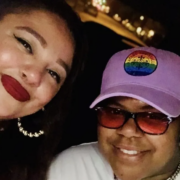
Paulina Helm-Hernández, in red lipstick and a jeweled necklace, and Ashe Helm-Hernandez, in a lavender cap with a rainbow patch and tinted glasses, smile together in a nighttime selfie.

The Information Game: Women’s Soccer, HIV and Belonging for LGBTQIA+ People of Color in Kentucky

On May 29, 1995, R&B group TLC released the song “Waterfalls.” It was the first No. 1 song ever to refer directly to AIDS, spending seven weeks at the Billboard 100 chart’s top spot: a song by three Black women to break the stigma surrounding HIV and to promote safer sex practices.

That same year was also one of the most important years in the history of professional women’s soccer. In 1995, it was the second year of FIFA’s Women’s World Cup, held just two months after TLC released “Waterfalls.” According to the U.S. Soccer archives, women’s soccer had almost no professional leagues in 1995. Most successful American players were competing for colleges and universities; salaries were nearly non-existent, and it was still a year before the Summer Olympics would welcome women’s soccer as a medal event. Women’s soccer at that time was still in its infancy.

Much like women’s soccer athletes from around the world were just beginning to be seen and taken seriously on the world stage, a deadly virus was expanding across LGBTQIA+ communities, at a time when effective treatment remained limited. Thirty years later, these two histories have intersected in a conversation about the National Women’s Soccer League (NWSL), the evolution of HIV treatment and healthcare, and what it truly means to belong. As women’s professional soccer continues to grow, so does the opportunity to examine how the league’s relationship with LGBTQIA+ communities can extend beyond visibility and representation to include education, access to sexual healthcare, and meaningful support.

According to a first-person account by Kevin Garner, published last year by Queer Kentucky, “In [19]80s and ‘90s Kentucky, HIV/AIDS services were concentrated in urban areas such as Louisville and Lexington. As a conservative state, political attitudes and action were slowly emerging.”

Garner pointed to Nazareth Home and Lyndon Lane Nursing Facility as “the only two facilities that would take clients under 40 who were affected by this disease during this time.

“There was a push for prevention.”

An unmet need unevenly shared

In 1995, more than 500,000 AIDS cases were reported nationally, and about 62% of those diagnosed had died by October. A 1992 study found that one in three Kentuckians diagnosed with AIDS in the 12 months between July 1990 and June 1991 died within three months of their diagnosis. Researchers concluded that many patients had not received consistent HIV care before developing AIDS, and they pointed to missed diagnoses, fragmented medical care (across dozens of hospitals and physicians), and gaps in follow-up treatment as major contributors to poor outcomes.

From the 1990s to today, the highest burden of HIV/AIDS deaths in the U.S. has not been evenly shared. Data from the Centers for Disease Control and Prevention (CDC) show, in the early years of the epidemic, AIDS deaths were heavily concentrated among men, especially gay and bisexual men, and the epidemic was especially severe in places like New York, New Jersey, California, and Florida.

By the mid-1990s, AIDS deaths reached their peak: The CDC reported that about 50,628 people died of AIDS in 1995, just before combination HIV treatment became widely available. After those stronger drug combinations arrived in 1996, deaths dropped sharply. Across race, Black Americans became increasingly overrepresented in HIV/AIDS illness and death, and that disparity continues today.

In plain terms, Black communities have carried a much higher share of HIV-related deaths than their share of the U.S. population. By region, the burden shifted over time: Early in the epidemic, AIDS was particularly concentrated in the Northeast, but today the South carries the largest share of both new HIV diagnoses and HIV-related deaths. In 2024, the South accounted for 51% of HIV diagnoses and 53% of HIV-related deaths nationwide.

Community in the crowd

From the 1990s to today, as HIV/AIDS prevention and treatment has changed considerably, so has the sport of women’s soccer in Kentucky. In 2021, Racing Louisville FC began play in the National Women’s Soccer League (NWSL), bringing a major-league professional sports franchise to Louisville for the first time in 41 years. Today, the club plays at the 15,304-seat Lynn Family Stadium, where more than 11,000 people attended a single NWSL match in 2024.

In recent years, increased investment in women’s sports has also meant more “third spaces” – what sociologist Ray Oldenburg described in 1989 as informal gathering spaces outside the home (first place) and work (second place), where people build relationships and community. For longtime LGBTQIA+ fans, who have long existed as the foundation of women’s sports fandoms around the world, stadiums and the communities that gather around us can function as third spaces, offering opportunities to build relationships, express our identities freely, and experience a sense of belonging that may not always be available in other parts of our lives.

I met two of these fans, Paulina Helm-Hernández and Ashe Helm-Hernandez, on a Wednesday night in Louisville. Paulina is a feminist philanthropic advocate whose work spans the Southeast, LGBTQ+, feminist and migrant rights movements. Born in Mexico City, with family from Veracruz, Mexico, she grew up in eastern North Carolina. Ashe, a philanthropic advocate for trans movement work, is originally from Louisville. Their family has been in the city for a century, and they attended Jefferson County Public Schools and the University of Louisville. After spending time away, they returned home with their wife, Paulina, to be closer to family.

Both had been to prior Racing Louisville matches, but Paulina still remembers what struck her the first time friends invited her to a match.

“I attended with some friends that invited us specifically because they’re also Racing Louisville fans, and we made an outing of it as a group of friends,” Paulina said. “It was my first time. My family also grew up, you know, as Mexican, as a Chicana woman, like following and watching soccer, and also one of the favorite sports of the Latino community, and I was a little bit surprised by the lack of racial diversity, to be honest, because I was like, ‘Wait, where are my people at?’ Because my people love soccer, and more and more girls are playing soccer.

“So I do feel like there’s like a little bit of a disconnect between the community and who attended those games,” she said. “Or who attended the games at the time was a couple years ago. So to be fair, I hope that that’s changed.”
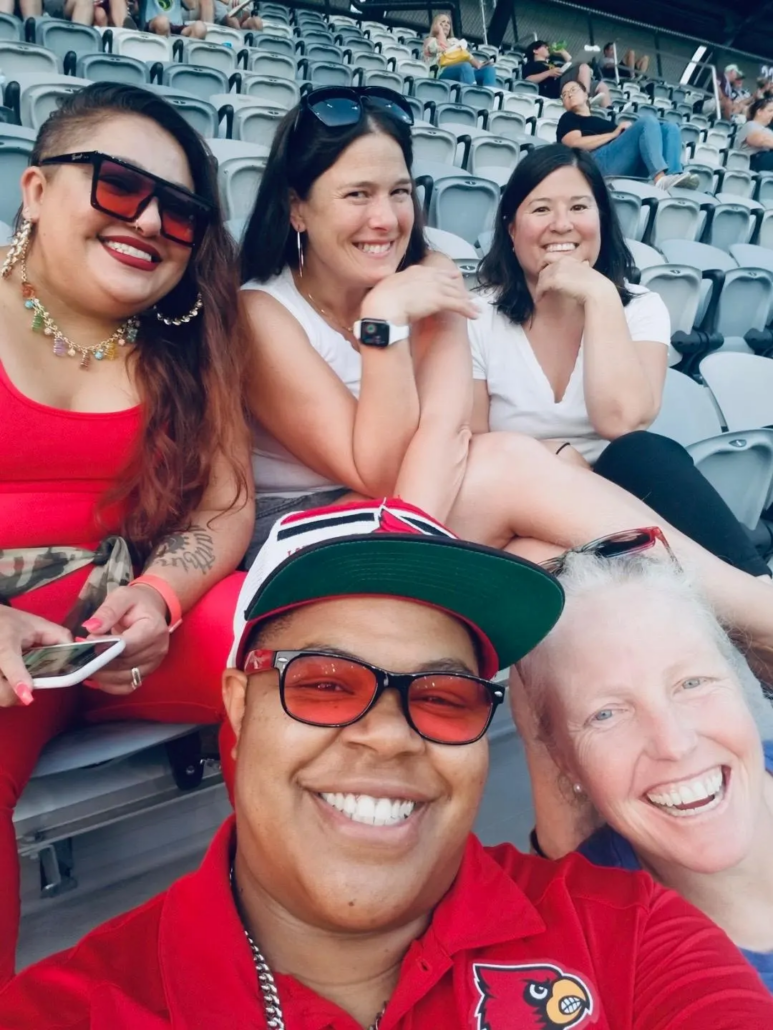
Paulina Helm-Hernández and Ashe Helm-Hernandez smile for a selfie with three friends in the stadium seats at a Racing Louisville game.

Paulina Helm-Hernández, left, and Ashe Helm-Hernandez, front, with friends at a Racing Louisville game. Supplied by Paulina Helm-Hernández and Ashe Helm-Hernandez

Paulina observed a crowd of fans that day considerably less diverse than the city’s larger population. Black residents make up about 23% of the Louisville-Jefferson County metro’s population, and Latino residents about 9%. But Louisville’s diversity has never been evenly distributed across the city. Decades of racial zoning, redlining and other discriminatory housing practices helped produce geographic divisions that remain visible today, with Louisville Metro’s own housing research finding that the city remains segregated by race and ethnicity.

Those divisions also intersect with Louisville’s LGBTQIA+ history. Researchers at the University of Louisville’s Anne Braden Institute have documented race as an important part of understanding queer life and history across Kentucky. Today, Louisville contains some of the state’s strongest LGBTQIA+ community and health infrastructure, but recent survey data from Queer Kentucky suggests that access and belonging remain uneven, even within the state’s largest urban center. Queer Kentucky’s 2025 Community Health Survey found that 65.5% of its 559 LGBTQIA+ respondents reported a strong sense of community belonging, while 11.4% reported low belonging. Respondents living with HIV reported an average belonging score of 3.98, compared with a statewide average of 4.86, the lowest average belonging score of any group measured.

Belonging is a primary indicator of good health. People need access to doctors, medicine, testing and treatment to be well, but research increasingly recognizes that people also need relationships, community and places where they can meaningfully connect with other people. The CDC names social connection an important determinant of physical and mental health, while research cited by the U.S. Surgeon General found that people with a strong sense of community belonging were 2.6 times more likely to report being in good or excellent health than people with a low sense of belonging.

This is especially important for LGBTQIA+ communities, whose rights to love, marry, build families and openly exist continue to be challenged and questioned by elected leaders. For communities whose belonging in public life has repeatedly been contested, having spaces where people can safely gather, build relationships and see themselves reflected is not just about having somewhere to go. Those spaces can become part of what people need to feel connected, supported and well.

That makes the places where LGBTQIA+ people gather part of the conversation about community health, too. A stadium cannot replace a doctor’s office, a testing site or a public health program. But it can do something those institutions cannot always do on their own: regularly bring queer and trans people together around a shared experience and create opportunities for LGBTQIA+ people to feel like they are part of fandom that affirms who they are and who they wish to be in the world.

Still, what Paulina encountered inside the stadium suggested to her that Racing already had much of what it needed to reach a broader community.

“I remember thinking, you know, as a fan of women’s sports, I thought it was a great atmosphere. But I do think, you know, it lacked the cultural diversity that I’m used to in terms of being able to enjoy like those kinds of sporting events, knowing that they’re also a reflection of like not just fanhood, but like what does it actually mean to have infrastructure that like is actually focused on women’s sports and women athletes so that to me you know it’s a mixed bag,” she said. “But I do remember enjoying the game, we had a great time, everybody that worked at the stadium was very welcoming and very warm, and I feel like the space in and of itself… It’s a beautiful arena, and so to me, they have everything in space in terms of the infrastructure, you know, to be able to welcome more people.”

Ashe’s first experience with Racing started differently. A lifelong Louisville sports fan, they showed up dressed for the Louisville team they already knew, but whose colors didn’t match this home team.

“I can go ahead and admit that I totally had on red,” they said. “I had on a University of Louisville ball cap, and my friends busted out laughing at my appearance and quickly took me to the Racing store to get some gear. And so, you know, I was shy. I was like, I didn’t look this team up. My friends invited me out, and I was like, ‘Let’s go! It’s Louisville,’ and I am a diehard University of Louisville fan, and I got that mixed up a bit. So yeah, but lavender is a beautiful color, and I appreciate it very much having some new gear.”
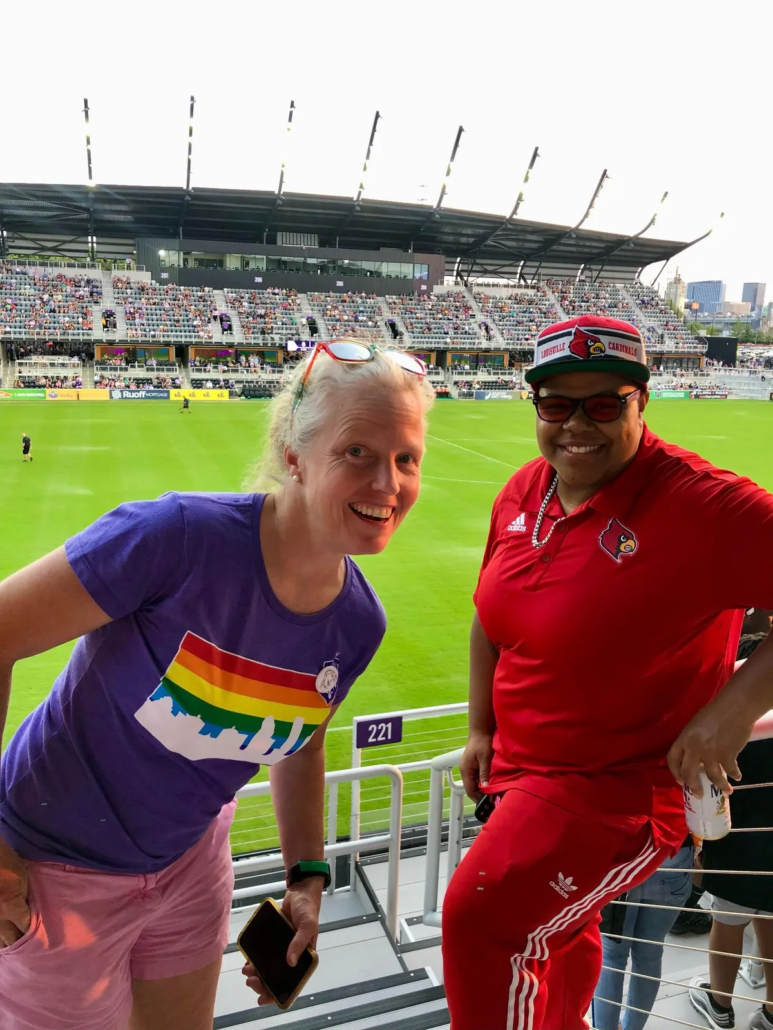
Ashe Helm-Hernandez, wearing a red University of Louisville polo and cap, stands with a friend in a rainbow shirt above the field at a Racing Louisville game.

Ashe Helm-Hernandez, right, in University of Louisville red with a friend at a Racing Louisville game in 2021. Supplied by Paulina Helm-Hernández and Ashe Helm-Hernandez

Soccer as belonging, belonging as care

Their experiences point toward something larger than fandom. In 1995, Kentucky did not have a top-tier professional women’s soccer team or a stadium capable of regularly gathering thousands of women’s soccer fans. Today it does. That growth creates an opportunity that did not exist three decades ago. Professional women’s soccer now has the physical infrastructure, cultural visibility and audience to bring thousands of people together at a time. And some of the communities gathering around women’s sports are the same communities Kentucky’s existing healthcare infrastructure is still struggling to reach.

Queer Kentucky’s 2025 Community Health Survey found that 48.2% of its 559 LGBTQIA+ respondents had never been tested for HIV. Among cisgender women, that figure was 53.6%. Among transgender women, it was 57.7%, and among nonbinary respondents, 50.6%. At the same time, more than one in three respondents statewide reported having no regular healthcare provider, while the U.S. Department of Health and Human Services reports that approximately 1.2 million people in the United States are living with HIV, and one in eight do not know they have the disease.

The relationship between community and HIV prevention is not theoretical. The U.S. Surgeon General’s advisory on social connection notes that stigma surrounding HIV can create barriers to both healthcare and social inclusion, while National Institutes of Health research has found a link between stronger community connections and people taking steps to prevent HIV.

That raises a different question about the economic and social value of professional women’s sports in Kentucky. What if the value of a stadium is not limited to what happens on the field? What if the same infrastructure, built to gather thousands of fans around women athletes, can also become infrastructure for connecting communities to information, testing, prevention and care?

There is already another professional women’s sports league that offers a glimpse of what can happen when that kind of infrastructure is given time to grow.

For Paulina and Ashe, the Women’s National Basketball Association (WNBA) has never been just basketball. Both came of age alongside a league that has now existed for 30 years and watched women’s professional basketball become a place where Black women, queer people and generations of women’s sports fans could see themselves reflected.

Some of Paulina’s earliest experiences in LGBTQ+ movement spaces were already intertwined with women’s basketball. She remembers older lesbians gathering around games and using basketball itself as a language for thinking about organizing and movement building.

“I grew up in an era where people were very like: This is one of the lenses to understand, you know, movement building,” she said.

Three decades later, she sees what women’s professional basketball has become, as more than commercial growth. She called the rise of the WNBA a “social and political win,” describing women’s sports as one of the places where fans can now see “queer excellence” and “feminist excellence” at the highest level.

Ashe remembers that history differently. Growing up playing basketball, some of the women they watched in the earliest years of the WNBA became their heroes.

“I was able to look up to Cheryl Swoopes, and I was able to look up to Cynthia Cooper as people and role models,” they said. “That I could be, that Black women could do that, that they could be on television, that they could play sports, that they could play basketball, that they could sweat, they could be fierce.”

Today, Ashe sees younger players learning whose footsteps they are following, while the players they grew up watching are finally being recognized as living legends.

Their experiences show what can happen when a professional women’s sports league has enough time to become part of a generation’s lives. The NWSL is still building that history. The WNBA was founded in 1996 and began play the following year. In 2026, the league celebrated its 30th season. The NWSL, by comparison, was founded in 2012 and played its first season in 2013. In just over a decade, professional women’s soccer has grown considerably, but that’s still only half the time the WNBA has had to become part of the lives, traditions and communities of its fans.

That difference in time matters when thinking about what Paulina and Ashe described. The impact of the WNBA on their lives cannot be measured only through attendance, television audiences or revenue. They are describing what happens when a professional women’s sports league exists long enough for people to grow up alongside it. Players become childhood heroes. Games become traditions. Fans build relationships with one another.

Queer people find spaces where they see themselves reflected. Over time, a sports league can become part of the social infrastructure of a community.

For Paulina, women’s basketball was woven into LGBTQ+ community life long before the WNBA became a mainstream cultural phenomenon. She remembers gathering at people’s homes to watch games, where basketball brought people together for more than just the competition.

“You just had to get with the program and you had to watch games and you had to go to people’s houses and know that the meetings happen after the game and know you were not allowed to talk through it,” she recalled.

For Ashe, the league’s history is personal. During a recent presentation at work, they shared a photograph of WNBA players from three decades ago with their colleagues: “I told my team that these were my heroes,” Ashe said. Those same athletes who inspired Ashe as a young basketball player are now being celebrated by another generation.

“For me, it’s a very serious moment where players are getting their due, and where younger players are learning whose footsteps they walk in, and they too are being able to recognize living legends,” Ashe said.

Paulina remembers the relationships and organizing that happened around games; Ashe remembers the athletes who showed them what was possible for Black women in professional sports. Together, their experiences illustrate how a league can become part of a community’s history, creating relationships, traditions and a sense of belonging that develop over generations.

Racing Louisville, which joined the league in 2021, is part of a story that is still unfolding, as fans begin building those traditions and relationships that future generations may one day inherit. But just five years after the club began playing in Kentucky, questions have emerged about its long-term future in Louisville.

That possibility raises another question about how communities measure the value of women’s sports institutions. Five years may be enough time to count tickets, calculate attendance and measure revenue. It may not be enough time to measure what happens when a generation grows up with a professional women’s team in its city, when queer fans build traditions around going to games together, when Black and Latine children begin seeing the stadium as somewhere they belong – when community organizations begin treating that stadium as another place where people can be reached.

Lynn Family Stadium represents physical infrastructure. It has more than 15,000 seats and the ability to bring thousands of people together at once. But what Paulina and Ashe describe through their experiences with women’s sports is another kind of infrastructure that takes much longer to build. Relationships, traditions, information networks, chosen family, representation, belonging and trust develop over years as LGBTQIA+ people repeatedly gather in the same places and around the same women’s sports teams.
This work was supported by the 2026 CNP Media Fund. #CNPMediaFund
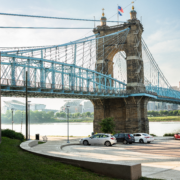
The blue Roebling Suspension Bridge stretches across the Ohio River from the Covington, Kentucky, riverfront toward the Cincinnati skyline on a sunny day.

Northern Kentucky’s LGBTQ+ Paradox: Legal Protections at Home Contend with Restrictions at the Statehouse(s)

Queer Kentucky’s survey data highlights a region where residents may be physically safer, yet still carry the state’s heaviest mental burden.

LGBTQ+ residents of Northern Kentucky are, on the surface, doing well. They aren’t leaving the state at higher rates, aren’t reporting more violence than their neighbors, and are finding health care providers at rates higher than the state average. By nearly every physical measure, Northern Kentucky seems like it’s doing just fine.

But when you zoom in, Northern Kentucky’s LGBTQ+ residents are experiencing an increased mental health burden nearly 9 percentage points higher than the statewide average. According to the 2025 Queer Kentucky Survey, 43.2% of LGBTQ+ residents in Northern Kentucky report experiencing very negative mental health, reporting higher psychological burdens than their Louisville or Lexington counterparts.

Dig deeper into the data, and the impact of public policy comes into focus: 75% of Northern Kentucky residents say their mental health has been negatively affected by anti-LGBTQ+ policies – 5 percentage points higher than the statewide average – and 58.3% say they’ve lost trust in their elected officials altogether.

These numbers make it worth asking why residents are staying at all.

It starts with local government. Across Northern Kentucky, city halls have built some of the deepest LGBTQ+ infrastructure in the state, one ordinance at a time.

Kentucky’s “fairness ordinances” – local laws banning discrimination based on sexual orientation and gender identity – are where this shows up most. About 1 in 4 cities in Northern Kentucky’s three core counties – Boone, Kenton and Campbell – now has a fairness ordinance on the books, one of the densest concentrations anywhere in the state. Covington passed the region’s first in 2003, followed by Dayton, Bellevue and Highland Heights in 2019, Fort Thomas, Cold Spring and Newport in 2020, Crescent Springs and Fort Mitchell in 2021, and Elsmere in 2022.

Beyond anti-discrimination laws, Covington was also the first city in Kentucky to ban conversion therapy for minors (2020) before Governor Andy Beshear signed an executive order banning it statewide in 2024. Covington also scored a 94 out of 100 on the Human Rights Campaign’s 2025 Municipal Equality Index – one of the highest scores in the state. Local advocacy groups Northern Kentucky Pride and Northern Kentucky Fairness were both active in getting many of those ordinances passed.

In other words, queer residents and allies in Northern Kentucky have worked hard to build real community and real protection for their families and neighbors.

So if Northern Kentucky’s LGBTQ+ residents feel more physically safe and have built a strong community, what’s driving the region’s mental health numbers higher than anywhere else in the state? No single survey question can answer that, but a look at the wider anti-LGBTQ+ policy landscape – with 75% of Northern Kentucky residents’ mental health impacted by it – suggests a few contributing threads.

In 2023, the legislature passed Senate Bill 150, a law banning gender-transition care for minors, mandating school bathroom policy by sex assigned at birth, and barring teachers from discussing sexual orientation or gender identity in the classroom.

The ACLU called it “one of the worst anti-trans laws in the nation,” and, when the bill passed, Northern Kentucky school districts complied quickly.

This law wasn’t just handed down from Frankfort; it was Northern Kentucky-grown. State Sen. John Schickel, representing Boone County, was one of 13 senators who sponsored the bill, alongside two other Northern Kentucky senators, Shelley Funke Frommeyer and Gex Williams. (The bill’s lead sponsor, State Sen. Max Wise, represents Campbellsville, in south-central Kentucky.)

Unlike Louisville or Lexington, where anti-LGBTQ+ legislation largely arrives from rural and exurban districts, the architecture of SB 150 was built partly by Northern Kentucky’s own representatives. In cases like SB 150, local queer residents aren’t watching some distant lawmaker author these bills. Instead, they’re coming from senators in their own backyard.

So while physical violence against LGBTQ+ folks sits at 9.1% in Northern Kentucky – 6.1 percentage points below the state average – there is still a looming anxiety that their safety could be at risk as they watch these policies come in.

Amy Clark, LPCC and Director of Student Counseling Services at Northern Kentucky University, shares, “At the local university counseling center, more than 33% of the overall clientele are LGBTQ+. I have witnessed an increase in anxiety, uncertainty and guardedness. A lot of times it presents as anger – and rightly so – but if you dig below the surface, there’s a genuine feeling of intense fear and sadness.”

And then, just across the Ohio River sits a whole other state with a whole other set of policies.

Before 2023, Northern Kentucky families who wanted gender-affirming care for their kids could drive just minutes into Cincinnati to Children’s Hospital, which had been among the highest-volume providers of gender-affirming care in the country. Then, in 2024, Ohio banned gender-affirming care for minors, just as Kentucky had.

Northern Kentucky families didn’t lose access to this type of care all at once; they had to lose their nearest options one at a time. Louisville’s cross-border option, Indiana, restricted care even earlier, while Lexington never had a comparable one at all.

Northern Kentucky may be the only Kentucky metro where residents watched two specific, physically close options get taken away from them, one after the other.

The region also sits inside Cincinnati’s media market, meaning residents are more likely to keep a pulse on two state legislatures’ worth of anti-LGBTQ+ fights instead of just one. That’s two states’ worth of harmful policy instead of one, likely creating twice the psychological weight to carry.

Ben London, a gay resident living in Northern Kentucky, told Queer Kentucky, “We have been hit with so much news about so many bills in so many states on so many issues that I’m overwhelmed. I am not transgender, but I have transgender friends. [My friend] – probably turned 18 a few years ago and transitioned before that – is a lovely, wonderful person. It makes me angry that he couldn’t get that gender-affirming care today; that’s ridiculous to me.”

What’s happening in Northern Kentucky is a paradox built by two governments at once. It’s a patchwork of city halls that took steps and decided one ordinance at a time to protect their queer neighbors. And yet, it is a region that sits underneath two state capitols that keep deciding otherwise.

That volume is about to increase. With the midterms approaching, both statehouses and the media covering them are likely to get even louder. Northern Kentucky’s LGBTQ+ residents have a say in what happens next, but they shouldn’t have to carry all of it alone.

“[LGBTQ+] individuals are tired of fighting this battle,” Clark said. “Despite the overwhelming discouragement, [they] are still trying to take care of themselves.”

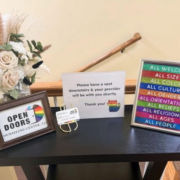
Mental health care for trans Kentuckians: Open Doors Counseling Center's entry table with a rainbow "All Welcome" board.

Trans Kentuckians Are Staying Home. The Data Says Community Is What Helps.

Mental health trends in transgender and nonbinary Kentuckians have displayed shifts during recent policy debates.

A 2025 Queer Kentucky survey showed that 34.5% of respondents reported that these recent policy debates have very negatively impacted their mental health.

Some gender expansive Kentuckians told Queer Kentucky that policy debates have led to them feeling like they are at the focal point of society right now, making the simple act of going into public feel daunting.
Hayes Farris, a nonbinary Kentuckian, said when they step out in public, it feels like transgender people are what sit at the forefront of people’s minds.

Farris said part of it is not knowing what people are thinking.

“Is that person looking at me because they are seething inside and hate that I exist? Are they curious? That’s just a heavy mental load to carry around,” they said.

Delgonna Cole, a transgender woman, said she is constantly thinking about what might make her easy to “clock” as transgender in public.

“I’ve had people come up to me at Kroger saying, ‘Hey, I have a question. Are you trans?’” she said. In reference to policy debates about the rights of transgender people, Cole said, “If it wasn’t pushed so intensely, I think I wouldn’t be so constantly afraid of going outside.”

Even healthcare providers for transgender and nonbinary Kentuckians reported seeing changes or responses from their patients reflecting these negative effects.

Dr. Keisa Fallin-Bennett’s practice has included transgender people for around 10 years, and for most of her career, she has been providing her services in Kentucky.

Fallin-Bennett said the impact varies from person to person, but she has heard from several patients that the impacts of recent policy debates have been devastating.

She said there has been a lot of policy debate prior to 2023, but that is where it all really took off.

“People start in a difficult state because of the world and having to accept that the institutions are kind of actively working against them,” Fallin-Bennett said.

Policy changes have led to decreased federal funding for her place of employment, and these changes have altered what is allowed to be provided to transgender patients, according to Fallin-Bennett.

According to the survey, when transgender women are denied healthcare in any aspect, they are more likely to avoid all healthcare. Some of this avoidance may be due to shaken trust in the healthcare system.

Fallin-Bennett discussed the issues that a 2023 Kentucky law stated that neither hormones nor surgery could be provided to transgender patients under 18, but an executive order to cut federal funding for institutions that treat individuals under 19 was signed in 2025 under President Donald Trump.

Under the threat of losing federal funding, Fallin-Bennett’s practice could no longer treat people under 19 years old, and people under that age limit who were already on hormones had to be weaned off.

“Frustrations are really building, and it really erodes the trust that people have in us,” Fallin-Bennett said.

For Cole, after struggling to get endocrinologists to properly prescribe her gender-affirming hormones, she took matters into her own hands.

“They wanted to stop my HRT dose because it got too high… but the levels were lower than a cis teenager’s,” she said. “So I just stopped seeing them, and I started doing DIY.”

Cole said she buys everything online, did extensive research, and measures her blood levels all on her own.

Transgender women report provider refusal at rates of 38.5%, far above the 12.6% statewide average for queer people, according to the QKY survey.

Another factor that gender expansive Kentuckians must think about when it comes to healthcare is finding understanding in their providers.

“I don’t think it’s ever been a question of safety, but more comfortability. I haven’t had any issues where I have felt unsafe, but even then, my therapist doesn’t know what questions to ask,” Jordan Gaither, a nonbinary Kentuckian, said.

Transgender and nonbinary Kentuckians are finding it difficult to cope with the world as it is right now, whether they are coping with self-medication, isolation, therapy or something else.

Gaither said they have had to figure out what they need on their own and come to their therapist with it, rather than being provided the necessary tools to cope.

This points to a potential lack of LGBTQ+ education for mental healthcare providers in Kentucky, but organizations like Open Doors Counseling Center are centered around providing care to queer people and have a queer staff.

Tanya Stephens, who uses no pronouns, only a name, says Open Doors is a great place for finding care as a queer person in Kentucky.

“They do a lot of good things to try to help. I did find a safe feeling place there,” Stephens, a local nurse practitioner, said.

Open Doors Counseling Center is part of a nonprofit organization called Caritas Care Solutions. The center provides identity counseling, trauma and grief counseling, financial therapy and more, and focuses on creating a safe space for LGBTQ+ people.

Finding mental health resources can be difficult in Kentucky. Eve “Sylvie” Derrington, who is nonbinary, said monetary restrictions can be part of the struggle.

“If there were more programs where you pay what you can based on your income, especially oriented to specific communities, that kind of thing would be helpful,” they said.

Derrington said coping is complicated, but it can help: “Trying to find community is a big coping mechanism. We’re not very good at it, but when we do have it, it’s beneficial.”

The Queer Kentucky survey showed that those with a lack of community reported significantly more severe outcomes in every policy impact measure.

Fallin-Bennett echoes that finding. She said that while it might seem easier to isolate right now, community is a crucial coping skill for queer people.

“People have been hit by this issue, and it makes everybody want to stay home. I think it’s the exact time that people need to be gathering with other people as much as their mental health allows,” she said. “We need to be outside of our houses for our mental health and have interaction with other humans… hopefully humans that are in the same boat.”

For Farris, policy debates have had an impact on them and their friends, but the conflict has helped them pull each other closer.

“I think it’s almost made us closer, and we know that community is everything right now,” they said. “I wish more people knew that it’s not a burden to lean on people you love.”

If you or someone you know is in crisis, the 988 Suicide and Crisis Lifeline is available 24/7 by call or text at 988, and restored its specialized “Press 3” service for LGBTQ+ youth on September 30, 2026, after a 14-month shutdown. Trans Lifeline’s peer support hotline is at (877) 565-8860, staffed Monday through Friday, 1 p.m. to 9 p.m. Eastern. The Trevor Project’s counselors are available 24/7 for LGBTQ+ young people at 1-866-488-7386, or by texting START to 678-678.

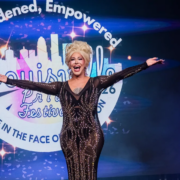
A drag performer in a sequined black gown raises their arms on stage in front of the 2026 Louisville Pride Festival sign reading "Emboldened, Empowered."

Louisville Pride Put Mental Health Front and Center. The Need Doesn’t End When the Tents Come Down.

Queens took the stage. Artists sold their colorful wares. Vendors of all kinds passed out pamphlets. Louisville Pride returned this year, with queers from all walks of life bustling through a blocked-off section of Bardstown Road on Saturday, September 12.

Louisville Pride Foundation, which also runs the Louisville Pride Center in Old Louisville, organized the event.

National acts performed near tables of local organizations ranging from healthcare organizations, such as Planned Parenthood, to political organizations.
Among those who participated were organizations helping LGBTQ+ people with their mental health or pointing them in the direction of mental health services.

According to the 2025 Queer Kentucky Community Health Survey, roughly 7 in 10 LGBTQ+ Kentuckians have had negative experiences with their mental health due to the current political environment, such as debates around LGBTQ+ rights.

Of queer Louisvillians who responded to the survey, about 32% attributed thoughts of suicide to policy debates around LGBTQ+ people. In fact, the number is 3.9% above the state average. Because of these debates, 8.1% of respondents said they left Kentucky because of it. The survey also found that trans women reported higher rates of suicidal ideation.

Louisville has more queer services than most of Kentucky, but Queer Kentucky’s data suggests they may not be enough because there are also high levels of health risks in the community.

Mandala House Provides Mental Healthcare to Queer Louisville

One featured booth at Louisville Pride was Mandala House, which provides mental healthcare to the community of Louisville. Mandala House has several therapy groups that address the psychological health of minority groups and their various intersectional needs.

“It’s a special place in our hearts, the work we get to do with queer people,” said Mandala House therapist Rachel Archer.

Archer said Mandala House currently runs a variety of therapy groups, such as an adult gender-journey group for individuals 18+ who are questioning their gender or who identify as trans or gender non-conforming. The space provides communal support for one another.

Archer noted that she couldn’t say that the lack of queer-specific spaces as a barrier to queer healthcare’s accessibility was unique to Louisville alone.

Mandala House also provides support letters for trans individuals seeking gender-affirming care, which is often required by providers and insurance companies. For many queer Kentuckians, finding a provider for their healthcare can be a challenge. According to the 2025 Queer Kentucky Community Health Survey, while Louisville has better healthcare access than most of the state for LGBTQ+ Kentuckians, provider refusal still happens.

Kentucky Psychological Foundation: Evidence-Based Connections

Among the vendors, the Kentucky Psychological Foundation was doing outreach. The organization focuses on bringing free mental health resources across Kentucky. It also supports researchers and graduate students with funds to conduct research with marginalized communities.

“We know there is a lot of specifically psychological information that is based in science and research…out there, but it’s not always easily accessible in the community,” board member Dr. Courtney Keim told Queer Kentucky.

“What we really focus on is educating the public about the science in ways that can better the lives of Kentuckians,” Keim said.

The Kentucky Psychological Foundation doesn’t provide mental healthcare, but its sister organization, the Kentucky Psychological Association, is the state professional association for psychologists, whose members provide care.

The Kentucky Psychological Foundation’s site provides a link to a database of members of the Kentucky Psychological Association that are using evidence-based research and follow the American Psychological Association’s guidelines and ethics. This can help address the needs of marginalized communities to find competent care.

“Our foundation is going to provide things based in evidence and research. We are very much against therapies that are not evidence-based. So for example, conversion therapy is not evidence-based. We don’t support that. We only provide evidence-based and culturally competent therapists that understand the marginalized communities they are serving,” said Keim.

So-called “conversion therapy” is a discredited practice and is referred to by the American Psychological Association as attempting “to change a person’s sexual orientation, gender identity, or related behaviors” with practices that “stem from the scientifically discredited belief that being LGBTQ+ is a mental illness that should be cured.” The organization says it causes a significant risk of self-harm, depression, and substance use.

The topic of ‘conversion therapy’ has been a battleground issue statewide between Democratic Governor Andy Beshear and the Republican dominated state legislature when Beshear tried to restrict the harmful practice, but Republicans overturned his attempt.

“A lot of times it is because people who are getting that ‘therapy’ don’t feel that person providing that therapy truly understands them,” said Keim. “One of the things that has been important in psychology is those cultural competencies and making sure those folks who are marginalized find someone who truly sees them.”

At the end of the day, the booths came down. The tents emptied. As the night wound down, a queen took the main stage to perform Dolly Parton’s “I Will Always Love You,” and Louisville Pride ended the way it began, with queens and with community.

If you or someone you know is in crisis, The Trevor Project’s counselors are available 24/7 at 1-866-488-7386, by texting START to 678-678, or by chat at thetrevorproject.org/get-help.

If you or someone you know is struggling, call or text the 988 Suicide & Crisis Lifeline at 988. LGBTQ+ young people can press 3 to reach counselors trained in LGBTQ+ care, an option that returned on Sept. 30, 2026 after it was cut in July 2025. The Trevor Project also offers 24/7 support at 1-866-488-7386 or by texting START to 678-678.

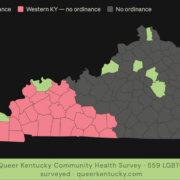
A county map of Kentucky showing which communities have local LGBTQ+ fairness ordinances, with western Kentucky counties highlighted in pink to show the region's lack of protections.

Western Kentucky’s LGBTQ+ Crisis: The Most Harm, the Least Protection Queer Kentucky's survey data reveals a region where nearly every measure of harm is at its worst, and state law still leaves trans Kentuckians out entirely.

LGBTQ+ people living in western Kentucky are experiencing a substantially more dangerous environment than anywhere else in the state, reporting being physically attacked at nearly twice the statewide rate. For trans folks, it goes even further: Kentucky’s hate crime statute has no name for what happens to them when they are attacked. A trans Kentuckian can be assaulted for being trans, and the state may prosecute the harm, but not the reason it was done.

Across the Queer Kentucky survey, western Kentucky ranks first or near first on nearly every measure of harm: LGBTQ+ residents with no health care provider, never tested for HIV, refused care by a provider, physical assault, suicidal ideation, drug use, smoking, feeling unsafe at home and deciding to move away. This is a region where nearly every measure of harm, access and community is at risk. And state policy and protections have failed them time and time again.
29.2% of queer residents in western Kentucky reported at least one instance of physical assault, which they attributed to the overarching anti-LGBTQ+ climate in the state. Overall, the statewide rate of physical assault stands at 15.2%.

54.5% of queer individuals report feeling physically unsafe at home, and 52.2% report feeling unsafe in public. Both are the highest of any region.

But it doesn’t stop at physical assault. In most of western Kentucky, a person who discriminates against and refuses an LGBTQ+ person a job, an apartment or service at a counter faces no legal consequences in doing so.

Across all of Kentucky, 24 communities have local Fairness Ordinances — including western Kentucky’s Paducah in 2018 and Henderson in 2019 — but that’s two of the 24, and they sit 130 miles apart. In between and beyond them, Owensboro, Bowling Green, Hopkinsville, Madisonville, Murray and Mayfield have no local fairness ordinances. On a map of who Kentucky has agreed to protect, most of western Kentucky isn’t on it.

What about larger state protections in Kentucky? It turns out that the state of Kentucky does have a hate crime law that protects sexual orientation. But it’s still reliant on individual judgment, and it still doesn’t protect trans people.

KRS 532.031, passed in 1998, applies when someone commits offenses because of a person’s race, color, religion, sexual orientation or national origin. In 2017, the legislature amended the statute to add a category, extending it to victims targeted for their actual or perceived employment as a peace officer, firefighter or emergency medical services worker.

Gender identity is not on the list.

Nine years ago, when the state legislature reopened the statute to add police and first responders, it still left trans Kentuckians out. For example, if a gay man is assaulted in Paducah, it can legally qualify as a hate crime. But if a trans woman is assaulted on the same block, both the state and law enforcement officers can choose to do nothing. The statute, by not including gender identity, allows law enforcement to turn a blind eye and delegitimize incidents against trans people.

Even within the bounds of discrimination against sexual orientation, this hate crime law does “protect,” the statute has no teeth and the law still does far less than what it implies. It might look and sound substantial, but functions as a performative exercise in the court system. As a result, there are many opportunities to create distance between the assault and any consequence for it. For instance, a judge decides at sentencing whether bias was a primary factor. A finding of bias permits denying probation instead of requiring it. The parole board may delay or deny parole.

It’s subject to discretion and personal biases that could creep in all the way down.

The laws already on the books are only part of it. Kentucky’s 2026 General Assembly may not have passed any anti-LGBTQ+ bills, but the climate in western Kentucky still hasn’t improved.

A bill doesn’t have to pass to embolden violence in its communities. Another factor behind why the climate in Western Kentucky still hasn’t improved. A bill only has to be filed, assigned, debated and covered on the local news, which are all separate moments of exposing a Kentuckian to hear whether or not their queer neighbor has the same rights as they do.

For example, Senate Bill 72 would have let health care providers refuse any treatment that violated their conscience. House Bill 468, pitched as a routine civil rights update, would have stripped the enforcement power from the Kentucky Commission on Human Rights and the 22 local commissions that actually enforce fairness ordinances. Both cleared their chamber of origin before stalling.

If House Bill 468 had passed, it would have taken away the only fairness ordinance protections two cities in Western Kentucky have.

And people are responding the only way the law leaves open to them: they blend in, censor their identity and opinions, or leave the state altogether.

According to the same survey, 18.5% of LGBTQ+ individuals living in Western Kentucky have decided to move out of state due to anti-LGBTQ+ policies; statewide, only 8.1% decide to leave. The compounding burden of assault, health care gaps, housing stress, and drug use appears to translate into a concrete intention to leave. One respondent wrote:

“Currently planning to move out of [the] states to a blue state. I have a lot of trans friends that I am scared for. I want them to go somewhere more blue, more safe, more open minded.”

In the face of so much hardship, western Kentucky remains home to LGBTQ+ advocates who keep showing up anyway. In May 2019, 55 residents in Bowling Green spoke in favor of a Fairness Ordinance, while 31 spoke against it. The commission voted it down 3-2. Advocates put it back on the agenda and have continued pushing for it. When a Fairness Ordinance was voted on in January 2018 in Paducah, residents flooded the city commission meeting, forcing the fire marshal to move the overflow into the adjacent hall to listen through open doors. That ordinance passed 4-1.

The people of western Kentucky continue to fight for the safety of their LGBTQ+ neighbors. But with so few fairness ordinances and statewide protections that stop short of covering them, many LGBTQ+ western Kentuckians remain at risk.

If you or someone you know is struggling, call or text the 988 Suicide & Crisis Lifeline at 988. LGBTQ+ young people can press 3 to reach counselors trained in LGBTQ+ care, an option that returned on Sept. 30, 2026 after it was cut in July 2025. The Trevor Project also offers 24/7 support at 1-866-488-7386 or by texting START to 678-678.

The exterior entrance of AVOL Kentucky, Suite 100, photographed at dusk. A black A-frame chalkboard sign in front of the brick and gray-sided building reads "Free AVOL HIV STI Testing" in colorful lettering. String lights hang above the entrance, and bare winter shrubs line the base of the building.

No Doctor, No Test, Refused at the Door: What the Data Shows About LGBTQ+ Health Care in Western Kentucky Survey data points to a crisis in access, education, and trust — and the organizations working to close the gap.

From Mayfield to Paducah to Murray, Western Kentucky is full of life, history, and unique challenges, but when it comes to accessing reliable, informed, and specific health care, LGBTQ+ people in the region face obstacles that other Kentuckians might never feel.

Recently published data from the 2025 Queer Kentucky Community Health Survey reveals that LGBTQ+ people in Western Kentucky are significantly less likely to be receiving routine health care. The survey, which collected data from 559 LGBTQ+ Kentuckians, indicated that 58.2% of respondents in Western Kentucky have no regular healthcare provider.

That number grows even more concerning when you dig into disparities in reference to sexual health. The rate statewide for those who have never tested for HIV is 48.2%. In Western Kentucky, it’s 67.2%.

According to community organizers, these numbers illustrate how education can affect public health. It’s also tied to legislation. In 2023, Kentucky’s Republican State Senate majority passed Senate Bill 150, which implemented anti-trans policies including forcing trans students to use bathrooms and locker rooms that conflict with their gender identity, but it also made teaching about sex education or puberty virtually impossible for certain age groups.

“A lot of the schools still really push an abstinence-only sexual health education… and that has a real limiting and long-lasting impact on people’s view of sex in general,” said Christine Lindner, President of West KY NOW, a local chapter of the National Organization for Women, a feminist membership organization that advances economic justice, reproductive justice, and civil rights.

Without education or access to care, communities are left without the necessary resources to thrive, according to health care providers in the region.

“If people don’t know about things they don’t know to be tested, they don’t know what to look for,” said AJ Garnett, Outreach Director at LivWell, a nonprofit organization providing healthcare, support services, prevention education, and HIV testing to communities in the region. “Being able to educate people when they’re younger, whether it be middle school or high school, would make a world of difference.”

Another contributing factor behind these numbers is the limited resources available in the Western section of the state. The more densely populated areas of Louisville, Lexington, and Bowling Green are all in Central or South Central Kentucky. These areas experience higher concentrations of hospitals, clinics, and places of care. About one in five people in the US live in rural areas, but only 9% of physicians practice in rural communities.

While there are resources in Western Kentucky, including LivWell, they are limited and some LGBTQ+ people in these communities are not comfortable seeking care. Data from the 2025 Queer Kentucky Community Health Survey also indicates deeper issues than just seeing a doctor regularly; the survey also pointed to high levels of discrimination in the region. Almost 13% of respondents statewide reported a provider refusing care due to their LGBTQ+ identity, but in Western Kentucky this number jumps to 30%, the highest in the state.

“No amount of shaking hands and assuring people is going to alleviate years of distrust that they’ve built up for good reason,” said Garnett. “…Sometimes in those very rural areas, people just don’t even know we exist.”

The isolation of LGBTQ+ in rural Kentucky presents real challenges to reaching these communities, but queer people are still finding ways to thrive and build stronger futures.

“I think people don’t realize how large the community is out here in Western Kentucky, but we are really under-resourced and underfunded,” said Lindner. “I think there’s a desire for healthier queer existence, but there’s just a lot of pressure out here.”

West KY NOW regularly creates inclusive events and programming with the intention of building stronger communities in the region, including a feminist bowling night.

This data presents an opportunity for deeper investments by community groups, care providers, and educators. According to Garnett, closing these gaps looks like building deeper inroads with communities to establish trust between provider and patient.

Other Kentucky-based organizations working to close that trust gap with rural LGBTQ+ communities include AVOL, an organization committed to ending HIV through testing, medical intervention, and community support, and Matthew25, which works with those living with, at risk of, or affected by HIV and other sexually transmitted infections. With four clinics across Southern Indiana and Western Kentucky, Matthew25 serves 25 counties in Kentucky and 12 in Indiana.

“I know a lot of people are scared because of the way they’ve been treated in the past… I’m not going to sit here and pretend like there aren’t doctors and nurses out there that give people hell every time they come in to talk about HIV or other STIs,” said Garnett. “But I can tell you with us, with organizations like AVOL, with Matthew25, everyone I speak to in these organizations is so eager and anxious to help, and excited to be part of people’s lives and make them better.”

Queer Kentucky Annual Report 2025 in front of a dancing crowd at night.

ANNUAL REPORT: Queer Kentucky Reported 30% More Stories on 42% Less Funding

8 million readers: even with a funding shortfall due to the political climate, the only LGBTQ+ newsroom in Kentucky saw growth and national attention.

Queer Kentucky, the Commonwealth’s only LGBTQ+-dedicated newsroom, which reached 8 million readers, recently released its annual report for 2025, highlighting the news outlet’s work despite a sharp decline in funding.

“It tells the real story about what’s been going on with Queer Kentucky this past year, good and bad, including the fact that we’ve got challenges and that we need support. But in the midst of all that, we’re doing great work,” John Reisert, president of the board of directors of Queer Kentucky said.

The organization published 262 stories — about a 30% increase from the previous year — and reached 8 million readers — a more than 400% increase from 2024, according to the report.

“Eight million people heard the stories of LGBTQ+ Kentuckians last year, and I think that matters more than people realize. We’re not just filling a coverage gap. We’re actively rewriting the national narrative on what Kentucky looks like,” Missy Spears, Queer Kentucky’s executive director, said.

Queer Kentucky and its team received several national recognitions. Founder and former executive director Spencer Jenkins and Queer Kentucky were nominated for Best Print Magazine Article at the GLAAD Media Awards for the 2024 article “Noah J. Ricketts Brings the Bluegrass to Hollywood and Broadway” in the Reimagining Masculinity Queer Kentucky print publication. Queer Kentucky was also nominated by GLAAD in 2026 for Outstanding Independent Journalism.

Missy Spears was named one of GO! Magazine’s 2025 Top 100 Queer Women and served as a Grand Marshal of the Cincinnati Pride parade. She also received the Jeanne Córdova Award from NLGJA: The Association of LGBTQ+ Journalists, one of the highest honors in queer media.

The report also noted that Queer Kentucky’s coverage has grown beyond Kentucky’s urban centers, now including Northern Kentucky, Eastern Kentucky, and Appalachian communities.

In 2025, the newsroom shifted its focus to civic literacy, providing more news out of Frankfort. Queer Kentucky also hosted in-person events that brought journalists and the community together.

The team delivered research-driven stories, highlighting the challenges faced by LGBTQ+ Kentuckians as health policies shift with the current administration. The organization also emphasized harm reduction and public health, publishing more stories about resources across the state. The work goes beyond the words. The Queer Kentucky team also distributed more than 300 HIV self-test kits across Kentucky alongside continued coverage to raise awareness.

The report showed the continued partnership with researchers from Kentucky’s Moore Lab to create a public resource survey on LGBTQ+ health data in Kentucky, which began in 2024. That survey reached thousands of Kentuckians in 2025.

“A GLAAD nomination and the Jeanne Cordova Award in the same year is national recognition for queer Kentucky voices, and it means something. But we also had 4,100 LGBTQ+ Kentuckians answer our call to collect data that nobody else was collecting,” Spears said. “That’s the work. The awards and nominations are really fun, but the data is how we prove our community’s needs are real and form the blueprint for our journalism coverage.”

The report also details how funding has decreased across the board for nonprofits in the US, including Queer Kentucky. The report shows the organization lost almost 42% of its total funding.

Even with the financial situation, Reisert said the news outlet still fulfilled its mission.

“We took a huge cut to our budget, and that should have impacted what we’re able to do. Yet, we seemingly did even more than the previous year in terms of coverage. We’re still making an impact,” he said.

The current administration’s federal grant-funding changes last year impacted the organization, Reisert said.

“Money that was earmarked or available to organizations like ours in the past isn’t now. It was also an eye-opener for us… that we should look at how we fund our work and find different ways to do it,” Reisert said.

Now, the organization is looking ahead and expanding its storytelling footprint in areas like Western Kentucky, starting in Paducah.

“Paducah is gay. I will scream that from the hilltops,” Spears said. “Paducah boasts one of the most LGBTQ+ friendly downtowns, a fairness ordinance going back a decade, and hosts the only lesbian film festival in the country.”

The expansion isn’t a new idea, she noted. It’s the result of groundwork laid well before this year’s report, Spears said. “We’ve been forming relationships in the community since 2023 and are excited to strengthen and expand our network over the next few years. Louisville and Lexington aren’t going anywhere, [and] our job has always been to highlight the Kentuckians that get left out of the conversation.”

For Reisert, that mission carries a particular urgency.

“We live in a red state, and Kentucky is doing as much or more than any other red state in the country when it comes to initiatives targeting queer and trans folks,” he said. “If you don’t report on it, it’s just going to happen with no light shining upon it, and there will be no way to resist it.”

Queer Kentucky 2026 Health Survey featured graphic with text "Be Counted" on dark background with data visualization network

2026 LGBTQ Kentucky Survey Is Live – Take It Now

Editor’s note: This story was published in May 2026. The survey was open until the end of June 2026 and is now closed.

Things feel heavier in 2026?

Help us collect the data that will fuel the studies and reporting around it.

In a political climate that’s actively trying to erase LGBTQ+ Kentuckians, data about our existence is one of the most powerful tools we have, and it’s imperative we keep up with it.

Queer Kentucky first partnered with The Moore Lab, led by Drs. Justin X. Moore and Sydney P. Howard, alongside collaborating researchers Drs. Keith J. Watts and Rachel H. Farr, to launch this survey in 2024, and collected responses from more than 3,600 Kentuckians. At the time, it was one of the most comprehensive studies of LGBTQ+ Kentuckians ever conducted.

It may not seem important, but according to the National Library of Medicine, “a clear, inclusive, and accurate approach to the collection of demographic information in clinical research and medical practice is critical to understanding the healthcare needs of a specific population.”

LGBTQ+ individuals experience “undue psychological harm” when their identities are not captured accurately in survey data, the NIH abstract reads, so surveys like this one can help normalize more inclusive coverage for queer people throughout the country.

The survey is live now until the end of June 2026. Click here to participate in the survey.

Why the 2026 LGBTQ Kentucky Survey Matters

Collectively, more than 4,000 Kentuckians have responded to these surveys, and the data has been used by researchers and journalists. Data like this is essential for more accurate and inclusive reporting about LGBTQ+ Kentuckians, and ease of access allows journalists, researchers and advocates a bigger incentive to highlight queer Kentuckians in their stories.

Researcher Dr. Sydney Howard pointed out that “drive-by” research is quite common, where surveys take place but data isn’t returned to communities. This survey is not like that: the data is compiled in a dashboard for Kentuckians and those writing about Kentucky to utilize throughout journalism, policy making, academic publishing, and PhD studies.

“We are so excited for this next iteration to be released,” she said. “We know now is a scary time, but we are good stewards of the data, and we want to be able to give the data back to the community.”

Why Does Filling Out the 2026 Survey Matter?

For Moore, an epidemiologist, datasets like this survey matter immensely in creating more consistency across medical research, such as cancer research. In many surveys, questions on sexual orientation are optional, so the data is inconsistent. So how can medical professionals study rates of diseases like cervical cancer or lung cancer in the LGBTQ+ community?

“Representation matters,” Moore said, “And we need people to be accounted for. It’s clear and apparent that from a national standpoint, there are some trying to silence or mute the lived experiences of people who are here and have healthcare needs and are also at risk.”

What Does the Data Show Us?

Curious what our previous data shows? You can explore our 2024 data dashboard here, or read a story about it here. In 2024, 3,674 responses were collected, mostly from individuals identifying as gay (52.83%) or queer (11.85%).

For HIV Testing and PrEP Usage, nearly 70% of responders reported testing for HIV and about 66% reported using PrEP. When you isolate Appalachian respondents though those numbers drop to only 32% reported using PrEP and 50% of respondents testing for HIV. The 2025 data dashboard will be available soon.

“If people in Kentucky are doing this kind of research and making these kinds of connections, I think it’s a great model to adapt across the U.S.”, said Howard. “It doesn’t have to be federal level, it can be grassroots level like at Queer Kentucky. Hopefully, studies like this will inspire other researchers to do the same thing in their areas as well.”

Queer Kentucky is the only LGBTQ newsroom in the Commonwealth, and in 2025, we took a 42% funding cut. Click here to help support our journalism.

Queer Kentucky, Moore Lab launch interactive data dashboard featuring experiences of 3,000+ LGBTQ+ Kentuckians

Curious about what is important to LGBTQ+ Kentuckians? Check out this groundbreaking survey.