KEEP. Subject. Additive. Pair with a beat, never fuse. Sex, sexuality, desire, kink, and sex work. Rides with Beat: Health for sexual health and sex education, and with Beat: Culture for sex as part of queer life and storytelling. A story can carry both beats. Added Oct 9 2026.

Tag Archive for: Subject: Sex

Kris-and-Billy-at-the-convenience-store

‘Teenage Sex and Death at Camp Miasma’ Review: Queer Pleasure, Excess and a Bowling Green Theater

Warning: Spoilers ahead.

I knew very little about Teenage Sex and Death at Camp Miasma when I decided to accompany a friend to the theater. I had seen the iconic poster and knew I adored the work of both Hannah Einbinder and Gillian Anderson. I knew the storyline was queer – a real selling point for me. I had absorbed a handful of press tour clips from social media, watching Einbinder and Anderson riff off one another, but revealing very little about the actual film. Shortly before going to the theater, I viewed the trailer which, as trailers do, primed me for this unhinged viewing experience. I was ready.
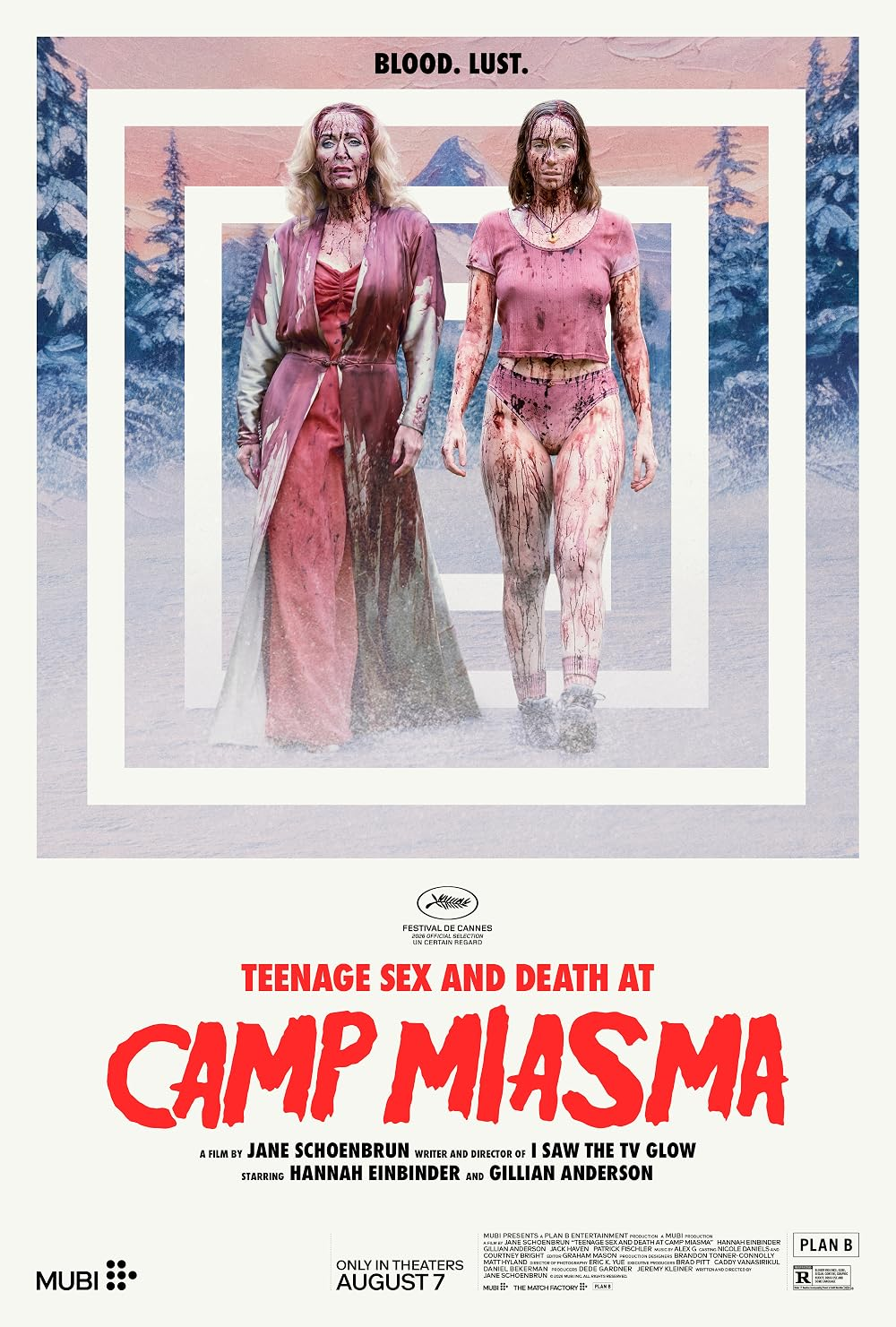
Film poster for Teenage Sex and Death at Camp Miasma (2026), showing two blood-covered women walking through snow

Film poster. Teenage Sex and Death at Camp Miasma (2026). Courtesy of MUBI.

As I sat there in a movie theater in Bowling Green, KY, nestled between two friends, waiting for the opening credits to roll, I felt a heady anticipation. We were about to embark on a journey. This film, an ode to and commentary on slasher films, owed at least a little something to the legacy of a filmmaker who was raised right here in Bowling Green. John Carpenter’s Halloween (1978) is one of the most well-known films in the genre, but my friends and I were about to engage with something new – something that would both honor and critique this beloved category of films.

I had so many questions as I waited for the film to begin. What would this film be? Would I be brave enough to watch it as a relatively wimpy horror viewer? Would this film be queer enough? Would it join the ranks of the growing list of films and TV shows that are slowly but surely filling the gaping hole in my heart that yearned for media like this as a young queer person? How amazing was it that we had arrived here together to watch a film that ten or twenty years ago would have been unlikely to screen in this very theater?

So many of these questions would be answered by the time the credits rolled.
Writer/director Jane Schoenbrun’s latest film came to play. The unhinged nature of slasher films is celebrated throughout. Jump scares and gory deaths set the tone, simultaneously fueling Kris (Hannah Einbinder) as she envisions what her reboot of the franchise could look like. As a Sundance darling and burgeoning writer/director, Kris has a chance to remake this outdated film into what she thinks it should have been, addressing the elephant in the room: negative commentary about transgender and gender-queer individuals and perhaps the queer community as a whole. Kris must find the intersection between her love for the franchise and her desire to update it for a new audience. This film documents that journey – one that becomes much more personal than Kris anticipated.

This film about filmmaking has everything a fan of slasher films could want – from jump scares to over-the-top gore. In one of the opening scenes of the film, geysers of blood literally shoot up as high as the tree line, as an unsuspecting victim meets their end. We view this death, and their companion’s death, from a distance. After all, we have to be pretty far away to appreciate the height of the enormous blood geyser. That, and we are allowed to appreciate this seemingly normal setting, two people out on a walk with their dog (the dog lives, worry not!) for just a few moments before the killer, Little Death, arrives and colors the scene red.

Little Death is as entertaining as any other slasher villain, but they also add something to this genre as a gender-fluid character who presents an almost child-like energy whenever they appear on screen. Little Death brings death, but they also bring joy and playfulness, trotting along like they’re heading off towards an imaginary battle.

The killer Little Death emerges from a dark lake at night in Teenage Sex and Death at Camp Miasma (2026)

Little Death emerges from the lake. Teenage Sex and Death at Camp Miasma (2026). Courtesy of MUBI.

A synonym for the orgasm, “Little Death,” not only brings pain in this film, but pleasure – and intense pleasure at that. As the final girl from the original film, Billy (Gillian Anderson) says, “If it gets too real, you can always turn it off.” Consent is sexy, after all, and Little Death is on their way to penetrate you – a concept that Kris finds alluring in her sexual fantasies. She seems drawn to the helplessness of a final girl lead, the killer advancing, running from them with her breasts bouncing under a thin t-shirt, death waiting to overtake her. Throughout the film, Little Death and Billy both help bring this fantasy to life.

Excess is also a heavy element of this film in multiple categories. Excess of gore, of course, as we see comedically enormous amounts of blood spurting from Little Death’s victims. Excess of food as Kris loads her cart with snacks early in the film, as Billy greets her with two giant buckets of KFC chicken which she carefully stacks on a serving tray, as, covered in blood, Kris and Billy load their cart at the convenience store, ready for another movie night in. Excess of Camp Miasma sequels. Excess of snow. Excess of pleasure. The film asks us to chase this concept of excess, feel it, embody it. After all, it’s there for the taking.
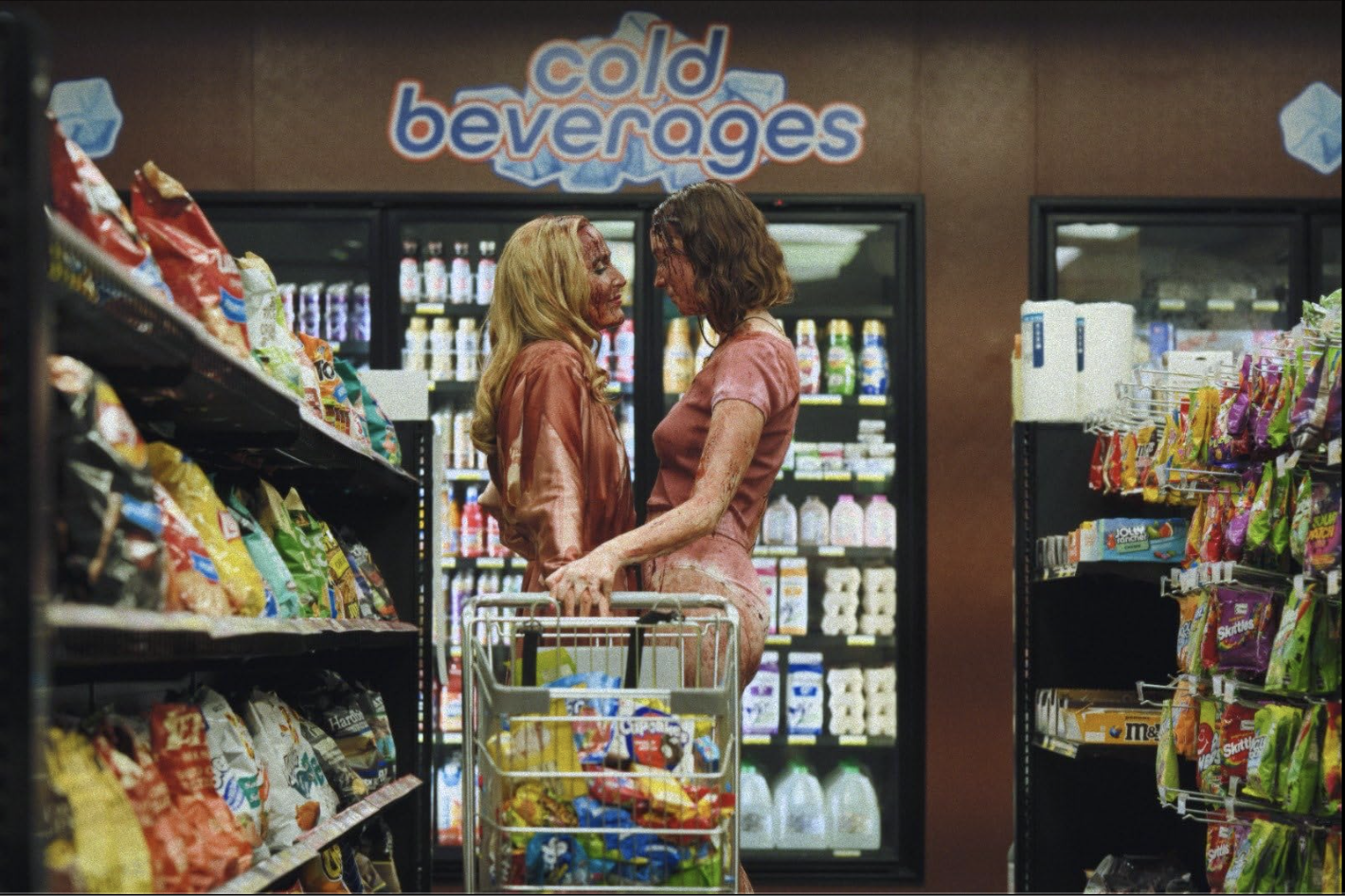
Kris and Billy, covered in blood, face each other beside a cooler case in a convenience store in Teenage Sex and Death at Camp Miasma (2026)

Kris and Billy at the convenience store. Teenage Sex and Death at Camp Miasma (2026). Courtesy of MUBI.

Teenage Sex and Death at Camp Miasma comments upon this excess, particularly in terms of critiquing Hollywood for the mountain of sequels and reboots that have been greenlit over the last few decades. Resurrecting old intellectual property (IP) is a core business strategy for the industry and this film isn’t going to shy away from that concept, notably commenting on the “zombie IP” – IP that has been deemed too problematic to reboot – of this fictional slasher franchise.

This film couches pleasure in excess as Billy and Kris lay on a pile of brightly colored snack packages, their limbs entwined, Billy’s hand down Kris’ shorts. There is excess in the buckets of blood that emerge from their bodies as Billy brings Kris to orgasm towards the end of the film, inviting both pleasure and pain – and Little Death – into their space simultaneously, as Little Death penetrates them and Kris climaxes, replicating Billy’s experience from the earlier film. “Little death,” indeed.

But it’s not pleasure that is critiqued as excess here, rather it is a celebration of pleasure, of what arouses you, what moves you to the brink. This is the sort of excess we crave – pleasure outside of society’s expectations and boundaries. It’s up to Kris and Billy what is “okay” for them to do with one another. It’s not up to us. We do not get to place judgment on their choices or behaviors. We do not need to feel comfortable with what is happening between them. We’re simply the viewers – voyeurs – bringing a little something extra to the experience for Kris and Billy. After all, part of this is about being watched and the pleasure that can bring. We have their consent.
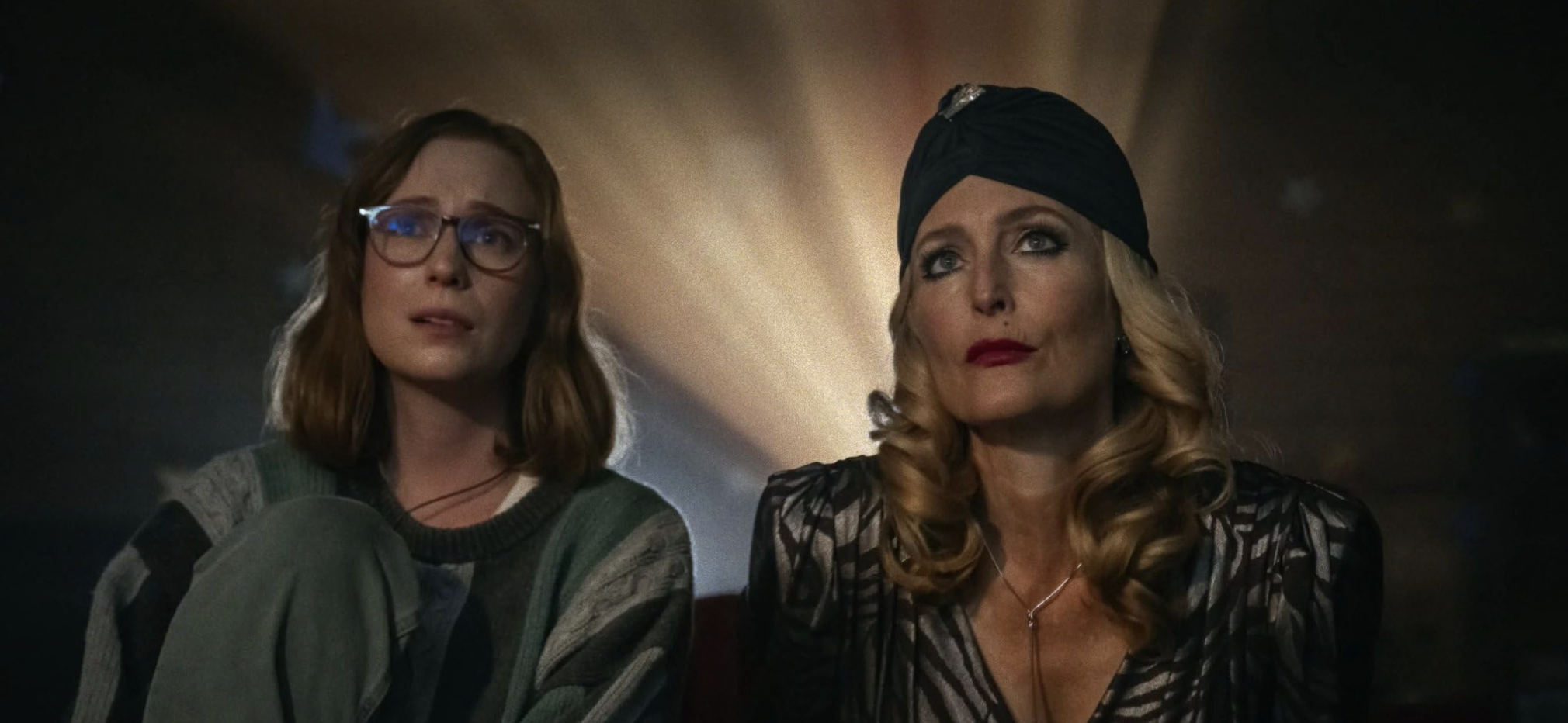
Kris and Billy sit side by side watching a film in Teenage Sex and Death at Camp Miasma (2026)

Kris and Billy view the film. Teenage Sex and Death at Camp Miasma (2026). Courtesy of MUBI.

This film was horrifying, yes, but not in the classic sense. I didn’t jump in my seat, I didn’t feel my heart racing in fear, I didn’t feel the need to cover my eyes. Instead, my adrenaline rose as I anticipated the next moment, the next thing the leads would do or say, as I watched them grow more intimate with one another. My pulse rose as I anticipated Little Death’s emergence from the lake – a coming out – something to celebrate, it seemed, rather than a horrific development. Perhaps Little Death isn’t a villain after all and, rather, someone who we seek to understand through the lens of their experience.

One thing is certain, Teenage Sex and Death at Camp Miasma flipped horror on its head, allowing a wider audience to appreciate what so many have appreciated for decades – human pleasure and violence intimately entwined together on screen – concepts so very connected to one another in this bloody escapade.

Jessica L. Folk (she/her) is a screenwriter and an Associate Professor of Scriptwriting at Western Kentucky University. Her favorite way to watch a film is to pause it a million times to chat with her wife about what they just witnessed on screen. Luckily, her wife also enjoys this.

Seymour Hiney performs at a Smoke & Queers queer burlesque show in a sequined outfit with red fringe, arms raised on stage.

Smoke & Queers: How a Queer Burlesque Troupe Built a Stage for Everyone Else

There is a performance troupe where the rules are simple: You have to be queer. You have to be courageous, or at least act like you are. Why will you need that courage? Well, to take your clothes off, of course. Oh, and you can’t use any real flames in performances – purely for safety purposes. This stage is called Smoke & Queers, a queer burlesque performance troupe that has dazzled audiences in Cincinnati and Northern Kentucky since 2019.

The tease-filled concept numbers, the rhinestone costumes, the steamy reveals, and the reclaimed bodies are a result of those rules. Smoke & Queers, which showcases burlesque, drag, and draglesque, is preparing for the Rhinestone Rodeo on October 3rd at Second Sight Spirits in Ludlow, which is part of this year’s Bourbon & Belonging Kentucky’s Queer Bourbon Week. We sat down with four of the troupe’s producers to talk about group origins, what the stage gives back to them, and why an art form built on undressing has always had far more to say than anything about bodies, alone.

A Short History of Burlesque, and Why Queerness Was Always Underneath It

To understand what Smoke & Queers is doing, it helps to understand the history of burlesque. That history, however, is less agreed upon than many would think.

The simplified version taught in many dance history classes points to Aristophanes, the ancient Greek playwright, as the father of satire and comedy, which ties directly into the word burlesque’s meaning: a literary or dramatic work that mocks a serious subject through comic imitation, or a style of variety show entertainment featuring comedy, dance, and striptease. His shows poked fun at serious matters, in the way that today’s burlesque performances can act as political statements. Burlesque historian and performer Bella Sin, who has spent years researching and rewriting the way this art form’s history gets told, pushed back on that origin during a lecture at the Ohio State Library Archives in May of 2025.

Instead, she traced its roots further but also wider, to ritual dance in ancient Sumer, to fertility rites among the Mexica people of Mexico, to Japanese legend involving a goddess who strips and dances to tease a deity out of hiding, and to Vaudeville, the Parisian variety show tradition that exploded across the United States and the rest of the Americas by the 1800s.

Lydia Thompson is frequently credited as the woman who brought burlesque to the United States when she toured with her troupe British Blondes in the 1860s, scandalizing audiences by wearing flesh colored tights and showing bare ankles. (Those audiences would never survive a Smoke & Queers show.) But burlesque already existed in the U.S. before she arrived. What Thompson actually did was confront the controversy around her show unapologetically, which is arguably what has kept burlesque relevant today.

Queerness runs through this same history rather than sitting beside it. Drag and burlesque have been intertwined for as long as either has existed as a formal tradition, sharing performers, stages, and aesthetics. Hedy Jo Star, a trans burlesque performer and author who was publicly open about her transition in the 1950s, performed for years in the traveling Jewel Box Revue. She later became a costume designer whose work helped define the rhinestone-heavy look burlesque and drag are known for today. Sin said queer nightlife scenes in Mexico, France, and Germany overlapped heavily with burlesque circuits, and plenty of performers throughout the twentieth century were queer even when it was not safe to say so publicly.

By the 1940s, moral panic and anti-obscenity laws had pushed burlesque out of the mainstream and into the smaller, underground and fringe corners of American entertainment. The revival that followed in the 90s and early 2000s is usually called neo-burlesque, and it is the direct ancestor of the scene Smoke & Queers belongs to. This movement brought the tease and the theatrics back into the light, while also opening the door for a much wider range of people to define what the art form could be: performers of every size, race, gender identity, and sexuality. As burlesque researcher Alyssa Stover of Ohio State University’s Dance Department put it, at its core, it is about more than a striptease. It is about curating a safe space and bringing together people who have been cast down and cast out elsewhere in society.

The Performers

Salem Le Fay (she/her) describes herself as witchy, unbothered, and incredibly seductive. She has been a performer her whole life in one form or another, and has been building her burlesque persona for almost four years now. She also genderbends into The Baron, a drag king alter ego with his own pronouns, he/they, and his own vibe, proof that Salem’s magic transcends genres.

The ethereal Andro Hathaway (they/them) is the one with vintage taste. They started performing burlesque in 2022, close to four and a half years ago now, though like the rest of the troupe, they have been performing in some form their entire life. Andro’s burlesque is less about broadcasting and more about processing, with lots of sparkles and an old-school aesthetic.

Long-time performance artist Seymour Hiney (he/they) is camp personified and, by a wide margin, the most tenured performer in the room. Seymour has been performing in some drag or burlesque-adjacent capacity since 2010, sixteen years ago now, which started, fittingly, with Rocky Horror Picture Show shadow casts before becoming a drag king. A hybrid of both drag and burlesque, called ‘draglesque,’ followed, and every once in a while, they will pivot to a neo-burlesque number under the stage name The Groke. The continued inspiration stems from a lifetime of dance and musical performance, stretching back to childhood.

Dolly Partner (she/they) is feral in the best possible way, feisty, and proud of her Kentuckian roots. She has her own drag king alter ego too, Donny Partner. Dolly grew up in Central Kentucky, where she says she simply was not exposed to the different shapes queerness can take, and she is candid that finding burlesque became an education in exactly that, opening doors that growing up in a smaller, more conservative part of the state had kept closed. She had tried more traditional performance routes first, theater, dance, the usual paths, and none of it stuck the way she wanted it to. Burlesque is where she shines.

The Troupe

Smoke & Queers was started in 2019 as an amateur troupe by performers Christina Coobatis and Clarity Amrein in the Tri-State area who wanted to shake up the local burlesque scene, which was dominated by traditional ideals. They realized there was not a space built for them. So, they built one.

“There was not a group out here that was for [queer folks] to perform in,” Dolly said. This wasn’t an accusation against what already existed, just a recognition that it was not enough, Dolly said.

That space now features drag kings, burlesque, and draglesque, and flow artists under one expressive and colorful roof.

Six years later, the troupe’s performers list is 300 people deep with artists of all genres. The troupe puts on two to five shows a month, anchored by recurring nights like Amore After Dark at Second Story in Covington, and Kings and Things at Tokyo Kitty in Cincinnati, the city’s only regular drag king night.

Seymour holds onto that fact with real pride.

“Drag kings do not get the stage time or attention drag queens do. So it’s been really important to me to continue to have that space for drag kings and drag things … I want to make space for gender expansiveness,” Seymour said.

The troupe also creates opportunities for newcomers. Producers and seasoned performers host student workshops, classes, and showcases to encourage more queer artists to take up space in the community. Students learn the art of the tease, how to create intentional reveals, and the way a good number is built.

“Mentorship is my favorite part of all of this,” Seymour said.

For Salem, it is passing along all that burlesque has given her, including knowing she inspired others to enter the art form.

“I want more of that, and to help people see what they can do,” Salem said. “It is for everyone.”

As far as the acts, you will see a little bit of everything and anything at a Smoke & Queers show. Sometimes, a showgirl will start on stage in a Nemo-inspired onesie and strip down to a belt filled with bedazzled fish. You may also see a drag queen lip-syncing to a new pop song while collecting singles from audience members, bringing attendees directly into the experience. You may or may not see a drag king perform to a classic country song, using bales of hay as props. Also, you can get weird. In fact, it’s even encouraged.

“The weirder, the better, in my opinion,” Dolly said.

Self-Discovery and Radical Self-Expression

Ask any of the four producers what burlesque actually does for them, and the answers stop being about just the performance.

For Salem, the stage is where she can show up fully.

“People always assume I’m just like this straight cis person,” she said, and burlesque, along with the persona she built to counter that assumption, has helped her internalize her queerness and be proud of it. “I love performing for anyone who is not a man.”

Salem says she never planned on any of this, and said, “hell, yeah”, when asked if this art form made her more confident.

“I never expected to be in this position whatsoever, and it is so awesome. I don’t know what my life would be without it,” she said.

Andro’s numbers have acted as a form of artistic therapy and personal exploration.

“Andro is very centered in exploring my sapphicness and my gender flexibility. It’s kind of more internal for me. So I’m trying to express… things that I’m working through, and translating that to the stage,” they explained.

Andro grew up Catholic, with a body they were taught could only ever belong to a future husband, never to themself. Burlesque became the undoing of that, they said, and a reclaiming of their body, for themselves, and passing that lesson onto others as a show producer.

“[With] newer performers, you see them also getting that same kind of thing out of it. I think that’s really beautiful to see people unlearn these toxic things that are thrust upon them in purity culture,” Andro said.

Dolly’s performances are filled with symbolism and nods to her Kentuckian roots. Her Rhapsody in Bluegrass piece, the one she will perform at the upcoming Rhinestone Rodeo, digs into the gap between expectation and reality. Her costume is styled in a more traditional burlesque fashion, featuring a stunning blue corset and fun fringe pieces. What folks see, however, is more feral and unhinged, including a cigarette stuffed in her rhinestone bra.

“It’s a gap that can be read through queerness, or womanhood with what you expect, and what you get,” she said, honoring the complexities of the queer experience.

Underneath the concept work is also something more personal. Dolly grew up with an eating disorder, and finding a release into being comfortable in her body in all of its stages has been, in her words, “transformational.”

“Nudity is just like, a beautiful thing. So why not explore it both in a sexy and a humorous way? Like being funny is sexy,” she said. It’s also helped her to be more unapologetic. “Recently, I gained a lot of weight, but I’m still out here showing my body because every body is sexy,” she said.

Seymour spoke about the importance of representing different types of people, and views performing as a channel to celebrate the “diversity of bodies, all of them being equally praised and applauded.”

As a person of color, too, this added layer speaks to a greater mission of reclaiming a body that is often overlooked within Eurocentric beauty standards.

“As a brown person in particular, it’s a way to sort of decolonize my body,” Seymour said.

The performers all agreed that Smoke & Queers is culturally important in 2026, as attempts to pass anti-drag laws in the United States continue in various states, including Ohio and Kentucky.

“Any sort of thing celebrating a [queer] body in a sexual way, or even just in a neutral way, is sort of radical in today’s atmosphere. The added wrinkle of us being a queer burlesque and drag troupe and making a space for bodies that are currently trying to be legislated out of existence is extra important,” Seymour said.

As for the whole, taking-off-the-clothes-thing, Seymour said, you do get used to it.

“I’ve been doing this for so long now, I don’t even think about the body element of it and the nudity. I just think, ‘Oh, that was a really cool way to tease. Oh, that was a really cool reveal’.”

The Rhinestone Rodeo will feature a Western-themed revue of variety acts, and Kentucky bourbon culture woven throughout. In fact, the event is taking place at Second Sight Spirits in Ludlow, which is one of the stops on the official Kentucky Bourbon Trail. Expect great drinks, creative numbers and the colorful chaos the troupe is known for on October 3rd at 9pm.

Grab tickets here.

The exterior entrance of AVOL Kentucky, Suite 100, photographed at dusk. A black A-frame chalkboard sign in front of the brick and gray-sided building reads "Free AVOL HIV STI Testing" in colorful lettering. String lights hang above the entrance, and bare winter shrubs line the base of the building.

No Doctor, No Test, Refused at the Door: What the Data Shows About LGBTQ+ Health Care in Western Kentucky Survey data points to a crisis in access, education, and trust — and the organizations working to close the gap.

From Mayfield to Paducah to Murray, Western Kentucky is full of life, history, and unique challenges, but when it comes to accessing reliable, informed, and specific health care, LGBTQ+ people in the region face obstacles that other Kentuckians might never feel.

Recently published data from the 2025 Queer Kentucky Community Health Survey reveals that LGBTQ+ people in Western Kentucky are significantly less likely to be receiving routine health care. The survey, which collected data from 559 LGBTQ+ Kentuckians, indicated that 58.2% of respondents in Western Kentucky have no regular healthcare provider.

That number grows even more concerning when you dig into disparities in reference to sexual health. The rate statewide for those who have never tested for HIV is 48.2%. In Western Kentucky, it’s 67.2%.

According to community organizers, these numbers illustrate how education can affect public health. It’s also tied to legislation. In 2023, Kentucky’s Republican State Senate majority passed Senate Bill 150, which implemented anti-trans policies including forcing trans students to use bathrooms and locker rooms that conflict with their gender identity, but it also made teaching about sex education or puberty virtually impossible for certain age groups.

“A lot of the schools still really push an abstinence-only sexual health education… and that has a real limiting and long-lasting impact on people’s view of sex in general,” said Christine Lindner, President of West KY NOW, a local chapter of the National Organization for Women, a feminist membership organization that advances economic justice, reproductive justice, and civil rights.

Without education or access to care, communities are left without the necessary resources to thrive, according to health care providers in the region.

“If people don’t know about things they don’t know to be tested, they don’t know what to look for,” said AJ Garnett, Outreach Director at LivWell, a nonprofit organization providing healthcare, support services, prevention education, and HIV testing to communities in the region. “Being able to educate people when they’re younger, whether it be middle school or high school, would make a world of difference.”

Another contributing factor behind these numbers is the limited resources available in the Western section of the state. The more densely populated areas of Louisville, Lexington, and Bowling Green are all in Central or South Central Kentucky. These areas experience higher concentrations of hospitals, clinics, and places of care. About one in five people in the US live in rural areas, but only 9% of physicians practice in rural communities.

While there are resources in Western Kentucky, including LivWell, they are limited and some LGBTQ+ people in these communities are not comfortable seeking care. Data from the 2025 Queer Kentucky Community Health Survey also indicates deeper issues than just seeing a doctor regularly; the survey also pointed to high levels of discrimination in the region. Almost 13% of respondents statewide reported a provider refusing care due to their LGBTQ+ identity, but in Western Kentucky this number jumps to 30%, the highest in the state.

“No amount of shaking hands and assuring people is going to alleviate years of distrust that they’ve built up for good reason,” said Garnett. “…Sometimes in those very rural areas, people just don’t even know we exist.”

The isolation of LGBTQ+ in rural Kentucky presents real challenges to reaching these communities, but queer people are still finding ways to thrive and build stronger futures.

“I think people don’t realize how large the community is out here in Western Kentucky, but we are really under-resourced and underfunded,” said Lindner. “I think there’s a desire for healthier queer existence, but there’s just a lot of pressure out here.”

West KY NOW regularly creates inclusive events and programming with the intention of building stronger communities in the region, including a feminist bowling night.

This data presents an opportunity for deeper investments by community groups, care providers, and educators. According to Garnett, closing these gaps looks like building deeper inroads with communities to establish trust between provider and patient.

Other Kentucky-based organizations working to close that trust gap with rural LGBTQ+ communities include AVOL, an organization committed to ending HIV through testing, medical intervention, and community support, and Matthew25, which works with those living with, at risk of, or affected by HIV and other sexually transmitted infections. With four clinics across Southern Indiana and Western Kentucky, Matthew25 serves 25 counties in Kentucky and 12 in Indiana.

“I know a lot of people are scared because of the way they’ve been treated in the past… I’m not going to sit here and pretend like there aren’t doctors and nurses out there that give people hell every time they come in to talk about HIV or other STIs,” said Garnett. “But I can tell you with us, with organizations like AVOL, with Matthew25, everyone I speak to in these organizations is so eager and anxious to help, and excited to be part of people’s lives and make them better.”

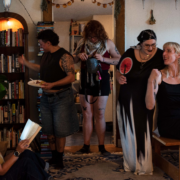
A group filled with smiles and love gathers in a home filled with books and decor.

Nobody’s Free Until Everybody’s Free: The Queer Print Magazine Imagining Liberation Together

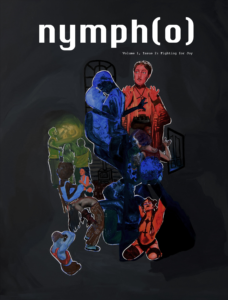
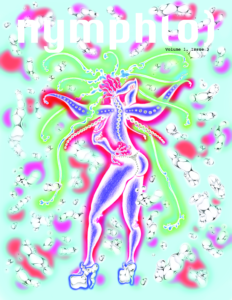
If you’re looking for “diverse expressions of diverse lives” that take a hammer to the binary, look no further: nymph(o) delivers bold and sensual offerings with a distinctly 1980s indie-magazine vibe.

The Ohio-based LGBTQ+ print publication, initially launched in 2021, publishes sex-positive art and writing that wraps around this premise: “actions lead movements, but so do images, words, and the people who create them.”

Cover art painted by Kentucky artist Cierra Evans.

Cover art painted by Kentucky artist Cierra Evans.

Issue #4, slated for release on August 29, takes inspiration from civil rights activist Fannie Lou Hamer’s inspiring quote, “Nobody’s free until everybody’s free.”

“All of the writing, poetry, visual art, photography is exploring this theme and reckoning with the notion that the queer community can’t experience liberation without collective liberation – liberation for all,” says nymph(o) founder and editor Avery Plummer.

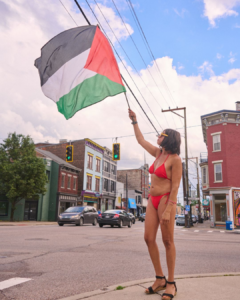
The new issue features a variety of essays and art, including a piece on activist Simone Brine, a trans immigrant and University of Cincinnati professor, known for staging street corner protests clad in a red bikini – advocating for what nymph(o) describes as “trans civil rights, Palestinian liberation, and an end to violence and deportations by the U.S. Immigration and Customs Enforcement (ICE).”

Portraits of Sylvia Ebeid by Chris Sifri, entitled “You Can’t Look But Please Touch,” in the issue invite a glance, as do images of local 1990s drag king troupe H.I.S Kings.


Photo of Simone Brine by Sophia Daughtery Muñoz

Photo of Simone Brine by Sophia Daughtery Muñoz

Plummer pairs a poem by Ohio Lesbian Archives co-founder Phebe Beiser, now in her 70s, alongside a nude portrait of the writer – reflecting the multigenerational spirit of the publication.

Each issue incorporates art and thought outside the confines of the present, linking contemporary queer conversations to the past.

“It’s a queer sex-positive magazine, but it’s also an investigation into the ways that contemporary domination forces are affecting queer liberation, and how we can work with one another in our communities to really fight for one another and envision new worlds,” says Plummer, who brings her experience working with the archives to the project.

The queer artist, writer and archivist at heart cites the groundbreaking 1980s lesbian erotica magazine On Our Backs as inspiration for creating nymph(o). Conscious of “standing on so many people’s shoulders,” Plummer draws on an earlier sex-positive movement in a modern, degendered way.

She is deliberate with the language she uses to describe a magazine that aims to embrace the community it represents.

“It’s not a lesbian erotic magazine by any means,” she says. “It’s an expression of different variations of queer sexuality and queer lives.”

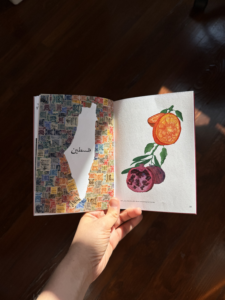
Opened page of the new nymph(o) magazine.

Photo provided by Avery Plummer.

For the inaugural issue released in 2021, Plummer snagged interviews with On Our Backs co-founder, the late Debi Sundahl, as well as performance artist and former sex worker Annie Sprinkle. On receiving physical photos from Sundahl back then to scan for the magazine, she says, “I was nervous to handle them!”

Issue #2 threw a spotlight on queer happiness with the theme Fighting for Joy, and included a moving tribute to the concept that “a child is a gift” as rendered by a parent amid a wave of anti-trans violence; Finding Purpose comic art by Fiona Avocado (thought bubble: “What P.O.S. News am I Going to Read Today”); and intimate playful portraits by Jessica Tanzer, known for focusing her lens on the beauty in what viewers “might otherwise imagine is ‘threatening’ subject matter.”

Issue #3, themed Queer Space, featured photography by Sophia Muñoz and Del LaGrace Volcano, including Volcano’s 1995 intersex coming-out “Self Portrait with Bluebeard;” a conversation with HIV health educator Ariel Shaw; and writing by queer, nonbinary, Latine artist Jacq Garcia, whose work explores the intersections of community, fatness, food and sexuality.

All serve as counterpoint to fraught times that demand a chance to dream, create, and then repeat.

Plummer, who holds a master’s degree in art history from Ohio University, is a surrealist movement enthusiast, drawn to expressions of dreams as an extension of reality.

“I think that notion really fits with a lot of what queer folks are doing, particularly in local community organizing, because they’re dreaming and they’re building these things that don’t exist, and certainly don’t exist within the systems that are supposedly built to serve us and then don’t,” she says.

Working with Plummer, Maddy McFadden brings an eye for visual layout to the role of creative director and has a hand in editing as well as the non-credited art.

Published exclusively in print, nymph(o) will be available at the mag’s launch event on August 29 at Cincinnati’s Village Green Foundation, which facilitates affordable food and transportation for Cincy’s Northside – also featured in the issue.

Following the launch, nymph(o) will be available for purchase on Queer Kentucky’s website. Queer Kentucky also serves as a proud fiscal sponsor, with the venture supported through the ArtsWave Pride Grant Program.

Composite image featuring a cracked disco ball framing a Victorian mansion at night in Old Louisville, with two men in the foreground, representing the HBO docuseries Murder in Glitter Ball City and the case explored in the series.

Louisville author’s book adapted into HBO docuseries “Murder in Glitter Ball City.”

Author David Dominé talked to Queer Kentucky ahead of the docuseries’ premiere of Murder in Glitter Ball City.

​When author David Dominé was house-hunting in Old Louisville years ago, he passed on 1435 S. Fourth Street, finding the Victorian mansion too dilapidated.

Two years later, he turned on the news to learn that the same house, just down the street from his own, was the site of a grisly murder. Old Louisville residents Joey Banis and Jeffrey Mundt were accused of killing Jamie Carroll during a drug-fueled sexual encounter.

Carroll’s body was sealed in a storage container and buried beneath the home’s wine cellar, where it remained for six months before being discovered. After a trial filled with contradictory accounts, Banis was found guilty.

The case became more than a murder trial. It exposed tensions around sexuality, class, reputation, and how queer lives are scrutinized in the courtroom.

Dominé spent the next decade attending trials and documenting the aftermath in ‘A Dark Room in Glitter Ball City’, a blend of true crime, memoir, and neighborhood ethnography in which Old Louisville itself becomes a central character.

The book is now a two-part HBO docuseries, ‘Murder in Glitter Ball City’, which premiered February 19 at 8 p.m. Directed by Fenton Bailey and Randy Barbato of World of Wonder,  known for Paris Is Burning and RuPaul’s Drag Race, the adaptation revisits the case through a distinctly queer cultural lens.

Ahead of the premiere, we spoke with Dominé, also an Old Louisville tour guide, about voyeurism in the courtroom, victim erasure, and representing queer life without sensationalism.

This interview has been edited for clarity.

Author David Dominé sits in a warmly lit living room in Old Louisville, working on a laptop at a coffee table stacked with books, with disco balls and a bookshelf in the background.

Photo provided by Author David Dominé

What can viewers expect from the two-part series?

The book is a celebration of Louisville and Old Louisville, and the people at HBO got that right away. The documentary is directed by Randy Barbato and Fenton Bailey of World of Wonder, and when audiences see a movie from them, even when the subject matter is dark, they balance gravity with wit and nuance, creating films that are emotionally layered and unafraid of complexity. They will get this in Murder in Glitter Ball City.

I want to talk about the trial coverage. What was going through your head as you watched that unfold?

Right away, it’s like, well, it’s a gay couple, of course, it’s gonna be terrible, and it was. There was just blatant homophobia and kink shaming. And so throughout the story, it’s interspersed with other crimes happening in the state, the city, and the country to point out that there were other crimes. And if not as bad or worse, but no one really analyzed them the same way because they were crimes involving heterosexual people. So I tried to put things in perspective by pointing out all the other things that were going on at the same time.  

I was struck by how little humanity the victim was afforded in the courtroom. The emphasis was on sex, drugs, and salacious detail, not on who he was as a person. Did you see that as emblematic of how the criminal justice system treated gay men at the time?

None of the stuff that I saw in the courtroom did anything to try to humanize Jamie Carroll. They brought up facts, and they were all indisputable things. He had been a dealer; he was selling drugs the night that they were with him. Yes, he had a sexual history with them. Well, yes.

So whenever I had the chance, I met people who knew Jamie and his friends. I really tried to find those stories that painted him with a more sympathetic brush, pointing out what a talented hairdresser he was and that he was a drag queen.
He was always taking people under his wing and trying to mentor them and teach them. I tried to bring in those little bits that showed people he was a human being, and that he had people who missed him and were, you know, negatively impacted by his passing.

Promotional poster for HBO’s Murder in Glitter Ball City featuring a shattered disco ball revealing a Victorian mansion inside, with neon pink and purple lighting and the tagline “Toxic Love. Buried Secrets.”

Key art for HBO’s two-part documentary Murder in Glitter Ball City, premiering Feb. 19, which revisits the Old Louisville murder case through a queer cultural lens.

You’re also documenting LGBTQ+ and drag culture in Old Louisville for the docuseries— a world that hasn’t been extensively written about in this context.

Yeah, it’s kind of a fine line. There’s this sensationalism, the tawdry, titillating miscellanea. But then, you want to do a fair job representing a culture, and I think it worked for me.

I was kind of intending to do that because it’s a gay neighborhood, a gay couple, a gay victim, and a gay author, and then, when HBO comes in, it’s a production company known for its LGBTQ+ documentaries and movies.
You’re representing a culture indirectly, want to do right by them, but don’t want to shy away from sensitive issues or be seen as covering up for anything. 


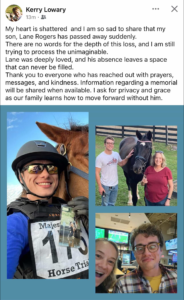
Lane Rogers sits indoors wearing a blue Kentucky varsity jacket and a backward baseball cap, looking toward the camera while adjusting his hat, reflecting his confident style and pride in his Kentucky roots.

Lane Rogers, Known Professionally as Blake Mitchell, Dies at 31 After Los Angeles Motorcycle Crash

Lane Rogers, known professionally as Blake Mitchell, a well-known adult-entertainment performer and proud Kentuckian, died Monday evening following a motorcycle accident in Los Angeles. He was 31.

According to Str8UpGayPorn (18+ only website), Rogers had been visiting friends in Los Angeles and Ventura counties over the weekend. He was riding a rented motorcycle near the Pacific Coast Highway in Oxnard when he collided with a box truck at 3:48 p.m. Monday. Ventura County Fire Department officials arrived moments later, and Rogers was pronounced dead at 3:58 p.m.

His family has been notified, and the crash remains under investigation. Rogers had prior experience riding motorcycles. He is survived by numerous loved ones, as well as a cat, several horses and a dog.

In a Facebook post his mother Kerry Lowary wrote, “My heart is shattered and I am so sad to share that my son, Lane Rogers has passed away suddenly. There are no words for the depth of this loss, and I am still trying to process the unimaginable. Lane was deeply loved, and his absence leaves a space that can never be filled. Thank you to everyone who has reached out with prayers, messages, and kindness. Information regarding a memorial will be shared when available. I ask for privacy and grace as our family learns how to move forward without him.”


Photo collage of Lane Rogers smiling in several moments of his life, including wearing riding gear beside a horse at a horse trial, standing with his mother next to a black horse in a fenced pasture, and posing with a friend indoors at a sports bar, showing him as an avid equestrian and loved family member.

Kerry Lowary, Lane Rogers’ mother, post on Facebook.

Born on August 14, 1994 in Lexington and raised in Versailles, Rogers was a proud Kentuckian whose life reflected resilience, creativity and self-determination. He rose to prominence as an adult-entertainment performer and content creator, building a wide following.

Rogers was open about the challenges he faced growing up, including an early and difficult coming-out experience, and often spoke about how those hardships shaped his empathy and desire to uplift others. Over time, he reclaimed his identity, choosing to center his work under his own name and using his platform to support emerging creators, particularly those from marginalized communities.

During a 2022 interview with Queer Kentucky, Rogers described Kentucky as a “Bit of north, a bit of south. Incredibly mixed identity. We’re midwestern but also southern; we have a big Ohio influence with the true holler. There’s some West Virginia and Tennessee influence. Indiana is in the north of the state. It’s a primary crossroads in the US. There’s an amalgamation of identities that creates this very multifaceted pool of ideas and expression.”

Beyond his professional life, Rogers was known for his love of animals, food, gaming and travel.

The Magic of DIY Drag: Delusiona Grandeur masters the art of disruption

photos by Anjali Alm-Basu

Delusiona Grandeur doesn’t just perform – she detonates. She is an extension of Autumn Shawen (they/them); the artistic expression of an unapologetic performer whose background in stripping and sex work fuels a drag persona that is equal parts spectacle, sermon, and survival. 

She says, “Delusiona Grandeur is an extension of myself. A heightened version of me. She exists to play and reclaim all the negative things about me–trashy, crass, tacky, unpolished, arrogant. It’s a space for me to play off my assigned femininity, to reclaim what it means to be viewed as a sex object… I’m out here in my thong looking amazing–but also disgusting–and doing something shocking or horrifying. Hopefully, you’re turned on and scared.” 


A Thong, A Fantasy, A Reckoning

By blending seduction and satire, Delusiona’s artistry: part glam, part grotesque. One minute you may be drawn in by her high-femme aesthetic, the next you’re being sprayed with blood and a Four Loko. The effect is as confusing as it is unforgettable–and exactly as intended. 

Starting her career as a stripper at 18, Delusiona’s work has always been deeply informed by sex work and survival. That experience isn’t just an influence – it is the art. And it bleeds into every performance, every act of reclamation, every moment of chaotic, unfiltered being.

“I pride myself on being an actual artist, not just a performer,” she says. “Even if it looks like I don’t sometimes.”

Delusiona’s work ranges from absurdist comedy–coughing up tips while pretending to be a cat–to high-concept pieces on gender, transness, and trauma. In one performance that was captured by a video artist, Rachel Rampleman, Delusiona dons a hooked mouthpiece, forcing her face into a smile as she smashes herself with fake bricks. It’s a haunting meditation on what it means to bring joy to others while suffering internally. The video has been screened in galleries across New York City. 

Still, she’s the first to remind you: drag should be fucking fun. It’s not always about perfect lashes or choreography. “You can put the most drag race-ready pageant queen next to me, and nine times out of ten, whatever I do gets people more excited,” she says. “Because I’m being authentic: I’m having fun. I’m expressing myself. People see that.” 


Breaking Rules, Because the Rules Were Never Meant to be Anyway…

From the start, Delusiona knew she wasn’t going to fit into a mold. As an AFAB entertainer, she wasn’t taken seriously by many people in the drag world. The answer? Blow up the mold entirely. 

“I learned very quickly that if you aren’t going to respect me, whether I’m polished or not, then I’m just going to do what I want. So I go out there in ratty wigs, choreography be damned, lashes falling off..and people eat it up,” she says. 

Her disregard for traditional drag rules isn’t rebellion for rebellion’s sake – it’s about truth. The kind of raw, gut-level honesty that queerness deserves. She calls out the elitism and hierarchy embedded in many drag spaces as just another form of respectability politics. 

“That shit is decidedly not queer to me,” she says. 

Drag isn’t about the money or social capital to Delusiona. She doesn’t care for corporate pride gigs or sanitized performances for straight audiences. What she does care about is making space–real space–for community.

For her, artivism isn’t always explicit signage or spoken words. It’s embodiment. It’s existence. It’s the act of performing gender, sexuality, and rage unapologetically. It’s a stage with harm reduction tables and mutual aid. A show that raises money for queer farm sanctuaries. A fundraiser with blood, glitter, and meaning. 

“Visibility is a trap,” she explains. “We should reject normal. Reject the normalization of queer bodies. Peaceful protests and calling our reps isn’t working anymore. Watering down our identities for visibility–for what?”

Safety, she says, shouldn’t be the goal. Opposition should. 

“Should you have a gun and know how to use it? Yes,” she says. “Because harassment happens, even in queer spaces. And you can’t hide.”

The Magic of DIY Drag
Tired of drag being filtered through gay bar politics and straight spectatorship, Delusiona has carved out a new space–literally. She’s leaning into DIY house parties, underground events, and art-forward productions.

“I’d rather host an event than do a show,” she says. “I want drag that isn’t tied to establishments anymore.”

One of her proudest moments? “Meat Market”, a Halloween show she produced that explored the theme of exploitation through a cannibal slaughterhouse lens. Think gore, satire, and catharsis. “We had acts on veganism, sexual abuse, being trans in a cis world,” she recalls. “The venue might’ve hated me after, but everyone had a fun, messy, powerful night.”

Being a drag artist in a red state comes with daily challenges–from unsupportive family to cultural isolation. 

“Some of my family doesn’t talk to me because of drag. Others will like my posts on social media but not actually support me,” she shares. “But I don’t give a fuck. If you don’t like it, cool. If you do, cool.”

She’s faced disrespect from within the queer community too, particularly from cis gay men who don’t take AFAB performers seriously. Rather than try to fit in, she demands respect—and when it’s not offered, she builds her own stages. 

Her experience across state lines—like performing in Ohio—has highlighted how shallow queer spaces can become when divorced from radical politics. That’s why she’s turning away from the commercial, the corporate, the expected. In September, she’s planning a massive, sex-worker-centered event that features no profits, just community, art, and mutual support. 

Delusiona offers some really keen advice for emerging drag artists: “Do not water yourself down. Whether it’s for other people or a paycheck—don’t swallow what you actually want to do.” 

She warns of burnout, of losing yourself in the performance if you don’t ground it in authenticity. Her work is driven by what feels fun, raw, and true. There’s no branding strategy here. 

She is more than a character. She’s a challenge to the audience. She invites you to question what you find beautiful and grotesque. To reckon with your own discomfort. To blur the lines between empowerment and objectification, trauma and art, joy and resistance. 

And in a world that demands compliance, Delusiona reminds us that through blood, beauty, and filth, we were meant to be disruptive. Meant to survive. Meant to save lives, even if it’s for one night.

She doesn’t want your tolerance–she wants your discomfort. Your awe. Your attention. 

Because this isn’t just drag. It’s defiance. It’s art.

Let’s discuss the oversexualization of an Appalachian cryptid: Mothman

Appalachia has always been a source of intrigue, pride, and alternatively, fear, for Kentuckians. The history in the Appalachian region is rich, filled with historical accounts and stories about cryptids and mythic beings within the mountains. Appalachia is an important source of culture for all Kentuckians, making it intriguing to look at this history through the lens of queer individuals.

Mothman, a well-known Appalachian cryptid, is a great example of this intersectionality between queer identities and Appalachian culture. In rural areas like Eastern Kentucky, Queer people have been called many things: groomers, predators, evil, etc. Queer culture is reduced to being “all about” sex, and deemed perverted. While sexuality is an important aspect of queer culture, there are other characteristics that are overlooked and ignored.

Historically, queer people have been outcast, seen in a negative light, and mistreated by overarching society. Villains in media are often portrayed with queer stereotypes or heterosexual ideas surrounding queer identities, such as a hypersexualization of the character. For example, Ursula, the villain in Disney’s “The Little Mermaid,” is written based off of the drag queen Divine. While Ursula has been reclaimed by many in the queer community, her original portrayal in the animated Disney film painted drag queens in a negative light. Ursula is written as predatory, teaching Ariel how to use her body to get a man in exchange for her ability to speak. This portrayal indicates the common societal stories told about queer people.

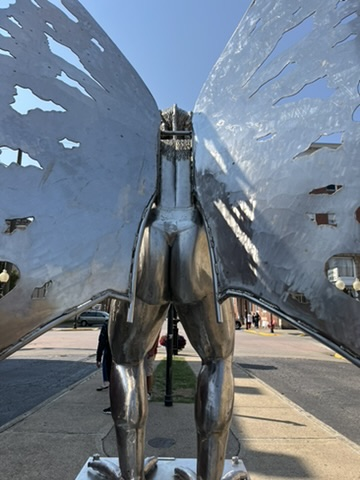
photo by Richie Goff

The way characters are displayed to viewers tells a story all on its own. The famous Mothman Statue in Point Pleasant, West Virginia depicts the legendary creature as an incredibly tall, sculpted creature with hyper-masculine features. His torso is blanketed by chiseled abs, and his backside is adorned with a pair of plump buttocks. This depiction of mothman banks on traditional views of masculinity. Even in a character of folklore, his existence is limited to binary ideas of what a “man should look like.”

Despite his overly masculine characteristics, it’s popular for tourists to take sexualized photos with the Mothman Statue, such as sliding money or credit cards in the crack of his butt. Once a feared creature of the night, he is now treated as an object of sexual innuendo.

While the fear of LGBTQ+ persons is based in hatred and misunderstanding, there is a rhetoric of fear surrounding queer culture and identities. Queer folks are often a scapegoat for cultural or societal issues. Currently, many politicians and political parties are blaming queer people for sexual violence or grooming, particularly against women. These accusations are leading to reduced access to healthcare for queer people with actions like defunding HIV research, and increased rates of acts of violence against queer people. 

Much of this Anti-LGBTQ+ legislation is due to the villainization of queer individuals seen every day by political figures, certain media pieces, and religious groups. Accusations surrounding queer culture are that of being sexually predatory, despite this idea of sexualization stemming from heterosexual ideologies surrounding queer people. We can see this in the arguments that “drag queens should not be allowed around children,” despite drag being a multi-faceted art form. Drag performances are not only or always sexual—they can also be comedic, artistic, transformative, and inspiring.

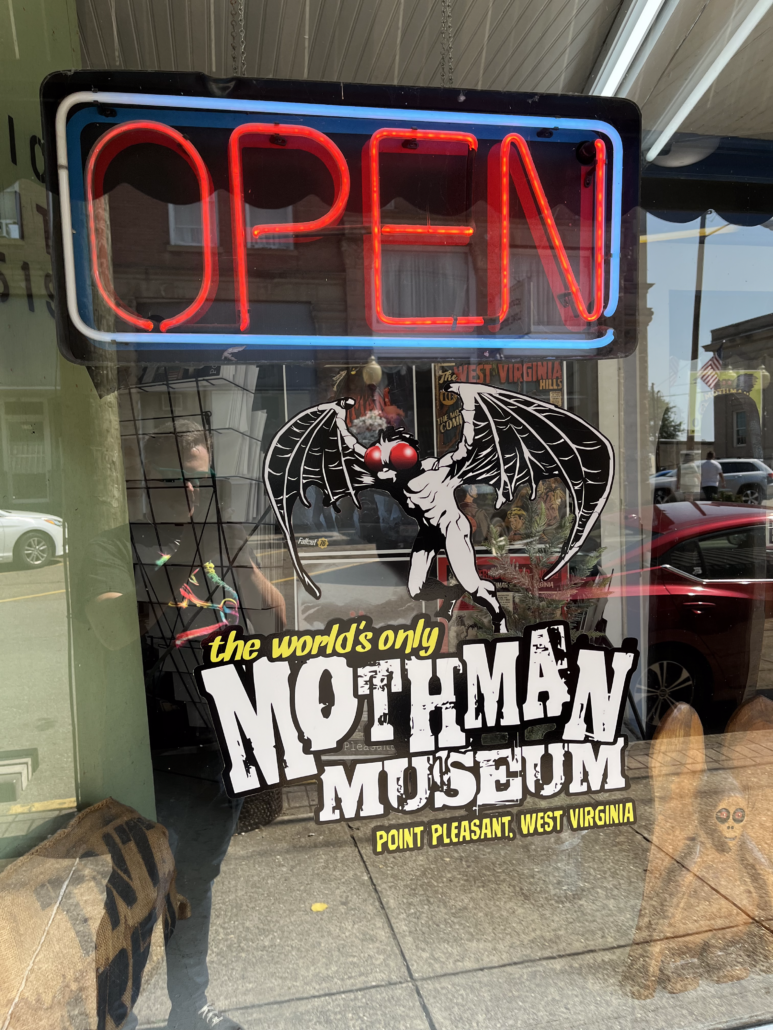
The Mothman Museum. Photo by Richie Goff

This intersects with the treatment of Mothman as a demonized piece of rural culture, which can be relatable for queer individuals. Some see him as the “bringer of the apocalypse” leading to  the objectification of the statue of his body. This shows the common mistreatment of misunderstood or feared creatures. 

Queer people, depicted by right-wing ideologies as “predators,” have embraced this cryptid. A writer on Shapeshifters, a company dedicated to providing inclusive undergarments and other LGBTQ+ items, shared their idea of Mothman’s relatability to queerness. 

“There’s a certain line the right wing in this country likes to use against The Gays, one I’ve heard since I was a small child. It goes: queer people are threatening our way of life. Queer people are the pebbles that start the avalanche of apocalypse, the collapse of civilization as we know it,” they said, relating their experience to the same rhetoric that surrounds Mothman. “…I can walk past a line of protesters at Planned Parenthood and see the hostility rise up, the anger and revulsion and fear…I think something in them knows that I’m just one of 2.6 million transgender people out here… casually being a harbinger of their doom. Next time they come to Brattleboro, I ought to greet them with red glasses and a twelve-foot wingspan.”

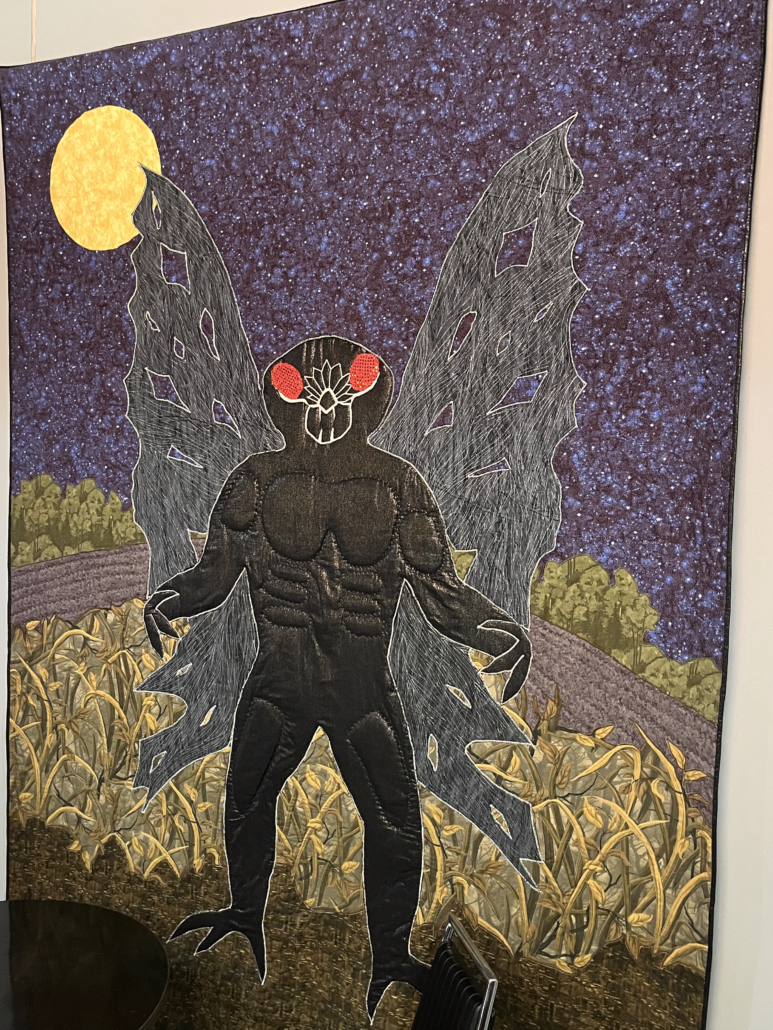
Mothman art at the Mothman Museum. Photo by Richie Goff

Mothman has been claimed as a symbol of queerness for rural LGBTQ+ people, and this has been accelerated by the Internet. John Paul Brammer, a writer at Buzzfeed, wrote about his experience relating queerness to mothman and other villainized creatures. “While in a pit of my listless despair, I came across an odd YouTube video about a creature that had terrorized the small town of Point Pleasant, West Virginia, in the ’60s. It was in that moment that my obsession with the Mothman… was born,” Brammer said, “Where I’m from, a small town in the middle of nowhere, the gay man was the bogeyman… constantly waiting to prey upon the hapless straights… salivating at the prospect of converting them to the gay dark side with his bite.” Brammer was able to find something to relate to in the mothman legends, along with many other queer folks, through the internet.

In online shops, at pride festivals around the state, and at other small queer businesses, a large quantity of Mothman memorabilia can be found. He is depicted on pride flags, in jewelry, as plushies, and so much more. As a misunderstood, mistreated creature of the night, Mothman has found his place in the queer community. 

Kentuckian Tommy Heleringer stars in new queer movie “Throuple”

Desire is complex, and often queer desire leans as far into that complexity as possible. When one’s desire paths are stripped of what society calls “normal” and you’re left to consider what you really want, the answer can be surprising. The deep humanity of queer love is at the heart of “Throuple,” a recently-released feature film starring Michael Doshier and Kentucky native Tommy Heleringer.

“Throuple” focuses on, well, a throuple and its complications shared by Michael, who plays a younger version of himself, and a married couple played by Tommy Heleringer as Connor and Stanton Plummer-Cambridge as Georgie. I spoke with Doshier and Heleringer to get their insights after viewing “Throuple.” (I had an opening joke planned for my three-way interview, but I chickened out of telling it.)

Though it’s certainly a grabby title and it seems easy to simplify this film to the countercultural image at its heart, this film is not simple. As Heleringer put it, the film is honest and “presents a world unto itself and there isn’t really a heterosexual eye looking down upon anything,” no outside critic editorializing on the individuals’ choices. Though the characters experience their own versions of a shame brought on by normative culture, as Heleringer says, “I think that’s sort of revolutionary that we’re bypassing any sort of permission or contradiction” to what the characters in their world are experiencing.

Heleringer, who grew up Catholic, knows something about that critical eye from personal experience. He was born and raised in Louisville, though he has since moved away to pursue acting. Like many queer people from religious backgrounds, Heleringer didn’t find many expressive outlets in his immediate world. 

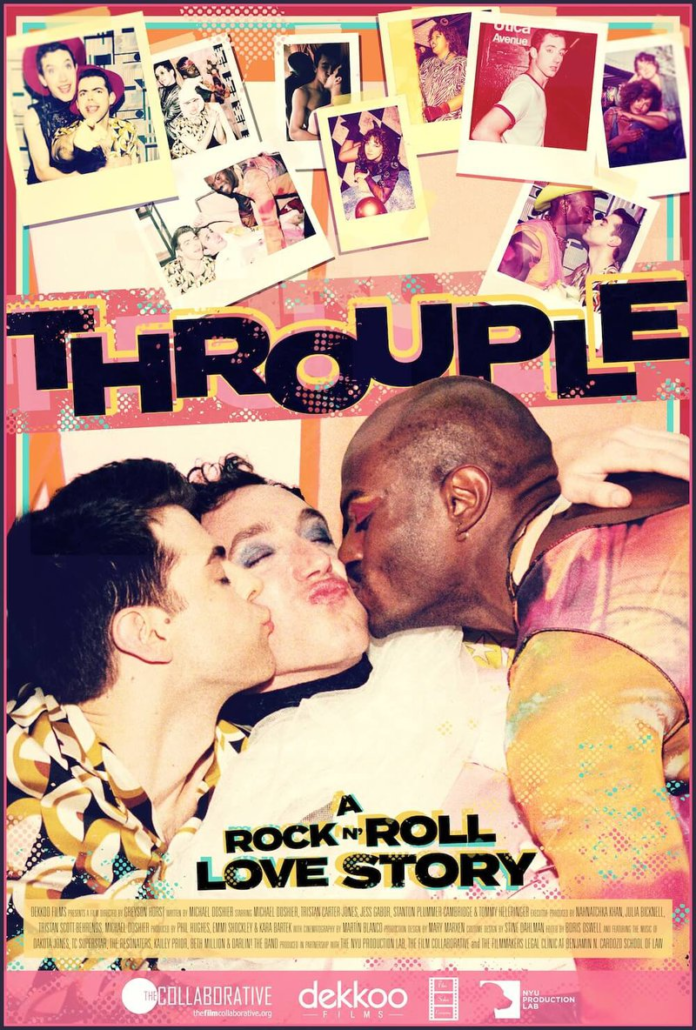
“Throuple” movie poster

“I spent most of my time in our basement playing with toys, dancing to Madonna’s ‘Immaculate Collection,’ and watching our VHS copy of ‘The Wizard of Oz,’” he said. “My whole world was my family and school and the roads outside the car window that took me to and from them. I was a gay kid and for many years was very hurt that my religion called me ‘inherently disordered.’ I knew to survive I had to leave. I had to find a new world.”

The struggles and humanity of the characters is really at “Throuple’s” core—even though it’s listed as one of the 4 best sex movies of 2024 in Esquire. “Throuple” paints fully-realized and complex portraits of people tracing their converging and diverging desire paths, which are often unknown to the person discovering themselves. For instance, the couple Georgie and Connor embark on an open marriage early in the movie and quickly realize it won’t be as simple as having sex with other people and keeping everything else “normal.” Michael, their first encounter, is an awkward, attention-seeking younger man whom the couple accompany home after a concert. Michael gets cold feet, quickly followed by uncertainty from Connor and Georgie, yet almost as soon as everyone is packed up to go their separate ways, they fall into bed again.

The in-and-out again (pun intended) relationships among these three are tied up with similar dynamics among Michael’s other, more platonic “throuple” formed with his best friend, Tristan (played by the real-life Tristan Carter-Jones) and her partner Abby (played by Jess Gabor). Though Tristan and Abby love Michael as a friend, his constant need for attention and seeming lack of self-awareness get in the way of their own deepening relationship, which comes into tension just as Abby proposes to Tristan. Of the real-world version of his relationship with Tristan, Michael Doshier relates, “It was like ten years of being each other’s primary partner. And I think that for a lot of queer people, chosen family is a beautiful thing, but…it’s really intimate. It was the complexity that we were trying to master.”

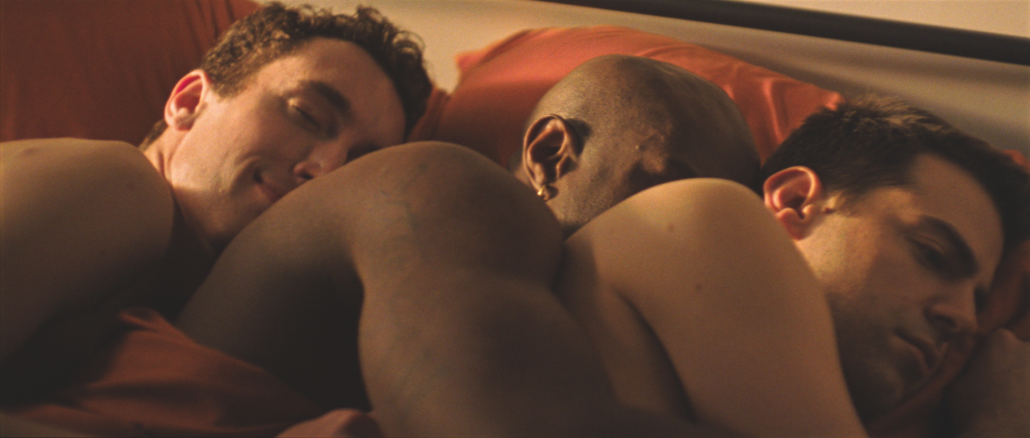
Image credit: Michael Doshier, Stanton Plummer-Cambridge, and Tommy Heleringer in “Throuple.”

In some ways, the film was the real-life Michael Doshier’s way of reckoning with his younger self’s character flaws. “I’m feeling less and less like Michael every day, which I think is a good thing,” said Doshier. “That means I’m growing because he, famously, is staying stagnant. I wasn’t very good at expressing myself very clearly and what I was feeling and what I was wanting.” 

The character Michael’s self-obsession hides deep insecurities about his own lovability and self-worth that emerge in his relationships and his personal explorations of artistic passion. He struggles and blooms as a singer and songwriter while pursuing his multiple desires, platonic and sexual alike.

Creative expression often couples with identity exploration, and it seems to have done so for Tommy Heleringer. “When I was very little, my Dad would introduce me to people as ‘This is my son, Tommy; he’s going to be an actor,’” he said. Even as a child in a small “bubble” of a Catholic community, and before he knew it himself, theatre and its expressive power felt like home to Heleringer. “I would put on plays in the basement with my siblings and cousins,” he said. “I played the Wicked Witch of the West in our eighth grade production of ‘The Wizard of Oz.’ I did plays in high school. Acting seemed there from the beginning.”

At the core of every “Throuple” character’s development is communication, which Heleringer identified as the key to exploring his character, Connor, and the key to relationships in general. “I’ve been in an incredible relationship now for almost nine years, but in the very beginning, like the first year, I’d just not say nothing!” he laughed, “assuming people can guess my mind. I was lucky to find someone for whom the games did not work at all. It was only going to work with a lot of honesty.”

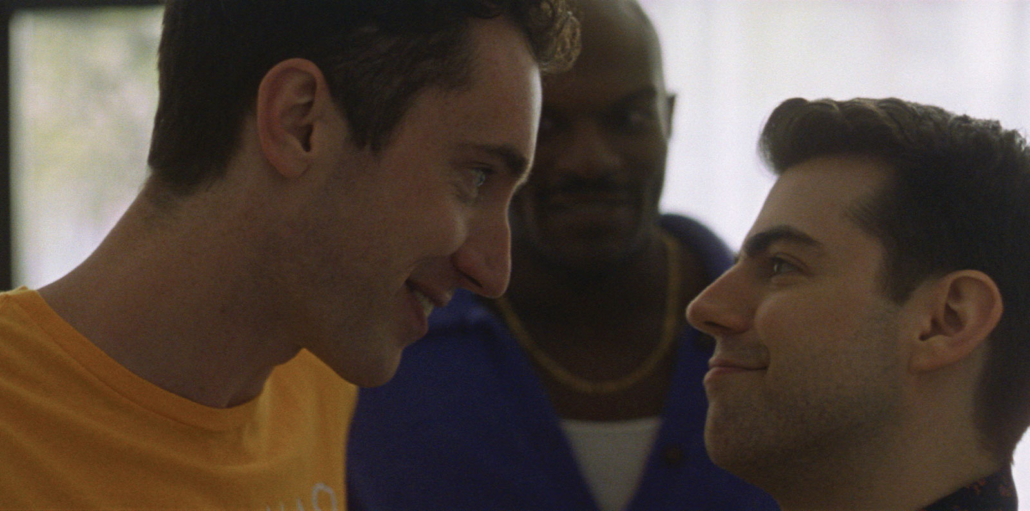
Image credit: Michael Doshier, Stanton Plummer-Cambridge, and Tommy Heleringer in “Throuple.”

By the end of the film, Michael is still at the center of all these dynamic relationships but his position and connection to his sense of self have shifted. He’s far from done with his journey, and “Throuple” brings us to a place of understanding with him that there is no wrapping up desire; it’s winding and complicated, and that’s its beauty. 

“The fantasy of a throuple is sort of burst,” said Heleringer. Doshier added, “ I would say I’ve never felt more convinced that it’s a very legitimate structure that’s working for a lot of people. It’s just another relationship, and it all feels very normcore in a way that I think would surprise a lot of people who haven’t given this a lot of thought. That’s been the thesis statement of ‘Throuple’ since the very first draft; it’s just about learning that you have a right to go after the desires of your heart.” At the moment, Doshier’s creative desires involve work on a new feature film set in Missouri, while Heleringer is starring in a one-person performance of Tennessee Williams’s “The Glass Menagerie.”

More than mid-way through the film, Connor says to Georgie, “I want you to experience every possible joy that is within you.” In this moment, the film wished into being a reality where we’re all just humans desiring. This is the strength of “Throuple,” for me: it’s an attempt to empower the viewer by taking away categories and leaving us with just the beauty of connection.


“Throuple” is now streaming on Amazon, Dekkoo, and other platforms.

Op-ed from AVOL Board President: Defunding Prevention Is an LGBTQ+ Public Health Crisis

The views and opinions expressed in submissions to Queer Kentucky are those of the authors and do not necessarily reflect the official policy or position of Queer Kentucky. Any content provided by our submissions or regular columnists are of their opinion. As a reader, you are always welcome to submit your op-eds through our submission form.

By Roy Harrison, Board President, AVOL Kentucky

At AVOL Kentucky, we know that health care is about trust. For more than 30 years, we’ve built that trust by showing up, consistently, compassionately, and without judgment, for Kentuckians living with or at risk for HIV.

So when the Centers for Disease Control and Prevention (CDC) abruptly eliminated our $200,000 in annual HIV prevention funding, it wasn’t just a financial blow. It was a betrayal: of our mission, our staff, and the communities we serve, including Kentucky’s LGBTQ+ community.

The news we received this week wasn’t a budget cut. The funding still exists, it’s just been pulled-back. To where? No one knows. In a sweeping overhaul, the CDC chose to withdraw funding from local and statewide organizations like AVOL. The mechanics are opaque, but the risks are real.

While it would be reassuring if we saw these funds were being allocated differently in the fight against HIV and AIDS, we’re not seeing that evidence. The CDC closed its STI lab in April, and in May they ended their free HIV home test program. Further, the budget bill currently working its way through Congress, does zero out this funding source for future years across the country. 

The CDC is signaling that HIV and sexual health are not a priority. 

We weren’t cut because we failed. In fact, we exceeded every benchmark. We were preparing to expand. And now, instead of building on that success, we’re fighting to maintain critical prevention services in a state that already ranks among the worst for new HIV and hepatitis C infections. 

At AVOL, we provide more than 1,500 free HIV tests each year. We distribute condoms, resources, and care navigation services in every one of Kentucky’s 120 counties, from rural hollers to city streets. Our team helps connect people to affirming providers, educates folks on PrEP, and offers a safe space for those who may not have one anywhere else.

The direct impacts of these developments are immediate. We have reduced our walk-in testing hours, now just Monday to Thursday 1PM to 5PM, and our open testing positions that were funded by these programs will now go unfilled. We are a resilient organization, and we were designed to weather tough storms. But the loss of this funding will mean increased HIV and STI infection rates in Kentucky and across the country. 

This work is our work. It’s harm reduction work. It’s suicide prevention, STI prevention, stigma prevention. And when the CDC cuts ties with trusted, local organizations like ours, it’s not just bad policy, it’s dangerous.

Let’s be real: in many Kentucky communities, AVOL is the only sexual health provider some people will see. That’s especially true for queer Kentuckians who face barriers to care because of stigma, geography, income, or a combination of all three.

Without local providers, we risk losing the human connection at the heart of prevention. We risk replacing empathy with red tape, and trust with distance. That’s not just inefficient, it’s harmful.

The secondary effects of this decision are just as alarming. Regular access to testing and judgment-free care doesn’t just prevent HIV, it improves overall health. It leads to earlier treatment of other STIs, increased condom use, lower anxiety, and fewer emergency room  visits. It helps people live longer, healthier lives.

But instead of investing in that kind of life-saving, cost-effective care, the CDC’s decision asks us to do more with less, or, in this case, to keep doing the same essential work without the federal support that’s sustained it for years.

At AVOL Kentucky, we’ve earned the trust of the people we serve. You don’t get that from a grant proposal. You get it by showing up at Pride festivals, community centers, recovery programs, housing shelters, churches, and wherever else people need us.

We will keep showing up. But we shouldn’t have to fight this fight alone.

If you care about public health, about equity, about Kentucky’s LGBTQ+ community, then this should matter to you. Because when you defund prevention, you increase infections. You create shame. You let people fall through the cracks.

And that’s something none of us can afford.


If you or someone you know is struggling, call or text the 988 Suicide & Crisis Lifeline at 988. LGBTQ+ young people can press 3 to reach counselors trained in LGBTQ+ care, an option that returned on Sept. 30, 2026 after it was cut in July 2025. The Trevor Project also offers 24/7 support at 1-866-488-7386 or by texting START to 678-678.

Cruising Kentucky and Bulgaria: An Interview with Author Garth Greenwell

Writer and native queer Kentuckian Garth Greenwell won this year’s PEN/Faulkner Award for his novel “Small Rain“. Though winning might be a surprise, for him, this award isn’t really a career-defining moment. “What it means is that the jury was in the mood for my book,” he gratefully and laughingly put it in an exclusive interview with Queer Kentucky.

“I don’t think anybody expected that “Small Rain” would win,” he explained. His debut and widely popular 2016 novel, What Belongs to You, was a finalist for the same prize but didn’t finish. “I had kind of convinced myself that I would never get one of these big prizes.” 

“I really do believe that prizes don’t mean anything objective about the value of the work. You know, I think the greatest living American writer is Frank Bidart, and he didn’t win a major prize until his late 70s. But he was writing groundbreaking work for half a century at that point.”

All three of Greenwell’s lyrical novels focus on the same queer protagonist in different contexts and life stages, from cruising the bathrooms of Bulgaria to the COVID-19 pandemic. “Small Rain” is different, not least of which because it was the first time Greenwell sat down knowing he was writing a novel. 

Of his novels, “Small Rain” is the most constrained in setting but most imaginatively expansive. The plot is spent over 12 days where the main character is confined to a hospital bed and has only his mind to explore—a constraint Greenwell explores thoroughly. 

The pandemic and the dysfunction of America’s healthcare system haunt him while he explores how we make meaning from art, sex, and life. “It was exciting to think about this character cut off from sex, what has been a primary motor of his life. He compares it to flipping off a switch: who would I be without desire?”

The Orange County Register’s critic called Greenwell a “master sensualist” because of his sexy and physical writing, both in subject and style. I couldn’t help but mention this quote to Greenwell, who said he should get that phrase on a t-shirt.

“Writing is an activity that engages the passions, including corporeal passions,” he continued. “Part of this is having been trained as a musician. You know your instrument is your body, you become very aware of how your mouth moves when you’re making language. I think there’s a relationship between the shapes of sentences and even the physical experience of sex.”

Though Greenwell is drawn to constraints like those of “Small Rain,” he says, “my next book will not involve someone in bed for 12 days. But I’m very drawn to art that feels that someone has taken a certain amount of material and they’re just going to squeeze it until they get absolutely everything out of it.” 

Greenwell was far from unrecognized before Small Rain’s big award. “What Belongs to You” was even called “the first great novel of 2016” in Publishers Weekly. 

“The resonance of ‘What Belongs to You’ was a big surprise,” Greenwell said. He toured the book for almost 2 years, during which he was sometimes asked to speak about his art as a queer representative and as an activist. 

“I really wasn’t prepared for that. I think the role of an artist and the role of an activist are distinct roles. And I feel a lot of urgency around protecting my art from any sense of that kind of responsibility, of a certain kind of representation. I actually think that’s death for the kind of moral and potentially political work art can do. I think real art is, in fact, sort of allowing oneself to be moved by urges that are beneath intention, urges that can only ever be irresponsible.”

Greenwell now lives in Iowa City and New York, but he was born and grew up in Louisville. “I lived in Kentucky until I was 16, through the AIDS crisis, pre-Internet, and I really felt that, if I stayed, I would die. And I think that I was right. My relationship to Kentucky has kind of defined my whole life, in part because from 16 on, I very much had a sense of my life as being one in flight from Kentucky.”

One of his first escapes, to Bulgaria, was the subject of his first novel. “I was cruising the bathrooms at the National Palace of Culture and finding, in this very weird way, in this country where I could barely speak the language when I arrived, I found that the cruising codes were exactly the cruising codes that I knew from Cherokee Park in Kentucky, where I went when I was 13, 14.” 

As he learned the language, he said he had a sense that he was hearing stories he’d heard before. “I was experiencing a world that reminded me in many ways of the world that I had fled.”

In his second novel, he explored what it was like to hear his students in Bulgaria tell him about their own queer experiences. “As these 16, 17 year old kids were telling me their stories, they were, in a sense, telling me my own story.”

At 38, Greenwell came back to Kentucky and, despite thinking he’d known all he could ever possibly want to know about the state, a visit to the University of Louisville’s archives unfolded a history of queer Kentucky life that was inaccessible to him as a teenager. “My whole life up to that point was designed to keep me from accessing that. It was incredibly moving.”

Greenwell’s next planned book is a book of essays, but he hopes to get to Kentucky in his writing soon. “You know, my whole life would have been different if I had had access to the queer history of Kentucky and the sense that queerness is everywhere, including the small town in the middle of the state where my family’s farm was. What I would wish for that queer kid in Kentucky today is an ability or access to this sense that queerness is not something that exists elsewhere.”

“Learn about the place where you are,” he says. “Go wherever life takes you, but don’t feel like I felt, that life is only possible elsewhere. There is a place for you here. Claim it.”

–

Purchase “Small Rain,” and follow Greenwell on his Substack.

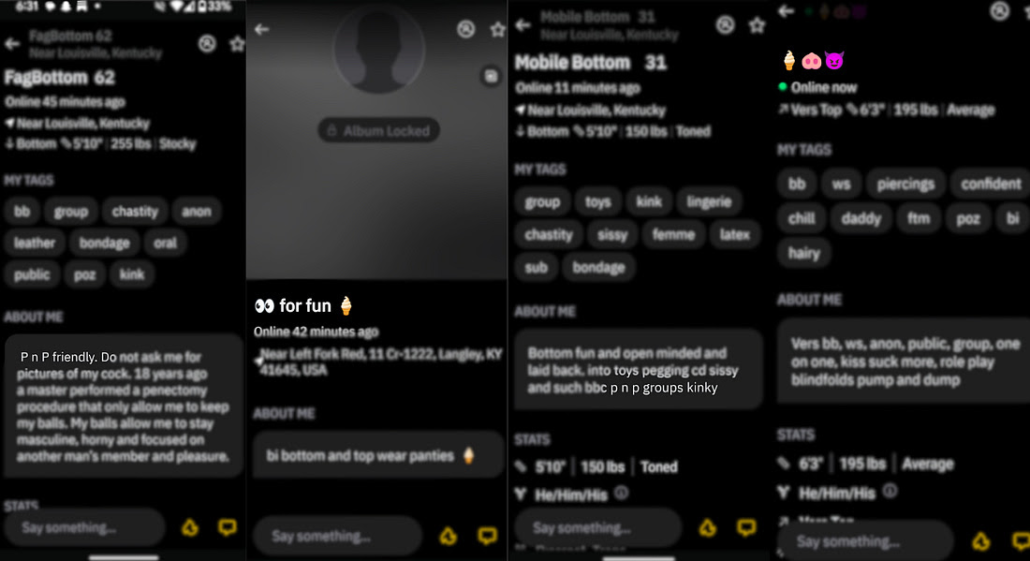
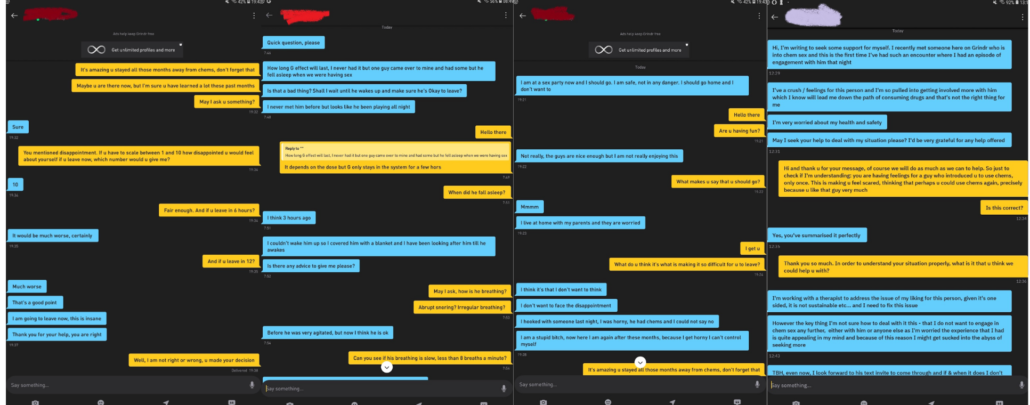
How Apps Like Grindr and Sniffies Are Fueling the Meth Crisis Among Gay Men

This story is part of a digital issue of Queer Kentucky surrounding Harm Reduction and its intersection with the LGBTQ+ community.⁠ Check out the full digital issue here. This story is also in partnership with  Uncloseted Media, an LGBTQ focused investigative news outlet. Subscribe to their latest here.

Chemsex and Party and Play culture have ravaged the gay community for decades. Considering the history of this problem, are hook-up apps doing enough to combat the epidemic on their platforms?

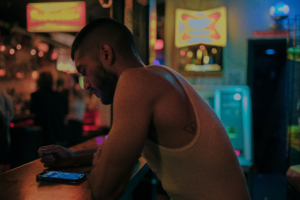
At 21 years old, Robert McAllister remembers unlocking his phone in Louisville, Kentucky, to a grid of bodies on Grindr, the gay hook-up app. 

To the average American, many terms and symbols in user bios read like a foreign language: PnP, Tina and parTy, or the crystal ball, ice cream and diamond emoji. At the time, McAllister also had no clue what these terms meant. 

After chatting with multiple men, he met up with one of them later that night. Before they started having sex, the guy pulled a plastic bag of white powder out of his backpack and asked McAllister if he wanted to partake. 

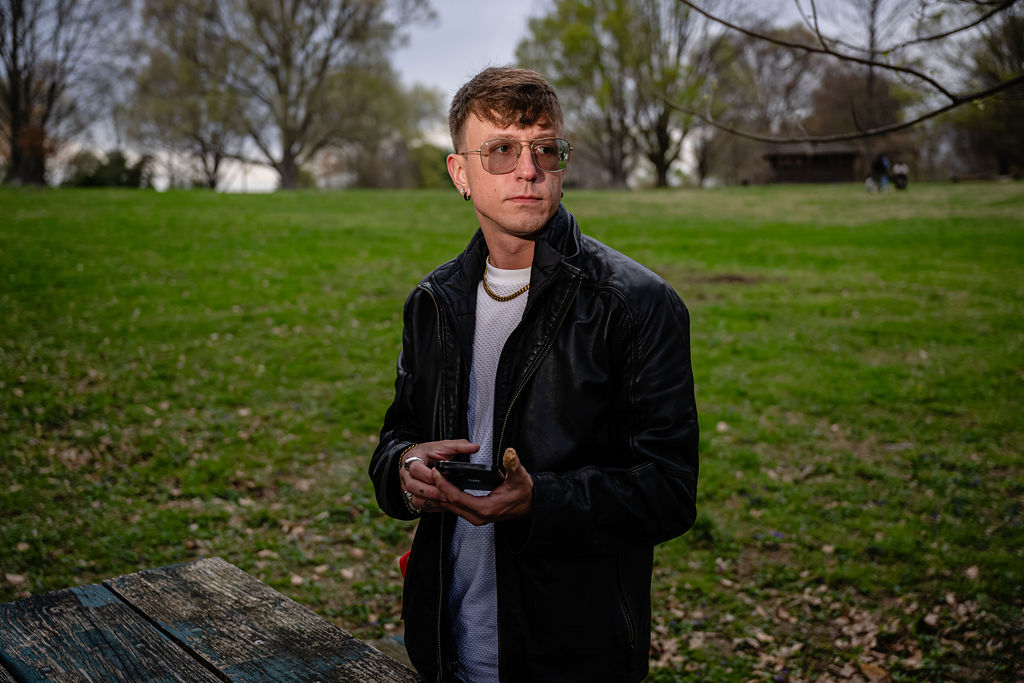
“He snorted it like cocaine. And for whatever reason, I was like, ‘Oh, well, cocaine isn’t that bad,’ so I tried some,” McAllister, now 27, told Uncloseted Media and Queer Kentucky. 

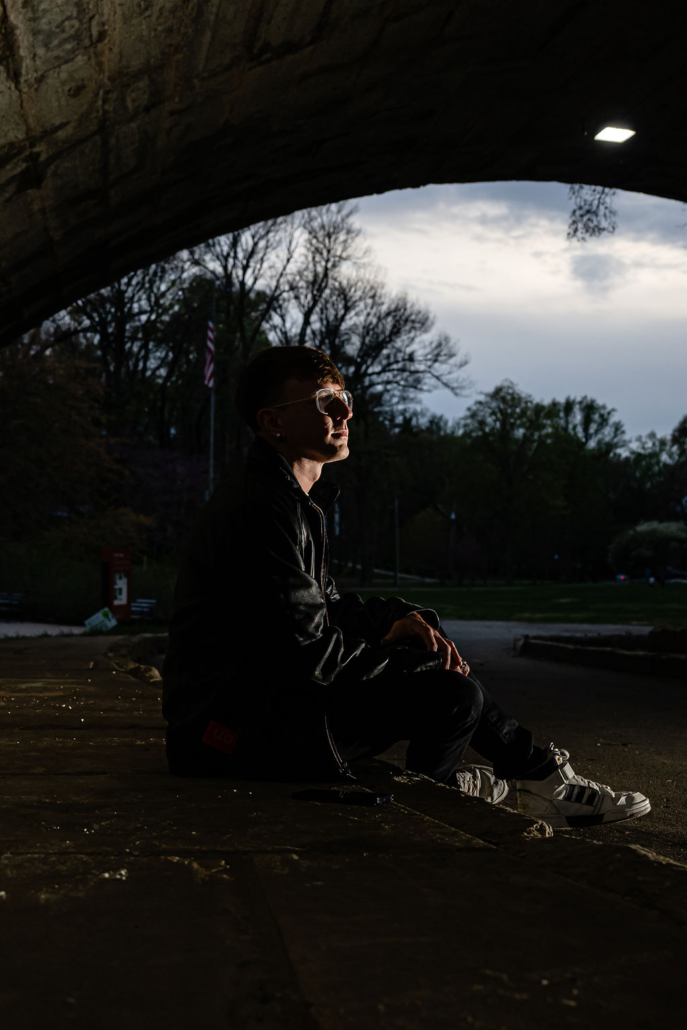
Photo by Jon Cherry for Queer Kentucky and Uncloseted Media

The powder he snorted was actually crystal meth, a highly addictive drug that can ravage the body and mind and lead to psychosis, organ failure and irreversible brain damage.

“I remember thinking, ‘Wow, I want to do that all the time,’” says McAllister. “I wanted to feel that good all the time. At home, at work, it didn’t matter if I was hooking up with someone or not. It became a daily habit immediately.”

He says the addiction got so bad that the only people he would interact with for months would be the hookups he used with. “I would seek out people that had it in their profile,” says McAllister, who was addicted to meth for four years. “I would invite them to my apartment to use with me just because I didn’t have anybody else around. At that point I had lost my job, my family really didn’t want anything to do with me, and so the app was my excuse for social interaction.” 

McAllister’s experience is common. Party and Play (PnP) culture, also known as chemsex, is exactly what it sounds like: the use of drugs like GHB, ketamine and meth to enhance sexual desire, arousal and pleasure. The practice is most prevalent amongst gay and bi men, who use meth or similar drugs at three times the rate of heterosexual men, according to a 2014 study from the United Kingdom.

photo by Jon Cherry for Queer Kentucky and Uncloseted Media

For 25% of the guys who engage in PnP culture like McAllister, it becomes a severe problem. 

While drug overdose deaths in the United States declined slightly in 2023 for the first time since 2018, deaths from psychostimulants like meth rose, killing 36,251 Americans in 2023. That’s just over 3,000 lives a month, or 100 lives a day. And the epidemic is even worse in rural states like Kentucky.

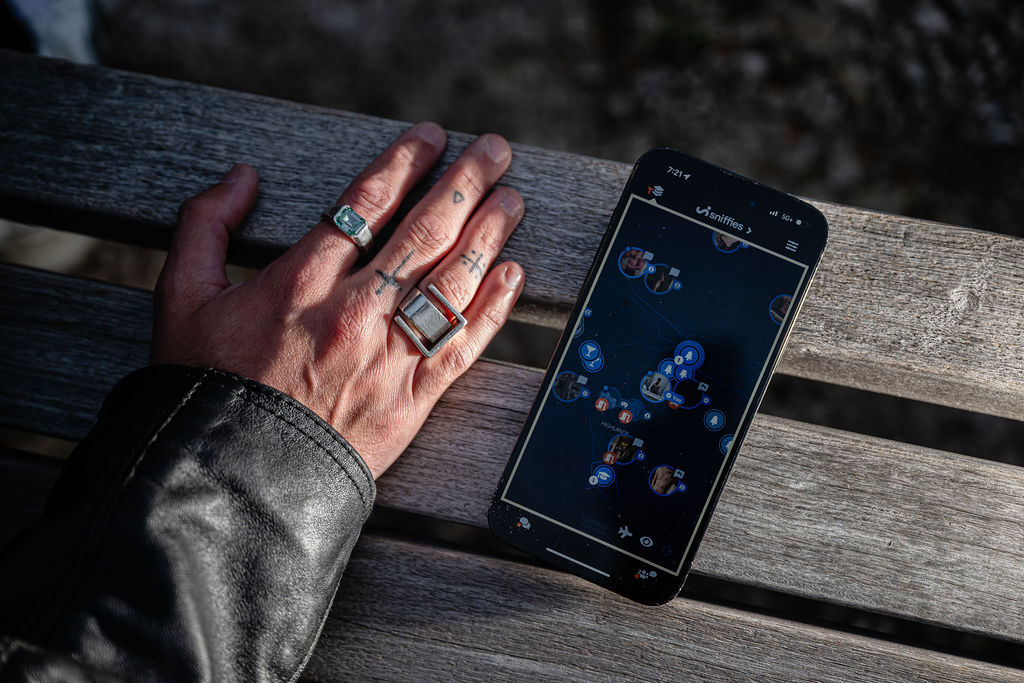
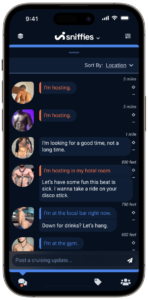
As meth addiction continues to devastate the gay community, hook-up apps like Grindr and Sniffies —which make hundreds of millions of dollars a year—are where PnP culture thrives. One 2023 survey found that 91% of dating app users had a negative experience with drugs and one in four dating app users deleted an app because of drug-related concerns. 

“[Dating apps] are making lots of money from this community and the biggest problem that [we are] facing is not HIV, it is drug addiction,” says Ignacio Labayen de Inza, CEO and co-founder of Controlling Chemsex, a charity that provides interventions for chemsex users. “People are overdosing, people are suicidal, people are suffering from sexual assaults, they are psychotic, they are losing jobs, they are ending up homeless. And Grindr is the biggest vehicle that people use to get these drugs.”

So what are the apps doing to combat an epidemic that has been exacerbated by the easy access to meth on their platforms? 

Photo by Jon Cherry for Queer Kentucky and Uncloseted Media

The Risk of Hook-Up Apps

Smartphone hook-up apps, which hit the mainstream in the 2010s, have long been associated with a greater risk for sexually transmitted infections (STIs) among queer men. But emerging research suggests they also facilitate drug use among queer men, 15% of whom have used meth within the last year and 23% of whom have used it at least once in their lifetime. A 2017 study found that gay hook-up apps, including Grindr, “significantly increased motivational substance use” and approximately one in 10 of dating app users engaged in substance use after being persuaded on the apps. 

The apps know this is a problem. Sniffies is an app which features an interactive map known for its anonymity and showcases pictures of user’s genitals and butts nearby. In an email to Uncloseted Media and Queer Kentucky, they wrote that their users are significantly more likely to engage in chemsex and meth use compared to users on other platforms. They say a notable percentage of their users have reported deleting their accounts due to drug-related concerns. Recognizing this, Sniffies introduced Profile Fields, “allowing users to explicitly state their boundaries and the safety tools they carry, ensuring that everyone can make informed decisions about their encounters.”


Still, in addition, Sniffies—which has seen “explosive regional growth” in 2024—does not allow users to filter for other people’s drug preferences. In a data report that Sniffies pulled for Queer Kentucky, 18% of users selected “No PNP” under their drug preferences.

One of the major problems is that these apps enable easy access to the drugs, according to Kentucky-based Grindr users Uncloseted Media and Queer Kentucky spoke with.

“You can see it everywhere on dating apps,” says Chris Hackenberg, who first used meth at 19 years old during a Grindr hook-up. He says the drug “opened a door” to a “level 1,000 happiness.”

“It started becoming a slippery slope when I started finding [meth] everywhere,” he says. “Eventually, every hookup, I would try to find Tina [meth], and it just kept getting progressively worse to where [it] engulfed my whole life.” 

Hackenberg, now 23, remembers staying up for seven days driving around Florida looking to PnP. From Jacksonville to Orlando to Miami, he would drive for hours searching for a new place to geolocate himself on Grindr to find a new selection of men who were ready to use meth with him.

“I think Grindr and Sniffies turn a blind eye to all these drugs. Grindr is so well-known for finding drugs. It’s just so easy,” he says. 

What Are the Apps Doing?

The epidemic of crystal meth addiction and PnP culture among gay men has been an issue since the late 1990s, long before smartphones. But the most dramatic increase in meth-related deaths and usage occurred from around 2015 to 2019, when it soared by 180%. At the same time, Grindr exploded in popularity: In 2015, it was reported to have 10.5 million global users and make $38.1 million in sales. 

Grindr and Sniffies declined multiple requests for an interview for this story. Instead, Grindr directed Uncloseted Media to their work with a UK nonprofit, The Love Tank, that provides “safer chillouts” guides on their website for information on sexualized drug use. In the guide, they provide information on harm reduction, such as how to check in with yourself before you use, how to determine proper dosage and how to handle overdoses. 

In an email, The Love Tank told Uncloseted Media and Queer Kentucky that Grindr promotes their guides through inbox and pop-up broadcast messages on the app, but only in the UK region. 

Screenshot of their pop-up. Courtesy of Grindr.


Screenshot of their popup. Courtesy of Grindr.


In the U.S., Grindr works with the nonprofit Building Online Healthy Communities and has a similar pop-up for all users. 

Labayen de Inza, of Controlling Chemsex, says that this is not enough. “Clearly pop-ups and guides aren’t working because the problem [of chemsex addiction] is still an issue,” he says. “If I’m horny, I’m not going to check my pop-ups. And sometimes people are not ‘planning to chill.’ Sometimes people are having horrible psychosis and paranoia and looking for help. People tell me, ‘I want to stop. I have to stop, or I’m going to die.’ The guides aren’t going to help with that.”

In the past, Grindr has gotten bad press for allowing drug dealers to use the app. In 2022, detectives that conducted a Florida investigation titled “Swipe Left for Meth” charged 68 suspects for selling drugs on Grindr and other hook-up apps, causing nearly 280 grams of meth to be seized—the equivalent of roughly 1,400 doses. 

Since then, Grindr’s community guidelines say they have cracked down on banning profiles “centered around or mainly consisting of drug content” and that they prohibit images that are focused on advertising or promoting drug use as well as “emojis commonly associated with buying/ selling.” However, users say that simply putting a capital T, which is not banned, somewhere in their bios is enough to signal that they’re ready to PnP. 

And these bans may not work: Uncloseted Media found five references to PnP after using the app for only 15 minutes in Louisville, Kentucky. 

Screenshots from Grindr

Sniffies, meanwhile, has a resource page with instructions on how to use chemical drugs safely as well as links to harm reduction resources like syringe access and overdose prevention. Labayen De Inza questions, though, whether users will ever seek out a resource page while using the apps. 

Users we spoke with say they wish the apps had a feature where you could filter out folks who are looking to engage in PnP. One 2023 survey by Sniffies’ public health partner found that four out of five participants wanted to be able to filter by drug use practices. 

Legal Immunity

While it is likely that illegal drug use is occurring on these apps, they have Section 230 immunity, meaning that Grindr and Sniffies aren’t liable for any illegal activity that occurs on their apps and aren’t liable for the addictions stemming from the platforms. 

“No one wants to do anything,” Labayen de Inza says. “It’s really difficult to digest the fact that organizations know what is happening to the community. We cannot do very much because we are working on pride parades or HIV prevention. Those are important things. … But lots of people won’t be able to go to the parade because they will be psychotic or they will be suicidal [because of meth addiction].” 

Labayen de Inza, who is in recovery for chemsex addiction, has spent six years on Grindr connecting with folks who have questions about drug use. He says he spoke with over 13,000 users in his first year.

He also surveyed Grindr users in 2019 and found that 10% of the 2,000 respondents were using meth. Of those who said they had used, 90% had a premium subscription to the app, far higher than the roughly 7.5% of all users who pay. 

“I wish I could tell the CEO what is happening [on their] platform,” he says. “If you are human, the pain I see every day would make you cry. We have a responsibility to the community to change something.”

Uncloseted Media requested an interview with Grindr CEO George Arison and he declined. 

Apps Become Triggers: 

Users in recovery from meth also report risking relapse on Grindr and Sniffies. 

Hackenberg started recovery in 2023 after he contracted HIV from injecting meth with a hookup. He says he still can’t use Grindr or Sniffies without relapsing, which is difficult because they are his go-to platforms for meeting guys. “I would try to get on the apps after moving to make friends, but I just couldn’t do it,” he says. “As soon as I start going on Grindr, I get the same head buzz as I did when I would smoke Tina. Every time I’ve relapsed, it was facilitated by the apps,” he says, adding that he has slipped “a few times” in his two years of recovery. 

Mark Just, a 44-year-old finance analyst, started using meth as a way to build community in rural South Carolina, which only had “a bookstore and a park” as queer-friendly spots. “I mean, that was the only avenue to meet people,” he told Uncloseted Media and Queer Kentucky. 

“You’re in the lion’s den on those apps,” he says. “You just have to be really honest about your sobriety and be okay with getting blocked when people don’t read about it in your bio.” 

Now 20 years sober and in a relationship, he says when he tried using the apps to meet people, he had to be careful. “The question comes once you match and you’re chatting,” he says. “PnP or parTy or the puff emoji. I was just trying to meet people, but it would come up over and over again. … 1 in 3 guys would ask.” 

“The temptation is powerful,” he says. “It’s like giving up Krispy Kreme donuts and then someone showing up to your house with a dozen of your favorite donuts. Your body goes into craving mode, even though you haven’t been exposed to it in so long.”

“In a perfect world, they should make it similar to Tinder, where they don’t show you people that you aren’t interested in based on your demographic. So filtering people based on [drug use] would be helpful.” 

What Do We Do?

Ignacio Labayen de Inza says that the apps have to be a part of the solution because they are the ones providing a space where users can easily access the drug. 

He thinks resources for support and harm reduction for chemsex need to be front and center on the apps and constantly visible. “There needs to be a pinned square called ‘Chem Sex Support’ so people know exactly where to go for help and they don’t have to leave the app,” he says. He and his team, who are grant-funded and offer their services for free, are already providing this resource to Grindr users but are constantly getting banned from the app because it violates the app’s user guidelines. 

“The reality is that people are desperate and they don’t know where to go,” he says. “Chemsex support is very unavailable.”

Example of intervention on Grindr, courtesy of Controlling Chemsex.

“There needs to be a bigger conversation,” says Christian Parker, executive director of the community nonprofit Gay & Sober. “The epidemic of meth in the gay community is a perfect storm. There is loneliness, isolation, and stigma all tied together.”

Sean Young, executive director of the University of California Institute for Prediction Technology, says that the apps don’t bear all the responsibility, but silence is not working.

“I think it’s the responsibility of the technology company to have a safe environment, which right now they’re not,” he says. “But the apps don’t have the knowledge about substance use to know how to do these types of interventions, and it could backfire if they tried to start doing this. The solution to this is that technology companies should come to the table with public health officials and with individuals who are using the apps and start a conversation.”

“I would love to have the opportunity to speak with someone from Grindr,” says Labayen de Inza. “To say, ‘Let’s work together. Let’s do something effective.’” 

photo by Jon Cherry for Queer Kentucky and Uncloseted Media

McAllister, who became addicted to meth after his first time trying it with a Grindr hookup, says that education, online support and—most importantly—a destigmatization about meth use would have helped him be more careful. 

“If I had some information about meth, then I could have at least made a decision,” he says. “It’s all still somewhat taboo and behind closed doors so I had no idea what it was when I first used it.” 

“The dating apps are just enabling that by saying ‘Yes, you can put that [PnP] tagline in your profile,’ but they’re not doing anything to educate people about what that means. We’ll just turn a blind eye to it and let people do it,” he says. 

If you or someone you know is struggling, call or text the 988 Suicide & Crisis Lifeline at 988. LGBTQ+ young people can press 3 to reach counselors trained in LGBTQ+ care, an option that returned on Sept. 30, 2026 after it was cut in July 2025. The Trevor Project also offers 24/7 support at 1-866-488-7386 or by texting START to 678-678.

What Are Your Rights if Someone Posts Your Nudes or AI Deepfakes Online in Kentucky?

If someone drops your nudes online without your consent, what rights — if any — do you have in Kentucky? 

What about AI-generated deep fakes meant to look like you? Revenge porn? Even — as hundreds of Kentucky girls and women, including a sitting GOP state representative, recently experienced — grabbing your fully clothed pictures from social media and uploading them, still without your knowledge or permission, to a porn site? 

Some Kentucky lawmakers are trying — and have been trying — to clarify, codify and bolster your rights, should something like that happen to you. 

Here’s a look at where things stand, and what could be up for discussion in the 2026 legislative session.


‘Sextortion’ now a crime in Kentucky

Kentucky made revenge porn — basically sharing your nudes or other intimate images without your consent — a crime in 2018. 

And earlier this year, “sextortion” — when someone obtains either real or fake explicit images of you and threatens to release them publicly unless you meet their demands — became a felony in Kentucky with the passage of Senate Bill 73. 

“Sexual extortion is one of the most dangerous and rapidly growing crimes targeting young people today. It is calculated, it is cruel and it thrives on fear and silence,” bill sponsor Sen. Julie Raque Adams (R-Louisville) told a Senate committee in February. “Too many kids today are being manipulated into situations that they don’t know how to escape from.”

The bill also requires schools to help students and their families understand the dangers around sextortion. 

SB 73 passed both chambers unanimously and was signed into law by Gov. Andy Beshear in mid-March. It will go into effect at the end of June. 


‘Right of Publicity’ bill struggles 

Another bill aimed at giving Kentuckians more rights over their images, however, didn’t pass during the 2025 legislative session.

Sen. Amanda Mays Bledsoe (R-Lexington) filed Senate Bill 7, which she dubbed the “Right of Publicity Act.” Basically, it sought to codify a person’s property rights over images of their unclothed body, and set up parameters around how said rights could be transferred or terminated. 

SB 7 would’ve also allowed Kentuckians who had their nudes used without their consent to sue whomever shared them for at least $10,000 per violation, per person. 

The bill also paid special attention to computer-generated images, building on Bledsoe’s — and the legislature’s — work around targeting artificial intelligence. 

“This is about personal dignity, privacy, and control,” Bledsoe said in March. “Technology moves faster than the law, and artificial intelligence has made it possible to fabricate completely false images with terrifying accuracy. No Kentuckian—not a public figure, not an ordinary citizen, and certainly not a child—should have to fight to reclaim ownership of their likeness.”

SB 7 easily cleared the Senate on a unanimous vote, but ultimately stalled in the House and didn’t become law. 


Federal legislation gets passed

Congress passed something similar in April with the Melania Trump-backed TAKE IT DOWN Act. That stands for Tools to Address Known Exploitation by Immobilizing Technological Deepfakes on Websites and Networks. 

It prohibits someone from sharing intimate images of you online — both actual photos and AI-created ones — without your consent. It also requires online platforms to remove the images within 48 hours of a victim requesting them to take them down. 

Bledsoe celebrated its passage, adding on specific praise for Kentucky Congressman Brett Guthrie for his work “advancing protections for victims of digital exploitation” at the federal level.

“As a mother and a legislator, I know how urgent it is to modernize our laws to meet the threats of a rapidly changing digital world, especially when it comes to protecting our children and families from image-based abuse and exploitation,” Bledsoe said in a statement. 

She continued to say the federal-level action “builds on the momentum we’re seeing at the state level. 

“It sends a powerful, united message: personal privacy and human dignity must be protected in our fast-moving digital world.”


A state rep’s real-time experience and what could come in 2026

More than 300 Kentucky girls and women recently discovered someone had been pulling their photos from social media and posting them to a porn site. And, allegedly, he had been doing so for years. 

One of them was 33-year-old GOP Rep. Samara Heavrin from Leitchfield. 

Saying she was “deeply disturbed” by the situation, Heavrin wrote in a Facebook post that “many of the photos were of clothed women.” (In an interview with KET, Heavrin said her photos got pulled from her personal Facebook page and included stuff like a picture of her and her dog posing for their Christmas card.)

But, she added on Facebook, “the horrific comments posted by users of the website are something that will take years for these women to overcome. This behavior is unacceptable.”

On KET, Heavrin described Kentucky’s legal landscape around situations like hers as “a really gray area.

“Our law reads that it’s not — I don’t want to say it’s fair game, but if you post something on the internet, there’s not really any laws that protect people from it being put on a pornographic website.”

She plans on using her role as the House Families and Children Committee Chair to look at what state lawmakers could do.

“I plan on exploring legislation that would require consent of the individual for photographs of them to be placed on pornographic or explicit websites,” she wrote on Facebook. “We must hold predators accountable for their actions.” 

Kentucky’s next legislative session doesn’t start until early January 2026, but its interim session — a time where lawmakers gather to discuss pressing topics and potential pieces of legislation, but can’t pass anything — kicks off June 3. As a committee chair, Heavrin will oversee and set the agenda for the Families and Children meeting every other month.

“What I want to do is be able to prevent this from happening again,” she said on KET, “and unless we have a hard conversation about it and make real policy changes, it will happen again.”


Lexi Love Opens Up about Meth Experience and Power of Self Love

Earlier this year, Queer Kentucky spoke with Lexi Love about substance use and harm reduction. This story is part of a digital issue of Queer Kentucky surrounding Harm Reduction and its intersection with the LGBTQ+ community. Read the whole issue here.

Sobriety and recovery look different for everyone, whether that means living “California sober,” cutting out one or two substances, or choosing full abstinence. With methamphetamine (colloquially, meth) holding a growing number of LGBTQ+ people in a vice grip, one queer activist and newly rising star is destigmatizing harm reduction through personal awareness and her own safer practices.

Lexi Love, Louisville’s “Roller-Derby Doll” and RuPaul’s Drag Race Season 17 contestant, says it’s time for LGBTQ+ people to have hard conversations about substance use disorder, particularly chemsex or to some known as, party-and-play (or PNP) culture. And Love herself isn’t excluded from those hard conversations, having faced homelessness and battled addiction before her time on Drag Race. 

“I have had my hands in every single recreational drug that you can think of—I’ve tried it all,” she tells Queer Kentucky. “But I think what’s most prevalent in our community is, of course, the use of crystal methamphetamine, GHB and those types of party sex drugs.”

Love, who was forced out of her home as a teenager after her family discovered she was queer, says the family rejection served as the catalyst for her slipping into the world of hard drugs. With nowhere to go and no support system, she found herself on the streets.

“Once you’re homeless, and once you have no running water, electricity…[using drugs] just becomes a way to distract yourself from everything,” she recalls. “Something turns into a distraction, and then it turns into a lifestyle, and it’s very difficult.”

Love struggles to pinpoint her darkest moment because she says there were too many. But she recalls her late friend, Cody, who introduced her to the darker, more dangerous side of the LGBTQ+ meth scene—an experience so unsettling it ultimately scared her away from that world. Love credits Cody’s actions for ridding meth from her life and wishes she could have helped prevent his death with the knowledge she now has.

photo by Josh Astor

“We are gonna have to have a long, hard conversation about intimacy, love, and sex,” Love says, “because these are the three main problems that the gay community [will try to fix] with crystal meth.”

In Love’s Meet the Queens video, she shared that everything she does is “surrounding love and making others feel loved,” emphasizing the importance of human connection in a world where it’s increasingly slipping away.

For her, using meth was the missing puzzle piece during a time when she struggled to love herself and with intimacy. And what does RuPaul say? “If you can’t love yourself, how in the hell you gonna love somebody else?”

“People that have been missing certain types of love and affection in their life, and now they’re searching for it in other ways so a lot of this stems, I think, from love and affection and not receiving it,” she says. “Meth is an upper and makes you feel uninhibited. You’re all of a sudden not worrying about all of your concerns and worries in the world.”

Having moved away from meth, Love explains that she isn’t “Sober Judy,” but has paved a way for a happy life through practicing harm reduction. For Love, sobriety isn’t about abstinence, but stability. She defines sobriety as the ability to be a functioning part of society. She believes that addiction isn’t just about using substances but about finding effective coping mechanisms. Working in clubs and bars, Love says she is often offered every drug imaginable and as a result she must be careful in her own workspace.

Love has been candid about her struggles with addiction on Drag Race, referring to herself as a “frequent flyer”—a term for regular meth users—yet her openness has made her a target for ridicule.

In RuPaul’s Drag Race Season 17, Episode 9, titled “Heavens to Betsy,” theater and flapper queen Suzie Toot joins the other contestants in the iconic “Reading Challenge.” When it’s her turn to take a jab at Love, she said, “You’re just steps away from reaching your dreams—12 steps exactly,” referencing the Alcoholics Anonymous program. She follows up with, “I’ve never met anyone who works harder than Lexi Love’s liver.”

While the reading challenge is a playful chance to throw sharp, below-the-belt digs at fellow contestants, Toot’s words also reflect a broader stigma faced by those practicing harm reduction rather than full abstinence—often dismissed as not being “truly” sober.

Photo provided by MTV

“It doesn’t affect me,” Love says about judgment from others. “You don’t know what you’re talking about. This isn’t your problem, and therefore I really don’t care about your opinion because those people are the ones that have always judged me and never wanted me to succeed—so they can suck my big toe.”

Substance use is a serious issue across the U.S., with 1,984 Kentuckians losing their lives to drug overdose in 2023 — a rate of 45.9 deaths per 100,000 residents. The 2023 Kentucky Drug Overdose Fatality Report shows fentanyl was involved in 79.1% of overdose deaths, while methamphetamine contributed to 55.2%, making them the leading substances in overdose fatalities across the state.

Queer people, like with most progressive social movements, are at the forefront of promoting harm reduction, often disbursing Naloxone and fentanyl test strips in sacred queer spaces to prevent overdose deaths. Love says that bars that understand that drug usage may happen within their facility are being smart and want to keep their patrons as safe as possible.

“I see lots of things happening. I see lots of little baggies being passed around, and that does make me extremely nervous for the people I’m performing for, she says.

The Season 17 second runner-up recently announced on her Instagram that she is taking a step back from the spotlight to nurture her mental, physical, and emotional well-being while also transforming her relationship with her “inner-saboteur.”

Lexi Love’s Instagram

“This journey isn’t one I can take alone,” she writes. “I know I’ll need help, guidance, and grace along the way — and I’m so grateful to have the love and support of this incredible community behind me.”

A few days after sharing her message with fans, she posted a stitched video featuring Amy Winehouse singing, “They tried to make me go to rehab and I said…,” which then cuts to a clip of Lexi responding, “OK, let’s go.”

Queer Kentucky reached out to Love’s public relations team at Metro Public Relations to confirm whether she is entering rehab, but they have not responded.

And for those still struggling? Lexi Love has a message for you:

“I love you. I’m sorry. And whenever you feel like this is too much or thinking ‘what am I doing?’ And maybe thinking that it’s too late to turn back? It’s never too late to turn back, never too late to turn back one more time. It is never too late to turn back. Ever, ever, ever, ever, ever, ever.”

Love, who is living with HIV, would also love to let the Queer Kentucky audience know about HIV resources for those struggling to find care. She would like to direct people to Mistr.com, ViivHealthcare, and Planned Parenthood.

From Archive To Action: The queer, sex-positive magazine bridging print media, history, and activism

Avery Plummer was finishing her Master’s degree in Art History at Ohio University, considering her thesis, and the COVID-19 pandemic obliterated all opportunities for interpersonal community. In the spell of isolation, she was figuring out her own identity as a queer woman in an increasingly terrifying landscape to be a member of the LGBTQ+ community. And then she found On Our Backs magazine. 

On Our Backs is a vintage lesbian porn magazine, starkly contrasted with its smutty contemporaries (like Playboy) that centered on women, sexual health, education, and advocacy. She channeled this inspiration and created the first issue of nymph(o) magazine to serve as her masters thesis, and still continues the project today. nymph(o) is a modern, sex positive print-only publication that centers queer experience, joy, sexuality, and a masterfully vast breadth of diverse voices on glossy paper in a visually breathtaking delivery system. 

Nothing is off limits in nymph(o). Photos, interviews, poetry, and comics find themselves snugly nestled within its pages. Life is given to the voices of people across gender identities, sexual spectrums, ability levels, ages, and experiences. This is a matter of ethics and principle for Plummer, who conducts herself with this posture in all aspects of her life, but especially in this area. 

When asked about how she navigates the sometimes-problematic attitudes and ideas of our queer forebears, she waxes about honoring our collective past and looking to these blueprints for context and inspiration while building the world we desire to live within. 

Cover Art by Maddy McFadden

“Constantly looking at things through a critical lens, we can’t accept everything as fact. I had to do this specifically with On Our Backs, it was very white. It was not as trans as something you might see today …There can be a gentleness in that critique, but not accepting it as fact,” she says. 

This is a hard line, and clearly a well-protected boundary for Plummer. It’s of critical importance for her to include as many stories as possible in nymph(o), and to do so with veneration. Utilizing so many elements in this magazine not only makes it a significantly more fun read, it serves the purpose of capturing the work of its subjects exactly as the artists intend their words to be shared; however a contributor wants to tell their story is how it is told within her pages. 

Each issue begins with a loose theme. Concepts like “fighting for joy” or “queer spaces” become the backbone of a deeply collaborative process. She opens submissions for contributions, but will also seek out specific people if there is a topic she knows she has to cover. This duality of reliance on community, while opening the scope, results in multiplicity of content that leaves readers with a satisfyingly juicy experience. 

Between her acting as curator, her partner, Maddy, serving as creative director, and a network of artists, there is “room to devolve,” as she says. This is a piece of art, showcasing the miraculous ways queer people can work together, challenge each other, and craft something cohesive and celebratory. 

While this project may have started as her thesis, it has evolved into an antithesis of the way media is consumed in the modern timeline. In times where endless scrolling is seen as the work, and reposting is tantamount with organizing, nymph(o) is a defiant, stunning piece of revolutionary art that begs us to slow down and immerse ourselves; to linger awhile, languish in textures, and move our eyes across its substantial pages. 

She says, “Context gets left out of many conversations [on social media],” and print media is a way to create a larger body of work that exists only within the spaces it’s meant to belong. The Internet has its virtues of accessibility, which has certainly activated many members of the community, and saved the lives of queer people all over the world. But print media can be something by communities, for communities, away from normative gazes. Creating and preserving spaces for our eyes only bears importance, and can serve as a pivotal organizing space. 

Cover Art by Denver Bastion

“That’s how you move in stealth, that’s how you get these large groups of people to know about things, but not the groups you’re targeting. It’s free from the constraints of a social media platform that is run by the oppressor. There’s a lot of power in it. Where the struggle happens and it falls flat is the ability to access the information,” she says. Plummer laments the lack of grassroots gatherings in the era of social media, and how organizers prompt us to check their social media to know when things are happening, but the exposed nature of that can be a pitfall. Print media is powerful, because it’s made (often by hand) by us, for us, and only has to be seen and loved by the people whose power it is meant to uplift.

Yet the main motivation for nymph(o) being a physical piece of media seems to be rooted in Plummer’s abiding love for archival work. We met to chat in the Ohio Lesbian Archives, a treasure trove of books, magazines, and ephemera meticulously assembled to document the movements of queer people in Ohio. She volunteers at the OLA, and it’s abundantly clear that ensuring the preservation of our history is the key to unlocking a future of liberation. 

The Ohio Lesbian Archive was the womb that birthed nymph(o), and feels very much like a hallowed and sacred ground from which to birth the next queer freedom movement. Its original home was above the iconic Crazy Ladies Bookstore, and has independently housed thousands of pieces of history for over thirty years. 

When I asked Plummer about how archives are activist spaces, she brings up what she calls “The precarious imprecarity” of LGBTQ+ communities. She says, “Archiving is activism because archivism is proof. We have been and always will be here, it’s literal proof of that. When we’re seeing increasing efforts to erase that history and evidence, these grassroots archives become so important. They can’t erase that. Keeping pieces of proof outside of a higher institution. We’re not connected to a university that can cut their DEI funding. We’re keeping this open to the community.” 

Art by Mallory Stowe

The OLA is home to “Jill’s Journals”, which are quite simply the personal journals of a lesbian named Jill. They’re only available to be viewed in the archive, and they’re a real treat. Plummer loves these journals, saying “[we have been] amazing, whimsical creatures throughout history,” and capturing these seemingly mundane moments are powerful ways to remain connected to the humanness, whimsy, aesthetics, and humor of our people. 

When we look upon the world-shattering efforts of Act Up and are inspired by culture-shifting work done in the past, it can be easy to forget that queer people are hilarious, queer people made grocery lists, queer people ran errands. A reminder that there has always been a resilience resting within the daily movements of life is how revolutions are carried out. Archives preserve that, and do so in a physical space where community happens. Collective knowledge and skills are shared, strengthening the solidarity between us all in a way human beings can only do when sharing the air of a room together.  

nymph(o) magazine’s next issue is in the works, and the Ohio Lesbian Archives has open visiting hours biweekly on Wednesday from 6:30-8:30 & Sunday from 11:30-1:30.

The Mpox Issue

From the Queer Kentucky archive. This digital special issue is one of our past special projects. Today Queer Kentucky is Kentucky’s LGBTQ+ newsroom, reporting every day. Read the latest news.

Digital special issue, 2025

Strengthen, Inform, Protect

Cover of The Mpox Issue

The Mpox Issue is a digital magazine Queer Kentucky launched in March 2025 to address the ways mpox, formerly known as monkeypox, affects the LGBTQ+ community. Mpox has disproportionately affected queer men, trans people and other groups who already face health disparities and stigma, and the issue treats it as a question of visibility, inclusion and care as much as disease.

Its ten articles cover prevention tips, mpox variants, vaccine history and how to talk about queer health risks without shame. Joshua Brown writes on DoxyPEP, HIV testing in rural Kentucky and Grindr’s 2022 mpox campaign, Olivia Krauth explains what to know about mpox, Richie Goff shares two men’s experiences of the illness, and Deanne Revel offers tips on hand hygiene and cleaning sex gear. Executive Director Missy Spears introduced the issue, which also offered free graphics for organizations working to improve LGBTQ+ health.

Inside this issue

11 stories you can read online, free.

See all special projects

An overview of HIV history and its Queer criminalization

Editor’s note: This story was published in March 2025. Laws, data and resources may have changed since then, so some information here may be out of date.

by Bryan C. Moore, Ph.D., J.D.

While the human immunodeficiency virus (HIV) does not discriminate in its transmission when an individual comes into contact with it, data suggest that HIV has a disproportionate impact on the queer community, especially young, queer people of color in the South. 

According to the Center for Disease Control, an estimated 1.2 million people are living with HIV in the United States. Around 13% who are HIV+ are unaware of their status. In 2022 alone, there were just under 38,000 individuals newly diagnosed with HIV. Of those individuals: approximately two-thirds were gay, bisexual, or men who have sex with men, nearly seventy percent Black or Hispanic, over half were under the age of 35, and over half lived in the South. 

In June of 1981, an article published in the New York Times under the headline “Rare Cancer Seen in 41 Homosexuals” was one of the earliest instances of media coverage related to acquired immunodeficiency syndrome (AIDS.) 

At the time, little was known about this novel disease. In fact, it was not even referred to as AIDS until the Center for Disease Control coined the term in 1982 and it was not known that AIDS is caused by HIV until 1984. In large part due to this lack of information that we now consider basic facts about HIV/AIDS, stigma spread quickly in the 1980s against individuals infected with the virus. Due to its early prevalence in the gay community, gay men bore much of the brunt of abuse and stigmatization.

By 1983, over 3,200 individuals in the United States had been diagnosed with AIDS and nearly 1,200 had died. Though numbers were markedly increasing, AIDS was not acknowledged by the Reagan administration until 1985. As the number of infections climbed and the fear of HIV infection spread, law and public policy measures were implemented with the goal of protecting the population from this threat. By the mid to late 1980s, bathhouses in large cities had been closed and gay men were prohibited from donating blood. 

Since that time, there has been a great deal of advancement of knowledge related to HIV/AIDS. Awareness of how it is spread (and can be prevented) as well as treatment have drastically lowered the number of individuals diagnosed with HIV and individuals who die of AIDS annually. However, while the number of new HIV diagnoses per year is considerably down since its peak of 3.3 million in 1995, HIV still has a significant impact on the wellbeing of many Americans and is a seriously stigmatized issue, especially in the queer community.

One unfortunate byproduct of the stigma of the HIV scare is the misguided and discriminatory treatment of individuals with HIV in the criminal justice system. In some ways, one could categorize this as the criminalization of HIV. According to the Williams Institute at UCLA Law School, there has been a history of prosecuting individuals in Kentucky based in large part on their HIV status. While sex work is already banned by law, an individual diagnosed with HIV who engages in sex work is in jeopardy of additional, enhanced felony criminal charges. Kentucky law makes it a criminal offense (a class D felony) for individuals with an HIV diagnosis to donate organs, skin, or tissue. Additionally, prosecutors have brought felony wanton endangerment charges against individuals who have failed to disclose their HIV diagnosis to sexual partners. 

Individuals familiar with the criminal justice system know that felony convictions have serious impacts on an individual. Beyond the possible imprisonment or fines faced in sentencing, collateral consequences, such as lack of voting rights and hardship in acquiring housing, employment, and a variety of benefits, follow an individual well beyond the time of conviction.

When one considers these potential consequences and what we know about HIV now, one may very likely question whether these laws do anything more than discriminate. For instance, we are aware that individuals with HIV who are receiving treatment for the virus and are undetectable do not carry high enough of a viral load of HIV to transmit it to others. Additionally, one may question why HIV is treated with such a harsh penalty in the aforementioned scenarios when there are not similar penalties for a variety of similarly dangerous communicable diseases that are known to be spread through sexual contact or the sharing of certain bodily fluids.

It appears that these laws that were adopted in response to the HIV scare do not hold up under close scrutiny. When one considers that one disease, which has long been stigmatized and attributed to the queer community, is treated more harshly than similar diseases in spite of the fact that advances in medicine have made individuals who are undergoing treatment physically unable to spread the disease, one could easily draw the conclusion that these laws are byproducts of discrimination and should be reconsidered.

A black rabbit mask and a black belt on a red cloth

You’re Probably Washing Your Sex Gear Wrong: Tips to Prevent Mpox!

The article is from our special issue on Mpox. You can access the full issue here.

Can a dildo give you mpox? Yes. So could a plug, packer, ring, clamp and the vast, infinite multiverse of sex toys and gender-affirming gear. 

Any of these could give you a cornucopia of viral, bacterial and fungal infections if not washed correctly – from HPV to covid to the good old-fashioned yeast infection. However, with mpox cases increasing worldwide and the first confirmed case of the new deadlier mpox strain in the U.S., it’s a great time to refresh your sex gear and gender-affirming gear hygiene. Because you’re probably making one of these cleaning mistakes.

It’s important to note, especially as mpox and other viruses are folded into the larger conversation and context of STIs, that your chances of getting mpox from a sex toy are low. But, as the meme goes, never zero. 

According to the CDC, mpox spreads through close or intimate contact with a person. However, it’s more than just skin-on-skin. “Mpox can survive for several days on toys and other surfaces,” said Dr. Nicholas J. Van Sickels, an internal medicine provider in Lexington who specializes in infectious diseases.  

Full stop: The best way to protect yourself from mpox is getting vaccinated. (DoxyPEP won’t protect you from mpox as it’s a virus.) According to Dr. Keisa Fallin-Bennett, a queer provider in Lexington who welcomes LGBTQ+ patients, your next best line of defense is washing hands, genitals and the perineal region. But it’s also important to wash toys and gear that come into contact with your skin. 

“Unwashed gear or toys could disrupt normal bodily flora to cause yeast infections, colon infection or irritation, or bacterial vaginosis,” said Fallin-Bennett. “They can transmit some bacteria and viruses (e.g., mpox, MRSA, possibly HPV, even Giardia), especially if people share or use them pretty frequently.” 


How often should you wash sex toys? 

Sex toys should be washed after each session and between partners. And Fallin-Bennett said that items should be washed between any “back to front” use or “anally to anally” with more than one person. “People have different [bodily] flora there and they can certainly pass not necessarily traditional STIs as much as things like giardia,” she said. 

“Most modern sex toys are pretty resilient in this way,” said Fallin-Bennett. “But I will put out there, too, that a lot of people use insertive objects that are not made for that. So, for those, you want to think about the surface integrity of that item. Keeping it clean helps it maintain its surface integrity so that it’s not getting cracks and tears and things like that.”


How often should you wash fabric items? 

According to the CDC, mpox can spread through contact with porous fabrics including bedding, towels and fetish gear. So, any clothing or harnesses, from a leather kink vest to a Rodeo brief, should be washed after each use. For gender-affirming pieces such as packers or gaffs and other compression apparel, Fallin-Bennett said to wash items as frequently as you wash your underwear or sheets. Or if using something with a partner, either wash between uses or daily–whichever is more frequent. 

And it’s a misconception that everything in the laundry should be washed in hot water. “Hot water generally kills more microbes, but, as far as I know, it’s never been proven that hot laundry water specifically prevents infection,” said Fallin-Bennett. “The main things are washing with enough water and good agitation.” 


What type of soap should you use to wash sex toys? 

For hand-washing items, stick to basic soap and water. And you don’t need anything fancy or expensive. Opt for a mild soap without fragrance or dye. 

“Soap is better than no soap,” said Fallin-Bennett. “Keep it simple, whatever your body seems fine with. I think the most important thing is whatever your body tolerates.”

“Even though I’m not a fan–for the environmental qualities–of liquid soaps, this seems much better in this situation,” she said. “You can use bar soap, but you’re probably going to have to rub it all over your hands and get a good lather first. Liquid soap is just going to work better to coat everything.” 

Alternatively, the CDC also recommends steam cleaning for mpox prevention on certain surfaces. Steam cleaning is great for stainless steel toys without electronic components, but keep in mind that not all steam cleaners are created equal. The steam temperature needs to be at least 212 degrees Fahrenheit to actually sanitize a surface vs. cleaning it. (This writer is a steam cleaner expert for HGTV and knows way too much about steam cleaning.)


Do you have to use antibacterial soap on sex toys? 

Unless you tend to get MRSA infections, you don’t need antibacterial soap to wash sex toys. “The antibacterial qualities in soaps are not necessary for this purpose,” said Fallin-Bennett. “Any soap is going to get them clean enough as long as you cover the surface, give it some friction and get it clean.”

She also added that people with sensitive skin are likely not going to tolerate antibacterial soap as it tends to be harsh on the skin. 


Can silicone sex toys go in the dishwasher? 

Some materials, such as glass or pure silicone, can go in the dishwasher on the top rack. And pure silicone can even be boiled on the stovetop. But Fallin-Bennett said to check the manufacturer’s guide first and to make sure there are no metal, electric or mechanical parts before throwing your toys in the dishwasher. 

“Consider that dish detergent is more chemical and might be harsh as a residue,” she added. 


How do you clean leather accessories? 

While soap and water are best for metal, nylon and other materials, real leather and water don’t mix. Brown University has a great guide for cleaning porous materials like leather and cyberskin and there are even tips on protecting metal studs on leather accessories so they don’t tarnish. 


Can you sanitize sex toys with cleaning spray? 

There are several sex toy sprays that claim to sanitize, but it’s important to read the ingredients as some contain extremely harsh chemicals. And no one needs to spray anything down with Lysol or wipe anything with Clorox as those chemicals linger. 

“Don’t use bleach,” warns Fallin-Bennett. “That can be very harsh, especially on areas like the vagina and anal canal.” 

However, specific Lysol and Clorox products (as well as other disinfectants listed on the EPA’s approved list for emerging viral pathogens) can and should be incorporated into a post-sex space cleanup. In its mpox cleaning and disinfecting guide, the CDC recommends cleaning and disinfecting high-touch surfaces like door handles, light switches and tables. 

The article is from our special issue on Mpox. You can access the full issue here.

No Facts Refused Infodump: Grindr’s Response to Mpox & the Role of Product Design in Public Health

The article is from our special issue on Mpox. You can access the full issue here.

Whether you’re a power-bottom, power-top, or a power user of dating and hookup apps, you’ve probably seen ads for all sorts of things—underwear, parties, supplements—while logging on in search of your next tryst (or coffee date, we don’t judge). In the years since 2020, you may have seen a new type of ad popping up: the epidemic awareness campaign. 

Since the AIDS crisis, queer folks have been particularly sensitive to highly communicable diseases, and 2022’s mpox outbreak was no exception. But in the heat of an outbreak, someone needs to spread the word. In 2022, one of those “someones” was former Grindr Product Program Manager, Marielle Rodriguez, who, alongside her colleagues at Grindr for Equality, led the charge on Grindr’s mpox response. 

The initial idea for a mpox awareness campaign more or less fell into Marielle’s lap, as she and her team were handed the task of “doing something about mpox” in March of 2022. 

“There was no price tag on this, so it was framed as a task rather than a project. We treated it like a project,” said Marielle of the team’s approach to the task. “We established a goal: to provide education and awareness and to make it safe. We wanted to make sure people knew where to find information.” 

One of Marielle’s top concerns was balancing mpox messaging with the core utility of the app. “People come to this app to date and many other things. We had to take into consideration the effect of having users launch [Grindr] and immediately see this messaging.” When you’re logging on to get your rocks off, get rocked, or just rock out with your [genitalia of choice] out, a big pop-up about a sexually transmitted disease can be a major vibe-killer. “We had a goal for everyone who comes on the platform to be educated on what is and how to seek preventative measures.”

Marielle’s team wanted an intentional “disconnect” between the campaign and the app’s primary functions. “We had a lot of discussion around ‘are we treating the platform now like a help resource center,’ and we didn’t want people to get confused about that,” Marielle said. “We wanted to create resources inside the app for people to get help. We wanted to redirect out to a website, so people could read what they wanted to on the site, keep the app in its integrity of dating, tapping, keeping that all in line with what you need.” In this way, the team decoupled awareness and education. Users were served initial pop-ups to increase awareness, but they could read more deeply if they wanted to. The results were promising, and the team was able to complete their work within two months (May, 2022). 

In a world where pandemics and epidemics will become more frequent, companies whose services and products may play a role in the communication of disease should be actively engaged in similar efforts. “We shouldn’t be reactive to [outbreaks]—we should fall into a ‘this is how we handle it.” While businesses will always prioritize projects which bring in revenue, Marielle and her team found greater buy-in as they were able to align the mpox project with Grindr’s overall concept: “We kept it in the context of sexuality. Grindr’s brand is anything sexual, not just dating, so you had alignment there.” It may take some extra work on the back-end, but when your business is built around a specific community, you can do your part to ensure your audience stays happy, healthy, and informed. 

The article is from our special issue on Mpox. You can access the full issue here.

A Global Health Issue: Here’s what to know about mpox

The article is from our special issue on Mpox. You can access the full issue here.

Mpox, previously known as monkeypox, is officially a global health emergency (again).

After making headlines in 2022, mpox is once again considered a public health crisis by the World Health Organization.

And like last time, health officials warn it is primarily spreading through prolonged intimate contact — yes, that means sex.

Not super familiar with mpox? Need a refresher? No worries — here’s everything you need to know to stay healthy. 


What is mpox?

Mpox is a viral disease caused by the mpox virus, which is in the same family of viruses as smallpox. 

It has two strains: clade I and clade II. Both have two subsections, so the full list is clade Ia, clade Ib, clade IIa and clade IIb. 

The 2022-23 version of mpox was mainly clade IIb; this time around, it is moreso clade Ia and Ib. 

According to the CDC, the clade II form of mpox is still going around at low levels, although there has been a recent increase in cases. The clade I form had its first reported case in the US in November. An outbreak in parts of Africa sparked the WHO’s August declaration of a global health emergency, and the November case in the US was a traveler who went to East Africa.


How can you get mpox?

Generally, you can get mpox if you’re exposed to an infected person or animal, or contaminated materials. 

Right now, health officials say prolonged intimate contact is the main way mpox is spreading. So, basically, primarily, sex.

But you don’t necessarily need to have sex with an infected person in order to get infected. If you have direct contact with body fluids, scabs or sores of someone infected, you could still get the virus. Same goes for face-to-face contact, including breathing and kissing. 


What are some common symptoms of mpox?

Some of the more common symptoms include:

  • Rashes
  • Fever
  • Headache and muscle aches
  • Low energy
  • Swollen lymph nodes

You might also notice some more common cold-type symptoms, like a sore throat. 

Symptoms typically start within a week of exposure, but WHO says they can really set in anywhere from one day to three weeks after.

Mpox tends to last somewhere from two weeks to a month. As long as you have symptoms, you’re considered contagious, according to the CDC. 


Can you tell me more about these rashes?

According to WHO, the mpox rashes typically start on the face before spreading over the body. If you’re infected by some sort of sexual contact, the rashes may start in the genital area. 

Here’s how WHO describes what to look for: “It starts as a flat sore, which develops into a blister filled with liquid that may be itchy or painful. As the rash heals, the lesions dry up, crust over and fall off.” 


What should I do if I get mpox?

You should definitely call a health practitioner or your local health department. 

Once someone has mpox, a lot of the treatment focuses on taking care of the rashes and general pain management. Most folks recover within a month. You’ll probably need to isolate yourself at home for a bit. Here are some guidelines on how to do that.

And for those taking care of someone with mpox, make sure to wipe down surfaces and wash stuff like towels and bedding. Also consider wearing gloves and/or a mask. 

Once you have mpox, you can try things like saltwater rinses if you have sores in your mouth 

and taking a bath with Epsom salts or baking soda for sores elsewhere. Common painkillers can also help. 

WHO recommends that you don’t do anything to irritate your skin, so no scratching sores or shaving the area until a new layer of skin forms. If you need to be near others, you should cover any sores with clothing and wear a mask. 

If your symptoms seem to be getting worse, consider going to the ER or reaching out to a healthcare professional. 

But, good news: There is a vaccine. And if you realize you’ve come in contact with someone with mpox quick enough — like, within two weeks — getting the vaccine can help. WHO says a post-exposure vaccine may help even up to two weeks after, as long as you don’t have symptoms. 


How is mpox prevented?

Again, good news: There’s a vaccine.

Reach out to your healthcare provider or local health department for more details on where and how you can get the vaccine. 

Also, knowing how it spreads is key. Avoid direct contact with people actively infected by mpox, especially any type of contact that could be considered intimate. Following similar safety precautions to those for COVID-19, like wearing a mask, staying home and regularly washing your hands, can help, too. 

Heads up, though: Using condoms during sex will not completely prevent the spread of mpox, but it will reduce the risk. 

And if you’ve recently had mpox, avoid having sex with new partners for around three months. 


Who is affected most by mpox?

If you’re at some intersection of these categories, the WHO considers you to be at a higher risk of getting mpox: 

  • Healthcare workers who do not have proper protective equipment
  • Those with multiple sex partners, “including men who have sex with men”
  • Sex workers and their clients of all gender identities. 

A lot of the stigma around mpox focuses on folks in the queer community, particularly men who have sex with men and trans people, according to WHO. 

In Kentucky, all but one of the reported mpox cases are from men.


Where can I find data about mpox cases? 

You can check out Kentucky’s mpox case dashboard right here, and a more global look at mpox cases and deaths can be found on the CDC’s website.

The article is from our special issue on Mpox. You can access the full issue here.

Symptoms and Scars: Mpox Experiences

The article is from our special issue on Mpox. You can access the full issue here.

As a gay man, the fear of mpox was very real when it started making headlines in 2022. My husband and I, along with another gay couple, made plans to go to Provincetown, one of the gayest towns in America, for a week that August. Unfortunately, the vaccine wasn’t readily available at the time, and as cases started to escalate we got worried. Should we cancel our trip? We pondered, but ultimately decided to go. We went to the sweaty, shirtless, packed dance parties, and luckily none of us contracted the disease. But other men at similar parties haven’t been so lucky.

Mpox, once a distant health concern isolated to Western and Central Africa, has become a deeply transformative and harrowing experience for those who’ve contracted the disease. Coupled with brutal symptoms, isolation for weeks at a time, and scars that last a lifetime—it’s a much more serious illness than the “chicken pox” as certain people have claimed. The following are not just medical stories, they are personal stories of survival, community, and hope, and a reminder to get your mpox vaccine if you haven’t already. Remember a complete vaccination takes 6 weeks and two doses—after your first dose you need to wait 4 weeks before your second dose, and another two weeks for maximum protection.


Patient 1:

Jeffrey first noticed a lesion on his cheek, much like a pimple with a raised white circle around the outside that felt like a crater. Upon looking it up online, he realized that it looked much like other images of mpox and started to get worried, but figured it may disappear by morning. As the symptoms began to worsen—itchy bumps on his back, arms, neck, paired with fatigue and backache, he realized that maybe he contracted the disease from a jam-packed dance party that featured sweaty, shirtless gay men. Since the CDC explains the illness is not an STD and can come from contact, a sweaty dance party is the perfect place for a disease like this to spread.

Eventually Jeffrey ended up in the ER, where he was diagnosed with mpox, and his doctor prescribed him the antiviral medicine TPOXX. The medicine helped improve his condition (though the efficacy of the drug is still under investigation), but since mpox kills the tissue where the lesions appear, once the scab on his face finally fell out it took part of his skin with it, leaving a crater-like scar on his cheek. After almost a month in quarantine, Jeffrey was able to return to the real world with battle scars and an important message to others to get vaccinated.


Patient 2: 

Sebastian first contracted mpox in 2022 during Pride weekend after having sex with several men. A week later he got fatigue, chills, swollen lymph nodes and a high fever. Once the covid test came back negative, he realized that something else may be very wrong. Only two days after his symptoms began, he started getting a rash on his anus and rectum, which was itchy at first and looked like mosquito bites, until they turned to open sores which made it severely painful to use the bathroom or clean himself. At the same time these lesions spread all over his body, making him feel ugly, dirty, and scared. 

After a telehealth appointment, a visit to the ER, and much red-tape around treatment he was finally able to secure TPOXX, which required him to take the medicine with high-fat food. Eventually the lesions healed up and fell off. While he didn’t scar too badly outwardly, he definitely felt the scars of navigating the health system while extremely unwell and having to isolate in his apartment for long, lonely weeks on end. He regretted that he wasn’t able to get his vaccine before Pride weekend, and hopes enough people get vaccinated to make sure it doesn’t become endemic. 

What now?

As these personal stories illustrate, mpox is far more than just a fleeting health concern—it’s a serious illness that can lead to lasting physical and emotional scars. While the experience may have been different for each of us, the common thread remains: prevention through vaccination is key. If you haven’t already, make sure to get your mpox vaccine. A full vaccination regimen takes about six weeks and two doses, so don’t wait—your health, and the health of your community, depends on it. Don’t leave your health to chance—get vaccinated today.

The article is from our special issue on Mpox. You can access the full issue here.

No Blue Balls in the Bluegrass State: 2024 Cruising Trends with Sniffies Download

Since 2018, Sniffies has been putting queers on the map. Literally. The web app uses a geolocation interface that helps cruisers – mostly queer men – find one another through a real-time, often anonymous exchange of physical traits and sexual preferences. Grindr meets Nextdoor.

Sniffies is certainly a grower, with some reports estimating user counts at more than 900,000. In a 2021 Slate interview with Rhodes Murphy, Chief Marketing Officer Eli Martin said Sniffies got its name from an earlier site intended for trading underwear. The domain, Martin said, was too good not to keep.

In whiffing range of the second T**** administration, there’s something uplifting about queer people having access to something so unabashedly cheeky, sex-positive, and communal. Vanilla hermit that I am, I’d never logged into the Sniffies site before this assignment. I’ve dabbled with Grindr – I’m still bitter about the weed you stole in 2012, Derek – and some of my earliest stomping grounds were in the chatrooms of Myspace and Yahoo. I’ve decided cruising isn’t for me, but I’m no judge of fellow adults in pursuit of what safely and fully satisfies them.

Looking at Sniffies for the first time, I can understand the appeal. Daily use of the site would make me so much better at geography than any educator ever could. You learn a good deal about your neighborhood, and the interactive map is easy to explore. Zoom in on a park and see who is chatting about arriving there, or who is waiting. See who in your city is willing to host. Who around the corner might share your kinks, or offer something you’ve pondered trying?

I knew I was a short walk from two Little Free Libraries, but I didn’t realize I was also a block away from a glory hole. New cruisers pop up with their individual desires and offers for connection. They declare who they are, where they’re headed, when they’ve arrived, and what they want. Click individual profiles or locations, and you’ll find little left to the imagination: age, height, weight, penis size, body type, persona (Guy Next Door, for example, which I’d argue applies to everyone).

A leather daddy is parked and ready; here’s the color and make of his car. Across town is a bisexual trucker in his backseat, and the door is unlocked. A sporty pup is waiting in a stall. The restroom, the park, the apartment two streets away … all over, queer adults are engaging in queer adult behavior. And even though hookups aren’t exactly for me, I know plenty of people who thrive on them. I’ll be the last one to turn my nose up at their fun.


So here’s the Sniffies Download 2024, highlighting the site’s trends with metrics and the results of Kentuckians sniffing around and finding out.

Top Cruising Spots

The park (good old Cherokee, I’d wager) and the intriguing “Others” tied for second-best cruising spots, making restrooms the state’s most frequented cruising locale. Last year’s top spot was the airport. Cruisers may be flying less, but they’re certainly getting around. Altogether, not a far cry from the top cruising spots of the 1480s in Florence, Italy: streets, private homes, workshops, and taverns (courtesy of Michael Rocke’s remarkable Forbidden Friendships). 

Restroom (25%)

Park (21%)

Residential Tower (17%)

Gym (10%)

Bar (6%)

Others (21%)

Kink Breakdown

Appropriately, edging is slowly reaching the top spot – Sniffies reported it as the site’s top kink in the nation last year. As for Kentucky’s favorite individual kink, I’m not sure what “porn” really entails. Watching porn together, reenacting it? I’m even more curious about the 41% lumped together as “Others” … it’s giving Lost. (And that show edged us for years.)

Porn (8.6%)

Facials (7.1%)

Cum-play (7.0%)

Edging (6.8%)

Groups (6.4%)

Gloryholes (5.5%)

Freeballing (5.2%)

Sex-toys (5.2%)

Spanking (3.7%)

Age-play (3.6%)

Others (41%)

Position Breakdown

The obliging nature of being vers lends itself to cruising, so it makes sense to see that position top this category (this time around). Interestingly, tops bumped into second place after ranking below bottoms in 2023. 

Also, it seems you’ll have an easier time finding a legendary Pokémon on Sniffies than a sub top (2%) or a power bottom (1%). And if Bernie’s right, that the one percent really does own a third of the country’s wealth … well, I can’t think of anyone more deserving than power bottoms.

Vers (21%)

Top (18%)

Bottom (15%)

Vers-top (12%)

Vers-bottom (11%)

Bottom-sub (10%)

Top-dom (5%)

Side (5%)

Top-sub (2%)

Power-bottom (1%)

Horniest Cities (Most Sessions)

Putting the “Oh!” in 502, Louisville again ranks as the horniest city with the most Sniffies sessions in Kentucky. Are y’all surprised? No. Is Louisville horny? Well, look at the numbers: an average of 6,028 cruising sessions a day in 2024. How La Grange – with a population around 10,400 – is just behind Lexington, I do not know. I’m impressed. I’m intimidated. I’m a little scared. And as a Louisvillian, I must be horny.

Sessions in 2024:

Louisville (2.2M)

Lexington (999k)

La Grange (960k)

Most Attended Group


Wishin’ and hopin’ and jerkin’ and suckin’
Pumpin’ and dumpin’ each night in his arms …

Most Attended Group will always be Orgy’s to lose, so there’s no room for surprise to see it finish first. Sidenote: Lewis Carroll wrote the riddle, Why is a raven like a writing desk? This assignment has prompted me to wonder what the difference is between a “cum dump” and a “pump and dump.” After destroying my google algorithm and disturbing the poor FBI agent monitoring me, I may have an answer. Cum-dumping prioritizes penetrative partners ejaculating inside their receptive partners. Pump and dumps, not to be confused with pump-and-dump securities fraud, are essentially one-night stands that rhyme. No emotional connection, just the erection.

Orgy (229)

Jerkin and Suckin (159)

Cum dump (140)

Pump and dump (122)

xxxperience (109)

Hotel Pump and Dump (104)

Sexual Orientation Breakdown

This is a pronounced lead for the gays compared to 2023, when bisexual and straight-curious people represented the majority of cruisers. What inspired this surge of gayness? Chappell Roan? The eclipse? The sex scenes from Fellow Travelers? Perhaps the curious cruisers put down their reservations and picked up their gay cards. (Welcome! Took you long enough, but we’re happy to have you.)

Gay (63%)

Bi (20%)

Bicurious (8%)

Straight-curious (5%)

Straight (4%)

Dick Size: 6.9 inches

Inflation strikes again. Sniffies’ average penis size in 2023 was reported at 6.2 inches, or 15.75 centimeters if you’re feeling British. Researchers continue to find the average erect penis actually flexes somewhere between 5.1 and 5.5 inches long and 4.6 to 4.8 inches thick. (But you know what? Fantasy is fun. Exaggerate away! Life is short. Not mine though. Mine’s huge.)

City with Most Increased Activity from 2024

La Grange, the Kindness Capital of Kentucky, continues to soar with the most sessions growth at 880%. That number follows a staggering 2,717% increase from 2023. Louisville and Lexington trail behind La Grange here, but keep in mind that 568% and 736% growth, respectively, involve much larger populations. (Please note: I am not a size queen or mathematician.)

Sessions growth in 2024:

La Grange (+880%)

Lexington (+736%)

Louisville (+568%)

Chemsex: Understanding the Risks, Realities, and Resources for LGBTQ+ Communities

Editor’s note: This story was published in January 2025. Data, programs, meeting times and contact details may have changed since then, so check with the organizations listed for the latest information.

Have you heard the term “chemsex?” Maybe you’ve seen phrases like “party and play” or been asked, “you PnP?” or “parTy?” Perhaps during a late-night scroll, you’ve noticed a “🎉” next to a Grindr profile and questioned what it meant. Whatever the coded language, it all boils down to one thing: getting high and having sex.

Let’s talk terms and definitions:

Chemsex: refers to using drugs to enhance and intensify sexual experiences. While “chems” can include substances like poppers, marijuana, or alcohol, the term primarily centers around four main drugs: ketamine, GHB/GBL, cocaine, and of course, crystal methamphetamine.

Ketamine is a dissociative anesthetic used medically for pain relief and anesthesia, and recreationally for its hallucinogenic and euphoric effects, with emerging applications in mental health treatment.

GHB/GBL: GHB (“liquid ecstasy”) and its stronger cousin GBL (a cleaning solvent-turned-party drug) are used for euphoria and relaxation—but mess up the dose, and it’s less party, and more falling out of consciousness…and possible death.

Cocaine: OK, we probably all know a little about coke, but for the sake of argument, let’s define. Cocaine is a powerful stimulant that gives a quick energy boost and heightened alertness, but can quickly lead to intense crashes and cravings once it wears off. 

Methamphetamine: We’ve all seen Breaking Bad, right? Meth is a supercharged stimulant that hijacks your brain unlike any other stimulant, flooding it with an insane rush of dopamine. A high to remember, but a steep price to pay each time. If you’re a millennial, I know you’ve seen the Montana Meth Project, you know what this drug can do to a human.


Prevalence

Anthony Munger, community health manager for the Louisville Pride Foundation, said there is a lack of data focusing on substance use within the LGBTQ+ community in the United States, particularly concerning methamphetamine use and chemsex activities.

“Accurate data about LGBTQ individuals and substance use, particularly around chemsex, is essential because our experiences are unique yet often universal within our community,” he said. “Substances as a coping mechanism against daily discrimination, and without data, policies and resources can’t effectively help us. This data makes our struggles visible and helps create safer practices that are tailored and evidence-based.”

According to the 2020 National Survey on Drug Use and Health by the Substance Abuse and Mental Health Services Administration, approximately 3% of lesbian, gay, or bisexual adults aged 26 and older in the U.S. reported using methamphetamine in 2020.

Adam Neff, M.D., internal medicine and pediatrics primary care physician, Baptist Health, says he sees several LGBTQ+ patients and only a small number of them have come forward about their addictions or participation in chemsex and methamphetamine activities.

“It’s something we don’t ask about as providers whether it’s from a lack of knowledge or hesitancy,” he said. “There is a lot of shame that comes along with this and it can be hard for patients to open up.”

Neff adds that general education to the community, but especially providers would benefit those struggling with chemsex and addiction.

“It’s a tricky area to navigate without the patient feeling super shamed,” he said.

According to a 2023 report from the  Kentucky Office of Drug Control Policy and Kentucky Agency for Substance Abuse Policy, methamphetamine was found in 1,095 drug overdose deaths, representing 55.2% of the total drug overdose deaths and out of those overdoses, 840 involved Fentynal. What does this mean? Meth is being cut with fentanyl…allegedly. 


Health Risks

Chemsex poses significant physical risks, including a heightened likelihood of sexually transmitted infections (STIs) and HIV due to impaired judgment and condomless sex. Prolonged sexual activity, which can happen while under the influence, can cause physical trauma, such as tearing or bleeding, increasing infection susceptibility.

Neff noted that individuals engaging in chemsex may make it more likely to  neglect essential routines like taking daily PrEP or HIV treatment, which reduce the risk of acquiring or transmitting HIV, respectively, or using doxy-PEP, which reduces the risk of gonorrhea, syphilis, and chlamydia. 

“Set an alarm to ensure you don’t miss medication doses as you come down,” he advised.

Drugs like GHB and GBL carry additional risks due to their narrow safety margin, increasing the likelihood of overdose, unconsciousness, or death.

The mental health impact of chemsex can be as severe as its physical consequences. The highly addictive nature of chemsex can lead to dependency, creating a cycle that is difficult to break. The comedown from these drugs often results in anxiety, depression, or even psychosis and paranoia, contributing to ongoing mental health struggles.


Harm Reduction and Resources

If someone is going to participate in chemsex, there are a few things they can do to reduce the harm that can occur during the experience:

Plan Ahead: Set boundaries around substance use, sexual activity, and time limits.

Know Your Substances: Understand the effects, dosages, and interactions of the drugs you’re using. Avoid mixing substances, especially depressants like GHB/GBL and alcohol.

Utilize PrEP, Doxy-PEP: Stay consistent with preventive medications to reduce the risk of HIV and STIs.

HIV treatment: If HIV-positive, stay consistent with medications.

Inform a Trusted Friend: Let someone know your plans and check in periodically.

Stay Hydrated and Nourished: Drink water regularly and eat light meals to maintain energy levels.

Use Protection: Use condoms and lubricants to reduce the risk of STIs and physical trauma.

Use clean supplies: Supplies like syringes and water should be sterile to reduce the risk of HIV, Hep C and other bacterial infections.

Monitor Doses: Keep track of how much and how often you’re using substances to avoid overdosing.

Have Naloxone and fentanyl test strips on Hand: If opioids are involved, ensure someone knows how to use naloxone in case of an overdose. Test strips can help identify if fentanyl is present.

Set Alarms for Medications: Don’t skip doses of PrEP, antiretrovirals, or other necessary medications.

Practice Aftercare: Rest, rehydrate, and nourish your body. Plan for mental recovery, including coping with potential anxiety or depression.

Seek Support: If struggling with dependency or mental health, reach out to harm reduction organizations or support groups.

If you are seeking support in quitting chemsex / methamphetamine or practicing harm reduction please know that there is help locally and internationally.

The Louisville Pride Foundation has a “Queer Men and Meth” support group that meets every Thursday at 7 p.m. at 1244 South Third Street (The LGBTQ+ Center)

Harm reduction supplies including fentanyl test strips and narcan can also be obtained at the LGBTQ+ Center. They will also connect you with therapists and substance use disorder treatment if desired.

Crystal Meth Anonymous Meetings

Harm Reduction Services in Louisville (Syringe exchange and more)

Northern Kentucky Harm Reduction Services

Put Some (Doxy)PEP in Your Step: Can DoxyPEP Protect You From Mpox?

The article is from our special issue on Mpox. You can access the full issue here.

by Josh Brown (@meth.borrison)

It’s a rainy Sunday evening, and you and your favorite lover(s) are relaxing in bed. Lightning is splitting the sky open, the torrential rain is pounding against the walls, and you and your lover(s) are taking inspiration. It’s hot, it’s heavy, and in the split second after your moans blend with the thunder shaking the earth, all falls silent. In the sweaty, gooey aftermath, you have exchanged pleasure, trust, and … oral gonorrhea?

It’s no big deal; bacterial STIs are the most common form of sexually transmitted disease in the U.S., with an estimated 1–in-5 Americans currently infected. They’re easily treatable with a round of antibiotics and usually leave no lasting damage—if you catch them early enough, that is.

Bacterial STIs have very high asymptomatic rates, between 40–90%. This means that, out of the 20% of Americans currently infected with a bacterial STI, 10–18% of them may not even know because they have no symptoms. And if that one-in-five has some fun in the other four, you’ve got a problem. This is how your favorite lover(s) gave you oral gonorrhea—they didn’t know they had it, and now you might not know you have it either. These statistics can create a feeling of uncertainty. We can all do our part with routine STD/STI screenings, but as of October 2023, we have a more immediate option:

DoxyPEP is an oral antibiotic that, when taken within 72 hours of sex, can reduce the chance of contracting gonorrhea (~55% reduction), chlamydia (~74% reduction), and syphilis (~77% reduction). The medication has been tested thus far on gay & bisexual men and transgender women, but continued research is being conducted to confirm its ability to be generalized across the broader gender and sexual spectrum.

When asked about her DoxyPEP usage, Boston-based academic and drag performer Mixie gave a glowing recommendation:

“I’m a blow job queen, and you can still get STDs that way, so knowing I have this as an option is a huge relief.” Brooklyn-based event producer and designer, Stan, recounts a time when he was especially grateful for the PEP in his step: “I typically use it after group sex. When someone at the orgy followed up with ‘oh yeah, I just tested positive for an STI,’ I got tested and my results were negative.'”

If you’re already in-the-know about DoxyPEP, this is where the juicy cutting-edge stuff comes in: we’re talking Mpox (or, the-artist-formerly-known-as-Monkeypox). Didn’t we deal with that already? Well, just like COVID, it’s a gift that keeps on giving.

It’s back in the news again, now with a new coat of paint. Last month, the WHO Director-General, Dr. Tedros Adhanom Ghebreyesus, declared an international health emergency on the heels of novel Mpox infections across the globe, primarily in the Democratic Republic of Congo, Sweden, and Pakistan. While mpox might seem like the new girl on the block, she’s been around since the ’80s.

What’s this got to do with me, you ask, still gunked up in the love-puddle you and your lover(s) created so painstakingly. While you clean yourself up, I’ll tell you. The 2022 outbreak of Mpox was caused by one variant—called a “clade,” which is biology jargon for “relative.” Clade II Mpox was the star of the show in 2022, where it terrorized the sexually adventurous with debilitatingly painful lesions. It is unclear whether Clade I Mpox—responsible for the current crisis—is significantly different from Clade II, but current data suggests it is deadlier.

Now that you’ve learned something, I’ll cut to the chase: no, DoxyPEP is not going to protect you from Mpox transmission. Mpox, like HIV or HPV, is a viral infection—not a bacterial one, like syphilis, gonorrhea, or chlamydia. Therefore, an antibiotic like DoxyPEP would have no effect. If you’re looking for protection against Mpox, the CDC still recommends both doses of the Jynneos vaccine, which was widely distributed in 2022 during the initial outbreak. Currently, a booster dose is not recommended, but that may change as we continue to learn about the virus, its variants, and how it may mutate as it spreads.

So in conclusion: DoxyPEP is just one part of a strong defense against the transmission of STIs. If you’re looking for more full-service coverage, preventative measures like vaccination, PrEP, and abstinence (if you’re into that) are all great options. As God famously said, be fruitful and multiply (but stay on top of your sexual health while you’re at it).

The article is from our special issue on Mpox. You can access the full issue here.

My HIV is 20: A Lexington Man’s Journey Living with HIV

My HIV is 20 this year. I tested positive in September 2004. It was my habit to get tested during my birth month, and start my new year with a clean bill of health. The day I tested positive was a work day. At the time, the AIDS Volunteers of Lexington (AVOL) was in downtown Lexington and I walked there during my lunch, assuming I’d test negative like all the other times I’d been tested. The test was new — rather than having blood drawn and going through the two week nightmare of waiting for results, AVOL used a saliva test, where a cotton swab was run around your mouth, followed by just a few minutes of waiting.

I don’t remember what was said to me by the volunteer after he told me I’d tested positive. I walked back to work, told my boss, and fell apart. She hugged me as I sobbed and then let me go home for the rest of the day. 

Ben and Paul (not their real names), my two best friends at the time, were both HIV+, and both were my ex’s. I was lucky to have them when I tested positive. They helped me get settled in my new reality, and through those friendships I saw that being HIV+ was not what I was taught it would be. Though Ben started taking AZT when he was first diagnosed in the 1990s – 17 pills a couple of times a day – by 2004,  HIV was no longer the disease of Kaposi Sarcoma and young men turning into skeletons. By the time I contracted the disease, living with HIV was akin to having diabetes – a manageable chronic disease. However, unlike diabetes, HIV was still a disease shrouded in fear, hyperbole, and misinformation. (I can’t think of another disease in which I would feel the need to use pseudonyms to talk about other people with that disease.) I talk a lot about being HIV+, and often don’t realize how uncomfortable it makes other people for me to do so. It is still another closet that I have to come out of when I choose to.

My relationship with Ben helped me get a doctor. After contracting HIV, Ben was referred to a Dr. Sam Matheny at the University of Kentucky. According to local gay lore, Dr. Matheny had worked with “Patient Zero,” the HIV patient to whom all HIV cases in the 1980s purportedly (and mistakenly) could be traced.

As Ben’s partner, Dr. Matheny and I knew each other fairly well. I often went with Ben to his doctor appointments. When I contracted HIV, Dr. Matheny offered to be my doctor as well. HIV and the care of those who have it has always been a matter of community. The LGBTQ+ community cared for patients, struggled for medicines, shared what medicines were available, and still today groups like Lexington’s Moveable Feast provide meals to homebound people living with HIV. 

The medical wisdom in 2004 for people living with HIV was to undergo testing every 3 to 6 months, monitor their CD4 count and viral load, and delay prescribing medication until those levels dropped below a certain threshold. So, I continued to live my life. However, whereas before contracting HIV, I was sexually active, having sex NOW became difficult. I felt responsible to disclose my status regardless of the level of the relationship standing in front of me. It became clear fairly quickly that if I would simply shut up, I could continue the sex life that I’d had. I saw men having sex with other men who had HIV, but did not disclose it. 

After several rejections, I started dating a young man, let’s call him Ken, who had been abandoned in Lexington and was living in one of Lexington’s homeless shelters. I helped him get a place and I felt grateful – yes, gross – that he would date me. I let him isolate me from my friends. He was emotionally and physically abusive. To cope, I started to drink. Alcohol was a great solution until it wasn’t. I was working two jobs, neither particularly well. The stress and alcohol began to affect my health. My CD4 count started to lower. Dr. Matheny decided it was time to start medication.

I started with a medication called Atripla, which was a combination drug made up of Efavirenz, Emtricitabine, and Tenofovir. One of Atripla’s most common side effects was vivid dreaming, and, indeed, I dreamed vividly. There were nights when I couldn’t tell the difference between having my eyes open in the dark and when my eyes were closed. It affected my sleep and my daily mental state, though also at the time I was drinking heavily. The mixing of Atripla with alcohol equaled a blackout that wiped my memory clean. If I wanted to remember something I would attempt to write it down in my journal or on a piece of paper for the morning, though many times, my “handwriting” while drunk was just a storm of squiggly lines.

Thankfully, Ken eventually moved west. Honestly that time period is such a blur of alcohol and abuse and Atripla, that I’m not sure of the dates. I got sober, for the first time, in 2012, and in 2014, I won the opportunity through my work to live in Greece for a month. Thanks to my connections to other gay men with HIV, I was able to get enough of my medication to take with me, so I wouldn’t need to somehow get my prescription refilled while in Greece. It was after that trip, that I asked my doctor to change to Genvoya, a drug similar to Atripla but without the vivid dreaming. Sober and on the new meds I was able to sleep.

On Atripla, my CD4 had gone up and stayed stable, and I had reached what is currently the most sought after effect of HIV medications: I’d become undetectable. Meaning that there is so little virus in my bloodstream that the virus is not growing in my body but is also untransmittable to my hypothetical partners. 

Coming out in the 1990s, as a gay kid in a homophobic, sexphobic society, “safe sex” education focused on ways of not contracting what was then called STDs and not getting your girlfriend pregnant. There was not a coherent, intelligent conversation about being a homosexual in the high schools of western Kentucky in 1994, oddly enough. It was pretty well-assumed that I would “get HIV.” That as a gay person — amazing how the “kid” is dropped from your identity as soon as you come out, or your parents find out, or you are outed — it was my destiny or my punishment from the Christian god. I have been so used to the stigma associated with being gay living in Kentucky that I’ve been mostly surprised that I’ve not had to deal – much – with the stigma of being HIV+. 

Dating, I tend to sero-sort, meaning I usually date only HIV+ men. It is just easier. The lack of information that gay men tend to have concerning HIV seems to come from a simple lack of experience with HIV. Most gay men today are so far removed from the “plague” of the 1980s and 90s. When I came out in the 90s, the only media that involved gay men typically centered around HIV, living with it, partners dying from it, Angel dancing in the streets with it. That isn’t the case now. It seems like that late 80s, early 90s world in which HIV/AIDS was constantly breathing down your neck just disappeared, and all those people who died from it never existed. I find myself jealous of younger generations who, even with all the problems we are currently facing, have that space to live in, and, perhaps, I had some hand in creating it for them.

Dr. Matheny has retired. I am part of the Ryan White Project at the University of Kentucky’s Bluegrass Care Clinic. My CD4 count is 1,141 and I am still undetectable. I still take Genvoya among other pills for other non-HIV-related health issues. I dream a regular amount. I’ve been sober for a handful of years and also single. There are commercials for HIV and PrEP on TV. Life simply goes on.

The Male “Gaze” in Homoerotic Bourbon History

Queer folks have often taken advantage of ambiguity as a way to get their images and fantasies before a wider audience. Advertisements, especially, have long served as a public-facing format to create such imagery. For instance, young men reading Time Magazine around the 1950s would have been greeted by ads like this one. Though meant to advertise the whiskies of Glenmore Distilleries, this ad looks more like the opening shot of a 1970s gay porn than a bourbon ad. While they appear to be enjoying their whiskey in this locker room, there seems to be a lot more going on in this image.

The most pronounced visual aspect of this image is that the men are in different states of dressing & undressing. The central, shirtless figure is surrounded by clothed men in suits, creating a power dynamic between him and the rest of the men; he becomes something to be viewed, to be gazed upon. The ways in which the men are looking and gazing at each other also plays a major role in this scene, and this type of homoerotic, seductive eye contact can be seen in many queer artists’ work around this time. We can look to the illustrations of J.C. Leyendecker, the drawings of Paul Cadmus, and even the paintings of Kentucky-born artist Edward Melcarth to see the “gaze” as a prevalent marker of sexual interest between men. The importance of the gaze makes sense, too, when you think about the homosexual culture of the 1950s and 1960s. Much of the conversation at that time, especially when cruising and looking for sex, was nonverbal and depending on understanding different “looks.”

This specific image is not an outlier either, but rather part of a long line of Glenmore Distilleries ads that invoke this, possibly not-so-subtle, homoeroticism. Glenmore’s slogan, “for people of inherent good taste,” placed in the context of these images implies that one’s taste in bourbon is not the only thing that matters. Instead, it implies that their bourbon is meant for these high-class, masculine, wealthy men that are depicted, and can attract those of the same. As this ad shows, gay folks were there, living their lives, and having a laugh through subversive imagery like this. 

Pornhub alerted users this week that Kentuckians will lose access to the site due to age verification requirements on July 10

This story was first published by Louisville Public Media

When Kentuckians opened up the pornography video-sharing website Thursday, they were hit with a pop up. In all caps underneath a picture of the Kentucky flag, it read, “You will lose access to pornhub in 26 days.”

Earlier this year, Kentucky lawmakers passed a bill — following in the footsteps of several other red states — that requires pornography websites to verify that Kentucky users are more than 18 years old. Gov. Andy Beshear then signed the bill into law.

Check how your lawmakers voted on this bill and others on the 2024 Kentucky Legislative Vote Tracker.

The legislation, which will go into effect in mid-July, requires porn websites to verify ages using a state or federally-issued ID or methods that rely on “public or private transactional data” to verify age.

After the bill passed the Senate, Republican Sen. Gex Williams from Verona said he was aware that some sites chose to exit the state rather than comply with the requirements. In fact, he said, “we hope for this.”

The bill declares that porn is creating a “public health crisis” and has a “corroding influence” on kids. When a person opens Pornhub, an initial page already informs users that Pornhub is an “adult website.” Users are then required to affirm they are 18 or older to enter, but there are no additional verifications.

Sylvia Goodman
/
Screenshot

In a statement to Kentucky Public Radio, Pornhub’s parent company Aylo said they have long supported user age verification, but disagree with the methods required under the legislation.

“Any regulations that require hundreds of thousands of adult sites to collect significant amounts of highly sensitive personal information is putting user safety in jeopardy,” the company’s statement read. “Moreover, as experience has demonstrated, unless properly enforced, users will simply access non-compliant sites or find other methods of evading these laws.”

According to Aylo, Pornhub complied with a Louisiana law last year. Since then, their traffic dropped roughly 80%.

“These people did not stop looking for porn. They just migrated to darker corners of the internet that don’t ask users to verify age, that don’t follow the law, that don’t take user safety seriously, and that often don’t even moderate content,” the parent company said. “In practice, the laws have just made the internet more dangerous for adults and children.”

Aylo says it believes the age verification requirements put in place by the state legislature constitute a violation of privacy.

“We don’t want minors accessing our site and think preventing that from happening is a good thing,” the second pop-up says. “But putting everybody’s privacy at risk won’t achieve that.”

Aylo argues that device-based age verification is a better solution. That shifts the onus on operating systems to deny users access to age-restricted websites.

“This means users would only get verified once, through their operating system, not on each age-restricted site,” Aylo said in a release. “This dramatically reduces both privacy and data theft risks and creates a very simple process for regulators to enforce.”

The legislation also includes several ways in which users or parents can sue a website for failing to comply. A child or their parents could sue for $10,000 per incident in which a porn website doesn’t perform age verification. The bill also requires that the sites not hold onto personal identifying data, allowing people to sue for $1,000 for every day their data is stored by the website.

Websites that fall under the requirement include any that distribute material that is more than one-third “harmful to minors.”

Similar legislation has passed in a dozen other states since 2022, including Indiana, Florida and Idaho just this year, according to the Free Speech Coalition, the trade association for the adult industry.

PRISM: ACQUIESCE

PRISM is a storytelling series amplifying the experiences, creativity, and imagination of Black, Brown, and Indigenous storytellers based in Kentucky.

by Kenresa Jones

Waxing Gibbous Moon

March 22, 2024 11:04pm

Jefferson County, Kentucky, USA

PLAYLIST:

Galimatias – “Wonder”

Aches – “Her”

Maxwell – “Silently”

Marzz – “In The Morning”

Emeli Sandé/Jay Electronica/Áine Zion  – “Garden”

ACQUIESCE

It was as if the moon escorted me to her. The moon hung so perfectly with the finest, sheerest silks of fog draped across her sacred orbit. They both waited for me drenched in palpable anticipation. The streetlights dancing in the mist, mingling at the tops of the trees along the rural highway, were what movies and dreams were made of. In retrospect I should have taken a picture, but I was so focused, so drawn to the stirrer of my deepest sacral urges–the goddess dipped in melanin and hyssop-infused grapeseed oil.

The drive is smooth and dreamlike, with the iridescent fog, the midnight black sky, the jagged tops of pine trees lining the road, and the beautiful waxing gibbous moon. Tonight is one of those rare nights that remind me of the pure bliss and newness that comes with youth–and the pubescent glee that I felt when I first drove to a lover’s home, when I was just beginning to explore my sexuality and driving. The pure euphoric, primal energy of adventure and a nearly full moon has always been the best natural high, and tonight the happy-horny hormones fly and flutter through me, move me like wind on linen pinned to a clothesline. 

I make my way to her quaint home in the middle of the county, on the outskirts of a national forest. Even with the windows down, through the night air and marijuana smoke, I still smell her essence in my mind from the last time I was with her. The journey to her home is a ritual itself: the ruralness requiring downloaded music, a trek up an unpaved, unmapped road and driveway, memorized directions, and provisions for the 36 hours of bliss ahead. Each candle, fruit, oil, fabric, and artifact is packed away with intent in my truck. My high-profile lights bounce against the leaves of the elder trees in the same rhythm as the packed glass bottles clicking and clacking gently as I crept up the half-mile gravel driveway. If you weren’t paying attention, you would miss the turn into the trees that served as her driveway. I know she liked it this way–the added mystery to her temple-esque oasis of an off-grid residence nestled on owned acreage.

She requires me to wear purple when I am in her presence, so I adorned myself in my custom royal purple linen spaghetti strap, harem leg jumper with pink fuzzy platform UGG slides. No jewelry outside of my ever-present strings of waist beads and rutilated quartz ring. Tonight I smell of lemongrass, oud, and geranium avocado body oil that I specifically conjured on the last full moon for our time together.

There is a protocol that we put in place at the genesis of our tantric trysts that I follow to keep the energy flowing smoothly between us upon my arrival. She knows I have arrived due to bells tied to low hanging tree limbs a few yards from her residence, and her donkey alerting her with his distinctive sounds of warning. I park, knock on her side door, and enter with my medium “spinnanight” rolling bag at my own prompting. I then dip my fingertips in the bowl of spikenard water she keeps by the front door, and glide the water along my hands, on my forehead, throat, and womb to cleanse myself of any lingering negative energy. I light my candle that she keeps on her entry altar for me, and this candle stays lit the entire time I am at her home. 

Upon entry, it smells of Indian temple incense, palo santo, and burning sage. I hear her in the bath, the sound of water splashing back into the tub from a washcloth being wrung out, and her deep coos of soulful, sensual humming. I don’t disturb my goddess in her bath, as we will greet in the sanctity of each other’s presence and in the sacred space she dubbed “The Upper Room.” I make my way to this love nest, a bedroom suite directly above the one she sleeps in.

This is the space that she shares with her sacred lovers–a space for coitus and all the rituals and sounds that come with adults adulting. The suite features a spacious bedroom with a vaulted ceiling, including a huge skylight; a kitchenette; a full bathroom with a toilet closet; a walk-in shower with multiple shower heads and big enough for three, complete with an enclosed balcony with an amazingly sturdy padded chaise lounge. The whole suite was designed to be hospitable for its inhabitants for a day or three. I place my roller bag in the closet and take the attached large leather apothecary bag on the wooden table by the sliding glass French doors. This bag contains all the candles, oils, fabrics and assorted trinkets that will be used in our hours together. After a quick rinse in the shower and reapplication of moon oil to ensure optimal freshness, it is time to prepare the space for our physical awakening. From this moment on, I will only be wearing moon oil, jewelry, and a large rutilated quartz pendant necklace worn only when I am with my goddess. 

I crack both Palladian windows and the balcony door to allow the air and energy to flow freely. After lighting love incense on the bedroom altar that faces south, I then place the red pillar candle dressed in jasmine oil I brought along with me. Holding it in both hands, I blow on the wick and whisper the name of my goddess into the candle before lighting the wick and placing the candle in the center of the altar. To the left of the candle, I place a large piece of quartz and red carnelian, and to the right I place a red rose with five petals painted with my menses, with the petals facing toward the candle. The flame is strong, thin, unwavering. Final prayers said over the altar, it’s time to bless the bed and ready the pillowed passion pit that is the California King size bed. I set up the speaker, ensure I am on airplane mode, and start the downloaded music. 

After lighting four red pillar candles around the bed, laying a red silk sheet over the center of the bed, spraying the silk with jasmine water, and readying the small table at the end of the bed with our wine and charcuterie tray, I hear my goddess stirring and making her way up the steps. She wears brass anklets with dozens of tiny bells on each one. You can hear her hypnotic jingling and swishing of fine linens ascending the steps, the sounds reverberating against the wooden stairwell walls. 

My pulse quickens and my body purrs and sways between realms when our eyes meet as she stands in the entryway. She is how she always is: ethereal in her deep Sudanese beauty, her 5’2’’ frame dipped in rose almond body oil. I approach her, maintaining the gaze as I kneel before her and kiss her left hand, the top of her hand, and then the palm. As I arise to embrace her, we fit together perfectly with the top of her faded head cradled underneath my chin and my arms wrapped around her entire body. Moments like this, I relish my height and ability to easily encase her in my embrace. We stand in this embrace for what seems like a lifetime, engulfed in each other’s pheromones and energy, our forms meshed until she takes my hand and leads me to the altar. Hands still intertwined, she places her own rose to the right of my rose. We kiss in front of the altar, sealing our union in this time of bliss. We then make our way to the blessed bed area. We do not speak much in these moments, as our souls do all the communing. 

Seating in the center of the red silk, our bodies fall into the lotus position, her sleek legs wrapped around the base of my torso, petite hands playing in my never-retwisted locs. My huge hands encase the circumference of her lower back. Chest to chest and eye to eye, she will reside in my lap for the evening, bound together in intergalactic intimacy. Since the day I met her, I felt we knew each other previously, in a time and land unknown to us both, and after many moons we have finally found each other again. Knowing her was like having the craving for something you never knew you needed satisfying. Bound in each other’s limbs, we begin to soul gaze and synchronize our breaths. This is the essence of connecting through soul gazing in the lotus position, because the seven chakras will align and through that powerful alignment, soul-shaking, full-body, and heart climaxes will be reached between us tonight.

We breathe face to face, our eyes rarely breaking the gaze. Our breasts meet when we exhale, and I feel her body ease into mine, water gathering under my fingertips and in the center of our lotus. A rhythm is created, and it feels like we are levitating in the stars of our whirlpool of sacral energies. This is the feeling that I traveled across counties for, readied myself to be in her divine presence for. The tingling in the center of my forehead, heart, and clitoris is bursting through every nerve, and with each breath the same flurry of sensations shimmers throughout my goddess.

I hear her primal sounds of ecstasy so up close, as her head is nestled at the top of my chest, her breath hot on my skin. The sound of her voice vibrating against my chest is like whipped cream on sliced strawberries–the perfect addition to my own vibration, reaching a chakra-opening, toe-curling, energetic sensual exclamation. I usually reach the top of the mountain slightly before my divine beloved, but tonight we arrive at the top together, a tizzy of deep breaths, guttural sighs, and the most delicious mixture of slight perspiration and essential oils. I lightly run my fingertips along the base of her spine and kiss the nape of her neck. She laughs in my arms, silently answering my nonverbal request for her to sit on my face. Drinking her nectar is healing, the connection it creates makes me feel we are the only ones in the whole world. Time stops as she stands upon me before sitting on her throne, my lips to hers

There were times I dreamt of this very moment, looking up at all of her towering over me, her delectable feet on either side of my breasts. The candlelight accentuates the slim trail of juices gliding down the interior of her left thigh. Wallowing in our energy and pheromones, my beloved snaps a photo of me with a disposable camera that I brought for us, a slight smirk of satisfaction and victory on her face.

She asks, “Are you ready, my love?”

I acquiesce to her power and my longing for her taste, answering without haste, I say, “Yes.

Kenresa Jones is a writer, seamstress, dancer, herbalist, and energy worker currently residing in Louisville, Kentucky. She is currently nurturing her divination and necromancy techniques.  She is open to engagements and discussions that help others to understand sex work as a healing art and the importance of ancestral reverence/communication.

Bowling Green born artist curates sexy, uncensored magazine for queer creatives


photos by Brett Loudermilk

I Will Follow You to BG ‘Cause That’s What Us Boys Are For

In 2022, I stumbled upon an Instagram post of a sun-kissed bronze, tatted, and otteresque artist, Zain Curtis. He had recently gained notoriety from screen printing T-shirts with blood infused paint to raise awareness of the homophobic blood ban in the United States. With a bit of “pick-me” energy, I feverishly DMed, “I have to write about you for Queer Kentucky.” Unbeknown to me, Curtis is a Bluegrass-bred boy and was happy to join me in getting back to his Bowling Green roots.
If you’re a queer person who fancies erotic art, raunchy porn, drag culture, and controversy, then you’ve gotten your gooey thumb stuck onto a kink-inspired photo of creator Zain Curtis.

Curtis, also known by his Instagram handle @Happydevilboy or his magazine, SENSITIVE CONTENT @sensitivecontentmag, has built an extensive career in queer media — and he loves creating media around all things sex, specifically kink and fetish.

“I always found it so mind-blowing that we have the most fucked up relationship with what is the most natural to us — blood, urine, cum, menstruation, sex, shitting, vomit — like if everything else in the world disappeared and it was just our bodies, these would be all we know,” says the SENSITIVE CONTENT magazine founder. 

When Curtis began creating art on these topics in a social media-focused world, he was met with post removals, shadow bans, and full account bans. He also started noticing a trend: queer creatives were constantly getting scrubbed and censored from the Internet. 

“Most things I created were things purely to be viewed on social media,” the sex industry entrepreneur said. “I didn’t keep copies of it, so all of my photos of that time in my life, the things I made, and everything about it were just gone forever,” he said. “People are like, ‘Oh, what you post on the internet lasts forever,’ but that’s so not true.”

He adds that Meta, the parent brand of Instagram, has bulldozed any competing apps that would be a suitable outlet for his art and that banks and payment processors have the overall decision on what rules apps have to follow if they want to be used with mass audiences. 

SENSITIVE CONTENT was born out of a reaction to the censoring of queer artists. Curtis describes the magazine as a “visual showcase of artwork and photos by LGBTQIA+ creators that have been removed or restricted by social media platforms.”

“[SENSITIVE CONTENT] came together naturally, and before I knew it, I found so many cool artists going through the same issues with social media,” he explains. “It’s a baby to me. I’m still figuring out what the future of it can be, but right now, it’s been a fun side project when I’m not working on my own things.” 

At first, the Happy Devil Boy painter said the magazine was purely about removed posts, but he realized a rift existed between queer readers’ ideas of what they would see and Curtis’ ideas of what SENSITIVE CONTENT was about.

Curtis wants the magazine to be an unbiased and offline space for any and all ideas by queer and trans people, not a bubble of similar thinking. 

“It’s hard to figure that out and make that a sellable thing to different types of people because no one really wants to listen to anyone that they don’t fully agree with anymore” he said. “There’s a formula to it that I haven’t harnessed yet, but I’m excited for its growth.”

In his magazine, Curtis and his writers cover topics of all sorts: gooning, trans bodies, public sex, political activism and more. With the tagline, “Make the Algorithm Cum,” the featured uncensored creators certainly don’t edge their audience for long. 

Curtis believes that people love collecting things like tangible magazines — something the internet hasn’t taken away from us.

“It is a different feeling to hold content you enjoy in your hands versus seeing it on a screen,” says Curtis. “There’s much more attachment to it, and I think it lingers in people’s minds more.”  

Although Curtis may be known well for his provocative nudey magazine during this portion of his 15 minutes of fame, the well-rounded artist has been in the game since an early age.

After leaving his hometown of Bowling Green, Ky., he landed where many midwestern/southern gays land: Chicago. The Windy City is where Curtis went to film school, began DJing and curating events, and started his first publication, Teen Witch Magazine. 

“[It] was what I called an underground teen magazine that featured all trans and queer artists and social media personalities of the time. It was basically promoting my friends, but I made it look like a teeny-bopper magazine and made fold-out posters, sticker sheets, and puzzles for them,” he said. “It was like a way of finding cool people and instantly idolizing them. I think SENSITIVE CONTENT is like the adult version of that.”

One of Curtis’ projects went viral in 2022 when he used gay men’s blood to protest the blood ban on queer men. In a statement on his Instagram Curtis said, “No, really. Printed with ink infused with the blood of gay men. Using screen printing ink from Stuart Semple × Mother’s GAY BLOOD collection.”

Bold and controversial pieces are at the core of Curtis’ entrepreneurial journey — so is his personality. He said his favorite aspect of being a founder is the independence. And who could blame him?

“If I want to fuck off I can and most likely will, probably to a fault,” he said. “I can create my own world and make something from nothing. That’s got to be a skill within itself.”

Through all of the projects, controversy, and stress Curtis has experienced, he said the best thing he has learned is to ask for help and collaborate with others. 

On Kentucky

Does Kentucky play a role in any of your creations? Do you pull inspiration from home, ever?

I’m really getting into country music, the Southern lifestyle, and cowboy culture and feeling more involved with something I basically ran away from. I spent enough time away that I can appreciate what it is now. I look back at growing up there, and I’m very inspired to write a book about it. I’m hoping to start that this year between everything else. I thought about staying in Kentucky for the summer to really feel it. It would be so emotional, but I see it all. I have to get the story out of me. I also have to do my banjo lessons, so we will see what I have the time for. Sometimes, it’s not what was around me that I get inspired by, but the feeling of when I lived there. It might have been mostly not having to pay for shelter, but there was such a sense of non-urgency that I really tried to hang onto. Like “I will get there when I get there” kind of feeling. The dicking around town with no purpose, but the purpose was just to have fun. Like the most mundane things were my favorite memories, I don’t know if I’m trying to recreate that or push my thoughts away for a moment to live. I’m always fucking worried about something now though, it’s hard.

Do you miss home?

I miss everything. I’m a very nostalgic person. I miss my exes, my old friendships, even the shitty living situations. I constantly live in the past; it’s the only thing that calms me, it seems. I miss Kentucky and my family a lot, but every time I go back, it’s like a shell of what I felt there before. Most people I knew moved away or grew up and had their own families. It’s a weird feeling. I chase those old feelings all the time. When I visited my mom last, I went around town and just visited all the old places I would hang out at. I went and saw a movie alone at the theater I used to work at and just had crazy memories flood my mind. Jackass was my favorite tv show, so my friends would do the absolute worst pranks on each other. One was “borrowing” deer piss from the Wal-Mart hunting section and chasing each other and splashing it on our clothes. One time, I opened my car door and was knocked off my feet by the smell. My friend poured so many bottles of it all over my seats. I never got that smell out of my car. I went to work, and they sent me home because of the smell on me. I drove to the parking lot and was like, “Aww, that’s where my car was parked when that happened.” So yes, I miss home. I miss everything. 


How has the west coast treated you? 

I really love the West; it’s somewhere I never imagined I would be, but it’s indescribable what the desert has done for me and my mental health. I was so painstakingly depressed when I moved to LA; everything seemed like such a challenge and not a ladder I even wanted to climb. I’m so happy I made the choice to live in the desert and basically got to start over. It was the first time I started to feel that Kentucky feeling of non-urgency again. I needed to be alone and recalibrate what I was doing and wanted to do. I recently moved to Las Vegas. Just because it’s cheaper than California and there’s a bit more opportunity than living in the middle of nowhere. It doesn’t feel like home, but a rest stop along the way. It is inspiring, the people are really fucking weird and such characters. It’s so trashy; I fit right in. I have in my head that I’ll live on a little ranch in a trailer outside the city, just far enough to see the glow of the strip. Have chickens, a horse and two goats. That’s all I want is two goats. 


Bringing up Boyslut: Discovering a shameless role model as a bi boi in the Bluegrass

a review & manifesto

I remember the first time I encountered Zachary Zane‘s bawdy reporting on the internet. I was searching for something that could help me make sense of my sexual identity.

His shameless approach to writing about sex horrified me at first. One such story graced my Instagram feed during a distracted moment at work. I felt my face flush red. This was decidedly the kind of material that launched NSFW as a daring acronym, and here I was, risking it all, to read descriptions of men gathering in a dark church for a ritual of giving and receiving anonymous bareback loads.

A sacrament like this was precisely the kind of blasphemous activity that would call down hellfire and condemnation from the pulpits of my past life. I recalled my own (tightly clenched) butthole alighting the pews of a different dark church for an endless string of Sundays, begging sky daddy to forgive me for thinking about such things, and liking it! Who exactly would Jesus do? I unfollowed.

Reading this aptly titled memoir, Boyslut: A Memoir and Manifesto, several years later, I realized I was too quick to shut down my curiosity. I recognize that my horror was precisely because I saw my own potential in Zane’s ability to live shamelessly. My desire for my own sexual freedom lay smothered beneath a mask of inoffensive masculine acceptability that I adopted to keep me safe.

Zane describes the problem I was facing succinctly. Men, queer and straight alike, have been mostly left out of the sex positivity movement. The stakes were too high to not get this right, and we were suffering heartache, confusion, and disillusionment as a result.

He was on a parallel journey, writing about fucking in order to “unfuck” himself, in the best way possible. 

Unlike me, and statistically a good many of you, Zane is keen to explain that he wasn’t fucked up by religion. In fact his family was decidedly queer positive and affirming. And yet the messages of shame that were all too familiar to my experience, had marked his story from an early age. He puts it succinctly; “I can sum up my years of writing with one insight: I am not special.” 

It seems very few of us make it through childhood sufficiently unashamed of ourselves. 

I was 14 when my father’s interrogation of my most shameful secret (looking at porn on the family iMac) ended with his satisfaction that “at least I know you are not gay”. What a relief that must have been for him. But I was brewing with a new set of fears – what if I was gay? Clearly to be gay was one of the worst things my father could imagine for his son. 

Fear of coloring outside the wrong lines hid from me the romantic interest I had in male friends. I knew I was different. I didn’t know how to know what kind of different I was. Looking back I recognize that I was awestruck by people who didn’t meet gendered expectations. Even as a youngster I recall crushing on Bernard the elf from The Santa Clause. (This character still does it for me; he’s forever the template.)

Much like Zachary, it took a lot of years of soul searching and misguided counsel before reaching a lightbulb moment. And just like him, my first exploration of my homoromantic side was an encounter with a serial manipulator. But despite added baggage, I learned something about myself definitively as a result. I liked being desired by a man, and I was into sucking cock–was it possible I wanted something more? 

Unlike the stopover theory of bisexuality suggests, I didn’t find this knowledge made me question my passion for the fairer sex (We can revisit this phrase now that we have all seen Jacob Elordi wearing wings in Saltburn, right? Men can be downright angelic creatures!).

If I can truly fall in love with a person of any gender, how would I ever choose a “side” without feeling I was denying a significant part of myself, leaving it unexplored, or forever questioned?

Zane argues that bisexual visibility is a misnomer. In untangling the messiness of the gay and straight cultural divide, he posits we adopt “bisexual audibility.” Being vocal about our experiences allows others the opportunity to find a vocabulary for their own experiences too. 

The stories he shares bring home the tenderness that surrounds what one might find a more “sordid” or “bohemian” lifestyle. Zane makes a great case that radical honesty and acceptance opens up possibilities for connection in far more satisfying ways than we might think. In choosing a polyamorous lifestyle, he was able to discover a world of dynamic and supportive relationships with men, women, and non-binary hotties, each with something unique and enticing to share. For Zane, it is a natural fit for a horny bisexual to want to have it all – and perhaps it is a bit greedy, but so what? It’s not taken for granted here that this isn’t everyone’s desire, but this is Boyslut after all, and that means giving the best shot to having an open heart, as well as open holes.

This stuff is the author at his best. He has stories to share and a life well lived to pull from. The invitation and challenge is laid on the reader to push back against pervasive sex negativity with genuine joy and vulnerability.

The amount of second guessing, self doubt, and shame I have put myself through to date could easily fill out a memoir far less enlightening or entertaining as this book. The pages amount to a celebration of shameless, liberated, non-toxic masculinity. It’s a book that reads as a how-to guide, or a decently affordable starter pack for being bisexual in the way that seems best to you. And if Zachary Zane is brave enough to spark a Boyslut revolution with the strokes of his pen(is), he can at the very least count me among his following once again.

—

Shepherd is a filmmaker in Louisville, KY.