
Konya, Turkey to Cincinnati: Rebuilding Yourself


This story first appeared in Queer Cincinnati: Beyond the Binary, published Oct. 23, 2026.
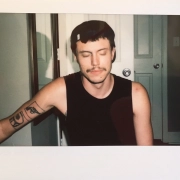
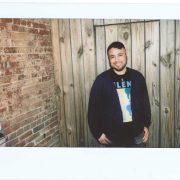
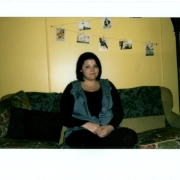
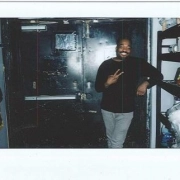
Jude Ciris is a 21-year-old transmasculine man living in Cincinnati, attending Northern Kentucky University, and working full time in supply chain management. Originally from Konya, Turkey, Jude survived conversion therapy as a teenager before his family sought asylum in the U.S. and he began his own transition in Cincinnati. In this interview from July 2026, he talks about that journey and the community that has held him together. He also shares about his partner Murry Foust, a transgender art student who went missing in early 2026 and was later found dead in Wilder, Kentucky.
Coming Out in Turkey
I was in Turkey until I was 18. Growing up, I was raised Muslim, and my parents were pretty strict, in terms of religion especially. Growing up as a girl was tough because of the gendered expectations you get, and I was the oldest, too. I had less freedom than I would’ve liked. I realized I was transgender when I was about 12. I do remember coming out. Unfortunately, that ended up getting me sent to conversion therapy around when I was 14.
It’s not great to be transgender in Turkey. But I’ll say it wasn’t the absolute worst, either. There wasn’t any moral panic about transgender people at the time. Most people just didn’t really know we existed. I went to boarding school, and when I told my classmates, the general reaction was just like, “Oh, okay. Really?” The kids my age hadn’t been taught to be bigoted yet.
My teachers were actually pretty supportive. I did almost get expelled once because the principal was worried about me being in the girls’ dorm, but conversion therapy ended up being the “slip” they gave me to stay in school.
I came out to my mom first, around 2016 or 2017, when I was 14. At the time, my dad was in jail. There’d been a coup in Turkey, and they started taking people without trial. He was one of them. So my mom told him I was in conversion therapy for depression, and he never really knew I was trans.
I ended up lying my way out of [conversion therapy] after about half a year. It was mostly talk therapy, and it was strange. It felt like nothing was happening and like a lot was happening all at once. You have this authority figure treating you like you’re ill, and it gets to you. I think conversion therapy, no matter the degree, takes a part of you with it, and it’s really hard to get that part back. What got to me most wasn’t even the therapist himself, but the stories he’d tell about his other patients. [He told me a story] about a young trans woman he prescribed testosterone to to “correct her imbalance.” He’d also tell me how much better I was doing than the others, and remember, I was lying my way through. I still think about those other patients sometimes. One was a transmasculine patient who turned to prayer because he wasn’t being “healed.” I feel lucky to have gotten out and moved here. It gives me a kind of survivor’s guilt, thinking about people who don’t have the same access to care.
Honestly, I think the therapist believed he was a lot smarter than he was. He’d ask things like, “Why do you feel like you’re a man? Is it because you don’t have a father?” And I’d just go, “Yeah, you got me. Can I go?” The dumbest part was this multiple-choice “gender” test he made me take. Afterward he told me, “Sometimes I do think transgender people are real. But I don’t think you are, because you care about your hair too much. That’s kind of a girl trait, isn’t it?”
When I left conversion therapy, I never brought up being trans with my family again. I recently told my mom I’m taking hormones. It didn’t go great, but she’s less hostile about it now than she was at 14. Back then she had more control over me. Now it’s more like, “Please don’t do this.” I don’t know where those conversations [will] go from here.
Moving to Cincinnati and Finding Community
My dad got asylum in the U.S., and we moved to Northern Kentucky as refugees through a family connection program the day after I turned 18. I had to chaperone my little sisters, then moved into Cincinnati on my own. After that, I was able to socially transition more, because there’s just a lot more here. There’s obviously a moral panic about transgender people in the U.S., but I also feel accepted.
In Turkey, at least while I was there, no one’s going to go out of their way to attack you. They just ignore you. Turkish doesn’t even have [gendered] pronouns, so that wasn’t really a concern. But people still just ignore you.
Coming to the U.S. was the first time I actually got to meet other trans people. I found support groups and get-togethers, made friends, and met people older than me who’d gone through similar things. They guided me through starting testosterone, getting through challenges, scheduling surgery.
Meeting Murry
I met Murry at a Trans Masc Cincy get-together. He approached me. I wasn’t that into him at first and thought he was kind of weird. But we started hanging out and skipped the “friends” period entirely. We went almost straight into dating.
This story exists because of readers like you. Give $5 a month to keep Queer Kentucky free.
We spent nearly every day together. I don’t think we were ever apart more than three days, except for school or work. He was my first boyfriend, and we had a lot in common. We’d talk about art, about things we wanted to do together. We were both hustlers, honestly, just doing our best to support each other through school. He’d stop by my apartment to walk my dog. We cooked for each other. When I had time, I’d bring him food at his studio and help with his projects. Just regular relationship stuff.
He asked me out on Christmas Day [2025]. We were walking around downtown Cincinnati, it was [so] empty. He said, “I’ve just been telling people you’re my boyfriend.” I said, “Okay, dude, no one even asks anyone out these days, I guess.” He said, “Well, do you want me to ask you?” So I said, “Well, if you’re already telling people…” We were both in pajama pants, sharing a joint, walking the dog. He got down on one knee in the middle of the wet, cold street, joint still in his mouth, and said, “Do you want to go out with me?” I just said, “Get up! Oh my god.” We actually talked about it properly once we got home. He was a really funny guy.
Another big memory was at his art show this past April [2026]. I remember he worked so hard for it and it was a really great time. I remember he was talking about what he was going to do next. He was talking about how happy he was that I could make it.
Another memory was in February [2026] when we had that big snow [storm]. We spent that weekend together and it was a really great time. I went out and bought a bunch of cheese and wine to have with us during that weekend. Yeah, that was a great time.
On Grief
Some of these memories almost don’t feel real. I’ll admit I didn’t know him very long. Maybe six months. Some days it feels like our relationship didn’t even happen. Other days it doesn’t feel like there was anything before I met him. It’s this strange thing, knowing someone for so little time and having them matter so much. It’s its own kind of dilemma. It’s also unique that we were both trans.
I never realized until this happened how weird people get when someone dies. We met through Trans Masc Cincy, which still meets monthly, and I try to keep going, but there’s sometimes a strange air [in community spaces], which I get. My closer friends are great about it. It’s almost harder to talk to new people now, because this huge thing happened to me and they don’t even know. I’ll be talking to someone new and thinking, “Man, this guy doesn’t even know.” Then I remind myself I don’t know what he’s going through either. Grief feels like something’s broken in you and everyone can tell. I started a new job about a month and a half after Murry died and kept thinking people could see that something was wrong [with me]. But they can’t. They don’t even know me. I also feel trauma-bonded to some friends now. In one sense it brought us closer, in another it doesn’t matter much, because Murry was my best friend.
Everyone knew Murry. Everyone was friends with Murry. He was the cool art student, and I was the geek boyfriend. I was the one dating a celebrity.
I got top surgery and had my butt done while Murry was still missing, because they were already scheduled. Just picture the most pathetic person you’ve ever seen, wrapped top to bottom like a shawarma. [After he was found], I had friends who took me in. I didn’t go back to my own apartment for over a month, because we’d basically been living together. Friends got me out of bed, took over caring for my dog, drove me to doctor’s appointments, handled my medicine, helped with my bandage changes, brought me food. When I was ready to go home, friends helped me sort through his things.
I’ve gotten into religion a little since he passed. I was an atheist for about ten years and didn’t believe in an afterlife, but once someone you love dies, you have to make up your mind about that. I’ve been going to an Episcopal church, and they’ve been really welcoming. They have a pastor with tattoos who has been helping me a lot. I hadn’t really talked to anyone before who I thought was both smart and religious. It’s new for me.
There’s no book telling you what to do when you’re 21 and your boyfriend kills himself. Every situation is so unique, and I won’t pretend I’ve gotten my footing back. It’s really just one day at a time. What’s helped is journaling. I write down things I know are true, because [during grief] your brain goes into overdrive and you can lose your grip on reality. So I’ll write: “it was his decision. We’re all going to die someday.” It sounds mundane, even cringe, but writing “I’m still alive, it’s not my fault” really does help. And give community a chance, even when it feels stupid or useless. Even when someone tells you to go take a walk and you’re like “shut up,” if you do it it does help.
Murry’s Art
Murry used to have me take pictures of all kinds of things to use as references for his paintings. My phone is still full of random reference photos. For one piece, he had me tie his wrists up and take a picture. He painted it and told me it was for me. His parents got it from his studio for me afterward. It’s really pretty.
If you or someone you know is struggling: call or text the 988 Suicide and Crisis Lifeline at 988. You can also reach Trans Lifeline at 877-565-8860, The Trevor Project at 1-866-488-7386 or by texting START to 678-678, or Crisis Text Line by texting HOME to 741741.
Keep reading
 Boone County KY Pride Festival Returns During LGBTQ+ History Month
 Smoke & Queers: How a Queer Burlesque Troupe Built a Stage for Everyone Else
 S.G. Goodman Brings Her Kentucky Tour Home This Week
 WAVE FoundationWAVE Foundation to Host 20th Annual ‘Make WAVEs’ Gala at Newport Aquarium
 APThe ‘Family Safety’ Pretense: Flock Cameras and Northern Kentucky Parks