KEEP. Subject. Additive. Pair with Beat: Health.

Tag Archive for: Subject: Mental health

A Flock license plate reader camera on a pole against a cloudy sunset sky, with power lines in the background.

For LGBTQ+ Kentuckians Already Wary of Police, Flock Cameras Raise New Surveillance Fears

It was a summer of reckoning for police departments across the Commonwealth – especially in Northern Kentucky – as public scrutiny has intensified in recent months over surveillance tech contracts, particularly those including automated license plate reader (ALPR) cameras and other artificial intelligence-powered equipment.

Resistance to police using the cameras, which can capture thousands of images an hour and document vehicles’ make, model, color and other identifying features, has spanned a broad demographic and political spectrum. But for marginalized folks – like Kentucky’s LGBTQ+ communities – the enhanced surveillance poses heightened risk.

Fort Thomas resident Amanda Ross told Queer Kentucky that she’s been “frustrated” to learn how prevalent ALPR cameras have become across Northern Kentucky, the region she’s called home for more than 15 years after growing up in a more rural part of the state.

Like others who have spoken at dozens of public hearings across the area over the last four months, Ross thinks the increased surveillance tactics aren’t warranted in her community where she and her neighbors already feel safe.

“I think it places undue suspicion, and also, what is the need, other than to just surveil?” she asked.

As Queer Kentucky has previously reported, Fort Thomas has historically ranked among Kentucky’s safest cities, according to federal crime data.

Why LGBTQ+ Kentuckians Are Concerned

But as a queer woman, Ross also worries how the cameras could collect data not just on her driving and her location, but also on her personhood, her identity and her beliefs, she said – especially in a time when expressions of queerness and queer solidarity are under intensifying scrutiny.

The Trump administration has included “extremism on migration, race, and gender” and “hostility towards those who hold traditional American views on family” in a list of beliefs it now associates with domestic terrorism and political violence.

“I love bumper stickers. I definitely have a lot of bumper stickers on my car,” she said. “I have the [Human Rights Campaign] ‘Equality’ bumper sticker, and several other, you know, more political bumper stickers. I also have rainbow and LGBTQ+-supporting bumper stickers, and these license plate readers are absolutely going to pick up on that, too.”

Ross worries that ALPR data could include images of the stickers on her car, which could add to an expanding glut of personal information collected on individuals through numerous forms of surveillance today, including online activity.

“I think that they can track that with your activity in life and online,” she said. “I go to the Pride festivals every year. I go to protests of various kinds. I am outspoken online for my beliefs. And I think that, all that combined, and plus having a more [identifiable] vehicle, makes it more of a concern … It’s another drop in the bucket, and it all connects.”

Ross added, “But also, I think that having bumper stickers on your car, it falls under freedom of speech, and I think it’s my right to express myself that way.”

Broadly, bumper stickers fall under protected free speech, with narrow and qualified exceptions for things like obscenity or hate speech, according to First Amendment legal expert David L. Hudson Jr.

But when something as mundane as a rainbow sticker on your rear window could become a surveillance data point, it could also be making a strained relationship between police and the community even more tense.

Queer People and Histories With Authorities

In Covington, where Ross also spends a lot of her free time, police already have a documented trust problem. A clash last summer between (what became close to the department’s full complement of) officers and a group of protesters marching on the Roebling Suspension Bridge was just the latest in a history of community tension, particularly with the local queer community. That incident has resulted in at least one lawsuit against two officers and the city.

It’s part of a broader sense that Ross described: “I see (Covington) police stopping people on the sidewalks or, you know, talking to unhoused people a lot more, and it seems that that’s what they spend their time doing, as opposed to, I don’t know, serving the community in a meaningful way.”

The strain in Covington is particularly palpable with the city’s queer communities. As Queer Kentucky reported earlier this year, the Covington Police Department’s LGBTQ+ liaison, Doug Ullrich, has been accused of misusing his authority and using unnecessary force in several complaints. That came to light in early 2025 after violent dash-cam footage from a traffic stop involving an LGBTQ+ Black man emerged from one of those complaints.

Covington police confirmed to Queer Kentucky that Ullrich is not among the department’s officers trained or permitted to use its cruiser-mounted ALPR cameras or access their data. The city’s board of commissioners earlier this month voted not to include cameras in its new police contract with Axon Enterprise, one of numerous tech companies making headlines this year for their partnerships with police.

When a person who is explicitly assigned to build trust with a marginalized community ends up eroding that trust instead, the mistrust goes systemic, and folks who need help from police might end up not asking, advocates and experts say.

“This is called ‘minority stress theory’ and is particularly relevant to police interactions,” said Dr. Chelsea Esmeier, a clinical psychologist in Northern Kentucky who specializes in working with LGBTQ+ patients.

Minority stress theory argues that health inequalities in vulnerable groups can stem from social stress, like the discrimination they face.

“LGBTQ+ individuals are likely to have a baseline of low trust in police and be reluctant to seek help from them,” Esmeier said. “Documented incidents that bring safety into question aren’t going to help this problem, nor is a lack of transparency/accountability from the department in response.”

With this as their baseline, even the slightest potential for increased surveillance may become a major concern for queer folks encountering law enforcement.

While public outcry has been broad and largely abstract, overall queer communities are at elevated, material risk, according to the Bureau of Justice Statistics, for the specific types of abuses — targeted stalking or violence, particularly involving current or former partners — that are dominating these early cases.

In August, police in the south-Louisville suburb of Shively accused an officer of using the ALPR cameras to perform more than 2,000 searches on an ex-romantic partner, Louisville Public Media reported. News reports and researchers from across the country have tracked as many as 170 cases of ALPR misuse, with as many as 70 (41%) involving some sort of targeted misconduct.

Meanwhile, headlines announcing the arrest in Shively came as mayors and police chiefs across Kentucky canceled or paused their ALPR camera contracts.

They’re headlines that have Kentuckians like Ross worried.

“We’ve already seen so many times that the cameras aren’t being really used to solve crimes; they’re being used to track women who’ve had abortions and follow them out of state,” Ross said. “And I don’t even know how many cops and police officers have used it to track their spouses, partners, exes, and literally stalk them.”

Previous reporting by BJ Bethel contributed to this story.

The blue Roebling Suspension Bridge stretches across the Ohio River from the Covington, Kentucky, riverfront toward the Cincinnati skyline on a sunny day.

Northern Kentucky’s LGBTQ+ Paradox: Legal Protections at Home Contend with Restrictions at the Statehouse(s)

Queer Kentucky’s survey data highlights a region where residents may be physically safer, yet still carry the state’s heaviest mental burden.

LGBTQ+ residents of Northern Kentucky are, on the surface, doing well. They aren’t leaving the state at higher rates, aren’t reporting more violence than their neighbors, and are finding health care providers at rates higher than the state average. By nearly every physical measure, Northern Kentucky seems like it’s doing just fine.

But when you zoom in, Northern Kentucky’s LGBTQ+ residents are experiencing an increased mental health burden nearly 9 percentage points higher than the statewide average. According to the 2025 Queer Kentucky Survey, 43.2% of LGBTQ+ residents in Northern Kentucky report experiencing very negative mental health, reporting higher psychological burdens than their Louisville or Lexington counterparts.

Dig deeper into the data, and the impact of public policy comes into focus: 75% of Northern Kentucky residents say their mental health has been negatively affected by anti-LGBTQ+ policies – 5 percentage points higher than the statewide average – and 58.3% say they’ve lost trust in their elected officials altogether.

These numbers make it worth asking why residents are staying at all.

It starts with local government. Across Northern Kentucky, city halls have built some of the deepest LGBTQ+ infrastructure in the state, one ordinance at a time.

Kentucky’s “fairness ordinances” – local laws banning discrimination based on sexual orientation and gender identity – are where this shows up most. About 1 in 4 cities in Northern Kentucky’s three core counties – Boone, Kenton and Campbell – now has a fairness ordinance on the books, one of the densest concentrations anywhere in the state. Covington passed the region’s first in 2003, followed by Dayton, Bellevue and Highland Heights in 2019, Fort Thomas, Cold Spring and Newport in 2020, Crescent Springs and Fort Mitchell in 2021, and Elsmere in 2022.

Beyond anti-discrimination laws, Covington was also the first city in Kentucky to ban conversion therapy for minors (2020) before Governor Andy Beshear signed an executive order banning it statewide in 2024. Covington also scored a 94 out of 100 on the Human Rights Campaign’s 2025 Municipal Equality Index – one of the highest scores in the state. Local advocacy groups Northern Kentucky Pride and Northern Kentucky Fairness were both active in getting many of those ordinances passed.

In other words, queer residents and allies in Northern Kentucky have worked hard to build real community and real protection for their families and neighbors.

So if Northern Kentucky’s LGBTQ+ residents feel more physically safe and have built a strong community, what’s driving the region’s mental health numbers higher than anywhere else in the state? No single survey question can answer that, but a look at the wider anti-LGBTQ+ policy landscape – with 75% of Northern Kentucky residents’ mental health impacted by it – suggests a few contributing threads.

In 2023, the legislature passed Senate Bill 150, a law banning gender-transition care for minors, mandating school bathroom policy by sex assigned at birth, and barring teachers from discussing sexual orientation or gender identity in the classroom.

The ACLU called it “one of the worst anti-trans laws in the nation,” and, when the bill passed, Northern Kentucky school districts complied quickly.

This law wasn’t just handed down from Frankfort; it was Northern Kentucky-grown. State Sen. John Schickel, representing Boone County, was one of 13 senators who sponsored the bill, alongside two other Northern Kentucky senators, Shelley Funke Frommeyer and Gex Williams. (The bill’s lead sponsor, State Sen. Max Wise, represents Campbellsville, in south-central Kentucky.)

Unlike Louisville or Lexington, where anti-LGBTQ+ legislation largely arrives from rural and exurban districts, the architecture of SB 150 was built partly by Northern Kentucky’s own representatives. In cases like SB 150, local queer residents aren’t watching some distant lawmaker author these bills. Instead, they’re coming from senators in their own backyard.

So while physical violence against LGBTQ+ folks sits at 9.1% in Northern Kentucky – 6.1 percentage points below the state average – there is still a looming anxiety that their safety could be at risk as they watch these policies come in.

Amy Clark, LPCC and Director of Student Counseling Services at Northern Kentucky University, shares, “At the local university counseling center, more than 33% of the overall clientele are LGBTQ+. I have witnessed an increase in anxiety, uncertainty and guardedness. A lot of times it presents as anger – and rightly so – but if you dig below the surface, there’s a genuine feeling of intense fear and sadness.”

And then, just across the Ohio River sits a whole other state with a whole other set of policies.

Before 2023, Northern Kentucky families who wanted gender-affirming care for their kids could drive just minutes into Cincinnati to Children’s Hospital, which had been among the highest-volume providers of gender-affirming care in the country. Then, in 2024, Ohio banned gender-affirming care for minors, just as Kentucky had.

Northern Kentucky families didn’t lose access to this type of care all at once; they had to lose their nearest options one at a time. Louisville’s cross-border option, Indiana, restricted care even earlier, while Lexington never had a comparable one at all.

Northern Kentucky may be the only Kentucky metro where residents watched two specific, physically close options get taken away from them, one after the other.

The region also sits inside Cincinnati’s media market, meaning residents are more likely to keep a pulse on two state legislatures’ worth of anti-LGBTQ+ fights instead of just one. That’s two states’ worth of harmful policy instead of one, likely creating twice the psychological weight to carry.

Ben London, a gay resident living in Northern Kentucky, told Queer Kentucky, “We have been hit with so much news about so many bills in so many states on so many issues that I’m overwhelmed. I am not transgender, but I have transgender friends. [My friend] – probably turned 18 a few years ago and transitioned before that – is a lovely, wonderful person. It makes me angry that he couldn’t get that gender-affirming care today; that’s ridiculous to me.”

What’s happening in Northern Kentucky is a paradox built by two governments at once. It’s a patchwork of city halls that took steps and decided one ordinance at a time to protect their queer neighbors. And yet, it is a region that sits underneath two state capitols that keep deciding otherwise.

That volume is about to increase. With the midterms approaching, both statehouses and the media covering them are likely to get even louder. Northern Kentucky’s LGBTQ+ residents have a say in what happens next, but they shouldn’t have to carry all of it alone.

“[LGBTQ+] individuals are tired of fighting this battle,” Clark said. “Despite the overwhelming discouragement, [they] are still trying to take care of themselves.”

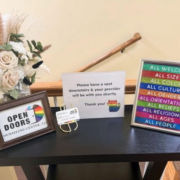
Mental health care for trans Kentuckians: Open Doors Counseling Center's entry table with a rainbow "All Welcome" board.

Trans Kentuckians Are Staying Home. The Data Says Community Is What Helps.

Mental health trends in transgender and nonbinary Kentuckians have displayed shifts during recent policy debates.

A 2025 Queer Kentucky survey showed that 34.5% of respondents reported that these recent policy debates have very negatively impacted their mental health.

Some gender expansive Kentuckians told Queer Kentucky that policy debates have led to them feeling like they are at the focal point of society right now, making the simple act of going into public feel daunting.
Hayes Farris, a nonbinary Kentuckian, said when they step out in public, it feels like transgender people are what sit at the forefront of people’s minds.

Farris said part of it is not knowing what people are thinking.

“Is that person looking at me because they are seething inside and hate that I exist? Are they curious? That’s just a heavy mental load to carry around,” they said.

Delgonna Cole, a transgender woman, said she is constantly thinking about what might make her easy to “clock” as transgender in public.

“I’ve had people come up to me at Kroger saying, ‘Hey, I have a question. Are you trans?’” she said. In reference to policy debates about the rights of transgender people, Cole said, “If it wasn’t pushed so intensely, I think I wouldn’t be so constantly afraid of going outside.”

Even healthcare providers for transgender and nonbinary Kentuckians reported seeing changes or responses from their patients reflecting these negative effects.

Dr. Keisa Fallin-Bennett’s practice has included transgender people for around 10 years, and for most of her career, she has been providing her services in Kentucky.

Fallin-Bennett said the impact varies from person to person, but she has heard from several patients that the impacts of recent policy debates have been devastating.

She said there has been a lot of policy debate prior to 2023, but that is where it all really took off.

“People start in a difficult state because of the world and having to accept that the institutions are kind of actively working against them,” Fallin-Bennett said.

Policy changes have led to decreased federal funding for her place of employment, and these changes have altered what is allowed to be provided to transgender patients, according to Fallin-Bennett.

According to the survey, when transgender women are denied healthcare in any aspect, they are more likely to avoid all healthcare. Some of this avoidance may be due to shaken trust in the healthcare system.

Fallin-Bennett discussed the issues that a 2023 Kentucky law stated that neither hormones nor surgery could be provided to transgender patients under 18, but an executive order to cut federal funding for institutions that treat individuals under 19 was signed in 2025 under President Donald Trump.

Under the threat of losing federal funding, Fallin-Bennett’s practice could no longer treat people under 19 years old, and people under that age limit who were already on hormones had to be weaned off.

“Frustrations are really building, and it really erodes the trust that people have in us,” Fallin-Bennett said.

For Cole, after struggling to get endocrinologists to properly prescribe her gender-affirming hormones, she took matters into her own hands.

“They wanted to stop my HRT dose because it got too high… but the levels were lower than a cis teenager’s,” she said. “So I just stopped seeing them, and I started doing DIY.”

Cole said she buys everything online, did extensive research, and measures her blood levels all on her own.

Transgender women report provider refusal at rates of 38.5%, far above the 12.6% statewide average for queer people, according to the QKY survey.

Another factor that gender expansive Kentuckians must think about when it comes to healthcare is finding understanding in their providers.

“I don’t think it’s ever been a question of safety, but more comfortability. I haven’t had any issues where I have felt unsafe, but even then, my therapist doesn’t know what questions to ask,” Jordan Gaither, a nonbinary Kentuckian, said.

Transgender and nonbinary Kentuckians are finding it difficult to cope with the world as it is right now, whether they are coping with self-medication, isolation, therapy or something else.

Gaither said they have had to figure out what they need on their own and come to their therapist with it, rather than being provided the necessary tools to cope.

This points to a potential lack of LGBTQ+ education for mental healthcare providers in Kentucky, but organizations like Open Doors Counseling Center are centered around providing care to queer people and have a queer staff.

Tanya Stephens, who uses no pronouns, only a name, says Open Doors is a great place for finding care as a queer person in Kentucky.

“They do a lot of good things to try to help. I did find a safe feeling place there,” Stephens, a local nurse practitioner, said.

Open Doors Counseling Center is part of a nonprofit organization called Caritas Care Solutions. The center provides identity counseling, trauma and grief counseling, financial therapy and more, and focuses on creating a safe space for LGBTQ+ people.

Finding mental health resources can be difficult in Kentucky. Eve “Sylvie” Derrington, who is nonbinary, said monetary restrictions can be part of the struggle.

“If there were more programs where you pay what you can based on your income, especially oriented to specific communities, that kind of thing would be helpful,” they said.

Derrington said coping is complicated, but it can help: “Trying to find community is a big coping mechanism. We’re not very good at it, but when we do have it, it’s beneficial.”

The Queer Kentucky survey showed that those with a lack of community reported significantly more severe outcomes in every policy impact measure.

Fallin-Bennett echoes that finding. She said that while it might seem easier to isolate right now, community is a crucial coping skill for queer people.

“People have been hit by this issue, and it makes everybody want to stay home. I think it’s the exact time that people need to be gathering with other people as much as their mental health allows,” she said. “We need to be outside of our houses for our mental health and have interaction with other humans… hopefully humans that are in the same boat.”

For Farris, policy debates have had an impact on them and their friends, but the conflict has helped them pull each other closer.

“I think it’s almost made us closer, and we know that community is everything right now,” they said. “I wish more people knew that it’s not a burden to lean on people you love.”

If you or someone you know is in crisis, the 988 Suicide and Crisis Lifeline is available 24/7 by call or text at 988, and restored its specialized “Press 3” service for LGBTQ+ youth on September 30, 2026, after a 14-month shutdown. Trans Lifeline’s peer support hotline is at (877) 565-8860, staffed Monday through Friday, 1 p.m. to 9 p.m. Eastern. The Trevor Project’s counselors are available 24/7 for LGBTQ+ young people at 1-866-488-7386, or by texting START to 678-678.

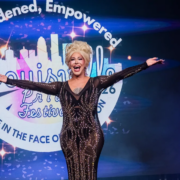
A drag performer in a sequined black gown raises their arms on stage in front of the 2026 Louisville Pride Festival sign reading "Emboldened, Empowered."

Louisville Pride Put Mental Health Front and Center. The Need Doesn’t End When the Tents Come Down.

Queens took the stage. Artists sold their colorful wares. Vendors of all kinds passed out pamphlets. Louisville Pride returned this year, with queers from all walks of life bustling through a blocked-off section of Bardstown Road on Saturday, September 12.

Louisville Pride Foundation, which also runs the Louisville Pride Center in Old Louisville, organized the event.

National acts performed near tables of local organizations ranging from healthcare organizations, such as Planned Parenthood, to political organizations.
Among those who participated were organizations helping LGBTQ+ people with their mental health or pointing them in the direction of mental health services.

According to the 2025 Queer Kentucky Community Health Survey, roughly 7 in 10 LGBTQ+ Kentuckians have had negative experiences with their mental health due to the current political environment, such as debates around LGBTQ+ rights.

Of queer Louisvillians who responded to the survey, about 32% attributed thoughts of suicide to policy debates around LGBTQ+ people. In fact, the number is 3.9% above the state average. Because of these debates, 8.1% of respondents said they left Kentucky because of it. The survey also found that trans women reported higher rates of suicidal ideation.

Louisville has more queer services than most of Kentucky, but Queer Kentucky’s data suggests they may not be enough because there are also high levels of health risks in the community.

Mandala House Provides Mental Healthcare to Queer Louisville

One featured booth at Louisville Pride was Mandala House, which provides mental healthcare to the community of Louisville. Mandala House has several therapy groups that address the psychological health of minority groups and their various intersectional needs.

“It’s a special place in our hearts, the work we get to do with queer people,” said Mandala House therapist Rachel Archer.

Archer said Mandala House currently runs a variety of therapy groups, such as an adult gender-journey group for individuals 18+ who are questioning their gender or who identify as trans or gender non-conforming. The space provides communal support for one another.

Archer noted that she couldn’t say that the lack of queer-specific spaces as a barrier to queer healthcare’s accessibility was unique to Louisville alone.

Mandala House also provides support letters for trans individuals seeking gender-affirming care, which is often required by providers and insurance companies. For many queer Kentuckians, finding a provider for their healthcare can be a challenge. According to the 2025 Queer Kentucky Community Health Survey, while Louisville has better healthcare access than most of the state for LGBTQ+ Kentuckians, provider refusal still happens.

Kentucky Psychological Foundation: Evidence-Based Connections

Among the vendors, the Kentucky Psychological Foundation was doing outreach. The organization focuses on bringing free mental health resources across Kentucky. It also supports researchers and graduate students with funds to conduct research with marginalized communities.

“We know there is a lot of specifically psychological information that is based in science and research…out there, but it’s not always easily accessible in the community,” board member Dr. Courtney Keim told Queer Kentucky.

“What we really focus on is educating the public about the science in ways that can better the lives of Kentuckians,” Keim said.

The Kentucky Psychological Foundation doesn’t provide mental healthcare, but its sister organization, the Kentucky Psychological Association, is the state professional association for psychologists, whose members provide care.

The Kentucky Psychological Foundation’s site provides a link to a database of members of the Kentucky Psychological Association that are using evidence-based research and follow the American Psychological Association’s guidelines and ethics. This can help address the needs of marginalized communities to find competent care.

“Our foundation is going to provide things based in evidence and research. We are very much against therapies that are not evidence-based. So for example, conversion therapy is not evidence-based. We don’t support that. We only provide evidence-based and culturally competent therapists that understand the marginalized communities they are serving,” said Keim.

So-called “conversion therapy” is a discredited practice and is referred to by the American Psychological Association as attempting “to change a person’s sexual orientation, gender identity, or related behaviors” with practices that “stem from the scientifically discredited belief that being LGBTQ+ is a mental illness that should be cured.” The organization says it causes a significant risk of self-harm, depression, and substance use.

The topic of ‘conversion therapy’ has been a battleground issue statewide between Democratic Governor Andy Beshear and the Republican dominated state legislature when Beshear tried to restrict the harmful practice, but Republicans overturned his attempt.

“A lot of times it is because people who are getting that ‘therapy’ don’t feel that person providing that therapy truly understands them,” said Keim. “One of the things that has been important in psychology is those cultural competencies and making sure those folks who are marginalized find someone who truly sees them.”

At the end of the day, the booths came down. The tents emptied. As the night wound down, a queen took the main stage to perform Dolly Parton’s “I Will Always Love You,” and Louisville Pride ended the way it began, with queens and with community.

If you or someone you know is in crisis, The Trevor Project’s counselors are available 24/7 at 1-866-488-7386, by texting START to 678-678, or by chat at thetrevorproject.org/get-help.

If you or someone you know is struggling, call or text the 988 Suicide & Crisis Lifeline at 988. LGBTQ+ young people can press 3 to reach counselors trained in LGBTQ+ care, an option that returned on Sept. 30, 2026 after it was cut in July 2025. The Trevor Project also offers 24/7 support at 1-866-488-7386 or by texting START to 678-678.

Seymour Hiney performs at a Smoke & Queers queer burlesque show in a sequined outfit with red fringe, arms raised on stage.

Smoke & Queers: How a Queer Burlesque Troupe Built a Stage for Everyone Else

There is a performance troupe where the rules are simple: You have to be queer. You have to be courageous, or at least act like you are. Why will you need that courage? Well, to take your clothes off, of course. Oh, and you can’t use any real flames in performances – purely for safety purposes. This stage is called Smoke & Queers, a queer burlesque performance troupe that has dazzled audiences in Cincinnati and Northern Kentucky since 2019.

The tease-filled concept numbers, the rhinestone costumes, the steamy reveals, and the reclaimed bodies are a result of those rules. Smoke & Queers, which showcases burlesque, drag, and draglesque, is preparing for the Rhinestone Rodeo on October 3rd at Second Sight Spirits in Ludlow, which is part of this year’s Bourbon & Belonging Kentucky’s Queer Bourbon Week. We sat down with four of the troupe’s producers to talk about group origins, what the stage gives back to them, and why an art form built on undressing has always had far more to say than anything about bodies, alone.

A Short History of Burlesque, and Why Queerness Was Always Underneath It

To understand what Smoke & Queers is doing, it helps to understand the history of burlesque. That history, however, is less agreed upon than many would think.

The simplified version taught in many dance history classes points to Aristophanes, the ancient Greek playwright, as the father of satire and comedy, which ties directly into the word burlesque’s meaning: a literary or dramatic work that mocks a serious subject through comic imitation, or a style of variety show entertainment featuring comedy, dance, and striptease. His shows poked fun at serious matters, in the way that today’s burlesque performances can act as political statements. Burlesque historian and performer Bella Sin, who has spent years researching and rewriting the way this art form’s history gets told, pushed back on that origin during a lecture at the Ohio State Library Archives in May of 2025.

Instead, she traced its roots further but also wider, to ritual dance in ancient Sumer, to fertility rites among the Mexica people of Mexico, to Japanese legend involving a goddess who strips and dances to tease a deity out of hiding, and to Vaudeville, the Parisian variety show tradition that exploded across the United States and the rest of the Americas by the 1800s.

Lydia Thompson is frequently credited as the woman who brought burlesque to the United States when she toured with her troupe British Blondes in the 1860s, scandalizing audiences by wearing flesh colored tights and showing bare ankles. (Those audiences would never survive a Smoke & Queers show.) But burlesque already existed in the U.S. before she arrived. What Thompson actually did was confront the controversy around her show unapologetically, which is arguably what has kept burlesque relevant today.

Queerness runs through this same history rather than sitting beside it. Drag and burlesque have been intertwined for as long as either has existed as a formal tradition, sharing performers, stages, and aesthetics. Hedy Jo Star, a trans burlesque performer and author who was publicly open about her transition in the 1950s, performed for years in the traveling Jewel Box Revue. She later became a costume designer whose work helped define the rhinestone-heavy look burlesque and drag are known for today. Sin said queer nightlife scenes in Mexico, France, and Germany overlapped heavily with burlesque circuits, and plenty of performers throughout the twentieth century were queer even when it was not safe to say so publicly.

By the 1940s, moral panic and anti-obscenity laws had pushed burlesque out of the mainstream and into the smaller, underground and fringe corners of American entertainment. The revival that followed in the 90s and early 2000s is usually called neo-burlesque, and it is the direct ancestor of the scene Smoke & Queers belongs to. This movement brought the tease and the theatrics back into the light, while also opening the door for a much wider range of people to define what the art form could be: performers of every size, race, gender identity, and sexuality. As burlesque researcher Alyssa Stover of Ohio State University’s Dance Department put it, at its core, it is about more than a striptease. It is about curating a safe space and bringing together people who have been cast down and cast out elsewhere in society.

The Performers

Salem Le Fay (she/her) describes herself as witchy, unbothered, and incredibly seductive. She has been a performer her whole life in one form or another, and has been building her burlesque persona for almost four years now. She also genderbends into The Baron, a drag king alter ego with his own pronouns, he/they, and his own vibe, proof that Salem’s magic transcends genres.

The ethereal Andro Hathaway (they/them) is the one with vintage taste. They started performing burlesque in 2022, close to four and a half years ago now, though like the rest of the troupe, they have been performing in some form their entire life. Andro’s burlesque is less about broadcasting and more about processing, with lots of sparkles and an old-school aesthetic.

Long-time performance artist Seymour Hiney (he/they) is camp personified and, by a wide margin, the most tenured performer in the room. Seymour has been performing in some drag or burlesque-adjacent capacity since 2010, sixteen years ago now, which started, fittingly, with Rocky Horror Picture Show shadow casts before becoming a drag king. A hybrid of both drag and burlesque, called ‘draglesque,’ followed, and every once in a while, they will pivot to a neo-burlesque number under the stage name The Groke. The continued inspiration stems from a lifetime of dance and musical performance, stretching back to childhood.

Dolly Partner (she/they) is feral in the best possible way, feisty, and proud of her Kentuckian roots. She has her own drag king alter ego too, Donny Partner. Dolly grew up in Central Kentucky, where she says she simply was not exposed to the different shapes queerness can take, and she is candid that finding burlesque became an education in exactly that, opening doors that growing up in a smaller, more conservative part of the state had kept closed. She had tried more traditional performance routes first, theater, dance, the usual paths, and none of it stuck the way she wanted it to. Burlesque is where she shines.

The Troupe

Smoke & Queers was started in 2019 as an amateur troupe by performers Christina Coobatis and Clarity Amrein in the Tri-State area who wanted to shake up the local burlesque scene, which was dominated by traditional ideals. They realized there was not a space built for them. So, they built one.

“There was not a group out here that was for [queer folks] to perform in,” Dolly said. This wasn’t an accusation against what already existed, just a recognition that it was not enough, Dolly said.

That space now features drag kings, burlesque, and draglesque, and flow artists under one expressive and colorful roof.

Six years later, the troupe’s performers list is 300 people deep with artists of all genres. The troupe puts on two to five shows a month, anchored by recurring nights like Amore After Dark at Second Story in Covington, and Kings and Things at Tokyo Kitty in Cincinnati, the city’s only regular drag king night.

Seymour holds onto that fact with real pride.

“Drag kings do not get the stage time or attention drag queens do. So it’s been really important to me to continue to have that space for drag kings and drag things … I want to make space for gender expansiveness,” Seymour said.

The troupe also creates opportunities for newcomers. Producers and seasoned performers host student workshops, classes, and showcases to encourage more queer artists to take up space in the community. Students learn the art of the tease, how to create intentional reveals, and the way a good number is built.

“Mentorship is my favorite part of all of this,” Seymour said.

For Salem, it is passing along all that burlesque has given her, including knowing she inspired others to enter the art form.

“I want more of that, and to help people see what they can do,” Salem said. “It is for everyone.”

As far as the acts, you will see a little bit of everything and anything at a Smoke & Queers show. Sometimes, a showgirl will start on stage in a Nemo-inspired onesie and strip down to a belt filled with bedazzled fish. You may also see a drag queen lip-syncing to a new pop song while collecting singles from audience members, bringing attendees directly into the experience. You may or may not see a drag king perform to a classic country song, using bales of hay as props. Also, you can get weird. In fact, it’s even encouraged.

“The weirder, the better, in my opinion,” Dolly said.

Self-Discovery and Radical Self-Expression

Ask any of the four producers what burlesque actually does for them, and the answers stop being about just the performance.

For Salem, the stage is where she can show up fully.

“People always assume I’m just like this straight cis person,” she said, and burlesque, along with the persona she built to counter that assumption, has helped her internalize her queerness and be proud of it. “I love performing for anyone who is not a man.”

Salem says she never planned on any of this, and said, “hell, yeah”, when asked if this art form made her more confident.

“I never expected to be in this position whatsoever, and it is so awesome. I don’t know what my life would be without it,” she said.

Andro’s numbers have acted as a form of artistic therapy and personal exploration.

“Andro is very centered in exploring my sapphicness and my gender flexibility. It’s kind of more internal for me. So I’m trying to express… things that I’m working through, and translating that to the stage,” they explained.

Andro grew up Catholic, with a body they were taught could only ever belong to a future husband, never to themself. Burlesque became the undoing of that, they said, and a reclaiming of their body, for themselves, and passing that lesson onto others as a show producer.

“[With] newer performers, you see them also getting that same kind of thing out of it. I think that’s really beautiful to see people unlearn these toxic things that are thrust upon them in purity culture,” Andro said.

Dolly’s performances are filled with symbolism and nods to her Kentuckian roots. Her Rhapsody in Bluegrass piece, the one she will perform at the upcoming Rhinestone Rodeo, digs into the gap between expectation and reality. Her costume is styled in a more traditional burlesque fashion, featuring a stunning blue corset and fun fringe pieces. What folks see, however, is more feral and unhinged, including a cigarette stuffed in her rhinestone bra.

“It’s a gap that can be read through queerness, or womanhood with what you expect, and what you get,” she said, honoring the complexities of the queer experience.

Underneath the concept work is also something more personal. Dolly grew up with an eating disorder, and finding a release into being comfortable in her body in all of its stages has been, in her words, “transformational.”

“Nudity is just like, a beautiful thing. So why not explore it both in a sexy and a humorous way? Like being funny is sexy,” she said. It’s also helped her to be more unapologetic. “Recently, I gained a lot of weight, but I’m still out here showing my body because every body is sexy,” she said.

Seymour spoke about the importance of representing different types of people, and views performing as a channel to celebrate the “diversity of bodies, all of them being equally praised and applauded.”

As a person of color, too, this added layer speaks to a greater mission of reclaiming a body that is often overlooked within Eurocentric beauty standards.

“As a brown person in particular, it’s a way to sort of decolonize my body,” Seymour said.

The performers all agreed that Smoke & Queers is culturally important in 2026, as attempts to pass anti-drag laws in the United States continue in various states, including Ohio and Kentucky.

“Any sort of thing celebrating a [queer] body in a sexual way, or even just in a neutral way, is sort of radical in today’s atmosphere. The added wrinkle of us being a queer burlesque and drag troupe and making a space for bodies that are currently trying to be legislated out of existence is extra important,” Seymour said.

As for the whole, taking-off-the-clothes-thing, Seymour said, you do get used to it.

“I’ve been doing this for so long now, I don’t even think about the body element of it and the nudity. I just think, ‘Oh, that was a really cool way to tease. Oh, that was a really cool reveal’.”

The Rhinestone Rodeo will feature a Western-themed revue of variety acts, and Kentucky bourbon culture woven throughout. In fact, the event is taking place at Second Sight Spirits in Ludlow, which is one of the stops on the official Kentucky Bourbon Trail. Expect great drinks, creative numbers and the colorful chaos the troupe is known for on October 3rd at 9pm.

Grab tickets here.

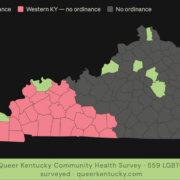
A county map of Kentucky showing which communities have local LGBTQ+ fairness ordinances, with western Kentucky counties highlighted in pink to show the region's lack of protections.

Western Kentucky’s LGBTQ+ Crisis: The Most Harm, the Least Protection Queer Kentucky's survey data reveals a region where nearly every measure of harm is at its worst, and state law still leaves trans Kentuckians out entirely.

LGBTQ+ people living in western Kentucky are experiencing a substantially more dangerous environment than anywhere else in the state, reporting being physically attacked at nearly twice the statewide rate. For trans folks, it goes even further: Kentucky’s hate crime statute has no name for what happens to them when they are attacked. A trans Kentuckian can be assaulted for being trans, and the state may prosecute the harm, but not the reason it was done.

Across the Queer Kentucky survey, western Kentucky ranks first or near first on nearly every measure of harm: LGBTQ+ residents with no health care provider, never tested for HIV, refused care by a provider, physical assault, suicidal ideation, drug use, smoking, feeling unsafe at home and deciding to move away. This is a region where nearly every measure of harm, access and community is at risk. And state policy and protections have failed them time and time again.
29.2% of queer residents in western Kentucky reported at least one instance of physical assault, which they attributed to the overarching anti-LGBTQ+ climate in the state. Overall, the statewide rate of physical assault stands at 15.2%.

54.5% of queer individuals report feeling physically unsafe at home, and 52.2% report feeling unsafe in public. Both are the highest of any region.

But it doesn’t stop at physical assault. In most of western Kentucky, a person who discriminates against and refuses an LGBTQ+ person a job, an apartment or service at a counter faces no legal consequences in doing so.

Across all of Kentucky, 24 communities have local Fairness Ordinances — including western Kentucky’s Paducah in 2018 and Henderson in 2019 — but that’s two of the 24, and they sit 130 miles apart. In between and beyond them, Owensboro, Bowling Green, Hopkinsville, Madisonville, Murray and Mayfield have no local fairness ordinances. On a map of who Kentucky has agreed to protect, most of western Kentucky isn’t on it.

What about larger state protections in Kentucky? It turns out that the state of Kentucky does have a hate crime law that protects sexual orientation. But it’s still reliant on individual judgment, and it still doesn’t protect trans people.

KRS 532.031, passed in 1998, applies when someone commits offenses because of a person’s race, color, religion, sexual orientation or national origin. In 2017, the legislature amended the statute to add a category, extending it to victims targeted for their actual or perceived employment as a peace officer, firefighter or emergency medical services worker.

Gender identity is not on the list.

Nine years ago, when the state legislature reopened the statute to add police and first responders, it still left trans Kentuckians out. For example, if a gay man is assaulted in Paducah, it can legally qualify as a hate crime. But if a trans woman is assaulted on the same block, both the state and law enforcement officers can choose to do nothing. The statute, by not including gender identity, allows law enforcement to turn a blind eye and delegitimize incidents against trans people.

Even within the bounds of discrimination against sexual orientation, this hate crime law does “protect,” the statute has no teeth and the law still does far less than what it implies. It might look and sound substantial, but functions as a performative exercise in the court system. As a result, there are many opportunities to create distance between the assault and any consequence for it. For instance, a judge decides at sentencing whether bias was a primary factor. A finding of bias permits denying probation instead of requiring it. The parole board may delay or deny parole.

It’s subject to discretion and personal biases that could creep in all the way down.

The laws already on the books are only part of it. Kentucky’s 2026 General Assembly may not have passed any anti-LGBTQ+ bills, but the climate in western Kentucky still hasn’t improved.

A bill doesn’t have to pass to embolden violence in its communities. Another factor behind why the climate in Western Kentucky still hasn’t improved. A bill only has to be filed, assigned, debated and covered on the local news, which are all separate moments of exposing a Kentuckian to hear whether or not their queer neighbor has the same rights as they do.

For example, Senate Bill 72 would have let health care providers refuse any treatment that violated their conscience. House Bill 468, pitched as a routine civil rights update, would have stripped the enforcement power from the Kentucky Commission on Human Rights and the 22 local commissions that actually enforce fairness ordinances. Both cleared their chamber of origin before stalling.

If House Bill 468 had passed, it would have taken away the only fairness ordinance protections two cities in Western Kentucky have.

And people are responding the only way the law leaves open to them: they blend in, censor their identity and opinions, or leave the state altogether.

According to the same survey, 18.5% of LGBTQ+ individuals living in Western Kentucky have decided to move out of state due to anti-LGBTQ+ policies; statewide, only 8.1% decide to leave. The compounding burden of assault, health care gaps, housing stress, and drug use appears to translate into a concrete intention to leave. One respondent wrote:

“Currently planning to move out of [the] states to a blue state. I have a lot of trans friends that I am scared for. I want them to go somewhere more blue, more safe, more open minded.”

In the face of so much hardship, western Kentucky remains home to LGBTQ+ advocates who keep showing up anyway. In May 2019, 55 residents in Bowling Green spoke in favor of a Fairness Ordinance, while 31 spoke against it. The commission voted it down 3-2. Advocates put it back on the agenda and have continued pushing for it. When a Fairness Ordinance was voted on in January 2018 in Paducah, residents flooded the city commission meeting, forcing the fire marshal to move the overflow into the adjacent hall to listen through open doors. That ordinance passed 4-1.

The people of western Kentucky continue to fight for the safety of their LGBTQ+ neighbors. But with so few fairness ordinances and statewide protections that stop short of covering them, many LGBTQ+ western Kentuckians remain at risk.

If you or someone you know is struggling, call or text the 988 Suicide & Crisis Lifeline at 988. LGBTQ+ young people can press 3 to reach counselors trained in LGBTQ+ care, an option that returned on Sept. 30, 2026 after it was cut in July 2025. The Trevor Project also offers 24/7 support at 1-866-488-7386 or by texting START to 678-678.

Seven Counties Services logo on a soft blue and pink gradient background, featuring a gold sunburst icon and navy blue serif text.

Seven Counties Services Hosts Free LGBTQ+ Wellness Event in La Grange

Behavioral health center Seven Counties Services will host “Rooted for Wellness,” a free event that includes music, connection, snacks, refreshments, and a safe welcoming space for the LGBTQ+ community to come together, relax and feel at home. 

Brydie Harris, community impact director, Seven Counties Services, says, “Rooted for Wellness is an annual LGBTQ+ centered open house and safe space we host at our La Grange site. We invite the community to join us to learn about our full range of behavioral health services in a warm, welcoming environment. Drop in anytime to tour the space, meet staff, ask questions, sign up for services, and enjoy arts and crafts, along with light refreshments.”

The event will be held on June 27, from 10 a.m. to 2 p.m. at 2141 Spencer Court, La Grange. 

Seven Counties Services is a Certified Community Mental Health Center that offers a full range of mental and behavioral health services, substance use treatment, and intellectual and developmental disabilities services in a seven-county region in Kentucky. Counties served include Jefferson, Oldham, Bullitt, Shelby, Spencer, Trimble, and Henry. Seven Counties Services is fully accredited by The Joint Commission and nationally recognized for effective services and treatments. 

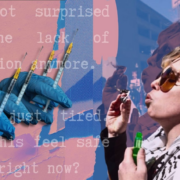
A collage featuring a gloved hand holding multiple syringes against a pink and blue torn paper background with faded text reading "I'm not surprised by the lack of education anymore. I'm just tired. Does this feel safe to me right now?" On the right, a person in sunglasses and a keffiyeh blows bubbles at a protest, shown in a blue-pink duotone.

Barriers, burnout, and resistance: Trans Kentuckians and the fight for healthcare

When clients walk into one of psychotherapist Sebastian Hamilton’s Louisville offices, they enter a cozy haven filled with soft lighting and pillows, nature posters, art supplies, and baskets of fidget toys. A linocut art print hanging on the wall features the Mary Oliver quote: “You only have to let the soft animal of your body love what it loves.”

Hamilton, whose pronouns are he/they, strives to create the kind of supportive environment he experienced with a trans mental health professional when he was exploring his own gender identity. This work has been complicated over the past year amid growing anxieties about state and federal anti-transgender legislation.

Hamilton, who became a Licensed Clinical Social Worker in 2023 — the same year the Kentucky state legislature passed a sweeping ban on gender affirming care for minors — said, “I’ve been seeing an increase in anxiety and exhaustion, especially since Trump’s second term. I see a lot more hopelessness and weariness.”

He has also seen a rise in the primary contributing factors that lead to suicidal ideation: perceived burdensomeness and thwarted belongingness, which he attributed to “this administration’s policies and the ways the administration has made local communities feel less safe for us.”

“I see people at all stages of their transition journey, and there is still so much joy in our community, so much strength. But sometimes, the joy is harder to access because of the ways things are impacting us on the interpersonal and national level when we have new, harmful legislation coming at us daily,” he said.

The impact on trans health and healthcare

2025 marked the sixth consecutive record-breaking year of anti-trans legislation. In Kentucky alone, 18 bills were introduced, including KY HB 495, which banned Medicaid from covering trans healthcare.

Kentucky, 2025

18 anti-trans bills
introduced in 2025
KY HB 495 — banned Medicaid from covering transgender healthcare

Trans Legislation Tracker, translegislation.com

Anti-trans legislation introduced, 2022–2025

State bills vs. national bills — six consecutive record-breaking years

State bills National bills
900
600
300
174
 
2022
556
 
 
2023
716
 
 
2024
1,131
 
 
2025

Trans Legislation Tracker, translegislation.com

In this environment, patients seeking gender-affirming care, such as hormone replacement therapy (HRT) or surgery, are nervous about medical documentation. Colby R. Loew, MD, whose pronouns are she/they, is a queer family medicine physician in Kentucky who is passionate about trans healthcare.

“I love getting to care for my people, my community. I love getting to care for people who, in the past, maybe weren’t so excited about going to the doctor or who were too nervous to even access care,” she said.

However, over the past year, she has noticed increased anxiety in her gender diverse patients regarding medical documentation of pronouns, gender (if it differs from the one assigned at birth), and gender dysphoria.

As a result, Dr. Loew has also become more cautious about the medical codes she uses when charting. Medical codes, or ICD (International Classification of Diseases) codes, are part of an alphanumeric system for documenting patient symptoms and diagnoses.

Loew told Queer Kentucky, “I haven’t really even been using gender dysphoria much as a code because I don’t need to document it that way. I just use hormone replacement therapy.”

Loew sees this as less of a risk. While a diagnosis of gender dysphoria could identify a patient as transgender, cisgender people also receive hormone replacement therapy, such as cisgender women who take testosterone during menopause.

The U.S. Department of Justice’s July subpoena of medical records related to trans healthcare from over 20 healthcare institutions demonstrates that these records are not private or safe from government overreach. Additionally, given the government’s classification of trans people as “Nihilistic Violent Extremists (NVEs)” and extremists who adhere to “radical gender ideology” as seen in a leaked Intelligence Bulletin and a DOJ memo first published by independent journalist Ken Klippenstein, the hesitation to have one’s trans identity documented in medical records makes sense.

“People are scared. They don’t want the government to know they are trans. They don’t want the government coming after them,” Loew said.

Loew mentioned that she also practices more caution when recording names and pronouns in medical charts, asking patients, “Is it okay if I put this on your chart?” Loew explained that “a lot of people are still like ‘hell yeah!’ but lately I’ve had more people saying ‘maybe not right now.’”

Ari, whose pronouns are they/them, is a Louisville-based genderfluid death care worker who spoke with Queer Kentucky under a pseudonym for privacy and safety. At recent doctor’s appointments, they have felt anxious about documentation — not just as a trans person, but as the child of an immigrant navigating a political climate that has targeted multiple minorities at once.

“Some of my anxiety over visiting doctors is not ‘Will I be treated poorly?’ It is ‘Will I be notated in a way that’s going to come back to bite me in the ass later down the line?’”

When a doctor recently switched their name in the system to “Ari (they/them),” it showed up on their prescription. “That partially makes me happy, but also puts up more question marks than anything else. Does this feel safe to me right now?”

Barriers to access

Transgender adults and medical discrimination

1 in 3
delayed or avoided medical care due to fear of discrimination
1 in 2
experienced medical discrimination due to their transgender identity

University of Chicago & Center for American Progress

Genderqueer photographer Emmett Valentín, whose pronouns are they/them, is no stranger to that discrimination. During their teen years in foster care in Kentucky, the state forced them to take birth control despite negative side effects. They suffered from severe endometriosis and PCOS for years before opting for sterilization as treatment. Valentín’s Indigenous identity compounded this mistreatment, they said, recalling America’s legacy of reproductive violence against Indigenous, Black, and marginalized communities.

When Valentín began pursuing HRT, they faced invasive questions, unnecessary testing, and pressure to recount their trauma. “I was terrified of having a health care provider be shitty to me because I’ve had enough healthcare trauma from being assigned female at birth.”

They explained that when they switched from the gender-affirming online prescription service FOLX to an in-person endocrinologist, “She did the whole ‘tell me about all of your trauma,’” to which Emmett replied, “I’m not doing that. You’re not my therapist. I’ve been on this for two years now, and it’s doing great. I just need refill.”

Emmett Valentín’s endocrinologist experience

A timeline of barriers


Step 1
Switched from FOLX to in-person endocrinologist. Faced invasive questions and pressure to recount trauma.
 
Step 2
Slight increase in red blood cell levels. Doctor refuses HRT refill. Refers Emmett to Transform Health Clinic.
 
Step 3
Earliest Transform Health appointment: 9 months away.
 
Weeks later — 12:15 pm
Doctor calls with a cancellation at the Lexington clinic — appointment at 1:30 pm, 75 minutes away.
 
Emmett’s response
“So let me get this straight. You refused to give me a refill, and you’re telling me now, if I drop everything in the middle of my workday and drive over there in record time, then I’m worthy of having healthcare.”

“You have been singlehandedly, absolutely the most invalidating healthcare experience I’ve ever had, and I want you to sit with that.”

Medical providers across all levels have felt the chilling effect of these federal and state level threats. However, both Hamilton and Loew, the mental health and medical providers who spoke with Queer Kentucky, stressed the importance of not caving in to threats or executive orders, which are not legally binding.

Lack of trained physicians

Dr. Loew told Queer Kentucky that trans healthcare was not part of her medical school curriculum. During her residency, supervising physicians were often unwilling to prescribe hormones to trans patients. “It depended on who was there with me as my supervising physician on whether the patient could get what they needed,” she said.

Research corroborates her experience. While studies show that many medical schools do discuss the topic of transgender healthcare, a 2023 study from the Baylor University Medical Center found that this coverage is not comprehensive. A 2025 study with the Journal of Medical Education and Curricular Development found that medical education on transgender health is now at heightened risk of inadequate preparation for future physicians in the wake of Executive Order 14168.

Residency programs

How trans healthcare is covered in medical education

Periodically throughout curriculum52.5%
 
Discrete modules only34.4%
 
Not covered at all10.6%
 

Baylor University Medical Center, 2023 · 160 programs surveyed

Loew disclosed that much of her trans healthcare practice has been self-taught. “The minute I could get my DEA so I could prescribe testosterone, I did.” A DEA, or Drug Enforcement Administration number, allows medical providers to prescribe controlled substances like testosterone.

The training gap

Recognition of the problem vs. action taken

82.4%
of providers named lack of training as a key barrier (National Coalition for LGBTQ+ Health, 2023)

By 2025, providers who sought training:

Any affirming training30%
 
Clinical technique training22%
 

National Coalition for LGBTQ+ Health, 2023 & 2025

23%
of trans people
have found themselves educating their own medical providers about transgender healthcare

Center for American Progress

Tammy, a Louisville resident whose pronouns are she/her, asked to use a pseudonym for safety. At a recent appointment, a nurse questioned how she had breasts without implants, asked how to spell “vaginoplasty” multiple times, then swiveled her chair around and asked, “How do they do that?”

Tammy tried to keep it light: “You should probably ask my doctor. I wasn’t paying attention at the time.”

Years earlier, an endocrinologist told her, “Oh, I guess the estrogen is working” — apparently unaware that estrogen does not eliminate active facial hair follicles, and many trans women like Tammy use electrolysis or laser hair removal to eliminate unwanted body hair. “This wasn’t even just a primary care physician. He was an endocrinologist. At a basic level, he should know how different hormones impact the body, and he just didn’t.”

“I’m not surprised by the lack of education anymore. I’m just tired.”

Trans Kentuckians fear experiences like Valentín’s and Tammy’s could become more common with threats to federal funding for institutions that provide gender-affirming care and empowerment from state and federal governments to deny such care.

Trans Kentuckians refuse to disappear

Despite everything, many trans Kentuckians are hopeful — and organizing.

“Trans people are the least nihilistic people I know,” said Jaz Brown, whose pronouns are he/him. Brown started hormones in March and had top surgery in November. As Trans Health Coordinator for the Kentucky Health Justice Network, he helps people buy binders, apply for medical grants, find housing, and pay electricity bills.

Jaz Brown, Trans Health Coordinator, Kentucky Health Justice Network
“To pursue transition, to pursue gender affirming care is to say ‘Life has meaning. I want to live.’”

Brown urged those struggling to afford care to apply for a grant through KHJN, and drew on a longer history of resistance: “None of this is new. People need to look to their Black elders, their Black trans elders. The government is not going to save us. Organizations are not going to save us. Nonprofits are not going to save us. We have to save ourselves and each other.”

“I think that anticipatory compliance is what the federal administration” wants, Hamilton said. He continued, “Let’s see how many threats we can make to get people to do what we want to do without actually making it a law. Because some of this, we know, if it’s thrown to the courts is going to be thrown back out.”

Valentín finds empowerment in activism. Arrested in 2023 at the Kentucky state capitol while protesting KY SB 150, they shared their mugshot — wearing what they call a “shit-eating grin.” “I would love to see a full socialist revolution in my lifetime, and I am doing all I can to gear towards that.”

Ari hopes to begin microdosing testosterone this year. They limit media consumption, root themselves in community, and draw perspective from their Chinese identity. “This is the year of the Fire Horse. Fire Horse years historically have marked a disruption of the existing order. The last time this cycle occurred was in 1966, the start of China’s Cultural Revolution.”

Looking to past epochs of political upheaval and change is a stirring reminder to trans people, cisgender members of the queer community, and LGBTQ+ allies that oppressors do not grant freedom to the oppressed. Instead, the people must unite, build coalitions, and seize their rights through collective action.

As Leslie Feinberg reminds us in Trans Liberation: Beyond Pink or Blue, “Genuine bonds of solidarity can be forged between people who respect each other’s differences and are willing to fight their enemy together. We are the class that does the work of the world, and can revolutionize it. We can win true liberation.”

If you or someone you know is struggling, call or text the 988 Suicide & Crisis Lifeline at 988. LGBTQ+ young people can press 3 to reach counselors trained in LGBTQ+ care, an option that returned on Sept. 30, 2026 after it was cut in July 2025. The Trevor Project also offers 24/7 support at 1-866-488-7386 or by texting START to 678-678.

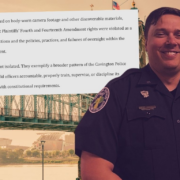
Covington Police Officer Doug Ullrich smiling in uniform, pictured in front of the Roebling Bridge. Overlaid is an excerpt from a federal civil rights lawsuit alleging his actions and departmental failures violated plaintiffs' Fourth and Fourteenth Amendment rights.

Covington’s LGBTQ+ Liaison Officer Has 9 Federal Lawsuits. The Community Wants Answers.

Curtis Clemons has lived in Northern Kentucky his entire life.

The 36-year-old said he’s loved Covington since he was a kid. Growing up 45 minutes away in Williamstown, he looked forward to weekends “in the city” with his family.

Clemons, now a resident and a local realtor, said he usually felt safe in Covington when he interacted with local law enforcement until he learned of a police officer in Covington named Doug Ullrich.

“The interactions I’ve seen on the news and reported about Officer Ullrich, but also the interactions officers have had on the Roebling Bridge last summer,” Clemons said. “There was unjust violence toward citizens on the bridge.”

Clemons was one of several members of the Covington LGBTQ+ community that spoke with Queer Kentucky who were concerned with Ullrich, the number of lawsuits filed against him and what they see is a lack of action by the city and the Covington Police Department.

Ullrich is a training specialist and the department’s LGBTQ+ Liaison Officer. On the Covington Police Department website, it describes the LGBTQ+ Liaison Officer mission, “To build communication between the LGBTQ+ community and (the department),” by “developing trust and understanding.” Clemons, and other members of the LGBTQ+ Community interviewed by Queer Kentucky, believe the department is failing in that mission.

Ullrich made news in early 2025 when dashcam video of his October 2024 arrest of Damien Connor became public. Connor, an LGBTQ+ Black man, was pulled out of his car by Ullrich and another officer after they cut his seat belt. According to the complaint, Ullrich said he smelled marijuana in Connor’s vehicle after he began removing him from the vehicle.

Connor was held overnight, but wasn’t charged when he was released the next morning.

In March 2025, he filed a federal lawsuit against the Covington Police Department and Ullrich for violating his civil rights. It’s one of nine lawsuits filed in federal court against Ullrich since 2021.

Clemons said the lawsuits against Ullrich and the handling of protestors on the Roebling Bridge last year, who were rallying against the detention of Ayiman Soliman by ICE, have put him in a position where he’s afraid of interactions with the police department.

“It has eroded any trust that I might have had,” Clemons said.

Ullrich has been the department’s LGBTQ+ Liaison since 2023. In May 2025, Queer Kentucky published a profile on Ullrich, including excerpts from his 300-page personnel file.

Ullrich’s personnel file showed praise for his work involving traffic stops and drug enforcement. It also showed concerns from other officers and supervisors, including a 2014 group chat conversation with other officers, where Ullrich said, “I violate every policy,” in response to another officer discussing the time he tased a suspect who posed no threat and was running away. 

Another member of the chat wrote, “…if u r ever the defendant in a federal case, it could come back to haunt…just my piece of advice, been there, done that, it was not fun.”

Nine lawsuits since 2021

Despite being sued nine times in federal court, Ullrich hasn’t been found liable in the three cases that have been decided. One of those cases is before the Sixth Circuit Appellate Court.

“When one officer repeatedly appears in these cases, it naturally leads people to ask whether supervisory oversight and accountability mechanisms are working the way they should and if anyone truly cares,” said Elise Sebastian, who does volunteer work in the city.

In 2021, Jeffrey Cundiff sued Ullrich and the department after he was given a body cavity search during a traffic stop. Ullrich won partially on summary judgment in March 2024.

In a suit filed in 2021, Anthony Wynn claimed he was assaulted by Ullrich and other officers over the course of three arrests. Wynn sued Ullrich, the police department and 50 officers. Ullrich and some other defendants were dropped from the suit after the judge partially dismissed portions of the case on statute of limitations grounds. The Eastern Kentucky District ruled in favor of the defendants last year. The Sixth Circuit affirmed the ruling in April.

Ashley Ferreiras filed a civil suit in 2024 after she claimed she was physically and sexually assaulted, and had her First Amendment rights violated after she was knocked off her crutches and arrested when questioning why her boyfriend was pulled over. Her case was appealed after the court found in Ullrich’s favor in February. Ferreiras is also awaiting an appeal on her criminal conviction in the case related to her civil filing.

Eight days after the Ferreiras case was decided in Eastern Kentucky District Court, Ullrich was sued in February by Covington residents Stephen Weier and Brandon Greenlee for allegedly conducting a warrantless vehicle search, false arrest and unlawful detainment during a March 2025 traffic stop. Weier accused Ullrich of sexual assault while being searched.

Despite the court deciding in Ullrich’s favor in the Ferreiras case (the judge ruled that Ferreiras’s convictions in Kenton County Court wiped out her claims of having her civil rights violated), Clemons said it hasn’t assuaged his worries about the department.

“If the suits are still being filed then it’s clear there’s still a problem at the Covington Police Department,” Clemons said. “Ullrich may just be a symptom of those issues. Mayor Ron Washington, I think he was the highest or one of the highest-ranking African American police officers in the state of Kentucky, even though he’s retired,” Clemons said. “I would love to see him say something.”

In a response to Queer Kentucky, the City of Covington sent the following statement:

“Because some cases remain pending, the Covington Police Department and the City are limited in what we can comment on publicly.

“That said, the rulings issued so far show that the actions taken by the City’s police officers were professional, lawful, and within established operating procedures.

“The Covington Police Department is committed to professional policing, accountability, and ensuring that officers carry out their duties responsibly while protecting the people and visitors of Covington.

“The City will continue to let the legal process play out while remaining focused on serving the community and upholding the standards expected of the police department.”

A Dangerous and Confusing Message

“Liaison roles exist to build trust with communities that historically have had complicated and often harmful interactions with law enforcement,” said Elise Sebastian. “When the officer assigned to build that trust is simultaneously facing repeated allegations of excessive force, it sends a dangerous and confusing message. This creates a credibility problem.”

Sebastian lives outside Covington with her wife. She’s frequently in the city for LGBTQ+ events and first heard of Ullrich when his arrest of Connor made local news.

“After the news reports, I started paying closer attention to the department’s response,” Sebastian said. “What stood out to me wasn’t just the lawsuits themselves, but the pattern. When one officer appears in that many cases, people are going to ask questions about oversight and accountability.”

Dr. Chelsea Elsmere, a psychologist specializing in LGBTQ+ health concerns, said instances of discrimination can lead to members of a marginalized group losing trust in institutions and feeling they aren’t safe where they live. That can lead to adverse mental and physical health effects, Elsmere said. Ullrich’s status as LGBTQ+ Liaison and the allegations of excessive force could pose a mental health issue.

“It’s a big problem if you can’t trust who is supposed to be protecting you,” Elsmere said. “There is so much fear in our world today; people need to feel secure in their own spaces.

“This is called ‘minority stress theory;’ and is particularly relevant to police interactions,” Elsmere said. “LGBTQ+ individuals are likely to have a baseline of low trust in police and be reluctant to seek help from them. Documented incidents that bring safety into question aren’t going to help this problem, nor is a lack of transparency/accountability from the department in response.”

Sebastian said the situation has caused her to make fewer trips to Covington.

“Trust is fragile, especially between law enforcement and LGBTQ+ communities that historically have experienced discrimination or over-policing,” Sebastian said. “When the officer assigned to be a bridge to that community is repeatedly named in civil rights lawsuits, it undermines the purpose of that bridge.”

Questions about Use Of Force Policy

While Ullrich won the Ferreiras case, depositions reveal that there may be inconsistencies in the department’s use of force policy.

Ullrich and Officer Anthony Fritsch were sued in federal civil court by Ferreiras in 2023 after she alleged officers assaulted her in front of her house. The incident began when officers, including Ullrich, had pulled over her boyfriend in front of her home for a broken taillight.

According to her complaint, she came down to the sidewalk on crutches, and officers pulled the crutches away from her. She filed the suit claiming she was unlawfully charged and arrested, and accused the officers of “physical and sexual assault.”

Ferreiras was found guilty of charges related to the incident. Like her civil suit, that case is before an appeals court.

During the August 2025 deposition, Officer Anthony Fritsch was asked by attorney Justin Whitaker if he was trained on the department’s use of force policy.

“No one specifically trained us on use of force policy,” Fritsch said. “We were expected to read it and understand it.”

Ullrich, a department training officer, said this wasn’t the case when questioned by attorney Whitaker.

During the deposition, Ullrich didn’t say whether he was in charge of training Fritsch on use of force policy. But it has caused community members to question whether the department is taking the policy seriously, especially with the training officer being sued nine times.

Community members: Department needs to address concerns

Elsmere said if more cases against Ullrich continue to be filed, the city’s police department would be in a bind, not only with the LGBTQ+ community, but anyone who feels the department isn’t being responsive to major issues.

“Each new case deepens the rift,” Elsmere said. “Though Ullrich’s interest in serving as LGBTQ+ liaison may come with good intent, the incidents in question have had damaging impact. It is undeniable that these events have undermined relations between the community and (the Covington) police department as a whole. That’s quite contradictory to the very concept of a liaison.”

As long as the department remains quiet, Sebastian, who does regular volunteer work in Covington, said she doesn’t believe the department is taking Ullrich or the community’s concerns seriously.

“The public understands that policing is difficult work,” Sebastian said. “What people struggle with is when a pattern emerges and the response from leadership appears quiet or procedural. That is when trust erodes.”

After the Roebling Bridge Protest, the department suspended one officer for a month and recommended he receive additional training. Sebastian said this is a similar moment and requires similar action.

“This is a moment for the city and the police department to demonstrate that ethical standards and public trust actually matter,” Sebastian said.

Tracy Kisenda, who is suing Ullrich, is awaiting his criminal trial in June. Kisenda is facing charges of assaulting officers and disrupting governmental operations. He said those charges are false, according to his civil complaint, filed in 2025.

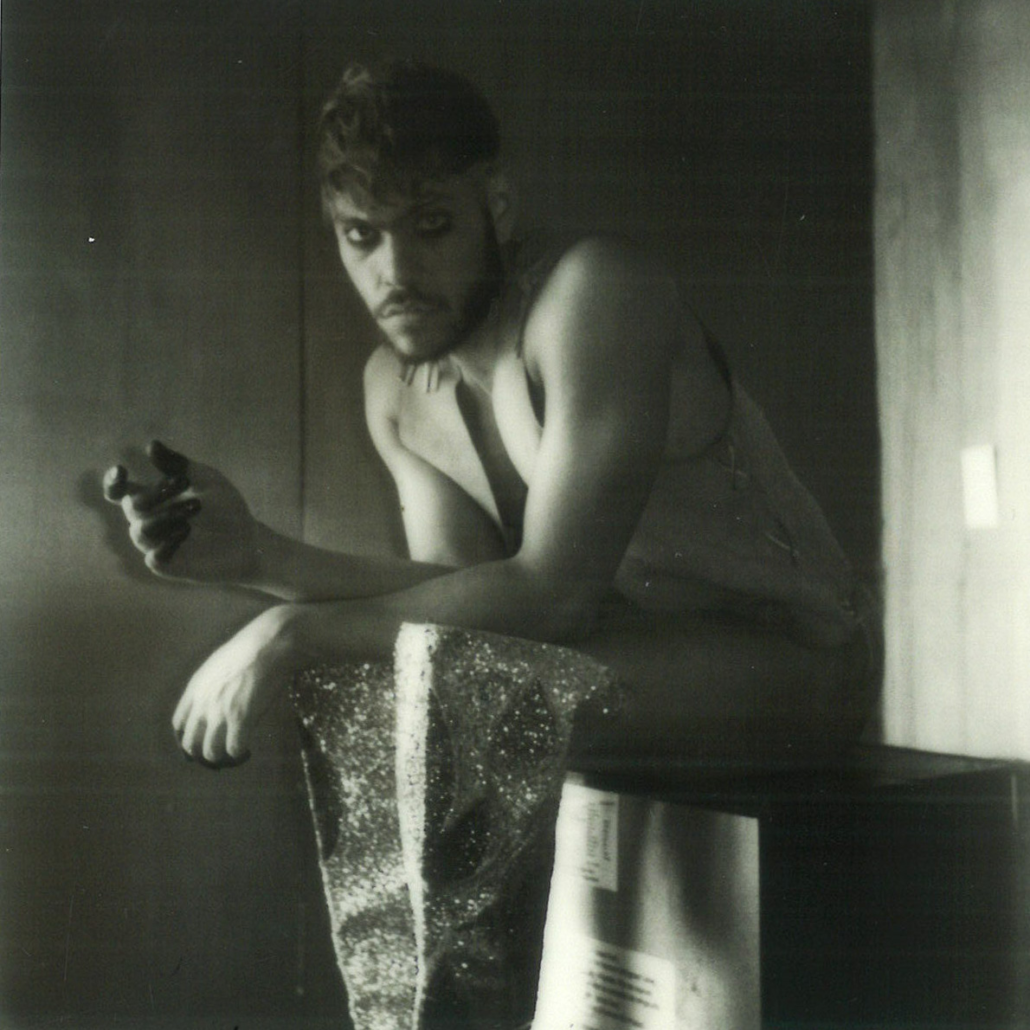
Two overlapping Polaroid-style mirror selfies of Cain Culto, shot in black and white with a soft, hazy quality, set against a dark background.

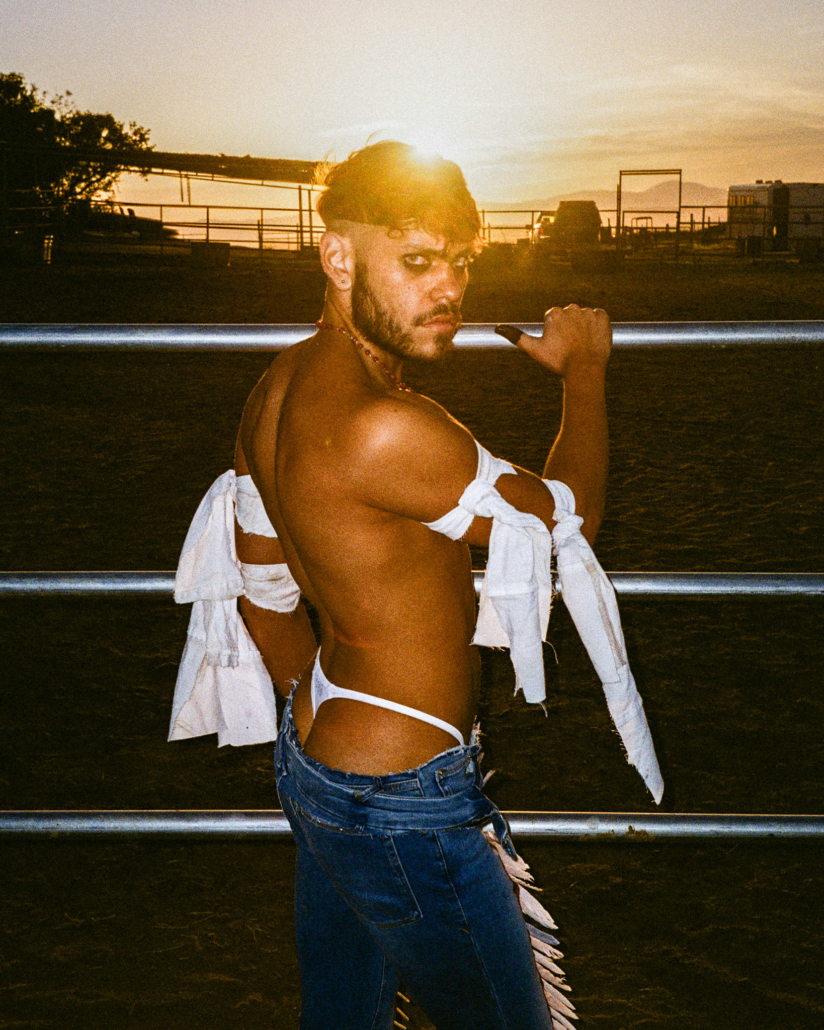
Cain Culto Was Sent to Conversion Therapy. He Came Out a Pop Star.

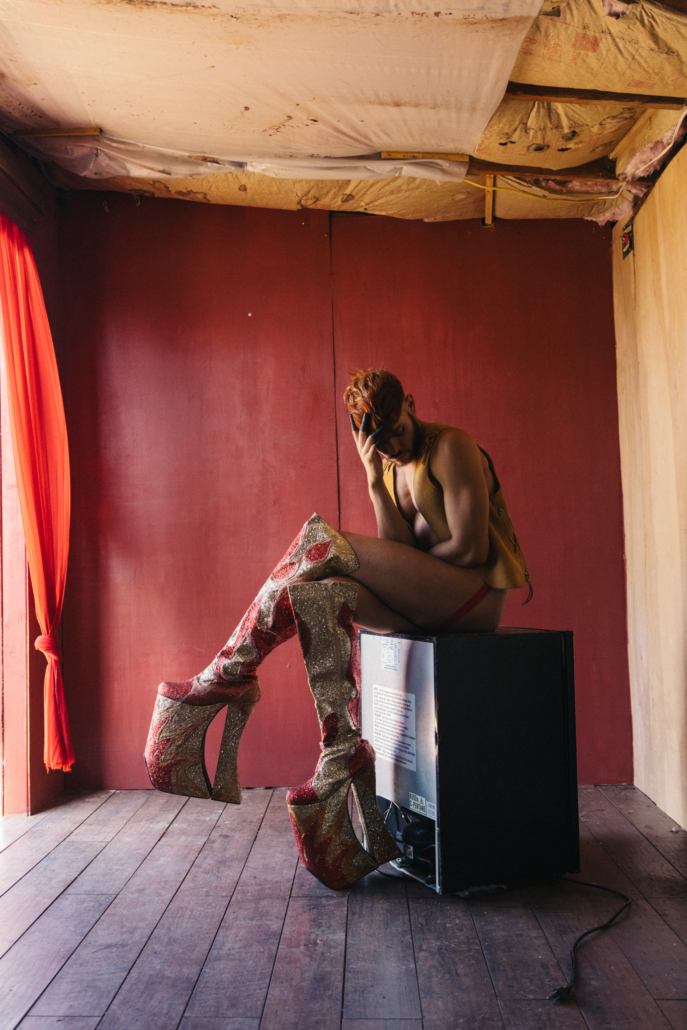
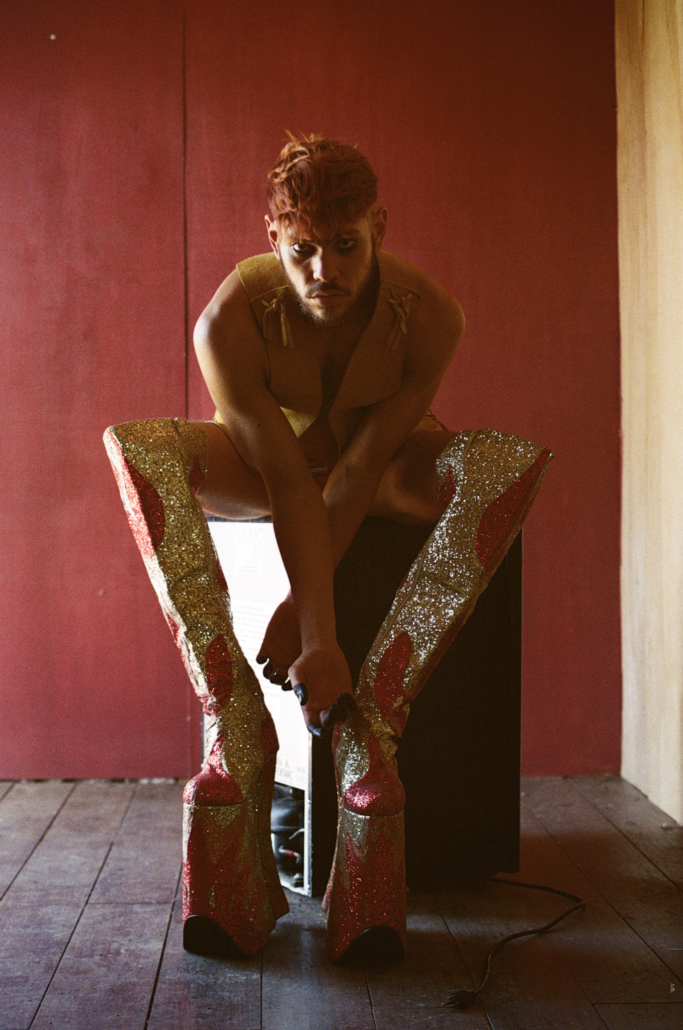
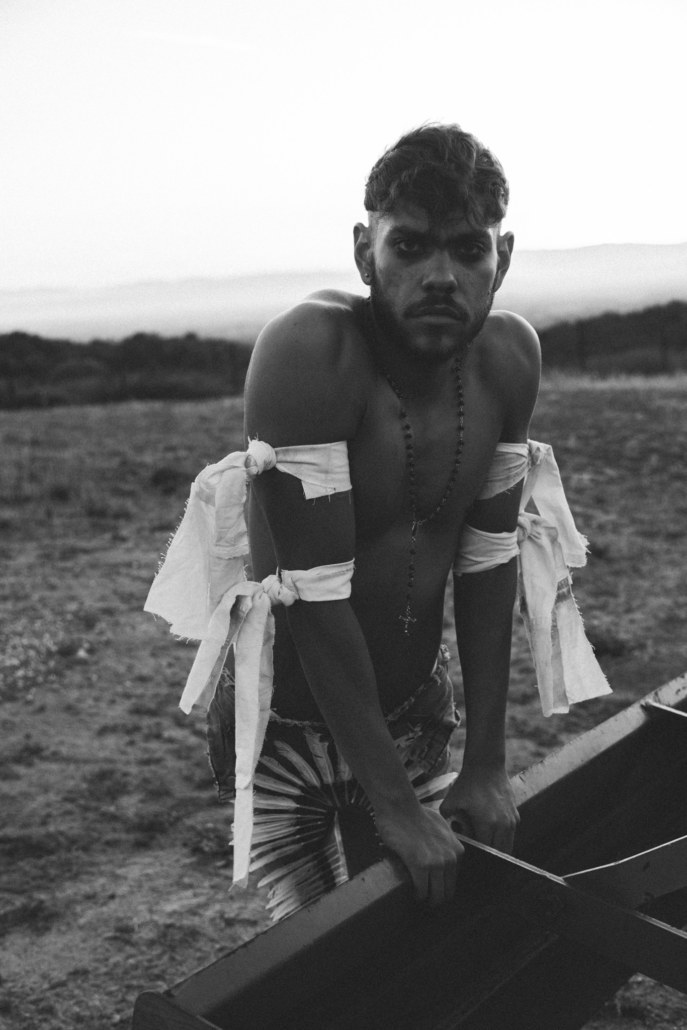
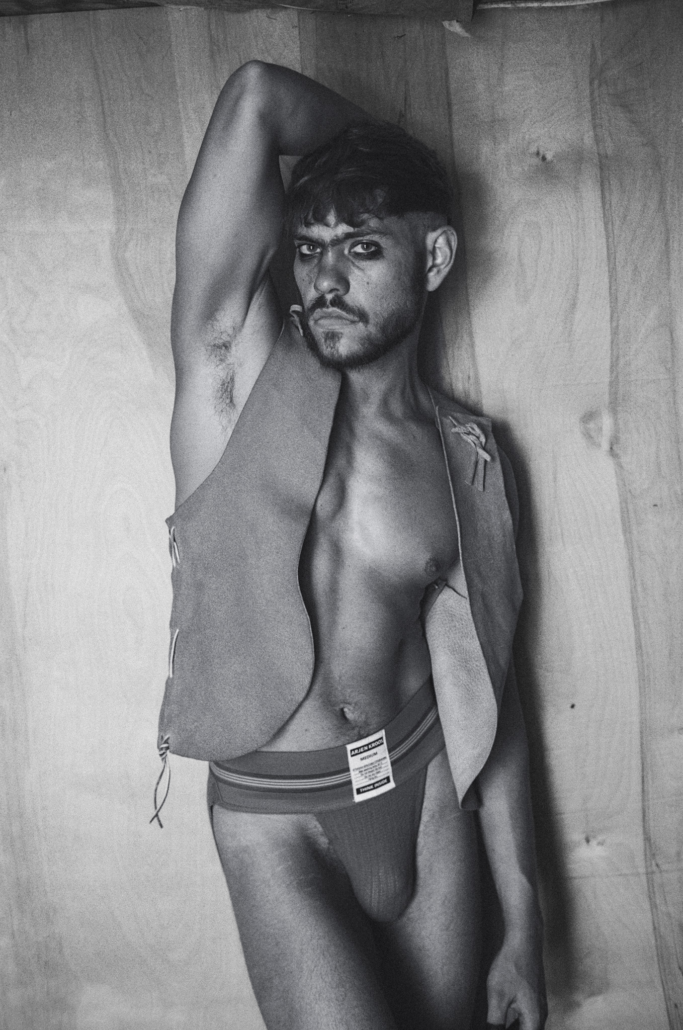
In a time of political backsliding, artists are at the forefront fighting against white patriarchal ideals with acts of rebellious queerness and authenticity. One singer in particular, Cain Culto, blends unapologetic queerness and witchy aesthetic—long fingernails, grills with tusks, and jockstraps—with music that takes on themes of sexuality, battling colonialism, and healing his
inner child.

But Cain Culto wasn’t always singing about wearing a “lil’ femme fit,” growing up in Kentucky, and how there are “too many Klu Klux Kardashians” as he does on his hit single KFC Santería.

Before he became Cain Culto, he was Andrew Padilla, a biblical studies major in a Christian rock band singing the lyrics “My shadow side and my wicked ways / My selfish heart, all my sinful days”.

The evolution from Andrew Padilla in the white evangelical church to Cain Culto exploring his Colombian and Nicaraguan heritage through music was a tough journey through repression, conversion therapy, and an eventual mental breakdown.

Worries about conversion therapy have started once again after the Supreme Court of the United States ruled 8-1 in favor of Kaley Chiles, a mental health counselor in Colorado. She filed a lawsuit against the state of Colorado, claiming that the law banning conversion therapy in Colorado infringed on her freedom of speech.

This now opens the door to allow Conversion therapy, the practice of trying to change someone’s sexuality or gender identity on the basis that it can be “cured”, to be allowed for minors once again. And while research shows this kind of “therapy” is extremely damaging for those under 18—LGBTQ+ youth who experienced conversion therapy are more than twice as likely to attempt suicide—even adults who undergo this pseudoscience practice are left emotionally scarred.

In regard to this ruling, major scientific outlets such as the American Psychiatric Association state that “Being LGBTQ+ is not a mental illness or disorder. Conversion therapy — efforts to change sexual orientation and gender identity — is not a legitimate therapeutic treatment. Leading health care entities, the APA among them, have concluded that these are potentially
harmful, discredited practices and are not supported by scientific evidence.”

Unfortunately, this kind of practice is not unknown for children of Christian evangelist parents. Singer Cain Culto experienced this kind of therapy as an impressionable 20-year-old college student, and while he uses this experience to fuel his art and heal, this “therapy” was mentally tumultuous and emotionally scarring. But music was the throughline before and after the fall.

Also read: Fried Chicken and Jockstraps: “KFC Santería” singer Cain Culto finds queerness in Kentucky Latin Art-Pop music

Cain Culto on ‘Same-Sex Attraction’ Therapy in the Church

Andrew Padilla was a man of the church and a Christian singer long before he became Cain Culto, the jock strap-wearing, long-nailed queer pop star. As a 20-year-old student of biblical studies and a leader at his church, he wanted to spread “the word of Jesus and help the world”.

But his homosexuality, or “same-sex attraction” (SSA), as it was referred to in his ministry, was a major detriment to his social and clerical position. Remembering this time in his life, Culto talks about how his church taught him that “you are not
your desires,” he said. To be gay, in their eyes, was not who he was as a person but a problem to be solved.

“And so they said, I struggle with ‘same sex attraction’, and so I never came out to my parents. There was just so much secrecy and so much isolation in that,” he said.

Growing up in an evangelical household, he knew that coming out to his parents wasn’t an option, and feared that if he did, he would end up in conversion therapy against his will. “It was really sad as a young adult and teenager, just never being able to experience romance or dating. I witnessed my peers experience, and how beautiful that was. But if I was going to be a godly young man, that was just not in my story.”

To fight his attractions while studying at his university in 2018, he began opening up to his church mentors about his SSA and they advised conversion therapy.

The Church Outsourced His ‘Healing’ to an Ex-Gay Ministry

The general feeling in the church at the time, Culto explains, was one of uncertainty in how to deal with those experiencing SSA. His church outsourced its therapy, recommending an ex-gay Brazilian ministry for artists and creatives that hoped to “reclaim the rainbow back for God” (“So cringe,” he remembers.) So he then started working with a mix of therapists, all of whom felt a
little off.

“I remember I first connected with this one guy over Zoom briefly. He was essentially a counselor for people who are attracted to the same sex,” he recounted. But Culto wasn’t swayed.

“And I remember leaving that Zoom call, thinking… ‘he was the success story?’” Seeing this depressed Brazilian man over Zoom, Cain couldn’t help but think he was a product of severe repression.

“I think repression does so much trauma to the mind, and I think you feel that in one person, not only their sexual repression, but it kind of stems out into every aspect of their being.”

He was eventually connected with an older female therapist in the church, and while she was nice and her intentions were good, she was quick to shame Culto’s femininity, he said.

“I don’t know if you know anything about Scientology: it’s essentially trying to get into a meditative state and kind of realize what’s the root of your malfunctions with your system. It’s very pseudoscience in a lot of ways,” Cain recalls, though the therapy wasn’t rooted in Scientology’s specific practices.

During these ‘inner healing’ sessions, they told him he was rejecting his masculinity and sought to find the reason for his gayness: was it due to past traumas? Sexual assault as a child? The message was clear: something must have caused his ‘condition.’

“So I was doing that (conversion therapy sessions), and it’s interesting to see the timeline of how quickly after I started that therapy that my mental health spiraled.”

Soon after, Culto said, came the nervous breakdown.

How Conversion Therapy Led to a Mental Breakdown

Like many people during the coronavirus pandemic, Culto started to gain a different perspective on what mattered to him. He was deeply enmeshed with the church’s cruel, shame-based practices rooted in Christian fundamentalism and white evangelical ideals. That was the turning point –his authentic self and who the church wanted him to be were incompatible.

“There was a split that happened within me,” Culto explains, reflecting on having to compartmentalize his queerness with his youth pastor persona.

“Since childhood, I think that I had to process this split in order to survive in these communities. And then therapy only severed that even more so…” Trying to drown out his same sex attraction caused him to finally be hospitalized for a week in a psychedelic psychotic episode where he thought he was seeing God.

Cain Culto sits shirtless in a leather chair in a gritty, dimly lit room, wearing black shorts, white knee-high socks, and black gloves, with his head resting in one hand in a pose of quiet introspection.

Cain Culto photographed in Vancouver. Photo by Xinger Xanger.


Looking back, he can see that power over sexuality is the ultimate way that evangelical spaces control their congregation, and that “once the sexual self is repressed, you are so much more vulnerable to manipulation and leadership.” Even “Cain Culto,” his alter ego created after these therapies, leans into the idea of cult leaders and cult tactics, and how leaders consciously or
unconsciously use them.

This was a major turning point for him, and he began to search for answers outside of the church. And one of the answers came in the form of his violin.

How Music Became Cain Culto’s Path Out of the Church

Music was always a big part of Cain’s life: going to radio broadcast WoodSongs to listen to folk and bluegrass musicians with his father, playing the violin at a performing arts school in Lexington, Kentucky, and eventually becoming a member of the Christian music group Ecclesia. Music became his medium and means for self-expression.

So when his world crumbled around him, his music became his escape path to embrace his queerness fully and to confront the “shit from these therapies”. His music began to evolve from his 3-person Christian group praising God and asking for forgiveness, to writing songs with titles like “Sold My Devil,” “WitchyMan,” and even covering Madonna’s “Like A Prayer”.


A black and white portrait of Cain Culto standing in front of a stained glass-style mural, wearing a frayed textured jacket and looking directly into the camera with a piercing, confident expression.

Six years later, Cain still uses his music to process the trauma of repression by confronting the darkness and embracing his inner demons. Photo by Xinger Xanger.


Cain regards his art as a practice of processing his own shame from this experience, which can be seen especially in his early work. “Cain Culto, as a music project and kind of my artistic practice, is trying to undo these things, the things that I was taught to be ashamed of, to be afraid of within myself, embracing those things truly, finally.”

Six years later, Cain still uses his music to process the trauma of repression by confronting the darkness and embracing his inner
demons. Cain wants those who’ve suffered from conversion therapy to look outside the small Christian bubble you were born into, be curious, and know that nothing about your true self is as dire as this ideology is making it seem.

If you or someone you know is struggling, call or text the 988 Suicide & Crisis Lifeline at 988. LGBTQ+ young people can press 3 to reach counselors trained in LGBTQ+ care, an option that returned on Sept. 30, 2026 after it was cut in July 2025. The Trevor Project also offers 24/7 support at 1-866-488-7386 or by texting START to 678-678.

Kentucky Sen. Gex Williams speaks at a podium inside the Kentucky State Capitol in Frankfort while addressing lawmakers and media.

Kentucky Sen. Gex Williams files SB 351 targeting transgender teachers’ licenses

Editor’s note: SB 351 did not become law. Kentucky passed zero anti-LGBTQ+ laws in the 2026 session. Read how advocates made it happen.

Republican Sen. Gex Williams’ bill would deny or revoke teaching licenses based on outdated ADA definitions tied to gender identity and other disorders.

Transgender teachers would no longer be allowed in Kentucky classrooms under a new Republican proposal.

Senate Bill 351, from Sen. Gex Williams (R-Verona), says teaching licenses could not be issued to or renewed for educators who have been “treated for or diagnosed with any disorder that is excluded from the Americans with Disabilities Act of 1990” based on the criteria used at that time.

ADA excluded a short list of disorders from federal protections for those with disabilities, including a few options of now-outdated language around being transgender or having what is now known as gender dysphoria. 

The short list also includes pedophilia, compulsive gambling, kleptomania, pyromania and substance use disorders tied to illegal drug use. 

Current or would-be educators would need to swear under perjury that they’ve never been treated for or diagnosed with one of the impacted disorders when they apply for or go to renew their teaching license. 

Under SB 351, Kentucky’s teacher certification board would be required to investigate any and all complaints against educators who someone says may be showing “easily identifiable” signs and symptoms of a disorder, including potentially forcing teachers to undergo medical examinations and provide the results to the board in order to keep teaching or lose their license. 

Eric Russ, the executive director of the Kentucky Psychological Association, said the organization strongly opposes the bill. 

“Psychological science shows us that LGBTQ+ youth are harmed by the absence of supportive educators,” a statement from the KPA reads. “This bill would deter teachers from seeking mental health care, require sworn perjury statements about abandoned diagnoses, and remove qualified educators based on identity rather than conduct.” 

SB 351 would require professionals to use decades-old criteria, rather than current medical standards. 

“Psychology, like all sciences, evolves to reflect advances in understanding of neuroscience, epidemiology, medicine, and behavioral health,” KPA’s statement says. “By anchoring this law to the outdated 1987 DSM-III-R, the bill invokes classifications the profession abandoned decades ago for lack of scientific support, including the characterization of homosexuality and gender nonconformity as diagnosable disorders.”

Compelled medical examinations also bring significant ethical concerns and questions from providers and educators alike, along with fears that outing someone for getting mental health treatment will worsen the stigma tied to receiving such care. 

SB 351 was filed Monday — the last day to file new bills in the Kentucky Senate. Kentucky lawmakers have until April 1 to pass bills that Gov. Andy Beshear — a vocal supporter of both the LGBTQ+ community and Kentucky’s public educators — may veto. 

Dr. Bobbie Glass with shoulder-length light brown hair takes a selfie in a school hallway. She is wearing a teal top and layered necklaces. Behind her on a cinderblock wall is a black sign reading “106 Classroom Dr. Glass” with Braille beneath it, and a plaque that says “A Gift by WHAS Crusade for Children.”

Louisville Advocate Dr. Bobbie Glass Joins The Trevor Project’s Sharing Space Mental Health Series

Louisville educator and transgender advocate Dr. Bobbie Glass has been invited to appear on Sharing Space, a national series produced by The Trevor Project that centers conversations on LGBTQ+ mental health and lived experience.

Sharing Space brings LGBTQ+ people with lived experience into facilitated conversations with licensed mental health professionals. Episodes focus on topics including suicide prevention, crisis response, and the impact of conversion therapy. 

Glass said the series is urgently needed.

“A series like Sharing Space is needed right now because silence is still killing people- quietly, privately, and often without witnesses,” she said. A Queer Kentucky 2024 survey of over 3,600 LGBTQ Kentuckians, found that 26% of trans Kentuckians felt extremely unsafe in public due to political debate and rhetoric around anti-LGBTQ legislation. That number rises to 40% in for trans Appalachians.  

With anti-transgender legislation at historic levels, the question of how transgender youth are supported has become increasingly important.

“The most important thing to understand is this: supporting trans youth does not require expertise, special language, or perfection. It requires presence, courage, and consistency.

A colorful illustrated graphic divided into four panels featuring cartoon portraits labeled Rajee Narinesingh, Ella Marques, Dr. Bobbie Glass, and Jimi. The words “Trans Gurus” appear in the center. One panel includes a background with the transgender pride flag and the words “Trans Girl.”

One of the simplest and most powerful things people can do is interrupt harm when they hear it,” Glass says. 

“Allyship sometimes looks as simple as saying, “That’s not okay,” and refusing to let cruelty pass as normal.”

At the same time, renewed attention has focused on conversion therapy and the ongoing debate over how, and whether, the practice should be regulated. Dr Glass is a survivor of conversion therapy and uses that language intentionally.

“Conversion therapy doesn’t try to change behavior,” Dr Glass said. “It tries to replace a human being. For many of us, that replacement demand creates a level of despair that is difficult to describe unless you’ve lived inside it.”

She described the harm caused by those practices as ongoing and personal.

“I’m horrified by the number of times I tried to end my life under the weight of being told that my authentic self was completely incompatible with love, faith, and belonging,” she said.

“I am alive today not because conversion therapy worked, but because I survived it,” she said. “Others did not.”

The Trevor Project reported that 13% of LGBTQ youth nationally are exposed to conversion therapy. 

Kentucky currently has no statewide ban on conversion therapy. In 2024, Governor Andy Beshear issued an executive order prohibiting state or federal funds from going to conversion therapy practices for minors. The following year, state legislators passed HB495, which reversed his executive order. 

Glass said Sharing Space differs from many mental health discussions by centering people with lived experience rather than speaking about LGBTQ+ communities from the outside.

Screenshot of Dr. Bobbie Glass speaking in a video for The Trevor Project. She is seated on a couch wearing a navy blue dress, gesturing with one finger raised as she talks. On-screen text reads, “There’s no therapy in telling kids.” The YouTube Shorts interface is visible, showing the account @TheTrevorProject and engagement icons along the right side.

Screenshot of Dr. Bobbie Glass speaking in a video for The Trevor Project. She is seated on a couch wearing a navy blue dress, gesturing with one finger raised as she talks. On-screen text reads, “There’s no therapy in telling kids.” The YouTube Shorts interface is visible, showing the account @TheTrevorProject and engagement icons along the right side.

“Instead of experts speaking about LGBTQ+ people, Sharing Space allows people with lived experience to speak from inside the reality, in the presence of licensed mental health professionals who understand the risks involved,” she said.

“The harm of conversion therapy isn’t theoretical,” Dr Glass said. “It lives in bodies, in fear, and in years stolen from people who were never broken.”

According to data from The Trevor Project’s national youth mental health survey, 45 percent of LGBTQ+ youth seriously considered attempting suicide in the past year. Rates are significantly higher among transgender and nonbinary youth.

Dr Glass also addressed the conditions facing transgender and gender diverse youth in Kentucky.

“Supporting trans youth in Kentucky is not optional, symbolic, or political- it is lifesaving,” she said.

“Trans youth do not need to be ‘fixed,’” Dr Glass said. “They need to be protected, believed, and allowed to exist without fear.”

Dr Glass’s appearance on Sharing Space comes alongside her ongoing work in Kentucky. She was recently named an ambassador with the Mayor’s Office for Women in Louisville, a six-month civic engagement and training program focused on city policy and systems. “Being named an ambassador isn’t symbolic- it’s an invitation into the work of changing systems,” Dr Glass explains. She also serves on the boards of the Fairness Campaign in Louisville and CHNK Behavioral Health/One Quest Health in Covington. She is also a co-host of Trans Gurus on YouTube, a global platform with over 135,000 subscribers that offers affirmation and support to transgender people worldwide.

“At its best, Sharing Space does something simple and radical,” Dr Glass said. “It reminds people that they are not broken, not alone, and not required to disappear in order to be loved.”


If you or someone you know is struggling, call or text the 988 Suicide & Crisis Lifeline at 988. LGBTQ+ young people can press 3 to reach counselors trained in LGBTQ+ care, an option that returned on Sept. 30, 2026 after it was cut in July 2025. The Trevor Project also offers 24/7 support at 1-866-488-7386 or by texting START to 678-678.

Mia Kopp and Mulanie Flowers, Kentucky transgender beauty queens, representing the state at Miss International Queen USA 2026.

Two Kentucky Transgender Beauty Queens Head to Miss International Queen USA in Atlantic City

Two beauty queens, Mia Kopp and Mulanie Flowers, will be representing Kentucky at the annual Miss International Queen – USA (MIQ-USA). The pageant celebrates transgender women and highlights their glamour, history and pride within their community. 

After initially debuting in Las Vegas, MIQ-USA was described by Vegas 411 Review as “the new crown jewel in Las Vegas shows.” The pageant was then moved to Atlantic City, where it will spotlight the beauty of transgender women from across the United States. Next year, the competition will take place from March 26-27, 2026, in Atlantic City. 

Originally founded in 2004 in Thailand, MIQ-USA aims to “create equal[ity] and acceptance in society” and “raise the standard of Transgender girl contest[s] to be accepted by the general public,” according to their website. 

The festivities include a press conference where the contestants are introduced, a state costume competition, a talent competition, and leadership and personal growth workshops. The final night will consist of swimsuit and evening gown competitions, finally ending in an interview highlighting the intelligence and charisma of the competitors. The final evening will be hosted by transgender icon Mimi Marks and National Director of MIQ-USA Todd Montgomery. 

Midori Monet, the winner of last year’s Miss International Queen pageant, will be in attendance at MIQ-USA. She is the third winner from the United States to win the international title, and she will pass her crown to the next winner of MIQ-USA at the end of the festivities.

The pageant aims to celebrate transgender women, while also providing positive support and awareness. In a time where the transgender community is consistently attacked by the media, the competition is a safe haven for transgender women to represent themselves. 

Mia Kopp highlights mental health advocacy on a national level

Mia Kopp, Kentucky transgender beauty queen and mental health advocate, competing in Miss International Queen USA 2026.

Photo provided by Project Publicity

Mia Kopp is one of the competitors from Kentucky. She was born in France, moved to Mexico and now resides in Kentucky, working as a transportation manager at UPS. She chose to participate in the pageant because of its platform for hope and empowerment in the transgender community. 

“It’s a platform of hope and giving everybody in our community a voice. A voice of empowerment, a voice of all these hopes and dreams that people sometimes give up on and Miss International Queen USA is that,” Kopp told Queer Kentucky. “It’s that hope. It’s that equity. It’s that promotion of human rights and that was my inspiration.”

Kopp is also an avid advocate for mental health. She had struggled with depression and anxiety and she wants others in the transgender community to know that they “are not alone.” By providing more resources and reassurance, she states that when humans heal themselves, they also heal their souls. Mental health resources are important for prioritizing the safety of transgender people and she hopes to use her platform to raise more awareness.

“When you know your value, when you know your power, that makes you see that success in your life. That gives you the meaning and purpose of yourself around people, or around your friends and your family,” said Kopp. “That’s how I want to show myself to people and it’s how I love myself as well.”

She also volunteers with the Louisville Pride Foundation and hosts weekly trans haven discussions. These discussions play a vital role in her mental health advocacy work, as she states that these spaces are integral to the protection of the community of transgender people.

“I just volunteer because that’s the way that I can commit my brain and my body and my soul to things that made me leave that dark space that I was living,” said Kopp. 

Poetry from Mulanie Flowers takes center stage 

Mulanie Flowers, Kentucky transgender poet and beauty queen, representing the state at Miss International Queen USA 2026.

Photo provided by Project Publicity

Poet Mulanie Flowers will also be representing Kentucky at MIQ-USA. Originally from Liberia, Flowers immigrated to the US at the age of 2. She participated in a variety of extracurricular activities in school, such as cheerleading, chess and debate. Now, she is a poet and competing for the title of Miss International Queen.

After an experience with the ballroom culture of Chicago, Flowers began performing drag and was introduced to the MIQ pageant. She was introduced to the competition through a mutual friend and allowed herself to feel more confident within the pageant. 

“It’s a pageant for trans women, like us. It just basically puts us [trans women] out there, gets our stories out there,” said Flowers. “It just shows us to the world in a different light. I was like ‘that’s such an amazing opportunity.’”

Flowers has also been writing poetry since the age of 10. As she has grown up in the church, she has allowed herself to express her feelings in her free time. As she has explored other art forms, she continued to be drawn back to the power of words within poetry. If she were to win the title of Miss International Queen USA, she hopes to use her platform to create a book of poetry highlighting transgender voices. 

Her poem, “Her,” is about seeing herself transition and was the first poem she ever performed. She states that the piece is about “saying goodbye to the boy and saying hello to the woman I knew I was going to be.”

The competition allowed her to build her confidence and to showcase herself in new ways, not only for her, but her other sisters in the competition, including Mia Kopp.

“I feel like a lot of times trans people are misunderstood because people don’t understand them, they feel like everything should be under this one category, in this one umbrella, but there’s so so many different ways to be the person that you are,” said Flowers. “So I just hope that everybody just from this entire experience, this entire journey, watching me, they just see that ‘she’s just a girl’ and ‘I’m just a girl’ and that we’re all just normal people trying to co-exist.”

Mia Kopp and Mulanie Flowers will both be representing Kentucky in Atlantic City, New Jersey, from March 26-27, 2026, at The Concert Venue at Harrah’s.

Click here for tickets and more information about the pageant. 

Crossing the River for Community: Why NAMI Southwest Ohio’s LGBTQIA+ Support Group Is Worth the Journey

by Sara Hughes

The following is an opinion piece and reflects the views of the author, not those of Queer Kentucky. Our op-ed section exists to uplift diverse LGBTQ+ voices and perspectives across the state. We publish these submissions as part of our mission to encourage cultural critique, thoughtful commentary and dialogue that matters to our community.

Being queer in Northern Kentucky has always felt complicated. This region is home, full of family ties and familiar landmarks, but it can also feel isolating when you’re LGBTQIA+. Sometimes it seems like our stories exist in the shadows, rarely reflected in local politics, media, or even in the casual conversations of daily life. 

Being out in Northern Kentucky has meant combating the stigma, the side-eye, and the hate. What has stood out the most to me, though, has been the many wonderfully supportive and loving humans I’ve met along the way. We’ve created community through music, art, and play. Being loud and proud in public and the privacy of our homes, we’ve helped each other feel safe and seen. Still, I wondered if I’d ever find a space nearby where I could show up fully as myself for the support I needed to keep showing up strong for others.

That’s why it’s worth it to make the trip across the river to Cincinnati for NAMI Southwest Ohio’s LGBTQIA+ Support Group at Transform Cincinnati. It’s been a joy throughout my life to be that rock for friends, family, and our community, and sometimes it’s nice to let someone else be the rock for me.

Support groups might sound simple on the surface. People gather, share stories, and listen. But in a place where queer and trans people are often told—sometimes subtly, sometimes outright—that we don’t belong, walking into a room where your identity is celebrated without question can feel radical.

Our group is open to anyone in the LGBTQIA+ community, and the conversations are as diverse as the people who attend. One night, folks might be talking about how to navigate healthcare systems that too often fail us. Another night, we might be unpacking the strain of family rejection, or celebrating a member’s first Pride, or laughing about the small joys of queer culture in the Midwest. What connects every meeting is the understanding that no one has to explain or defend who they are.

As someone from Northern Kentucky, this space matters because it bridges distance and difference. Our facilitators have sat alongside trans folks from rural counties, queer parents raising kids, BIPOC leaders carving out visibility, and young adults just beginning to name their identities. Each person adds to the mosaic of what it means to be LGBTQIA+ in this region, and hearing their stories reminds me that queerness here is both resilient and expansive.

The urgency for spaces like this cannot be overstated. In recent years, both Kentucky and Ohio have seen a wave of legislation targeting LGBTQIA+ people, especially trans youth. At the same time, mental health challenges in our community remain disproportionately high. According to The Trevor Project, more than 40% of LGBTQIA+ youth seriously considered suicide in the past year. 50% of LGBTQ+ young people who wanted mental health care in the past year were not able to get it. Local adults face higher rates of depression, anxiety, and social isolation compared to the general population. Against this backdrop, an affirming space to connect and heal isn’t just nice to have, it’s essential.

NAMI Southwest Ohio’s group is also intentional about intersectionality. We know that queerness doesn’t exist in a vacuum—it intersects with race, disability, class, geography, and more. By centering those voices, we build a stronger, more authentic community.

The group meets at Transform in Cincinnati, and it’s free to attend. For me, crossing the river from Northern Kentucky is a small act of care for myself and a reminder that I don’t have to do this alone. 

In a world that too often tells LGBTQIA+ people to shrink themselves, NAMI Southwest Ohio’s support group is a place where we can expand, connect, and breathe. That kind of space doesn’t just change individuals—it transforms entire communities.

To anyone reading this who’s hesitant to come (maybe because you’re not out, or you’ve been burned by exclusion in other spaces) I want to say this clearly: you already belong. There’s no “right way” to be queer or trans, and there’s no requirement other than showing up as you are.


NAMI Connection Recovery Support Group

For LGBTQIA+ adults who have experienced symptoms of a mental health condition.

2nd and 4th Mondays from 6:00 to 7:30 pm

This support group is done in partnership with Transform Cincinnati

6839 Montgomery Rd
Cincinnati, OH 45236.


Author Bio:  

Sara Hughes (she/they) is a queer Northern Kentuckian, musician, artist, designer, and the Marketing & Communications Manager for NAMI Southwest Ohio. They are passionate about mental health advocacy and building welcoming spaces for LGBTQIA+ people in the Midwest to fully express themselves.


If you or someone you know is struggling, call or text the 988 Suicide & Crisis Lifeline at 988. LGBTQ+ young people can press 3 to reach counselors trained in LGBTQ+ care, an option that returned on Sept. 30, 2026 after it was cut in July 2025. The Trevor Project also offers 24/7 support at 1-866-488-7386 or by texting START to 678-678.

Acid, Ache, and the Grief Behind the Glamour: A reflection on substance abuse, recovery, and the ghosts, glitter, and grime in between.

Content note: This story discusses suicide, substance use, sexual assault and an eating disorder. Support resources are listed at the end.

This story is part of Queer Kentucky’s digital issue surrounding the trans youth experience in the Bluegrass state, featuring personal essays to educational information. Read the full issue here.

Photos and story by D.L.

It was 2023. The world had been ending for three years, but my world was ceasing to exist. My family home burned to bits two years prior, my uncle’s breath was flattened by fentanyl months later, and my grandfather had just been crushed by cancer. Death followed me like a dog. In my new adulthood, I fled Louisville, thinking it might not find me. I was 19, suicidal, and believed if I wanted to survive, I needed to be numbed. 

Then I tripped.

On acid, I was anything but numb. I was honest with myself. Despite the fact that I was tripping to forget the grief that defined my life, I spent most of my trips remembering the people I’d lost. I could remember their laughs without shutting down. I could remind myself that I’ll never see them again and somehow survive. I felt halfway-human again. 

When I tripped, I acknowledged death and grief as part of the incomprehensible human experience and accepted it the same way I accepted any mind-fuck on psychedelics. When I was sober, only two things mattered:

  1. People I love are dead.
  2. There’s something I can put in my body that makes me feel like I’ll survive that.

I spent seven weekends straight searing my brain too stupid to hurt. I avoided sobriety in an effort to evade sadness and how scared I was. In public, I was uncomfortable. At home, I was anxious, like every second spent sober was grief catching up. 

On acid, I soaked in a technicolor, spiraled version of my world. I felt everything completely. Every touch was 200 volts of pure, white-hot pleasure. Every emotion was an energetic pulse of ecstasy. I saw heart-shattering beauty in everything and everyone. I had never felt so connected to music, strangers, and myself. 

At first, it felt glamorous. I was doing drugs in a big city, mentally unravelling and surrounded by sweat-soaked, sparkling strangers and brain-buzzing bass, held together by nothing but torn fishnets, pasties, and a pink feather boa. I had more fun than fear and got high on the glory of parading my body while destroying it. 

I’d never shown so much skin. I grew up bulimic, and before I started raving, the most positive relationship I’d had with my body was centered more on acceptance than any sort of love or confidence. Being chronically ill, I also had a complex relationship with my body and the physical pain that comes with living in it. 

It shocked me how supportive the community is. I understand the push toward body neutrality, but to be seen so clearly and to have my style, creativity, and appearance complimented constantly was cathartic. It was impossible not to feel good about myself when beautiful women were saying I was the sexiest person they’d ever seen. 

Besides that, I enjoyed the freedom of getting to be topless in rave and festival spaces regardless of my gender. I liked that even if they wouldn’t remember them (typical), nobody looked at me weirdly for saying that my partner and I use they/them pronouns, because to do so wouldn’t uphold PLUR(R) – Peace, Love, Unity, Respect, and (the often omitted) Responsibility. 

With this newfound confidence and freedom, my outfits became increasingly revealing. I knew outwardly, to many, I looked like a party girl who was doing too much for attention. But I adored the euphoria that came from being myself, being comfortable in my skin, and feeling seen. 

At my first raves and festivals, I pretended there were no preconceived notions about my body or gender. I felt like a ninety-percent-naked, genderless fairy flitting around the woods, surrounded by people who only noticed the music, not my body. 

This was delusional. I was groped and misgendered often, sometimes by people I considered friends. People who sexually assaulted me were seeing and enjoying my body and outfits from a place of perversion, not expression. I’m not ashamed of sexuality and value it both in my presentation and as nature, but being groped while incapacitated on drugs is obviously neither a sensual nor consensual experience, and showed me how I was truly perceived: a nearly-naked woman too high to defend myself. 

I can’t say I’ve never harmed people on drugs. I let relationships fizzle out because I was putting more energy into escapism than I was into any of the living people I love. I was selfish. My brain was curdled. Even sober, I was an alien disconnected from everyone – and ironically, it was because of the drugs I took to feel connected to people. 

On acid, I was no better. I was incoherent and often either too affectionate or standoffish. I prayed that people considered my uncomfortable behavior whimsical (at best) or wooky (at worst), but looking back, I was just sloppy. I felt like my substance use couldn’t be as bad as it felt because friends were still seeking me out at events, still saying they loved me, still saying I was fun to party with. But I woke up steeped in shame after every night out. 

Maybe I was fun. Truthfully, I wouldn’t remember. And that was the much larger issue. My feelings on the subject are best summarized by the way my friend explained her sobriety from cocaine: “I’m tired of having no memory of the best nights of my life.” And I’m tired of the memories I do have being shrouded by shame. 

For me, the most euphoric part about any rave is being so overtaken by the love for the music and people that I forget to care about how I look dancing and just move and feel. I deserve to be present in that, and I want to remember it. 

In the darkest depths of my addiction, I needed to understand that the false dichotomy of drugs being “good” or “bad” wasn’t going to save me. More than I needed to quit any substance, I needed to sit with the reality that I was using drugs to distort. Being constantly high was destroying me, but so was stifling the hurt beneath it. 

Two years later, I’m able to find beauty in the world and can feel what is distinctly ugly, painful, and difficult without the buffer of substances – I love the complex, grief-filled world and body I live in enough to not chemically sever myself from them every chance I get.

If you or someone you know is struggling, call or text the 988 Suicide & Crisis Lifeline at 988. LGBTQ+ young people can press 3 to reach counselors trained in LGBTQ+ care, an option that returned on Sept. 30, 2026 after it was cut in July 2025. The Trevor Project also offers 24/7 support at 1-866-488-7386 or by texting START to 678-678.

Transgender Life at the University of Kentucky

This story is part of Queer Kentucky’s digital issue surrounding the trans youth experience in the Bluegrass state, featuring personal essays to educational information. Read the full issue here.

Experiencing life as a transgender person is inherently different from moving through it as a cisgender person. As a nonbinary person, I had to learn how to maneuver many facets of the education system. 

Growing up in rural Scott County, K-12 was incredibly difficult for me. For a long time, I experienced a lot of harassment and bullying, which caused me to view myself very negatively. It also framed my view of the world, making me think that everywhere and everyone would treat me with disdain for being myself. It wasn’t only students who treated me that way, but some of my teachers who joined in on the bullying. 

When I graduated from high school, I decided to attend the University of Kentucky, near my hometown. I expected it to be so similar to my prior school experience, but it was way different than what I had imagined.

I began my undergraduate degree in media arts Studies at the University of Kentucky in 2020. I barely spoke on my first day, and for the first few years of my experience. When walking to classes, I spent more time staring at the ground instead of looking at people’s faces. I did my best to make myself look small, or even more so, invisible. I rarely participated in class discussions. I took every footstep so carefully, someone watching would likely think I was walking over a decaying rope bridge. Anytime people started laughing, my head would dart toward them, thinking it was directed at me. Truthfully, though, it never was. 

As my experience at UK continued, my perspective started to change. My professors were interested in what I was thinking and wanted me to share my ideas with my peers. Instead of being shut down or laughed at when I spoke, I was encouraged to speak more and louder. I slowly became brave enough to use my voice more and more, and I was shocked when I wasn’t being laughed at or harassed later about what I had said. I started feeling like my opinion held value for one of the first times in my life. 

It became increasingly common for professors to state their pronouns and ask everyone else on the introduction day of each course. When I started college, I was terrified for anyone to know I was transgender in any capacity, but as it became more normalized to discuss, I found myself openly saying, “Hi, I’m Jules, and my pronouns are they/them.” I started feeling proud of my identity. Something that changed throughout my experience as a nonbinary person at university was my bravery. I’d always found it easy to stand up for other queer and trans people, but never myself. Because of how supported and safe my professors made me feel, I started correcting my peers when they misgendered me. No one ridiculed me when I did this; instead, they quickly apologized, corrected themselves, and moved on. 

Many of my classes discussed gender identity concerning many topics. I learned a lot about how society is tailored, largely using the gender binary to maintain present power structures. I understood then just how valid my unique experience is from societal standards. University was eye-opening, and it showed me a world far more vast than the small, narrow-minded society I had previously experienced. 

I was studying media creation, and with that comes conversations about including diversity in media projects, and the ethics of the content being created. For myself, it showed that LGBTQ+ people and POC are being brought to the forefront of the conversation. LGBTQ+ people are often creativity-minded, so through my photography classes I found many queer and trans friends. We built community with one another that way, and helped each other navigate through some of the trials of early adulthood. 

Having so many friends who had experienced my struggle, I was inspired to start doing what I could to make a difference. I attended protests whenever possible for the rights of many diverse groups, and for larger, international political movements. I started using my social media accounts almost solely to spread political and social justice awareness. While I wasn’t super involved in on-campus organizations due to social anxiety and other mental health issues I was dealing with throughout college, I found my own ways to generate change. Personally, one of the most important ways to generate this change was showing up for the queer people in my life however I could. 

University life can be eye opening and life-changing for transgender people. I didn’t expect myself to build such a supportive community, particularly from school, but I did. I created a place in the world, and others gave me space to do that. The experience can vary from person to person, and it depends on which university is chosen to attend. I attended university in one of the only blue cities in the state, and I slowly felt very comfortable and supported by my environment. It was worth every late night and the stress spent on my assignments. Finding acceptance and community is a big deal for trans people, and has the power to bring something rare and important to the table: hope.

Access in the Movement: A Shared Byline on Disability & Activism 

By Sage Barr (they/he) & Mo Viviane (they/she/he/it)

This story is part of Queer Kentucky’s digital issue surrounding the trans youth experience in the Bluegrass state, featuring personal essays to educational information. Read the full issue here.

Disability justice is the backbone of trans movements. When navigating through our experiences, we are met with every intersection of being. Here you will find correspondence of two disabled trans individuals, from expansive perspectives and life experiences, that assist in understanding how accessibility is about more than just the physical spaces we enter; it is a collaborative effort to weave together advocacy by prioritizing the most marginalized individuals in planning, execution, and convening.


Sage:
Disability and activism are more intertwined than you might think. When you’re disabled, you get good at advocating for yourself, being persistent, and sometimes getting loud just to be heard. Those same skills show up in my activism every day. I’m young, disabled, deaf, queer, and trans–and my activism started when I was 15, speaking at a library board meeting after anonymous complaints about LGBTQ+ Pride Month displays. 

The library was my second home– tie-dye programs, robotics camps, volunteering at story times, so it mattered to me to show up. I didn’t think of it as “brave” or as activism, just defending something important. But that night lit a bit of a spark. 


Mo: 

To me, that spark is about the moment you speak up because you have to, not because you’re ready to be an activist. For me, in my undergraduate studies at Northern Kentucky University, it meant fighting my own brain before I ever reached a meeting or a die-in on campus. Bipolar disorder, AuDHD, and severe anxiety don’t exactly make activism easy. Some days, just getting out of the door feels like a rally in itself. 

And yet, like Sage, I couldn’t stay silent. My activism was born out of necessity–when spaces I loved and people I loved were under attack (and still are), my body and mind didn’t get to “opt out.”


Sage:
After that library meeting, strangers called me brave. I didn’t see it that way. Soon, I was at school board meetings, speaking against book bans on titles like “Stamped,” “Gender Queer,” and “From the Mixed-Up Files of Mrs. Basil E. Frankweiler.” I joined rallies against SB 150, a bill forcing schools to out trans students. Still, I didn’t call myself an activist – I was just showing up, making signs, lending time. 


Mo:
And that’s the thing – ”just showing up” is activism. But for disabled folks, showing up comes with extra steps: navigating sensory overwhelm, finding safe transit, and figuring out where to position yourself so you’re not boxed in the crowd. For me, being Black and nonbinary adds another layer; entering spaces that claim to fight for racism and transphobia while still carrying both in their culture. 


Sage:
The first time I saw intentional accessibility at a protest was the 2023 Trans Youth Rally in Frankfort. There was an interpreter. For the first time, I didn’t have to scramble for access – I could just be there.

As a Deaf person who also uses a cane and manages sensory needs, navigating crowded events can be exhausting. If there’s no space to move or no thought given to how people can access the event, it’s easy to feel like your presence isn’t welcome. That rally showed me it could be different.

Mo:
That’s exactly it. Accessibility isn’t about being extra; it’s the foundation of sustainable movements. For me, that could mean quiet corners, clear signage, or event leaders who understand that I might need to step away. And mental health access matters too – creating spaces where people can be involved without being pushed past their limits.


Co-creatively, we come to activism from different places, yet our truths coincide with one another. Movements are only as strong as the access they build in from the start. When accessibility is treated as an afterthought, movements exclude the very people they claim to fight for. But when disabled folks are centered, when care and access are built into every step, movements don’t just get bigger – they get stronger, more resilient, and closer to the world that we’re all fighting for.

For allies, here’s what that looks like:
• Ask about accessibility before the event, not the day of.
• Budget for interpreters, captions, and mobility access from the start.
• Make spaces where people can come and go without shame or guilt.
• Share information in multiple formats – written, visual, spoken – so everyone can engage.
• Remember that not all activism happens in the streets; online organizing, mutual aid, and behind-the-scenes care work are just as vital.

True solidarity isn’t about inviting disabled people into a space that’s already been built – it’s about building the spaces with us at the forefront of your planning. 

Death Before Detransition: A Word from the Executive Director and Editor-in-Chief

Dear Reader,

Protect. Trans. Youth.

As a Queer journalism organization, our platform is our greatest power, and it is with complete joy that we hand it over to the trans youth of Kentucky for this special issue. With anti-trans legislation sweeping the nation, and trans Kentuckians no strangers to these attacks, the voices of trans youth need to be uplifted now more than ever.

This year, 953 anti-transgender bills were introduced across the United States. Of those, 120 were passed into law, including Kentucky’s House Bill 495, which bans the use of Medicaid for gender-affirming care, and Senate Bill 2, which prohibits public funding for gender-affirming care for transgender inmates. Let us also not forget Senate Bill 150, which was signed into law in March of 2023 and had the biggest impact on trans youth in Kentucky. The legislation bans gender-affirming care for minors, restricts discussion of gender identity and sexual orientation in schools, limits bathroom and locker room access, and allows teachers to deny the usage of a student’s preferred pronouns.

Experts say the ongoing political and social battles targeting transgender youth are harming their mental health. A 2024 Trevor Project study found suicide attempt rates among trans youth rose by as much as 72% in the first year after states enacted anti-transgender laws. Trans youth are in pain and need to be heard.

For almost a decade, Queer Kentucky has served as a voice for LGBTQ+ Kentuckians, and that is something we take great pride in every day. When we were awarded the Charles and Jack Endowment Fund Grant from the Community Foundation of Louisville, we were posed with a task: create programming to inspire the lives of LGBTQ+ youth in Kentucky.  So naturally, we created a project that specifically boosts the voices of the remarkable trans youth community across the Bluegrass State.

However, as two cisgender leaders of this organization, we knew it was important to hand over the leadership role of this special digital issue to a trans leader and creative genius. Enter Covington native, Mo Viviane. Mo has nurtured this project from inception to fruition—meticulously sourcing writers and artists to curate a unique piece of art to be celebrated by queer people and allies alike. It is a privilege working with Mo, and we thank them for their
dedication to advocating for the queer community and trans youth.

The stories that live in this issue serve to evoke emotion and empathy while also educating readers on the lives of trans youth in Kentucky. Our wish is for you to cherish this piece of art and find value in the voices of trans youth. They are the voice of the future.

Always,
Missy and Spencer
Executive Director and Editor-in-Chief

If you or someone you know is struggling, call or text the 988 Suicide & Crisis Lifeline at 988. LGBTQ+ young people can press 3 to reach counselors trained in LGBTQ+ care, an option that returned on Sept. 30, 2026 after it was cut in July 2025. The Trevor Project also offers 24/7 support at 1-866-488-7386 or by texting START to 678-678.

SOL Sisters: How a 1980s Lesbian Collective Forged Lifelong Bonds

Tucked in the back of a 1982 issue of Dinah, an old Cincinnati lesbian community news publication, an article reads: “All About S.O.L.” SOL or, Slightly Older Lesbians, was a social group for women over 30 operating in Cincinnati in the 80s and beyond. The article goes on to define SOL as: “A group of older lesbians who meet for mutual support, the exchange of ideas, and for intellectual and social activities.” While several decades have passed since the last SOL meeting, the community it formed and nurtured still exists among past members who, by now, have dropped the word “slightly” from their titles. Recently, I had the opportunity to sit down with lesbian elders Karen Grote, Alayne Kazin, and Nora Whitworth to discuss their involvement in SOL beginning in the 80s. 

While the group was mainly geared towards women 30 or older, exceptions were made. 

“I was 26,” said Alayne Kazin, laughing. “But I had a partner who was 30, so I got in.” 

Her partner, Karen Grote, had just returned to Cincinnati from Cambridge, Ohio, where they had met in 1979 while working as recreational therapists in a hospital. Karen had moved for a job and Alayne followed soon after. 

“It wasn’t widely accepted at the time to talk about [our relationship],” Alayne said. Karen agreed. “I wasn’t out to anyone at the time,” she shared. “I worked at a Catholic hospital. I didn’t know how it would be received.” But joining SOL marked a turning point. “That’s when I first [officially] came out, to my SOL sisters,” she said. “I’d met Alayne a year and a half earlier, and that’s when I [first] really identified as a lesbian. Before that, I was married to a man. One thing that marriage taught me: I don’t need to be married to a man.”

Karen and Alayne, now together for 45 years, are still close with many of the women from SOL. One of them is Nora Whitworth, who worked at General Electric and was also closeted in her professional life. “We were all out working in the straight world,” Nora said. “There was a lot of fear.”

That fear shaped the early structure of SOL. Meetings began at members’ homes, but eventually moved to Crazy Ladies, a now closed Cincinnati feminist bookstore and community center, as the group expanded. “We felt safer meeting in a space where we knew who was coming and going,” Karen remarked.

Despite some of this initial fear though, SOL was centered around camaraderie and deep connection. 

“We were [all] about potlucks and softball and going to concerts together,” Alayne said. “One of the things we’d do was rent cabins at state parks. We’d get three or four cabins and go away for the weekend. We’d hike, have campfires, communal meals. It was really about chosen family.”

This idea of chosen family was especially significant for many women in the group who had been disowned by their relatives. “Some people didn’t have family,” Alayne said. “So, we were each other’s.”

That mutual care extended far beyond the emotional. “Some of the women were tradespeople,” Karen said. “We had a house-painting party at Mary Jane’s one time.” Alayne added, “Or when someone moved, we’d all rent a truck and go help.” Nora fondly recalled, “We knew so much about each other’s lives, and that’s nice. I like that. As you can see, I’ve chosen these two and they’ve [become] my sisters. They have been for…how long?” “Over forty years,” Alayne noted, not skipping a beat. The trio credits SOL for showing them how to care for one another so deeply. 

The group structure was simple but intentional. Meetings began with check-ins, followed by planned discussions. “If someone was going through something big, we’d give them more time,” Nora said. “It was never [explicitly] a mental health group, but that support…it mattered.”

Over the years, SOL helped many of its members come out more fully, grow into their identities, and feel less alone. “It had a lot to do with building my self-confidence as a woman and as a lesbian in a straight world,” Karen said. “Eventually I came out to anyone I wanted to…except my parents. I never did that.”

As SOL thrived, the culture around it began to shift. Some aspects of lesbian life (such as availability of lesbian literature) became more integrated into mainstream spaces, and groups like SOL and the women’s bookstores and feminist collectives that nurtured them began to dissolve. 

“When we went into the mainstream, we lost a lot of power,” Nora said. “We almost need to come back and build groups [like SOL] for different ages.”

Alayne described a moment with a younger family member that highlighted this shift. “She asked me, ‘Why did we need women’s music?’ And I told her: it was by women, for women. It existed because we had nothing else to identify with. Resources came from within.”

That DIY spirit—the creation of infrastructure out of necessity—resonates today, especially in a political climate where LGBTQ+ rights continue to be under threat. 

“Young [LGBTQ+] people are still being oppressed,” Karen said. “They’re being killed, still. The trans community especially is being targeted. And the suicide rate remains high because people don’t have the support systems they need.”

“There’s a need again,” Alayne added. “For mental health spaces, for community, for connection.”

Even after decades, the bonds created through SOL endure. “We try to see each other once a week,” Nora said. “It’s nice to know [these two] are only a phone call away.”

Now in their seventies and eighties respectively, the trio reflects on SOL with bittersweet nostalgia. “Quite a few [members] have passed,” Nora said. “We keep saying we need to get younger friends. We’re all slowing down…and when your friends slow down, you slow down too. You gotta get some dynamic energy going again.”

“I’m still kicking butt,” she added with a grin. “Just not kicking as high.”

And their advice for future generations?

“Build something,” Karen said. “Support each other. Make friends. Be part of something bigger than yourself.”

Because in the end, as Alayne put it, “It was just about being together. It was your own group, and that was the nicest part. People who knew you. People who accepted you. That mattered then. And it still does.”

If you or someone you know is struggling, call or text the 988 Suicide & Crisis Lifeline at 988. LGBTQ+ young people can press 3 to reach counselors trained in LGBTQ+ care, an option that returned on Sept. 30, 2026 after it was cut in July 2025. The Trevor Project also offers 24/7 support at 1-866-488-7386 or by texting START to 678-678.

Navigating health care in an anti-fat and anti-Black world

At the time, I couldn’t name the feeling. How can a child, no older than ten-years-old, articulate the unique discomfort of a cold, sterile exam room while adults discuss her weight? Already so used to bottling up my feelings, I sat there trying to choke back tears, the tingle in the back of my throat intensifying with every word that made me fold into myself. High cholesterol. Diet. Lose weight. By the end of the appointment, my pediatrician became another person who made me ashamed of my weight. Another reason to cower and fold into myself. Another lived experience to build onto my impenetrable walls of safety. Those words, dripped in concern and laced with disdain, hurt me.

I walked out of the office with my head hung low in shame and my own weight on my shoulders, almost like the innocence of childhood was taken from me. I had to grow up with a big, fat monster hovering over me, reminding me that I’m not like others. I’m damaged and should be ashamed for the way my body looks. Negative body image has entered the chat, right at the start of my adolescence and the “Childhood Obesity Epidemic.”

On October 26, 1999, the CDC (Centers for Disease Control and Prevention) posted a press release to name and address the problem that needed to be eradicated by any means. In the press release, then CDC director, Jeffrey P. Koplan, expressed grave concern about overweight and physically inactive Americans, stating “obesity is an epidemic and should be taken as seriously as any infectious disease epidemic” (CDC, 1999). Suddenly, fat bodies are classified as diseased and inherently bad, a moral failing of the people living in those bodies. Additionally, this classification created a more acute fear of “catching” fatness, and a desperation to police and get rid of fatness, and opened an even larger market for the weight loss industry.


Art by Andy Mendoza

Although the extremities taken to treat obesity puts the lives of fat people at risk, Cardel and Taveras (2020) suggests a cost-benefit analysis of treatment and potential risks of those treatments. They specifically name disordered eating as a risk, and despite the fact that eating disorders “carry one of the highest mortality risks of any psychiatric disorder,” they continue to suggest that “obesity treatment programs must consider the balance between the harms of excess weight and those that may occur from weight management.” When weight is used as a measure of health, losing weight is always the “cure”. Scientific conclusions like those that prioritize weight loss over lives, aid in the dehumanization of fat people, and lead to medical professionals disregarding symptoms and misdiagnoses for fat people.

Within minutes of my first appointment with a new primary care physician, I was asked if I want to lose weight because I’m a great candidate for weight loss surgery. After reluctantly saying yes (because that’s what I should want, right?), he gave a list of documentaries to watch. One of those being Fat, Sick, and Nearly Dead, a documentary about a man drinking only fruit and vegetable juice for 60 days. A healthcare professional suggested a documentary that showed disordered eating habits. After a few more visits I stopped going, and that experience aided in my reluctance to seek treatment, which significantly informs my slight case of hypochondria.

That anxiety I experience about any health symptoms is one of the main causes of my panic attacks. Knowing that my Blackness and fatness will cause health professionals to not take my symptoms seriously and make me feel embarrassed about my weight, I hesitated on seeking help until I start thinking about my ignored symptoms possibly leading to my death. I now feel comfortable with most of my physicians; that feeling of shame is not so haunting, and I am more equipped with the knowledge and more confident in advocating for myself. Not everyone has those tools, nor should they be expected to fight systemic health inequities.

The onus should be on health professionals, teaching more compassionate care, and educating them on the ways systemic discrimination impacts the healthcare marginalized communities receive.

Gender-affirming care in Kentucky: What’s available and where to find it

Editor’s note: This guide was published in August 2025. Laws, insurance rules, programs and contact details may have changed since then, so check with the providers and organizations listed for the latest information.

It comes as no surprise to say that the Kentucky LGBTQ+ community has been under a series of relentless attacks lately. Gender affirming care is no longer available to trans and gender diverse youth in the state. Medicaid cannot be used for gender affirming care. And Trump’s just-passed Big Beautiful Bill further cuts Medicaid and healthcare funding for millions of people. It’s no exaggeration to say that these laws and rulings have a catastrophic effect on our community. 

It’s more important than ever to equip LGBTQ+ Kentuckians with the knowledge of what healthcare is available to them, and how they can access that healthcare. This is especially pertinent for our queer and trans siblings in rural Kentucky. Outside of urban areas, LGBTQ-friendly healthcare can often be scarce.

Popular opinion may lead you to believe that queer and gender diverse people exist only in places like Louisville or Lexington. But there are significant swaths of LGBTQ+ folk in the vast bluegrass between our populous cities and towns. It’s imperative that healthcare be accessible for all LGBTQ+ Kentuckians, regardless of where they live. 


Paying for healthcare costs

Earlier this year Kentucky lawmakers voted to rescind Medicaid funding for gender affirming care, and the Trump administration is restricting Medicaid even further. This is a devastating blow to those living in rural areas, where many people rely on Medicaid to pay for their healthcare. Because so many rural Kentuckians are dependent on Medicaid, the hospitals that serve these rural areas may soon be at risk of closure if the vital pipeline of Medicaid funding runs dry. Many LGBTQ+ Americans rely on Medicaid, including 21% of trans people and 40% of people living with HIV. Medicaid is the single largest funder for HIV healthcare in the country. 

In light of these setbacks, organizations have cropped up to help support LGBTQ+ Kentuckians in continuing to access healthcare. The Kentucky Health Justice Network provides financial assistance to trans and non-binary Kentuckians for gender affirming care and gender affirming items. They also offer advice and assistance for navigating the confusing and heternormative world of healthcare insurance. 

Southern Equality helps families with grants so trans and gender diverse youth can travel to access gender affirming care out-of-state. Southern Equality also assists with navigating the ins-and-outs of insurance, and provides connections with community support groups and providers in your area.


Finding an LGBTQ-affirming doctor

Not all healthcare practitioners are created equal. Many of us know through experience that not all providers have the knowledge and sensitivity to tend to the needs of the LGBTQ+ community. Finding someone that you’re comfortable with and who has LGBTQ-know-how can feel like an uphill battle. This search can be especially tiresome in rural areas where healthcare resources can already be in short supply. 

It may feel confusing to know where to start. It’s important to think about your goals. What are you looking for: A therapist? A general practitioner? Hormones? Surgery? HIV care? Do you need to find someone who takes your insurance, or can you afford to pay out of pocket? OutCare can help you navigate the practitioners that are available to you based on your location and your insurance. The best part is, everyone listed on the site is qualified to care for LGBTQ+ patients.  

If you are trans or non-binary, it can help to look for clinicians who use a model of informed consent. Providers that operate with a model of informed consent inform patients about the potential risks of gender affirming care, and allow them to access care if the patient decides that they are comfortable with the risks. Clinicians who do not operate with a model of informed consent require letters from mental health specialists before allowing patients access to gender affirming care. Operating on a model of informed consent lessens barriers and makes care more accessible and less stressful to attain. 

A user on reddit compiled a map of every informed consent clinic in the country. Unfortunately, all of the in-person Kentucky providers are in cities, and would require travel for trans and non-binary Kentuckians based in rural areas. Many virtual healthcare providers that offer gender affirming care also operate with a model of informed consent.


In-person care

LGBTQ+ healthcare outside of urban areas may be sparse, but it’s not a total fantasy. The Phyllis D Corbitt Community Health Center is located in Wilmore and has a nurse practitioner that provides LGBTQ+ care one day a week. This clinic helps with primary care, surgery referrals, mental health referrals, hormone therapy for adults, PrEP, and general care/referrals for children and adolescents. 


HIV care

There are a multitude of Ryan White Part B services available to people living with HIV in Kentucky. Every area of the state is serviced by a care organization and each clinic provides comprehensive care for people living with HIV. While many people in rural areas live far away from the HIV services that they need, these outpatient organizations can often provide transportation for clients if the care they are traveling for is HIV related. 

These clinics offer a gamut of healthcare services including HIV medical care, medical case management, primary care, labs and testing, nutrition services, oral healthcare, and mental health services. In addition to healthcare needs, they also help people connect to food, housing, transportation, and legal services.

The Kentucky AIDS Drug Assistance Program helps low-income Kentuckians purchase HIV-related, FDA-approved medications. They are delivered through a mail order service. The Kentucky Health Insurance Continuation Program can help eligible individuals pay for their insurance costs if they are at risk of losing their benefits because of an HIV-related disease. 


Online healthcare options

If you are queer or trans in rural Kentucky and can’t find a LGBTQ+ affirming provider in your area, you may be able to find one online.  The COVID pandemic blew the world of telehealth wide open, and you can now connect with a provider online for primary care concerns, counseling, prescriptions, and a myriad of other healthcare needs. This is a huge boon for rural Kentuckians who can now find an affirming doctor or therapist without the burden of travel. 

If you are searching for a LGBTQ+ affirming therapist or counselor, InclusiveTherapists.com is a good place to start. Open Path Collective is another resource that offers affordable online appointments with vetted therapists ranging $40-$70 per session.

Companies like Folx Health and Plume are virtual healthcare platforms that provide a variety of services including hormone replacement therapy, mental health support, sexual health resources, and primary care services. They will mail hormones and supplies directly to you, or a location close to you where you can pick them up. These companies can be more expensive than many in-person providers, but if you live in a rural area that doesn’t have any LGTBQ-friendly practitioners, these virtual providers can be a literal life-saver. 


Accessing support through hotlines


It’s easy to see healthcare through merely a physical lens and think of it as care that only applies to our body. But tending to our mental health is an indispensable part of our healthcare too. Supportive LGBTQ+ hotlines can be an uplifting place to turn to if you are struggling with your mental health – whether the topic be gender identity, sexual orientation. or something else entirely. The Trump administration is shutting down the National LGBTQ+ Suicide Lifeline on July 17th, which makes these remaining hotlines all the more crucial. 

Catered specifically to the LGBTQ+ community, The Trevor Project is a hotline that offers counseling support for LGBTQ+ youth. Their services are available 24/7 and 365 days a year. You can call to speak with a trained counselor, but you can also text or chat if that feels more comfortable. If you are dealing with issues of identity, coming out, depression, or suicide, please consider reaching out. While this hotline is promoted towards LGBTQ+ youth, it appears that you can still call if you are older. No one will be turned away due to age. It’s important to know that this hotline is a non-consensual active rescue hotline. This means that they will call rescue measures or your local police without your consent if they believe you or someone else may be in danger.

Run by and for trans people, Trans Lifeline is a peer support, suicide prevention hotline. Trans Lifeline encourages you to reach out even if you are not in a crisis, even if you do not identify as trans or non-binary. When you call, your identity is kept anonymous and anything discussed is confidential. This hotline is divested from police and does not engage in non-consensual active rescue. This means that they will not contact the police or an ambulance unless you direct them to do so. When you call there are no intake questions, and they will not ask for any identifying information. They also have a microgrant program (currently paused) that helps redistribute funds to trans and non-binary people. Trans Lifeline’s operating hours are limited. They also have operators who speak Spanish.


Links to resources

Kentucky Health Justice Network 

Southern Equality 

OutCare

A map of every informed consent clinic

Phyllis D Corbitt Community Health Center

Kentucky Outpatient Healthcare and Support Services

Kentucky AIDS Drug Assistance Program

Kentucky Health Insurance Continuation Program

InclusiveTherapists.com

Folx Health

Plume

Trans Lifeline

The Trevor Project

LGBT National Coming Out Support Hotline

Tbuddy – 24/7 peer support and professional mental health services for transmasculine people

Desi LGBTQ+ Helpline for South Asians

Point of Pride – microgrants for accessing gender affirming care and gender affirming items

Black Trans Travel Fund – offering financial support to Black trans women to safely travel

Elevated Access – a program that pairs private pilots with people who need to travel to access gender affirming care

Open Path Collective – affordable online and in-person psychotherapy appointments with vetted therapists ranging $40-$70 per session

Trans Advocacy & Care Team – peer counseling and support groups

If you or someone you know is struggling, call or text the 988 Suicide & Crisis Lifeline at 988. LGBTQ+ young people can press 3 to reach counselors trained in LGBTQ+ care, an option that returned on Sept. 30, 2026 after it was cut in July 2025. The Trevor Project also offers 24/7 support at 1-866-488-7386 or by texting START to 678-678.

LGBTQ+ youth have lost a lifeline. What now?

If you or a loved one are in crisis, please call the National Suicide Prevention Lifeline at 1-800-273-TALK (8255), or contact the Crisis Text Line by texting TALK to 74174.

This story was originally published in Uncloseted Media, an LGBTQ-focused investigative news outlet.

When Arden was 16, they called a suicide crisis hotline “thinking their life was over.”

They were in an abusive relationship, regularly self-harming, and felt that nothing was helping. “It was terrifying,” they told Uncloseted Media.

“If it weren’t for the hotline, I would have killed myself.”

Since that day, Arden, now 24 years old and living in Brooklyn, has used various crisis helplines. When the 988 national suicide prevention hotline launched a “Press 3” option in 2022 for LGBTQ+ youth, they immediately started using the resource.

Arden, who identifies as nonbinary, says the LGBTQ+ hotline workers “respected their identity” and were understanding that they are not a woman. “It was really affirming for a very troubling time in my life.”

Since then, Arden has “Pressed 3” more times than they can remember, seeking help for everything from dealing with the loss of their friend, who died by suicide, to “stupid cliquey gay people stuff.”

“I remember when my friend had killed himself and I was dealing with a lot. I called them and they talked to me for over an hour because I was really upset,” they say. “When I called the hotline, it was a last resort. I was really at my wits’ end.”

Arden — whose last call to the lifeline was two weeks ago — is one of 1.3 million callers and chatters the LGBTQ+ youth hotline has served since it launched, according to federal data. The legislation that greenlit the national program, signed by Trump in 2020 during his first term, explicitly recognized that LGBTQ+ youth are more than “4 times more likely to contemplate suicide than their peers, with 1 in 5 LGBTQ+ youth and more than 1 in 3 transgender youth reporting attempting suicide.”

A close up of a hand holding a phone.
Kaoly Gutierrez/Uncloseted Media

This new option to “Press 3” allowed queer youth in crisis the ability to directly connect with counselors from a set of specialized LGBTQ+ crisis centers. These counselors are trained in cultural competency and often bring lived experience, providing identity‑affirming, empathetic support for challenges like coming out, discrimination or mental health crises.

Despite the hotline’s success, the Trump administration announced last month that they would be shutting it down on July 17, claiming that the service had run out of congressionally directed funding. The Substance Abuse and Mental Health Services Administration said in an email to Uncloseted Media that “continued funding of the Press 3 option threatened to put the entire 988 Suicide & Crisis Lifeline in danger of massive reductions in service.”

There are no plans, however, to shut down the other hotline options, including the Veterans Crisis Line, the Spanish Language Line and the Native and Strong Lifeline. And while Congress spent $33 million on the LGBTQ+ service last year, the cost of continuing it represents merely 0.006 percent of the $510 billion that suicide and self-harm costs the U.S. yearly.

“This is absolutely a mistake,” a suicide prevention call center director told Uncloseted Media. “We are concerned that this will result in increased suicide rates for LGBTQ+ youth.”

Why we need option 3

The director’s concern is supported by a 2022 research brief that found that queer college students with access to LGBTQ-specific services were 44% less likely to attempt suicide than those without it. Research also shows that a hotline specific to LGBTQ+ services increases the likelihood of queer youth calling.

“It’s true for any direct service,” Harmony Rhoades, associate research professor of sociology at Washington University, told Uncloseted Media. “People who are in substance use recovery want to work with people who’ve gone through recovery themselves because they understand what that experience is. Culturally, there is not a lot of understanding of the specific experiences of someone who is LGBTQ+ and without specific training, a crisis counselor isn’t going to be able to know the language that’s going to feel affirming.”

A person stands holding a phone by a pond.
Kaoly Gutierrez/Uncloseted Media

“Connecting with someone who gets it was really helpful. … Because at home, I was so isolated and I didn’t really interact with other queer people,” says Genna Brown, who used the Trevor Project’s chat function at 10 years old.

“I was an extremely self-loathing, suicidal kid who was under the impression that God hated me and I was gonna burn in hell for eternity,” Brown, now 15 and living in High Point, North Carolina, told Uncloseted Media.

“I only used the chat feature because I was scared my parents would hear me. We shared a wall,” she says. “I was spiraling really bad. I’d just realized I was crushing on girls, and I thought I was going to burn in hell for all eternity because that is what we are taught.”

Raised in a Southern Baptist church, Brown never felt safe at home, where her father would regularly spit slurs like “faggots” and “queers.” At church, every sermon was about Sodom and Gomorrah or about how “real love” only existed between a man and a woman.

“I grew up knowing the number one thing not to be was one of the ‘dirty queers,’” she says. “I kept thinking, I can kill myself now and go to hell, or live longer and still go to hell. I used to have panic attacks at 9, 10 years old, just thinking about burning in hell perpetually.”

Brown remembers Caitlin, the chat counselor who helped her, being the first ever to tell her that queer love was valid.

“She told me she’d been with her girlfriend for seven years. I didn’t even believe queer people could be happy. … It broke my brain in the best possible way,” says Brown, who is now out and proud to her parents, who have come around, and to most of her friends on social media.

A person sits at the bottom of outside stairs, with another person standing at the top of them.
Genna and her Mom, Melanie.
Kaoly Gutierrez/Uncloseted Media

Arden had a similar experience. “The queer line is better than the regular line,” they say. “I feel like it’s less like going through a checklist on the queer line.”

As a survivor of sexual assault, Arden says knowing that the counselors on the other line were trained in LGBTQ-specific trauma made it easier to reach out for help. “My voice doesn’t pass per se but they still respected my identity,” they say.

LGBTQ-specific resources for youth are critical, with 41 percent seriously considering suicide in 2024. In addition, queer youth are disproportionately affected by a litany of mental health issues and trauma, including physical and sexual assault, anxiety, depression, eating disorders, bullying and addiction.

“It’s not like we’re cherry-picking some random group,” says Rhoades. “If we are going to fund [suicide prevention], there is no reason we should do it inefficiently by not effectively targeting the people who need it most. So yes, they need specific suicide prevention services.”

While the hotline focuses on LGBTQ+ youth, they don’t turn away adults who need help. Joshua Dial, 36, says that when he called 988, he was often connected to the LGBTQ+ youth hotline after mentioning that he’s gay.

“I always walked away feeling better after I called,” he says. “There have been times when I spoke to the regular 988 crisis people, and they helped too. But they didn’t understand quite as much.”

Dial, a Lutheran who lives in Stillwater, Oklahoma, says he wasn’t always comfortable being open about his sexual orientation to his religious community and that the only way to meet other gay people was on hook-up and dating apps, which he notes are “not for emotional support.”

“I wouldn’t be talking to my pastor about getting on Grindr. I can’t go to my pastor and tell them what I did last weekend,” he says.

Dial, who was raised to believe that homosexuality is a sin, has experienced depression since the age of 16 and has also struggled with bipolar disorder, addiction and PTSD. “My addiction was getting worse, and the only constant was that the line was always available,” he says. “I didn’t have any other options, but I knew that if I called the hotline, I would get help.”

Dial says the emotional support he received through these phone calls kept him from self-harm and suicide. “There are times when I called that number and was this close to taking a handful of pills, this close to slitting my wrist, this close to buying a gun to shoot myself. And I talked to those people, and they not only understood, but they gave me the empowerment of knowing that someone had my back.”

How cutting option 3 affects the whole system

While the cuts are only meant to affect the hotline’s support for LGBTQ+ youth, crisis center employees say they’ll impact the entire 988 network.

“This being rifted does very much mean less capacity for 988 as a whole,” says the suicide prevention call center director. “Everyone will be affected.”

“When the LGBTQ+ hotline opened up, it really lowered the volume on the mainstream counselors,” a 988 hotline counselor in Washington state told Uncloseted Media. “It seemed really helpful, and I didn’t get a lot of LGBTQ+ chats after that point.”

The counselor at the Washington state center says they are about to lay off 42 counselors from their LGBTQ+ hotline. They say these roles won’t be replaced on the main 988 line due to a hiring freeze. Because of this, counselors expect the number of calls they receive to double, which could dramatically increase wait times. The Washington state center did not respond to a request for comment.

Even without the cuts, wait times are an issue. A 17-year-old caller from Virginia says that even the 10 minutes they had to wait for their call to be answered were painful. “I was worried that nobody would want to talk to me. I was just feeling hopeless,” they say. “There’s this one resource that I’m supposed to be able to have access to 24/7, but it just isn’t as accessible as it should be. For some people, those 10 minutes are crucial.”

In a 2009 study of 82 patients referred to a psychiatric university hospital after a suicide attempt, nearly half reported that the period between their first thought of suicide and their actual attempt had lasted 10 minutes or less, underscoring how shorter wait times can be a matter of life and death.

“If we are not able to catch someone during the time that suicidal thoughts have appeared and intervene as quickly as possible, they could start figuring out how they’re going to kill themselves and make it happen,” says the suicide prevention call center director. “And a lot of folks have access to means that can result in instant death like firearms.”

What can be done?

With the “Press 3” option gone, Rhoades worries that the current spate of anti-LGBTQ+ legislation and hateful rhetoric toward the community will affect how counselors without queer-specific training will provide care.

“We’re living in an unprecedented time where anti-LGBTQ+ hatred is being normalized,” she says. “It absolutely affects how young people are treated. And it filters down to crisis counselors.”

As Congress and the Trump administration prepare to shut down “Press 3” on July 17 in an effort to save money, many believe that it will have the reverse effect.

“They just want these people to die. … That’s the message I got,” says a hotline operator in Washington state, adding that the administration is “not looking at the bigger picture.”

Representatives and advocates are fighting for more LGBTQ+ mental health services. Kansas Rep. Sharice Davids reintroduced a bill last month dedicated to LGBTQ+ mental health resources. “By increasing access to mental health support for our children and teens, we can save lives,” Davids said in a press release. And last weekend, hundreds of people protested in front of Trump Tower in an effort to save the hotline.

Arden says they wouldn’t be here today without the line’s support. “I’ve been struggling for a long time in my life [with] self-harm and I’ve been clean almost two years now,” they say. “I would definitely not be clean if it weren’t for the hotline and I would probably hurt myself again.”

If you or someone you know is struggling, call or text the 988 Suicide & Crisis Lifeline at 988. LGBTQ+ young people can press 3 to reach counselors trained in LGBTQ+ care, an option that returned on Sept. 30, 2026 after it was cut in July 2025. The Trevor Project also offers 24/7 support at 1-866-488-7386 or by texting START to 678-678.

Queer News Round Up: July 12 – July 18

As Queer Kentuckians, staying informed about LGBTQ+ news worldwide is essential. Changes in policy, activism, and culture in other regions can impact our community and efforts locally. Our weekly global news roundup keeps you updated on important LGBTQ+ developments, ensuring we remain informed and connected.

  • Trans Documentary “I ME US” Praised for Bravery: A documentary following the lives of trans people in Cumbria, England has led to praises of bravery for those who told their stories. As a more rural area of England, trans people there are regularly treated poorly, so members of the production hoped to inspire the community with its creation.
  • PEPFAR Saved From Funding Cuts: PEPFAR, a hugely impactful global assistance program that fights HIV/AIDS, has been spared from a proposed $400 million cut to funding due to objections in the Senate. Despite this victory, many other crucial foreign aid programs were victim to funding cuts. 
  • Puerto Rico Governor Signs Harsh Gender-Affirming Care Law: Senate Bill 350 prevents anyone 21 and under from receiving any kind of gender-affirming care, including hormone blockers, HRT, and surgical procedures. Healthcare professionals are under threat to receive severe punishments for providing care. 
  • Rural Pride Celebrations Appearing in France:  Previously seen only in France’s large cities, pride celebrations are popping up all over the country, even in small villages. Rural queer folks in France are forming organizations and creating community to create safe spaces for one another everywhere. 


If you or someone you know is struggling, call or text the 988 Suicide & Crisis Lifeline at 988. LGBTQ+ young people can press 3 to reach counselors trained in LGBTQ+ care, an option that returned on Sept. 30, 2026 after it was cut in July 2025. The Trevor Project also offers 24/7 support at 1-866-488-7386 or by texting START to 678-678.

Beyond the Youth Narrative: Three trans adults discuss life in their 40s

Youth are often at the forefront of conversations about transgender people. While a focus on youth is important, there are stories to be told by older trans folks as well. These stories offer experience, wisdom, guidance, and history that isn’t regularly given much of a platform. In conversation with three transgender folks in their forties, the following stories will underline the triumphs of those telling them, bring hope to transgender youth, and to other closeted trans folks. 

Jaye Witt (41, she/her), Joyce Barbour (40, she/they), and Rowen Green (40, they/them) are in their early 40s. As people who experienced childhood from the mid 1980s to the early 2000s, societal differences on the subject of transness, and queerness in general were prevalent. There wasn’t much exposure to being transgender, of which the concept has evolved greatly. 

Witt, a Louisville native, didn’t hear the word “transgender” until 2008. That year, she realized she is transgender, after 24 years of no words to put to the feelings she had about herself. During childhood and adolescence, she said, “It seemed that the common perception of trans women is that it was a sexual kink that was taken to an extreme.” 

While some still believe this, the idea of the meaning of transgender means is shifting, and there is much more awareness surrounding the struggle of transgender identities. 

Barbour’s experience during her youth was similar. Growing up in Bardstown, a rural area of the state, exposure to queerness was limited, and they said, “Being queer was either seen as an evil, sinful thing or a joke. I didn’t meet my first queer person until I graduated high school, so it wasn’t until adulthood that I understood that queer folks did not fit into the myriad of stereotypes plastered on TV.”

photo provided by Joyce Barbour.

In Green’s youth, they recall queerness being seen as objectionable, but differently than in 2025. They elaborated that while trans people were not largely accepted, they also did not notice them being used as the scapegoat for most political conversations, but instead as comedic relief. Now, though, they notice similarities to other historical events in the past of the U.S.

“Much like when conservatives realized they could mobilize untapped voter bases on the issue of abortion in the 70s, trans people are now being used as tools to motivate political action from a place of fear and move us further into fascism and increasing social control,” they said. 

As times have changed and social connection has evolved with the internet, societal views of what “being transgender means” have changed too. Barbour didn’t come out to anyone as transgender until they were 30. She said that by the time she came out, “I had a few trans people in my life, and I learned that was an option… So it was thanks to those special folks and Tumblr that I got here.” 

Barbour teaches after school art programs, and therefore interacts with many queer and trans youths. They shared that they’ve been uplifted by queer youth culture, saying, “I’ve witnessed many children coming out, proudly proclaiming who they are. I’ve watched them inform their classmates and me of the variety of labels that apply to them…I hear kids say that ‘oh yeah, my whole friend group is queer.’ Though this is true for me now, this was far from the truth of the social groups I had growing up.” 

The rhetoric surrounding the LGBTQ+ community is shifting, in ways that are both progressive, and counterproductive. As Barbour discusses, there is a much wider lens cast on queer and trans folks these days, leading to a myriad of reactions among the masses. 

All three of these individuals have faced obstacles internally and externally. None of them had a safe environment to come out to until adulthood. Witt discussed the difficulties of transitioning later in life. 

“At this point, fully transitioning will have some pretty drastic consequences for my professional and personal circumstances. And, I have definitely encountered some mean people out in public, or people who will go out of their way to misgender me,” she said. 

Witt shares her wisdom on this experience, saying, “Don’t wait to be who you are! I am so much happier than I’ve ever been now that I’m transitioning, but… I feel like I lost so many years trying to not be who I really am. So if you’re young and trans, be who you are, as long as you can do it safely…find a community of trans people and allies!”

Many of Barbour’s struggles are internal, struggling with anxiety and self-doubt. She expressed worries about being able to achieve her transition goals, but said that, “With the help from my therapist, I realized being trans could mean anything I wanted it to and this rid me of many of the reasons holding me back from transition…I’m rather lucky to have a great support system of friends who really showed up for me when I came out….Other than friends, resources I used were Queer Kentucky, Meridian Behavioral Health, and the Trans Futures peer support group. I also recommend the Kentucky Health Justice Network.”

Green faced issues with religious upbringing, and homophobia in their family history. They forced themself into an unhappy marriage with a man in order to conform. Finding queer community and mental health resources eventually led them to be true to themself. 

Photo provided by Rowen Green.

“My trans community is also a place of vital resources and support during this incredibly difficult and dangerous time,” they said. “We keep each other loved, fed, housed, and safe.”

Each of these people believe there is no “right way” to be trans. Being trans is about being true to one’s own identity, whatever that may mean. Green said, “You don’t owe anyone a particular performance of transness.” Community is an important piece of queer life and culture, which Barbour highlights, “Surround yourself with people that make you feel seen as you are. The right people will celebrate it!” 

Fried Chicken and Jockstraps: “KFC Santería” singer Cain Culto finds queerness in Kentucky Latin Art-Pop music

photos by Jordan Kirk

Some would call Cain Culto a fallen angel. Reborn to be authentically himself, Cain Culto is the long-nailed, violin-playing, jock-strap wearing singer who has gained traction with his hit single “KFC Santería” and newest single “Kali Maa”. Breaking from a past of religious fundamentalism, he is now blending his upbringing in Lexington with his Colombian and Nicaraguan heritage to create “Kentucky Latin Art-Pop.”

His music takes cues from the folk music of Appalachia and Colombia, specifically vallenato and bullerengue, mixing political lyrics with drums and violin creating a sound that only he could produce. As a visual artist, he blends queerness, witchcraft, and myth, taking listeners on a journey that is just as imminently iconographic as it is auditory.

I recently chatted with Cain about his childhood in Kentucky, his Christian band Ecclesia, and his eventual breakdown and separation from the church that led him to embrace his queerness and move to Los Angeles. Behind his confident image seen on the internet is the gracious and joyous Andrew Padilla looking to find his authentic voice through Cain Culto, his alter ego who allows him to express his queerness to its fullest capacity.

Portions of this interview have been condensed for brevity and clarity.

Cain Culto stands shirtless with arms crossed against a metal corral fence at sunset, wearing a beaded necklace and white fabric tied around his arms.

Richie Goff: Hey Cain! Nice to meet you. I’d love to hear about your time in Kentucky.

Cain Culto:  So my parents and I moved to Kentucky when I was five years old from Florida for my dad’s work. He’s like a graphic designer, so he found a job out in Lexington, Kentucky, and he moved us all out there, through sophomore year of high school. So I lived my whole childhood pretty much in Lexington, Kentucky.

I have so many fond memories of Kentucky, and I think part of that is also my parents put me in a performing and creative arts school. So I think that kind of just colored my whole experience of Kentucky in a really safe, creative environment.

Black-and-white photo of Cain Culto in dramatic eye makeup, perched on a box with a glittering boot in the foreground.

Richie Goff: What was the name of the school?

It’s called the School of Creative and Performing Arts (SCAPA). I was majoring in visual arts and  I was that nerdy kid that was always sketching and drawing during recess when I was in my previous school. But being in SCAPA exposed me to all the other forms of art—dance, music, musical theater. So it was kind of all that that made me just now. I feel like you see it in my work, the cross-disciplinary aspect of everything. 

I’m like, “Okay, what am I going to focus on”? And it ended up being violin. I was a shy kid, honestly, but I was like, no, I want to sing. I want to be on stage in front of people.

I auditioned in sixth grade, and then I got the lead [in the school musical]. And honestly, it’s so silly, because you’re a kid in sixth grade, but that year taught me so much confidence, because that year I got the lead in the musical, and then I was voted [to be the] MC of SNL-type skits before each performance. And I think I can point to sixth grade where I gained so much confidence just by my peers and my teachers acknowledging my gifts. 

Cain Culto looks back over his shoulder at sunset, shirtless in jeans with white fabric tied around his arms, gripping a metal fence.

Richie Goff: How does Kentucky influence your music? I mean, you play the fiddle, which is very Kentucky. And can you define what Kentucky Latin Art-Pop means to you?

Cain Culto: I feel like in my previous work, I was still really finding my sound and even relying on other producers to help me create the work, because I wasn’t really owning the title. 

But for my new record, which “KFC Santería” is the first single off of that project, it really is me carrying the bulk of the weight of production. So from the beginning, it’s really me on my laptop in my room producing all of these sounds, whether I’m playing the instruments or sampling myself. And I think that’s why you’re hearing more of the Kentucky sound, because I’m intentionally wanting this record to feel like an exploration of my heritage and upbringing. So it makes sense for me to use all these instruments that feel like childhood to me. 

I remember my dad would take me to this radio broadcast called WoodSongs, and they just highlighted really amazing folk and bluegrass musicians. I have those fond memories of going with my dad and seeing these live performances of these groups, playing the fiddle, playing the banjo, dobro, and all of that is just so core to my musical background and my exposure and what has influenced me. 

I’m drawing from folk music from Appalachia. So that’s bluegrass, that’s country through mainly the instrumentation, but then the Latin comes in, where a huge reference for this record is Colombian folk music, which, that would be vallenato and bullerengue, which are these drum-centered, percussive-driven genres of the region of different regions of Colombia.

I want to announce myself as an artist. And I think it is this Kentucky perspective coming from a Latino person. I think it’s something we haven’t seen enough of. I was like, “What is the thing that only I could release?” Like no one else could authentically create this body of work in the way that I could. 

Cain Culto sits on a black speaker in a red-walled room wearing towering red and gold glitter platform boots.

Richie Goff: You used to be in a Christian band called Ecclesia. How is making music now different than making music when you did with Ecclesia?

Cain Culto: I was just graduating high school when I started Ecclesia, a project that started freshman year at a Christian college in Florida. I went to an art school there for the last two years of high school, where I majored in photography and sculptural art, but then I had this kind of moment senior year of like, “Am I going to go to New York and kind of pursue photography?” Or I was kind of having this reckoning moment of really confronting my religious trauma and my queerness too. 

I couldn’t be casually Christian. I just take everything to its furthest possible. So I did that with Christianity. And I was like, “Okay, I’m going to seminary.” I was employed at a church as a worship leader, and out of that Ecclesia kind of burst, and it was totally different, because I learned to produce music through Ecclesia. It was my first time ever picking up a mic and recording myself in a studio. 

So I’m grateful for it, but it was tough because I never fit into that space. It was like a very inauthentic time for me, but it was my journey to build the confidence to step into who I am now.

Cain Culto crouches on a black speaker against a red wall, wearing thigh-high red and gold glitter platform boots.

Richie Goff: What was your breaking point? What made you decide to eventually step away?

Cain Culto: It was right before COVID. I was touring, I was going at this fast pace and I was actually immersing myself in a lot more progressive theology. I think, honestly, I was reading it as an attempt to write it off, but maybe there was a subconscious part of me that was like, “Oh, this feels like I want to hear someone say that it’s okay to be gay and Christian.” 

I think the cognitive dissonance of how true it felt to me and how much everything around me was saying this is evil and wrong and deceived created so much tension within my mind. I was going at a fast pace, my whole framework, my baseline reality, just kind of fell apart.

I just crumbled. It was just the weight of the cognitive dissonance that literally made me have a mental break—I fully dissociated from reality and was genuinely insane for a week of my life. I thought I was seeing God. My mind broke so intensely that it was an extremely psychedelic experience for me—so much of my trauma came up, I had to be hospitalized. 

Now in hindsight, I can say it was like a true spiritual psychosis event, and out of that, coming back to my sanity after that week, I was like, “How did I get to this rock bottom place?” I can define that as the breaking point of the rapid transformation of a year-to-year process of burning down my whole Christian identity, moving to LA, and embracing my queerness. 

Black-and-white photo of Cain Culto, shirtless with a rosary and white fabric tied around his arms, leaning on a wooden beam in an open field.

Richie Goff: You posted an Instagram video about talking about purity culture and your reinterpretation of Madonna’s “Like A Prayer” and you said in some ways you still have a lot of ways to grow. So how is Cain Culto helping you learn to be a queer person?

Cain Culto: I still have so much shame in my body, it’s still there right from like we’re taught these ideas and these frameworks from childhood. So I think Cain Culto is a persona that I am able to step into that is separate from my day-to-day identity and the energy that I exist in. But because of that, it provides this like vehicle for me to explore the extremes of my sexuality, the extremes of my anger, my frustration. 

It’s like, I’m putting a character on stage or when I turn the camera on, that allows me to not feel like I need to restrain or edit or even be like, “Oh my gosh. Can I say that? People are gonna see this.” I’m like, “No, it’s Cain Culto. Cain Culto said that. I don’t know who she is,” but it’s fun for me. 

Vulgarity is a big part of the recent singles I’ve been releasing, you know, just owning my sexuality in the most over-the-top, satirical way. You know, it’s even satire to some extent. And as I do that through Cain Culto, it does trickle down into Andrew in my day-to-day.

[When] I had recently just come out, I was so unimmersed in gay culture. And even just like, something as simple as a jock strap, I’d be like, “Oh, that’s so cringe. Like, why are people literally showing their ass in a jock strap?” And now that’s a whole part of Cain Culto in all my videos, I’m leaning into queer symbols, and how that feels empowering to me. 

It’s the same thing with my journey of diving head first into Christianity, now diving head first into queer culture. I’m pretty all or nothing, so it just takes me a year or so, but like, I’ll be the gayest one out of all of them pretty soon. 

Black-and-white photo of Cain Culto posing with one arm raised, wearing an open suede vest and a jockstrap against a wooden wall.

Richie Goff: Anything special you want to add about Kentucky? Anything you miss?

Cain Culto: Something about Kentucky that I miss is the four seasons. The seasons were so emotional for me because I had severe allergies as a kid. It was so traumatizing—me being isolated first as a queer person, but just as a nerdy kid that had such severe allergies that I couldn’t even go out to recess for a huge portion of the year.

I even approached the rollouts for my records now around the seasons, because they’re so charged with energy. And I think I only learned that through firsthand feeling the seasons in Kentucky in a way that I haven’t in other regions of the world.

And then the beauty of creating the art and presenting it to people and their joy [at SCAPA], acknowledging the art that I spent time creating… even them acknowledging that and celebrating that felt like such… oh my gosh, I’m getting emotional. But, it’s that world that I spent so much time creating healed others, too, you know? I guess I haven’t realized how emotionally important that was until I’m saying it.

Cain Culto, shirtless with red hair and fringed flared jeans, walks beside a black-and-white horse in a corral at golden hour.

Portals & Poems: Photographer Trish Gibson on capturing Appalachian grief

It was a Thursday afternoon and I could hear Trish Gibson fiddle with something on the other end of the line, “I’ve put so many resources and energy into keeping this dog healthy,” they said as they prepared a toy puzzle of sorts for their 14 year-old Corgi-Shepherd mix, Delilah. “She’s obsessed with near-constant stimuli whenever she’s awake.”

Gibson is a photographer and writer living in Lexington, and is no stranger to tenacity. Gibson grew up in northeast Tennessee, and has spent much of their life chronicling their Appalachian existence through the lens of a camera. The subject matter of Gibson’s photographic work centers around topics most polite southerners would rather sweep under the rug: gender, violence, and generational trauma. 

“Inflorescence” (2024)

Gibson teaches photography at the University of Kentucky part-time and began studying the artform while enrolled at East Tennessee State University. “I was homeschooled until I got to college and knew that when I got [there] that I wanted to study art.” They were drawn to the organizational nature of taking photos and how it could act as a tool for replication, “I was interested in the structure of photography—it has formulas. It’s a portal and container to show you something in an exact way.” 

Gibson has harbored a love of rules and plans most of their life. They credit some of their astrological placements with this affection, “I think everyone who was born around that same timeframe [as I was] have stelliums in Capricorn. It informs a lot of people my age, and the way I crave structure and control.” Photography satisfied that craving. The hands-on procedure of processing film and creating photographs granted Gibson stability. “I like having a plan and a structure, and getting better at that form and structure. [I like] the rules and the routine and ritual of it. I like the formula that the ritual lays out for you.”

“Emma” (2024)

As a fellow astrology-queer, I had to pry further. I asked about their “big three,” which, for those who don’t know, means their sun, moon, and rising placements. “I’m an Aquarius [sun], Libra [moon], Libra [rising]. When I got my birth chart read it was all earth and air,” they explained. It made sense to Gibson to find those elements dominating their birth chart, “I’m constantly rooting down and reaching out,” they said, “making work that’s of and about specific demographics of people.” 

“Untitled” (2024)

Gibson continued honing their craft in grad school at Virginia Commonwealth University, where they received their M.F.A. in 2018. There, they created a project centering their Aunt Francie and the instances of intimate partner violence and overdose that led to her death. Gibson took portraits of the women in their family while interviewing them about Francie. “None of them would talk to each other, but they would talk to me. I would sit and put out the recorder and take these slow portraits with a large format camera.” 

“Jean” (2020)

This project coincided with the #METOO movement’s media takeover, and this project allowed Gibson to dig into similar themes right in their own community: “I was thinking about generational trauma, epigenetics, and shared consciousness, and how that was coming out in my family.” The exhibition included snippets of the interviews Gibson had recorded, excluding one particular person, “Francie’s voice wasn’t present, which reflected what was going on. So often there’s so much talk around an incident. Everyone has a different story.” At one point during the exhibition the interview snippets all played simultaneously, culminating in an apex of cacophonous noise, simulating the emotional overload of being trapped in an ongoing, traumatic situation. 

“Gravesite” (2021)

Gibson continues to toil in similar themes and topics in their recent work, but there’s been a shift in their style. Their latest photos include minimal captures of interiors and exteriors: a soft, illuminated curtain hanging over a window; a quilt draped over a tree; the cracked surface of a door. “I’m doing less portraiture and working with more space. Using space as a container to hold grief and trauma. I’m trying to be more expansive,” Gibson said of this new approach. The subject matter remains the same, but they’re reimagining how those same themes may be held in a photograph: “I’m thinking about the loss and the space in Northeast Tennessee and Appalachia. The grief that exists in queer community, and particularly with folks in my family, and women in my family. I’m trying to think of how a photograph exists, as a portal and a poem.” 

“Untitled” (2024)

In this new imagining of what a photograph can hold, Gibson has been abandoning their old comforts of structure and planning to try on a slower, more organic approach: “I’m disillusioned and disinterested in ‘this is my plan’, even though my personality is very much ‘this is my plan’. Let’s just give it some space to breathe. So much of my life has been no space to breathe – now this, now this, now this. Now I’m taking some time and some space.” 

Laws of Carma: How an HIV diagnosis taught an activist to rule

Night owl. GloRilla superfan. HIV survivor. Carma Bell Marshall contains multitudes, and she does so with bright eyes and a dynamite smile. A Black trans woman, she navigates through a “salacious political landscape” as program coordinator for Louisville Youth Group, co-chair of the Transgender Wellness Coalition, and the likeliest to belt a Hairspray track at karaoke.

In March, you may have heard Marshall added “woman who visited a bathroom and made headlines” to her repertoire, at the Kentucky State Capitol for the Trans Joy Party and Visibility March. All politics are local, she says, and everything happens for a reason.

“The community we’ve worked on and created here in Louisville has done a lot to make me feel seen and empowered,” she said. “My own step into political work was abrupt. I was trying to come out of my depression.”

Marshall initially attended a support group meeting and shared a little about herself. Afterward, a fellow member reached out to her on Facebook and encouraged her to start a group for people of color.

“I became the founder of Fem Club, which is a support group for trans-femme individuals here in Louisville, Kentucky, that has a BIPOC leadership, which then led me to my partner. And we created The Village, which is a mentorship program for gender-diverse youth of color.”

A day of Marshall doing what she loves begins with sleeping in, if possible, before immersing herself in advocacy. She starts the day with her partner Alexander, with whom she’s saving up to start a family.

“We are both trans and conscious about choosing gender-neutral names,” she said of their future child. “We’ve chosen the name Taylor Avery Griggs. ‘Taylor’ comes from my side of the family, an older brother who passed before I was born. ‘Avery’ is my father’s name. He has been my biggest supporter. And ‘Griggs’ comes from Alexander’s side. A little bit of both of us.”

A Kentucky native, Marshall describes home as “a place that you can breathe easy.” She was born in Louisville and grew up in Shelbyville, a graduate of Shelby County High School – “Go, Rockets!” – and her family is what keeps her here.

 “I feel like I have been blessed, and I am privileged for someone in our community, especially as a person of color, that my family is very accepting and loving and supports me in my life and my decisions,” she said. As the program coordinator for Louisville Youth Group, Marshall structures activities and events for members 5 through 24 years old.

“The joy on those kids’ faces, the evaluations they write following group meetings, seeing them leaving with smiles,” she said. “That’s a day of doing what I love, spending it with the people I care about and having an impact on the world.”

It wasn’t always clear to Marshall what her purpose was. In the early days of her diagnosis with HIV, Marshall said she endured several very difficult, dark months of isolation and negative self-talk.

“I hadn’t realized I was even exposed,” she said, noting that more than 1 in 10 people who have HIV don’t know it. “I was taken by surprise, which is why it’s so important that people make sure they know their status.”

The timing of her diagnosis happened to coincide with Marshall’s epiphany of her trans self.

“Here I am battling extreme dysphoria, then all of a sudden I get rocked with my diagnosis,” she said. “I was spending six to eight hours alone in my bathroom with the lights off – with the shower running, steaming my mirror so I didn’t have to look at myself in the mirrors. I could just be in a dark, isolated space listening to whatever music I wanted to listen to at the time … which probably wasn’t helping with my mindset. I did that for almost a year. That was my life. Work, bathroom, sleep. Work, bathroom, sleep. That was all I did.”

As for how her diagnosis has evolved with her, Marshall has come to a place of assessing how it serves her. She realized hiding herself away from the world wasn’t benefiting her, and it wasn’t benefiting the world either.

“Anybody could be experiencing what I’m experiencing,” she said. “If being open and honest about this and how I’m dealing with it can help somebody, then we’re going to do that. That’s how we’re going to turn lemonade out of these lemons.”

And there are lemons aplenty, with considerable stigma and misinformation tethered to HIV and those living with it.

“Even with people who say they love and care about you, a lot of the times, saying it’s unconditional, there are still conditions there,” she said. “I have had loved ones when I’ve told them, the very first question out of their mouth is, ‘There’s no way for me to get it, right?’ And we still have the environment of, ‘Are you clean?’ As if somebody with an autoimmune disorder is not a clean person. I’m clean! I take baths. I shower. If we want to keep it real, if we want to keep it one-hundred one-hundred, are you clean, honey? Are you tested on the regular that I’m tested?”

Marshall wants people to realize her diagnosis is just a diagnosis.

“It is just something we are going to innately have with us as we traverse and live our lives. It’s a very small piece. Don’t let that diagnosis become the person. Let the person just walk with their diagnosis.”

As for navigating visibility, choosing whether to disclose her status, Marshall describes the process as ever evolving.

“In the beginning, the only ones who knew were my mother and father,” she said. “I had a roommate for almost ten years, and that roommate didn’t know until the last two years of our living together. I wasn’t ready for people to know.”

Marshall has found a considerable benefit in people truly understanding why she’s come to certain perspectives and stances she takes.

“People don’t come to understand the full totality of myself as a person, if I’m not letting them see certain pieces of me,” she said. “I’ve had moments where someone says they’re HIV-positive, and they talk about it from a place of negativity where they’re depressed or they feel they don’t have the community they know they belong to and want to live in. We’re that cousin that y’all never know that always shows up to the family reunion. They know they’re part of this family. They want to be seen and for people to remember their names, so at the next cookout, you’ll say their name and not just call them cousin.”

What shame is there then, Marshall asked? 

“I’m stepping into the light,” she said. “I was dealt some shitty cards. It wasn’t like I was going out searching for this. Nobody asks for this. It ostracizes you so much from the world and a little while from yourself, and then you start questioning yourself and your ability to take care of yourself: how did you let it get here, a place where now you have a virus? Who makes that conscious decision though? Nobody would.”

She said she wants everyone living with HIV to step into their light and own their value. Her positive status now propels her forward, helping her serve others with firsthand understanding and a shared urgency for representation and protection.

“I couldn’t find longevity staying in my proverbial bathroom,” she said. “That’s not where I’m going to find value and the ability to contribute. We have to get out and show people like myself there is more to this life. It’s okay. It’s going to be okay.”

Marshall can be found on Facebook at facebook.com/carma.bell.marshall and Instagram at @law_of_carma. The Transgender Wellness Coalition can be found here and Facebook as well.

Jim Obergefell speaks with Queer Kentucky on storytelling’s power 10 years after Supreme Court marriage ruling

Today marks the tenth anniversary of Obergefell v. Hodges, the landmark Supreme Court ruling that legalized same-sex marriage nationwide. At the time of that ruling, 35 states had constitutional bans against same sex marriage, including Kentucky. This decision cemented the political and social capital that the LGBTQ+ community had built in this country. That ruling changed us. It put some sass in our step. And I bet most of you could tell me where you were when it happened. 

And I wish I could report that it’s only been uphill from then for the LGBTQ+ community,  but from the record number of anti-LGBTQ+ bills to the overturning of Roe v. Wade, many in the LGBTQ+ community are worried for the future of LGBTQ+ rights, including the potential overturning of Obergefell v. Hodges. 

So what do we do? 

We connect over our stories. And nobody knows the power of stories more than Jim Obergefell. From his time in Cincinnati to his shift towards local activism, I am excited to share my conversation with Jim Obergefell with you on the tenth anniversary of Obergefell v. Hodges.


Missy Spears: What were the moments growing up as a queer person that really impacted you?

Jim Obergefell: Well, I think it starts way back when I was probably maybe 10 at most, and realizing at that point that I was different, because I would dig out the Sears catalogs and JCPenney catalogs my family finished with. I’d dig them out of the trash and cut out the pages of men’s underwear, but feeling, not being able to put it into words, but feeling and knowing that it was wrong, so I kept them hidden. So I think back to that, just that as a young kid, knowing something was different about me. 

You know, when I left Sandusky and moved to Cincinnati to go to UC, that was 1984. It was the height of the HIV and AIDS crisis. What I remember is, as I started to explore a little bit, my freshman year, just being terrified that if the cute boy on my residence hall floor, if I kissed him I was going to get AIDS and die. And that really had a big impact on me. It forced me back into the closet. I mean, I nailed that closet shut because AIDS scared the daylights out of me. So it really wasn’t until that summer of ‘92, when I went to graduate school at Bowling Green State University, that I came out, and then I started my life with John. I met John just a couple months later, and we became a couple.

For me, the things that formed me into the person, the gay man I am today, came from being in Cincinnati. It was a horrible place for the queer community, horrible place in the nineties, and John and I, not that we necessarily did anything different than who we were, but John liked to always say we weren’t our own personal Pride parade. So we did okay in Cincinnati, because we were kind of these clean-cut white men, and that made life easier. So we kind of fit into what Cincinnati expected from the queer community. If you’re going to be queer, okay, just be quiet. Don’t be obvious about it, and you’ll be okay.

And that’s what we did. I mean, everybody knew we were a couple from our neighbors, our friends, people we worked with. We worked at the same place multiple times. Everybody knew we were gay and a couple, but it was that kind of pressure that Cincinnati just put on us not to stand out. Don’t stick out, don’t! Don’t be too gay, and like I say, I think that was just kind of who we were, anyway. But I don’t know. I would love to go back in time and figure out, would I be different today had I not been in Cincinnati and felt that pressure?

But then, in the mid-nineties, when Cincinnati City Council passed the human rights ordinance that included our community, and there was the backlash which resulted in the city of Cincinnati, the people of Cincinnati, passing a ballot issue to amend the city charter, to say no laws could be passed to protect us, to protect the queer community that was like the first time I did anything that I felt like was activism. And that’s when I went to my polling place and protested against that ballot issue on Election Day. But that was a tough time. Knowing that our fellow Cincinnatians chose to vote against us.

Because here we were in a city, we knew Cincinnati wasn’t a great place for us, for our community, but John had grown up there. I had fallen in love with Cincinnati. We had family, we had friends, people who treated us like a married couple. So that hurt. It was already not the best city, but to have our knowing that our neighbors voted to permanently make us second-class citizens really hurt.

And then, 2004. That was the year that the people of Cincinnati repealed it. That was a great thing, and that was when our feelings about Cincinnati really started to change, because the fact that the people of Cincinnati said, “This isn’t who we are as a city. We take it back, we repeal it.” But it was also the year that Ohio passed its state-level Defense of Marriage Act. We had talked marriage in the mid-nineties when the Hawaii State Supreme Court ruled in favor of marriage equality, and John’s stepmom said, “Well, if this all happens, I’ll take everybody to Hawaii so you can get married.” We talked about that in the mid-nineties, and yet here we’re living in Ohio, once again a state that’s deciding to officially make that out of reach for us. So yeah, definitely, Cincinnati. It’s nice to see how much it’s changed.
Jim Obergefell answers reporters after Supreme Court ruling. Photo provided by Jim Obergefell.

Missy Spears: It is. It was crazy how long it took for them to repeal that. Covington had passed a fairness ordinance in 2003, when that was still on the books in Cincy.

Jim Obergefell: So it’s so funny now to look at Cincinnati. They have John Arthur, Jim Obergefell Way. And it was what, the first or second city to ban conversion therapy?


Missy Spears: Yeah.

Jim Obergefell: It was Cincinnati. I think there’s some conflict over who was first, but I just love how much it’s changed for the better.


Missy Spears: I wanted to ask about your move back to Ohio from DC. I saw a comment that you made about how the fight for equality for all marginalized groups was now at the state level, rather than the federal level. I would love to hear more about that, including how it changes you as an activist.

Jim Obergefell: So these days, given the Federal Government that we have, the administration that’s in place, we’re going to have no success whatsoever at the federal level. So we really have to focus on local and state. And honestly, that’s what we should have been doing anyway, because when we change our local level, we were part of changing our state. And then, as more and more states change and progress, becoming better, that makes the whole country better. So that’s just what we really should be focusing on. And it’s for all marginalized communities, not just the queer community. I mean, we have to be fighting for everyone because, when Roe was overturned with the Dobbs decision, and Clarence Thomas wrote his concurrence where he put a target on Obergefell, he put a target on Lawrence, which overturned anti-sodomy laws, and also Griswold, which guarantees the right to birth control. When we lose one right in this country, all rights are at risk. And that’s what we’re facing. And we have a Supreme Court, that has made it clear that at least 2 of them would like to overturn marriage so what we have to do is be active and focused on the local level, on the state level. We’re not going to have success passing positive legislation in Congress, we’re not going to have luck with the Supreme Court. So what do we do? Do we give up? No, we have to fight locally, and a big part of that is, going back to what Harvey Milk said, come out, because that’s the only way we’re going to change people’s minds when they understand that. “Oh. queer people!” That’s not just some abstract thing, that’s my coworker. That’s my neighbor. That’s my family member. 

We do that by sharing our stories, because stories are really how we connect with each other. Stories are how we can change that abstract into something real and something that people can connect with. And you know that was something I felt throughout the fight for marriage, something that I saw again and again. I think one of the biggest moments I had was when I was in the Supreme Court for oral arguments. The guy sitting next to me said, “Jim, I just want you to know your and John’s story really had an impact on two people I know, including my twin brother, who’s a Roman Catholic priest.” His brother had called him that morning on the way to the courthouse to say, I just watched a story about the Plaintiff and his late husband, and it made me rethink my opposition to marriage equality.

This was a Catholic priest saying this, and telling that same thing to another person. I thought, well, you told me about your brother? Who’s the other one? Then he turned back to me, shook my hand, and said, Thank you. You’re doing the right thing, fighting for marriage equality. And then he told me that he was an evangelical republican, whose mind had been changed because of stories. So that was a huge moment for me. It was just this really obvious, yeah, Jim, here’s somebody who is part of a group that you never expected to be on your side, that you never thought would support this fight. And yet here he is, telling me that he does, and that I was doing the right thing. So stories matter. 

I was in Ireland and I did some events, and I heard over and over again from people who were part of the national vote in Ireland about how, when they were going out into rural Ireland to knock on doors and campaign, to ask people to vote for marriage equality, again and again they’d knock on a door, and an elderly couple would answer and say, “Well, of course we’re voting for it. Our child talked to us, our grandchildren talked to us, told us stories.” So I saw there how important storytelling was, and I think right now, for the trans community, that’s one of the most powerful things we can do is tell their stories and have them tell their stories when they feel safe, because so many people think, “well, I don’t know a trans person,” and they just have this preconceived wrong made up idea of what a trans person is. But then, when they meet a trans person—“oh, you know what? They’re really no different than me.”

So it’s sharing our stories, letting people in again, keeping our safety in mind these days, especially. But it’s those stories that really break down preconceived notions, break down barriers, and help others see another person as a human being.
Jim Obergefell (left) and husband John Arthur (right). Photo provided by Jim Obergefell

Missy Spears: Sharing your story can be draining, especially putting yourself out there on such a huge level like you have. How have you built the emotional endurance to stay so involved?

Jim Obergefell: I don’t know. Honestly. I just did it. I mean, I’ve had so many people tell me, especially after maybe they’ve been in an event where I’ve spoken, and they’ll say, it must be so so draining, so tiring, so hard for you to tell your and John’s story again and again, and to talk about John, who’s dead, and my answer has always been, unequivocally, no. 

I love it because I get to talk about my husband. I get to talk about the most important person in my life.

I keep him alive that way, and that was especially important for me in the first few years after he died. It was a huge part of my grieving process. I talked about him all the time, and I kept him alive in my heart, in my mind, and in my thoughts, and in everything I did. So, I don’t know. I don’t know that I ever necessarily thought it was draining, because John and I filed our lawsuit because we wanted to exist. We wanted to matter to the state we called home, and somewhere in the back of my mind, my mindset was, Jim, just get over it. You’re going to get tired, but it’s the right thing to do. Keep telling your story because it matters.

And what I love is I’ve had so many people share their stories with me. I’ve had young people come out to me. I had one kid say, Jim, I’ve never told anyone this, I’ve never even admitted it to myself, but I’m like you. I like guys. So there was something about my story and the connection I helped build with him that made him feel comfortable to come up to me and share that with me. And I’ve had other people do that. I’ve had a young woman tell me that marriage equality saved her life, because she was going to commit suicide because she never saw a future for herself.

So again and again, people share their stories. I mean, they show me photos of their commitment ceremony, and their wedding in California, which was then reversed, and then their next wedding, and then the next wedding, and they show me pictures of their families and their loved ones. And my wine business that I have out in Sonoma County. Every wine we release tells a story, and when I’m out there, I’m telling stories again and again and again, and people tell me their stories, and it never fails. People leave feeling happy, feeling seen, feeling respected, feeling part of something bigger than themselves, and it’s all because of stories.


Missy Spears: We went from this amazing high in 2015 to feeling like it’s 2004 again. Do you think that this is just the natural result of progress? A 2 steps forward, one step back. Or are we dealing with a different kind of cultural backlash?

Jim Obergefell: I think it’s a mix of both. Every step forward in our nation for civil rights, for human rights, there’s always a backlash, because there are people who, for whatever reason, think equality is a pie. And if one group gets equality, that means they’re taking a piece of the pie away that nobody else can have. So there’s always backlash. And I knew, even on June 26, 2015, that there would be backlash. I mean, Kim Davis. How long did that take, a week? So I think part of it is just the natural human backlash from people who lack empathy, who think that other people are less than human. It just seems like that’s unfortunately human nature. And I wish we could get past that. But I think it’s worse these days because of the advent of a national leader. I refuse to say his name, but a national leader, who knows only how to inspire people to embrace their hate and be bold and proud about it, and to be just disgusting about it. So I feel like it’s a combination of things like human nature, but it’s made worse by our current MAGA world. People who have gotten the okay to be racist, to be homophobic, to be misogynistic. You name it, and they’ve been emboldened, and they’re happy to do that because they think that they’ve been given the okay to do it from the highest office in our country. So yeah, it’s not normal. But it’s what we have. It’s what we have to deal with.
Jim Obergefell and supporters celebrating the Supreme Court ruling. Photo provided by Jim Obergefell.

Missy Spears: For the folks who want to get more involved, what would you recommend that they do to jump in?

Jim Obergefell: Find local or State organizations that are fighting for the causes you believe in. The Fairness Campaign in Kentucky is like Equality Ohio here. Find and follow your state’s organization, and get on their email list for when they say, “Hey, we need people to call elected officials to say, we oppose this bill, or we’re in favor of this bill” or when they say “we need people to show up at the Capitol and testify.” You’ll find out through that organization. So follow organizations like that, and if you can, support them financially. And use your voice within your community, in your family, but use your voice in your community. Speak up when people are saying things that are hateful. When people are saying things that are just flat out lies, speak up because silence, in so many ways it means you accept what they’re saying, or agree with what they’re saying, so don’t let them think everyone is on their side.

Speak up. You speak up in the ballot box. The only way this country can actually live up to its ideals. We, the people, equal justice, life, liberty, and the pursuit of happiness, is when every single person votes in every single election. And not just presidential, vote in every single election, dog catcher, state representatives, city council, township, trustees. You name it. Vote in every single election, because, honestly, that’s the only way. That is our only voice in government.

I want people to think back to 2016 when a lot of people chose not to vote, or they lodged protest votes because they thought it was funny, or they thought, well, I just want to blow things up. Well, those votes in 2016 gave us the current Supreme Court, and that Supreme Court has already taken away a right that people relied on for almost 50 years, and it’s poised to take away marriage and other rights. So vote in every single election.


Missy Spears: What would you say to trans kids and trans families today?

Jim Obergefell: You are not alone. There are millions of people who value your humanity, who value you as people, who know that you deserve to live your life the way you want to live your life, that you deserve the right to gender-affirming care. You deserve the right to use the bathroom that fits who you are. You deserve to play sports with your friends. If that’s what you want to do. There are millions of people who believe that share those values.

I know I can only imagine how alone many people in the trans community must feel at times these days. They’re bearing the brunt of it. I mean, they’re being treated the worst at least within the queer community. They’re bearing the brunt. They’re being treated the worst by state legislatures and elected officials. But you’re not alone. There are millions of people out there who are on your side, so don’t forget that there are people who care, people who want you to live unapologetically as you, and live your life without fearing for your life, because you deserve that as a human being. So just remember that you’re not alone, even though at times I’m sure you feel like you are.

I’m out there fighting for you. There are millions of others.

Yeah, I guess that’s what I would say. You’re not alone.

We’re on your side, and we continue to fight for you.

If you or someone you know is struggling, call or text the 988 Suicide & Crisis Lifeline at 988. LGBTQ+ young people can press 3 to reach counselors trained in LGBTQ+ care, an option that returned on Sept. 30, 2026 after it was cut in July 2025. The Trevor Project also offers 24/7 support at 1-866-488-7386 or by texting START to 678-678.

Researcher creates study to explore mental health and resilience of LGBTQ+ youth in Appalachian Kentucky

Editor’s note: This story was published in June 2025. Some details may have changed since then.

According to the Appalachian Regional Commission, Kentucky has 1.2 million residents over 54 Appalachian counties. However, a general search on the website using keywords like “LGBT” or “queer” provides zero results. 

“If we don’t have the data, then we can’t know how to meet the needs, address the inequalities, or support individuals,” said Holden Dillman, a licensed clinical social worker and doctoral student at the University of Kentucky who lives in Eastern Kentucky and provides telehealth psychotherapy to individuals and couples across the state—particularly those in the LGBTQ+ community—through Bridge Counseling and Wellness, based in Louisville.

Dillman is working on a new study called We Are Here, focusing on the unique mental health challenges and resilience of sexual and gender minority youth in Appalachia.

According to a 2017 report by the American Psychological Association on Sexual Identity and Risk Behaviors Among Adolescents in Rural Appalachia, LGBQ+ youth showed higher signs of risks including bullying, poor mental health outcomes, substance abuse problems and lower academic achievement. 

The study, conducted in two western North Carolina high schools, had over 2,000 students participate in the Youth Risk Behavior Survey created by the Centers for Disease Control and Prevention. Of the students who answered the survey, LGBTQ+ students were at five times the risk for reporting suicide risk factors and perceived a lower level of school and community support than their heterosexual counterparts. 

Despite providing a snapshot of the region’s youth population, the study left some gaps. One of the gaps included any insight into the transgender experience, with the only sex options on the survey being male or female.

“Right now, the research isn’t as diverse as what it could be,” said Dillman, who has been working with a limited dataset, adding, “there’s not a lot of data that from a national kind of perspective really speaks to this experience.”

Dillman will use a mixed methods study approach, looking at information from a national secondary dataset as quantitative data and primary interviews from recruited participants in Appalachia as qualitative data.

His goal is to focus on the intersection of self-esteem, acceptance, and regional culture within the Appalachia youth ranging in ages 12 to 32. 

For the interview portion of the study, participants will be asked a set of open-ended questions, aimed at providing deeper conversations. “The goal is to get to the essence of the lived experience,” said Dillman, about creating a space for people to reflect on impacts both internally and externally. 

Only individuals who are currently living or lived in the Appalachian region through their adolescence will qualify to participate in an interview for the study. 

As a native Southeastern Kentuckian, for Dillman it was important to name the study We Are Here because it fights back against a “sad story of trauma” often referenced with Appalachian queer-lived experiences. 

“We’re not just surviving anymore, we’re actually thriving in a lot of ways,” he said. 

To expand the reach of the study set to begin receiving applicants in June, Dillman has partnered with Queer Kentucky. 

For Dillman, the collaboration goes beyond the research. He hopes the results will lead to tangible change by “working together to make sure that it’s being translated to benefit the communities that it involves.”

Some of the ways Dillman hopes it’ll create change include by informing policies and interventions that better support the well-being of youth in rural communities.

Almost a year since his start in assembling the We Are Here study, Dillman plans to start interviews in July and said the process could last up to six months. For interested applicants, the interest form is now live.

“We’re at a point in academia, in research and in science where person-centered research is validated and it is reliable,” he said.

If you or someone you know is struggling, call or text the 988 Suicide & Crisis Lifeline at 988. LGBTQ+ young people can press 3 to reach counselors trained in LGBTQ+ care, an option that returned on Sept. 30, 2026 after it was cut in July 2025. The Trevor Project also offers 24/7 support at 1-866-488-7386 or by texting START to 678-678.

Rural Kentucky Prides offer visibility, community and hope

Pride has always been important for queer communities and individuals. As many of us know, Pride started with the Stonewall Riots in 1969, and one year later, a celebration of the accomplishments made on the anniversary birthed the first LGBTQ+ Pride marches. After thirty years of effort, June became officially recognized as LGBTQ+ Pride Month by the U.S. government. In Kentucky, we have a lot of rural areas, and Pride was fairly uncommon in many towns until roughly the past ten years. However, pride in rural areas is a crucial piece of decreasing experiences of isolation and ostracization felt by many queer Kentuckians. 

I grew up in a small, Kentucky town as a queer, nonbinary individual. I experienced intense loneliness, being one of very few openly queer people in my peer group. This led to ostracization, loneliness, mental health issues, and feelings that something was inherently wrong with me. Despite these overwhelming obstacles, I was able to attend my first Pride event as a teenager. It was Lex Pride in Lexington.

It was at this event that I felt a weight lift off of my shoulders – it was the first time I was able to experience a true sense of community. Until that point, I had no idea what I was lacking, and this pride event showed me that it was a community full of people like myself. While I still struggle with the inherent oppression that LGBTQ+ people face, I can now look back on my many experiences at Pride Festivals and know that I am not alone, and I never will be. 

Furthermore, Pride taught me a lot about queer culture and history, such as Sweet Evening Breeze, who grew up in Scott County just as I did. Sweets was a brilliant activist, managing to protect queer friends by fighting unfair legal action. Her home was open to many LGBTQ+ people, providing a safe space for queer events, conversation, and activism plans. She is an inspiration, and a reminder that queer people from rural areas can achieve great things for our community. 

While these topics are often easier to learn about now, it was quite a feat while I was a teenager. At a Pride festival, one can hear the history straight from the source of a queer person that has experienced it. It is also inspiring as a young queer person to go to an event and see so many like-minded, older people that were able to survive the turmoils of being queer in rural areas. It instills hope, which is something that numerous LGBTQ+ people, particularly youths, deserve and often need to grow into who they truly are. 

Quinn Barnes, 26, who grew up in Lee and Estill County said that Pride Festivals contributed a sense of belonging and freedom to them. 

photo provided by Quinn Barnes.

“I came from an area where being openly queer and gender non-conforming resulted in various forms of hate, from bullying to physical violence,” they said. “Experiencing my first pride at the age of 17 changed me dramatically, and made me realize that not every one would react so aggressively toward my simple existence. I’ve never felt more loved or accepted, nor more normal than I have at my first pride.” 

Not only does pride allow queer people to experience feelings of community and safety, but it also gives queer folks a sense of normalcy, which is often robbed from those in rural areas after experiencing extensive ridicule. 

Willow Morgan, 24, who grew up in Louisville, and now resides in Richmond, responded that their attendance at a few Louisville pride events while growing up were lovely experiences. 

photo provided by Willow Morgan

“The Pride Festivals in Richmond are extra special,” they said. “I meet so many people, all of different backgrounds, and get to see awesome new perspectives. I love seeing people who are proud of their gender and sexual identity, but it’s also so good to befriend those who grew up in very rural areas and didn’t have a lot of support… it helped me realize that I wasn’t the only one who didn’t really know how to label myself when I was a kid.” 

As shown by Morgan’s experiences, Pride also adds community in showing the diversity of what being “Queer” means. These events show that there’s not one, defined way to be LGBTQ+, but so many different options to be one’s authentic self. Morgan also wanted to highlight that the festivals are both celebratory and a reminder of the importance of mutual aid within LGBTQ+ communities. 

Queer organizations like Pride can show LGBTQ+ people that there is community to be found if we search for it. Pride is a great resource for finding a place to be authentic, and still feel safety in doing so. Moreover, Pride can provide resources that queer folks may not be aware of.

Jax Flowers, 26, who grew up near Seattle and partially in Lexington, highlighted the importance of the life-saving resources provided at many Pride Festivals. He said LGBTQ+ people care about each other, and work to provide safety for the entire community. 

Photo provided by Jax Flowers.

“I have a unique experience with pride because I moved from a pretty liberal area to Kentucky–just before I figured out who I was as a queer person,” he said. “When I got the courage to go to Pride for the first time, I realized just how many of us there were…I found resources: places that would take me in if my parents kicked me out, groups that I could talk to when I was feeling overwhelmed by the magnitude of being a closeted queer kid at home and out at school. I started the day dressed in grey, and ended it covered in rainbows and love.” 

Pride is crucial in rural areas, and provides so many benefits to individuals in the queer community. Through the immense efforts taken by queer people before us, LGBTQ+ communities are now able to show just how proud we are, while continuing political action simultaneously, which honors our history, and paves the way for future LGBTQ+ people. We continue to follow in the footsteps of the creators of what we now call Pride, such as Marsha P. Johnson, Sylvia Rivera, and Jackie Hormone.