On February 25th, 2025, Ohio Revised Code 3345.90 went into effect, which requires higher education institutions to designate multi-occupant student restrooms, student locker rooms, student show rooms, and student changing rooms, “for the exclusive use by students of the male biological sex only or by students of the female biological sex only.”
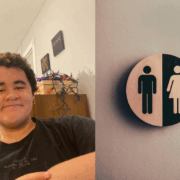
In an attempt to abide by this law, the University of Cincinnati (UC) replaced the gendered bathroom signage around campus to state, “Biological Men,” and “Biological Women.”
UC sent out an email the following day in which they recognized that the current signage using the term “biological” was an error.
The email went on to further state, “We recognize that recent signage updates have raised concerns. Please know that our intention was never to withhold important information or create uncertainty. The university’s requirement to comply with the law does not take away from its commitment to creating a learning environment that fosters opportunity and develops educated and engaged citizens.”
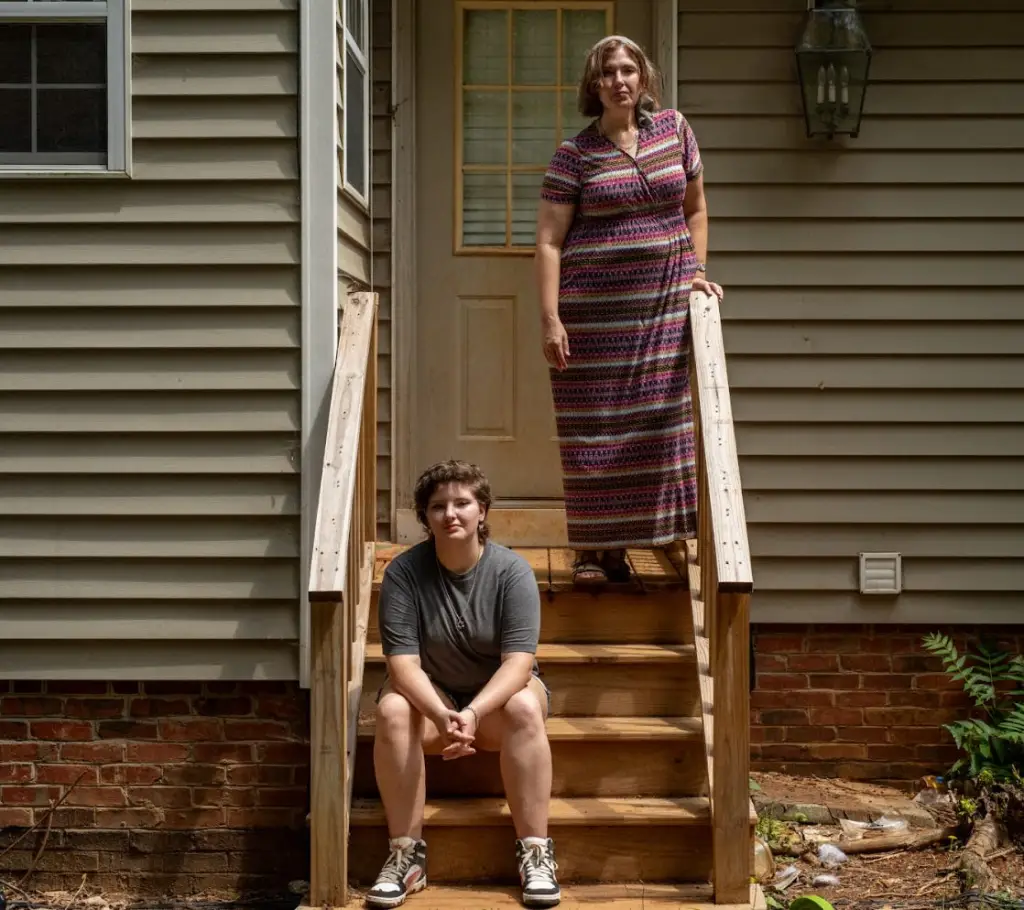
As a response to the university, Simone Balachandran aka Simon Brine, associate professor and environmental engineering educator in the department of chemical engineering, called for trans women and allies to show up to the locker rooms in protest. In early March, Brine, along with several other trans women, went into the men’s locker room, stripped down naked, and talked to the cisgender men in the bathroom.
“I felt powerful. I wanted to force them to see what a trans woman’s body looks like. When people see trans bodies, it will change their minds,” Brine said. When asked about her thought process behind the protest, Brine responded, “It is called activist judo. The idea is not to try and win; it is to try and lose, with the reasoning coming from the reality that the law is not going to be in your favor, but you can exploit the loss. I am going to follow the law, and the law allows me to get naked in the locker room and force you into a position where you have to recognize my existence.”
“When we asked the men there what they thought about the law and the sign, all of them thought it was ridiculous and thought we should be in the other locker room. One person even thought they were going into the wrong locker room,” Brine said.
But do trans and gender non-conforming students actually feel that the university is committed to fostering a safe and effective learning environment?
Noah Wardega, a recent UC graduate, does not think so. “My first thought was that it is impractical. How could they even enforce that? But, ever since the policy was put in place, I stopped using the bathrooms on campus.”
When asked about the impact the policy had on their life, Seven Kiener, a senior social work student, said, “It caused me to completely reevaluate my relationship with the service work I was doing for the university. I have completely stepped away from any UC-based groups and changed my plans for grad school so that they no longer include UC.”
It is clear the law has rattled trans people on campus, and when asked how UC can better protect trans students, Eliza Guerra, a university member, said, “We need more classes and instructors teaching queer authors and content without fear of anti-DEI policies.”
But can professors and staff actually do that?
SB 1, the “Advance Higher Education Act,” requires institutional neutrality on controversial political or global matters while also requiring institutions to conduct annual faculty reviews.
So, when the Lemkin Institute for Genocide Prevention and Human Security released its third red flag alert warning that the United States is within the early to middle stages of a genocidal process against trans people, “the goal of which is to completely erase transgender people not only from public life but also from existence in the U.S. and globally,” there is a real question about how professors would even be able to bring this report up.
Brine believes that to present this to a classroom of students, you would have to also present the conservative argument regarding transgender rights.
As of today, UC has since removed “biological” from their bathroom signs, but what were now gender neutral bathrooms have since turned into single-use bathrooms.
https://queerkentucky.com/wp-content/uploads/2026/10/Bathroom-Signage-at-UC-Anti-Trans-Laws.webp6681200Avery Smithhttps://queerkentucky.com/wp-content/uploads/2024/05/Queer-Kentucky-White-Logo-300x132.pngAvery Smith2026-11-09 09:00:002026-11-09 09:00:01Trans Women Took Their Protest of “Biological” Bathroom Signs Into the Men’s Locker Room
Transgender people from all unique walks of life have a very different relationship with fashion than their cisgender peers. For transgender youth, how they choose to dress themselves can have a wide variety of purposes in their day to day lives. For many trans people, how they dress can often impact how they affirm their own gender, relate their gender expression to others, and protect themselves and their community. With what feels like limited spaces to celebrate transgender bodies, and the constant commentary on trans expression from cisgender peers, transgender youth are looking inwards. Through this they are finding home within themselves and their community through dress.
Stone (They/Them), 23, Hometown: Roebuck, SC
“What item of clothing was a milestone in your transition?”
Stone: This orange dress that I was able to turn into pants. A big thing to me is androgyny. Having a dress and knowing that I can wear whatever with it really brought out that experience. And can I even say it’s mine if I didn’t make it my own? I don’t have enough dresses and skirts but I’ll get there.
With clothing being so attached to gender expression in our society, the ability to modify that clothing can be very important to many trans people. Clothing can determine much of how you’re perceived by others. With most mainstream clothing often being designed around the gender binary, altering garments to be more androgynous/fitting can be deeply fulfilling.
Kenni (She/Her), 22, Hometown: Delhi Township, Ohio
“Do you find home and gender euphoria in clothing that people might imagine to be a bit more physically restrictive, and if so what garments?”
Kenni: Honestly my heels. With my thigh high boots, you have to wear them for a while and work them in, but once you’ve had them for a while I feel like you can do anything in these heels, it feels like I am just wearing some gym shoes.
“Does your dress inform how you feel within your body or do you think it more informs what you can accomplish with your body?”
Kenni: Definitely the latter. Sometimes you have to know you can’t be dancing the absolute most in a little dress, but I will [still] be dancing around busting my ass.
Way (She/Her/Hers), 21, Hometown: Loogootee, Indiana
“How does your career in musical theatre and acting impact your dress and transition?”
Way: Dress in a lot of ways is everything. It’s what the people behind the table like casting directors and artistic directors see first before you even open your mouth. I want to ensure I am representing myself in the most authentic way without dampening who I am.
“Why do you think hyper utilitarian garments (for example carabiners, cargo pants, combat boots) are so popular amongst trans people?”
Way: [In my opinion], queer people are overwhelmingly more common amongst the working class because there is less energy available to try to hide something. We make up a good part of the labor force. There is also this idea of needing to be ready to be equipped to stand up for yourself and being ready to help and protect other queer people.
Clothing not only serves as a means of expression but also for everyday utility. Sporting a more utilitarian look is a form of anti-fashion. Rejecting consumeristic, highly gendered, and rigid fashion standards. Not only for comfort and mobility, but also for the very genuine purpose of expressing one’s authentic identity.
Emmet (They/He), 24, Hometown: Anderson Township, OH
“What was it like growing up queer and trans in Anderson? Did you feel like you had to make any compromises in your dress to be safe?”
Emmet: It was one of those things that was never talked about in my household. I grew up religious and homeschooled so I didn’t get to see a lot until I got my first barista job when I was 18. I was introduced to people that used different pronouns, that were trans and queer. Anderson has gotten better but it’s not the most accepting place. At first when I was newly queer I would definitely ‘tone it down’. As I have grown into dressing how I feel it’s still very scary and intimidating. You never know how people are going to respond to crazy makeup or a shaved head. I am going to look queer no matter what. Travelling around Cincinnati for sure changes how I dress, closer to downtown I really get to go to the max with it.
“If dressing ever felt like a costume, when did it stop feeling like a costume?”
Elliot: Looking back in my early transition, I painted on my eyebrows and I would make facial hair with my makeup, it felt like I was performing the most hyper masculine. When 2020 hit, I loved experimenting and playing with makeup and that is when I got a little bit more feminine. It hit me that I didn’t have to perform as much, I could use it as a chance to be more fluid, more for myself than the people around me. It really just matters day to day about how I present myself. That fluidity has allowed me to really find myself and connect to my body.
As fluid as gender identity and expression can be for many transgender people, one of the many utilities of dress can be its ability to change with us. This not only allows for us to accurately portray ourselves to the world at large, but also aids in us being able to break down internal biases and shame. Experimentation and fluidity in one’s dress can become an essential part of the journey towards true self expression.
Thank you to Secondhand Circus and GG for allowing us into your space, and thank you for what you do for the Cincinnati transgender community.
https://queerkentucky.com/wp-content/uploads/2026/10/Arlo-Grimaldi-Queer-Utility-in-Fashion.webp6681200Arlo Grimaldihttps://queerkentucky.com/wp-content/uploads/2024/05/Queer-Kentucky-White-Logo-300x132.pngArlo Grimaldi2026-11-06 10:00:002026-11-06 10:00:03The Orange Dress That Became Pants: How Trans Youth Find Home in Their Clothes
For many transgender Ohioans, recent legislation has reshaped the conversation around healthcare, education, and safety. At the center of these conversations, with a central mission to provide facts around these sometimes confusing subjects, is TransOhio. In the summer of 2026, I conducted an interview with Dara Adkison, the Executive Director of TransOhio, a nonbinary, genderqueer, trans-masculine person who previously served on the TransOhio Board of Directors for two years.
What was the driving force that led to the start of TransOhio?
TransOhio has been around for 21 years in a variety of different iterations. We started in 2005 when there wasn’t a trans organization in the state. We started off as a Zine actually, providing resources, community spaces, and message board kind of stuff. It was a place for different kinds of voices to be heard. We started making zines again recently. We have a rolling admission for when we have enough submissions to put together something cool.
What are some of the tangible ways in which you’ve been able to carry out your mission of protecting and advancing the rights of trans, nonbinary, intersex, and gender nonconforming people in Ohio?
We are hard focused on what is tangible. We don’t do performative at TransOhio. We have a longstanding (over 10 years now) legal clinic for anyone who needs care, all free for any trans person who needs it. We’ve helped over 4000 trans people in Ohio with name changes and gender marker changes. We also have an emergency fund which has exponentially scaled in the last two years. We provide emergency help for people who reach out and might be in a dangerous situation. We have recently passed out $250,000 out to our community statewide. If people are trans in Ohio and are in need of help, we’re gonna help them.
TransOhio’s vision mentions wanting to increase lesbian, gay, bisexual, heterosexual, and ally understanding/cultural awareness of the Ohio transgender community. In your eyes, what does being a good ally to the trans community mean today?
I think that being an ally today is not being afraid to stick your neck out. We don’t need allies that are going to wave a flag, but then be silent when they see a trans person getting yelled at on the street. We don’t need allies that will wear a love wins pin, but then when they see the gender expansive person at their job getting discriminated against they don’t say anything. We need people to be vocal in those small moments that are very large for the people being directly impacted by them. We need people to be vocal with their legislators. That’s where I see allyship.
Your brochure mentions advocating for laws and policies which best protect our most vulnerable community members. In what ways do you advocate for those with intersecting identities, especially when factors other than transphobia (like racism and sexism) are sometimes still very present within trans communities?
At TransOhio, whenever we ourselves are running a program or partnering on an event, we do everything we can to not just make the spaces inclusive, but welcoming. We are very intentional about making sure people from a variety of intersecting identities are in our leadership, and also in the room when we are figuring out plans and programs. As a white trans leader, I am personally very vocal about making sure doors are open. You won’t find me doing an all white panel.
The Cleveland clinic recently agreed to a 20 year ban of gender affirming treatment for patients under the age of 18. This includes puberty blockers, hormone therapy, and other treatments. You’ve made efforts to put out many facts about this settlement. As there are unfortunately more laws being put out very similar to this settlement, how do you counteract the ambiguity? How do you lessen the confusion surrounding them?
Our main tactic for lessening confusion is to try and put out as much correct information as possible. We kind of consider ourselves the disinformation assistance for trans people in Ohio, because we are always going to say what’s correct. I know that can sound a little obnoxious, but we put a lot of time and effort into making sure we are sharing correct information. We also know how much people trust us to be giving them correct information.
For the Cleveland clinic stuff, our main conversation moving forward is what we can do about it? HB68 is still in active litigation, but even if that litigation ends up going our way, then we now have this settlement in place that will affect Cleveland clinic in perpetuity for 20 years. There’s nothing that the courts can do about that. What we can do is make Cleveland Clinic look like idiots for complying in an effort to have no other hospital want to comply excessively in the way that they have. They did not NEED to make this settlement. We don’t want our hospitals caving into the Department of Justice, not about trans healthcare, and not about anyone’s healthcare. Coming back to talking about things good allies can do: Allies who have financial power are the ones that end up getting listened to. This is a great moment for those people to step up and talk to the hospitals and say that we don’t want this kind of compliance. The Cleveland Clinic has made a very intentional choice about who they want to be as a medical leader, not just in Ohio but globally, and they should be shamed for it.
Do people often reach out to your organization for clarity regarding these things? If so, in what manner?
I think it depends what kind of clarity folks are looking for. We definitely have a fairly substantial social media footprint. Regardless of my personal opinion of social media, it is still a very efficient and active way of getting information out, especially in some more rural areas. When we’ve had complex bill conversations, we’ll have discord sessions for open community discussion about potential impacts, potential contingency planning, and generally just answering questions. People also reach out to us with more personal questions. You can reach out via email, messenger, and different chats on various platforms. We don’t recommend approaching myself, or any of our board members if you see us just trying to exist as a queer person out in the world please. Our main inbox [email protected] is a good one.
Aside from the plethora of information that your own organization provides, what other organizations or resources do you often find yourself recommending to trans individuals struggling with staying informed about their rights?
In Cincinnati specifically, Transform provides some really fantastic support services, groups, social programming, or even their free closet. Trans Masc Cincy is [another group] really focusing on trans youth. They have some really great support groups for masc presenting folks. In terms of other places for staying on top of the ever-changing landscape of things, Advocates for Trans Equality (A4TE) nationally advocates for trans rights. They have great information, particularly other kinds of guides existing outside of Ohio. If folks were born in other places sometimes we will send them over to A4TE’s guides.
In your mission you also mention providing social activities that are inclusive and foster pride in the Ohio transgender community. What can someone who might be anxious about attending these events expect from them? What’s a specific and successful activity that you’ve put together?
We are in the 27th year of our annual gathering, the TransOhio Symposium. We are actually having it in Cincinnati this year for the first time. It’s the gathering of about 200-400 trans people over the course of a weekend. It’s a really unique kind of environment. There aren’t a lot of other opportunities to have a social and informational sharing community meal with that many other trans people. When we’re looking at what a successful symposium would look like, it sometimes can be very overwhelming. We have people that come and it’s their first time presenting as themselves in a community space. We have people who it’s their first time meeting other trans people. We have folks who drive in from other states with a parent or friends because they don’t have anything like this near them. We really take responsibility in knowing the kind of safe space that we’re trying to create. It’s all community and trans driven. There’s always a lot of food and quiet spaces. It’s super accessible for people to just relax and take a sec, and you can come and go as you please. This is a core program for us and a major undertaking.
With this magazine we are focused on reaching trans youth. What personal advice do you find yourself giving to trans youth that are particularly struggling with fear and acceptance right now?
I don’t think there’s one perfect thing to say, just because everyone’s experience with their understanding of their gender is so different from person to person. Speaking personally for what I would have said to my younger self is that being unapologetic sooner is extremely freeing. For people that don’t have accepting families it can be so complicated, but giving yourself permission to exist with multiple feelings at once is also okay. You can be frustrated with a parent, and also love them, and also want to be respected, and also be okay with having all those complex feelings and knowing exactly who you are at the same time. It doesn’t have to be binary, just like our genders don’t have to be binary. It’s okay to give yourself permission to evolve and grow and change. I would also strongly encourage reading queer history, because I know I didn’t learn ANY in school. My three favorite quick crash course recommendations would be “Saving Our Own Lives”, “Queer Trans and Mostly Black: a Mutual Aid Story from the Last 50 Years”, “Black on Both Sides”, and “Before we Were Trans”.
https://queerkentucky.com/wp-content/uploads/2026/10/queer-cincinnati-protect-black-trans-women-kami-pankey.webp8011400Nyla Davieshttps://queerkentucky.com/wp-content/uploads/2024/05/Queer-Kentucky-White-Logo-300x132.pngNyla Davies2026-11-05 01:20:002026-11-05 01:21:34“We Don’t Need Allies That Are Going to Wave a Flag”: A Trans Leader on What Real Support Looks Like
Here’s where Louisville mayoral candidates Craig Greenberg and Shameka Parrish-Wright stand on LGBTQ+ issues ahead of the Nov. 3 election.
This is the first Louisville mayor’s race without party labels on the ballot. A 2024 state law made mayor and Metro Council elections nonpartisan starting this year, so a straight-party vote won’t cover either race. Voters have to pick each one individually. Candidates can still share their party affiliation while campaigning.
Early in-person voting starts Thursday, Oct. 29.
There are five candidates vying for Louisville mayor this year. Mayor Greenberg, who was first elected in 2022, and Parrish-Wright, the District 3 Metro Council member, are both Democrats and will appear on the ballot. Dave Biggers, JusAustin R. Lane, and Jeff Yocum are also running as write-in options for Louisville mayor.
Queer Kentucky reached out to all five candidates and asked them the same six questions about health, education, and other issues important to the LGBTQ+ community. Only Greenberg and Parrish-Wright responded to those questions in writing by publication time. The questions and candidate responses have been lightly edited for style, grammar, and clarity.
Question: What is your stance on gender-affirming care bans?
Greenberg: I do not support bans on gender-affirming care. Everyone deserves access to medical care free from political interference. Decisions about healthcare should remain between individuals, their families, and their doctors.
Parrish-Wright: I oppose bans on gender-affirming care. Healthcare decisions belong with patients, families, and their medical providers, not politicians. As mayor, I would support access to affirming care through city services and speak out against efforts to restrict it.
Question: What is your stance on Medicaid defunding?
Parrish-Wright: I oppose cuts that take healthcare away from people who depend on Medicaid. I would advocate for strong state and federal support and work with local providers to help residents connect with coverage and care.
Greenberg: I strongly oppose cuts to Medicaid that jeopardize access to quality, affordable healthcare. Medicaid is a lifeline for children, seniors, people with disabilities, and their families. We have already seen the impact of Medicaid cuts as a result of chaos in Washington, and these reductions are putting Kentucky families — in both rural and urban communities — at risk. I firmly believe that elected officials should be looking to expand access to affordable healthcare, not take it away from those who depend on it most.
Question: What is your stance on rural healthcare access?
Greenberg: Access to quality, comprehensive healthcare should never depend on where someone lives. Rural Kentucky faces significant barriers to care, including doctor shortages, long distances to receive treatment, and hospital closures. Addressing these challenges requires that we protect Medicaid access, support the providers treating rural communities, and invest in the services that keep people healthy. Addressing this issue should be a top priority for candidates running for office across the Commonwealth.
Parrish-Wright: People in rural communities deserve timely, affordable care. Louisville can be a partner by supporting regional healthcare providers, improving transportation connections, and advocating for the resources rural communities need.
Question: What will you do about the passage of anti-LGBTQ+ legislation?
Parrish-Wright: I would use the mayor’s office to oppose discriminatory legislation publicly, protect LGBTQ+ residents in city services and employment, and work with community organizations to connect people with support. Louisville should be a welcoming city where everyone can live safely and openly.
Greenberg: As mayor, I have consistently stood up for LGBTQ+ Louisvillians through both policy and direct action. Louisville Metro Government has received a 100% score on the Human Rights Campaign’s Municipal Equality Index every year since I took office, reflecting our commitment to nondiscrimination and equitable access to city services.
As mayor, I directed Metro Government to defend Louisville’s Fairness Ordinance in court against a challenge involving a business owner who refused to serve LGBTQ+ clients. In terms of policy, we have worked in coordination with advocates at the Fairness Campaign to oppose legislation that threatens local nondiscrimination protections, including HB 468 during the 2026 legislative session.
My administration also recognizes that representation matters, which is why I have worked intentionally to cultivate a culture in Metro Government that embraces and supports LGBTQ+ employees at all levels of government. I am proud to have appointed the first openly gay deputy mayor in Louisville history, and we proudly fly the Pride flag every day outside of Metro Hall. This effort also extends to supporting LGBTQ+ employees and their families by ensuring our benefits include comprehensive health coverage that fits their needs.
I am committed to improving the lives of LGBTQ+ residents, employees, and families in Louisville. That means embedding equality into our policies, our advocacy, and our leadership. That is a standard I have set and will continue to uphold as mayor of Louisville.
Editor’s note: The case Greenberg refers to was filed in 2019 by Louisville wedding photographer Chelsey Nelson, who sued to avoid having to photograph same-sex weddings. A federal judge ruled in her favor, and in March 2026 Metro Government agreed to pay $800,000 in attorneys’ fees and costs.
Question: What is your stance on “Don’t Say LGBTQ+” classroom policies?
Greenberg: I oppose policies that stigmatize LGBTQ+ people or prevent students from learning in inclusive environments. Every student deserves to feel safe in school, and every family should know their child will be treated with dignity in the classroom. The government should be focused on delivering a quality education for every child, not targeting LGBTQ+ people.
Parrish-Wright: I oppose policies that erase LGBTQIA people from classroom conversations or make students and educators feel unsafe. JCPS is an independent school district, so the mayor cannot set its curriculum, but I would speak up for inclusive, age-appropriate education and support LGBTQIA students and families.
Question: What is your stance on pronouns and bathroom policies?
Parrish-Wright: People should be addressed by the names and pronouns they use, and students should be able to use facilities consistent with their gender identity. I support policies that protect students’ privacy, safety, and dignity.
Greenberg: Students should be free to fully participate in school without fear of harassment or discrimination. School policies should acknowledge students’ identities, uphold privacy, and ensure all students have access to the appropriate facilities. We should focus on creating welcoming environments for all students, and that includes respecting students’ identities.
https://queerkentucky.com/wp-content/uploads/2026/10/louisville-mayor-greenberg-parrish-wright.webp6681200Alejandra O'Connell-Domenechhttps://queerkentucky.com/wp-content/uploads/2024/05/Queer-Kentucky-White-Logo-300x132.pngAlejandra O'Connell-Domenech2026-10-27 14:00:002026-10-28 11:57:59Where do the candidates for Louisville mayor stand on LGBTQ+ issues?
In the spring of my freshman year at the University of Cincinnati (UC), Ohio Senate Bill 1 was moving through the state legislature. The bill, which would take effect on June 27th, 2025, requires Ohio’s public colleges and universities to maintain institutional neutrality and “intellectual diversity” on certain “controversial beliefs and policies” including climate policy, electoral politics, foreign policy, immigration, marriage, and abortion. It also bars faculty from “indoctrinating” students toward a position on these topics, bars the institution itself from taking an official stance, and eliminates diversity, equity, and inclusion (DEI) offices, departments, and required trainings at the same institutions.
UC, however, wasted no time adopting these principles, even before the bill became law. UC President Neville Pinto complied in advance, stating in a public email on February 21st, 2025 that “it is untenable to operate as if noncompliance with these directives is an effective option” and that “we are committed to meet our compliance obligations.” Soon after President Pinto’s address, DEI offices including the LGBTQ+ Center, the Women’s Center, Ethnic Program Services (EPS), and the African American Cultural Resource Center (AACRC) were immediately shut down. Many students, myself included, felt this response failed to address their concerns.
That same spring, the university began replacing bathroom signage with new “biological men” and “biological women” signs. This action was a result of Ohio Senate Bill 104, the “Protect All Students Act,” signed by Governor Mike DeWine in November 2024, which prohibits members of one biological sex from using restrooms designated for the opposite biological sex and erases multi-occupancy restrooms open to any gender. The law does require institutions to provide alternative accommodations, such as single-occupancy facilities, but the bathroom signage UC implemented was worded of their own accord. The new signs were adopted quickly, sending a clear message that transgender, nonbinary, and intersex students were not welcome. Because of this, many students became worried that their university housing options would no longer be viable if the available restrooms did not match their “biological sex.” As a trans man living in freshman dorms at the time, I worried for my housing security.
My fears came true when my fellow trans roommates Seth Rane, Grayson Castellucci, and I were relocated to the margins of campus mid-spring semester. We were originally approached in an email by UC’s Director of Resident Education & Development at the time, Trent Pinto, on February 10th, 2025. Pinto invited us to a “conversation regarding upcoming changes to the residential experience.” This meeting was held at UC’s LGBTQ+ Center before it was dissolved, and its conclusion resulted in two options: 1) Stay in our dorms and travel to the women’s dorms to use the restroom, or 2) Relocate to an off-campus apartment where we would have access to a personal restroom.
Option 1 was an unreasonable request for us. Not only was this option directly invalidating our identities as men, but it was also oversaturating the communal space and required us to travel to a different floor or building to use the restroom. Because of this, my roommates and I conceded to option 2 and were relocated to an apartment near campus. While UC quickly responded to a flood of backlash by removing the bathroom signs, the damage had already been done. What was supposed to be an exciting year to make new friends and invest in our studies instead became a year where we were isolated from our peers and pulled from our classes to accommodate the move to our new apartment.
Amidst the predatory legislation and considerable lack of LGBTQ+ spaces, we quickly realized we were not alone in our isolation and observed an almost solemn environment throughout campus. To combat this, my roommates and I decided to make a change.
One day after class, I came home to Seth and Grayson sharing the idea of starting a queer fraternity: Phi Alpha Gama (PAG). At first, we treated it as a joke. After all, it is customary across university Greek life to exclusively allow one gender (women in sororities, men in fraternities). It seemed absurd to imagine visibly queer or transgender individuals enjoying this same staple of college life, but the more we thought about it, the more we realized that PAG’s existence might be a space that UC’s LGBTQ+ community desperately needed: a space made by queer people for queer people to enjoy without consequence.
A fraternity was the best option for us to organize an LGBTQ+-friendly community because we felt that queer individuals deserved to be included in traditional college experiences that they may otherwise shy away from. We gathered a few close friends to join PAG, but we realized that to expand our community past our small clique, we needed to give our fraternity structure. To do this, we created the governing body of PAG, consisting of the following roles: president, vice president, secretary, recruitment officers, philanthropy chair, social media chair, diversity chair, and grievance officer.
We didn’t expect PAG to be more than a small community at first, but soon, friends of friends came to our parties and told their friends about PAG, and it became a vast network of students where all are welcome. During our recent spring rush campaign, we had a great turnout, with around 30 members present and 10 rushees. We implemented different group bonding activities including ice breaker games and a friendly s’mores roasting competition. However, the main standout of this event came about when several people approached our front yard asking about the event we were hosting. What stood out to me the most was how accommodating the members of PAG were to total strangers. Seeing a community that I helped create foster such a kind and welcoming environment made me realize how important PAG was to creating a safe space for queer and allied individuals to be themselves and make new connections.
https://queerkentucky.com/wp-content/uploads/2026/10/university-of-cincinnati-queer-fraternity-phi-alpha-gama.webp15302000Eddy Risiminihttps://queerkentucky.com/wp-content/uploads/2024/05/Queer-Kentucky-White-Logo-300x132.pngEddy Risimini2026-10-26 08:00:002026-10-26 08:00:01Pushed to the Edge of Campus, These Trans Students Started Their Own Fraternity
As you flip through the pages of the very first issue of the Trans Cincinnati Magazine, I wish to inspire each and every one of you to find hope and community in the stories we have curated.
This magazine is an accumulation of authentic voices, anecdotes of trans joy, and critiques on current predatory legislation. Experiences ranging from liberation, to discrimination, to connection made within the community are depicted. I am more than eager to spotlight residents of the beautiful city of Cincinnati and their real, unembellished trans experiences. I also want to thank Queer Kentucky for the opportunity to expand their outreach to the state of Ohio, giving us the chance to spotlight important resources within our state. Additionally, I would like to mention TransOhio, Transform, Trans Masc Cincy, and Equitas Health. These organizations work to carve out a rightful place for trans youth. Whether that be through creating gathering spaces for the queer community, helping folks understand how to secure affirming care, or simply providing a safe space for those with intersecting identities, these organizations all show up for trans Cincinnatians.
In a world where trans youth are so often made to be silenced, a publication like this is extremely important. The statements within each article are testimonies about trans lives from actual trans individuals. From start to finish, this collection was brought to life by trans youth, for trans youth. Our writers and artists have poured talent, beauty, and truth into this project, and love can be felt throughout every page. When presented with the chance to work as co-editor of this project, I leaped at the opportunity. I am proud to be a part of this community, and to be completely surrounded by visionaries in my day to day life. I am consistently reminded of the radiance that exists in Cincinnati’s trans youth, along with the ambition to actively create a future in which all identities are honored and respected. What you are about to read is not only proof of that ambition, but documentation of firsthand interactions with the current cultural/social state of the world.
If you are not trans and reading this, take it as an opportunity for education and understanding. Question the ignorance you may possess surrounding trans identities. Allow this set of articles to dismantle harmful beliefs and behaviours. If you fall anywhere under the trans umbrella and are reading this, take it as an opportunity to see trans love, joy, and strength reflected back upon yourself. Allow the support of our community to uplift and empower you. So much beauty exists within your identity. Hold onto that love, beauty, and power. Despite those who misunderstand you, despite those with hate in their hearts, despite challenges you are bound to face throughout life. We fight together for your right to be your authentic self. Let these stories act as a vehicle of joy, as something to remind you that you are not alone, and you are worthy of care.
Nyla Davies, Co-Editor
https://queerkentucky.com/wp-content/uploads/2026/10/queer-cincinnati-beyond-the-binary-cover.webp1400933Nyla Davieshttps://queerkentucky.com/wp-content/uploads/2024/05/Queer-Kentucky-White-Logo-300x132.pngNyla Davies2026-10-23 09:00:002026-10-25 13:30:35“You Are Not Alone”: A Letter From the Trans Youth Who Made This Magazine
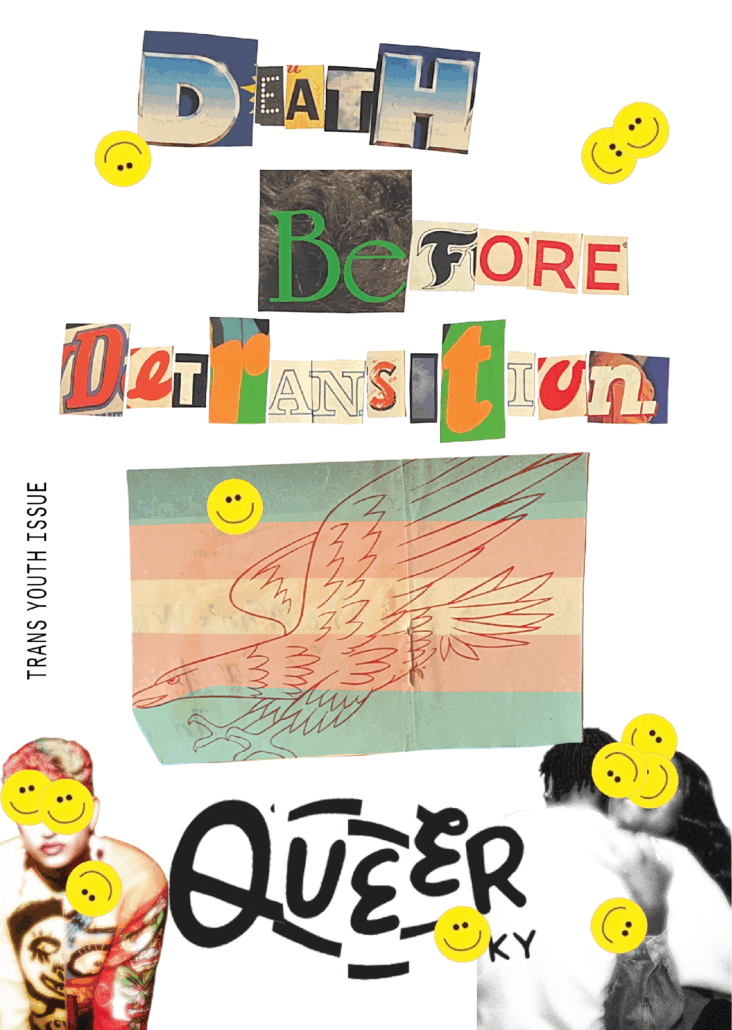
About this magazineQueer Cincinnati: Beyond the Binary is a magazine made by Cincinnati trans and nonbinary youth, modeled on Death Before Detransition, a magazine made by Kentucky trans youth. It is funded by the City of Cincinnati through Community Shares of Greater Cincinnati and managed by regional LGBTQ+ nonprofit publisher Queer Kentucky.
Queer Cincinnati: Beyond the Binary, a free magazine by and for trans and nonbinary young adults ages 18 to 24, launches this week with stories ranging from campus organizing to the search for sober queer spaces.
“I think it’s really important for trans and nonbinary youth to see something from their peers, and also put their own work into the magazine,” 21-year-old co-editor Nyla Davies told Queer Kentucky. “The magazine was completely brought about by trans and nonbinary people, for trans and nonbinary people.”
Davies, a student at the Art Academy of Cincinnati who wants to pursue writing and journalism, helped lead the magazine after Avery Plummer, an adjunct instructor, brought the opportunity to the school. Plummer helped guide Davies through the process of taking the magazine from concept to completion and served as co-editor along the way
Queer Cincinnati: Beyond the Binary, a project that began in April 2026, launches online on October 23 and contains nine articles ranging from 500-1000 words.
For the people who created it, the magazine has a special meaning.
“This article is a good way for me to get my writing out there, and to call other people to make changes at their own institutions,” said 20-year-old Eddy Risimini, a writer for the magazine.
Risimini’s story discusses the hiatus of some of the queer clubs at the University of Cincinnati following anti-DEI legislation like Ohio Senate Bill 1.
Ohio SB1 requires public colleges and universities in the state to “maintain institutional neutrality and ‘intellectual diversity’ on certain ‘controversial beliefs and policies’ including climate policy, electoral politics, foreign policy, immigration, marriage, and abortion.”
Universities and colleges were also impacted by the bill’s elimination of diversity, equity, and inclusion (DEI) offices, departments, and required training. More information about SB1 can be found in Risimini’s piece.
He said that as a student at the school, he hopes the magazine article will help to shine more light on the LGBTQ+ students and community there.
Harper Thomson, a 23-year-old writer and photographer for the project, said her article was intended to shine a light on a subject that may not often be talked about: the lack of sober spaces for queer people in Cincinnati.
“It means a lot to be able to talk about that, and make other people feel like they’re not so alone in that situation,” Thomson said. “I really want people to think more critically about the spaces they spend time in, and consider how accessible those are to everyone around them.”
Thomson went on to say that a lack of spatial consideration can lead to exclusion. She said this doesn’t just apply to sobriety, but also to spaces that are safe for people of color or transgender people.
“Our first goal is to spread joy, but we also know there’s a responsibility to talk about some of the things that not everybody wants to talk about,” Davies said.
The magazine has a lot of stories representing Cincinnati trans youth and their community, but also articles calling out problems in the city, too.
“There are some sad stories, and there’s some community-building stories,” Davies added. “There’s a lot of range in the magazine.”
Thomson said she thinks it’s important to give transgender people a space to speak and to feature a wide variety of transgender voices. The magazine chose writers by using an open call, which Thomson said gave everyone a chance to get their voices out into the world.
“It’s important to remind other people that we do have a voice, and in some ways, we have more power than people in the administration,” Risimini said.
The project also includes various creative elements, with abstract, colorful illustrations of trans and queer sentiments done by several artists. Illustrators include Cocoa Durrett, Kami Pankey, Sav Hoyt, and Ian Johnson. The cover art was painted by Emil Wiersma.
Photos done by Thomson include images from the UC Trans Frat, a queer-owned vintage store called Secondhand Circus, and a piece of artwork that Murray Foust, the late trans Northern Kentucky University student who died earlier this year, had gifted to their partner.
Availability will primarily be online, but some free print copies will be available to the public at the Art Academy of Cincinnati and at the Lesbian Archives.
https://queerkentucky.com/wp-content/uploads/2026/10/queer-cincinnati-beyond-the-binary-cover.webp1400933Jules Crawleyhttps://queerkentucky.com/wp-content/uploads/2024/05/Queer-Kentucky-White-Logo-300x132.pngJules Crawley2026-10-20 13:06:222026-10-25 14:00:58After Death Before Detransition, Trans Youth Across the River Make a Magazine of Their Own
But while The Trevor Project offers crisis intervention and advocacy for queer youth, its sister organization focuses on a different goal: free professional artistic mentorship to give queer youth a creative and artistic outlet.
“We cannot forget about the arts,” said The Future Perfect executive director David Artavia. “Our big mission is showing that the arts are crisis intervention and always have been. We’re trying to remind the world to give young people an opportunity [for artistic expression] so that it doesn’t turn into a crisis. Art has always been that for people, and when it gets defunded, those opportunities become fewer.”
“I’m Feeling Queer Today” is hosted and produced by LGBTQ+ young people ages 16 to 22 who live all over the U.S. Over 12 episodes, the hosts sit down with artists shaping queer culture like drag queen Pattie Gonia, actor and comedian Oscar Montoya (“Dimension 20,” “Minx”), writers Armistead Maupin, Tessa Barcelo and Gio Navas (“The Bookish Songs Collective”) and archivist and historian Donna Albino.
“The young people who find their way to The Future Perfect Project come because they have something to say to the world,” said co-founder Lecesne in an email interview. “Art is this deep driving desire that motivates them to reach out beyond themselves and become part of our ever-expanding network. No one needs to tell young people that creativity is a human right; they are living proof. They feel it in their bodies and they live it with their lives. All you have to do is take a look at some of their work on our website to know that this is true. By daring to express themselves, they are showing us what the future looks like, sounds like, feels like.”
What’s on season 4 of the “I’m Feeling Queer Today” podcast?
Season 4 of the podcast is broken into four sections of episodes airing every other week, focusing on queer literature, drag, queer fantasticals and journalism and radio. The hosts of this season are Alex K. Masse, Eric Eubank, Lily Ariel Mueller, Parker Mackenzie, Samuel Smalls Jr., and Zorian Edwards. The outline is as follows:
Queer Lit (July 30 to Aug. 27): Featuring writers Armistead Maupin, Tessa Barcelo and Gio Navas of “The Bookish Songs Collective” on LGBTQ+ people in books
Drag (Sept. 10 – Sept. 24): Featuring drag artist Pattie Gonia, Junior Mintt, drag archivist Sarah Calise, The Lexapro, Klondyke, and Paradox, on craft and joy in the drag art form
Queer Fantasticals (Oct. 8 – Nov. 19): Featuring actor and comedian Oscar Montoya, speaking on fantasy writers building worlds where queer kids get to be heroes
Journalism and Radio (Dec. 3 – Dec. 31): Featuring archivist and historian Donna Albino, speaking on telling queer stories for a living
In each season of the podcast, the cohort records for eight months and coordinates with producers to complete the project. By the end of the season, participants can use the podcast as clips to continue their artistic careers.
“These young people are so talented,” Artavia said. “They are so creative and they have nowhere to put it, because there’s nothing around them that is supportive of their creative obsessions. We help them develop their voice, whatever their artistic expression is. That’s why we really give them the mic here for the podcast, and encourage them to find the topics they’re passionate about.”
Artavia also said he hopes to push The Future Perfect Project into more of a spotlight this season and “tell the world what we’ve been doing all this time.” Ideally, the nonprofit will be able to form more coalitions with other partner organizations and facilitate more incubators.
“We are in a defunding crisis, and now is the time for everyone to say this,” Artavia said. “So many kids have told us, ‘adults care about me dying but no one seems to care about me living.’ Queer youth need expression and activities and something to do. That’s where we’re trying to fill that gap.”
LGBTQ+ and allied young people across Kentucky have a chance this summer to help build an original musical about American queer history, and organizers say extensive performance experience is not required.
Houses on the Moon Theater Company, in collaboration with History UnErased, Inc., is hosting a four-day creative residency for youth ages 13 to 23 at ACT Louisville. Participants will help shape a new original musical, YOUR HANDS ARE THE ROAD: A Ride Upon the Stage through Queer American History.
The project uses theater to bring often-overlooked stories from queer American history to life. It has been developed with support from the Library of Congress and has engaged students and educators across the country.
The Louisville residency runs July 20 through 23, from noon to 3 p.m. each day at ACT Louisville. Participants must be available to attend all four sessions, and a modest stipend will be provided.
Organizers are seeking a diverse group of actors, singers, dancers, artists, and “deep thinkers” who are interested in exploring how queer history connects to their own lives, identities, and experiences. Through discussion, creative activities, and collaborative theater-making, participants will help shape the future of the musical while exploring questions about identity, history, belonging, and resilience.
“We want to hear how young people relate to our shared queer history, what it makes them feel, what inspires them, and how these stories connect to their own lives,” organizers said.
Applications are now open. The deadline to apply is July 13, and participants will be notified by July 15.
https://queerkentucky.com/wp-content/uploads/2026/07/queer-history-musical-act-louisville.webp13332000Community Newshttps://queerkentucky.com/wp-content/uploads/2024/05/Queer-Kentucky-White-Logo-300x132.pngCommunity News2026-07-06 18:30:262026-10-10 15:33:44LGBTQ+ Youth Invited to Help Shape New Musical on Queer History at ACT Louisville
The Supreme Court on Tuesday upheld state laws barring transgender girls and women from playing on school athletic teams, in another setback for transgender people.
The court’s six-justice conservative majority, which has repeatedly ruled against transgender Americans in the past year, ruled that state bans in Idaho and West Virginia don’t violate the Constitution. The court unanimously agreed that barring transgender girls and women also doesn’t run afoul of the federal law known as Title IX, which prohibits sex discrimination in education.
Justice Brett Kavanaugh wrote for the court that, “states may maintain women’s and girls’ sports for biological females.”
More than two dozen other Republican-led states have adopted bans on female transgender athletes, and the decision seems certain to extend to them as well.
Left unresolved by the outcome are lawsuits challenging state laws and regulations in Connecticut, California and elsewhere that permit transgender athletes to compete consistent with their gender identity.
Becky Pepper-Jackson, a 16-year-old high school sophomore in Bridgeport, West Virginia, has been taking puberty-blocking medication, has publicly identified as a girl since age 8 and has been issued a West Virginia birth certificate recognizing her as female. She is the only transgender person who has sought to compete in girls sports in West Virginia.
Pepper-Jackson has progressed from a back-of-the-pack cross-country runner in middle school to statewide champion in the shot put. She beat the second-place finisher by two feet in last month’s West Virginia championship meet.
In the Idaho case, Lindsay Hecox sued over the state’s first-in-the-nation ban for the chance to try out for the women’s track and cross-country teams at Boise State University in Idaho. She didn’t make either squad because “she was too slow,” her lawyer, Kathleen Hartnett, told the court during arguments in January, but she competed in club-level soccer and running.
Prominent women in sports have weighed in on both sides. Tennis champion Martina Navratilova, swimmers Summer Sanders and Donna de Varona and beach volleyball player Kerri Walsh Jennings are supporting the state bans. Soccer stars Megan Rapinoe and Becky Sauerbrunn and basketball players Sue Bird and Breanna Stewart back the transgender athletes.
In 2020, the Supreme Court ruled LGBTQ people are protected by a landmark federal civil rights law that prohibits sex discrimination in the workplace, finding that “sex plays an unmistakable role” in employers’ decisions to punish transgender people for traits and behavior they otherwise tolerate.
But last year, the six conservative justices on the nine-member court declined to apply the same sort of analysis when they upheld state bans on gender-affirming care for transgender minors.
The states supporting the prohibitions on transgender athletes argued there is no reason to extend the ruling barring workplace discrimination to Title IX.
Idaho’s law, state Solicitor General Alan Hurst said, is “necessary for fair competition because, where sports are concerned, men and women are obviously not the same.”
Lawyers for Pepper-Jackson argued that such distinctions generally make sense but that their client has none of those advantages because of the unique circumstances of her early transition. In Hecox’s case, her lawyers wanted the court to dismiss the case because she had forsworn trying to play on women’s teams.
NCAA president Charlie Baker told Congress in 2024 that he was aware of only 10 transgender athletes out of more than half a million students on college teams. But despite the small numbers, the issue has taken on outsize importance.
Baker’s NCAA and the U.S. Olympic and Paralympic Committees banned transgender women from women’s sports after President Donald Trump, a Republican, signed an executive order aimed at barring their participation.
The public generally is supportive of the limits. An Associated Press-NORC Center for Public Affairs Research poll conducted in October 2025 found that about 6 in 10 U.S. adults “strongly” or “somewhat” favored requiring transgender children and teenagers to compete only on sports teams that match the sex they were assigned at birth, not the gender they identify with, while about 2 in 10 were “strongly” or “somewhat” opposed and about one-quarter did not have an opinion.
About 2.1 million adults, or 0.8%, and 724,000 people ages 13 to 17, or 3.3%, identify as transgender in the U.S., according to the Williams Institute at the UCLA School of Law.
https://queerkentucky.com/wp-content/uploads/2026/06/AP26180623246793-scaled.webp17072560Associated Presshttps://queerkentucky.com/wp-content/uploads/2024/05/Queer-Kentucky-White-Logo-300x132.pngAssociated Press2026-06-30 15:49:172026-10-10 15:34:37Supreme Court upholds state laws banning transgender girls and women from school athletic teams
While attending Eastern Kentucky University (EKU), Sandra Carpenter came out as lesbian and joined queer and feminist organizations. That’s where her love for providing support to both LGBTQIA+ youth in metropolitan and rural areas began.
Carpenter was recently appointed as the Executive Director of the Louisville Youth Group, one of Kentucky’s well known LGBTQ+ organizations, and the oldest queer QTBIPOC organization for youth in the south. Now, her mission as director is to reach more rural parts of the state.
“I continued throughout my entire adult life as an out lesbian, so that has been something that has been interesting in terms of reconciling my rural roots with kind of more of the metropolitan queer culture. That is where a lot of my focus is on making sure that we are resources for both kids here in Louisville and continue to also try to build out that network of brave spaces for kids who may also be in more rural parts of the state,” said Carpenter.
Louisville Youth Group (LYG) is a Kentucky-based nonprofit dedicated to empowering and protecting LGBTQIA+ youth and has been active for 35 years providing youth with brave, safe and affirming spaces in which they can connect, develop leadership skills and advocate for themselves.
Carpenter has a decade worth of experience in management and communications that she plans to bring into this role.
“Whenever I came back to Louisville, my big goal was really to get back into this scene where I could use both my research and communication skills alongside my nonprofit experience,” said Carpenter. “I really just wanted to find a professional home where I could merge both in terms of what my values are and what the work is.”
Her background ranges from working with Greater Louisville Inc. as the Community and Talent Engagement Manager to serving as the Communications Coordinator for the Louisville Pride Foundation.
Carpenter believes in the strong impact that strategic storytelling has on extending reach and highlighting LGBTQIA+ communities’ voices.
Carpenter said LYG’s storied history is hugely important in terms of making sure that the actual experiences of youth they serve are being heard.
“Be that through advocacy, in terms of allowing experiences to be shared so that we can advocate for the best interest, but also just allowing folks in our organization, like through our youth leadership council, to have a real voice within the organization,” said Carpenter.
With growing political discrimination against the LGBTQIA+ community across the country, especially in the south, the importance of extending the reach of available resources to more communities is important to Carpenter. That’s why she wants to expand LYG’s footprint to include more rural areas in Kentucky to bridge the urban-rural divide that exists.
“Being from Eastern Kentucky, and realizing that LYG has such a presence here in the Louisville community, I think that we can become more known as a resource,” said Carpenter. “We could see more queer and trans youth organizations and resources being developed throughout Kentucky and Southern Indiana.”
While still in the works, Sandra said she has strong intentions to work with existing GSAs (Gay Straight Alliance) groups across the state and to provide additional assistance to creating GSAs in other communities that request those resources.
“My personal mission is to continue to create safe and brave spaces. These spaces are going to challenge folks in ways that help them grow,” said Carpenter.
Carpenter’s work is driven by giving youth the space to become exactly who they are without fear. She draws from experiences she faced when she was aware of her identity as a high-schooler in rural Kentucky but felt unsafe for her to come out at that time, even with a supportive family.
“It was tricky for me to come out until I was able to find a community where I could see other people and hear from other people who shared my experiences,” said Carpenter.
Carpenter hasn’t been in this role long, but hearing of the years of impact LYG has had on the community feels heartening. “I’ve already heard from folks who’ve said if it weren’t for LYG, I would not be where I am today and it gave them the space to become exactly who they are,” said Carpenter.
“For whatever work that I’m doing,” Carpenter said, “I want it to be intersectional and not just like in kind of the buzzwordy way. I actually want voices to be heard and to matter to actually have a stake in the decisions that we make. I want to make sure that we are both intergenerational and diverse.”
https://queerkentucky.com/wp-content/uploads/2026/06/LYG-Sandra-Carpenter-e1782221717628.webp845713Holden VanDemarkhttps://queerkentucky.com/wp-content/uploads/2024/05/Queer-Kentucky-White-Logo-300x132.pngHolden VanDemark2026-06-23 14:18:352026-10-10 13:47:23Louisville Youth Group Director Wants to Reach Rural Kentucky’s Youth
Editor’s note: Queer Kentucky is publishing a first person piece by Josie, a middle school student at Ballyshannon Middle School in Union, Kentucky.
Josie found their unsung hero in Frieda Belinfante, and fashioned a dress in honor of Belinfante’s life as a Jewish lesbian woman, a resistance fighter against the Nazis, and her trials as an orchestra conductor — submitted as their entry into the national 2026 ARTEFFECT annual competition.
_______________________________________________________________________________________ When I was looking for an unsung hero, finding someone who was part of the LGBTQIA+ community was important to me. In the climate of our world today, this community is still frowned upon and not fully accepted, much like it was in the 1930s and ‘40s, especially when they were targeted by the Nazis during the Holocaust. In my research , the story of Frieda Belinfante stood out. She was not only part of the LGBTQIA+ community, her work during the Holocaust had saved hundreds, if not, thousands of lives. Her identity and story represent what it was like to be part of a community disliked by many, yet still having the courage not to let it stop you.
After learning Belinfante’s story, one of her most inspiring traits I found was her courage. She didn’t have to help others during the Holocaust. She was already at risk herself – not only by her presence in the LGBTQIA+ community, but also her religious heritage as being half Jewish. In spite of these challenges, she refused to be a bystander, instead, joining the Dutch resistance and doing everything she could to protect Jews and preserve Jewish culture, up until she was forced into hiding.
Her story is one of heroism, which would not have been possible if she lacked courage or resolve. This makes her evermore inspiring, making her a role model not only for myself, but the many others who fear that because of who they are, they would not be able make a difference in the lives of others.
Belinfante’s early years
Born in Amsterdam to a half-Jewish household, Belinfante lived as a semi-open lesbian throughout her life, creating a successful career in the music industry playing the cello and conducting prior to the Holocaust. When the Nazis invaded the Netherlands, Belinfante was quick to put her music career on hold and join the Dutch resistance. There, her primary role was forging IDs and participating in the planning of open resistance movements, one of the most known being the bombing of the Amsterdam population registry.
The goal was to destroy the documentation of Jews in the Netherlands, making it difficult for the Nazis to carry out their forced removal and killing. While the plan was partially successful, the Dutch resistance did succeed in destroying the records of hundreds of Jews, preventing their deportation. But the resistance was betrayed after the bombing, forcing Belinfante into hiding.
At this time, she disguised herself as a man until she escaped to Switzerland where she resided in refugee camps until she immigrated to the United States. She restarted her career in music, growing in the industry once again. But discrimination she had fought against during the Holocaust found her again.
Frieda Belinfante, reportedly dressed in men’s clothing to disguise herself from Nazi informers. Photo credit: United States Holocaust Memorial Museum.
In 1962, she was dismissed from the Orange County Philharmonic Orchestra –where she was artistic director and conductor –due to her sexuality and gender. Despite all she had gone through, the courage she showed during the Holocaust never wavered. She continued teaching music until her death in 1995. It is unclear how many Jewish people Frieda Belinfante saved, but it is estimated to have been hundreds if not thousands, all thanks to her unwavering courage.
Josie’s dress in honor of Belinfante
Throughout the creation of this dress, I researched information about Frieda Belinfante and the Holocaust through the United States Holocaust Memorial Museum and the National Opera and Ballet, where I found the images used on the pages drawn on this dress.
Belinfante’s dress is inspired by the silhouette of formal wear dating back to the 1930s and 1940s, the fashion of the few who refused to be bystanders and saved their neighbors, whether they knew them or not. The pattern I followed was inspired from her life and struggle. In addition to the style and pattern, there are two major components of the dress that tell Frieda’s story.
Along the neckline of the dress, a gradient rainbow has been painted in between each of these ruffles. The rainbow symbolizes the LGBTQIA+ community, including Frieda and many others who worked tirelessly to save those persecuted during the Holocaust. The placement of the rainbow in between the ruffles represents the many who could not be open about who they were. But just because they could not be open, that didn’t mean that their place in the community changed.
Down the left side of the dress, there are multiple layers of ruffles gathered behind a layer of foam pages depicting Frieda’s story. These ruffles are meant to represent the stories of those Frieda saved, most of which were not known to her, but survived due to her courage and bravery.
The top layer of pages, made of foam and a brighter white to stand out from the rest of the dress, depict different time stages of Frieda’s story. Amongst these pages are three hand-drawn images of Frieda, all from different points of her life. The top image is her in her teens playing the cello, meant to represent what she loved doing and how her life was as complex as any other before the Holocaust. The image below the first is of Frieda wearing a man’s disguise after the resistance was outed and until she escaped Switzerland.
Frieda Belinfante conducting in her later years in the United States. She refused to let the Holocaust or discrimination end her music career, and continued teaching until her death in 1995. Photo Credit: Nationale Opera and Ballet, Netherlands.
The final image is of her later in her life after she immigrated to the US and continued her career in music, not having let the Holocaust put an end to what she loved. The rest of the pages are outlines of fake IDs she put together, one of the major jobs Frieda had in the Dutch Resistance that ended up saving hundreds, if not thousands of lives during the Holocaust.
At the end of the day, I want my art to be a reminder of the courage that can save lives, if we are willing to let it. The Holocaust itself was a tragedy, taking more lives than anything ever should, all because of power and hatred. But what prevented it from taking more was the courage of those who stood up for their neighbors, refusing to be bystanders as humanity tore itself apart. To this day, power and hatred still tear humanity apart, feeding on those who the powerful deem powerless.
Like this dress, humanity itself is held together only by the thin threads of those who believe that humanity can be better and have the courage to try and make it so. Frieda Belinfante’s story is just one of thousands of others who didn’t let others break the foundation of their courage. This not only inspires me and my actions, but could inspire others and their actions, which could lead to a humanity in which unity drowns out hatred and light drowns out darkness.
https://queerkentucky.com/wp-content/uploads/2026/05/Frieda-Belinfante-Featured-Image.webp8501366Queer Kentuckyhttps://queerkentucky.com/wp-content/uploads/2024/05/Queer-Kentucky-White-Logo-300x132.pngQueer Kentucky2026-05-26 16:00:102026-10-10 14:27:26Pride and Resistance: The Heroic Story of Frieda Belinfante
Louisville educator and transgender advocate Dr. Bobbie Glass has been invited to appear on Sharing Space, a national series produced by The Trevor Project that centers conversations on LGBTQ+ mental health and lived experience.
Sharing Space brings LGBTQ+ people with lived experience into facilitated conversations with licensed mental health professionals. Episodes focus on topics including suicide prevention, crisis response, and the impact of conversion therapy.
Glass said the series is urgently needed.
“A series like Sharing Space is needed right now because silence is still killing people- quietly, privately, and often without witnesses,” she said. A Queer Kentucky 2024 survey of over 3,600 LGBTQ Kentuckians, found that 26% of trans Kentuckians felt extremely unsafe in public due to political debate and rhetoric around anti-LGBTQ legislation. That number rises to 40% in for trans Appalachians.
With anti-transgender legislation at historic levels, the question of how transgender youth are supported has become increasingly important.
“The most important thing to understand is this: supporting trans youth does not require expertise, special language, or perfection. It requires presence, courage, and consistency.
One of the simplest and most powerful things people can do is interrupt harm when they hear it,” Glass says.
“Allyship sometimes looks as simple as saying, “That’s not okay,” and refusing to let cruelty pass as normal.”
At the same time, renewed attention has focused on conversion therapy and the ongoing debate over how, and whether, the practice should be regulated. Dr Glass is a survivor of conversion therapy and uses that language intentionally.
“Conversion therapy doesn’t try to change behavior,” Dr Glass said. “It tries to replace a human being. For many of us, that replacement demand creates a level of despair that is difficult to describe unless you’ve lived inside it.”
She described the harm caused by those practices as ongoing and personal.
“I’m horrified by the number of times I tried to end my life under the weight of being told that my authentic self was completely incompatible with love, faith, and belonging,” she said.
“I am alive today not because conversion therapy worked, but because I survived it,” she said. “Others did not.”
The Trevor Project reported that 13% of LGBTQ youth nationally are exposed to conversion therapy.
Kentucky currently has no statewide ban on conversion therapy. In 2024, Governor Andy Beshear issued an executive order prohibiting state or federal funds from going to conversion therapy practices for minors. The following year, state legislators passed HB495, which reversed his executive order.
Glass said Sharing Space differs from many mental health discussions by centering people with lived experience rather than speaking about LGBTQ+ communities from the outside.
Screenshot of Dr. Bobbie Glass speaking in a video for The Trevor Project. She is seated on a couch wearing a navy blue dress, gesturing with one finger raised as she talks. On-screen text reads, “There’s no therapy in telling kids.” The YouTube Shorts interface is visible, showing the account @TheTrevorProject and engagement icons along the right side.
“Instead of experts speaking about LGBTQ+ people, Sharing Space allows people with lived experience to speak from inside the reality, in the presence of licensed mental health professionals who understand the risks involved,” she said.
“The harm of conversion therapy isn’t theoretical,” Dr Glass said. “It lives in bodies, in fear, and in years stolen from people who were never broken.”
According to data from The Trevor Project’s national youth mental health survey, 45 percent of LGBTQ+ youth seriously considered attempting suicide in the past year. Rates are significantly higher among transgender and nonbinary youth.
Dr Glass also addressed the conditions facing transgender and gender diverse youth in Kentucky.
“Supporting trans youth in Kentucky is not optional, symbolic, or political- it is lifesaving,” she said.
“Trans youth do not need to be ‘fixed,’” Dr Glass said. “They need to be protected, believed, and allowed to exist without fear.”
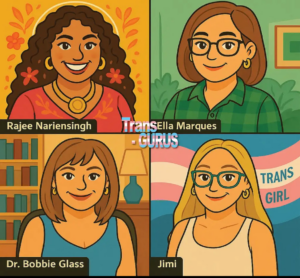
Dr Glass’s appearance on Sharing Space comes alongside her ongoing work in Kentucky. She was recently named an ambassador with the Mayor’s Office for Women in Louisville, a six-month civic engagement and training program focused on city policy and systems. “Being named an ambassador isn’t symbolic- it’s an invitation into the work of changing systems,” Dr Glass explains. She also serves on the boards of the Fairness Campaign in Louisville and CHNK Behavioral Health/One Quest Health in Covington. She is also a co-host of Trans Gurus on YouTube, a global platform with over 135,000 subscribers that offers affirmation and support to transgender people worldwide.
“At its best, Sharing Space does something simple and radical,” Dr Glass said. “It reminds people that they are not broken, not alone, and not required to disappear in order to be loved.”
If you or someone you know is struggling, call or text the 988 Suicide & Crisis Lifeline at 988. LGBTQ+ young people can press 3 to reach counselors trained in LGBTQ+ care, an option that returned on Sept. 30, 2026 after it was cut in July 2025. The Trevor Project also offers 24/7 support at 1-866-488-7386 or by texting START to 678-678.
https://queerkentucky.com/wp-content/uploads/2026/02/Bobbie-Glass.webp20482048Queer Kentuckyhttps://queerkentucky.com/wp-content/uploads/2024/05/Queer-Kentucky-White-Logo-300x132.pngQueer Kentucky2026-02-12 14:17:342026-10-27 16:04:42Louisville Advocate Dr. Bobbie Glass Joins The Trevor Project’s Sharing Space Mental Health Series
Two organizations serving LGBTQ+ young people experiencing homelessness are partnering on a new initiative to deliver gender-affirming supplies and supportive materials to youth in Kentucky.
The Free to Be Youth Project in New York City is teaming up with Louisville-based Sweet Evening Breeze through an effort called the Rainbow Line. The program connects urban and rural queer advocacy groups with LGBTQ+ community centers across the country. The Kentucky partnership follows earlier Rainbow Line collaborations in Alabama and Tennessee.
The initiative’s first step in Kentucky will be a shipment of care packages that include gender-affirming cosmetics, queer and frequently banned books, sensory toys, art supplies, and toolkits focused on empowerment and organizing.
Amy Leipziger, director of the Free to Be Youth Project, said the effort aims to counter growing hostility toward LGBTQ+ people and cuts to social services.
“The stories we send — tales of identity, love, and community — are both a response to the isolation and anxiety so many are feeling, as well as a chance to help them imagine something brighter,” Leipziger said.
Both organizations say LGBTQ+ youth experience homelessness at disproportionately high rates and often face additional risks while unhoused. In Louisville, an estimated one in four teenagers experiencing homelessness identifies as LGBTQ+, according to Sweet Evening Breeze.
The Free to Be Youth Project launched the Rainbow Line last year by sending more than 30 care packages to a queer youth space in Nashville. Leipziger said young people there reported that receiving items reflecting their identities helped them feel recognized and supported.
Stuart Walker, program coordinator for Sweet Evening Breeze, said the Kentucky partnership will provide young people with items they otherwise could not access.
“The Rainbow Line will not only provide our young adults with joyful items they could not otherwise afford but will also provide a sense of love and support,” Walker said. “Just knowing that there are people out there who care makes a world of difference to our clients and residents.”
Walker said that support is already visible for clients such as E, a 22-year-old transgender woman who came to the organization seeking safety and stability. E now participates in programs ranging from career counseling to Sweet Evening Breeze’s transgender peer support group.
The Free to Be Youth Project shared a similar story about M, a young queer man from Haiti who came to the group seeking legal help but found a wider community and sense of belonging.
Advocates say these individual experiences reflect broader challenges young LGBTQ+ people face nationwide.
“Our lives and stories are interconnected trails of resilience and pride, woven through identity, policy, and community,” the organizations said.
The Free to Be Youth Project provides direct legal services in partnership with local LGBTQ+ youth organizations in New York City. Sweet Evening Breeze offers transitional housing, mental health support, computer and library access, and referrals for young adults in Louisville experiencing homelessness.
https://queerkentucky.com/wp-content/uploads/2025/11/1IMG_1244.webp16201080Queer Kentuckyhttps://queerkentucky.com/wp-content/uploads/2024/05/Queer-Kentucky-White-Logo-300x132.pngQueer Kentucky2025-11-28 12:00:232026-10-10 13:50:21Free to Be Youth Project, Sweet Evening Breeze Partner to Deliver Gender-Affirming Care Packages to Unhoused LGBTQ+ Youth
This story is part of Queer Kentucky’s digital issue surrounding the trans youth experience in the Bluegrass state, featuring personal essays to educational information. Read the full issue here.
With the recent removal of many DEI initiatives from larger organizations and school districts, the future of queer safe spaces in Kentucky has become uncertain. During this time, organizations that uphold queer acceptance and advocate for systemic change are crucial. One organization, Louisville Youth Group (LYG), provides safe spaces for queer youth while also pushing for broader social justice. I sat down with Em Joy, LYG’s program director, to discuss their work and mission.
Our conversation began regarding how LYG addresses the unique needs and experiences of queer youth. Joy had this to say…
We’ve recently expanded our age range downward for younger kids and families—and upward to support young adults. After COVID, many felt unprepared for adulthood. Most queer spaces are bars or clubs, which aren’t accessible or appropriate for everyone, so we wanted LYG to be a place where young adults could find friends, support, and mentorship.
In addition to age-based support, we offer identity-specific groups. Our trans, non-binary, and intersex group focuses on social and emotional well-being, giving youth space to discuss gender identity, expression, and bodily autonomy.
We also run Melanin MagiQ, a group for Black and Brown youth. It’s a space without white peers to talk openly about intersecting identities and how racism impacts their lives. The group was developed with input from our youth of color, especially in response to BLM and the push for racial justice.
We also run our Beyond Labels Resource Closet, where youth can access gender-affirming items—like binders, tuckwear, dresses, and makeup—free of charge. Everything is donated or grant-funded. We help youth explore identity in a supportive environment.
As our conversation continued, our discussion moved towards the subject of trust, and how it’s built between LYG and the youth they serve. When building trust with young people who may feel isolated or misunderstood, Joy says that…
I’ve worked with young people most of my career. The biggest thing is to meet them exactly where they are. Kids—and adults—have big feelings. I try to offer guidance and coping tools. I’m trained in therapeutic approaches and remind youth they’re not alone. If no other adult affirms them, I want to be the one who does—and show them there are others who will, too.
As we were chatting about how organizations reflect the diversity of queer youth, Joy poses the question of “what social or systemic barriers are preventing access?” We discussed Louisville Youth Group’s approach in addressing these barriers…
One thing I’m constantly considering is: who are we serving—and who aren’t we reaching? What social or systemic barriers are preventing access?
We continually evaluate our services to meet our community’s needs. We’re also intentional about how we recruit mentors. It’s not just about being good with youth—we reduce barriers so marginalized mentors can get involved. Volunteering requires financial stability many BIPOC, disabled, or low-income folks don’t have. We offer financial incentives for Black and Brown mentors.
Our main space is in an older church building, so unfortunately, it’s not fully accessible—especially for those who can’t use stairs. But for off-site events, we choose fully accessible locations.
Inside our space, we’ve made it as sensory-friendly as possible. Many of our youth are neurodivergent, so we offer fidget toys, soft lighting, weighted blankets, and a sensory room to decompress with mentor or peer support.
Having discussed the ways LYG serves its community of queer youth, we began examining how LYG simultaneously pushes for broader systemic changes.
One major way we push for systemic change is through training and outreach. We offer professional development to nonprofits, churches, and businesses—any space youth might show up. We teach LGBTQ+ basics and help audit internal policies. Discrimination is often systemic. We help institutions become more inclusive.
And while we work on systems, we stay grounded in our core: creating safe space. If a kid can’t be safe at home, school, or church—they can come to us. We will always be that space.
Even as a small organization, we’re very active. We’ve been around since 1990, and for most of our history, we were entirely volunteer-run. Paid staff only came in the last 10–15 years.
We table at community events, schools, and festivals to build visibility—local Pride events, farmers markets, high school career fairs, and more. We want young people and families to know we exist. And honestly, we’re often the most popular table—because we’re one of the only visibly queer groups there. That visibility matters.
This year, we’re proud to partner with Louisville Public Media and WFPK for Waterfront Wednesdays. We’re sponsoring the kids’ activity space with crafts, games, and support—while wearing our “Protect Trans Youth” shirts and showing families what affirming adults look like.
Parents come up to us all the time—some hearing about us for the first time, some already familiar and grateful. It’s affirming to see how much community support we have, despite what the media suggests.
Finally, we talked through ways our readers can get involved, both in the work of LYG and the broader objectives they pursue…
There are a few big ways. First: volunteer. We’re always looking for mentors and folks to help grow our community relationships. Second: donate. That doesn’t just mean money. Donations of snacks, books, clothes, and art supplies go directly to our youth. Even a few boxes of chips can help feed our kids. We also have a wish list at Carmichael’s Bookstore—if you order from it, you get 20% off. And finally—advocate. Show up to school board meetings. Speak out for trans youth. Go to Frankfort. Meet with legislators—not just during big bills, but all year. If you share identities with those in power, use that to push for real change.
Most importantly, make every space you’re in more inclusive. Listen to kids. Respect their self-determination. Support their autonomy. Be the adult they can trust.
Through my conversation with Joy, the vital role LYG plays in the lives of queer youth in Kentucky became undeniably clear. Between the resources they offer, the diverse community they foster, and the guidance they provide, Louisville Youth Group remains an indispensable asset of Kentucky’s queer community.
While we closed out the interview, Joy shared a message of hope with us…
“To close, I want to share a message of hope. We’ve been here a long time. No matter what happens in government or culture, we will continue to exist. We’re here, we’re queer, and we’re not going anywhere.”
https://queerkentucky.com/wp-content/uploads/2025/08/Transyouth2-5.webp7681366Fiona Joneshttps://queerkentucky.com/wp-content/uploads/2024/05/Queer-Kentucky-White-Logo-300x132.pngFiona Jones2025-10-16 12:00:392026-10-10 14:30:49An Interview with Em Joy: Program Director for Louisville Youth Group
This story is part of Queer Kentucky’s digital issue surrounding the trans youth experience in the Bluegrass state, featuring personal essays to educational information. Read the full issue here.
Experiencing life as a transgender person is inherently different from moving through it as a cisgender person. As a nonbinary person, I had to learn how to maneuver many facets of the education system.
Growing up in rural Scott County, K-12 was incredibly difficult for me. For a long time, I experienced a lot of harassment and bullying, which caused me to view myself very negatively. It also framed my view of the world, making me think that everywhere and everyone would treat me with disdain for being myself. It wasn’t only students who treated me that way, but some of my teachers who joined in on the bullying.
When I graduated from high school, I decided to attend the University of Kentucky, near my hometown. I expected it to be so similar to my prior school experience, but it was way different than what I had imagined.
I began my undergraduate degree in media arts Studies at the University of Kentucky in 2020. I barely spoke on my first day, and for the first few years of my experience. When walking to classes, I spent more time staring at the ground instead of looking at people’s faces. I did my best to make myself look small, or even more so, invisible. I rarely participated in class discussions. I took every footstep so carefully, someone watching would likely think I was walking over a decaying rope bridge. Anytime people started laughing, my head would dart toward them, thinking it was directed at me. Truthfully, though, it never was.
As my experience at UK continued, my perspective started to change. My professors were interested in what I was thinking and wanted me to share my ideas with my peers. Instead of being shut down or laughed at when I spoke, I was encouraged to speak more and louder. I slowly became brave enough to use my voice more and more, and I was shocked when I wasn’t being laughed at or harassed later about what I had said. I started feeling like my opinion held value for one of the first times in my life.
It became increasingly common for professors to state their pronouns and ask everyone else on the introduction day of each course. When I started college, I was terrified for anyone to know I was transgender in any capacity, but as it became more normalized to discuss, I found myself openly saying, “Hi, I’m Jules, and my pronouns are they/them.” I started feeling proud of my identity. Something that changed throughout my experience as a nonbinary person at university was my bravery. I’d always found it easy to stand up for other queer and trans people, but never myself. Because of how supported and safe my professors made me feel, I started correcting my peers when they misgendered me. No one ridiculed me when I did this; instead, they quickly apologized, corrected themselves, and moved on.
Many of my classes discussed gender identity concerning many topics. I learned a lot about how society is tailored, largely using the gender binary to maintain present power structures. I understood then just how valid my unique experience is from societal standards. University was eye-opening, and it showed me a world far more vast than the small, narrow-minded society I had previously experienced.
I was studying media creation, and with that comes conversations about including diversity in media projects, and the ethics of the content being created. For myself, it showed that LGBTQ+ people and POC are being brought to the forefront of the conversation. LGBTQ+ people are often creativity-minded, so through my photography classes I found many queer and trans friends. We built community with one another that way, and helped each other navigate through some of the trials of early adulthood.
Having so many friends who had experienced my struggle, I was inspired to start doing what I could to make a difference. I attended protests whenever possible for the rights of many diverse groups, and for larger, international political movements. I started using my social media accounts almost solely to spread political and social justice awareness. While I wasn’t super involved in on-campus organizations due to social anxiety and other mental health issues I was dealing with throughout college, I found my own ways to generate change. Personally, one of the most important ways to generate this change was showing up for the queer people in my life however I could.
University life can be eye opening and life-changing for transgender people. I didn’t expect myself to build such a supportive community, particularly from school, but I did. I created a place in the world, and others gave me space to do that. The experience can vary from person to person, and it depends on which university is chosen to attend. I attended university in one of the only blue cities in the state, and I slowly felt very comfortable and supported by my environment. It was worth every late night and the stress spent on my assignments. Finding acceptance and community is a big deal for trans people, and has the power to bring something rare and important to the table: hope.
https://queerkentucky.com/wp-content/uploads/2025/08/Transyouth2-1-1.webp7681366Jules Crawleyhttps://queerkentucky.com/wp-content/uploads/2024/05/Queer-Kentucky-White-Logo-300x132.pngJules Crawley2025-09-25 12:00:252026-10-10 13:50:40Transgender Life at the University of Kentucky
The views and opinions expressed in submissions to Queer Kentucky are those of the authors and do not necessarily reflect the official policy or position of Queer Kentucky. Any content provided by our submissions or regular columnists are of their opinion. As a reader, you are always welcome to submit your op-eds through our submission form.
This story is part of Queer Kentucky’s digital issue surrounding the trans youth experience in the Bluegrass state, featuring personal essays to educational information. Read the full issue here.
Trans people need to pee. Pretty much all research suggests allowing them to use the bathroom that aligns with their gender identity is the safest option for everyone, but the right to choose which bathroom to use has been under attack in the last five years.
Many states have passed laws of varying intensity and scope for the express purpose of “keeping men out of women’s restrooms,” predominantly affecting K-12 schools and colleges. These laws are subject to a lot of moral and legal questioning. Can the government dictate policy for private universities like this? What does enforcement actually look like? And most importantly, why does the government care which bathroom people use?
Most of these laws are directed towards government-funded institutions and public buildings. Very few regulate private K-12 schools and colleges, but some do. They are often less severe on private campuses, though.
In public schools, the government can directly dictate policy, state exactly how laws like SB-150, which regulates (among many other things) bathroom use in Kentucky public schools, are meant to be interpreted and enforced. They can also more accurately verify whether these laws are being followed.
Private schools, however, are small businesses. Private institutions like Sayre and Lexington Christian Academy in Lexington, Kentucky Country Day and Trinity High School in Louisville can pass regulations, but they don’t have nearly as much influence on their interpretation as public institutions.
The language and definition vary, but the end goal is to force people to use the bathroom by their assigned gender at birth. There is little evidence to suggest this is any safer than the previous system. Social convention is the most significant driver for halting people from entering “opposite” bathrooms.
The chance of a transgender person being noticed when using the bathroom goes up when they use the bathroom assigned by their birth gender, more often than not. Especially in adults who are late in transition and “pass” well. Given the higher rates of violence faced by trans people and how they often stick out among their cisgender counterparts, forcing them into restrooms full of men is a recipe for disaster. According to the UCLA School of Law, transgender people are four times as likely to experience violence as cisgender people. It puts them at an extreme risk of violence.
To pretend these laws are about anything other than targeting transgender people is a misapprehension. Laws like SB-150 in combination with proposed laws like HB-163 in Kentucky make it illegal to enter bathrooms of the opposite sex, even when no one is inside them, making the physical act of entering them a violation of the law. At that point, it’s not about safety, propriety, or privacy. Even if that were the true goal of these laws, they would still be ineffective.
The major problem with these laws lies in enforcement. Most don’t directly outline how the institutions monitor and prevent “violations.” The only way to monitor who enters a given restroom is by checking IDs at the door, which would require paid personnel not budgeted for in any of these laws.
Even then, they can’t rely on identification cards, as in most states, gender markers can be changed. So, in practice, most rely on citizens’ reporting, which is based on extremely unreliable assumptions. None of the actions a citizen would have to take are reliable, as there is no reason or incentive for anyone to care or notice which bathroom people use. Considering how long it takes for legislation to be passed and how much scrutiny it goes under, there is no way these governments have not considered these problems.
So why focus on banning bathroom access for the most vulnerable populations?
Transgender people make up around 1% of the global population, governing their behavior in this way is almost unnecessary. The fact is, there’s a lot more to a person’s gender than what the government can define and police, putting people in boxes and situations the government has no business forcing them into. Simply put, this is just one of the many fronts of the current culture war. These laws receive headlines and invoke moral outrage on all sides. With the division of our world through the attention-driven media and political landscapes, that engagement is invaluable. Passing and supporting these laws only helps candidates cement their position as “anti-woke,” further securing the broad voter base that wants these policies. These laws are appealing enough on paper to gain support, but are ineffectual enough that they don’t require any effort or genuine thought on the part of the lawmakers. These laws have become dog whistles to signal a given candidate’s position on trans people and “gender ideology” as a whole without actually implementing positive change through policy.
When politicians focus on cultural issues, they can gain support and make it to office without having their important positions on things like the cost of living crisis, the war in Gaza, and all the other things affecting the state of the world scrutinized.
When politicians use buzzwords instead of policy to guarantee their support, they do so without taking important stances on things affecting their constituency, things like economic uncertainty, the healthcare crisis and the thousands of other problems affecting them. The longer we spend talking about these culture war issues, the less time we spend on the important things.
It’s important to make your voice heard about issues like this. Call congresspeople, send letters, attend town halls, and let elected officials and lawmakers know how you feel about these issues. Ask them their positions, make them explain themselves, and ask them why they feel the need to police the bathroom use of roughly 1% of the global population. Interacting with the legislature is one of the most important ways to effect change.
https://queerkentucky.com/wp-content/uploads/2025/08/Transyouth2.webp7681366Leo Figgshttps://queerkentucky.com/wp-content/uploads/2024/05/Queer-Kentucky-White-Logo-300x132.pngLeo Figgs2025-09-18 12:00:542026-10-10 15:18:48Bathroom Bans: Why do they care?
Louisville Youth Group is inviting the community to lace up, show up, and get a little silly at Seneca Park this fall. On Sept. 27, 2025, the nonprofit will host its Rainbow Dash 5K and Wacky Races — a morning packed with running shoes, costumes, and plenty of queer joy.
The day kicks off at 8 a.m. with a 5K run and walk around the park’s 1.2-mile accessible loop. Whether you’re clocking a personal best, power-walking with friends, or just hollering from the sidelines, every step helps fuel Louisville Youth Group’s mission: empowering LGBTQIA+ youth in Kentucky and Southern Indiana.
At 10 a.m., the Rainbow Dash takes a sharp turn from sporty to downright campy. That’s when the Wacky Races begin — a team relay stuffed with playful challenges, costumes, and the kind of chaos that makes everyone a winner. Think relay batons mixed with a little drag brunch energy.
“Rainbow Dash isn’t only about crossing a finish line,” said Madelyn Spalding, Louisville Youth Group’s director of development. “It’s about celebrating our joy, lifting up LGBTQIA+ youth, and creating a safe, welcoming space for all.”
Money raised through registration, sponsorships, and donations will directly support LYG’s free programming — peer groups, leadership opportunities, outreach, and the safe spaces queer youth have relied on since the organization began in 1990.
Registration is open now at runsignup.com/Race/KY/Louisville/RainbowDash. Beyond the races, the morning will feature community activities, snacks, and the kind of connection that keeps queer folks showing up for one another.
Louisville Youth Group is Kentucky’s oldest LGBTQIA+ youth nonprofit, and for 35 years, it’s held the door open for young people to show up exactly as they are. The Rainbow Dash continues that legacy — proof that running shoes and wacky relays can be just as powerful as any rally or march.
https://queerkentucky.com/wp-content/uploads/2025/09/522219948_1170718865088645_7539728455675588244_n.webp315851Queer Kentuckyhttps://queerkentucky.com/wp-content/uploads/2024/05/Queer-Kentucky-White-Logo-300x132.pngQueer Kentucky2025-09-12 12:00:172026-10-10 19:12:42Support LGBTQ+ Trans Youth in Kentucky By Joining the Rainbow Dash 5K and Wacky Races
As a Queer journalism organization, our platform is our greatest power, and it is with complete joy that we hand it over to the trans youth of Kentucky for this special issue. With anti-trans legislation sweeping the nation, and trans Kentuckians no strangers to these attacks, the voices of trans youth need to be uplifted now more than ever.
This year, 953 anti-transgender bills were introduced across the United States. Of those, 120 were passed into law, including Kentucky’s House Bill 495, which bans the use of Medicaid for gender-affirming care, and Senate Bill 2, which prohibits public funding for gender-affirming care for transgender inmates. Let us also not forget Senate Bill 150, which was signed into law in March of 2023 and had the biggest impact on trans youth in Kentucky. The legislation bans gender-affirming care for minors, restricts discussion of gender identity and sexual orientation in schools, limits bathroom and locker room access, and allows teachers to deny the usage of a student’s preferred pronouns.
Experts say the ongoing political and social battles targeting transgender youth are harming their mental health. A 2024 Trevor Project study found suicide attempt rates among trans youth rose by as much as 72% in the first year after states enacted anti-transgender laws. Trans youth are in pain and need to be heard.
For almost a decade, Queer Kentucky has served as a voice for LGBTQ+ Kentuckians, and that is something we take great pride in every day. When we were awarded the Charles and Jack Endowment Fund Grant from the Community Foundation of Louisville, we were posed with a task: create programming to inspire the lives of LGBTQ+ youth in Kentucky. So naturally, we created a project that specifically boosts the voices of the remarkable trans youth community across the Bluegrass State.
However, as two cisgender leaders of this organization, we knew it was important to hand over the leadership role of this special digital issue to a trans leader and creative genius. Enter Covington native, Mo Viviane. Mo has nurtured this project from inception to fruition—meticulously sourcing writers and artists to curate a unique piece of art to be celebrated by queer people and allies alike. It is a privilege working with Mo, and we thank them for their
dedication to advocating for the queer community and trans youth.
The stories that live in this issue serve to evoke emotion and empathy while also educating readers on the lives of trans youth in Kentucky. Our wish is for you to cherish this piece of art and find value in the voices of trans youth. They are the voice of the future.
Always,
Missy and Spencer
Executive Director and Editor-in-Chief
If you or someone you know is struggling, call or text the 988 Suicide & Crisis Lifeline at 988. LGBTQ+ young people can press 3 to reach counselors trained in LGBTQ+ care, an option that returned on Sept. 30, 2026 after it was cut in July 2025. The Trevor Project also offers 24/7 support at 1-866-488-7386 or by texting START to 678-678.
https://queerkentucky.com/wp-content/uploads/2025/09/Screenshot-2025-09-11-at-11.10.34-AM.webp6121258Queer Kentuckyhttps://queerkentucky.com/wp-content/uploads/2024/05/Queer-Kentucky-White-Logo-300x132.pngQueer Kentucky2025-09-11 15:22:312026-10-10 19:13:20Death Before Detransition: A Word from the Executive Director and Editor-in-Chief
This is not just a magazine issue–it’s a gathering of voices that are raw and radiant. When I was approached to be the assistant editor of this project, I did not hesitate. As someone who falls under the trans umbrella and who has worked directly with trans youth and adults for the past ten years through resource allocation, community building, and collective gatherings, it made sense for me to land here.
Working with each one of these writers and artists has reminded me that there is hope and faith to be had. That the future that we so dearly aspire, is right with us. That we are it. We encapsulate creating a world worth living and loving in.
If you’re here, you’re holding closely, ten pieces by Kentucky’s trans youth, all visualized by a trans collage artist, each carrying their own truth with clarity, courage, and deep care. What you’re about to read isn’t just a set of articles, it’s testimony, it’s resistance. They are love letters to the people we’ve been, the people we’re becoming, and the world we aim to live in.
This collection is deeply personal–not just to those who wrote it, but to many of us who will see our reflections in them. It holds stories of navigating health systems that too often shut us out, and of fighting for the right to use a bathroom in peace. It holds the wisdom of disabled trans activists who remind us that access and liberation must move together. It holds grief, anger, joy, and so much more.
Some of these stories crack open experiences we’re taught to hide–like one writer’s journey through substance use and healing, or another’s vulnerable exploration of how transitioning shaped their songwriting, their sound, and themselves. These are the kinds of stories that don’t often make it to mainstream conversations about trans lives–and that’s exactly why they need to be told.
Every single one of these pieces speaks to something bigger than just one person’s experience. Together, they’re a call–a firm insistence–that we are more than the narratives forced on us by our constituents, families, and societies. We are not problems to be solved or policies to be debated. We are people. And we’ve never needed to prove our humanity to be worthy of care.
Every one of these amazing writers and artists asks us to look deeper—to see trans youth as who they are: leaders, creators, lovers, visionaries, and that space needs to be held for complexity, contradiction, and the beauty of life—shaped by violence AND liberation. I ask that you recognize this collection as a call for radical transformation – of systems, of how we love, support, and fight for one another.
If you’re trans and reading this, especially if you’re young: this is for you.
You are not alone. Your joy matters. Your anger, your softness, your questions, your growth – belong right where you are. I hope you find reflections of yourself here. I hope these words remind you that your life is already powerful, even when it feels hard to be seen and understood.
And if you’re not trans: please read these pieces with care. Let them unsettle you if they need to. Let them expand your understanding. Let them pull you closer to the fight for liberation–because this isn’t just about trans people, it’s about all of us. The work of dismantling harmful systems and building something better will take all of us.
To the writers and artists: thank you for showing up with such honesty, talent, and truth. I’m endlessly grateful to you for trusting Queer Kentucky with your stories. This digital magazine is yours. Keep it real, keep it grounded, keep creating,
https://queerkentucky.com/wp-content/uploads/2025/09/3.MoViviane.Photo_.webp10801920Mo Vivianehttps://queerkentucky.com/wp-content/uploads/2024/05/Queer-Kentucky-White-Logo-300x132.pngMo Viviane2025-09-11 12:00:562026-10-10 19:12:18Death Before Detransition: Letter from the Editor
From the Queer Kentucky archive. This digital special issue is one of our past special projects. Today Queer Kentucky is Kentucky’s LGBTQ+ newsroom, reporting every day. Read the latest news.
Digital special issue, 2025
Protect. Trans. Youth.
Death Before Detransition is Queer Kentucky’s 2025 trans youth issue, made by more than 15 trans young people across Kentucky. It grew out of a Charles and Jack Endowment Fund Grant from the Community Foundation of Louisville, at a time when anti-trans laws such as Kentucky’s Senate Bill 150 were reshaping daily life for trans youth. Queer Kentucky’s two cisgender leaders handed the project to a trans editor, who calls the collection testimony and resistance.
Gray Hawkins explains first steps into HRT, Leo Figgs asks why bathroom bans exist, and Sage Barr and Mo Viviane share a byline on disability and activism. Jules Crawley writes about trans life at the University of Kentucky and the year’s anti-trans bills, Omni talks with Black drag artists Olympia Gold and Shalyric Monae, and Noel Mitchell offers voice tips for singers on testosterone. Pieces by D.L., Aleksander Perris and Fiona Jones complete the issue. Mo Viviane edited it, El Bruner designed it, and Executive Director Missy Spears and Editor-in-Chief Spencer Jenkins guided the project.
If you or a loved one are in crisis, please call the National Suicide Prevention Lifeline at 1-800-273-TALK (8255), or contact the Crisis Text Line by texting TALK to 74174.
When Arden was 16, they called a suicide crisis hotline “thinking their life was over.”
They were in an abusive relationship, regularly self-harming, and felt that nothing was helping. “It was terrifying,” they told Uncloseted Media.
“If it weren’t for the hotline, I would have killed myself.”
Since that day, Arden, now 24 years old and living in Brooklyn, has used various crisis helplines. When the 988 national suicide prevention hotline launched a “Press 3” option in 2022 for LGBTQ+ youth, they immediately started using the resource.
Arden, who identifies as nonbinary, says the LGBTQ+ hotline workers “respected their identity” and were understanding that they are not a woman. “It was really affirming for a very troubling time in my life.”
Since then, Arden has “Pressed 3” more times than they can remember, seeking help for everything from dealing with the loss of their friend, who died by suicide, to “stupid cliquey gay people stuff.”
“I remember when my friend had killed himself and I was dealing with a lot. I called them and they talked to me for over an hour because I was really upset,” they say. “When I called the hotline, it was a last resort. I was really at my wits’ end.”
Arden — whose last call to the lifeline was two weeks ago — is one of 1.3 million callers and chatters the LGBTQ+ youth hotline has served since it launched, according to federal data. The legislation that greenlit the national program, signed by Trump in 2020 during his first term, explicitly recognized that LGBTQ+ youth are more than “4 times more likely to contemplate suicide than their peers, with 1 in 5 LGBTQ+ youth and more than 1 in 3 transgender youth reporting attempting suicide.”
Kaoly Gutierrez/Uncloseted Media
This new option to “Press 3” allowed queer youth in crisis the ability to directly connect with counselors from a set of specialized LGBTQ+ crisis centers. These counselors are trained in cultural competency and often bring lived experience, providing identity‑affirming, empathetic support for challenges like coming out, discrimination or mental health crises.
Despite the hotline’s success, the Trump administration announced last month that they would be shutting it down on July 17, claiming that the service had run out of congressionally directed funding. The Substance Abuse and Mental Health Services Administration said in an email to Uncloseted Media that “continued funding of the Press 3 option threatened to put the entire 988 Suicide & Crisis Lifeline in danger of massive reductions in service.”
“This is absolutely a mistake,” a suicide prevention call center director told Uncloseted Media. “We are concerned that this will result in increased suicide rates for LGBTQ+ youth.”
Why we need option 3
The director’s concern is supported by a 2022 research brief that found that queer college students with access to LGBTQ-specific services were 44% less likely to attempt suicide than those without it. Research also shows that a hotline specific to LGBTQ+ services increases the likelihood of queer youth calling.
“It’s true for any direct service,” Harmony Rhoades, associate research professor of sociology at Washington University, told Uncloseted Media. “People who are in substance use recovery want to work with people who’ve gone through recovery themselves because they understand what that experience is. Culturally, there is not a lot of understanding of the specific experiences of someone who is LGBTQ+ and without specific training, a crisis counselor isn’t going to be able to know the language that’s going to feel affirming.”
Kaoly Gutierrez/Uncloseted Media
“Connecting with someone who gets it was really helpful. … Because at home, I was so isolated and I didn’t really interact with other queer people,” says Genna Brown, who used the Trevor Project’s chat function at 10 years old.
“I was an extremely self-loathing, suicidal kid who was under the impression that God hated me and I was gonna burn in hell for eternity,” Brown, now 15 and living in High Point, North Carolina, told Uncloseted Media.
“I only used the chat feature because I was scared my parents would hear me. We shared a wall,” she says. “I was spiraling really bad. I’d just realized I was crushing on girls, and I thought I was going to burn in hell for all eternity because that is what we are taught.”
Raised in a Southern Baptist church, Brown never felt safe at home, where her father would regularly spit slurs like “faggots” and “queers.” At church, every sermon was about Sodom and Gomorrah or about how “real love” only existed between a man and a woman.
“I grew up knowing the number one thing not to be was one of the ‘dirty queers,’” she says. “I kept thinking, I can kill myself now and go to hell, or live longer and still go to hell. I used to have panic attacks at 9, 10 years old, just thinking about burning in hell perpetually.”
Brown remembers Caitlin, the chat counselor who helped her, being the first ever to tell her that queer love was valid.
“She told me she’d been with her girlfriend for seven years. I didn’t even believe queer people could be happy. … It broke my brain in the best possible way,” says Brown, who is now out and proud to her parents, who have come around, and to most of her friends on social media.
Genna and her Mom, Melanie.
Kaoly Gutierrez/Uncloseted Media
Arden had a similar experience. “The queer line is better than the regular line,” they say. “I feel like it’s less like going through a checklist on the queer line.”
As a survivor of sexual assault, Arden says knowing that the counselors on the other line were trained in LGBTQ-specific trauma made it easier to reach out for help. “My voice doesn’t pass per se but they still respected my identity,” they say.
LGBTQ-specific resources for youth are critical, with 41 percent seriously considering suicide in 2024. In addition, queer youth are disproportionately affected by a litany of mental health issues and trauma, including physical and sexual assault, anxiety, depression, eating disorders, bullying and addiction.
“It’s not like we’re cherry-picking some random group,” says Rhoades. “If we are going to fund [suicide prevention], there is no reason we should do it inefficiently by not effectively targeting the people who need it most. So yes, they need specific suicide prevention services.”
While the hotline focuses on LGBTQ+ youth, they don’t turn away adults who need help. Joshua Dial, 36, says that when he called 988, he was often connected to the LGBTQ+ youth hotline after mentioning that he’s gay.
“I always walked away feeling better after I called,” he says. “There have been times when I spoke to the regular 988 crisis people, and they helped too. But they didn’t understand quite as much.”
Dial, a Lutheran who lives in Stillwater, Oklahoma, says he wasn’t always comfortable being open about his sexual orientation to his religious community and that the only way to meet other gay people was on hook-up and dating apps, which he notes are “not for emotional support.”
“I wouldn’t be talking to my pastor about getting on Grindr. I can’t go to my pastor and tell them what I did last weekend,” he says.
Dial, who was raised to believe that homosexuality is a sin, has experienced depression since the age of 16 and has also struggled with bipolar disorder, addiction and PTSD. “My addiction was getting worse, and the only constant was that the line was always available,” he says. “I didn’t have any other options, but I knew that if I called the hotline, I would get help.”
Dial says the emotional support he received through these phone calls kept him from self-harm and suicide. “There are times when I called that number and was this close to taking a handful of pills, this close to slitting my wrist, this close to buying a gun to shoot myself. And I talked to those people, and they not only understood, but they gave me the empowerment of knowing that someone had my back.”
How cutting option 3 affects the whole system
While the cuts are only meant to affect the hotline’s support for LGBTQ+ youth, crisis center employees say they’ll impact the entire 988 network.
“This being rifted does very much mean less capacity for 988 as a whole,” says the suicide prevention call center director. “Everyone will be affected.”
“When the LGBTQ+ hotline opened up, it really lowered the volume on the mainstream counselors,” a 988 hotline counselor in Washington state told Uncloseted Media. “It seemed really helpful, and I didn’t get a lot of LGBTQ+ chats after that point.”
The counselor at the Washington state center says they are about to lay off 42 counselors from their LGBTQ+ hotline. They say these roles won’t be replaced on the main 988 line due to a hiring freeze. Because of this, counselors expect the number of calls they receive to double, which could dramatically increase wait times. The Washington state center did not respond to a request for comment.
Even without the cuts, wait times are an issue. A 17-year-old caller from Virginia says that even the 10 minutes they had to wait for their call to be answered were painful. “I was worried that nobody would want to talk to me. I was just feeling hopeless,” they say. “There’s this one resource that I’m supposed to be able to have access to 24/7, but it just isn’t as accessible as it should be. For some people, those 10 minutes are crucial.”
In a 2009 study of 82 patients referred to a psychiatric university hospital after a suicide attempt, nearly half reported that the period between their first thought of suicide and their actual attempt had lasted 10 minutes or less, underscoring how shorter wait times can be a matter of life and death.
“If we are not able to catch someone during the time that suicidal thoughts have appeared and intervene as quickly as possible, they could start figuring out how they’re going to kill themselves and make it happen,” says the suicide prevention call center director. “And a lot of folks have access to means that can result in instant death like firearms.”
What can be done?
With the “Press 3” option gone, Rhoades worries that the current spate of anti-LGBTQ+ legislation and hateful rhetoric toward the community will affect how counselors without queer-specific training will provide care.
“We’re living in an unprecedented time where anti-LGBTQ+ hatred is being normalized,” she says. “It absolutely affects how young people are treated. And it filters down to crisis counselors.”
As Congress and the Trump administration prepare to shut down “Press 3” on July 17 in an effort to save money, many believe that it will have the reverse effect.
“They just want these people to die. … That’s the message I got,” says a hotline operator in Washington state, adding that the administration is “not looking at the bigger picture.”
Arden says they wouldn’t be here today without the line’s support. “I’ve been struggling for a long time in my life [with] self-harm and I’ve been clean almost two years now,” they say. “I would definitely not be clean if it weren’t for the hotline and I would probably hurt myself again.”
If you or someone you know is struggling, call or text the 988 Suicide & Crisis Lifeline at 988. LGBTQ+ young people can press 3 to reach counselors trained in LGBTQ+ care, an option that returned on Sept. 30, 2026 after it was cut in July 2025. The Trevor Project also offers 24/7 support at 1-866-488-7386 or by texting START to 678-678.
https://queerkentucky.com/wp-content/uploads/2025/07/1301c6b7-5bb3-4455-857b-40c5cc049c68_1208x860.webp12001800Sam Donndelingerhttps://queerkentucky.com/wp-content/uploads/2024/05/Queer-Kentucky-White-Logo-300x132.pngSam Donndelinger2025-07-27 12:00:062026-10-10 17:26:03LGBTQ+ youth have lost a lifeline. What now?
As Queer Kentuckians, staying informed about LGBTQ+ news worldwide is essential. Changes in policy, activism, and culture in other regions can impact our community and efforts locally. Our weekly global news roundup keeps you updated on important LGBTQ+ developments, ensuring we remain informed and connected.
Trans Documentary “I ME US” Praised for Bravery:A documentary following the lives of trans people in Cumbria, England has led to praises of bravery for those who told their stories. As a more rural area of England, trans people there are regularly treated poorly, so members of the production hoped to inspire the community with its creation.
PEPFAR Saved From Funding Cuts:PEPFAR, a hugely impactful global assistance program that fights HIV/AIDS, has been spared from a proposed $400 million cut to funding due to objections in the Senate. Despite this victory, many other crucial foreign aid programs were victim to funding cuts.
Puerto Rico Governor Signs Harsh Gender-Affirming Care Law:Senate Bill 350 prevents anyone 21 and under from receiving any kind of gender-affirming care, including hormone blockers, HRT, and surgical procedures. Healthcare professionals are under threat to receive severe punishments for providing care.
Rural Pride Celebrations Appearing in France:Previously seen only in France’s large cities, pride celebrations are popping up all over the country, even in small villages. Rural queer folks in France are forming organizations and creating community to create safe spaces for one another everywhere.
If you or someone you know is struggling, call or text the 988 Suicide & Crisis Lifeline at 988. LGBTQ+ young people can press 3 to reach counselors trained in LGBTQ+ care, an option that returned on Sept. 30, 2026 after it was cut in July 2025. The Trevor Project also offers 24/7 support at 1-866-488-7386 or by texting START to 678-678.
https://queerkentucky.com/wp-content/uploads/2025/05/QN-png.webp7681366Jules Crawleyhttps://queerkentucky.com/wp-content/uploads/2024/05/Queer-Kentucky-White-Logo-300x132.pngJules Crawley2025-07-21 12:00:502026-10-10 15:43:13Queer News Round Up: July 12 – July 18
Night owl. GloRilla superfan. HIV survivor. Carma Bell Marshall contains multitudes, and she does so with bright eyes and a dynamite smile. A Black trans woman, she navigates through a “salacious political landscape” as program coordinator for Louisville Youth Group, co-chair of the Transgender Wellness Coalition, and the likeliest to belt a Hairspray track at karaoke.
In March, you may have heard Marshall added “woman who visited a bathroom and made headlines” to her repertoire, at the Kentucky State Capitol for the Trans Joy Party and Visibility March. All politics are local, she says, and everything happens for a reason.
“The community we’ve worked on and created here in Louisville has done a lot to make me feel seen and empowered,” she said. “My own step into political work was abrupt. I was trying to come out of my depression.”
Marshall initially attended a support group meeting and shared a little about herself. Afterward, a fellow member reached out to her on Facebook and encouraged her to start a group for people of color.
“I became the founder of Fem Club, which is a support group for trans-femme individuals here in Louisville, Kentucky, that has a BIPOC leadership, which then led me to my partner. And we created The Village, which is a mentorship program for gender-diverse youth of color.”
A day of Marshall doing what she loves begins with sleeping in, if possible, before immersing herself in advocacy. She starts the day with her partner Alexander, with whom she’s saving up to start a family.
“We are both trans and conscious about choosing gender-neutral names,” she said of their future child. “We’ve chosen the name Taylor Avery Griggs. ‘Taylor’ comes from my side of the family, an older brother who passed before I was born. ‘Avery’ is my father’s name. He has been my biggest supporter. And ‘Griggs’ comes from Alexander’s side. A little bit of both of us.”
A Kentucky native, Marshall describes home as “a place that you can breathe easy.” She was born in Louisville and grew up in Shelbyville, a graduate of Shelby County High School – “Go, Rockets!” – and her family is what keeps her here.
“I feel like I have been blessed, and I am privileged for someone in our community, especially as a person of color, that my family is very accepting and loving and supports me in my life and my decisions,” she said. As the program coordinator for Louisville Youth Group, Marshall structures activities and events for members 5 through 24 years old.
“The joy on those kids’ faces, the evaluations they write following group meetings, seeing them leaving with smiles,” she said. “That’s a day of doing what I love, spending it with the people I care about and having an impact on the world.”
It wasn’t always clear to Marshall what her purpose was. In the early days of her diagnosis with HIV, Marshall said she endured several very difficult, dark months of isolation and negative self-talk.
“I hadn’t realized I was even exposed,” she said, noting that more than 1 in 10 people who have HIV don’t know it. “I was taken by surprise, which is why it’s so important that people make sure they know their status.”
The timing of her diagnosis happened to coincide with Marshall’s epiphany of her trans self.
“Here I am battling extreme dysphoria, then all of a sudden I get rocked with my diagnosis,” she said. “I was spending six to eight hours alone in my bathroom with the lights off – with the shower running, steaming my mirror so I didn’t have to look at myself in the mirrors. I could just be in a dark, isolated space listening to whatever music I wanted to listen to at the time … which probably wasn’t helping with my mindset. I did that for almost a year. That was my life. Work, bathroom, sleep. Work, bathroom, sleep. That was all I did.”
As for how her diagnosis has evolved with her, Marshall has come to a place of assessing how it serves her. She realized hiding herself away from the world wasn’t benefiting her, and it wasn’t benefiting the world either.
“Anybody could be experiencing what I’m experiencing,” she said. “If being open and honest about this and how I’m dealing with it can help somebody, then we’re going to do that. That’s how we’re going to turn lemonade out of these lemons.”
And there are lemons aplenty, with considerable stigma and misinformation tethered to HIV and those living with it.
“Even with people who say they love and care about you, a lot of the times, saying it’s unconditional, there are still conditions there,” she said. “I have had loved ones when I’ve told them, the very first question out of their mouth is, ‘There’s no way for me to get it, right?’ And we still have the environment of, ‘Are you clean?’ As if somebody with an autoimmune disorder is not a clean person. I’m clean! I take baths. I shower. If we want to keep it real, if we want to keep it one-hundred one-hundred, are you clean, honey? Are you tested on the regular that I’m tested?”
Marshall wants people to realize her diagnosis is just a diagnosis.
“It is just something we are going to innately have with us as we traverse and live our lives. It’s a very small piece. Don’t let that diagnosis become the person. Let the person just walk with their diagnosis.”
As for navigating visibility, choosing whether to disclose her status, Marshall describes the process as ever evolving.
“In the beginning, the only ones who knew were my mother and father,” she said. “I had a roommate for almost ten years, and that roommate didn’t know until the last two years of our living together. I wasn’t ready for people to know.”
Marshall has found a considerable benefit in people truly understanding why she’s come to certain perspectives and stances she takes.
“People don’t come to understand the full totality of myself as a person, if I’m not letting them see certain pieces of me,” she said. “I’ve had moments where someone says they’re HIV-positive, and they talk about it from a place of negativity where they’re depressed or they feel they don’t have the community they know they belong to and want to live in. We’re that cousin that y’all never know that always shows up to the family reunion. They know they’re part of this family. They want to be seen and for people to remember their names, so at the next cookout, you’ll say their name and not just call them cousin.”
What shame is there then, Marshall asked?
“I’m stepping into the light,” she said. “I was dealt some shitty cards. It wasn’t like I was going out searching for this. Nobody asks for this. It ostracizes you so much from the world and a little while from yourself, and then you start questioning yourself and your ability to take care of yourself: how did you let it get here, a place where now you have a virus? Who makes that conscious decision though? Nobody would.”
She said she wants everyone living with HIV to step into their light and own their value. Her positive status now propels her forward, helping her serve others with firsthand understanding and a shared urgency for representation and protection.
“I couldn’t find longevity staying in my proverbial bathroom,” she said. “That’s not where I’m going to find value and the ability to contribute. We have to get out and show people like myself there is more to this life. It’s okay. It’s going to be okay.”
Marshall can be found on Facebook at facebook.com/carma.bell.marshall and Instagram at @law_of_carma. The Transgender Wellness Coalition can be found here and Facebook as well.
https://queerkentucky.com/wp-content/uploads/2025/06/486668834_1054983013328609_3627313826403258739_n.webp20481365Sam Smithhttps://queerkentucky.com/wp-content/uploads/2024/05/Queer-Kentucky-White-Logo-300x132.pngSam Smith2025-06-27 12:00:172026-10-10 12:53:29Laws of Carma: How an HIV diagnosis taught an activist to rule
Editor’s note: This story was published in June 2025. Some details may have changed since then.
The U.S. Supreme Court ruled Wednesday to uphold another state’s ban on gender-affirming health care for transgender youth — meaning Kentucky’s kids and teens who identify outside of their assigned sex at birth will not be able to access health care most major medical associations consider to be critical.
The nation’s top court ruled 6-3 to allow Tennessee’s law banning access to care such as puberty blockers and hormone therapy treatments for transgender minors to remain in effect.
“The Court’s ruling abandons transgender youth and their families to political attacks,” Shannon Minter, the National Center for LGBTQ Rights Legal Director, said in a press release. “It ignored clear discrimination and disregarded its own legal precedent by letting lawmakers target young people for being transgender. Healthcare decisions belong with families, not politicians. This decision will cause real harm. Today’s decision is a cruel blow to transgender youth and their families in Kentucky and other states, but we will continue to fight.”
Kentucky lawmakers passed a similar law in 2023’s Senate Bill 150, then considered the nation’s worst anti-trans piece of legislation in a year full of bills aimed at the LGBTQ+ community. Legal challenges over SB 150 got lumped into Tennessee’s Supreme Court fight since they were so similar and in the same court system. But, the ACLU of Kentucky noted Wednesday, the court ruling focused just on this topic and does not immediately impact other cases concerning transgender people’s rights.
Trans youth in the Bluegrass State have been prohibited from accessing such care for two years, and Kentucky’s GOP-dominated legislature has since passed additional laws aimed at reducing LGBTQ+ rights and health care access.
After SB 150 passed in the spring of 2023, groups including the NCLR and ACLU of Kentucky stepped in to challenge parts of the law in court. Their lawsuit, filed on behalf of multiple impacted Kentucky kids and teens and their families, focused just on the parts of the law aimed at non-surgical forms of gender-affirming care. Parts of SB 150 prohibiting gender-affirming surgeries weren’t contested.
A legal saga ensued. Initially, a judge ruled that trans youth should be able to access needed health care, reversing the law. But then the same judge reversed their thinking, allowing Kentucky’s ban on care to stay in effect.
And it has remained in effect as the lawsuit worked its way through the court system. It eventually got combined with a similar lawsuit coming out of Tennessee, which is the case that officially got tried in front of the Supreme Court last December and ruled on Wednesday.
Following the ruling, pro-LGBTQ+ rights advocates condemned the step, while some in the GOP — which dominates Kentucky’s legislature that passed SB 150 two years ago — celebrated. Senate Majority Floor Leader Max Wise, a Republican who sponsored SB 150, said the decision is “a victory for common sense and the safety of our children.”
Chris Hartman, who leads the Fairness Campaign, called the ruling “unconscionable and unacceptable,” adding more than two-dozen states still allow families to access these kinds of health care and the ruling won’t stop families from seeking it out.
“The Supreme Court has failed to protect families’ freedoms and allowed politicians to target transgender youth,” Corey Shapiro, the ACLU of Kentucky’s legal director, said. “This is a painful setback, and it is clear the Court will not protect these children. But it will not stop us from using all available legal tools to fight back against the political extremists targeting transgender people’s safety and dignity. What’s important to remember is that no matter what the Court or politicians say, transgender young people and their families are not alone in this fight.”
This story will be updated.
https://queerkentucky.com/wp-content/uploads/2025/06/IMG_6632-scaled.webp17072560Olivia Krauthhttps://queerkentucky.com/wp-content/uploads/2024/05/Queer-Kentucky-White-Logo-300x132.pngOlivia Krauth2025-06-18 15:44:212026-10-10 14:37:51U.S. Supreme Court ruling keeps gender-affirming care ban in place for Kentucky transgender youth
Editor’s note: This story was published in June 2025. Some details may have changed since then.
According to the Appalachian Regional Commission, Kentucky has 1.2 million residents over 54 Appalachian counties. However, a general search on the website using keywords like “LGBT” or “queer” provides zero results.
“If we don’t have the data, then we can’t know how to meet the needs, address the inequalities, or support individuals,” said Holden Dillman, a licensed clinical social worker and doctoral student at the University of Kentucky who lives in Eastern Kentucky and provides telehealth psychotherapy to individuals and couples across the state—particularly those in the LGBTQ+ community—through Bridge Counseling and Wellness, based in Louisville.
Dillman is working on a new study called We Are Here, focusing on the unique mental health challenges and resilience of sexual and gender minority youth in Appalachia.
According to a 2017 report by the American Psychological Association on Sexual Identity and Risk Behaviors Among Adolescents in Rural Appalachia, LGBQ+ youth showed higher signs of risks including bullying, poor mental health outcomes, substance abuse problems and lower academic achievement.
The study, conducted in two western North Carolina high schools, had over 2,000 students participate in the Youth Risk Behavior Survey created by the Centers for Disease Control and Prevention. Of the students who answered the survey, LGBTQ+ students were at five times the risk for reporting suicide risk factors and perceived a lower level of school and community support than their heterosexual counterparts.
Despite providing a snapshot of the region’s youth population, the study left some gaps. One of the gaps included any insight into the transgender experience, with the only sex options on the survey being male or female.
“Right now, the research isn’t as diverse as what it could be,” said Dillman, who has been working with a limited dataset, adding, “there’s not a lot of data that from a national kind of perspective really speaks to this experience.”
Dillman will use a mixed methods study approach, looking at information from a national secondary dataset as quantitative data and primary interviews from recruited participants in Appalachia as qualitative data.
His goal is to focus on the intersection of self-esteem, acceptance, and regional culture within the Appalachia youth ranging in ages 12 to 32.
For the interview portion of the study, participants will be asked a set of open-ended questions, aimed at providing deeper conversations. “The goal is to get to the essence of the lived experience,” said Dillman, about creating a space for people to reflect on impacts both internally and externally.
Only individuals who are currently living or lived in the Appalachian region through their adolescence will qualify to participate in an interview for the study.
As a native Southeastern Kentuckian, for Dillman it was important to name the study We Are Here because it fights back against a “sad story of trauma” often referenced with Appalachian queer-lived experiences.
“We’re not just surviving anymore, we’re actually thriving in a lot of ways,” he said.
To expand the reach of the study set to begin receiving applicants in June, Dillman has partnered with Queer Kentucky.
For Dillman, the collaboration goes beyond the research. He hopes the results will lead to tangible change by “working together to make sure that it’s being translated to benefit the communities that it involves.”
Some of the ways Dillman hopes it’ll create change include by informing policies and interventions that better support the well-being of youth in rural communities.
Almost a year since his start in assembling the We Are Here study, Dillman plans to start interviews in July and said the process could last up to six months. For interested applicants, the interest form is now live.
“We’re at a point in academia, in research and in science where person-centered research is validated and it is reliable,” he said.
If you or someone you know is struggling, call or text the 988 Suicide & Crisis Lifeline at 988. LGBTQ+ young people can press 3 to reach counselors trained in LGBTQ+ care, an option that returned on Sept. 30, 2026 after it was cut in July 2025. The Trevor Project also offers 24/7 support at 1-866-488-7386 or by texting START to 678-678.
https://queerkentucky.com/wp-content/uploads/2025/06/Screenshot-2025-06-09-at-1.16.12 PM-png.webp6981112Jonathan Calixtohttps://queerkentucky.com/wp-content/uploads/2024/05/Queer-Kentucky-White-Logo-300x132.pngJonathan Calixto2025-06-12 12:00:572026-10-10 14:30:10Researcher creates study to explore mental health and resilience of LGBTQ+ youth in Appalachian Kentucky
For so many, time spent at summer camp – splashing in a lake, perfecting arts and crafts, roasting marshmallows over a crackling fire – can be formative experiences of childhood and adolescence. But what about LGBTQ kids? In an era of relentless online (and real life bullying), not to mention vitriolic political divide, does a non-heteronormative young camper feel safe being on their own away from home? At Camp Beacon, the answer is a resounding yes, as it is Kentucky’s first summer camp designed exclusively for young LGBTQ people, giving them unforgettable summer memories in a safe, supportive and empowering environment.
Camp Beacon was born from Melissa Benson and Jess Cleveland. After Benson’s child had a negative experience going to a summer camp, she wanted to find her a camp where she was safe to be herself. “[Melissa] called her friend Jess and they did some research, but the nearest camps they could find were in California and Massachusetts,” Mason Kalinsky, interim director of Camp Beacon, shares. “They wanted to have a summer camp closer to home. So they started one.”
At Camp Beacon, LGBTQ+-identifying youth ages 13-17 can enjoy a classic summer camp experience, complete with ziplining, arts and crafts, equine activities and more. With gender-neutral dorms and bathrooms, kids are free to be themselves without fear of bullying or discrimination. And on top of that, other than a $25 registration fee, the camp is completely free to ensure financial reasons are never a barrier for attending.
“Almost every teenager who comes to our camp has a story of a time where they were bullied or excluded for being LGBTQ+,” Kalinsky says. “No one deserves to be isolated or harassed for simply being who they are. We offer them a space where they can have a normal summer camp experience, just like other teenagers do, but in a way that accepts them for who they are. Many of our youth don’t have any place where they can be comfortable being themselves in their day-to-day life, so being able to be around other LGBTQ+ youth and LGBTQ+ adults can be life-changing for them.”
And Kalinsky affirms that over the five days campers spend at Camp Beacon away from home, social skills are learned and lasting friendships are formed. “A lot of our campers will come into camp not knowing anyone else and feeling very shy,” he says. “I’ve seen almost every camper who attends camp open up and make friends while they’re at camp. By the end of the session, all of our campers will be chatting and having a great time.”
With the positive impact Kalinsky has seen Camp Beacon make on its campers – the friendships that have lasted well beyond camp as well as the affirmation it provides – he is committed to ensuring its survival amidst relentless sociopolitical turmoil. “We are determined to continue existing and continue to provide camp for our campers despite whatever may happen politically,” he says. “We know that this is important for our campers and we want to make sure it continues to happen. The biggest thing that we need is financial support. Because we don’t charge our campers at all for going to camp, that means we need to raise the money to send people to camp each year.”
Indeed, to support Camp Beacon, head to campbeacon.org to make a donation of any amount. Additionally, Kalinsky shares that the camp is in need of more volunteers, specifically mental health professionals and folks interested in helping support the work of Camp Beacon year-round.
It’s not everywhere that kids discovering and navigating their identity can feel safe, but thanks to the work of Camp Beacon, there is a special opportunity for them to embrace who they are, spending a special summertime week building confidence and connections that can last a lifetime.
https://queerkentucky.com/wp-content/uploads/2025/05/IMG_4639-scaled.webp19202560Remy Siskhttps://queerkentucky.com/wp-content/uploads/2024/05/Queer-Kentucky-White-Logo-300x132.pngRemy Sisk2025-06-05 12:00:012026-10-10 19:15:37Confidence at Camp: Camp Beacon provides a safe and supportive summer camp experience for LGBTQ youth
Pride has always been important for queer communities and individuals. As many of us know, Pride started with the Stonewall Riots in 1969, and one year later, a celebration of the accomplishments made on the anniversary birthed the first LGBTQ+ Pride marches. After thirty years of effort, June became officially recognized as LGBTQ+ Pride Month by the U.S. government. In Kentucky, we have a lot of rural areas, and Pride was fairly uncommon in many towns until roughly the past ten years. However, pride in rural areas is a crucial piece of decreasing experiences of isolation and ostracization felt by many queer Kentuckians.
I grew up in a small, Kentucky town as a queer, nonbinary individual. I experienced intense loneliness, being one of very few openly queer people in my peer group. This led to ostracization, loneliness, mental health issues, and feelings that something was inherently wrong with me. Despite these overwhelming obstacles, I was able to attend my first Pride event as a teenager. It was Lex Pride in Lexington.
It was at this event that I felt a weight lift off of my shoulders – it was the first time I was able to experience a true sense of community. Until that point, I had no idea what I was lacking, and this pride event showed me that it was a community full of people like myself. While I still struggle with the inherent oppression that LGBTQ+ people face, I can now look back on my many experiences at Pride Festivals and know that I am not alone, and I never will be.
Furthermore, Pride taught me a lot about queer culture and history, such as Sweet Evening Breeze, who grew up in Scott County just as I did. Sweets was a brilliant activist, managing to protect queer friends by fighting unfair legal action. Her home was open to many LGBTQ+ people, providing a safe space for queer events, conversation, and activism plans. She is an inspiration, and a reminder that queer people from rural areas can achieve great things for our community.
While these topics are often easier to learn about now, it was quite a feat while I was a teenager. At a Pride festival, one can hear the history straight from the source of a queer person that has experienced it. It is also inspiring as a young queer person to go to an event and see so many like-minded, older people that were able to survive the turmoils of being queer in rural areas. It instills hope, which is something that numerous LGBTQ+ people, particularly youths, deserve and often need to grow into who they truly are.
Quinn Barnes, 26, who grew up in Lee and Estill County said that Pride Festivals contributed a sense of belonging and freedom to them.
photo provided by Quinn Barnes.
“I came from an area where being openly queer and gender non-conforming resulted in various forms of hate, from bullying to physical violence,” they said. “Experiencing my first pride at the age of 17 changed me dramatically, and made me realize that not every one would react so aggressively toward my simple existence. I’ve never felt more loved or accepted, nor more normal than I have at my first pride.”
Not only does pride allow queer people to experience feelings of community and safety, but it also gives queer folks a sense of normalcy, which is often robbed from those in rural areas after experiencing extensive ridicule.
Willow Morgan, 24, who grew up in Louisville, and now resides in Richmond, responded that their attendance at a few Louisville pride events while growing up were lovely experiences.
photo provided by Willow Morgan
“The Pride Festivals in Richmond are extra special,” they said. “I meet so many people, all of different backgrounds, and get to see awesome new perspectives. I love seeing people who are proud of their gender and sexual identity, but it’s also so good to befriend those who grew up in very rural areas and didn’t have a lot of support… it helped me realize that I wasn’t the only one who didn’t really know how to label myself when I was a kid.”
As shown by Morgan’s experiences, Pride also adds community in showing the diversity of what being “Queer” means. These events show that there’s not one, defined way to be LGBTQ+, but so many different options to be one’s authentic self. Morgan also wanted to highlight that the festivals are both celebratory and a reminder of the importance of mutual aid within LGBTQ+ communities.
Queer organizations like Pride can show LGBTQ+ people that there is community to be found if we search for it. Pride is a great resource for finding a place to be authentic, and still feel safety in doing so. Moreover, Pride can provide resources that queer folks may not be aware of.
Jax Flowers, 26, who grew up near Seattle and partially in Lexington, highlighted the importance of the life-saving resources provided at many Pride Festivals. He said LGBTQ+ people care about each other, and work to provide safety for the entire community.
Photo provided by Jax Flowers.
“I have a unique experience with pride because I moved from a pretty liberal area to Kentucky–just before I figured out who I was as a queer person,” he said. “When I got the courage to go to Pride for the first time, I realized just how many of us there were…I found resources: places that would take me in if my parents kicked me out, groups that I could talk to when I was feeling overwhelmed by the magnitude of being a closeted queer kid at home and out at school. I started the day dressed in grey, and ended it covered in rainbows and love.”
Pride is crucial in rural areas, and provides so many benefits to individuals in the queer community. Through the immense efforts taken by queer people before us, LGBTQ+ communities are now able to show just how proud we are, while continuing political action simultaneously, which honors our history, and paves the way for future LGBTQ+ people. We continue to follow in the footsteps of the creators of what we now call Pride, such as Marsha P. Johnson, Sylvia Rivera, and Jackie Hormone.
https://queerkentucky.com/wp-content/uploads/2025/06/QN-3-png.webp7681366Jules Crawleyhttps://queerkentucky.com/wp-content/uploads/2024/05/Queer-Kentucky-White-Logo-300x132.pngJules Crawley2025-06-03 12:00:032026-10-10 15:59:25Rural Kentucky Prides offer visibility, community and hope
As Queer Kentuckians, staying informed about LGBTQ+ news worldwide is essential. Changes in policy, activism, and culture in other regions can impact our community and efforts locally. Our weekly global news roundup keeps you updated on important LGBTQ+ developments, ensuring we remain informed and connected.
Due to regulations established by the Trump Administration, Penn Medicine will not be providing any surgical procedures in plastic surgery, obstetrics & gynecology, urology or otorhinolaryngology for patients under 19 years old. The Trump Administration has been targeting the University of Pennsylvania since early this year, suspending federal funding of almost $175 million for their decision to allow a transgender woman to compete with other women in sports activities.
In April of this year, Hungary’s government passed an amendment which aimed to ban Pride events. Pride organizers plan to host the event regardless, and have asked international allies to show up as well. Now, in a show of solidarity, at least 70 members of the European Parliament have decided to join the celebrations, and the EU has threatened legal action if the law is not overturned.
InterPride, an organization that strives to bring LGBTQ+ issues into an international lens, is hosting Pride in Washington D.C. this year. Many people are refusing to attend, as Washington D.C. is currently seen as an unsafe area following the Trump Administration’s Anti-LGBTQ+ policies. On the other hand, others are viewing it as an opportunity to protest in the face of adversity. WorldPride locations are decided years in advance, so hosting it in D.C. during Trump’s presidency was not intentional.
The 16 year old athlete, Hernandez, has tied for first place in two events–the high jump, and the triple jump. While she is under fire from protestors and the Trump administration, her opponents were honored to compete with her, and to share the podium. She competes in California, wherein California Interscholastic Federation rules state that in the event a transgender athlete places in a girls’ event, the athlete who finishes directly behind is to receive the same place and medal.
Gay artist Annabel McCourt created her piece “Per Ardua” to reference the banning of LGBTQ+ people in the military in the UK. As part of celebrating 25 years of the ban being lifted, the work was lit up on Wednesday by Pride group Rainbow Youth at the 20-21 Visual Arts Centre in Scunthorpe, and will be exhibited there with her I’m Sorry exhibition until July 5 of this year.
https://queerkentucky.com/wp-content/uploads/2025/05/QN-png.webp7681366Jules Crawleyhttps://queerkentucky.com/wp-content/uploads/2024/05/Queer-Kentucky-White-Logo-300x132.pngJules Crawley2025-06-02 17:35:422026-10-12 20:10:05Queer News Round Up: May 24 to June 30
Nestled between a mix of homes and small businesses on the busy thoroughfare of Montgomery Road in Silverton, Ohio, lies Transform Cincy. This 3,000 square-foot house has been converted into a haven of sorts; Transform Cincy exists as a non-profit where trans and gender non-conforming youth under 18 can receive clothing to be their fullest selves. At the helm sits Tristan Vaught, an enigmatic, fiery force for a reimagining of what it can mean to affirm the next generation of queer youth.
Like many modern origin stories, this one starts with Vaught posting a meme on social media. In their years of work in nonprofits serving LGBTQ+ youth, Vaught had kept hearing that they had to meet someone named Nancy Dawson, and this was the meme that launched a thousand outfits. Dawson reached out to them immediately, and the two began collecting clothing. Dawson owned BrideFace, a wedding hair and makeup salon in the Over-The-Rhine neighborhood of Cincinnati, so they used the basement as storage, and the space for appointments.
photo provided by Transform Cincy
Despite limited space and resources, the city came together in a major way, overloading them with clothing, racks, and an outpouring of support.
“I remember one younger person, 12 or 13, came in with mom, not making eye contact, mom was depressed… Parents get as much out of this sometimes,” Vaught recalls. “Well, the door flies open, and this kid is using the BrideFace front room as a catwalk. Mom starts crying and says ‘I have never met my kid before’ and it turns into this little fashion show. I didn’t think this kid was going to interact with any of us.”
Moments like these cement that a vision has found execution, and from here Dawson and Tristan knew they were in the beginnings of something so much bigger than themselves.
Dawson, a beloved member of the Cincinnati community, had been in cancer remission. A routine scan revealed the cancer came back. Transform Cincy was founded in September of 2019, this tragic return of aggressive, metastasized cancer was discovered in October, and she was given until the end of the year to survive it. Warrior she is, she stayed with us until April of 2020, leaving an indelible legacy of advocacy and heroism. The Transform space is imbued with a glow that can only be described as the healing, encapsulating love of a mother, with photos of her adorning shelves, and a mission being carried out daily she certainly smiles upon.
Moving through grief and a global pandemic could have been curtains for Transform, but there is a steely perseverance that floats around Vaught. Fighting for Dawson’s memory, partnered with a love for queer and trans youth, has brought Transform out of the basement and into the community. Their new Silverton location has ample parking, is on the bus line, and connects to most Cincinnati suburbs within a 20 minute drive.
Transform is… full of clothing. Racks fill every room, the large garage is fuller than anyone could imagine, as is the shed in the backyard, and the storage unit off-site. Kids, and families can make private appointments, peruse the racks, choose as many outfits (including shoes and accessories) as they’d like. They can also try on whatever they want, and keep what works for them. A full wardrobe is available, and can be salon to freshen up their style, along with a wide breadth of community resources.
Beyond sartorial provisions, Transform partners with Beech Acres to provide community support for parents of queer youth and NAMI for peer-to-peer support for the kids. Every Wednesday and Friday night there is community to be felt in the space, facilitated by their team of dedicated and vetted staff members (who have all been FBI-background checked). From crafts, board games, movie nights, to community dinners, the entirety of a child’s spirit is embraced, and their families are given the space and grace to learn how to love every glimmering facet of their child’s identity.
When asked about what it means to create a space for these children and families, Tristan uses the language “safer, braver spaces,” noting that true safety is always tenuous and requires ongoing care, intention, and maintenance.
“I don’t call them safe spaces, I call them braver, safer spaces,” they say. “Anyone can come in and make it unsafe, and I need people to understand that. But you can make them braver, and safer. That’s how you build resilience right? You’re going to have to learn, and we can learn in a safer place what that looks like to be attacked. I push back on making things so sanitized. That’s what we’ve lost between generations. Queer and trans kids don’t have queer and trans parents to teach them code-switching or teach them the history or teach them spaces aren’t safe…”
This sentiment encapsulates the less-articulable mission of Transform, and the oeuvre of Vaught and their work. The queer youth of this particularly nuanced generation need a place to sharpen their weapons for the world out there, a place to learn who they are, what gifts they have been given, and how they can collectively become the strongest, bravest, safest versions of themselves.
Vaught adeptly strides across a tightrope. While this space is a place so loving and tender, doing something in the seemingly gentle realm of caretaking and dressing children, there is another edge to this sword entirely.
photo provided by Transform Cincy
“This interpretation of affirming can’t be coddling,” Vaught says. “There are lessons in that..spaces where they are going to grow in that. It’s much easier for me to knock down obstacles…and the parents too… It’s a balance. [in the past] I have watched people come in and take that armor off. They’ve taken a weight off. And we watch them put it back on again. I sometimes don’t see that with this younger generation. We can teach them to put their armor on, and give them a place to take it off. We all need to protect ourselves and each other.”
“There’s a triage moment, you take them in, they need clothing, they need to start their journey. Then they need to build community. We need to support parents and their community. People can move on that scale of what they don’t know.” They say this, and they say they don’t want the kids dependent on the space, or on them. They want them to build the skills they need to thrive on their own. They don’t want Transform to be the only place for them. Not only because more spaces exist for them, but because they are given the launch pad to make any place theirs. “I miss some of the kids when they move on. But they needed us for the time they needed us, and we did our job. But they’re playing sports, they’re doing other things.”
This pedagogy of preparedness, a refreshed take of the rearing of our youth, is one that allows kids to make their own mistakes, and learn the lessons necessary to thrive while suspended above a safety net. Vaught understands that in this new world we are entering, our children must be supported, but support only matters if it leads to the eventual standing on one’s own.
Transform Cincy holds events in their Silverton space on Wednesday and Friday evenings every week at 6pm, private closet consultations are by appointment only, and they welcome their space to other non-profits in the area to hold events or build community.
https://queerkentucky.com/wp-content/uploads/2025/05/IMG_6716.webp22661961Molly Stephenshttps://queerkentucky.com/wp-content/uploads/2024/05/Queer-Kentucky-White-Logo-300x132.pngMolly Stephens2025-05-22 12:00:122026-10-10 14:24:17Coming (out) Correct: How Tristan Vaught is stitching safety and strength for NKY, Cincinnati’s gender-nonconforming youth





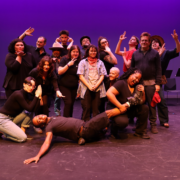
 Associated Press