
Social or Sober? Trans Cincinnatians Are Forced to Make a Choice


This story first appeared in Queer Cincinnati: Beyond the Binary, published Oct. 23, 2026.
In summer 2026, I spent a few weeks researching Cincinnati’s queer nightlife and social events. While doing so, two questions continued to peak my interest: Where exactly do the sober members of our community spend their time, and do they ever feel excluded from nightlife and social spaces due to their sobriety? I set out to speak to individuals who could answer these questions, specifically those who identified as both transgender and sober. In an attempt to bring light to some exclusionary sentiments experienced in bar and club culture, I open these questions to you, the reader. Conducting interviews on the subject in person however, revealed to me that many share the same opinion as I do surrounding queer community events in Cincinnati. Many events found in our local queer community, I’ve found to be generally centered around bar and club culture. Those who don’t participate in substance use can often feel as if they are forced to stand on the sidelines while trying to participate in these events.
Take a look at some recent event calendars for queer events in Cincinnati. You may notice that the majority of them take place in a bar or other 21+ spaces. Midwestern Lesbian’s Cincy Gay Agenda for example states that, for the week of July 6th through July 12th 2026, five out of seven events listed are located at bars, clubs, or breweries. These places are largely centered around the consumption of alcohol, and largely host our queer gatherings. Logically speaking, sober individuals usually understand that they may attend these events without participating in alcohol use. The concern lies in the continuous gathering in these types of establishments where drinking is typically a main activity. Shouldn’t queer people have an equal amount, or more options for community activities that aren’t centered around substance use?
Long nights spent drunk or high have become normal for many. I commonly find it hard to walk into a club anywhere in Cincinnati and find someone sober to socialize with on the dance floor. This can make it very challenging for the sober members of the LGBTQ+ community in our city to find inclusion at these events. It can feel as if you have fallen to the sidelines, fighting an internal battle and ultimately having to make a decision about substance use. I personally am always wondering: would I fit in better here in Cincinnati if I wasn’t sober? How do I have fun with my community without the expectation to participate in substance use? For those of us who spend nights out acting as the perpetual designated driver, where do we fit in?
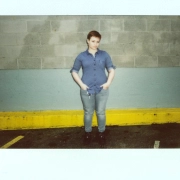
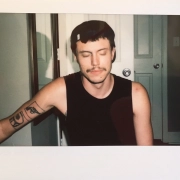
I found solace in Spyder, age 25, as we met to speak in the basement of the Northside Library. She is a member of a local punk band called Badman, and as a result spends plenty of time in bars and DIY venues across the city. As you can imagine, she finds herself often rubbing elbows with other regular clubgoers. One thing distinguishing herself from the other “regular clubgoers” is the simple fact that she doesn’t drink. Spyder continues to be an active participant in Cincinnati’s queer nightlife, but she also cites that she often feels the pressure to conform. She explains that she feels as if Cincinnati’s nightlife scene is highly substance centered. She states that “maybe it comes down to everybody’s own social anxiety… I think if we had a more level playing field, where drugs and alcohol weren’t an expectation…you would find people who wanted to spend time there”. I asked her what types of alcohol and drug-free events and spaces she would like to see in our city. She suggested events such as community dinners (not only because there is no pressure to use substances in places like these), but also because members of the community who don’t have consistent access to hot food can gather here without the expectation to pay a cover fee. She also noted that she had an idea in the past to start a queer skate club here in Cincinnati, either at a roller rink or local skate park. Both of these are amazing ideas that create a sober space for queer people to gather, with activities that value social interaction over substance use.
This story exists because of readers like you. Give $5 a month to keep Queer Kentucky free.
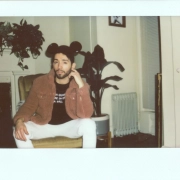
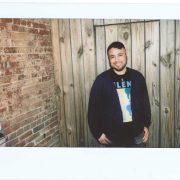
I continued to speak with Hugh, age 24, about our shared experiences with substance use and community expectations. Hugh uses medical marijuana for chronic pain, but over the last year has decided to abstain from alcohol. While discussing the pressure we felt from our peers in Cincinnati specifically, Hugh cited his frustrations: “There’s no big explanation, I just don’t want to [drink], and that kind of answer is not acceptable to a lot of people.” In his opinion, alcohol is often used as a “social lubricant” in situations like nightclubs and bars. Oftentimes, there’s just an expectation that you’re going to participate. I asked Hugh the same question I asked Spyder about what kinds of sober spaces in Cincinnati he would like to see. He mentioned that creative outdoor events like the YART (yard art) Sale in Northside have been a safe haven for him. He, and myself, would like to see more creative events like those, specifically events that are lower effort, self-led, and easily accessible. He continues to state that:
“I think there needs to be more casual community events. I think that people are under the assumption that everything needs to be big and super elaborate, and it’s like, you could just have a weekly meeting where you and your friends hang out at a park pavilion and make crafts, and that would be a safe space.”
As many of us are longing for low-effort social spaces to foster community while keeping ourselves sober, conversations like this are extremely important. In future years, I hope that we can begin to see an uptick in events that exist outside the bar. As I see it, these spaces would only create safer community based environments for those of us who choose to abstain from substances. As a sober person myself, I couldn’t agree more with Spyder and Hugh about the social pressures we find ourselves facing, and what we as a community can do to counteract it.
Keep reading
 How Missy Spears’ Humor and Advocacy Evolved Into Powerful Local Leadership
 Roebling Bridge protester arrested in court on felony riot charge
 Boone County KY Pride Festival Returns During LGBTQ+ History Month
 Smoke & Queers: How a Queer Burlesque Troupe Built a Stage for Everyone Else
 S.G. Goodman Brings Her Kentucky Tour Home This Week