
Smoke & Queers: How a Queer Burlesque Troupe Built a Stage for Everyone Else


There is a performance troupe where the rules are simple: You have to be queer. You have to be courageous, or at least act like you are. Why will you need that courage? Well, to take your clothes off, of course. Oh, and you can’t use any real flames in performances – purely for safety purposes. This stage is called Smoke & Queers, a queer burlesque performance troupe that has dazzled audiences in Cincinnati and Northern Kentucky since 2019.
The tease-filled concept numbers, the rhinestone costumes, the steamy reveals, and the reclaimed bodies are a result of those rules. Smoke & Queers, which showcases burlesque, drag, and draglesque, is preparing for the Rhinestone Rodeo on October 3rd at Second Sight Spirits in Ludlow, which is part of this year’s Bourbon & Belonging Kentucky’s Queer Bourbon Week. We sat down with four of the troupe’s producers to talk about group origins, what the stage gives back to them, and why an art form built on undressing has always had far more to say than anything about bodies, alone.
A Short History of Burlesque, and Why Queerness Was Always Underneath It
To understand what Smoke & Queers is doing, it helps to understand the history of burlesque. That history, however, is less agreed upon than many would think.
The simplified version taught in many dance history classes points to Aristophanes, the ancient Greek playwright, as the father of satire and comedy, which ties directly into the word burlesque’s meaning: a literary or dramatic work that mocks a serious subject through comic imitation, or a style of variety show entertainment featuring comedy, dance, and striptease. His shows poked fun at serious matters, in the way that today’s burlesque performances can act as political statements. Burlesque historian and performer Bella Sin, who has spent years researching and rewriting the way this art form’s history gets told, pushed back on that origin during a lecture at the Ohio State Library Archives in May of 2025.
Instead, she traced its roots further but also wider, to ritual dance in ancient Sumer, to fertility rites among the Mexica people of Mexico, to Japanese legend involving a goddess who strips and dances to tease a deity out of hiding, and to Vaudeville, the Parisian variety show tradition that exploded across the United States and the rest of the Americas by the 1800s.
Lydia Thompson is frequently credited as the woman who brought burlesque to the United States when she toured with her troupe British Blondes in the 1860s, scandalizing audiences by wearing flesh colored tights and showing bare ankles. (Those audiences would never survive a Smoke & Queers show.) But burlesque already existed in the U.S. before she arrived. What Thompson actually did was confront the controversy around her show unapologetically, which is arguably what has kept burlesque relevant today.
Queerness runs through this same history rather than sitting beside it. Drag and burlesque have been intertwined for as long as either has existed as a formal tradition, sharing performers, stages, and aesthetics. Hedy Jo Star, a trans burlesque performer and author who was publicly open about her transition in the 1950s, performed for years in the traveling Jewel Box Revue. She later became a costume designer whose work helped define the rhinestone-heavy look burlesque and drag are known for today. Sin said queer nightlife scenes in Mexico, France, and Germany overlapped heavily with burlesque circuits, and plenty of performers throughout the twentieth century were queer even when it was not safe to say so publicly.
By the 1940s, moral panic and anti-obscenity laws had pushed burlesque out of the mainstream and into the smaller, underground and fringe corners of American entertainment. The revival that followed in the 90s and early 2000s is usually called neo-burlesque, and it is the direct ancestor of the scene Smoke & Queers belongs to. This movement brought the tease and the theatrics back into the light, while also opening the door for a much wider range of people to define what the art form could be: performers of every size, race, gender identity, and sexuality. As burlesque researcher Alyssa Stover of Ohio State University’s Dance Department put it, at its core, it is about more than a striptease. It is about curating a safe space and bringing together people who have been cast down and cast out elsewhere in society.
The Performers
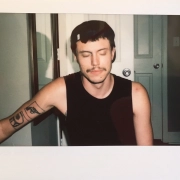
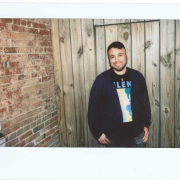
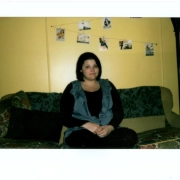
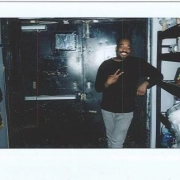
Salem Le Fay (she/her) describes herself as witchy, unbothered, and incredibly seductive. She has been a performer her whole life in one form or another, and has been building her burlesque persona for almost four years now. She also genderbends into The Baron, a drag king alter ego with his own pronouns, he/they, and his own vibe, proof that Salem’s magic transcends genres.
The ethereal Andro Hathaway (they/them) is the one with vintage taste. They started performing burlesque in 2022, close to four and a half years ago now, though like the rest of the troupe, they have been performing in some form their entire life. Andro’s burlesque is less about broadcasting and more about processing, with lots of sparkles and an old-school aesthetic.
Long-time performance artist Seymour Hiney (he/they) is camp personified and, by a wide margin, the most tenured performer in the room. Seymour has been performing in some drag or burlesque-adjacent capacity since 2010, sixteen years ago now, which started, fittingly, with Rocky Horror Picture Show shadow casts before becoming a drag king. A hybrid of both drag and burlesque, called ‘draglesque,’ followed, and every once in a while, they will pivot to a neo-burlesque number under the stage name The Groke. The continued inspiration stems from a lifetime of dance and musical performance, stretching back to childhood.
Dolly Partner (she/they) is feral in the best possible way, feisty, and proud of her Kentuckian roots. She has her own drag king alter ego too, Donny Partner. Dolly grew up in Central Kentucky, where she says she simply was not exposed to the different shapes queerness can take, and she is candid that finding burlesque became an education in exactly that, opening doors that growing up in a smaller, more conservative part of the state had kept closed. She had tried more traditional performance routes first, theater, dance, the usual paths, and none of it stuck the way she wanted it to. Burlesque is where she shines.
The Troupe
Smoke & Queers was started in 2019 as an amateur troupe by performers Christina Coobatis and Clarity Amrein in the Tri-State area who wanted to shake up the local burlesque scene, which was dominated by traditional ideals. They realized there was not a space built for them. So, they built one.
This story exists because of readers like you. Give $5 a month to keep Queer Kentucky free.
“There was not a group out here that was for [queer folks] to perform in,” Dolly said. This wasn’t an accusation against what already existed, just a recognition that it was not enough, Dolly said.
That space now features drag kings, burlesque, and draglesque, and flow artists under one expressive and colorful roof.
Six years later, the troupe’s performers list is 300 people deep with artists of all genres. The troupe puts on two to five shows a month, anchored by recurring nights like Amore After Dark at Second Story in Covington, and Kings and Things at Tokyo Kitty in Cincinnati, the city’s only regular drag king night.
Seymour holds onto that fact with real pride.
“Drag kings do not get the stage time or attention drag queens do. So it’s been really important to me to continue to have that space for drag kings and drag things … I want to make space for gender expansiveness,” Seymour said.
The troupe also creates opportunities for newcomers. Producers and seasoned performers host student workshops, classes, and showcases to encourage more queer artists to take up space in the community. Students learn the art of the tease, how to create intentional reveals, and the way a good number is built.
“Mentorship is my favorite part of all of this,” Seymour said.
For Salem, it is passing along all that burlesque has given her, including knowing she inspired others to enter the art form.
“I want more of that, and to help people see what they can do,” Salem said. “It is for everyone.”
As far as the acts, you will see a little bit of everything and anything at a Smoke & Queers show. Sometimes, a showgirl will start on stage in a Nemo-inspired onesie and strip down to a belt filled with bedazzled fish. You may also see a drag queen lip-syncing to a new pop song while collecting singles from audience members, bringing attendees directly into the experience. You may or may not see a drag king perform to a classic country song, using bales of hay as props. Also, you can get weird. In fact, it’s even encouraged.
“The weirder, the better, in my opinion,” Dolly said.
Self-Discovery and Radical Self-Expression
Ask any of the four producers what burlesque actually does for them, and the answers stop being about just the performance.
For Salem, the stage is where she can show up fully.
“People always assume I’m just like this straight cis person,” she said, and burlesque, along with the persona she built to counter that assumption, has helped her internalize her queerness and be proud of it. “I love performing for anyone who is not a man.”
Salem says she never planned on any of this, and said, “hell, yeah”, when asked if this art form made her more confident.
“I never expected to be in this position whatsoever, and it is so awesome. I don’t know what my life would be without it,” she said.
Andro’s numbers have acted as a form of artistic therapy and personal exploration.
“Andro is very centered in exploring my sapphicness and my gender flexibility. It’s kind of more internal for me. So I’m trying to express… things that I’m working through, and translating that to the stage,” they explained.
Andro grew up Catholic, with a body they were taught could only ever belong to a future husband, never to themself. Burlesque became the undoing of that, they said, and a reclaiming of their body, for themselves, and passing that lesson onto others as a show producer.
“[With] newer performers, you see them also getting that same kind of thing out of it. I think that’s really beautiful to see people unlearn these toxic things that are thrust upon them in purity culture,” Andro said.
Dolly’s performances are filled with symbolism and nods to her Kentuckian roots. Her Rhapsody in Bluegrass piece, the one she will perform at the upcoming Rhinestone Rodeo, digs into the gap between expectation and reality. Her costume is styled in a more traditional burlesque fashion, featuring a stunning blue corset and fun fringe pieces. What folks see, however, is more feral and unhinged, including a cigarette stuffed in her rhinestone bra.
“It’s a gap that can be read through queerness, or womanhood with what you expect, and what you get,” she said, honoring the complexities of the queer experience.
Underneath the concept work is also something more personal. Dolly grew up with an eating disorder, and finding a release into being comfortable in her body in all of its stages has been, in her words, “transformational.”
“Nudity is just like, a beautiful thing. So why not explore it both in a sexy and a humorous way? Like being funny is sexy,” she said. It’s also helped her to be more unapologetic. “Recently, I gained a lot of weight, but I’m still out here showing my body because every body is sexy,” she said.
Seymour spoke about the importance of representing different types of people, and views performing as a channel to celebrate the “diversity of bodies, all of them being equally praised and applauded.”
As a person of color, too, this added layer speaks to a greater mission of reclaiming a body that is often overlooked within Eurocentric beauty standards.
“As a brown person in particular, it’s a way to sort of decolonize my body,” Seymour said.
The performers all agreed that Smoke & Queers is culturally important in 2026, as attempts to pass anti-drag laws in the United States continue in various states, including Ohio and Kentucky.
“Any sort of thing celebrating a [queer] body in a sexual way, or even just in a neutral way, is sort of radical in today’s atmosphere. The added wrinkle of us being a queer burlesque and drag troupe and making a space for bodies that are currently trying to be legislated out of existence is extra important,” Seymour said.
As for the whole, taking-off-the-clothes-thing, Seymour said, you do get used to it.
“I’ve been doing this for so long now, I don’t even think about the body element of it and the nudity. I just think, ‘Oh, that was a really cool way to tease. Oh, that was a really cool reveal’.”
The Rhinestone Rodeo will feature a Western-themed revue of variety acts, and Kentucky bourbon culture woven throughout. In fact, the event is taking place at Second Sight Spirits in Ludlow, which is one of the stops on the official Kentucky Bourbon Trail. Expect great drinks, creative numbers and the colorful chaos the troupe is known for on October 3rd at 9pm.
Grab tickets here.
Keep reading
 Boone County KY Pride Festival Returns During LGBTQ+ History Month
 S.G. Goodman Brings Her Kentucky Tour Home This Week
 Here’s How You Can Find an HIV-Competent Doctor in Kentucky
 WAVE FoundationWAVE Foundation to Host 20th Annual ‘Make WAVEs’ Gala at Newport Aquarium
 APThe ‘Family Safety’ Pretense: Flock Cameras and Northern Kentucky Parks