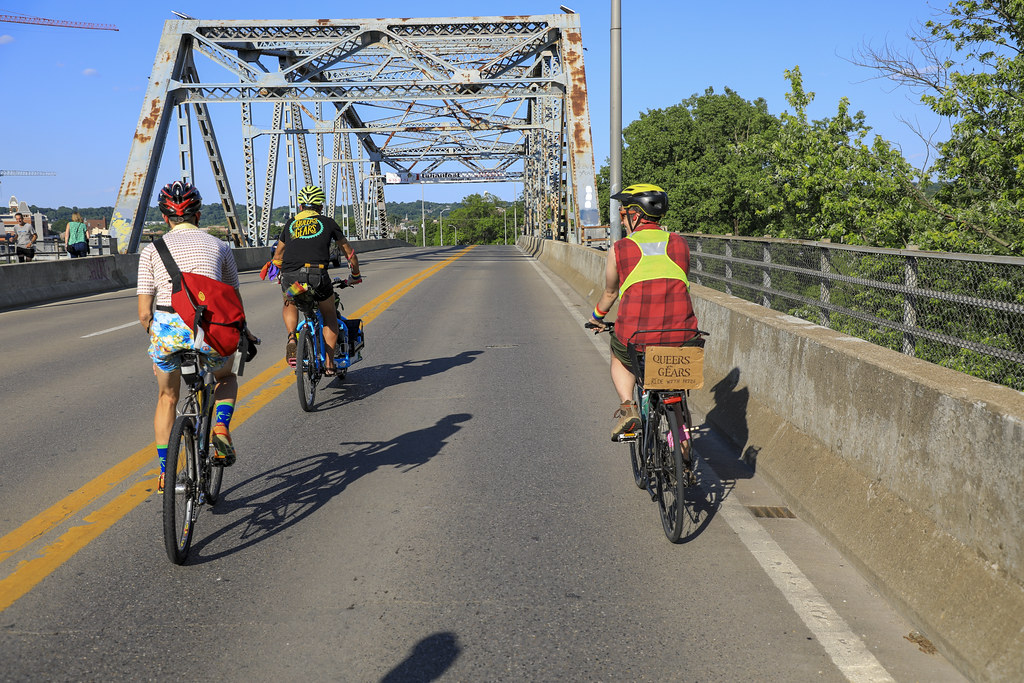
KEEP. Function. Additive. The story points a reader to an ongoing group or space they can join to find other people: a support group, a club, a class, a recurring meetup, a queer bicycling club. Different from Events (one thing happening on a date) and Resources (a service that helps you). A story can carry more than one. Pairs with any beat and always with a region. Added Oct 9 2026.

Tag Archive for: Function: Groups

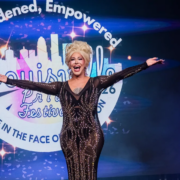
A drag performer in a sequined black gown raises their arms on stage in front of the 2026 Louisville Pride Festival sign reading "Emboldened, Empowered."

Louisville Pride Put Mental Health Front and Center. The Need Doesn’t End When the Tents Come Down.

Queens took the stage. Artists sold their colorful wares. Vendors of all kinds passed out pamphlets. Louisville Pride returned this year, with queers from all walks of life bustling through a blocked-off section of Bardstown Road on Saturday, September 12.

Louisville Pride Foundation, which also runs the Louisville Pride Center in Old Louisville, organized the event.

National acts performed near tables of local organizations ranging from healthcare organizations, such as Planned Parenthood, to political organizations.
Among those who participated were organizations helping LGBTQ+ people with their mental health or pointing them in the direction of mental health services.

According to the 2025 Queer Kentucky Community Health Survey, roughly 7 in 10 LGBTQ+ Kentuckians have had negative experiences with their mental health due to the current political environment, such as debates around LGBTQ+ rights.

Of queer Louisvillians who responded to the survey, about 32% attributed thoughts of suicide to policy debates around LGBTQ+ people. In fact, the number is 3.9% above the state average. Because of these debates, 8.1% of respondents said they left Kentucky because of it. The survey also found that trans women reported higher rates of suicidal ideation.

Louisville has more queer services than most of Kentucky, but Queer Kentucky’s data suggests they may not be enough because there are also high levels of health risks in the community.

Mandala House Provides Mental Healthcare to Queer Louisville

One featured booth at Louisville Pride was Mandala House, which provides mental healthcare to the community of Louisville. Mandala House has several therapy groups that address the psychological health of minority groups and their various intersectional needs.

“It’s a special place in our hearts, the work we get to do with queer people,” said Mandala House therapist Rachel Archer.

Archer said Mandala House currently runs a variety of therapy groups, such as an adult gender-journey group for individuals 18+ who are questioning their gender or who identify as trans or gender non-conforming. The space provides communal support for one another.

Archer noted that she couldn’t say that the lack of queer-specific spaces as a barrier to queer healthcare’s accessibility was unique to Louisville alone.

Mandala House also provides support letters for trans individuals seeking gender-affirming care, which is often required by providers and insurance companies. For many queer Kentuckians, finding a provider for their healthcare can be a challenge. According to the 2025 Queer Kentucky Community Health Survey, while Louisville has better healthcare access than most of the state for LGBTQ+ Kentuckians, provider refusal still happens.

Kentucky Psychological Foundation: Evidence-Based Connections

Among the vendors, the Kentucky Psychological Foundation was doing outreach. The organization focuses on bringing free mental health resources across Kentucky. It also supports researchers and graduate students with funds to conduct research with marginalized communities.

“We know there is a lot of specifically psychological information that is based in science and research…out there, but it’s not always easily accessible in the community,” board member Dr. Courtney Keim told Queer Kentucky.

“What we really focus on is educating the public about the science in ways that can better the lives of Kentuckians,” Keim said.

The Kentucky Psychological Foundation doesn’t provide mental healthcare, but its sister organization, the Kentucky Psychological Association, is the state professional association for psychologists, whose members provide care.

The Kentucky Psychological Foundation’s site provides a link to a database of members of the Kentucky Psychological Association that are using evidence-based research and follow the American Psychological Association’s guidelines and ethics. This can help address the needs of marginalized communities to find competent care.

“Our foundation is going to provide things based in evidence and research. We are very much against therapies that are not evidence-based. So for example, conversion therapy is not evidence-based. We don’t support that. We only provide evidence-based and culturally competent therapists that understand the marginalized communities they are serving,” said Keim.

So-called “conversion therapy” is a discredited practice and is referred to by the American Psychological Association as attempting “to change a person’s sexual orientation, gender identity, or related behaviors” with practices that “stem from the scientifically discredited belief that being LGBTQ+ is a mental illness that should be cured.” The organization says it causes a significant risk of self-harm, depression, and substance use.

The topic of ‘conversion therapy’ has been a battleground issue statewide between Democratic Governor Andy Beshear and the Republican dominated state legislature when Beshear tried to restrict the harmful practice, but Republicans overturned his attempt.

“A lot of times it is because people who are getting that ‘therapy’ don’t feel that person providing that therapy truly understands them,” said Keim. “One of the things that has been important in psychology is those cultural competencies and making sure those folks who are marginalized find someone who truly sees them.”

At the end of the day, the booths came down. The tents emptied. As the night wound down, a queen took the main stage to perform Dolly Parton’s “I Will Always Love You,” and Louisville Pride ended the way it began, with queens and with community.

If you or someone you know is in crisis, The Trevor Project’s counselors are available 24/7 at 1-866-488-7386, by texting START to 678-678, or by chat at thetrevorproject.org/get-help.

If you or someone you know is struggling, call or text the 988 Suicide & Crisis Lifeline at 988. LGBTQ+ young people can press 3 to reach counselors trained in LGBTQ+ care, an option that returned on Sept. 30, 2026 after it was cut in July 2025. The Trevor Project also offers 24/7 support at 1-866-488-7386 or by texting START to 678-678.

Seymour Hiney performs at a Smoke & Queers queer burlesque show in a sequined outfit with red fringe, arms raised on stage.

Smoke & Queers: How a Queer Burlesque Troupe Built a Stage for Everyone Else

There is a performance troupe where the rules are simple: You have to be queer. You have to be courageous, or at least act like you are. Why will you need that courage? Well, to take your clothes off, of course. Oh, and you can’t use any real flames in performances – purely for safety purposes. This stage is called Smoke & Queers, a queer burlesque performance troupe that has dazzled audiences in Cincinnati and Northern Kentucky since 2019.

The tease-filled concept numbers, the rhinestone costumes, the steamy reveals, and the reclaimed bodies are a result of those rules. Smoke & Queers, which showcases burlesque, drag, and draglesque, is preparing for the Rhinestone Rodeo on October 3rd at Second Sight Spirits in Ludlow, which is part of this year’s Bourbon & Belonging Kentucky’s Queer Bourbon Week. We sat down with four of the troupe’s producers to talk about group origins, what the stage gives back to them, and why an art form built on undressing has always had far more to say than anything about bodies, alone.

A Short History of Burlesque, and Why Queerness Was Always Underneath It

To understand what Smoke & Queers is doing, it helps to understand the history of burlesque. That history, however, is less agreed upon than many would think.

The simplified version taught in many dance history classes points to Aristophanes, the ancient Greek playwright, as the father of satire and comedy, which ties directly into the word burlesque’s meaning: a literary or dramatic work that mocks a serious subject through comic imitation, or a style of variety show entertainment featuring comedy, dance, and striptease. His shows poked fun at serious matters, in the way that today’s burlesque performances can act as political statements. Burlesque historian and performer Bella Sin, who has spent years researching and rewriting the way this art form’s history gets told, pushed back on that origin during a lecture at the Ohio State Library Archives in May of 2025.

Instead, she traced its roots further but also wider, to ritual dance in ancient Sumer, to fertility rites among the Mexica people of Mexico, to Japanese legend involving a goddess who strips and dances to tease a deity out of hiding, and to Vaudeville, the Parisian variety show tradition that exploded across the United States and the rest of the Americas by the 1800s.

Lydia Thompson is frequently credited as the woman who brought burlesque to the United States when she toured with her troupe British Blondes in the 1860s, scandalizing audiences by wearing flesh colored tights and showing bare ankles. (Those audiences would never survive a Smoke & Queers show.) But burlesque already existed in the U.S. before she arrived. What Thompson actually did was confront the controversy around her show unapologetically, which is arguably what has kept burlesque relevant today.

Queerness runs through this same history rather than sitting beside it. Drag and burlesque have been intertwined for as long as either has existed as a formal tradition, sharing performers, stages, and aesthetics. Hedy Jo Star, a trans burlesque performer and author who was publicly open about her transition in the 1950s, performed for years in the traveling Jewel Box Revue. She later became a costume designer whose work helped define the rhinestone-heavy look burlesque and drag are known for today. Sin said queer nightlife scenes in Mexico, France, and Germany overlapped heavily with burlesque circuits, and plenty of performers throughout the twentieth century were queer even when it was not safe to say so publicly.

By the 1940s, moral panic and anti-obscenity laws had pushed burlesque out of the mainstream and into the smaller, underground and fringe corners of American entertainment. The revival that followed in the 90s and early 2000s is usually called neo-burlesque, and it is the direct ancestor of the scene Smoke & Queers belongs to. This movement brought the tease and the theatrics back into the light, while also opening the door for a much wider range of people to define what the art form could be: performers of every size, race, gender identity, and sexuality. As burlesque researcher Alyssa Stover of Ohio State University’s Dance Department put it, at its core, it is about more than a striptease. It is about curating a safe space and bringing together people who have been cast down and cast out elsewhere in society.

The Performers

Salem Le Fay (she/her) describes herself as witchy, unbothered, and incredibly seductive. She has been a performer her whole life in one form or another, and has been building her burlesque persona for almost four years now. She also genderbends into The Baron, a drag king alter ego with his own pronouns, he/they, and his own vibe, proof that Salem’s magic transcends genres.

The ethereal Andro Hathaway (they/them) is the one with vintage taste. They started performing burlesque in 2022, close to four and a half years ago now, though like the rest of the troupe, they have been performing in some form their entire life. Andro’s burlesque is less about broadcasting and more about processing, with lots of sparkles and an old-school aesthetic.

Long-time performance artist Seymour Hiney (he/they) is camp personified and, by a wide margin, the most tenured performer in the room. Seymour has been performing in some drag or burlesque-adjacent capacity since 2010, sixteen years ago now, which started, fittingly, with Rocky Horror Picture Show shadow casts before becoming a drag king. A hybrid of both drag and burlesque, called ‘draglesque,’ followed, and every once in a while, they will pivot to a neo-burlesque number under the stage name The Groke. The continued inspiration stems from a lifetime of dance and musical performance, stretching back to childhood.

Dolly Partner (she/they) is feral in the best possible way, feisty, and proud of her Kentuckian roots. She has her own drag king alter ego too, Donny Partner. Dolly grew up in Central Kentucky, where she says she simply was not exposed to the different shapes queerness can take, and she is candid that finding burlesque became an education in exactly that, opening doors that growing up in a smaller, more conservative part of the state had kept closed. She had tried more traditional performance routes first, theater, dance, the usual paths, and none of it stuck the way she wanted it to. Burlesque is where she shines.

The Troupe

Smoke & Queers was started in 2019 as an amateur troupe by performers Christina Coobatis and Clarity Amrein in the Tri-State area who wanted to shake up the local burlesque scene, which was dominated by traditional ideals. They realized there was not a space built for them. So, they built one.

“There was not a group out here that was for [queer folks] to perform in,” Dolly said. This wasn’t an accusation against what already existed, just a recognition that it was not enough, Dolly said.

That space now features drag kings, burlesque, and draglesque, and flow artists under one expressive and colorful roof.

Six years later, the troupe’s performers list is 300 people deep with artists of all genres. The troupe puts on two to five shows a month, anchored by recurring nights like Amore After Dark at Second Story in Covington, and Kings and Things at Tokyo Kitty in Cincinnati, the city’s only regular drag king night.

Seymour holds onto that fact with real pride.

“Drag kings do not get the stage time or attention drag queens do. So it’s been really important to me to continue to have that space for drag kings and drag things … I want to make space for gender expansiveness,” Seymour said.

The troupe also creates opportunities for newcomers. Producers and seasoned performers host student workshops, classes, and showcases to encourage more queer artists to take up space in the community. Students learn the art of the tease, how to create intentional reveals, and the way a good number is built.

“Mentorship is my favorite part of all of this,” Seymour said.

For Salem, it is passing along all that burlesque has given her, including knowing she inspired others to enter the art form.

“I want more of that, and to help people see what they can do,” Salem said. “It is for everyone.”

As far as the acts, you will see a little bit of everything and anything at a Smoke & Queers show. Sometimes, a showgirl will start on stage in a Nemo-inspired onesie and strip down to a belt filled with bedazzled fish. You may also see a drag queen lip-syncing to a new pop song while collecting singles from audience members, bringing attendees directly into the experience. You may or may not see a drag king perform to a classic country song, using bales of hay as props. Also, you can get weird. In fact, it’s even encouraged.

“The weirder, the better, in my opinion,” Dolly said.

Self-Discovery and Radical Self-Expression

Ask any of the four producers what burlesque actually does for them, and the answers stop being about just the performance.

For Salem, the stage is where she can show up fully.

“People always assume I’m just like this straight cis person,” she said, and burlesque, along with the persona she built to counter that assumption, has helped her internalize her queerness and be proud of it. “I love performing for anyone who is not a man.”

Salem says she never planned on any of this, and said, “hell, yeah”, when asked if this art form made her more confident.

“I never expected to be in this position whatsoever, and it is so awesome. I don’t know what my life would be without it,” she said.

Andro’s numbers have acted as a form of artistic therapy and personal exploration.

“Andro is very centered in exploring my sapphicness and my gender flexibility. It’s kind of more internal for me. So I’m trying to express… things that I’m working through, and translating that to the stage,” they explained.

Andro grew up Catholic, with a body they were taught could only ever belong to a future husband, never to themself. Burlesque became the undoing of that, they said, and a reclaiming of their body, for themselves, and passing that lesson onto others as a show producer.

“[With] newer performers, you see them also getting that same kind of thing out of it. I think that’s really beautiful to see people unlearn these toxic things that are thrust upon them in purity culture,” Andro said.

Dolly’s performances are filled with symbolism and nods to her Kentuckian roots. Her Rhapsody in Bluegrass piece, the one she will perform at the upcoming Rhinestone Rodeo, digs into the gap between expectation and reality. Her costume is styled in a more traditional burlesque fashion, featuring a stunning blue corset and fun fringe pieces. What folks see, however, is more feral and unhinged, including a cigarette stuffed in her rhinestone bra.

“It’s a gap that can be read through queerness, or womanhood with what you expect, and what you get,” she said, honoring the complexities of the queer experience.

Underneath the concept work is also something more personal. Dolly grew up with an eating disorder, and finding a release into being comfortable in her body in all of its stages has been, in her words, “transformational.”

“Nudity is just like, a beautiful thing. So why not explore it both in a sexy and a humorous way? Like being funny is sexy,” she said. It’s also helped her to be more unapologetic. “Recently, I gained a lot of weight, but I’m still out here showing my body because every body is sexy,” she said.

Seymour spoke about the importance of representing different types of people, and views performing as a channel to celebrate the “diversity of bodies, all of them being equally praised and applauded.”

As a person of color, too, this added layer speaks to a greater mission of reclaiming a body that is often overlooked within Eurocentric beauty standards.

“As a brown person in particular, it’s a way to sort of decolonize my body,” Seymour said.

The performers all agreed that Smoke & Queers is culturally important in 2026, as attempts to pass anti-drag laws in the United States continue in various states, including Ohio and Kentucky.

“Any sort of thing celebrating a [queer] body in a sexual way, or even just in a neutral way, is sort of radical in today’s atmosphere. The added wrinkle of us being a queer burlesque and drag troupe and making a space for bodies that are currently trying to be legislated out of existence is extra important,” Seymour said.

As for the whole, taking-off-the-clothes-thing, Seymour said, you do get used to it.

“I’ve been doing this for so long now, I don’t even think about the body element of it and the nudity. I just think, ‘Oh, that was a really cool way to tease. Oh, that was a really cool reveal’.”

The Rhinestone Rodeo will feature a Western-themed revue of variety acts, and Kentucky bourbon culture woven throughout. In fact, the event is taking place at Second Sight Spirits in Ludlow, which is one of the stops on the official Kentucky Bourbon Trail. Expect great drinks, creative numbers and the colorful chaos the troupe is known for on October 3rd at 9pm.

Grab tickets here.

Black-and-white portrait of Appalachian poet Samantha Ratcliffe in glasses, set against a painted mountain landscape.

Appalachian Poet Samantha Ratcliffe Uses Words to Reclaim Queer Identity in Kentucky

Appalachian poet Samantha Ratcliffe embraces her roots through poetry and songwriting to showcase the rich cultural history of the region.

After her parents’ divorce as a child, she was a “deeply dramatic” sixth grader who began to write poetry in class, often landing her in trouble. She filled two notebooks with her words during that time. She approached her teacher and asked if her poetry was worth submitting to a school writing competition. Her teacher then marked the poem up in red ink and returned it to her, stating that that is how a real poem should look.

“I’ve been obsessed with defying the idea of ‘real poetry’ ever since,” Ratcliffe said.

Appalachian Poet Samantha Ratcliffe Finds Her Voice

Born in Pikeville, KY, Ratcliffe uses her Appalachian roots to showcase the fight against hatred in Southern communities. She draws a lot of her inspiration from fellow Kentuckian bell hooks, who focused many of her writings on feminist thinking, race, and social class. Some of her poetry speaks to injustices enacted against Appalachia, as capitalism destroyed many people’s livelihoods. She reiterated the sentiment that the need to create in Appalachia was driven by a drive to exist and to reinvent harmful stereotypes placed upon the region.

The Appalachian region includes a prolific coal industry, in which the workers were exploited and abused by the systems that forced them to work. Thus, today’s economy in Appalachia has been severely affected by the past hardships.

“It’s almost like you’re traveling through a wooded area, but it is your woods. It’s like Kentucky- this South, is our woods. But it’s a reclaiming of that space in a remembrance of our ancestors as we go along this literary path together,” Ratcliffe said.

From Poetry to Songwriting as Fields May

Ratcliffe is also a songwriter. In high school, she dated a boyfriend who introduced her to punk music and started a band with her. “So, as gently as he could, he suggested that maybe he should write the lyrics because he understood punk better than I did. And at that young age, he was probably right!” Ratcliffe said. But her love of riot grrrl music pushed her to write and perform her own songs after the band’s sets. “I was deeply inspired by other local femme and trans artists at the time who made me feel like it was possible for me too,” she said. Now, she has over 50 songs under her belt and releases music under the name Fields May.

Ratcliffe is currently pursuing her MFA in Poetry at the University of Kentucky, where she works as a graduate instructor teaching creative writing classes. Before starting her graduate studies, she worked as an English and creative writing high school teacher.

At 16 years old, she found herself in the Lexington punk scene, where she would sell self-published poetry books called zines that she had collected from across the country. Since then, she has been involved with small press publishing and has attempted to learn as much as she can about the process.

Ratcliffe also runs Hill Writers Collective, a monthly reading series she’s led for more than three years that spotlights two Appalachian authors each month in free, community-centered events. Information on upcoming readings is available on her website and Instagram.

“Often it feels like publishing is unreachable, but I believe it’s one of our oldest mechanisms of collectivism. I’ll never stop talking about how special the literary community is in Kentucky,” Ratcliffe said.

Queer Identity and Appalachian Roots in “Common Wealth”

Currently, she is working on a book of poetry for her thesis, titled “Common Wealth.” The book explores themes of queer identity and Appalachian upbringing, subjects that regularly fuel Ratcliffe’s creative practice. Appalachian roots are based in rising against oppressors, said Ratcliffe. She integrates those ideas into her work, demonstrating what it’s like to live as an openly queer person.

In one poem, Ratcliffe describes a time she had a conversation at the kitchen table with a friend who had just gotten top surgery. The kitchen table presents a feeling of home and Appalachia, regardless of some of the conflicting beliefs held by Ratcliffe and by the region, she said. “There are so many reasons to be scared in life. You could spend your whole life inside, spend your whole life closeted, you could spend your whole life never coming out and living your true life as a queer, trans person. If you don’t say ‘rear against this hatefulness and the selfishness of capitalism,’ you’re actually hurting yourself more in the end. It’s a fake safety,” said Ratcliffe, who was quick to add that she sees this as reflecting her own journey rather than a judgment of anyone else’s — staying closeted, she said, is often a matter of safety, not fear.

That belief is what drives her writing. “Writing is something that I have to do to see myself and the world. And I write about queer, trans, and Appalachian identities because I know those folks as beautiful. I want the world to see us as fully as I see us,” Ratcliffe said. “My biggest advice to aspiring writers is to seek out Appalachian and queer writers not just to improve your own skills, but to understand yourself, where you’re from, and all the places you’ve yet to go.”

In her unpublished poem, “Quilting,” she writes about the deep connection Kentuckians have with one another and how the world has strung them together. “My family taught me that we take in those who need, we feed those who need. There’s always a place at the table for everyone,” Ratcliffe said.

Quilting

This blanket, a family

of pine trees reaching across

the night’s rustling to sooth your

sleeplessness. Bound self of words,

holding the poetry and the poverty

like simile.

Ratcliffe lives loudly and proudly as a queer person, and wants Kentuckians to be proud “There are so many of us (queer people) who are literally taking care of your people, teaching your kids, so we’re just here all the time,” said Ratcliffe. “You may not see us, but we’re still part of this Commonwealth and we’re still a beating heart in our connected story,” she said.

You can read more of Ratcliffe’s poetry and listen to her music here.

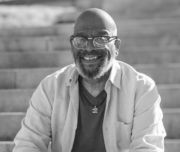
Ron Clemons, Cincinnati community activist and retired social worker, seated on outdoor steps in a black-and-white portrait photograph.

Beyond the Bar: How Cincinnati/NKY Queer Spaces Are Evolving

In an online discussion that recently came up among members of the local queer community in Cincinnati there was one question that stood out: “Why are all of the queer spaces disappearing?”

In recent years, many LGBTQ+ bars have shuttered due to rising costs of rent and, in some cases, a decrease in patrons. 

Notably in Cincinnati, we’ve lost a few bars over the past few years, but there are still more than a dozen bars that identify as queer and/or queer-friendly. While the number of actual queer-owned establishments has lessened over the years, what constitutes a queer-friendly space is evolving — both taking on the roles of serving the community in material ways, and creating spaces of joy and communion. 

In some ways, what’s perplexing is the limiting definition of queer spaces to just bars as the glue that binds the community. Today, the breadth of queer spaces includes sports leagues, queer choruses and sober bars, and they provide home spaces for other organizations doing mutual aid and organizing work.

When I first moved to Cincinnati in the spring of 1975, bars and a few churches were some of the only places we had to congregate, socialize and strategize. Organizations and clubs would begin appearing a few years later, such as the  Cincinnati Bowling League in 1980 and Stonewall Cincinnati in 1982. The bars were instrumental in helping build those and other organizations by providing meeting space and resources for fundraising. They did help to lay the foundations for many of the activities we enjoy today. Queer life started to show itself more outside of bar spaces. In the early 80’s, as it became less dangerous to be out, more and more organizations began to pop up around the city. Social clubs and political organizations became a large part of the queer landscape, and that trend continues today. The organizations give people more options to socialize and connect with other queers and expand the definition of community. 

According to local author, Covington School Board member and business consultant, Kareem Simpson, a black queer man, this is a natural process and necessary for the community to grow and for businesses to survive.

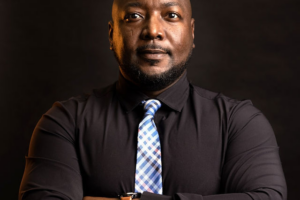
A formal portrait of Kareem Simpson, Covington School Board member and business consultant. He stands with his arms crossed against a dark background, wearing a black button-down shirt and a blue plaid tie. He looks directly into the camera with a composed expression.

Kareem Simpson, Covington School Board member and business consultant, and a Black queer man. Photo courtesy: Kareem Simpson

“Community landscapes have expanded so the community looks different. There are about the same number of bars, but now there are more options in addition to bars,” he said.

“Some bars have changed their programming to stay current and attract more customers, such as Bloom providing a space for BIPOC drag performers and their followers. Others in the community have created spaces that feel more safe to marginalized community members, which in addition to younger people consuming less alcohol, can explain why bars are less busy. People want to feel safe, seen and included so they seek out spaces that provide that element,” Simpson said.

And Joshua Petty-Kayes, member of the newly created Cincinnati LGBTQ City Council Commission, a founder of Treehouse Cincinnati and an accessibility advocate emphasizes that community members want to go to spaces that are accessible. And accessibility isn’t just limited to physical access.

“Accessibility barriers can be based on gender identities, racial as well as physical. People want to be in spaces that feel welcoming and reflect their reality, aka being around others who look like them and share similar experiences. TreeHouse was created to meet that need and provide an alternative community space,” Petty-Kayes explained.

TreeHouse Cincinnati, according to their vision statement, is a resource space that uplifts the programming of the LGBTQ+ Community to promote collaboration, diversity, and intersectionality. Petty-Kayes described providing space for community organizations such as PFLAG, Black Power Initiative, Cincinnati Black Pride and Cincinnati Prime Timers. There’s also a plan to create a library of books being banned by the current federal administration.  

Transform Cincy is another organization that not only provides an alternative to bar spaces. It addresses the growing need for affirming spaces and resources for transgender, nonbinary and gender non-conforming youth and young adults. Co-founded in October 2019 by Tristan Vaught and Nancy Dawson, what began as a free clothing and accessory program has grown into a thriving LGBTQ+ community center serving individuals and families throughout Greater Cincinnati. 

Transform Cincy, Vaught said, serves the community through their CARES model: Community Center, Advocacy, Resources, Education, and Support.

“We continue to provide free, curated wardrobes for transgender and gender-diverse youth and young adults while also offering support groups, legal clinics, social and educational programming, community meals, resource navigation, and opportunities for connection that foster belonging, resilience, and hope,” Vaught said.

Transform Cincy also holds an annual Trans Pride Adult Prom, their signature fundraising event, bringing together LGBTQ+ community members and allies to celebrate while supporting the organization’s life-changing work.

And queer organizations here don’t work in silos. Transform Cincy, for example, partners with organizations including NAMI Southwest Ohio, Beech Acres Parenting Center, Community Shares of Greater Cincinnati, Equality Ohio, and many other community partners to provide professional, affirming services. 

As we witness the rollbacks of our rights and freedoms, expanding the way we view and define Cincinnati LGBTQ+ spaces to be more inclusive of BIPOC and marginalized communities helps to ensure we have safe places to gather, be in community, and celebrate our existence. 

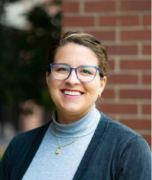
Sandra Carpenter, Executive Director of Louisville Youth Group, smiling in front of a brick wall. The Louisville Youth Group logo appears to the right.

Louisville Youth Group Director Wants to Reach Rural Kentucky’s Youth

While attending Eastern Kentucky University (EKU), Sandra Carpenter came out as lesbian and joined queer and feminist organizations. That’s where her love for providing support to both LGBTQIA+ youth in metropolitan and rural areas began.

Carpenter was recently appointed as the Executive Director of the Louisville Youth Group, one of Kentucky’s well known LGBTQ+ organizations, and the oldest queer QTBIPOC organization for youth in the south. Now, her mission as director is to reach more rural parts of the state.

“I continued throughout my entire adult life as an out lesbian, so that has been something that has been interesting in terms of reconciling my rural roots with kind of more of the metropolitan queer culture. That is where a lot of my focus is on making sure that we are resources for both kids here in Louisville and continue to also try to build out that network of brave spaces for kids who may also be in more rural parts of the state,” said Carpenter. 

Louisville Youth Group (LYG) is a Kentucky-based nonprofit dedicated to empowering and protecting LGBTQIA+ youth and has been active for 35 years providing youth with brave, safe and affirming spaces in which they can connect, develop leadership skills and advocate for themselves. 

Carpenter has a decade worth of experience in management and communications that she plans to bring into this role. 

“Whenever I came back to Louisville, my big goal was really to get back into this scene where I could use both my research and communication skills alongside my nonprofit experience,” said Carpenter. “I really just wanted to find a professional home where I could merge both in terms of what my values are and what the work is.” 

Her background ranges from working with Greater Louisville Inc. as the Community and Talent Engagement Manager to serving as the Communications Coordinator for the Louisville Pride Foundation. 

Carpenter believes in the strong impact that strategic storytelling has on extending reach and highlighting LGBTQIA+ communities’ voices. 

Carpenter said LYG’s storied history is hugely important in terms of making sure that the actual experiences of youth they serve are being heard.  

“Be that through advocacy, in terms of allowing experiences to be shared so that we can advocate for the best interest, but also just allowing folks in our organization, like through our youth leadership council, to have a real voice within the organization,” said Carpenter.

With growing political discrimination against the LGBTQIA+ community across the country, especially in the south, the importance of extending the reach of available resources to more communities is important to Carpenter. That’s why she wants to expand LYG’s footprint to include more rural areas in Kentucky to bridge the urban-rural divide that exists.

“Being from Eastern Kentucky, and realizing that LYG has such a presence here in the Louisville community, I think that we can become more known as a resource,” said Carpenter. “We could see more queer and trans youth organizations and resources being developed throughout Kentucky and Southern Indiana.”

While still in the works, Sandra  said she has strong intentions to work with existing GSAs (Gay Straight Alliance) groups across the state and to provide additional assistance to creating GSAs in other communities that request those resources. 

“My personal mission is to continue to create safe and brave spaces. These spaces are going to challenge folks in ways that help them grow,” said Carpenter. 

Carpenter’s work is driven by giving youth the space to become exactly who they are without fear. She draws from experiences she faced when she was aware of her identity as a high-schooler in rural Kentucky but felt unsafe for her to come out at that time, even with a supportive family.

“It was tricky for me to come out until I was able to find a community where I could see other people and hear from other people who shared my experiences,” said Carpenter.

Carpenter hasn’t been in this role long, but hearing of the years of impact LYG has had on the community feels heartening. “I’ve already heard from folks who’ve said if it weren’t for LYG, I would not be where I am today and it gave them the space to become exactly who they are,” said Carpenter. 

“For whatever work that I’m doing,” Carpenter said, “I want it to be intersectional and not just like in kind of the buzzwordy way. I actually want voices to be heard and to matter to actually have a stake in the decisions that we make. I want to make sure that we are both intergenerational and diverse.”


Midwestern lesbian Barbie Party

Cincinnati’s Midwestern Lesbian celebrates anniversary, expands pop-up events to other Ohio cities

This story was produced in collaboration with The Buckeye Flame, with support from Queen City Charities.

The LGBTQ+ events company announced plans to expand while celebrating “Sapphic Sips” series anniversary.

Last year, during Midwestern Lesbian’s inaugural “Sapphic Sips” Anniversary Party, guests were invited to pick up the receiver of a cherry-red rotary telephone.

Between party games, Valentine-themed cocktails​​ and live music from the Cincinnati-based band Boy Clothes, partygoers left quiet, often deeply personal messages about their lives and experiences as sapphics and lesbians.

“Thank you to Midwestern Lesbian and to sapphics and lesbians for changing my life,” a voice says through light static – a low beep, then another message:

“Being present, being together, we need this now more than ever,” a different voice says. “I think we all deserve the smiles and the laughter and a night of having comfort and ease with each other. I love you all.”

Midwestern Lesbian founder Kelsey Ference – who runs the Cincinnati-based LGBTQ+ events company with her partner, photographer Caitlin Chrisenée – kept those messages in mind while planning the second annual Valentine’s Day-themed “Sapphic Sips” anniversary celebration.

The recurring pop-up event for queer women and femmes is Midwestern Lesbian’s “bread and butter” – and the Valentine’s Day anniversary iteration the undeniable highlight.

This year, more than 200 people bought tickets to the event, designed and produced specifically for lesbians and sapphics.

With more than 50,000 followers across Instagram and TikTok, a new brick-and-mortar office and a growing demand for LGBTQ+ events, Ference is ready to take Midwestern Lesbian on the road – recreating the experience of belonging and celebration for LGBTQ+ Ohioans across the state.

Midwestern Lesbian is born

Midwestern Lesbian and Partner — Kelsey Ference and Caitlin Dunkley (Photo by Caitlin Chrisenée Photo)

Kelsey Ference and Caitlin Dunkley (Photo by Caitlin Chrisenée Photo)

While working at a Cincinnati brewery, Ference created a weekly calendar for taproom events.

It sparked an idea: “I thought ‘Why don’t we have something like this so can easily find events that are safe for the LGBTQ+ community?’” she said.

After producing a successful drag brunch for Rhinegeist Brewery, the Hard Rock Casino Cincinnati reached out asking Ference to help plan a drag brunch.

She agreed to produce the entire event.

“I did that for about nine months,” Ference said. “Then sports betting became legal. Our drag brunches were on Sundays, and they decided Sundays are for football and sports betting.”

But Ference she wasn’t ready to stop producing queer events – and had already tapped into an appetite and demand for drag and other LGBTQ+ events across the city.

“I created an LLC,” she said. “That’s how Midwestern Lesbian was born.”

Full-time Midwestern Lesbian

In 2024, Ference quit her job to focus on Midwestern Lesbian full-time.

This year, she and Chrisenée opened a brick-and-mortar space in Over-the-Rhine, where they work together during the week and invite guests to drop in between 10 a.m. and 4 p.m. for crafts and community.

“It’s just the two of us.” Ference said. “We have help from volunteers sometimes, but mostly everything that we do is just the two of us and it’s crazy but it’s a lot of fun and we love doing it.”

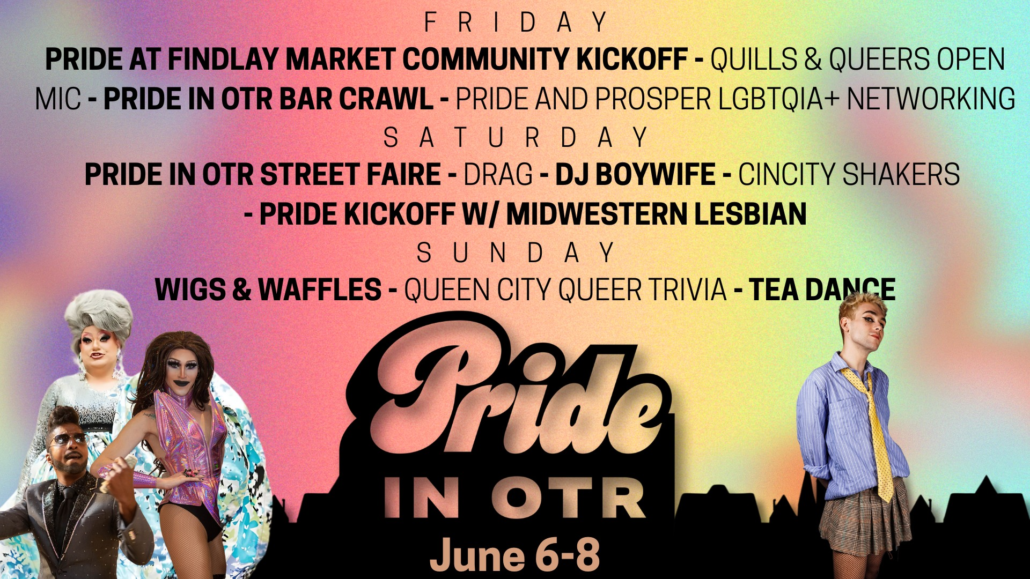
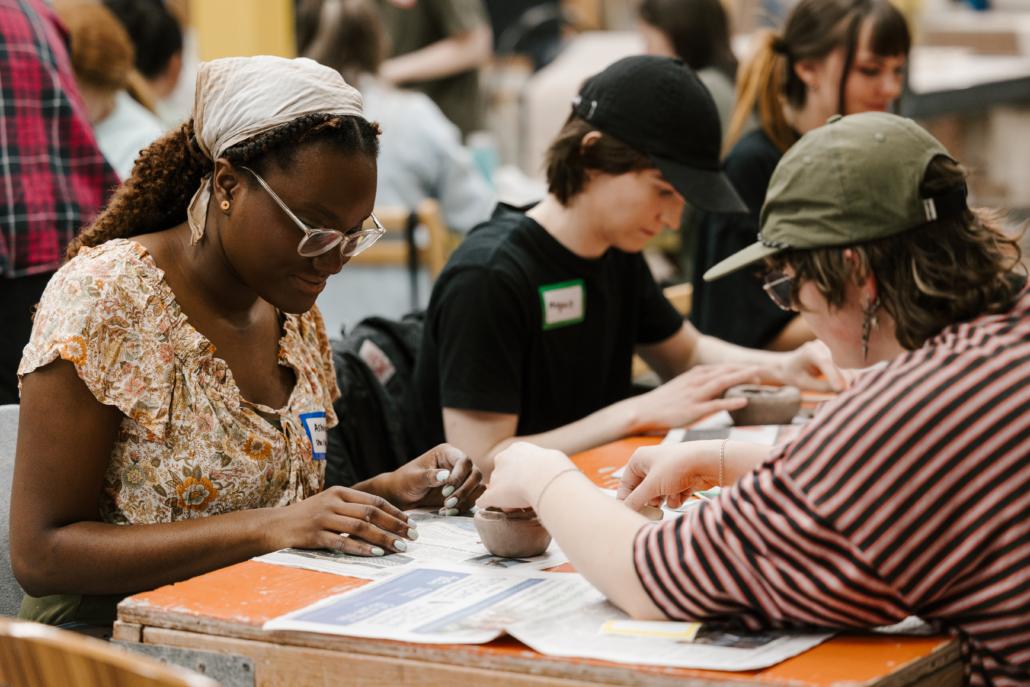
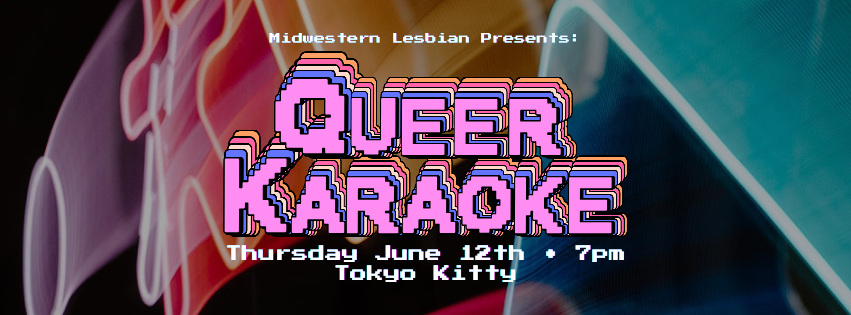
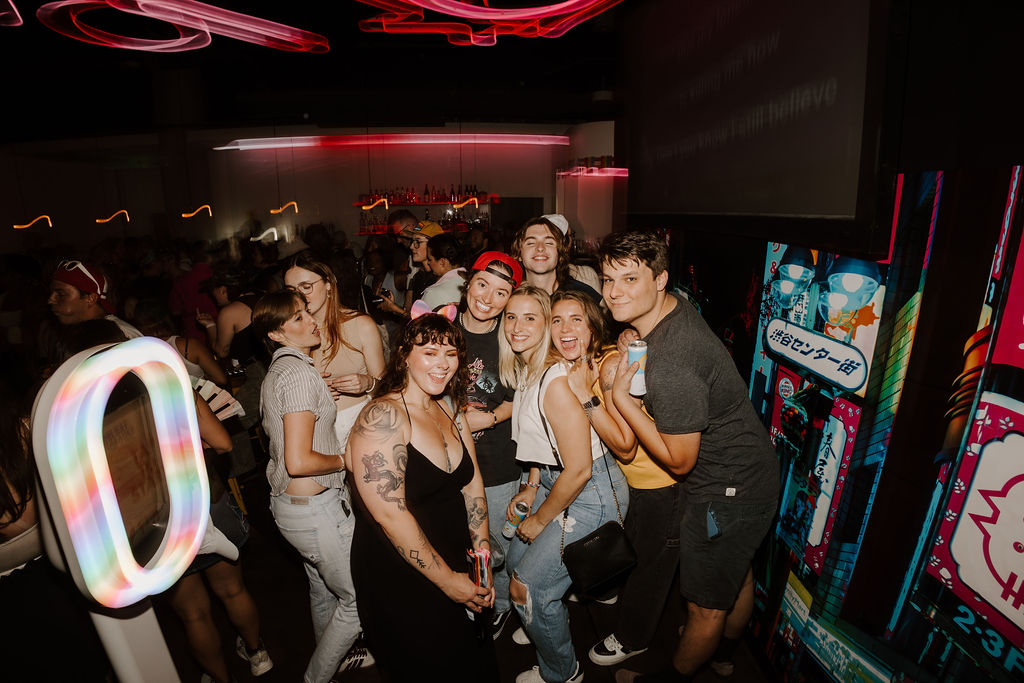
In addition to “Sapphic Sips”, which is hosted at different LGBTQ+-friendly venues across the city — Midwestern Lesbian’s upcoming pop-events include Queer Karaoke Night at Tokyo Kitty,  Sapphic Pottery Workshop in partnership with Queen City Clay and Sapphic Kicks, an annual sapphic kickball game at Salway Park in collaboration with HotMess Sports Cincinnati.

Ference also runs the Cincinnati Gay Agenda Instagram page, where Midwestern Lesbian’s full weekly event calendar now lives.

Homemakers Hangout, a weekly event for the entire LGBTQ+ community hosted by Midwestern Lesbian. (Photo by Caitlin Chrisenée Photo)

Homemakers Hangout, a weekly event for the entire LGBTQ+ community hosted by Midwestern Lesbian. (Photo by Caitlin Chrisenée Photo)

‘Sapphic Sips’ signature event

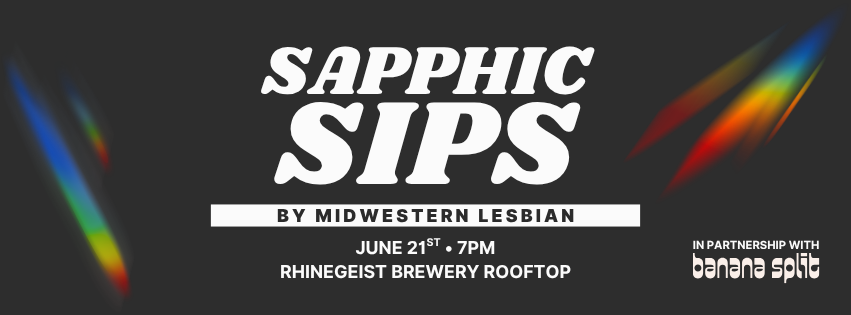
Ference and Chrisenée started the “Sapphic Sips” series on Valentine’s Day 2024, hosting the first event at Liberty’s Bar & Bottle Shop in Cincinnati’s Over-the-Rhine neighborhood.

The pair expected about 30 guests. 

Instead, more than 100 people showed up.

“Safe spaces that are designated for specific groups can be taken over by groups that just want to have that experience,” Ference said. “That’s the reason why we don’t have any lesbian bars in Cincinnati anymore.”

“Because there’s no lesbian bar in Cincinnati, it hit 7 o’clock and it’s like the floodgates opened.” Ference said. “It was insane. “Caitlin and I looked at each other and we knew this was something we had to continue doing.”

“Sapphic people in Cincinnati didn’t have a space to go,” Ference added. “So we created one by doing this pop-up and just going to different spaces that are supportive of our community and want to support us and have people learn about the sapphic community and how much we need a space like this in Cincinnati.”

Kelsey Ference and Caitlin Dunkley (Photo by Caitlin Chrisenée Photo)

Kelsey Ference and Caitlin Dunkley (Photo by Caitlin Chrisenée Photo)

Everyone is welcome

While Ference considers “Sapphic Sips” Midwestern Lesbian’s main event series, the group also hosts year-round events designed for the entire LGBTQ+ community.

“We host events every Wednesday at Homemakers Bar where everybody in the queer community and allies are welcome,” Ference said. “Basically, the only events that are specific are the ones that are labeled, like our Late Bloomer[an Evening for Sapphics 30 and Older] or Sapphic Speed Dating events.”

“Anything that specifically says sapphic is for sapphics,” Ference said. “Otherwise, the queer community is welcome to pretty much anything.”

Midwestern Lesbian hits the road

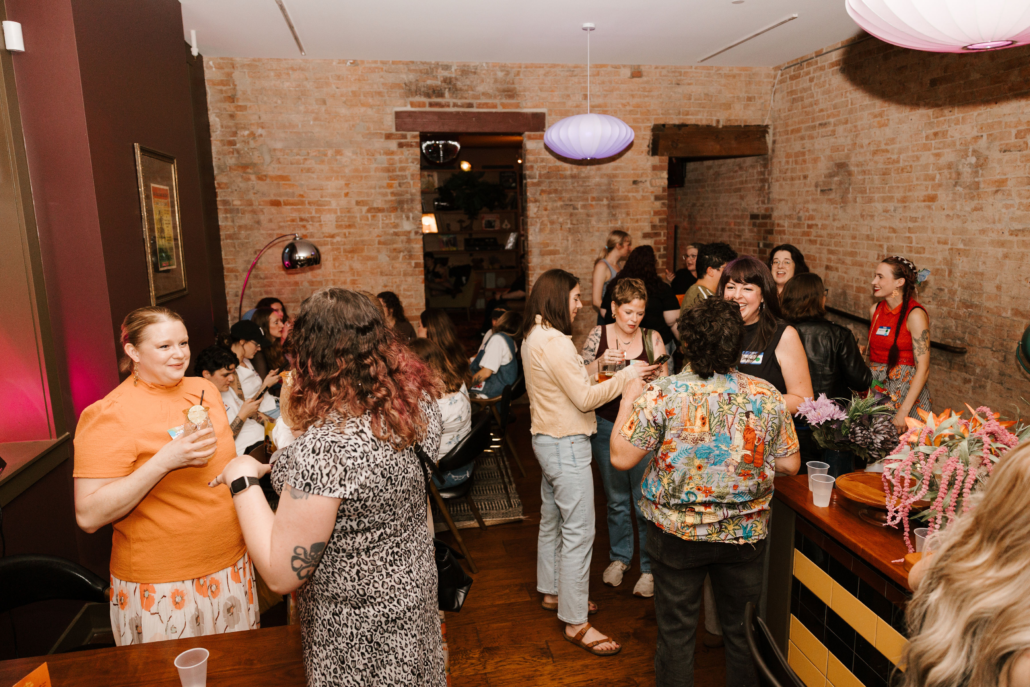
On Feb. 14, 2026, more than 200 guests attended the “Sapphic Sips” Second Anniversary party at Rhinegeist Brewery’s Clubhouse.

Featuring DJ Nymph, and a “Sappho’s Disco” theme, Chrisenée’s photos capture dozens of queer people dancing and laughing.

The images reveal a carefully crafted space – lush with deep reds and pinks – where sapphics and lesbians are safe, smiling and present in their joy.

Ference said she wants to bring that experience to other LGBTQ+ people across the state.

“We’re hoping to expand throughout Ohio this year,” she told The Buckeye Flame. “We’re hoping to host an event in Columbus as our first stop over the next few months, and then hopefully Dayton, Cleveland and whoever else will have us.”

“We want people to get excited and give us ideas,” Ference said. “Where do people want to see us? If there are any spaces that want to host us, we would love to get in contact with anyone who wants to partner.”

Still, Ference finds it hard to believe Midwestern Lesbian’s roots were truly accidental.

“I never expected this to become my full-time job,” she said. “But I created this for our community because it’s something I wanted myself – so I know there are other people in other places who want this too.” 🔥

Queer Clay Day hosted by Midwestern Lesbian. (Photo by Caitlin Chrisenée Photo)

Queer Clay Day hosted by Midwestern Lesbian. (Photo by Caitlin Chrisenée Photo)

Ignite Action

  • To view a full weekly list of LGBTQ+ events across Cincinnati, click here.
  • To follow Midwestern Lesbian on Instagram, click here.
  • To follow Midwestern Lesbian on TikTok, click here.
  • To follow Cincy Gay Agenda on Instagram, click here.
  • To apply for your LGBTQ+-owned business to be featured on Cincy Gay Agenda’s Instagram page, click here.
  • To submit an event to Cincy Gay Agenda, click here.
  • If you are a young LGBTQ+ person in crisis, please contact the Trevor Project: 866-4-U-Trevor.


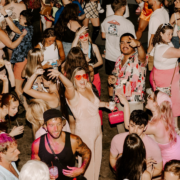
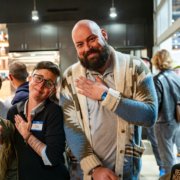
Attendees smile and pose at Lexington’s ‘Last WednesGays’ queer meetup inside a local bar, a monthly LGBTQIA+ networking event creating a safe, inclusive community space.

Lexington Meetup ‘Last WednesGays’ creates Safe Space for Queer Community

At the end of every month, a local Lexington bar hosts a safe space for queer networking and friendship building. “Last WednesGays,” started by Andrew Shayde, is a positive, fun, hangout space for queer individuals to meet others in the community and create lifelong connections.

Originally started in Portland, Oregon, Shayde contacted the original organizers and brought the event to Lexington in 2019. Since then, the meetup has had 22 events, raised over $10,000 for charity and brings together roughly 125 people at every meeting. 

After taking a break in 2020 due to the pandemic, the meetup started back up in March 2025. Offering a comfortable, laid-back energy, ‘Last WednesGays’ showcases various LGBTQIA+-friendly bars in Lexington.

Shayde is the Chief Development Officer for AVOL, a Kentucky-based resource providing care and support to those living with HIV. ‘Last WednesGays’ currently donates 10% of the revenue from the bar to a charity, the current recipient of which is AVOL.

“It’s just for folks to get out and meet new people, shake a hand, see an old friend, make a new friend,” said Shayde. 

Many of the Lexington queer events are held at inconvenient times for many attendees and can create uncomfortable atmospheres, such as loud music and low lighting. ‘Last WednesGays’ combats this issue by using a sensory-friendly atmosphere, such as by utilizing dimmed lighting and low music. 

The meetup brings in a vast array of people, spanning sexualities, gender expressions and identities and ages. Because of these inclusions, attendees feel like they belong in the space.

“A lot of folks are not night owls. They want to be social and get involved in the community and meet new people, but sometimes some folks can find that hard to do,” said Shayde. “I just wanted to add to the menu, the options, of queer events in Central Kentucky.”

‘Last WednesGays’ travels from various bars in Lexington, giving attendees the opportunity to see different parts of the city. Past events have been hosted at bars such as The Break Room, Centro, Goodfellas and Wildcat Saloon. By hosting the meetup, these bars also signal that they are queer-friendly and a safe space for the community to gather at.

Shayde recounted one memory he had while hosting the meetup, where a bar defended and protected its queer patrons. After meeting some regulars of The Break Room, they were initially met with acceptance, but hate quickly spread.

“As our crowd grew, those gentlemen went out and stood around a firepit outside. At one point during the event, someone came in and was like ‘One of these men is being pretty crappy,’ so I went to the owner, told them what was happening. The owner went out there, to his regular who he knew by first name, and said, ‘Get out of my bar and never come back ever again,’ Shayde said. “The Break Room has since hung a rainbow flag in the bar and it is still there, to this day.”

So far, all of the bars that the event has been hosted at have immensely enjoyed the space that the meetups create. All of the bars, according to Shayde, have contacted him after the event and stated that they want to host again. 

Overall, the meetup creates a safe and inviting space for LGBTQ+ individuals in Lexington. By creating new friends and relationships, queer joy is reinforced through the community built by ‘Last WednesGays.’

“I am blessed in a lot of ways. I have a great little friend group and a supportive family and I realize that that is privilege and it is luck and not everyone has that and I want everyone to have that,” said Shayde. “That can be chosen family and you can find chosen family at ‘Last WednesGays.’”

‘Last WednesGays’ happens on the last Wednesday of every month. The next event will take place on Jan. 28 at The Burl.

Xian Brooks practices target shooting at an indoor gun range in Louisville, Kentucky.

Trans People in Kentucky Are on Edge. Some Are Arming Up.

This story includes references to sexual violence which may be distressing to some readers. If you or someone you know needs support, resources can be found here.

This story is in partnership with  Uncloseted Media, an LGBTQ focused investigative news outlet. Subscribe to their latest here.

Every month, Xian Brooks heads to Range USA in Louisville to practice his shot. 

“We can talk about ‘community’ and ‘showing up for each other’ all day, but when it matters most, you only have yourself, and you need to be able to count on that [to defend yourself],” Brooks, a 42-year-old who was born and raised in Kentucky, told Queer Kentucky and Uncloseted Media. 

Misinformation and Political Rhetoric Paint Trans People as Threats

Like many other trans people of color in the red and rural state of Kentucky, Brooks recognizes that he’s more likely to be a target because of his gender identity and the color of his skin. 

That’s in part because of the history the state has when it comes to gun violence. In 2023, for example, Zachee Imanitwitaho—known to her friends as Zachee—was shot and killed outside of the JBS Foods plant where she worked in Louisville. The gunman and Zachee’s coworker, Edilberto Lores-Reyes, confessed to killing her. 

While Reyes’ official motive remains unknown, Zachee’s killing represents an alarming trend of a sharp increase in anti-trans violence.

In particular, homicides of trans people in the U.S. nearly doubled between 2017 and 2023 with a total of 263 victims, according to Everytown for Gun Safety’s Transgender Homicide Tracker. 

In those six years, 73% of the victims were killed with a gun. 

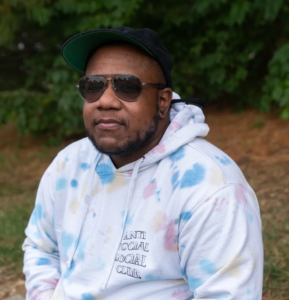
Xian Brooks, a Black transgender man from Louisville, Kentucky, wearing sunglasses, a black cap, and a tie-dye hoodie that reads “Anti Social Social Club,” sits outdoors with greenery in the background.

Xian Brooks, a Black transgender man from Louisville, Kentucky, advocates for firearm safety and self-defense education in the trans community. Photo by Natosha Via for Queer Kentucky and Uncloseted Media.

Despite these numbers, the rhetoric and policies of the federal government paint trans people as perpetrators of gun violence. Within hours of the killing of far-right Trump ally and anti-LGBTQ activist Charlie Kirk, rumors circulated that a transgender person was responsible. In the aftermath, conservatives, including South Carolina Rep. Nancy Mace, called for the institutionalization of trans people.

And after the mass shooting in Minneapolis in August that killed two children, it was reported that the Justice Department was discussing stripping gun rights away from trans people. However, the National Rifle Association pushed back, saying they will not “support any policy proposals that implement sweeping gun bans that arbitrarily strip law-abiding citizens of their Second Amendment rights.”

This swath of misinformation has put trans people on edge as Americans have been manipulated to view them as a threat to their safety. It’s causing many trans people in Kentucky to arm up or find other ways to defend themselves. 

Steve Drayton, a founding member of Pink Pistols of the Bluegrass, a Lexington, Kentucky chapter of the national LGBTQ gun rights group, says he has seen an increase in trans members in the months since Kirk was killed.

“It brought the focus back onto the transgender community, and not rightfully so,” he told Queer Kentucky and Uncloseted Media. “If only we put this kind of focus on every other type of murder. They’re taking a group of individuals and painting them as awful people, which they’re not. They’re educated, they’re teachers, they’re firefighters, they’re human beings. They’re wives, they’re husbands.”

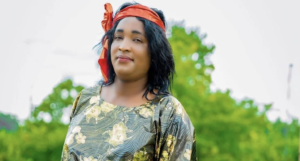
Zachee Imanitwitaho, a transgender woman from Louisville, Kentucky, wearing a gold floral dress and an orange headscarf, stands outdoors with trees in the background.

Zachee Imanitwitaho, a transgender woman from Louisville, Kentucky, was killed outside her workplace in 2023. Her death sparked renewed conversations about anti-trans violence in the state. Photo: Facebook

While the false narrative around trans people as disproportionately likely to commit gun violence was already simmering in America, Kirk’s murder took it to a boil. Trump-affiliated conservative groups like The Oversight Project, a venture incubated by the Heritage Foundation, have urged the Federal Bureau of Investigation to create a new category of terrorism called “Transgender Ideology-Inspired Violent Extremism.” And a Trump executive order from September designated Antifa as a domestic terrorist group. 

In the order, Trump references the gender identity of trans terrorists but never of cisgender terrorists, describing  “a transgender Antifa terrorist,” “a deranged transgender individual” and “a transgender individual whose manifesto included plans to ‘kill Donald Trump.’” 

“I’ve gotten a lot more tense,” says Brooks. “I’m more distrustful, and my head is on a swivel more. I always know where the exits are when I go somewhere.”

Brooks says he started carrying his Taurus G2C instead of keeping it at his home in 2018 after two Black people were gunned down and killed because of their race at a Kroger in suburban Louisville.

“Miss Vicki was my mom’s neighbor,” says Brooks, referring to one of the victims. “During [the altercation], there was a person in the parking lot that had a firearm that tried to neutralize the threat. If I had taken my mom to the grocery store that day, my firearm would have been locked up and not with me.”

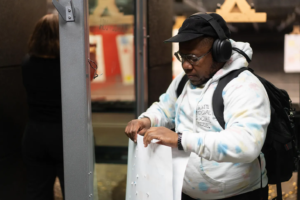
Xian Brooks, a Black transgender man from Louisville, Kentucky, wearing headphones and a tie-dye hoodie, examines a paper target at an indoor gun range.

Xian Brooks, a Black transgender man from Louisville, Kentucky, practices shooting at Range USA. Photo by Natosha Via for Queer Kentucky and Uncloseted Media.

Trans Kentuckians Embrace Gun Safety and Self-Defense Education

Brooks grew up in Louisville’s West End in the Shawnee neighborhood, which experiences a disproportionate amount of violence. According to 2023 research by the Whitney Strong Organization and the University of Louisville, homicide rates are more than five times higher than in the rest of Louisville and 10 times higher than the U.S. average. His family rejected the idea of owning and using firearms because of the amount of violence they endured.

“A lot of us were taught to fear guns because a lot of people’s family members were dying by guns,” he told Queer Kentucky and Uncloseted Media. “It was taught that guns were not toys. We couldn’t have water guns, pop guns or even [play] finger guns.”

But as a Black trans man in today’s political climate, Brooks made the decision to start carrying. 

While he says his race causes him to fear for his safety the most, his fears of violence due to his trans identity have been increasing since the 2024 presidential election.

“Nothing is hypothetical anymore,” he says. “I don’t think anybody should be too comfortable.”

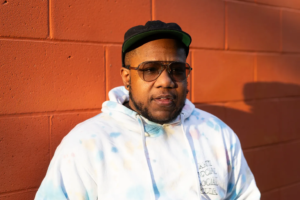
Xian Brooks, a Black transgender man from Louisville, Kentucky, wearing sunglasses, a black cap, and a tie-dye hoodie, stands against an orange brick wall in the afternoon sunlight.

Photo by Natosha Via for Queer Kentucky and Uncloseted Media.

That’s part of the reason Brooks is now advocating for gun safety and education for trans people and people of color. While Brooks isn’t a licensed educator, he feels he has no choice but to help and wishes politicians weren’t fueling a climate that is putting his community in danger. “I’m down to take any Black or trans person to the gun range on me. Let’s go. You can meet my firearm and talk about them. We can talk about gun safety and teach you what to expect.” 

Sarah Moore, senior manager of news and research at GLAAD and lead for the group’s ALERT Desk, which tracks anti-LGBTQ extremism, says that more than half of reports to the desk from June 2024 to June 2025 involved anti-trans incidents.

“It’s coming out in both violent and nonviolent actions,” Moore told Uncloseted Media and Queer Kentucky. “Whether that be protests, online harassment or actual acts of violence against the community, as well as the legislation that we’re seeing that’s attempting to govern trans people’s bodies and lives.”

According to the Trans Legislation Tracker, there have been 286 anti-trans laws passed in the U.S. since 2022, with 122 of them passing in 2025. In Kentucky alone, there have been five laws passed this year on top of the infamous Senate Bill 150 from 2023, which bans gender-affirming care for minors, implements anti-LGBTQ censorship in Kentucky schools and prohibits trans students from using bathrooms and facilities that match their gender identity. 

Xian Brooks wearing a black hat and white hoodie aims a handgun at paper targets inside an indoor shooting range.

Xian Brooks practices target shooting at Range USA in Louisville, Kentucky. Photo by Natosha Via for Queer Kentucky and Uncloseted Media.

Moore says there is “a very direct correlation to these acts of [anti-trans] violence” and the political rhetoric and policies of the U.S. government. 

She said that earlier this year in Seattle, a trans woman was attacked by a group of men while walking down the street. While they were assaulting her, they were yelling slurs and shouting “Semper Fi,” the official motto of the United States Marine Corps. The woman asked them why they were attacking her and explained to them that she was a military veteran. “Trump kicked people like you out of the military,” the men responded.

“We’re seeing examples like that where people will actually cite directly these acts of federal or state-level legislation as part of their justification for acts of violence against the community,” says Moore. 

Living on Guard: Trans Kentuckians Respond to Fear with Preparedness

When Trump took office last year, Alex, a 32-year-old trans man in Louisville, Kentucky, who requested anonymity because of safety concerns, says he purchased a second gun because he saw his community becoming the “scapegoat to all of America’s problems.”

“Now, I have taken a self-defense course, conceal carry my firearm, keep those kitty ear knuckle things on my keychain, and have a knife,” he told Queer Kentucky and Uncloseted Media. “I always know at least two or three ways to exit any situation I am in.”

Unlike Brooks, Alex chooses to carry in situations that he deems are more dangerous, like when he travels rural Kentucky with his trans wife. 

“Getting sideways glances from people [in a small town Walmart] who can see that I’m somewhere on the queer spectrum—I carry in case they were to follow me to my car and/or pick a fight,” he says. “Additionally, if they don’t clock me, but were to clock my partner and if someone decided to start trouble there, that would not be tolerated.”

The Trump administration’s portrayal that Alex and other trans people in Kentucky are more likely to commit acts of violence is simply false. According to the Gun Violence Archive, there were 5,748 mass shooting incidents in the U.S. between Jan. 1, 2013 and Sept. 15, 2025. Of those, just 0.1% of them—or five in total—involved a trans shooter. 

According to a 2021 study by the Williams Institute at the UCLA School of Law, transgender people are more than four times as likely as cisgender people to experience violent victimization, including rape, sexual assault and aggravated or simple assault.

Alex was raped when he was 26 and says the trauma of the situation compels him to prepare for future victimization. “We are a means to an end,” he says. “It’s very disheartening and I work every day to not internalize their ideas about me. We are not dangerous, we are not wasted space, we just want to exist and be safe.” 

Julie, a 33-year-old Louisville transgender woman who requested to use only her first name for safety reasons, agrees. Since 2021, she has carried a concealed weapon. She says fear of transgender people is nothing new.

“They’ve been scared of us the whole time and also, people are scared of guns,” she says. “So if you take the boogeyman, which is trans people right now, and then you say they have guns and they’re shooting at Christian people. You know what I mean? That’s what it is.”

Julie says transgender people are peaceful and wishes the politicians would leave them alone. She says that if a transgender person, or anyone, is buying a gun out of emotional fear and feels afraid to leave the house, they should check in with themselves or reconsider the purchase.

Spent bullet casings scatter across the floor beneath Xian Brooks' feet inside an indoor gun range in Louisville, Kentucky.

Photo by Natosha Via for Queer Kentucky and Uncloseted Media.

“The last option is to point a gun at somebody. It’s the sixth, seventh, eighth, ninth option. Before you draw your gun, you can always reason with somebody, and you can always reason with them after you draw your gun,” she says. “You can reason with them while you’re pointing, but you cannot reason with somebody after you shoot them. And that is very important to think about.”

If you or someone you know is struggling, call or text the 988 Suicide & Crisis Lifeline at 988. LGBTQ+ young people can press 3 to reach counselors trained in LGBTQ+ care, an option that returned on Sept. 30, 2026 after it was cut in July 2025. The Trevor Project also offers 24/7 support at 1-866-488-7386 or by texting START to 678-678.

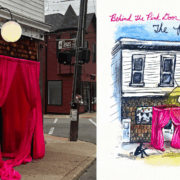
A photo of The Pearl bar in Louisville, Kentucky, featuring a bright pink fabric doorway installation outside the entrance, symbolizing the “Behind the Pink Door” event. Beside it, an illustrated artwork of The Pearl shows the same pink-draped entrance with handwritten text reading “Behind the Pink Door – The Pearl,” and two silhouetted figures walking toward it, capturing the event’s vibrant, welcoming queer energy.

A Safe Haven for Sapphics: Behind The Pink Door Keeps Lesbian Culture Alive in Kentucky

Editor’s note: Dates in this story are from fall 2025. Check Behind The Pink Door’s social media for upcoming nights.

Lesbian-centered spaces and events across the states aren’t just rare. They also often suffer from cisgender men flooding the crowds once designed for women – a problem Connie Hartsock, a local chef, dreamed of remedying. 

Hartsock is the lead chef for Poco Pop-Ups: a pop-up kitchen touring Louisville, hosting events at various bars, and giving back to the community. One of her most popular events is Behind the Pink Door, a sapphic meet up in Louisville at The Pearl of Germantown. As a chef, Hartsock says she aims to “cross-pollinate traditional preparations with local ingredients for dishes that are authentic to both their worldly origins and our Kentucky setting” – just like how she fuses elements of both queer and culinary culture.

The Pearl has hosted Hartsock and her Poco collaborator and bartender Bri Hlava since Behind The Pink Door’s creation in March of 2024, supported by a longtime friendship with bartender Susie Hoyt. On the last Thursday of the month, The Pearl invites lesbians and queer partygoers to spend an exciting night complete with dancing to music curated by DJ Slim Thicc (also known as Kayla Meisner), drinking cocktails designed by Hlava, and savoring dishes cooked by Hartsock. 

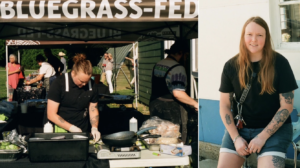
Two side-by-side images show chef Connie Hartsock. On the left, Hartsock prepares food under a tent labeled “Bluegrass-Fed” during an outdoor event, surrounded by other vendors and attendees. On the right, Hartsock sits casually outside a building, smiling, wearing a black T-shirt and shorts, with visible tattoos on both arms.

Chef Connie Hartsock of Poco Pop-Ups prepares food at an outdoor event in Louisville. Hartsock is the creator of Behind the Pink Door, a monthly lesbian-centered event at The Pearl that celebrates queer community through food and music. Photo by Taylor Cochran

“[Behind the Pink Door is] a space for people to show up and be themselves and not have to worry about any kind of constraints. You’re not having to code-switch for coworkers or family,” Hartsock says. “You could just be authentically yourself and not have to worry about anything like that.”

Hartsock remembers “wild nights of dancing on top of the bar… only to have it end abruptly” – a pattern that’s been seen in the ending of many queer events across Louisville. These losses include Magnolia Bar’s unofficial ‘gay night’ and the closing of noodle and tea shop Pink Door, which inspired the name of Behind The Pink Door as well the tradition of reserving weeknights for queer empowerment and enjoyment. 

“A lot of lesbian driven bars or pockets of bars typically get overrun with men,” Hartsock says. “The Pearl has done a really good job to try and diminish that… People feel comfortable to come here and be themselves.” 

On the final Thursday of each month, crowds surge through The Pearl to experience exactly that.

“Have fun. Dance. Get some food. You could just come hang out by the fire. You don’t have to drink,” Hartsock advises. “Just have fun and be yourself.”

In her experience, Behind The Pink Door doesn’t just empower your current self: it helps inspire self-improvement and exploration as well. She credits running Behind The Pink Door’s social media pages for improving her relationship with the local queer community, and prides herself and her project for its recent community outreach initiatives.

“We’ve brought in Volunteers of America to do free HIV testing and sex education at events, held fundraisers for gender affirming care, and [gave] complimentary massages,” she said.

For over a year now, Behind The Pink Door has also boosted Poco Pop-Ups’ success. 

Hartsock has been asked to do a cooking show for Louisville pride, teaching easy and affordable meals geared towards those who may have been lost or disconnected from their families and never had someone to teach them basic cooking skills. 

“We also provide those meals and others to the Louisville Pride Food Pantry, which is an awesome program for queer people to get free meals, no questions asked,” she said. “We also just got funding for our partnership with Louisville Youth Group and The LEE Initiative to do youth culinary classes … to queer kids ages 5 through 24.”

These community contributions and outreach initiatives are all thanks to Hartsock’s original dream: to continue meaningful traditions and curate safe spaces for the lesbian community. 

“I love Behind The Pink Door because there are so few lesbian and queer spaces,” Gabrielle L., a local student and an avid supporter of the event, said. “Being there feels like pure queer joy. I’m looking forward to it every month.”

Gabrielle and their queer friends have dubbed the final Thursday of each month as “the lesbian holiday” – a night of unrivaled fun, freedom, and queer community. 

“Behind The Pink Door is unlike anything I’ve ever been to,” Gabrielle said. “I am so grateful for it.”

Lesbians, sapphic women, and trans and nonbinary people interested in a truly inclusive, colorful, and queer night can experience Behind The Pink Door this month on October 30th. The Pearl opens at 4 p.m., Hartsock serves stunning dishes at 6 p.m., DJ Slim Thicc kicks off her set at 9 p.m., and unabashed queer joy flows free until the event ends at 1 a.m.

The blue Roebling Suspension Bridge stretches across the Ohio River from the Covington, Kentucky, riverfront toward the Cincinnati skyline on a sunny day.

Radical Joy in a Red State: Queerly Relocating to Northern Kentucky

Photos by Logan Oleson | @l.o.foto

Four years ago, I moved from Boston, MA to Covington, Kentucky, to be closer to my long-distance partner. I was confident that many of the things soon to be changing in my life were going to bring me joy: I was leaving behind terrible icy winters for a longer summer, a cost of living I couldn’t afford on my nonprofit salary for an affordable city, and hundreds of miles of distance between me and the person I wanted to be with. I had just one serious concern: I was a Queer woman moving from a sanctuary city to a red state.

This wasn’t my first big move. I had moved to Boston for college in 2009 from a Philadelphia suburb. I had come out as bisexual my junior year of high school when I started dating a girl, and the harassment that came from being openly Queer convinced me that there were only certain cities that would feel comfortable and safe to me.

Boston was one of those cities. I wanted to walk down the street holding hands with whomever I wanted, and never catch a second glance. I wanted lesbian bars and book clubs, concerts full of Queers, a community built on something shared, and so many gay friends.

Hotel Covington sits at 638 Madison Ave, Covington, KY 41011

Hotel Covington at 638 Madison Ave.

For a while, Boston was a welcome change. I attended Emerson College where being Queer was basically the norm. The Duck Boats that toured the historical downtown would joke about the “chain smoking bisexuals” that the college churned out, and I was proud to represent. I lived with my girlfriend, and we were rarely bothered. But after college and as time went on, my Queer identity felt like a practice that was only personal. I had no community in Massachusetts.

It’s not that Boston wasn’t gay-friendly. Massachusetts was the first state to legalize same-sex marriage. There are Pride flags on the buildings, Queer-owned businesses, and legislative protection. But I felt isolated from anything Queer and bigger than myself. There were two gay bars accessible to me, and both were frequented solely by gay men and straight bachelorette parties. When I did try to make Queer friends in public spaces, I found myself challenged. As a super feminine bisexual cis woman who dates men, I felt I had to come out again and again with every new introduction. I grew tired of it. It almost felt as though part of me had disappeared into the safety of a sanctuary city. When I decided to leave Massachusetts for Kentucky, I was resolved to find people and places that would make me feel safe and seen. I was only worried that it wouldn’t happen.

Ahead of my move and in the depths of COVID-19 quarantine, I joined Lex, a social app for Queer people. I was surprised by how many folks reached out in response to my post about moving to the area and looking for friends. I started chatting with a fellow East Coast transplant who was living in Newport. While still living in Boston, I joined her Northern Kentucky Queer book club, and attended my first meeting on Zoom. Even if I had just this one Queer friend and this little Queer book club, I thought, I would be OK.

The alien named Clive is a large, 30-foot-tall art installation in Covington, Kentucky, located at the Midtown Garage parking lot. He is a green, fiberglass and foam alien who leans out of the garage with a giant magnifying glass, observing people below.

Clive the Alien at the Midtown Garage parking lot in Covington.

When I arrived, my new friend took me to what I can only describe as a gay bagel shop. If I have this one Queer friend, this little Queer book club, and this Queer-ass bagel shop, I will definitely be OK, I thought.

But Kentucky kept opening to me. In Covington, I became an organizer of the book club I joined, and it grows a little bit each month with members of varied age, gender, and orientation. Folks join from rural areas north of Cincinnati and south of Newport. We have all shown up for each other during hard times, even though we meet just once a month. I live two blocks away from an intersection where the pedestrian crosswalks are painted as rainbows, and gay bars face off on the corners. Even closer to home, my block has a strong Queer contingent, and we are a small community within our larger one: we are pet sitters, parcel carriers, diligent watchmen, and well-wishers, checking in with regularity.

It’s not just Covington that has proven welcoming–my first trip to Louisville showed me even more. At Revelry Gallery I spent nearly an hour admiring the art and wares from local artists, a huge number of whom were Queer. There I picked up the first print edition of Queer Kentucky. I was overjoyed to find a publication dedicated to Queer stories in the state. I had never seen such a thing, certainly not in Pennsylvania or Massachusetts where I’d lived before. The stories inside were inspiring in their diversity of voices. In Louisville I learned about the Kentuckiana Pride festival. I coveted a sweater from Crybaby, whose focus on community safety and harm reduction — in addition to their gorgeous chain-stitch pieces — felt like an answer to a question I couldn’t name.

The Carnegie, a historic, light-colored brick arts center in Covington, with a large, columned archway and arched windows.

The Carnegie

Some time later, I finally got to explore Lexington and ended the night with a drag show at the Bar Complex, a huge gay nightclub. Bar Complex felt entirely too good to be true: in all my years dancing and drinking in Boston, there had never been a place that felt so close to home.

In all of these towns and all of these spaces, I’ve been greeted with a smile. I have been looked after and I have looked after others. I have not even been on the receiving end of a sidelong glance when I enter a Queer event with a straight date. In Kentucky, I feel invited by my community to celebrate my Queerness for longer than the month of June.

My position is unique, and I will not suggest that Kentucky, or any place in America right now, is not a dangerous place to be Queer–especially for folks who are also of color or are immigrants. But I often wonder if adversity has a strengthening effect on the community. Perhaps when the government would like to erase our existence, we are less likely to take one another for granted. We resist by welcoming one another. There is nothing more Queer than an insistence on being ungovernable, and in Kentucky we are. I am thankful that we are here to see each other, to fight for each other, and to rejoice in one another.


Portrait of author Katie Eelman with the best boy, Arnie, for Queer Kentucky article “Relocating to Northern Kentucky."

Author Katie Eelman, contributor to Queer Kentucky’s story “Relocating to Northern Kentucky.”

An Interview with Em Joy: Program Director for Louisville Youth Group

This story is part of Queer Kentucky’s digital issue surrounding the trans youth experience in the Bluegrass state, featuring personal essays to educational information. Read the full issue here.

With the recent removal of many DEI initiatives from larger organizations and school districts, the future of queer safe spaces in Kentucky has become uncertain. During this time, organizations that uphold queer acceptance and advocate for systemic change are crucial. One organization, Louisville Youth Group (LYG), provides safe spaces for queer youth while also pushing for broader social justice. I sat down with Em Joy, LYG’s program director, to discuss their work and mission.

Our conversation began regarding how LYG addresses the unique needs and experiences of queer youth. Joy had this to say…

We’ve recently expanded our age range downward for younger kids and families—and upward to support young adults. After COVID, many felt unprepared for adulthood. Most queer spaces are bars or clubs, which aren’t accessible or appropriate for everyone, so we wanted LYG to be a place where young adults could find friends, support, and mentorship.

In addition to age-based support, we offer identity-specific groups. Our trans, non-binary, and intersex group focuses on social and emotional well-being, giving youth space to discuss gender identity, expression, and bodily autonomy.

We also run Melanin MagiQ, a group for Black and Brown youth. It’s a space without white peers to talk openly about intersecting identities and how racism impacts their lives. The group was developed with input from our youth of color, especially in response to BLM and the push for racial justice.

We also run our Beyond Labels Resource Closet, where youth can access gender-affirming items—like binders, tuckwear, dresses, and makeup—free of charge. Everything is donated or grant-funded. We help youth explore identity in a supportive environment.

As our conversation continued, our discussion moved towards the subject of trust, and how it’s built between LYG and the youth they serve. When building trust with young people who may feel isolated or misunderstood, Joy says that…

I’ve worked with young people most of my career. The biggest thing is to meet them exactly where they are. Kids—and adults—have big feelings. I try to offer guidance and coping tools. I’m trained in therapeutic approaches and remind youth they’re not alone. If no other adult affirms them, I want to be the one who does—and show them there are others who will, too.

As we were chatting about how organizations reflect the diversity of queer youth, Joy poses the question of “what social or systemic barriers are preventing access?” We discussed Louisville Youth Group’s approach in addressing these barriers…

One thing I’m constantly considering is: who are we serving—and who aren’t we reaching? What social or systemic barriers are preventing access?

We continually evaluate our services to meet our community’s needs. We’re also intentional about how we recruit mentors. It’s not just about being good with youth—we reduce barriers so marginalized mentors can get involved. Volunteering requires financial stability many BIPOC, disabled, or low-income folks don’t have. We offer financial incentives for Black and Brown mentors.

Our main space is in an older church building, so unfortunately, it’s not fully accessible—especially for those who can’t use stairs. But for off-site events, we choose fully accessible locations.

Inside our space, we’ve made it as sensory-friendly as possible. Many of our youth are neurodivergent, so we offer fidget toys, soft lighting, weighted blankets, and a sensory room to decompress with mentor or peer support.

Having discussed the ways LYG serves its community of queer youth, we began examining how LYG simultaneously pushes for broader systemic changes.

One major way we push for systemic change is through training and outreach. We offer professional development to nonprofits, churches, and businesses—any space youth might show up. We teach LGBTQ+ basics and help audit internal policies. Discrimination is often systemic. We help institutions become more inclusive.

And while we work on systems, we stay grounded in our core: creating safe space. If a kid can’t be safe at home, school, or church—they can come to us. We will always be that space.

Even as a small organization, we’re very active. We’ve been around since 1990, and for most of our history, we were entirely volunteer-run. Paid staff only came in the last 10–15 years.

We table at community events, schools, and festivals to build visibility—local Pride events, farmers markets, high school career fairs, and more. We want young people and families to know we exist. And honestly, we’re often the most popular table—because we’re one of the only visibly queer groups there. That visibility matters.

This year, we’re proud to partner with Louisville Public Media and WFPK for Waterfront Wednesdays. We’re sponsoring the kids’ activity space with crafts, games, and support—while wearing our “Protect Trans Youth” shirts and showing families what affirming adults look like.

Parents come up to us all the time—some hearing about us for the first time, some already familiar and grateful. It’s affirming to see how much community support we have, despite what the media suggests.

Finally, we talked through ways our readers can get involved, both in the work of LYG and the broader objectives they pursue…

There are a few big ways. First: volunteer. We’re always looking for mentors and folks to help grow our community relationships. Second: donate. That doesn’t just mean money. Donations of snacks, books, clothes, and art supplies go directly to our youth. Even a few boxes of chips can help feed our kids. We also have a wish list at Carmichael’s Bookstore—if you order from it, you get 20% off. And finally—advocate. Show up to school board meetings. Speak out for trans youth. Go to Frankfort. Meet with legislators—not just during big bills, but all year. If you share identities with those in power, use that to push for real change.

Most importantly, make every space you’re in more inclusive. Listen to kids. Respect their self-determination. Support their autonomy. Be the adult they can trust.

Through my conversation with Joy, the vital role LYG plays in the lives of queer youth in Kentucky became undeniably clear. Between the resources they offer, the diverse community they foster, and the guidance they provide, Louisville Youth Group remains an indispensable asset of Kentucky’s queer community.

While we closed out the interview, Joy shared a message of hope with us…

“To close, I want to share a message of hope. We’ve been here a long time. No matter what happens in government or culture, we will continue to exist. We’re here, we’re queer, and we’re not going anywhere.”

Crossing the River for Community: Why NAMI Southwest Ohio’s LGBTQIA+ Support Group Is Worth the Journey

by Sara Hughes

The following is an opinion piece and reflects the views of the author, not those of Queer Kentucky. Our op-ed section exists to uplift diverse LGBTQ+ voices and perspectives across the state. We publish these submissions as part of our mission to encourage cultural critique, thoughtful commentary and dialogue that matters to our community.

Being queer in Northern Kentucky has always felt complicated. This region is home, full of family ties and familiar landmarks, but it can also feel isolating when you’re LGBTQIA+. Sometimes it seems like our stories exist in the shadows, rarely reflected in local politics, media, or even in the casual conversations of daily life. 

Being out in Northern Kentucky has meant combating the stigma, the side-eye, and the hate. What has stood out the most to me, though, has been the many wonderfully supportive and loving humans I’ve met along the way. We’ve created community through music, art, and play. Being loud and proud in public and the privacy of our homes, we’ve helped each other feel safe and seen. Still, I wondered if I’d ever find a space nearby where I could show up fully as myself for the support I needed to keep showing up strong for others.

That’s why it’s worth it to make the trip across the river to Cincinnati for NAMI Southwest Ohio’s LGBTQIA+ Support Group at Transform Cincinnati. It’s been a joy throughout my life to be that rock for friends, family, and our community, and sometimes it’s nice to let someone else be the rock for me.

Support groups might sound simple on the surface. People gather, share stories, and listen. But in a place where queer and trans people are often told—sometimes subtly, sometimes outright—that we don’t belong, walking into a room where your identity is celebrated without question can feel radical.

Our group is open to anyone in the LGBTQIA+ community, and the conversations are as diverse as the people who attend. One night, folks might be talking about how to navigate healthcare systems that too often fail us. Another night, we might be unpacking the strain of family rejection, or celebrating a member’s first Pride, or laughing about the small joys of queer culture in the Midwest. What connects every meeting is the understanding that no one has to explain or defend who they are.

As someone from Northern Kentucky, this space matters because it bridges distance and difference. Our facilitators have sat alongside trans folks from rural counties, queer parents raising kids, BIPOC leaders carving out visibility, and young adults just beginning to name their identities. Each person adds to the mosaic of what it means to be LGBTQIA+ in this region, and hearing their stories reminds me that queerness here is both resilient and expansive.

The urgency for spaces like this cannot be overstated. In recent years, both Kentucky and Ohio have seen a wave of legislation targeting LGBTQIA+ people, especially trans youth. At the same time, mental health challenges in our community remain disproportionately high. According to The Trevor Project, more than 40% of LGBTQIA+ youth seriously considered suicide in the past year. 50% of LGBTQ+ young people who wanted mental health care in the past year were not able to get it. Local adults face higher rates of depression, anxiety, and social isolation compared to the general population. Against this backdrop, an affirming space to connect and heal isn’t just nice to have, it’s essential.

NAMI Southwest Ohio’s group is also intentional about intersectionality. We know that queerness doesn’t exist in a vacuum—it intersects with race, disability, class, geography, and more. By centering those voices, we build a stronger, more authentic community.

The group meets at Transform in Cincinnati, and it’s free to attend. For me, crossing the river from Northern Kentucky is a small act of care for myself and a reminder that I don’t have to do this alone. 

In a world that too often tells LGBTQIA+ people to shrink themselves, NAMI Southwest Ohio’s support group is a place where we can expand, connect, and breathe. That kind of space doesn’t just change individuals—it transforms entire communities.

To anyone reading this who’s hesitant to come (maybe because you’re not out, or you’ve been burned by exclusion in other spaces) I want to say this clearly: you already belong. There’s no “right way” to be queer or trans, and there’s no requirement other than showing up as you are.


NAMI Connection Recovery Support Group

For LGBTQIA+ adults who have experienced symptoms of a mental health condition.

2nd and 4th Mondays from 6:00 to 7:30 pm

This support group is done in partnership with Transform Cincinnati

6839 Montgomery Rd
Cincinnati, OH 45236.


Author Bio:  

Sara Hughes (she/they) is a queer Northern Kentuckian, musician, artist, designer, and the Marketing & Communications Manager for NAMI Southwest Ohio. They are passionate about mental health advocacy and building welcoming spaces for LGBTQIA+ people in the Midwest to fully express themselves.


If you or someone you know is struggling, call or text the 988 Suicide & Crisis Lifeline at 988. LGBTQ+ young people can press 3 to reach counselors trained in LGBTQ+ care, an option that returned on Sept. 30, 2026 after it was cut in July 2025. The Trevor Project also offers 24/7 support at 1-866-488-7386 or by texting START to 678-678.

Black Wonderland Builds Joyful Black Queer Community Across Cincinnati, NKY and Beyond

Editor’s note: This story was published in September 2025. Some details may have changed since then.

When Latoya Watson moved back to her home in Ohio after years of living in Washington D.C., the culture shock was immediate. Although she grew up in the Midwest, she had forgotten about the lack of spaces for Black people to show up authentically and connect with one another.

“In D.C., everywhere you look you saw Black queer folks taking up space, having joy and community,” she said. “When I got to Cincinnati, I noticed the absence of spaces for Black queer people to show up as ourselves and let our hair down.”

This realization led Watson to create Black Wonderland. What began as community Sunday Fundays has since grown into a movement of events rooted in joy, connection and visibility. Black Wonderland hosts monthly events ranging from Beyoncé “Cowboy Carter”–themed parties with Black DJs and vendors to outdoor gatherings and quick-connect socials such as “speed-friending” and speed-dating.

Black Wonderland attendees dancing at a recent event.

Watson said hosting the events in public spaces is intentional, allowing the community to be visible. One of the venues, Homebase Tavern, was recently recognized by the Lesbian Bar Project as an official lesbian bar.

“It is so much bigger than just dancing and connecting,” she said. “Right now is the time to speak up and have a voice because we will just get left behind, so having these parties in the open is important. I really wanted to have my events somewhere where people can see us.” 

Although based in Cincinnati, Black Wonderland draws audiences from across the region, including Lexington, Louisville, Chicago, Indianapolis, Cleveland and Columbus. The Ohio River doesn’t divide the community, Watson said, but creates an ecosystem where people naturally move between cities to attend events.

“By building Black Wonderland here in Cincinnati, we’re showing what’s possible when a community is built with intention,” she said. “We are not just a party series—we are building a movement rooted in joy, curiosity, and connection. And the fact that people are willing to travel hours to be part of it reminds me how urgent and necessary this work really is.”

Watson said she is deliberate in her planning, choosing vendors, DJs and partners who align with Black Wonderland’s vision of Black joy. She says her goal is always to raise the voices of those who are often overlooked and create opportunities for them to shine.

“I’ve even developed what I think of as a values matrix or a guide I use to make sure potential collaborators align with our mission,” she said. “At its core, it asks one key question: Do they truly understand the why behind what we’re building?”

Creating Black and queer centered events doesn’t come without challenges—specifically when it comes to funding. Watson is currently funding the events out of her own pocket which she says is an unsustainable model for Black Wonderland.

“Historically, Black-led queer spaces have had less access to sponsorships and institutional resources, which can make it harder to scale our ideas,” she said. “I’m working to change that by building partnerships with people and organizations who are truly invested in creating a more equitable, thriving community.”

Outside of Black Wonderland and in reference to the Cincinnati LGBTQ+ at large, Watson says the same few voices and organizations are at the table making decisions that affect everyone, while communities like those in attendance at Black Wonderland aren’t invited or fully considered.

“Queer Black folks have always been at the forefront of liberation, though our contributions aren’t always recognized,” she said. “Part of my work with Black Wonderland is to change that narrative and create a visible, vibrant space that reminds people we are here, we matter, and we deserve to be part of shaping the spaces that impact us.” 

DJ Trub (left), Latoya Watson (center), and DJ K Chantà (right) at a Black Wonderland event.

Watson envisions Black Wonderland becoming a regional hub for Black queer joy and connection, offering spaces for people to explore, grow and build community together. She emphasized that the project’s growth will remain collaborative, shaped by ongoing conversations with the community through events, social media and feedback. 

“Being intentional is at the core of everything we do,” she said. “Black Wonderland isn’t just about throwing events; it’s about creating a movement. Every gathering is rooted in purpose and driven by community.”


Next Event:

Glow & Flow: Friday Night at Queen City Radio
Sept 26 from 7-11pm | Free
https://www.facebook.com/events/786425270463929/

Black Wonderland Socials:

Facebook: https://www.facebook.com/blackwonderlandgroup

Instagram: instagram.com/black.wonder.land

Website: https://blackwonderland.org

Email: [email protected]

Queer Cycling Groups in Kentucky and Ohio Claim Space on the Streets, Build Community

Queer cyclists say that showing up on the road where they often feel ostracized by the automobile supermajority feels like a political fight for their rights—one that mirrors the broader LGBTQ+ struggle beyond the pavement. That sense of resistance has inspired local groups to turn cycling into both community and cause. Three cycling groups across Kentucky and Ohio are securing their spot on the streets by creating queer visibility through community rides and acts of service.

COVINGTON: Queers with Gears

Julia Keister, founder of the Covington cycling group Queers with Gears, moved to Kentucky from New York City where cycling was her main form of transportation. She was baffled by the lack of safety for cyclists in the state, which inspired her to become an advocate for the community.

“Getting on a bike and riding in any city is a political act—especially in Kentucky cities and midwestern cities where cyclists or people that use alternative forms of transportation don’t have as many rights or aren’t seen, or have the access that someone in a car has,” she said. 

Keister’s concerns for cyclists’ safety are backed by Kentucky Transportation Cabinet data which shows that there were 707 highway fatalities in 2024, including 110 pedestrians and cyclists. Covington is working towards cyclist inclusion and installed its first bike lane this summer. Keister says this is a win for both the cycling community and LGBTQ+ folks. The new bike lane covers a 0.52-mile stretch of West Fourth Street between Garrard and Johnson streets.

photo by Caitlin Sparks

“Queerness and access to transportation are things that make the world more inclusive and it doesn’t cost much to ride a bike,” she said. “It’s so much greener than other forms of transportation and the community building through riding with other people is important.” 

Covington’s annual Queers with Gears ride began in June 2021 as a cycling and Pride celebration with a goal of creating a safe and inclusive experience for all levels of cyclists.

“We go at a parade pace and go down streets that are visible and easy to ride,” Keister said. “We try to ride by queer destinations, whether they’re bars or community centers or places with rainbow crosswalks, and we try to incorporate queer history in the ride as well.”


CINCINNATI: Queer Cincy Cycling

Queers with Gears Covington has grown each year and now partners with Cincinnati’s Queer Cincy Cycling for their annual Pride Ride. Wives Jess Heller and April Pitman founded Queer Cincy Cycling in August of 2024. 

Heller and Pitman set out to create a group that they said had been craving and describe it as an “LGBTQ+ cycling community that also addresses the gap in pace options.” While many non-queer-centered cycling groups ride at either 8 mph or 18 mph, their rides maintain a more inclusive middle ground of under 14 mph.

The group meets once a month and rotates meeting spots between Friendship Park in Cincinnati and 50 West Brewing Company in Newton, Ohio. They ride in both Cincinnati and Northern Kentucky.

Keister and Heller said that the physical activity that their cycling groups provide serves as both a coping outlet and a foundation for community. They added that outdoor recreation creates visibility beyond traditional alcohol-centered LGBTQ+ spaces, such as bars and clubs, and helps foster connections in places where people may not typically interact with queer communities.

“Cycling may not traditionally intersect with LGBTQ+ identities, but that’s exactly the space we aim to expand,” Heller said. “There’s a growing conversation around ‘third spaces’—places outside of home and work where people can come together. LGBTQ+ individuals need more of these spaces that nurture and support our active, healthy lifestyles.”


LOUISVILLE: Queers with Gears

Another cycling group, Queers with Gears in Louisville, which is not affiliated with Covington’s Queers with Gears, grounds their community building through social rides and service work to marginalized populations and local LGBTQ+ nonprofits.

After organizing a Pride-themed ride for a general cycling group, Jaime Meyers said that participants told them it was their first time riding in a social group, which inspired Meyers to create Louisville’s Queers with Gears.

“We saw other cities successfully creating intentionally-closed cycling spaces for marginalized groups—women, people of color, people with disabilities, and we wanted to create something similar for our city,” they said. “We just celebrated our two-year anniversary in July!”

The Louisville group meets frequently. The schedule varies based on the personal schedules of their multiple volunteer lead riders. Meyers explained that lead riders have specialized expertise in different forms of cycling, including road, urban and mountain biking. The group also plans overnight trips with group leaders who have expertise in kayaking and camping.

photo provided by Queers with Gears Louisville

“For something like this to remain sustainable, I try not to exhaust anyone by always doing the same thing or overcommitting anyone,” Meyers said. “All our rides are posted on a monthly schedule to our Instagram and then we do a reminder post the week of. Bigger trips or anything overnight we give around a 30-day heads up for people to plan around work or other things.” 

Queers with Gears Louisville also tries to involve other communities to educate, collaborate, and provide services. The group bikes in the Kentuckiana Pride Parade every year and their recent anniversary ride raised $1,000 for Louisville Youth Group, a Louisville-based organization that caters to LGBTQ+ youth. Along with fundraising, they partner twice a month with Old Louisville Brewery and Louisville Outreach for the Unsheltered to distribute meals and harm-reduction supplies, including Narcan, to people experiencing homelessness who are hard to reach by car.

While all three cycling groups across Kentucky and Ohio have different approaches to their social rides, one thing is certain—as queer people and cyclists, claiming space, creating community and inclusion are of the utmost importance to them. Their missions emphasize empowering queer people in their bodies and with each other.

“The freeing feeling of taking back space on the street and existing in a way that might upset some cars, that is noticed by all cars, is synonymous with the feeling of being open with who you are and how you experience life in this world as someone who is queer,” Meyers said. “We may upset some, but our existence is undeniable to all and we have every right to feel just as comfortable in our bodies as anyone else.”

A split image showing a promotional graphic for Trans Haven on the left and the exterior of the Louisville Pride Center on the right. The graphic features a pastel living-room illustration with a trans pride flag, plants, lamps, and logos for the Louisville Pride Center and LTMA, advertising a Trans Haven social meetup held Tuesdays from 6 to 8 p.m. The right side shows the Louisville Pride Center’s beige historic building with tall windows, a red front door, and landscaped greenery along the walkway.

As anti-trans laws pass, Louisville’s Trans Haven group creates community, comfort and lasting friendships

Amid a wave of anti-transgender legislation across the country, particularly in Republican-led states like Kentucky, trans people are finding joy, building community and providing emotional support for one another more than ever. In Louisville, one trans-led organization is redefining what it means to be a “support group” by creating connection not only through deep, healing conversation, but also through late night burger runs at the local dive diner.

Trans Haven, a social group created by and for trans adults in partnership with Louisville Trans Masc Alliance, meets on Tuesdays from 6:30 to 8 p.m. at the Louisville Pride Center. The center is located in the Old Louisville neighborhood at 1244 S. Third St.

Heather Stevens, the group’s founder and co-facilitator, said that the group began in March of 2025 with only a few active members, but now averages 15 to 20 participants each week. The group provides a welcoming and affirming space for transfeminine, transmasculine, and non-binary individuals 18 and over.

“We really get each other. Trans people understand other trans people,” she said. “We go through the same type of trauma and struggles. Walking in the door and realizing that the entire room gets you…it’s really nice to have that type of connection.”

Stevens was raised in Kentucky but moved to California for school where she lived for 30 years and transitioned at age 37. She returned to Kentucky four years ago to care for her ailing mother just as the state legislature began introducing bills aimed at excluding transgender youth from sports and limiting their access to bathrooms. Stevens said that witnessing familiar trauma affect a new generation of trans youth which planted the seed for the community building that she’s spearheading today.

“We’re stronger together in the face of the opposition,” she said of the group. “I get so much encouragement and strength from the group, as well. I go there and get grounded even as their leader. When you give to the community, you always get back more than you give.”

A close-up photo of Heather Stevens of Trans Haven, smiling softly while standing in front of a bookshelf. She is wearing a patterned top, and the lower corner of the image includes a text label that reads “Heather Stevens, Trans Haven.”

Each meeting includes facilitator-led discussions and activities on topics such as gender transition, coming out and traveling under increased scrutiny. Participants often split into smaller groups—some for serious conversations, others for lighthearted games like Uno which allows members to choose the setting that best fits their mood. After the 90 minute meetup ends, many group members continue hanging out, often having dinner at a nearby burger joint.

When Mason C. of Louisville first walked into the Louisville Pride Center for a Trans Haven meeting, he said that he felt nervous seeing how many people were there. However, that quickly faded, he said, because of how happy everyone was to see him.

“It’s really important for trans people to have community with one another,” he said. “We’re unique and particular and a lot of people don’t understand us. [At Trans Haven], everyone already understands you and you don’t have to explain anything to anyone. You get to skip that part and go right to making friends.”

Now more than ever, Stevens said, it is important to create space for transgender people to heal, unwind and connect. Some participants travel up to two hours each way to attend Trans Haven meetings.

This year, 953 anti-transgender bills were introduced across the United States. Of those, 120 were passed into law, including Kentucky’s House Bill 495, which bans the use of Medicaid for gender-affirming care, and Senate Bill 2, which prohibits public funding for gender-affirming care for transgender inmates.

“Any point of political strife requires the community to organize and at least have each other,” Mason said. “History will tell you that. Anyone should have a community they can rely on. Especially those who are marginalized.” 

The connection among Trans Haven members extends beyond the walls of the Louisville Pride Center and into their daily lives. Stevens has worked to incorporate social outings into the group’s activities to help foster friendships outside the traditional support group setting.

“We have outings at PLAY, hiking, and movie nights. There’s a more social aspect of it where we do things just not at the Pride Center,” she said. “We’re reversing COVID [lockdowns]. Everyone was so isolated and this is the opposite of that. People are coming to find community and create friend groups. I couldn’t think of a more healthy outcome than creating friend groups.” 

For more information on Trans Haven, reach out to [email protected].

The Queer Kentucky Polaroid Project: Trey Gertz

What is your name?

Trey Gertz


In what city and county do you live?

Cincinnati, OH

What are your pronouns?

They/Them


What does the word Queer mean to you?

It means being gay and also not aligning with the typical gender norms.


What was it like growing up as a Queer person in Kentucky?

It was strange, because in some areas things are okay and you feel like you belong, but in other areas, you can feel the shift of unacceptable in the community there, and all you can do is silently move on.

What would you say to any person struggling to come into their own identity?

It is so much more worth it to be yourself and surround yourself with those who love you for it than to try and change the way you are to fit the standards of people who don’t like you anyways.


What issue are you most passionate about in the Queer community? And what do you think the best solution or approach would be?

Using proper pronouns for people!!! It is so important to me because as a non binary person I am CONSTANTLY getting he/himmed, and I think the best solution to the problem is to just be more aware and to never assume someone’s identity.

Where have you found community?

College! 

How have recent political changes affected your life? 

It has unnerved me. I get more and more nervous and anxious as the days pass, but seeing the political movements like No Kings really gave me some hope.

What are some ideas you have for bringing other queer people together for community?

I’m not sure if it’s a thing already, but a queer support group would be so awesome.


What are some LGBTQ+ experiences/artists that have helped you express the struggles or the joy of being queer? 

Experimenting with fashion and makeup and seeing others do the same is something I love to see.

Are there any specific queer friendly places you’d like to highlight and share with the rest of the community? 

The gaming community!!! At UKY / Cincinnati there is a group that plays smash bros regularly, and it’s extremely accepting and definitely somewhere I’ve found a good sense of support for being queer.


If you have some accomplishments you’re proud of, share them here! The accomplishments of queer people are something that should be celebrated!

I got a polaroid and started shooting awesome photos with it!!

‘Mother Tree’ grows a movement: Trans activist Caasi Gray branches out with Wandering Treehouse

As a teen growing up in Owensboro, Caasi Gray struggled finding her place in the world. She often felt othered and unable to express herself as a transgender person in an environment with few opportunities for queer connection and creative expression. She never imagined she would one day be seen as the “Mother Tree” of a budding, Louisville-based political activist organization. Now, she and her team connect queer people and the community at large to music, education, and—most importantly—one another.

Inspired by the Louisville music scene’s “do it yourself” attitude, as Gray calls it—evident in events like No Comply 502’s unorthodox, and all-ages punk shows in skate bowls, Gray and her friend Malcolm Taylor co-founded Wandering Treehouse through a queer-inclusive lens in early 2024.  

Wandering Treehouse Shirt and Zine.

Armed with a classical saxophone training, a music business degree and a desire to help others, Gray and her Wandering Treehouse team began creating small community and music-centered events. The gatherings were designed to spark connection, creativity, and belonging while giving back to marginalized communities.

“We’ve been able to raise over $8,000 for charity within the last year, provide gender-affirming care through our clothing swaps, and we’ve gathered thousands of people over 20 events,” she said.

The volunteer-led organization, made up of queer and queer-adjacent artists, musicians and creatives, values people over profit by donating every dollar raised through its events and fundraisers to groups including the Kentucky Health Justice Network, Out Loud Louisville, and to organizations supporting Palestinians, including The Peace Dove. 

Currently, Wandering Treehouse organizers are working on events to raise money for immigrants who might be facing deportation due to ICE raids.

“It wasn’t the goal to get involved with politics when we first started,” she said. “We were mainly just wanting to connect through music, but we saw what was going on in Palestine and noticed what people have raised for similar causes and we knew that we could make a heavy impact to raise awareness and money if we threw a live music show.”

And for Gray and her team, their work is both political and personal. Gray said their events are designed to provide a third space for queer and minority people to gather and experience joy during an increasingly violent political climate towards marginalized communities. 

“A lot of the spaces here in Louisville are led by white straight cis men—even in the punk scene,” she said. “Now it’s important more than ever to reach into spaces that straight people can’t reach into.” 

No one knows this better than Gray herself as a trans woman navigating life in Kentucky. But as a trans woman in a leadership role, she said she hopes to inspire other trans people to step outside their homes and get involved in politics.

“We know that trans people in America are very much a target right now whether a bitch is clocky or not,” she said. “I think being able to lead an organization, especially one that has such local power and popularity is empowering not only to me, but other trans people.”

Taylor, a co-founder who manages much of the organization’s behind-the-scenes event work, said leadership by queer, transgender and people of color is more important than ever.

“…The only actual way to get real change is for us to be in positions of leadership and to form communities for ourselves where we cater to the needs and wants of our community,” they said. “Seeing older queer leadership in the city, like Pharmacy Girl doing events, really ingrained that idea in my head.”

Wandering Treehouse community members sit at the lobby at Hotel Genevieve.

Gray’s passionate leadership and nurturing nature such as making sure her team is fed at internal meetings and providing everything they need at events has earned her the nickname “Mother Tree” among the Wandering Treehouse community.

“I didn’t come up with it,” she laughed. “Someone on my team started calling me that and it stuck instantly. I think it comes to me naturally—being a mother figure to the people around me.”

Wandering Treehouse member Mikhail Bocharov grew up as a queer immigrant in Louisville and like Gray growing up, felt very alienated. They note that the organization has provided them a community “where everyone feels welcome to be themselves” and that Gray’s motherly gestures not only foster the open-arm atmosphere of Wandering Treehouse, but is also evident through her actions towards her team. 

“There was a period of my life a couple months ago where I didn’t have a permanent place to live,” they said. “Caasi offered me to live with her and supported me the entire time I did so. It was genuinely one of the kindest things anyone has ever done for me and I’ll forever be thankful for that.”

Caasi Gray celebrating Wandering Treehouse’s one-year anniversary.

And just as Gray reaches an offering hand to her community, they reach right back out to her in times of need. In March, Gray lost her apartment and all of her belongings to a fire and the community she normally rallies behind began rallying for her. They raised thousands of dollars to get her back on her feet.

“Seeing the community support me extensively really helped put into perspective just how much of an impact I’ve had on hundreds of lives here in Louisville, and it really helped motivate me through the toughest time in my life,” she said.

Now brought back to life financially and emotionally through the work of her community, Gray can continue leading the organization into a new chapter by forming their DIY organization into a structured 501(c)(3) nonprofit organization.

“As we’ve developed the impact we’ve had on our local community and how we’re perceived and able to provide, I think we will be able to provide so much more through grant funding,” Gray said. “The main development is taking this more seriously and making it all that it can be.”

With so much in store for Wandering Treehouse and so much at stake for marginalized communities, Gray said that nothing will stop her work providing for those in need.

“Even though the current administration and Kentucky politics hate to see me going to the women’s restroom and seeing me live happily, I’m still able to provide for my community. I’m not going to let it stop me,” she said.

To learn more about Wandering Treehouse, check out their Instagram.

Laws of Carma: How an HIV diagnosis taught an activist to rule

Night owl. GloRilla superfan. HIV survivor. Carma Bell Marshall contains multitudes, and she does so with bright eyes and a dynamite smile. A Black trans woman, she navigates through a “salacious political landscape” as program coordinator for Louisville Youth Group, co-chair of the Transgender Wellness Coalition, and the likeliest to belt a Hairspray track at karaoke.

In March, you may have heard Marshall added “woman who visited a bathroom and made headlines” to her repertoire, at the Kentucky State Capitol for the Trans Joy Party and Visibility March. All politics are local, she says, and everything happens for a reason.

“The community we’ve worked on and created here in Louisville has done a lot to make me feel seen and empowered,” she said. “My own step into political work was abrupt. I was trying to come out of my depression.”

Marshall initially attended a support group meeting and shared a little about herself. Afterward, a fellow member reached out to her on Facebook and encouraged her to start a group for people of color.

“I became the founder of Fem Club, which is a support group for trans-femme individuals here in Louisville, Kentucky, that has a BIPOC leadership, which then led me to my partner. And we created The Village, which is a mentorship program for gender-diverse youth of color.”

A day of Marshall doing what she loves begins with sleeping in, if possible, before immersing herself in advocacy. She starts the day with her partner Alexander, with whom she’s saving up to start a family.

“We are both trans and conscious about choosing gender-neutral names,” she said of their future child. “We’ve chosen the name Taylor Avery Griggs. ‘Taylor’ comes from my side of the family, an older brother who passed before I was born. ‘Avery’ is my father’s name. He has been my biggest supporter. And ‘Griggs’ comes from Alexander’s side. A little bit of both of us.”

A Kentucky native, Marshall describes home as “a place that you can breathe easy.” She was born in Louisville and grew up in Shelbyville, a graduate of Shelby County High School – “Go, Rockets!” – and her family is what keeps her here.

 “I feel like I have been blessed, and I am privileged for someone in our community, especially as a person of color, that my family is very accepting and loving and supports me in my life and my decisions,” she said. As the program coordinator for Louisville Youth Group, Marshall structures activities and events for members 5 through 24 years old.

“The joy on those kids’ faces, the evaluations they write following group meetings, seeing them leaving with smiles,” she said. “That’s a day of doing what I love, spending it with the people I care about and having an impact on the world.”

It wasn’t always clear to Marshall what her purpose was. In the early days of her diagnosis with HIV, Marshall said she endured several very difficult, dark months of isolation and negative self-talk.

“I hadn’t realized I was even exposed,” she said, noting that more than 1 in 10 people who have HIV don’t know it. “I was taken by surprise, which is why it’s so important that people make sure they know their status.”

The timing of her diagnosis happened to coincide with Marshall’s epiphany of her trans self.

“Here I am battling extreme dysphoria, then all of a sudden I get rocked with my diagnosis,” she said. “I was spending six to eight hours alone in my bathroom with the lights off – with the shower running, steaming my mirror so I didn’t have to look at myself in the mirrors. I could just be in a dark, isolated space listening to whatever music I wanted to listen to at the time … which probably wasn’t helping with my mindset. I did that for almost a year. That was my life. Work, bathroom, sleep. Work, bathroom, sleep. That was all I did.”

As for how her diagnosis has evolved with her, Marshall has come to a place of assessing how it serves her. She realized hiding herself away from the world wasn’t benefiting her, and it wasn’t benefiting the world either.

“Anybody could be experiencing what I’m experiencing,” she said. “If being open and honest about this and how I’m dealing with it can help somebody, then we’re going to do that. That’s how we’re going to turn lemonade out of these lemons.”

And there are lemons aplenty, with considerable stigma and misinformation tethered to HIV and those living with it.

“Even with people who say they love and care about you, a lot of the times, saying it’s unconditional, there are still conditions there,” she said. “I have had loved ones when I’ve told them, the very first question out of their mouth is, ‘There’s no way for me to get it, right?’ And we still have the environment of, ‘Are you clean?’ As if somebody with an autoimmune disorder is not a clean person. I’m clean! I take baths. I shower. If we want to keep it real, if we want to keep it one-hundred one-hundred, are you clean, honey? Are you tested on the regular that I’m tested?”

Marshall wants people to realize her diagnosis is just a diagnosis.

“It is just something we are going to innately have with us as we traverse and live our lives. It’s a very small piece. Don’t let that diagnosis become the person. Let the person just walk with their diagnosis.”

As for navigating visibility, choosing whether to disclose her status, Marshall describes the process as ever evolving.

“In the beginning, the only ones who knew were my mother and father,” she said. “I had a roommate for almost ten years, and that roommate didn’t know until the last two years of our living together. I wasn’t ready for people to know.”

Marshall has found a considerable benefit in people truly understanding why she’s come to certain perspectives and stances she takes.

“People don’t come to understand the full totality of myself as a person, if I’m not letting them see certain pieces of me,” she said. “I’ve had moments where someone says they’re HIV-positive, and they talk about it from a place of negativity where they’re depressed or they feel they don’t have the community they know they belong to and want to live in. We’re that cousin that y’all never know that always shows up to the family reunion. They know they’re part of this family. They want to be seen and for people to remember their names, so at the next cookout, you’ll say their name and not just call them cousin.”

What shame is there then, Marshall asked? 

“I’m stepping into the light,” she said. “I was dealt some shitty cards. It wasn’t like I was going out searching for this. Nobody asks for this. It ostracizes you so much from the world and a little while from yourself, and then you start questioning yourself and your ability to take care of yourself: how did you let it get here, a place where now you have a virus? Who makes that conscious decision though? Nobody would.”

She said she wants everyone living with HIV to step into their light and own their value. Her positive status now propels her forward, helping her serve others with firsthand understanding and a shared urgency for representation and protection.

“I couldn’t find longevity staying in my proverbial bathroom,” she said. “That’s not where I’m going to find value and the ability to contribute. We have to get out and show people like myself there is more to this life. It’s okay. It’s going to be okay.”

Marshall can be found on Facebook at facebook.com/carma.bell.marshall and Instagram at @law_of_carma. The Transgender Wellness Coalition can be found here and Facebook as well.

Confidence at Camp: Camp Beacon provides a safe and supportive summer camp experience for LGBTQ youth

For so many, time spent at summer camp – splashing in a lake, perfecting arts and crafts, roasting marshmallows over a crackling fire – can be formative experiences of childhood and adolescence. But what about LGBTQ kids? In an era of relentless online (and real life bullying), not to mention vitriolic political divide, does a non-heteronormative young camper feel safe being on their own away from home? At Camp Beacon, the answer is a resounding yes, as it is Kentucky’s first summer camp designed exclusively for young LGBTQ people, giving them unforgettable summer memories in a safe, supportive and empowering environment.

Camp Beacon was born from Melissa Benson and Jess Cleveland. After Benson’s child had a negative experience going to a summer camp, she wanted to find her a camp where she was safe to be herself. “[Melissa] called her friend Jess and they did some research, but the nearest camps they could find were in California and Massachusetts,” Mason Kalinsky, interim director of Camp Beacon, shares. “They wanted to have a summer camp closer to home. So they started one.”

At Camp Beacon, LGBTQ+-identifying youth ages 13-17 can enjoy a classic summer camp experience, complete with ziplining, arts and crafts, equine activities and more. With gender-neutral dorms and bathrooms, kids are free to be themselves without fear of bullying or discrimination. And on top of that, other than a $25 registration fee, the camp is completely free to ensure financial reasons are never a barrier for attending.

“Almost every teenager who comes to our camp has a story of a time where they were bullied or excluded for being LGBTQ+,” Kalinsky says. “No one deserves to be isolated or harassed for simply being who they are. We offer them a space where they can have a normal summer camp experience, just like other teenagers do, but in a way that accepts them for who they are. Many of our youth don’t have any place where they can be comfortable being themselves in their day-to-day life, so being able to be around other LGBTQ+ youth and LGBTQ+ adults can be life-changing for them.”

And Kalinsky affirms that over the five days campers spend at Camp Beacon away from home, social skills are learned and lasting friendships are formed. “A lot of our campers will come into camp not knowing anyone else and feeling very shy,” he says. “I’ve seen almost every camper who attends camp open up and make friends while they’re at camp. By the end of the session, all of our campers will be chatting and having a great time.”

With the positive impact Kalinsky has seen Camp Beacon make on its campers – the friendships that have lasted well beyond camp as well as the affirmation it provides – he is committed to ensuring its survival amidst relentless sociopolitical turmoil. “We are determined to continue existing and continue to provide camp for our campers despite whatever may happen politically,” he says. “We know that this is important for our campers and we want to make sure it continues to happen. The biggest thing that we need is financial support. Because we don’t charge our campers at all for going to camp, that means we need to raise the money to send people to camp each year.”

Indeed, to support Camp Beacon, head to campbeacon.org to make a donation of any amount. Additionally, Kalinsky shares that the camp is in need of more volunteers, specifically mental health professionals and folks interested in helping support the work of Camp Beacon year-round.

It’s not everywhere that kids discovering and navigating their identity can feel safe, but thanks to the work of Camp Beacon, there is a special opportunity for them to embrace who they are, spending a special summertime week building confidence and connections that can last a lifetime.

Celebrate Pride Month with Midwestern Lesbian in NKY, Cincinnati

This June, Midwestern Lesbian is hosting over 15 events throughout Cincinnati! Just over the river from Kentucky, we’ll be celebrating every week with events ranging from coloring book nights and pronoun pin making to drag shows and dance parties! We try to create a wide variety of events for the community to attend. Our goal is to get people to meet someone new, create a safe environment for everyone, and also create spaces for our sapphic community. So, please join us this June, or any other time of the year, we can’t wait to meet you!

HomeMakers Hangouts with Midwestern Lesbian – Every Wednesday at HomeMakers Bar – 6 to 9 p.m.

Midwestern Lesbian’s HomeMakers Hangout Event at HomeMakers Bar in Cincinnati Ohio. Photo by Caitlin Chrisenée

Every Wednesday from 6 to 9 p.m., join Midwestern Lesbian for a new, chill, and fun event for the LGBTQ+ community! During Pride Month, we’ll be hosting some chill events for people to sit down, relax and enjoy our community in a low-key and welcoming environment. 

June 4: DIY Pronoun Button Making – celebrate who you are by making your own pronoun button with us! All crafting supplies provided!

June 11: Blind Date with a Book – Bring your favorite book, wrapped in paper, with a vague description written on the front (no titles, no author names), just a few intriguing hints to spark curiosity. Then, trade with others and discover your next unexpected read!

June 18: Black LGBTQ+ Icons Singo – This week we’re partnering with Melanin Magic (Cincinnati’s only all black drag and burlesque revue) for Black LGBTQ+ Icons Singo! It’s like bingo, but with music! Happy Hour from 6 to 7 p.m., and singo will start at 7 p.m.!

June 25: Coloring Book Night – It’s the week of Cincinnati Pride and we’re keeping it chill to prepare for a long and busy weekend! Join us for an evening of coloring, relaxation and community! Coloring books and coloring materials will be provided, or bring your own!

OTR Pride and Pride Kick Off Party – June 6 to June 8

Pride in OTR event schedule from June 6th 2025 to June 8th 2025. Graphic by: OTR Chamber of Commerce.

Kick off Pride month at OTR Pride! OTR Chamber of Commerce has created a weekend FULL of Pride events! Including a Community Kick Off at Findlay Market! Then on Saturday, join us on Main St. for the Pride in OTR Street Faire! After the faire, join Midwestern Lesbian at PiNS for a Pride Kick Off Party that will have free duck-pin bowling, a ping-pong tournament, drink specials and more! Then end the weekend with Wigs & Waffles at Rhinegeist on Sunday or at the Tea Dance at Fountain Square!

Midwestern Lesbian’s Pride Bowling Night at PiNS in Cincinnati, Ohio in June of 2024. Photo by Caitlin Chrisenée Photo

More info: https://www.facebook.com/share/1Bog7U7qw4/


Queer Pottery Day at Queen City Clay – June 8 12 to 2 p.m.

Queer Pottery Day at Queen City Clay with Midwestern Lesbian in Norwood, Ohio

Join us on June 8 at 12 p.m. for an afternoon of community and hand building pottery at Queen City Clay! Tickets include a clay hand building class with Queen City Clay, one creation, glazing and firing! BYOB! 

Queer Pottery Class at Queen City Clay with Midwestern Lesbian. Photo by: Caitlin Chrisenée Photo

Tickets: https://queen-city-clay-623736.shoplightspeed.com/copy-of-queer-pottery-night-may-9-2025.html

Queer Karaoke Night at Tokyo Kitty – June 12, 7 – 11 p.m.

Queer Karaoke Night at Tokyo Kitty with Midwestern Lesbian, celebrating Pride Month. Graphic by Midwestern Lesbian.

Come celebrate Pride with us at Tokyo Kitty with karaoke, drinks, photobooth, and performances by Fifi LeFay and Vanta Black! Registration is free, but required to attend.

Midwestern Lesbian’s Queer Karaoke Night at Tokyo Kitty in June of 2024. Photo by Caitlin Chrisenée.

Register: https://www.ticketleap.events/tickets/tokyo-kitty/queer-karaoke-pride-edition

Queer Talent Show at Oddfellow’s Liquor Bar – June 13, 7 p.m. to 12 a.m.

Midwestern Lesbian’s Queer Talent Show at Oddfellow’s Liquor Bar in Cincinnati, Ohio. Graphic by Midwestern Lesbian.

Join us for a night of queer creativity, talent and community! This is a low-pressure, high-support space for our community members to show off, get interesting, or try something new. All experience levels are welcome! Whether you’re here to perform or just vibe, expect drag, comedy, music, storytelling, and surprises.

Tickets: https://www.midwesternlesbian.com/shop/p/queer-talent-show-tickets

Talent Show Sign Up: ​​https://docs.google.com/forms/d/e/1FAIpQLSc3SMw2SZ8sG9z7-eQVWbVE5FqBXs1DFnfIxhZnAMdCY0Oj-g/viewform

Sapphic Strolls at Glenwood Gardens – June 14 10 a.m. to 12 p.m.

Sapphic Strolls, by Midwestern Lesbian, at Glenwood Gardens in Glendale, Ohio on June 14th. Graphic by Midwestern Lesbian.

Join us at Glenwood Gardens for Sapphic Strolls, a morning to get some light exercise with our community! This stroll will be along the paved path that goes throughout Glenwood Gardens. Pets and families are welcome.

RSVP: https://partiful.com/e/YdQsoccuBJW3j9ZRGxN4

Late Bloomer: An Evening for Sapphics Over 30 at Highball Cincy – June 14, 6 p.m. to 9 p.m.

Late Bloomer, an evening for sapphics 30 and older, by Midwestern Lesbian at Highball Cincy in Cincinnati, Ohio. Graphic by Midwestern Lesbian.

Whether you’re newly out, finding community, or just looking to connect with other 30+ sapphics in a welcoming space, this event is for you. Join us on June 14 from 6 to 9 p.m. for Late Bloomer! Enjoy great drinks, cozy vibes, and meaningful conversations with others in our community. Come solo or with friends!

Midwestern Lesbian’s Late Bloomer event at Highball Cincy in April of 2025. Photo by Caitlin Chrisenée.

RSVP: https://partiful.com/e/CRHeK6Jh9RDhdJabrYJ2

Sapphic Sips at Rhinegeist Brewery’s Rooftop – June 21, 7 to 10 p.m.

Sapphic Sips, an event series by Midwestern Lesbian, at Rhinegeist Brewery on June 21st in partnership with Banana Split Toys. Graphic by Midwestern Lesbian.

Pride Month is right around the corner and we’re excited to host our June Sapphic Sips on the Rhinegeist Brewery rooftop! An event for the Cincinnati Sapphics to come together, mingle, have some drinks and enjoy the community. This time, we’re partnering with Banana Split Shop and giving away their “Split” toys!

RSVP: https://partiful.com/e/oDfT8bss5i96TZ2LRsHM

Cincinnati Magazine Pride Party at Court Street Plaza – June 27, 5 to 8 p.m.

Cincinnati Magazine’s annual Pride Party at Court Street Plaza on June 27th. Graphic by Cincinnati Magazine.

Kick off Cincinnati Pride weekend at Cincinnati Magazine’s annual PRIDE Party! Tickets include access to a queer vendor market, a drag show, music by two DJs, stage competitions, a swag bag with goodies and more! VIP tickets available.

Grab your tickets now: https://www.cincinnatimagazine.com/pride

End of Pride Dance Party at Queen City Exchange – June 27 9 p.m. to 1 a.m.

Midwestern Lesbian presents: The End of Pride Party at Queen City Exchange on June 27th. Graphic by Midwestern Lesbian.


Midwestern Lesbian’s End of Pride Party in June of 2024. Photo by Caitlin Chrisenée Photo.

We’re closing out pride in style!! join us at Queen City Exchange on June 27 for THE end of pride party!! wear your pride flag colors and get ready for a night full of dancing, drinks and fun!


Building Bridges for Rural Queer Artists

I used to be hesitant to call myself an artist. I didn’t make a living from my art, and I had no formal training. Still, my days revolved around writing whenever they could. When it felt like I had no audience, I kept writing and leaning into my art anyway. What audience did I need other than myself?

Not knowing how to navigate the traditional publishing world, I decided to self-publish my first poetry chapbook, Push and Pull (2022). Two more chapbooks followed: The Observer Effect (2023) and The Holy in the Humdrum (2024). Along the way, I learned that authenticity and genuine love for craft could attract an audience, even without the backing of traditional publishing.

In between these milestones, I started writing for Queer Kentucky. Through this, I discovered a vibrant and inspiring community of Queer artists across the state. The once-blurry concept of being an artist began to take shape, and the geometry wasn’t as complicated as I had thought. While artistry is deeply personal, I learned that the journey doesn’t have to be a solitary one.

Through Queer Kentucky and programs like New Leaders Council Kentucky and the Kentucky Rural-Urban Exchange, I uncovered the existing networks that support artists in Kentucky. After some of my videos about anti-LGBTQIA+ bills in Kentucky and poems about rural culture went viral, I found myself connected to a national community of rural and Southern people.

Leaning into this newfound community, people began reaching out for advice about opportunities for rural Queer writers. While I shared what I knew, I realized a significant gap remained, particularly for rural folks who were not straight and white. Drawing on the connections I had built across Kentucky, I decided to do something about it.

During a conversation with a peer, I mentioned my dream of creating an anthology that showcased diverse rural artists. He told me about a grant with a same-day deadline. I applied, and to my surprise, I got it. A month later, I applied for another grant and was awarded that one too.

Having never received a grant before, I felt out of my depth. The realization that being a working artist involves much more than creating—grant writing, marketing, networking—was both daunting and exhilarating. It lit a fire in me to keep pushing forward. The grants focused on amplifying BIPOC and Queer voices in Appalachia and bridging Kentucky’s rural-urban divide. With that funding, I launched Backwoods Literary Press, an initiative to reclaim and document narratives from rural communities, small towns, and reservations. In November 2024, we published Discarded: A Rural Anthology, featuring 63 artists from 27 states. The book captures a tapestry of experiences, from poetry rich in imagery to challenges against distorted urban stereotypes of rural America. Themes include discussions around Queerness, Christianity, colonialism, racism, and rural identity.

In just six months, I managed to establish a fiscally sponsored nonprofit, compile the works of 63 artists, and publish an anthology. The response has been overwhelmingly positive. We’ve sold enough to sustain the press and are preparing to publish another collection this year, with submissions opening in late spring. For updates, visit www.backwoodsliterarypress.com or follow us on Instagram at @backwoodsliterarypress.

This journey has taught me that being an artist isn’t about financial success or formal accolades. It’s about dedication to your craft and the courage to share your voice, even when it feels like no one is listening. The support I’ve received from organizations that uplift rural and Queer voices has been transformative, and I want to pay it forward by sharing these resources with others.

Affrilachian Arts Institute, Berea

Founded by Malcolm Davis, this institute uplifts Black artists in Appalachia by combining history and creative practice. Upcoming projects include performances at the Smithsonian Folklife Festival and a growing roster of Black Appalachian artists.


Appalshop, Whitesburg

Appalshop is a cultural cornerstone in Kentucky, using education, media, theater, and music to document and revitalize Appalachian traditions. It challenges stereotypes, supports justice, and participates in global dialogue. Notable works include the documentaries I Know My Body and As Long As You Can, which explore Queer experiences in Appalachia.


ArtMarkit, Covington

ArtMarkit, a Queer-owned creative hub in Northern Kentucky, offers access to gently used art supplies, mentorship, and workshops. It aims to make creative expression accessible and provides space for community engagement and artistic growth.


Prism Area Arts Alliance, Owensboro

Based in Western Kentucky, the Prism Arts Alliance promotes Queer expression in Daviess County. It provides a safe space for Queer people to express themselves artistically, with weekly meetups for actors, writers, artists, and poets.


Carnegie Center for Literacy and Learning, Lexington

The Carnegie Center offers classes in writing, publishing, and languages, as well as outreach programs and literary events. Many programs are free or have scholarships available. It celebrates LGBTQIA+ diversity through events like Queer author panels and the Queer Literary Hoedown, with a zero-tolerance policy for discrimination.


Gateway Regional Arts Center (GRAC), Mt. Sterling

GRAC believes in “all the arts for all the people,” connecting the landscapes and cultures of Central and Eastern Kentucky through various art forms. They host the Small Town America Institute for Rural Arts & Culture, which supports rural arts councils with resources and research to enhance community vibrancy.


Kentucky Arts Council, Statewide

The Kentucky Arts Council supports artists across the state with grants and programs like the Al Smith Fellowship, Emerging Artist Program, and others. It also offers the Kentucky Peer Advisory Network, where professionals provide free consultations on areas like grant writing, marketing, and strategic planning. The Kentucky Arts Partnership Grant Program supports arts organizations with operating funding.


In conclusion, my journey as an artist has been centered around discovery, resilience, and the power of community. I have learned that being an artist is not defined by financial success or formal accolades, but by the commitment to craft and the willingness to share your voice, regardless of if you have an audience or not. Through collaboration and support from organizations that uplift rural and Queer voices, I have not only found my own path, but a collective strength in working together to create more inclusive spaces for diverse creators. Together, we can bridge divides, amplify voices pushed to the margin, and continue to develop Kentucky’s artistic landscape. To fellow artists: pursue your craft, connect with your community, and remember that your voice is needed–now more than ever.

Coming (out) Correct: How Tristan Vaught is stitching safety and strength for NKY, Cincinnati’s gender-nonconforming youth

Nestled between a mix of homes and small businesses on the busy thoroughfare of Montgomery Road in Silverton, Ohio, lies Transform Cincy. This 3,000 square-foot house has been converted into a haven of sorts; Transform Cincy exists as a non-profit where trans and gender non-conforming youth under 18 can receive clothing to be their fullest selves. At the helm sits Tristan Vaught, an enigmatic, fiery force for a reimagining of what it can mean to affirm the next generation of queer youth. 

Like many modern origin stories, this one starts with Vaught posting a meme on social media. In their years of work in nonprofits serving LGBTQ+ youth, Vaught had kept hearing that they had to meet someone named Nancy Dawson, and this was the meme that launched a thousand outfits. Dawson reached out to them immediately, and the two began collecting clothing. Dawson owned BrideFace, a wedding hair and makeup salon in the Over-The-Rhine neighborhood of Cincinnati, so they used the basement as storage, and the space for appointments. 

photo provided by Transform Cincy

Despite limited space and resources, the city came together in a major way, overloading them with clothing, racks, and an outpouring of support. 

“I remember one younger person, 12 or 13, came in with mom, not making eye contact, mom was depressed… Parents get as much out of this sometimes,” Vaught recalls. “Well, the door flies open, and this kid is using the BrideFace front room as a catwalk. Mom starts crying and says ‘I have never met my kid before’ and it turns into this little fashion show. I didn’t think this kid was going to interact with any of us.” 

Moments like these cement that a vision has found execution, and from here Dawson and Tristan knew they were in the beginnings of something so much bigger than themselves. 

Dawson, a beloved member of the Cincinnati community, had been in cancer remission. A routine scan revealed the cancer came back. Transform Cincy was founded in September of 2019, this tragic return of aggressive, metastasized cancer was discovered in October, and she was given until the end of the year to survive it. Warrior she is, she stayed with us until April of 2020, leaving an indelible legacy of advocacy and heroism. The Transform space is imbued with a glow that can only be described as the healing, encapsulating love of a mother, with photos of her adorning shelves, and a mission being carried out daily she certainly smiles upon. 

Moving through grief and a global pandemic could have been curtains for Transform, but there is a steely perseverance that floats around Vaught. Fighting for Dawson’s memory, partnered with a love for queer and trans  youth, has brought Transform out of the basement and into the community. Their new Silverton location has ample parking, is on the bus line, and connects to most Cincinnati suburbs within a 20 minute drive. 

Transform is… full of clothing. Racks fill every room, the large garage is fuller than anyone could imagine, as is the shed in the backyard, and the storage unit off-site. Kids, and  families can make private appointments, peruse the racks, choose as many outfits (including shoes and accessories) as they’d like. They can also try on whatever they want, and keep what works for them. A full wardrobe is available, and can be  salon to freshen up their style, along with a wide breadth of community resources. 

Beyond sartorial provisions, Transform partners with Beech Acres to provide community support for parents of queer youth and NAMI for peer-to-peer support for the kids. Every Wednesday and Friday night there is community to be felt in the space, facilitated by their team of dedicated and vetted staff members (who have all been FBI-background checked). From crafts, board games, movie nights, to community dinners, the entirety of a child’s spirit is embraced, and their families are given the space and grace to learn how to love every glimmering facet of their child’s identity. 

When asked about what it means to create a space for these children and families, Tristan uses the language “safer, braver spaces,” noting that true safety is always tenuous and requires ongoing care, intention, and maintenance. 

“I don’t call them safe spaces, I call them braver, safer spaces,” they say. “Anyone can come in and make it unsafe, and I need people to understand that. But you can make them braver, and safer. That’s how you build resilience right? You’re going to have to learn, and we can learn in a safer place what that looks like to be attacked. I push back on making things so sanitized. That’s what we’ve lost between generations. Queer and trans kids don’t have queer and trans parents to teach them code-switching or teach them the history or teach them spaces aren’t safe…” 

This sentiment encapsulates the less-articulable mission of Transform, and the oeuvre of Vaught and their work. The queer youth of this particularly nuanced generation need a place to sharpen their weapons for the world out there, a place to learn who they are, what gifts they have been given, and how they can collectively become the strongest, bravest, safest versions of themselves. 

Vaught adeptly strides across a tightrope. While this space is a place so loving and tender, doing something in the seemingly gentle realm of caretaking and dressing children, there is another edge to this sword entirely.

photo provided by Transform Cincy

“This interpretation of affirming can’t be coddling,” Vaught says. “There are lessons in that..spaces where they are going to grow in that. It’s much easier for me to knock down obstacles…and the parents too… It’s a balance. [in the past] I have watched people come in and take that armor off. They’ve taken a weight off. And we watch them put it back on again. I sometimes don’t see that with this younger generation. We can teach them to put their armor on, and give them a place to take it off. We all need to protect ourselves and each other.” 

“There’s a triage moment, you take them in, they need clothing, they need to start their journey. Then they need to build community. We need to support parents and their community. People can move on that scale of what they don’t know.” They say this, and they say they don’t want the kids dependent on the space, or on them. They want them to build the skills they need to thrive on their own. They don’t want Transform to be the only place for them. Not only because more spaces exist for them, but because they are given the launch pad to make any place theirs. “I miss some of the kids when they move on. But they needed us for the time they needed us, and we did our job. But they’re playing sports, they’re doing other things.” 

This pedagogy of preparedness, a refreshed take of the rearing of our youth, is one that allows kids to make their own mistakes, and learn the lessons necessary to thrive while suspended above a safety net. Vaught understands that in this new world we are entering, our children must be supported, but support only matters if it leads to the eventual standing on one’s own. 

Transform Cincy holds events in their Silverton space on Wednesday and Friday evenings every week at 6pm, private closet consultations are by appointment only, and they welcome their space to other non-profits in the area to hold events or build community. 

Louisville Pride Foundation Launches LGBTQ+ Support Group for People Living With HIV

The Louisville Pride Foundation (LPF) has launched a support group for LGBTQ+ individuals living with HIV. 

Funded by the Ryan White Foundation, Positive Vibes, which meets every second Thursday of the month from 6 to 8 p.m. at 1244 South Third Street, began as a response to the lack of resources for the HIV community in Louisville.  Anthony Munger, LPF’s community health manager, said their staff had received inquiries from people looking for a specific queer HIV support group.

“To our knowledge, there were none locally, and certainly no active groups that were queer focused,” he said. “We looked for opportunities to start our own, and the resources to do so finally presented themselves toward the end of 2024.”

While national HIV rates have seen a slight decline in recent years, HIV rates in Kentucky have been relatively “stagnant”, with approximately 300 new infections reported annually.

As of 2022, an estimated 8,464 Kentuckians were living with HIV, with the highest rates in Jefferson, Fayette, Christian, Hopkins and Franklin counties. About 80% of cases involve men, with most transmissions occurring through male-to-male sexual contact. Black men who have sex with men are disproportionately affected, with Black males accounting for 29.4 percent of cases in Kentucky while white men account for 83.2 percent.

With the majority of HIV cases occurring within the LGBTQ+ community, Munger emphasized the importance of connection and camaraderie among those living with HIV to promote healthy lifestyles and healing. And although a small group of under 10 participants currently, Munger said the intimacy offers intentional one-on-one conversations that participants normally wouldn’t have outside the walls of LPF.

One participant, Michael, said he had repressed all of his emotions about living with HIV before joining Positive Vibes. Now, he said, he feels more connected, seen and heard.

“Like maybe I’m not broken, maybe I’m just human,” he said. “I’m just glad I found it when I did ‘cause I don’t even wanna think about where my head would be if I hadn’t.”

Attendees include a diverse mix of people — mostly queer and transgender adults — who are either newly diagnosed, long-term survivors or somewhere in between. In addition to open dialogue, participants are offered connections to care, including referrals to health care providers addressing both mental and physical health.

Munger said that one participant hadn’t talked about their HIV diagnosis for over a decade until they came across Positive Vibes.

“Many people told us they wanted a space where they could talk openly about identity, relationships, stigma, and health without needing to explain themselves first,” Munger said. “This group centers those experiences and creates a judgment-free space for real connection.”

He adds that LPF is hoping to expand the group’s reach through more outreach, include guest facilitators like queer therapists or folks with lived experience, and eventually build out a network of positive peer support across the state. 

“Our long-term vision includes more one-on-one peer mentoring, and even virtual offerings for folks in rural areas,” he said.

In an effort to prevent HIV transmission, LPF also connects the public to PrEP providers and offers HIV testing.

Testing Locations

Queer Kentucky, along with the Louisville Pride Foundation, have partnered with the Ryan White Foundation to raise awareness for HIV in Kentucky. Below, you will find HIV testing sites. If you wish to add any known consistent/regular testing sites, please email us at [email protected]⁠

⁠

Louisville Locations⁠:⁠

⁠Volunteers of America – Monday – Friday 9 a.m. – 3 p.m. 2820 West Broadway⁠

⁠Sweet Evening Breeze – every Thursday from 11 a.m. – 3 p.m. 801 Barret Ave Suite 211⁠

⁠Shawnee Christian Healthcare – regular business hours – 234 Amy Ave, Louisville, KY 40212⁠

⁠Derby City Prep Clinic regular business hours – 1101 E Washington St Suite A⁠

⁠Park DuValle Community Health Center – regular business hours – 3015 Wilson Ave⁠

⁠

Lexington:⁠

AVOL Kentucky offers free testing in Lexington at the following times at 1824 Hill Rise Drive STE 100 in Lexington⁠

Monday, Tuesday, Thursday 9 a.m. to 5 p.m.⁠

Wednesday 9 a.m. to 5 p.m.⁠

Friday 9 a.m. to 1 p.m.⁠

⁠

UK TARGET 4 LOCATIONS⁠

UK Target 4 – Second Tuesday every month 4 PM – 8 PM 3101 Beaumont Centre Circle, Lexington KY 40513⁠

UK Target 4  – Thursday 12 PM – 4 PM 376 N. Main Street, Stanton, KY⁠⁠

UK Target 4 – Tuesday 8 AM – 3:30 PM and Thursday 8 AM – 4:30 PM 341 E. Main Street, Paris, KY 40361⁠

UK Target 4 – On Demand in Boyle County- Amy Anness 859-324-0114⁠

UK Target 4 – On Demand in Fayette County- Dawson Fee 859-200-9688


LGBTQ+ allies, advocates and organizations to follow in Kentucky’s General Assembly

Editor’s note: This story was published in March 2025. Some details may have changed since then.

Kentucky’s 2025 legislative session is well underway, and LGBTQ+ rights are once again under attack. 

Over a dozen bills could directly negatively impact the LGBTQ+ community, taking aim at everything from healthcare for transgender inmates to school bathrooms. 

So, Queer Kentucky compiled this list of allies, advocates and organizations doing the work in and around Frankfort — from groups you can get involved with, to activists speaking against bills, to elected officials filing and supporting pro-LGBTQ+ legislation.

This list is by no means exhaustive, but it should provide a solid starting point for anyone looking to help defend LGBTQ+ rights in Kentucky. 

Want to see beyond the LGBTQ+ list? Check out the FULL POWER BROKERS LIST!

Activists

Emma Curtis — A well-known LGBTQ+ activist in Frankfort, Curtis is now a Lexington Councilmember and the only openly transgender elected official in Kentucky. Despite now being in office, she still has made her way to Frankfort to push against anti-LGBTQ+ legislation.

Lexingtonky.gov


Maddie Spalding — As the founder of the Kentuckiana Transgender Support Group and Transgender Wellness Coalition, Spalding knows a thing or two about supporting and advocating for the transgender community.

Via Maddie Spalding’s Facebook


Chris Hartman — Hartman is easily the most prominent LGBTQ+ activist in Frankfort during the legislative session. The Executive Director of the Fairness Campaign can typically be found holding lawmakers’ feet to the fire with fiery testimony against bills.

Via Fairness Campaign


Mason Kalinsky — Kalinsky was a key figure during the fights against some of the nation’s worst anti-transgender legislation in 2023. He remains an activist for the community.

Via Mason Kalinsky’s LinkedIn


Oliver Hall — As the Director of Trans Health for the Kentucky Health Justice Network, Hall is another prominent face in and around Kentucky political issues and advocacy networks. 

Via Oliver Hall’s Facebook


Jacks Gilles — Gilles, a psychologist and leader of the Mandala House in Louisville, Gilles was one of the first activists to testify in Frankfort against anti-LGBTQ+ legislation this session.

https://mandalalouisville.com/


Jordan Clay-Tucker — Clay-Tucker came highly recommended from another activist on this list for their work at Planned Parenthood Alliance Advocates.

Via Jordan Clay-Tucker’s LinkedIn


Lawmakers

Sen. Keturah Herron (D-Louisville) — Herron is Kentucky’s first openly LGBTQ+ woman in the state Senate, so of course she made the list.

Kentucky Legislative Research Commission, Public Information Office


Senate Minority Floor Leader Gerald Neal (D-Louisville) — The top Democrat in the state Senate, Neal is also the primary sponsor of Senate Bill 102 which would enact a statewide fairness ordinance.

Kentucky Legislative Research Commission, Public Information Office


Sen. Karen Berg (D-Louisville) — After losing her transgender son Henry a few years ago, Berg has been an incredibly vocal legislative advocate for the LGBTQ+ community. This year, she is sponsoring Senate Bill 94 to permanently ban conversion therapy.

Kentucky Legislative Research Commission, Public Information Office

Rep. Lisa Willner (D-Louisville) — The psychologist and Louisville Democrat tends to back pro-LGBTQ+ measures. She’s sponsoring House Bill 426, which is the House’s attempt to ban conversion therapy this year.

Lexington Times


Rep. Adrielle Camuel (D-Lexington) — Camuel is countering a GOP push to require public schools to make almost all of their bathrooms single-sex by sponsoring House Bill 270, which would require single-user bathrooms in schools.

legislature.ky.gov


Rep. Mary Lou Marzian (D-Louisville) — Marzian just returned to public office after a term off. She’s sponsoring House Bill 235, which would also enact a statewide fairness ordinance.

Kentucky Legislative Research Commission, Public Information Office

Groups

  • ACLU of Kentucky — The ACLU of Kentucky is a regular face in Frankfort, advocating not just for LGBTQ+ rights but other social justice issues that intersect with the community.
  • Fairness Campaign — This is the group to follow if you’re focused strictly on LGBTQ+ issues in the state Capitol. They’ll keep you updated about calls to action and when you should show up in Frankfort.
  • Louisville Youth Group — LYG was one organization suggested by other folks on this list as one to watch. As their name suggests, they focus on LGBTQ+ youth in Louisville. 
  • Kentucky Youth Law Project — Another one that came highly recommended by the others. They provide free legal help to defend the rights of LGBTQ+ youth in the commonwealth. 
  • LGBTQIA Council for Kentucky Democrats  — This group focuses on advocacy, education and collaboration to bolster the LGBTQ+ community. 
  • Queer Kentucky — Don’t mind us including ourselves on this list. Queer Kentucky is covering all of the key pieces of legislation impacting y’all, so stick with us for stories, social media updates and a regularly updated bill tracker.

Louisville Pride Says QPOC, Trans Inclusion Critical Under Shifting Political Landscape

The new year brought the arrival of new administrations and legislatures across the United States. In Kentucky and beyond, that has meant renewed threats to things like gender-affirming health care, diversity and inclusion programs and protection from anti-LGBTQ discrimination.

For queer residents — and LGBTQ residents of color especially — political moments like this can heighten the need for resources and community support, according to Ebony Cross. Cross serves as executive director of the Louisville Pride Foundation, a nonprofit that aims to foster community and equity for LGBTQ community members and all residents.

“As this breaking news comes out, we see a lot more foot traffic in the center,” Cross said. “Our trans community is concerned. Our LGBTQ community is concerned. Our Black community is concerned.”

Key to Louisville Pride’s mission is filling in gaps in support for residents of all backgrounds. As policies targeting LGBTQ people and people of color continue to arise, Cross said making resources accessible on the local level becomes all the more crucial.


DEI under attack

Last November, Republican candidates swept Kentucky’s presidential election, and all but one race for the U.S. House of Representatives. Cross said the election’s results triggered immediate worry.

“My reaction was just like half of the country,” she said. “It was: ‘What are we going to do?’”

In his second term, President Donald Trump has set the repeal of diversity, equity and inclusion (DEI) programs as an administrative priority. Republican-led state legislatures nationwide have followed suit in restricting DEI resources for publicly funded offices and programs.

Cross said when people approach the topic of DEI, many overlook the variety of communities that benefit from DEI programming.

“You’re speaking of the veterans. The elderly. The LGBTQ, the BIPOC population,” she said. “DEI doesn’t just center on one specific thing. … When you pull that, it isn’t just harming one culture or group of people. It’s harming more than one section of our community.”

For Louisville Pride, focusing on marginalized groups means helping residents find therapists, support groups and mental health resources specialized to their identity and background, Cross said.

Or, it can mean providing identity-inclusive educational resources and community spaces. Recently, a growing number of Black community organizations have visited Louisville Pride’s center and booked its spaces, Cross said.

Cross said looking at the history of Black and feminist organizing in moments of hardship can contextualize what residents are going through, and offer a light at the end of the tunnel.

“We’ve been here before,” she said. “I look at all the work that has been done for us to get where we are. We just have to pick up the torch.”


Trans rights

Transgender identity and access to gender-affirming health care were focal points of last year’s election, not to mention this year’s legislative session at the Kentucky State Capitol.

In January, Trump signed an executive order to ban youth below age 19 from receiving gender-affirming medical care, although a federal judge temporarily blocked the order on Feb. 13.

On Feb. 18, the Kentucky Senate passed Senate Bill 2, which would prohibit transgender people incarcerated in state-run prisons and jails from accessing hormone therapy. The bill still needs approval from both the Kentucky House of Representatives and Gov. Andy Beshear before taking effect, but has deepened concerns over the future of trans health care in the state.

“Our trans youth and our trans community [are] concerned about their HRT, and receiving those health services that they need,” Cross said. “We don’t know what’s going to happen. It changes from day to day. So we continue to do the work that we do.”

Louisville Pride partners with trans-inclusive providers already operating in the area, and helps connect trans community members seeking health resources to someone who can meet their needs. Some information comes from those who have already accessed certain health services and had positive experiences with them.

“We don’t want to get too in detail of what their personal matters are. Just a general sense of the care that they need, in terms of how we can support them,” Cross said. “We know the direction to point them.”

Cross said her organization also offers support groups, where residents can speak to medical experts and other trans people about things like hormone therapy and gender-affirming care. 

“We can kind of help comfort them and just give them a guide on where to go and how to go about things as these changes are happening,” she said.


‘When we all come together’


Louisville Pride was founded in 2014, and much of its current leadership became involved in LGBTQ organizing well before then. Cross said this long-term connection to Louisville makes the group especially prepared to meet community members’ needs in moments of both calm and concern.

“In terms of how we operate, we have changed absolutely nothing. We have been in this fight for decades,” she said. “We’ve just been on top of making sure that we add necessary programming if needed.”

As a Black, masc-presenting lesbian, Cross said it can be taxing to respond to threats against communities she belongs to. She tells the Louisville Pride team to prioritize their own well-being, but has found the urgency of the current political moment motivational.

“It can, at times, be exhausting. But for me and my heart and soul, I’ve always felt like I’ve been born and bred to help people, especially in the LGBTQ community and our Black community,” she said. “My motto is: ‘Let’s get to work.’”

Cross said Louisville Pride has a wide slate of events coming up that aim to foster community and connect residents to resources, ranging from art nights to social events to food pantry open hours.

And, for Cross, prioritizing inclusion and community-building across lines of identity makes this work even more effective.

“We can make a bigger impact when we all come together in this fight,” Cross said. “That’s what it’s going to take. It’s going to take all of us.”

Letting It All Hang Out with Kentucky’s Nude Dudes Yoga

Walking nude into a room full of naked men you don’t know— or even worse, people you do know— for most, is unthinkable. We are conditioned to see our bodies as a perpetual work in progress, always looking for flaws instead of embracing what we love about ourselves. But for some of us, we have found liberation in the beauty and flaws of our bodies displayed fully in the nude for our friends and peers to see.

Most people would be shocked to know that there are men’s nudist clubs in Louisville, and what’s more fascinating is that they began in the early 1980s. Andy Perry started Kentuckiana Gay Nudists (KGN) after being inspired by other nudist groups mentioned in RFD Magazine, a magazine for rural gay men, like those in Kentucky, that originated with the Radical Fairy Movement. 

Against the background of the phallic Water Tower during the 1990 Pride event, Perry passed out fliers promoting KGN which simply read, “No better way to meet a man than in the nude but sexual activity will be discouraged.” From there he created a mailing list, and the first gay nudist group in the city was born—naked!

Today KGN still exists (and now allows sexual activity), though Andy is no longer in charge of KGN and has since founded another naked endeavor—Gymnos: Louisville’s Men’s Nude Yoga. This yoga class meets weekly at a local church and has created a strong community of men who enjoy exercise with the liberation of being nude. From its conception, the nude yoga group has been its own community, a special group of men that may not see each other any other time during the week except on yoga nights.

On the subject of naked yoga, Perry says, “One major advantage of a men’s nude yoga class or any male nude event is that it helps men realize body acceptance. They see all types of bodies, sizes, ages, types, dick size, and they learn to accept their bodies as they are and realize that they aren’t the only ones with a body that doesn’t fit the perceived standards of gay culture.”

In addition to both KGN and Nude Yoga, there is a third naked group in town called Nude Dudes which meets monthly. Nude Dudes is strictly platonic, and is a place for men to hang out, eat snacks, have a few drinks and chat, nakedly. Some events are held at member’s houses, while some are held during private events at bars around town.

One member says, “Nude Dudes is like belonging to a secret society where everyone is open. We don’t hide behind the masks of clothing and outward expression, rather we show who we really are—every single bit—and we make friends that love us for our true selves. It’s actually kind of funny running into guys outside of Nude Dudes—I sometimes don’t recognize them with their clothes on!”

These naked gay male spaces are so special and rare in a society that tells us to be perfect, cover up, or hide our identities altogether. During naked yoga, we are empowered as we breathe and move in unison together, and we find camaraderie with our friends hanging out at KGN or Nude Dudes. We are so much more than our bodies, yet we are not ashamed of them. And there is room for everyone!

Running with a purpose: Frontrunners offers community for queer people in Lexington

photos courtesy of Frontrunners Lexington

Every Wednesday evening and Saturday morning, runners and walkers from across Lexington gather to improve their health while also building a community of like-minded people from the Athens of the West.

After their running and walking, which can range from two to six miles, they cool down by getting coffee or dinner together. For them, it’s much more about staying active. It’s about making a difference for queer people throughout Lexington and Kentucky.

Since its infancy in the 1980s, Frontrunners Lexington, a LGBTQ+ running and walking group has built up a community of queer people, while also giving back to the community.


After moving to the Lexington area in 1981 and coming out as gay, Keith Lovan had a difficult first few years adjusting to the city. He soon found several other people who shared a passion for running and were in the LGBTQ+ community like him, and in 1990 Lovan and his fellow runners traveled to Vancouver to participate in the Gay Games.

The first Gay Games were held in San Francisco in 1982, with the goal of having a sporting competition in the vein of the Olympics for the LGBTQ+ community. The 1990 games in Vancouver was the third occurrence of the games, and after meeting other LGBTQ+ runners and athletes from cities such as San Francisco and New York City, Lovan and the others were inspired to create their own athletic club in Lexington.

“We saw other communities doing grand things, and we figured that even though Lexington had a smaller gay community, we could take a shot at it,” Lovan said.

The name Frontrunners is used by many LGBTQ+ walking and running clubs across the world, and when Frontrunners Lexington started organizing, other Frontrunners clubs popped up in Louisville and Cincinnati. Members would regularly travel out of state for meets.

“I have known of several people who have found their life partners through Frontrunners,” Lovan said. “I’ve made many lifelong friends through it.”

Frontrunners Lexington Pride 5K


Connecting with the Lexington community

Lovan said that despite there being several years when Frontrunners Lexington has not been very active, he believes that the past five years have been some of the most active the Frontrunners have been in Lexington.
Most of the members of Frontrunners Lexington have previous interest in running or walking. That is the case for Sherri Tarpley Sottung, who moved to Lexington in 2006 with her wife. After retiring from the US Postal Service in early 2020, Sottung, who graduated from Temple University with a degree in exercise science, wanted to get back into running, and a mutual friend connected her with Frontrunners.

Sottung says she appreciates the camaraderie the people in Frontrunners have with each other, and how they all support and cheer on one another. When Sottung, who is one of the older members of the group, finishes a race, the other Frontrunners at the meet will wait for her at the finish line and cheer her on.

“It’s just really nice to have that group around you and have them there supporting you,” Sottung said. “We have a commonality between us, and we feel like we are safe.”

Brad Kruse-Diehr moved to Lexington a few years ago after his partner accepted a job at the University of Kentucky. Kruse-Diehr, like Sottung, became connected through Frontrunners through a mutual friend and starting walking in the group.

“There’s just such a variety in our members in terms of careers and other organizations that people are a part of. It’s just been a great way to meet people doing good work,” he said.

Since 2019, Frontrunners Lexington has been registered as a 501c3 non-profit corporation in Kentucky, began to give out grants to other LGBTQ+ clubs and organizations, awarded scholarships to upcoming LGBTQ+ college freshmen in central Kentucky and have hosted their own meet. The Frontrunners Lexington Pride Run 5K became the first in Kentucky to have a non-binary category for their run.


Outside the bi-weekly run/walks, Frontrunners Lexington also holds various other events, such as indoor cycling, bonfires and tennis tournaments aimed at promoting fitness. They also still compete in various races across Kentucky throughout the year as well, such as 5K’s, half-marathons and full marathons.

Kruse-Diehr said that it is important for LGBTQ+ communities to be tangible and connected in the modern day.

“When it comes to socialization, so much of it happens online.  I think it helps to have something in person, tied to outdoor movement and activity. We need friends to support and uplift each other.”

Lovan, who still walks with the group several decades later, believes that with the current political climate, people need groups like Frontrunners to have a sense of community and to become more connected with the rest of the LGBTQ+ community.

“I think people today have a sense of the need of the community that they may not have needed 10 years ago,” Lovan said. “You learn to depend on these folks, and it just gives you a sense of belonging and support.”


Six groups uplifting Black LGBTQ voices in Kentucky, Appalachia

Editor’s note: This story was published in February 2025. Some details may have changed since then.

Across Kentucky and Appalachia, advocates and organizations are working to make LGBTQ community members feel welcomed and seen.

That is especially true for organizations making a particular effort to celebrate the Black LGBTQ experience, through art, entertainment and advocacy.

Queer Kentucky has compiled a list of six groups across the region that are uplifting Black queer voices and fostering community for Appalachia’s Black LGBTQ residents.

Kentucky Black Pride Inc.

Based in Lexington, Kentucky Black Pride brings both advocacy and entertainment to Kentucky’s Black queer community.  In recent months, the group has participated in educational events on PrEP and sexual health, hosted a masquerade gala and brought community members together for a game night on World AIDS Day.

The organization’s flagship annual event is the Kentucky Black Pride Festival, scheduled this year from Sept. 11 to 14. The festival will feature documentary screenings, a meet and greet, food, entertainment and an evening gala.

This year, Kentucky Black Pride aims to raise $30,000, the organization announced in a January Facebook post. For more information, visit the Kentucky Black Pride Facebook page.


Pride Games

Pride Games brings recurring parties, festivals and nightlife events to Louisville’s Black LGBTQ community and beyond. The organization focuses on entertainment and sports events, while also hosting local performers 

Each year, the organization also hosts Melanin Pride Weekend, a celebration of Kentucky’s Black LGBTQ community that features music, food, dancing and fun. Pride Games has also hosted open mic events, karaoke nights and card game tournaments in the past.

Learn more about Pride Games at the organization’s Facebook page.

Faulkner Morgan Archive

The Faulkner Morgan Archive is a collection of historic and cultural materials surrounding LGBTQ life in Kentucky across the last two decades. While the archive incorporates the history of Kentucky’s wider LGBTQ community, this month it is spotlighting Black queer voices with a special exhibit.

“Here, Black, Femme & Queer” is a traveling exhibition that has made stops around Kentucky, incorporating both archival and present-day images of Black queer life in Kentucky. Some of its materials were even collected through Facebook and social media.

To learn more about the exhibition, visit its webpage.


Bluegrass Black Pride

Lexington’s Bluegrass Black Pride is a nonprofit organization that aims to educate community members, advocate for Black LGBTQ residents and demand change.

In the past, Bluegrass Black Pride has hosted drag shows, co-presented panels on the trans experience in Kentucky and held legislative look-aheads on the future of LGBTQ rights in the state.

You can find more info about the organization on its Facebook page.


Louisville Pride Foundation

The Louisville Pride Foundation serves all members of the LGBTQ community, but says it is also equipped to support the specific needs of Black LGBTQ community members.

The group hosts Pride events and community gatherings, but also can help Black LGBTQ residents connect with identity-inclusive mental health resources and support groups.

To learn more, visit the Louisville Pride Foundation website.


West Virginia Black Pride Foundation

Although located beyond Kentucky’s borders in Charleston, W.Va., the West Virginia Black Pride Foundation is working to create spaces and resources for Black LGBTQ Appalachians inside the capital city and beyond.

In addition to hosting events like the West Virginia Black Pride Festival, this organization operates as a drop-in center, with zen rooms and bathroom facilities for community members in need. The foundation also simply serves as a space for community gatherings and conversations among Black LGBTQ West Virginians.

The West Virginia Black Pride Foundation is located at 1442 ½ 3rd Ave. in Charleston, W.Va. To learn more about the West Virginia Black Pride Foundation’s work and the resources they offer, visit the organization’s Facebook page.

10 Activities to Look Forward to this Spring and Summer

feature photo: https://kypride.com/

Alright, enough of all of this cold. We’ve just endured enough ice and snow to last us all winter and I’m longing for summer days filled with queer connection and activities. Do you think we can top “Brat Summer” in 2025? Or maybe you’re looking for more of a “Red River Gorge” kind of summer. Regardless of your taste in warm weather fun, let’s look at some potential summer pastimes we can look forward to during this cold and wet winter season!


Red River Gorge and other Hiking Locations

The first active activity on our list is Red River Gorge and literally the hundreds of hiking locations around Kentucky. Check out Natural Bridge and crash out in one of the beautiful Canopy Crew Cabins! Not interested in these? Check out all the hiking and camping options here.
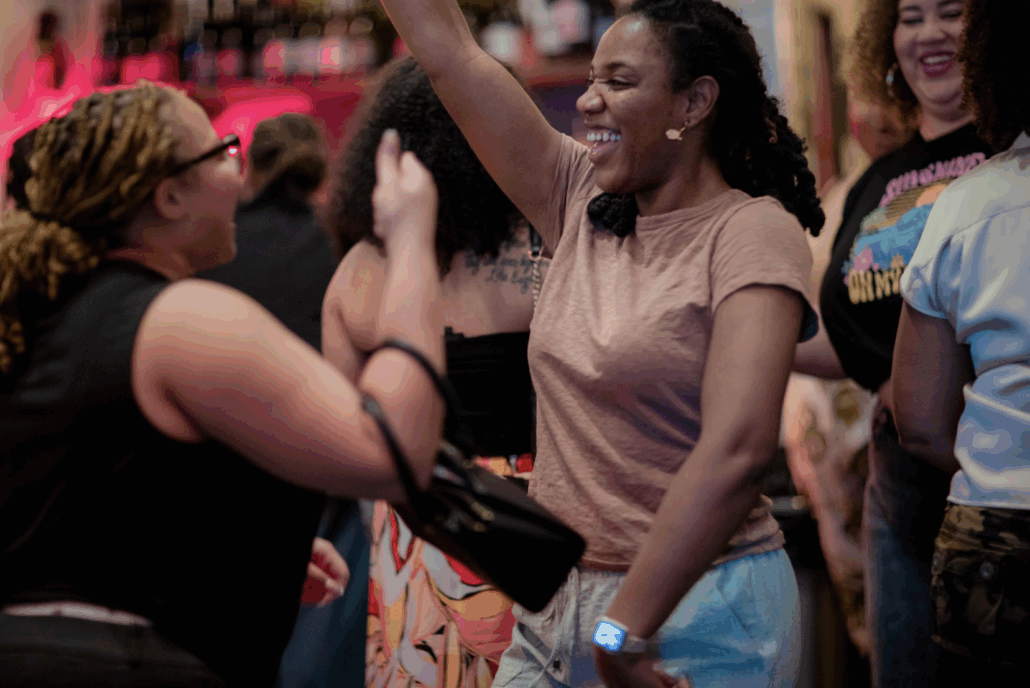
 

Frontrunners Lexington

Join a community of sweaty gays! Frontrunners Lexington is a run/walk club that promotes running and fitness in the entire LGBTQ and allied community. Stay active and make friends.


Big Four Bridge / Louisville Waterfront

The Big Four Walking Bridge is by far the best casual activity to do during the summer months in Louisville. Enjoy the beautiful Waterfront Park and hop on over to the Indiana side for some Parlour pizza!


The Carnegie

Whether on stage, in the classroom or in a gallery, The Carnegie inspires creativity for all.  This summer catch one of many shows including The Color Purple, Always…Patsy Cline and Grease!


Gateway Regional Arts Center 

In June, GRAC will be presenting Mean Girls, Jr, which has to be one of THE gayest ways to celebrate Pride in Mt. Sterling.


Newport Aquarium

One of the best ways to cool off during the hot summer months is having large stingrays swim over your head in the aquarium walkway at the Newport Aquarium. 10/10 would recommend. 


Kentucky Down Under

Who doesn’t love a Kangaroo? Check out Kentucky Down Under where visitors stroll through an open field where kangaroos and emus roam freely.  Interpreters discuss the animals’ habits and habitats.


Lake Cumberland

Whether you’re a skier, tuber, hiker, or just looking to relax, Lake Cumberland offers something for everyone. Check out Lake Cumberland State Resort Park to customize your adventure.


Sunflower Farms

August is by far the best time to snag your favorite sunflowers. Create the most instagrammable moment at Evan’s Orchard. Don’t forget to stop by the gift shop and also grab some ice cream. 


 All The Prides

Simply said — June is full of Pride events. Once dates are available, you will be able to find them all here.
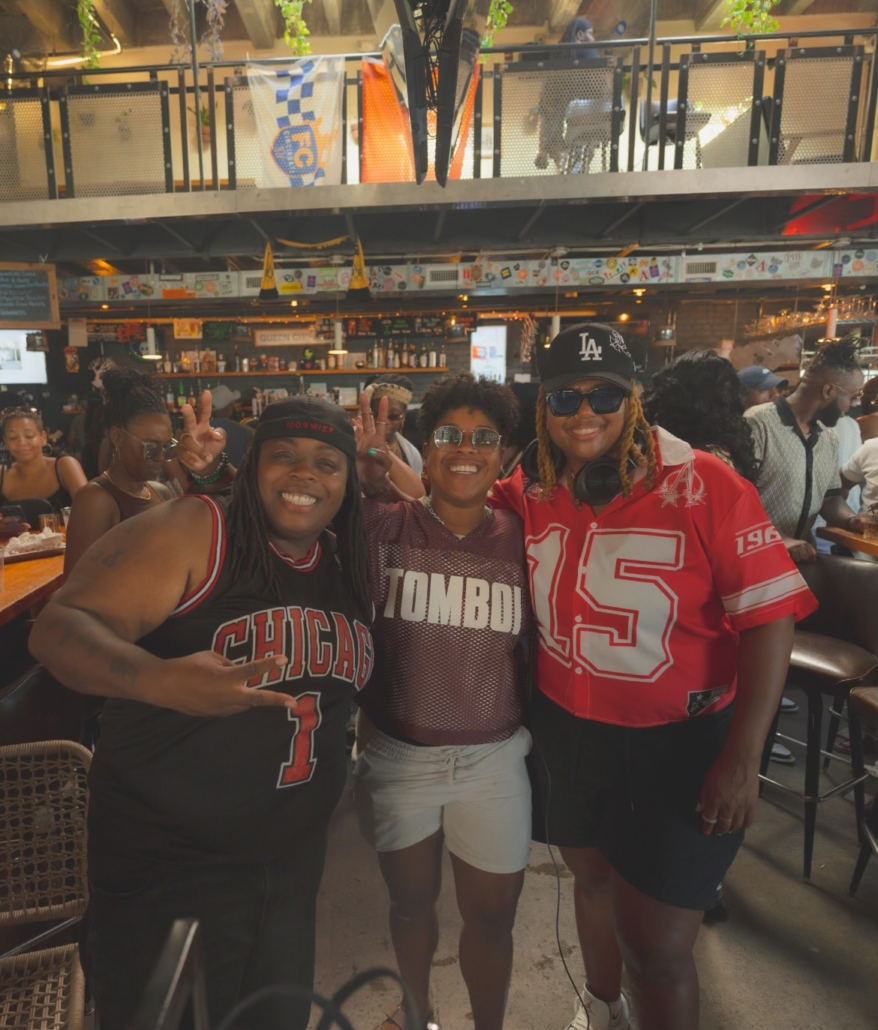
Chemsex: Understanding the Risks, Realities, and Resources for LGBTQ+ Communities

Editor’s note: This story was published in January 2025. Data, programs, meeting times and contact details may have changed since then, so check with the organizations listed for the latest information.

Have you heard the term “chemsex?” Maybe you’ve seen phrases like “party and play” or been asked, “you PnP?” or “parTy?” Perhaps during a late-night scroll, you’ve noticed a “🎉” next to a Grindr profile and questioned what it meant. Whatever the coded language, it all boils down to one thing: getting high and having sex.

Let’s talk terms and definitions:

Chemsex: refers to using drugs to enhance and intensify sexual experiences. While “chems” can include substances like poppers, marijuana, or alcohol, the term primarily centers around four main drugs: ketamine, GHB/GBL, cocaine, and of course, crystal methamphetamine.

Ketamine is a dissociative anesthetic used medically for pain relief and anesthesia, and recreationally for its hallucinogenic and euphoric effects, with emerging applications in mental health treatment.
GHB/GBL: GHB (“liquid ecstasy”) and its stronger cousin GBL (a cleaning solvent-turned-party drug) are used for euphoria and relaxation—but mess up the dose, and it’s less party, and more falling out of consciousness…and possible death.

Cocaine: OK, we probably all know a little about coke, but for the sake of argument, let’s define. Cocaine is a powerful stimulant that gives a quick energy boost and heightened alertness, but can quickly lead to intense crashes and cravings once it wears off. 

Methamphetamine: We’ve all seen Breaking Bad, right? Meth is a supercharged stimulant that hijacks your brain unlike any other stimulant, flooding it with an insane rush of dopamine. A high to remember, but a steep price to pay each time. If you’re a millennial, I know you’ve seen the Montana Meth Project, you know what this drug can do to a human.


Prevalence

Anthony Munger, community health manager for the Louisville Pride Foundation, said there is a lack of data focusing on substance use within the LGBTQ+ community in the United States, particularly concerning methamphetamine use and chemsex activities.

“Accurate data about LGBTQ individuals and substance use, particularly around chemsex, is essential because our experiences are unique yet often universal within our community,” he said. “Substances as a coping mechanism against daily discrimination, and without data, policies and resources can’t effectively help us. This data makes our struggles visible and helps create safer practices that are tailored and evidence-based.”

According to the 2020 National Survey on Drug Use and Health by the Substance Abuse and Mental Health Services Administration, approximately 3% of lesbian, gay, or bisexual adults aged 26 and older in the U.S. reported using methamphetamine in 2020.

Adam Neff, M.D., internal medicine and pediatrics primary care physician, Baptist Health, says he sees several LGBTQ+ patients and only a small number of them have come forward about their addictions or participation in chemsex and methamphetamine activities.

“It’s something we don’t ask about as providers whether it’s from a lack of knowledge or hesitancy,” he said. “There is a lot of shame that comes along with this and it can be hard for patients to open up.”

Neff adds that general education to the community, but especially providers would benefit those struggling with chemsex and addiction.

“It’s a tricky area to navigate without the patient feeling super shamed,” he said.

According to a 2023 report from the  Kentucky Office of Drug Control Policy and Kentucky Agency for Substance Abuse Policy, methamphetamine was found in 1,095 drug overdose deaths, representing 55.2% of the total drug overdose deaths and out of those overdoses, 840 involved Fentynal. What does this mean? Meth is being cut with fentanyl…allegedly. 


Health Risks

Chemsex poses significant physical risks, including a heightened likelihood of sexually transmitted infections (STIs) and HIV due to impaired judgment and condomless sex. Prolonged sexual activity, which can happen while under the influence, can cause physical trauma, such as tearing or bleeding, increasing infection susceptibility.

Neff noted that individuals engaging in chemsex may make it more likely to  neglect essential routines like taking daily PrEP or HIV treatment, which reduce the risk of acquiring or transmitting HIV, respectively, or using doxy-PEP, which reduces the risk of gonorrhea, syphilis, and chlamydia. 

“Set an alarm to ensure you don’t miss medication doses as you come down,” he advised.

Drugs like GHB and GBL carry additional risks due to their narrow safety margin, increasing the likelihood of overdose, unconsciousness, or death.

The mental health impact of chemsex can be as severe as its physical consequences. The highly addictive nature of chemsex can lead to dependency, creating a cycle that is difficult to break. The comedown from these drugs often results in anxiety, depression, or even psychosis and paranoia, contributing to ongoing mental health struggles.


Harm Reduction and Resources

If someone is going to participate in chemsex, there are a few things they can do to reduce the harm that can occur during the experience:

Plan Ahead: Set boundaries around substance use, sexual activity, and time limits.

Know Your Substances: Understand the effects, dosages, and interactions of the drugs you’re using. Avoid mixing substances, especially depressants like GHB/GBL and alcohol.

Utilize PrEP, Doxy-PEP: Stay consistent with preventive medications to reduce the risk of HIV and STIs.

HIV treatment: If HIV-positive, stay consistent with medications.

Inform a Trusted Friend: Let someone know your plans and check in periodically.

Stay Hydrated and Nourished: Drink water regularly and eat light meals to maintain energy levels.

Use Protection: Use condoms and lubricants to reduce the risk of STIs and physical trauma.

Use clean supplies: Supplies like syringes and water should be sterile to reduce the risk of HIV, Hep C and other bacterial infections.

Monitor Doses: Keep track of how much and how often you’re using substances to avoid overdosing.

Have Naloxone and fentanyl test strips on Hand: If opioids are involved, ensure someone knows how to use naloxone in case of an overdose. Test strips can help identify if fentanyl is present.

Set Alarms for Medications: Don’t skip doses of PrEP, antiretrovirals, or other necessary medications.

Practice Aftercare: Rest, rehydrate, and nourish your body. Plan for mental recovery, including coping with potential anxiety or depression.

Seek Support: If struggling with dependency or mental health, reach out to harm reduction organizations or support groups.

If you are seeking support in quitting chemsex / methamphetamine or practicing harm reduction please know that there is help locally and internationally.

The Louisville Pride Foundation has a “Queer Men and Meth” support group that meets every Thursday at 7 p.m. at 1244 South Third Street (The LGBTQ+ Center)

Harm reduction supplies including fentanyl test strips and narcan can also be obtained at the LGBTQ+ Center. They will also connect you with therapists and substance use disorder treatment if desired.

Crystal Meth Anonymous Meetings

Harm Reduction Services in Louisville (Syringe exchange and more)

Northern Kentucky Harm Reduction Services