QUEER KENTUCKY | KENTUCKY'S ONLY LGBTQ+ NEWSROOM

KEEP. City. Never alone. Always use alongside Region: Northern Kentucky. Cincinnati is in Ohio, so the Kentucky framing stays primary.

Tag Archive for: City: Cincinnati

Officer Zachary Stayton approaches Brandon Hill during the Roebling Bridge protest on July 17, 2025, captured on Covington Police Department body camera footage

Roebling Bridge protester arrested in court on felony riot charge

UPDATE, 2pm Oct. 5: Marshall was released on their own recognizance following an afternoon arraignment in Kenton County District Court. Marshall’s next status hearing is set for Nov. 30 at 1:30 p.m. at the Kenton County courthouse.

—————————————————-

Taylor Marshall, the final protester still facing charges from the July 17, 2025 Roebling Bridge protest, was indicted Monday on one count of felony riot and taken into custody at a routine pretrial hearing, according to a press release issued the same morning. Bond was set at $2,500.

The protest began on the Cincinnati side of the bridge, where about two hundred people turned out against the detention of Imam Ayman Soliman, a former chaplain at Cincinnati Children’s Hospital whose visa and asylum were revoked before Immigration and Customs Enforcement arrested him. Dozens of demonstrators then marched across the Roebling Bridge into Covington, where 15 people were arrested. Two journalists were among those charged.

The march fell on July 17, the fifth anniversary of the death of civil rights leader and U.S. Rep. John Lewis, and coincided with nationwide “Good Trouble Lives On” demonstrations held that day. Lewis was 25 when Alabama state troopers fractured his skull on the Edmund Pettus Bridge in Selma in 1965, during the voting rights march that became known as Bloody Sunday.

Covington police officer Zachary Stayton was placed on unpaid administrative leave in November 2025 after a department investigation found he did not follow proper procedure at the protest. Video released by the Covington Police Department and reviewed by Queer Kentucky showed Stayton punching protester Brandon Hill in the head while Hill lay on the ground. Covington police said at the time they believed Hill had a gun. Stayton completed remedial training before returning to duty.

Hill sued the department and two officers in federal court in July 2026, alleging excessive force and civil rights violations. In a statement to Queer Kentucky at the time, the city of Covington declined to comment on pending litigation and noted that a Kenton County judge had reviewed the evidence and found probable cause for the felony charges against Hill.

Queer Kentucky has followed the case since 2025, including the community response to Stayton’s suspension and a broader look at policing, civil rights and community safety in Northern Kentucky.

The full text of the release appears below.


For immediate release: October 5, 2026

Covington, Kentucky: Urgent – new felony indictment in Roebling Bridge case.

This morning, Taylor Marshall, the final defendant in the Roebling Bridge arrests last July, was indicted on one charge of felony riot. The vigil and march were in support of Imam Ayman Soliman, who was being detained by ICE. Despite being offered the same plea deal that most of the other defendants have been offered over the past year, Marshall was denied that plea at a September 16th hearing. Marshall was taken into custody this morning during their routine pretrial hearing and bond has been set at $2500.

Marshall’s attorney, Ben Potash, said of the case, “I have never seen a protester arrested in court for something that may have happened a year prior. I have never seen a judge reject a plea because a defendant failed to admit to an unindicted conspiracy. Taylor’s incarceration is unjust and unfair and it does not fit in with the rule of law. We are going to defend Taylor and avail ourselves of every legal remedy that we have.”

Their next court date is today October 5, 2026 at 1:30PM at the Kenton County Justice Center at 230 Madison Avenue, Covington, KY 41011 Room 7A in front of Judge Kate Molloy.

Seymour Hiney performs at a Smoke & Queers queer burlesque show in a sequined outfit with red fringe, arms raised on stage.

Smoke & Queers: How a Queer Burlesque Troupe Built a Stage for Everyone Else

There is a performance troupe where the rules are simple: You have to be queer. You have to be courageous, or at least act like you are. Why will you need that courage? Well, to take your clothes off, of course. Oh, and you can’t use any real flames in performances – purely for safety purposes. This stage is called Smoke & Queers, a queer burlesque performance troupe that has dazzled audiences in Cincinnati and Northern Kentucky since 2019.

The tease-filled concept numbers, the rhinestone costumes, the steamy reveals, and the reclaimed bodies are a result of those rules. Smoke & Queers, which showcases burlesque, drag, and draglesque, is preparing for the Rhinestone Rodeo on October 3rd at Second Sight Spirits in Ludlow, which is part of this year’s Bourbon & Belonging Kentucky’s Queer Bourbon Week. We sat down with four of the troupe’s producers to talk about group origins, what the stage gives back to them, and why an art form built on undressing has always had far more to say than anything about bodies, alone.

Want Queer Kentucky’s latest in your inbox? Sign up for our newsletter here.

A Short History of Burlesque, and Why Queerness Was Always Underneath It

To understand what Smoke & Queers is doing, it helps to understand the history of burlesque. That history, however, is less agreed upon than many would think.

The simplified version taught in many dance history classes points to Aristophanes, the ancient Greek playwright, as the father of satire and comedy, which ties directly into the word burlesque’s meaning: a literary or dramatic work that mocks a serious subject through comic imitation, or a style of variety show entertainment featuring comedy, dance, and striptease. His shows poked fun at serious matters, in the way that today’s burlesque performances can act as political statements. Burlesque historian and performer Bella Sin, who has spent years researching and rewriting the way this art form’s history gets told, pushed back on that origin during a lecture at the Ohio State Library Archives in May of 2025.

Instead, she traced its roots further but also wider, to ritual dance in ancient Sumer, to fertility rites among the Mexica people of Mexico, to Japanese legend involving a goddess who strips and dances to tease a deity out of hiding, and to Vaudeville, the Parisian variety show tradition that exploded across the United States and the rest of the Americas by the 1800s.

Lydia Thompson is frequently credited as the woman who brought burlesque to the United States when she toured with her troupe British Blondes in the 1860s, scandalizing audiences by wearing flesh colored tights and showing bare ankles. (Those audiences would never survive a Smoke & Queers show.) But burlesque already existed in the U.S. before she arrived. What Thompson actually did was confront the controversy around her show unapologetically, which is arguably what has kept burlesque relevant today.

Queerness runs through this same history rather than sitting beside it. Drag and burlesque have been intertwined for as long as either has existed as a formal tradition, sharing performers, stages, and aesthetics. Hedy Jo Star, a trans burlesque performer and author who was publicly open about her transition in the 1950s, performed for years in the traveling Jewel Box Revue. She later became a costume designer whose work helped define the rhinestone-heavy look burlesque and drag are known for today. Sin said queer nightlife scenes in Mexico, France, and Germany overlapped heavily with burlesque circuits, and plenty of performers throughout the twentieth century were queer even when it was not safe to say so publicly.

By the 1940s, moral panic and anti-obscenity laws had pushed burlesque out of the mainstream and into the smaller, underground and fringe corners of American entertainment. The revival that followed in the 90s and early 2000s is usually called neo-burlesque, and it is the direct ancestor of the scene Smoke & Queers belongs to. This movement brought the tease and the theatrics back into the light, while also opening the door for a much wider range of people to define what the art form could be: performers of every size, race, gender identity, and sexuality. As burlesque researcher Alyssa Stover of Ohio State University’s Dance Department put it, at its core, it is about more than a striptease. It is about curating a safe space and bringing together people who have been cast down and cast out elsewhere in society.

The Performers

Salem Le Fay (she/her) describes herself as witchy, unbothered, and incredibly seductive. She has been a performer her whole life in one form or another, and has been building her burlesque persona for almost four years now. She also genderbends into The Baron, a drag king alter ego with his own pronouns, he/they, and his own vibe, proof that Salem’s magic transcends genres.

The ethereal Andro Hathaway (they/them) is the one with vintage taste. They started performing burlesque in 2022, close to four and a half years ago now, though like the rest of the troupe, they have been performing in some form their entire life. Andro’s burlesque is less about broadcasting and more about processing, with lots of sparkles and an old-school aesthetic.

Long-time performance artist Seymour Hiney (he/they) is camp personified and, by a wide margin, the most tenured performer in the room. Seymour has been performing in some drag or burlesque-adjacent capacity since 2010, sixteen years ago now, which started, fittingly, with Rocky Horror Picture Show shadow casts before becoming a drag king. A hybrid of both drag and burlesque, called ‘draglesque,’ followed, and every once in a while, they will pivot to a neo-burlesque number under the stage name The Groke. The continued inspiration stems from a lifetime of dance and musical performance, stretching back to childhood.

Dolly Partner (she/they) is feral in the best possible way, feisty, and proud of her Kentuckian roots. She has her own drag king alter ego too, Donny Partner. Dolly grew up in Central Kentucky, where she says she simply was not exposed to the different shapes queerness can take, and she is candid that finding burlesque became an education in exactly that, opening doors that growing up in a smaller, more conservative part of the state had kept closed. She had tried more traditional performance routes first, theater, dance, the usual paths, and none of it stuck the way she wanted it to. Burlesque is where she shines.

The Troupe

Smoke & Queers was started in 2019 as an amateur troupe by performers Christina Coobatis and Clarity Amrein in the Tri-State area who wanted to shake up the local burlesque scene, which was dominated by traditional ideals. They realized there was not a space built for them. So, they built one.

“There was not a group out here that was for [queer folks] to perform in,” Dolly said. This wasn’t an accusation against what already existed, just a recognition that it was not enough, Dolly said.

That space now features drag kings, burlesque, and draglesque, and flow artists under one expressive and colorful roof.

Six years later, the troupe’s performers list is 300 people deep with artists of all genres. The troupe puts on two to five shows a month, anchored by recurring nights like Amore After Dark at Second Story in Covington, and Kings and Things at Tokyo Kitty in Cincinnati, the city’s only regular drag king night.

Seymour holds onto that fact with real pride.

“Drag kings do not get the stage time or attention drag queens do. So it’s been really important to me to continue to have that space for drag kings and drag things … I want to make space for gender expansiveness,” Seymour said.

The troupe also creates opportunities for newcomers. Producers and seasoned performers host student workshops, classes, and showcases to encourage more queer artists to take up space in the community. Students learn the art of the tease, how to create intentional reveals, and the way a good number is built.

“Mentorship is my favorite part of all of this,” Seymour said.

For Salem, it is passing along all that burlesque has given her, including knowing she inspired others to enter the art form.

“I want more of that, and to help people see what they can do,” Salem said. “It is for everyone.”

As far as the acts, you will see a little bit of everything and anything at a Smoke & Queers show. Sometimes, a showgirl will start on stage in a Nemo-inspired onesie and strip down to a belt filled with bedazzled fish. You may also see a drag queen lip-syncing to a new pop song while collecting singles from audience members, bringing attendees directly into the experience. You may or may not see a drag king perform to a classic country song, using bales of hay as props. Also, you can get weird. In fact, it’s even encouraged.

“The weirder, the better, in my opinion,” Dolly said.

Self-Discovery and Radical Self-Expression

Ask any of the four producers what burlesque actually does for them, and the answers stop being about just the performance.

For Salem, the stage is where she can show up fully.

“People always assume I’m just like this straight cis person,” she said, and burlesque, along with the persona she built to counter that assumption, has helped her internalize her queerness and be proud of it. “I love performing for anyone who is not a man.”

Salem says she never planned on any of this, and said, “hell, yeah”, when asked if this art form made her more confident.

“I never expected to be in this position whatsoever, and it is so awesome. I don’t know what my life would be without it,” she said.

Andro’s numbers have acted as a form of artistic therapy and personal exploration.

“Andro is very centered in exploring my sapphicness and my gender flexibility. It’s kind of more internal for me. So I’m trying to express… things that I’m working through, and translating that to the stage,” they explained.

Andro grew up Catholic, with a body they were taught could only ever belong to a future husband, never to themself. Burlesque became the undoing of that, they said, and a reclaiming of their body, for themselves, and passing that lesson onto others as a show producer.

“[With] newer performers, you see them also getting that same kind of thing out of it. I think that’s really beautiful to see people unlearn these toxic things that are thrust upon them in purity culture,” Andro said.

Dolly’s performances are filled with symbolism and nods to her Kentuckian roots. Her Rhapsody in Bluegrass piece, the one she will perform at the upcoming Rhinestone Rodeo, digs into the gap between expectation and reality. Her costume is styled in a more traditional burlesque fashion, featuring a stunning blue corset and fun fringe pieces. What folks see, however, is more feral and unhinged, including a cigarette stuffed in her rhinestone bra.

“It’s a gap that can be read through queerness, or womanhood with what you expect, and what you get,” she said, honoring the complexities of the queer experience.

Underneath the concept work is also something more personal. Dolly grew up with an eating disorder, and finding a release into being comfortable in her body in all of its stages has been, in her words, “transformational.”

“Nudity is just like, a beautiful thing. So why not explore it both in a sexy and a humorous way? Like being funny is sexy,” she said. It’s also helped her to be more unapologetic. “Recently, I gained a lot of weight, but I’m still out here showing my body because every body is sexy,” she said.

Seymour spoke about the importance of representing different types of people, and views performing as a channel to celebrate the “diversity of bodies, all of them being equally praised and applauded.”

As a person of color, too, this added layer speaks to a greater mission of reclaiming a body that is often overlooked within Eurocentric beauty standards.

“As a brown person in particular, it’s a way to sort of decolonize my body,” Seymour said.

The performers all agreed that Smoke & Queers is culturally important in 2026, as attempts to pass anti-drag laws in the United States continue in various states, including Ohio and Kentucky.

“Any sort of thing celebrating a [queer] body in a sexual way, or even just in a neutral way, is sort of radical in today’s atmosphere. The added wrinkle of us being a queer burlesque and drag troupe and making a space for bodies that are currently trying to be legislated out of existence is extra important,” Seymour said.

As for the whole, taking-off-the-clothes-thing, Seymour said, you do get used to it.

“I’ve been doing this for so long now, I don’t even think about the body element of it and the nudity. I just think, ‘Oh, that was a really cool way to tease. Oh, that was a really cool reveal’.”

The Rhinestone Rodeo will feature a Western-themed revue of variety acts, and Kentucky bourbon culture woven throughout. In fact, the event is taking place at Second Sight Spirits in Ludlow, which is one of the stops on the official Kentucky Bourbon Trail. Expect great drinks, creative numbers and the colorful chaos the troupe is known for on October 3rd at 9pm.

Grab tickets here.

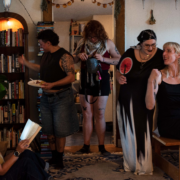
A group filled with smiles and love gathers in a home filled with books and decor.

Nobody’s Free Until Everybody’s Free: The Queer Print Magazine Imagining Liberation Together

If you’re looking for “diverse expressions of diverse lives” that take a hammer to the binary, look no further: nymph(o) delivers bold and sensual offerings with a distinctly 1980s indie-magazine vibe.

Want Queer Kentucky’s latest in your inbox? Sign up for our newsletter here.

The Ohio-based LGBTQ+ print publication, initially launched in 2021, publishes sex-positive art and writing that wraps around this premise: “actions lead movements, but so do images, words, and the people who create them.”

Cover art painted by Kentucky artist Cierra Evans.

Cover art painted by Kentucky artist Cierra Evans.

Issue #4, slated for release on August 29, takes inspiration from civil rights activist Fannie Lou Hamer’s inspiring quote, “Nobody’s free until everybody’s free.”

“All of the writing, poetry, visual art, photography is exploring this theme and reckoning with the notion that the queer community can’t experience liberation without collective liberation – liberation for all,” says nymph(o) founder and editor Avery Plummer.

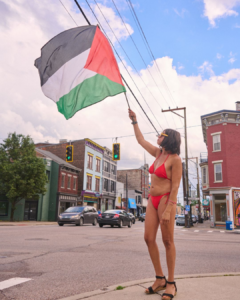
The new issue features a variety of essays and art, including a piece on activist Simone Brine, a trans immigrant and University of Cincinnati professor, known for staging street corner protests clad in a red bikini – advocating for what nymph(o) describes as “trans civil rights, Palestinian liberation, and an end to violence and deportations by the U.S. Immigration and Customs Enforcement (ICE).”

Portraits of Sylvia Ebeid by Chris Sifri, entitled “You Can’t Look But Please Touch,” in the issue invite a glance, as do images of local 1990s drag king troupe H.I.S Kings.


Photo of Simone Brine by Sophia Daughtery Muñoz

Photo of Simone Brine by Sophia Daughtery Muñoz

Plummer pairs a poem by Ohio Lesbian Archives co-founder Phebe Beiser, now in her 70s, alongside a nude portrait of the writer – reflecting the multigenerational spirit of the publication.

Each issue incorporates art and thought outside the confines of the present, linking contemporary queer conversations to the past.

“It’s a queer sex-positive magazine, but it’s also an investigation into the ways that contemporary domination forces are affecting queer liberation, and how we can work with one another in our communities to really fight for one another and envision new worlds,” says Plummer, who brings her experience working with the archives to the project.

The queer artist, writer and archivist at heart cites the groundbreaking 1980s lesbian erotica magazine On Our Backs as inspiration for creating nymph(o). Conscious of “standing on so many people’s shoulders,” Plummer draws on an earlier sex-positive movement in a modern, degendered way.

She is deliberate with the language she uses to describe a magazine that aims to embrace the community it represents.

“It’s not a lesbian erotic magazine by any means,” she says. “It’s an expression of different variations of queer sexuality and queer lives.”

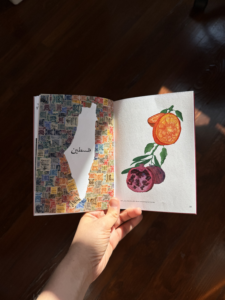
Opened page of the new nymph(o) magazine.

Photo provided by Avery Plummer.

For the inaugural issue released in 2021, Plummer snagged interviews with On Our Backs co-founder, the late Debi Sundahl, as well as performance artist and former sex worker Annie Sprinkle. On receiving physical photos from Sundahl back then to scan for the magazine, she says, “I was nervous to handle them!”

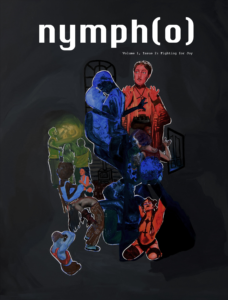
Issue #2 threw a spotlight on queer happiness with the theme Fighting for Joy, and included a moving tribute to the concept that “a child is a gift” as rendered by a parent amid a wave of anti-trans violence; Finding Purpose comic art by Fiona Avocado (thought bubble: “What P.O.S. News am I Going to Read Today”); and intimate playful portraits by Jessica Tanzer, known for focusing her lens on the beauty in what viewers “might otherwise imagine is ‘threatening’ subject matter.”

Issue #3, themed Queer Space, featured photography by Sophia Muñoz and Del LaGrace Volcano, including Volcano’s 1995 intersex coming-out “Self Portrait with Bluebeard;” a conversation with HIV health educator Ariel Shaw; and writing by queer, nonbinary, Latine artist Jacq Garcia, whose work explores the intersections of community, fatness, food and sexuality.

All serve as counterpoint to fraught times that demand a chance to dream, create, and then repeat.

Plummer, who holds a master’s degree in art history from Ohio University, is a surrealist movement enthusiast, drawn to expressions of dreams as an extension of reality.

“I think that notion really fits with a lot of what queer folks are doing, particularly in local community organizing, because they’re dreaming and they’re building these things that don’t exist, and certainly don’t exist within the systems that are supposedly built to serve us and then don’t,” she says.

Working with Plummer, Maddy McFadden brings an eye for visual layout to the role of creative director and has a hand in editing as well as the non-credited art.

Published exclusively in print, nymph(o) will be available at the mag’s launch event on August 29 at Cincinnati’s Village Green Foundation, which facilitates affordable food and transportation for Cincy’s Northside – also featured in the issue.

Following the launch, nymph(o) will be available for purchase on Queer Kentucky’s website. Queer Kentucky also serves as a proud fiscal sponsor, with the venture supported through the ArtsWave Pride Grant Program.

TBALLER, Northern Kentucky artist, poses in leopard print and a vintage fur coat during a photoshoot.

NKY Artist TBALLER Explores Music, Fashion and Funk

TBALLER doesn’t just make music, he puts on a show. The Northern Kentucky artist has spent nine years honing a sound he calls “funky, bold, genre-bending pop,” pulling from Prince, Jimi Hendrix, and the deep funk roots of nearby Cincinnati. This year, he is hitting the stage harder than ever, headlining a DIY-regional tour of small venues across Kentucky.

Along the way, TBALLER built a loyal, largely queer fanbase who connect with his boldness, love of fashion, and self-expression. That connection has pushed him to explore his own identity, both in the studio and in the world. We caught up with him to talk influences, community, and what’s next as he works on his first EP.

Portions of this interview have been edited for brevity and clarity. 

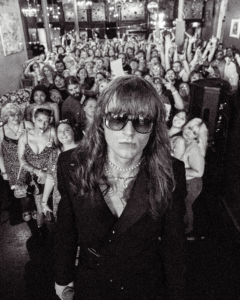
TBALLER performs before a packed, cheering crowd at a live show in Kentucky.

Photo by: Max G @barelymanic

Northern Kentucky Artist on Sound, Style and Self-Expression

Richie: Hey TBALLER! Nice to meet you. What brought you to making music? How would you define your musical style?

TBALLER: Hello! Nice to meet you as well! Originally, I started making music because a friend of mine made a song, and for some reason, I decided to drop a diss track about him sort of as a joke. From there, I found out I like making music and stuck with it. 

Richie: What are your main musical inspirations? 

TBALLER: Some of my main music inspirations are Prince, Jimi Hendrix, Ohio Players, P-Funk, Michael Jackson, Tyler, The Creator, Hall & Oates, and many more. Geographically speaking, I think Cincinnati has had the greatest on my music. and I am greatly inspired by funk music, which has deep roots in Cincinnati.

On Queerness, Community and What’s Next

Richie: What’s your connection to the queer community?

TBALLER: After posting my music on TikTok,I gained a pretty large Queer fanbase.I love seeing them out at my shows, and it makes me feel good that I can provide a safe space for not just my Queer fans but all of my fans to enjoy themselves and have a good time. I take pride in that. I also think specifically my Queer fans have helped me feel more comfortable to loudly express myself. or that, I am eternally grateful.

Richie: How have you explored your identity through making music? How has it changed how you perceive yourself?

TBALLER: Every time I make a new song, I learn a bit more about myself. How I like to dress, how I like to dance. Even reflecting on decisions I’ve made and learning from mistakes. I get all this time to say how I truly feel over an instrumental, and sometimes I pick out things that I didn’t even know I felt. The studio is the one place where it’s all about me and I can’t be wrong. I think mainly I’ve learned that I don’t know nearly as much about myself as I previously thought, and I’m very excited to get to know more.

Richie: Why do you like making dance music? Why do you think it’s important, especially in these times?

TBALLER: I like to dance! I also love to entertain. I’m very inspired by the performers who really made an effort to put on a show. My fans paid their hard-earned money to come see me, so I’ll be damned if I don’t give ‘em a show, and the best way to do that in my mind is give them something they can dance to. 

Before I started performing, it was just a natural inclination towards more upbeat [music] but now I’ve doubled down.With the negative political state of our country and the current president in office, it seems like things are going backwards and getting more hateful. Not to mention, it seems like everyone is struggling financially right now. It’s incredibly important to have an outlet where you can kind of forget about your troubles and just focus on enjoying yourself in the present moment. I feel like making time to let loose can help us get through the tough times and remind us that we are [all] human.

Richie: Where do you hope your music will take you? 

TBALLER: I want to be great. I want to have albums and songs and performances and a career that moves lots of people and makes them feel something. I want to express myself as loudly as possible, and I want to learn as much about myself and this world as I possibly can through my music.

To keep up with T Baller, follow him on social media here. His next show is August 22nd in Lexington. You can grab tickets here. 

Officer Zachary Stayton approaches Brandon Hill during the Roebling Bridge protest on July 17, 2025, captured on Covington Police Department body camera footage

Roebling Protester Sues Covington Police for Excessive Force

COVINGTON – A man who suffered injuries during the Roebling Bridge protest last year sued the Covington Police Department and two officers this week. 

Brandon Hill sued officer Zachary Stayton, an unidentified officer and the department, according to a complaint filed in the U.S. District Court for the Eastern District of Kentucky. Hill alleges a Monell violation, accusing the defendants of excessive force and violating his civil rights.  

Hill was among 15 people arrested at the protest on July 17, 2025, which began at The Banks in Cincinnati and crossed the Roebling Bridge into Covington. Two journalists were among those charged. More than 100 people were protesting the detainment of Imam Ayman Soliman, a former chaplain at Cincinnati Children’s Hospital, who had his visa and asylum revoked before being arrested by Immigration and Customs Enforcement. 

On November 4, 2025, Stayton was put on unpaid administrative leave after the department investigated the protest and found he did not follow proper procedure. Videos showed Stayton punching Hill in the head while Hill lay on the ground. Covington police said at the time they believed Hill had a gun. Stayton was required to complete remedial training before returning to duty. Queer Kentucky covered the community response to the suspension at the time.

“Hill’s injuries include, but are not limited to, numerous contusions, swelling, and an injury to his arm that significantly limited his mobility in the weeks following the assault,” the complaint says. “These injuries resulted in Hill both missing work (approximately six weeks) and being assigned to “light duty” by his employer upon his return.”

In a statement to Queer Kentucky, the city of Covington said Hill was still facing charges.

“The City of Covington is aware of the federal lawsuit recently filed by one of the individuals facing criminal charges related to the July 2025 incident on the Roebling Suspension Bridge,” the statement said. “As a matter of policy, the city does not typically comment on active litigation. However, it is important to note that the individual who filed the lawsuit is currently being prosecuted by the Commonwealth’s Attorney’s office after a Kenton County Judge reviewed the evidence presented in the case and determined there was probable cause for the felony charges, allowing the matter to move forward through the criminal justice system. 

“The events that occurred on the Roebling Bridge in July 2025 posed serious public safety concerns. The city remains committed to ensuring Covington is a safe place for all residents and visitors. 

“Because both the criminal case and the civil litigation remain pending, the city has no further comment at this time.”

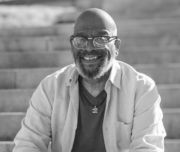
Ron Clemons, Cincinnati community activist and retired social worker, seated on outdoor steps in a black-and-white portrait photograph.

Beyond the Bar: How Cincinnati/NKY Queer Spaces Are Evolving

In an online discussion that recently came up among members of the local queer community in Cincinnati there was one question that stood out: “Why are all of the queer spaces disappearing?”

In recent years, many LGBTQ+ bars have shuttered due to rising costs of rent and, in some cases, a decrease in patrons. 

Notably in Cincinnati, we’ve lost a few bars over the past few years, but there are still more than a dozen bars that identify as queer and/or queer-friendly. While the number of actual queer-owned establishments has lessened over the years, what constitutes a queer-friendly space is evolving — both taking on the roles of serving the community in material ways, and creating spaces of joy and communion. 

In some ways, what’s perplexing is the limiting definition of queer spaces to just bars as the glue that binds the community. Today, the breadth of queer spaces includes sports leagues, queer choruses and sober bars, and they provide home spaces for other organizations doing mutual aid and organizing work.

When I first moved to Cincinnati in the spring of 1975, bars and a few churches were some of the only places we had to congregate, socialize and strategize. Organizations and clubs would begin appearing a few years later, such as the  Cincinnati Bowling League in 1980 and Stonewall Cincinnati in 1982. The bars were instrumental in helping build those and other organizations by providing meeting space and resources for fundraising. They did help to lay the foundations for many of the activities we enjoy today. Queer life started to show itself more outside of bar spaces. In the early 80’s, as it became less dangerous to be out, more and more organizations began to pop up around the city. Social clubs and political organizations became a large part of the queer landscape, and that trend continues today. The organizations give people more options to socialize and connect with other queers and expand the definition of community. 

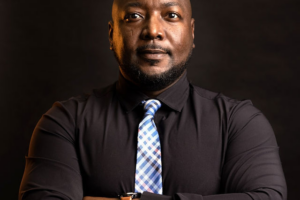
According to local author, Covington School Board member and business consultant, Kareem Simpson, a black queer man, this is a natural process and necessary for the community to grow and for businesses to survive.

A formal portrait of Kareem Simpson, Covington School Board member and business consultant. He stands with his arms crossed against a dark background, wearing a black button-down shirt and a blue plaid tie. He looks directly into the camera with a composed expression.

Kareem Simpson, Covington School Board member and business consultant, and a Black queer man. Photo courtesy: Kareem Simpson

“Community landscapes have expanded so the community looks different. There are about the same number of bars, but now there are more options in addition to bars,” he said.

“Some bars have changed their programming to stay current and attract more customers, such as Bloom providing a space for BIPOC drag performers and their followers. Others in the community have created spaces that feel more safe to marginalized community members, which in addition to younger people consuming less alcohol, can explain why bars are less busy. People want to feel safe, seen and included so they seek out spaces that provide that element,” Simpson said.

And Joshua Petty-Kayes, member of the newly created Cincinnati LGBTQ City Council Commission, a founder of Treehouse Cincinnati and an accessibility advocate emphasizes that community members want to go to spaces that are accessible. And accessibility isn’t just limited to physical access.

“Accessibility barriers can be based on gender identities, racial as well as physical. People want to be in spaces that feel welcoming and reflect their reality, aka being around others who look like them and share similar experiences. TreeHouse was created to meet that need and provide an alternative community space,” Petty-Kayes explained.

TreeHouse Cincinnati, according to their vision statement, is a resource space that uplifts the programming of the LGBTQ+ Community to promote collaboration, diversity, and intersectionality. Petty-Kayes described providing space for community organizations such as PFLAG, Black Power Initiative, Cincinnati Black Pride and Cincinnati Prime Timers. There’s also a plan to create a library of books being banned by the current federal administration.  

Transform Cincy is another organization that not only provides an alternative to bar spaces. It addresses the growing need for affirming spaces and resources for transgender, nonbinary and gender non-conforming youth and young adults. Co-founded in October 2019 by Tristan Vaught and Nancy Dawson, what began as a free clothing and accessory program has grown into a thriving LGBTQ+ community center serving individuals and families throughout Greater Cincinnati. 

Transform Cincy, Vaught said, serves the community through their CARES model: Community Center, Advocacy, Resources, Education, and Support.

“We continue to provide free, curated wardrobes for transgender and gender-diverse youth and young adults while also offering support groups, legal clinics, social and educational programming, community meals, resource navigation, and opportunities for connection that foster belonging, resilience, and hope,” Vaught said.

Transform Cincy also holds an annual Trans Pride Adult Prom, their signature fundraising event, bringing together LGBTQ+ community members and allies to celebrate while supporting the organization’s life-changing work.

And queer organizations here don’t work in silos. Transform Cincy, for example, partners with organizations including NAMI Southwest Ohio, Beech Acres Parenting Center, Community Shares of Greater Cincinnati, Equality Ohio, and many other community partners to provide professional, affirming services. 

As we witness the rollbacks of our rights and freedoms, expanding the way we view and define Cincinnati LGBTQ+ spaces to be more inclusive of BIPOC and marginalized communities helps to ensure we have safe places to gather, be in community, and celebrate our existence. 

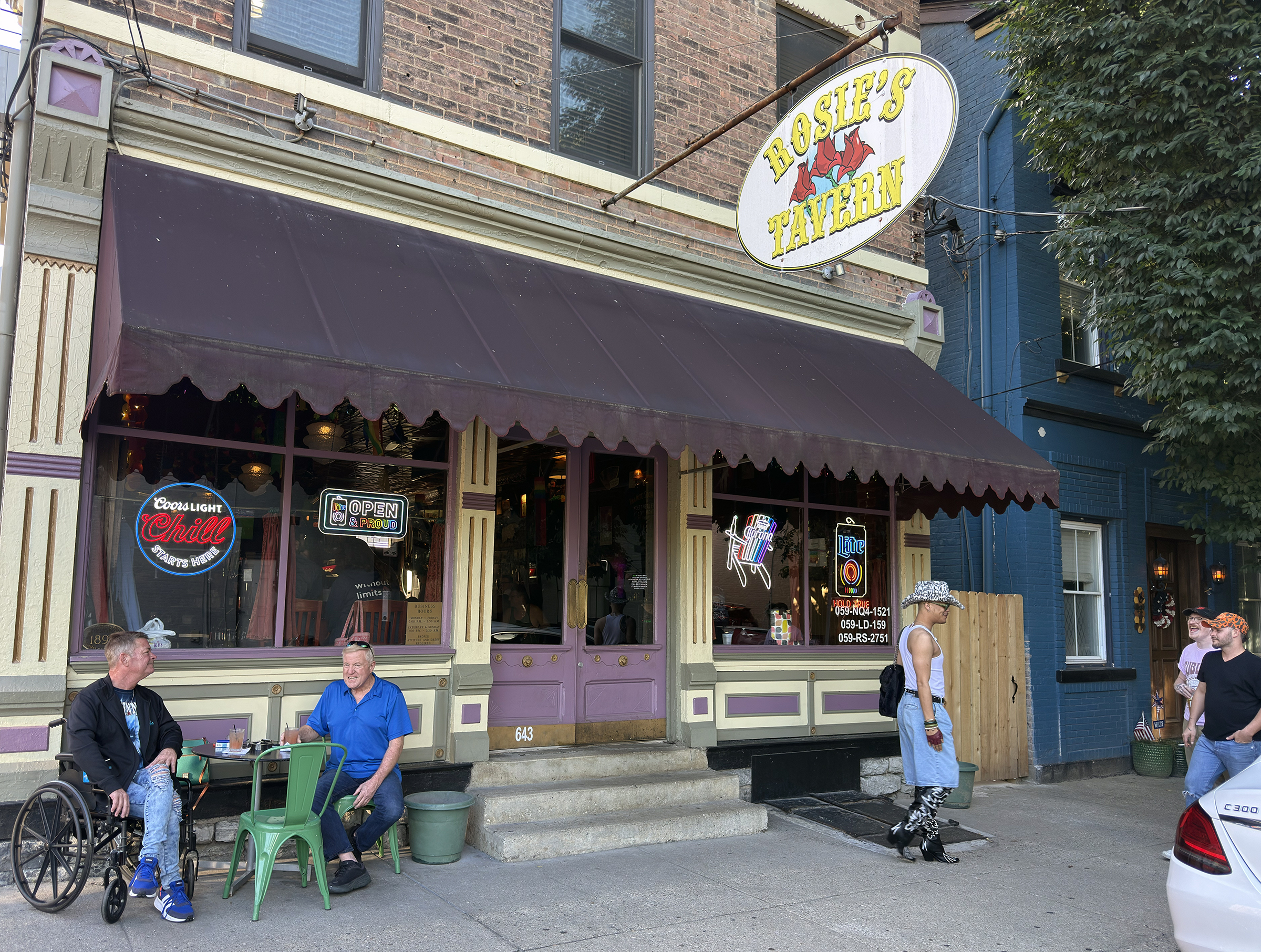
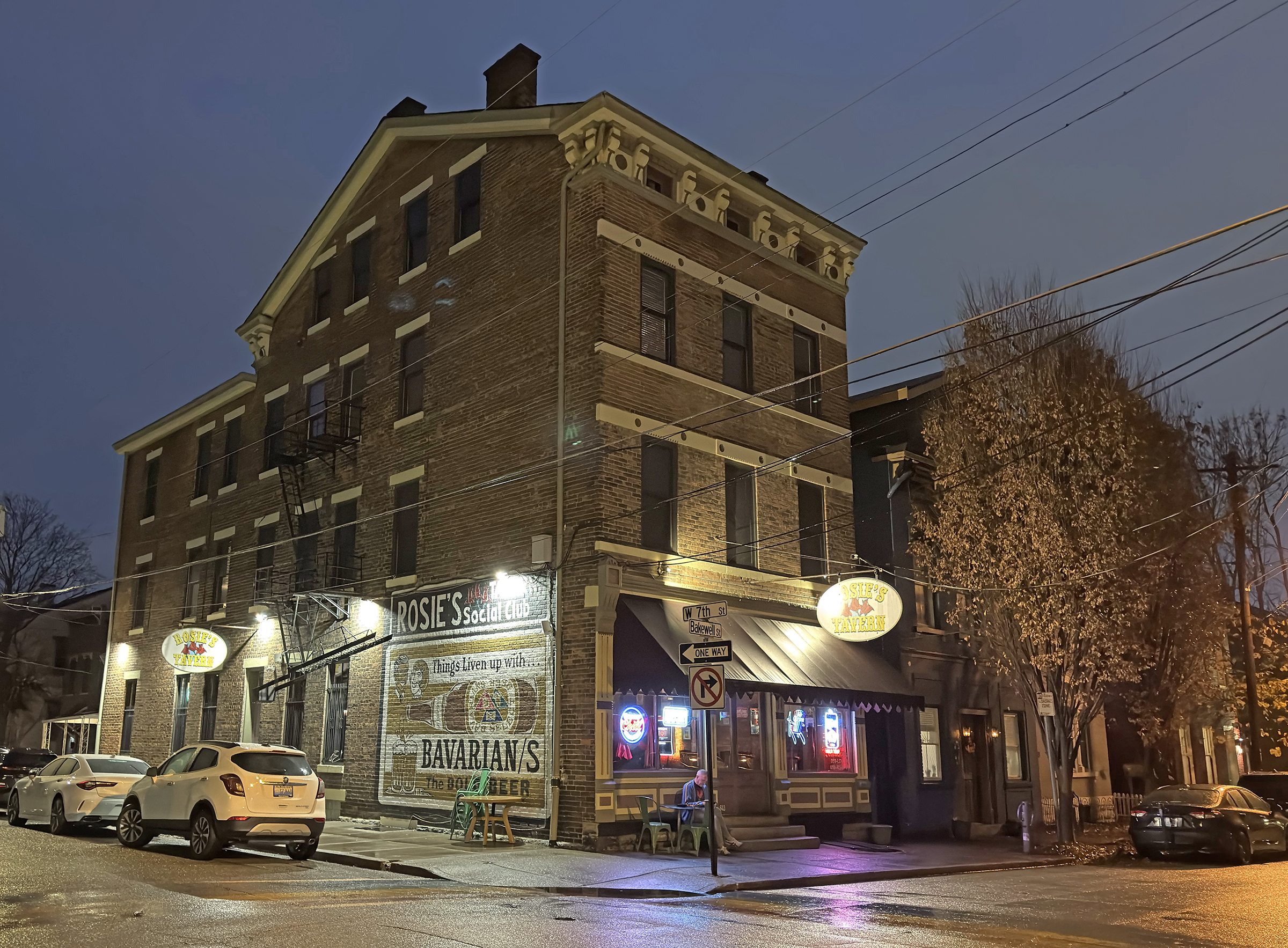
The exterior of Rosie's Tavern in Covington, Kentucky, on a summer afternoon, with patrons sitting outside under a dark awning beneath the bar's oval hanging sign.

How Rosie’s Tavern Became the Heart of Northern Kentucky’s Gayborhood

Corner bars are the beating hearts of many neighborhoods. They provide comfortable places for relaxation and community building and they are a popular way for entrepreneurs to be their own boss. Rosie’s Tavern in Covington’s MainStrasse neighborhood ticks all those boxes and then some.

Since 1990, it’s been a queer-owned safe place for people in Greater Cincinnati’s LGBTQ+ communities to drink and socialize without the harassment and surveillance found in other bars. Rosie’s Tavern is an institution that anchors a growing Northern Kentucky gayborhood with queer homeowners and renters, entrepreneurs, and a heavily queer service industry workforce. MainStrasse, once a German-themed tourist destination, now hosts popular annual festivals that draw people from far beyond the Ohio River Valley.

For 36 years, Rosie’s has been part of it all and an important part of Covington and the region’s queer history. “It’s a queer space that’s stood for over 30 something years,” says Covington historian Jake Hogue. He should know. His 2025 book, “Cincinnati Before Stonewall,” chronicles the early history of queer culture in the Cincinnati region was released in May and he’s been a longtime Rosie’s patron. “Rosie’s was one of the first bars I ever went to.”

Bars, bookstores, galleries and parks comprise a small but significant number of places queer people have created or adapted as safe spaces. Many of them occupy sites where earlier businesses catered to straight consumers before being rented or bought by queer folk.

Queer Kentucky · Covington, Northern Kentucky

Rosie’s Tavern

A Northern Kentucky Queer Landmark for 36 Years


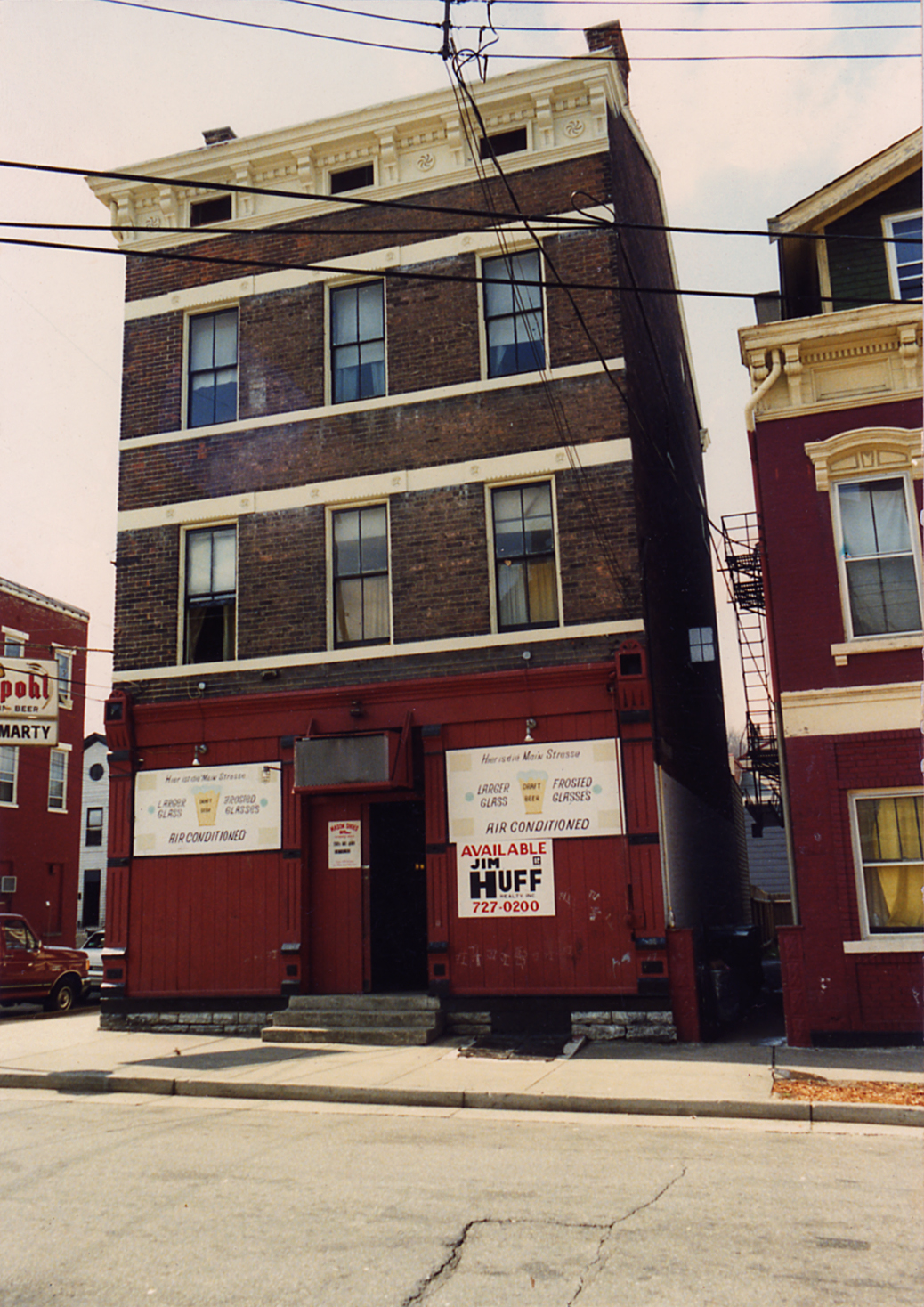
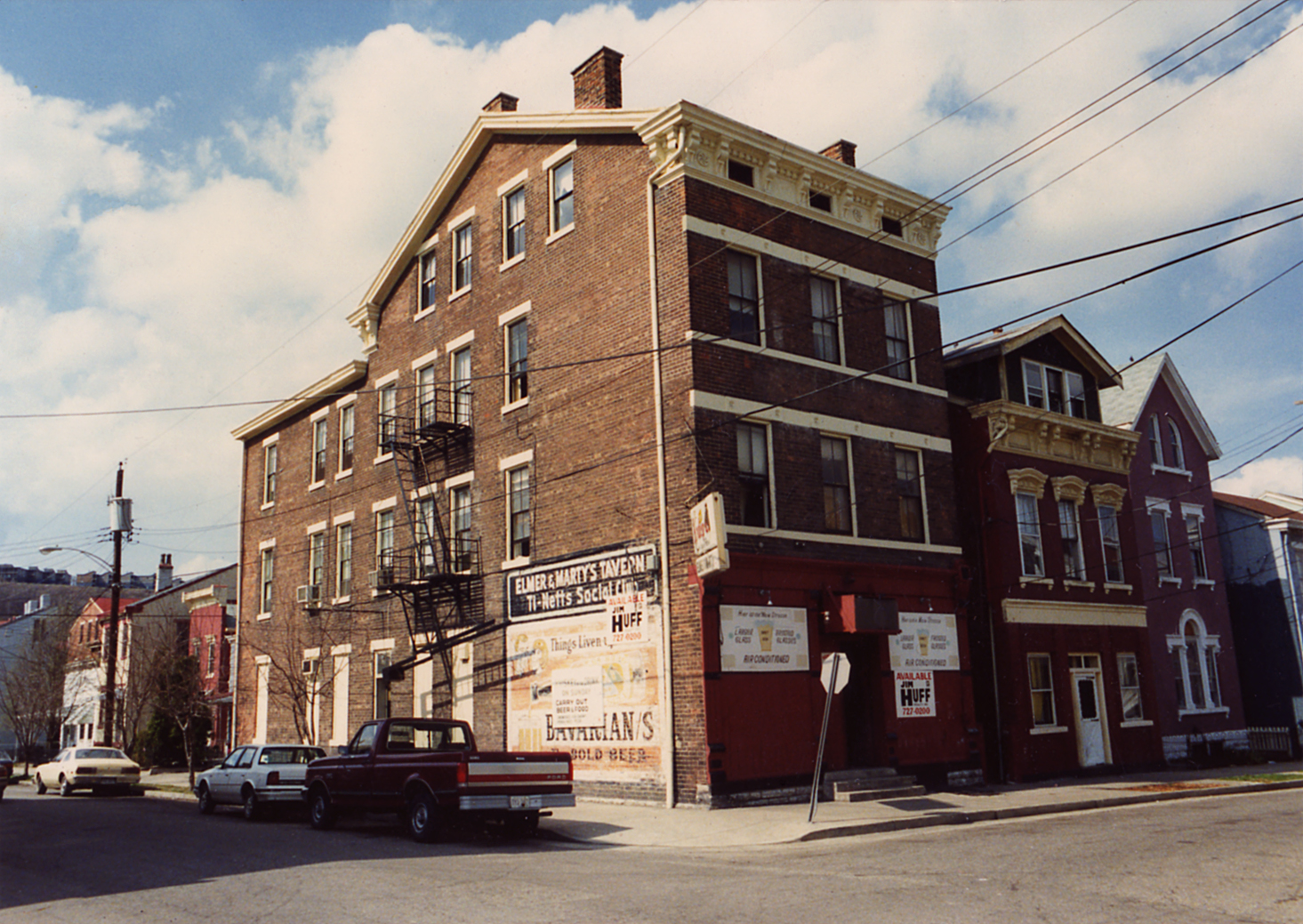
643 Bakewell St., 1980s NRHP photo

Early 1890s

The Corner Building Is Born

A Victorian commercial building rises at 643 Bakewell St. in Covington’s MainStrasse neighborhood. The same brick structure stands today.

1920s – 1940s

A Neighborhood Storefront

A Kroger’s grocery in the ’20s, a café in the ’30s, then an upholstery shop and radio repair in the ’40s.


Elmer and Marty's red-painted storefront

1944 – 1952

Tiny’s Tavern & the Bee and Dee

Bernard Janson buys the building in 1944, renting to Henry Cappel who opens Tiny’s Tavern. By 1952 the Jansons are sole owners.

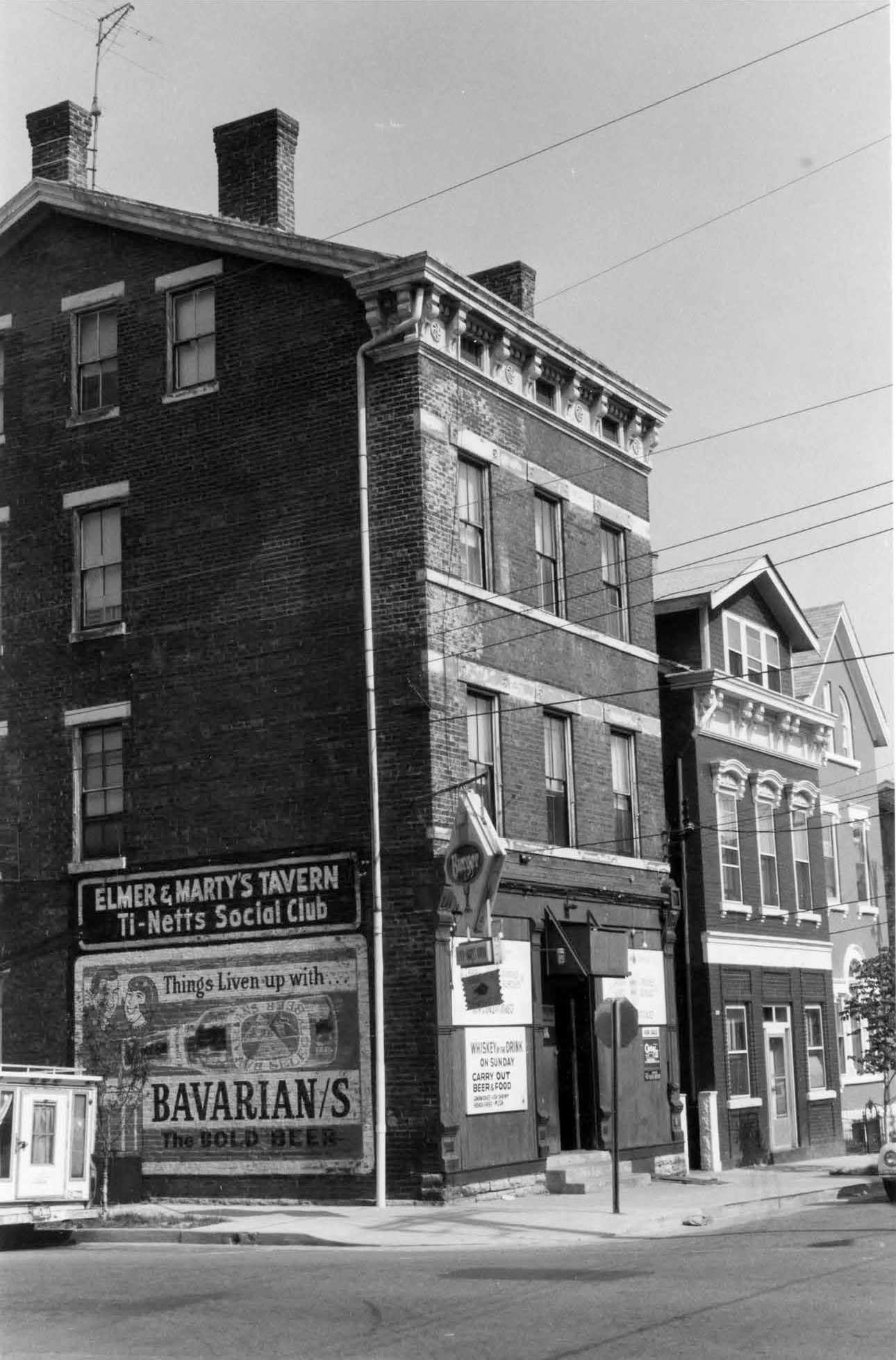
Elmer & Marty's Tavern exterior

1960 – 1990

Elmer & Marty’s Tavern

Elmer and Martha Smith purchase in 1960 and run it for three decades. The vintage Bavarian’s beer mural still marks the side wall.
Photo courtesy of Carl Fox.


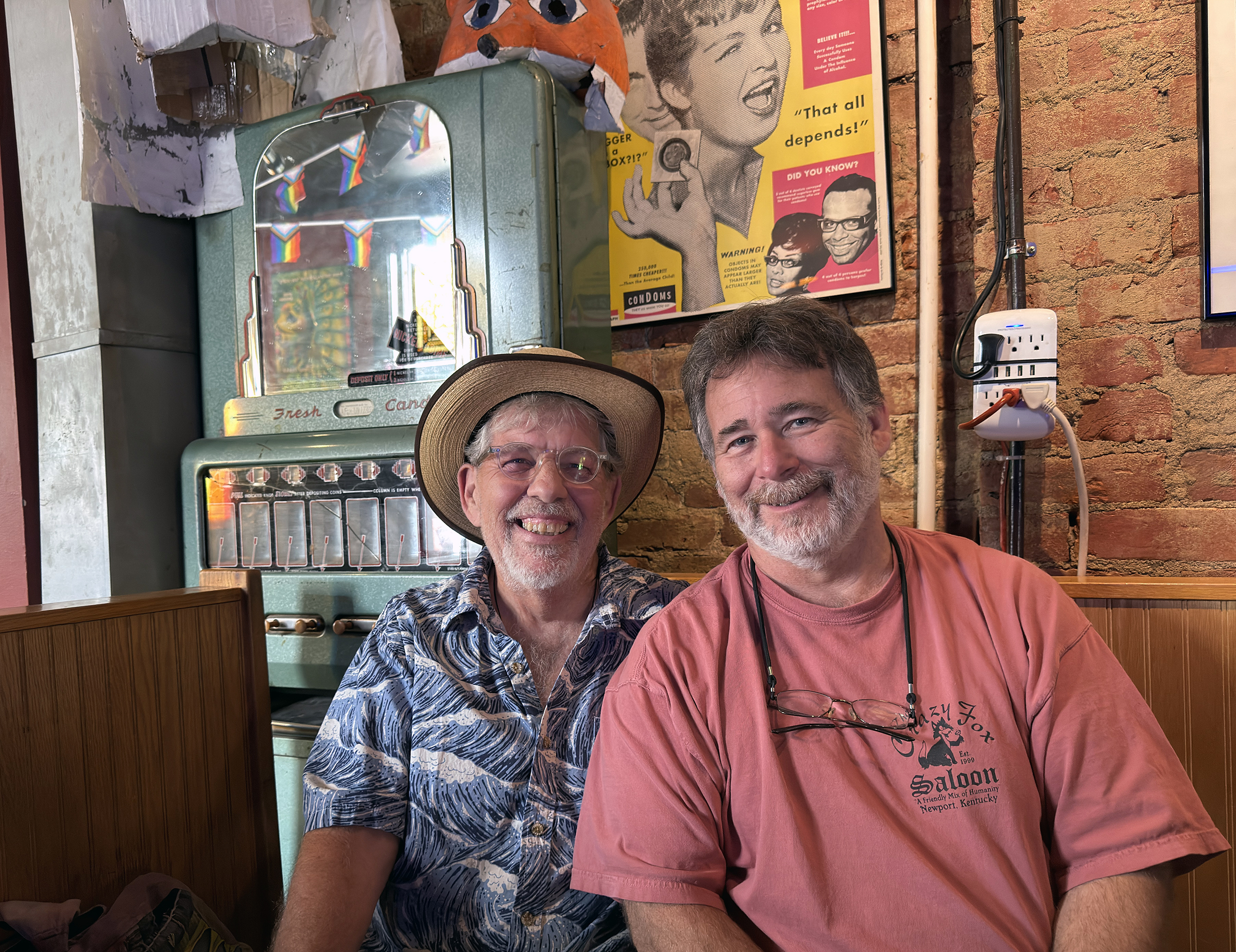
Carl Fox (left) and partner Terry Bond at The Crazy Fox Saloon, Newport KY

1990 – 1998 · The Founder

Carl Fox Buys & Builds Rosie’s

Carl Fox purchases the bar with husband Greg Landrum — but on closing day Landrum is hospitalized with AIDS. Fox proceeds alone, renames it Rosie’s after his mother, and runs it for eight years. He builds Northern Kentucky’s first explicitly LGBTQ+ safe space from the ground up. Pictured today with partner Terry Bond.
Photo by David S. Rotenstein.

Rosie's Tavern exterior today

Rosie’s Today

Open & Proud

The same corner where Fox opened Rosie’s in 1990. Decades of queer ownership, community, and visibility — from the rainbow flags to the “Open & Proud” sign.
Photo by David S. Rotenstein.


1992 – 1995

Loss & Resilience in the AIDS Crisis

Greg Landrum dies in 1992. Co-owner Bill Bolyard dies in 1995. Fox loses his husband and two partners to AIDS while hosting annual cutathons for local AIDS organizations.

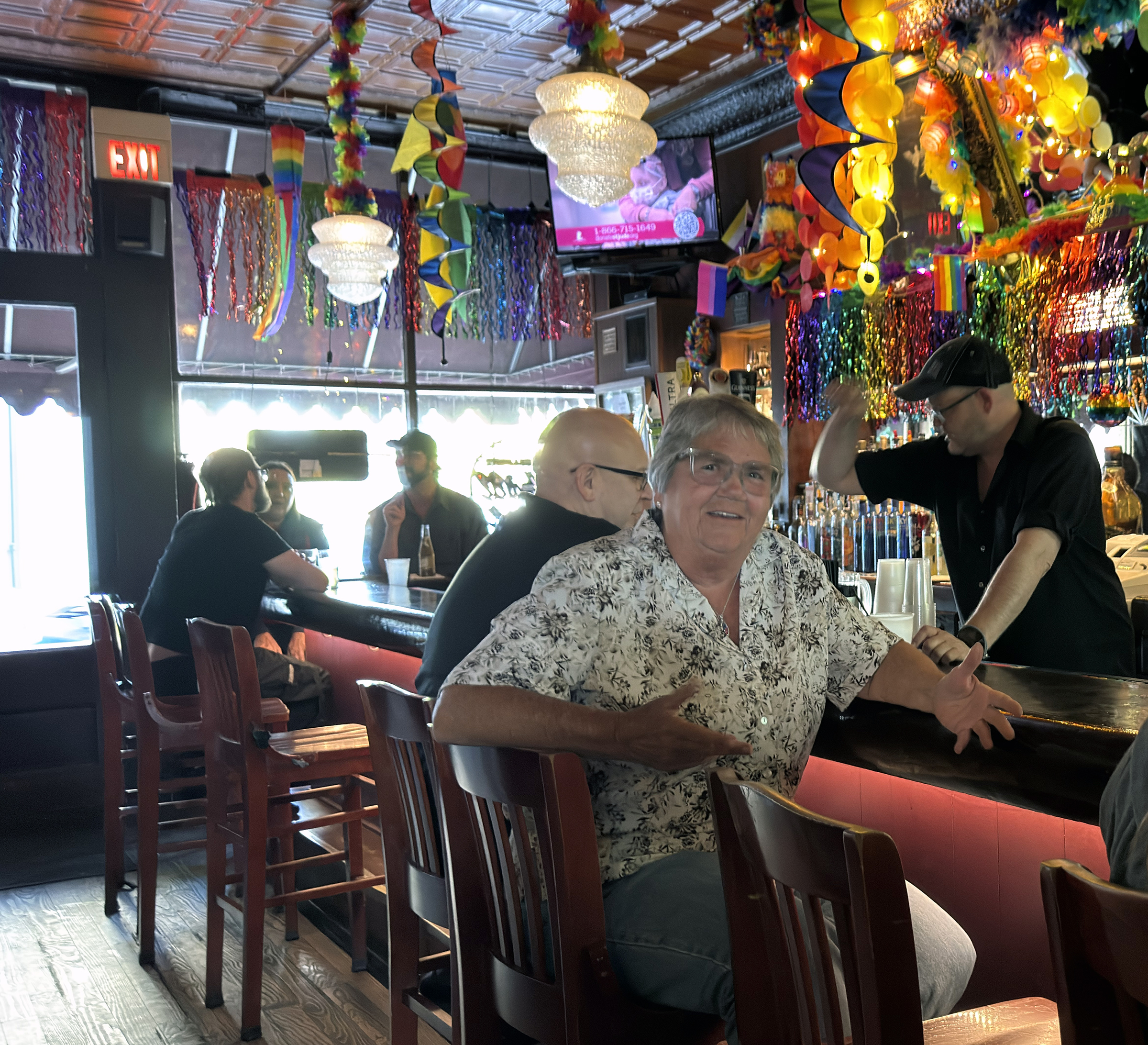
Dianne Gamble at the bar

1998

Dianne Gamble Takes the Helm

Fox sells to Dianne Gamble, who invests in the space, builds a loyal long-term staff, and deepens Rosie’s roots as the Northern Kentucky LGBTQ+ anchor.
Photo by David S. Rotenstein.


2003 – 2008

MainStrasse Becomes a Gayborhood

Covington enacts LGBTQ+ anti-discrimination protections (2003). Shawn Masters becomes the first openly gay Covington City Commissioner (2008).

Rosie's Tavern at night

36 Years & Counting

A Living Landmark

Rosie’s anchors the Northern Kentucky gayborhood. “Regular, regular, regular … it’s a little family here.”
Photo by David S. Rotenstein.


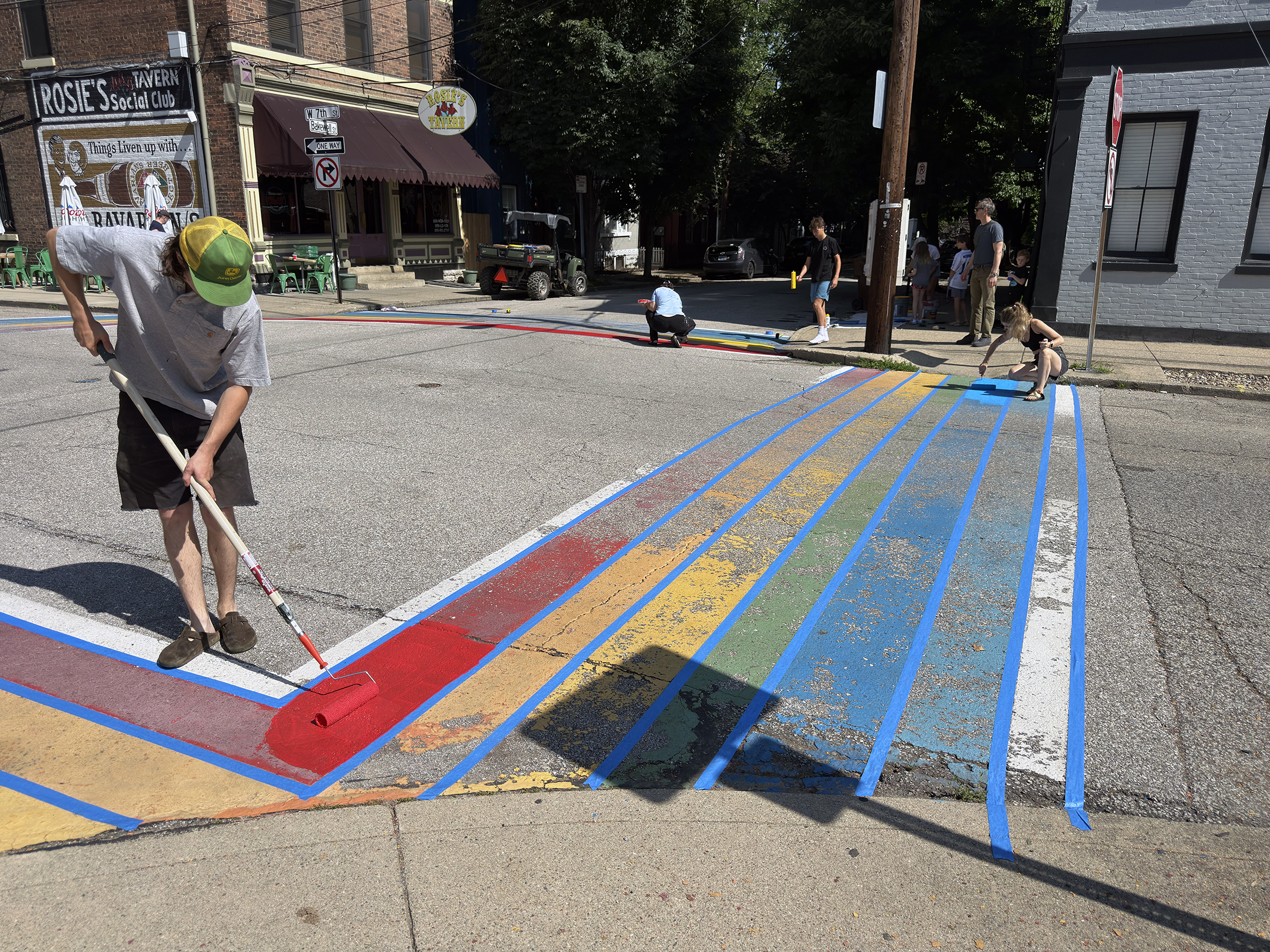
Rainbow crosswalks repainted outside Rosie's, Pride 2026

Pride 2026

Rainbow Crosswalks, Refreshed

Volunteers repaint the rainbow crosswalks on Bakewell Street ahead of Pride 2026.
Photo by David S. Rotenstein.

Story by David S. Rotenstein  ·  Queer Kentucky  ·  Kentucky’s Only LGBTQ+ Newsroom


Milestones marked by many losses

Rosie’s occupies a building constructed in the early 1890s, according to historic maps. In the 1920s, a Kroger’s store occupied the 643 Bakewell St. storefront at the corner of Bakewell and West Seventh streets. The following decade, Herman Huntsman (a Kenton County constable) operated a café there. In the 1940s, an upholstery business and radio shop rented the storefront.

In 1944, Bernard and Dolores Janson bought the building and rented the storefront to Henry Cappel, who opened Tiny’s Tavern. Bernard Janson joined Cappel in running the bar in 1950 and by 1952 the Jansons were the only owners. They renamed the bar the Bee and Dee Tavern.

Elmer and Martha “Marty” Smith bought the building and business in 1960 and changed the bar’s name to Elmer and Marty’s. The couple had married in 1945 and they split in the 1970s. They sold the bar to Carl Fox and his husband Greg Landrum in 1990. 

Landrum, who worked in high-tech,  had convinced Fox, a City of  Cincinnati employee, to buy the neighborhood bar from the Smiths, but he became ill as negotiations ended.

“By the week before closing, he was coughing really continuously, all the time. He could not catch his breath,” Fox recalls. The morning of the closing, Landrum was feverish and Fox rushed him to a hospital. Landrum asked Fox to go through with the closing, alone. 

Tests confirmed that Landrum had AIDS and he died two years later, in 1992.

Fox took the lead on rehabbing the bar. He cleaned it and renamed it Rosie’s, after his mother. Fox got rid of layers of caked nicotine, the remnants of earlier gambling operations and troublesome regulars, including drug dealers and white supremacists.

Fox quickly turned Rosie’s into a regional queer safe space. It wasn’t Covington’s first gay bar or even the first place with public accommodations welcoming to queer people.

“As a gay man, openly out and living my life, there were very few places in Covington I felt safe at the time I bought that bar,” Fox says. “But I was determined.”

In the eight years that Fox owned Rosie’s, he lost his husband and another partner, Bill Bolyard. A hospitality professional, Bolyard had the skills to help Fox keep Rosie’s going.

“Billy and I had been friends. He was managing a bar down in Louisville. I had never managed a bar except for Rosie’s,” says Fox. 

Up to that point, Rosie’s was operating Rosie’s as a gay-friendly neighborhood bar, not an explicitly gay bar. “I never called it a gay bar,” Fox explains. “He [Bolyard] would come under one condition, that the bar would come out.”

Bolyard was a co-owner with Fox until died in 1995, also from AIDS.

Fox’s third business partner, Mike Smith, was straight. “Even with Mike being straight, there’s no guarantee of being safe either,” says Fox, referring to concerns over AIDS and violent harassment directed towards the bar and its patrons.

Fox recited a long list of episodes, including early police harassment. One night as he was closing up, Fox heard anti-gay slurs being shouted outside. “I look out and there’s a Covington police officer, full uniform.”

Fox told the officer, “’You’re accosting my customer,’ basically calling him a fag,” he recalls.

Another episode involved Smith. One of MainStrasse’s many festivals, typically held two blocks away on the Sixth Street promenade spilled over into the residential neighborhood where Rosie’s is located. Revelers were harassing the bar’s customers.

“Two juveniles grabbed one of the barriers and broke Mike’s arm,” Fox says.

Despite those episodes and others, Rosie’s became a popular gay safe space. Fox began offering annual “cutathons” to raise money for AIDS outreach. Stylists, manicurists and massage therapists donated their time and all proceeds went to local organizations.


A New Owner Keeps Old Customers


By 1998, the pressures of running the bar and defending its space took its toll. Fox sold Rosie’s to Dianne Gamble. A Cincinnati native who rescued greyhounds and ran a catalog business, Gamble had recently lost her partner and she was looking for a change. She had recalled patronizing Rosie’s and she heard that it was for sale.

“I could make this work,” Gamble says that she told herself.

Both Gamble and Fox describe negotiations that got testy. Their accounts of how Rosie’s kept its name differ. Fox claims that he asked for it and Gamble says she kept it because she decided to give the name to a new red dog she got inside the bar. Whichever version reflects reality, the name endures. 

The dispute captures the style of adversarial relationship the pair has cultivated since 1998. Gamble asserts that she turned Rosie’s around after investing new energy and money into the business. Fox clings to the point that he founded Rosie’s and made it possible for the bar to survive in a transitioning neighborhood.

Gamble recalls that the neighborhood still had a lot of residents who hailed from rural Kentucky. She used a name for them that she asked not be used in this story. It is a derogatory term used widely among Covington natives.

“The neighborhood was bad,” says Gamble. “They didn’t pick on me too much, but I got spit on a lot.”

Opinions differ on when MainStrasse began transitioning into a gayborhood or gay village. Gamble thinks it happened after Barack Obama’s election in 2008. Fox suggests an earlier date. “I would say, probably by ‘95, it started to change a little bit,” he says.

Fox’s version tracks more closely with things happening beyond the bar’s doors. In 2003, Covington became Kentucky’s third city to enact protections against discrimination against gays and lesbians. In 2008, MainStrasse gallery owner Shawn Masters became the first openly gay person to be elected to Covington’s City Commission.

Gamble built on Fox’s success. For a while, she continued the cutathons. She also participated in the neighborhood’s annual Mardi Gras parade. “I used to do the big heads. I used to be in the parade and I just quit doing that too,” she says.

Gamble focused on making Rosie’s a profitable, attractive business that would support her and her employees. She has one bartender who’s been there for 22 years, others have been there for more than a decade. 

“I needed to make money because I had my bartenders, so I had to take care of them, make sure they make the money,” Gamble says.

On a recent June night, the bar filled with revelers there to celebrate one of the bartender’s birthdays. It’s an annual event. Longtime patrons say the bartenders are one thing that keeps them coming back.

“That’s one of the reasons we all come back, too, is because the bartenders are some of our best friends, and we start knowing them from coming in there,” says Heather, a straight woman who once lived across the street.

“I’ve been coming since Carl Fox owned it,” says Wayne, a 62-year-old gay man. “It’s always been a neighborhood bar … but it was people that were more comfortable being around gay people.”

He remembers all of the gay bars that have come and gone in Covington. Wayne and his friend Tom say the secret to Rosie’s success is the regulars. Tom begins pointing around the packed bar, “Regular, regular, regular, there’s Dianne — it’s a little family here.”

A close-up of a green handwritten tag on the colorful community loom that reads, "Rest in peace Murry… your legacy lives on through your art. You are my role model for wanting to pursue art as a trans man myself."

NKU Remembered Murry Foust With a Degree. His Community Is Honoring Him With Much More.

A community is finding ways to honor Murry Foust, the transgender Northern Kentucky University art student who went missing and was later found dead in Wilder, Kentucky, almost a month later.

Foust was a 22-year-old artist from Crescent Springs, Kentucky. In the weeks since they were found, the outpouring of love from the Cincinnati and Northern Kentucky art community has taken shape in gallery showings, community art programs, and the establishment of a scholarship fund that has already exceeded its goal.

Foust, who went by he/they pronouns, was described by those who knew him as thoughtful, warm, and genuinely talented. He was an accomplished potter and painter, and a musician equally at home with guitar, piano, songwriting, and singing. He had a deep love for nature, animals, and the outdoors, and, friends say, the gift of making people feel seen.

“Murry was someone who celebrated and encouraged your art, no matter who you were,” Bee Wang said, a friend and former artistic collaborator of Foust’s.


Two attendees add rows of fabric to the community loom at Art After Dark at the Cincinnati Art Musuem on May 29th, 2026. Photo credit: Mikhayla Hughes-Shaw


The community’s outpouring of support started from the beginning. “When they went missing, my first thought was, how do I keep myself and others in community so we can process and grieve together instead of on our own? Well, Murry loved art. Let’s do Art for Murry,” Wang said. 

Art For Murry took root across the area in May as friends, fellow artists, and strangers shared in creativity and community through simple art events. The goal was to raise awareness about Foust, while also giving folks a safe space to process. The events were a success at both The Pique Gallery and Art Equals in Covington, KY, and led to the creation of a community loom.

“I was so moved to see how many people came together to offer resources and time to make sure we kept their art [alive],” Wang said. 

A vibrant painted portrait of Murry Foust with green hair, tongue out, and a playful expression, displayed on an easel at a pop-up gallery alongside an artist statement and smaller photo of Foust.

Murry Foust’s work was featured in a pop-up gallery at the Cincinnati Art Museum as part of the May Art After Dark Queer Art Fest. Photo credit:
Mikhayla Hughes-Shaw

Just days after his loss, Foust’s sculptural and mixed media work was featured at the Cincinnati Art Museum as part of a pop-up gallery, alongside other local artists at the museum’s monthly ‘Art After Dark’ event.  The theme for May was a Queer Art Fest that celebrated the local LGBTQ+ community with visual art displays, drag performances and various local queer vendors. Attendees from Northern Kentucky and the Greater Cincinnati area were also invited to participate in weaving the community loom from the initial ‘Art For Murry’ events. Various threads, strings and fabrics were available to use, making the piece unique in color and different textures. 

“It’s such a wonderful symbolism of the connection we make in community with one another,” Wang said. “We also used mostly donated secondhand materials and scrap fabrics, similar to how Murry liked to use unconventional materials in their art, and were mindful of environmental impacts of materials being used.”

The loom traveled to four locations in the Cincy/NKY community, with Art After Dark marking its final stop, and its completion. “The loom went from one third full to fully filled and folks at the end had to just tie pieces and tags on. Seeing the loom so full of love for Murry and the community made my own heart feel so full,” Wang said. He supervised the project during the event, and said the stories attendees shared while weaving the loom were impactful.

A close-up of a person's hand touching the colorful Art for Murry community loom, with handwritten tags reading "Murry Never Forgotten," "Thank you for sharing your light with the world. You will live on in the community of hearts that you touched. Love you always," and other notes of remembrance woven into the fabric.

An attendee adds a row of fabric to the community loom at Art After Dark at the Cincinnati Art Museum on May 29th, 2026 built in honor of Murry Foust. Photo credit:
Mikhayla Hughes-Shaw


“People stopped just to tell me their stories of their connection to Murry or art or just the wider situation of how scary it is to be trans in our current society. As a trans immigrant myself, what really keeps me going right now really is community, to have supportive folks around, showing up with love and no judgement,” Wang said. 

One tag on the loom read in part: “Rest in peace Murry…You are my role model.”


A bold, layered mixed media painting featuring expressive figures, a crucifix in red, cosmic and natural imagery, and the hand-lettered text "My suffering is not beautiful, but my survival is."

A mixed media piece by Murry Foust on display at the Cincinnati Art Museum’s Art After Dark. Photo credit: Mikhayla Hughes-Shaw


Northern Kentucky University, where Murry was set to graduate from in May, held a memorial on June 3rd in the Corbett Theater Lobby of the Fine Arts building. The university displayed pieces of work from Foust during the service, and awarded the Foust family with the late student’s Integrative Media and Spatial Arts degree, with a focus in both painting and spatial arts. The university said they plan to display Foust’s artwork in the NKU Fine Arts Center through September for students and community members to enjoy.

The Foust family has remained active and vocal through the Facebook group “Murry Foust Missing Information Hub,” publicly thanking those who attended the memorial, donated to the scholarship, and showed support in the recent weeks. Foust’s family launched a crowdfunding campaign online to establish a scholarship at NKU for art students, setting an initial goal of $25,000 for an endowment. That goal has already been surpassed, with donations now exceeding $27,000 and still climbing. Some of Foust’s original artwork has been auctioned to help grow the fund.


A close-up of a glazed ceramic sculpture by Murry Foust featuring three conjoined faces with hollow eyes, intricate blue and white painted markings, and a dark brown glaze, displayed at the Cincinnati Art Museum pop-up gallery.

Foust’s art was on display at the event, including this sculpture showing many faces on one piece. “Their style of art is very intense, often diving into both their inner world and critiquing the world they were experiencing,” friend Bee Wang said about their work. Photo credit: Mikhayla Hughes-Shaw


Wang said he intends to keep showing up for Murry. He’s keeping their art alive by sharing videos from their time together on his Instagram account, which show Murry in their element – the pottery studio. He also shared their plans to “create a queer spiritual retreat space”, specifically for queer folks wanting to find a spiritual community. “I wanted to bring in elements of Chinese tea ceremoniesthey , and were going to make teacups. I still want to honor that and build this space in honor of them one day,” Wang said. 

In the loom, across the gallery walls, and the scholarship that will carry his name forward, Murry Foust’s presence is already woven in. “Even in their passing, Murry is still bringing communities together through art, and that’s the legacy that they are leaving with us,” Wang said. 

Midwestern lesbian Barbie Party

Cincinnati’s Midwestern Lesbian celebrates anniversary, expands pop-up events to other Ohio cities

This story was produced in collaboration with The Buckeye Flame, with support from Queen City Charities.

The LGBTQ+ events company announced plans to expand while celebrating “Sapphic Sips” series anniversary.

Last year, during Midwestern Lesbian’s inaugural “Sapphic Sips” Anniversary Party, guests were invited to pick up the receiver of a cherry-red rotary telephone.

Between party games, Valentine-themed cocktails​​ and live music from the Cincinnati-based band Boy Clothes, partygoers left quiet, often deeply personal messages about their lives and experiences as sapphics and lesbians.

“Thank you to Midwestern Lesbian and to sapphics and lesbians for changing my life,” a voice says through light static – a low beep, then another message:

“Being present, being together, we need this now more than ever,” a different voice says. “I think we all deserve the smiles and the laughter and a night of having comfort and ease with each other. I love you all.”

Midwestern Lesbian founder Kelsey Ference – who runs the Cincinnati-based LGBTQ+ events company with her partner, photographer Caitlin Chrisenée – kept those messages in mind while planning the second annual Valentine’s Day-themed “Sapphic Sips” anniversary celebration.

The recurring pop-up event for queer women and femmes is Midwestern Lesbian’s “bread and butter” – and the Valentine’s Day anniversary iteration the undeniable highlight.

This year, more than 200 people bought tickets to the event, designed and produced specifically for lesbians and sapphics.

With more than 50,000 followers across Instagram and TikTok, a new brick-and-mortar office and a growing demand for LGBTQ+ events, Ference is ready to take Midwestern Lesbian on the road – recreating the experience of belonging and celebration for LGBTQ+ Ohioans across the state.

Midwestern Lesbian is born

Midwestern Lesbian and Partner — Kelsey Ference and Caitlin Dunkley (Photo by Caitlin Chrisenée Photo)

Kelsey Ference and Caitlin Dunkley (Photo by Caitlin Chrisenée Photo)

While working at a Cincinnati brewery, Ference created a weekly calendar for taproom events.

It sparked an idea: “I thought ‘Why don’t we have something like this so can easily find events that are safe for the LGBTQ+ community?’” she said.

After producing a successful drag brunch for Rhinegeist Brewery, the Hard Rock Casino Cincinnati reached out asking Ference to help plan a drag brunch.

She agreed to produce the entire event.

“I did that for about nine months,” Ference said. “Then sports betting became legal. Our drag branches were on Sundays, and they decided Sundays are for football and sports betting.”

But Ference she wasn’t ready to stop producing quer events – and had already tapped into an appetite and demand for drag and other LGBTQ+ events across the city.

“I created an LLC,” she said. “That’s how Midwestern Lesbian was born.”

Full-time Midwestern Lesbian

In 2024, Ference quit her job to focus on Midwestern Lesbian full-time.

This year, she and Chrisenée opened a brick-and-mortar space in Over-the-Rhine, where they work together during the week and invite guests to drop in between 10 a.m. and 4 p.m. for crafts and community.

“It’s just the two of us.” Ference said. “We have help from volunteers sometimes, but mostly everything that we do is just the two of us and it’s crazy but it’s a lot of fun and we love doing it.”

In addition to “Sapphic Sips”, which is hosted at different LGBTQ+-friendly venues across the city — Midwestern Lesbian’s upcoming pop-events include Queer Karaoke Night at Tokyo Kitty,  Sapphic Pottery Workshop in partnership with Queen City Clay and Sapphic Kicks, an annual sapphic kickball game at Salway Park in collaboration with HotMess Sports Cincinnati.

Ference also runs the Cincinnati Gay Agenda Instagram page, where Midwestern Lesbian’s full weekly event calendar now lives.

Homemakers Hangout, a weekly event for the entire LGBTQ+ community hosted by Midwestern Lesbian. (Photo by Caitlin Chrisenée Photo)

Homemakers Hangout, a weekly event for the entire LGBTQ+ community hosted by Midwestern Lesbian. (Photo by Caitlin Chrisenée Photo)

‘Sapphic Sips’ signature event

Ference and Chrisenée started the “Sapphic Sips” series on Valentine’s Day 2024, hosting the first event at Liberty’s Bar & Bottle Shop in Cincinnati’s Over-the-Rhine neighborhood.

The pair expected about 30 guests. 

Instead, more than 100 people showed up.

“Safe spaces that are designated for specific groups can be taken over by groups that just want to have that experience,” Ference said. “That’s the reason why we don’t have any lesbian bars in Cincinnati anymore.”

“Because there’s no lesbian bar in Cincinnati, it hit 7 o’clock and it’s like the floodgates opened.” Ference said. “It was insane. “Caitlin and I looked at each other and we knew this was something we had to continue doing.”

“Sapphic people in Cincinnati didn’t have a space to go,” Ference added. “So we created one by doing this pop-up and just going to different spaces that are supportive of our community and want to support us and have people learn about the sapphic community and how much we need a space like this in Cincinnati.”

Kelsey Ference and Caitlin Dunkley (Photo by Caitlin Chrisenée Photo)

Kelsey Ference and Caitlin Dunkley (Photo by Caitlin Chrisenée Photo)

Everyone is welcome

While Ference considers “Sapphic Sips” Midwestern Lesbian’s main event series, the group also hosts year-round events designed for the entire LGBTQ+ community.

“We host events every Wednesday at Homemakers Bar where everybody in the queer community and allies are welcome,” Ference said. “Basically, the only events that are specific are the ones that are labeled, like our Late Bloomer[an Evening for Sapphics 30 and Older] or Sapphic Speed Dating events.”

“Anything that specifically says sapphic is for sapphics,” Ference said. “Otherwise, the queer community is welcome to pretty much anything.”

Midwestern Lesbian hits the road

On Feb. 14, 2026, more than 200 guests attended the “Sapphic Sips” Second Anniversary party at Rhinegeist Brewery’s Clubhouse.

Featuring DJ Nymph, and a “Sappho’s Disco” theme, Chrisenée’s photos capture dozens of queer people dancing and laughing.

The images reveal a carefully crafted space – lush with deep reds and pinks – where sapphics and lesbians are safe, smiling and present in their joy.

Ference said she wants to bring that experience to other LGBTQ+ people across the state.

“We’re hoping to expand throughout Ohio this year,” she told The Buckeye Flame. “We’re hoping to host an event in Columbus as our first stop over the next few months, and then hopefully Dayton, Cleveland and whoever else will have us.”

“We want people to get excited and give us ideas,” Ference said. “Where do people want to see us? If there are any spaces that want to host us, we would love to get in contact with anyone who wants to partner.”

Still, Ference finds it hard to believe Midwestern Lesbian’s roots were truly accidental.

“I never expected this to become my full-time job,” she said. “But I created this for our community because it’s something I wanted myself – so I know there are other people in other places who want this too.” 🔥

Queer Clay Day hosted by Midwestern Lesbian. (Photo by Caitlin Chrisenée Photo)

Queer Clay Day hosted by Midwestern Lesbian. (Photo by Caitlin Chrisenée Photo)

Ignite Action

  • To view a full weekly list of LGBTQ+ events across Cincinnati, click here.
  • To follow Midwestern Lesbian on Instagram, click here.
  • To follow Midwestern Lesbian on TikTok, click here.
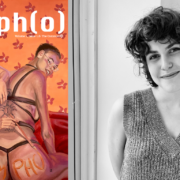
  • To follow Cincy Gay Agenda on Instagram, click here.
  • To apply for your LGBTQ+-owned business to be featured on Cincy Gay Agenda’s Instagram page, click here.
  • To submit an event to Cincy Gay Agenda, click here.
  • If you are a young LGBTQ+ person in crisis, please contact the Trevor Project: 866-4-U-Trevor.


John Brooks seated on a wooden box in a gallery, wearing a blue shirt and bright green shoes, with large figurative drawings displayed on the wall behind them and a black dog lying on a rug in the foreground.

Kentucky Artist John Brooks Creates a Living Archive of Queer Memory in “Islands Are Not Forever”

Frankenstein, a childhood photo of himself, and the Hollywood sign are all depicted alongside each other in Kentucky-born artist John Brooks’ 38-panel artwork “Islands Are Not Forever.”

The artwork contains massive panels portraying nude figures, pop culture icons and personal memories, all of which reinforce the central theme of memory and our past experiences. Beginning in August of 2023, Brooks states that the artwork will continue until he dies and it will continue to shift and adapt to his current life and memories. 

Artist John Brooks seated in front of large figurative drawings, surrounded by mixed-media artwork exploring memory, identity, and queer themes.

Photo by Sam Ramirez @foxhunter

A drawing that took a lifetime to create

28 panels will be on display at the Weston Art Gallery in Cincinnati, Ohio from Jan. 30 to Mar. 15. As Brooks continues to add more panels to the piece, the overall meaning changes as more details are added.

“Islands Are Not Forever” uses photography in a collage format to piece together different aspects of Brooks’ life into one piece. The title, which comes from the poem “Summer” by W.S. Merwin, encapsulates the longevity of our memories and what we will forget and what will become a formative part of our identities. 

“I like the idea of using something that has a history and something that has a weight and recontextualizing that in an effort to create some kind of new narrative, or the hint of a narrative,” Brooks said. “I’m interested in feelings, really. That’s kind of what the human experience is based on.

Close-up of artist John Brooks’ torso and hands, wearing pink drawstring pants and holding two pink pencils, with a blurred artwork visible in the background.

Photo by Sam Ramirez @foxhunter

While the drawing depicts a multitude of ideas and symbols, they are all equally important to one another. Each figure holds some form of symbolism, whether it be personal to Brooks or a widely known symbol in modern-day culture. A common question he is asked is “what’s happening,” but the artwork is left for the viewer to use their own interpretations and meanings. 

“It’s not a math problem, there’s not an answer. I think it’s totally natural and understandable for people to look at the work and to want to know what’s happening. But I think of the work as having the hint, or the sense of a narrative, rather than a particular narrative,” Brooks said.

He states that the work has been described as “non-hierarchical,” meaning that the details complement one another, rather than attempting to battle for the spotlight. By placing these motifs beside one another, the narrative is built upon rather than becoming more convoluted. 

JOHN BROOKS Islands Are Not Forever XXI, XXII and XXIII, 2025 Courtesy the artist and Diane Rosenstein Gallery, Los Angeles / © John Brooks

JOHN BROOKS
Islands Are Not Forever XXI, XXII and XXIII, 2025
Courtesy the artist and Diane Rosenstein Gallery, Los Angeles / © John Brooks

Southern artistry is as important as ever

Queer artists from the South will always be important, Brooks notes. In a time of such political division, it is necessary that the artists understand their roles and that they continue to create in such uncertain times. 

“I understand how frustrating and demoralizing it can be sometimes living in a place where it feels like you’re working so hard to make things better and so many people are opposing you,” Brooks said for Southern artists. “I just want to emphasize how important it is for that to happen.”

As Brooks’ artistry progresses and evolves, he states that he embraces the uncertainty of his career and how that will guide him in his future pieces. That theme is depicted within “Islands Are Not Forever,” as each new panel that is added to the overall work will change how it is seen and will add context for earlier panels. 

“As a person who is interested in living, I think to deny what’s happening in your work is not responsible. As my work got more personal in the last 7, 8, whatever years, it has become queerer. This work, and these drawings, are very queer. There are queer icons, there are queer people of all different types, there are non-queer people,” Brooks said. “I feel like the work, just as it exists and as it presents itself, is very openly queer and that is something that feels necessary.”

From Archive To Action: The queer, sex-positive magazine bridging print media, history, and activism

Avery Plummer was finishing her Master’s degree in Art History at Ohio University, considering her thesis, and the COVID-19 pandemic obliterated all opportunities for interpersonal community. In the spell of isolation, she was figuring out her own identity as a queer woman in an increasingly terrifying landscape to be a member of the LGBTQ+ community. And then she found On Our Backs magazine. 

On Our Backs is a vintage lesbian porn magazine, starkly contrasted with its smutty contemporaries (like Playboy) that centered on women, sexual health, education, and advocacy. She channeled this inspiration and created the first issue of nymph(o) magazine to serve as her masters thesis, and still continues the project today. nymph(o) is a modern, sex positive print-only publication that centers queer experience, joy, sexuality, and a masterfully vast breadth of diverse voices on glossy paper in a visually breathtaking delivery system. 

Nothing is off limits in nymph(o). Photos, interviews, poetry, and comics find themselves snugly nestled within its pages. Life is given to the voices of people across gender identities, sexual spectrums, ability levels, ages, and experiences. This is a matter of ethics and principle for Plummer, who conducts herself with this posture in all aspects of her life, but especially in this area. 

When asked about how she navigates the sometimes-problematic attitudes and ideas of our queer forebears, she waxes about honoring our collective past and looking to these blueprints for context and inspiration while building the world we desire to live within. 

Cover Art by Maddy McFadden

“Constantly looking at things through a critical lens, we can’t accept everything as fact. I had to do this specifically with On Our Backs, it was very white. It was not as trans as something you might see today …There can be a gentleness in that critique, but not accepting it as fact,” she says. 

This is a hard line, and clearly a well-protected boundary for Plummer. It’s of critical importance for her to include as many stories as possible in nymph(o), and to do so with veneration. Utilizing so many elements in this magazine not only makes it a significantly more fun read, it serves the purpose of capturing the work of its subjects exactly as the artists intend their words to be shared; however a contributor wants to tell their story is how it is told within her pages. 

Each issue begins with a loose theme. Concepts like “fighting for joy” or “queer spaces” become the backbone of a deeply collaborative process. She opens submissions for contributions, but will also seek out specific people if there is a topic she knows she has to cover. This duality of reliance on community, while opening the scope, results in multiplicity of content that leaves readers with a satisfyingly juicy experience. 

Between her acting as curator, her partner, Maddy, serving as creative director, and a network of artists, there is “room to devolve,” as she says. This is a piece of art, showcasing the miraculous ways queer people can work together, challenge each other, and craft something cohesive and celebratory. 

While this project may have started as her thesis, it has evolved into an antithesis of the way media is consumed in the modern timeline. In times where endless scrolling is seen as the work, and reposting is tantamount with organizing, nymph(o) is a defiant, stunning piece of revolutionary art that begs us to slow down and immerse ourselves; to linger awhile, languish in textures, and move our eyes across its substantial pages. 

She says, “Context gets left out of many conversations [on social media],” and print media is a way to create a larger body of work that exists only within the spaces it’s meant to belong. The Internet has its virtues of accessibility, which has certainly activated many members of the community, and saved the lives of queer people all over the world. But print media can be something by communities, for communities, away from normative gazes. Creating and preserving spaces for our eyes only bears importance, and can serve as a pivotal organizing space. 

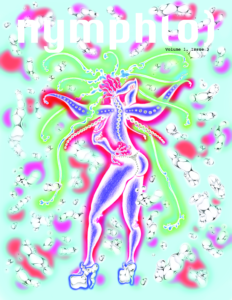
Cover Art by Denver Bastion

“That’s how you move in stealth, that’s how you get these large groups of people to know about things, but not the groups you’re targeting. It’s free from the constraints of a social media platform that is run by the oppressor. There’s a lot of power in it. Where the struggle happens and it falls flat is the ability to access the information,” she says. Plummer laments the lack of grassroots gatherings in the era of social media, and how organizers prompt us to check their social media to know when things are happening, but the exposed nature of that can be a pitfall. Print media is powerful, because it’s made (often by hand) by us, for us, and only has to be seen and loved by the people whose power it is meant to uplift.

Yet the main motivation for nymph(o) being a physical piece of media seems to be rooted in Plummer’s abiding love for archival work. We met to chat in the Ohio Lesbian Archives, a treasure trove of books, magazines, and ephemera meticulously assembled to document the movements of queer people in Ohio. She volunteers at the OLA, and it’s abundantly clear that ensuring the preservation of our history is the key to unlocking a future of liberation. 

The Ohio Lesbian Archive was the womb that birthed nymph(o), and feels very much like a hallowed and sacred ground from which to birth the next queer freedom movement. Its original home was above the iconic Crazy Ladies Bookstore, and has independently housed thousands of pieces of history for over thirty years. 

When I asked Plummer about how archives are activist spaces, she brings up what she calls “The precarious imprecarity” of LGBTQ+ communities. She says, “Archiving is activism because archivism is proof. We have been and always will be here, it’s literal proof of that. When we’re seeing increasing efforts to erase that history and evidence, these grassroots archives become so important. They can’t erase that. Keeping pieces of proof outside of a higher institution. We’re not connected to a university that can cut their DEI funding. We’re keeping this open to the community.” 

Art by Mallory Stowe

The OLA is home to “Jill’s Journals”, which are quite simply the personal journals of a lesbian named Jill. They’re only available to be viewed in the archive, and they’re a real treat. Plummer loves these journals, saying “[we have been] amazing, whimsical creatures throughout history,” and capturing these seemingly mundane moments are powerful ways to remain connected to the humanness, whimsy, aesthetics, and humor of our people. 

When we look upon the world-shattering efforts of Act Up and are inspired by culture-shifting work done in the past, it can be easy to forget that queer people are hilarious, queer people made grocery lists, queer people ran errands. A reminder that there has always been a resilience resting within the daily movements of life is how revolutions are carried out. Archives preserve that, and do so in a physical space where community happens. Collective knowledge and skills are shared, strengthening the solidarity between us all in a way human beings can only do when sharing the air of a room together.  

nymph(o) magazine’s next issue is in the works, and the Ohio Lesbian Archives has open visiting hours biweekly on Wednesday from 6:30-8:30 & Sunday from 11:30-1:30.

Pin It on Pinterest