Lavender to Watermelons: Safe Signaling in Kentucky


From Oscar Wilde to Kentucky lesbians, LGBTQ+ people have used certain signals to know who is family or an ally or not.
In 1981, Queer visibility was on the rise. But even with many U.S cities seeing pride parades in the streets, homosexuality was still criminalized within the Commonwealth. Knowing who your friends were back then wasn’t just political – it was life-saving.
And for young L.J. Phillips, an Eastern Kentucky native, remaining in the closet in her small town wasn’t a choice at all. She couldn’t wear boy clothes or behave indiscreetly. She couldn’t even admit to her parents why she wouldn’t be attending prom with any of the nice young men down the road.
“I couldn’t tell anyone that I was a lesbian,” Phillips, now in her 60s, told Queer Kentucky. “But I still wanted to be recognized.”
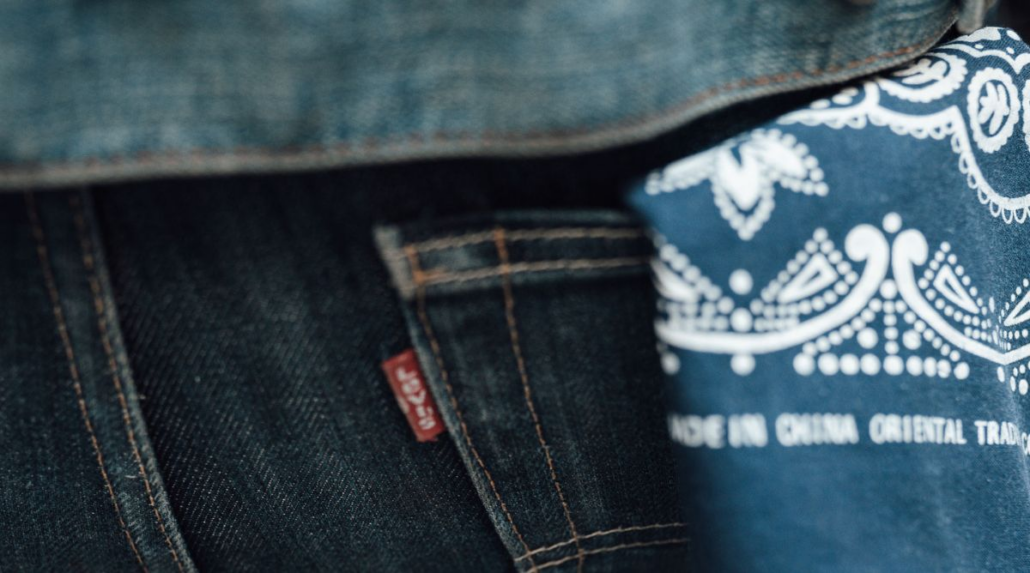
Phillips would tie a light blue bandana around her head before she left in the mornings to hold her hair back. Once out of the home, she’d remove it from her head and tuck it in her back pocket on the right side.
“I didn’t know what all of the colors meant. I just knew it was a gay thing,” she explained.
What she was doing was using the hankie code, which was popularized by lesbian and gay communities in the 70s and 80s as a physical marker of sexual preferences. It indicated to other queer individuals what you were interested in, while still maintaining plausible deniability in a conservative society. Only those who were aware of the hankie code, such as other LGBTQ+ folks, would recognize the gesture for what it was.
This method of using discreet symbols to flag allyship and sameness is known as a form of safe signaling. Codes have been utilized by queer communities for decades. For example, lavender became tied to people who were or had been thought to be queer by the 19th-Century, including Oscar Wilde and even Abraham Lincoln, according to CNN. It was then embraced by the LGBTQ+ community over time and the color was even worn during the Stonewall riots as a marker of pride.
In Kentucky, a newsletter dating back to the ‘80s centering gay rights activism and titled “The Lavender Letter,” used the historical implication of the color to indicate their context. Other notable symbols include the Pink Triangle, a reclaimed emblem from Nazi Germany, and the Lambda, a Greek letter representing the gay liberation movement. In 1985, Lexington’s first week-long Pride event, the Lambda replaced the L in the city name, honoring a long-used historical queer symbol.
This story exists because of readers like you. Give $5 a month to keep Queer Kentucky free.
According to Josh Porter, an archivist at Faulkner Morgan, a Lexington-based nonprofit devoted to sharing Kentucky-focused LGBTQ+ narratives, these symbols “became part of the language” for LGBTQ+ folks, allowing for subtle identification of other community members and allies.
These symbols weren’t just utilized by individuals, but by businesses, as well, to signal that their establishment was safe for gay patrons. Bar Complex, in Lexington, Kentucky, was one of these establishments. When first opened in 1939 as the Mayfair Bar, the business used lavender on its original sign to discreetly indicate itself as gay-friendly at a time when homosexuality was a criminal act. The Mayfair Bar became known as a safe place for queer folks to gather.
In 1963, the bar was reopened as The Gilded Cage by two gay men, John Hill and Estel Wilson, beginning a trend of queer ownership throughout its history until it became the modern-day Bar Complex near the Northside district in Lexington. Today, it’s a mainstay in Lexington’s LGBTQ+ community – hosting drag shows, queer-themed nights, and welcoming individuals of any and all sexual orientations and gender identities.
As political policy swayed in favor of queer rights nationwide, with same-gender sexual acts decriminalized in Kentucky in 2003 and marriage equality legalized in the U.S. in 2015, the need for safe signaling dwindled. Symbols like the rainbow flag were repurposed, becoming publicly representative of LGBTQ+ pride and often used during June’s Pride Month by businesses to express support for the queer community. For a time, it seemed that the need for safe signaling was largely in the past. According to Porter, the 2000’s saw “the rainbow getting used in everything. It was the rise of rainbow capitalism, where [queer] signals gained popularity.” While Josh agrees that these symbols still indicate solidarity – such as a pride flag hanging outside a business, indicating progressive values from the owners or employees – Porter notes that these symbols became visibly “representative of anything queer,” no longer used with discretion.
However, with the recent introduction of various anti-LGBTQ+ legislation, including Kentucky house bills requiring exclusive bathroom use from the designated biological sex, as well as executive orders made by President Donald Trump, mandating that gender be determined by the binary identity assigned at birth, safe signaling has returned to the queer community – albeit in a new form. As Porter notes, the signals we use are a “barrier to entry,” recognizable to other queer individuals beyond mainstream rainbow capitalism. Special emojis, internet bios, and unique attire are being used as modern signals, while known iconography, such as the pride flag, no longer operates with the same discretion. And discretion, Porter says, is key.
“Putting pronouns in your bio can sometimes be outing yourself as a queer person, a trans person, and could possibly put you in danger,” Porter noted. With an increasing number of anti-DEI bills proposed and passed, such as House Bill 4 in Kentucky, which prohibits postsecondary education institutions from providing differential treatment or benefits on the basis of an individual’s religion, race, sex, color, or national origin, publicly publishing information regarding your gender identity or sexuality could create an unsupportive, potentially unsafe, environment.
Now, in 2026, twenty-two-year-old Shepherdsville local, Adam Turner, said he feels the pressure of being gay in a red state. He told Queer Kentucky he’s cautious with how much he shares about his identity and beliefs, though he doesn’t want to be invisible, either.
“I put a watermelon sticker on my car,” Adam said, “because it’s just a watermelon, but people who know what it means know what it means. It’s Palestinian support. But, also, you know, support for political views that align with that. Progressive views.”
While flagging allyship and sameness has been a historically successful way to identify trusted others, the social and political conditions that necessitate safe signaling are less than ideal.
“The dream is to not have to have these signals,” Porter said.
Keep reading
 Rural Appalachian LGBTQ+ students shouldn’t have to choose between opportunity and belonging
 JustFundKY to host first Obsidian Ball, a masquerade gala in Lexington
 AVOL Kentucky Is Adding Injectable PrEP. One Shot Can Replace Two Months of Pills.
 Kentucky Black Pride Turns 10 in the Park That Sheltered Queer Lexington
 Time Slip Theatre Opens 13th Year of ‘Rocky Horror’ With a Witchy Twist