Rural Appalachian LGBTQ+ students shouldn’t have to choose between opportunity and belonging


The views and opinions expressed in submissions to Queer Kentucky are those of the authors and do not necessarily reflect the official policy or position of Queer Kentucky. Any content provided by our submissions or regular columnists are of their opinion. As a reader, you are always welcome to submit your op-eds through our submission form.
For students leaving rural Appalachian Kentucky communities, college is often framed as a pathway out of small towns and toward opportunity. But for many LGBTQ+ students from these communities, that pathway isn’t just about academics; it’s about survival, negotiation and the search for belonging in spaces that were never fully designed with them in mind.
For many, choosing college isn’t just about rankings, majors or cost. It’s about asking harder questions: Will I be safe? Will I be accepted? Will I have a community where I can authentically exist? Imagine being accepted to multiple top universities, each offering opportunities for a bright future, yet none can guarantee safety, belonging or a supportive environment. Rural communities across Appalachia are often deeply rooted and connected to their place. While that can foster strong support systems, it can also limit access to resources and acceptance for marginalized identities. Students carry those experiences with them as they consider where to go next.
Recent political shifts only intensify this process. Conversations around diversity, equity and inclusion (DEI) have become polarized and, in some cases, restricted across institutions. For LGBTQ+ students, especially those from rural backgrounds, these changes shape daily life, influencing whether they stay safe, supported or seen on campus.
What emerges is a pattern of conditional belonging. Many students arrive with cautious optimism, only to encounter environments where support exists but is inconsistent. Resources may be limited or restricted. Faculty and staff may be well-intentioned but not always equipped. Policies may exist on paper but feel distant in practice. The result is constant navigation, or code-switching, to determine when to be visible and where it is safe to fully exist as an authentic member of the LGBTQ+ community.
And yet, students are not passive. They create spaces of belonging through friendships, student organizations and online communities, often filling gaps institutions leave behind. This gap between institutional promises and lived experiences matters. Students should not have to choose between opportunity and belonging.
This story exists because of readers like you. Give $5 a month to keep Queer Kentucky free.
So tell us your story. How were you able to be your authentic self as a queer person while choosing a college? How did you find your community and build welcoming spaces on campus? What has your academic journey looked like, and how have you built your true lived experience?
This study is looking for those stories. If you’re an LGBTQ+ undergraduate student, 18 or older, from a rural Appalachian Kentucky community, you’re invited to take part in a research study on how identity, place and the current political climate shaped your choice of a public four-year college or university. Participation involves a 45- to 90-minute virtual interview, with questions provided in advance. If this resonates with your experience, your participation matters to this work. Real change doesn’t happen in silence. It happens when those most impacted are heard.
Participation is confidential. Names, phone numbers, emails and identifying information will not be shared outside of the research findings.
To learn more or to participate, contact Channing Lawson at [email protected].
Keep reading
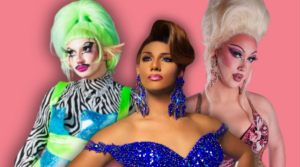 From Appalachia to Western Kentucky, Drag Artists Are Building Queer Community Across the Commonwealth
 Lavender to Watermelons: Safe Signaling in Kentucky
 Rocky Adkins, EKY Democrat and Beshear Advisor, Announces Run for Kentucky Governor
 Appalachian Poet Samantha Ratcliffe Uses Words to Reclaim Queer Identity in Kentucky
 Appalachian Poet Melissa Helton on Queerness, Rage, and Finding Home in Kentucky