The views and opinions expressed in submissions to Queer Kentucky are those of the authors and do not necessarily reflect the official policy or position of Queer Kentucky. Any content provided by our submissions or regular columnists are of their opinion. As a reader, you are always welcome to submit your op-eds through our submission form.
Medically transitioning while living in Flemingsburg is horrifying. You wonder not if people are going to notice the changes but when; there is only so long that you can hide it or at least for me the need to express myself as who I am. Towns like this have a monoculture. Most of them expect certain things: everyone is cis, heterosexual, and a misogynistic God. For most people this is a very comfortable life, but that is not how my brain is wired. Your brain wonders: Will people accept me? When you have political ads, preachers condemning us as abominations, the one thing that sticks with me is I witnessed people believe the litter box rumors. Even before I knew that I was a trans girl, this drove me insane.
How does one find community here of all places? Most of us have to look outside, usually to a college town or a major city, for it. But why must it be that way? Can we change hearts and minds here? I would like to think that but sadly I don’t think that will happen anytime soon. There are not a lot of us, society is a numbers game and we are the prey. All of us have to find safety in each other. Maybe one day there will be a support network for LGBT+ people for small towns like this one, but I fear that it will be met with othering and hostility.
So why am I writing this if it’s so dire out there? I personally believe that one voice can make a difference to at least one person. It is worth it! Or maybe it’s just me trying to tell the world, “Hey, I am here.” Will you take my hand and go on this journey with me? Some of you might not understand it but can I at least have your empathy? I’m not hurting anyone. I can’t believe adults are out here demonizing trans children not because of their moral values but because of a media campaign.
At the end of the day, we all just want our voices heard. Maybe one day Kentucky will grow to accept us for who we are but that is not the reality we live in, so we must find each other. As a group, we tell each other our struggles and our experiences. I am just one voice but it is my voice and I just want it to be heard. I got lucky that I had help getting started on this journey, but I can’t afford an Uber to Planned Parenthood every three months, so I am forced to use the local hospital for blood work to send out there. It’s been a bit of a headache but worth it in the end even if I end up having to go back there the next week because for some reason they have not sent it.
This life has been a bit isolated but very freeing. The one thing that I can say for certain is that this path has been very freeing. I never thought I would ever reach a point where I am happy for myself for the first time. No matter what happens this is who I am and nothing can change that.
About the author: Willow (she/her) has lived in Flemingsburg for nine years and has been medically transitioning for about nine months.
https://queerkentucky.com/wp-content/uploads/2026/11/willow-op-ed-flemingsburg-featured.webp9001600Willowhttps://queerkentucky.com/wp-content/uploads/2024/05/Queer-Kentucky-White-Logo-300x132.pngWillow2026-11-07 10:00:002026-11-07 11:10:28Op-ed: Being trans in Flemingsburg, Kentucky, isn’t just isolating. It’s also freeing.
The views and opinions expressed in submissions to Queer Kentucky are those of the authors and do not necessarily reflect the official policy or position of Queer Kentucky. Any content provided by our submissions or regular columnists are of their opinion. As a reader, you are always welcome to submit your op-eds through our submission form.
For students leaving rural Appalachian Kentucky communities, college is often framed as a pathway out of small towns and toward opportunity. But for many LGBTQ+ students from these communities, that pathway isn’t just about academics; it’s about survival, negotiation and the search for belonging in spaces that were never fully designed with them in mind.
For many, choosing college isn’t just about rankings, majors or cost. It’s about asking harder questions: Will I be safe? Will I be accepted? Will I have a community where I can authentically exist? Imagine being accepted to multiple top universities, each offering opportunities for a bright future, yet none can guarantee safety, belonging or a supportive environment. Rural communities across Appalachia are often deeply rooted and connected to their place. While that can foster strong support systems, it can also limit access to resources and acceptance for marginalized identities. Students carry those experiences with them as they consider where to go next.
Recent political shifts only intensify this process. Conversations around diversity, equity and inclusion (DEI) have become polarized and, in some cases, restricted across institutions. For LGBTQ+ students, especially those from rural backgrounds, these changes shape daily life, influencing whether they stay safe, supported or seen on campus.
What emerges is a pattern of conditional belonging. Many students arrive with cautious optimism, only to encounter environments where support exists but is inconsistent. Resources may be limited or restricted. Faculty and staff may be well-intentioned but not always equipped. Policies may exist on paper but feel distant in practice. The result is constant navigation, or code-switching, to determine when to be visible and where it is safe to fully exist as an authentic member of the LGBTQ+ community.
And yet, students are not passive. They create spaces of belonging through friendships, student organizations and online communities, often filling gaps institutions leave behind. This gap between institutional promises and lived experiences matters. Students should not have to choose between opportunity and belonging.
So tell us your story. How were you able to be your authentic self as a queer person while choosing a college? How did you find your community and build welcoming spaces on campus? What has your academic journey looked like, and how have you built your true lived experience?
This study is looking for those stories. If you’re an LGBTQ+ undergraduate student, 18 or older, from a rural Appalachian Kentucky community, you’re invited to take part in a research study on how identity, place and the current political climate shaped your choice of a public four-year college or university. Participation involves a 45- to 90-minute virtual interview, with questions provided in advance. If this resonates with your experience, your participation matters to this work. Real change doesn’t happen in silence. It happens when those most impacted are heard.
Participation is confidential. Names, phone numbers, emails and identifying information will not be shared outside of the research findings.
To learn more or to participate, contact Channing Lawson at [email protected].
About the researcher: Channing Lawson (He, Him, His) I am a bisexual man from a small rural Appalachian community of Eastern Kentucky. Currently pursuing my doctoral degree in higher education at Morehead State University, where I’m researching what factors LGBTQ+ students from rural Appalachian communities of Eastern Kentucky consider when choosing a public four-year post-secondary institution especially in the current political climate.
https://queerkentucky.com/wp-content/uploads/2026/10/appalacian_trails.webp6681200Community Newshttps://queerkentucky.com/wp-content/uploads/2024/05/Queer-Kentucky-White-Logo-300x132.pngCommunity News2026-10-19 16:06:212026-10-19 15:07:30Rural Appalachian LGBTQ+ students shouldn’t have to choose between opportunity and belonging
Editor’s note: This column was published in July 2026. Sen. Mitch McConnell returned to the Senate on Sept. 14, 2026, casting his first vote since his June hospitalization.
The views and opinions expressed in submissions to Queer Kentucky are those of the authors and do not necessarily reflect the official policy or position of Queer Kentucky. Any content provided by our submissions or regular columnists are of their opinion. As a reader, you are always welcome to submit your op-eds through our submission form.
Where is Mitch? Who is my senator right now? Is he even alive?
Following a rather prolonged absence from his job, questions arose as to the whereabouts (and breathing status) of the senior senator from Kentucky, Mitch McConnell.
The questions themselves were not unfounded. Given his age, 84, and his numerous lost battles with gravity, coupled with his on-air moments of freezes that earned the moniker “Glitch McConnell”, voters in the Commonwealth of Kentucky were curious what is up, and what information is owed to us in situations like this?
As people around the country joined in, the short and probably infuriating answer to what information was owed is: Nothing at all.
Unlike the presidency, which operates under strict succession protocols and medical reporting, Congress functions under a veil of legally protected secrecy. Getting a straight answer when a member goes missing in action isn’t just difficult—the system was explicitly engineered that way.
In comparison, if the President undergoes a routine procedure under anesthesia, the 25th Amendment triggers a formal, temporary transfer of executive power to the vice president. The White House physician releases a detailed medical memo, and the public is kept informed.
For a sitting United States Senator or Representative, no such accountability exists.
Members of Congress are independent constitutional officers under Article I of the U.S. Constitution. In other words, members of Congress are independent contractors of our votes. They are Uber drivers for a republic democracy.
Since they are not executive employees, no similar medical mandates exist for health disclosures. There is no statute, House rule, or Senate regulation forcing a legislator to disclose hospital stays, medical diagnoses, or cognitive declines.
And, since the people who elect them are their technical bosses, remember Uber, neither the Speaker of the House nor the Senate Majority Leader has the constitutional authority to declare a colleague “incapacitated.” A member is either sworn in or the seat is vacant—there is no formal “sick leave.” If called to work, taking a vote on the Capitol floor or in committee, an absence just amounts to a missed vote. Similar to someone who missed a flight, got stuck in traffic, or had a stomach ache, it is just business as usual.
Unless a member voluntarily resigns, dies, or faces an extraordinary two-thirds expulsion vote by their peers (see George Santos…diva), the seat remains theirs—even if it sits empty for months while constituents go completely unrepresented.
When a seat finally becomes vacant, federalism, our lovely split function of government, places the rules into two wildly different systems.
The House of Representatives is fairly straightforward. Article I, Section 2 mandates that House vacancies must be filled through special elections called by the state’s governor. Governors cannot hand-pick a temporary replacement. If a representative steps down or passes away, that congressional district simply goes without a voice until voters go to the polls.
The Senate, where the Mitch of it all arises, is a little, or, lot more confusing. Under the 17th Amendment, state legislatures decide how Senate vacancies are handled. Most delegate temporary appointment power to their governor, but state laws vary wildly:
Governors in states like California or New York have unrestricted appointments and can immediately appoint anyone of their choosing to fill the seat until the next general election. Strangely enough, Kentucky’s process has seen a pretty recent development. In 2024, Kentucky lawmakers passed House Bill 622 that took away the Governor’s power to appoint a temporary replacement. Under the revised law, the Governor issues a proclamation calling an election, with the winner serving the remainder of the unexpired term.
Further complicating matters, Section 152 of the Kentucky Constitution authorizes the Governor to appoint a replacement. The 17th Amendment already says that state legislatures can determine how this issue is handled, which conflicts with the state Constitution. Adherence to the 2024 law may seem to follow the 17th Amendment, but how does that fit within the framework of the state Constitution?
Is there a reason for the differing succession laws and little to no requirement for transparency? Due to the openness of the federal law (17th Amendment), state legislatures routinely manipulate succession laws right before an aging or ill senator steps down to favor their own party, see the 2024 bill. State control creates deep inequality: A constituent in one state might get an appointed senator within days, while a constituent in a neighboring state endured a half-year vacancy awaiting a special election.
The absence of clarity in some states and the lack of time to prepare for death or incapacitation has actually moved the needle of progress. Before modern primary elections, state party bosses solved sudden Senate vacancies using a cynical political convention known as the “Widow’s Succession.” Governors who wanted to avoid bloody primary fights over a vacant seat would appoint the deceased senator’s widow. The widow was expected to act as a quiet “placeholder”—keeping the chair warm, voting the party line, and stepping aside when the next official election arrived. This patronizing political trick unintentionally cracked open the door for women in the federal government.
In 1922, the United States had our first female senator. As a publicity stunt to appeal to the newly allowed-to-vote women, Rebecca Latimer Felton was appointed after the death of Sen. Thomas E. Watson. She was sworn in and served for a whopping 24 hours before her elected male successor took over—becoming the first woman in the U.S. Senate.
But getting back to the current Mitch predicament, none of these succession issues matter if the “proof of life” photo shared along with a statement purporting to assuage concerns and rumors, are to be believed.
Therein lies the issue: Many question why nothing has come out besides that photo and limited information. The act itself has done little to tamp down speculation, and the public is clamoring for something more. The public struggle to get clear information about absent leaders boils down to a structural conflict: individual constitutional privacy vs. democratic accountability.
Because the U.S. Constitution provides no mandate for medical transparency in Congress, disclosures remain entirely voluntary. Combined with 50 distinct state succession laws, the system inherently shields politicians—leaving constituents guessing until an official resignation occurs or an empty seat forces the government’s hand.
At the core of the issue is a fundamental clash of rights. While voters naturally expect transparency from those elected to represent them, members of Congress are individually protected by federal privacy laws like HIPAA. Because there is no statutory mandate or constitutional requirement forcing federal legislators to publish personal medical logs or report extended hospitalizations, any updates released to the public are purely voluntary.
Politically, the incentives are overwhelmingly aligned toward silence. A lawmaker’s power in Washington relies heavily on perceived strength, committee seniority, and vote counts. Admitting to a severe illness or long-term cognitive decline can instantly trigger primary challenges, provoke calls for resignation, or jeopardize their party’s tight legislative margins. As a result, congressional communications staff routinely resort to vague press statements or prolonged silence, framing absences as routine rest rather than significant incapacity.
Kentuckians demand answers. Americans demand answers. Unfortunately, within our political system, no answers are owed to either.
https://queerkentucky.com/wp-content/uploads/2026/07/senator-mitch-mcconnell-and-secretary-elaine-chao-07.26.26.webp600450Terrance Sullivanhttps://queerkentucky.com/wp-content/uploads/2024/05/Queer-Kentucky-White-Logo-300x132.pngTerrance Sullivan2026-07-29 06:45:342026-10-10 19:19:12Mitch McConnell’s Health: Why Congress Owes You Nothing
The views and opinions expressed in submissions to Queer Kentucky are those of the authors and do not necessarily reflect the official policy or position of Queer Kentucky. Any content provided by our submissions or regular columnists are of their opinion. As a reader, you are always welcome to submit your op-eds through our submission form.
I’ve gone back and forth on whether to write this. Part of me didn’t want to. Part of me is tired of having this conversation. Part of me already knows what will happen after I publish it.
But my entire career has been built on relationships – private conversations, picking up the phone before picking a fight. This time I’m putting down the phone and picking up a megaphone.
When the One Louisville board was announced – roughly 65 people chosen to help shape the future of this city – I did what I always do. I looked for us. I looked for openly LGBTQ+ leaders. I looked for openly gay men. And on a board of 65 people, I couldn’t find them.
That’s not an oversight. That’s a choice.
Let me be clear about what this is not. This is not an attack on the individuals who agreed to serve on the board. I know many of them. I respect many of them. And this is not about me not being appointed. I’ve been fortunate to serve in leadership roles across this city for more than two decades — the White House, the Kentucky Capitol, major nonprofit and fundraising leadership, and as co-founder of the LGBT Chamber of Commerce. I’ve been in the rooms where decisions get made. I know what those rooms look like. I know who tends to be in them.
That’s exactly why I’m writing this.
Because after 26 years of private conversations, quiet advocacy, recommended names, and carefully placed phone calls, I looked at that list and I wasn’t surprised. And that moment, that complete absence of surprise was more damning than the board itself.
Louisville is full of qualified LGBTQ+ leaders. We always have been. But if the people designing these processes cannot identify us without being prompted, their networks are too narrow and their processes are failing. Talent has never been the issue. The recognition has.
What weighs on me most isn’t the board. It’s the people who are gone.
I’ve watched smart, successful, deeply talented LGBTQ people leave Louisville for Atlanta, Chicago, Nashville, Washington, and New York. Not because they didn’t love this city. Many of them did – fiercely. Not because they wanted to leave Kentucky, many of them didn’t. They left because they got tired. Tired of waiting. Tired of being overlooked. Tired of hearing that their time would come. Tired of being welcomed socially but passed over professionally. Tired of being invited to the party but never trusted with the keys.
Every time someone leaves, Louisville loses a future board member, a future executive, a future elected official. Then we act surprised when leadership keeps looking the same.
I want to be honest about what real support looks like — because Louisville has gotten comfortable confusing celebration with inclusion. A rainbow logo in June does not mean inclusion. A Pride parade appearance does not mean inclusion. A statement about belonging is not inclusion. Those gestures have value, but they are not the measure of leadership. The measure is who gets recruited. Who gets mentored. Who gets appointed. Who gets trusted. Who gets chosen.
If Louisville wants to call itself an inclusive city, inclusion has to mean more than who is welcomed to celebrate. It has to mean who is invited to lead.
I want to be clear about something else. I am genuinely optimistic about what One Louisville could be. The vision is right. The moment calls for it. And I’ve had the chance to meet the new director. I like him. I believe he’s the right person for this. He’s thoughtful, he’s serious, and he clearly cares about getting it right.
But he’s also new to Louisville.
And when I look at that board — at who was chosen and who wasn’t — I have to ask whether he made those decisions, or whether those decisions were made for him. Because if a leader who wants to do things differently is handed a structure built by the same hands that built every structure before it, the outcome shouldn’t surprise anyone.
That’s not a failure of his leadership. That’s what happens when new leaders inherit old networks.
And that pattern — more than any single board — is what Louisville has to break.
To Louisville’s civic leaders, I ask one thing. Look at the last ten people you appointed to anything — a board, a commission, a task force, a working group. Who was included? Who wasn’t? And what does that pattern tell you about the people in your circle and the reach of your process?
Because diversity is not measured by intention. It is measured by outcome.
To my own community: we are not without responsibility here. Too many of us have waited for permission that was never coming. Apply. Run. Serve. Seek appointments. Join boards. Raise your hand — and if the answer is no, ask why, put it in writing, and ask again. We cannot demand a seat at the table and decline to pull up a chair.
I love Louisville. This city shaped me. It gave me opportunities I am genuinely grateful for. And because I love it, I refuse to keep pretending that the progress matches the story we tell about ourselves. Louisville does not have a pipeline problem. Louisville has a recognition problem.
Being welcomed is not the same as being trusted. Being trusted is not the same as being chosen. And until this city learns the difference — really learns it, in its processes and its appointments and its circles of power — we will keep losing the people who should be helping lead it.
Louisville can do better. It’s time to prove it.
J.P. Davis, Louisville civic leader, co-founder of the LGBT Chamber of Commerce
J.P. Davis is the Founder and CEO of JP Davis Partners, a Louisville-based nonprofit consulting and fund development firm, and CEO of K9s.org, the nation’s leading nonprofit deploying trained K9s to law enforcement and schools. Davis is the Co-Founder of Civitas, a chamber of commerce for LGBTQ+ and ally businesses serving the Ohio River Valley region including Kentucky, Southwestern Ohio, and Southern Indiana. He lives in the Highlands with his labradoodle, Dallas.
https://queerkentucky.com/wp-content/uploads/2026/06/Louisville-Skyline-Downtown.webp6301200J.P. Davishttps://queerkentucky.com/wp-content/uploads/2024/05/Queer-Kentucky-White-Logo-300x132.pngJ.P. Davis2026-06-08 15:26:542026-10-10 15:18:55Opinion | J.P. Davis: Louisville Said LGBTQ+ People Were Welcome. That’s Not the Same as Being Chosen.
The views and opinions expressed in submissions to Queer Kentucky are those of the authors and do not necessarily reflect the official policy or position of Queer Kentucky. Any content provided by our submissions or regular columnists are of their opinion. As a reader, you are always welcome to submit your op-eds through our submission form.
Let’s imagine something.
Imagine walking into a reproductive health clinic in Kentucky and not having to brace yourself.
Imagine reproductive healthcare that was designed with LGBTQ+ people in mind from the beginning.
Reproductive health is too often reduced to “pro-choice” versus “pro-life.” But for many people in queer and trans communities, reproductive justice is even more complex and personal than ever.
That’s part of why JustChoice is opening the JustCenter for Reproductive Health.
For nearly everyone, walking into a reproductive health clinic already comes with a lot: excitement, fear, shame, hope, grief, relief, sometimes all at once. Add in the realities many people face when abortion or other care is involved: protecting privacy, missing work, finding childcare, arranging transportation, and covering costs. It’s a lot to carry.
For queer and trans people, there’s an even deeper layer: wondering if you’ll be made to feel unsafe in a space that’s supposed to help you.
We’re not here to speak for the queer community; we are simply here to say: we see you, and we’re building something different.
At JustCenter, our commitment is extremely simple: accessible care rooted in dignity, respect, and kindness. That means welcoming families in all their forms, and reducing barriers wherever we can, including things like offering childcare when visits take time and using a sliding, pay-what-you-can scale.
JustChoice understands that reproductive justice does not end with a procedure. People need support before, during, and after pregnancy, whether that pregnancy continues or not. That’s why services at JustCenter also include:
Free pregnancy counseling and ultrasounds
Miscarriage management and emotional support
Free birth control, including IUDs, condoms, and Plan B
Parenting and adoption support, including baby supplies and mutual aid
Help navigating community resources in hostile or under-resourced environments
This is an invitation. We want to learn from your experiences and build the antidote of what’s caused harm. Join us so we can build systems of care together.
Follow along or learn more on Instagram at @_justchoice or visit www.justchoice.org and click the green button to subscribe to their newsletter.
https://queerkentucky.com/wp-content/uploads/2026/03/justchoice-justcenter-reproductive-health-scaled.webp25602048Laura Sullivan MSW LISWShttps://queerkentucky.com/wp-content/uploads/2024/05/Queer-Kentucky-White-Logo-300x132.pngLaura Sullivan MSW LISWS2026-03-26 08:36:192026-10-10 15:37:56Opinion | We See You: JustChoice Is Opening JustCenter for Reproductive Health
The views and opinions expressed in submissions to Queer Kentucky are those of the authors and do not necessarily reflect the official policy or position of Queer Kentucky. Any content provided by our submissions or regular columnists are of their opinion. As a reader, you are always welcome to submit your op-eds through our submission form: https://queerkentucky.com/submit-an-article/
by Emily Schubert
Northern Kentucky is nestled in the Greater Cincinnati Region, a quick 15-30 minute drive from the city of Cincinnati and an hour or two away from Lexington and Louisville. Like other densely populated regions in the state of Kentucky, Northern Kentucky is a melting pot of opportunity and diversity, an eclectic pocket of communities that people of various demographics and identities call home and find safety within. That’s why in July 2025, citizens of Covington (Northern Kentucky’s largest city) were shaken to their core when the Covington Police Department used excessive force to detain protestors holding a peaceful demonstration on the Roebling Bridge. While these community members were protesting against the unlawful arrest and kidnapping of civilians conducted by ICE, the department’s actions revealed a deeper issue at the heart of the burgeoning volatility in our sociopolitical climate: politically motivated division and violence.
Consequently, this growing hostility has challenged communities such as the Northern Kentucky area to remain accepting, tolerant, and non-combative towards their immigrant, BIPOC, LGBTQ+, and other minority/marginalized community members. The unfortunate reality of this community violence is captured by the Human Rights Campaign. The campaign’s data collection indicated that, since 2022, there have been nearly 2000 incidents of anti-LGBTQ+ violence nationwide. In 2023, over 2800 hate crimes were recorded against LGBTQ+ people (accounting for 23% of all hate crimes that year). Additionally, 2024 data collected over a ten-year time period indicated anti-LGBTQ+ extremists were responsible for the murders of nearly 400 LGBTQ+ identifying people. While these numbers are disheartening and problematic enough in their own right, they grotesquely underrepresent the true number of violent incidences experienced by the LGBTQ+ population, as not all jurisdictions report hate crimes into the FBI database tracking these numbers. Keeping that in mind, consider what the data would indicate if it were to include violence perpetuated on other minority groups within our community. Now consider if that data was expanded to include violence perpetuated on non-minority groups who were actively helping/supporting minority members of their communities, practicing community advocacy, or peacefully protesting in accordance with their First Amendment rights. Though some may refuse to admit it, one can’t help but argue that this data seems to highlight America’s position as land of the suppressed, but home for the violent and intolerant.
What does this mean for the Covington I stroll through? The one that flourishes with quirky, unique, and diverse people of all walks of life? The zip code that’s home to the career, the community, the loved ones, the best tacos this side of the Ohio River, the friendliest bookstore and coffee shop, the little carved out corner of peace and belonging I call mine and, as such, ours? It means we adapt, pooling together our tangible and intangible resources along with our intellectual, emotional, and human capital. We connect, communicate, educate, and empower. We invest in what strengthens our community and, serendipitously, what also strengthens us. We commit to maintaining our personal safety by maintaining everyone’s safety, whether that be physically, verbally, emotionally, or relationally. We prepare, both in mind and body–by being aware of warning signs of power-based violence, by effectively setting boundaries/limits, and by learning to use our voices and posture to move through the world safely and with confidence. We prevent division, silence, and violence. We resist capitulation and resignation that hostility and volatility beg of us. We heal ourselves and each other. Like our community depends on it. Because it does.
In Covington, arguably the northernmost point of Kentucky and a stone’s throw away from Cincinnati, the city has boasted nearly 5 consecutive years of earning a 100% rating by the Municipal Equality Index spearheaded by the Human Rights Campaign. As a result, Covington has established itself as a hub for businesses and non-profits owned and operated by LGBTQ+ individuals and allies alike. This indicates, now more than ever, the important power a community retains when it protects, advocates for, and promotes the safety and acceptance of all its members–especially the most at-risk and marginalized. Coincidentally, creating these safe spaces for all members of the community to express themselves and gather together (regardless of race, ethnicity, gender, sexual orientation, etc.) can have positive economical and equitable outcomes. As all its members flourish within safe and inclusive spaces, so too does the community itself.
At the heart of all power-based violence is the desire to suppress and silence. We regain this power when we think, yell, run, or fight–for ourselves, for others, for our morals and values, for human rights, for democracy, for our communities. But most importantly, we tell. And we never stop telling. A voice is a verse; a community is a chorus. So, here’s what I want to tell you:
As I often do when free time allows, I was strolling through Covington’s city sidewalks on my lunchbreak the other day. On my way to the Roebling Bridge, the site of that July protest gone sour, I passed the following: a pride center, a community center, a multicultural resource center, a career center, a homeless shelter, a number of non-profits, several telephone poles crowded with past and future community happenings, an art center, two breweries–both hosting LGBTQ+ specific events over the next few weeks, and so many homes and businesses waving pride flags that I eventually lost count. I also passed Covington City Hall. One sign on the window boasted about the record-breaking success of small businesses in the city, numbers far surpassing that of other cities nationwide. And another sign. Right there. In plain view: “Y’all really means all.”
Author Bio:
Emily Schubert (she/her) is a proud member of the LGBTQ+ community. She is a Licensed Clinical Social Worker in Kentucky and Ohio, specializing in mood disorders, personality disorders, trauma, and gender-affirming care. She facilitates both individual therapy and support/reconnection groups at Thrive Empowerment Center–a trauma-informed, female-led community center located in Covington, KY.
https://queerkentucky.com/wp-content/uploads/2025/12/IMG_0140.webp8801320Queer Kentuckyhttps://queerkentucky.com/wp-content/uploads/2024/05/Queer-Kentucky-White-Logo-300x132.pngQueer Kentucky2025-12-29 12:00:142026-10-10 12:46:17What ‘Y’all’ Really Means: When Community Safety, Civil Rights and Police Collide in Northern Kentucky
The views and opinions expressed in submissions to Queer Kentucky are those of the authors and do not necessarily reflect the official policy or position of Queer Kentucky. Any content provided by our submissions or regular columnists are of their opinion. As a reader, you are always welcome to submit your op-eds through our submission form.
The South raised me in contradiction. It taught me tenderness and toughness in the same breath — how to love the land that sometimes refuses to love you back. I’ve spent years learning to hold that paradox in my body: queer, multiracial, nonbinary, and still fiercely Southern.
To love the South is to wrestle with it. It’s waking up to news cycles that make you question your safety, then walking outside to neighbors who wave, offer you tomatoes, and say, “We take care of our own.” It’s to exist between hostility and hospitality — to see how easily one becomes the other depending on who you are and who you love.
The Politics of Home
Kentucky, like much of the South, is thick with contradiction. We’re watching policies pass that erase trans existence from classrooms, that turn healthcare into a battleground, and that tell queer youth they don’t belong. It creates tension so heavy you can feel it hum under your skin.
And yet — I stay. Not because it’s easy, but because leaving would feel like letting go of the fight for transformation. I work every day as a community advocate, helping people find stability, dignity, and purpose in systems not designed for us. I’ve seen how policy becomes personal when you’re helping someone fill out a job application, or sitting with a young queer person trying to imagine a future in a state that keeps trying to legislate them out of existence.
Still, I refuse to see Kentucky only through its pain. I see the resistance — queer artists, Black farmers, drag performers, teachers, parents, organizers, people like me who believe the South is worth saving because we’re already remaking it.
The Outlaw Spirit
When I think about the South, I hear music first — outlaw country, where rebellion and compassion meet. Artists like Johnny Cash, Willie Nelson, Dolly Parton, and today, Tyler Childers and Orville Peck, sing for the misfits, the poor, the addicted, and the tender-hearted.
Outlaw country isn’t conservative nostalgia — it’s rebellion with empathy. Cash sang in prisons because he saw humanity where others saw sin. Parton built her legacy on radical kindness and working-class feminism. And when Orville Peck croons about queer love behind that iconic mask, he reclaims a genre that once exiled us.
That’s the South I love — the one that still hums with rebellion dressed as tenderness.
Transforming Through Love
In a world where queer people are constantly politicized, our love becomes an act of protest. I know this intimately — as a queer, nonbinary person in an interracial relationship, I often feel caught between worlds. The gaze from both sides can be suffocating. But I practice what transformative justice has taught me: that love is not escapism; it’s evolution.
Our liberation won’t come from winning debates. It will come from reimagining belonging — from refusing to let hatred define the borders of our hearts.
bell hooks wrote that “love is an action, never simply a feeling.” For me, loving the South means holding it accountable while still believing in its capacity to heal. It’s standing on red clay ground and saying: I belong here too.
What Deserves More Attention
We need more stories that center the intersections — the queer Black farmer, the trans coal miner’s kid, the Appalachian artist making protest art in a church basement. The federal and corporate powers profit off division, but our shared struggles — poverty, loss, hope — are where solidarity lives.
It’s time to name capitalism as the system that benefits from our separation. The same forces that deny queer rights also deny fair wages and healthcare. The same wealth that funds political hate is built on our labor. Our power has always come from community, from remembering that we are the beating heart of this country — not its problem, but its pulse.
A Love Letter to the South
I don’t write this out of anger. I write this out of devotion. The South taught me how to survive, but queerness taught me how to live — how to love without apology. My hope is that we continue to create spaces where these two lessons intersect: the fierce endurance of the South and the radical tenderness of queer life.
To be queer here is to live like an outlaw — not outside the law, but beyond its limits. It’s to look at the mess of our history and decide that we are still worthy of belonging. It’s to believe, as Orville Peck once sang, that there’s beauty in the shadows.
This is my love letter to the South: not blind, not easy, but honest. I love this place enough to demand it become what it could be — compassionate, collective, and free.
Author bio: My name is Sophia Lee (they/she), a queer, Black multiracial Southern writer and community advocate based in Louisville, Kentucky. With a background in social justice and over five years in grassroots organizing and content creation, my work explores identity, desire, trauma, and radical healing. I hold an MA in Social Justice & Community Organizing and am currently pursuing a PhD in Transformative Social Change.
https://queerkentucky.com/wp-content/uploads/2025/11/IMG_6125.webp12631179Sophia Harrishttps://queerkentucky.com/wp-content/uploads/2024/05/Queer-Kentucky-White-Logo-300x132.pngSophia Harris2025-11-25 12:00:432026-10-10 15:18:50A Love Letter to the South: Queerness, Country, and the Fight for Belonging
The following is an opinion piece and reflects the views of the author, not those of Queer Kentucky. Our op-ed section exists to uplift diverse LGBTQ+ voices and perspectives across the state. We publish these submissions as part of our mission to encourage cultural critique, thoughtful commentary and dialogue that matters to our community.
by Heather Stevens
All women deserve safety, privacy, and dignity. Trans women are no different. We share the same basic human needs: to feel safe, to be treated with respect, and to live free from fear.
Yet in recent years, trans women have been targeted politically, especially in conservative states where new laws have sought to push us out of public life. We have been falsely portrayed as threats to cisgender women, accused of endangering them in restrooms and locker rooms without a shred of evidence. The supposed “problem” these laws aim to fix simply does not exist.
Statistics show that trans women are not a threat in women’s restrooms or locker rooms. A recent study found that states with trans-inclusive restroom policies experienced no increase in public safety or privacy violations. There are well over ten thousand trans women in Kentucky, where I live, based on population data from the same institute. If we were dangerous, no one would feel safe using public facilities, yet there have been no such incidents, as confirmed by law enforcement and women’s safety experts. The real danger comes when we are denied access to the right spaces, since research shows that transgender people denied appropriate restroom access are at a significantly higher risk of verbal, physical and sexual assault.
In general trans people face significantly higher risk of sexual violence. One meta-analysis found transgender people are 2.5 times more likely to experience sexual intimate partner violence compared to cisgender people. Research on U.S. college students found that transgender people faced nearly 60% higher odds of sexual assault than cisgender women. Forcing us into male spaces only increases that danger.
We are often targeted because offenders believe police will not protect us, and because trauma leaves many of us more likely to freeze or fawn instead of fighting back. These are not hypotheticals. Forcing trans women into men’s spaces magnifies the danger and risks retraumatizing survivors.
The truth has been twisted beyond recognition, portraying trans women as threats when we are the ones most often harmed. These false narratives create laws that make us less safe and turn us into the victims of the very crimes we never committed.
Trans women’s brains are naturally oriented toward femininity because our minds are hardwired to be feminine. We are simply living in alignment with who we are, and that is both wholesome and deeply natural. We are not trying to deceive anyone by fitting in; we fit in because our femininity is genuine. Many of us have already permanently changed our bodies to match our minds, and there is no going back. We are simply women living our lives, some married, some single, some loving men, some loving women. Like many cis women, we are guided by empathy and care for others. What we share is the same desire to live safely and with dignity.
I am now female-sexed, with both primary and secondary female characteristics. I have looked like a cis woman for more than two decades, as do many other trans women. My personality is cheerful, kind, and naturally feminine. I am nearly indistinguishable from my cis counterparts and often have to tell other trans people that I am trans, because they simply assume I am cis. I have been married to my husband for almost two decades. Like any husband, he wants me to be safe, respected, and able to live without fear. I have lived the life of a married, straight woman. To the best of my ability, I am living my truth.
If I walked into a men’s locker room, I would probably be politely asked to leave because they would think I had made a mistake. Some might even find it amusing. But if I explained that I am a trans woman and that the law, in certain states, requires me to use their space, I suspect the laughter would stop and concern would take its place. Rightly so, I do not belong in their space. One would hope all the men would be mature, compassionate and understanding, however, my presence would still most likely make them feel uncomfortable. What if some of the men become upset, my safety could be at risk, and I could face verbal abuse or even be physically removed. I am no match for even a small man. If an offender were present and we were alone, I could be at risk of a sexual assault.
Now imagine some of the men were in various states of undress. I suspect they would feel even more uneasy. It would seem improper in today’s society. I would never. But what if I changed clothes? What if I showered? Would they slip me dollar bills? Would they think of me later as well?
On the flip side, I have never had an issue using women’s restrooms or locker rooms. There is no excitement, no reaction. I am largely ignored. The more clothing I remove, the more female I appear. The unspoken rule is to give one another privacy by not staring. Everyone minds their own business unless we’re with friends, and then we never stop talking and laughing.
Many trans men who have long since transitioned also look indistinguishably male. People are often surprised to learn they are trans just as there with me. They are masculine, confident, and strong. Forcing them into women’s spaces would be just as inappropriate. At best, it would make everyone uncomfortable; at worst, it could lead to conflict or even violence if someone or security tried to intervene.
Many trans women wait a long time into their transition before using women’s spaces. We don’t want to be embarrassed or harassed. We want to be treated with respect and to feel safe. But in the end, we need to stay part of society if we are to prosper, even if our presence sometimes causes mild discomfort for cis women who aren’t yet used to us. We are just as safe as any other woman there.
Excluding us puts us at greater risk of harm, just as forcing us into all-gender restrooms does, because it singles us out as “other.” It implies there is something wrong with us, that we are not real women. It reminds me of other times in history when people were segregated based on skin color.
I never imagined needing to talk publicly about any of this. I thought it was common knowledge trans women were safe and that we belong with cis women, that we are all feminine to varying degrees together.
Bio: I’m a Kentucky-based trans woman and longtime technologist who helped build healthcare software startups. Married for nearly two decades and a proud parent of two adult children, I write about faith, resilience, and the everyday realities of safety and belonging for trans people. I hope for a world where every woman, trans or cis, can move through public life with dignity.
https://queerkentucky.com/wp-content/uploads/2025/10/Heather.webp14421426Queer Kentuckyhttps://queerkentucky.com/wp-content/uploads/2024/05/Queer-Kentucky-White-Logo-300x132.pngQueer Kentucky2025-10-29 12:00:092026-10-10 12:11:23We Belong Here Too: Why Trans Women’s Safety Depends on Equal Access to Gendered Spaces
The following is an opinion piece and reflects the views of the author, not those of Queer Kentucky. Our op-ed section exists to uplift diverse LGBTQ+ voices and perspectives across the state. We publish these submissions as part of our mission to encourage cultural critique, thoughtful commentary and dialogue that matters to our community.
Being queer in Northern Kentucky has always felt complicated. This region is home, full of family ties and familiar landmarks, but it can also feel isolating when you’re LGBTQIA+. Sometimes it seems like our stories exist in the shadows, rarely reflected in local politics, media, or even in the casual conversations of daily life.
Being out in Northern Kentucky has meant combating the stigma, the side-eye, and the hate. What has stood out the most to me, though, has been the many wonderfully supportive and loving humans I’ve met along the way. We’ve created community through music, art, and play. Being loud and proud in public and the privacy of our homes, we’ve helped each other feel safe and seen. Still, I wondered if I’d ever find a space nearby where I could show up fully as myself for the support I needed to keep showing up strong for others.
That’s why it’s worth it to make the trip across the river to Cincinnati for NAMI Southwest Ohio’s LGBTQIA+ Support Group at Transform Cincinnati. It’s been a joy throughout my life to be that rock for friends, family, and our community, and sometimes it’s nice to let someone else be the rock for me.
Support groups might sound simple on the surface. People gather, share stories, and listen. But in a place where queer and trans people are often told—sometimes subtly, sometimes outright—that we don’t belong, walking into a room where your identity is celebrated without question can feel radical.
Our group is open to anyone in the LGBTQIA+ community, and the conversations are as diverse as the people who attend. One night, folks might be talking about how to navigate healthcare systems that too often fail us. Another night, we might be unpacking the strain of family rejection, or celebrating a member’s first Pride, or laughing about the small joys of queer culture in the Midwest. What connects every meeting is the understanding that no one has to explain or defend who they are.
As someone from Northern Kentucky, this space matters because it bridges distance and difference. Our facilitators have sat alongside trans folks from rural counties, queer parents raising kids, BIPOC leaders carving out visibility, and young adults just beginning to name their identities. Each person adds to the mosaic of what it means to be LGBTQIA+ in this region, and hearing their stories reminds me that queerness here is both resilient and expansive.
The urgency for spaces like this cannot be overstated. In recent years, both Kentucky and Ohio have seen a wave of legislation targeting LGBTQIA+ people, especially trans youth. At the same time, mental health challenges in our community remain disproportionately high. According to The Trevor Project, more than 40% of LGBTQIA+ youth seriously considered suicide in the past year. 50% of LGBTQ+ young people who wanted mental health care in the past year were not able to get it. Local adults face higher rates of depression, anxiety, and social isolation compared to the general population. Against this backdrop, an affirming space to connect and heal isn’t just nice to have, it’s essential.
NAMI Southwest Ohio’s group is also intentional about intersectionality. We know that queerness doesn’t exist in a vacuum—it intersects with race, disability, class, geography, and more. By centering those voices, we build a stronger, more authentic community.
The group meets at Transform in Cincinnati, and it’s free to attend. For me, crossing the river from Northern Kentucky is a small act of care for myself and a reminder that I don’t have to do this alone.
In a world that too often tells LGBTQIA+ people to shrink themselves, NAMI Southwest Ohio’s support group is a place where we can expand, connect, and breathe. That kind of space doesn’t just change individuals—it transforms entire communities.
To anyone reading this who’s hesitant to come (maybe because you’re not out, or you’ve been burned by exclusion in other spaces) I want to say this clearly: you already belong. There’s no “right way” to be queer or trans, and there’s no requirement other than showing up as you are.
NAMI Connection Recovery Support Group
For LGBTQIA+ adults who have experienced symptoms of a mental health condition.
Sara Hughes (she/they) is a queer Northern Kentuckian, musician, artist, designer, and the Marketing & Communications Manager for NAMI Southwest Ohio. They are passionate about mental health advocacy and building welcoming spaces for LGBTQIA+ people in the Midwest to fully express themselves.
If you or someone you know is struggling, call or text the 988 Suicide & Crisis Lifeline at 988. LGBTQ+ young people can press 3 to reach counselors trained in LGBTQ+ care, an option that returned on Sept. 30, 2026 after it was cut in July 2025. The Trevor Project also offers 24/7 support at 1-866-488-7386 or by texting START to 678-678.
https://queerkentucky.com/wp-content/uploads/2025/09/Screenshot-2025-09-25-at-11.15.30-AM.webp9481372Queer Kentuckyhttps://queerkentucky.com/wp-content/uploads/2024/05/Queer-Kentucky-White-Logo-300x132.pngQueer Kentucky2025-10-11 12:49:512026-10-10 15:39:39Crossing the River for Community: Why NAMI Southwest Ohio’s LGBTQIA+ Support Group Is Worth the Journey
The following is an opinion piece and reflects the views of the author, not those of Queer Kentucky. Our op-ed section exists to uplift diverse LGBTQ+ voices and perspectives across the state. We publish these submissions as part of our mission to encourage cultural critique, thoughtful commentary and dialogue that matters to our community.
The horror sets in on what we all knew would come. A poem by Martin Niemöller plays out like a guide. We’ve seen the Wehrmacht begin its march. Taking blame for violence caused by the Reich. Next, they will come, and they won’t stop with us.
In January I wrote an article about my feelings just before Trump’s inauguration. Sharing my dreams that I was just being over dramatic and Project 2025 was all but the boogie man, a myth with no real cause for fear. If only I could wake up from this nightmare instead. Project 2025 is real, and we have seen its implementation every step of the way. From gutting government funding and resources to mass kidnappings by masked men. It’s far too late for dreaming.
“He would never get away with it.” “Even other republicans don’t like Trump.” “The rich will get mad when they lose money.” Blah blah blah. He can and he will get away with it. No amount of infighting, lost bonus packages, or client list will stop what is coming. Our democracy has been dismantled in mere months. Checks and balances thrown away with the bathwater. So please, leave behind the ifs and buts.
Some aspects of Project 2025 have shifted. What was originally moving toward labeling queer and trans people as pedophiles has now taken a detour— we’re being reframed as a terrorist threat, or as they’re now calling it, “Nihilistic violent extremist” I can only assume this detour is a distraction from the numerous allegations of pedophilia involving members of the current administration. I have no doubt they’ll circle back to the original narrative in due time.
There are many things the Reich is still pushing for as planned from Project 2025: removing all records of trans people from government sites, making passports require assigned birth sex, removing gender-affirming care from Medicaid, making rules to ban trans people from sports, removing trans people from the armed forces, the DOJ looking for a way to ban trans people from owning guns, as well as banning trans people from getting passports at all so we have no way to flee the country for asylum. The list goes on — but hey, they did make sure to remove all reports showing that conservative white cis males are the largest group committing acts of domestic terrorism. Wouldn’t want those great people getting mixed up with us awful trans terrorists, would we?
So what makes me, a trans woman whose only act of violence being the time she hit a home intruder over the head with a thermos, a Nihilistic violent extremist? Before transitioning and getting sober, I could see myself being nihilistic at times. Transitioning gave my life meaning, sobriety has given it purpose. If you could classify any of my beliefs as extremist, it would be the equality, socialist, anti-capitalist, and anti-tyranny views that I share with Jesus as is taught in the Bible. Beliefs that I would never kill for, though I am willing to die for them. Another thing we share.
What would violence from trans people even change? Yes, it would seem the legal system has completely failed us, and we are left on our own in the world’s eyes and protesting without action changes nothing. Do we riot like Stonewall across each state? As if that wouldn’t make everything the right is saying about us true in their eyes. Giving the Reich even more cause to have ICE disappear us or just shoot us down in the streets like.
One percent of the U.S. population isn’t capable of making any changes on their own. At least not the 1% of trans people in the U.S. It’s not like trans people are the 1% with all the wealth. Is it really that we are all Nihilistic violent extremists or is it just that we are the smallest minority they can go after, knowing we have no way of fighting back, let alone being capable of defending ourselves? It won’t stop with us, it won’t stop with you, it will only stop when one man owns the world in full.
This isn’t the first dictator to pop up on this pale blue dot, and it won’t be the last. Even after Trump is gone another will come in his place. We were taught the entire playbook used in the rise of tyranny, yet we fell to it just as easily as all those before us. Replace Judaism with Transgenderism, us versus them, them versus us. Copy, paste, repeat, repeat, and repeat. As long as power and wealth exist, so too will the hatred of others. No matter how long power and dictators exist, being trans will outlive them all.
Since the Stone Age we have found burials, reports, and tells of two-spirited, third and fourth gendered people. Some even under a religious cause. Are we to believe that even before the Bible every trans person ever has been evil and violent? That this is some kind of political movement and ideology passed down in a secret knights templar style cult? (Though they were a pretty gay group of guys and I don’t mean happy). No, that would be a childish and ignorant belief. One I don’t even believe Trump himself has, only that we are an easy target to prey on from his dictatorship manual.
So, should us trans people be the ones to stand up and fight back against this dictatorship? No. It is our allies that will need to begin this battle. It is the people reading this with empathy—others, fathers, sisters, brothers, friends, and everyone with a trans person in your life that will need to be our shield. Trans people are not violent, and we are weak in numbers. Our fight would not last without you. Your children, your siblings, your friends and your loved ones will be tortured and killed. Next, they will come for you, as they came for us.
https://queerkentucky.com/wp-content/uploads/2025/09/Screenshot-2025-09-29-at-8.42.30-AM.webp7281078Rhea Adamshttps://queerkentucky.com/wp-content/uploads/2024/05/Queer-Kentucky-White-Logo-300x132.pngRhea Adams2025-10-06 12:00:072026-10-10 14:25:01So, I’m A ‘Terrorist’: The War on Transgender People
The views and opinions expressed in submissions to Queer Kentucky are those of the authors and do not necessarily reflect the official policy or position of Queer Kentucky. Any content provided by our submissions or regular columnists are of their opinion. As a reader, you are always welcome to submit your op-eds through our submission form.
This story is part of Queer Kentucky’s digital issue surrounding the trans youth experience in the Bluegrass state, featuring personal essays to educational information. Read the full issue here.
Trans people need to pee. Pretty much all research suggests allowing them to use the bathroom that aligns with their gender identity is the safest option for everyone, but the right to choose which bathroom to use has been under attack in the last five years.
Many states have passed laws of varying intensity and scope for the express purpose of “keeping men out of women’s restrooms,” predominantly affecting K-12 schools and colleges. These laws are subject to a lot of moral and legal questioning. Can the government dictate policy for private universities like this? What does enforcement actually look like? And most importantly, why does the government care which bathroom people use?
Most of these laws are directed towards government-funded institutions and public buildings. Very few regulate private K-12 schools and colleges, but some do. They are often less severe on private campuses, though.
In public schools, the government can directly dictate policy, state exactly how laws like SB-150, which regulates (among many other things) bathroom use in Kentucky public schools, are meant to be interpreted and enforced. They can also more accurately verify whether these laws are being followed.
Private schools, however, are small businesses. Private institutions like Sayre and Lexington Christian Academy in Lexington, Kentucky Country Day and Trinity High School in Louisville can pass regulations, but they don’t have nearly as much influence on their interpretation as public institutions.
The language and definition vary, but the end goal is to force people to use the bathroom by their assigned gender at birth. There is little evidence to suggest this is any safer than the previous system. Social convention is the most significant driver for halting people from entering “opposite” bathrooms.
The chance of a transgender person being noticed when using the bathroom goes up when they use the bathroom assigned by their birth gender, more often than not. Especially in adults who are late in transition and “pass” well. Given the higher rates of violence faced by trans people and how they often stick out among their cisgender counterparts, forcing them into restrooms full of men is a recipe for disaster. According to the UCLA School of Law, transgender people are four times as likely to experience violence as cisgender people. It puts them at an extreme risk of violence.
To pretend these laws are about anything other than targeting transgender people is a misapprehension. Laws like SB-150 in combination with proposed laws like HB-163 in Kentucky make it illegal to enter bathrooms of the opposite sex, even when no one is inside them, making the physical act of entering them a violation of the law. At that point, it’s not about safety, propriety, or privacy. Even if that were the true goal of these laws, they would still be ineffective.
The major problem with these laws lies in enforcement. Most don’t directly outline how the institutions monitor and prevent “violations.” The only way to monitor who enters a given restroom is by checking IDs at the door, which would require paid personnel not budgeted for in any of these laws.
Even then, they can’t rely on identification cards, as in most states, gender markers can be changed. So, in practice, most rely on citizens’ reporting, which is based on extremely unreliable assumptions. None of the actions a citizen would have to take are reliable, as there is no reason or incentive for anyone to care or notice which bathroom people use. Considering how long it takes for legislation to be passed and how much scrutiny it goes under, there is no way these governments have not considered these problems.
So why focus on banning bathroom access for the most vulnerable populations?
Transgender people make up around 1% of the global population, governing their behavior in this way is almost unnecessary. The fact is, there’s a lot more to a person’s gender than what the government can define and police, putting people in boxes and situations the government has no business forcing them into. Simply put, this is just one of the many fronts of the current culture war. These laws receive headlines and invoke moral outrage on all sides. With the division of our world through the attention-driven media and political landscapes, that engagement is invaluable. Passing and supporting these laws only helps candidates cement their position as “anti-woke,” further securing the broad voter base that wants these policies. These laws are appealing enough on paper to gain support, but are ineffectual enough that they don’t require any effort or genuine thought on the part of the lawmakers. These laws have become dog whistles to signal a given candidate’s position on trans people and “gender ideology” as a whole without actually implementing positive change through policy.
When politicians focus on cultural issues, they can gain support and make it to office without having their important positions on things like the cost of living crisis, the war in Gaza, and all the other things affecting the state of the world scrutinized.
When politicians use buzzwords instead of policy to guarantee their support, they do so without taking important stances on things affecting their constituency, things like economic uncertainty, the healthcare crisis and the thousands of other problems affecting them. The longer we spend talking about these culture war issues, the less time we spend on the important things.
It’s important to make your voice heard about issues like this. Call congresspeople, send letters, attend town halls, and let elected officials and lawmakers know how you feel about these issues. Ask them their positions, make them explain themselves, and ask them why they feel the need to police the bathroom use of roughly 1% of the global population. Interacting with the legislature is one of the most important ways to effect change.
https://queerkentucky.com/wp-content/uploads/2025/08/Transyouth2.webp7681366Leo Figgshttps://queerkentucky.com/wp-content/uploads/2024/05/Queer-Kentucky-White-Logo-300x132.pngLeo Figgs2025-09-18 12:00:542026-10-10 15:18:48Bathroom Bans: Why do they care?
The views and opinions expressed in submissions to Queer Kentucky are those of the authors and do not necessarily reflect the official policy or position of Queer Kentucky. Any content provided by our submissions or regular columnists are of their opinion. As a reader, you are always welcome to submit your op-eds through our submission form.
By Roy Harrison, Board President, AVOL Kentucky
At AVOL Kentucky, we know that health care is about trust. For more than 30 years, we’ve built that trust by showing up, consistently, compassionately, and without judgment, for Kentuckians living with or at risk for HIV.
So when the Centers for Disease Control and Prevention (CDC) abruptly eliminated our $200,000 in annual HIV prevention funding, it wasn’t just a financial blow. It was a betrayal: of our mission, our staff, and the communities we serve, including Kentucky’s LGBTQ+ community.
The news we received this week wasn’t a budget cut. The funding still exists, it’s just been pulled-back. To where? No one knows. In a sweeping overhaul, the CDC chose to withdraw funding from local and statewide organizations like AVOL. The mechanics are opaque, but the risks are real.
While it would be reassuring if we saw these funds were being allocated differently in the fight against HIV and AIDS, we’re not seeing that evidence. The CDC closed its STI lab in April, and in May they ended their free HIV home test program. Further, the budget bill currently working its way through Congress, does zero out this funding source for future years across the country.
The CDC is signaling that HIV and sexual health are not a priority.
We weren’t cut because we failed. In fact, we exceeded every benchmark. We were preparing to expand. And now, instead of building on that success, we’re fighting to maintain critical prevention services in a state that already ranks among the worst for new HIV and hepatitis C infections.
At AVOL, we provide more than 1,500 free HIV tests each year. We distribute condoms, resources, and care navigation services in every one of Kentucky’s 120 counties, from rural hollers to city streets. Our team helps connect people to affirming providers, educates folks on PrEP, and offers a safe space for those who may not have one anywhere else.
The direct impacts of these developments are immediate. We have reduced our walk-in testing hours, now just Monday to Thursday 1PM to 5PM, and our open testing positions that were funded by these programs will now go unfilled. We are a resilient organization, and we were designed to weather tough storms. But the loss of this funding will mean increased HIV and STI infection rates in Kentucky and across the country.
This work is our work. It’s harm reduction work. It’s suicide prevention, STI prevention, stigma prevention. And when the CDC cuts ties with trusted, local organizations like ours, it’s not just bad policy, it’s dangerous.
Let’s be real: in many Kentucky communities, AVOL is the only sexual health provider some people will see. That’s especially true for queer Kentuckians who face barriers to care because of stigma, geography, income, or a combination of all three.
Without local providers, we risk losing the human connection at the heart of prevention. We risk replacing empathy with red tape, and trust with distance. That’s not just inefficient, it’s harmful.
The secondary effects of this decision are just as alarming. Regular access to testing and judgment-free care doesn’t just prevent HIV, it improves overall health. It leads to earlier treatment of other STIs, increased condom use, lower anxiety, and fewer emergency room visits. It helps people live longer, healthier lives.
But instead of investing in that kind of life-saving, cost-effective care, the CDC’s decision asks us to do more with less, or, in this case, to keep doing the same essential work without the federal support that’s sustained it for years.
At AVOL Kentucky, we’ve earned the trust of the people we serve. You don’t get that from a grant proposal. You get it by showing up at Pride festivals, community centers, recovery programs, housing shelters, churches, and wherever else people need us.
We will keep showing up. But we shouldn’t have to fight this fight alone.
If you care about public health, about equity, about Kentucky’s LGBTQ+ community, then this should matter to you. Because when you defund prevention, you increase infections. You create shame. You let people fall through the cracks.
And that’s something none of us can afford.
If you or someone you know is struggling, call or text the 988 Suicide & Crisis Lifeline at 988. LGBTQ+ young people can press 3 to reach counselors trained in LGBTQ+ care, an option that returned on Sept. 30, 2026 after it was cut in July 2025. The Trevor Project also offers 24/7 support at 1-866-488-7386 or by texting START to 678-678.
https://queerkentucky.com/wp-content/uploads/2025/06/Roy-Harrison-Headshot-1-scaled.webp17502560Queer Kentuckyhttps://queerkentucky.com/wp-content/uploads/2024/05/Queer-Kentucky-White-Logo-300x132.pngQueer Kentucky2025-06-10 17:03:362026-10-10 16:59:40Op-ed from AVOL Board President: Defunding Prevention Is an LGBTQ+ Public Health Crisis
The views and opinions expressed in submissions to Queer Kentucky are those of the authors and do not necessarily reflect the official policy or position of Queer Kentucky. Any content provided by our submissions or regular columnists are of their opinion. As a reader, you are always welcome to submit your op-eds through our submission form.
It’s hard to celebrate when the spaces we’ve built for safety are being bulldozed in real time.
All across Kentucky, communities that have fought for belonging, for dignity, for the right to simply be, are once again under attack. The very sanctuaries we created out of necessity; harm reduction sites, mutual aid hubs, community ceremonies are being stripped of funding, recognition, and protection.
This isn’t just politics. It’s personal.
While we usher in Pride Month with parades and rainbow hashtags, state leaders are moving to cut Medicaid and SNAP, gut harm reduction programs that have directly reduced overdose deaths, and abandon LGBTQIA+ Kentuckians in favor of performative patriotism and regressive tax agendas. It’s a playbook strategy straight out of the federal culture war and Kentucky is marching right along with.
Let’s be clear: budget cuts are not neutral. Snatching resources from communities who rely on them to survive is an act of violence, not fiscal responsibility.
Oh, we will not leave out our fine institutions of higher learning either. Our two largest universities here in Kentucky; their cancellation of cultural graduation ceremonies for Black, Latino, LGBTQIA+, and other historically excluded groups was not some sort of logistical decision. It was a loud, calculated message: You are not a priority. You are not protected.You are not welcome.
To those who say we’re being dramatic; no, we’re being honest. These are the same institutions that profit from DEI branding and then go ghost when it’s time to defend marginalized communities from real harm. Folks, it’s not equity if it only exists on paper.
To the students and community members who organized their own ceremonies, to the harm reduction workers stretching dwindling resources, to the queer and trans youth showing up anyway- that’s not just resilience. That’s rebellion.
And lastly, to those watching quietly from positions of power: your silence is loud and complicit. Neutrality in moments of targeted harm is a deadly stance… and it’s on the wrong side of justice.
This Pride Month, I beg, don’t let the glitter distract you. The attacks on our bodies, our care, our survival…they’re happening now. We need more than celebration. We need confrontation.
So no, I’m not lighting sparklers in celebration. I’m lighting torches of resistance. I’m standing with every Kentuckian who refuses to be erased, and asking:
How much more will we allow them to take before we say “enough”?
In resistance and radical love,
Shreeta Waldon, MA, LCADC
About the Author:
Shreeta Waldon (she/her) is a Licensed Clinical Alcohol and Drug Counselor, harm reductionist, poet, and Executive Director of the Kentucky Harm Reduction Coalition. As a lifelong advocate for the people, she leads with radical love, bold truth, and an unwavering commitment to dismantling harmful systems directly affecting the most impacted. Shreeta is the Legislative District Chair for District 44 in Louisville and co-host of the podcast By Any Means, where she brings unfiltered conversations to the forefront of social change. Her work is rooted in both faith and resistance; bridging the spirit of justice, poetry, and policy to create a world where marginalized people don’t just survive, but lead.
https://queerkentucky.com/wp-content/uploads/2025/06/Headshot-2-copy.webp338288Queer Kentuckyhttps://queerkentucky.com/wp-content/uploads/2024/05/Queer-Kentucky-White-Logo-300x132.pngQueer Kentucky2025-06-06 12:00:172026-10-10 15:18:46Op-Ed: They Gave Us the Stage, Then Took the Mic: Pride as Distraction
This story is part of a digital issue of Queer Kentucky surrounding Harm Reduction and its intersection with the LGBTQ+ community. Check out the full digital issue here.
Did you know that members of the LGBTQ+ community are almost twice as likely to develop substance use disorder as their heterosexual counterparts? And this was before 2025. Before the increased legislative attacks. Before the funding cuts. Before the increased stress and discrimination.
Over the past year, Queer Kentucky has taken steps to better support community members suffering from substance use disorder, including hosting a series of community conversations around substance use, supporting more sober events, advocating for more NA options at all events, adding substance use questions to our first IRB-approved survey, and launching “Stories of Hope,” a reoccurring column telling first-person stories of recovery. Today, this work takes the form of storytelling, as we bring you a free, fully digital magazine centered around harm reduction models in our community.
This digital issue is intimate. It features first-person accounts, transparent photography, and profiles that showcase harm reduction in action. We’re focusing our attention on important discussions regarding the stigma around harm reduction; the role the community plays in helping our neighbors find healing; and the many, uniquely personal definitions of what harm reduction is and how to do it. And speaking to that last point is none other than RuPaul’s Drag Race finalist Lexi Love, who shares what her version of recovery is.
Here in the Commonwealth, we know all too well the challenges our communities face. Every day, we battle a new healthcare barrier. Our overdose rates are among the highest in the country. Stigma continues to prevent those seeking help from searching for and accessing it. And this list doesn’t even touch on the systemic discrimination, lack of affirming care, and unique vulnerabilities that come from living at the intersection of multiple marginalized identities. We know what we’re up against, but we also know that we’re the ones best suited to help one another through it all.
Queer Kentucky’s harm reduction work doesn’t stop with this issue, either. In June, we’ll be launching a new program that will put resources directly into the hands of those who need them most. We know that harm reduction, coupled with other forms of support, provides a lifeline: empathy, not judgment. Meaningful solutions to complex problems. Above all, empowering people to live the lives they want for themselves, rather than simply succumbing to the hand they have been dealt.
This is Queer Kentucky’s 2025 Harm Reduction Issue.
Signed,
Missy Spears, Executive Director
https://queerkentucky.com/wp-content/uploads/2025/04/01-Spears-scaled.webp17072560Missy Spearshttps://queerkentucky.com/wp-content/uploads/2024/05/Queer-Kentucky-White-Logo-300x132.pngMissy Spears2025-05-26 12:00:522026-10-10 15:57:09Introducing Our Harm Reduction Issue: Letter from the Executive Director
The views and opinions expressed in submissions to Queer Kentucky are those of the authors and do not necessarily reflect the official policy or position of Queer Kentucky. Any content provided by our submissions or regular columnists are of their opinion. As a reader, you are always welcome to submit your op-eds through our submission form.
If you’ve spent time in Lexington’s Queer scene, you’ve probably heard the debate about where Pride should be held. For those outside the loop, let me get you up to speed. In 2023, Lexington Pride moved to the Central Bank Convention Center instead of its former home at Robert F. Stephens Courthouse Plaza. Though both venues are only a brisk five-minute walk apart, it stirred quite a heated conversation. While some applauded the improved layout, the enhanced sense of safety, and the sweet relief of air-conditioning (who can forget that sweltering 86-degree festival in 2022?), others worried about costs for attendees, reduced revenue for nearby Queer and Queer-friendly businesses, and a loss of public visibility.
Whichever scenario you preferred likely depended on how you view the true purpose of Pride: is it a safe, joyful space for our own community and its allies, or is it a platform for advocacy and visibility in the broader Lexington and central Kentucky area? There’s value in both approaches to Pride. Take Louisville, for example, which hosts two Pride festivals—Kentuckiana Pride and Louisville Pride—where thousands fill the Big Four Lawn or flock to Bardstown Road.
The city also has a huge parade, complete with Kentucky Fairness marching in signature balloon wings so iconic you’ll see them in photos at SDF airport. Louisville’s “show up big” philosophy runs deep. It’s the city of Muhammad Ali, after all. Louisville was home to the first lesbian couple to sue for a legal marriage license in US history, as well as the first Lesbian Gay Liberation Front Kentucky chapter. More recently, Jefferson County Public Schools bussed students to Frankfort to protest SB150, despite ever-growing threats from the legislature.
The contrast between Louisville’s and Lexington’s approaches to Queer activism may come off stark—Lexington doesn’t currently have a Pride march, for example. But, let’s not forget that Fayette County was the first county in the state to pass a fairness ordinance, the first to elect an openly gay mayor, and the first to erect historical markers celebrating LGBTQ+ history and to paint rainbow crosswalks on public streets. Even in the days of Sweet Evening Breeze—a Black Queer icon long before Stonewall—the city found ways to celebrate its Queer leaders.
photo provided by Basel Touchan
Some may attempt to draw broader conclusions here or even pit Kentucky’s only two blue dots against each other. I prefer to leave that to the basketball court. In my opinion, neither city is “better” at Queer advocacy, but each of them contribute something unique by leaning into their own personality and culture to get things done.
The question of how boldly or quietly we push for our rights has shaped Queer activism for generations. Queer activists have always balanced authenticity with relatability, navigating the need to center our vibrant rainbow of identities while also trying to gain traction in the monochromatic halls of power. This tension, this dance, has shaped LGBTQ+ movements from the 1950s to the present day. It even fractured the Mattachine Society, the first national gay and lesbian movement that ultimately launched the Gay Liberation Front in the wake of the Stonewall riots.
Think of gay activists like Frank Kameny, who initially insisted men wear suits and women wear dresses in 1960s protests because he believed it made the protests more palatable and impactful. Years later, he stormed the American Psychiatric Association’s meetings to demand the removal of homosexuality as a mental disorder from the DSM. Again and again, we see that both raucous protest and strategic compromise are essential to progress. Mastering different approaches is key, especially in a red state as the political and societal winds continue to shift against our mere existence. However, I do not share the doom and gloom others may feel.
We in Kentucky have one ace up our sleeve—we hate bullies and value authenticity above almost anything else. Sure, Appalachia suffers from endless stereotypes, but as a Middle Easterner who’s called Lexington my good ol’ Kentucky home for almost a decade, I’ve encountered some of the warmest, most accepting folks in the hills and hollers. They might judge you, but they’ll judge you on three things primarily: your work ethic, your kindness to neighbors, and whether you’re true to yourself.
In my experience, the most impactful way to perform political advocacy in Kentucky is to not perform… at all. To shift hearts and minds, you simply need to show up visibly, vulnerably, and honestly. People around here can sniff out inauthenticity in a heartbeat. Governor Andy Beshear is a prime example of someone who shows up without performing.
LOUISVILLE, KENTUCKY – JUNE 15: Parade participants are seen marching during the 2024 Kentuckiana Pride Parade on June 15, 2024 in Louisville, Kentucky. (Photo by Stephen J. Cohen/Getty Images)
He is steadfast in his support for activists, standing unapologetically with them at events and press conferences. He has also vetoed hateful legislation like SB150, fully aware the veto is only symbolic with a Republican supermajority and would be weaponized against him. Despite all that, the majority of Kentuckians respected Beshear’s allyship—even if they didn’t agree with his views—because it felt genuine and true to his character. Imperfect as he may be (what politician isn’t?), his sincerity resonates in a state that prizes honesty over spectacle.
Simply put, there isn’t one “right way” to do Queer advocacy. We need the fiery passion that marches through the streets, and we also need the quiet, strategic deal-making that slips past the gates. Sometimes we’ll be loud, sometimes we’ll be pragmatic, but we’ll always be working toward a Kentucky in which we can live, love, and celebrate our truths.
We all have a role to play this year. Go attend a local rally or city council meeting, volunteer for a grassroots campaign, or donate to organizations doing the on-the-ground work. Better yet, run for office yourself. And don’t forget, how we show up matters as much as showing up at all.
https://queerkentucky.com/wp-content/uploads/2025/04/MMC_ACLU_2024_HEADSHOTS_BOARD_BASIL-1-2.webp13662048Basel Touchanhttps://queerkentucky.com/wp-content/uploads/2024/05/Queer-Kentucky-White-Logo-300x132.pngBasel Touchan2025-05-19 12:00:292026-10-10 16:59:38Performing Our Power: Queer Advocacy in the Bluegrass
The views and opinions expressed in submissions to Queer Kentucky are those of the authors and do not necessarily reflect the official policy or position of Queer Kentucky. Any content provided by our submissions or regular columnists are of their opinion. As a reader, you are always welcome to submit your op-eds through our submission form.
The proposed Kentucky Senate Bill 257 (SB 257) aims to establish the Office of Government Efficiency within the Auditor of Public Accounts, tasked with evaluating and recommending improvements to the efficiency, cost-effectiveness, and performance of state government agencies, programs, and operations.
Aiming to cut waste and be more efficient is good. I am annoyingly known to be very efficient with how much I have to talk, aiming for fewer words because I don’t love hearing my own voice. I also have had relationships struggle because of my incessant need to be efficient…like looking up the EXACT time to head to dinner based on traffic patterns– so far be it from me to criticize anyone wanting to work at efficiency. I am one of you.
But what the proposed Kentucky office, or KOGE as they wish to be called, doesn’t factor in are the possible inadvertent negative impacts on marginalized groups, including LGBTQ individuals and people of color.
As history has shown, when the costs start getting cut—stuff for people who are of the lesser regarded class, aka the others, are often first on the chopping block. Efficiency initiatives often lead to budget cuts or restructuring of programs deemed non-essential. Services specifically supporting marginalized communities, such as LGBTQ health programs or minority outreach initiatives, might be at risk if they are not prioritized, thereby reducing access to critical resources for these populations.
A primary focus on cost-cutting may also neglect to factor in the importance of equity. Yes equity, that word some people are now trying to paint as a negative when really it is anything but. A valid concern with KOGE is how it would handle programs and services designed to address systemic disparities which pose a risk of being undervalued if their benefits are not immediately quantifiable in economic terms, potentially exacerbating existing inequalities. Further, without explicit inclusion of diverse perspectives in the evaluation process, the unique needs of marginalized groups might be overlooked. This oversight can result in recommendations that do not account for the challenges faced by these communities, leading to policies that are not inclusive.
A more tangible fear I hold relates to an office I hold dear to my heart. As the former Executive Director of the Kentucky Commission on Human Rights, I value the mission and purpose of the agency. Past state budgets, not so much. And I know firsthand the importance of the work being done there to this day. When we can look to the federal model of DOGE that has used an approach that seems kind to call “control find” as its guiding practice, I fear what happens to an agency that’s main mission is to “safeguard all individuals within the state from discrimination.” When the federal version is closing buildings referencing the Civil Rights Movement or looking for things that use the word women, or Black, or queer and laying them out for more scrutiny—what happens with an agency tasked with protecting people who are discriminated against for being a woman, or Black, or queer? Does KOGE make it easier to fire or choose to not hire a queer or Black applicant? Even if that isn’t the intention, the chilling effect on the work of an agency can be pretty severe. On top of open discrimination, this can lead to increased unemployment among populations already facing employment challenges.
Kentucky rarely leads on things outside of bourbon, basketball, and horses. The desire to be one of the first states to emulate DOGE at the state level is befuddling. Why rush? State legislatures already have sweeping authority to monitor and provide oversight of the same things KOGE seeks to address. Does it have a cool name that gets a tweet, sorry X, from Elon Musk? Probably not, but the purpose can be carried out without endangering vital services to marginalized communities. But then again, isn’t it super-efficient to have multiple offices doing the same thing?
https://queerkentucky.com/wp-content/uploads/2025/03/trans-7-png.webp7681366Terrance Sullivanhttps://queerkentucky.com/wp-content/uploads/2024/05/Queer-Kentucky-White-Logo-300x132.pngTerrance Sullivan2025-03-18 12:00:232026-10-10 16:59:33What happens to marginalized groups in a DOGE Eat KOGE World?
The views and opinions expressed in submissions to Queer Kentucky are those of the authors and do not necessarily reflect the official policy or position of Queer Kentucky. Any content provided by our submissions or regular columnists are of their opinion. As a reader, you are always welcome to submit your op-eds through our submission form.
The funniest jokes are obviously the ones you have to explain. I mean that is what I tell myself when no one laughs at my attempts at humor. See—when I said the turtle, it obviously was referencing the 1950’s era misconceptions and…never mind you don’t get it… Those kinds of jokes, super funny right? Some say that the same can be said about a presidency that issues an order then has to clarify over and over again what they were trying to do.
On the heels of the recent effort to cut funding for healthcare providers suspected of gender affirming care, the administration via the Office of Management and Budget (OMB) issued a memo to pause federal grants funding.
Critics say this isn’t good, isn’t wise, and is a dangerous and calculated move that disproportionately harms marginalized communities—particularly Black and brown, low-income, and the LGBTQ+ community. These actions can slow access to critical programs that provide assistance with housing, food, and safety.
So, a quick rundown before going any further. What is the OMB and why do we even care? The OMB is the office that handles the money that is being paid out. They quite literally handle the management of the budget…aka the name Office of Management and Budget. A common thought or question is how does this really work though? Don’t the people already have the money? The short answer to that question is the lawyerly, it depends, and the more frank—not quite.
I personally had experience managing a federal grant when I was executive director for the Kentucky Commission on Human Rights. Often, when you have a federal grant, they don’t just hand you a check or a pot of cash. You have to work for it. Once you have an agreement in place, you can log in on a secure portal and “draw down” funds. This action then initiates the payment for the previously agreed amount that you put in the request to draw down.Confusing, I know.
More confusing though is the uncertainty that comes alongside this order and who it can impact the most. Millions of people who depend on rental assistance, housing vouchers, and SNAP (food stamps) could face increased food insecurity and potential eviction. Many low-income and LGBTQ+ individuals, already facing higher rates of poverty, are now at even greater risk of homelessness.
Grants also are vital in keeping shelters open for survivors of domestic violence and LGBTQ+ youth facing family rejection. The funding freeze means shelters may shut down or turn people away, leaving victims with nowhere to go and increasing the likelihood of returning to unsafe environments. On top of that, Kentucky’s beleaguered foster care system that is currently overrepresented with LGBTQ+ youth are now at risk of losing key operational funding.
Those who already feel the pressures of family and society and the LGBTQ+ youth, who already face alarmingly high rates of suicide, this freeze can also impact federally funded crisis hotlines for support. With the freeze, essential helplines like the 988 Suicide & Crisis Lifeline and LGBTQ+ specific hotlines face possible funding gaps, cutting off life-saving services when they are needed most.
Lastly, this freeze impacts the operation of Medicaid portals, potentially delaying coverage enrollment for millions of low-income individuals, seniors, and people with disabilities. Any disruption in Medicaid access disproportionately harms Black and brown communities, LGBTQ+ individuals, and those living in poverty.
But can they even do this? As with many of the recent actions from Washington this too carries a question of constitutionality. Attorneys General in more than twenty-two states (and DC) have already filed suit to challenge the order. In Kentucky, the Attorney General did not join this suit aiming to protect funding and instead penned a letter to Costco regarding their recent decision to not end their DEI programs.
Legal experts and the good Attorneys General, are pointing out the apparent separation of powers issue under the U.S. Constitution. Yeah, that old thing.
The Constitution’s Appropriations Clause (Article I, Section 9, Clause 7) explicitly states that
“No money shall be drawn from the Treasury, but in Consequence of Appropriations made by Law.” This means that once Congress approves funding, the President must ensure its disbursement. By instructing the OMB to halt funds, the Trump administration may be violating the separation of powers and defying congressional authority. Realizing this, a federal judge has temporarily blocked this order from going into effect.
Okay, enough legal stuff. The OMB tried to clarify over and over the day after the order to clarify who wasn’t part of the impacted group in the freeze. Just like a bad joke, they had to keep explaining and explaining often times confusing even more people. Maybe that is part of it, the confusion.
Building on the confusion, the Trump White House issued a rescission of the memo. This announcement was received with excitement, to quickly be clarified (one of those again) by the White House that the memo is rescinded, but not the freeze. What?
Confusion on the impact of a potential rule can do more damage than the rule itself. Groups may slow their services preemptively to circumvent inevitable cuts later. These actions have a lasting chilling effect on providing services to the most vulnerable.
If you or someone you know is struggling, call or text the 988 Suicide & Crisis Lifeline at 988. LGBTQ+ young people can press 3 to reach counselors trained in LGBTQ+ care, an option that returned on Sept. 30, 2026 after it was cut in July 2025. The Trevor Project also offers 24/7 support at 1-866-488-7386 or by texting START to 678-678.
https://queerkentucky.com/wp-content/uploads/2025/02/hiphop-1-png.webp7681366Terrance Sullivanhttps://queerkentucky.com/wp-content/uploads/2024/05/Queer-Kentucky-White-Logo-300x132.pngTerrance Sullivan2025-02-04 13:44:522026-10-10 19:18:15Thawing Out Details on the Trump Funding Freeze
The views and opinions expressed in submissions to Queer Kentucky are those of the authors and do not necessarily reflect the official policy or position of Queer Kentucky. Any content provided by our submissions or regular columnists are of their opinion. As a reader, you are always welcome to submit your op-eds through our submission form.
A recent Jewish Heritage Fund survey found that 7% of respondents identified as LGBTQ+. Queer Kentucky has partnered with the Jewish Heritage Fund to uplift queer Jewish people. With anti-Semitism spreading in the United States and abroad, it is important to uplift our Jewish community members. Queer is an identity that crosses racial, geographic, ethnic, class, and cultural boundaries, so the communities we work with are as diverse as the communities in that queer Kentuckians live.
I’m a Kentucky Jew, I’m queer, and I believe Israel needs to negotiate a deal and stop its genocide on Gaza.
On September 30 of last year, my husband and I had a Jewish queer wedding. We signed a ketubah (a Jewish marriage contract), said the Shehechiyanu (a prayer for special occasions), and danced the hora. My mother walked me down the aisle and my father blessed the challah. Having been raised in a Jewish community that largely espoused negative messages about queerness, I understood the significance, for myself and for others, of the day.
A week later, news broke of the October 7th attacks. My gut plunged as I read the accounts of the people who were killed, harmed, and kidnapped. I messaged Israeli friends. Non-Jewish American friends checked in with me. One day I was eating my lunch and an interview with the mother of a 23-year-old kidnapped Israeli American started playing through my headphones. Her son was badly injured in the attack, and then taken into Gaza. In the bluntness of this mother’s pleading for help, I heard my own mother. I struggled to collect myself and get back to my workday.
As Israel escalated its retaliation on Gaza, I grew more wary of the messages being released by many Jewish organizations, including Louisville synagogues, affirming their steadfast, unqualified support for Israel. Yes, Hamas’ October 7th attacks were vile and should never have happened. Yes, I believe Hamas violated human rights by kidnapping Israelis and continuing to imprison 120 of them nearly a year later. But no, I could not ignore Israel killing so many innocent Palestinians.
Mid-October was when I first heard a call for Israel and Hamas to enter a ceasefire. Arab, Black, and Latino members of Congress led this push. The first Jewish people I saw demanding a ceasefire were queer. Among those was Rabbi Ari Lev Fornari, who is trans and leads the Philadelphia Reconstructionist synagogue Kol Tzedek. I had attended services there a handful of times with my friend Abby, a member of the shul’s board.
On October 18th, Rabbi Ari Lev demonstrated at the Capitol with thousands of other rabbis and Jews. In one video, with a tallis dangling from his shoulders and a Kol Tzedek kippah on his head, Rabbi Ari Lev led a call-and-response: “You cannot exploit our grief. You cannot call our grief a reason to kill, to fund killing. We are here to call on President Biden and [the] U.S. Congress to use their power to deescalate Israel.”
Soon after that demonstration, Kol Tzedek’s board voted to support a ceasefire, including by emblazoning their website with the “Synagogues for Ceasefire” banner.
The voices of queer people in the ceasefire movement have pierced the echo chambers of Netanyahu and his supporters, as shown by their weaponization of transphobia and homophobia to attempt to muzzle us. Megyn Kelly did this to Rabbi Jessica Rosenberg, who is a gender non conforming femme woman, in November. Netanyahu did this again in his speech to Congress this week, when he said gay people advocating for Palestinians were like “chickens for K.F.C.”
Kelly and Netanyahu would gain from listening to queer Palestinians and Jews about why so many of us stand together in the face of injustice. In her 2012 book, Israel / Palestine and the Queer International, Sarah Schulman cites a queer Israeli anti-occupation group, Kvisa Shchora (Black Laundry), in explaining why so many queer people oppose Israeli human rights abuses: “Our own oppression as lesbians, gays and trans people enhances our solidarity with other oppressed groups.”
Michael Rady
Here in Louisville, I joined events organized by Louisville Coalition for a Ceasefire and Jewish Louisvillians for Peace, and I also urged my Metro Councilman, Phillip Baker, to vote for the proposed ceasefire resolution. With the support of over 1,100 Louisville residents, the resolution was modeled on one passed in Cincinnati, and was revised to minimize opposition from local Jewish groups. It advocated a ceasefire that would encompass “all parties” (i.e. Israel and Hamas), and would “secure the return of all hostages.”
Yet, when the measure advanced in the Metro Council, it was opposed by the rabbis of all five of Louisville’s synagogues, along with two other major Louisville Jewish organizations. In their letter, the groups wrote that they opposed the resolution “on the grounds that it was absolutely divisive.”
This summer I went again with my friend Abby to her synagogue, Kol Tzedek, in Philadelphia. Like nearly all Jewish services I’ve been to, this one closed with the Mourner’s Kaddish. Usually congregants stand during this prayer to honor family members who recently passed. Except in this Kaddish, Rabbi Ari Lev invited the room to also rise for those killed in Gaza and Israel, including Palestinians. Almost everyone rose.
https://queerkentucky.com/wp-content/uploads/2024/07/rainbow-white-house-4.png12001800Michael Radyhttps://queerkentucky.com/wp-content/uploads/2024/05/Queer-Kentucky-White-Logo-300x132.pngMichael Rady2024-07-26 12:00:022026-10-10 15:18:40Not in My Name: Netanyahu, Make a Deal and Stop the Genocide
The views and opinions expressed in submissions to Queer Kentucky are those of the authors and do not necessarily reflect the official policy or position of Queer Kentucky. Any content provided by our submissions or regular columnists are of their opinion. As a reader, you are always welcome to submit your op-eds through our submission form.
One could say that I am slightly obsessed with politics, but that would be an understatement. It’s more like a fetish, and, in this current political climate, one could call it masochistic.
After Barack Obama became president, it was easy to ignorantly believe that, as a nation, we had moved past hate and the idea that if you don’t look like me, pray like me, or opine like me, you are not worthy of the title American, like me. I remember lying in bed with my pooch while streaming the 2008 election coverage on my laptop. I gazed out the window that overlooked the streets of Harlem, feeling a palpable sense of hope in the air.
As soon as the race was called, cheers and shouts poured through my fire-escape window, overwhelming me with relief and joy at what this win meant to so many of us––change in the right direction. I admit, living in the bubble of New York City’s progressive and creative environment made it easy for me to be naive about the actual state of our country–a stark reality that would become apparent when I moved to the Midwest in 2013, and became the target of constant microaggression.
Four years of the Trump administration was also a harsh reminder of how much progress was still needed in our country when it came to bigotry, racism, and hate.
In 2020, amidst the pandemic, after running out of Tiger King and Trixie and Katya YouTube episodes to binge, most of us found ourselves obsessively tuned into the news. It was a helpless feeling as many of us witnessed people of color being senselessly killed in their own homes and on crowded streets by the very authorities, paid for with our hard-earned tax dollars, who were supposed to protect us.
We watched news coverage of peaceful civil rights activists shot and killed, only to see their murderers walk free with the support of the Republican Party. We watched the leader of the “free world” defend white nationalist protestors saying there were “some very fine people on both sides.”, And like a dictator, the president used the military for a photo-op in a failed attempt to show us who was boss.
How could this be happening? Why weren’t these police officers and murders of peaceful protestors being held accountable by the law for their actions?
As minorities and allies of minorities we have been fighting for equality and acceptance for so long that, unlike those who have not, we know what’s at stake. It’s up to us now.
Last week’s debate scared me. Seventeen minutes of one candidate’s lies and the other unable to complete sentences was all I could take before shutting it off and soothing my anxiety with a bit of Golden Girls and a half-full crystal martini glass I purchased from Mellwood Antiques, of a Black Manhattan––straight up. We’re in trouble, I thought as I imagined myself submerged in a pool of shit while breathing through a narrow paper straw that would inevitably collapse on itself.
What was frightening to me about this debate, wasn’t that I don’t trust that President Biden and his team can’t do their jobs. Regardless of what people think, on paper, his administration has done more for this country than so many before him. I’m afraid that his poor performance lost the undecided voters we need to win this thing––a fear I wouldn’t have if more of the people who sit around and complain that the system doesn’t work for them would actually participate in said system and vote, while they still have that privilege.
Seventeen minutes is what it took to remind me how much I wished we had other candidates for president, but we don’t. So, I’m changing my mindset.
I am not voting for a candidate who can’t complete a full sentence; I’m voting for the guy who will protect my marriage. The old man who will protect my brown skin from harm and prejudice, my freedom to read (and write) whatever I choose, and my sister’s right to healthcare without fear of prosecution.
Most of all, I am voting for the guy who believes in saving our democracy.
The idea of America is still that of an “American experiment,” and we must make it work. We need to educate our friends, family, and each other, and more importantly, we must show up for one another this November like we do at Pride, as we did during our marriage equality rallies, and as we do at Sunday brunch.
This time, it won’t be about voting for who, but for what liberties we are wanting to protect. Seventeen minutes was all it took for the panic to set in and wake me. It’s time for action. There’s too much at stake.
https://queerkentucky.com/wp-content/uploads/2024/07/Untitled-design-78.png12001800Luis Andradehttps://queerkentucky.com/wp-content/uploads/2024/05/Queer-Kentucky-White-Logo-300x132.pngLuis Andrade2024-07-10 12:00:422026-10-10 15:18:37Seventeen Minutes: What the presidential debate taught me
The views and opinions expressed in submissions to Queer Kentucky are those of the authors and do not necessarily reflect the official policy or position of Queer Kentucky. Any content provided by our submissions or regular columnists are of their opinion. As a reader, you are always welcome to submit your op-eds through our submission form: https://queerkentucky.com/submit-an-article/
We’re tired of hearing about how our students’ rights, our friends’ rights, our neighbors’ rights, our partner’s rights, ourrights are being endlessly trampled on. As lawmaker after lawmaker rubs their hands together in one marble-lined hallway or another, plotting how to use the words from a book that is meant to bring comfort, not pain, as lethal weapons in a war that most of us didn’t decide to wage.
We are so very tired.
That’s what they hope for, isn’t it? Those lawmakers in those marble-lined hallways who choose to ignore the cries of the transgender teenager, kicked out of her home for living her truth, who’s just trying her best to make it day to day, hoping she won’t have to turn to the sex work she’s heard so much about.
And the queer parents who just want to adopt, but who meet roadblock after roadblock because they’re not Christian enough or straight enough to “earn the right” to raise a child. Never mind the fact that they have all the love to give – more than they ever received from this world.
And the young gay boy, dressed in drag for the first time, his tuck just right, his drag name on point – part of a new kind of family – who can’t help but check himself in the mirror three times before he leaves to make sure he got all the makeup off his beautiful Black skin before his walk home late at night. Because it’s not safe out there – he knows that much – so he does what he can to survive to the next day.
And the small girl, playing with her Barbie dolls, wondering why she has to link Barbie up with Ken when Barbie seems so much more suited to Summer or Midge. What kind of Dreamhouse is she allowed to build?
And the college athlete who just wants to speak his truth, but the truth is too hard to bear in a world that might push him away, so instead he swallows it down and asks his teammates to pass him another beer as he nods along to their locker room talk.
And the queer professor who sees one hateful bill proposed after another, who has student after student asking her, “What do we do? How do we get through this?” She says, with tears in her eyes, “We just do.” As she imagines a world where she must decide whether to be brave and fight alongside these students or leave this place behind. For now, she stays. This isn’t Gilead yet. There’s still time.
And one student says, with eyes clearer than hers, that they wouldn’t be fighting back this hard with hate if they didn’t recognize that we were gaining the upper hand.
Then there are the few bright lights in the capital – those who sit beside the ignorant and the hateful. Those who speak up and fight, feet planted firmly in those same hallways, carefully crafted words heard in those same hearings. Those who rally and march. Those who write their own bills and attempt to fight legislation that makes them lose sleep at night
over that transgender teen…
and those queer parents…
and the gay boy in drag…
and the girl with the lesbian Barbies…
and the closeted college athlete…
and the queer professor who is exhausted beyond belief…
and everyone that the world forgot.
They fight.
We salute them. We need more of them. We can’t keep doing this with so few.
We are so very tired.
Aren’t you?
https://queerkentucky.com/wp-content/uploads/2024/03/Your-paragraph-text-1.png7681366Queer Kentuckyhttps://queerkentucky.com/wp-content/uploads/2024/05/Queer-Kentucky-White-Logo-300x132.pngQueer Kentucky2024-03-11 12:43:082026-10-10 12:33:31OPINION: We’re tired of our rights being trampled on constantly
The views and opinions expressed in submissions to Queer Kentucky are those of the authors and do not necessarily reflect the official policy or position of Queer Kentucky. Any content provided by our submissions or regular columnists are of their opinion. As a reader, you are always welcome to submit your op-eds through our submission form: https://queerkentucky.com/submit-an-article/
I am from the hills of western Kentucky, and I grew up going to Southern Baptist church every Sunday. I have had to actively unlearn much of what I was raised on, but I have held on to a few things.
I have held that there is nothing more important than taking care of the people around us. I have held that morality is subjective, and that with the right framing, most of us can believe anything if we are taught that it is “good.” I have held that community will triumph over empire.
For me, these holdings directly translate to fighting for liberation, in Palestine and everywhere. The dominant conversation about the history of occupation in Palestine has been that the “conflict” is “complicated,” and while there are complicated feelings around personal identities that fit into what is happening, referring to what is happening as either a conflict or as complicated is a gross function of imperialist propaganda. This is to say that there is a David and a Goliath, and as Americans living in the imperial core, we sure as hell ain’t David.
Growing up in rural Kentucky culture, it is customary to fight for yours before you fight for others. There is a culture of scarcity, of being willing to let “the other” suffer in the name of prolonging your lineage. This culture is rooted in racial contempt, an intentionally fabricated social culture created by the ruling elite, where poor whites are targeted with a divide-and-conquer class strategy in the name of preventing solidarity between poor white people and Black people. This further oppresses Black communities and keeps white communities disconnected from community organizing that actually benefits and sustains those who will come after us. While this may seem out of context in talking about Palestine, I bring this up to illustrate that our culture, our everyday, our everything: it is constructed by those in power, for those in power, at all of our expenses.
Growing up in a predominantly white and rural area of Kentucky, I grew up in a culture of scarcity, but it is important to note why. There is enough for all of us, and there always was. The scarcity was and is fabricated as a function of racial capitalism. The resources that could go to better housing, healthcare, and education have been funneled into international military occupation and therefore imperialism. According to U.S. News, “The United States has sent more than $260 billion in combined military and economic aid since World War II, plus about $10 billion more in contributions for missile defense systems like the Iron Dome.” People I grew up around would give a stranger the shirt off their back, but they’d also be susceptible to the narratives that justify our military spending and imperial conquests. I hardly consider this a failing on them, but rather an invitation for all of us to bring our neighbors into unlearning the constructed narratives that hold all of us back.
Past this, as illustrated by the U.S. Campaign for Palestinian Rights, Kentucky gives $25,508,008 to Israel per year.Alone, Louisville gives $9,430,420. Reckoning that these resources have been drained from our community and put toward violence of another community is two-fold. Part of this reckoning is tied to seeing and knowing what all of that money could have gone toward in keeping us as healthy and comfortable as we deserve to be as Kentuckians. The other part of this reckoning is tied to how our money is what is funding the continued genocide of Palestinians. This is to say that we have a direct responsibility as Americans, and more specifically as Kentuckians, to denounce and fight what is happening.
We should care about protecting land and community regardless of what it costs us, and regardless of what our personal identities are. What we allow to happen to any of us is what we allow to happen to all of us. But, I know that our liberation is tied: as workin’ folk, as country folk, as Queer folk, as living and breathing beings who are in relation with every breath in and out.
I made a video that went viral, and in it I read a poem I wrote on supporting Palestine as a Queer Kentuckian. This was to a video of me decorating a cake decorated as a watermelon – as an ode to the censored version of the Palestinian flag. This video was met with an outpouring of love from folks, namely from rural areas and Appalachia, who have shared that the message deeply resonated. Among this support has been a few comments about how Palestinians would have me dead because I am Queer – a common narrative rooted in settler colonialism that is used to justify violence toward Palestinians. This is called “pinkwashing,” a term coined by Palestinian activists to describe, “an Israeli government propaganda strategy that cynically exploits LGBTQIA+ rights to project a progressive image while concealing Israel’s occupation and apartheid policies oppressing Palestinians.” This divide-and-conquer narrative harms Palestinians and serves the overall empire in improving marketing for the settler colonial state of Israel. But, as insight to the often erased Queer Palestinian culture, @BabaSubeaux shared on Twitter.com,
“What do any of you know of my Palestine? Of the late night Queer parties in Ramallah?
Of raves held in biblically aged buildings? Of lesbians in hijabs, of gay men in hoop earrings, of trans Palestinians dancing with joyful abandon? (1 / 3)
We fear Israel first, before our families, always. We’re 100 times more likely to die at the hands of an Israeli gun or bomb than by western propagandized ideas of honor killings. I’ve seen white Christian Americans wish their child be dead rather than gay. (2 / 3)
Israel is the one that weaponizes the homophobia that Queer people all over the world of all religions experience to justify murdering Palestinians of all kinds, young and old, Christian and Muslim, Queer and Straight. (3 / 3)”
As discussed earlier through the lens of racial contempt, social attitudes and general culture are influenced by the political and legal policies instituted by those in power. Anti-LGBTQ+ sentiments are sewn in American culture as a divide-and-conquer tactic, and not without harm. A review study published in 2018 by JAMA Pediatrics looked at how many LGBTQ+ people die by suicide each year versus what percentage of transgender people die by suicide. It was found that LGBTQ+ youth were, “3.5 times as likely to attempt suicide as their heterosexual peers.” As well, “rates of attempting suicide among transgender teens were 5.87 times higher than the average among all teens.” According to the Trevor Project, “LGBTQ+ youth are not inherently prone to suicide risk because of their sexual orientation or gender identity but rather placed at higher risk because of how they are mistreated and stigmatized in society.”
There were 508 bills introduced last year that violently targeted LGBTQ+ Americans, 11 of which were in Kentucky, aiming to further divide and conquer us through harmfully framed narratives around queer people. These bills served to stigmatize, vilify, and bring harm to LGBTQ+ communities – namely LGBTQ+ youth. This is to say that we should not fight for others only in our name, but in the name of fighting for all of us – because our “liberation is bound” together.
The imperial core might be built on centuries of power, but there is a power they will never be able to touch – the power of the people. It runs through all of us, and we have the opportunity to build more power every single day. Our power, our community, will inevitably last beyond empire– built on a shaky foundation of extraction, exploitation, violence, and divide-and-conquer tactics. Queer people who dare to exist beyond the social constructs that exist to divide us need to understand this more than ever.
We can do a lot with a sling and a rock: with sustainment, with love, with intention, with organizing, and most of all, with each other. We have so much more power than they want us to believe. We have a new world to create with every breath in and out – one beyond empire, beyond manmade division, beyond all of this.
Below are a few resources to organize and keep up with what is happening:
If you or someone you know is struggling, call or text the 988 Suicide & Crisis Lifeline at 988. LGBTQ+ young people can press 3 to reach counselors trained in LGBTQ+ care, an option that returned on Sept. 30, 2026 after it was cut in July 2025. The Trevor Project also offers 24/7 support at 1-866-488-7386 or by texting START to 678-678.
https://queerkentucky.com/wp-content/uploads/2024/01/Op-Ed-On-Supporting-a-Free-Palestine-as-a-Queer-Rural-Kentuckian-jpg.webp7681366Belle Townsendhttps://queerkentucky.com/wp-content/uploads/2024/05/Queer-Kentucky-White-Logo-300x132.pngBelle Townsend2024-01-02 18:03:462026-10-10 12:15:22Op-Ed: On Supporting a Free Palestine as a Queer, Rural Kentuckian
The views and opinions expressed in submissions to Queer Kentucky are those of the authors and do not necessarily reflect the official policy or position of Queer Kentucky. Any content provided by our submissions or regular columnists are of their opinion. As a reader, you are always welcome to submit your op-eds through our submission form.
Not long after I got sober, I developed a sense of urgency toward the world I’d spent so much of my life trying to escape. If I wasn’t sleeping or at work, I was facilitating trans-inclusivity workshops, writing this column, lobbying at the capitol, attending direct action trainings, organizing fundraisers, or fighting for changes in my workplace. Within five years’ time, I had burned myself out. And everywhere I looked, things were only getting worse: for trans people, BIPOC, tenants, and workers. I felt inadequate, isolated, and powerless.
Advocacy: harm-reduction or negligence?
When I started managing for Heine Brothers’ in 2018, I did so believing that in a “leadership role” I would be better able to advocate for trans workers like myself. (Of course, that wasn’t the only reason I accepted the promotion. The manager position paid $13 an hour, $4 more than I was making as an AM, and like most of my coworkers, I could barely keep my head above water.) I did not yet realize that my concept of “leadership,” like so many of the concepts I had inherited from capitalism, was full of contradictions.
A leader is someone who has followers: people who look to them for direction, people they’re accountable to. If you had asked me who I was accountable to back then, I would have said “my staff.” But my staff couldn’t fire me, demote me, or shut down my store. In reality, like every manager, I was accountable to my employer.
From the moment we enter the workforce we are taught to use “leader” and “manager” interchangeably. But the terms are not synonyms. Workers who are actual leaders present a serious threat to their employers, and to capitalism in general. In the manager role, would-be leaders are severed from their fellow workers (their would-be followers) and used to exploit them for profit. This is why even the coolest, most compassionate managers are class traitors.
Enticed by a shred of security, I gave up true power and became an arm of the company. I may have been a good manager, but I wasn’t a leader.
During my five years with the company, I got good at crafting proposals that would withstand the scrutiny of everyone at the table (ops, HR, financials, etc.). Thanks to my advocacy, the company implemented a number of practices that make trans employees’ lives a little more bearable without hurting the bottom line. Which is to say: the bar was in hell, and I helped raise it an inch or two off of the floor.
In 2019, I started facilitating trans-inclusivity workshops. As a believer in harm reduction, and as someone who transitioned in a non-inclusive work environment, I still genuinely believe in the value of these workshops. The problem lies in how (and by whom) they are funded, where those funds could be going instead, what work is being neglected by the would-be leaders who facilitate them, and what this costs the movement.
The same is true of advocacy organizations. Advocates seek to secure protections for historically oppressed groups through the courts, congress, election polls, and other approved channels. The inadequacy of advocacy lies in its relationship to power. Because advocacy orgs are usually connected to wealthy funders, they often have better relationships with investors and politicians than they do with impacted people. They are therefore likely to fold under political pressure to weaken their demands.
In hindsight, my advocacy efforts benefited my employer as much, if not much more, than the workers I was advocating for. And like the best practices I recommended to my workshop clients, the reforms won by liberal advocacy organizations necessarily enable the system to remain intact. In return, the system pays their executives’ salaries. It’s a symbiotic relationship that disincentivizes progress. When Congress passes some Draconian policy that sets progress back ten years, service orgs are flooded with grants and donations. In normal times, when we aren’t losing ground, the money slows to a trickle. The sicker society gets, the more these orgs benefit. And when we are healed, there will be no need for them.
“Well that’s why I’m an activist—not an advocate,” someone might respond; “I haven’t sold my soul to the non-profit industrial complex.”
I also said something to that effect, once, and had to eat my words.
The action made waves, illuminating gentrification’s role in racial capitalism and police brutality at a moment when the whole world was watching. But that moment was short-lived. The last protestor had not even been released from jail yet when the NuLu Business Association, one of our targets, went on the record dismissing our demands and announcing that they were in the process of starting a DEI committee (as if that was the antidote to gentrification), a process that was allegedly underway before the action took place (as if that was relevant to our demands). Then “Godfather of NuLu” himself, Gill Holland, rewarded the NBA’s performative allyship with his own performative gesture, to the tune of 50 thousand dollars.
Despite 126 days of consecutive protests, which resulted in over 500 arrests, the officers who murdered Breonna Taylor walked free for over two years after her death. Not one year after the officers were arrested, Metro council approved an amended fiscal budget, the largest chunk of which will go to LMPD. Just two months prior, the Department of Justice released the LMPD investigation report. The report cites 61 incidents of alleged misconduct and states that LMPD “practiced an aggressive style of policing that it deploys selectively, especially against Black people, but also against vulnerable people throughout the city.” If activism/direct action was capable of effecting deep structural change, then there is no explaining this sequence of events.
Direct action is a tactic, not a strategy. On a scale of escalation, or as part of a campaign, it can have an impact, but once-and-done (or even 126-and-done) actions rarely yield material changes or sway those in power to concede to our demands.
The selfish/selfless binary: who benefits from it?
Why are increasingly many Americans living paycheck to paycheck, buried in debt, unable to find affordable housing, and/or being priced out of their homes? It’s not because we are all lazy, or because Republicans control the House and Senate. It’s because the ruling class is clear about their self-interest, and the rest of us are not.
From the moment we enter the workforce, we are conditioned to believe that our worth is based on our usefulness, our labor potential. We are trained to be selfless, to take one for the team, to think of the greater good. Whether it’s picking up a shift, agreeing to a coffee date, or sitting on a board or at a booth, we do what is asked of us compulsively, to avoid the guilt and shame that arises when we deny someone our time, our shoulder, or our labor without a “legitimate excuse.” The ruling class, on the other hand, is trained to be selfish: to look out for number one, to ask “what’s in it for me?”, to take more than they need when others needs are unmet, and to not feel bad about it.
In a capitalist society, selfishness and selflessness are two sides of the same coin. Paying your employees less than a living wage so that you can make a profit is selfish. Compulsively doing your employer a favor while they exploit you is selfless. We are very familiar with both sides of this coin. We are less familiar with a third concept, the concept of self-interest. Declining to do your employer a favor (when there’s no incentive, and no risk of retaliation) is self-interest.
“Self interest” is something we all possess. It’s the innate concern each person has for their material, emotional, and spiritual well-being, and that of their community. Self-interest isn’t selfishness, because as social beings, our well-being is intertwined with that of our community. Stealing from the worker co-op I’m a part of might have short-term advantages, but it would be bad for the co-op and for my comrades, on which my livelihood depends.
Helping someone move on my day off might not be my idea of fun, but I need my community to be housed, safe, and stable, because we take care of us. It’s in my self-interest to help if I am able, regardless of whether or not they return the favor.
When we’re clear on our self-interest, we start to identify others who share that self-interest: neighbors, coworkers, folks on the bus, the Uber driver, the barista. As we converse and learn more about each other, we uncover common needs, wants, and barriers. We realize we’re not alone. Maybe you find out that a lot of your neighbors have had their rent increased, while Air BnNs are popping up all over the neighborhood. So you decide to put your heads together and come up with a plan to stop the trend before you’re all priced out of your homes. This is called organizing.
Unlike advocacy and activism, the goal of organizing is to build power. Power, like self-interest, is neutral. It’s simply the ability to make things happen. Not having power means not being able to take care of yourself and your loved ones, not having a say in the decisions that affect you, or in the society to which you contribute.
The type of political organization that uses relationship building and leadership development to build power and fight for change is called a “power organization.” Unlike the other types of political organizations, power organizations are accountable to no one but their members. Their power doesn’t come from grants and donations, but from their numbers and their shared self-interest. Their independence is one of the things that makes them so dangerous.
If the thought of being powerful makes you uncomfortable, try to see what’s at the bottom of that discomfort. Do most of your experiences with power involve someone who has power over you using that power for personal gain, and benefiting at your expense? Do you associate power with selfishness, rather than self-interest? Or do you believe that you are unworthy, or undeserving, of power? Are these beliefs serving you? Who are they serving?
One-to-ones, risk-taking, and growing pains
I had never heard of a “power organization” before I was introduced to the Louisville Tenants Union (LTU). One of the very few power organizations in Kentucky, LTU is a multiracial, multigenerational, member-led organization that is fighting to make housing a human right and end all evictions.
We are your landlord’s worst nightmare.
When I attended my first LTU meeting, the first thing I noticed was that the room was packed full all kinds of people. There were young kids, seniors, thirty-somethings like myself, and everything in between. There were Black, Brown, and white people of multiple ethnicities, ability levels, and gender expressions. One burly white dude rolled up on a Harley.
It took me a couple of months to get my bearings, and to understand the LTU’s method of organizing. My instinct was to look for a way to be useful, to find a task that needed to be completed and “plug in.” The organizer smiled and said “Thank you, but that’s not really how we do things.” Then he asked to schedule a 1:1 with me.
In organizing, a 1:1 is a conversation with a particular purpose: to get to know someone, and help them uncover their self-interest. I agreed to the meeting, despite not fully grasping its purpose. The organizer had asked for two hours, which seemed like an exorbitant amount of time to spend talking about ourselves. Wasn’t there some work we could be doing?
The 1:1 is the foundation of our power. It violates the norms of respectability and professionalism, shedding light on the ways we’ve been disfigured by capitalism. It disarms our enemies, bonds us to our comrades, and prepares us to take the kinds of risks that are required to win.
During that first 1:1, I found myself getting squirrelly. I hardly knew this person, and he was asking me to share things I had only ever shared with my closest confidantes. I gave a number of vague responses, said “ummm” a lot, and pleaded the 5th. It took several 1:1s before I started opening up. I was surprised to discover how many masks, filters, and scripts I needed just to get through the day. Every time I removed one of my masks in a 1:1 or training, revealing a scar, contradiction, or weakness, I’d close my eyes, hold my breath, and wait to be judged or rejected. And every time I wasn’t, I got a little bit bolder, and a little more trusting.
The process is ongoing, and it isn’t anything but comfortable, but it’s worth it.
Serious inquiries only!
Because of LTU’s organizing, Louisville is at the center of a national campaign called the Homes Guarantee campaign. The Homes Guarantee campaign is within striking distance of winning limits on rent hikes and adding tenant protections to a quarter of all apartments in the U.S.
LTU is also in the home stretch of getting Metro council to pass Louisville’s first-ever anti-displacement policy, which will: 1) prevent public resources from going toward development projects that would result in displacement, 2) create a pathway to prioritize current residents in gaining access to city programs, and 3) create a pathway to restore land that was wrongfully taken from families by the government.
Our demands are not compromises. They are not modest, nor vague. And we are not playing.
The longer I am involved with LTU, the less interested I am in projects, causes, or organizations that lack LTU’s clarity and precision, that don’t share my self-interest, or that aren’t serious about winning material changes for their base. That’s not to say I won’t continue advocating and participating in mutual aid. Those tasks are integral to everything I do, and they’re never finished, especially under capitalism. But I’m not going to make a career out of managing symptoms when I’ve found a cure.
If you are serious about winning, I encourage you to ask yourself the below questions, to get clear about whether the causes, projects, and organizations you’re invested in align with your self-interest. Because you deserve more than influencers and diplomats. You deserve comrades. And we will be here when you’re ready to start building power.
Onward.
Adrian
https://queerkentucky.com/wp-content/uploads/2023/09/Cul-rentstrike-AP_20092709811232.jpg-1.webp12801920Adrian Silbernagelhttps://queerkentucky.com/wp-content/uploads/2024/05/Queer-Kentucky-White-Logo-300x132.pngAdrian Silbernagel2023-09-17 23:03:322026-10-10 15:18:32Why I gave up on activism and decided to build power
The views and opinions expressed in submissions to Queer Kentucky are those of the authors and do not necessarily reflect the official policy or position of Queer Kentucky. Any content provided by our submissions or regular columnists are of their opinion. As a reader, you are always welcome to submit your op-eds through our submission form.
Photo by Emmett Valentin
“The first Pride was a riot.” This slogan went viral in June of 2020, after countless white queer Louisvillians were activated by LMPD’s murder of Breonna Taylor and the growing global uprising against police brutality. Its primary use was to agitate the ruling class Gays™️ who were critical of the Black Lives Matter protests by reminding them that there would be no Pride month, and no gay rights, were it not for Stonewall, and Black trans women destroying property and throwing bricks at cops. This Pride month, as legislators continue their assault on trans rights, more and more queer organizations, influencers, businesses, and platforms are adopting revolutionary messaging. But how many of them are actually serious about revolution?
All through March of 2023, Kentucky queers and LGBTQ+ allies took time off work to drive to the state capitol and fight a losing battle. They’d wait in line for an hour or more to pour their hearts out to disinterested politicians, then gather on the lawn or in the rotunda to listen to queer community leaders preach to the choir and cry into their megaphones. Meanwhile, representatives carried out business as usual, passing the anti-trans omnibus SB150 and then overturning Governor Beshear’s veto—just like everyone anticipated.
If Louisville’s queer orgs are one thing, they’re consistent. Every year, like clockwork, they rally: without a strategy, without leverage, using the same tired tactics, at the total mercy of their opponent. Why do they continue this way, when nothing has changed? Not because their leaders are lazy, dumb, or incompetent. Rather, it’s because their organizations exist to reinforce the existing power structures. If they changed their tactics and dismantled those structures, they’d be out of a career.
On March 29th, while all the other protestors rallied out of earshot of the power-holders legislating trans people out of existence, a group of twenty working class queers erupted into chants inside the chambers, locking arms and refusing to be silenced while the judge and capitol staff tried helplessly to restore order. We disrupted the proceedings for twenty solid minutes, continuing to yell our chants as the Kentucky State Police pried us one at a time from our seats and arrested us.
After we were released from jail, we learned that various queer liberal organizations who had no part in the action had been reporting updates on our arrests to their platforms, and even making demands of the governor on our behalf. If you didn’t know better, you’d have thought they had organized the action. The problem was not that they were stealing our limelight, but that they were stealing our power, and using it to advance their personal and organizational interests.
Marsha P. Johnson famously said that there can be “No pride for some of us without liberation for all of us.” Given how mutually-entrenched the nonprofit and for-profit sectors are in this stage of late capitalism, it can be tough to know which organizations are serious about winning liberation for all of us, and which ones are simply capitalizing on the posthumous fame of a Black trans femme revolutionary. Figuring this out requires understanding what power is, and how it moves.
Power is a neutral force. It is simply the ability to act and make things happen. For a lot of us, “power” carries negative connotations. This is especially true if our only experience of power has been at the receiving end of abuses of power—by landlords, employers, corporations, the police, etc.
There are two main kinds of power: paper power (money) and people power (power in numbers). The working class has a claim on the latter. The ruling class, which includes employers, landlords, and anyone who profits off of the exploitation of workers, has a claim on the former. Queer culture in Louisville, from the media to commerce to the political sphere, is currently owned and run by the ruling class. Corporate sponsors pay for our festivals, wealthy developers fund our media outlets, and our employers pay us a fraction of the value we produce for them, which if we are lucky is just enough to feed ourselves and pay our landlords’ mortgages.
Capitalism is propelled by the profit motive, which demands maximal profit, and therefore maximal exploitation, at any cost. Because capitalism is propelled by exploitation, extreme inequality is its logical consequence. Hence, anyone who is serious about liberation is organizing (building people power) to dismantle capitalism and replace it with a system that is not propelled by the profit motive, or by exploitation. This is all that a revolutionary is. Anyone who is serious about liberation is a revolutionary.
While most queer organizations today do not recruit or create revolutionaries, all queer organizations know that queer history is revolutionary history, and that the most important figures in queer history were revolutionaries, a.k.a. anti-capitalists. They also know that there is social capital, and profit potential, in that history. This is what bourgeois queer organizations are trying to cash in on when they quote Marsha P. Johnson, or align themselves with the Kentucky20.
Even while co-opting revolutionary actions, symbols, and people, the ruling class attempts to forestall the revolution by construing our “activism” as a sequence of isolated spontaneous actions, as opposed to the strategic, militant, long-term project that it is. Admittedly, a Black trans woman in the 1960s throwing a brick at a cop is a breathtaking image, and fully deserving of its own holiday. But Marsha P. Johnson did a lot more than that. In fact, the bulk of her “activism” was actually organizing: developing poor and working class queers into powerful revolutionary leaders equipped to take down the system.
Together Johnson and Rivera founded the Street Transvestite Action Revolutionaries (STAR), a revolutionary political collective consisting of queer and trans youth, drag queens and trans women of color, and survival sex workers. STAR opened the first-ever shelter for unhoused queer and transgender youth. Their manifesto was built on socialist principles such as free healthcare, and food and social services for all people. They held regular meetings, coordinated fundraisers, and organized campaigns. Most notably of all, they recruited, trained, and invested in queer revolutionaries.
Photo by Diana Davies
Image Source: New York Public Library
Like many Black trans women even today, Johnson and Rivera relied on survival sex work to meet their immediate needs. They hustled for food, clothing, and shelter. They were constantly thinking about how to source their next meal, what to do if one of “their kids” fell ill, and how they would protect themselves if a client became violent.
Over fifty years have passed since Stonewall, and queer and trans BIPOC are still burdened with material insecurity, struggling daily to meet their immediate needs, and relying on sex work and other high-risk work for their survival. This glaring lack of progress is indicative of powerless leadership: leadership that’s not organizing to win. Looking at our local queer orgs’ campaigns and demands lists (or lack thereof), it’s no wonder why SB150 passed in Kentucky, and why so few of us can break out of survival mode. Visibility, representation, and public education are all important, but what are these orgs doing about Louisville’s affordable housing crisis? That’s what Black queer scholar and tenant organizer, Jessica Bellamy, wants to know.
In 2019, Bellamy (any/all) co-founded the Root Cause Research Center, a community platform and base for subversive scholarship that works to eliminate social problems such as poverty and houselessness by attacking their root cause: racial capitalism. In the simplest terms, subversive scholarship is an organizing tool. When Bellamy and their partner Josh Poe aren’t organizing, they’re providing scientific data to steer that work – in real time. The first time I encountered subversive scholarship was in 2020, on RCRC’s website, and my mind was blown. And then I read Bellamy’s story.
Bellamy grew up in the Smoketown neighborhood in a small shotgun-style house. They describe the early years of their childhood as being rich with family and community. When they were six years old, Bellamy’s father was murdered, and their family made the painful decision to leave Smoketown by the time she was eight. Bellamy now owns the house they grew up in, but is still unable to live there due to classist and racist lending barriers, rising property taxes, and the skyrocketing costs of construction.
Like countless queer and Black Louisvillians, Bellamy is a victim of gentrification: a process whereby wealthy developers use public resources and taxpayer dollars to buy up properties in poor and working class neighborhoods, driving up the cost of living, and ultimately pricing residents out of their homes. But like her queer predecessors, Johnson and Rivera, Bellamy is fighting back, and she is fighting to win.
Bellamy is one of the authors of the Historically Black Neighborhood Ordinance: Louisville’s first anti-displacement policy, and the first anti-displacement policy in the South. When it passes, the Ordinance will do three things: 1) prevent the city from giving away public resources to development projects that would increase the cost of living in HBNs; 2) ensure that HBN residents get priority access to city programs (like the Downpayment Assistance program, the Home Repair program, and the Small Business assistance program); and 3) create a pathway to restore land that was wrongfully taken from families by the government.
Sponsored by Councilmen Jecorey Arthur and Kumar Rashad, the HBN Ordinance has gained significant support in all 26 of Louisville’s voting districts. Over 1,000 Louisvillians and nearly 50 local organizations have signed a petition in support of the Ordinance.
A petition isn’t just an organizing tool: it’s also a litmus test. A petition tells you where someone’s loyalties lie, and whose self interests they’re aligned with. Orgs that are serious about liberation for all—including workers, poor people, trans folks, BIPOC, and those who exist at the intersection of these identities, won’t just sign the petition: they’ll use their power, connections, and resources to make sure that it passes.
Has your favorite queer or “progressive” nonprofit signed in coalition with the HBN Ordinance? What else are they doing to combat gentrification, displacement, the affordable housing shortage, racist and classist lending practices, and the houselessness impacting so many in our community? Are you willing to make a phone call or send an email, and find out? Feel free to use the template below. If they say they haven’t signed, ask them why, and lean into the tension. Remember: it’s their job to serve your interests, and you don’t need paper power to hold them accountable.
Gentrification has devastated Black communities in Louisville, KY, and the most vulnerable members of the queer community – queer and trans BIPOC, queer and trans youth, and queer and trans poor people – are among those most directly impacted.
The HBN Ordinance does three things:
It prevents Louisville Metro Government from giving away public resources such as money, land, and staff support, to development projects that would increase the cost of living in Historically Black Neighborhoods.
It creates a pathway to prioritize residents of Historically Black Neighborhoods in gaining access to city programs, such as the Downpayment Assistance program, the Home Repair program, and the Small Business Assistance program.
It creates a pathway to restore land that was wrongfully taken from families by the government.
As a member/ally of the LGBTQ+ community, and as someone who believes that, to quote Marsha P. Johnson, “There can be no pride for some of us without liberation for all of us,” it’s extremely important to me and my community that you show your support of the Ordinance and sign the petition.
Thank you for your time.
[ ]
https://queerkentucky.com/wp-content/uploads/2023/06/Screen-Shot-2023-06-21-at-8.51.13-AM.png574932Adrian Silbernagelhttps://queerkentucky.com/wp-content/uploads/2024/05/Queer-Kentucky-White-Logo-300x132.pngAdrian Silbernagel2023-06-21 08:53:262026-10-12 23:03:36From Stonewall to Smoketown: Queer Leaders Who Aren’t Fucking Around
The views and opinions expressed in submissions to Queer Kentucky are those of the authors and do not necessarily reflect the official policy or position of Queer Kentucky. Any content provided by our submissions or regular columnists are of their opinion. As a reader, you are always welcome to submit your op-eds through our submission form.
By Caroline O’Donoghue | Illustrated by Stefanie Caponi
Walker Books; $19.99
“All Our Hidden Gifts” is the perfect YA cozy read, especially now when darkness comes soon after the workday ends. It has witchcraft, tarot, betrayal, romance and spookiness galore. This coming-of-age novel depicts the difficulties of growing up while looking at larger social issues through the eyes of someone who doesn’t understand them quite yet. The author, Caroline O’Donoghue, does an amazing job of putting you in her characters’ shoes and reminding the reader why teenagers make the terrible decisions they so often do.
The backdrop is modern day Ireland, along the banks of Beg River. Maeve is your typical teenager, dealing with everything from judgy cliques to falling in love for the first time. But everything changes when she finds an old tarot card deck at her all-girls Catholic school. She connects with the cards in a profound way, as though they are a part of her, and starts doing readings for other kids. One reading goes particularly scary one Friday afternoon, and come Monday morning, the police are at the school looking for a missing girl — the girl Maeve did the reading for.
Right around this time, a group of radical religious extremists come into town trying to shut down shops and harassing anyone they deem to be sinful. The leader, Aaron, seems to be able to read people in a way that leaves them vulnerable to his cult-like gatherings. He finds their insecurities, their weakest spots, and pushes those buttons until they become loyal followers. Did Maeve really make the girl disappear with her magic, or could this group have gotten ahold of her?
This book has many wonderful twists and turns, connecting the past to the present. Tragedies that happened in the school decades ago might all be wrapped up in the chaos occurring now. Characters you don’t like at the beginning become your favorite, and you start to question what’s real and what’s not.
I loved the honesty of this book and the way it contrasts the seemingly insignificant issues of being a teenager with lore and magic that spans continents and cultures. The characters all show great love and bravery alongside their faults and insecurities. The main character is almost an anti-hero, making mistakes that border on unforgivable. But her desire to fix her wrongs and protect her friends makes you keep loving her until the end.
The representation in this book is lovely. The main character has a diverse group of friends: one a genderqueer bisexual character and the other a Filipino-Irish character. Maeve’s older sister is a lesbian, and her and her girlfriend get some good story time as well. It doesn’t feel forced, like they were just trying to add in characters to draw in a LGBTQIA+ audience, but more like a totally natural blend of humans from different backgrounds and places. It deals with issues of racism, homophobia and hatred toward people who are perceived different from the “norm.” It also shows how we sometimes don’t see what other people are going through because of our own privilege.
My only issue with “All Our Hidden Gifts” was the pacing. It felt like nothing happened for pages at a time, and then all of the sudden dozens of things were going on. Like most YA novels, you could kind of see the ending coming, but it was beautiful to watch it unfold nonetheless.
Trigger warnings: There is a pretty graphic scene of discrimination at a queer support rally that was hard to read, and a violent act committed against Maeve’s older sister and her sister’s girlfriend. There also is talk of child and spousal abuse. Characters recount stories of racism, classism and transphobia, and there is a scene with descriptions of blood. Luckily because this is a YA novel, nothing gets too violent, but the hatred is there nonetheless.
O’Donoghue is a New York Times bestselling author and also hosts a podcast called “Sentimental Garbage.” She primarily writes YA fiction with spooky vibes. The second book in this series, “The Gifts That Bind Us,” came out this year, and the third book, “Every Gift is a Curse,” comes out in 2023.
https://queerkentucky.com/wp-content/uploads/2023/04/Screen-Shot-2023-04-24-at-12.02.34-PM.png386770Aaron Thomashttps://queerkentucky.com/wp-content/uploads/2024/05/Queer-Kentucky-White-Logo-300x132.pngAaron Thomas2023-04-24 11:58:152026-10-10 15:18:29Book Review: ‘All Our Hidden Gifts’ weaves the tale of teenage angst and witchcraft
Editor’s Note: Comments were requested from both Kelly Craft and Impellizzeri’s Pizza, but neither responded.A request for the police report has been submitted the the Middletown Police Department. We will add to the story as soon as it is available.
On Monday April 10th, a Black trans man from Louisville’s West End, Alexander Griggs, went to Impellizzeri’s Pizza on Blankenbaker Rd. He wasn’t going for the pizza, however, but to converse with two of Kentucky’s most popular transphobes: Kelly Craft and Riley Gaines.
Craft, a republican running for Kentucky governor, organized the event, one of several “meet-and-greets” featuring Gaines, the anti-trans activist and competitive swimmer who became internet-famous after she was allegedly assaulted by trans rights activists. Craft has been extremely vocal in her support of Gaines, describing the athlete as “one of the most fearless women in America, standing up to the radical Left’s agenda to push biological men in girls’ sports.”
Griggs was accompanied to the event by Maddie Spalding. Like Griggs, Spalding is well known in the community for her trans activism and advocacy. We knew that we were going up against deep biases,” said Griggs. “But we hoped that meeting some real life trans people would at least open someone’s mind, or plant a seed.”
As Griggs and Spalding approached the restaurant’s bar area, where the event was taking place, a woman holding a tablet asked for their names. When Spalding responded that they hadn’t registered, Griggs noticed a change in the woman’s demeanor.
“Her facial expression changed and I felt the energy shift,” he said.
At that moment Spalding received a call, and she and Griggs excused themselves so she could answer it. They lingered near the door until Gaines rose to speak. As they rejoined the crowd, Griggs noticed security, the four tall white bald men in suits, easily over 300 lbs each, were now watching them closely.
When Gaines finished speaking, Griggs and Spalding made their way through the crowd to join the line for the meet-and-greet. This, according to Griggs, is when things started getting weird.
“The woman with the tablet cut in line in front of us. Then one of the guys in the suits got in line behind us.”
When it was their turn to meet Craft, the woman with the tablet wouldn’t let them pass, in Spalding’s words, “using her body as an obstacle at every turn.” Finally Spalding pushed past her, and when Griggs tried to follow Spalding’s lead, the woman grabbed his forearms.
“I started to yell ‘get your hands off me!” said Griggs.
He added that the woman then dropped Griggs’s arms, allegedly saying “You’re on me! You’re in my face!’
When Griggs took his phone out to start recording, the security guard allegedly said “We’re not doing this today” and snatched the phone from his hand. Griggs snatched the phone back, and he said the next thing he knew two men in suits were dragging him, by either arm, toward the door. Griggs resisted, digging his heels into the floor.
“They dragged me about ten feet to the wall separating the bar and the restaurant. The man in the blue suit slammed me up against the wall, with my face to the wall. He held me against the wall, and was yelling for me to calm down. I kept screaming at him to let me go. As they held me against the wall, I feared for my life.”
Griggs said he wasn’t sure how long he was held there, but when the man finally released him from the hold, he remained trapped against the wall for several more minutes.
“We were facing each other. There was less than a foot of space between our bodies,” said Griggs.
With his hands now free, Griggs attempted to take a picture of the man’s face, but the man blocked the camera with his hand.
“Okay she’s done, get out,” said the man when Spalding returned. Spalding, who is partially deaf, was unable to hear Griggs screaming her name.
Before they left, Spalding asked to speak to the manager.
“I was just slammed against a wall. Do you condone your patrons being treated this way?” Griggs said to the employee who identified themself as the manager.
“I don’t know, I didn’t hear anything, I was in the bathroom,” they allegedly said, before going to retrieve the General Manager.
“They did nothing to acknowledge the harm this event caused, framing the event as a ‘both sides’ issue,” said Spalding. “They [also never] took responsibility for the physical harm Alex endured on their premises.”
When Spalding asked for an incident report, the GM allegedly replied that they didn’t have one.
“So if someone falls in your parking lot you don’t have them report it?” Spalding asked.
“Of course we do,” said the GM.
“Okay, give me that.”
The GM refused, saying that Griggs “could report it to the police, who are right outside.”
When Griggs conveyed that he felt unsafe doing that as a Black trans man in Middletown, he still refused to provide the incident report form.
Griggs and Spalding left on their own accord. Outside, they saw the police cars, which they said had not been there when they arrived late to the event. Spalding walked Griggs to his car, and he drove her to hers.
“We were both scared,” he said.
A third trans person, and former-Impellizzeri’s patron, Carmen Lee, was also in attendance. Afterward, Lee called upon the people in her circles to call the restaurant and voice their disapproval. According to Lee, most of the individuals who did were hung up on. When Lee called and pretended to be a supporter, they didn’t hang up on her. Listen to Lee share her experience here.
*
The next day, some of Griggs’s friends supported him in filing a police report. Griggs’s friend Heather, who accompanied him to the Middletown Police Station, described the atmosphere.
“It became blatantly obvious that my entire purpose there was as a white person, for you to be shown respect and listened to and heard. [The officer] definitely addressed all of his questions to me, and even looked at me while Alex was talking, as if to confirm or check with me. The way a doctor would talk to me if my kid was the patient.”
“I’m not sleeping very well.” said Griggs. “I’m having nightmares about being grabbed. My physical injuries were superficial, but the emotional ones…those are pretty deep. I’m seeking therapy for that, for the constant anxiety. I’m behind on my homework, and I’m worried about this jeopardizing my scholarship if I can’t get a hold of my focus.”
Griggs is working on his Doctorate in Psychology from National University, with a concentration in gender and sexual fluidity.
“Whether or not they perceived me as trans, they definitely knew I was Black, and they treated me a lot differently than they treated Maddie. They only stood in front of her. They grabbed me. Nobody shoved her or held her against the wall. And outside one of the cashiers, I didn’t see any Black people in the room at all. This was most definitely hate.”
Griggs said he wants the trans community to know that, despite the trauma he endured, he’s not giving up.
“I won’t stop fighting for the rights of gender expansive people until there is no more need for TDOR.”
TDOR, or Trans Day Of Remembrance, is a day where we remember all of the community members we have lost to anti-trans violence.
*
Griggs’s statement is profound, both in its formulation (“until there is no more need for TDOR”) and in its unwavering commitment to the struggle. It also raises an important question, one that I think we would all do well to reflect on. Namely: Who is responsible—who is to blame—for these countless acts of violence?
Kelly Craft, the security guards, the managers on duty, the restaurant: each of these parties undoubtedly caused harm. In Griggs’s words: “A trans person was assaulted right in front of [Craft], and she did absolutely nothing to stop it. I personally don’t want a governor that is going to sit there and watch somebody get assaulted.”
Of course, Craft was no mere bystander. The ability to shape policy and public opinion is one of the greatest forms of power on earth, and not only does Craft have access to this power, she is using it to torture and abuse trans people. I hope her actions cost her the election.
What are their consequences? And how do we make sure that the right people feel the weight of them? And above all: how do we make sure that anti-trans laws don’t continue being passed, and that what happened to Griggs doesn’t continue to happen? Smear campaigns and boycotts are good lessons for oppressors and cathartic forms of revenge for the oppressed. But smear campaigns require a lot of resources (that oppressed people don’t have) and boycotts often inflict harm on the innocent, in the form of pay cuts and terminations.
Another problem with these responses is that they only treat the symptom, not the sickness. That sickness, capitalism, runs deeper than the single issues that divide most Americans. It’s the reason Republicans make anti-trans laws and why Democrats make laws that are just “a little” anti-trans. It’s the reason businesses make unethical choices, and put their underpaid staff on the front lines to deflect the backlash—so-called “progressive” businesses included. It’s the reason poor and working class people become police, security guards, prison guards, and soldiers, and why they are emboldened if not required to use unnecessary force on vulnerable, innocent civilians. It’s why LGBTQ+ non-profits will cancel and/or make demands on conservatives, but won’t call out their local Pride festivals for allowing racist off-duty LMPD officers to attend and run security at their events. And it’s why LGBTQ+ advocacy groups are powerless in the current political climate.
We live in a system that incentivizes injustice, rewards complicity, protects the oppressor, and punishes the oppressed. This will never change unless we get clarity about our self-interests as working-class queers, and build power by organizing together and fighting back. We can’t fight the system alone. But together we will win.
The views and opinions expressed in submissions to Queer Kentucky are those of the authors and do not necessarily reflect the official policy or position of Queer Kentucky. Any content provided by our submissions or regular columnists are of their opinion. As a reader, you are always welcome to submit your op-eds through our submission form.
This slate of hate contained similar language to bathroom bills, “don’t say gay/trans” bills, and anti-trans healthcare bills that have been pushed across the United States. The ACLU has been keeping an easy-to-follow map of the 428 anti-LGBTQ+ bills in the United States, with categories like “healthcare, public accommodations, schools/education, civil rights, and free speech/expression.”
HB 173 was the only definitively defeated bill. However, SB 150 was the only bill out of the ACLU-named slate to pass the House and Senate, ultimately landing it on Governor Andy Beshear’s desk. Beshear has vetoed the bill as of March 24, but the General Assembly will reconvene March 29 and 30 to possibly override the veto.
SB 150 was pushed as a Frankenstein version of itself, with expansions from multiple other anti-LGBTQ+ bills. It originally fell under the umbrella of targeting freedom of speech/expression, allowing teachers to misgender their students. As highlighted by Olivia Krauth in this Courier Journal article highlighting just how SB 150 got passed,
“A new section added a ban on gender-affirming medical care for trans youths, despite medical experts and their professional associations saying such care is safe and effective treatment for children with gender dysphoria… Doctors would be required to set a timeline to detransition children already taking puberty blockers or undergoing hormone therapy. They would be allowed to continue offering care as they taper a child’s treatments, if immediately taking them off the treatment could harm the child…
Further highlighted by Courier Journal’s article, “Schools would not be allowed to discuss sexual orientation or gender identity with students of any age…” As well, a provision of the bill would require school districts to at least craft bathroom policies that keep trans kids out of bathrooms tied to their gender identity.
As Kentucky’s legislature pushed and heard these bills, people across the state showed up to fight the bills. Namely, young people showed up.
The legislature returns March 29 and 30. It is already being circulated that on March 29, teens have organized a protest rally to oppose SB 150 and HB 470. It will take place at 9:30-11:30 in front of the Annex Steps of the Capitol, with students and legislators advocating for the General Assembly to not overturn Andy Beshear’s veto.
In addition to SB 150, SB 5 is a bill that also should be of concern to those who champion LGBTQ+ history and perspectives. This bill would create a complaint resolution policy, wherein parents can complain to local boards of education about material that they deem “harmful to minors.” This would require the school to make sure that students with a parent who complained about material “harmful to minors” do not have access to the complained-about material. Further, the Kentucky Department of Education would be required to model the complaint resolution policy.
The creation of such a system is a part of the conservative movement to oppose Critical Race Theory, a term co-opted by the movement to fearmonger namely white parents into thinking their children are being indoctrinated into the liberal agenda. Such a system creates a greater burden for teachers, detracts from creating systems that are proven to improve ALL student outcomes, and allows for parents to limit their children’s worldview: both in the home and in the classroom.
With SB 150 and SB 5 both passing the General Assembly, let it not be forgotten how hard we have fought to get here. These legislative bills are real, dangerous, and tangible threats to many Kentuckians, but these bills are also a part of a curated culture.
The legislature is trying to tell Kentuckians who we are by pushing these bills. However, there are Kentuckians from all walks of life showing up and standing up against these bills.
This legislative session has been long, and it has taken the life out of me. But, hearing these folks with rich, southern accents, from all corners of our state, fighting for our queer Kentuckians? Seeing young people, who are being targeted the hardest, fighting for our queer Kentuckians?
They remind me of why Kentucky is worth fighting for. They remind me that Kentucky is not strictly red or blue. It is a beautiful land of green hills, blue skies, calloused hands, and soft touches. This is a complicated state, but there is no denying that it is our state too.
https://queerkentucky.com/wp-content/uploads/2023/03/Screen-Shot-2023-03-27-at-1.06.10-PM.png378856Queer Kentuckyhttps://queerkentucky.com/wp-content/uploads/2024/05/Queer-Kentucky-White-Logo-300x132.pngQueer Kentucky2023-03-27 13:07:062026-10-10 15:19:34Anti-LGBTQ+ legislation pushed through Kentucky legislature, teens fight back
The views and opinions expressed in submissions to Queer Kentucky are those of the authors and do not necessarily reflect the official policy or position of Queer Kentucky. Any content provided by our submissions or regular columnists are of their opinion. As a reader, you are always welcome to submit your op-eds through our submission form.
The first Kentucky Republican Gubernatorial debate of the 2023 election year took place on March 7. The debate originally aired on Spectrum News, and one of the topics discussed was whether or not the government has a place in regulating the access of gender-affirming surgery for minors under 18.
Alan Keck, Mike Harmon, Ryan Quarles, and Daniel Cameron are some of the Republican candidates for governor. All of them curated answers to this question that match transphobic narratives from across the nation. On March 9, a Swedish information activist published 2,603 pages of emails wherein legislators, hate groups, lobbyists, and organizations were exposed for curating transgender bigotry across the United States.
These emails from 2019-2021 showcased how anti-trans narratives were fabricated, giving us different tropes for transphobia that can be immediately disarmed and traced back to medical misinformation, white supremacy, and plain violence. Republican candidates for governor adopted what some might consider to be transphobic phrasing in their answers, but let’s unpack just how each candidate answered and what it means.
Alan Keck, current mayor of Somerville who has framed his campaign around being a more centrist/ fair Republican option, answered that “you can’t go buy alcohol until you’re 18” or “alcohol until you’re 21.” However, it is worth noting that you also cannot legally consent to any surgery as a minor. This not only attempts to delegitimize young people’s understanding of their identity, but also their autonomy and the role of a parent in making a decision with their child and their child’s doctor. He goes on to effectively beg us to not paint him as a bigot, using platitudes like, “…what those children need is love and affection and attention,” to cover his stance.
Mike Harmon, current State Auditor who uses the slogan “Follow the Data,” ironically called gender affirming care to anyone under 18 both “a crime” and “child abuse.” This categorization contradicts every reputable medical association, including the American Medical Association. The medical truth, backed with reputable data, is that lack of gender affirming care, including surgery, costs the lives of folks who are unable to access it. To many supporters of the trans community, it would be considered a crime and child abuse to remove the option for parents, their children, and their doctors to make decisions.
Ryan Quarles, current Agricultural Commissioner, noted multiple times in his answer that this is a parental issue. Quarles seemed to be attempting to be considered a more reasonable Republican, while still adhering to foundational conservative beliefs like liberty and small government, therefore giving parents power in this equation. Quarles also noted multiple times that it is already illegal to consent to surgeries if you are a minor, which was another framing of the narrative that framed him as more sensible than the others on stage.
Contrary to Quarles’ attempt to set himself aside from the pack by sounding more reasonable, Daniel Cameron took another route. Cameron is the current Attorney General of Kentucky, whose career has been built by a long time association with Mitch McConnell, by working with the insurrection-tied Republican Attorneys General Association, by protecting the police industrial complex over pursuing justice for Breonna Taylor, and by effectively outlawing abortion in the state of Kentucky (something he repeats often and with pride).
It is no surprise that Cameron gave such an alarming message, as his political strategy is just a more eloquent and intelligent presentation of Donald Trump, who built his political career on inflammatory narratives. Cameron says that, “We need to make sure that we protect our most vulnerable and that includes our minors, not only in the womb. But also, our minors, making sure that they’re not undertaking some irreversible procedure that they might ultimately regret in the future… But I think we have got to get to a place as leaders where we say ‘enough is enough, we’ve got to stand up for minors.’”
Attempting to make every conversation about abortion rights will be something we see often in this election cycle from Daniel Cameron. If we’ve learned anything about the conservative establishment since the Reagan era, it is that abortion as an issue divides people more than just about anything. Clearly, transness is becoming more of a contentious issue as conservatives run out of platforms to fabricate moral panic over. Knowing this, it is no surprise that Cameron chose to bridge the issue of abortion with transness. Both ignite moral panic in mostly religious bases, therefore allowing him to create a potentially larger group of voters.
Cameron’s political attempt to fuse these two issues is a curated move by his communications team to politically appeal to as many ultra-conservatives as possible. This calculation on Cameron’s campaign team is one that conservative campaigners are deciding across the nation: do we try to garner votes associated with curated anti-trans moral panic (like past Republicans have done with abortion, anti-terrorism, and gay marriage), or do we sit out of this narrative because a lot of voters ultimately recognize it as fabricated, hateful, and also horse shit?
Kelly Craft, Trump-associated wife of a KY coal baron and also a major competitor in the race for governor, did not attend. This was covered as being due to scheduling conflicts. Although, as a political insider and researcher who has watched her live Q & A, I can say that she is not recognized as being her strongest in that realm. Because of her lack of ability to extemporaneously answer outside of spaces curated for her message, we may never see her debate.
Mason-Dixon interviewed 625 registered voters throughout Kentucky. 10% of those voters weren’t affiliated with one of the major parties, with the remaining voters evenly being Republican and Democrat. This poll was before the debate, but offers insight into what the dynamics are.
This poll measured name recognition and favorability. Of the 625 Kentucky voters, 52% polled as recognizing and favoring Beshear’s name. On the GOP side, Daniel Cameron had 30% recognition and favorability. Kelly Craft was at 14%, Ryan Quarles at 12%, and Mike Harmon at 9%.
The Kentucky primary elections will be held May 16, 2023.
https://queerkentucky.com/wp-content/uploads/2023/03/IMG_4195.jpeg7201280Queer Kentuckyhttps://queerkentucky.com/wp-content/uploads/2024/05/Queer-Kentucky-White-Logo-300x132.pngQueer Kentucky2023-03-25 09:41:572026-10-10 19:16:17Kentucky Republicans cover gender-affirming care in debate
The views and opinions expressed in submissions to Queer Kentucky are those of the authors and do not necessarily reflect the official policy or position of Queer Kentucky. Any content provided by our submissions or regular columnists are of their opinion. As a reader, you are always welcome to submit your op-eds through our submission form.
Image: ‘Smash Oppression’ by Shenby (February, 2021)
By Christian Brawner and Sunny Cobb
With the 20th anniversary of the Iraq invasion approaching, and while facing a seemingly insurmountable upsurge in state repression against our trans community, I want to honor the legacy of our queer and gay ancestors by reminding you of our revolutionary struggle. It’s absolutely no coincidence that when the U.S. instigates global conflict, it also attempts to sow mistrust and hatred amongst working class people. Queer history is one of resistance against these attempts, resisting patriarchy and, ultimately, resisting the system that uses patriarchy to maintain power, capitalism. But what about anti-imperialist resistance? What does it mean to be anti-imperialist? To answer this, we must look at the struggle against both capitalism and empire from our past.
Whether it was the Mattachine Society, the queers who revolted against police repression at Compton Cafeteria and Stonewall, S.T.A.R., the Gay Liberation Front, or ACT UP, the thread that united them wasn’t just that they were queer, but that they were knowingly engaged in class struggle. Our revolutionary ancestors understood the root of our oppression as the system of capitalism. Since the 20th century that system has morphed into an apparatus of endless war – forever clamoring to dominate global markets regardless of the suffering and mass loss of life. We must remember that our liberation is bound to the liberation of all others: the liberation of black people from endless police brutality, the liberation of indigenous people from centuries of genocide and colonization, the liberation of women from patriarchy– all that stem from the same system of oppression and exploitation! To be queer is to oppose the patriarchy, to resist capitalism, and to fight back against its empire for the liberation of us all! It’s to be revolutionary!
No Cops at Pride: Our Anti-imperialist History
While many of us are familiar with the 1969 Stonewall uprising as the beginning of the contemporary gay liberation and pride movement in which we’ve fought and made progress in marriage equality and social acceptance, our history of resistance is actually marked by intense class struggle against capitalism and patriarchy. Much of our history has been forgotten or intentionally erased and co-opted by those who are comfortable ending the struggle at gay marriage and corporate sponsored Pride, but, in truth, our historical struggle was; 1. Led by revolutionary queers and gays, 2. Often consisted of communists in struggle against the police, unsafe labor conditions, and discriminatory housing, and 3. Carried a message of international proletarian (working class) revolution.
Sylvia Rivera (center) with other members of Street Transvestive Action Revolutionaries (STAR) from Come Out vol 7 no 1 1970.
Despite cries of “No Cops at Pride!” our celebration of these struggles continues to be co-opted by police presence and corporate sponsorships. The erasure of our history silences the very queers and faggots who risked it all to start the fight for our liberation! Before the time of Stonewall, the police led the repression of queer and trans lives, harassing them out of work or housing or public life all together! Even as the police harassed, assaulted, and beat them back, our revolutionary ancestors knew that they had nothing to lose but their chains! The intense oppression was met with resistance from groups like the Mattachine Society, who in the 1950s fought against homophobia and anti-communism, the trans community in San Francisco who fought the police in the streets in 1966, after years of repression and housing insecurity, and eventually with the uprising of 1969, at the Stonewall Inn. It was at this explosive moment that Sylvia Rivera howled through the streets, “The revolution is here!” An era of militant, anti-imperialist struggle emerged.
Shortly after Stonewall, the Gay Liberation Front (G.L.F.) formed, its name in honor of the anti-colonial and anti-capitalist National Liberation Front in Vietnam and Algeria. The G.L.F. recognized that their struggle for gay liberation was bound to every other struggle against the system of capitalism and its empire that oppressed us at home and that invaded, pillaged, and decimated others abroad. From their manifesto their mission was, “part of a wider movement aiming to abolish all forms of social oppression,” and highlighted “peoples oppressed by imperialism, who lack the national, political, and economic independence which is a precondition for all other social change.” They denounced capitalism and racism locally and internationally. After Stonewall, Sylvia Rivera and other trans and gay activists went on to become members of the G.L.F. and organize with the Young Lords and the Black Panther Party with the shared goal of building a multi-racial and multi-national coalition to fight our common enemy: capitalism and U.S. imperialism. The experience of Sylvia Rivera and the many other revolutionary queers of this period provide evidence of why issues like housing, healthcare, war, racism, police brutality, and patriarchy are all queer issues and are all workers’ issues! All stemming from the capitalist system’s endless wars and wide spread oppression and exploitation.
Queer Liberation Means No More War
As dozens of states are seeing the introduction and passage of anti-trans legislation, city governments are increasing their police spending and riot training, and the U.S. government is setting the stage for global war. They push policies to instill distrust, hostility, and confusion among working class people, all the while preparing for our resistance against their endless violence and warfare. The ruling class is well aware that if we were unified as the millions of poor, oppressed, and exploited, we would take what is rightfully ours. We would seize the world that we built. We would end war, protect the planet from destruction, and build a better world for us all where people’s needs are met and the primacy of profits made a thing of the past. We would smash capitalism and its structures of racism and patriarchy!
Party for Socialism & Liberation Contingent at Pride parade Washington D.C. (2021)
Just like our revolutionary ancestors and the G.L.F., we must build multi-racial, multi-national coalitions to stop war, end racism, smash patriarchy, and ultimately, dismantle capitalism. In 2019, I joined the Party for Socialism and Liberation (PSL), a multi-national, multi-racial revolutionary socialist party whose members and leaders are rooted in the working class. If we want to end oppression and exploitation that exists at the hands of the highly organized rich, the ruling class, we too must be organized! Like Malcolm X said regarding the struggle for black liberation, “we’re not outnumbered, we are outorganized.” Our party exists because we believe that revolution is possible even in the heart of the empire, that our class, and the most oppressed of us, can be liberated. We communists exist to show our friends, coworkers, and neighbors their own power so we can win!
On March 18th, the 20th anniversary of the invasion of Iraq, PSL, the ANSWER coalition, and hundreds of other organizations are marching on Washington to say no to war! And to demand: Abolish NATO, Peace in Ukraine, No War with China, End Aid to Racist Apartheid Israel, Free All Political Prisoners (such as Mumia Abu Jamal, Julian Assange, Leonard Peltier among many others) and Fund the Peoples’ Needs, Not the War Machine!
Locally, PSL Louisville is hosting a speak-out at the Old Louisville Coffee Co-op this Saturday, March 18th at 1PM featuring speakers from Veterans for Peace, Louisville Students for Justice in Palestine, Louisville Tenants Union, United Campus Workers of Kentucky, Queer Kentucky, and PSL. I urge all of you to join us locally or in D.C.!
https://queerkentucky.com/wp-content/uploads/2023/03/SMASH-OPPRESSION-01.png15001200Queer Kentuckyhttps://queerkentucky.com/wp-content/uploads/2024/05/Queer-Kentucky-White-Logo-300x132.pngQueer Kentucky2023-03-15 06:38:152026-10-10 19:15:39Queers Say No to War! Demonstration March 18th on the 20th Anniversary of the Invasion of Iraq
Introduced yesterday, Kentucky House Bills 173 and 177 fall under the umbrella of “Don’t Say Gay/Trans” bills that have been sweeping the nation. This fight has been in Kentucky, but it has been taken to an even higher and more alarming level.
House Bill 173 expands on the conservative education movement advocating for “parental choice” in various areas related to their children’s education. This facade began with discussions surrounding Critical Race Theory, then moved to the removal of media depicting anything LGBTQ+ from school libraries and classrooms. What is behind the thinly veiled facade is white supremacy and fascism that seeks to regulate people whose existence challenges the social order and hierarchy that capitalism’s success (and exploitation) depends on us to follow.
House Bill 177 effectively combines traditional “Don’t Say Gay” bills with privacy laws, forcing teachers to out queer children to their parents (regardless of safety concerns) and banning any discussion of LGBTQ+ topics – including simply that someone is a member of the community. Such bills serve to erase and marginalize queer individuals, resulting in consequences that will inevitably result in and perpetrate violence against queer people.
“The battle lines have clearly been drawn in Frankfort,” said Fairness Campaign’s Executive Director, Chris Hartman.
There is a war being raged against the existence of queer individuals in the United States. But, as Hartman points out, what is going on in Kentucky is bigger than that.
“These are ‘Don’t Say Gay’ bills on steroids… These are so much more than what we first saw with the bills down in Florida. These are hydras of hate,” he said. Hartman also shared insight into the heartbreaking truth that up front listening to these cruel bills was Karen Berg, Kentucky senator, and mother of a transgender, activist son who recently died by suicide. The layers of cruelty present with these bills cannot be overstated.
There has been a war against queer people since there was a status quo to maintain, and we are at a place in history yet again where we are asking: when will we stop the pattern of marginalizing and ultimately killing queer people? Under capitalism, white supremacy, and fascism, queerness will always be a target because it does not fit within the status quo. This pattern is going to keep going until we grow beyond the social constructs that keep creating our persecution, marginalization, and erasure. But, first, we have to fight.
For the next 30 days of this legislative session, there will likely be multiple more bills filed in Kentucky that fall under this umbrella of “Don’t Say Gay/Trans” bills. Keep your eye out, and remember: history is always being made one way or the other. Let’s consider how we want to be remembered.
If you or someone you know is struggling, call or text the 988 Suicide & Crisis Lifeline at 988. LGBTQ+ young people can press 3 to reach counselors trained in LGBTQ+ care, an option that returned on Sept. 30, 2026 after it was cut in July 2025. The Trevor Project also offers 24/7 support at 1-866-488-7386 or by texting START to 678-678.
https://queerkentucky.com/wp-content/uploads/2023/02/Alarming-Dont-Say-GayTrans-Bills-Legislatively-Introduced-in-Kentucky-as-Attack-on-Queer-Existence-Website.png7681366Queer Kentuckyhttps://queerkentucky.com/wp-content/uploads/2024/05/Queer-Kentucky-White-Logo-300x132.pngQueer Kentucky2023-02-08 21:12:002026-10-10 16:51:10Alarming “Don’t Say Gay/Trans” Bills Legislatively Introduced in Kentucky as Attack on Queer Existence
The views and opinions expressed in submissions to Queer Kentucky are those of the authors and do not necessarily reflect the official policy or position of Queer Kentucky. Any content provided by our submissions or regular columnists are of their opinion. As a reader, you are always welcome to submit your op-eds through our submission form.
This is part three in a series of stories that center around Louisville’s local coffee scene: a battleground of ongoing spiritual and class warfare between Christians and queers, workers and business owners. The purpose of the series is not to publicly drag local businesses or individuals, but to trace the connections between those businesses/individuals to unjust + mutually reinforcing power structures. The last installment exposed local coffee chains Sunergos and Quills’ ties to anti-Black and anti-queer religious institutions. This installment analyzes and evaluates the anti-union stances of Sunergos and Heine Brothers’, using their own company values as the standard. We reached out to both companies to offer the opportunity to comment, and received a response from Heine Brothers’, who declined the opportunity, deferring to the union. We did not hear back from Sunergos.
A note about boycotts: According to the baristas who are fighting to unionize locally, or who have successfully unionized and are in the negotiation stage, our patronage and tips are still needed more than ever. So rather than boycotting, they ask that we tip generously, follow the unions on social media, and check in regularly to see how we can best support them.
The Workplace Dictatorship
Marxist economist and professor Richard D. Wolff describes the capitalist workplace as “one of the most profoundly undemocratic institutions on the face of the Earth”—in other words, a dictatorship. In a democracy, Professor Wolff reasons, any person whose life is affected by a decision, has a say in that decision. And in the capitalist workplace, it’s the opposite: one or two individuals exercise total authority over the vast majority of people, and workers have no say in the decisions that affect them. Don’t like your schedule? Find another job. Can’t live on $12 an hour? Good luck finding an employer in this industry that pays more. The owner can discipline the worker, or fire her for no reason at all, but the worker can neither discipline nor fire her employer. If the owner wants to drastically cut the worker’s hours, schedule her outside of her availability, require her to serve unmasked customers during a pandemic, or even shut down her workplace with no advance notice, he can do so without repercussions.
To quote Professor Wolff: “If you believe in democracy, then how in the world can you justify not instituting it in the place where we spend most of our adult lives?”
In the capitalist workplace/dictatorship, the worker’s interests conflict with the owner/dictator’s. This is because the number one rule of capitalism is “maximize profit at all costs.” The business that doesn’t follow this rule will sooner or later fail. Since anything that would improve the worker’s quality of life, like higher wages, longer paid breaks, more paid sick leave, safer working conditions, a lighter workload, a more inclusive work environment, etc., cuts into the owner’s profits, it’s against his interests to provide these things for the worker. Conversely, anything that increases the business’s profits—lower wages, shorter breaks, no paid sick leave, etc.—is against the worker’s interests, that is, it decreases her quality of life.
And because the capitalist workplace is a dictatorship, not a democracy, the employer’s interests always win out.
Of course, the employer knows that if the conditions are too awful, the worker will quit and go work somewhere else. The smart employer gives just enough to have a slight edge over the competitor, and not a penny more. If he can’t compete with the competitor’s wages, he’ll find other means to seduce the worker: perks, flexible scheduling, etc. If he can just convince the worker that the conditions here are roughly the same as, or better than, the conditions over there, the worker will have no real incentive to leave.
When there is a worker shortage, like we have seen at various points in the pandemic, employers feel more pressure to compete for workers’ labor. In these moments, the working conditions improve slightly. A coffee company might bump its starting rate from $8.50 to $9.50. Its competitor might go big and bump theirs to $12—not out of the kindness of their heart, obviously, but to attract and retain more and better workers, decreasing turnover and all the costs it entails. But this situation is always temporary, and when the economy stabilizes, the power shifts back to the employer.
Short of a revolution, there are very few avenues for workers in the U.S. to have a say in workplace decisions. The first avenue is the worker co-op, where workers own the business and decisions are made one worker, one vote. The worker co-op is the most democratic avenue, because each worker gets equal say in how the business runs and where the profits go. Unfortunately, starting a co-op can be risky and difficult, especially in the South (though we’re working on changing that). The second avenue, which is relatively low-risk and is accessible to most workers, is the workers union.
Heine Brothers’: local, liberal, and anti-union
A workers union is an organization of workers who join together and use their strength in numbers to negotiate for better working conditions, such as better pay and benefits, better schedules, safer and more inclusive working conditions, etc. When the pandemic shined a light on the inadequate work conditions “essential workers” are expected (indeed, required) to endure, we saw a surge in organizing activity at major companies all across the U.S., including Amazon, Apple, Starbucks, Chipotle, Trader Joe’s, and Home Depot. Today, support for unions is at a 57 year high, with 71% of Americans approving of labor unions.
Heine Brothers’ was the first local coffee chain to unionize, following in the footsteps of local Starbucks workers’ first successful union campaigns. (Currently, 260 Starbucks stores have unionized, and 46 more have pending elections.) When HB baristas’ campaign went live back in April 2022, the company released this statement:
We have been told some Heine Brothers baristas have expressed an interest in forming a union. While we respect our employees’ right to organize, we believe that, as a locally owned and operated company, Heine Brothers is well positioned to address the ideas and concerns of our employees without the involvement of a union. From what we have heard, union proponents are already misinforming other baristas and the public. For instance, we understand they have erroneously claimed some Heine Brothers employees are paid $9 per hour, which is far less than any of our employees are paid. We have always worked to keep our company and stores healthy and positive places to work, where all are treated with respect and dignity, and we remain committed to these core values.
As tempted as I am, as a long-time former employee, to unpack the assertion that $9 per hour is “far less” than any employee makes, I’ll instead focus on the suggestion that being locally owned somehow makes the company “well positioned to address the ideas and concerns of their employees without the involvement of a union.” I suggest that “address” is the operative word here, a word no doubt chosen for its vagueness. After all, the Supreme Court “addressed” the nation’s ideas and concerns about reproductive rights by ignoring the popular majority’s wishes and revoking said rights. “Address” does not have to imply cooperation, negotiation, or any sort of democratic process.
The same vague wording appears in the statement Heine Brothers’ released when the union filed charges against the company for anti-union activities: “Heine Brothers’ is a homegrown company founded on the principles of fairness and doing the right thing. We listen and respond to all of our employees.” Notice how, like the word “address,” the phrase “listen and respond” doesn’t need to imply cooperation, negotiation, or any sort of democratic process. We can give countless examples of this. When HB baristas petitioned during COVID for the option to file for unemployment (rather than being strung along with extremely reduced hours), the company “listened and responded” with a company-wide message stating that if baristas needed hours, they could pick up shifts at other stores (with no acknowledgment of the added stress and health risks this would entail). When Black queer and trans employees expressed the pain and anger they felt when the company made workers remove the Black Lives Matter signs they’d hung in their stores during the protests following Breonna Taylor’s murder, the company “listened and responded” by explaining their need to remain “politically neutral” as a business, only changing their mind when they were actively being cancelled.
Contrary to their statements, I would argue that Heine Brothers’ is well positioned to not address their employees’ ideas and concerns. As a local business, they are able to appeal to the myth of the small “mom and pop” neighborhood coffee shop that’s still figuring it’s sh*t out (despite the fact that they outgrew that trope long ago). And as a self-proclaimed “progressive” business in a sea of conservative Christian coffee shops, when they are accused of not listening to their workers they can point to their gender neutral restrooms and pronoun buttons to show that, actually, they are ahead of the curve. In no way do I mean to downplay the importance of queer and trans-inclusive practices in the workplace: I am just highlighting how low-stakes DEI initiatives (low-stakes for the company, that is) can be used to distract from other deep issues, such as inadequate representation of BIPOC in leadership roles, inadequate wages, or resistance to baristas unionizing.
A former Heine myself, I happily accepted the company’s low starting rate because I was so relieved to no longer be working for abusive transphobes. I sang their praises to my community, recruiting countless queers, trans folks, and POC over the five years I worked there. As a queer and transgender service industry old-timer, I could empathize when the young folks complained about the pay–but the way I can empathize with sixteen-year-old-me’s angsty poetry: like yes, I feel your pain, but in a few years you’ll have been through much worse. I now understand, thanks to political education and involvement in the labor movement, that just because something could be worse (or just because something is the “industry standard”) does not make it right or fair or unchangeable.
I still believe that, as an out white trans man, I had it better at Heine Brothers’ than I would have at most other jobs. I’ll always remember the relief and gratitude I felt after I had been there a little while, my trauma responses quieted down, and I realized I was going to be okay. Yet even with my whiteness and cis-passing privilege, my experience was not all positive. Looking back after some time and distance, I can see the various ways and times my trans identity, my loyalty to the company, and my dedication to social change were taken advantage of; the highly specialized emotional and educational labor that I did “on the clock,” which is to say, at my regular hourly rate, and that I therefore wasn’t adequately compensated for; and the instances of subtle gaslighting I chose to ignore. Would I say that these microaggressions were malicious? No. I wouldn’t even say they were intentional. But having good intentions isn’t good enough. Not when you’re an employer, someone who exercises unilateral power over others.
Realizing that my trust in and devotion to Heine Brothers’ was partly a trauma response has been a bitter pill to swallow. I spent half of a decade, the first half of my thirties, my first five years in Louisville, being the best employee and manager I could be, and doing everything I could to help make the company a safer space for other marginalized workers. During that time, I got sober, grieved the end of two significant relationships, published two books of poems, started my professional blogging and speaking career, learned how to live on my own without alcohol, and grew into my gender. The relative stability and security the job provided, after years of struggle and tumult, is the reason I was able to heal and build a better life for myself. It’s the most continuity I’ve experienced, professionally and socially, as an adult. Part of me feels guilty about the ways my thoughts and feelings have evolved, especially since I still care about many of those folks. As a social animal, I long for community, characters I recognize from previous chapters. But more than that, I long for a freer life, and a freer world.
Sunergos: local, conservative christian, and anti-union
Sunergos baristas announced their decision to unionize August 26th, two weeks before Heine Brothers’ baristas won their own union election. The company followed Heine Brothers’ lead, choosing to fight rather than support the workers’ union efforts.
How can people who disagree on everything from trans rights to abortion (e.g. Matthew Huested of Sunergos and Mike Mays of Heine Brothers’) share the same sentiments about workers unions? Because the profit motive is bipartisan: it doesn’t discriminate. This is also why a worker’s standard of living is going to be roughly the same regardless of whether they work for a Christian conservative or a non-religious liberal.
Like Heine Brothers’, Sunergos claims that their primary concern is that the union will interfere with the healthy and open dynamic they have with their employees. “There’s a real risk of there being a public dialogue that demonizes either managers and owners, and or baristas, and workers… If I could make any appeal… it would be that we are not at odds with each other to my knowledge in our stores” Sunergos co-owner Matthew Huested told Courier Journal.
Brian Miller, Huested’s business partner, adds:
there’s a potential risk of that [public dialogue] defining the culture of our internal relationships versus just like, direct and forthcoming communication and accommodating. […] We hold the value that we want our employees to be happy and to provide well for them, and to give opportunity for advance, and the idea that a mediator would be necessary for that hasn’t really entered our minds.
It’s not hard to see what’s going on here: Huested and Miller are playing dumb. As any manager, leadership consultant, or therapist will tell you, conflict is unavoidable, and absence of conflict is actually indicative of an unhealthy relationship, a relationship where one party does not feel safe expressing their true thoughts and feelings. Huested and Miller didn’t make it this far in business by not understanding this. And if there truly is not conflict in their stores, it should be all the more obvious why their workers are unionizing. But Huested and Miller adopt the role of helpless bystanders, as if the outcomes they allege to be concerned about could only be prevented by the workers’ surrendering, as if they themselves couldn’t surrender and accept the union.
These are successful businessmen who know how capitalism works. And they know enough about how unions work to not want their workers to form one. I therefore suggest that it’s not “potential conflict” they are worried about, but existing conflict being resolved in a way that hurts their profits, that is, in a way that puts their workers interests on a par with their own.
What would Jesus / Anne Braden do?
“No man can serve two masters: for either he will hate the one, and love the other; or else he will hold to the one, and despise the other. Ye cannot serve God and man.”
– Mathew 6:24
Imagine having the power to fire every single person who works under you, and thinking that you’re on an even playing field. Imagine paying someone $9.50 (or even $15) an hour in 2022 and expecting them to trust that you have their best interests in mind. Imagine denying your workers a very reasonable accommodation during a pandemic, and then claiming you “listen and respond to all of your employees.” The mental gymnastics will make your brain explode.
Now imagine your workers coming to you—you who has total control over the profits, you with the power to fire them for no reason, you who have more control over their lives than any other person—and asking you to support their decision to unionize. Imagine them standing there, vulnerable and wholly transparent about their motives and intentions, giving you the opportunity to work with them: an invitation. Can you imagine a better opportunity to build trust, to strengthen this relationship, to show them you trust them to know what’s in their own best interest? Will you hand over just a morsel of your power to them (because compared to what you have, that’s all the power that unionizing will get them—a morsel), so that they can have some say in the decisions that affect them, and which you keep saying they’re a part of?
I’m not a Christian, but I feel like it’s obvious what Jesus would do in this situation. You know, Jesus—the guy who famously said that it is easier for a camel to go through the eye of a needle than for a rich man to enter the kingdom of God. I’m pretty sure he’d be on the same side as Anne Braden, the anti-racist revolutionary from Louisville who actually worked as a trade unionist for a time, and whose words were printed on Heine Brothers’ paper cups for years.
The following statements were made pre-pandemic, before words like “profit” and “work” and “paycheck” were so politically charged, before an employer’s self-proclaimed values became something an employee might, you know, hold them accountable to.
As a Christian, I don’t just think of work as a thing that I do to get a paycheck to buy food I want or the things I need. I think of it more along the lines of, ‘This is somehow an essential part of my being. This is something given to me as a creature and as a human and as an image-bearer.’ So that shapes the way I think about work and what I believe about work”
Technically this statement is true: Huested doesn’t work to get a paycheck to buy food, because as an owner, he doesn’t get a paycheck. Nor does he “work” in the sense that his employees do. He owns the equipment and writes the paychecks, and in turn gets his employees labor, as well as the fruits of said labor.
“But the profits are the return he gets for taking a risk,” someone might object. To this I’d respond: if taking a risk makes an employer worthy of profits, then all of his workers should be getting a cut of those profits. After all, they took a risk too—by choosing to work for this employer, as opposed to a different one, with no guarantee that they will get the hours they need, that their bosses will honor their availability, or that they won’t be terminated on a whim. Workers take risks all the time, and not only do they not get any of the profits, they are also given no control over the outcome of taking that risk. That control belongs exclusively to the employer, whose interests (maximizing profits) conflict with their own.
But it must be nice to not have to think about work as something you do to get a paycheck, and to instead be able to think about it in these loftier, more poetic terms.
When we scoop and shake our wholesale coffee into bags [….] one of the things that I always think about is the accuracy of measure. God loves honest scales – that thought has grown in me, both to good ends and to make me uncomfortable in some ways. What I mean by that is that our financial dealings with people – whether that’s right here across the counter, or in our purchasing from vendors – must be something that rolls out of the heart of God. And I want to learn to be right about that.
In this quote, Huested appears to have a conscience about his dealings with vendors and customers. He goes on to reference “indigenous people who are laborers” (i.e., coffee farmers) as “people who suffer….in the name of coffee profit,” but makes no mention of the laborers who suffer in the name of coffee profit in his shops. Does his conscience extend to those dealings, as well? Does God love honest payrolls, or just honest scales?
Moments like this are litmus tests for companies who outwardly align themselves with progressive values (e.g., Heine Brothers’), Christian values (e.g., Sunergos), or really any values that entail treating their employees with fairness, dignity, and respect. What does it mean when a company fails this test? To me it means their values are performative at worst, and tepid at best: that they only “walk their talk” when it helps their profits, or when it doesn’t threaten them.
Sunergos and Heine Brothers’ have an immense amount of power in Louisville, and an even greater amount of power in the lives of their workers. As self-proclaimed Christians, or self-proclaimed progressives, they ought to be hyper-vigilant of that power, and the example they set for other employers. I think Jesus and Anne Braden would agree that this is the bare minimum.
~
*All images but my selfie are from the union campaigns’ socials. (Links below.)





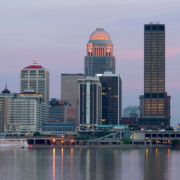 Chris Watson | Creative Commons