KEEP. Region. One or more per story. Lexington and the surrounding Bluegrass: Fayette, Frankfort, Winchester, Georgetown, Richmond, Berea.

Tag Archive for: Region: Central Kentucky

Voters standing in line to cast ballots at a church polling place in Louisville, Kentucky.

These 12 local offices shape your daily life in Kentucky. Here’s what each one does

The United States is sometimes described as 50 different countries wearing a federal government trench coat. Creating change at the national level is like steering a cargo ship: it takes a large amount of power to move a rudder, and it’s slow to shift directions. Creating change at a local or state level, however, is like steering a speedboat: much simpler and quicker to see change take effect.

Local offices are often overlooked on Election Day, but they impact your daily life more directly than you might think. Local governments are meant to meet the needs and solve the problems of their local residents, as well as provide services like roads, clean water, sanitation and police. They also have a large say in the usage of Flock cameras, the building of data centers, whether to cooperate with ICE or DHS, and the fair treatment of trans Kentuckians. If you have strong feelings about your neighborhood, or how you and your neighbors are treated, you should know the basics of each local office before voting.

A heads-up for Louisville and Lexington voters: both cities have merged city-county governments, so their mayors and councils handle most of what the county judge-executive, city council/commission, and fiscal court do elsewhere. And within Jefferson county are smaller cities, like Jeffersontown or St Matthews, with their own mayors and councils.

County offices

County judge-executive

A county judge-executive is a voting member of the county’s fiscal court. Their main job is to create a county budget, allocate the budget as the fiscal court approves and appoint people to lead various county positions. The judge serves a four-year term.

Because the judge-executive builds the budget, this office helps decide whether county law enforcement gets Flock cameras, Axon gear and similar surveillance tools, and what safeguards come with them.

Fiscal court (magistrates or commissioners)

The fiscal court, which includes magistrates or commissioners, is the group that provides services like road repairs, snow removal and sanitation at the county level. Despite its name, the fiscal court isn’t a court of law. It’s the county’s legislative body, like a county council. The fiscal court votes on county ordinances, orders and resolutions, which are then enforced by the judge-executive. Many decisions on ICE agreements, data centers and surveillance spending are made locally, and the fiscal court votes on many of them, within limits set by state law. Fiscal court meetings are open to the public, and members serve four-year terms. A sheriff or jailer can sign some agreements, like those with ICE, themselves, and the fiscal court doesn’t always vote on them.

Jailer

Kentucky is actually the only state in the country that elects jailers, who maintain order within their county’s jail. Jailers transport people to and from court and process people into the jail. The jailer decides whether the jail signs a 287(g) agreement with ICE and whether it voluntarily honors ICE detainers, which are requests, not warrants.

A 2025 state law bars jails and prisons from using public money to provide hormone therapy, but the jailer still decides whether people get HIV medication, PrEP and other prescriptions on time, and whether a trans person is kept safe.

The jailer also decides whether a parent held for ICE can get a notary to sign power-of-attorney or guardianship papers so someone they trust can care for their kids, how people who don’t speak English can communicate and how much help reaches people inside. That last one varies wildly county to county. In more than 40 counties, the elected jailer has no jail to run, and people are held in a neighboring or regional jail. They serve four year terms.

Sheriff

The sheriff decides whether deputies call ICE after a traffic stop, whether the office signs a 287(g) agreement to do immigration enforcement for ICE, and how deputies treat LGBTQ+ people, immigrants, unhoused folks and sex workers. Deputies also serve court papers, make arrests, and carry out many court-ordered evictions. In Kentucky, the sheriff also collects property taxes. Sheriffs serve four-year terms.

County clerk

County clerks are the local government record-makers and record-keepers. They oversee vehicle registration and titles, marriage licenses, property and legal records and elections. If you’re registering a car, getting married, voting or buying a house, you’ll be interacting with a county clerk’s office. County clerks serve four-year terms.

The office has real stakes for queer Kentuckians: in 2015, Rowan County Clerk Kim Davis refused to issue marriage licenses to same-sex couples and was jailed for contempt of court. Voters removed her from office in 2018, and in 2025 the U.S. Supreme Court turned down her request to overturn same-sex marriage.

Courts and prosecutors

County attorney

The county attorney is the one who prosecutes misdemeanors and other lesser offenses in district court, like DUI offenses, traffic violations, assault and petty theft. This is also where most homelessness, misdemeanor drug possession, sex work and protest arrests get charged. Felonies go to the commonwealth’s attorney.

These attorneys also prosecute juvenile cases, including criminal acts, neglect and abuse. They can work with judges to issue emergency protective orders in domestic violence cases, oversee mental commitments and disability cases and more. Most county attorneys are also involved in collecting delinquent child support payments. County attorneys have four-year terms.

Commonwealth’s attorney

These attorneys prosecute felony crimes and cover a judicial circuit, which can include more than one county. They serve six-year terms. A felony is any crime that can be punished by a year or more in prison. This is where the choice to divert or to cage gets made for felony charges, like possession of meth, heroin or fentanyl, and for protests charged as felonies. The commonwealth attorney decides which cases go to a grand jury as felonies, and a felony knocked down to a misdemeanor stays in district court with the county attorney.

Family court judge

Family court judges are the ones who preside over family-related cases such as divorce, domestic violence protective orders, child custody and visitation, adoptions and more. One judge can decide whether a trans parent keeps their kid, or whether a queer person gets a protective order against an abusive partner. Family court judges serve eight-year terms.

District court judge

District judges hear misdemeanors, traffic cases, small claims, probate matters and the first stages of felony cases. District judges also grant adult name changes, a step many trans Kentuckians need before they can update their IDs. They also set bail, which decides who waits for trial at home and who waits in jail. They serve four-year terms.

Judicial races are nonpartisan, so judges’ party affiliations won’t appear on your ballot.

City and schools

City council or commission

The city council is kind of like a city’s board of directors: they function as a city’s legislature and pass laws and ordinances. City council (sometimes called city commission) is in charge of budgets, taxes, passing ordinances like installing stoplights, and zoning. Cities can also pass fairness ordinances, which ban discrimination against LGBTQ+ people in housing, jobs and public places.

Kentucky has no statewide fairness law, so local ordinances fill the gap. Louisville and Lexington passed the first ones in 1999. Most since then have come from city councils, but Woodford County’s fiscal court passed one in 2020. City council meetings are open to the public. Terms vary by city.

School board

Like the city council, a school board governs a local school district by setting policies, providing funding and setting local school tax rates. The school boards also hire the superintendent, set discipline codes and graduation requirements and more. They serve four-year terms.

It’s the seat nobody watches, but school boards set the discipline codes that decide how a school responds when a queer or trans kid gets bullied. They also decide how book challenges get handled and how the district carries out state rules on students’ pronouns and bathrooms.

Mayor

City governments in Kentucky run on one of three models: mayor-council, commission or city manager. In a mayor-council city, the council enacts ordinances, levies taxes and adopts a budget. The mayor runs the city’s daily affairs, oversees personnel, can veto legislation and can cast a tie-breaking vote. Louisville and Lexington have their own forms: Louisville is a consolidated local government and Lexington is an urban county government. Both have a mayor and a council. Mayors serve for a four-year term.

Find your districts

Pull up your sample ballot at ourpeopleourvote.org, or call your county clerk’s office, to see which of these seats are on your ballot this year and which districts you vote in, including your magistrate or commissioner, city council and school board districts.

QKY Explainer graphic: a bronze City Council Chamber sign with the headline City Council or City Commission or Metro Council

What does a city council or city commission do in Kentucky?

A city council or city commission serves as the legislative and policy-making body for an incorporated municipality. These bodies pass local ordinances (city laws), vote on and adopt city municipal budgets, set local utility and property tax rates, and establish municipal zoning, development, and building codes.

City legislative bodies directly manage local public services that shape daily community living, including police and fire departments, city parks, trash collection, local street maintenance, and water/sewer infrastructure. They manage services we don’t think about until they are not working the way we want them to.

Structure and Terms

Kentucky cities operate primarily under two governance structures, governed by elected officials serving two- or four-year terms:

  • Mayor-Council System: Separates executive and legislative authority. The mayor serves as chief executive, elected to manage city departments, while an elected city council acts independently as the legislative branch.
  • City Commission System: Blends executive and legislative roles. An elected mayor and commissioners work together on a single board that collectively passes laws and oversees municipal departments.

In Louisville and Lexington, the merged city-county governments operate under unified councils. In Louisville, the Metro Council is a 26-member body elected from local districts. Similarly, in Lexington, the Lexington-Fayette Urban County Council (with the worst acronym) operates a similar structure but with 15 members. These bodies work alongside a single mayor handling both municipal and county-level legislative responsibilities.

How Do We Talk to Them

Because municipal decisions directly impact immediate neighborhood conditions, city councils and commissions are often the most accessible level of local government. Citizens can attend council meetings, speak during public comment periods about neighborhood safety, local business zoning permits, street repair needs, park funding, or proposed city ordinances. Many governments have online access, and some even have an app, making direct contact fairly simple.

Considering the needs of a city, the city council/commission should be the first step in outreach.

QKY Explainer graphic: a red brick school building with white columns and the headline School Boards

What does a school board do in Kentucky?

Before the outrage over Critical Race Theory and book banning circa 2021, local school boards did, in fact, exist to serve as the governing authorities for public school districts. They set the strategic direction, educational standards, and operational policies for elementary, middle, and high schools within their district’s jurisdiction. These decisions, however, are to be made in accordance with state and federal law.

Unlike administrators who handle day-to-day operations, the school board operates at a policy and fiduciary level. Key responsibilities include approving district-wide curricula, setting safety protocols, establishing student conduct policies, managing property and facilities, and allocating resources across local schools.

A crucial piece of their role is akin to a company’s human resources department. The board hires, evaluates, and—when necessary—fires the district superintendent, who serves as the chief executive tasked with managing school employees and daily instruction.

School boards also hold taxing authority, approving annual district budgets and setting local property tax rates to fund education. Relatedly, in 2026 the Kentucky legislature voted to reduce the powers of boards operating in communities with over half a million residents… aka Louisville.

Structure and Terms

School board members (also called trustees or directors) are elected from single-member voting districts or at-large seats, depending on the school district’s setup. They serve multi-year terms (typically four years) on nonpartisan ballots. Again, in 2026, the Kentucky legislature voted to modify certain boards (Louisville and Lexington), changing how voters choose those specific places.

How Do We Talk to Them

School board meetings are public, providing a formal avenue for community feedback. While this can get pretty wild sometimes, community members, parents, teachers, and students can attend board meetings to offer public comments on proposed policy changes, budget priorities, dress codes, or school calendar adjustments. School boards directly shape educational experience, neighborhood safety, and local tax rates in local communities.

School board positions aren’t high-paying or as heralded as other elected official roles, but they serve a crucial role in how students are educated.

Kentucky Cities Split Over Flock Cameras as Privacy Concerns Clash With Crime-Fighting Goals

Dozens of law enforcement agencies in Kentucky use Flock cameras to help them solve and deter crime. But as concerns over privacy and data security grow, many municipalities are asking whether to continue using the surveillance technology.

Flock cameras can do more than the average security surveillance camera. Using an automated license plate reader, often referred to as ALPRs, the camera takes a photo of every passing vehicle that it can see. The ALPR records when and where it saw a vehicle, its make and model, and even obscure details like a bumper sticker or a dent on the side passenger door.

Even if a vehicle is not believed to be involved in a crime, Flock cameras still take a picture and keep that information in a database, such as one owned by a police department or a business.

That does not mean that data cannot or will not be shared with others.

Flock Safety CEO Garrett Langley wrote that owners can share data with others one-on-one or choose to join Flock’s National Lookup Network, which allows officers to search for a full license plate number across department cameras nationwide. This is where residents and city leaders become hesitant.

Multiple Kentucky municipalities have chosen not to renew their contracts with Flock following residents’ concerns about potential misuse and privacy violations. Some of these cities include Cynthiana, Hartford and nearly a dozen Northern Kentucky law enforcement departments. The city of Frankfort joined the growing list on Monday, Oct. 12.

“I see the true benefit of the technology for a department and how it can be used for good,” said Frankfort Commissioner Kelly May. “Unfortunately, I believe that we’re just not living in a world where we can trust the parameters that another company puts in place for us to use in our community.”

Commissioners in the city unanimously voted not to renew the city’s contract with Flock once it ends Jan. 1, 2027. Currently, Frankfort has 19 Flock cameras.

Commissioner Rob Richardson, a supporter of Flock, called the surveillance technology one of the “most valuable tools for law enforcement” when it comes to solving crimes. However, he said he would like to see more rules and regulations in place at the state and federal levels.

“I, if I am sitting in this seat, would want to bring back Flock with those parameters because I do believe it keeps our city safer,” said Richardson.

Lexington resident Bobby Stinnett holds a similar view and said he would like to see legislative action at the state level when it comes to who can access Flock data.

“I agree with law enforcement having that tool to utilize those to solve crimes, but at the same time, I also agree that law enforcement should have a warrant to access the information,” Stinnett told Queer Kentucky. “All officers really need to access our phone is a warrant. I would think that it would be the same for Flock data.”

While some cities are ending agreements or plans with Flock, others are continuing to stay with the company, including the Louisville Metro Police Department.

Matt Mudd, a spokesperson for Louisville Mayor Craig Greenberg, said Flock tools have helped police solve multiple violent crimes, including the recent shooting of Kentucky State Police Trooper Hayden Phillips.

“Rapidly apprehending individuals who have committed horrific crimes makes our city safer,” Mudd told Queer Kentucky. “At the same time, Mayor Greenberg shares the community’s concerns regarding personal privacy. Just like with any technology, safeguards must be in place to make sure it is only used in a way that is constitutional and appropriate.”

Every search or search request in LMPD’s Flock database must include the following:

  • An incident report, a computer-aided dispatch report, a warrant, a case number, or other recognized identifying number. If no number exists, a detailed explanation will be required.
  • The case or investigation type.
  • A narrative explaining the investigation, the vehicle’s connection, and why the search is necessary.

Outside agencies, such as the Lexington Police Department or KSP, are allowed to search LMPD’s data but only if they meet the city’s internal requirements.

Other department policies that are being enforced at LMPD:

  • Only assigned members in analytical or investigative positions can conduct independent searches.
  • Before an officer can access the data, they must go through department-approved training, which will require recertification every two years.
  • LMPD’s Audit Unit will flag any suspicious activity or search patterns within the system. Audits will change from occasional/random reviews to mandatory audits by the Audit Unit at least every 90 days.
  • Any suspicious activity must be reported through the chain of command.
  • LMPD does not assist with immigration enforcement

“We also worked with Rep. John Hodgson on House Bill 58, which sets safeguards for how law enforcement agencies can use and store data from technology like Flock cameras, including that data on the cameras can’t be kept for more than 90 days unless it’s being used to investigate a crime,” said Mudd.

H.B. 58 went into effect in July 2026. As Mudd said, the bill addresses how long data can be saved, who can access it, and what the technology can be used for. Even so, the law does not require law enforcement to acquire a judicial warrant to access ALPR data.

“The only thing that’s keeping you having privacy is a warrant,” said Stinnett. “That is a separation from abuse. That’s how you prevent these officers who have been caught misusing Flock.”

Under the new law, violators could face up to one year in jail, plus up to $2,000 in fines.

JustFundKY to host first Obsidian Ball, a masquerade gala in Lexington

JustFundKY has long been known for our memorable and inspiring events, so we’re thrilled to announce our inaugural gala, the Obsidian Ball, a luminous celebration of courage, community and Kentucky’s unwavering commitment to equity. Before the invention of silvered glass mirrors, polished obsidian was used as a looking glass. It provides a deep, dark reflection that requires the viewer to look closely. A core value throughout the LGBTQ+ community is the act of radical self-reflection and authenticity. By coming out and living openly, queer individuals act as a mirror to society, forcing it to reflect on its own definitions of gender, love and family. It is a reflective surface that demands truth over superficiality. Designed to be vibrant, modern and unmistakably us, the Obsidian Ball invites guests to gather, glow and give in support of LGBTQ+ Kentuckians.

We invite you to join us for cocktails, entertainment, dancing and so much more. Tickets include passed hors d’oeuvres and an open bar. All event proceeds benefit JustFundKY, a community-powered LGBTQ+ fund based in Kentucky, dedicated to resourcing grassroots leaders, organizations and movements that are building a more just, joyful and equitable Commonwealth for all.

This new event is an extension of that mission. It is not just a fundraiser, but a celebration of community, resilience and possibility. By sponsoring or attending this event, you are making a visible commitment to LGBTQ+ people across Kentucky and helping ensure that vital, community-led work continues to thrive — today and for generations to come.

The Obsidian Ball, a masquerade, runs from 7:30 to 11:30 p.m. Friday, Oct. 23, at Harper Hall, 177 N. Upper St. in Lexington. Masks are optional. The night will also include the presentation of the first Lewis Paisley Award, which honors a person in our community or an ally who shows courage on behalf of the LGBTQ+ community. Tickets are available at showpass.com/obsidian-ball.

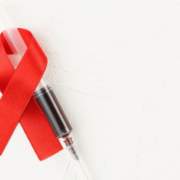
A red AIDS ribbon lays on a white background with a syringe of blood next to it.

AVOL Kentucky Is Adding Injectable PrEP. One Shot Can Replace Two Months of Pills.

AVOL Kentucky has worked to support Kentuckians living with HIV for almost four decades. Now, it’s taking its work to the next level and will soon start to offer injectable pre-exposure prophylaxis, most commonly known as PrEP, the newest and longest-lasting option for HIV prevention.

PrEP is a medication that reduces a person’s chances of contracting HIV and can reduce the risk of getting the virus by about 99 percent when taken as prescribed, according to the U.S. Centers for Disease Control and Prevention.

PrEP can be taken in pill form or administered via injection, which provides longer-lasting protection against HIV, according to the Department of Health and Human Services. The Food and Drug Administration has approved two types of injectable PrEP. One is given every two months, and another is administered once every six months.

Some of the benefits of the injectable medication are that users are less likely to miss a dose due to its intermittent schedule, according to Jon Parker, CEO of AVOL Kentucky.

The method also offers more privacy since there are “no medication bottles with patient information,” he added.

The Lexington-based nonprofit has worked hard so it could expand its programs and services for its patients.

AVOL launched nearly 40 years ago as a program of the Gay and Lesbian Services, now the Pride Center, providing services for people living with HIV.

In its early days, AVOL offered “just basic social services and support, and then over time we added housing, support services and permanent housing for people living with HIV,” said Parker.

By about 1993 to 1994, the organization had started to get more involved in HIV prevention and began working to educate communities about the virus and how it could be prevented. The nonprofit offered HIV prevention supplies, Parker said, and drove people to local health departments to get tested. Parker noted that sometimes people had to wait two weeks to get the results of the test and see if they had contracted the virus.

The organization eventually began offering on-site testing so that people could find out their HIV status in minutes.

“So, we’ve come a long way,” said Parker.

Right around the onset of the COVID-19 pandemic, Parker said AVOL Kentucky had learned that other similar organizations in North America were beginning to offer PrEP services and wanted to learn how to do the same.

Initially, he said, the organization said offering PrEP services was “out of reach” for them since at the time they did not provide any other medical services apart from bringing people to get tested for HIV.

“We learned that we could do a lot with contracts with pharmacies and with medical staff, so that we didn’t have to perform the services ourselves,” Parker said. “We could contract and kind of pull together, curate a system that could be responsive to the people we see and get them connected to PrEP.”

AVOL Kentucky was, in part, able to provide PrEP services at this time because of the 340B Drug Price Program, a federal program that requires pharmaceutical manufacturers that participate with Medicaid to sell outpatient prescription drugs at discounted prices to some healthcare organizations that serve low-income and uninsured people.

Parker said that AVOL Kentucky receives some revenue through the program, which is then used to offset operational costs, which has helped them build out their sexual-health services without requiring uninsured clients to pay.

In November 2025, the organization decided that it was time to hire a nurse practitioner to help provide more immediate access to PrEP, HIV, and sexually transmitted infection treatment, according to Parker. And that same month, AVOL Kentucky held its first-ever in-person clinic.

At the end of this past August, AVOL Kentucky had 70 clients who received PrEP services through their in-house, on-site clinic. The organization partners with Q Care Plus, a telehealth provider, to provide another 134 Kentuckians with PrEP and PrEP-related services, according to Parker.

“AVOL’s PrEP navigators work across both telehealth and in-house patients, tracking follow-up timing, scheduling appointments, offering interim HIV and STI testing, and providing ongoing access to prevention supplies,” he told Queer Kentucky.

And more people are turning to AVOL Kentucky for HIV care every month. In September, another 25 people joined the list of regular AVOL Kentucky clients, he added.

“There is no one route for everyone,” Parker said when it comes to connecting people to care. “Every person is unique, and you have to find the route that’s appropriate and achievable for them.”

AVOL Kentucky offers walk-in appointments Monday through Friday and provides most of its STI and HIV prevention and treatment services free of charge, according to its website.

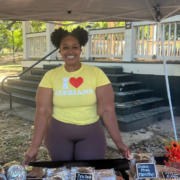
A landscape image of a woman with space buns standing behind a table, under a tent, vending for an event. She is wearing a yellow t-shirt that says "I [heart] Lesbians"

Kentucky Black Pride Turns 10 in the Park That Sheltered Queer Lexington

Kentucky Black Pride celebrated its 10th anniversary in September with a four-day festival in Lexington aimed at community, resources, and self-expression.

The four days each carried their own program. Thursday opened with Healthy Sexual Talk, a sexual health session marking National Gay Men’s HIV/AIDS Awareness Day, followed by Ladies Night. Friday brought the Mr. and Miss Kentucky Black Pride pageant. Saturday filled Woodland Park with Pride in the Park, the festival’s centerpiece. Sunday closed with community awards and a day party.

Among the first-timers at Woodland Park in Lexington was Tiffany Knight, of Bowling Green, Kentucky, who came to promote her cookie company, Eat Q Cookies.

“Where I am from is not as diverse. This is my first event where it is specifically Black oriented and it is really nice to see the community come together.”
Pride in the Park featured booths from aligning community and health resources, from CASA of Lexington, who are court appointed youth advocates, to the Lexington-Fayette County Health Department, who was on hand to share Narcan, COVID tests and condoms. Local designers sold Pride merchandise from buttons to jean jackets. A drag show followed at 1PM during the park extravaganza.

Kentucky Black Pride was founded in 2016 by Shawn Bumpase, after a conference call with other LGBTQ+ community members about the state of Kentucky’s Black queer community. By January 2017, the organization was official, with a home on South Broadway in Lexington. Kentucky Black Pride, Inc is a 501c3 non-profit organization that provides financial assistance, counseling and other community services.

Why Kentucky Black Pride stays at Woodland Park

Lexington has a storied history with the queer community. Its most notable member being Sweet Evening Breeze, who would perform drag here starting in the 1950s. Breeze is now honored with a downtown mural not far from where she was arrested for cross-dressing in the 1960s. And by 1981, the park hosted queer events supported by the Gay Student Organization of University of Kentucky. The Faulkner Morgan Archive in Lexington preserves that history.

Woodland Park remains the host location of Kentucky Black Pride because of that community support, said co-chair Suga Dawson.

“We stay with Woodland Park because in the 1950’s, before drag was legal, Woodland Park supported the gay community, not just our community,” Dawson said. “So we stay to show respect and support.”

Dawson, in her fourth year with Kentucky Black Pride, helped run the weekend. where she explained what it means to her: “It’s self-expression in a nutshell; the parts of me that aren’t as prevalent when you meet me.”

A festival that works year-round

Kentucky Black Pride hosts its festival each September as part of Roots and Heritage Festival month, but the nonprofit works year-round. Its “Let’s Talk” series gives the Black queer community its own town hall while the organization also supports youth school supplies initiatives.

A field of corn glowing in the sun.

At Black Soil KY’s Farmacy Markets, Narcan Sits Beside the Produce

From the war on drugs to the legacy of the crack era, Black people in the U.S. have been systemically and perpetually harmed by both drug use and public health disparities. That sobering reality is also true in Kentucky, where a Lexington nonprofit is working to build safer futures by changing how support is delivered, integrating harm reduction into already effective agricultural programming.

“We are trying to think outside of the box around crafting unique, one-of-a-kind programming while providing a critical community need,” said Ashley C. Smith, Executive Director and Co-founder of Black Soil KY.

Established in 2017 by Smith and her husband, Trevor Claiborn Sr., the organization’s mission is to “reconnect Black Kentuckians to their heritage and legacy in agriculture” through programming, events, and community building.

From food access to harm reduction

Since its founding, Black Soil KY has worked with farmers and community partners to host events that make agricultural education and fresh food more accessible to Black communities across the state. While the organization was effective at increasing access and education around food, Smith saw an opportunity to develop programming rooted in the idea that drug abuse, food insecurity, and public health are intersectional problems that demand intersectional solutions.

In 2023, the number of drug overdose deaths in Kentucky declined for the first time since 2018, according to the Kentucky Injury Prevention and Research Center, but not every community felt that progress. That same year, Black Kentuckians experienced an 8% rise in overdose deaths. More broadly, Black people in America are 46% more likely to die from a drug overdose compared to other groups, the U.S. Department of Health and Human Services reports.

The opioid crisis is not the only harm felt more intensely by Black communities in the state. Kentucky currently ranks as the state with the second-highest rate of food insecurity in the country, the Kentucky Center for Economic Policy reports. Data indicates that Black communities across the state are nearly twice as likely to be food insecure, compared to White Kentuckians, according to Feeding America.

These are the disparities that Black Soil KY intended to close with a new approach to community care.

In 2024, in partnership with The Foundation for a Healthy Kentucky, a nonprofit that works to reduce health disparities while promoting health equity across the state, Black Soil KY acquired funding from Vital Strategies, a global public health organization, to begin integrating harm reduction into its already effective portfolio of programming.

Harm reduction is a spectrum of strategies that are intended to minimize the harmful nature of drug use. Such strategies include providing clean syringes, sexual health testing, contraceptives, fentanyl testing strips, counseling, mental health support programs, and more. Harm reduction aims to minimize the harmful effects of drug use rather than ignore them.

First, the organization went to the farmers. In 2024, the nonprofit trained 30 small and mid-size farms on harm reduction, including signs of overdose, Narcan usage, and how to respond to the substance abuse they might come across in their work. The organization saw farmers as a priority because of how inseparable their work is from the communities they serve, and how intrinsically connected they are to an individual’s well-being, according to Smith.

“We trained Kentucky small- to mid-sized farms: farmers, farm operators, and their families around how to be harm reduction first responders,” Smith said. “They oftentimes live in rural communities, but travel to urban communities to make deliveries… And we were hearing stories from farmers who make deliveries in communities afflicted by substance use and abuse disorders.”

After they built the training model for farmers, Black Soil KY expanded their harm reduction programs into their other community-centered events. In 2024, the group first began including harm reduction supplies as part of their free food distribution in Central Kentucky. After seeing the success of these resources, Black Soil KY opened two neighborhood “farmacy market” locations in Lexington in 2025.

The “farmacy markets” were a first-of-its-kind concept, providing harm reduction supplies and educational materials right alongside fresh food directly within communities. Alongside fresh produce, these markets provide communities with tampons, condoms, and harm reduction necessities, including Narcan and fentanyl testing strips.

“All of these steps, these multidisciplinary, interdisciplinary approaches are really seeing people for who they are and meeting them where they’re at, while also increasing their recovery capital around their nutrition and their health and their wellness,” Smith said.

This year, the organization launched its “Shop N’ Learn Community Series,” a partnership with Vital Strategies and the Kentucky Department of Public Health, part of a broader effort to combat rising overdose rates among BIPOC and underserved populations. The monthly event is “focused on expanding awareness and implementation of harm reduction strategies to often overlooked, hard-to-reach, underrepresented communities in relation to harm reduction and recovery care.” Individuals who attend a “Shop N’ Learn” event also receive a $40 gift card.

The series has been hosted in part by guest speakers, who share their own testimonies and expertise around recovery and healing.

“I am from the community, and I had an opportunity to go share my lived experience with the same community that I was brought up in — as terrifying as that is for me being only three years sober,” said Tywanna White, a recovery coach with Voices of Hope, a recovery community center in Lexington. “I said yes to an opportunity to be able to carry the message. The people in the audience had so many questions, and I was able to educate them on some things that I was taught from this same community.”

White was one of the featured speakers at a “Shop N’ Learn” event in June. According to White, this programming is exactly what it takes to dismantle health disparities facing Black Kentuckians.

“Seeing those faces looking right back at me wanting to be open, it shifted something. It told me that there’s a need for this…” said White. “I didn’t have any voices trying to help educate me on my substance use. It was so normalized. So no one even knew that I was struggling because it’s so normalized in the Black community.”

According to Smith, around 10,000 community members showed up at their events in 2024 and 2025. The impact, beyond attendance, speaks for itself. Smith said attendees of their programs report progress.

“We’ve really been able to see a lot of positive outcomes like reducing interpersonal and inter-communal violence,” Smith said.

Civic engagement as harm reduction

This programming is just the beginning of how Black Soil KY plans to build deeper inroads across communities that need care. Civic engagement is among the many solutions Black Soil KY is exploring to heighten awareness of health disparities.

In 2024, just 48% of Black Kentuckians voted in the general election. That is compared to over 70% of White Kentuckians. There is a growing body of research pointing to a strong correlation between civic engagement and public health: The more engaged a community is, the healthier they are. Black Soil KY identified these disparities and created new programming to empower Black communities in Kentucky to have a stronger say in what policies and people are given a platform.

In September, Black Soil KY, in partnership with the Lexington Urban League Young Professionals, a network of young professionals advancing public service and professional development, is exploring how civic engagement will take center stage as a new harm reduction topic in their “Shop N’ Learn” series.

For the first time, the workshop will focus on how to participate in elections and the importance of voting. The workshop will bring folks together who have overcome or are currently working through substance abuse, and support them in getting registered to vote while providing educational materials on the choices they have in November.

“We can really facilitate getting everyone active and engaged. And we truly believe that’s also a part of harm reduction: being active in your community,” said Smith.

Black Soil KY’s programming has become a staple in communities, with leaders celebrating how the organization addresses both a person’s material needs while safeguarding their emotional and physical well-being.

“A person wants to be heard, they want to be seen, they want to feel like they’re human. And so it starts with getting to know the people off paper, knowing what it is they need at that moment, and then focusing on removing the substance later…” said White. “I think it’s a beautiful thing to incorporate harm reduction in these same communities where harm happens and also center it around food. That is the medicine.”
This work was supported by the 2026 CNP Media Fund. #CNPMediaFund

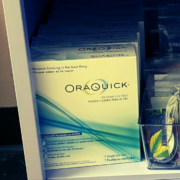
HIV self testing kits sitting on a ledge.

Federal Cuts “Handcuffed” BIPOC Harm Reduction in Kentucky. Communities Are Stepping Up.

In April, the Substance Abuse and Mental Health Services Administration (SAMHSA) released a letter notifying funding recipients that the agency is taking a “clear shift away from harm reduction,” including eliminating funding for fentanyl testing strips, clean syringes and needles, and “overdose hotlines.”

Harm reduction at its core is “a set of practical strategies and ideas aimed at reducing negative consequences associated with drug use,” according to the National Harm Reduction Coalition. The organization further details that some of those strategies could include the safer use, managed use, abstinence, meeting people who use drugs “where they’re at,” and addressing conditions of use along with the use itself.

SAMHSA’s decision has had immediate and life-threatening consequences for Kentucky organizations doing the work to close critical gaps in care for those in need, including for marginalized people.
“When they put this letter out there, they literally just handcuffed a lot of people,” said Shreeta Waldon, executive director of the Kentucky Harm Reduction Coalition (KyHRC), a Louisville-based nonprofit that works to reduce substance use disorder overdoses and deaths.

The letter cited a White House executive order from July 2025 to justify the policy changes. The order, “Ending Crime And Disorder On America’s Streets,” details those changes among a list of other line items including homelessness and crime. “Do not fund programs that fail to achieve adequate outcomes, including so-called ‘harm reduction’ or ‘safe consumption’ efforts,” the order reads.

It describes such strategies like harm reduction as ineffective; however, harm reduction is actually an evidence-backed practice that has been backed by scientific research.

What Kentucky Lost When SAMHSA Cut Harm Reduction Funding

These changes and attacks on harm reduction initiatives have hit the already limited ecosystem of harm reduction services built by and for Black and brown communities.

“SAMHSA award terms are now prohibiting federal grant funds from supporting several traditional harm reduction supplies, including syringes for illicit injection, safer smoking supplies, and fentanyl and other substance test strips,” Waldon explains. “That means that organizations are now navigating a much narrower definition of what federally funded harm reduction can include and not include.”

Recent research revealed that Trump’s elimination of federal funding for programs that provide syringe exchange and other harm reduction interventions will directly contribute to an increase in overdose deaths and non-fatal overdoses. Outcomes that Black and brown communities already feel more intensely.

KyHRC is one of the few groups in the state still delivering harm reduction care and resources for BIPOC communities, despite these concerning changes. In addition to new limitations, Waldon’s group immediately lost a $400,000 grant after the SAMHSA decision. However, instead of deferring programs or shortening their impact, the organization found new ways to deliver care to communities.

KyHRC began working with partners across the country to source harm reduction resources that they no longer could get from federal funding. Waldon mentioned that, among other groups, the Connecticut-based organization Reduce Harm Inc. has supported KyHRC with clean syringes, testing strips, and other supplies that are no longer accessible.

The redefinition of what the government will fund comes after a well-documented body of evidence pointing to harm reduction as a key strategy to prevent drug-related deaths. Studies show that fentanyl testing strips prevent overdoses, and research shows that providing clean syringes prevents the transfer of blood-borne diseases. A 2025 study including 67 communities, some of which were in Kentucky, found that when offered harm reduction strategies, those communities experienced a 15% reduction in non-fatal opioid overdoses and an estimated savings of $190,100 in healthcare spending per community.

Why Black Kentuckians Feel the Cuts Hardest

For Black communities in Kentucky, these new limitations are felt even more deeply than their neighbors. In 2023, the overall number of drug overdose deaths in Kentucky declined for the first time in years, while Black Kentuckians experienced an 8% rise in overdose deaths. Black Kentuckians continue to face worse health outcomes, less access to regular health care, and higher mortality rates compared to other groups. It is these realities that make harm reduction and community resources for Black and brown people all the more critical, according to the organizers delivering care despite greater obstacles.

“If you are trying to give me aid and help me based on the statistics that you have for white people, it’s not going to help me because it’s not made for me,” said Adria (AD) Shouse, a master barber at Well Groomed Barbershop Parlor.

Shouse is a barber with the African American Barbershop and Beauty Salon Initiative (BBSI), a public health program part of Project Ricochet, a nonprofit organization working to improve outcomes for minority youth in Lexington and beyond. BBSI transforms “relationship-rich environments” like barbershops and beauty salons into spaces where communities can get care and education related to diabetes, sexual health, mental health, drug use, and harm reduction.

“I’ve seen changed behavior in people that I’ve been cutting for years that have utilized resources through BBSI,” said Shouse.

BBSI provides community events based out of these safe spaces that bring care, including harm reduction resources, right to the communities who need it. This direct level of intervention is what Shouse says is missing in much of the conversation around BIPOC public health funding.

“The funding is different when it comes to people of color or minorities,” said Shouse. “They’re trying to keep certain communities and certain people in certain places because it works to their advantage.”

Shouse’s clients are predominantly Black men and young people, and in her work she fulfills a material need while offering support for other challenges.

Doulas Trained in Harm Reduction

It is that same model that other community leaders are implementing to provide support for Black pregnant people as well.

Granny’s Birth Initiative (GBI) is a nonprofit based in Louisville that supports Black parental health, partnering the care a pregnant person needs with the harm reduction resources they are unable to find elsewhere. That starts with training their doulas on harm reduction strategies, including trauma-informed care and Narcan usage.

“We make sure that our doulas are trained in that because doulas do provide resource navigation and it should always be non-judgmental support,” said doula Alexa Scisney, founder and executive director of GBI. “We want them to be well trained on not just keeping a straight face, but genuinely and truly understanding the type of resources that are needed.”

Black pregnant people are at least three times more likely to die due to a pregnancy-related condition, compared to their White counterparts. In Kentucky specifically, 82% of pregnancy-related deaths are deemed preventable. About 1 in 20 pregnant people use illicit drugs during pregnancy. This puts the work that GBI does as ground zero for public health progress and reducing harm.

“I know that doulas are an industry that is new to Kentucky, but a doula is somebody that’s supposed to be providing physical, mental, and emotional, non-judgmental support,” said Scisney. “And here at GBI, that non-judgment is something that we really highlight because it is not our job to do harm to people already seeking harm reduction resources. Our doors are always open.”

In addition to the SAMHSA decision, resources for harm reduction in Kentucky have been rocked by funding cuts and lack of consideration for how harm reduction impacts public health. In May, the University of Kentucky announced that it would formally end its HIV/AIDS prevention and treatment organization. The Target4 Project was part of this elimination, which provided HIV/AIDS intervention and services in addition to harm reduction supplies and targeted outreach.

Kentucky public health leaders say they will continue to step up in their communities, despite the new obstacles in front of them.

“Let us be the voice because we are the people who have experienced it. We’re the closest to it. We’re the closest because we live it every day,” said Waldon.

While the Trump administration and SAMHSA cut opportunities and funding, harm reductionists and community leaders continue to show up in new ways for their neighbors. While groups still hope for more permanent and sustainable funding, it is the promise of safer, stronger communities that pushes them forward, they said.

“For me, harm reduction has always been the radical decision to believe that every human being is worth keeping alive before they change, before they recover, before they become who somebody else thinks they should be,” said Waldon.
This work was supported by the 2026 CNP Media Fund. #CNPMediaFund

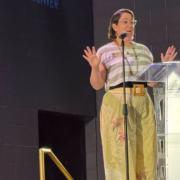
Lexington councilmember Liz Sheehan, who introduced the city's data center moratorium, speaking on stage.

It’s a Pause, Not a Ban: Liz Sheehan on Lexington’s Data Center Moratorium

During a meeting of the Lexington Fayette Urban County Government Council on June 9, Lexington became the first major Kentucky city to enact a moratorium on data centers.

Councilmember Liz Sheehan, who represents Lexington’s 5th district, introduced the resolution, which passed unanimously and without debate.

Sheehan, who is also Kentucky’s first openly bisexual elected official, spoke with Queer Kentucky to help make sense of the moratorium and shed light on all things data center in the Commonwealth.

The following interview has been edited for length and clarity.

What Lexington’s Data Center Moratorium Actually Does

Tell us a little bit about what a moratorium is, and why it might be a useful legislative tool.

The basic definition of a moratorium is that it’s a pause; in this case, it’s a pause on development approvals around data centers. It allows us to pause any approvals, update our policies and definitions, and then resume development after that.

Some people hear the word moratorium and it sounds scarier than it really is.

I think in our community people are also confusing the term moratorium with a ban. A ban is a [permanent] policy, but a moratorium is temporary.

Why does it seem like these data centers always end up impacting marginalized communities?

It comes down to property values. A development company is going to be thinking about their cost and looking for land that is available at a lower cost to them. Due to historically discriminatory practices like redlining, we’re seeing overlap here on where data centers are going.

We see headlines full of protests against data centers. Do you have any constituents contacting you in support of data centers?

I do have constituents on both sides of this issue. Some people see great benefits in increased technology in our world, including AI. Some folks are concerned about limiting data center development because our modern society is supported by online mechanisms.

If you think about newspapers going out of print and moving online, or online banking, or healthcare records, or social media, our world is increasingly online. So we do need infrastructure to support that, but I think there are disagreements about what that infrastructure looks like and where it can go.

What Lexingtonians Can Do

Is there anything that we can do to reduce the demand for data centers?

Our world is increasingly online, but I do think we can hold companies to higher standards when it comes to negative environmental impact. For instance, there are differences in cooling systems for data centers; a closed-loop system uses less water. Or you can use alternative energy to support the data centers to reduce energy demands of fossil fuels.

Technology changes so fast. I am worried that we are over-developing. For me, it’s also about whether we take a beat and see if we actually need all of this. Because if technology around computing power changes in the next 2-5 years, and now we have all of these humongous data centers built that could occupy half of the space and need half of the energy, do we need to do this now?

Besides public comment, is there anything Lexingtonians can do to express their opinions?

We have a fact form called Engage Lexington where people can go and give comments and learn more. Not everyone can come to the government center (council meetings), and this provides us an opportunity to not only hear from the public but also educate them about what we’re working on so we can get to those nuanced conversations.

We need people to come to the table to talk with us about the specifics of what they want to see and what they don’t want to see. In Lexington, there isn’t an appetite at all for hyperscale data centers; our communities seem to be against them, our developers aren’t looking to develop hyperscale here. But then we do have to figure out what is the (size) threshold for a data center, versus one that we think is too much.

If you want to see energy caps, tell us what you think that energy cap should be; if you want to see square footage changes, tell us what you think that should be. That’s where our conversation is headed, is trying to find that breaking point of what is acceptable and what is not.

We’re really working to find a solution that supports our community, supports our existing businesses, but that isn’t negatively harming our environment.

Attendees at the Winchester Pride + Inclusion Festival on Depot Street in downtown Winchester

Community Celebrates Return of Winchester Pride and Inclusion Festival with this Year’s Theme: The Story of US

On Saturday October 3rd, the Winchester Pride + Inclusion Festival will return to Depot Street. Building on the success of last year’s festival with approximately 1000 attendees, local festival organizers at A Life Worth Celebrating are gearing up for an even bigger turnout this year with support from Humanists of Winchester and Emmanuel Episcopal Church. This year’s theme “The Story of US” is exemplified by a large roster of community outreach groups, local nonprofits, artists, crafters, and performers. The goal is simple, a free day of fun where every attendee feels welcome to add their page to Winchester’s storybook.

“This year we are really focused on the local aspect, telling our stories, sharing our talents, and exemplifying the best Clark County, and our neighbors, have to offer,” stated Ned Butler Royse, President + Policy Director for A Life Worth Celebrating. This year’s festival includes more women-led organizations and women-owned businesses than prior years.

“We are making sure this free festival is a worthwhile and fulfilling experience for everyone. Assuring folks have safe access to community resources, wellness, and mental health providers is just as important as putting on a good show or supporting our local businesses. We do our best when we are all given the opportunity to thrive.” Ned Butler Royse added.

Many local businesses also plan to show their pride for our town. Specials at Abettor Brewing, Tacos Luna y Mas, and The Crystal Coven are already in the works. Other businesses are also interested in expanding the party across the weekend. A successful tourism boom was created by last year’s festival, where almost 20% of attendees came from out of town, many visiting for the first time. When polled, the majority of businesses on Main Street and Lexington Rd saw an uptick in sales, new customers, and more foot traffic than usual thanks to the draw from last year’s Winchester Pride + Inclusion Festival.

“The festival is a huge value add for Downtown Winchester, especially for folks who don’t see themselves or their culture reflected in other gatherings around town. We are creating a space that is interactive, inspiring, and safe for all who want to join in the fun. We took the feedback from last year and built upon our existing plans to add more comfort and accessibility to the festival. You can dance or just sit back and enjoy the performances. Either way, we want you to feel included and know you belong here right here in Winchester.” Ned added, in reference to the expanded reach of this year’s event.

With respect to self-care and wellness, Kurma Yoga will be hosting a free community yoga class for all ages and aptitudes at 10am under the awning on Depot Street, preceding the festival setup. Later in the day, over a dozen local outreach groups will have booths focused on sharing resources. A Life Worth Celebrating plans to continue to grow the festival in this direction year over year, citing that cost should never be a barrier to entry for this festival.

Beginning at 2pm, The All Over Crafter will host a DIY button making station and Flash and Flourish Photography will have a photobooth available to capture the magic. First time vendor The Cookie Jukebox and returning coffee master Morning Glow Coffee will join other food trucks to showcase their culinary talents. This is also the first year the festival will host an outdoor art gallery, featuring the visual media of local artist Jeffery Hale as well as a community art project.

This year’s performances begin at 2:10pm including three variety shows plus the music stylings of Queen Aster, He’s Dead Jim, and Unky Bones. There will also be a community speaker session led by former KY Teacher of the Year and local author Willie Carver Jr, with additional speakers and dance parties throughout the day.

For those interested in attending, be sure to RSVP to the event and follow A Life Worth Celebrating on social media for updates. To savor the best experience, attendees are encouraged to come to yoga under the awning at 10am, explore Downtown Winchester, and then join the party at 2pm when the Festival opens on Depot Street!

The Lexington Herald-Leader logo over a black-and-white photograph of stacked newspapers.

Lexington Herald-Leader Layoffs Put Kentucky Local News at Risk McClatchy Media, the parent company of the Lexington Herald-Leader, laid off a total of 13 staff

McClatchy Media Company’s recent round of layoffs will likely speed up the already rapid decline of Kentucky’s media landscape, journalists and journalism experts said.

The journalists who remain at The Herald-Leader are now expected to produce the same quality journalism with roughly half the newsroom staff, according to former staffers. And laid-off journalists are worried about how the loss of reporters will impact communities, particularly more rural parts of the state without many alternative news sources.

“We know that the math says that if you lose this many people who produce stories over a year’s time, that’s not replaceable,” said Benjy Hamm, director of the University of Kentucky’s Institute for Rural Journalism and Community Issues. “Hundreds and hundreds of stories [will] go untold now because of this loss.”

McClatchy laid off a total of 13 Herald-Leader staff–12 reporters and one editor–cutting the newsroom by 52 percent and eliminating entire beats, former Herald-Leader staffers said. Now, seven weeks before the November mid-term elections, the paper has two reporters in charge of covering Lexington city and state politics. And the paper lost its only Eastern Kentucky and environmental reporter.

“The fact that our company has been losing money is no secret, but I think layoffs of this scale were surprising to most people involved,” said Alex Acquisto, an award-winning statewide enterprise reporter covering politics and public health for the Herald-Leader and union guild representative who was laid off last week. She spearheaded the newspaper’s coverage of the COVID-19 pandemic before turning to the effects of climate disasters as well as the impacts of Kentucky’s near-total abortion ban and transgender care bans.

And it’s not just the Lexington Herald-Leader – the media company laid off more than 90 employees across 13 newspapers in eight states last week, including The Miami Herald, The Sacramento Bee, The Kansas City Star, and The Lexington Herald-Leader, Kentucky’s second-largest newspaper.

The newspaper giant has gotten rid of staff and entire newspapers in recent years and has been plagued by debt and declining print revenue, even filing for bankruptcy in 2020. That same year, the formerly family-owned business was sold to the hedge fund Chatham Asset Management. In 2025, the company closed its Washington, D.C. bureau and sold two of its Georgia papers, The Macon Telegraph and The Columbus Ledger-Enquirer, to the state subsidiary of the National Trust for Local News this past July.

Kentucky’s rural press is shrinking with several areas considered news deserts. There are six counties in the Bluegrass state without a single news source and 88 with only one, according to a 2025 report from The State of Local News Project from Northwestern University’s Medill Local News Initiative.

Many small towns in Kentucky, including in Eastern Kentucky, have their own daily newspapers that publish an issue at least once a week, like Whitesburg’s The Mountain Eagle and Louisa’s The Levisa Laser.

But as community newspapers struggled to stay afloat, many of Kentucky’s small communities looked to The Herald-Leader for statewide news and their deep politics coverage to stay informed, journalism experts said.

The daily newspaper’s only reporter based in Eastern Kentucky, Austin R. Ramsey, was one of the staffers impacted by the layoffs.

Acquisto argued that while the layoffs will ultimately hurt the news landscape of Fayette County, the cuts will be more severely felt in rural communities. “That isn’t to say that those communities still won’t look to the Herald-Leader for information, but the type of content that we give them is greatly impacted.”

Jennifer Brown, publisher, editor, and co-founder of the Hopkinsville digital news outlet The Hoptown Chronicle, said that she has relied on The Herald-Leader as a primary source for state political news for years. Most of the region’s available television news comes from stations based in Nashville, she said.

“Many people here are more informed about what’s going on in the Tennessee state government than they are [about] Kentucky,” she said, adding that she is a long-time subscriber to The Lexington Herald-Leader.

Brown worries that the layoffs will impact the newsroom’s institutional knowledge of communities and issues that its reporters have covered for years on their respective beats.

Hamm, the director of the University of Kentucky’s Institute for Rural Journalism and Community Issues said though, that the full picture of how the newspaper’s layoffs will impact its coverage is still unclear. But he argued that the cuts would mean fewer watchdog reporters and less reliable information about how elected officials across the state are doing their jobs.

“There is no gain from cutting half your staff that’s beneficial for readership or the community,” Hamm said.

A spokesperson for McClatchy has yet to respond to a request for comment from Queer Kentucky.

A red HIV awareness ribbon on a white surface beside a pen, keyboard, and stethoscope.

Here’s How You Can Find an HIV-Competent Doctor in Kentucky

Since reporting began in 1982, more than 12,700 people have been diagnosed with HIV in Kentucky. Of those diagnoses, 58 percent of those reported infections progressed to AIDS, according to a 2025 state HIV/AIDS Surveillance Report.
Being diagnosed with HIV can feel overwhelming, and recent federal policy changes, funding cuts, and proposed budget reductions have raised concerns about the future of HIV care and prevention across the country.

But there are still resources out there to connect people who have recently been diagnosed with the virus with good care.

Here is what some health care providers recommend HIV positive Kentuckians do to find the care they need.

Reach out to a primary care provider

Reaching out to a primary care provider for recommendations on how to find HIV-related care is a good first step, according to the National Library of Medicine.

However, some people in rural parts of Kentucky might struggle to find local providers with knowledge of treating a person living with HIV, or they may experience social stigma, according to Alice Thornton, a professor at the University of Kentucky, chief of its division of infectious diseases at its college of medicine and the project director for the Kentucky AIDS Education and Training Center.

“If they have a trusted local provider, they should be able to help,” she told Queer Kentucky. “Their primary care physician may be aware of options in their area and could be a starting place.”

Turn to The Bluegrass Care Clinic at the University of Kentucky

The Bluegrass Care Clinic at the University of Kentucky provides HIV-related care to 2,200 people across 63 counties, with about half of those patients living in rural areas, according to Thornton. The clinic offers a breadth of services for those with HIV and other infectious diseases, including transportation.

Prospective patients can reach a navigator nurse at (859) 323-1688.

Thornton added that the University of Kentucky also recently launched the LINK Project, a community health initiative meant to help those at increased risk for contracting HIV and Hepatitis C receive medical care and continue to get the care they need.

People with HIV can request information about HIV providers in their area by emailing [email protected].

“The LINK team can help with the handoff to care and can assist in removing barriers that the person may have in accessing services,” Thornton said.

Check out The Ryan White HIV/AIDS Program

The Bluegrass Care Clinic is part of a national, federally funded program called the Ryan White HIV/AIDS Program, which provides a system of HIV primary medical care, medications, and essential support services for low-income people with the virus, according to the program’s website.

Thornton recommends that people looking for HIV care do some research on the program and what it provides because of the wealth of resources it supports. The program funds cities, counties, states, and local community-based organizations to provide HIV care, treatment, and services to more than 600,000 people across the country.

“All of our Ryan White Clinics across Kentucky are nationally renowned for their high-quality care, retention in care, and achievement of viral suppression,” said Jon Parker, CEO of AVOL Kentucky.

Every state and U.S. territory has a Health Resources & Services Administration-funded Ryan White Part B program, and Kentuckians can find a map of case managers and qualifying clinics on the state’s Cabinet for Health and Family Services website.

Kentucky is one of many U.S. states that also have Ryan White Part C and Part D programs, which deliver HIV care at greatly reduced or no cost to patients, Thornton said.

People can also find HIV testing sites and HIV care services provided through the Ryan White program via this national website. Those looking for a Ryan White HIV/AIDS Program medical provider can find one here.

The website allows users to enter a ZIP code and find a provider within a defined radius. Thornton urged rural Kentuckians to search for providers via the website within a 60- to 80-mile radius of their homes to help the site find programs close to their location.

Kentucky drag artists Mars, Venus Knight, and Braya Grey in a composite portrait photograph against a pink background.

From Appalachia to Western Kentucky, Drag Artists Are Building Queer Community Across the Commonwealth Drag artists from Ashland to Bowling Green share their stories of performance, community, and resilience across Kentucky.

From the hills of Appalachia to the bustling bars of Louisville and Lexington, out to western Kentucky’s rural areas, drag artists in Kentucky have unique experiences and stories to tell.

These artists are living embodiments of how different drag can be in the commonwealth, but also how this art is found across it. Recently, these drag performers shared their tales, ideas, dreams, and connection to the drag community statewide with Queer Kentucky.

Eastern Kentucky

“Everyone has a real care and concern for each other. Someone could hate someone’s guts, but they’ll still make sure you’re fed and housed,” Mars, a drag performer from Ashland in Eastern Kentucky, says.

Mars and Dorian Slay, another local performer, say they have collectively faced some issues with bringing drag to Ashland.

Mars said someone connected to the city once complained about a drag show at a local restaurant, and it got a “zoning violation” for being an “adult event.”

The far-right social media account Libs of TikTok then went after the event. Mars said some performers were sent hateful messages, and sometimes death threats.

Although drag performers do receive some negative pushback from the Kentucky public, Dorian says the good outweighs the bad.

“Honestly, the amount of appreciation and love that I’ve experienced here in eastern Kentucky is way greater than the amount of hate,” Dorian says.

Drag artists are performers, but that’s not all there is to drag. Many of these artists participate in local and national activism in a variety of ways.

Both Mars and Dorian have worked with Advocates for Appalachia, an organization that raises money for charities, hosts food drives, and advocates for people in need by taking part in strategy meetings to address local issues. The organization promotes community with a variety of events, such as a book club or their bi-monthly “Yap Sesh” which gives community members a space to vent and feel less alone.

Mars and Dorian said it’s part of how they give back to a community that shows up for their performances and the queer community in general. Despite government pushback, people always turn out in big crowds for their shows in Ashland, Dorian said.

Mars says he has seen his drag have an impact on drag culture in eastern Kentucky, even though he is a trans man who performs in feminine drag.

“The most important thing to me,” he told Queer Kentucky, “is I have a lot of trans men or transmasculine come up to me and say that watching a trans man do feminine drag so confidently has helped them work through… this expectation that we are supposed to be masculine all the time.”

Central Kentucky

In central Kentucky, artists like Benita Bloom, Braya Grey, Koko Taylor, Jen Erocity, Gemini Jewels, and Corabelle Bundy Jolie come from various backgrounds, but they’ve found a home performing in the central Kentucky drag scene.

The artists in this area say there is a freedom to express themselves more openly and with less fear, especially in cities like Lexington and Louisville.

“I think what makes drag special in central Kentucky is the connection that you feel when you enter a drag show,” Gemini Jewels said.

Jen, a Louisville artist, says Louisville is special because there is diversity throughout the city’s drag scene. She says she likes to perform in some of the lesser-known queer spaces in the city, such as Camp Spaceman, Portal and Kaiju.

“I just feel happier with my performance when it’s a more intimate venue,” Jen says.

Corabelle Bundy Jolie, who resides in Lexington, says she enjoys performing at the more obscure locales as well. She says she particularly loves small-town pride festivals and performing at brunches in Frankfort.

“Why can’t the queer community have their own space in some of these little cities?” she asks, acknowledging that it can be difficult for queer people in rural areas to have access to LGBT+ experiences.

In September, Corabelle is performing at Pikeville Pride this year as Ms. Pikeville Pride. She says she’s excited to share her drag with people in a more rural area.

Benita Bloom-Cox, a nonbinary drag artist, says that while central Kentucky is special and diverse, there are aspects of the drag scene that have potential for growth.

They perform as a “bearded queen”, which has occasionally resulted in not getting booked for certain events, they say.

But that hasn’t stopped Benita from expressing their true colors. Instead, those experiences have driven them to show up for those who are not always given the spotlight, they explain.

“It has been great to be able to stand on those stages and represent people you normally don’t see on stage,” they say. “You don’t see nonbinary people out here.”

Artist Braya Grey says her favorite place to perform in Lexington is the Bar Complex, where she is part of the Johnny’s Angels cast.

“I feel very lucky to have grown up in Lexington,” Braya says. “Old-fashioned drag queens here… have taken me under their wing and have helped me grow.”

Braya says she loves Lexington’s queer community because of its diversity.

“It’s few and far between that you are able to perform with so many different layers of people,” she says.

It’s that acceptance of difference that inspired Koko Taylor, a cisgender, straight queen.

“It’s really lovely to be around people that you can be involved with, share life stories with, and laugh at each other,” she says.

Western Kentucky

For those in Western Kentucky, they wear their Kentucky roots with drag pride. For example, queens Gorgina George and Venus Knight share a love for the Bowling Green community.

“Everyone always says, ‘you’re bigger than Bowling Green,’” Venus Knight tells Queer Kentucky. “Bowling Green has always been my home, and I love Bowling Green. Why not live in a place that you love, and then travel to all the places that you enjoy?”

Venus says the community in Bowling Green is special in the way they show up for each other.

“Bowling Green is my kingdom, and I feel that my supporters, my knights as I call them, have been the best that I’ve ever experienced, and they motivate me in a way that uplifts my heart,” Venus says.

She says she also tries to show up for them, including several years ago when she helped raise money for tornado victims affected by the 2021 storms.

Gorgina, who often uses it/its pronouns as part of its drag persona’s backstory about coming to Earth from another planet, says it also feels welcomed in and connected to the Bowling Green community.

“The Bowling Green scene is very interesting in the sense that they want vulnerability from you,” Gorgina says.

Onwards

Across Kentucky, drag artists are blossoming and are also looking to help the next generation. For those thinking about drag?

“Just do it!” Corabelle says.

These artists emphasized the importance of being open to advice from fellow performers, but they also said it’s equally important to remain authentic.

Drag is forever evolving, and each of these performers says they hope the scene begins to embrace diversity more, and that artists show up for each other despite the sometimes competitive nature of drag.

“It’s on us to protect each other,” Braya says,”…[to] build a community that works for each other, for us.”

Voters wait in line to cast their votes.

Kentucky’s 6th Congressional District Is Finally Competitive. What LGBTQ+ Voters Need to Know. The race to replace Andy Barr is closer than anyone expected.

Republican U.S. Rep. Andy Barr has been unbeatable in Kentucky’s 6th Congressional District for seven election cycles, defeating Democratic opponents and defending the GOP’s hold on the district. With Barr easily winning the Republican nomination for U.S. Senate to replace Sen. Mitch McConnell, Barr’s congressional seat, which includes Lexington, Frankfort, and Richmond, is now up for grabs. And for the first time in over a decade, it isn’t guaranteed to stay red.

In November, Kentucky’s 6th will have a choice between Navy veteran, former legislative director to Gov. Andy Beshear, and most recently, Assistant United States Attorney, Democrat Zach Dembo, and former state senator and, most recently, Commissioner of the Tennessee Department of Health, Republican Ralph Alvarado.

While Barr’s winning streak in the 6th was unmatched, this new matchup has drawn the attention of high-profile political players on both sides.

Dembo has been endorsed by Beshear, U.S. Sen. Mark Kelly of Arizona, U.S. Rep. Lauren Underwood of Illinois, the National Education Association, End Citizens United, and several other statewide politicians, national figures, and groups.

On the other side, Alvarado has the backing of President Donald Trump among other Republican leaders. Recent polling puts the two in a tight race. A June 24-28 survey conducted by GQR and commissioned by the Dembo campaign tracks Alvarado leading by just 3%. Andy Barr won the district by 26 points in 2024.

For progressive Kentuckians, this congressional race comes with surprising optimism.

“It’s a rare opportunity that a congressional seat outside of the third is competitive,” said Chris Hartman, executive director of the Fairness Campaign, an LGBTQ+ advocacy organization based in the state. “So every voice is going to matter, and every vote is going to matter in that race.”

The Fairness Campaign has not made an endorsement in the race, and its political action committee, C-FAIR, focuses on local races.

Democratic strategists attribute the race’s competitive nature in part to the candidate that Dembo is, and who he is not.

“He doesn’t have a record that anybody can shoot at as far as votes are taken,” said Jared Smith, a Kentucky-based democratic consultant and partner at Piper and Smith. “I think that for people who normally wouldn’t look at a Democratic candidate, especially some of the quality ones that have run in the past, this is a different story.”

Smith also noted that Dembo is a “prolific fundraiser.” After just 6 months on the campaign trail, Dembo’s campaign recorded over $550,000 in contributions. For comparison, Barr’s most recent general election opponent, Randy Cravens, raised just $2,500 in 2024 ahead of the Democratic primary.

While Dembo has not held elected office himself, his Republican opponent has a track record that voters can point to both in and out of state. Alvarado served as a member of the Kentucky State Senate from 2015 until 2023, when he resigned to take a new role as the commissioner for the Tennessee Department of Health.

In this position, Alvarado, who is a physician, quickly created a reputation for denying funding for HIV-related services. Within days of his time in Tennessee, Alvarado led the state to officially reject a CDC grant that provided millions of dollars to HIV prevention and care programs. A move that worries LGBTQ+ Kentuckians.

“I’m incredibly concerned about Ralph Alvarado’s record around HIV services, around healthcare access and around LGBTQ+ issues and laws and policies that impact the queer community,” said Hartman. “Certainly former Sen. Alvarado was never a vote in favor of LGBTQ issues in the Kentucky General Assembly.”

Democratic strategists imagine that Kentucky’s 6th could be a race that represents a reflection of the president’s low approval rating, which currently sits at around 38%.

“The referendum on the president is all midterms are,” said Smith. “This is a president that ran a campaign on three things. No new wars, prosecute the Epstein files, and bring down the cost of living. And he has done the opposite of all three of those things.”

As voters approach the general election in November, Dembo continues to gain momentum with high-profile supporters who have themselves performed well in the 6th. Democrat Beshear, who endorsed Dembo in May, won the district by about 20 points in 2023.

“I got to work closely with Zach Dembo when he was in my administration, and I assure you he’s the kind of person that will lead with conviction, character, and competence,” Beshear said in his endorsement statement.

Kentucky’s 6th joins a growing list of races that could flip for the first time in years. The Democratic Congressional Campaign Committee is tracking 46 “districts in play” this cycle, including Kentucky’s 6th. Democratic strategists remain hopeful that blue candidates will have a special edge this cycle.

“It’s a unique moment. If anybody tells you that there’s not going to be a blue wave in the fall, they’re not being truthful with you,” said Smith.

A blue handkerchief hanging from the back left pocket of blue jeans

Lavender to Watermelons: Safe Signaling in Kentucky

From Oscar Wilde to Kentucky lesbians, LGBTQ+ people have used certain signals to know who is family or an ally or not.

In 1981, Queer visibility was on the rise. But even with many U.S cities seeing pride parades in the streets, homosexuality was still criminalized within the Commonwealth. Knowing who your friends were back then wasn’t just political – it was life-saving.

And for young L.J. Phillips, an Eastern Kentucky native, remaining in the closet in her small town wasn’t a choice at all. She couldn’t wear boy clothes or behave indiscreetly. She couldn’t even admit to her parents why she wouldn’t be attending prom with any of the nice young men down the road.

“I couldn’t tell anyone that I was a lesbian,” Phillips, now in her 60s, told Queer Kentucky. “But I still wanted to be recognized.”

Phillips would tie a light blue bandana around her head before she left in the mornings to hold her hair back. Once out of the home, she’d remove it from her head and tuck it in her back pocket on the right side.

“I didn’t know what all of the colors meant. I just knew it was a gay thing,” she explained.

What she was doing was using the hankie code, which was popularized by lesbian and gay communities in the 70s and 80s as a physical marker of sexual preferences. It indicated to other queer individuals what you were interested in, while still maintaining plausible deniability in a conservative society. Only those who were aware of the hankie code, such as other LGBTQ+ folks, would recognize the gesture for what it was.

This method of using discreet symbols to flag allyship and sameness is known as a form of safe signaling. Codes have been utilized by queer communities for decades. For example, lavender became tied to people who were or had been thought to be queer by the 19th-Century, including Oscar Wilde and even Abraham Lincoln, according to CNN. It was then embraced by the LGBTQ+ community over time and the color was even worn during the Stonewall riots as a marker of pride.

In Kentucky, a newsletter dating back to the ‘80s centering gay rights activism and titled “The Lavender Letter,” used the historical implication of the color to indicate their context. Other notable symbols include the Pink Triangle, a reclaimed emblem from Nazi Germany, and the Lambda, a Greek letter representing the gay liberation movement. In 1985, Lexington’s first week-long Pride event, the Lambda replaced the L in the city name, honoring a long-used historical queer symbol.

According to Josh Porter, an archivist at Faulkner Morgan, a Lexington-based nonprofit devoted to sharing Kentucky-focused LGBTQ+ narratives, these symbols “became part of the language” for LGBTQ+ folks, allowing for subtle identification of other community members and allies.

These symbols weren’t just utilized by individuals, but by businesses, as well, to signal that their establishment was safe for gay patrons. Bar Complex, in Lexington, Kentucky, was one of these establishments. When first opened in 1939 as the Mayfair Bar, the business used lavender on its original sign to discreetly indicate itself as gay-friendly at a time when homosexuality was a criminal act. The Mayfair Bar became known as a safe place for queer folks to gather.

In 1963, the bar was reopened as The Gilded Cage by two gay men, John Hill and Estel Wilson, beginning a trend of queer ownership throughout its history until it became the modern-day Bar Complex near the Northside district in Lexington. Today, it’s a mainstay in Lexington’s LGBTQ+ community – hosting drag shows, queer-themed nights, and welcoming individuals of any and all sexual orientations and gender identities.

As political policy swayed in favor of queer rights nationwide, with same-gender sexual acts decriminalized in Kentucky in 2003 and marriage equality legalized in the U.S. in 2015, the need for safe signaling dwindled. Symbols like the rainbow flag were repurposed, becoming publicly representative of LGBTQ+ pride and often used during June’s Pride Month by businesses to express support for the queer community. For a time, it seemed that the need for safe signaling was largely in the past. According to Porter, the 2000’s saw “the rainbow getting used in everything. It was the rise of rainbow capitalism, where [queer] signals gained popularity.” While Josh agrees that these symbols still indicate solidarity – such as a pride flag hanging outside a business, indicating progressive values from the owners or employees – Porter notes that these symbols became visibly “representative of anything queer,” no longer used with discretion.

However, with the recent introduction of various anti-LGBTQ+ legislation, including Kentucky house bills requiring exclusive bathroom use from the designated biological sex, as well as executive orders made by President Donald Trump, mandating that gender be determined by the binary identity assigned at birth, safe signaling has returned to the queer community – albeit in a new form. As Porter notes, the signals we use are a “barrier to entry,” recognizable to other queer individuals beyond mainstream rainbow capitalism. Special emojis, internet bios, and unique attire are being used as modern signals, while known iconography, such as the pride flag, no longer operates with the same discretion. And discretion, Porter says, is key.

“Putting pronouns in your bio can sometimes be outing yourself as a queer person, a trans person, and could possibly put you in danger,” Porter noted. With an increasing number of anti-DEI bills proposed and passed, such as House Bill 4 in Kentucky, which prohibits postsecondary education institutions from providing differential treatment or benefits on the basis of an individual’s religion, race, sex, color, or national origin, publicly publishing information regarding your gender identity or sexuality could create an unsupportive, potentially unsafe, environment.

Now, in 2026, twenty-two-year-old Shepherdsville local, Adam Turner, said he feels the pressure of being gay in a red state. He told Queer Kentucky he’s cautious with how much he shares about his identity and beliefs, though he doesn’t want to be invisible, either.

“I put a watermelon sticker on my car,” Adam said, “because it’s just a watermelon, but people who know what it means know what it means. It’s Palestinian support. But, also, you know, support for political views that align with that. Progressive views.”

While flagging allyship and sameness has been a historically successful way to identify trusted others, the social and political conditions that necessitate safe signaling are less than ideal.

“The dream is to not have to have these signals,” Porter said.

Black-and-white portrait of Appalachian poet Samantha Ratcliffe in glasses, set against a painted mountain landscape.

Appalachian Poet Samantha Ratcliffe Uses Words to Reclaim Queer Identity in Kentucky

Appalachian poet Samantha Ratcliffe embraces her roots through poetry and songwriting to showcase the rich cultural history of the region.

After her parents’ divorce as a child, she was a “deeply dramatic” sixth grader who began to write poetry in class, often landing her in trouble. She filled two notebooks with her words during that time. She approached her teacher and asked if her poetry was worth submitting to a school writing competition. Her teacher then marked the poem up in red ink and returned it to her, stating that that is how a real poem should look.

“I’ve been obsessed with defying the idea of ‘real poetry’ ever since,” Ratcliffe said.

Appalachian Poet Samantha Ratcliffe Finds Her Voice

Born in Pikeville, KY, Ratcliffe uses her Appalachian roots to showcase the fight against hatred in Southern communities. She draws a lot of her inspiration from fellow Kentuckian bell hooks, who focused many of her writings on feminist thinking, race, and social class. Some of her poetry speaks to injustices enacted against Appalachia, as capitalism destroyed many people’s livelihoods. She reiterated the sentiment that the need to create in Appalachia was driven by a drive to exist and to reinvent harmful stereotypes placed upon the region.

The Appalachian region includes a prolific coal industry, in which the workers were exploited and abused by the systems that forced them to work. Thus, today’s economy in Appalachia has been severely affected by the past hardships.

“It’s almost like you’re traveling through a wooded area, but it is your woods. It’s like Kentucky- this South, is our woods. But it’s a reclaiming of that space in a remembrance of our ancestors as we go along this literary path together,” Ratcliffe said.

From Poetry to Songwriting as Fields May

Ratcliffe is also a songwriter. In high school, she dated a boyfriend who introduced her to punk music and started a band with her. “So, as gently as he could, he suggested that maybe he should write the lyrics because he understood punk better than I did. And at that young age, he was probably right!” Ratcliffe said. But her love of riot grrrl music pushed her to write and perform her own songs after the band’s sets. “I was deeply inspired by other local femme and trans artists at the time who made me feel like it was possible for me too,” she said. Now, she has over 50 songs under her belt and releases music under the name Fields May.

Ratcliffe is currently pursuing her MFA in Poetry at the University of Kentucky, where she works as a graduate instructor teaching creative writing classes. Before starting her graduate studies, she worked as an English and creative writing high school teacher.

At 16 years old, she found herself in the Lexington punk scene, where she would sell self-published poetry books called zines that she had collected from across the country. Since then, she has been involved with small press publishing and has attempted to learn as much as she can about the process.

Ratcliffe also runs Hill Writers Collective, a monthly reading series she’s led for more than three years that spotlights two Appalachian authors each month in free, community-centered events. Information on upcoming readings is available on her website and Instagram.

“Often it feels like publishing is unreachable, but I believe it’s one of our oldest mechanisms of collectivism. I’ll never stop talking about how special the literary community is in Kentucky,” Ratcliffe said.

Queer Identity and Appalachian Roots in “Common Wealth”

Currently, she is working on a book of poetry for her thesis, titled “Common Wealth.” The book explores themes of queer identity and Appalachian upbringing, subjects that regularly fuel Ratcliffe’s creative practice. Appalachian roots are based in rising against oppressors, said Ratcliffe. She integrates those ideas into her work, demonstrating what it’s like to live as an openly queer person.

In one poem, Ratcliffe describes a time she had a conversation at the kitchen table with a friend who had just gotten top surgery. The kitchen table presents a feeling of home and Appalachia, regardless of some of the conflicting beliefs held by Ratcliffe and by the region, she said. “There are so many reasons to be scared in life. You could spend your whole life inside, spend your whole life closeted, you could spend your whole life never coming out and living your true life as a queer, trans person. If you don’t say ‘rear against this hatefulness and the selfishness of capitalism,’ you’re actually hurting yourself more in the end. It’s a fake safety,” said Ratcliffe, who was quick to add that she sees this as reflecting her own journey rather than a judgment of anyone else’s — staying closeted, she said, is often a matter of safety, not fear.

That belief is what drives her writing. “Writing is something that I have to do to see myself and the world. And I write about queer, trans, and Appalachian identities because I know those folks as beautiful. I want the world to see us as fully as I see us,” Ratcliffe said. “My biggest advice to aspiring writers is to seek out Appalachian and queer writers not just to improve your own skills, but to understand yourself, where you’re from, and all the places you’ve yet to go.”

In her unpublished poem, “Quilting,” she writes about the deep connection Kentuckians have with one another and how the world has strung them together. “My family taught me that we take in those who need, we feed those who need. There’s always a place at the table for everyone,” Ratcliffe said.

Quilting

This blanket, a family

of pine trees reaching across

the night’s rustling to sooth your

sleeplessness. Bound self of words,

holding the poetry and the poverty

like simile.

Ratcliffe lives loudly and proudly as a queer person, and wants Kentuckians to be proud “There are so many of us (queer people) who are literally taking care of your people, teaching your kids, so we’re just here all the time,” said Ratcliffe. “You may not see us, but we’re still part of this Commonwealth and we’re still a beating heart in our connected story,” she said.

You can read more of Ratcliffe’s poetry and listen to her music here.

University of Kentucky Queer Students Face Policy Backlash

Queer students at the University of Kentucky are concerned because of policies created by the Trump administration that the university is adopting. While federal policy changes may sometimes seem theoretical, recent research suggests that a lack of perceived university support is linked to worsening mental health among queer students nationwide.

UK has already seen queer student organizations and events targeted by policies handed down by Trump officials. 

University of Kentucky Rolls Back LGBTQ+ Protections

The first sign of a shift in university policy came in April 2025, when Jay Blanton, University of Kentucky’s vice president for university relations and chief communications officer, told the Herald Leader that UK halted LGBTQ+ graduation celebrations “in accordance with state and federal law.” Additionally, the change came in cooperation with state law House Bill 4, which prohibits differential student housing based on factors like gender, the University removed gender-inclusive housing.

Funding Pulled From LGBTQ+ Student Organizations

Then, in October 2025, Kentucky Kernel reported that LGBTQ+ student organizations STEMgiQueers and OUTLaw had UK support and funding to participate in a professional development conference revoked. This was attributed to the University’s attempt to comply with a new directive by the U.S. Department of Education’s Office for Civil Rights regarding the university-endorsed minority organizations and events. During the spring 2026 semester, Carson English, then UK’s Gender Sexuality Alliance (GSA) president, a queer rights activist, and public policy student told Queer Kentucky how these changes were affecting LGBTQ+ UK students urging the university to support LGBTQ+ students. He said he’s seen a change in queer students since the policies. 

“I have noticed a decrease in, you know, student usage of safe spaces on campus. Less students are coming in,” he said. He also feels the concern personally. 

When asked if he believes UK’s campus is more or less safe compared to previous years, English said, “I say a little bit less safe.” 

English self-categorized as someone who can “sort of [straight] pass.” 

He added: “I’m not usually the target of any sort of hate crimes, hate speech, anything like that.”

“I don’t understand why queer groups are being targeted so much,” English said. “I’m not doing anything to harm them. I’m not doing anything to harm anybody… it feels like such a small percentage of the population is being targeted at such a large scale.” 

Anti-LGBTQ+ Groups Gain Ground on Campus

Beyond administrative changes, student organizations described as being anti-LGBTQ+ have seemed to increase their presence perhaps emboldened by UK’s enforcement of arguably inequitable policy. Student representatives for Turning Point USA (TPUSA) have become hard to miss. Even though an investigation has been initiated by UK regarding leaked TPUSA group chat messages claimed to allegedly normalize violence and participate in discriminatory harassment, the group still has increasingly promoted anti-LGBTQ+ messaging, including by highlighting voices like prominent anti-trans activist Riley Gaines.

English said that while he thinks there are more private anti-LGBTQ+ events, most students remained supportive. 

“I think from what I’ve seen, what’s happening is the vast majority of students are not in support of the changes, or are allies, or part of the queer community, and sort of in private spaces, hate speech has increased such as the group chats that were leaked from TPUSA,” he explained.

When asked if he felt supported by the university, English responded, “No.” 

He said he felt that university officials kept deferring blame to the state or federal government, as opposed to being non-complicit, taking accountability, or at least communicating changes better to students. 

“I think the way… that management or the higher-ups of the university are conducting this and managing themselves in this situation is cowardly,” English said.

English graduated this year. As he thinks of the job market that awaits him now, he said that losing the university support leading up to this huge change felt “uneasy.”

University officials did not respond to Queer Kentucky’s request for comment.

He explained that while it’s been difficult for his organization, the GSA’s members have come together. 

“It’s just made us stronger in our convictions,” English said. 

Two overlapping Polaroid-style mirror selfies of Cain Culto, shot in black and white with a soft, hazy quality, set against a dark background.

Cain Culto Was Sent to Conversion Therapy. He Came Out a Pop Star.

In a time of political backsliding, artists are at the forefront fighting against white patriarchal ideals with acts of rebellious queerness and authenticity. One singer in particular, Cain Culto, blends unapologetic queerness and witchy aesthetic—long fingernails, grills with tusks, and jockstraps—with music that takes on themes of sexuality, battling colonialism, and healing his
inner child.

But Cain Culto wasn’t always singing about wearing a “lil’ femme fit,” growing up in Kentucky, and how there are “too many Klu Klux Kardashians” as he does on his hit single KFC Santería.

Before he became Cain Culto, he was Andrew Padilla, a biblical studies major in a Christian rock band singing the lyrics “My shadow side and my wicked ways / My selfish heart, all my sinful days”.

The evolution from Andrew Padilla in the white evangelical church to Cain Culto exploring his Colombian and Nicaraguan heritage through music was a tough journey through repression, conversion therapy, and an eventual mental breakdown.

Worries about conversion therapy have started once again after the Supreme Court of the United States ruled 8-1 in favor of Kaley Chiles, a mental health counselor in Colorado. She filed a lawsuit against the state of Colorado, claiming that the law banning conversion therapy in Colorado infringed on her freedom of speech.

This now opens the door to allow Conversion therapy, the practice of trying to change someone’s sexuality or gender identity on the basis that it can be “cured”, to be allowed for minors once again. And while research shows this kind of “therapy” is extremely damaging for those under 18—LGBTQ+ youth who experienced conversion therapy are more than twice as likely to attempt suicide—even adults who undergo this pseudoscience practice are left emotionally scarred.

In regard to this ruling, major scientific outlets such as the American Psychiatric Association state that “Being LGBTQ+ is not a mental illness or disorder. Conversion therapy — efforts to change sexual orientation and gender identity — is not a legitimate therapeutic treatment. Leading health care entities, the APA among them, have concluded that these are potentially
harmful, discredited practices and are not supported by scientific evidence.”

Unfortunately, this kind of practice is not unknown for children of Christian evangelist parents. Singer Cain Culto experienced this kind of therapy as an impressionable 20-year-old college student, and while he uses this experience to fuel his art and heal, this “therapy” was mentally tumultuous and emotionally scarring. But music was the throughline before and after the fall.

Also read: Fried Chicken and Jockstraps: “KFC Santería” singer Cain Culto finds queerness in Kentucky Latin Art-Pop music

Cain Culto on ‘Same-Sex Attraction’ Therapy in the Church

Andrew Padilla was a man of the church and a Christian singer long before he became Cain Culto, the jock strap-wearing, long-nailed queer pop star. As a 20-year-old student of biblical studies and a leader at his church, he wanted to spread “the word of Jesus and help the world”.

But his homosexuality, or “same-sex attraction” (SSA), as it was referred to in his ministry, was a major detriment to his social and clerical position. Remembering this time in his life, Culto talks about how his church taught him that “you are not
your desires,” he said. To be gay, in their eyes, was not who he was as a person but a problem to be solved.

“And so they said, I struggle with ‘same sex attraction’, and so I never came out to my parents. There was just so much secrecy and so much isolation in that,” he said.

Growing up in an evangelical household, he knew that coming out to his parents wasn’t an option, and feared that if he did, he would end up in conversion therapy against his will. “It was really sad as a young adult and teenager, just never being able to experience romance or dating. I witnessed my peers experience, and how beautiful that was. But if I was going to be a godly young man, that was just not in my story.”

To fight his attractions while studying at his university in 2018, he began opening up to his church mentors about his SSA and they advised conversion therapy.

The Church Outsourced His ‘Healing’ to an Ex-Gay Ministry

The general feeling in the church at the time, Culto explains, was one of uncertainty in how to deal with those experiencing SSA. His church outsourced its therapy, recommending an ex-gay Brazilian ministry for artists and creatives that hoped to “reclaim the rainbow back for God” (“So cringe,” he remembers.) So he then started working with a mix of therapists, all of whom felt a
little off.

“I remember I first connected with this one guy over Zoom briefly. He was essentially a counselor for people who are attracted to the same sex,” he recounted. But Culto wasn’t swayed.

“And I remember leaving that Zoom call, thinking… ‘he was the success story?’” Seeing this depressed Brazilian man over Zoom, Cain couldn’t help but think he was a product of severe repression.

“I think repression does so much trauma to the mind, and I think you feel that in one person, not only their sexual repression, but it kind of stems out into every aspect of their being.”

He was eventually connected with an older female therapist in the church, and while she was nice and her intentions were good, she was quick to shame Culto’s femininity, he said.

“I don’t know if you know anything about Scientology: it’s essentially trying to get into a meditative state and kind of realize what’s the root of your malfunctions with your system. It’s very pseudoscience in a lot of ways,” Cain recalls, though the therapy wasn’t rooted in Scientology’s specific practices.

During these ‘inner healing’ sessions, they told him he was rejecting his masculinity and sought to find the reason for his gayness: was it due to past traumas? Sexual assault as a child? The message was clear: something must have caused his ‘condition.’

“So I was doing that (conversion therapy sessions), and it’s interesting to see the timeline of how quickly after I started that therapy that my mental health spiraled.”

Soon after, Culto said, came the nervous breakdown.

How Conversion Therapy Led to a Mental Breakdown

Like many people during the coronavirus pandemic, Culto started to gain a different perspective on what mattered to him. He was deeply enmeshed with the church’s cruel, shame-based practices rooted in Christian fundamentalism and white evangelical ideals. That was the turning point –his authentic self and who the church wanted him to be were incompatible.

“There was a split that happened within me,” Culto explains, reflecting on having to compartmentalize his queerness with his youth pastor persona.

“Since childhood, I think that I had to process this split in order to survive in these communities. And then therapy only severed that even more so…” Trying to drown out his same sex attraction caused him to finally be hospitalized for a week in a psychedelic psychotic episode where he thought he was seeing God.

Cain Culto sits shirtless in a leather chair in a gritty, dimly lit room, wearing black shorts, white knee-high socks, and black gloves, with his head resting in one hand in a pose of quiet introspection.

Cain Culto photographed in Vancouver. Photo by Xinger Xanger.


Looking back, he can see that power over sexuality is the ultimate way that evangelical spaces control their congregation, and that “once the sexual self is repressed, you are so much more vulnerable to manipulation and leadership.” Even “Cain Culto,” his alter ego created after these therapies, leans into the idea of cult leaders and cult tactics, and how leaders consciously or
unconsciously use them.

This was a major turning point for him, and he began to search for answers outside of the church. And one of the answers came in the form of his violin.

How Music Became Cain Culto’s Path Out of the Church

Music was always a big part of Cain’s life: going to radio broadcast WoodSongs to listen to folk and bluegrass musicians with his father, playing the violin at a performing arts school in Lexington, Kentucky, and eventually becoming a member of the Christian music group Ecclesia. Music became his medium and means for self-expression.

So when his world crumbled around him, his music became his escape path to embrace his queerness fully and to confront the “shit from these therapies”. His music began to evolve from his 3-person Christian group praising God and asking for forgiveness, to writing songs with titles like “Sold My Devil,” “WitchyMan,” and even covering Madonna’s “Like A Prayer”.


A black and white portrait of Cain Culto standing in front of a stained glass-style mural, wearing a frayed textured jacket and looking directly into the camera with a piercing, confident expression.

Six years later, Cain still uses his music to process the trauma of repression by confronting the darkness and embracing his inner demons. Photo by Xinger Xanger.


Cain regards his art as a practice of processing his own shame from this experience, which can be seen especially in his early work. “Cain Culto, as a music project and kind of my artistic practice, is trying to undo these things, the things that I was taught to be ashamed of, to be afraid of within myself, embracing those things truly, finally.”

Six years later, Cain still uses his music to process the trauma of repression by confronting the darkness and embracing his inner
demons. Cain wants those who’ve suffered from conversion therapy to look outside the small Christian bubble you were born into, be curious, and know that nothing about your true self is as dire as this ideology is making it seem.

If you or someone you know is struggling, call or text the 988 Suicide & Crisis Lifeline at 988. LGBTQ+ young people can press 3 to reach counselors trained in LGBTQ+ care, an option that returned on Sept. 30, 2026 after it was cut in July 2025. The Trevor Project also offers 24/7 support at 1-866-488-7386 or by texting START to 678-678.

Advocates meet with a Kentucky lawmaker in his Frankfort office during the 2026 legislative session. A photographer documents the visit, which included a Martin Luther King Jr. tribute display and a "We Can Do It!" poster on the wall.

Kentucky Passed Zero Anti-LGBTQ+ Laws in 2026. Here’s How Advocates Made It Happen.

When Kentucky lawmakers wrapped up the 2026 legislative session earlier this month, they gaveled out and went home without passing a single anti-LGBTQ+ bill.

It is a reprieve from a heavy onslaught of high-profile, targeted laws coming out of Frankfort over the last few years — years that saw measures limiting access to gender-affirming care, kicking transgender girls and women from sports teams, and reversing a short-lived ban on “conversion therapy.” 

The legislature — where four of every five seats are held by a Republican — didn’t even show much appetite for such legislation this year, with only two of the 10 anti-LGBTQ+ bills filed getting any sort of vote. 

Kentucky’s uneventful session clashes with a federal landscape that is increasingly toxic towards the LGBTQ+ community, particularly those who are transgender or gender-non-conforming, and as hundreds of bills are being considered in other states after a record-breaking year of anti-trans legislation. 

So, what worked?

Advocates pointed to two key things: The work of existing groups with the power to directly lobby lawmakers, and the voices of everyday Kentuckians who spoke up throughout the session.

“Nothing ‘just happens’ in Frankfort,” ACLU of Kentucky spokesperson Eric King said. 

A final status update on anti-LGBTQ+ bills


Kentucky lawmakers filed ten anti-LGBTQ+ bills during the 2026 legislative session.

Of those, only two — Senate Bill 72, which would’ve given health care professionals clearance to refuse to provide any treatment that violated their conscience, and House Bill 468, which initially would’ve made it more difficult to enforce local fairness ordinances — got any sort of vote.

Both passed out of a committee and went on to pass out of their chamber of origin, before not moving in the other chamber.

The remaining eight bills covered everything from additional limits on gender-affirming health care access, to requiring Kentucky to only recognize two genders, to ways to make it easier to sue a city over its fairness ordinance. Many of these have been filed in previous sessions in some capacity, where they also saw little to no success. 

Some touched on hot topics from recent years, including the unsuccessful resurrection of an anti-drag bill and a measure to implement a “bathroom ban” for government buildings sparked by a 2025 incident in which a Republican lawmaker accosted a transgender woman using the women’s restroom at the state Capitol. Despite fervor, both past and present, around both, neither bill advanced.

A high-profile Senate bill to kick trans teachers out of classrooms got withdrawn without getting a committee assignment. Its bill sponsor filed it as a last-second floor amendment, but it too died without a vote.

Here’s how everything shook out. 


Bill Sponsor What it does Status
Senate Bill 72 Sen. Donald Douglas Health care professionals could not be discriminated against for refusing to do procedures that would violate their conscience Passed the Senate, died in the House.
Senate Bill 351 Sen. Gex Williams Prohibit transgender people from teaching Withdrawn.
Senate Bill 179 Sen. Lindsey Tichenor Public entities could only use “male” or “female” labels Never received a committee assignment.
House Bill 867 Rep. Bill Wesley “Bathroom ban” in public buildings Assigned to a committee, but did not receive a vote.
House Bill 759 Rep. J.T. Payne A floor amendment would keep trans people from teaching Died without removing the floor amendment.
House Bill 553 Rep. Josh Calloway Prohibit gender transition-related health care from being covered by taxpayer-funded health plans. Assigned to a committee, but did not receive a vote.
House Bill 475 Rep. Ryan Dotson Require Kentucky to only recognize male and female as genders Assigned to a committee, but did not receive a vote.
House Bill 360 Rep. Scott Sharp Would make it a crime to perform in drag in public Assigned to a committee, but did not receive a vote.
House Bill 170 Rep. T.J. Roberts Gov could not “substantially burden” someone’s freedom of religion Assigned to a committee, but did not receive a vote.
House Bill 468 Rep. Daniel Elliott Would make it more difficult to enforce fairness ordinances Passed the House, died in the Senate.

Who lobbied Kentucky lawmakers on anti-LGBTQ+ bills?


Millions of dollars are spent each year to lobby Kentucky lawmakers in Frankfort, hoping to better a bill’s chances of passing, stop legislation, or at least weaken its blow.

A Queer Kentucky analysis of public lobbying records for the first three months of the 2026 legislative session (aka, all but the final three days) found nearly 40 different groups or organizations that lobbied lawmakers on at least one anti-LGBTQ+ bill at one point in the session.

As a collective, the organizations on file range from everything from insurance associations to The Kentucky Center for the Arts foundation to those representing breweries who host drag shows.

A variety of faith-based coalitions, education groups, and social justice-focused organizations regularly lobbied on these bills, as did a series of health-related groups representing psychologists, social workers, doctors and at least one hospital chain.

Lobbying records don’t typically explicitly say a group’s stance on a bill, just that they reported lobbying on it. And some of the bills on this year’s anti-LGBTQ+ list had ramifications outside of the LGBTQ+ community.

Some of the groups known to oppose LGBTQ+ rights, like the Alliance Defending Freedom’s lobbying arm, ADF Action, reported only lobbying on one or two anti-LGBTQ+ bills this session.

But three groups easily outnumbered the rest, with two of those groups being pro-LGBTQ+ and the other not.


A smiling woman in a light blue cap holds a handmade sign reading "Make America Great Again With LGBTQ+ Pride" featuring a rainbow and the words "Love Wins" and "Love is Love" during a crowded public hearing.

A supporter holds a handmade LGBTQ+ pride sign during a public hearing at the Kentucky Capitol Annex during the 2026 legislative session. Photo by Skylar Davis.

The Fairness Campaign and Kentucky Competes, a group that lobbies on LGBTQ+ issues from a business and economic development angle, routinely lobbied in favor of LGBTQ+ issues. The Family Foundation, a socially conservative group, typically lobbied against the same bills, as frequently as the Fairness Campaign and Kentucky Competes lobbied for them.

“The Fairness Campaign has worked hard in recent years to strengthen relationships on both sides of the aisle and encourage state lawmakers to focus on kitchen table issues that positively impact all Kentuckians, rather than engage in divisive culture wars that harm our most vulnerable communities,” Chris Hartman, the leader of the LGBTQ+ advocacy organization the Fairness Campaign, said.

This year’s success “is thanks to that intentional and difficult relationship building,” he continued,  and was bolstered by an “expanded lobbying team.”

Eric Russ, who leads the Kentucky Psychological Association, said their group has also worked on developing relationships with lawmakers so they can be “an ongoing trusted source of mental healthcare information for policymakers.”

KPA, Russ said, “works hard to ensure legislators understand both the psychological science of gender and sexual identity and the impact legislative policy has on the mental health of people in those communities.”

One example is the group’s quick statement opposing SB 351, the anti-trans teacher bill, which “helped legislators and other advocates understand the problems with the bill’s mechanisms and its wide-ranging impact.”

Thanks to quick pushback to the bill both when it was first filed and later in session when the bill sponsor tried to sneak it into a different bill at the last minute, the concept never budged in the legislative process.

Showing up still possible, still critical


2026’s legislative session was the first where the Capitol and the House and Senate chambers were closed to the public.

The Capitol’s closure — due to multi-year renovations — sparked concerns of weakened transparency and limited moments to make voices heard over legislation. Heading into the session, advocates and lawmakers told crowds at Queer Kentucky’s legislative preview panels that showing up — even if it is just to watch a committee meeting or briefly talk to a lawmaker in the Capitol Annex, which remained open — could have major impact. 

“It really does matter that people show up,” Hartman said at an early December panel in Newport. “Every time we can fill the chamber with bodies, it gives more people pause than you might know.”

Several groups ultimately were still able to rally the troops, show up in Frankfort and contact their lawmakers.

“Anti-LGBTQ+ and anti-immigrant bills didn’t pass in the 2026 legislative session because of well-organized, relentless advocacy across sectors,” King with the ACLU explained. “Directly impacted people showed up and testified. Coalitions mobilized calls and emails. Volunteers put in the work, day after day.”

Dr. Jacks Gilles, a psychologist based in Louisville, testified against SB 72, one of the only anti-LGBTQ+ bills that made it to a committee hearing. The bill would have allowed a broad range of medical practitioners to refuse to perform services if they felt it violated their “sincerely held religious, moral, or ethical” beliefs.

They said that the bill would have taken away the necessary checks and balances already set by licensure boards, and create more of a power differential between medical professionals and patients. That would lead to people, especially LGBTQ+ people, avoiding medical settings.

“Several of us have had experiences of surgeons coming in before the surgery and asking us to pray for us, but when you take a vulnerable situation and ask them to engage in their religious practice, it’s from a lack of understanding of holding differences as medical providers and still maintaining dignity,” they said.

No one in committee testified in favor of the bill, they said, aside from the lawmakers who supported the bill.

“I would like to encourage getting people involved by voting, coming out to Frankfort and having conversations with lawmakers, even if it’s not to testify against a bill. It’s helpful as well to not feel so isolated,” they said.

Kentucky Lt. Gov. Jacqueline Coleman speaks at a podium at the 2026 Fairness Rally at the Kentucky State Capitol

Kentucky Lt. Gov. Jacqueline Coleman announces run for governor

FRANKFORT — It’s official: Kentucky Lt. Gov. Jacqueline Coleman is running for governor.

After two terms as Democratic Gov. Andy Beshear’s second-in-command, Coleman announced Monday morning that she will be running for Kentucky’s highest office in 2027.

Standing in front of the Kentucky Hall of Governors inside the Thomas D. Clark Center for Kentucky History in Frankfort, Coleman noted Kentucky has only ever had one woman run the commonwealth.

It is time to change that, she said.

Coleman spent the last two years weighing the decision to run, she said, hearing from Kentuckians on what they want in their next governor.

“It’s crystal clear: they want someone who will show up, listen and focus on the issues that truly matter to their families,” Coleman said. They want someone who will stand against “the chaos and toxic negativity coming out of Washington, D.C.” and “not someone who is distracted by the culture war of the day.”

“If you’re looking for somebody to talk less about politicians and more about you, for someone who listens more than they talk, here she is,” she said. 

Kentucky limits governors to two consecutive four-year terms, so Beshear — consistently one of the country’s most popular Democratic governors, despite being in a red state — cannot run for the office again.

But her time in the Beshear-Coleman administration is heavily influencing how she hopes to approach her own administration, should she be elected, saying now is not the time to take the foot off the gas.

In front of a crowd of labor and public education leaders, Democratic lawmakers, and the media, she outlined the broad strokes of a game plan focused on continuing Kentucky’s economic development success, while bolstering public education and strengthening health care access — including access to mental health supports.

As a former public school educator and basketball coach, Coleman has routinely served as a cornerstone to one of the administration’s top priorities: public education. She doesn’t plan on letting up on that, saying she will be in “coach mode” while in office.

The administration has also routinely been vocally pro-LGBTQ+, with the duo regularly headlining the annual Fairness Rally at the state Capitol. Coleman was the first constitutional officer in Kentucky to attend a pride event, and she’s attended several across the state since being elected in 2019.

Coleman and Beshear have also been visible advocates during the 2026 Kentucky legislative session, which saw a wave of anti-LGBTQ+ legislation filed in the General Assembly. No anti-LGBTQ+ bills ultimately passed this year, though.

This story has been updated.

Kentucky Gov. Andy Beshear speaks at a podium during a press conference, with an American flag and Team Kentucky branding visible in the background.

Kentucky’s 2026 Legislative Session Is Finally Wrapping Up — Here’s What to Know

This story will be updated throughout the day.

Kentucky’s 2026 legislative session is officially — finally — coming to a close.

Lawmakers will spend Tuesday and Wednesday in Frankfort, overriding any vetoes from Gov. Andy Beshear, passing any last-second bills and wrapping things up before heading home for the year. 

Things will kick off at 10 a.m. Tuesday when the Senate gavels in, and everything must adjourn by 11:59 p.m. Wednesday (but they don’t have to stay that late). 

All of this year’s anti-LGBTQ+ legislation is already dead, but Queer Kentucky will still keep y’all updated about anything you need to know about using this handy-dandy live blog. So, bookmark it now and check back frequently for the latest from the state Capitol. 

Got a question on a legislative issue or want us to look into a bill for you? Drop a note in Queer Kentucky’s politics survey or contact lead politics writer Olivia Krauth directly at [email protected]. 

New posts will appear below this line, with the newest stuff being first. Be sure to scroll down to see any older content you may have missed. 

11:35 p.m. Wednesday — It is done.

Kentucky’s 2026 legislative session is officially DONE.

This session marks the first in a few years where no anti-LGBTQ+ bills became law in Kentucky.

Signing off, y’all — it has been a gift!

— Olivia.

11:15 p.m. Wednesday — Welp, that’s it

To anyone who has been following this live blog religiously, I apologize for how boring it has been, but rest assured, it is basically over.

It looks like the Senate and maybe the House are done for the night, so lawmakers are starting to go home, with a select few left behind to basically handle legalese and paperwork.

9:05 p.m. Wednesday — We’re still here

Remember how I said the end was near? Five hours ago? Yeah, we’re still going.

In my defense, last year, things were wrapped up early in the afternoon.

Things aren’t really happening — we’ve mainly had dinner break, and then discussed a few resolutions.

4 p.m. Wednesday — Just chillin’

Since we last spoke, the legislature has done a few things like eat lunch and get a few last-minute bills through committee, but it has overall been pretty chill.

The end is near, but I’m just not sure *how* near it is.

11:55 a.m. Wednesday — And we’re back

Happy Sine Die Day to those who celebrate! That just means this is the final day of Kentucky’s 2026 legislative session, and lawmakers must wrap everything up before midnight.

The House started at 10 a.m. and the Senate at 11 a.m. They dealt with all of the veto overrides Tuesday, so today should be a rather simple, short day.

8:05 p.m. Tuesday — See you tomorrow

The House and Senate are done for the day. The Senate will be back at 11 a.m. and the House starts a bit earlier at 10 a.m.

From what I can tell, they’ve gotten through all of the veto overrides, but still have a few things left to handle before they close out session. Last year, they finished the session early in the afternoon, so let’s see what they do this year.

6:50 p.m. Tuesday — Coming back from dinner

We’re slowly coming back from dinner break to the Senate not agreeing with the House’s changes on that big housing bill — Senate Bill 9 — I mentioned earlier today.

This means they’re doing a conference committee between the House and Senate to try and reach a compromise on the topic. Who knows what they’ll come up with, or when they’ll share that info with us.

3:55 p.m. Tuesday — Still rockin’ and rollin’

We’re really moving at a brisk pace today. Both chambers are basically done with all of the veto overrides, with just a few more left in the Senate. It looks like it might be an early end for the day, because I’m not totally sure what else they have left to do.

12:50 p.m. Tuesday — And the Senate is done with overrides

With a supermajority, the veto override process is generally pretty easy — a bit time-consuming, but typically easy for the Republicans.

The Senate had 10 Senate bills facing vetoes today, and overrode all of them in less than an hour. Now those bills will head to the House for the same process. (And once the House is done with their bills, they’ll head to the Senate.)

Of the Senate bills that got vetoed, several were education related. Two changed the power and makeup of the JCPS school board, and another would make it easier for outside education service providers — those often in charge of charter schools — to run public schools.

Meanwhile, the House is working through their veto overrides. They’ve already overridden vetoes on bills that would protect firearm dealers from lawsuits tied to guns and to allow 18-year-olds to carry concealed weapons.

12:30 p.m. Tuesday — Bills to watch

Just because it is the final two days of session does not mean lawmakers can’t pass new legislation. They can definitely do that, but they won’t have a chance to override Beshear should he veto it, so basically anything they pass now needs to be uncontroversial.

One big thing to watch is Senate Bill 9 — an omnibus housing package aimed at making it easier to build housing, therefore hopefully making it more affordable. This was a Republican priority bill in the Senate, but the House added a ton of stuff to it at the last minute before the veto period and the Senate didn’t agree to their changes before the veto period started.

Typically, that spells death for a bill, but Sen. Robby Mills (R-Henderson) — the bill’s sponsor — posted on social media that he hopes to still see the bill through by the end of session.

Of course, we’re still keeping an eye on House Bill 759 — the uncontroversial teacher certification bill that got a last-second anti-trans teacher amendment. The bill never got a vote, so the amendment hasn’t formally been struck down yet, but it fully expected to be dead. There’s still a chance the original HB 759 bill will get a vote in the last two days here, so we’ll keep you posted on that.

12:15 p.m. Tuesday — Rockin’ and rollin’

Hello, friends, welcome to the second to last day of the legislative session!

The Senate has been up and at ‘em for a bit, and they’re currently running through a series of veto overrides of various bills Beshear vetoed over the last two weeks. The House gavels in at noon and should start doing the same.

OK, what is a veto override and how does it work? When the legislature sends Beshear bills to consider, he can veto them — aka basically say no and explain why. But the legislature can override him with a simple majority vote — and they have about 80% of all seats in the House and Senate.

Both the House and Senate have to vote to override a veto, so two separate votes, and then they send the bill to the Secretary of State’s office to become law.

Other resources to stay informed:

Gov. Andy Beshear speaks at a podium at the 2026 Fairness Rally in Kentucky.

Live Blog: Tracking the final days of Kentucky’s 2026 legislative session

As Kentucky’s 2026 legislative session winds down, Queer Kentucky will be keeping y’all updated throughout all of it. 

Lawmakers will meet Tuesday and Wednesday to pass any final legislation before the veto period begins Thursday — a two-week-ish period where Gov. Andy Beshear will be able to sort through all of the bills on his desk and decide what to do with them. 

Basically all of this year’s anti-LGBTQ+ legislation is dead, which means it can’t pass this session, but Frankfort can be sneaky, so we’ll still be watching. (Plus, they have a ton of important stuff to get through over the next two days, including the next two-year state budget.) 

This story will be regularly updated over the next few days with any important happenings or interesting tidbits, so bookmark it, check back frequently and share it with your friends so they can do the same. 

Keep an eye on Queer Kentucky’s social media pages for any major news, and feel free to contact lead politics writer Olivia Krauth at [email protected] with any questions or thoughts you have about bills or the legislative session. You can also give us your thoughts in our 2026 politics survey.

New posts will appear below this line, with the newest stuff being first. Be sure to scroll down to see any older content you may have missed. 

10:35 p.m. Wednesday — Winding down

We’re starting to wind down for the evening, and it looks like the Senate is officially NOT going to take up HB 759.

Anything can still happen, technically, but the Senate is currently taking a break and waiting on a few final things to come over to them from the House side. Typically, when they hit this phase of the session, the Senate is very uninterested in resurrecting legislation they could’ve passed by now.

The House is also taking a break. Everyone is actively taking breaks.

8:15 p.m. Wednesday — Dinner is (almost) done

The House is back and powering through legislation, but the Senate is still finishing up its dinner recess.

That big $800 million one-time spending package I mentioned? Turns out it is now $1.7 billion in spending across 300 projects. I’m still wading through what those projects are.

6:15 p.m. Wednesday — Slowing down, but not done

Things are starting to slow down a bit for dinner, but we’re still expecting a late night.

I’ve lost track of how many bills are in conference committee mode right now. A lot of contentious stuff (at least between lawmakers) is actively being decided behind closed doors.

5:10 p.m. Wednesday — Crunch time

We’ve got about seven hours until lawmakers need to shut things down for the veto period, and I can’t tell if things are starting to slow down or they’re about to speed up. Several big-deal bills are still up in the air.

After passing the budget bills, the Senate took a break for caucus meetings. They still haven’t done anything with HB 759, and they don’t look particularly poised to do so.

When they get back, they’ll need to deal with (or not, I guess) several major issues. The House just rejected their changes to this year’s big Medicaid bill, so they’ll need to either recede from those changes or push the debate on Medicaid into conference committee mode.

They’re also running out of time to handle housing reform, one of their priorities of session. The House threw several housing reform bills into one and passed it earlier today, and now the Senate needs to accept those changes or push this into conference committee mode, too.

Other things that are still a major question mark include what is included in House Bill 900 — the state’s $800 million one-time spending bill — and what they’ll do with the JCPS board.

Meanwhile, the House is debating the budget bills now.

4:10 p.m. Wednesday — Is that a budget I see?!

At long last, lawmakers in the Senate are sharing details about the next state budget. Technically, budgets, because they have separate bills to deal with different branches, but still.

The budget has been in the conference committee process for the last several days. This is when the House and Senate don’t like each other’s versions of a bill, so a group of them sit around and try to find a compromise. This process is pretty behind-the-scenes, so we’re actively learning what the final budgets look like and it may still be a bit before written copies of the final bills are online for public viewing.

The main budget is House Bill 500. Senate A&R Chair Sen. Chris McDaniel said several state agencies will see a reduction in funding over the next two years, but did not say specifically which ones.

Something important to note: Unlike with most bills, Beshear can veto just parts of budget bills. So, if he generally likes the budget, but doesn’t think a certain thing should get funding, then he can line-item veto it. The legislature, though, can still override him (and they almost always do).

1:50 p.m. Wednesday — Just chillin’ (day two)

Once again, greetings from Frankfort!

Yesterday was pretty stop-start-stop-start, with long periods of lawmakers breaking for caucus meetings mixed with lengthy sections of back-to-back bill votes. We’ve seen much of the same so far today.

The House passed a few interesting bills, including a revised bill to overhaul Kentucky State University — the state’s only public HBCU — and one that would let local school boards hire education service providers — groups that typically run charter schools, to varying levels of success — to oversee public schools.

The Senate has yet to act on HB 759.

10:15 a.m. Wednesday — Off to the races

Good morning, y’all! Welcome to the final day of Kentucky’s 2026 legislative session before the veto period! AKA one of the absolute busiest days in the entire legislative session. (And perfectly timed on April Fool’s Day.)

Reminder: They have until 11:59 p.m. tonight to pass anything they may need to override a Beshear veto of. They can still pass legislation during the final two days of session on April 14 and 15, but they wouldn’t be able to override Beshear if he says no.

The Senate just got started for the day, and the main thing we’re watching there is and has been HB 759 and its anti-trans teacher amendment. Last night, I talked with a source who said the bill and its amendment are dead, but I’ll still keep an eye on it just in case.

The Senate also needs to vote on House Bill 2, a sweeping Medicaid proposal. You can read about that bill here.

The House is slated to start at 11 a.m. I’m expecting some kind of JCPS-focused legislation to come out of that chamber today, including a bill that could shift power from the JCPS school board to its superintendent, change how many board members there are and where they represent, and create a financial advisory committee for the large district.

Oh, right, and we still haven’t seen a final written copy of the next two-year state budget, nor do we have any idea how the state wants to spend around $800 million in one-time spending.

6:25 p.m. Tuesday — Calling it an early night?

These last two days of session before the veto period typically include long days and even longer nights, but it looks like that might not be the case this time around.

The Senate adjourned for the day around 40 minutes ago, without touching HB 759 or its amendment again. (The House, meanwhile, is going on about hour four of being recessed.)

They’ll be back at 10 a.m. Wednesday. Remember: They have until 11:59 p.m. Wednesday night to pass anything remotely controversial to have a chance to override a likely Beshear veto during the final two days of session on April 14 and 15.

So, what could that mean for HB 759? They can’t touch it tonight, but if they want to pass the bill tomorrow, they’ll need to move it to the orders of the day, and then vote on it. That’s when the anti-trans teacher amendment would be withdrawn.

5 p.m. Tuesday — Bills, bills, bills

The House has been in recess for a bit now, and the Senate looks poised to join them shortly.

We’ve spent the last few hours powering through a ton of votes, including final passage for bills, agreeing with changes the other chamber made, and even a Senate override of a new Beshear veto on a bill protecting pesticide companies.

Bills on everything from child care access, to election tweaks, to the rights of protesters around ICE agents, have gotten votes this afternoon.

One thing that hasn’t: HB 759. Like I reported earlier, the bill was pulled from the consent calendar in the Senate shortly after noon. It hasn’t been assigned to the orders of the day, though, aka the spot it needs to be in order to get a full Senate vote. So, stay tuned on that.

3:20 p.m. Tuesday — Supreme Court “conversion therapy” ruling

Kentucky lawmakers undid a ban on “conversion therapy” for minors last legislative session, but they still had some reactions to Tuesday’s Supreme Court ruling to overturn similar bans in other states.

“Today, the Supreme Court of the United States has once again betrayed the LGBTQ+ Community, especially our vulnerable youth,” Rep. Lisa Willner, D-Louisville, said in a statement.

“As a licensed psychologist and the longtime sponsor of legislation to prohibit this discredited and deadly practice, I could not disagree more with this decision. 

“All young people in Kentucky deserve to be safe and to be their authentic selves.  As a mother and grandmother, I’m heartbroken. 

“State governments have a responsibility to protect children, not put them in harm’s way. Today’s SCOTUS decision prevents states from protecting against harmful practices that abuse children and can leave lasting scars,” she said. 

2:30 p.m. Tuesday — We’re just chillin’

Greetings from Frankfort!

We haven’t done a ton yet, mainly because the Senate has spent the last roughly two hours in caucus meetings — closed-door meetings with everyone in the party to get everyone in line, more or less.

Before they did that, though, the Senate pulled HB 759 from the consent calendar. This is a procedural step to allow the anti-trans teacher floor amendment to be withdrawn.

Meanwhile, the House has gotten through a lot, including giving a few bills around teacher misconduct final clearance. Those should head to Gov. Andy Beshear shortly.

11 a.m. Tuesday — What’s up with HB 759 and trans teachers?!

Lawmakers are set to gavel in at noon to formally kick off the day, but they’ve already had a pretty busy morning full of committee meetings to give some bills a quick vote.

One big thing I’ll be watching Tuesday: House Bill 759.

I wrote a whole post yesterday explaining exactly what is going on and fact-checking some other outlets who got it super wrong, but basically HB 759 has a last-second amendment to keep trans people from teaching. It is not expected to go anywhere, and the amendment’s sponsor is supposed to withdraw it before the bill itself gets a vote.

We don’t know exactly when that could happen, though, but I’ll be watching and I’ll update the live blog when it does.

Other resources to stay informed:

Period Y’all founder Skylar Davis stands in front of a truck filled with donated menstrual products while supporting efforts to combat period poverty in Kentucky.

Period Y’all founder Skylar Davis leads Kentucky fight against period poverty

What started as an extension of the Garrard County Food Bank has grown into Kentucky’s leading defense against period poverty: the lack of access to products, resources, and educational materials which ensure a safe and comfortable menstrual cycle. 

Skylar Davis is the founder of Period Y’all, a nonprofit initiative advocating for reproductive justice and accessible period products for all Kentuckians. Founded in 2022, Period Y’all has established period pantries – boxes stocked with period products free for the public – in three counties, donated products to over a hundred schools in the Appalachian region, and educated countless members of the community about the importance of reproductive autonomy. 

Previously, Davis poured her passion for advocacy and reproductive justice into policy work, hoping to combat bills threatening reproductive rights. She found herself disheartened by the constant negativity and decided to search for a way to “bring some joy.”

A bright pink Period Y’all pantry stocked with free menstrual products stands outside a building in Kentucky to provide public access to period supplies.

A Period Y’all pantry stocked with free menstrual products provides public access to pads and tampons for community members in Kentucky. Photo provided by Skylar Davis.

“I really wanted to do something that was meaningful,” Davis said. “To be able to fight for something more positive. Even if it takes years to pass.”

Inspired by Change Today, Change Tomorrow’s “Friday Period” project, which encouraged members of the community to claim free period supplies every Friday, Davis returned to her hometown in Garrard County to establish Period Y’all.

“The first time, I came with one folding table and probably 40 boxes of pads and tampons that people had donated,” Davis said. “And then it grew once I realized how great the need was. It wasn’t just period products, but hygiene products and incontinence products for the elderly.”

Now, with period pantries in Paducah, Berea, and Garrard, dozens of communities can access products, information, and assistance to help manage their menstrual cycles.

“It’s cool to see the variety of people that are thankful for the products,” Davis said. “It’s not just women in the community. It’s grandmothers who are caring for their grandchildren; maybe they’re on a fixed income, so they don’t have the extra money for the products. It’s mothers. It’s teens that come through and ask us for stuff. Men will ask for their partners and know what their partners use.”

McKenna Newman, a Period Y’all volunteer and fellow Garrard County native, teamed up with Davis to “help bring menstrual equality to anyone in need.”

“Growing up in Garrard County, many girls, including myself, had to get creative managing our periods,” Newman said. “Whether it be financially or the mental and physical burden we all had dealing with it. It is a shame rooted in women and no one should be embarrassed of this natural process.”

Reusable pink pouches filled with menstrual products labeled Period Y’all sit inside a tote bag as part of efforts to distribute free period supplies in Kentucky.

Reusable pouches filled with menstrual products prepared by Period Y’all for distribution to communities across Kentucky. Photo provided by Skylar Davis.

Following its success in Garrard County, over 30 requests for pantries arose across the Commonwealth. Davis plans to open 13 additional period pantries in locations such as Richmond, Somerset, Morehead, Hazard, Louisville, and more.

“When Period Y’all first started, we were doing monthly pop-ups… The products we had, we were able to source through donations, cold calling, and advertising on social media,” Newman said. “All it took was one Facebook post, and now, here we are, four years later, providing hygiene products to schools across Kentucky.”

Recalling her experience with policy work, Davis hopes to empower students to make informed choices about their bodies, health, and their administration.

“Within the next few years, I’m really hoping to get more students involved in shaping the education side of the work,” Davis said. “They’re the ones that are experiencing this in school. They don’t have access to products because it’s not in their school’s budget.”

Since the implementation of Senate Bill 150, schools have restricted students from discussions surrounding gender and sexuality – something that affects all students, regardless of identity. Students experiencing their period in school are only allowed to receive certain pre-approved products, while their teachers have been warned to avoid explaining what periods are.

“People don’t realize the correlation between attacks on trans people and LGBTQ people and those who have periods,” Davis said. “These attacks hurt all of us, not just a marginalized group of people. We can fight back against all of this harmful legislation.”

To join Period Y’all’s crusade against period poverty, Davis and Newman encourage volunteers to participate in “packing parties” – where packages of free pads and tampons are assembled – or to host a product drive. 

“If you ever wanted to get involved with reproductive advocacy… Create a conversation. Make a post. Start a group. Connect with other people,” Newman said. “Your voice is your best tool. Be loud, be proud, and don’t be ashamed! Societal shame around periods is one of the many reasons we have a crisis surrounding women’s health.”

Interested in establishing a Period Pantry in your city, hosting a product drive, or donating menstrual products to support underserved Kentuckians? Contact Skylar Davis to support Period Y’all!


Kentucky Gov. Andy Beshear speaks at the Fairness Rally in Frankfort during the 2026 legislative session as anti-LGBTQ bills advance.

Gov. Andy Beshear, Silas House rally supporters at Kentucky Fairness Rally as anti-LGBTQ bills advance

As Kentucky’s legislative session rages on, Wednesday saw a scene frequently all too absent at the state Capitol: Unwavering queer joy, strength and solidarity led by Gov. Andy Beshear.

LGBTQ+ people and their allies, sitting lawmakers and political candidates, labor organizers and racial justice advocates, one drag queen and at least two tiny black bunnies all piled into a meeting space near the Capitol Wednesday afternoon for the annual Fairness Rally. 

This year’s event looked a little different. The rally’s normal location in the storied, marbled Capitol Rotunda is closed for renovations, forcing the event into the far smaller, far less majestic Capitol Education Center — a nondescript, unassuming government building on the edge of the Capitol grounds more frequently home to school field trip groups than hundreds rallying for LGBTQ+ rights. 

But the energy, enthusiasm, rousing speeches and thundering applause synonymous with the Fairness Rally and LGBTQ+ advocacy in Frankfort remained the same. 

For around an hour, a star-studded list of speakers including Gov. Andy Beshear and Kentucky’s first openly gay poet laureate Silas House encouraged the audience to remain resilient and don’t let Kentucky’s often hostile political environment discourage and drain you.

Kentucky Gov. Andy Beshear speaks at the Fairness Rally in Frankfort during the 2026 legislative session as anti-LGBTQ bills advance.

Gov. Andy Beshear speaks at the annual Fairness Rally in Frankfort, urging supporters to remain resilient as lawmakers consider Senate Bill 72 and House Bill 468 during the 2026 legislative session. Photo by Skylar Davis.

“Don’t back down — not to a Republican supermajority here, not to a president elsewhere,” Beshear said. “We know what’s right. We know we’re on the side of right, and I’ll keep standing up to him, or them, because I believe in you.”

Beshear became the first sitting governor to attend the Fairness Rally years ago, and he still shows up. And as the Democrat’s national profile grows amid a potential presidential run, his defense of the LGBTQ+ community has been a major talking point. 

Beshear has vetoed most anti-LGBTQ+ bills that have come across his desk from the GOP supermajority legislature (vetoes that were swiftly overridden). More bills may end up on his desk in a few weeks, as Kentucky’s legislative session heads into March. 

At least eight bills that could have a negative impact on the LGBTQ+ community have been filed so far this session, and lawmakers have until the first week of March to file new legislation. 

Two key bills brought up Wednesday were Senate Bill 72, which would allow health care providers to refuse to do any service they feel violates their beliefs, and House Bill 468, which would make it harder to enforce local fairness ordinances. 

SB 72 passed out of the Senate earlier this month and now awaits its fate in the House, while HB 468 passed out of committee Wednesday and could get a full House vote as early as Friday. 

Kentucky poet laureate Silas House speaks at the Fairness Rally in Frankfort during the 2026 legislative session.

Kentucky Poet Laureate Silas House speaks at the annual Fairness Rally in Frankfort, encouraging resilience as lawmakers consider bills impacting the LGBTQ community during the 2026 legislative session. Photo by Skylar Davis.

Other bills that have been filed but haven’t started moving in the legislative process seek to restrict drag performers and restrict access to gender-affirming medical care for those on taxpayer-funded health plans. 

There are still several weeks left in the legislative session, and the pace is picking up. Several reminded folks to stay vigilant and engaged. 

“When we refuse to back down, they will have no choice but to listen,” Senate Minority Floor Leader Gerald Neal, a Louisville Democrat, said. “Fairness is not up for debate. 

“We will not wait for permission to claim what is rightfully ours,” he continued. “We will keep pushing, we will keep fighting, and we will make sure that when history looks back on this moment, it will see not just the injustice we faced, but the strength of the people who refuse to accept it.”

Attendees smile and pose at Lexington’s ‘Last WednesGays’ queer meetup inside a local bar, a monthly LGBTQIA+ networking event creating a safe, inclusive community space.

Lexington Meetup ‘Last WednesGays’ creates Safe Space for Queer Community

At the end of every month, a local Lexington bar hosts a safe space for queer networking and friendship building. “Last WednesGays,” started by Andrew Shayde, is a positive, fun, hangout space for queer individuals to meet others in the community and create lifelong connections.

Originally started in Portland, Oregon, Shayde contacted the original organizers and brought the event to Lexington in 2019. Since then, the meetup has had 22 events, raised over $10,000 for charity and brings together roughly 125 people at every meeting. 

After taking a break in 2020 due to the pandemic, the meetup started back up in March 2025. Offering a comfortable, laid-back energy, ‘Last WednesGays’ showcases various LGBTQIA+-friendly bars in Lexington.

Shayde is the Chief Development Officer for AVOL, a Kentucky-based resource providing care and support to those living with HIV. ‘Last WednesGays’ currently donates 10% of the revenue from the bar to a charity, the current recipient of which is AVOL.

“It’s just for folks to get out and meet new people, shake a hand, see an old friend, make a new friend,” said Shayde. 

Many of the Lexington queer events are held at inconvenient times for many attendees and can create uncomfortable atmospheres, such as loud music and low lighting. ‘Last WednesGays’ combats this issue by using a sensory-friendly atmosphere, such as by utilizing dimmed lighting and low music. 

The meetup brings in a vast array of people, spanning sexualities, gender expressions and identities and ages. Because of these inclusions, attendees feel like they belong in the space.

“A lot of folks are not night owls. They want to be social and get involved in the community and meet new people, but sometimes some folks can find that hard to do,” said Shayde. “I just wanted to add to the menu, the options, of queer events in Central Kentucky.”

‘Last WednesGays’ travels from various bars in Lexington, giving attendees the opportunity to see different parts of the city. Past events have been hosted at bars such as The Break Room, Centro, Goodfellas and Wildcat Saloon. By hosting the meetup, these bars also signal that they are queer-friendly and a safe space for the community to gather at.

Shayde recounted one memory he had while hosting the meetup, where a bar defended and protected its queer patrons. After meeting some regulars of The Break Room, they were initially met with acceptance, but hate quickly spread.

“As our crowd grew, those gentlemen went out and stood around a firepit outside. At one point during the event, someone came in and was like ‘One of these men is being pretty crappy,’ so I went to the owner, told them what was happening. The owner went out there, to his regular who he knew by first name, and said, ‘Get out of my bar and never come back ever again,’ Shayde said. “The Break Room has since hung a rainbow flag in the bar and it is still there, to this day.”

So far, all of the bars that the event has been hosted at have immensely enjoyed the space that the meetups create. All of the bars, according to Shayde, have contacted him after the event and stated that they want to host again. 

Overall, the meetup creates a safe and inviting space for LGBTQ+ individuals in Lexington. By creating new friends and relationships, queer joy is reinforced through the community built by ‘Last WednesGays.’

“I am blessed in a lot of ways. I have a great little friend group and a supportive family and I realize that that is privilege and it is luck and not everyone has that and I want everyone to have that,” said Shayde. “That can be chosen family and you can find chosen family at ‘Last WednesGays.’”

‘Last WednesGays’ happens on the last Wednesday of every month. The next event will take place on Jan. 28 at The Burl.

A person's hand submitting a vote into a ballot box. Voting Rights.

Lexington Panel to Discuss Restoring Voting Rights for People With Felony Convictions Ahead of 2026 Session

A panel discussion and community conversation on restoring voting rights for people with felony convictions will be held Jan. 17 at the downtown Lexington Public Library.

The event is scheduled from 2 to 3:30 p.m. in the Farish Theater at the library’s Main Branch. It will focus on efforts to amend Section 145 of the Kentucky Constitution, which mandates the permanent loss of voting rights for anyone convicted of a felony unless those rights are individually restored.

Fox 56 state Capitol reporter Bode Brooks will moderate the discussion, which will include voting rights advocates, faith leaders and members of the public. Panelists include voting rights advocates Chris Applegate and Erica Davenport, Bishop John Stowe of the Catholic Diocese of Lexington, and Rich Gianzero, a Lutheran pastor and director of the Kentucky Council of Churches.

Advocates said they have spent more than two decades urging lawmakers to change Section 145, which was ratified in 1891. At least one bill addressing voting rights restoration is expected to be filed during the 2026 Kentucky General Assembly session.

Organizers said the discussion is intended to raise awareness about the impact of disenfranchisement on individuals and communities, as well as the broader societal benefits of restoring voting rights.

The event is sponsored by the League of Women Voters of Lexington, the Lexington chapter of the NAACP and the Kentucky Council of Churches. Questions can be directed to Tip Moody at [email protected].

Lane Rogers sits indoors wearing a blue Kentucky varsity jacket and a backward baseball cap, looking toward the camera while adjusting his hat, reflecting his confident style and pride in his Kentucky roots.

Lane Rogers, Known Professionally as Blake Mitchell, Dies at 31 After Los Angeles Motorcycle Crash

Lane Rogers, known professionally as Blake Mitchell, a well-known adult-entertainment performer and proud Kentuckian, died Monday evening following a motorcycle accident in Los Angeles. He was 31.

According to Str8UpGayPorn (18+ only website), Rogers had been visiting friends in Los Angeles and Ventura counties over the weekend. He was riding a rented motorcycle near the Pacific Coast Highway in Oxnard when he collided with a box truck at 3:48 p.m. Monday. Ventura County Fire Department officials arrived moments later, and Rogers was pronounced dead at 3:58 p.m.

His family has been notified, and the crash remains under investigation. Rogers had prior experience riding motorcycles. He is survived by numerous loved ones, as well as a cat, several horses and a dog.

In a Facebook post his mother Kerry Lowary wrote, “My heart is shattered and I am so sad to share that my son, Lane Rogers has passed away suddenly. There are no words for the depth of this loss, and I am still trying to process the unimaginable. Lane was deeply loved, and his absence leaves a space that can never be filled. Thank you to everyone who has reached out with prayers, messages, and kindness. Information regarding a memorial will be shared when available. I ask for privacy and grace as our family learns how to move forward without him.”


Photo collage of Lane Rogers smiling in several moments of his life, including wearing riding gear beside a horse at a horse trial, standing with his mother next to a black horse in a fenced pasture, and posing with a friend indoors at a sports bar, showing him as an avid equestrian and loved family member.

Kerry Lowary, Lane Rogers’ mother, post on Facebook.

Born on August 14, 1994 in Lexington and raised in Versailles, Rogers was a proud Kentuckian whose life reflected resilience, creativity and self-determination. He rose to prominence as an adult-entertainment performer and content creator, building a wide following.

Rogers was open about the challenges he faced growing up, including an early and difficult coming-out experience, and often spoke about how those hardships shaped his empathy and desire to uplift others. Over time, he reclaimed his identity, choosing to center his work under his own name and using his platform to support emerging creators, particularly those from marginalized communities.

During a 2022 interview with Queer Kentucky, Rogers described Kentucky as a “Bit of north, a bit of south. Incredibly mixed identity. We’re midwestern but also southern; we have a big Ohio influence with the true holler. There’s some West Virginia and Tennessee influence. Indiana is in the north of the state. It’s a primary crossroads in the US. There’s an amalgamation of identities that creates this very multifaceted pool of ideas and expression.”

Beyond his professional life, Rogers was known for his love of animals, food, gaming and travel.

A lineup of drag performers stands across a brightly lit stage at the Slay Bells holiday show, wearing festive gowns, wigs, and glamorous costumes. Large red letters spell out “IVA” in front of them, with oversized Christmas ornaments decorating the background. Red curtains frame the stage as the performers pose and interact during the fundraiser for Moveable Feast Lexington.

Slay Bells Holiday Drag Show Returns to Lexington’s Lyric Theatre Dec. 7 to Support Moveable Feast

A beloved Lexington tradition returns to the Lyric Theatre on December 7. Slay Bells, a Holiday Drag + Variety Show is not just a great chance to see top-notch local queer talent, it’s also a fundraiser for Moveable Feast Lexington. 

MFL is the only nonprofit in Lexington delivering hot, freshly prepared meals every weekday to low-income folks with HIV/AIDS and those in hospice care as well as their families. The mission is simple; feed neighbors in need and nourish our community. Though Moveable Feast has already distributed over 800,000 meals, there’s been an influx of requests for meals, so this fundraising event is more important than it’s ever been.

Local Celebrity Drag Performers Shine as Slay Bells Returns to the Lyric Theatre

One of the most beloved Slay Bells traditions is to feature first time celebrity drag performers. Many Lexingtonians are still going gaga for Vice Mayor Dan Wu, who brought down the house during his sizzling debut. Many supporters are also excited to see what Silas House, Terry Mullins, and Andrew Shayde bring to the stage this year. 

While Shayde is no stranger to being in the spotlight, he is excited to paint his face, fluff up the wig, and try something completely different.  

“Looking back into LGBTQ history, whether it was police brutality, political violence, faith-based persecution, or a deadly epidemic, humor helped our community cope in some really dark times,” he said. “That tradition of coming together for a common good, and to find some joy among each other, still happens.” 

Shayde encourages folks to hold hope for the future while finding joy, where one can, in the present. 

“Slay Bells is a perfect example; we can step into a theater, and if just for a moment, laugh our cares away all to help some of our most vulnerable friends. While much of the world has turned away from HIV activism, there are many soldiers left out here still putting in the work, ensuring these folks are fed and healthy,” he said. “Moveable Feast is still saving lives. Let’s join ’em by showing up, donating, and by God, having some great laughs together.”

Three emcees will grace the stage, all beloved queens of The Imperial Court of Kentucky, the organization that produces Slay Bells. Helena Handbasket, Uma Jewels and Petty Poussey are no strangers to stepping up for the community and have been longtime supporters of Moveable Feast Lexington.

When asked about why Slay Bells matters, Jewels said “Slay Bells is an excellent way for drag to reach audiences it might not always meet. It’s a tame-enough show for folks of all ages, it supports a truly vital organization, and it provides an opportunity for drag artists to give back to the community.”

The ladies will be joined on stage not only by local celebrity guests, but also award-winning comedienne Mandee McKelvey, a menagerie of Kentucky drag queens, and local musicians. 

There is also a silent auction and reception preempting the event giving the audience a chance to bid on curated items like rare art, locally made goodies, and weekend getaways. Thanks to local artists and small businesses, the auction is a great way to pay it forward while finding unique items and experiences for the holiday season. The best part is, profits from the event go directly to Moveable Feast’s mission.

Promotional graphic for Slay Bells 2025 featuring a collage of drag performers and special guests against a red and gold holiday-themed backdrop. Pictured are Helena Handbasket, Kasi Nova, Naomi Wilde, Andrew Shayde, Marlyn Monae Cox, Jezebella Nichole, Petty Poussey, Silas House, Benita Bloom, Terry Mullins, Mandee McKelvey, and Uma Jewels. The text reads “Slay Bells 2025. Tickets Available Now. Sunday 7 Dec | Lyric Theatre. A Benefit for Moveable Feast Lexington.”

Featured performers and special guests for Slay Bells 2025, the annual holiday fundraiser for Moveable Feast Lexington.

Moveable Feast Lexington Relies on Slay Bells to Support Its Vital HIV Meal Program

This mission has been supported faithfully by Terry Mullins, Moveable Feast’s former executive director, now director of client services, for three decades. Mullins is also former president of the Tri-State Gay Rodeo, president and founding member of ActOut Lexington, and as legend has it, helped open Crossings as their very first bartender. Despite everything Mullins has done for our community in Eastern and Central Kentucky, he has never performed in drag in a Slay Bells production. 

Thanks to support from Isaiah Screech, Emperor 39 of the Imperial Court, Mullins is now ready to let his inner diva out to play. Screech has been integral in the planning and coordination of this year’s event and is no stranger to creating fantastic event experiences.

“Slay Bells is more than a holiday-themed drag show—it’s a space where queer identity, artistry, and joy are celebrated openly. Events like this create a sense of belonging and visibility for LGBTQ+ folks, especially during a season that can feel isolating for some,” stated Isaiah after a recent programming team meeting. He is working with 6 other volunteers from both Moveable Feast and Imperial Court who are working diligently to make this magic a reality.

With so much doom and gloom in the news, Lexingtonians are excited for an opportunity to come together and spread the love through joy, art, and a whole lot of glitter. More performers will be announced in the days to come, but get your tickets now while they’re still available! For tickets and more information, visit feastlex.org/event/slay-bells-2025


Photo showing journalist Olivia Krauth speaking during a broadcast next to an image of the Kentucky State Capitol building in Frankfort at sunset.

Queer Kentucky Prepares Comprehensive Coverage of Kentucky’s 2026 Legislative Session

We’ve raised the money. Now it is time to head to Frankfort. 

ICYMI: Thanks to dozens of generous donors during The Community Foundation’s annual Give for Good Louisville campaign, Queer Kentucky raised nearly $17,000 to provide dedicated civics, politics and policy coverage from now through the first half of 2026. 

Through your donations, Queer Kentucky will provide live coverage from Frankfort as lawmakers decide who gets state funding — and who does not — in the next two-year budget. We will explain the legislation that impacts the LGBTQ+ community directly and the legislative mechanisms that often help sneak major policy changes through into law quickly and with little public knowledge or input. Also, we will continuously update a bill tracker monitoring all of the bills y’all care about most during the four-month-long legislative session.

Kentucky’s 2026 legislative session kicks off Jan. 6 and runs almost daily until mid-April— and Kentucky’s only LGBTQ-focused newsroom will be there every step of the way.

For those of you who may not know me, hi, my name is Olivia Krauth. I started covering all things civics for Queer Kentucky in June 2024, and I’ll be taking the lead on our legislative session, policy and 2026 election coverage. 

I’m a lifelong Kentuckian who left Northern Kentucky to go to college at the University of Louisville, where I obtained a degree in investigative journalism and a minor in Russian Studies. Since then, I’ve largely focused my career on education and politics reporting in Louisville and Kentucky at large. 

I was recently awarded Louisville’s best local writer by LEO Weekly and my Substack on Kentucky policy and politics, The Gallery Pass, was awarded third best local blog. (And Queer Kentucky was awarded the third-best local publication in all of Louisville in the same contest!)

I’m honored to be able to write for this newsroom, but I’m not going to lie: I need your help. 

What do y’all care most about when it comes to politics? How should I focus my reporting in Frankfort? How and where do you prefer to get your news? What questions do you have for your elected officials? 

Please take a moment and fill out this survey with your thoughts about how Queer Kentucky should cover politics, policy, elections and civics in the upcoming year. Your thoughts, suggestions and feedback will be used to guide what we write and talk about, so please don’t hold back. 

The form is anonymous, but you are free to share identifying details about yourself in it if you’d like. We are not collecting your data — just your hot takes about political journalism. 

Thank you in advance for your input, and for those of you whose financial support is helping make all of this coverage possible, thank you so much. Miss Give For Good but still want to help support Queer Kentucky? Consider becoming one of our Bedfellows — our dedicated group of monthly donors, from $5 to $100, who have sustained Queer Kentucky’s work when grants are disappearing. Right now, thanks to a generous match, all new monthly donors will have their donations doubled for the first three months!

Speaking of legislative coverage: Bookmark your calendars for Queer Kentucky’s two legislative preview events! We’ll discuss the latest in anti-LGBTQ+ policy efforts, what to expect out of Kentucky’s legislative session and how to effectively advocate in Frankfort.

  • Northern Kentucky’s event will be Dec. 2 at 6:30 p.m. at Roebling Books and Coffee — Newport. Panelists include Fairness Campaign Executive Director Chris Hartman, policy expert Cara Stewart and Queer Kentucky political reporter Olivia Krauth. Moderated by Queer Kentucky Executive Director Missy Spears.
  • Louisville’s event will be Dec. 9 at 6:30 p.m. at Story. Panelists include Fairness Campaign Executive Director Chris Hartman, Sen. Karen Berg, Rep. Lisa Willner and ACLU of Kentucky Senior Policy Strategist Jackie McGranahan. Moderated by Queer Kentucky political reporter Olivia Krauth.


Direct link: https://docs.google.com/forms/d/e/1FAIpQLScnljmKCtT9e0jaxOdaqTHcseXaqL3ppGfXA9bzpPFV4iGCVA/viewform?usp=publish-editor