QUEER KENTUCKY | KENTUCKY'S ONLY LGBTQ+ NEWSROOM

Tag Archive for: kentucky

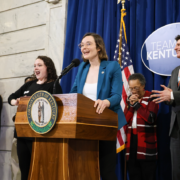
Kentucky Lt. Gov. Jacqueline Coleman speaks at a podium at the 2026 Fairness Rally at the Kentucky State Capitol

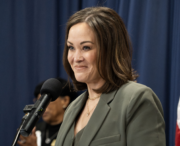
Kentucky Lt. Gov. Jacqueline Coleman announces run for governor

FRANKFORT — It’s official: Kentucky Lt. Gov. Jacqueline Coleman is running for governor.

After two terms as Democratic Gov. Andy Beshear’s second-in-command, Coleman announced Monday morning that she will be running for Kentucky’s highest office in 2027.

Standing in front of the Kentucky Hall of Governors inside the Thomas D. Clark Center for Kentucky History in Frankfort, Coleman noted Kentucky has only ever had one woman run the commonwealth.

It is time to change that, she said.

Coleman spent the last two years weighing the decision to run, she said, hearing from Kentuckians on what they want in their next governor.

“It’s crystal clear: they want someone who will show up, listen and focus on the issues that truly matter to their families,” Coleman said. They want someone who will stand against “the chaos and toxic negativity coming out of Washington, D.C.” and “not someone who is distracted by the culture war of the day.”

“If you’re looking for somebody to talk less about politicians and more about you, for someone who listens more than they talk, here she is,” she said. 

Kentucky limits governors to two consecutive four-year terms, so Beshear — consistently one of the country’s most popular Democratic governors, despite being in a red state — cannot run for the office again.

But her time in the Beshear-Coleman administration is heavily influencing how she hopes to approach her own administration, should she be elected, saying now is not the time to take the foot off the gas.

In front of a crowd of labor and public education leaders, Democratic lawmakers, and the media, she outlined the broad strokes of a game plan focused on continuing Kentucky’s economic development success, while bolstering public education and strengthening health care access — including access to mental health supports.

As a former public school educator and basketball coach, Coleman has routinely served as a cornerstone to one of the administration’s top priorities: public education. She doesn’t plan on letting up on that, saying she will be in “coach mode” while in office.

The administration has also routinely been vocally pro-LGBTQ+, with the duo regularly headlining the annual Fairness Rally at the state Capitol. Coleman was the first constitutional officer in Kentucky to attend a pride event, and she’s attended several across the state since being elected in 2019.

Coleman and Beshear have also been visible advocates during the 2026 Kentucky legislative session, which saw a wave of anti-LGBTQ+ legislation filed in the General Assembly. No anti-LGBTQ+ bills ultimately passed this year, though.

This story has been updated.

A person wearing a black Pride t-shirt reading "Let our trans kids live to become trans adults" at a community gathering in Kentucky

Anti-Trans Teacher Amendment Fails in Kentucky’s 2026 Legislative Session

FRANKFORT — As anticipated, a last-second attempt to keep transgender people from teaching in Kentucky has failed.

Kentucky lawmakers wrapped up the bulk of their 2026 legislative session late Wednesday night, going home without bringing up House Bill 759 — a previously uncontroversial bill around alternative teaching certifications that got a late floor amendment that sought to block trans people from teaching altogether. 

Wednesday night was the deadline for Kentucky’s Republican-dominated legislature to pass any bills that Democrat Gov. Andy Beshear may veto in order to have enough time to override him during the final two days of session later this month.

It is possible HB 759 can come up for a vote during those last two days, but the amendment is still expected to be withdrawn prior to a vote on the unchanged bill. If the amendment somehow gets through, Beshear is likely to veto it and lawmakers would not be able to override him.

With the amendment’s failure, 2026 marked the first legislative session in a few years without any new anti-LGBTQ+ laws in Kentucky. 

Kentucky lawmakers filed nearly a dozen pieces of legislation this year aimed at the LGBTQ+ community, including restricting health care access, blocking trans people from using restrooms tied to their gender identity in government buildings, and limiting drag shows and performers. Almost all of them did not move in the legislative process. 

Sen. Gex Williams, R-Verona, initially filed the anti-trans teacher bill in early March as Senate Bill 351. It sought to keep trans people from getting and keeping teaching certifications, requiring anyone reported as potentially being trans to undergo medical exams and to provide those results to state education officials in order to stay in the classroom. 

Health professionals would’ve also been required to use outdated psychological terms and criteria to diagnose those who are trans, potentially meaning labeling them as “mentally ill” despite modern health standards disagreeing with that assertion. 

SB 351 did not move in the legislative process, and Williams withdrew the bill last week. He quickly filed the same language as a floor amendment to HB 759 in hopes of passing it there. 

Filing an existing but failing bill as a floor amendment is a legislative maneuver called piggybacking, and it is against the Senate’s rules. Sources repeatedly confirmed to Queer Kentucky that the Senate planned on enforcing those rules and Williams would either withdraw the amendment or it would be ruled out of order. 

When lawmakers gaveled in Tuesday, they were quick to take HB 759 off of the consent calendar where it was scheduled for a quick and easy vote, but they never added the bill to the orders of the day so it could get a full floor vote and so the amendment could be formally axed. 

Other resources to stay informed:

The Power of Trans Visibility: Councilwoman Emma Curtis

On the evening of November 5, 2024, as polling sites closed and results began trickling in for local Kentucky races, Emma Curtis, a then 28-year-old Lexington resident, anxiously awaited news of her bid for the Lexington-Fayette Urban County Council, District 4 seat. Curtis, one of over a dozen LGBTQ+ candidates on the ballot in different races that year, received a text message from her best friend that read, “Congratulations councilwoman,” moments before her campaign team could confirm the results.

“She beat us to it by about a minute,” said Curtis about the 60-seconds between the message arriving and confirming the results with her team in disbelief.

Councilwoman Emma Curtis hugs Kentucky State Representative Anne Donworth after winning her race on election night. Photo Credit: Karrie Bickett

Election night, Emma Curtis hugs State Representative Anne Donworth after finding out the results. Photo Credit: Karrie Bickett

After months of campaigning, on the evening of Election Day, Curtis became the first transgender person to be elected to a city council seat in Kentucky. The historical moment also made her the second transgender person to hold public office in the state. The first was Rebecca Blankenship, who was elected to the Berea Independent School District Board in November 2022.

As a trans advocate, Curtis has made significant strides in her first 67 days in office. Initially recognized locally for her work in the LGBTQ+ community, she now sees her role as much broader. “I am humanizing trans people,” Curtis states, reflecting on her impact. She believes her presence in office is normalizing trans leadership, as community members increasingly focus on local issues like potholes and clearer roads, seeking solutions from capable leaders regardless of their sexual or gender identity. Curtis calls it getting the job done and “a quiet form of activism.”

While fulfilling the duties her constituents elected her to do, she doesn’t forget what made District 4 feel like home. “I felt safe to be who I am,” Curtis said. Remembering that sentiment, she believes trans elected officials can do both; serve their constituents and protect LGBTQ+ rights. 

“I will fight to make sure that Lexington continues to be a place where we welcome diversity as an asset,” Curtis said. Recently, she listened to her community’s request to keep the principles under diversity, equity and inclusion initiatives in place and was able to keep the diversity officer role in Fayette County. Despite the new Trump administration revoking DEI efforts nationwide.

Councilwoman Curtis addresses a crowd at the 2025 Fairness Rally. Photo credit: Kira Meador

Councilwoman Curtis addresses a crowd at the 2025 Fairness Rally. Photo credit: Kira Meador

Curtis’s election reflects a growing trend of LGBTQ+ representation in local government, something that once inspired her. On November 7, 2017 Curtis watched Senator Danica Roem, a transgender elected official, win her election in Virginia. The televised moment empowered Curtis to begin her transition. 

“I had no excuse,” said Curtis about finding hope from Senator Roems win, at the same time the first Trump administration was underway. 

Just like Senator Roem served as a source of inspiration for Curtis, she hopes her win will do the same for others. “I think that my experience is proof of the value in visibility,” Curtis said, hoping other trans youth will feel compelled to pursue elected office. 

Senator Danica Roem and Councilwoman Emma Curtis at the LGBTQ+ Victory Institute. Photo credit: Victory Institute

“Right now trans Kentuckians, Queer Kentuckians, are not in the rooms where decisions are being made about our lives and our bodies,” acknowledged Curtis, about the current state of Kentucky and anti-trans bills on the agenda. 

Despite the fear of these bills moving forward, Curtis still wants Queer youth to know, “if we continue to show up and do the work, we are eventually going to win.” In an Instagram post shared earlier this year on Curtis’s account, she looked back at a time she too felt unwelcomed in the Senate. The image from 2023 shows Curtis watching from the Gallery of the Kentucky State Capitol, as the Senate passed the Senate Bill 150, targeting LGBTQ+ youth, specifically trans youth. 

Curtis recalls feeling “powerless” in that moment. The same post includes another image; Curtis this year entering the Senate Chambers with a smile on her face as a councilwoman. Part of the caption reading, “Keep showing up. Keep doing the work. Especially when it feels impossible.”

As Curtis becomes a household name for Kentuckians, many knowing her for the first time in her councilwoman role, she still describes herself as, “a big ole dork, who loves punk rock and loves Kentucky, and wants to leave this place better than I found it.”


What happens to marginalized groups in a DOGE Eat KOGE World?

Since originality is dead and redundancy is in—Kentucky has been quick to join the list of states mirroring the new, and legally questionable, Department of Governmental Efficiency or DOGE at the state level. 

The proposed Kentucky Senate Bill 257 (SB 257) aims to establish the Office of Government Efficiency within the Auditor of Public Accounts, tasked with evaluating and recommending improvements to the efficiency, cost-effectiveness, and performance of state government agencies, programs, and operations. 

Aiming to cut waste and be more efficient is good. I am annoyingly known to be very efficient with how much I have to talk, aiming for fewer words because I don’t love hearing my own voice. I also have had relationships struggle because of my incessant need to be efficient…like looking up the EXACT time to head to dinner based on traffic patterns– so far be it from me to criticize anyone wanting to work at efficiency. I am one of you.

But what the proposed Kentucky office, or KOGE as they wish to be called, doesn’t factor in are the possible inadvertent negative impacts on marginalized groups, including LGBTQ individuals and people of color. 

As history has shown, when the costs start getting cut—stuff for people who are of the lesser regarded class, aka the others, are often first on the chopping block. Efficiency initiatives often lead to budget cuts or restructuring of programs deemed non-essential. Services specifically supporting marginalized communities, such as LGBTQ health programs or minority outreach initiatives, might be at risk if they are not prioritized, thereby reducing access to critical resources for these populations.

A primary focus on cost-cutting may also neglect to factor in the importance of equity. Yes equity, that word some people are now trying to paint as a negative when really it is anything but. A valid concern with KOGE is how it would handle programs and services designed to address systemic disparities which pose a risk of being undervalued if their benefits are not immediately quantifiable in economic terms, potentially exacerbating existing inequalities. Further, without explicit inclusion of diverse perspectives in the evaluation process, the unique needs of marginalized groups might be overlooked. This oversight can result in recommendations that do not account for the challenges faced by these communities, leading to policies that are not inclusive.

A more tangible fear I hold relates to an office I hold dear to my heart. As the former Executive Director of the Kentucky Commission on Human Rights, I value the mission and purpose of the agency. Past state budgets, not so much. And I know firsthand the importance of the work being done there to this day. When we can look to the federal model of DOGE that has used an approach that seems kind to call “control find” as its guiding practice, I fear what happens to an agency that’s main mission is to “safeguard all individuals within the state from discrimination.”  When the federal version is closing buildings referencing the Civil Rights Movement or looking for things that use the word women, or Black, or queer and laying them out for more scrutiny—what happens with an agency tasked with protecting people who are discriminated against for being a woman, or Black, or queer? Does KOGE make it easier to fire or choose to not hire a queer or Black applicant? Even if that isn’t the intention, the chilling effect on the work of an agency can be pretty severe. On top of open discrimination, this can lead to increased unemployment among populations already facing employment challenges.

Kentucky rarely leads on things outside of bourbon, basketball, and horses. The desire to be one of the first states to emulate DOGE at the state level is befuddling. Why rush? State legislatures already have sweeping authority to monitor and provide oversight of the same things KOGE seeks to address. Does it have a cool name that gets a tweet, sorry X, from Elon Musk? Probably not, but the purpose can be carried out without endangering vital services to marginalized communities. But then again, isn’t it super-efficient to have multiple offices doing the same thing?


Pin It on Pinterest