How Rosie’s Tavern Became the Heart of Northern Kentucky’s Gayborhood


Corner bars are the beating hearts of many neighborhoods. They provide comfortable places for relaxation and community building and they are a popular way for entrepreneurs to be their own boss. Rosie’s Tavern in Covington’s MainStrasse neighborhood ticks all those boxes and then some.
Since 1990, it’s been a queer-owned safe place for people in Greater Cincinnati’s LGBTQ+ communities to drink and socialize without the harassment and surveillance found in other bars. Rosie’s Tavern is an institution that anchors a growing Northern Kentucky gayborhood with queer homeowners and renters, entrepreneurs, and a heavily queer service industry workforce. MainStrasse, once a German-themed tourist destination, now hosts popular annual festivals that draw people from far beyond the Ohio River Valley.
For 36 years, Rosie’s has been part of it all and an important part of Covington and the region’s queer history. “It’s a queer space that’s stood for over 30 something years,” says Covington historian Jake Hogue. He should know. His 2025 book, “Cincinnati Before Stonewall,” chronicles the early history of queer culture in the Cincinnati region was released in May and he’s been a longtime Rosie’s patron. “Rosie’s was one of the first bars I ever went to.”
Bars, bookstores, galleries and parks comprise a small but significant number of places queer people have created or adapted as safe spaces. Many of them occupy sites where earlier businesses catered to straight consumers before being rented or bought by queer folk.
Rosie’s Tavern
A Northern Kentucky Queer Landmark for 36 Years
Early 1890s
The Corner Building Is Born
A Victorian commercial building rises at 643 Bakewell St. in Covington’s MainStrasse neighborhood. The same brick structure stands today.
1920s – 1940s
A Neighborhood Storefront
A Kroger’s grocery in the ’20s, a café in the ’30s, then an upholstery shop and radio repair in the ’40s.
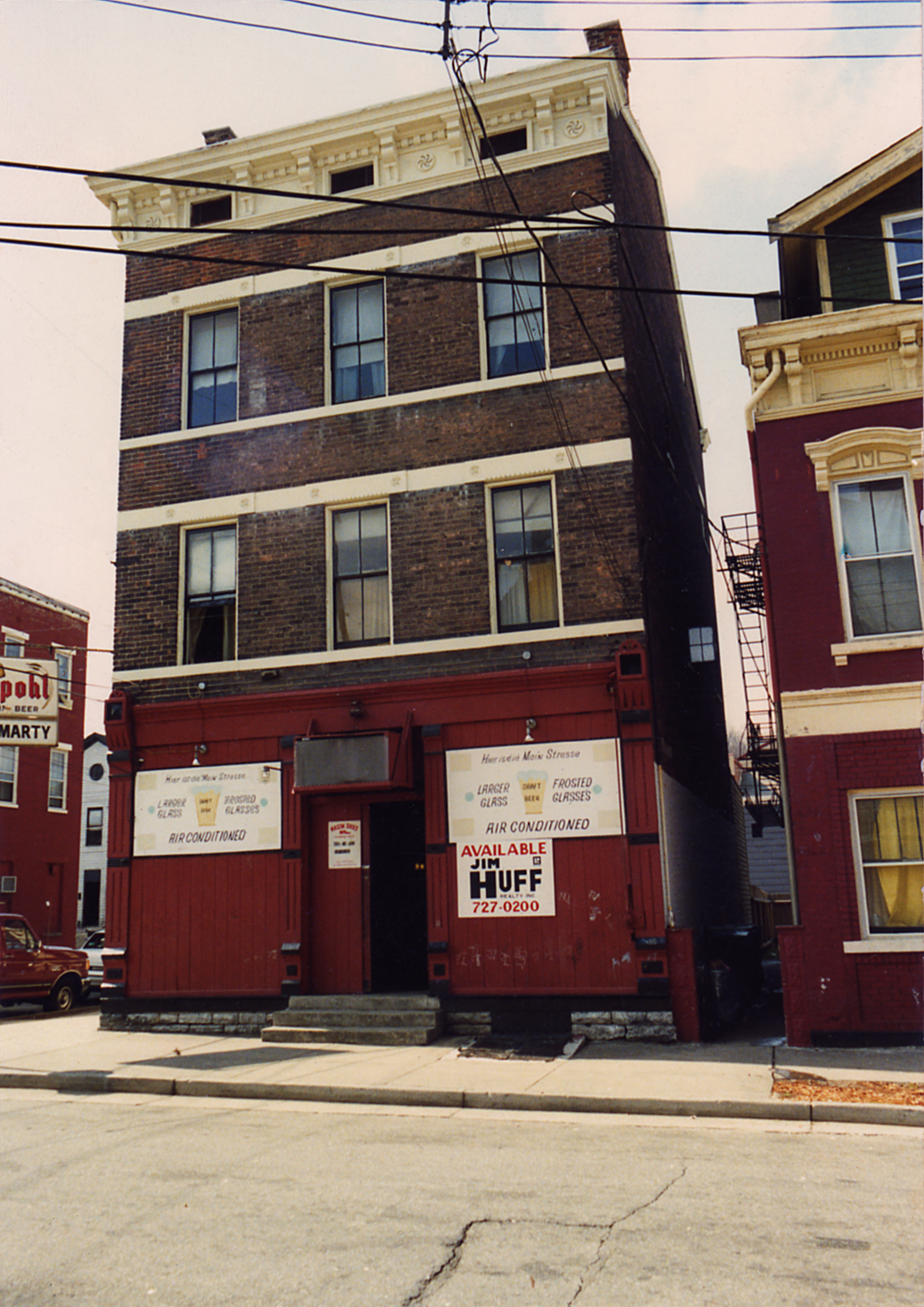
1944 – 1952
Tiny’s Tavern & the Bee and Dee
Bernard Janson buys the building in 1944, renting to Henry Cappel who opens Tiny’s Tavern. By 1952 the Jansons are sole owners.
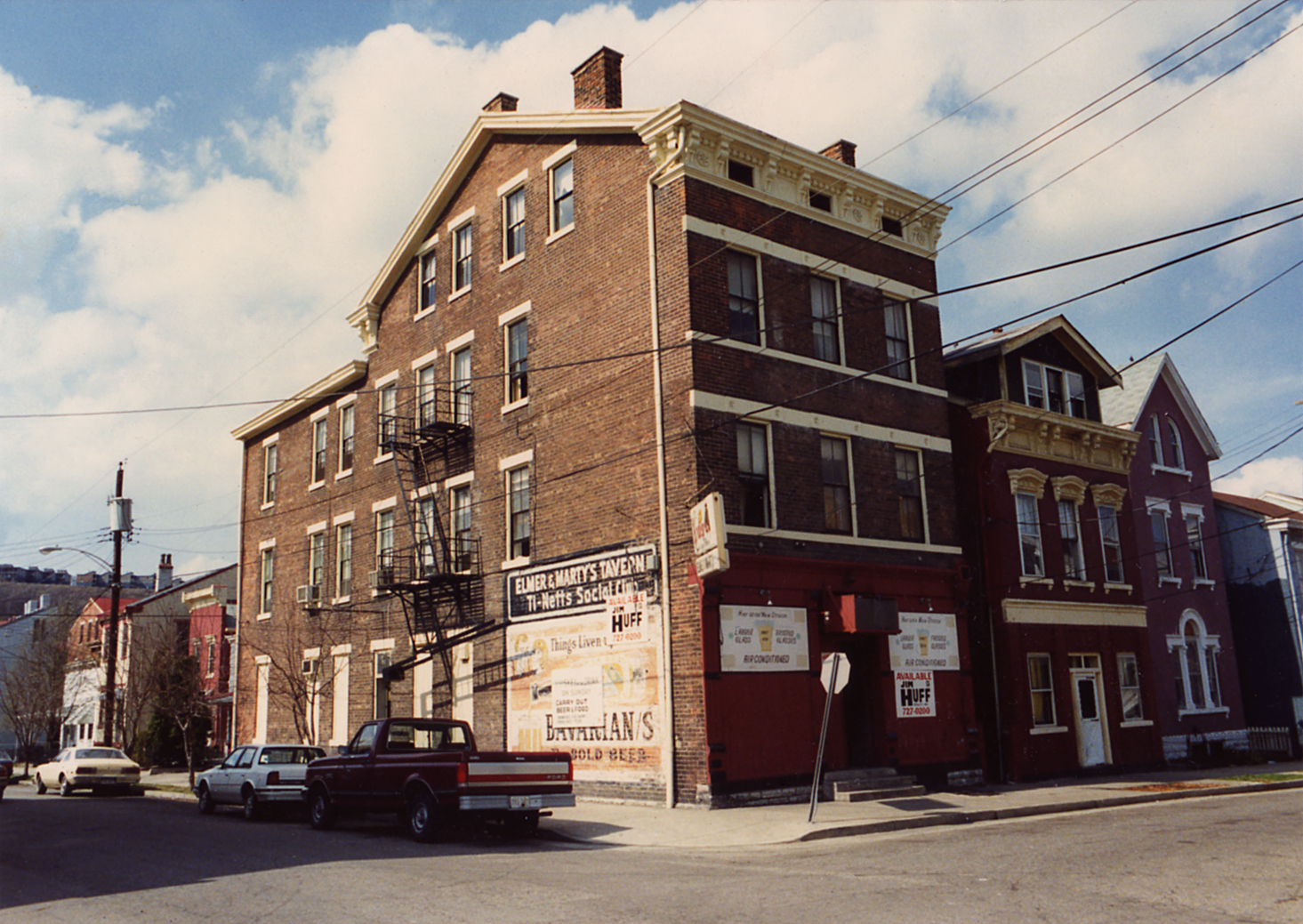
1960 – 1990
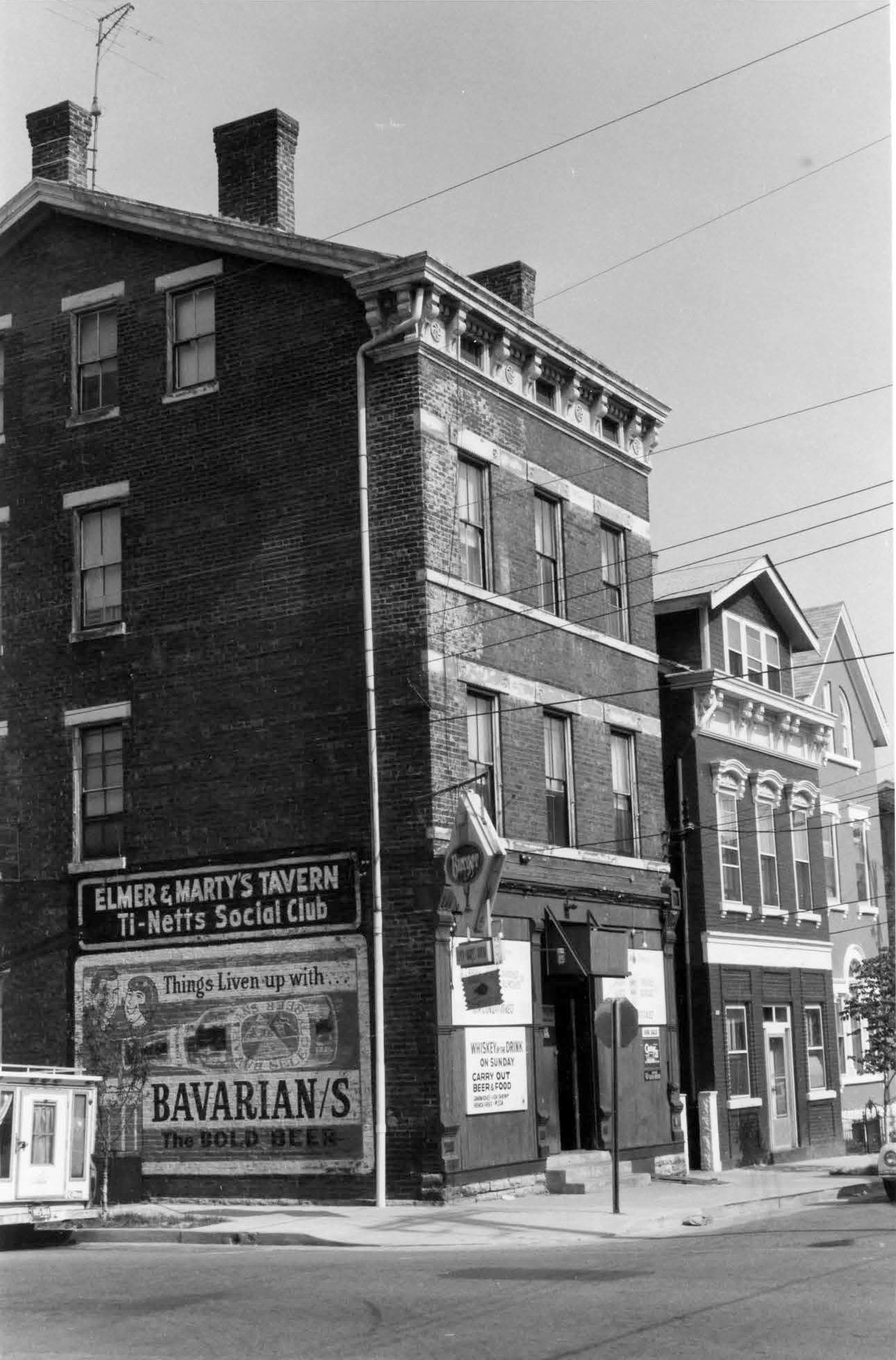
Elmer & Marty’s Tavern
Elmer and Martha Smith purchase in 1960 and run it for three decades. The vintage Bavarian’s beer mural still marks the side wall.
Photo courtesy of Carl Fox.
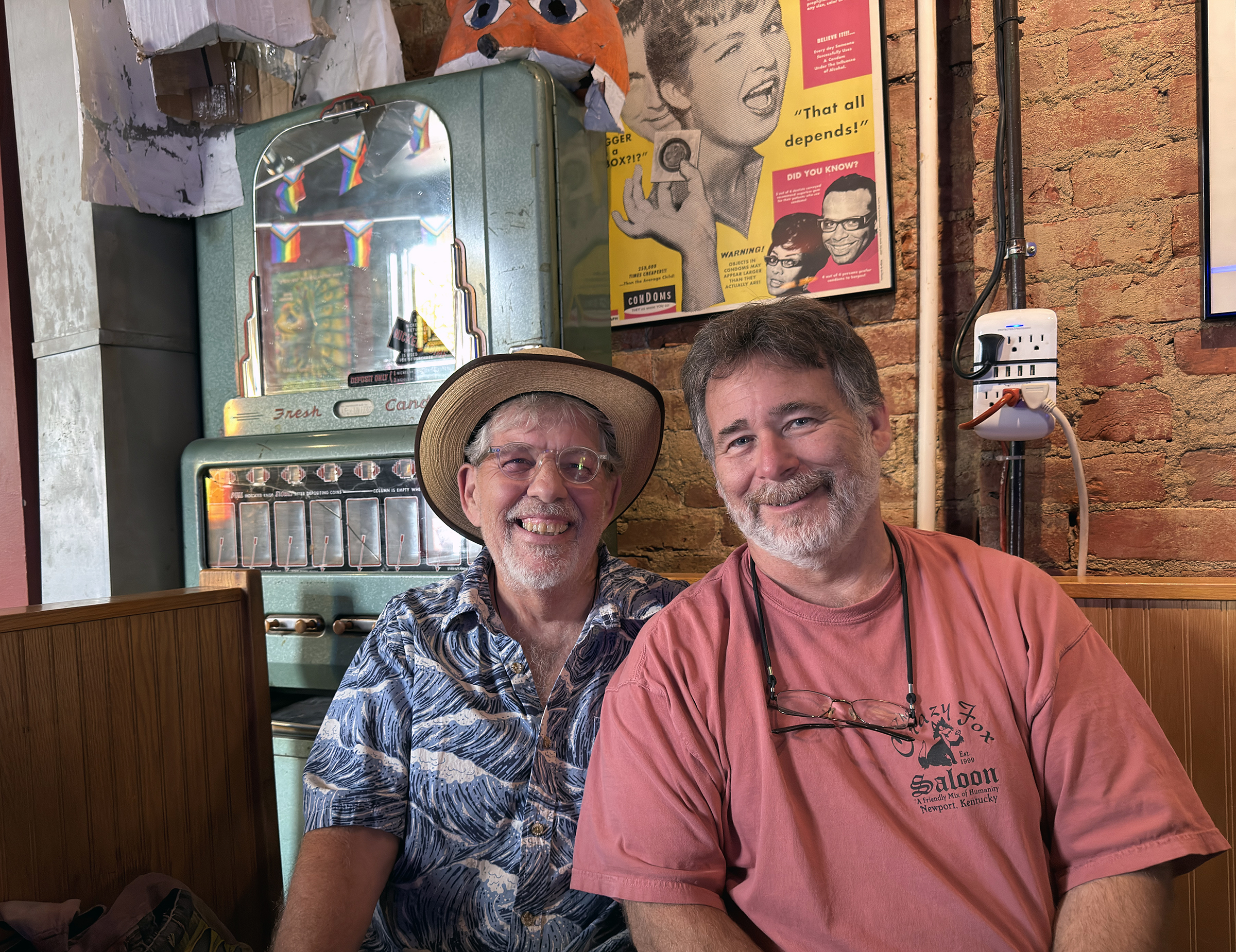
1990 – 1998 · The Founder
Carl Fox Buys & Builds Rosie’s
Carl Fox purchases the bar with husband Greg Landrum — but on closing day Landrum is hospitalized with AIDS. Fox proceeds alone, renames it Rosie’s after his mother, and runs it for eight years. He builds Northern Kentucky’s first explicitly LGBTQ+ safe space from the ground up. Pictured today with partner Terry Bond.
Photo by David S. Rotenstein.
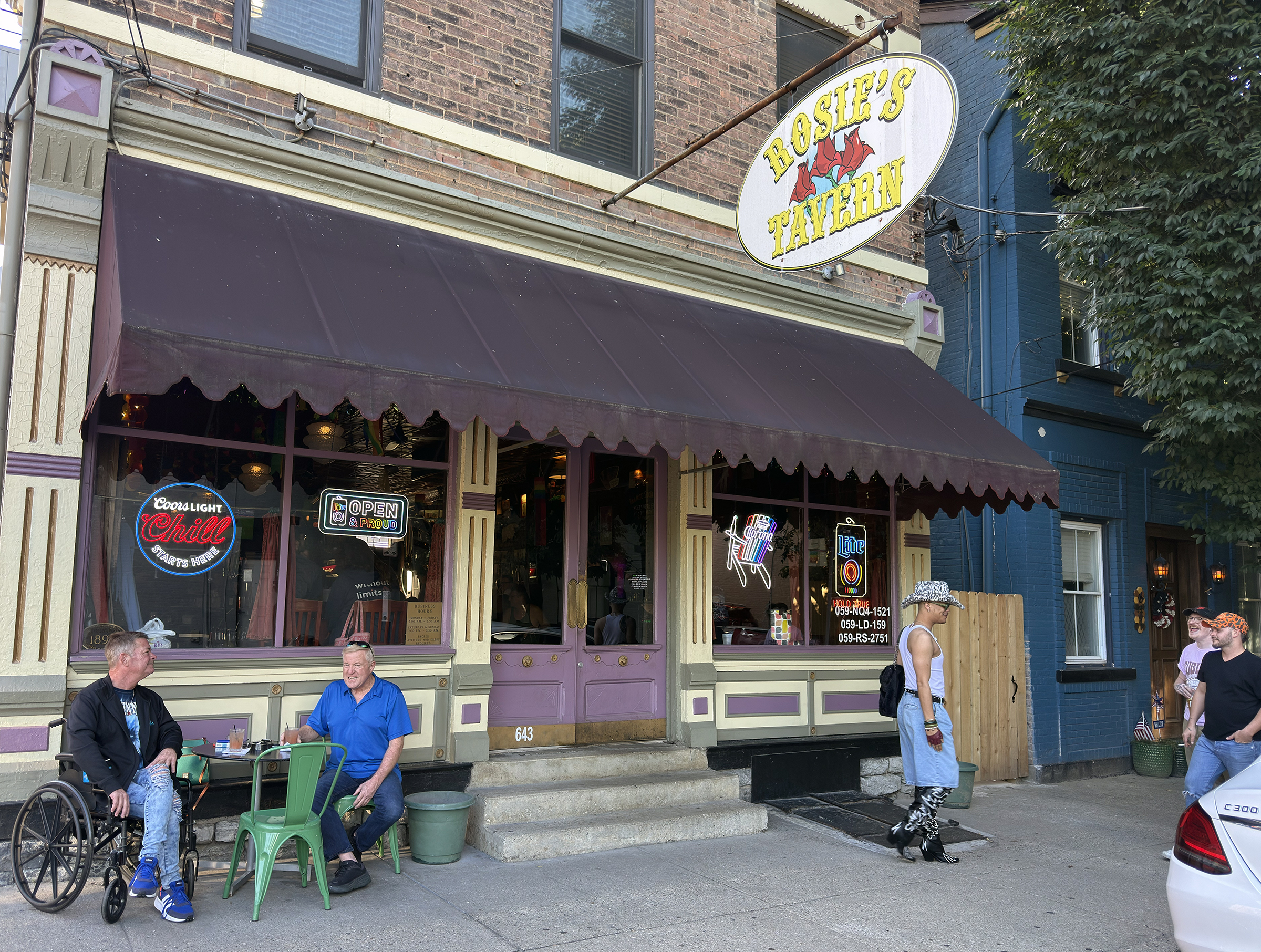
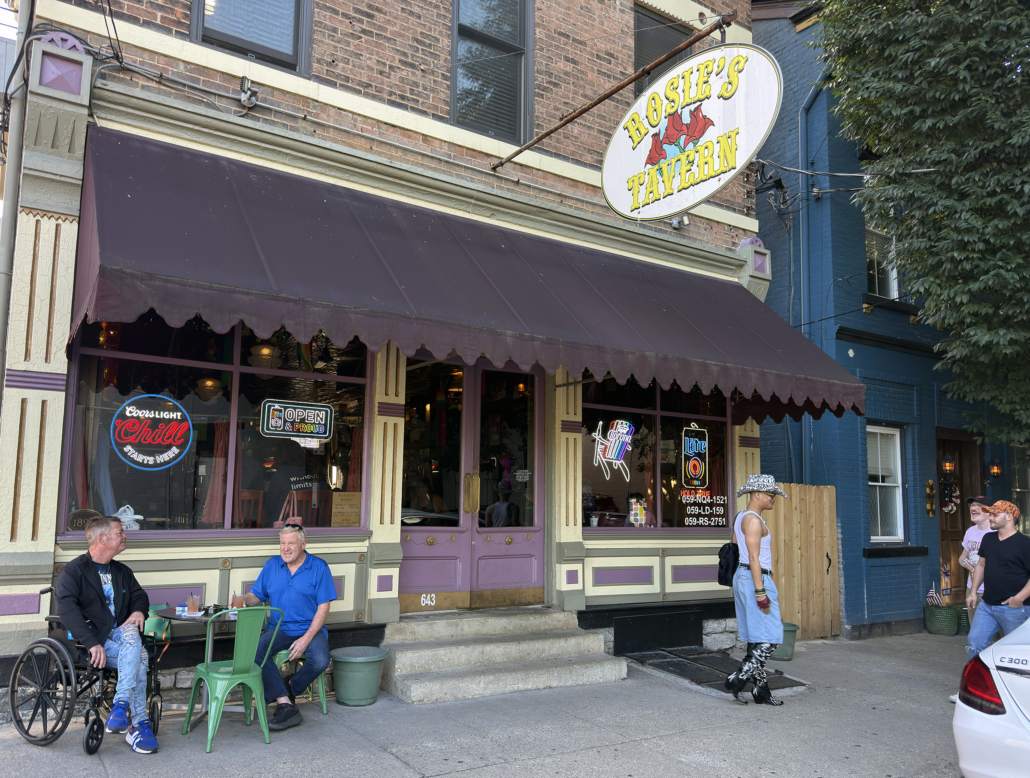
Rosie’s Today
Open & Proud
The same corner where Fox opened Rosie’s in 1990. Decades of queer ownership, community, and visibility — from the rainbow flags to the “Open & Proud” sign.
Photo by David S. Rotenstein.
1992 – 1995
Loss & Resilience in the AIDS Crisis
Greg Landrum dies in 1992. Co-owner Bill Bolyard dies in 1995. Fox loses his husband and two partners to AIDS while hosting annual cutathons for local AIDS organizations.
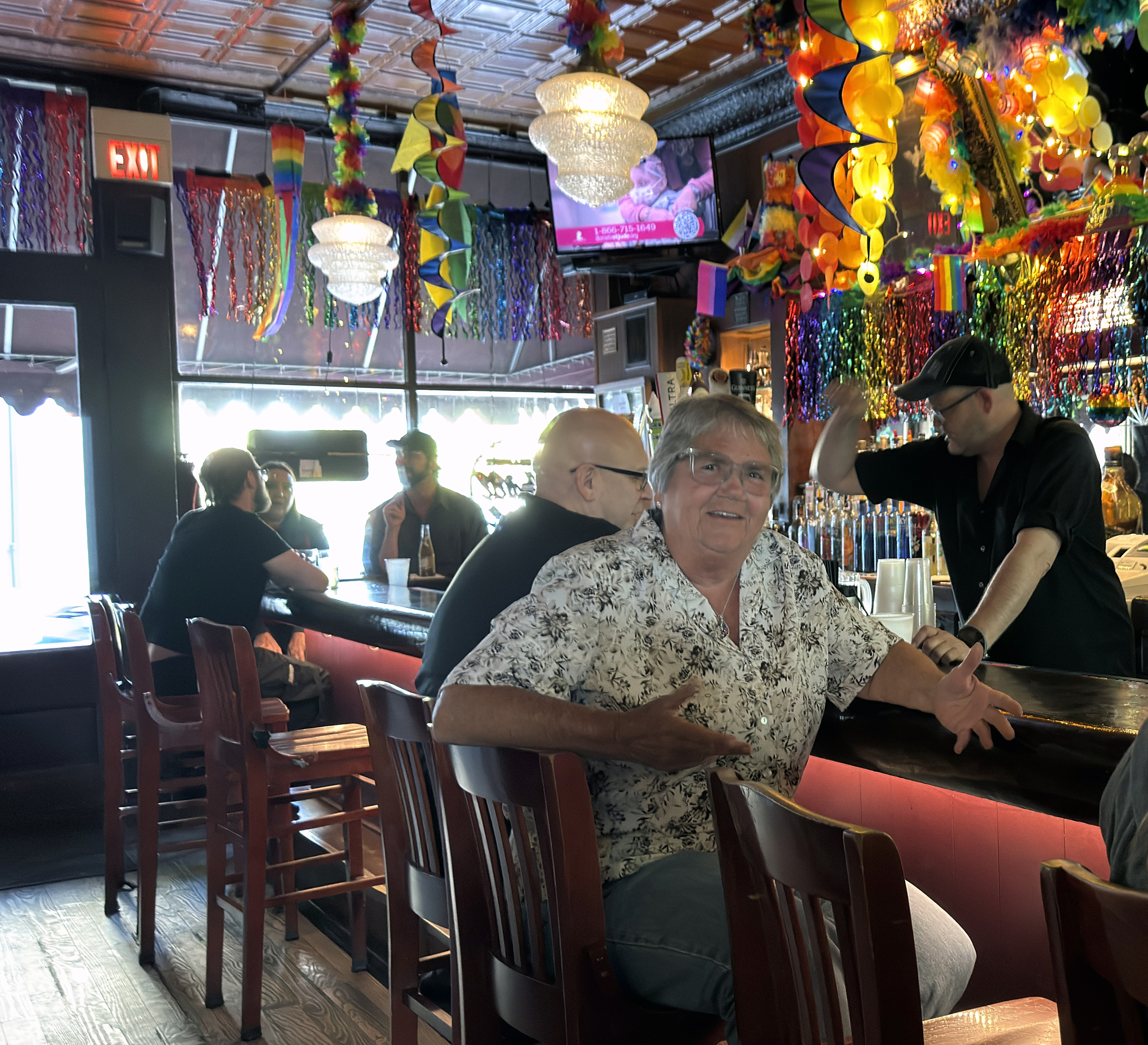
1998
Dianne Gamble Takes the Helm
Fox sells to Dianne Gamble, who invests in the space, builds a loyal long-term staff, and deepens Rosie’s roots as the Northern Kentucky LGBTQ+ anchor.
Photo by David S. Rotenstein.
2003 – 2008
MainStrasse Becomes a Gayborhood
Covington enacts LGBTQ+ anti-discrimination protections (2003). Shawn Masters becomes the first openly gay Covington City Commissioner (2008).
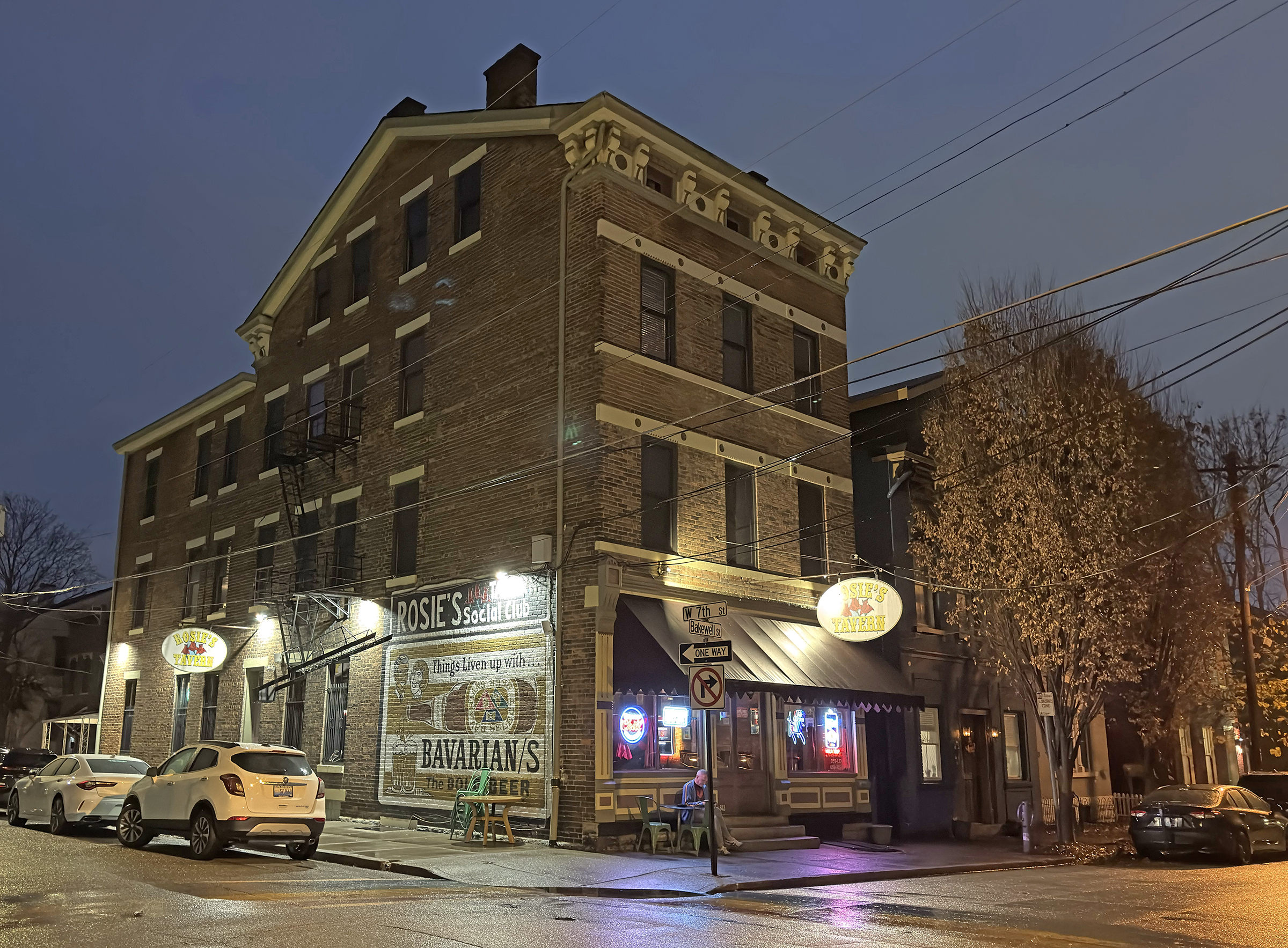
36 Years & Counting
A Living Landmark
Rosie’s anchors the Northern Kentucky gayborhood. “Regular, regular, regular … it’s a little family here.”
Photo by David S. Rotenstein.
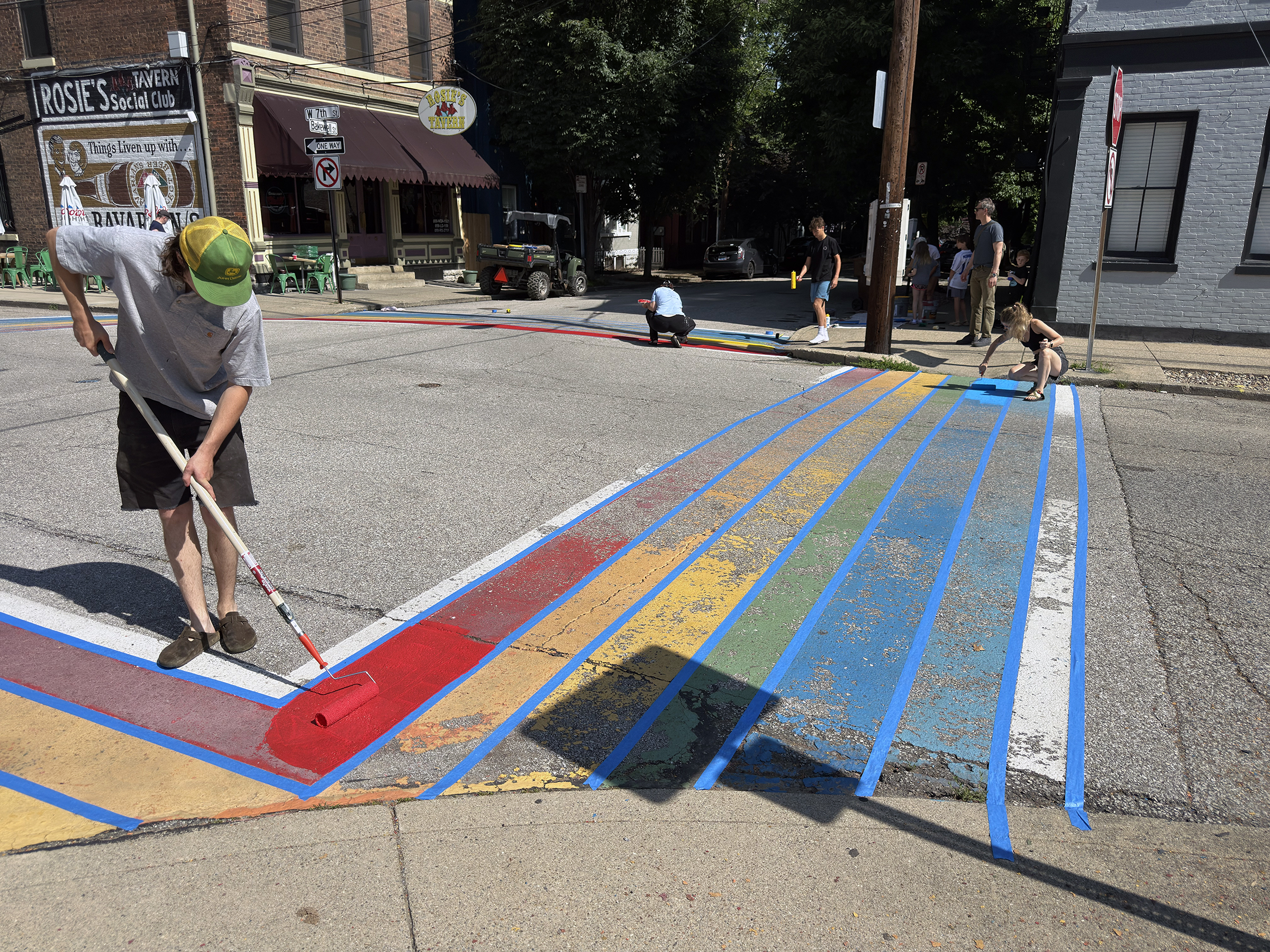
Pride 2026
Rainbow Crosswalks, Refreshed
Volunteers repaint the rainbow crosswalks on Bakewell Street ahead of Pride 2026.
Photo by David S. Rotenstein.
Milestones marked by many losses
Rosie’s occupies a building constructed in the early 1890s, according to historic maps. In the 1920s, a Kroger’s store occupied the 643 Bakewell St. storefront at the corner of Bakewell and West Seventh streets. The following decade, Herman Huntsman (a Kenton County constable) operated a café there. In the 1940s, an upholstery business and radio shop rented the storefront.
In 1944, Bernard and Dolores Janson bought the building and rented the storefront to Henry Cappel, who opened Tiny’s Tavern. Bernard Janson joined Cappel in running the bar in 1950 and by 1952 the Jansons were the only owners. They renamed the bar the Bee and Dee Tavern.
Elmer and Martha “Marty” Smith bought the building and business in 1960 and changed the bar’s name to Elmer and Marty’s. The couple had married in 1945 and they split in the 1970s. They sold the bar to Carl Fox and his husband Greg Landrum in 1990.
Landrum, who worked in high-tech, had convinced Fox, a City of Cincinnati employee, to buy the neighborhood bar from the Smiths, but he became ill as negotiations ended.
“By the week before closing, he was coughing really continuously, all the time. He could not catch his breath,” Fox recalls. The morning of the closing, Landrum was feverish and Fox rushed him to a hospital. Landrum asked Fox to go through with the closing, alone.
Tests confirmed that Landrum had AIDS and he died two years later, in 1992.
Fox took the lead on rehabbing the bar. He cleaned it and renamed it Rosie’s, after his mother. Fox got rid of layers of caked nicotine, the remnants of earlier gambling operations and troublesome regulars, including drug dealers and white supremacists.
Fox quickly turned Rosie’s into a regional queer safe space. It wasn’t Covington’s first gay bar or even the first place with public accommodations welcoming to queer people.
“As a gay man, openly out and living my life, there were very few places in Covington I felt safe at the time I bought that bar,” Fox says. “But I was determined.”
In the eight years that Fox owned Rosie’s, he lost his husband and another partner, Bill Bolyard. A hospitality professional, Bolyard had the skills to help Fox keep Rosie’s going.
“Billy and I had been friends. He was managing a bar down in Louisville. I had never managed a bar except for Rosie’s,” says Fox.
Up to that point, Rosie’s was operating Rosie’s as a gay-friendly neighborhood bar, not an explicitly gay bar. “I never called it a gay bar,” Fox explains. “He [Bolyard] would come under one condition, that the bar would come out.”
Bolyard was a co-owner with Fox until died in 1995, also from AIDS.
Fox’s third business partner, Mike Smith, was straight. “Even with Mike being straight, there’s no guarantee of being safe either,” says Fox, referring to concerns over AIDS and violent harassment directed towards the bar and its patrons.
Fox recited a long list of episodes, including early police harassment. One night as he was closing up, Fox heard anti-gay slurs being shouted outside. “I look out and there’s a Covington police officer, full uniform.”
Fox told the officer, “’You’re accosting my customer,’ basically calling him a fag,” he recalls.
Another episode involved Smith. One of MainStrasse’s many festivals, typically held two blocks away on the Sixth Street promenade spilled over into the residential neighborhood where Rosie’s is located. Revelers were harassing the bar’s customers.
“Two juveniles grabbed one of the barriers and broke Mike’s arm,” Fox says.
Despite those episodes and others, Rosie’s became a popular gay safe space. Fox began offering annual “cutathons” to raise money for AIDS outreach. Stylists, manicurists and massage therapists donated their time and all proceeds went to local organizations.
A New Owner Keeps Old Customers
By 1998, the pressures of running the bar and defending its space took its toll. Fox sold Rosie’s to Dianne Gamble. A Cincinnati native who rescued greyhounds and ran a catalog business, Gamble had recently lost her partner and she was looking for a change. She had recalled patronizing Rosie’s and she heard that it was for sale.
“I could make this work,” Gamble says that she told herself.
Both Gamble and Fox describe negotiations that got testy. Their accounts of how Rosie’s kept its name differ. Fox claims that he asked for it and Gamble says she kept it because she decided to give the name to a new red dog she got inside the bar. Whichever version reflects reality, the name endures.
The dispute captures the style of adversarial relationship the pair has cultivated since 1998. Gamble asserts that she turned Rosie’s around after investing new energy and money into the business. Fox clings to the point that he founded Rosie’s and made it possible for the bar to survive in a transitioning neighborhood.
Gamble recalls that the neighborhood still had a lot of residents who hailed from rural Kentucky. She used a name for them that she asked not be used in this story. It is a derogatory term used widely among Covington natives.
“The neighborhood was bad,” says Gamble. “They didn’t pick on me too much, but I got spit on a lot.”
Opinions differ on when MainStrasse began transitioning into a gayborhood or gay village. Gamble thinks it happened after Barack Obama’s election in 2008. Fox suggests an earlier date. “I would say, probably by ‘95, it started to change a little bit,” he says.
Fox’s version tracks more closely with things happening beyond the bar’s doors. In 2003, Covington became Kentucky’s third city to enact protections against discrimination against gays and lesbians. In 2008, MainStrasse gallery owner Shawn Masters became the first openly gay person to be elected to Covington’s City Commission.
Gamble built on Fox’s success. For a while, she continued the cutathons. She also participated in the neighborhood’s annual Mardi Gras parade. “I used to do the big heads. I used to be in the parade and I just quit doing that too,” she says.
Gamble focused on making Rosie’s a profitable, attractive business that would support her and her employees. She has one bartender who’s been there for 22 years, others have been there for more than a decade.
“I needed to make money because I had my bartenders, so I had to take care of them, make sure they make the money,” Gamble says.
On a recent June night, the bar filled with revelers there to celebrate one of the bartender’s birthdays. It’s an annual event. Longtime patrons say the bartenders are one thing that keeps them coming back.
“That’s one of the reasons we all come back, too, is because the bartenders are some of our best friends, and we start knowing them from coming in there,” says Heather, a straight woman who once lived across the street.
“I’ve been coming since Carl Fox owned it,” says Wayne, a 62-year-old gay man. “It’s always been a neighborhood bar … but it was people that were more comfortable being around gay people.”
He remembers all of the gay bars that have come and gone in Covington. Wayne and his friend Tom say the secret to Rosie’s success is the regulars. Tom begins pointing around the packed bar, “Regular, regular, regular, there’s Dianne — it’s a little family here.”