Tag Archive for: gay bars

Ron Clemons, Cincinnati community activist and retired social worker, seated on outdoor steps in a black-and-white portrait photograph.

Beyond the Bar: How Cincinnati/NKY Queer Spaces Are Evolving

In an online discussion that recently came up among members of the local queer community in Cincinnati there was one question that stood out: “Why are all of the queer spaces disappearing?”

In recent years, many LGBTQ+ bars have shuttered due to rising costs of rent and, in some cases, a decrease in patrons. 

Notably in Cincinnati, we’ve lost a few bars over the past few years, but there are still more than a dozen bars that identify as queer and/or queer-friendly. While the number of actual queer-owned establishments has lessened over the years, what constitutes a queer-friendly space is evolving — both taking on the roles of serving the community in material ways, and creating spaces of joy and communion. 

In some ways, what’s perplexing is the limiting definition of queer spaces to just bars as the glue that binds the community. Today, the breadth of queer spaces includes sports leagues, queer choruses and sober bars, and they provide home spaces for other organizations doing mutual aid and organizing work.

When I first moved to Cincinnati in the spring of 1975, bars and a few churches were some of the only places we had to congregate, socialize and strategize. Organizations and clubs would begin appearing a few years later, such as the  Cincinnati Bowling League in 1980 and Stonewall Cincinnati in 1982. The bars were instrumental in helping build those and other organizations by providing meeting space and resources for fundraising. They did help to lay the foundations for many of the activities we enjoy today. Queer life started to show itself more outside of bar spaces. In the early 80’s, as it became less dangerous to be out, more and more organizations began to pop up around the city. Social clubs and political organizations became a large part of the queer landscape, and that trend continues today. The organizations give people more options to socialize and connect with other queers and expand the definition of community. 

According to local author, Covington School Board member and business consultant, Kareem Simpson, a black queer man, this is a natural process and necessary for the community to grow and for businesses to survive.

A formal portrait of Kareem Simpson, Covington School Board member and business consultant. He stands with his arms crossed against a dark background, wearing a black button-down shirt and a blue plaid tie. He looks directly into the camera with a composed expression.

Kareem Simpson, Covington School Board member and business consultant, and a Black queer man. Photo courtesy: Kareem Simpson

“Community landscapes have expanded so the community looks different. There are about the same number of bars, but now there are more options in addition to bars,” he said.

“Some bars have changed their programming to stay current and attract more customers, such as Bloom providing a space for BIPOC drag performers and their followers. Others in the community have created spaces that feel more safe to marginalized community members, which in addition to younger people consuming less alcohol, can explain why bars are less busy. People want to feel safe, seen and included so they seek out spaces that provide that element,” Simpson said.

And Joshua Petty-Kayes, member of the newly created Cincinnati LGBTQ City Council Commission, a founder of Treehouse Cincinnati and an accessibility advocate emphasizes that community members want to go to spaces that are accessible. And accessibility isn’t just limited to physical access.

“Accessibility barriers can be based on gender identities, racial as well as physical. People want to be in spaces that feel welcoming and reflect their reality, aka being around others who look like them and share similar experiences. TreeHouse was created to meet that need and provide an alternative community space,” Petty-Kayes explained.

TreeHouse Cincinnati, according to their vision statement, is a resource space that uplifts the programming of the LGBTQ+ Community to promote collaboration, diversity, and intersectionality. Petty-Kayes described providing space for community organizations such as PFLAG, Black Power Initiative, Cincinnati Black Pride and Cincinnati Prime Timers. There’s also a plan to create a library of books being banned by the current federal administration.  

Transform Cincy is another organization that not only provides an alternative to bar spaces. It addresses the growing need for affirming spaces and resources for transgender, nonbinary and gender non-conforming youth and young adults. Co-founded in October 2019 by Tristan Vaught and Nancy Dawson, what began as a free clothing and accessory program has grown into a thriving LGBTQ+ community center serving individuals and families throughout Greater Cincinnati. 

Transform Cincy, Vaught said, serves the community through their CARES model: Community Center, Advocacy, Resources, Education, and Support.

“We continue to provide free, curated wardrobes for transgender and gender-diverse youth and young adults while also offering support groups, legal clinics, social and educational programming, community meals, resource navigation, and opportunities for connection that foster belonging, resilience, and hope,” Vaught said.

Transform Cincy also holds an annual Trans Pride Adult Prom, their signature fundraising event, bringing together LGBTQ+ community members and allies to celebrate while supporting the organization’s life-changing work.

And queer organizations here don’t work in silos. Transform Cincy, for example, partners with organizations including NAMI Southwest Ohio, Beech Acres Parenting Center, Community Shares of Greater Cincinnati, Equality Ohio, and many other community partners to provide professional, affirming services. 

As we witness the rollbacks of our rights and freedoms, expanding the way we view and define Cincinnati LGBTQ+ spaces to be more inclusive of BIPOC and marginalized communities helps to ensure we have safe places to gather, be in community, and celebrate our existence. 
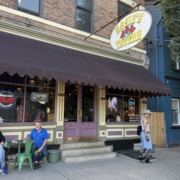
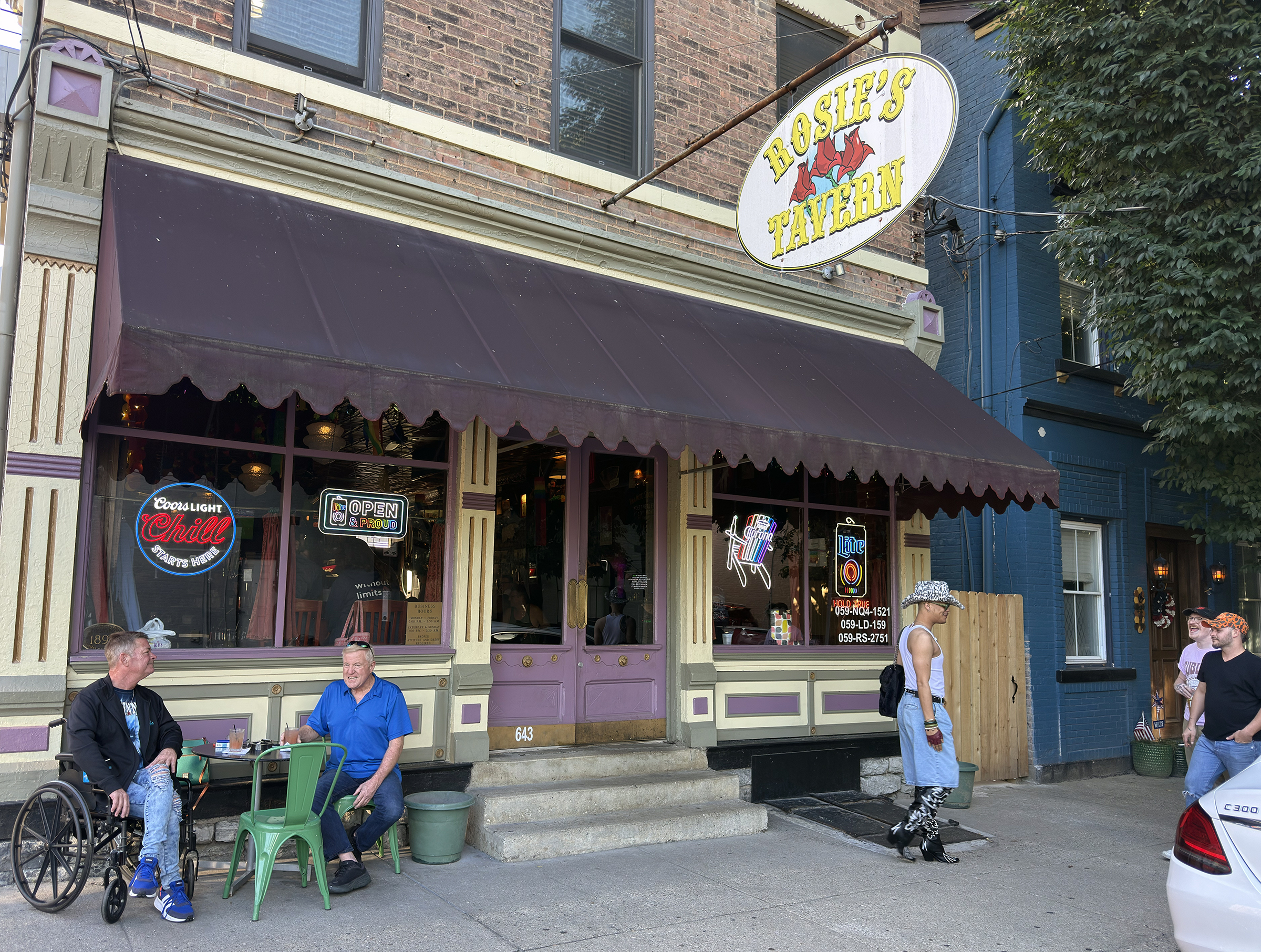
The exterior of Rosie's Tavern in Covington, Kentucky, on a summer afternoon, with patrons sitting outside under a dark awning beneath the bar's oval hanging sign.

How Rosie’s Tavern Became the Heart of Northern Kentucky’s Gayborhood

Corner bars are the beating hearts of many neighborhoods. They provide comfortable places for relaxation and community building and they are a popular way for entrepreneurs to be their own boss. Rosie’s Tavern in Covington’s MainStrasse neighborhood ticks all those boxes and then some.

Since 1990, it’s been a queer-owned safe place for people in Greater Cincinnati’s LGBTQ+ communities to drink and socialize without the harassment and surveillance found in other bars. Rosie’s Tavern is an institution that anchors a growing Northern Kentucky gayborhood with queer homeowners and renters, entrepreneurs, and a heavily queer service industry workforce. MainStrasse, once a German-themed tourist destination, now hosts popular annual festivals that draw people from far beyond the Ohio River Valley.

For 36 years, Rosie’s has been part of it all and an important part of Covington and the region’s queer history. “It’s a queer space that’s stood for over 30 something years,” says Covington historian Jake Hogue. He should know. His 2025 book, “Cincinnati Before Stonewall,” chronicles the early history of queer culture in the Cincinnati region was released in May and he’s been a longtime Rosie’s patron. “Rosie’s was one of the first bars I ever went to.”

Bars, bookstores, galleries and parks comprise a small but significant number of places queer people have created or adapted as safe spaces. Many of them occupy sites where earlier businesses catered to straight consumers before being rented or bought by queer folk.

Queer Kentucky · Covington, Northern Kentucky

Rosie’s Tavern

A Northern Kentucky Queer Landmark for 36 Years


643 Bakewell St., 1980s NRHP photo

Early 1890s

The Corner Building Is Born

A Victorian commercial building rises at 643 Bakewell St. in Covington’s MainStrasse neighborhood. The same brick structure stands today.

1920s – 1940s

A Neighborhood Storefront

A Kroger’s grocery in the ’20s, a café in the ’30s, then an upholstery shop and radio repair in the ’40s.


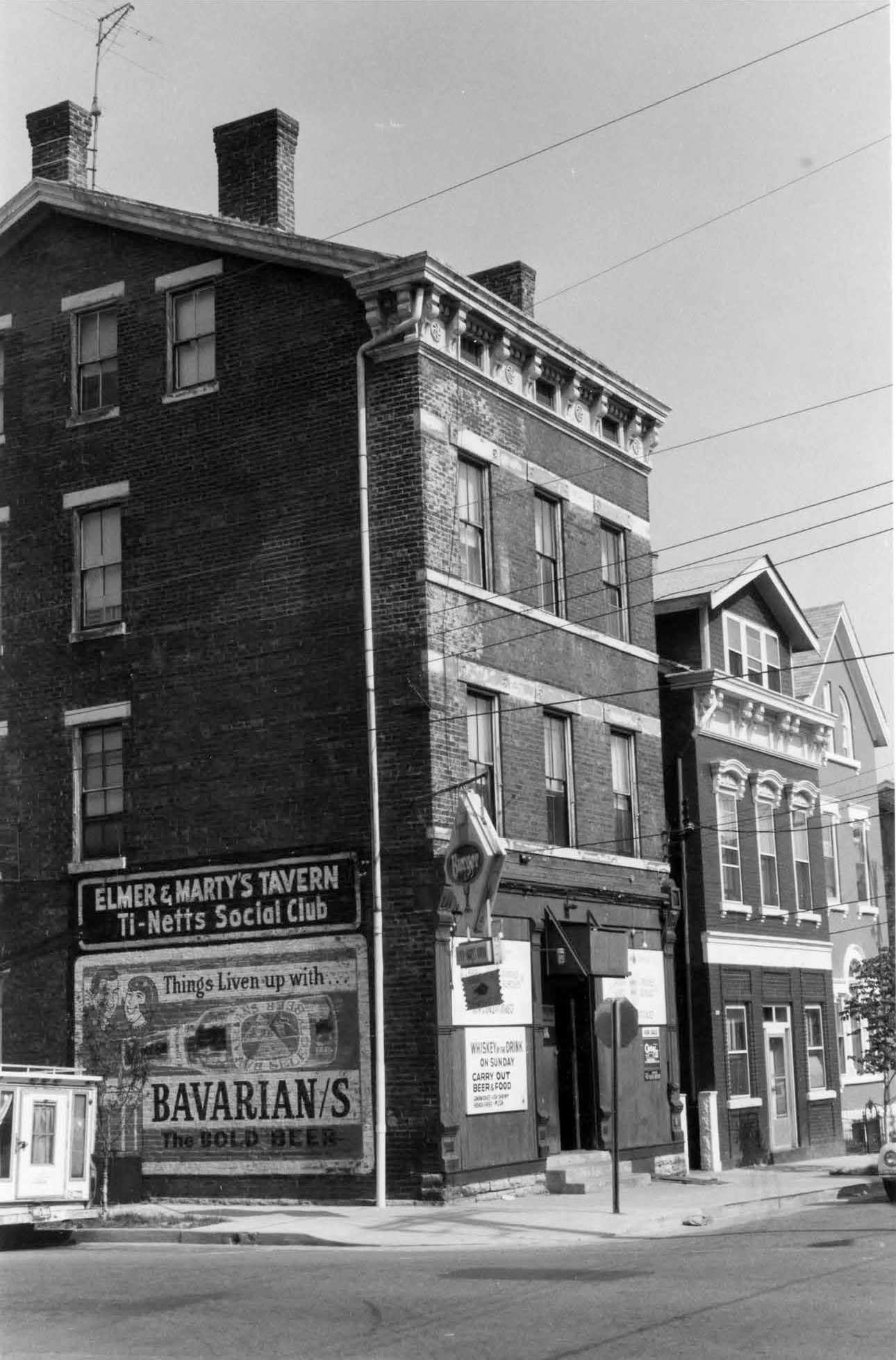
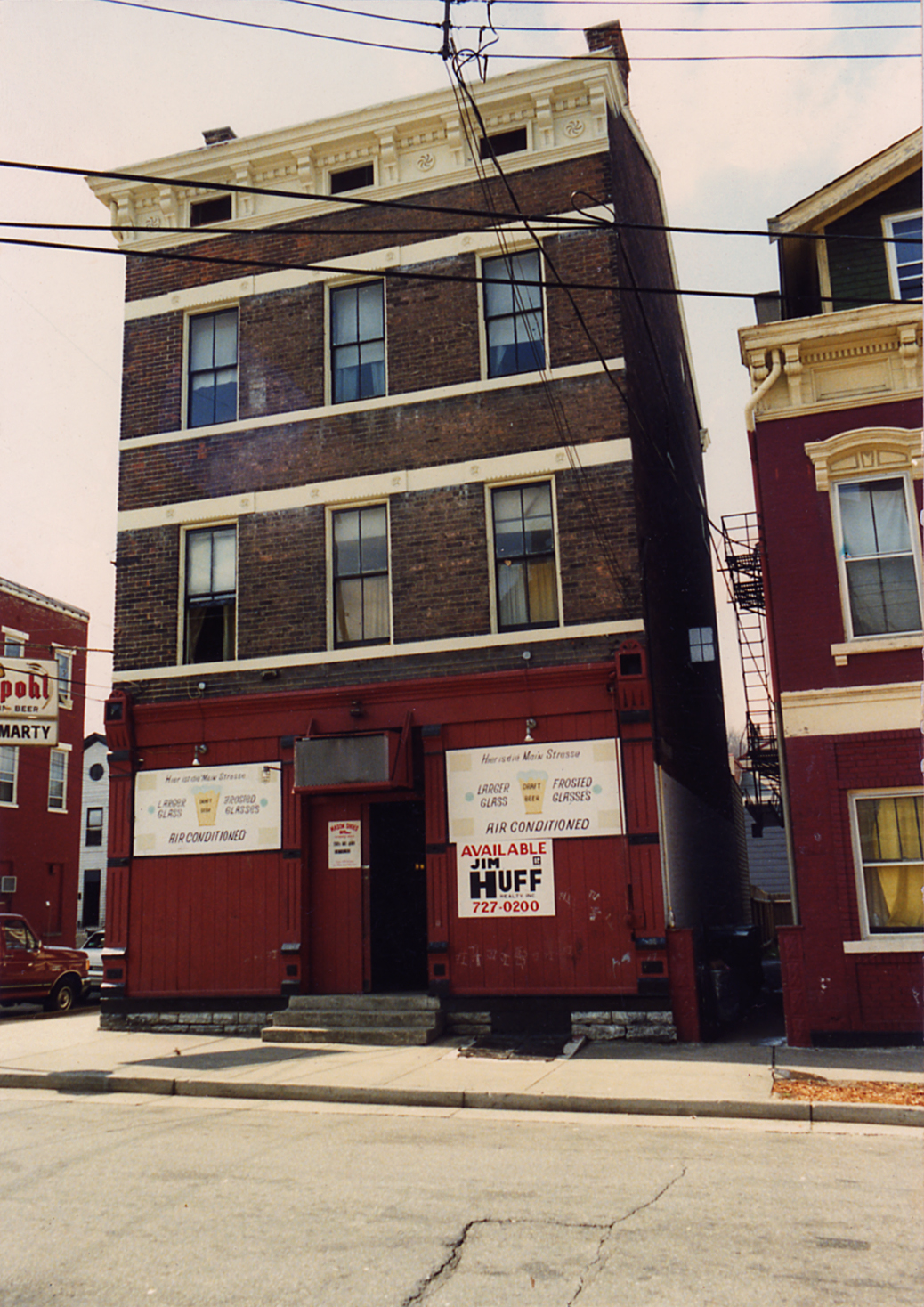
Elmer and Marty's red-painted storefront

1944 – 1952

Tiny’s Tavern & the Bee and Dee

Bernard Janson buys the building in 1944, renting to Henry Cappel who opens Tiny’s Tavern. By 1952 the Jansons are sole owners.

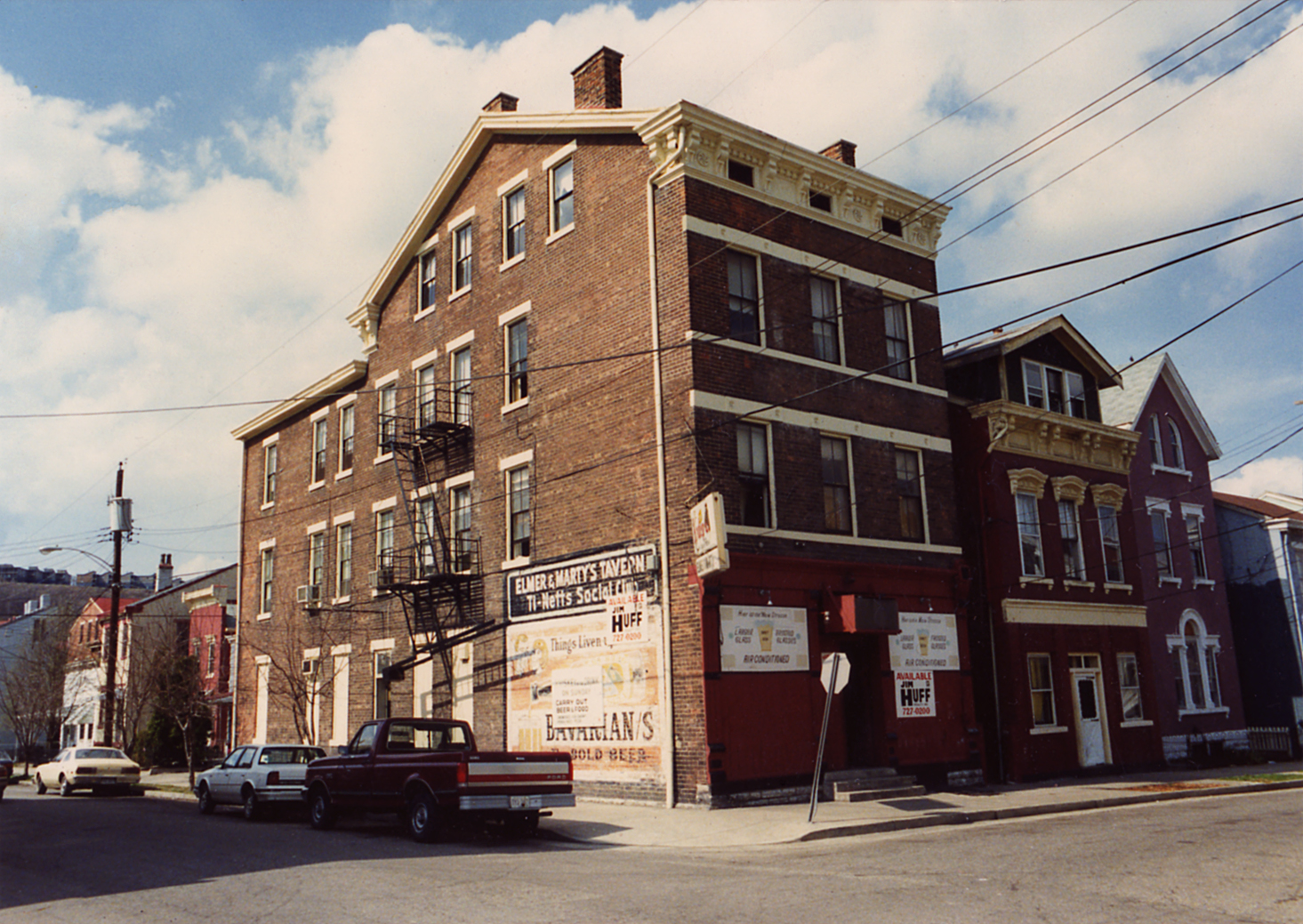
Elmer & Marty's Tavern exterior

1960 – 1990

Elmer & Marty’s Tavern

Elmer and Martha Smith purchase in 1960 and run it for three decades. The vintage Bavarian’s beer mural still marks the side wall.
Photo courtesy of Carl Fox.


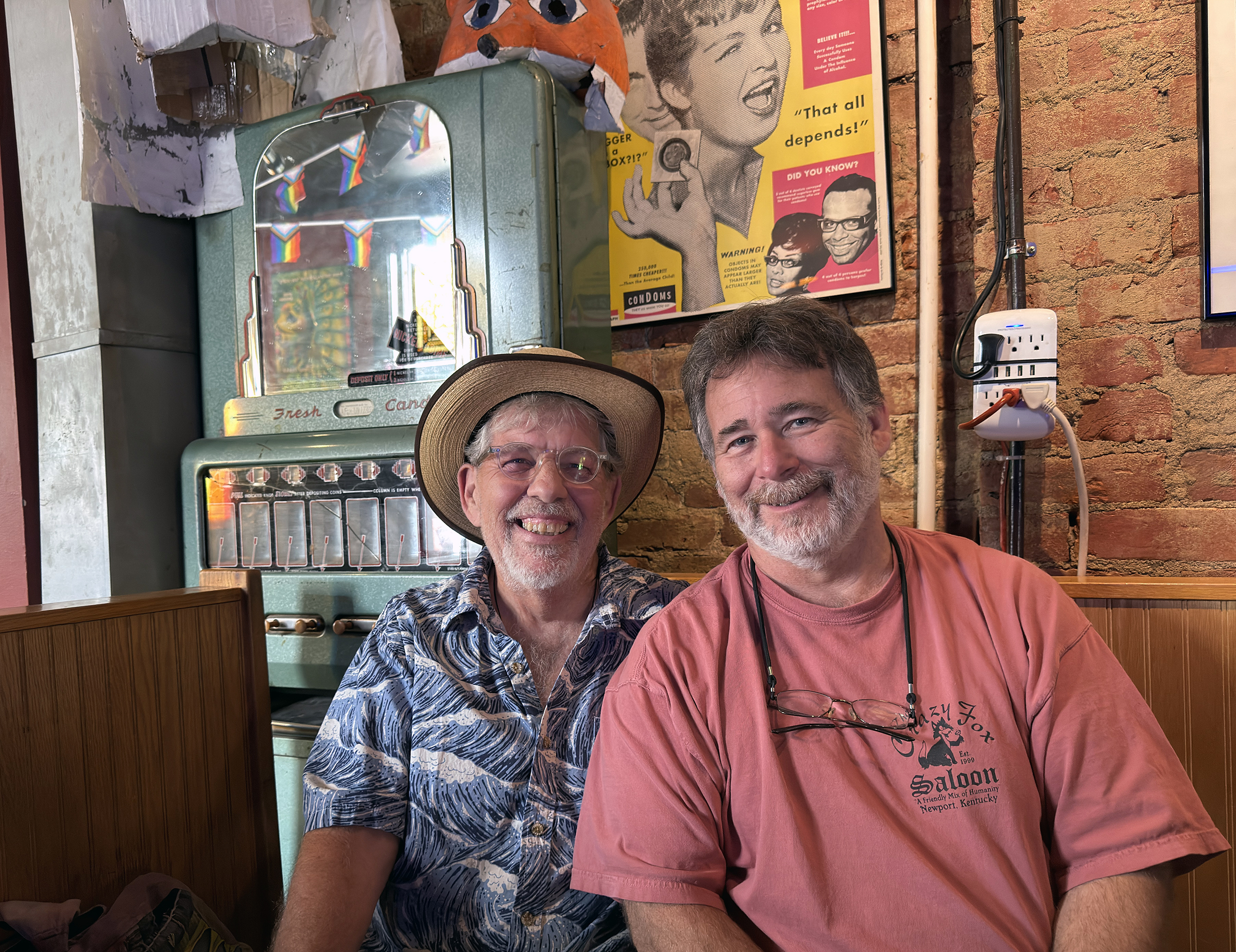
Carl Fox (left) and partner Terry Bond at The Crazy Fox Saloon, Newport KY

1990 – 1998 · The Founder

Carl Fox Buys & Builds Rosie’s

Carl Fox purchases the bar with husband Greg Landrum — but on closing day Landrum is hospitalized with AIDS. Fox proceeds alone, renames it Rosie’s after his mother, and runs it for eight years. He builds Northern Kentucky’s first explicitly LGBTQ+ safe space from the ground up. Pictured today with partner Terry Bond.
Photo by David S. Rotenstein.

Rosie's Tavern exterior today

Rosie’s Today

Open & Proud

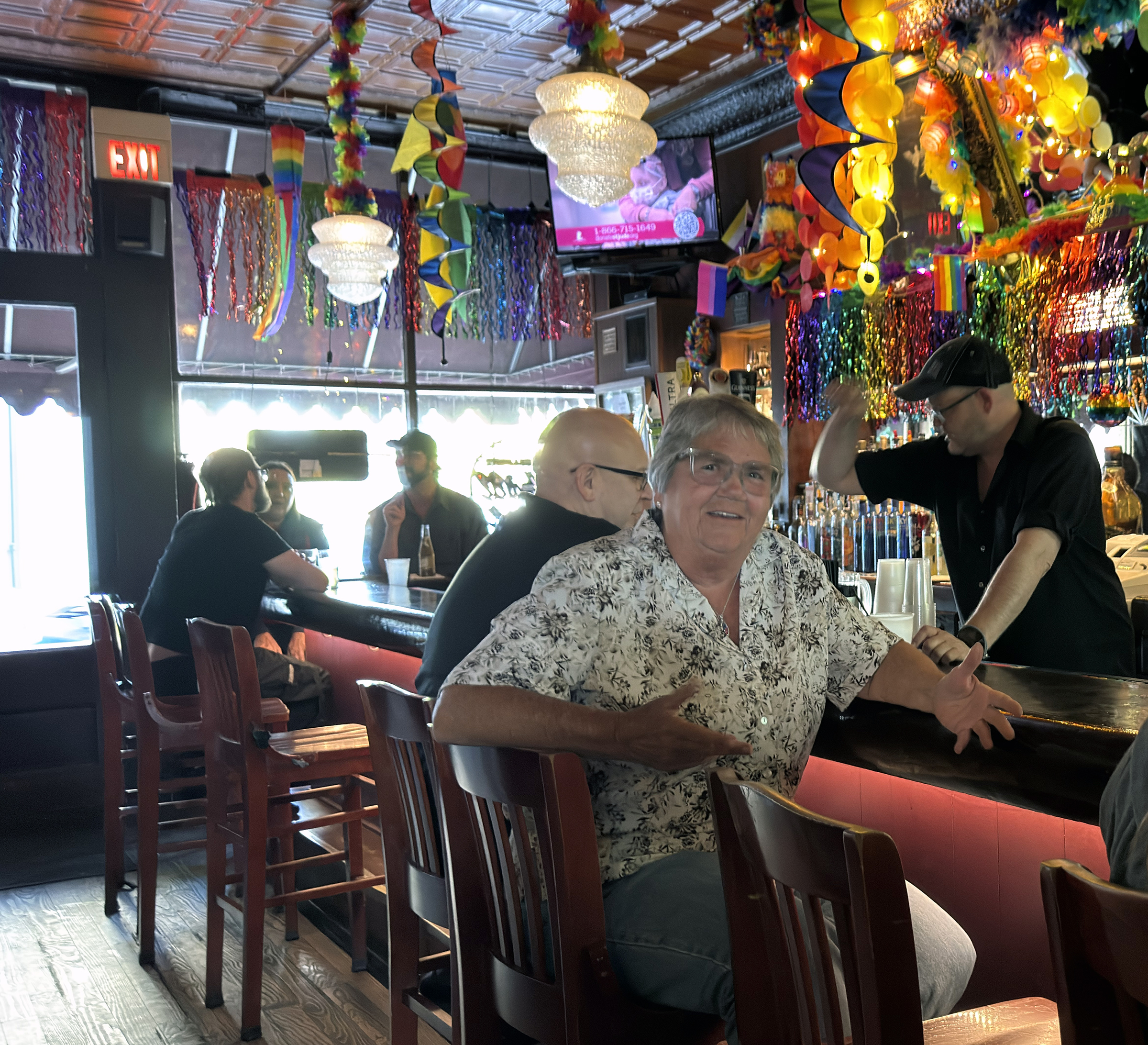
The same corner where Fox opened Rosie’s in 1990. Decades of queer ownership, community, and visibility — from the rainbow flags to the “Open & Proud” sign.
Photo by David S. Rotenstein.


1992 – 1995

Loss & Resilience in the AIDS Crisis

Greg Landrum dies in 1992. Co-owner Bill Bolyard dies in 1995. Fox loses his husband and two partners to AIDS while hosting annual cutathons for local AIDS organizations.

Dianne Gamble at the bar

1998

Dianne Gamble Takes the Helm

Fox sells to Dianne Gamble, who invests in the space, builds a loyal long-term staff, and deepens Rosie’s roots as the Northern Kentucky LGBTQ+ anchor.
Photo by David S. Rotenstein.


2003 – 2008

MainStrasse Becomes a Gayborhood

Covington enacts LGBTQ+ anti-discrimination protections (2003). Shawn Masters becomes the first openly gay Covington City Commissioner (2008).

Rosie's Tavern at night

36 Years & Counting

A Living Landmark

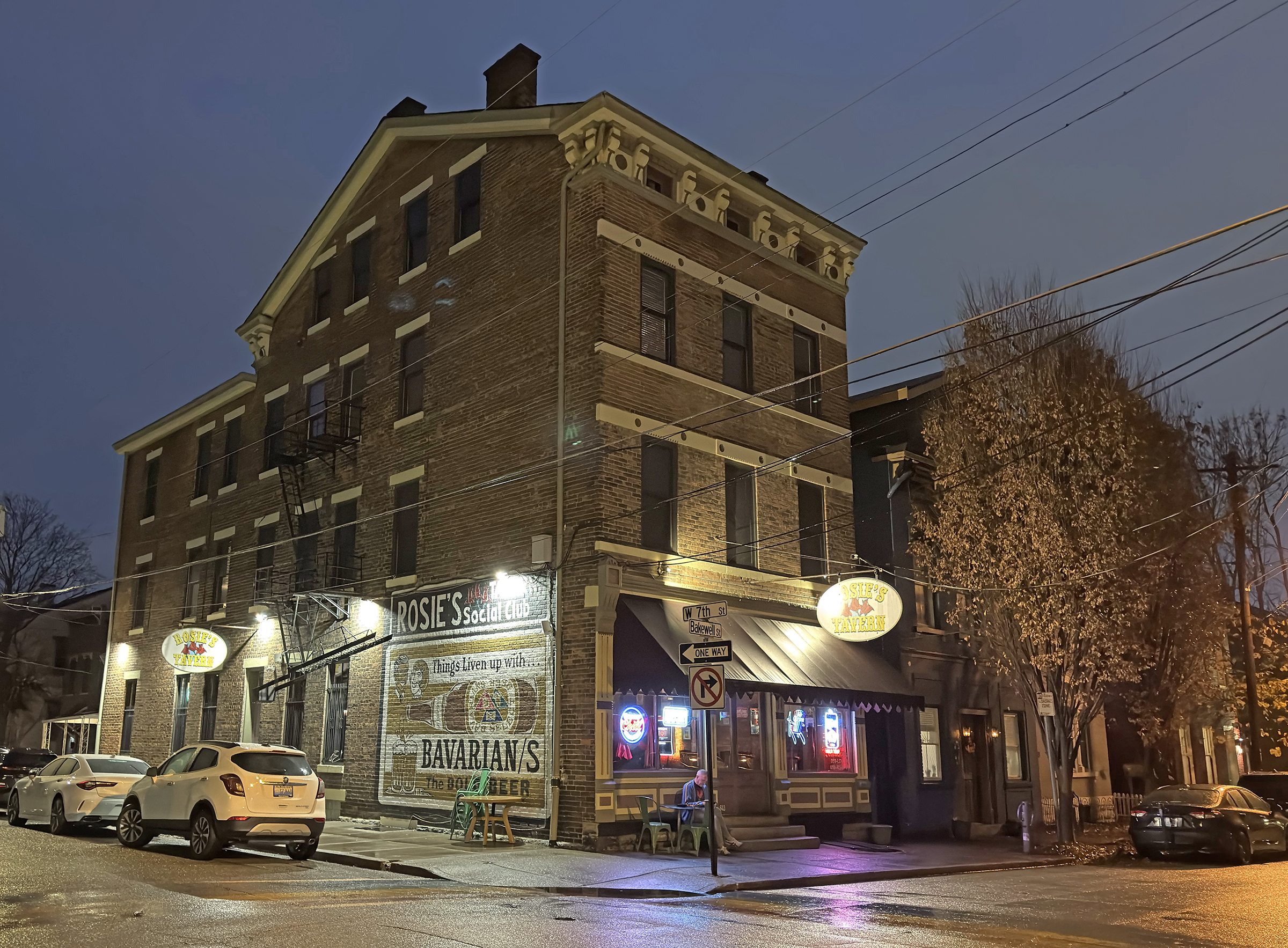
Rosie’s anchors the Northern Kentucky gayborhood. “Regular, regular, regular … it’s a little family here.”
Photo by David S. Rotenstein.


Rainbow crosswalks repainted outside Rosie's, Pride 2026

Pride 2026

Rainbow Crosswalks, Refreshed

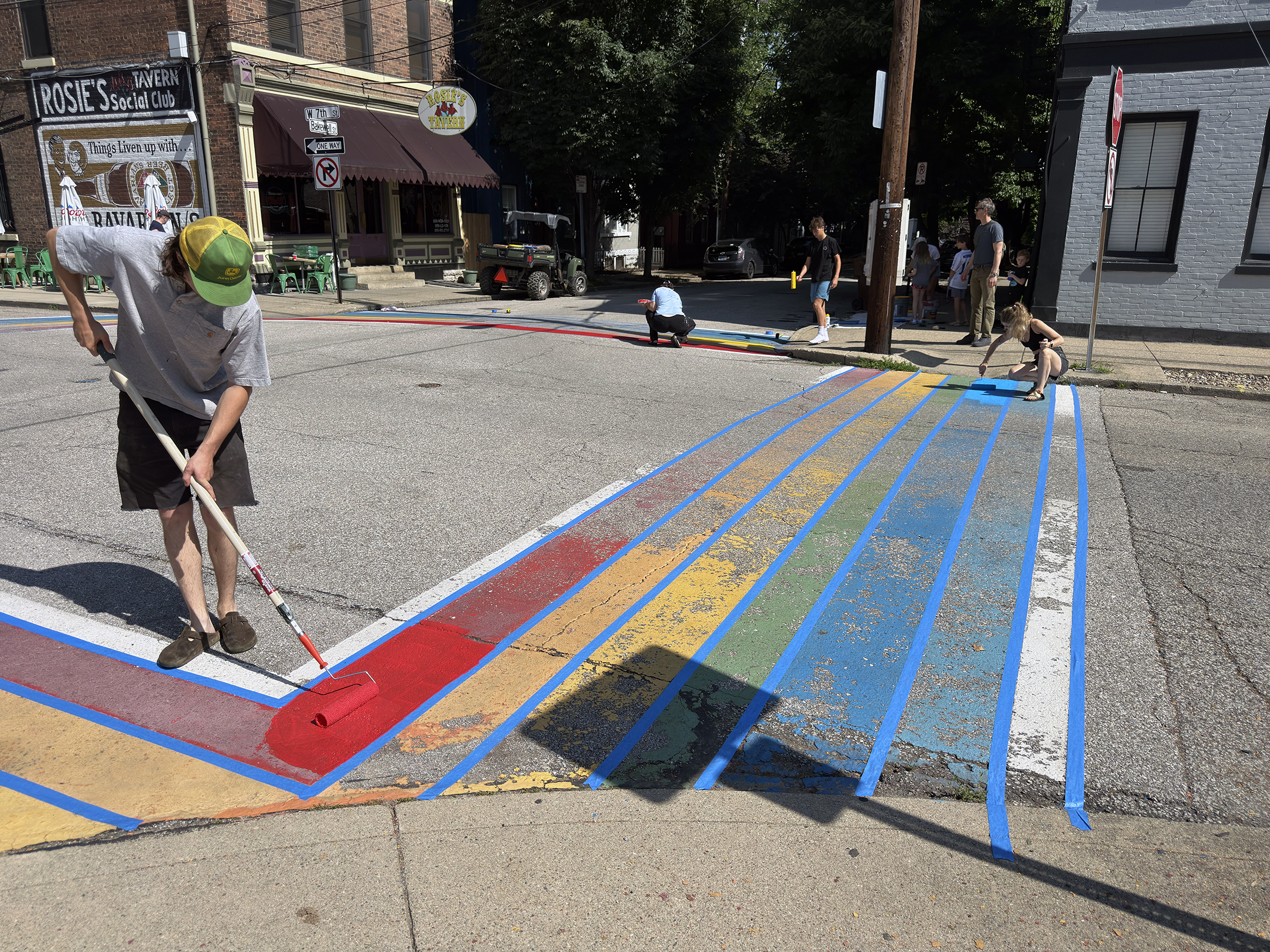
Volunteers repaint the rainbow crosswalks on Bakewell Street ahead of Pride 2026.
Photo by David S. Rotenstein.

Story by David S. Rotenstein  ·  Queer Kentucky  ·  Kentucky’s Only LGBTQ+ Newsroom


Milestones marked by many losses

Rosie’s occupies a building constructed in the early 1890s, according to historic maps. In the 1920s, a Kroger’s store occupied the 643 Bakewell St. storefront at the corner of Bakewell and West Seventh streets. The following decade, Herman Huntsman (a Kenton County constable) operated a café there. In the 1940s, an upholstery business and radio shop rented the storefront.

In 1944, Bernard and Dolores Janson bought the building and rented the storefront to Henry Cappel, who opened Tiny’s Tavern. Bernard Janson joined Cappel in running the bar in 1950 and by 1952 the Jansons were the only owners. They renamed the bar the Bee and Dee Tavern.

Elmer and Martha “Marty” Smith bought the building and business in 1960 and changed the bar’s name to Elmer and Marty’s. The couple had married in 1945 and they split in the 1970s. They sold the bar to Carl Fox and his husband Greg Landrum in 1990. 

Landrum, who worked in high-tech,  had convinced Fox, a City of  Cincinnati employee, to buy the neighborhood bar from the Smiths, but he became ill as negotiations ended.

“By the week before closing, he was coughing really continuously, all the time. He could not catch his breath,” Fox recalls. The morning of the closing, Landrum was feverish and Fox rushed him to a hospital. Landrum asked Fox to go through with the closing, alone. 

Tests confirmed that Landrum had AIDS and he died two years later, in 1992.

Fox took the lead on rehabbing the bar. He cleaned it and renamed it Rosie’s, after his mother. Fox got rid of layers of caked nicotine, the remnants of earlier gambling operations and troublesome regulars, including drug dealers and white supremacists.

Fox quickly turned Rosie’s into a regional queer safe space. It wasn’t Covington’s first gay bar or even the first place with public accommodations welcoming to queer people.

“As a gay man, openly out and living my life, there were very few places in Covington I felt safe at the time I bought that bar,” Fox says. “But I was determined.”

In the eight years that Fox owned Rosie’s, he lost his husband and another partner, Bill Bolyard. A hospitality professional, Bolyard had the skills to help Fox keep Rosie’s going.

“Billy and I had been friends. He was managing a bar down in Louisville. I had never managed a bar except for Rosie’s,” says Fox. 

Up to that point, Rosie’s was operating Rosie’s as a gay-friendly neighborhood bar, not an explicitly gay bar. “I never called it a gay bar,” Fox explains. “He [Bolyard] would come under one condition, that the bar would come out.”

Bolyard was a co-owner with Fox until he died in 1995, also from AIDS.

Fox’s third business partner, Mike Smith, was straight. “Even with Mike being straight, there’s no guarantee of being safe either,” says Fox, referring to concerns over AIDS and violent harassment directed towards the bar and its patrons.

Fox recited a long list of episodes, including early police harassment. One night as he was closing up, Fox heard anti-gay slurs being shouted outside. “I look out and there’s a Covington police officer, full uniform.”

Fox told the officer, “’You’re accosting my customer,’ basically calling him a fag,” he recalls.

Another episode involved Smith. One of MainStrasse’s many festivals, typically held two blocks away on the Sixth Street promenade spilled over into the residential neighborhood where Rosie’s is located. Revelers were harassing the bar’s customers.

“Two juveniles grabbed one of the barriers and broke Mike’s arm,” Fox says.

Despite those episodes and others, Rosie’s became a popular gay safe space. Fox began offering annual “cutathons” to raise money for AIDS outreach. Stylists, manicurists and massage therapists donated their time and all proceeds went to local organizations.


A New Owner Keeps Old Customers


By 1998, the pressures of running the bar and defending its space took its toll. Fox sold Rosie’s to Dianne Gamble. A Cincinnati native who rescued greyhounds and ran a catalog business, Gamble had recently lost her partner and she was looking for a change. She had recalled patronizing Rosie’s and she heard that it was for sale.

“I could make this work,” Gamble says that she told herself.

Both Gamble and Fox describe negotiations that got testy. Their accounts of how Rosie’s kept its name differ. Fox claims that he asked for it and Gamble says she kept it because she decided to give the name to a new red dog she got inside the bar. Whichever version reflects reality, the name endures. 

The dispute captures the style of adversarial relationship the pair has cultivated since 1998. Gamble asserts that she turned Rosie’s around after investing new energy and money into the business. Fox clings to the point that he founded Rosie’s and made it possible for the bar to survive in a transitioning neighborhood.

Gamble recalls that the neighborhood still had a lot of residents who hailed from rural Kentucky. She used a name for them that she asked not be used in this story. It is a derogatory term used widely among Covington natives.

“The neighborhood was bad,” says Gamble. “They didn’t pick on me too much, but I got spit on a lot.”

Opinions differ on when MainStrasse began transitioning into a gayborhood or gay village. Gamble thinks it happened after Barack Obama’s election in 2008. Fox suggests an earlier date. “I would say, probably by ‘95, it started to change a little bit,” he says.

Fox’s version tracks more closely with things happening beyond the bar’s doors. In 2003, Covington became Kentucky’s third city to enact protections against discrimination against gays and lesbians. In 2008, MainStrasse gallery owner Shawn Masters became the first openly gay person to be elected to Covington’s City Commission.

Gamble built on Fox’s success. For a while, she continued the cutathons. She also participated in the neighborhood’s annual Mardi Gras parade. “I used to do the big heads. I used to be in the parade and I just quit doing that too,” she says.

Gamble focused on making Rosie’s a profitable, attractive business that would support her and her employees. She has one bartender who’s been there for 22 years, others have been there for more than a decade. 

“I needed to make money because I had my bartenders, so I had to take care of them, make sure they make the money,” Gamble says.

On a recent June night, the bar filled with revelers there to celebrate one of the bartender’s birthdays. It’s an annual event. Longtime patrons say the bartenders are one thing that keeps them coming back.

“That’s one of the reasons we all come back, too, is because the bartenders are some of our best friends, and we start knowing them from coming in there,” says Heather, a straight woman who once lived across the street.

“I’ve been coming since Carl Fox owned it,” says Wayne, a 62-year-old gay man. “It’s always been a neighborhood bar … but it was people that were more comfortable being around gay people.”

He remembers all of the gay bars that have come and gone in Covington. Wayne and his friend Tom say the secret to Rosie’s success is the regulars. Tom begins pointing around the packed bar, “Regular, regular, regular, there’s Dianne — it’s a little family here.”