Where do the candidates for Louisville mayor stand on LGBTQ+ issues?


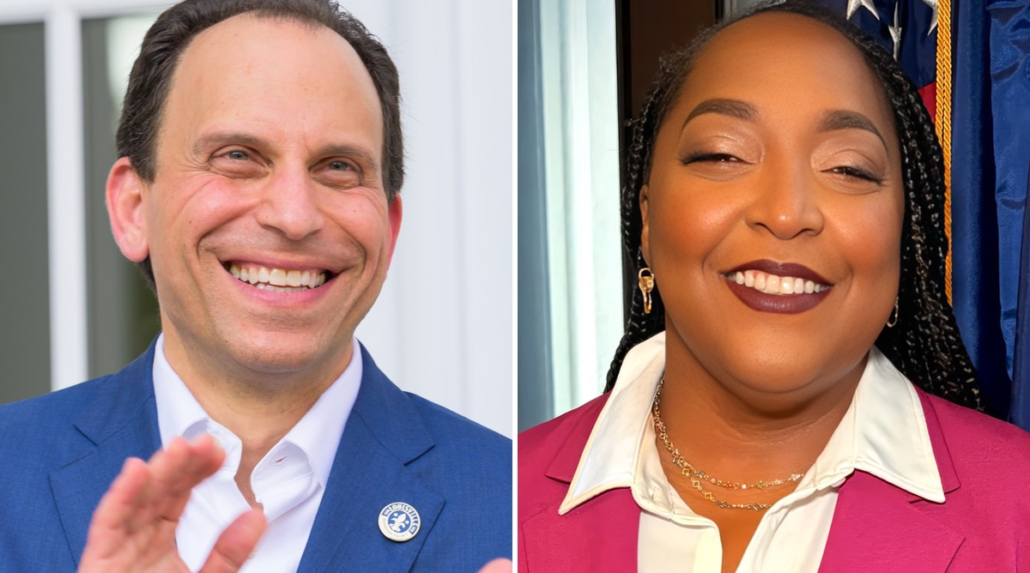
Here’s where Louisville mayoral candidates Craig Greenberg and Shameka Parrish-Wright stand on LGBTQ+ issues ahead of the Nov. 3 election.
This is the first Louisville mayor’s race without party labels on the ballot. A 2024 state law made mayor and Metro Council elections nonpartisan starting this year, so a straight-party vote won’t cover either race. Voters have to pick each one individually. Candidates can still share their party affiliation while campaigning.
Early in-person voting starts Thursday, Oct. 29.
There are five candidates vying for Louisville mayor this year. Mayor Greenberg, who was first elected in 2022, and Parrish-Wright, the District 3 Metro Council member, are both Democrats and will appear on the ballot. Dave Biggers, JusAustin R. Lane, and Jeff Yocum are also running as write-in options for Louisville mayor.
Queer Kentucky reached out to all five candidates and asked them the same six questions about health, education, and other issues important to the LGBTQ+ community. Only Greenberg and Parrish-Wright responded to those questions in writing by publication time. The questions and candidate responses have been lightly edited for style, grammar, and clarity.
Question: What is your stance on gender-affirming care bans?
Greenberg: I do not support bans on gender-affirming care. Everyone deserves access to medical care free from political interference. Decisions about healthcare should remain between individuals, their families, and their doctors.
Parrish-Wright: I oppose bans on gender-affirming care. Healthcare decisions belong with patients, families, and their medical providers, not politicians. As mayor, I would support access to affirming care through city services and speak out against efforts to restrict it.
Question: What is your stance on Medicaid defunding?
Parrish-Wright: I oppose cuts that take healthcare away from people who depend on Medicaid. I would advocate for strong state and federal support and work with local providers to help residents connect with coverage and care.
Greenberg: I strongly oppose cuts to Medicaid that jeopardize access to quality, affordable healthcare. Medicaid is a lifeline for children, seniors, people with disabilities, and their families. We have already seen the impact of Medicaid cuts as a result of chaos in Washington, and these reductions are putting Kentucky families — in both rural and urban communities — at risk. I firmly believe that elected officials should be looking to expand access to affordable healthcare, not take it away from those who depend on it most.
Question: What is your stance on rural healthcare access?
Greenberg: Access to quality, comprehensive healthcare should never depend on where someone lives. Rural Kentucky faces significant barriers to care, including doctor shortages, long distances to receive treatment, and hospital closures. Addressing these challenges requires that we protect Medicaid access, support the providers treating rural communities, and invest in the services that keep people healthy. Addressing this issue should be a top priority for candidates running for office across the Commonwealth.
This story exists because of readers like you. Give $5 a month to keep Queer Kentucky free.
Parrish-Wright: People in rural communities deserve timely, affordable care. Louisville can be a partner by supporting regional healthcare providers, improving transportation connections, and advocating for the resources rural communities need.
Question: What will you do about the passage of anti-LGBTQ+ legislation?
Parrish-Wright: I would use the mayor’s office to oppose discriminatory legislation publicly, protect LGBTQ+ residents in city services and employment, and work with community organizations to connect people with support. Louisville should be a welcoming city where everyone can live safely and openly.
Greenberg: As mayor, I have consistently stood up for LGBTQ+ Louisvillians through both policy and direct action. Louisville Metro Government has received a 100% score on the Human Rights Campaign’s Municipal Equality Index every year since I took office, reflecting our commitment to nondiscrimination and equitable access to city services.
As mayor, I directed Metro Government to defend Louisville’s Fairness Ordinance in court against a challenge involving a business owner who refused to serve LGBTQ+ clients. In terms of policy, we have worked in coordination with advocates at the Fairness Campaign to oppose legislation that threatens local nondiscrimination protections, including HB 468 during the 2026 legislative session.
My administration also recognizes that representation matters, which is why I have worked intentionally to cultivate a culture in Metro Government that embraces and supports LGBTQ+ employees at all levels of government. I am proud to have appointed the first openly gay deputy mayor in Louisville history, and we proudly fly the Pride flag every day outside of Metro Hall. This effort also extends to supporting LGBTQ+ employees and their families by ensuring our benefits include comprehensive health coverage that fits their needs.
I am committed to improving the lives of LGBTQ+ residents, employees, and families in Louisville. That means embedding equality into our policies, our advocacy, and our leadership. That is a standard I have set and will continue to uphold as mayor of Louisville.
Editor’s note: The case Greenberg refers to was filed in 2019 by Louisville wedding photographer Chelsey Nelson, who sued to avoid having to photograph same-sex weddings. A federal judge ruled in her favor, and in March 2026 Metro Government agreed to pay $800,000 in attorneys’ fees and costs.
Question: What is your stance on “Don’t Say LGBTQ+” classroom policies?
Greenberg: I oppose policies that stigmatize LGBTQ+ people or prevent students from learning in inclusive environments. Every student deserves to feel safe in school, and every family should know their child will be treated with dignity in the classroom. The government should be focused on delivering a quality education for every child, not targeting LGBTQ+ people.
Parrish-Wright: I oppose policies that erase LGBTQIA people from classroom conversations or make students and educators feel unsafe. JCPS is an independent school district, so the mayor cannot set its curriculum, but I would speak up for inclusive, age-appropriate education and support LGBTQIA students and families.
Question: What is your stance on pronouns and bathroom policies?
Parrish-Wright: People should be addressed by the names and pronouns they use, and students should be able to use facilities consistent with their gender identity. I support policies that protect students’ privacy, safety, and dignity.
Greenberg: Students should be free to fully participate in school without fear of harassment or discrimination. School policies should acknowledge students’ identities, uphold privacy, and ensure all students have access to the appropriate facilities. We should focus on creating welcoming environments for all students, and that includes respecting students’ identities.
Keep reading
 Love Out Loud Fest returns to Louisville with pay-what-you-can fall edition Nov. 12
 Talesha Wilson Is Changing the World. Louisville’s West End is Her Headquarters.
 Early Voting Starts Oct. 29. Our People Our Vote Wants Kentucky Voters to Have Help at the Polls.
 Time Slip Theatre Opens 13th Year of ‘Rocky Horror’ With a Witchy Twist
 Louisville Pride Put Mental Health Front and Center. The Need Doesn’t End When the Tents Come Down.