
For LGBTQ+ Kentuckians Already Wary of Police, Flock Cameras Raise New Surveillance Fears


It was a summer of reckoning for police departments across the Commonwealth – especially in Northern Kentucky – as public scrutiny has intensified in recent months over surveillance tech contracts, particularly those including automated license plate reader (ALPR) cameras and other artificial intelligence-powered equipment.
Resistance to police using the cameras, which can capture thousands of images an hour and document vehicles’ make, model, color and other identifying features, has spanned a broad demographic and political spectrum. But for marginalized folks – like Kentucky’s LGBTQ+ communities – the enhanced surveillance poses heightened risk.
Fort Thomas resident Amanda Ross told Queer Kentucky that she’s been “frustrated” to learn how prevalent ALPR cameras have become across Northern Kentucky, the region she’s called home for more than 15 years after growing up in a more rural part of the state.
Like others who have spoken at dozens of public hearings across the area over the last four months, Ross thinks the increased surveillance tactics aren’t warranted in her community where she and her neighbors already feel safe.
“I think it places undue suspicion, and also, what is the need, other than to just surveil?” she asked.
As Queer Kentucky has previously reported, Fort Thomas has historically ranked among Kentucky’s safest cities, according to federal crime data.
Why LGBTQ+ Kentuckians Are Concerned
But as a queer woman, Ross also worries how the cameras could collect data not just on her driving and her location, but also on her personhood, her identity and her beliefs, she said – especially in a time when expressions of queerness and queer solidarity are under intensifying scrutiny.
The Trump administration has included “extremism on migration, race, and gender” and “hostility towards those who hold traditional American views on family” in a list of beliefs it now associates with domestic terrorism and political violence.
“I love bumper stickers. I definitely have a lot of bumper stickers on my car,” she said. “I have the [Human Rights Campaign] ‘Equality’ bumper sticker, and several other, you know, more political bumper stickers. I also have rainbow and LGBTQ+-supporting bumper stickers, and these license plate readers are absolutely going to pick up on that, too.”
Ross worries that ALPR data could include images of the stickers on her car, which could add to an expanding glut of personal information collected on individuals through numerous forms of surveillance today, including online activity.
“I think that they can track that with your activity in life and online,” she said. “I go to the Pride festivals every year. I go to protests of various kinds. I am outspoken online for my beliefs. And I think that, all that combined, and plus having a more [identifiable] vehicle, makes it more of a concern … It’s another drop in the bucket, and it all connects.”
Ross added, “But also, I think that having bumper stickers on your car, it falls under freedom of speech, and I think it’s my right to express myself that way.”
This story exists because of readers like you. Give $5 a month to keep Queer Kentucky free.
Broadly, bumper stickers fall under protected free speech, with narrow and qualified exceptions for things like obscenity or hate speech, according to First Amendment legal expert David L. Hudson Jr.
But when something as mundane as a rainbow sticker on your rear window could become a surveillance data point, it could also be making a strained relationship between police and the community even more tense.
Queer People and Histories With Authorities
In Covington, where Ross also spends a lot of her free time, police already have a documented trust problem. A clash last summer between (what became close to the department’s full complement of) officers and a group of protesters marching on the Roebling Suspension Bridge was just the latest in a history of community tension, particularly with the local queer community. That incident has resulted in at least one lawsuit against two officers and the city.
It’s part of a broader sense that Ross described: “I see (Covington) police stopping people on the sidewalks or, you know, talking to unhoused people a lot more, and it seems that that’s what they spend their time doing, as opposed to, I don’t know, serving the community in a meaningful way.”
The strain in Covington is particularly palpable with the city’s queer communities. As Queer Kentucky reported earlier this year, the Covington Police Department’s LGBTQ+ liaison, Doug Ullrich, has been accused of misusing his authority and using unnecessary force in several complaints. That came to light in early 2025 after violent dash-cam footage from a traffic stop involving an LGBTQ+ Black man emerged from one of those complaints.
Covington police confirmed to Queer Kentucky that Ullrich is not among the department’s officers trained or permitted to use its cruiser-mounted ALPR cameras or access their data. The city’s board of commissioners earlier this month voted not to include cameras in its new police contract with Axon Enterprise, one of numerous tech companies making headlines this year for their partnerships with police.
When a person who is explicitly assigned to build trust with a marginalized community ends up eroding that trust instead, the mistrust goes systemic, and folks who need help from police might end up not asking, advocates and experts say.
“This is called ‘minority stress theory’ and is particularly relevant to police interactions,” said Dr. Chelsea Esmeier, a clinical psychologist in Northern Kentucky who specializes in working with LGBTQ+ patients.
Minority stress theory argues that health inequalities in vulnerable groups can stem from social stress, like the discrimination they face.
“LGBTQ+ individuals are likely to have a baseline of low trust in police and be reluctant to seek help from them,” Esmeier said. “Documented incidents that bring safety into question aren’t going to help this problem, nor is a lack of transparency/accountability from the department in response.”
With this as their baseline, even the slightest potential for increased surveillance may become a major concern for queer folks encountering law enforcement.
While public outcry has been broad and largely abstract, overall queer communities are at elevated, material risk, according to the Bureau of Justice Statistics, for the specific types of abuses — targeted stalking or violence, particularly involving current or former partners — that are dominating these early cases.
In August, police in the south-Louisville suburb of Shively accused an officer of using the ALPR cameras to perform more than 2,000 searches on an ex-romantic partner, Louisville Public Media reported. News reports and researchers from across the country have tracked as many as 170 cases of ALPR misuse, with as many as 70 (41%) involving some sort of targeted misconduct.
Meanwhile, headlines announcing the arrest in Shively came as mayors and police chiefs across Kentucky canceled or paused their ALPR camera contracts.
They’re headlines that have Kentuckians like Ross worried.
“We’ve already seen so many times that the cameras aren’t being really used to solve crimes; they’re being used to track women who’ve had abortions and follow them out of state,” Ross said. “And I don’t even know how many cops and police officers have used it to track their spouses, partners, exes, and literally stalk them.”
Previous reporting by BJ Bethel contributed to this story.
Keep reading
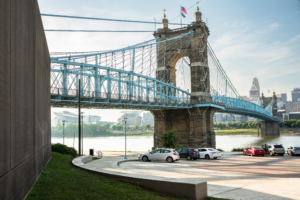 Northern Kentucky’s LGBTQ+ Paradox: Legal Protections at Home Contend with Restrictions at the Statehouse(s)
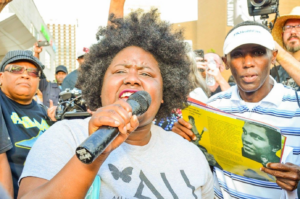 Talesha Wilson Is Changing the World. Louisville’s West End is Her Headquarters.
 After Death Before Detransition, Trans Youth Across the River Make a Magazine of Their Own
 Early Voting Starts Oct. 29. Our People Our Vote Wants Kentucky Voters to Have Help at the Polls.
 Time Slip Theatre Opens 13th Year of ‘Rocky Horror’ With a Witchy Twist