QUEER KENTUCKY | KENTUCKY'S ONLY LGBTQ+ NEWSROOM

KEEP. Subject. Additive. Pair with a beat, never fuse. Police conduct, police departments and their LGBTQ+ liaisons, surveillance, arrests, and accountability. A crime story that only quotes police does not earn it. Promoted from a legacy tag Oct 10 2026; slug stays police.

Tag Archive for: Subject: Policing

Officer Zachary Stayton approaches Brandon Hill during the Roebling Bridge protest on July 17, 2025, captured on Covington Police Department body camera footage

Roebling Bridge protester arrested in court on felony riot charge

UPDATE, 2pm Oct. 5: Marshall was released on their own recognizance following an afternoon arraignment in Kenton County District Court. Marshall’s next status hearing is set for Nov. 30 at 1:30 p.m. at the Kenton County courthouse.

—————————————————-

Taylor Marshall, the final protester still facing charges from the July 17, 2025 Roebling Bridge protest, was indicted Monday on one count of felony riot and taken into custody at a routine pretrial hearing, according to a press release issued the same morning. Bond was set at $2,500.

The protest began on the Cincinnati side of the bridge, where about two hundred people turned out against the detention of Imam Ayman Soliman, a former chaplain at Cincinnati Children’s Hospital whose visa and asylum were revoked before Immigration and Customs Enforcement arrested him. Dozens of demonstrators then marched across the Roebling Bridge into Covington, where 15 people were arrested. Two journalists were among those charged.

The march fell on July 17, the fifth anniversary of the death of civil rights leader and U.S. Rep. John Lewis, and coincided with nationwide “Good Trouble Lives On” demonstrations held that day. Lewis was 25 when Alabama state troopers fractured his skull on the Edmund Pettus Bridge in Selma in 1965, during the voting rights march that became known as Bloody Sunday.

Want Queer Kentucky’s latest in your inbox? Sign up for our newsletter here.

Covington police officer Zachary Stayton was placed on unpaid administrative leave in November 2025 after a department investigation found he did not follow proper procedure at the protest. Video released by the Covington Police Department and reviewed by Queer Kentucky showed Stayton punching protester Brandon Hill in the head while Hill lay on the ground. Covington police said at the time they believed Hill had a gun. Stayton completed remedial training before returning to duty.

Hill sued the department and two officers in federal court in July 2026, alleging excessive force and civil rights violations. In a statement to Queer Kentucky at the time, the city of Covington declined to comment on pending litigation and noted that a Kenton County judge had reviewed the evidence and found probable cause for the felony charges against Hill.

Queer Kentucky has followed the case since 2025, including the community response to Stayton’s suspension and a broader look at policing, civil rights and community safety in Northern Kentucky.

Related: ‘I Violate Every Policy’: Covington Police LGBTQ+ liaison officer under fire amid civil rights lawsuits

Related: ICE enforcement, sanctuary bans among immigration bills filed in Kentucky legislature

The full text of the release appears below.


For immediate release: October 5, 2026

Covington, Kentucky: Urgent – new felony indictment in Roebling Bridge case.

This morning, Taylor Marshall, the final defendant in the Roebling Bridge arrests last July, was indicted on one charge of felony riot. The vigil and march were in support of Imam Ayman Soliman, who was being detained by ICE. Despite being offered the same plea deal that most of the other defendants have been offered over the past year, Marshall was denied that plea at a September 16th hearing. Marshall was taken into custody this morning during their routine pretrial hearing and bond has been set at $2500.

Marshall’s attorney, Ben Potash, said of the case, “I have never seen a protester arrested in court for something that may have happened a year prior. I have never seen a judge reject a plea because a defendant failed to admit to an unindicted conspiracy. Taylor’s incarceration is unjust and unfair and it does not fit in with the rule of law. We are going to defend Taylor and avail ourselves of every legal remedy that we have.”

Their next court date is today October 5, 2026 at 1:30PM at the Kenton County Justice Center at 230 Madison Avenue, Covington, KY 41011 Room 7A in front of Judge Kate Molloy.

The ‘Family Safety’ Pretense: Flock Cameras and Northern Kentucky Parks Northern Kentucky residents pushed back hard against AI-powered surveillance cameras. And in some cities, they won.

When Kenton County’s police chief asked his fiscal court this summer for money to install six automated license plate reader (ALPR) cameras at the entrances to the county’s parks, his primary reasoning was to make those parks safer.

“We see this as a way to keep potential predators from coming into our parks and preying on children,” Chief Spike Jones said at the July 14 meeting.

Commissioner Jon Draud of Edgewood seemed to agree that it was a problem.

Want Queer Kentucky’s latest in your inbox? Sign up for our newsletter here.

“There’s a lot of weird people that hang out at parks,” he said in response to Jones’ report, which stated the cameras would only point into the parks – not the general right-of-way – and only record vehicle data entering and exiting.

The report cited more than 1,000 calls for “suspicious person/vehicle” in the county’s parks since 2021, by far the most common type of call in those areas. Figures showing how many of those calls resulted in arrest or charges were not immediately available.

Related: Northern Kentucky Communities Push Back Against Flock Safety Surveillance Cameras

Vague commentary aside (Draud did not elaborate on who he meant by “weird people”), the story sounds reasonable enough on its surface. It aligns with police departments across the country making the case that the emerging technology is a game-changer for both investigating and deterring crime. Flock Safety’s website is populated by dozens of accounts of these types of cameras’ role in facilitating or expediting case closures.

The game-changing element is the AI-powered data collection and analysis that act as what police officials call a “force multiplier,” allowing departments to do more with stretched resources and pooled intelligence.

“It has changed how we do police work,” Lexington Police Commander Matt Greathouse told Kentucky Law Enforcement magazine. “Not only in Lexington and Fayette County, but all these counties now have some sort of Flock camera. What’s great about that is we can share that information across those jurisdictional boundaries, which we have discussed in many cases.”

Even Kentucky police agencies that have decided to discontinue their use of the cameras stressed the technology’s value. When announcing its decision in July to cancel its contract with Flock, the Newport Police Department said, “The city’s decision should not be interpreted as opposition to emerging public safety technologies or as a reflection that [ALPRs] lack public safety value.”

A ‘permanent dragnet’ for the ‘safest’ cities?

Residents and business owners across Northern Kentucky have been asking leaders why the cameras are needed — and whether the potential threats to their privacy are worth the returns in fighting crime — when they already feel safe.

At an August 17 public hearing, Independence Police Chief Brian Ferayorni spoke to his department’s initial deployment of 10 cameras in 2024, after a pilot the year prior. He purchased five more in 2025 and another five again this past June. He said 17 of those cameras were active at the time of the hearing.

“We are utilizing these ALPR cameras to identify and arrest criminals that come to the city to victimize our citizens and deter others who plan on doing the same,” he told more than 100 people in attendance and more watching the meeting from home.

The city council has approved Ferayorni’s contracts with Flock each of the last three budget cycles, with little fanfare. According to city contracts obtained by Link NKY, each camera costs roughly $3,000 per year, plus initial installation fees ranging from $650 to $1,250 each, depending on location. The first 10 cameras and their installation cost $68,900 over a 24-month period. The second and third contracts waived the installation fees, totalling $30,000 a batch, each for 24-month terms. In total so far, the city has spent nearly $130,000 on the cameras for four years of service from 2024 into 2028, when the most recently signed contract would expire.

Ferayorni defended the cost with a list of more than 30 recent cases he said the cameras assisted in solving since their deployment. Most common among those were stolen vehicles (10); missing persons, drugs and assaults and threats made up the next third (three each), with a variety of other one- or two-off cases comprising the remaining dozen.

Independence resident Zach Ford looked at FBI crime statistics prior to the meeting. While praising the chief for keeping the city “probably the best…in the commonwealth,” he said he couldn’t square a request for more cameras with the safety he feels police officers and more traditional tools already provide.

“We are among 80 percent for the safest cities in Kentucky, and that’s without Flock cameras,” he said during the three-hour public hearing, where, like in other recent meetings across Northern Kentucky, dozens stood up to speak against the city’s use of the cameras, with no one speaking in their favor.

Home security tech site SafeWise aggregates FBI crime data to rank cities by per-capita crime rates. It ranked Independence as the commonwealth’s fifth overall safest city in 2026, aligning with the figures Ford shared and making Independence the top-ranked among its Northern Kentucky peers. Neighboring Taylor Mill is the only other NKY city in the site’s top 10 for the year. A similar federal crime data aggregate site, Crime by City, ranks Independence as Kentucky’s safest, followed by Fort Thomas and Erlanger also in the top five. Newport and Florence had two of the commonwealth’s highest crime rates per capita among reporting cities, alongside Bowling Green, Owensboro and the Louisville metro.

“We have cities that are close to us with higher crime rates that are saying our Fourth Amendment’s more important,” Ford said, referring to Newport officials citing a recent U.S. Supreme Court case (Chatrie vs. United States) which they said could have future implications on how AI-powered ALPR networks could constitute unconstitutional searches.

While the Chatrie case did not consider ALPR cameras specifically, it challenged police’s authority to mass-obtain mobile device location data through so-called “geofence” warrants, as part of a criminal investigation (in this case, of a bank robbery in Virginia). The justices reaffirmed court precedent by holding that the suspect’s geolocation data tied to his cell phone constituted private, Fourth Amendment-protected information. Flock Safety maintains their cameras’ constitutionality, citing dozens of recent lower-court rulings throughout the U.S. affirming their position that the still, discrete images captured by the cameras in public areas do not fall under Fourth Amendment protection.

Court opinions aside, public opinion largely holds these cameras violate their rights.

Around the same time Ford was addressing Independence leaders, about 10 miles north in Fort Mitchell, resident Ashley Chaiken was expressing her concerns to her city council.

“Law enforcement has solved crime without the violation of our Fourth Amendment right,” Chaiken said. “Extreme cases do not justify a permanent dragnet of surveillance on the entire population.”

Less than 24 hours after Chaiken and others’ comments in Fort Mitchell, Mayor Greg Pohlgeers announced in a Facebook post that he was ending their contract with Flock, “effective immediately.” Less than a week following the meeting in Independence, their mayor issued a similar statement, announcing the city would be removing its cameras, but that he “continue[s] to believe [their] original decision to utilize this technology was a sound one.”

Fort Thomas, also frequently listed among Kentucky’s safest cities, has scheduled a public hearing on September 2 to discuss their use of the cameras, with scrutiny and pushback already coalescing online.

‘How much crime has been stopped?’

Serious crime in Kentucky has been shrinking for several years, since even before the commonwealth’s first Flock cameras went into service in 2022, according to both federal crime data and Kentucky State Police’s annual reporting, although there’s some variation.

Overall crime has shrunk steadily since 2019, achieving roughly a 23-percent reduction in the seven-year period, with nearly 10-percent reductions in “serious crime” in both 2024 and 2025. Both state and federal data sets show a steeper drop in property crime than in violent crime, but they differ on how violence has progressed: While federal data show cases like homicide and assault returning to 2019 levels after a spike during the height of the COVID-19 pandemic, state police data show violent crime is up by 10 percent statewide compared to pre-pandemic, after topping out in 2023.

Year Overall (FBI) Overall (KSP) Violent (FBI) Violent (KSP) Property (FBI) Property (KSP)
2019 100 100 100 100 100 100
2020 99 96 128 110 96 96
2021 90 92 129 106 86 85
2022 80 84 98 101 78 78
2023 87 91 102 113 85 84
2024 77 84 97 109 75 75
2025 78 110 67

Crime statistics indexed against 2019 levels. Sources: FBI Uniform Crime Reporting; Kentucky State Police annual reports.

Federal and state police data vary somewhat in their categorizations of crimes and reporting methods, which, along with differently sized data sets, could partially account for the discrepancy in violent crime rates.

Compared to the rest of the country, U.S. News and World Report currently ranks Kentucky’s violent crime rate as seventh lowest, according to FBI city-crime data, with below-average property crime rates, as well. For crime overall, Kentucky ranks 28th, on the lower end of the crime-heavier half.

Kentucky’s overall per-capita crime rate is lower than four of its neighboring seven states, with only Ohio, Illinois and Virginia ranking safer. Those rankings hold when zoomed in on property crime, and only Illinois and Virginia rank safer for violent crime.

For Chaiken, it’s not adding up.

“The pros for these cameras are supposedly that they stop crimes and help solve crimes,” she said. “How much crime has been stopped in Fort Mitchell? How many crimes have been solved solely based on data from the ALPR cameras in Fort Mitchell?”

A flock license plate reader camera mounted on a pole.

Northern Kentucky Communities Push Back Against Flock Safety Surveillance Cameras. Residents, elected officials, and tech experts are uniting against Flock Safety cameras across Kentucky.

More and more Northern Kentucky police departments are looking to install AI-powered surveillance cameras along public roads and in public spaces, but they’re meeting strong resistance from a diverse range of residents, business owners, tech experts, local activists, political hopefuls and elected officials on both sides of the aisle.

Want Queer Kentucky’s latest in your inbox? Sign up for our newsletter here.

Most recently, at Kenton County Fiscal Court’s July 14 meeting, the message was unified and clear.

“I don’t feel safer in a community with more surveillance,” one county resident told commissioners during public comment. “I don’t feel my family is safer, my neighbors are safer because police have access to more cameras in the community.”

More than a dozen people spoke against Kenton County Police Chief Spike Jones’ request for six Flock Safety-brand automated license plate reader cameras (ALPRs) to monitor vehicles visiting county parks and the jail. No speaker supported installing the cameras, which go beyond reading license plates. Using artificial intelligence, they also record additional identifying characteristics like vehicle make, model, color, and other markings like dents, decals or customizations, and store that information in searchable databases. These cameras document every vehicle that passes, not just vehicles already connected to suspected criminal activity.

The recent pushback in Kenton County is part of a growing chorus of voices across the region (and country) uniting against the new technology.

What exactly are police asking for?

Before public comment, Jones laid out his request, promising the cameras would only monitor entrances to county properties and would not track nearby vehicles on the road. They would not have biometric-screening capability like facial recognition, and local data storage would expire after 30 days unless tagged as part of an investigation by an ALPR-certified officer. They would not be used for traffic enforcement.

“We see this as a way to keep potential predators from coming into our parks and preying on children,” Jones said. “This will add a layer of security for folks coming to enjoy these beautiful spaces that the Court works so hard to maintain.”

Jones presented data showing more than 1,000 reports of “suspicious activity or person” across the county’s seven parks over the last five years. Jones said the cameras would help his stretched roster of officers cover the parks more effectively and shared anecdotes from his peers affirming the cameras’ value.

“It’s not to create an Orwellian society, as some have thought,” Jones said. “But we want to take care of our parks, and other county property, and give our officers, who are spread about the county, the ability to do that.”

Other cities throughout Northern Kentucky, unlike Jones’ request, have Flock cameras positioned on or looking toward public rights-of-way like Dixie Highway and Alexandria Pike. Some of these were placed by the municipalities themselves, while others were placed by county or state agencies, like the Kentucky Transportation Cabinet (KYTC), in spaces or on roads they manage.

‘Not a simple plate check’

The crowd at Kenton County Fiscal Court wasn’t convinced.

“I can think of no better way to deter families from using our great parks than for them to know every time they bring their children to the park, they’re being tracked,” said Michael Staverman, an advocate who has spoken at numerous recent hearings regarding Flock technology and other policing issues throughout Northern Kentucky.

Jordan Baldridge, who’s running for a seat on the county commission, spoke of being a new father and how cameras would keep his child from enjoying their nearby park.

“I have a 10-month-old,” he told the commissioners. “I will not be going to the parks if there’s a Flock surveillance camera.”

Baldridge’s experience working in information technology gave him pause, too.

“Once the AI reads it, it’s there forever. It’s not secure; it’s not safe,” he said. “This is not a simple plate check. This is a government-accessible record of people’s movements.”

Commissioners shared some of their constituents’ concerns about privacy, security and the potential for expansion or legal challenges.

“I struggle with it,” said Commissioner Joe Nienaber of Fort Wright. “It’s an easier pill to swallow when we’re aiming our efforts inside our parks. The thing that scares me is that I know what the intention is today, but what do tomorrow’s people bring?”

“We’re seeing more and more municipalities being sued over these issues,” added Commissioner Beth Sewell of Covington, where multiple Flock cameras went into service in 2025, most deployed by KYTC. “It might be best for us to take this slowly.”

ALPR watchdog DeFlock has mapped hundreds of thousands of the cameras across the U.S., including more than 100 active across Northern Kentucky, on both public and private property. Additionally, Kenton County police and other regional agencies have or are still using cruiser-mounted license plate readers, but those became too expensive for Jones’ department to maintain.

Screenshot from DeFlock map depicting ALPRs across Northern Kentucky (captured Aug. 10, 2026)

Questions have swirled around Flock Safety’s data security in recent months, as cities across the country pause, drop or walk back agreements. Locally, Newport just cancelled its Flock contract after a town hall in July revealed deep and pervasive anxiety over their deployment. Fort Thomas is seeing similar pushback as it considers deploying them.

Driving these concerns are privacy questions of vulnerability, hacking and abuse. In late 2025, reporting by technology news outlet 404 revealed, “Flock left livestreams and administrator control panels…exposed to the open internet, where anyone could watch them, download 30 days’ worth of video archive,” and take other actions. Flock acknowledged the vulnerability but downplayed its seriousness at the time, and said clients’ data has never been shared with state or federal law enforcement, including with the Immigration and Customs Enforcement (ICE).

“If it’s in any way hackable, we don’t want anything to do with that,” Jones said.

As for misconduct, Kentucky law requires agencies to establish written guidelines for using ALPRs that also establish clear penalties for abusing the technology.

“If they’ve abused that privilege, they’d be terminated,” he said. “There are people who have lost their positions and lost their certifications.”

The Institute for Justice, which tracks police misconduct and civil rights violations, has counted more than two dozen cases where officers were accused of using Flock camera data to stalk or harass civilians. The American Civil Liberties Union has accused the company of lying to governments and the public about ways it stores its cameras’ data.

Commissioners also asked about the risk of false identification and wrongful arrest.

Related: The ‘Family Safety’ Pretense: Flock Cameras and Northern Kentucky Parks

Related: What ‘Y’all’ Really Means: When Community Safety, Civil Rights and Police Collide in Northern Kentucky

At least one such incident has occurred elsewhere in the commonwealth: Leitchfield (Grayson County) police issued an apology in May 2025 after officers stopped and handcuffed a woman whose vehicle was falsely flagged by an ALPR system as stolen. Research reported by Business Insider suggests that one in 10 license plate scans by Flock cameras misidentify the state.

Jones didn’t have specific examples of that on hand, but Kenton County Attorney Stacy Tapke said, “They want to have good probable cause because, if that’s a bad arrest, that ends up in a bad prosecution.”

The fiscal court took no action at the meeting, but said they’d review Jones’ report and return to the topic at a future date. The city of Independence will hold a public information session about its use of Flock cameras on August 17 at 7:00 p.m. at its administration building (5409 Madison Pike).

Officer Zachary Stayton approaches Brandon Hill during the Roebling Bridge protest on July 17, 2025, captured on Covington Police Department body camera footage

Roebling Protester Sues Covington Police for Excessive Force

COVINGTON – A man who suffered injuries during the Roebling Bridge protest last year sued the Covington Police Department and two officers this week. 

Brandon Hill sued officer Zachary Stayton, an unidentified officer and the department, according to a complaint filed in the U.S. District Court for the Eastern District of Kentucky. Hill alleges a Monell violation, accusing the defendants of excessive force and violating his civil rights.  

Hill was among 15 people arrested at the protest on July 17, 2025, which began at The Banks in Cincinnati and crossed the Roebling Bridge into Covington. Two journalists were among those charged. More than 100 people were protesting the detainment of Imam Ayman Soliman, a former chaplain at Cincinnati Children’s Hospital, who had his visa and asylum revoked before being arrested by Immigration and Customs Enforcement. 

Want Queer Kentucky’s latest in your inbox? Sign up for our newsletter here.

On November 4, 2025, Stayton was put on unpaid administrative leave after the department investigated the protest and found he did not follow proper procedure. Videos showed Stayton punching Hill in the head while Hill lay on the ground. Covington police said at the time they believed Hill had a gun. Stayton was required to complete remedial training before returning to duty. Queer Kentucky covered the community response to the suspension at the time.

“Hill’s injuries include, but are not limited to, numerous contusions, swelling, and an injury to his arm that significantly limited his mobility in the weeks following the assault,” the complaint says. “These injuries resulted in Hill both missing work (approximately six weeks) and being assigned to “light duty” by his employer upon his return.”

In a statement to Queer Kentucky, the city of Covington said Hill was still facing charges.

Related: Roebling Bridge protester arrested in court on felony riot charge

Related: ‘I Violate Every Policy’: Covington Police LGBTQ+ liaison officer under fire amid civil rights lawsuits

“The City of Covington is aware of the federal lawsuit recently filed by one of the individuals facing criminal charges related to the July 2025 incident on the Roebling Suspension Bridge,” the statement said. “As a matter of policy, the city does not typically comment on active litigation. However, it is important to note that the individual who filed the lawsuit is currently being prosecuted by the Commonwealth’s Attorney’s office after a Kenton County Judge reviewed the evidence presented in the case and determined there was probable cause for the felony charges, allowing the matter to move forward through the criminal justice system. 

“The events that occurred on the Roebling Bridge in July 2025 posed serious public safety concerns. The city remains committed to ensuring Covington is a safe place for all residents and visitors. 

“Because both the criminal case and the civil litigation remain pending, the city has no further comment at this time.”

Covington Police Officer Doug Ullrich smiling in uniform, pictured in front of the Roebling Bridge. Overlaid is an excerpt from a federal civil rights lawsuit alleging his actions and departmental failures violated plaintiffs' Fourth and Fourteenth Amendment rights.

Covington’s LGBTQ+ Liaison Officer Has 9 Federal Lawsuits. The Community Wants Answers.

Curtis Clemons has lived in Northern Kentucky his entire life.

The 36-year-old said he’s loved Covington since he was a kid. Growing up 45 minutes away in Williamstown, he looked forward to weekends “in the city” with his family.

Clemons, now a resident and a local realtor, said he usually felt safe in Covington when he interacted with local law enforcement until he learned of a police officer in Covington named Doug Ullrich.

“The interactions I’ve seen on the news and reported about Officer Ullrich, but also the interactions officers have had on the Roebling Bridge last summer,” Clemons said. “There was unjust violence toward citizens on the bridge.”

Clemons was one of several members of the Covington LGBTQ+ community that spoke with Queer Kentucky who were concerned with Ullrich, the number of lawsuits filed against him and what they see is a lack of action by the city and the Covington Police Department.

Ullrich is a training specialist and the department’s LGBTQ+ Liaison Officer. On the Covington Police Department website, it describes the LGBTQ+ Liaison Officer mission, “To build communication between the LGBTQ+ community and (the department),” by “developing trust and understanding.” Clemons, and other members of the LGBTQ+ Community interviewed by Queer Kentucky, believe the department is failing in that mission.

Ullrich made news in early 2025 when dashcam video of his October 2024 arrest of Damien Connor became public. Connor, an LGBTQ+ Black man, was pulled out of his car by Ullrich and another officer after they cut his seat belt. According to the complaint, Ullrich said he smelled marijuana in Connor’s vehicle after he began removing him from the vehicle.

Connor was held overnight, but wasn’t charged when he was released the next morning.

In March 2025, he filed a federal lawsuit against the Covington Police Department and Ullrich for violating his civil rights. It’s one of nine lawsuits filed in federal court against Ullrich since 2021.

Clemons said the lawsuits against Ullrich and the handling of protestors on the Roebling Bridge last year, who were rallying against the detention of Ayiman Soliman by ICE, have put him in a position where he’s afraid of interactions with the police department.

“It has eroded any trust that I might have had,” Clemons said.

Ullrich has been the department’s LGBTQ+ Liaison since 2023. In May 2025, Queer Kentucky published a profile on Ullrich, including excerpts from his 300-page personnel file.

Ullrich’s personnel file showed praise for his work involving traffic stops and drug enforcement. It also showed concerns from other officers and supervisors, including a 2014 group chat conversation with other officers, where Ullrich said, “I violate every policy,” in response to another officer discussing the time he tased a suspect who posed no threat and was running away. 

Another member of the chat wrote, “…if u r ever the defendant in a federal case, it could come back to haunt…just my piece of advice, been there, done that, it was not fun.”

Nine lawsuits since 2021

Despite being sued nine times in federal court, Ullrich hasn’t been found liable in the three cases that have been decided. One of those cases is before the Sixth Circuit Appellate Court.

“When one officer repeatedly appears in these cases, it naturally leads people to ask whether supervisory oversight and accountability mechanisms are working the way they should and if anyone truly cares,” said Elise Sebastian, who does volunteer work in the city.

In 2021, Jeffrey Cundiff sued Ullrich and the department after he was given a body cavity search during a traffic stop. Ullrich won partially on summary judgment in March 2024.

In a suit filed in 2021, Anthony Wynn claimed he was assaulted by Ullrich and other officers over the course of three arrests. Wynn sued Ullrich, the police department and 50 officers. Ullrich and some other defendants were dropped from the suit after the judge partially dismissed portions of the case on statute of limitations grounds. The Eastern Kentucky District ruled in favor of the defendants last year. The Sixth Circuit affirmed the ruling in April.

Ashley Ferreiras filed a civil suit in 2024 after she claimed she was physically and sexually assaulted, and had her First Amendment rights violated after she was knocked off her crutches and arrested when questioning why her boyfriend was pulled over. Her case was appealed after the court found in Ullrich’s favor in February. Ferreiras is also awaiting an appeal on her criminal conviction in the case related to her civil filing.

Eight days after the Ferreiras case was decided in Eastern Kentucky District Court, Ullrich was sued in February by Covington residents Stephen Weier and Brandon Greenlee for allegedly conducting a warrantless vehicle search, false arrest and unlawful detainment during a March 2025 traffic stop. Weier accused Ullrich of sexual assault while being searched.

Despite the court deciding in Ullrich’s favor in the Ferreiras case (the judge ruled that Ferreiras’s convictions in Kenton County Court wiped out her claims of having her civil rights violated), Clemons said it hasn’t assuaged his worries about the department.

“If the suits are still being filed then it’s clear there’s still a problem at the Covington Police Department,” Clemons said. “Ullrich may just be a symptom of those issues. Mayor Ron Washington, I think he was the highest or one of the highest-ranking African American police officers in the state of Kentucky, even though he’s retired,” Clemons said. “I would love to see him say something.”

In a response to Queer Kentucky, the City of Covington sent the following statement:

“Because some cases remain pending, the Covington Police Department and the City are limited in what we can comment on publicly.

“That said, the rulings issued so far show that the actions taken by the City’s police officers were professional, lawful, and within established operating procedures.

“The Covington Police Department is committed to professional policing, accountability, and ensuring that officers carry out their duties responsibly while protecting the people and visitors of Covington.

“The City will continue to let the legal process play out while remaining focused on serving the community and upholding the standards expected of the police department.”

A Dangerous and Confusing Message

“Liaison roles exist to build trust with communities that historically have had complicated and often harmful interactions with law enforcement,” said Elise Sebastian. “When the officer assigned to build that trust is simultaneously facing repeated allegations of excessive force, it sends a dangerous and confusing message. This creates a credibility problem.”

Sebastian lives outside Covington with her wife. She’s frequently in the city for LGBTQ+ events and first heard of Ullrich when his arrest of Connor made local news.

“After the news reports, I started paying closer attention to the department’s response,” Sebastian said. “What stood out to me wasn’t just the lawsuits themselves, but the pattern. When one officer appears in that many cases, people are going to ask questions about oversight and accountability.”

Dr. Chelsea Elsmere, a psychologist specializing in LGBTQ+ health concerns, said instances of discrimination can lead to members of a marginalized group losing trust in institutions and feeling they aren’t safe where they live. That can lead to adverse mental and physical health effects, Elsmere said. Ullrich’s status as LGBTQ+ Liaison and the allegations of excessive force could pose a mental health issue.

“It’s a big problem if you can’t trust who is supposed to be protecting you,” Elsmere said. “There is so much fear in our world today; people need to feel secure in their own spaces.

“This is called ‘minority stress theory;’ and is particularly relevant to police interactions,” Elsmere said. “LGBTQ+ individuals are likely to have a baseline of low trust in police and be reluctant to seek help from them. Documented incidents that bring safety into question aren’t going to help this problem, nor is a lack of transparency/accountability from the department in response.”

Sebastian said the situation has caused her to make fewer trips to Covington.

“Trust is fragile, especially between law enforcement and LGBTQ+ communities that historically have experienced discrimination or over-policing,” Sebastian said. “When the officer assigned to be a bridge to that community is repeatedly named in civil rights lawsuits, it undermines the purpose of that bridge.”

Questions about Use Of Force Policy

While Ullrich won the Ferreiras case, depositions reveal that there may be inconsistencies in the department’s use of force policy.

Ullrich and Officer Anthony Fritsch were sued in federal civil court by Ferreiras in 2023 after she alleged officers assaulted her in front of her house. The incident began when officers, including Ullrich, had pulled over her boyfriend in front of her home for a broken taillight.

According to her complaint, she came down to the sidewalk on crutches, and officers pulled the crutches away from her. She filed the suit claiming she was unlawfully charged and arrested, and accused the officers of “physical and sexual assault.”

Ferreiras was found guilty of charges related to the incident. Like her civil suit, that case is before an appeals court.

During the August 2025 deposition, Officer Anthony Fritsch was asked by attorney Justin Whitaker if he was trained on the department’s use of force policy.

“No one specifically trained us on use of force policy,” Fritsch said. “We were expected to read it and understand it.”

Ullrich, a department training officer, said this wasn’t the case when questioned by attorney Whitaker.

During the deposition, Ullrich didn’t say whether he was in charge of training Fritsch on use of force policy. But it has caused community members to question whether the department is taking the policy seriously, especially with the training officer being sued eight times.

Community members: Department needs to address concerns

Elsmere said if more cases against Ullrich continue to be filed, the city’s police department would be in a bind, not only with the LGBTQ+ community, but anyone who feels the department isn’t being responsive to major issues.

“Each new case deepens the rift,” Elsmere said. “Though Ullrich’s interest in serving as LGBTQ+ liaison may come with good intent, the incidents in question have had damaging impact. It is undeniable that these events have undermined relations between the community and (the Covington) police department as a whole. That’s quite contradictory to the very concept of a liaison.”

As long as the department remains quiet, Sebastian, who does regular volunteer work in Covington, said she doesn’t believe the department is taking Ullrich or the community’s concerns seriously.

“The public understands that policing is difficult work,” Sebastian said. “What people struggle with is when a pattern emerges and the response from leadership appears quiet or procedural. That is when trust erodes.”

After the Roebling Bridge Protest, the department suspended one officer for a month and recommended he receive additional training. Sebastian said this is a similar moment and requires similar action.

“This is a moment for the city and the police department to demonstrate that ethical standards and public trust actually matter,” Sebastian said.

Tracy Kisenda, who is suing Ullrich, is awaiting his criminal trial in June. Kisenda is facing charges of assaulting officers and disrupting governmental operations. He said those charges are false, according to his civil complaint, filed in 2025.

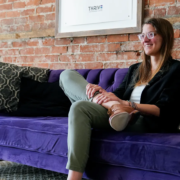
Emily Schubert, a licensed clinical social worker, sits on a purple couch inside Thrive Empowerment Center in Covington, Kentucky, a trauma-informed LGBTQ-affirming community space focused on safety, healing, and advocacy amid rising anti-LGBTQ+ violence in Northern Kentucky.

What ‘Y’all’ Really Means: When Community Safety, Civil Rights and Police Collide in Northern Kentucky

The views and opinions expressed in submissions to Queer Kentucky are those of the authors and do not necessarily reflect the official policy or position of Queer Kentucky. Any content provided by our submissions or regular columnists are of their opinion. As a reader, you are always welcome to submit your op-eds through our submission form: https://queerkentucky.com/submit-an-article/

by Emily Schubert

Northern Kentucky is nestled in the Greater Cincinnati Region, a quick 15-30 minute drive from the city of Cincinnati and an hour or two away from Lexington and Louisville. Like other densely populated regions in the state of Kentucky, Northern Kentucky is a melting pot of opportunity and diversity, an eclectic pocket of communities that people of various demographics and identities call home and find safety within. That’s why in July 2025, citizens of Covington (Northern Kentucky’s largest city) were shaken to their core when the Covington Police Department used excessive force to detain protestors holding a peaceful demonstration on the Roebling Bridge. While these community members were protesting against the unlawful arrest and kidnapping of civilians conducted by ICE, the department’s actions revealed a deeper issue at the heart of the burgeoning volatility in our sociopolitical climate: politically motivated division and violence. 

Consequently, this growing hostility has challenged communities such as the Northern Kentucky area to remain accepting, tolerant, and non-combative towards their immigrant, BIPOC, LGBTQ+, and other minority/marginalized community members. The unfortunate reality of this community violence is captured by the Human Rights Campaign. The campaign’s data collection indicated that, since 2022, there have been nearly 2000 incidents of anti-LGBTQ+ violence nationwide. In 2023, over 2800 hate crimes were recorded against LGBTQ+ people (accounting for 23% of all hate crimes that year). Additionally, 2024 data collected over a ten-year time period indicated anti-LGBTQ+ extremists were responsible for the murders of nearly 400 LGBTQ+ identifying people. While these numbers are disheartening and problematic enough in their own right, they grotesquely underrepresent the true number of violent incidences experienced by the LGBTQ+ population, as not all jurisdictions report hate crimes into the FBI database tracking these numbers. Keeping that in mind, consider what the data would indicate if it were to include violence perpetuated on other minority groups within our community. Now consider if that data was expanded to include violence perpetuated on non-minority groups who were actively helping/supporting minority members of their communities, practicing community advocacy, or peacefully protesting in accordance with their First Amendment rights. Though some may refuse to admit it, one can’t help but argue that this data seems to highlight America’s position as land of the suppressed, but home for the violent and intolerant.

What does this mean for the Covington I stroll through? The one that flourishes with quirky, unique, and diverse people of all walks of life? The zip code that’s home to the career, the community, the loved ones, the best tacos this side of the Ohio River, the friendliest bookstore and coffee shop, the little carved out corner of peace and belonging I call mine and, as such, ours? It means we adapt, pooling together our tangible and intangible resources along with our intellectual, emotional, and human capital. We connect, communicate, educate, and empower. We invest in what strengthens our community and, serendipitously, what also strengthens us. We commit to maintaining our personal safety by maintaining everyone’s safety, whether that be physically, verbally, emotionally, or relationally. We prepare, both in mind and body–by being aware of warning signs of power-based violence, by effectively setting boundaries/limits, and by learning to use our voices and posture to move through the world safely and with confidence. We prevent division, silence, and violence. We resist capitulation and resignation that hostility and volatility beg of us. We heal ourselves and each other. Like our community depends on it. Because it does. 

Want Queer Kentucky’s latest in your inbox? Sign up for our newsletter here.

In Covington, arguably the northernmost point of Kentucky and a stone’s throw away from Cincinnati, the city has boasted nearly 5 consecutive years of earning a 100% rating by the Municipal Equality Index spearheaded by the Human Rights Campaign. As a result, Covington has established itself as a hub for businesses and non-profits owned and operated by LGBTQ+ individuals and allies alike. This indicates, now more than ever, the important power a community retains when it protects, advocates for, and promotes the safety and acceptance of all its members–especially the most at-risk and marginalized. Coincidentally, creating these safe spaces for all members of the community to express themselves and gather together (regardless of race, ethnicity, gender, sexual orientation, etc.) can have positive economical and equitable outcomes. As all its members flourish within safe and inclusive spaces, so too does the community itself. 

Related: Covington police officer suspended following Roebling Bridge protest as NKY LGBTQ+ concerns over policing grow

Related: 10 LGBTQ+-Affirming Businesses Helping Shape Northern Kentucky’s Growing Inclusive Community

At the heart of all power-based violence is the desire to suppress and silence. We regain this power when we think, yell, run, or fight–for ourselves, for others, for our morals and values, for human rights, for democracy, for our communities. But most importantly, we tell. And we never stop telling. A voice is a verse; a community is a chorus. So, here’s what I want to tell you: 

As I often do when free time allows, I was strolling through Covington’s city sidewalks on my lunchbreak the other day. On my way to the Roebling Bridge, the site of that July protest gone sour, I passed the following: a pride center, a community center, a multicultural resource center, a career center, a homeless shelter, a number of non-profits, several telephone poles crowded with past and future community happenings, an art center, two breweries–both hosting LGBTQ+ specific events over the next few weeks, and so many homes and businesses waving pride flags that I eventually lost count. I also passed Covington City Hall. One sign on the window boasted about the record-breaking success of small businesses in the city, numbers far surpassing that of other cities nationwide. And another sign. Right there. In plain view: “Y’all really means all.”

Author Bio:

 Emily Schubert (she/her) is a proud member of the LGBTQ+ community. She is a Licensed Clinical Social Worker in Kentucky and Ohio, specializing in mood disorders, personality disorders, trauma, and gender-affirming care. She facilitates both individual therapy and support/reconnection groups at Thrive Empowerment Center–a trauma-informed, female-led community center located in Covington, KY. 

Reference Links

https://www.covingtonky.gov/news/2024/11/22/3-peat-covington-earns-top-lgbtq-score

https://hrc-prod-requests.s3-us-west-2.amazonaws.com/Research/Trans-Violence-2025.pdf


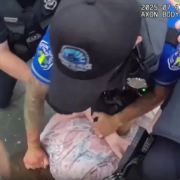
Screenshot from police body camera footage showing multiple Covington police officers restraining a person on the ground during the July 17, 2025, Roebling Bridge protest. The image captures officers in uniform holding the individual facedown while attempting to control the situation. Photo Provided by Covington Police Department

Covington police officer suspended following Roebling Bridge protest as NKY LGBTQ+ concerns over policing grow

An internal investigation by the Covington Police Department into its actions while clashing with protesters on the Roebling Bridge ended with one officer suspended without pay for 30 days. The suspension comes after concerns about policing from the LGBTQ+ community rise nationally.

During the July 17 protest, 15 people were arrested, including multiple LGBTQ+ individuals, and two journalists. The demonstration was sparked by the detention of Cincinnati Children’s Hospital clergyman Imam Ayman Soliman by Immigration Customs Enforcement officers. Soliman was detained by ICE after his asylum status was revoked. He was released from jail in September after the Department of Homeland Security dropped his case.

Officer Suspended After Roebling Bridge Protest Draws Scrutiny

Officer Zachary Stayton was placed on a 30-day unpaid suspension, according to a press release from the department on Tuesday. The department is requiring Stayton to complete remedial training before returning for duty while mandating de-escalation techniques for all officers.

Want Queer Kentucky’s latest in your inbox? Sign up for our newsletter here.

“Officers across the Department will begin receiving additional training focused on de-escalation and responding to unlawful public demonstrations involving large crowds,” Covington police said in the release. “We remain committed to transparency, accountability and professionalism,” Chief Justin Wietholter said. “Our department’s training should, and will, reflect as such.” 

Covington police officer, Zachary Stayton, in a dark suit and tie stands indoors holding an award medal in a blue case, posing for a formal photo in front of a wooden wall with the Covington city seal partially visible behind him.

Covington Police Officer Zachary Stayton.

Prior to his suspension Stayton was taken off patrol and performed administrative duties since the protest. Bodycam video from Covington police showed Stayton firing at Hill with a pepper ball gun. After Hill went to the ground Stayton repeatedly punched him in the head. Hill was taken from the scene on a stretcher. 

Stayton, who was hired by the department in 2021, was sued in federal district civil court for excessive force in 2023. The suit was dismissed in February 2024 after the city settled with the complainant for $27,500. 

Prior Misconduct Cases Deepen Concerns About Covington Police

Queer Kentucky asked the Kenton County Commonwealth Attorney’s Office in an email if Hill was still facing charges following his arrest during the protest, but the office didn’t respond. According to the Kentucky Courts website, he has a case pending. 

Actions by the Covington police department were noted earlier this year following the lawsuit and subsequent media coverage of the arrest of Damien Conner, who is Black and identifies as LGBTQ+. 

Officer Doug Ullrich — one of Covington police’s LGBTQ+ liaison officers — cut Conner’s seatbelt and forced him from his vehicle after pulling him over in Sept. 2024. Charges against Conner were later dropped. Covington police and Ullrich were among the defendants Conner named in a federal lawsuit filed in March 2025. 

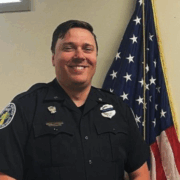
Covington police officer, Doug Ullrich, in uniform smiles while standing indoors beside an American flag, posing for a formal photo.

Covington Police Officer Doug Ullrich

Ullrich has been sued seven times in federal court since 2021. A story published by Queer Kentucky in May reported Ullrich had a history of violating department policy. The report reflected the supervisor’s concerns for his behavior. 

Concerns from the Northern Kentucky LGBTQ+ community have grown over the past year after the department’s detaining of Conner and the treatment of Hill. 

Related: Roebling Protester Sues Covington Police for Excessive Force

Related: Covington’s LGBTQ+ Liaison Officer Has 9 Federal Lawsuits. The Community Wants Answers.

In an op-ed published by LinkNKY on Oct. 25, Covington resident Tom Hull said citizens have lost trust in officers as they’ve become more separated from the public they serve. 

“Now, we see squad cars parked, like hunting animals, concerned only with issuing their next ticket,” Hull said. “We see an obsession with acquiring military grade equipment that will inevitably be used on us, the public. We see departments made of officers who are not even close to being members of the community.”

In a letter to the editor published by the Cincinnati Enquirer, Ft. Wright resident Elise Sebastian said the department’s response to the protest during a press conference was more concerning than its actions on the bridge. 

“Today, I am more afraid of the Covington police than ever; less for their power, and more for their lack of sound judgment and professional integrity,” Sebastian said. 

A report from the American Civil Liberties Union in 2024 said LGBTQ+ communities across the country are more susceptible to police violence than non-LGBTQ+.

National Data Shows LGBTQ+ People Face Higher Rates of Police Violence

In 2024, a study by the ACLU on relations between LGBTQ+ communities and the nation’s police reported 26.8 percent of transgender people experienced physical force by police, the number higher if they were black. Transgender (44.9 percent) and nonbinary people (33.1) also received verbal abuse at a much higher rate than CIS-gendered men (14.6 percent).

The effect leads to LGBTQ+ community members avoiding contact with police, even in times of need. Only 71 percent of the LGBTQ+ people surveyed said they were willing to call the police in case of an emergency compared to 86 percent of non-LGBTQ+ people. 


Queer News Round Up June 28 – July 5

As Queer Kentuckians, staying informed about LGBTQ+ news worldwide is essential. Changes in policy, activism, and culture in other regions can impact our community and efforts locally. Our weekly global news roundup keeps you updated on important LGBTQ+ developments, ensuring we remain informed and connected.

Want Queer Kentucky’s latest in your inbox? Sign up for our newsletter here.

  • Two Teenage Girls Shot in NYC Near Historic LGBTQ+ Bar: At the end of NYC Pride Celebrations, shots were fired at a pair of teenage girls near Stonewall Inn. There has been no suspect identified, and it hasn’t been determined yet whether or not it was hate-crime related.

Related: Queer News Round Up: July 5 -July 11

Related: Queer News Round Up: June 21 – June 27

  • Court in India Rules in Favor of Trans Women: The Andhra Pradesh High Court in India has ruled that Indian law is not permitted to deny recognition of trans women based on their ability to reproduce. This ruling allows for protections that apply to cisgender women to apply to trans women as well. 


Covington Police officer Doug Ullrich, the department’s LGBTQ+ liaison, during a city council meeting.

‘I Violate Every Policy’: Covington Police LGBTQ+ liaison officer under fire amid civil rights lawsuits

Editor’s note: This story was published in May 2025. Our 2026 follow-up reports Ullrich now faces nine federal lawsuits. Read it here.

Ullrich’s Personnel File Reveals Pattern of Complaints


As Northern Kentucky gears up for Pride under a second Trump administration — one already markedly more hostile toward the LGBTQ+ community — one of the people trusted with protecting a marginalized community is under fire for allegedly repeatedly violating civil rights of those he is trusted to protect.

Covington Police Officer Doug Ullrich has been one of the department’s LGBTQ+ liaisons — a rarity in Kentucky police forces — since 2023.

The role is personal to him: He identifies as LGBTQ+, as do several of his close friends and family, he told Queer Kentucky.

Want Queer Kentucky’s latest in your inbox? Sign up for our newsletter here.

But his suitability for the role has been called into question after Ullrich made headlines — again — for being sued in federal court earlier this year, this time for allegedly violating a Black LGBTQ+ man’s civil rights in what started as a standard traffic stop that escalated into a situation where the man’s seatbelt was cut off and he was pulled through a car window.

It isn’t the first time Ullrich has been sued over alleged civil rights violations. Since 2021, he’s been sued five times in federal court — almost always over allegations of excessive use of force and traffic stops gone awry.

The situation comes on top of a career-long pattern of being seen as proactive to the point of being overzealous and insubordinate, at times landing him in trouble with supervisors during his time at the department, per a review of his personnel file.

City and police officials allowed Ullrich to answer most of Queer Kentucky’s questions in his first public statements since the March lawsuit was filed.

Due to department policy, Ullrich wasn’t allowed to answer questions about the pending litigation or his personnel file. And he declined to say whether or not he would step down from the liaison role should the community ask him to.

“The city of Covington’s commitment to transparency and inclusivity remains steadfast,” a city spokesperson said. “The LGBTQ+ liaison role, which was the first of its kind in Northern Kentucky, was created in an effort to provide a specific community with a direct connection to the Covington Police Department’s administration.

“We have no question regarding Officer Ullrich’s ongoing support for the LGBTQ+ community and his willingness to build meaningful relationships with those who would like to partner with him.”

Attorney Jamir Davis, who has sued Ullrich in federal court twice over accusations stemming from traffic stops, including the most recent lawsuit, though, was clear.

“Based on my experience representing clients in cases involving Officer Ullrich,” Davis said, “and considering the allegations, patterns, and conduct we’ve encountered, I do not believe he should be serving in any liaison role—especially one intended to support or advocate for minority communities.”

‘I violate every policy’

Flashing red and blue police lights in the dark symbolize Covington Police under scrutiny.

Ullrich’s nearly 300-page personnel file — examined multiple times by Queer Kentucky — paints a picture of a police officer eager to join law enforcement, proactively studying up on practices around policing and case law, and becoming a de facto leader on his shifts around traffic stops, particularly ones involving drugs.

Now a specialist, he is a Drug Recognition Expert, “constantly sought out by other officers for his exceptional knowledge of controlled substances and impaired driving,” one of the notes in his file said.

He’s been commended by the state for his traffic stop and drug enforcement skills in the past, and he minored in gender and diversity studies when he was at Xavier University, “knowing even then that I wanted to serve the LGBTQ+ community,” he told Queer Kentucky.

But Ullrich’s file is also peppered with concerns from supervisors regarding improper use of force, sloppy police work, insubordination and telling a police group chat he “violate(s) every policy.”

“I believe Officer Ullrich has become his own worst enemy,” a supervisor wrote in a performance review early in his career.

“He has the skill, desire, motivation, and discipline to do this job better than anyone else, but his lack of patience and attention to detail have overshadowed most of his accomplishments this year,” they wrote.

Another note in his file stated, “Ullrich’s desire to be so proactive sometimes backfires on him,” adding that, “When he rushes through his paperwork and evidence procedures to get to that next call or make that next arrest, it results in incomplete or inaccurate paperwork.”

Several concerns about Ullrich’s policing didn’t make it into his file, one note signaled, with someone saying they’ve “received many complaints about Officer Ullrich’s performance from his fellow officers, records clerks, crime lab personnel, and supervisors from other shifts” but handled them during his shifts.

One note detailing a meeting between Ullrich and a supervisor discussed an arrest where Ullrich charged a suspect with 69 counts of possession of drug paraphernalia for unused syringe needles. When Ullrich tried to defend himself, the supervisor told him he should be “embarrassed.”

In another instance, Ullrich got in trouble for using his taser on a suspect who was running away from him and posed no clear threat to him — and for how he reacted when a colleague brought it up in a chat room.

“Or I could of tased him… kinda how you voliate policy and tased” the suspect in question, one person wrote in the June 2014 chat thread.

Ullrich responded: “i violate every policy.”

A different person jumped in, warning Ullrich to be careful what he says: “…if u r ever the defendant in a federal case, it could come back to haunt…just my piece of advice, been there, done that, it was not fun.”

A note from a supervisor in Ullrich’s file said, “My most pressing concern is not necessarily the errors that he continues to make, but rather his cavalier attitude toward his continual policy violations,” pointing to the aforementioned chat message.

“I realize that this comment may have been made in jest during what he thought was private conversation, but there is more truth spoken in jest than some are willing to admit,” the supervisor continued. “This truly concerns me.”

Ullrich’s issues at the department-level seemed to slow down as he got older, with one review from around 2021 saying he showed “a constant progression of learning from his mistakes.”

But, the review continued, he “has had a history of issues that have plagued him. It appears these are getting better but they are still popping up on occasion. I would imagine that these issues may be what is keeping Spec. Ullrich from achieving his desire to become an (field training officer).”

Ullrich also got in trouble in 2022 for failing to log evidence properly after he conducted a traffic stop, suspected marijuana use, searched the car, found a suspected THC cartridge and drove off without realizing he left it on the roof of his cop car.

Ullrich faces multiple federal lawsuits involving civil rights

Body camera footage showing Damien Connor, the Covington man suing Officer Doug Ullrich for civil-rights violations.

Damien Connor arrest by Officer Doug Ullrich. Photo from Covington Police Department

Police leaders tapped Ullrich as one of the department’s LGBTQ+ liaisons in 2023, despite multiple allegations of civil rights violations against him already on file in federal court.

And they’ve chosen to keep him there over the last two years, even as additional allegations rack up.

Lawsuits represent one side of a situation, and typically public entities don’t comment on pending litigation. However, the city is standing by Ullrich, making an unusual move to call the most recent claims against Ullrich “ridiculous” and publicly critiqued the lawsuit within weeks of it being filed.

Of the five times Ullrich has been sued in federal court since 2021, one case has been dismissed, another is being appealed and the remaining three are in front of a judge.

A Queer Kentucky review of the lawsuits found a pattern of alleged excessive use of force, often aimed at those in marginalized communities, and traffic stops forced to spiral out of control.

The most recent lawsuit, filed by Davis in March, stems from a Sept. 2024 traffic stop when Ullrich pulled over Damien Connor — a Black man who identifies as LGBTQ+.

Connor initially got pulled over for being on his phone, but according to the lawsuit and body cam footage of the incident, the situation rapidly escalated beyond what should’ve been a rather routine stop.

Ullrich asked Connor if he had a gun, and that situation ultimately, allegedly, ended with Connor having his seatbelt cut off, getting pulled out of his car window by officers and ending up in handcuffs.

At some point, Ullrich accused Connor of smelling like weed and thus, in his view, necessitating a search of Connor’s car. Connor has said he can’t use marijuana due to his job’s drug policy.

In the lawsuit, Davis accuses Ullrich of having a long history of wrongfully accusing Black people of being drunk and/or smelling like weed as grounds to unlawfully search their vehicle.

He also contends the city and Police Chief Brian Valenti knew of Ullrich’s long history of such conduct “and failed to take any corrective action” and that they’ve allowed officers “to act with impunity and have failed to properly train or supervise their officers in accordance with established policies.”

An initial statement from the city called the lawsuit’s allegations “false and ridiculous.” Davis had sued before, also over Ullrich’s alleged civil rights violations during a traffic stop. He ended up getting sanctioned for how the lawsuit was handled, and his plaintiff got charged for some of the city’s legal fees. (That case is now being appealed.)

A few weeks after the lawsuit’s filing, the City released extra body cam footage of the Connor incident and double-downed on its support of Ullrich, saying it “is committed to defending its officers who engage in lawful actions.”

And there may be more on the way. Davis told the Atlanta Black Star at least five other citizens claim to have had similar situations with Ullrich, and they might be added to Connor’s lawsuit as co-defendants.

Why does the police have a LGBTQ+ liaison? 

Crowd waves rainbow Pride flags during a Pride parade.

Like many marginalized communities, the LGBTQ+ community has — and has had for decades — a fraught relationship with law enforcement.

LGBTQ+ people — particularly those who identify as transgender, nonbinary and bisexual — often face harsher and more frequent run-ins with police, a 2024 ACLU report found, compared to those who aren’t LGBTQ+. More likely to face police search, more likely to face arrest, more likely to be placed in custody. And they tend to be less willing to call the police for help if needed.

Having a designated LGBTQ+ liaison for a police department is seen as one of the most effective ways to rectify law enforcement’s ties to the queer community, a former federal guide to best practices for creating such a role said. (The federal web page got yanked during Trump’s first 100 days in office.)

It isn’t a new concept. The first liaison role on record was created in 1962 in San Francisco.

Related: Covington’s LGBTQ+ Liaison Officer Has 9 Federal Lawsuits. The Community Wants Answers.

Related: Covington police officer suspended following Roebling Bridge protest as NKY LGBTQ+ concerns over policing grow

Ullrich, who has been a Covington police officer since 2011, told Queer Kentucky he’s been interested in the department’s LGBTQ+ Liaison role since it was created in 2016.

As a member of the LGBTQ+ community, and as someone with plenty of close friends and family tied to the LGBTQ+ community, Ullrich feels “a strong duty to speak, act, and work with/for our community,” he told Queer Kentucky.

“I have witnessed and experienced discrimination,” Ullrich said. “I know that members of the LGBTQ+ community have historically been underserved by law enforcement.”

The liaison role is a key reason why Covington is able to claim they’re one of the most LGBTQ-friendly cities in Kentucky. When the Human Rights Campaign judges how supportive cities are to queer people, they look at whether or not local law enforcement has a LGBTQ+ liaison or task force.

Ullrich’s responsibilities fluctuate. Sometimes, it looks like attending community events like the recent Mx. Cincinnati PRIDE Pageant and the upcoming NKY Pride Parade and Festival.

Other times, it means helping his colleagues better understand the community and answer questions about the LGBTQ+ population or jumping in to help with reported hate crimes against LGBTQ+ people.

“In this role, I work to build bridges with the community so that they have a friendly, trusted face for those facing victimization, discrimination, or simply seeking clarity about the law,” Ullrich said. “I entered policing to make a difference for my community, and being the LGBTQ+ liaison helps me do just that.”

NKY Pride leader quiet on Ullrich’s ties to event

Northern Kentucky Pride logo; the organization’s president Bonnie Meyer has declined to comment.

The 2024 ACLU report on policing the LGBTQ+ community pitched several potential solutions. One such suggestion: “Carefully consider police presence in public LGBTQ+ spaces and events, such as pride parades and festivals.”

Queer Kentucky reached out to Bonnie Meyer, who leads the Northern Kentucky Pride Center, twice to get her reaction to Ullrich’s recent headlines and to see how he is involved with NKY Pride.

Meyer told Queer Kentucky in late March the group typically doesn’t start planning for Pride until after Kentucky’s legislative session ends. She redirected any questions involving Ullrich to the city.

Meyer did not respond to a more recent request for comment regarding Ullrich or broad information regarding security at this year’s events.

But Ullrich told Queer Kentucky he’s excited to work with the NKY Pride board as one of the police department’s LGBTQ+ liaisons to help organize this year’s events, work out logistics for the parade and address safety concerns that may come up.

He also helps during the event, assisting with medical calls, police and safety needs and even helping out vendors, he said.

NKY Pride events kicked off May 27, with the parade and festival scheduled to start at noon on June 1.

Questions or comments about this article? Want to weigh in? Contact reporter Olivia Krauth at [email protected].

The Downstairs Club: A History of the Segregated Queer Haven in Kenton County

Along the winding stretch of Madison Pike—known locally as the 3-L Highway, just outside of Covington—where gas stations, roadside diners, and farm stands dotted the landscape, one unassuming building held a secret. At first glance, 456 Madison Pike looked like little more than a modest bar tucked into the hillside, its roof barely visible from the parking lot. But for those in the know, this was The Downstairs Club—one of the most infamous and cherished queer gathering places in the region from the late 1950s through the 1970s.

Hidden in the rolling hills of Kenton County, its remote location offered a paradoxical mix of isolation and protection. Beneath the cover of darkness, LGBTQ patrons from Kentucky and Ohio found more than a bar; they found a sanctuary. Here, in this smoky underground haven, affection could unfold freely, forging deeper connections and strengthening a community that so often had to exist in secrecy. Unlike the fleeting, often dangerous encounters in surveilled parks or shadowed street corners, The Downstairs Club offered something rare—embraces without fear, conversation without pretense, and the simple yet radical act of being seen.

Longtime patron Scott Parker, who threw a reunion for former patrons The Downstairs Club at Below Zero in 2016, recalled that the bar welcomed icons like Little Richard and Jimi Hendrix, describing it as “known from coast to coast for its uniqueness and the very special place that it was.” He was interviewed for a story about the reunion put out by the Cincinnati Chamber of Commerce Newsletter that year, “This was in the 1960s and early ’70s when, in more liberal parts of the country like Los Angeles, dancing was not allowed in gay bars and nightclubs,” he said. “Nowhere in the city of Los Angeles was dancing allowed. Now you can understand how unique The Downstairs Club was during this period. It was truly ‘one of a kind’ and ahead of the times.”

Want Queer Kentucky’s latest in your inbox? Sign up for our newsletter here.

The club had first opened under the name The Jochebo, a moniker derived from the first three letters of the names of its founders—the Speakes family. John T. “Jack” Speakes, a former U.S. Army corporal, and his wife, Helen, had already operated another queer-friendly bar, The Riviera (not to be confused with a different bar of the same name that opened in the 1970s). Their son, Bobby Combs, became a fixture in the local queer scene, earning the nickname, “Darling of The Downstairs Club,” for his quick wit and charm. He later ran That Darn Pussy Cat, a Newport go-go bar that law enforcement targeted for allegedly existing “specifically and entirely to encourage, incite, create, permit, and entice persons who practice homosexuality.”

For years, it was an open secret that the Speakes family had ties to what remained of organized crime in the region—connections that, for a time, seemed to shield them from police interference. But that protection unraveled in 1962 as both Cincinnati and Covington sought to suppress the city’s growing and undeniable queer subculture.

In June, a Kenton County judge denied Jack and Helen Speakes an entertainment permit for The Jochebo Club, citing illegal operation and fostering obscenity. Testimony from law enforcement officers painted a damning picture, and the judge condemned the club for defying state laws. Local newspapers echoed the court’s outrage, labeling the venue a den of vice frequented by “sex deviates” and “so-called queers.”

Yet despite these legal battles, The Downstairs Club remained resilient. In May 1965, The Cincinnati Enquirer alluded to its endurance, questioning delays in legal proceedings against regional gambling dens and remarking, “Understand that there is a basement bar in Kenton County that is getting its fair share of homosexuals as customers.” By 1968, Kentucky’s Alcoholic Beverage Control Board vowed to crack down on “taverns that cater to homosexuals” in Northern Kentucky. That same month, The Enquirer issued another thinly veiled warning:

“While Covington Police are cracking down on gambling and vice in their city, they might also take a look at a basement night spot that is crowded nightly with homosexuals. Narcotics agents might also take a look at the place.”

Yet, for reasons unknown, The Downstairs Club remained largely untouched after 1962. Whether due to lingering political connections, selective enforcement, or sheer luck, the club continued to operate, providing a rare and vital refuge for its patrons.

For all its reputation as a liberated space, the club, like most LGBTQ venues of the era, remained deeply segregated. Even after the end of legal segregation, de facto barriers persisted—Black gay men and women were often required to have white co-signers or present multiple forms of ID to gain entry.

Cincinnati activist Mary Ann Lederer, whose visit to The Downstairs Club helped inspire her activism and the founding of the city’s first gay rights organization in 1967, was dismayed to discover the club’s strict enforcement of racial boundaries. She recalled in an interview with local lesbian activist Phebe Beiser in a publication entitled Dinah in the 1980s:

“I felt I should boycott the place, but this was the only gay bar I really enjoyed. I had waited many years to find it and didn’t want to give it up,” she said. “I decided to integrate it from the inside out. I went back and talked to the owner’s son, who was gay. He seemed to wish it were integrated but thought this was impossible. After all, Kentucky in the early ’60s was really South.” 

It was published in Dinah, a local lesbian publication that ran throughout the 1970s and 1980s and & To the Roots, a periodical that ran briefly for two or three issues in 1988.  “To The Roots.”  Dinah: “Interview with an Activist.” Summer 1988. Issue 1 Volume 1. Interview by Phebe Beiser of Ohio Lesbian Archives.  publication of the Lesbian Activist Bureau, Inc. Page 16.

For all its defiance of mainstream social norms, The Downstairs Club upheld the same racial exclusions that pervaded much of American society. This reality complicates any nostalgic view of the club, forcing us to reckon with the exclusion embedded in queer spaces of the past. For many, this underground refuge remained just that—a refuge, but only for those who met its unspoken criteria.

Related: Filmmakers seek to uncover life, murder of Covington politician Sandy Cohen in new documentary

Related: We Been Here: Honoring Black Queer Kentuckian Ancestors

By the 1970s, the club finally desegregated, following other businesses in slowly adapting to social change. Yet the legacy of segregation in queer spaces lingers, with Black and white LGBTQ social circles often remaining divided to this day.

The Downstairs Club’s eventual closure remains somewhat shrouded in mystery, as is often the case with clandestine spaces that exist on the margins of legality. Some accounts suggest that as LGBTQ rights gained more visibility and larger cities offered more welcoming environments, the need for a hidden, rural sanctuary diminished. Others speculate that law enforcement pressure, or perhaps a shift in ownership, led to its end. Whatever the reason, by the late 1970s, the club had faded into history, leaving behind only memories and scattered mentions in legal records and personal accounts.

The story of The Downstairs Club is one of resilience, secrecy, and the relentless need for spaces where queer people—against all odds—could find community, even in the most unexpected corners of America. It was a place of laughter, of love, of dancing in defiance of a world that demanded silence. It was a place where, for a few precious hours, people could shed the masks they wore in their daily lives and simply exist. But it was also a place where the wounds of racism and exclusion mirrored the broader struggles within the LGBTQ community itself.

Remembering The Downstairs Club means remembering both its triumphs and its failings. It means honoring those who built, defended, and ultimately lost this sanctuary. And it means continuing the fight for spaces where everyone, regardless of race, gender, or sexuality, can find a home.

Black Queer Excellence at The Historic Lyric Theatre

In the early 1900s, Black drag was happening in Lexington from the Woodland Park Auditorium to the Lyric Theatre. Newspaper clippings even mention James Herndon performing as Sweet Evening Breeze, in “The Passion Dance of the Bongo-Bangoes” at the Woodland Auditorium in the 1920s and 1930s. As the years went on, other venues in Lexington began to pop up and showcase Black LGBTQ performers.


Performer [Verrano Willis] at drag show, Lyric Theater, Lexington, KY, October 14, 1960, John C. Wyatt Lexington Herald-Leader Collection, UK Special Collections

Founded in 1948, The Lyric Theatre was a cultural hub for Black audiences during segregation, and it quickly became a beloved community space. Legends such as James Brown, B.B. King, Count Basie, Tina Turner, and Redd Foxx even performed on their stage. From world-renowned acts on the Chitlin’ Circuit to local performers, the Lyric was a center of African American arts, and entertainment.

The Lyric Theatre, Lexington, KY, 2020.


In 1960, though, shows that had just decades before been celebrated in Woodland Park Auditorium were now raided by the Lexington Police at the Lyric Theatre. On Friday, October 14, 1960, a drag show at the Lyric Theatre was interrupted by Detectives James Perkins and Carl Shye. Perkins was the first African American sergeant, lieutenant, and captain with the Lexington Police Department. Two performers, Princess de Carlo (William Campbell, Jr.) and Verrano Willis, were arrested under the “lewdness ordinance” that prohibited men from wearing women’s clothing and makeup, except on Halloween night. The performers’ names and faces were published in the Lexington Leader. The ordinance was eventually abolished in 1969. 

Want Queer Kentucky’s latest in your inbox? Sign up for our newsletter here.


Lexington Detectives James Perkins and Carl Shye raid drag show at Lyric Theater on October 14, 1960 and put performer “*Princess de Carlo” in wagon. *William Campbell, Jr., John C. Wyatt Lexington Herald-Leader Collection, UK Special Collections


The Lyric Theatre ended up closing its doors in 1963 and remained closed for decades. As it turned out, very few people knew about these early drag shows, or the police raids. The moment had been lost to history. These images, though, were uncovered by The University of Kentucky’s Special Collections and showcased for Black History Month in 2015. The exhibit, “A Pictorial History: African American Lesbian, Gay, Bisexual, Transgender, and Queer Persons in Kentucky” was shown in the lobby of the University of Kentucky’s Margaret I. King Library Building and is still available to view online.

In 2010, after a major community effort and support from the city of Lexington, The Lyric Theatre underwent extensive renovations and hosted a triumphant reopening. A few years later, in 2017, Bluegrass Black Pride finally brought drag back to the Lyric stage. Their show, titled “Reflections: A Drag Show,” was first held in April of 2017, 57 years after the police raid. 

Related: LGBTQ+ History Banners Line Vine Street in Lexington for Pride Month Celebration

Related: Slay Bells Holiday Drag Show Returns to Lexington’s Lyric Theatre Dec. 7 to Support Moveable Feast


Poster for “Reflections: A Drag Show,” April 9, 2017.


Now, 65 years after its opening, The Lyric Theatre & Cultural Arts Center continues to stand as a vibrant beacon of Black heritage and community engagement in the heart of Lexington’s historic East End. Queer excellence is still highlighted through events like “Reflections: A Drag Show” that supports Bluegrass Black Pride and “Slay Bells, A Holiday Drag & Variety Show Spectacular” that benefits Moveable Feast, a non-profit who delivers meals to those impacted with HIV.

The Lyric Theatre is also a part of FMA’s Pride of Place Walking Tour, launched June of 2020. This self-guided walking tour visits sites that tell remarkable stories of courage, freedom, and the struggle for equality by Lexington’s LGBTQ community. You can pick up free printed copies from the Lexington Visitor’s Center or download a virtual copy and request a free printed copy by visiting www.faulknermorgan.org/pride-of-place-walking-tour.

Pride of Place Walking Tour, 2020, Faulkner Morgan Archive.


Legacy in the Making: Keturah Herron’s Journey in Kentucky Politics

photo: LGBT Victory Fund

Keturah Herron made history in 2022 as Kentucky’s first openly LGBTQ+ woman elected to the House of Representatives, and again in 2024 as the state’s first openly LGBTQ+ woman elected to the Senate. She also carries the identities of being Black, raised in a single-parent household in Richmond, and having a family impacted by the opioid crisis and the criminal justice system. Herron’s journey from court-designated worker to policy strategist, and ultimately, to legislator, reflects both personal growth and an unwavering commitment to justice, equity, and the vision of a better world. 

In 2016, Keturah Herron worked as a court-designated worker for the Administrative Office of Courts, where she was tasked with processing young people involved in the justice system. She had the lowest rate in the office for referring youths to court. When asked in a staff meeting about her success, she wasn’t quite sure how she had that outcome. So, she laid out her approach, which included reaching out to the families of the youth before doing anything else. She thought this was common sense, but she came to learn this was a strategy no one else in the office employed. This led to a change in the Administrative Office of Courts policy statewide, which was the first piece of policy Herron shaped. 

A few years later, while speaking at an event about the effects of parental incarceration, Herron shared a personal story about the impacts on her own family. A representative from the ACLU approached Herron, urging them to bring their story to Frankfort and speak directly with lawmakers. That invitation sparked a deepened commitment to political advocacy, a shift that ultimately propelled Herron into the halls of power.

Want Queer Kentucky’s latest in your inbox? Sign up for our newsletter here.

When Breonna Taylor was tragically murdered in 2020, Herron was working with the ACLU on policy reform. The heartbreak and injustice of that moment ignited a deep sense of disruption within them, compelling Herron to take their advocacy to new heights. Fueled by a sense of urgency, they joined forces with community members to push for change, ultimately leading the effort to get the Louisville Metro Council to ban no-knock warrants. Their work culminated in the successful passage of “Breonna’s Law,” a pivotal step in the fight for justice.

Today, as one of only nine Black LGBTQ+ women in state legislatures across the United States, Herron carries the weight of representing Kentucky and these intersecting identities with both pride and pressure. “I’m Kentuckian. I mean, I’m literally drinking my water out of a mason jar,” they say, summing up their connection to the land and people they serve. 

But even as they embrace the pride of representation, the expectations are palpable. In a state where marginalized communities have long been silenced, Herron’s presence is an act of resistance and hope. For Herron, these identities aren’t just a set of labels; they’re the foundation of their work. “Who I am makes me qualified to represent Kentucky,” they say. 

Growing up in a single-parent household, witnessing the devastating effects of the opioid epidemic on their family, and navigating the complexities of being a Black, queer, masculine-centered woman, Herron is intimately aware of the struggles many of their constituents face. But it’s these very experiences, they believe, that make them a stronger advocate for change.

At the core of their work is a commitment to youth empowerment. For Herron, young people hold the key to the future. “The beautiful thing about young people is that they have nothing to lose,” she says. “They’re not scared… They have stuff to teach us–how to connect with young people, how to use social media, how to get a message across.” 

It’s not just about changing the present; it’s about shaping a better, more just world for the future. “The laws I make today, they’re going to impact young people much longer than they’re going to impact me,” Herron shares. “If these young people are saying this isn’t the society we want to live in, we need to listen to them.”

Herron’s vision is clear: a society where young people are empowered to create change, where future generations continue the work of fighting for freedom, and where everyone has the opportunity to thrive. “The dream I have, I will never be able to see it all the way through,” they say. But she does her part, and she has faith in the young people after her to continue working toward the same dream of liberation for all.

Related: 25 Faces of Fairness: Keturah Herron

Related: Keturah Herron Runs Historic Kentucky House Race

Raised without knowing about Georgia Davis Powers, the first Black woman to serve in the Kentucky Senate, Herron later found inspiration in Powers’ resilience. On their first day in the Senate, Herron felt the weight of being the only Black woman to serve in the chamber since 1989. “If she can do that in 1968, how dare I be afraid today?” Herron thought, drawing strength from Powers’ trailblazing path. 

But they didn’t just find inspiration in Powers’ story. Figures like abolitionist Angela Davis and Kentucky legend Muhammad Ali have also shaped Herron’s outlook. Ali’s famous words–“Impossible is not a fact. It’s an opinion”–serve as a constant reminder that barriers are made to be broken.

On the day of the 2025 Inauguration, Herron remains unwavering in their belief that progress is still possible, even if the road is difficult. “No matter who’s in office, the work is the same. The strategies are different,” they say. 

But the work is bigger than state politics; it’s about building a whole new world. “We can’t constantly be fighting against,” Herron explains. “When you’re fighting for something, you’re automatically fighting against something. I urge people to find out what that thing is that they want to fight for.”

Looking ahead, Herron sees a world shaped by active participation, not passive waiting–regardless of if a Democrat or a Republican is in charge. “We can’t afford to sit back and wait,” they say. “Yes, the next 4 years are going to be a fight, but in the battle is where you build. And I think there is something so beautiful about building something we don’t have.”

In the end, the future is being built right now, and with all their experiences, vision, and unrelenting drive, Keturah Herron is helping lead the way for Kentucky and beyond.

25 Faces of Fairness: Keturah Herron

Queer Kentucky’s limited print publication “25 Faces of Fairness” is available now on our website, in select stores, or available free to monthly supporters at any dollar amount. Not a Queer Kentucky monthly member? You can sign up here.

Art by Jacob Grant

Keturah Herron she/they Louisville


Use one queer slang word to describe Kentucky!

Stud


How did you activate and organize your community for equality?

Historically, most of the organizing I have done is around voter registration and GOTV. However, in 2020 I worked to pass Breonna’s Law—banning no-knock warrants—through the Louisville Metro Council in just 17 days. Less than a year later, I played a pivotal role in putting together a bipartisan coalition to pass a statewide ban on no-knock warrants in the General Assembly.


In the last 25 years, what is one moment that gave you hope for Kentucky’s fight in equality?

In 2023, so many youth organized and mobilized themselves to have a presence in Frankfort. They came to the Capitol and used their voices to speak against inequality and hate directed towards trans youth. I remember being encouraged and inspired by their bravery and courage. They were bold, loud, and proud. They showed signs of not backing down. We as adults can learn from them. 

Want Queer Kentucky’s latest in your inbox? Sign up for our newsletter here.


What do you think is next for Kentucky in the fight for Equality?

The fight in Kentucky is the same as it always has been. However, I believe leaders like myself have to prioritize making room for youth. We must teach them, train them, and allow them to walk beside us as we fight. The Commonwealth which we are fighting for doesn’t belong to us anymore. It belongs to the youth. 

Related: Legacy in the Making: Keturah Herron’s Journey in Kentucky Politics

Related: Death Before Detransition: Queer Kentucky’s Trans Youth Issue


What are Kentucky’s greatest strengths when it comes to the fight for Queer equality? 

The biggest strength we have is history. There are people who have been fighting long before me. We must learn from our history. We must understand the fight is the same. We must be willing to relinquish our power to the next generation and make room for them. 

The Lasting Legacy of the House of Sweet Evening Breeze

As caretakers of Kentucky’s LGBTQ+ history, we at Faulkner Morgan Archive find it imperative that we continually remind ourselves and our communities of the long-lasting legacy of queer people in the Commonwealth. 

One of the most prominent ways to do that is by sharing stories of our queer ancestors who paved the path for us to be where we are today. The history of Kentucky drag is one place that holds countless stories of individuals creating a space of freedom and self-expression for LGBTQ+ people. Drag “houses” often became core support groups for drag queens, gender-bending performers, and trans individuals with drag “mothers” forming and leading the house.

One drag mother, Sweet Evening Breeze, and her drag house left a particularly strong mark on the city of Lexington. As early as the 1920s, Sweets strolled through Lexington’s downtown in her feminine attire, with a parasol in hand. Before the 1970s, Sweets would have probably been the first, if not only, openly queer person many Kentuckians knew. While Sweet Evening Breeze is the best remembered of the Black, gender-ambiguous folks in Lexington, she was actually just one member of a vibrant community. Other queer individuals and drag queens began to make a name for themselves through the 1950s and 1960s as drag performances rose in popularity among Lexington’s queer community. 

Want Queer Kentucky’s latest in your inbox? Sign up for our newsletter here.

One drag queen and trans woman, Leigh Angelique was from the house of Sweet Evening Breeze. She would often perform at The Living Room, which is now known as the Bar Complex located on East Main Street. However, on April 8th, 1970, a Wednesday night, Lexington Police raided The Living Room and arrested four queens, including Tiffany Ross and 22-year-old Garland Hanley, better known as Leigh Angelique. 

After Leigh was booked for the crime of “wearing a disguise,” she sought refuge at the home of Sweet Evening Breeze. Enraged by the injustice, Sweets called the judge assigned to sentence Leigh. Sweets told the judge it was “in his best interest to drop the charges.” The judge complied. In the words of Leigh, “I don’t know what Sweets had on the people in this town, but she had something.”

This was the last time Lexington Police raided a gay bar for simply being a gay bar. For years after, Sweets and Leigh celebrated the date as their “Bastille Day,” when they dismantled a prejudiced law and its unjust enforcement. This is just one example of the impact that Sweet Evening Breeze had in the city. In a time where being publicly queer meant being faced with harassment, violence, and even imprisonment, Sweets became a powerful force to be reckoned with.  

Another one of Sweets’ drag daughters was Miss Joyce, also known as Charles Dansby, who was Lexington raised, and lived most of his life in the house that his great-grandfather built (and where Charles was born) in the predominantly Black neighborhood of Spiegel Heights. Charles’ drag career spanned decades, and when he passed in February 2020, he was the last known “drag daughter” of Sweet Evening Breeze, whom he had known since childhood. Charles met Sweet Evening Breeze at the Walgreen’s lunch counter on a Saturday trip downtown with his mother.

Related: Sweet Evening Breeze: Honoring the legacy, paving a path and sending a message

Related: Surviving & Thriving: The Faulkner Morgan Archive’s Traveling Exhibit ‘Here, Black, Femme, & Queer’

Charles was one of many interviewees in the documentary The Last Gospel of the Pagan Babies by Jean Donohue. 

“Mother Of Us All,” Painted by GAIA. Located at 161 N Limestone, Lexington, KY, 40507. 

The life and legacy of Sweet Evening Breeze and her “drag daughters” is still inspiring and impacting Kentucky’s queer community. In 2022, The Faulkner Morgan Archive held a dedication for the “Mother Of Us All” mural of Sweets painted by GAIA located prominently in downtown Lexington. Sweets is also the namesake of Sweet Evening Breeze, a Louisville organization that is working to end LGBTQ+ young adults homelessness. It is important to remember our shared queer history and the impact of icons like Sweets. We must now carry on their legacy and fight to leave a better world for future queer people. 

The Faulkner Morgan Archive is a grassroots community archive with a mission to share Kentucky’s LGBTQ history. Our collections span 200 years of history, representing individuals, events, and institutions across Kentucky’s diverse LGBTQ spectrum, creating a rich resource for activists, scholars, artists, museums, and the curious. We believe sharing our history can change our future. You can find us online at FaulknerMorgan.org or on Facebook and Instagram @FaulknerMorganArchive.

“Mother Of Us All,” Painted by GAIA. Located at 161 N Limestone, Lexington, KY, 40507. 

Queer activists stare down a barrel of hate in Eastern Kentucky park

by Spencer Jenkins
[email protected]

At Sanders Park in Corbin, KY, members and activists of the LGBTQ+ community rallied together on June 3rd to support one another. What should have been an uplifting event turned unsettling when faced with animosity and hate.

LGBTQ+ activist Trent Osborne said he and his friends were having a peaceful protest in direct action against hateful legislation plaguing Kentucky and the rest of the United States.

“The goal originally was to get a lot of people to come together and show that there’s a community in Corbin that will protect you,” Osborne said.  “I think is necessary, especially because it doesn’t feel like there are enough resources for people that are queer or LGBTQ.”

photo by Jonas Ray

Not too long into the celebration, Osborne’s friend, James Hensley, was approached by two men, and an altercation ensued. According to Osborne, two men approached —  one on a motorcycle and the other in a car. 

“They flipped us off and proceeded to pull over and approach us as if planned,” he said. “They began spouting slurs and hateful slander. The F-slur was said on multiple occasions when the two men approached, they each had their hands on their guns which were hidden in their pockets.” 

Osborne immediately noticed and confronted them, “asking why on earth they’d need to have weapons as none of us were armed nor threatening them,” he said. 

In the video that has gone semi-viral on social media, James can be seen bucking up with one of the men. One man appears to admit to carrying and shows a Ku Klux Klan membership card and spews threats in James’ direction.https://www.tiktok.com/t/ZTRoETWLM/

TRIGGER WARNING: VIDEO HAS HOMOPHOBIC SLURS AND AN IMAGE OF GUN

“I called him out for proudly brandishing a KKK card, and when I did, they laughed and were proud to be members,” Osborne said. “They even proudly proclaimed to be homophobic and racist. At one point the man who later pulled his weapon in the altercation looked at me and said, “I’ll burn you and that sign (a pride sign).”

In the video we can see the man with the card put it into James’ face and touch him, so James attempted to move his hand away from him. In doing so, the man began to slap at James, and then ultimately reached for his weapon, and unstrapped the holster in his pocket on the back of his pants. It can also be seen that the LGBTQ+ activists called him out for this. They begin screaming to others for help because there is now a gun threat. 

Hensley said he believed exactly what the men were doing.

“They wanted to come there and bait us into fighting them so they could get away with murder,” he said. After I smacked his hand away, I’ll be honest, I was ready to fight. Then, I noticed his hand on his gun.”

photo by Jonas Ray

Eventually, the video shows one of the agitators yelling, “come take care of these faggots then!” when the gun officially leaves the holster of one of the agitators.

The police demanded the man drop his weapon, and confiscated both it and the other man’s gun, which wasn’t holstered and just hidden in his shorts pocket. 

“They take the guns apart and remove the bullets that were in the chamber and ready” Osborne said. “The police then did  an investigation to find out what is happening, then ask us to leave as we have no permit, and they escort the men to their vehicles, giving their weapons back and send them off.” 

The Corbin area is also the birthplace of the bestselling novelist, Silas House. The Lark Ascending author is vocal about LGBTQ+ rights in our state and said this incident is especially sad for him to see.

“I know how hard so many people in Corbin have worked to make the town more welcoming and progressive,” House said. “There’s so much great grassroots work happening there. And I’m especially proud of these young people because they are brave to be among the first to do this kind of rally in Southeastern Kentucky. It’s one thing to speak up in places like Lexington and Louisville, but quite another to do it in a place where there is limited anonymity and often much more pushback.”

The identities of the agitating men have not been officially released an no arrests have been made. Attempts for comment from the Corbin Police Department were unsuccessful by publication time.

Queers Say No to War! Demonstration March 18th on the 20th Anniversary of the Invasion of Iraq

The views and opinions expressed in submissions to Queer Kentucky are those of the authors and do not necessarily reflect the official policy or position of Queer Kentucky. Any content provided by our submissions or regular columnists are of their opinion. As a reader, you are always welcome to submit your op-eds through our submission form.

Image: ‘Smash Oppression’ by Shenby (February, 2021)

By Christian Brawner and Sunny Cobb

With the 20th anniversary of the Iraq invasion approaching, and while facing a seemingly insurmountable upsurge in state repression against our trans community, I want to honor the legacy of our queer and gay ancestors by reminding you of our revolutionary struggle. It’s absolutely no coincidence that when the U.S. instigates global conflict, it also attempts to sow mistrust and hatred amongst working class people. Queer history is one of resistance against these attempts, resisting patriarchy and, ultimately, resisting the system that uses patriarchy to maintain power, capitalism. But what about anti-imperialist resistance? What does it mean to be anti-imperialist? To answer this, we must look at the struggle against both capitalism and empire from our past.

Whether it was the Mattachine Society, the queers who revolted against police repression at Compton Cafeteria and Stonewall, S.T.A.R., the Gay Liberation Front, or ACT UP, the thread that united them wasn’t just that they were queer, but that they were knowingly engaged in class struggle. Our revolutionary ancestors understood the root of our oppression as the system of capitalism. Since the 20th century that system has morphed into an apparatus of endless war – forever clamoring to dominate global markets regardless of the suffering and mass loss of life. We must remember that our liberation is bound to the liberation of all others: the liberation of black people from endless police brutality, the liberation of indigenous people from centuries of genocide and colonization, the liberation of women from patriarchy– all that stem from the same system of oppression and exploitation! To be queer is to oppose the patriarchy, to resist capitalism, and to fight back against its empire for the liberation of us all! It’s to be revolutionary! 

No Cops at Pride: Our Anti-imperialist History

While many of us are familiar with the 1969 Stonewall uprising as the beginning of the contemporary gay liberation and pride movement in which we’ve fought and made progress in marriage equality and social acceptance, our history of resistance is actually marked by intense class struggle against capitalism and patriarchy. Much of our history has been forgotten or intentionally erased and co-opted by those who are comfortable ending the struggle at gay marriage and corporate sponsored Pride, but, in truth, our historical struggle was; 1. Led by revolutionary queers and gays, 2. Often consisted of communists in struggle against the police, unsafe labor conditions, and discriminatory housing, and 3. Carried a message of international proletarian (working class) revolution.

Want Queer Kentucky’s latest in your inbox? Sign up for our newsletter here.

Sylvia Rivera (center) with other members of Street Transvestive Action Revolutionaries (STAR) from Come Out vol 7 no 1 1970. 

Despite cries of “No Cops at Pride!” our celebration of these struggles continues to be co-opted by police presence and corporate sponsorships. The erasure of our history silences the very queers and faggots who risked it all to start the fight for our liberation! Before the time of Stonewall, the police led the repression of queer and trans lives, harassing them out of work or housing or public life all together! Even as the police harassed, assaulted, and beat them back, our revolutionary ancestors knew that they had nothing to lose but their chains! The intense oppression was met with resistance from groups like the Mattachine Society, who in the 1950s fought against homophobia and anti-communism, the trans community in San Francisco who fought the police in the streets in 1966,  after years of repression and housing insecurity, and eventually with the uprising of 1969, at the Stonewall Inn. It was at this explosive moment that Sylvia Rivera howled through the streets, “The revolution is here!” An era of militant, anti-imperialist struggle emerged. 

Shortly after Stonewall, the Gay Liberation Front (G.L.F.) formed, its name in honor of the anti-colonial and anti-capitalist National Liberation Front in Vietnam and Algeria. The G.L.F. recognized that their struggle for gay liberation was bound to every other struggle against the system of capitalism and its empire that oppressed us at home and that invaded, pillaged, and decimated others abroad. From their manifesto their mission was, “part of a wider movement aiming to abolish all forms of social oppression,” and highlighted “peoples oppressed by imperialism, who lack the national, political, and economic independence which is a precondition for all other social change.” They denounced capitalism and racism locally and internationally. After Stonewall, Sylvia Rivera and other trans and gay activists went on to become members of the G.L.F. and organize with the Young Lords and the Black Panther Party with the shared goal of building a multi-racial and multi-national coalition to fight our common enemy: capitalism and U.S. imperialism. The experience of Sylvia Rivera and the many other revolutionary queers of this period provide evidence of why issues like housing, healthcare, war, racism, police brutality, and patriarchy are all queer issues and are all workers’ issues! All stemming from the capitalist system’s endless wars and wide spread oppression and exploitation.

Queer Liberation Means No More War 

As dozens of states are seeing the introduction and passage of anti-trans legislation, city governments are increasing their police spending and riot training, and the U.S. government is setting the stage for global war. They push policies to instill distrust, hostility, and confusion among working class people, all the while preparing for our resistance against their endless violence and warfare. The ruling class is well aware that if we were unified as the millions of poor, oppressed, and exploited, we would take what is rightfully ours. We would seize the world that we built. We would end war, protect the planet from destruction, and build a better world for us all where people’s needs are met and the primacy of profits made a thing of the past. We would smash capitalism and its structures of racism and patriarchy! 

Related: A brief history of Kentucky anti-LGBTQ police harassment

Related: Reflect on Queer rights origins by reading Stonewall during pride

Party for Socialism & Liberation Contingent at Pride parade Washington D.C. (2021) 

Just like our revolutionary ancestors and the G.L.F., we must build multi-racial, multi-national coalitions to stop war, end racism, smash patriarchy, and ultimately, dismantle capitalism. In 2019, I joined the Party for Socialism and Liberation (PSL), a multi-national, multi-racial revolutionary socialist party whose members and leaders are rooted in the working class. If we want to end oppression and exploitation that exists at the hands of the highly organized rich, the ruling class, we too must be organized! Like Malcolm X said regarding the struggle for black liberation, “we’re not outnumbered, we are outorganized.” Our party exists because we believe that revolution is possible even in the heart of the empire, that our class, and the most oppressed of us, can be liberated. We communists exist to show our friends, coworkers, and neighbors their own power so we can win! 

On March 18th, the 20th anniversary of the invasion of Iraq, PSL, the ANSWER coalition, and hundreds of other organizations are marching on Washington to say no to war!  And to demand:  Abolish NATO, Peace in Ukraine, No War with China, End Aid to Racist Apartheid Israel, Free All Political Prisoners (such as Mumia Abu Jamal, Julian Assange, Leonard Peltier among many others) and Fund the Peoples’ Needs, Not the War Machine! 

Locally, PSL Louisville is hosting a speak-out at the Old Louisville Coffee Co-op this Saturday, March 18th at 1PM featuring speakers from Veterans for Peace, Louisville Students for Justice in Palestine, Louisville Tenants Union, United Campus Workers of Kentucky, Queer Kentucky, and PSL. I urge all of you to join us locally or in D.C.! 

Further Reading 

Sylvia Rivera’s Searing “Bitch on Wheels” Speech

Leslie Feinberg: Revolutionary Communist, Transgender Warrior – Liberation School 

“Our armies are rising:” Sylvia Rivera and Marsha P. Johnson – Liberation School

A history of LGBTQ workers’ struggles – Liberation School

The Marxist understanding of the roots of LGBTQ oppression – Liberation School

Cuba: ‘for families free of homophobia’ – Liberation School 

How being a transgender alcoholic makes me believe in a world without prisons or police

This weekend, I had to ask a favor. A big one. I needed someone with a truck to help me move four one hundred and twenty pound restaurant booths and an undetermined number of wooden chairs and tables down from the second floor of a restaurant under construction and across town. And I needed to do it within the next twelve hours. 

I made a Facebook post and waited. An hour later I had a message in my inbox from another person in the trans community offering to help. She had a truck and was available to help me. Knowing the amount of labor the job entailed, I texted another friend from the trans community, who is also in my recovery circle, to see if she might be available to help. She responded immediately, asking when and where. Twelve hours later we had all of the furniture moved into my 700 foot condo, which is currently acting as temporary storage space for a worker’s co-op that is waiting to sign a lease.

This is how my communities operate, and how I have learned to operate over the course of the last five years: if someone needs something you have–be that time, money, a ride, a couch to sleep on, or a listening ear–you share. And the reason you share is because you were in their position before: homeless or on the verge of homelessness, rejected by your loved ones and society at large, a prisoner to your addiction, a prisoner in your body, desperate to change but lacking the means to. In my communities, we share not as an act of charity, but as an act of necessity: we are all we have, and only we can save each other. 

This didn’t come naturally at first. As a white queer person who had “emancipated” myself from my Christian, conservative upbringing, I was conditioned to believe that receiving help meant relinquishing personal boundaries, autonomy, power. Independence was more important than comfort. And then one day I found myself at the end of my rope: financially, emotionally, physically, and spiritually. I was a poor, visibly trans man in Kentucky. I was also an alcoholic who had hit rock bottom, and who was unable to get sober. 

What does an alcoholic on the verge of homelessness, an addict with a criminal record, a Black man who is late on rent, a visibly trans person who can’t find work, have in common? None of them can turn to the state (government officials, the police, the system) for help. And so they turn to each other–in solidarity, not charity. “Our primary purpose is to stay sober and help other alcoholics to achieve sobriety.” Or as Peter Kropotkin once wrote, “the fittest are not the physically strongest, nor the cunningest, but those who learn to combine so as mutually to support each other, strong and weak alike, for the welfare of the community.”

The most common argument against abolition, and for many, the most compelling, is that without prisons or police there is nothing to deter bad people from committing violent crimes. But abolition isn’t just about removing or divesting from our existing systems. Rather, it is the view that we need to abolish those systems in order to invest in our communities, especially the most marginalized. We need more jobs, more educational opportunities, more affordable homes, more community centers, more addiction and mental health resources, and more say in how our communities function. And as abolitionists we believe that investing in our communities in these ways is the best way to decrease violent crime. And isn’t that the alleged purpose of our criminal justice systems? To prevent violence? 

Here some will protest that prevention isn’t enough. Community centers, social workers, mutual aid–these things are great, but  we need actual police to handle domestic abusers, murderers, serial rapists. And we need somewhere to lock these monsters up. The issue here is that police don’t stop violent crimes from occurring. And the real monsters rarely end up behind bars.

Consider that for every 1,000 sexual assaults reported in tbe US, fewer than five rapists are incarcerated. Twenty of every 1,000 robberies end in incarceration. Thirty three of every 1,000 people charged with assault and battery end up behind bars. Consider also that there have been hundreds of incidences of sexual assault perpetrated by police, and that police violence is a leading cause of death for young Black men in the United States. Consider the significant history of mistreatment of LGBTQ people by US law enforcement, including profiling, entrapment, discrimination, and harassment by officers. Consider that two thirds of Black Americans do not trust the police to treat them equally, whereas most white Americans do.

I think that most white people, most white queers even, cannot imagine a world without police and prisons simply because we have never had to. For most of our lives we have been privileged enough to think of the police as the good guys, and of prisons as the place where the bad guys end up. We have felt a sense of security in knowing that if things get shady, we can call 911. And because we spent so much of our lives wrapped in this invisible security blanket, we have never had to imagine and create networks of mutual aid. We have never gotten to experience true solidarity, to realize that we have everything we need as a community of people with different needs and abilities. For much of my own life, my whiteness shielded me from that harsh experience, and blocked me from that profound realization. It’s one of the reasons I’m forever grateful to the trans and recovery communities. These communities showed me not just that, but how a world without police and prisons is possible.  

Nowhere Bar death incident leads to bill filing in General Assembly on two-year anniversary

by Ben Gierhart
he/him
[email protected]

In early January 2020, Christopher McKinney died after an altercation with a bouncer at Nowhere Bar Louisville. Since then, McKinney’s widower, Nick Clark has sought justice. The most recent of these attempts has been the creation of a new bill to establish minimum training requirements for security at bars and other retail establishments licensed to sell alcohol for on-premises consumption. Dubbed Christopher’s Law, this bill, if passed, will serve as a widower’s loving memorial enshrined in the law of the land as well as preventing violent incidents like the one that killed Christopher.

Nowhere Bar Louisville

Clark, who did reach a settlement with Nowhere, was largely dissatisfied with the investigation of the incident.

“There was a search warrant from a judge who called for blood tests [to see if the bouncer was under the influence]. They never executed the search warrant, even though the bouncer admitted to being under the influence the night of the incident. There were three off-duty police officers working for Nowhere the night of the incident, and according to police records, a Nowhere bartender told LMPD the night of the incident that one of those off-duty officers had reprimanded the bouncer for bad behavior before. That same off-duty officer disappeared to go find the bouncer after the incident, where he was found in the back parking lot; however, there is no record or body camera footage of what was said during that conversation with the bouncer. Also, according to police records, there were multiple attempts to get surveillance footage from the bar. The only footage we were provided was not from LMPD, but from the bar after the investigation was already complete,” Clark says. “Christopher was in good spirits in the footage, but he was visibly intoxicated, could barely walk straight, and the bouncer even said Christopher wasn’t much trouble.”

Clark said he felt even more left in the dark regarding the case’s treatment of the official cause of death.

“There was one guy who said it was multiple punches, but then there are two main witnesses who said it was one punch to the left side of the head,” Clark said. “They stated it was a ‘knockout punch’ and that Christopher was ‘completely defenseless’ and that ‘nobody deserved to be treated like that.’”

Before the settlement of the case, the bouncer proffered a self-defense argument. Clark said the Commonwealth’s Attorney’s office told Christopher’s family that the bouncer described Christopher as not a lot of trouble. He did not have to drag Christopher out, but that Christopher wasn’t walking normally, and he was visibly intoxicated.

Nick Clark (left) and Christopher McKinney (right) pose for a wedding photo

Clark continues to describe the account with the evidence he’s amassed.

“At some point, Christopher stopped, and the bouncer pushes him out the door of the bar, making Christopher’s phone drop to the ground,” he said. “The bouncer’s perception is that Christopher gets mad, he goes to pick it up and when he turns around, he said that it looks as if Christopher were going to swing, but he never made contact.”

According to Commonwealth’s Attorney Tom Wine, in a letter dated August 10, 2020, he stated, “it is our opinion that the one blow will not meet the elements of either extreme indifference to human life or conduct which creates a grave risk of death or serious physical injury.”

“[That’s] ridiculous. So you’re telling me that they don’t believe one punch to the head can create serious physical injury? They didn’t even consult with the neurosurgeons who treated Christopher or anything. I have spoken with one of Christopher’s neurosurgeons from that night and also a longtime local neurosurgeon [unattached to the case], and they describe this as a very really possibility,” Clark said.

However, despite Clark finding no justice in the case, he has only kept himself busy. He reached out to Senate Minority Floor Leaser, Morgan McGarvey (D) who represents the Highlands in district 19. They started conversations, and he had obviously heard of the incident and wanted to help. That’s sort of how things got moving.

“I’ve also been working really closely with State Representative Lisa Willner (D) for helping to get Christopher’s Law drafted and filed in the House,” Clark said.

The first time the bill was filed was in January 2021, but the session ended before it could be made into law. It was filed and then it did get assigned to the Senate licensing and occupations committee, but it was towards the end of the session when time ran short. The 2022 version of Christopher’s Law will be filed on today, the two-year anniversary of Christopher’s death.

Clark and his team consulted with several organizations for feedback to give Christopher’s Law an even more viable chance of gaining support. As a summary of the bill currently reads, many of the changes that Clark and other proponents of Christopher’s Law wish to make to how bars currently operate their security seem to be common sense, such as prohibiting bouncers from drinking alcohol or being under the influence of any illegal substance while on duty.

The bill also calls for a standardized bouncer application as well as training.

“There are no hiring standards that exist for bouncers, and many bars hire by word of mouth, physical stature, and through social media,” said Clark.

The training proposed for bouncers would be created and administered by the Department of Alcoholic Beverage Control, or ABC, and must specifically include interpersonal communication techniques, de-escalation techniques, physical maneuvers that involve minimum application of physical force, emotional regulation techniques, and personal mental health evaluation. This training would expire every three years.

The final pieces of Christopher’s Law would create an incident report log that could be accessed by a potential employer when looking up an applicant’s previous experience as well as a mandate that law officers acting as bouncers when off duty not be allowed to participate in an investigation of a homicide or serious physical incident that occurred while acting as a bouncer. This part of the bill would serve to minimize bias in an investigation and is something that Clark opines especially would have been helpful in preventing how the investigation of his late husband’s death unfolded.

The exact next steps for Christopher’s Law are still being worked out, but Clark is hopeful. In the meantime, Clark has also teamed up with local filmmaker Zach Meiners of Chronicle Cinema on creating a documentary on the incident, the formation of Christopher’s Law, and the state of current bouncer hiring standards in general. “We have been filming for a little over a year, and should have a finished product by the end of 2022.”

There appears to be no limit to the amount of time and effort Clark is willing to put into his quest for justice.

“I’m going to do this because Christopher deserves it.” Queer people – all people – deserve it too.”

QueerKentucky has reached out to Nowhere Bar Louisville for further questions, but we have not been able to have a conversation before the bill filing date. This article will be updated and/or a subsequent piece will be written when new information from that conversation is provided.

For more information on Christopher’s Law, please visit christopherslaw.com.

Protesting in Louisville leads to arrest by police, transphobia by corrections

I was arrested for the first time a couple of weeks ago, while participating in a direct action here in Louisville. The demonstration was peaceful but powerful, and it was an honor to a part of its execution. This historical moment is a tipping point for racial justice, and I feel lucky to be alive to witness and play a role in it. I also feel that it’s my responsibility, since white bodies are inherently less vulnerable on the front lines than Black and Brown bodies. We may get arrested, we may even get a few scratches and bruises in the process, but as white folks we are far less likely to be assaulted, shot at, charged with a felony, or killed.

That being said, transgender and gender non-conforming folks, particularly trans women and femmes, are more vulnerable than our white cis comrades. I have seen a lot of white trans and nonbinary folks showing up to protests and direct actions. This has been wonderful to see, and in order for it to continue, it’s important for us to be aware of the unique dangers we face as a community, and do what we can to protect ourselves and each other in our fight for justice.

I was arrested alongside 75 other protesters, most of them white and cisgender. Automatically this put me at an advantage. I am certain that, had I been arrested alone, or with a group that was predominantly trans and BIPOC, my experience would have been very different. Also working to my advantage was the fact that I am cis-male-passing. Unless I was completely naked, you wouldn’t know just by looking at me that I’m a trans man. And then there is my white privilege. Being arrested as a white trans person is one thing. Being arrested as a Black trans person—I can only imagine. 

After I was handcuffed, an officer asked for my identification so that he could fill out my paperwork. I’d left my wallet at home, knowing that if I was arrested, I might not get all of my belongings back. Since I did not have my ID, the officer began asking me for my name, my address, etc. When he got to gender, he circled “male,” no questions asked. A lucky guess. But I knew better than to think that I was in the clear. After all, I hadn’t been searched yet.

I was loaded into the paddy wagon with the other male protesters. The rest of the males in the van were white and cis. Two of them, friends of mine, knew that I was trans. The others had no clue, as evidenced by their cisnormative dude jokes about cavity searches and a group agreement to “not jack off in the holding cell.” I played along. 

When we arrived at the department of corrections, we were chained up in the garage according to sex, and taken one at a time to be searched. Because there were so many of us, this process took hours. There was one other trans man in the group of arrests, who also read as male. I wanted to ask him whether he planned on disclosing that he was trans before the search, but I didn’t want to out either of us to the other inmates. So I waited, and tried to look casual as I played out all of the possible scenarios in my head. Finally, my name was called and I was taken into the room to be searched. 

The male officer told me to stand with my feet on the footprints and my hands on the wall. He told me to unbuckle my pants and said “Now heads up, this is going to be uncomfortable.” Not knowing what all he was going to be doing in my pants, or how he would react when he did not find the genitals he was expecting, I decided in that moment to disclose that I was trans. I said, “Okay, well heads up, I’m transgender.” He immediately took two steps back, and said “The fuck man? I’m gonna slap you upside the head!” I kept my feet on the footprints and hands on the wall, my heart racing. “What does that mean, ‘you’re trans?’ Are you saying you’re really a woman?” I replied, “No, I’m a trans man.” “What were you born as?” he barked. I cringed. “I was assigned female at birth.” The phrase did not register. “Don’t move,” he said. He left the room and came back a moment later with a female officer. 

“So let me make sure I understand,” the female officer said to me. “You’re transgendered?” “Yes,” I responded. “I’m trasngender.” “Have you had the surgery?” she asked. “Which surgery?” I said. “Sex reassagnment surgery,” the male officer inserted, condescendingly. “Which one,” I shot back. After a beat, I continued “I’ve had multiple surgeries.” The male officer looked frustrated. The female officer pointed at my nether-regions and said “Have you had that part corrected?” I gave her a blank stare. “DO YOU HAVE A VAGINA.” she said. I raised my eyebrow and replied sarcastically, “Oh is that what you’re asking? I guess so, if we’re calling it that.” She said “Okay, then I’m going to have to search you instead of him.” 

The search itself was not as invasive as I was expecting. I’m not sure if they followed standard protocol, or if they let me off easy, because of their own discomfort. But I was humiliated. There I was, a grown ass man, being searched by a woman because in their minds, I was more of a woman than a man. After this, they led me to the body scanner. The male officer, who for some reason remained present for all of this, exclaimed “Ope – there it is!” and laughed – presumably in reference to my genitals.

Inside the booking area, I waited in line to have my mugshot and fingerprints taken, and to find out where they were going to put me. When it was my turn, the male officer paused. Pointing at the computer he said, “It says here you’re female.” I could feel the blood rushing to my face. “It’s because I’m trans,” I said. “Umm, well do you have the male part?” he asked. “No,” I croaked. “Well then, you’re going to have to go with the women.” I could feel my body entering fight-or-flight mode. “That doesn’t make any sense at all,” I said. “I am a male. My driver’s license even says so.” He looked at me, surprised. “It does?” “Yes. It has for years.” He hesitated. “Stand right there. I have to go talk to my advisor.” He walked around the desk to confer with the woman who’d done my search. Reading her lips, I saw her whisper “It’s female. Transgender.” The other male protesters who had no idea I was trans were all sitting in the lobby chairs, watching this scene unfold in total confusion. 

The officer came back, and said “I gotta type female.” I rolled my eyes. “Whatever. But I’m not going to the women’s holding cell.” He sighed, and told me to look straight ahead. He took my mugshot and then both of us endured the painfully awkward experience of him taking my digital fingerprints, which required him to stand close to me for several minutes, and move and press my hands at various angles against the machine. When we were done, he told me to stand by the wall. “Someone will come get you and take you to your own cell.”

I was taken into solitary confinement, “for my safety,” and was not booked for a couple of more hours, during which time they booked the rest of the inmates and began to process their releases. Also during this time, concerned parties on the outside were trying to find me on LMDC’s website, which had me listed as female. Worried for my safety, they reached out to BLM’s jail support team, who reported that “no one knew where I was.” I was held in limbo for a couple of hours while jail support communicated with LMCD, and got them to start working on my release. An officer let me out of my cell, and told me to sit on the women’s side of the lobby. I stayed there for a few more hours, dysphoric and fighting off a stress migraine, until I was released around 4am. 

Later that morning, I posted on Facebook to let my people know that I’d been released and was home safe, though I’d experienced transphobia in jail. Several trans folks saw my post and reached out to share their own experiences with transphobic LMDC officers after being arrested during protests or under other circumstances. Through dialogue with these individuals it became clear that my experience was not unique, and that the policies and protocol in place at LMDC were not inclusive of trans people. At best, they did not take transgender identities into account. At worst, the policies were trans-antagonistic. 

Chris Hartman from the Fairness Campaign also saw my Facebook post, and reached out to ask if I’d be willing to tell him more about my experience. He said that Fairness had led a training on trans-inclusivity for LMDC a while back, but clearly the guidelines he had trained them on were not being followed. I ended up meeting with Chris, Keturah Herron (ACLU KY Policy Strategist and author of Breonna’s Law), and another trans person who had undergone a similar experience. Chris and Keturah then met with Dwayne Clark, LMDC’s new director, to come up with a plan to address the problem. I was invited to be a part of this meeting as well, but I did not feel safe talking with Dwayne, whose intentions, like those of anyone in his position, I did not trust. I did, however, trust that Keturah and Chris would use whatever leverage they had to push for safer conditions for transgender inmates. 

Unfortunately, in a system that doesn’t understand or care about trans people, we trans folks are the only ones, with the help of our allies, who can hold that system accountable. If you or someone you know are trans or gender non-conforming, and have been arrested here in Louisville, we would love it if you shared your experience in the comments. Alternatively, if you want to share your experience but would prefer to remain anonymous, reach out to me via QueerKentucky directly. There is no change without accountability, and I am committed to holding LMDC accountable.  

A brief history of Kentucky anti-LGBTQ police harassment

by Kathryn de la Rosa

New York’s second annual Queer Liberation March, a protest march against NYC Pride organized by the Reclaim Pride Coalition, came to an early end last month when NYPD officers started making arrests and brutalizing protesters with pepper spray and blunt force. This year’s march specified liberation for trans and queer Black lives, in solidarity with Black-led movements to defund and abolish the NYPD.

The cop- and corporation-free march moves in the opposite direction of NYC Pride, physically and ideologically. “We March in our communities’ tradition of resistance against police, state, and societal oppression,” the coalition’s website says. “We March against the exploitation of our communities for profit and against corporate and state pinkwashing, as displayed in Pride celebrations worldwide, including the NYC Pride Parade.”

The Stonewall riots of 1969 were, of course, in response to a police raid at the Stonewall Inn, and an explosion after decades of police harassment of queer community gathering spaces in New York City. That legacy spans the whole of the United States and isn’t restricted to white, cis gay men arrested for sodomy and crossdressing.

Want Queer Kentucky’s latest in your inbox? Sign up for our newsletter here.

The Movement for Black Lives has platformed prison abolition, an end to cash bail, and the diversion of public funds away from policing since 2016—policy proposals that have gained traction throughout this summer of ongoing protest. 

When Reclaim Pride describes a “tradition of resistance,” this is it. We take our cues from Black revolutionaries who’ve acted against the carceral state and state violence for decades. We can talk in circles on mythmaking around who threw the first brick at Stonewall, but what matters is Black trans women were the vanguard of this uprising, and queer and specifically trans Black folk experience police harassment and violence on a frankly genocidal level that non-Black queers do not.

With the LMPD under increasing scrutiny for the murder of Breonna Taylor, its treatment of protesters, its role in gentrification, and a 2020-21 metro budget that doesn’t touch the agency’s funding, it’s worth learning how racist and homophobic police harassment intersects in queer Kentucky history.

These accounts are all drawn from the Kentucky LGBTQ+ Context Narrative, a 2016 project of the UofL Anne Braden Institute for Social Justice Research. It was principally authored by Dr. Cate Fosl and presented in partnership with the Fairness Campaign, the National Parks Service, and various state heritage offices. It’s a very comprehensive history from a combination of interview subjects and archival sources, available to download in full here. 

June 1889: Two Black men are arrested for cross-dressing in Louisville

A Courier-Journal brief from June 7, 1889 is titled “‘Female Impersonators’ Arrested.” It’s a short, two-sentence account, and per Dr. Fosl, the eventual fate of these two is unknown.

“John Phillips and Hiram Belt, colored, were arrested at 1 o’clock this morning on Green Street, between Sixth and Seventh, by Officers O’Brien and Hickney,” it reads. “They were dressed in women’s clothes, wore wigs, bustiers, pads, and all the numberless unmentionables, which they considered ‘attractive’ in their characters of ‘female impersonators.’”

Green Street is now Louisville’s Liberty Street, adjacent to Muhammad Ali Boulevard—the former Old Walnut Street. Phillips and Belt were arrested in what, at the start of the 20th century, would be a thriving Black business district spanned 6th to 13th Street along Walnut Street. It was effectively decimated by Urban Renewal initiatives in the 1960s, and displaced Black families and businesses to the West End. Police history of monitoring and clearing out Louisville’s Black communities is well over a century old.

1909: Two Black men successfully challenge the state’s sodomy law in western Kentucky

Kentucky’s state code has prohibited consensual sodomy (KY Rev Stat § 510.100) since 1860, and while the Kentucky Supreme Court struck it down in 1992, it’s still on the books, for some reason. It was even revised as recently as 1975 to specify that oral sex counts as sodomy.

That increased restriction came several decades after two Black men in Caldwell County successfully appealed sodomy charges against them for that exact reason. In 1909, C.H. Poindexter and Frank Moore were caught having oral sex and charged with sodomy. They were each sentenced to two years for this felony conviction, and on the advice of their lawyer, appealed on the grounds of the law’s vague definition of sodomy. The Circuit Court judge raged and called for the criminalization of oral sex, but he reluctantly overturned their convictions because “only penile-anal penetration constituted sodomy,” legally speaking.

Related: A Deeper Dive into Kentucky’s Gay Liberation Front with the LGBTQ History Project

Related: The Downstairs Club: A History of the Segregated Queer Haven in Kenton County

1960s–1980s: Entrapment by Lexington, Louisville and northern Kentucky police

In 1961, police raided the men’s bathroom of a Greyhound bus station in Lexington, apparently after 10 men solicited an undercover cop. Interviewed sources told Dr. Fosl the Lexington police “often employed attractive male criminal justice students from Eastern Kentucky University to entrap gay bar patrons.”

Police used similar entrapment tactics to sweep gay meeting spots like “rest areas along I-75 in Florence and Covington” in the mid-1980s. And in Louisville, plainclothes police officers posed as gay and solicited men for sex in Cherokee Park, arresting 24 men in September of 1986.

It was the 1985 arrest of Jeffery Wasson and 18 other gay men in a Lexington PD sting operation, and Wasson’s subsequent appeal, that led to the Kentucky Supreme Court to rule against the state’s sodomy statute in 1992.

1971: Louisville police raid the Gay Liberation Front house

15 women and two men—including lesbian marriage pioneers Marjorie Jones and Tracy Knight—founded the Louisville Gay Liberation Front in July 1970, a local answer to New York’s Gay Liberation Front. Founders identified it as a leftist group named in honor of socialist Black and women’s liberation fronts. A house they used for meetings colloquially known as “the Gay Lib house” was raided by Louisville police in late 1971. They made 30 arrests, and while most charges were dropped, the Louisville GLF dissolved by 1972, and its members would disperse as near and far as Lexington and California.

Fairness Campaign Cuts Ties With Fischer Over Response To Protests, Police Violence

Editors Note: This article courtesy of WFPL

by By Amina Elahi

After endorsing Mayor Greg Fischer in three back-to-back general elections, the Fairness Campaign and its political action committee are repudiating the term-limited Democrat.

In a public letter published Friday and approved by the nonprofit’s staff and board, the organization said it “deeply regretted” its support for Fischer. The group fights for LGBTQ rights and against systemic racism.

“Silence and inaction are unacceptable and make you complicit,” the letter said.

Chris Hartman, executive director of the Fairness Campaign, said the letter was inspired by what he called an “abysmal” response to the police violence that led to Breonna Taylor’s death as well as police aggression toward peaceful protesters over the last week.

Taylor was killed by police during a middle-of-the night raid in March related to a drug investigation focused on a different person.

“From top to bottom, everything that’s been going on is just unfathomable,” Hartman said. “There’s no remorse that we’ve seen on the part of the mayor for the way that all of this has been handled. It’s one of the very few times that I’ve been ashamed to call Louisville my home.”

He criticized recent decisions, such as the citywide curfew that went into effect on Saturday. If that curfew were not in place, David McAtee would still be alive, Hartman said. McAtee died Sunday, killed by bullets from police and the National Guard, who were in the area of his restaurant to break up an after-curfew crowd that was socializing.

Although Fischer has been criticized as “anti-Black” in the past for policy positions including his support of anti gang-violence bills, Hartman said people in his organization were fed up after being “gassed” for consecutive days while protesting peacefully.

“If a city will not even respect the basic rights of its peaceful protesters, how can we expect them to do anything else at all?” he said.

On Sunday, Fischer commented on the use of pepper balls, tear gas and other crowd dispersal tactics used since the first night of protests on May 28.

“If anybody got caught up in the wrong place at the wrong time, with the wrong use of force, I apologize for that,” Fischer said.

The Fairness Campaign also joined the chorus of voices calling for a ban on no-knock warrants. Louisville’s Metro Council is considering an ordinance to limit rather than ban such warrants. State lawmakers are also discussing how to change the laws regulating these warrants.

Hartman said he couldn’t think of anything Fischer could do to regain the organization’s trust and support, though that would be a conversation with the board.

“I am deeply committed to the mission of the Fairness Campaign and will fight for that mission throughout my time in office and after,” Fischer said in a statement shared by his office.

The Committee for Fairness and Individual Rights, the Fairness Campaign’s political action committee, will consider this experience in future endorsements, Hartman said.

“The city could have responded in a way that embraced our communities of color and did not glorify police violence and abuse,” but that’s not what it did, he said.

Hartman said the group intends to add questions to its candidate questionnaire about police violence from now on.

THINKING QUEERLY: 10 Things you can do for Pride Month during COVID

This year Pride Month coincides with a global pandemic which, much like police brutality, is disproportionately killing the black people in our communities. Here are ten things that you can do this Pride Month to continue the fight for justice for black queers, black trans people, and black people at large.

  1. Protest alongside the black people in your community to end systemic racial injustice. (And wear a mask.)
  2. Vote in the Primary Election on June 23 for leaders who will help dismantle systemic racism.
  3. Donate money: to bail funds in Louisville and other cities, directly to Black Lives Matter, and/or to organizations and funds that support the BLM movement.
  4. Donate supplies to protesters/protest medics: safety goggles, face masks, permanent markers, poster board, food, water bottles
  5. Provide childcare for protesters.
  6. Provide rides to and from hot zones.
  7. Organize on your jobs for fair and equitable practices.
  8. Share links: to bail funds, safety precautions, direction action training classes. *But triple check the source to make sure it’s legitimate.*
  9. Educate yourself on issues of systemic racism, police brutality, white privilege, white allyship.
  10. Use your white privilege to call out racism when you hear it; write articles and blog posts in support of the ongoing protests.

And remember: the first Pride was a riot. A riot instigated by a black transgender woman.

Confronting privilege, racism as a white LGBTQ+ person

This week in Louisville, Lexington, and in cities all across the state and country, protesters are organizing to demand justice for Breonna Taylor, George Floyd, and the innumerable victims of black genocide at the hands of law enforcement. Participating in these protests, most of which have been met with unnecessary force by the police, has been an eye-opening reminder of the privilege I have as a white queer.

As a white person I have the luxury to choose to participate in the protests, thus putting myself voluntarily in harm’s way, or to “stay home and stay safe.” My black friends might have the choice to stay home, but staying home doesn’t guarantee they stay safe. Just ask Breonna Taylor’s family. As a white person I have the luxury to decide whether I pay attention to what’s going on, or tune it out to preserve my energy and mental health. My black friends might have the option to turn off the news and delete their Facebook account—but they can’t turn off their imaginations, delete their memories, or resurrect their dead.   

On Sunday May 31, police fired rubber bullets at a group of protesters that I was marching with. Protesters fled in all directions, and as my friend and I made (what we thought was) our escape, several large vans full of uniformed men turned the corner, slowing when they saw our black masks and goggles, and pointing. We held our breaths and continued walking as casually as we could as they passed us. As we would later learn from our friends who were out that night, other groups, namely those containing black people, were not let off the hook so easily. 

I have zero doubts that my maleness, my “passing” privilege (the fact that I read as cis despite being trans), and above all my whiteness is the reason those state-sanctioned terrorists decided to look past us, and pursue other defenseless victims instead. Groups of two and three and even individuals fleeing the scene alone were chased, taunted, and terrorized with military weapons, rubber bullets, and tear gas. One of my friends, a white woman who was attending the protest with a black woman, was chased all the way to her car by several policemen, with guns pointed at her as they yelled “run you fat c-nt” and “protest pussy.” The black woman sought refuge in some bushes in a yard, until the homeowner, a white person, came outside and told her she couldn’t hide there.  

But my privilege has been made most glaringly apparent in my option of choosing to ignore casual racism. As white people we have the luxury of sweeping racist comments under the rug, because the presence of racism in the world has no negative bearing on us. In fact, we benefit from it. Though the demonstrations in Louisville have highlighted how expressions of overt racism, such as police brutality (e.g., use of rubber bullets in Highlands protests but real bullets in the West End), is alive and well, we white people are often less cognizant of the more covert ways in which we contribute to racism subconsciously. 

Nothing brings out a person’s true colors—our blind spots, biases, and beliefs—like civil unrest in the name of social justice. Right now even the whitest neighborhoods are filled with racial tension, and even conversations between white people are racially charged. Everyone is talking about race—if not directly, then by implication. This means that white people are finding even more opportunities than usual to be racist—and to turn a blind eye to these offenses. I’ll be the first to admit: the increase in racial tension in common discourse—in conversations at work, on social media, at the checkout counter—has made me uncomfortably aware that I need to get better at calling out racial microaggressions when I witness them. And I am getting better at it. Amazing, how something gets easier when you practice it. 

Microaggression is defined as “brief and commonplace daily verbal, behavioral, or environmental indignities, whether intentional or unintentional, that communicate hostile, derogatory, or negative racial slights and insults toward people of color.” The term came about after the Civil Rights era, when overt and violent expressions of racism went out of fashion (i.e., became controversial) and were replaced by subtler expressions. Now the term has itself become controversial, and seen by some (cough boomers cough) as out-of-control political correctness. The funny thing about this argument is that itself is a microaggression. It ignores the lived experiences of marginalized groups, suggesting that they are wrong about the nature or severity of the offense. But white people don’t get to decide what counts as racist, just like men don’t get to decide what’s sexist, cis folks don’t get to decide what’s transphobic, etc. 

Common microaggressions my black friends have reported hearing a lot lately, include: 

-“I have black friends” (…and therefore my opinion isn’t problematic or racist, even though you, a black person, are telling me that it is from your own lived experience)

-The assumption that one black person can speak for all black people (i.e. failure to acknowledge diversity within black experience, particularly at the intersection of race and class, gender, sexuality, gender identity

-The expectation that black people should be emotionally available to explain, correct, or educate (i.e., failure to do our due diligence to research and think critically before demanding or requesting a black person’s emotional labor)

The reason that microaggressions are so tricky to address, is that they are often nuanced, subtle, and even well-intended. In my opinion it’s not very hard to shut down overt racism. It’s harder to tell someone that a comment is racist when it seems to stem from ignorance, rather than maliciousness. It’s so much easier to laugh nervously, or pretend you didn’t hear the remark, and rationalize our silence on grounds such as “I don’t know enough” or “I’m not articulate” or “I don’t like confrontation” or “they’re a good person—they meant well.” But the uncomfortable truth is that these reasons are just excuses, excuses to do the easy thing instead of the right thing.

We don’t have to be public speakers or walking encyclopedias to be allies. Saying literally anything, even simply expressing distaste or discomfort with the racist remark is better than saying nothing. At minimum it shows the speaker that their view is not universally accepted by white people. If we say nothing, the bias goes unchecked, and the speaker goes on inflicting harm—whether intentional or unintentional—against people of color. 

As the war against racism and police brutality rages on, it’s our job as white LGBTQ+ people to do anything we can to hasten the liberation of black people. There are so many ways we can do this, not limited to protesting on the front lines. One thing we can do, and must do every day until that liberation is achieved, is look our privilege dead in the eye, search out and demolish our fears and excuses, and commit to using our privilege for good at every opportunity—even, and perhaps especially, when it’s easy to rationalize not doing so.         

LMPD officer sues after being accused of pedophilia by commanding officer

Editors note: We at Queer Kentucky know Officer John Burgraff personally and he has our support.

ARTICLE ORIGINALLY REPORTED BY LGBTQNATION.com

John Burgraff — a gay officer with the Louisville, Kentucky Metro Police Department (LMPD) — is suing the city and the police department for anti-gay discrimination after his commanding officers effectively accused him of pedophilia when he came out to teens in police department youth program. He claims he was also passed over for a promotion as a result.

In December 2017, Burgaff mentioned that he was gay to 14- to 18-year-olds in the department’s Youth Police Advisory Committee because he was the LMPD’s LGBTQ Liaison Officer. Afterwards, Burgaff’s commanding officer Lt. Phil Russell instructed Sgt. Corey Robinson to tell Burgraff “his remarks were not appropriate for a youth event.”

Russell added that Burgraff had been “looking lustfully or suggestively at a boy in the audience,” according to WDRB.

Burgraff reported Russell comments to the Chief’s office that same month, and the office opened an investigation. By May 2018, LMPD Police Chief Steve Conrad declared that he hadn’t found enough evidence to sustain the charge.

Burgraff later complained to Major Andrea Brown about his discomfort about having Robinson remain as his supervisor. Burgraff took a short vacation in January 2018 to alleviate his stress over the incident. When he returned, Brown told him that Robinson’s comment “was not that bad.”

He later faced unspecified disciplinary charges for coming out to the teens, charges which he only found out about from a local reporter. When Burgraff asked for a copy of the files related to the investigation on his behavior, his request was denied.

Burgraff claims that the investigation and disciplinary charges caused him to be passed over for a position in the department’s Public Information Unit. He is now seeking a jury trial and unspecified monetary damages, according to WDRB.

In a similar case decided last month, a jury awarded gay St. Louis police officer Sgt. Keith Wildhaber $20 million in damages after the department denied him a promotion 23 times over for being “too gay.”

Kentucky Fairness Campaign Director arrested for Protesting KFB Discrimination policies

Fairness Campaign Director Chris Hartman and fairness advocates Sonja De Vries and Carla Wallace were dragged out of the Kentucky State Fair’s ham breakfast for the Kentucky Farm Bureau Thursday morning.

The three were arrested after protesting KFB’s discriminatory policies against LGBTQ+ people.

Each year, Kentucky Farm Bureau Insurance customers are automatically charged a fee that enrolls them as compulsory members of the company’s 501(c)4 lobbying arm, which spent nearly $100,000 last year lobbying the Kentucky General Assembly on policies outlined in their printed policy book, which elected officials receive but policyholders do not.

The policy book includes positions that are anti-LGBTQ, anti-teacher, anti-union, anti-choice, anti-POC, pro-death penalty, and more, They recently added a policy targeting transgender students in Kentucky schools. Anyone can download a full copy of the 2019 Kentucky Farm Bureau Policies book at Fairness.org/KFB.

In 2015, three protesters were arrested for standing in silent protest of the policies at the Kentucky Farm Bureau Ham Breakfast. The Sixth Circuit Court of Appeals recently ruled 2-1 against activists’ First Amendment and False Arrest claims against the Kentucky State Police in Hartman et al. v Thompson et al.

Black, Trans and Packing: Staying safe in white America

by Xian R. Brooks

In February of 2017, after seven years of self-reflection, internal debate, and fear, I became a gun owner.

I was not raised with guns. In fact, I was raised to fear them. Fear them because they could kill you. Fear people with them, especially police, because they could kill you.

We were never allowed to play with toy guns or even form finger guns with our forefinger and thumb, as children do, for that very reason. I knew nothing about them, except for the harm that they could cause to my Black body.

During the seven years of reflection and internal struggle I first had to overcome the fear, that was to be, navigating as a Black, masculine/male presenting person in America with a firearm.

Want Queer Kentucky’s latest in your inbox? Sign up for our newsletter here.

Overcoming this fear took me down a path of learning about the politics and laws around gun ownership and how they applied to me. Very quickly, I concluded that none of the protective laws applied to me, and that gun rights advocates would remain stone silent in the event of my wrongful demise and violation of constitutional rights at a routine traffic stop.

It became clear that gun laws were antiquated and rooted in yt supremacy, and never intended for my Black hands to ever touch one, let alone carry one as part of my constitutional right to bear arms.

Contrary to the experience of many cis yt gun owners, I knew that carrying a firearm would not make me safer, it could make me a target. With that in mind, I opted to not carry and left my gun at home.

The second hurdle for me was to reconcile what it TRULY meant to own and carry a firearm. I understood that guns were designed for one thing; to harm or kill.

While people may shoot competitively or hunt for “sport,” there is no such thing. A firearm’s main objective is not for sport. Was I prepared to use my firearm if my life or the life of my partner or future kids were being threatened? Was I prepared (mentally and emotionally) to neutralize a threat, even if it meant loss of life? How would I protect myself (legally) if I did?

I had to figure out if I wanted any of the responsibilities that came with being a gun owner, and the extra responsibilities that came with being a Black gun owner. At the end of it all, I looked to ancestor Malcolm X to make my final decision:

“If a man speaks the language of brute force, you can’t come to him with peace. Why goodnight! He’ll break you in two, as he has been doing all along…… Learn the language that they understand, and then when they come up on our doorstep to talk, we can talk.”

For me, it is important to fully understand this tool of oppression, as well as speak the language of the oppressor, if need be.

On October 24, 2018, in a Kroger in Jeffersontown, KY, Mr. Maurice E. Stallard (69) and Ms. Vickie Lee Jones (67) were murdered by a yt supremacist.

They were murdered at the Kroger that my mother and aunt went to. They were murdered shortly before my mother went to that very Kroger.

She arrived at the traumatizing and chaotic scene of a murderer being apprehended. Ms. Jones was my mother’s neighbor. She went to her funeral. She saw her family mourn. She mourned. She was scared. She was mad. She didn’t want to go anywhere, especially to Kroger. The following day, I open carried for the first time. My friends were scared for me. My mom was worried. They told me to be careful. Though I knew they were coming from a place of love and care, I would ask them, “What does careful even mean?”

I am not a fan of open carrying. While I like that it helps to normalize gun ownership among other people of color; making space for questions and conversations, I do not like the overall attention that I feel it brings from yt people and law enforcement.

I did not like that it made me feel like a target. In February 2019, after completing my course and test, I received my carry concealed deadly weapon permit (CCDW). I was intentional about having a teacher of color that was able to speak to the specific fears and concerns that I had.

That said, my new ability to conceal my weapon did not make me feel safer or less of a target. So why carry at all? Because I can!

Due to state sanctioned violence and reverberating disenfranchisement; such as unfair drug possession laws and the legal definition of intent to sell, there is a disproportionate amount of people that look like me and navigate the world as I do that can’t legally own and carry.

Moreover, there is a disproportionate amount of people that look like me and navigate the world as I do that do not feel safe* enough or empowered to do so.

Related: Letter to the editor: State Rep candidate says guns allowed in Frankfort, but not umbrellas

Related: We Been Here: Honoring Black Queer Kentuckian Ancestors

On June 27, 2019, KY Senate Bill 150 went into effect, making Kentucky a constitutional carry state: meaning anyone that can legally possess a firearm or other deadly weapon, can conceal carry it without completing an education course or obtaining a permit.

In the wake of this new law, it is imperative that people of color talk about gun ownership and safety. We must talk about what this law means for us, even if we do not own or carry firearms.

How will we keep ourselves and each other safe*? But more importantly, we MUST know that this law is not for us. If you have your CCDW, maintain it, keep it up to date. If you were considering obtaining your CCDW, still do it. Know the laws. Know the rules. Know your rights. Be safe*.

My family’s outlook on guns has drastically changed. My brother was the first to own, then me. And my mom? She has a sweet .380 revolver. I’m not going to lie, in a world that seems to have lost all mental faculties, allowing open yt supremacy and regressing to segregation era violence, the thought of sharing space with someone in possession of a firearm, that has no training, terrifies the shit out of me!  This yt law will, no doubt, affect our Black bodies.

But go on, come up on our doorstep to talk, we can talk.


*Whatever that means.

Pin It on Pinterest