What does a school board do in Kentucky?


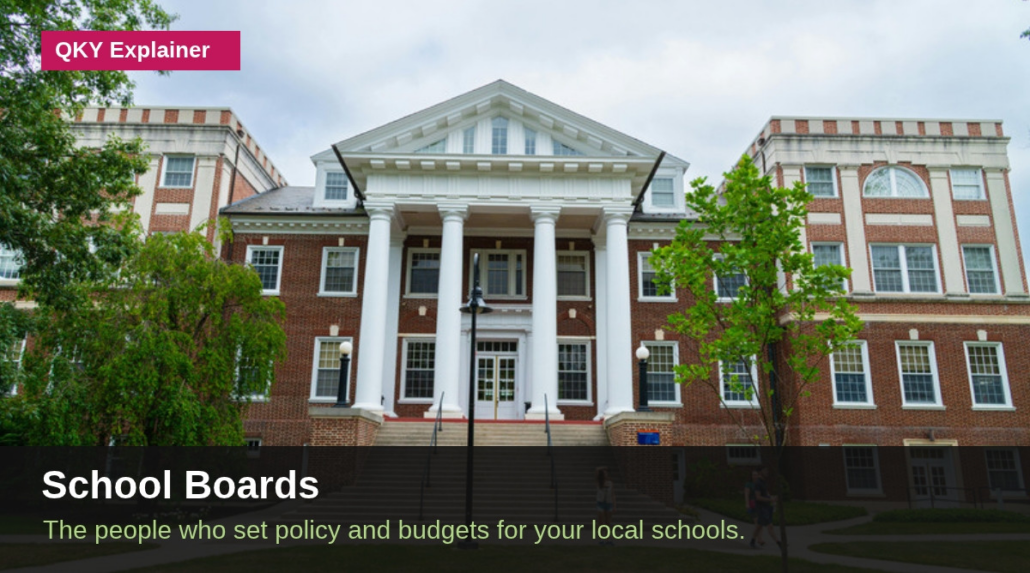
Before the outrage over Critical Race Theory and book banning circa 2021, local school boards did, in fact, exist to serve as the governing authorities for public school districts. They set the strategic direction, educational standards, and operational policies for elementary, middle, and high schools within their district’s jurisdiction. These decisions, however, are to be made in accordance with state and federal law.
Unlike administrators who handle day-to-day operations, the school board operates at a policy and fiduciary level. Key responsibilities include approving district-wide curricula, setting safety protocols, establishing student conduct policies, managing property and facilities, and allocating resources across local schools.
A crucial piece of their role is akin to a company’s human resources department. The board hires, evaluates, and—when necessary—fires the district superintendent, who serves as the chief executive tasked with managing school employees and daily instruction.
School boards also hold taxing authority, approving annual district budgets and setting local property tax rates to fund education. Relatedly, in 2026 the Kentucky legislature voted to reduce the powers of boards operating in communities with over half a million residents… aka Louisville.
Structure and Terms
School board members (also called trustees or directors) are elected from single-member voting districts or at-large seats, depending on the school district’s setup. They serve multi-year terms (typically four years) on nonpartisan ballots. Again, in 2026, the Kentucky legislature voted to modify certain boards (Louisville and Lexington), changing how voters choose those specific places.
How Do We Talk to Them
School board meetings are public, providing a formal avenue for community feedback. While this can get pretty wild sometimes, community members, parents, teachers, and students can attend board meetings to offer public comments on proposed policy changes, budget priorities, dress codes, or school calendar adjustments. School boards directly shape educational experience, neighborhood safety, and local tax rates in local communities.
School board positions aren’t high-paying or as heralded as other elected official roles, but they serve a crucial role in how students are educated.
Keep reading
 Louisville Roller Derby closes its 2026 season with a double header Nov. 7
 Where do the candidates for Louisville mayor stand on LGBTQ+ issues?
 Kentucky Cities Split Over Flock Cameras as Privacy Concerns Clash With Crime-Fighting Goals
 For LGBTQ+ Kentuckians Already Wary of Police, Flock Cameras Raise New Surveillance Fears
 Love Out Loud Fest returns to Louisville with pay-what-you-can fall edition Nov. 12