KEEP. Hub tag. Load bearing, the Civic Hub queries this directly in ELECTION mode. Voting mechanics only: what a county clerk does, how to read a ballot, how to register. Always an EXTRA on top of the story’s normal tags, never a substitute. Intentionally empty at creation Sept 28 2026. Do NOT backfill with news.

Tag Archive for: Hub: Election evergreen

Voters standing in line to cast ballots at a church polling place in Louisville, Kentucky.

These 12 local offices shape your daily life in Kentucky. Here’s what each one does

The United States is sometimes described as 50 different countries wearing a federal government trench coat. Creating change at the national level is like steering a cargo ship: it takes a large amount of power to move a rudder, and it’s slow to shift directions. Creating change at a local or state level, however, is like steering a speedboat: much simpler and quicker to see change take effect.

Local offices are often overlooked on Election Day, but they impact your daily life more directly than you might think. Local governments are meant to meet the needs and solve the problems of their local residents, as well as provide services like roads, clean water, sanitation and police. They also have a large say in the usage of Flock cameras, the building of data centers, whether to cooperate with ICE or DHS, and the fair treatment of trans Kentuckians. If you have strong feelings about your neighborhood, or how you and your neighbors are treated, you should know the basics of each local office before voting.

A heads-up for Louisville and Lexington voters: both cities have merged city-county governments, so their mayors and councils handle most of what the county judge-executive, city council/commission, and fiscal court do elsewhere. And within Jefferson county are smaller cities, like Jeffersontown or St Matthews, with their own mayors and councils.

County offices

County judge-executive

A county judge-executive is a voting member of the county’s fiscal court. Their main job is to create a county budget, allocate the budget as the fiscal court approves and appoint people to lead various county positions. The judge serves a four-year term.

Because the judge-executive builds the budget, this office helps decide whether county law enforcement gets Flock cameras, Axon gear and similar surveillance tools, and what safeguards come with them.

Fiscal court (magistrates or commissioners)

The fiscal court, which includes magistrates or commissioners, is the group that provides services like road repairs, snow removal and sanitation at the county level. Despite its name, the fiscal court isn’t a court of law. It’s the county’s legislative body, like a county council. The fiscal court votes on county ordinances, orders and resolutions, which are then enforced by the judge-executive. Many decisions on ICE agreements, data centers and surveillance spending are made locally, and the fiscal court votes on many of them, within limits set by state law. Fiscal court meetings are open to the public, and members serve four-year terms. A sheriff or jailer can sign some agreements, like those with ICE, themselves, and the fiscal court doesn’t always vote on them.

Jailer

Kentucky is actually the only state in the country that elects jailers, who maintain order within their county’s jail. Jailers transport people to and from court and process people into the jail. The jailer decides whether the jail signs a 287(g) agreement with ICE and whether it voluntarily honors ICE detainers, which are requests, not warrants.

A 2025 state law bars jails and prisons from using public money to provide hormone therapy, but the jailer still decides whether people get HIV medication, PrEP and other prescriptions on time, and whether a trans person is kept safe.

The jailer also decides whether a parent held for ICE can get a notary to sign power-of-attorney or guardianship papers so someone they trust can care for their kids, how people who don’t speak English can communicate and how much help reaches people inside. That last one varies wildly county to county. In more than 40 counties, the elected jailer has no jail to run, and people are held in a neighboring or regional jail. They serve four year terms.

Sheriff

The sheriff decides whether deputies call ICE after a traffic stop, whether the office signs a 287(g) agreement to do immigration enforcement for ICE, and how deputies treat LGBTQ+ people, immigrants, unhoused folks and sex workers. Deputies also serve court papers, make arrests, and carry out many court-ordered evictions. In Kentucky, the sheriff also collects property taxes. Sheriffs serve four-year terms.

County clerk

County clerks are the local government record-makers and record-keepers. They oversee vehicle registration and titles, marriage licenses, property and legal records and elections. If you’re registering a car, getting married, voting or buying a house, you’ll be interacting with a county clerk’s office. County clerks serve four-year terms.

The office has real stakes for queer Kentuckians: in 2015, Rowan County Clerk Kim Davis refused to issue marriage licenses to same-sex couples and was jailed for contempt of court. Voters removed her from office in 2018, and in 2025 the U.S. Supreme Court turned down her request to overturn same-sex marriage.

Courts and prosecutors

County attorney

The county attorney is the one who prosecutes misdemeanors and other lesser offenses in district court, like DUI offenses, traffic violations, assault and petty theft. This is also where most homelessness, misdemeanor drug possession, sex work and protest arrests get charged. Felonies go to the commonwealth’s attorney.

These attorneys also prosecute juvenile cases, including criminal acts, neglect and abuse. They can work with judges to issue emergency protective orders in domestic violence cases, oversee mental commitments and disability cases and more. Most county attorneys are also involved in collecting delinquent child support payments. County attorneys have four-year terms.

Commonwealth’s attorney

These attorneys prosecute felony crimes and cover a judicial circuit, which can include more than one county. They serve six-year terms. A felony is any crime that can be punished by a year or more in prison. This is where the choice to divert or to cage gets made for felony charges, like possession of meth, heroin or fentanyl, and for protests charged as felonies. The commonwealth attorney decides which cases go to a grand jury as felonies, and a felony knocked down to a misdemeanor stays in district court with the county attorney.

Family court judge

Family court judges are the ones who preside over family-related cases such as divorce, domestic violence protective orders, child custody and visitation, adoptions and more. One judge can decide whether a trans parent keeps their kid, or whether a queer person gets a protective order against an abusive partner. Family court judges serve eight-year terms.

District court judge

District judges hear misdemeanors, traffic cases, small claims, probate matters and the first stages of felony cases. District judges also grant adult name changes, a step many trans Kentuckians need before they can update their IDs. They also set bail, which decides who waits for trial at home and who waits in jail. They serve four-year terms.

Judicial races are nonpartisan, so judges’ party affiliations won’t appear on your ballot.

City and schools

City council or commission

The city council is kind of like a city’s board of directors: they function as a city’s legislature and pass laws and ordinances. City council (sometimes called city commission) is in charge of budgets, taxes, passing ordinances like installing stoplights, and zoning. Cities can also pass fairness ordinances, which ban discrimination against LGBTQ+ people in housing, jobs and public places.

Kentucky has no statewide fairness law, so local ordinances fill the gap. Louisville and Lexington passed the first ones in 1999. Most since then have come from city councils, but Woodford County’s fiscal court passed one in 2020. City council meetings are open to the public. Terms vary by city.

School board

Like the city council, a school board governs a local school district by setting policies, providing funding and setting local school tax rates. The school boards also hire the superintendent, set discipline codes and graduation requirements and more. They serve four-year terms.

It’s the seat nobody watches, but school boards set the discipline codes that decide how a school responds when a queer or trans kid gets bullied. They also decide how book challenges get handled and how the district carries out state rules on students’ pronouns and bathrooms.

Mayor

City governments in Kentucky run on one of three models: mayor-council, commission or city manager. In a mayor-council city, the council enacts ordinances, levies taxes and adopts a budget. The mayor runs the city’s daily affairs, oversees personnel, can veto legislation and can cast a tie-breaking vote. Louisville and Lexington have their own forms: Louisville is a consolidated local government and Lexington is an urban county government. Both have a mayor and a council. Mayors serve for a four-year term.

Find your districts

Pull up your sample ballot at ourpeopleourvote.org, or call your county clerk’s office, to see which of these seats are on your ballot this year and which districts you vote in, including your magistrate or commissioner, city council and school board districts.

QKY Explainer graphic: a bronze City Council Chamber sign with the headline City Council or City Commission or Metro Council

What does a city council or city commission do in Kentucky?

A city council or city commission serves as the legislative and policy-making body for an incorporated municipality. These bodies pass local ordinances (city laws), vote on and adopt city municipal budgets, set local utility and property tax rates, and establish municipal zoning, development, and building codes.

City legislative bodies directly manage local public services that shape daily community living, including police and fire departments, city parks, trash collection, local street maintenance, and water/sewer infrastructure. They manage services we don’t think about until they are not working the way we want them to.

Structure and Terms

Kentucky cities operate primarily under two governance structures, governed by elected officials serving two- or four-year terms:

  • Mayor-Council System: Separates executive and legislative authority. The mayor serves as chief executive, elected to manage city departments, while an elected city council acts independently as the legislative branch.
  • City Commission System: Blends executive and legislative roles. An elected mayor and commissioners work together on a single board that collectively passes laws and oversees municipal departments.

In Louisville and Lexington, the merged city-county governments operate under unified councils. In Louisville, the Metro Council is a 26-member body elected from local districts. Similarly, in Lexington, the Lexington-Fayette Urban County Council (with the worst acronym) operates a similar structure but with 15 members. These bodies work alongside a single mayor handling both municipal and county-level legislative responsibilities.

How Do We Talk to Them

Because municipal decisions directly impact immediate neighborhood conditions, city councils and commissions are often the most accessible level of local government. Citizens can attend council meetings, speak during public comment periods about neighborhood safety, local business zoning permits, street repair needs, park funding, or proposed city ordinances. Many governments have online access, and some even have an app, making direct contact fairly simple.

Considering the needs of a city, the city council/commission should be the first step in outreach.

QKY Explainer graphic: the red brick Taylor County Courthouse in Campbellsville, Kentucky, with the headline County Judge/Executive

What does a county judge/executive do in Kentucky?

A confusing title for a confusing and varied purpose, the County Judge/Executive serves as the chief executive and administrative officer of Kentucky county governments, except in Louisville and Lexington. More about that later.

Despite the word “Judge” in the title—a remnant of historic state constitutional frameworks—the position is an administrative and executive role rather than a judicial one.

In 118 of the 120 Kentucky counties, the County Judge/Executive oversees day-to-day county operations, manages county departments (such as road maintenance, emergency management, and solid waste), and administers the county budget passed by the local governing body.

Additionally, the County Judge/Executive presides over the Fiscal Court, made up of elected magistrates or commissioners, which is the county’s legislative body, not a court of law. In this role, they vote on county ordinances, tax rates, and budget allocations.

Merged city-county jurisdictions like Louisville (Louisville Metro) and Lexington (Fayette County) do not use traditional County Judge/Executive or Fiscal Court structures. In these merged governments, the Mayor is chief executive and the merged City/Metro Councils handle the administrative, executive, and legislative functions that a County Judge/Executive and Fiscal Court perform elsewhere.

Structure and Terms

In most counties, the County Judge/Executive is elected county-wide to a four-year term on a partisan ballot. They work with the Fiscal Court to manage county personnel, maintain rural roads and county infrastructure, and oversee special purpose local service districts.

How Do We Talk to Them

Residents contact the County Judge/Executive’s office for issues involving county-maintained roads, emergency services, county park facilities, animal control, or local zoning and development decisions in unincorporated areas.

To recap, the County Judge/Executive is not a judge in a court of law, but rather an elected chief executive like a mayor, presiding over the Fiscal Court, and while the “court” that isn’t a court may be confusing, over 100 counties have been doing just fine with this system since 1792.

QKY Explainer graphic: the Kentucky State Capitol in Frankfort at dusk with the headline State Representatives and State Senators

What do state representatives and state senators do in Kentucky?

Love it or hate it, in Kentucky, your State Representatives and State Senators write all legislation. Together, they form the legislative branch of state government and serve as the Commonwealth’s primary policymakers.

Sidenote: Kentucky is a Commonwealth, but no one really knows what it means when you ask them how that differs from other states. The reason is simply that upon the drafting of state constitutions, the authors emphasized a government founded for the common good of the people and not a king. There is, however, no legal or political difference from other states.

When working out of the Capitol in Frankfort, elected officials craft, debate, and vote on legislation that directly impacts daily life, ranging from state tax policy and public school funding, or lack thereof, to criminal justice, healthcare access, and infrastructure. Beyond passing laws, their most crucial legislative role is drafting and passing the state’s budget every two years, which dictates how billions in public tax dollars are allocated across state agencies, local projects, and community programs. The legislature performs oversight of executive branch cabinet agencies and administrative regulations to dictate that state operations align with its purported legislative intent.

Structure and Terms

The Kentucky General Assembly operates as a bicameral (two houses, but not in the rich people way) legislature:

  • House of Representatives: Composed of 100 members who serve two-year terms. Each representative represents a specific geographic district scaled to population size.
  • Senate: Composed of 38 members who serve staggered four-year terms, with half of the Senate elected every two years. Senate districts are geographically larger than House districts and represent more constituents.

How Do We Talk to Them

Any Kentuckian can contact their representative or senator to express positions on active bills, advocate for policy changes, or request legislative action on local community issues. Information about legislators can be found here, and you can reach out to them(likely their staff) about your thoughts on issues.

Additionally, state legislators may provide crucial constituent services. If you face systemic roadblocks or delays with state agencies—such as unemployment insurance, transportation permits, or Medicaid processing—your legislator’s office can often intervene or inquire on your behalf.

In many more rural counties, the state legislator is a bit of a celebrity, often seen as the connection between them and the “big time” in Frankfort. This may or may not go to their heads, but this is how it works. Kentucky legislators are part-time workers, and most have regular day jobs on top of the service they provide as elected officials.

QKY Explainer graphic: a red brick school building with white columns and the headline School Boards

What does a school board do in Kentucky?

Before the outrage over Critical Race Theory and book banning circa 2021, local school boards did, in fact, exist to serve as the governing authorities for public school districts. They set the strategic direction, educational standards, and operational policies for elementary, middle, and high schools within their district’s jurisdiction. These decisions, however, are to be made in accordance with state and federal law.

Unlike administrators who handle day-to-day operations, the school board operates at a policy and fiduciary level. Key responsibilities include approving district-wide curricula, setting safety protocols, establishing student conduct policies, managing property and facilities, and allocating resources across local schools.

A crucial piece of their role is akin to a company’s human resources department. The board hires, evaluates, and—when necessary—fires the district superintendent, who serves as the chief executive tasked with managing school employees and daily instruction.

School boards also hold taxing authority, approving annual district budgets and setting local property tax rates to fund education. Relatedly, in 2026 the Kentucky legislature voted to reduce the powers of boards operating in communities with over half a million residents… aka Louisville.

Structure and Terms

School board members (also called trustees or directors) are elected from single-member voting districts or at-large seats, depending on the school district’s setup. They serve multi-year terms (typically four years) on nonpartisan ballots. Again, in 2026, the Kentucky legislature voted to modify certain boards (Louisville and Lexington), changing how voters choose those specific places.

How Do We Talk to Them

School board meetings are public, providing a formal avenue for community feedback. While this can get pretty wild sometimes, community members, parents, teachers, and students can attend board meetings to offer public comments on proposed policy changes, budget priorities, dress codes, or school calendar adjustments. School boards directly shape educational experience, neighborhood safety, and local tax rates in local communities.

School board positions aren’t high-paying or as heralded as other elected official roles, but they serve a crucial role in how students are educated.

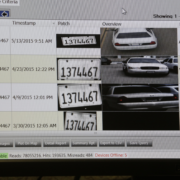
A computer screen showing license plate reader software results. The same plate number is logged four times on different dates by different cameras, each entry with a close-up of the plate and a photo of the white car it belongs to.

Flock cameras in Kentucky: How license plate readers get approved and how you can track them

Automated license plate reader (ALPR) cameras — widely known by one brand name, Flock — aren’t new technology, and they’re not the only kind of surveillance equipment modern police departments use across the commonwealth. Agencies have used body-worn cameras, cruiser-mounted cameras, gunshot-detection systems (like ShotSpotter), cellular signal interceptor (commonly known as “stingray”) technology, and others for decades.

But as artificial intelligence (AI) increases these devices’ reach and power to surveil the public, local officials face growing questions about how they adopt and deploy police technology in their communities.

What are “Flock cameras,” and how else are police using them?

ALPRs are small, nondescript cameras, usually mounted underneath a solar panel (some are mounted to police cruisers instead). The cameras typically face one direction with a wide-angle frame, and, while stationary, some possess basic pan/zoom capabilities (often multiple cameras will sit facing various directions at a single location).

The video images capture and catalogue numerous identifying features of vehicles that pass, including make, model, color, license plate number and other identifying features like body damage/irregularities, decals or bumper stickers. While some manufacturers’ cameras are capable of facial recognition and even more sophisticated data collection, these are much more common in private security and smart home systems like Google Nest, Ring or Wyze. Police can, however, use Flock cameras to track people walking, as reporting elsewhere in the country has shown, a feature the company has downplayed. With the integration of AI, ALPR cameras are now often plugged into statewide, interstate or national databases that the AI software can process and interpret nearly instantaneously.

Police departments often describe the cameras as a valuable tool for solving crimes and finding missing people and stolen property. Privacy and civil liberties advocates warn the technology carries risks of mistakes and abuse, as reporting by Queer Kentucky and others has documented.

Unlike highway traffic cameras, ALPRs can be installed almost anywhere in a community. ALPR watchdog DeFlock has cataloged more than 100,000 of the cameras across the U.S. (including Flock, Motorola and Genetec, among other unidentified manufacturers) many surveilling city parks, Main Street districts and other common public areas. Readers can check the map to see reported cameras near them.

How are these contracts approved in the first place?

Many of these cameras were approved and installed without much public to-do.

Kentucky jurisdictions vary widely in the details of their budget processes, but they usually follow the same broad patterns. Like most government contracts, agreements with Flock, Axon and other police tech companies usually originate with a police department or sheriff’s office, as they’re budgeting for departments’ resources. Then, once a draft of the terms is laid out, they’ll require approval from the legislative body: city council, commission, metro council, fiscal court (the county’s governing body), etc.

Sometimes these police contracts are passed as one part of a larger city or county budget. Sometimes they’re considered as stand-alone items. Sometimes a police contract will be introduced as part of a larger budget before getting broken out as its own item, for more focused and thorough consideration. If the contract is below a certain dollar amount, it might not require a vote at all (this is less common for larger contracts).

Cameras can also come into a community without a government contract at all. Private businesses, homeowners associations (HOAs) and other property owners can buy their own ALPRs and share access with police. Police departments can also get cameras through grants, free trial periods or donations, which may get less public attention.

Because these decisions often happen during routine meetings, as one item among many, residents have reported not learning about a contract until cameras appear in their neighborhood.

How can you track these contracts?

Cameras owned by a local police department or sheriff’s office generally require approval from local elected officials, such as a city council or county fiscal court. Cameras owned by private businesses, HOAs or state agencies may not, even when police can access their data. While each city and county handles budgets differently, there are steps you can take to stay informed:

  1. Check your city or county’s website for its council or fiscal court meeting schedule. If it doesn’t publish meeting agendas, find contact information for your city clerk or a similar city administrator. Ask to be added to the distribution list for council announcements and agendas.
  2. Examine agenda items — presentations, motions, ordinances, etc. — either introduced by or related to the police department. This will show you what sorts of funding and resources police are considering for your community.
  3. Ask your elected officials directly about this issue, either in person at a meeting or by phone or email. Elected officials vote on these contracts and can answer questions about them.
  4. Attend public hearings, even if you don’t feel comfortable speaking. Public meetings are where officials hear directly from residents. If no public hearing is planned on a contract, you can ask officials to hold one.
  5. Ask your police department or sheriff’s office for its ALPR policy. A 2026 Kentucky law, House Bill 58, requires law enforcement agencies that use ALPRs to adopt a written policy and make it public. The law also generally caps how long captured plate data can be kept at 90 days.
  6. File an open records request. Under the Kentucky Open Records Act, you can request your city’s or county’s contracts and data-sharing agreements with ALPR vendors.