Flock cameras in Kentucky: How license plate readers get approved and how you can track them


Automated license plate reader (ALPR) cameras — widely known by one brand name, Flock — aren’t new technology, and they’re not the only kind of surveillance equipment modern police departments use across the commonwealth. Agencies have used body-worn cameras, cruiser-mounted cameras, gunshot-detection systems (like ShotSpotter), cellular signal interceptor (commonly known as “stingray”) technology, and others for decades.
But as artificial intelligence (AI) increases these devices’ reach and power to surveil the public, local officials face growing questions about how they adopt and deploy police technology in their communities.
What are “Flock cameras,” and how else are police using them?
ALPRs are small, nondescript cameras, usually mounted underneath a solar panel (some are mounted to police cruisers instead). The cameras typically face one direction with a wide-angle frame, and, while stationary, some possess basic pan/zoom capabilities (often multiple cameras will sit facing various directions at a single location).
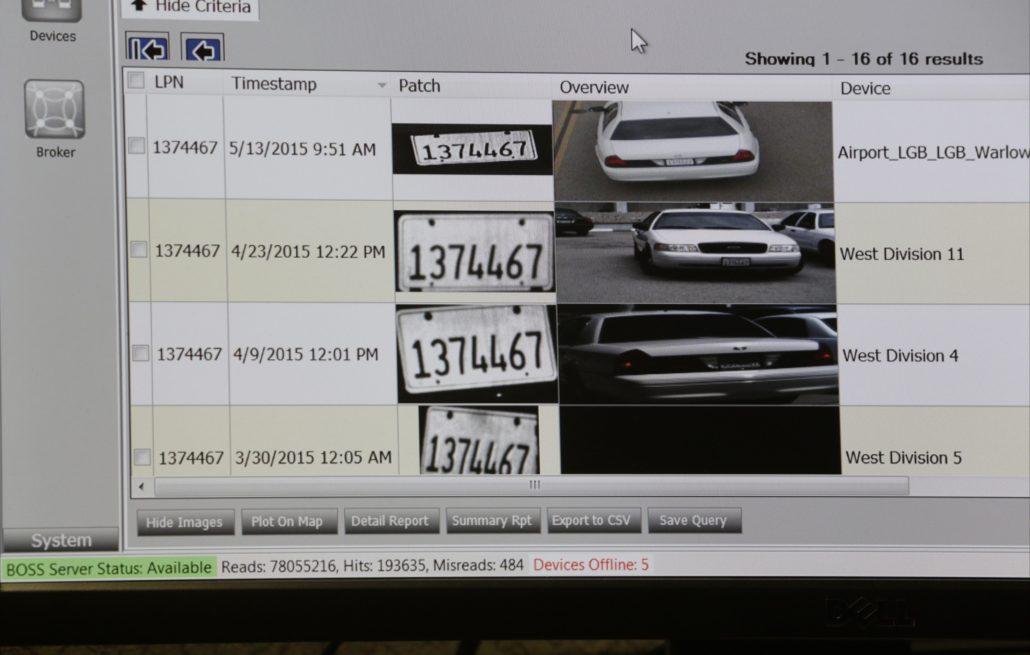
The video images capture and catalogue numerous identifying features of vehicles that pass, including make, model, color, license plate number and other identifying features like body damage/irregularities, decals or bumper stickers. While some manufacturers’ cameras are capable of facial recognition and even more sophisticated data collection, these are much more common in private security and smart home systems like Google Nest, Ring or Wyze. Police can, however, use Flock cameras to track people walking, as reporting elsewhere in the country has shown, a feature the company has downplayed. With the integration of AI, ALPR cameras are now often plugged into statewide, interstate or national databases that the AI software can process and interpret nearly instantaneously.
Police departments often describe the cameras as a valuable tool for solving crimes and finding missing people and stolen property. Privacy and civil liberties advocates warn the technology carries risks of mistakes and abuse, as reporting by Queer Kentucky and others has documented.
Unlike highway traffic cameras, ALPRs can be installed almost anywhere in a community. ALPR watchdog DeFlock has cataloged more than 100,000 of the cameras across the U.S. (including Flock, Motorola and Genetec, among other unidentified manufacturers) many surveilling city parks, Main Street districts and other common public areas. Readers can check the map to see reported cameras near them.
How are these contracts approved in the first place?
Many of these cameras were approved and installed without much public to-do.
Kentucky jurisdictions vary widely in the details of their budget processes, but they usually follow the same broad patterns. Like most government contracts, agreements with Flock, Axon and other police tech companies usually originate with a police department or sheriff’s office, as they’re budgeting for departments’ resources. Then, once a draft of the terms is laid out, they’ll require approval from the legislative body: city council, commission, metro council, fiscal court (the county’s governing body), etc.
This story exists because of readers like you. Give $5 a month to keep Queer Kentucky free.
Sometimes these police contracts are passed as one part of a larger city or county budget. Sometimes they’re considered as stand-alone items. Sometimes a police contract will be introduced as part of a larger budget before getting broken out as its own item, for more focused and thorough consideration. If the contract is below a certain dollar amount, it might not require a vote at all (this is less common for larger contracts).
Cameras can also come into a community without a government contract at all. Private businesses, homeowners associations (HOAs) and other property owners can buy their own ALPRs and share access with police. Police departments can also get cameras through grants, free trial periods or donations, which may get less public attention.
Because these decisions often happen during routine meetings, as one item among many, residents have reported not learning about a contract until cameras appear in their neighborhood.
How can you track these contracts?
Cameras owned by a local police department or sheriff’s office generally require approval from local elected officials, such as a city council or county fiscal court. Cameras owned by private businesses, HOAs or state agencies may not, even when police can access their data. While each city and county handles budgets differently, there are steps you can take to stay informed:
- Check your city or county’s website for its council or fiscal court meeting schedule. If it doesn’t publish meeting agendas, find contact information for your city clerk or a similar city administrator. Ask to be added to the distribution list for council announcements and agendas.
- Examine agenda items — presentations, motions, ordinances, etc. — either introduced by or related to the police department. This will show you what sorts of funding and resources police are considering for your community.
- Ask your elected officials directly about this issue, either in person at a meeting or by phone or email. Elected officials vote on these contracts and can answer questions about them.
- Attend public hearings, even if you don’t feel comfortable speaking. Public meetings are where officials hear directly from residents. If no public hearing is planned on a contract, you can ask officials to hold one.
- Ask your police department or sheriff’s office for its ALPR policy. A 2026 Kentucky law, House Bill 58, requires law enforcement agencies that use ALPRs to adopt a written policy and make it public. The law also generally caps how long captured plate data can be kept at 90 days.
- File an open records request. Under the Kentucky Open Records Act, you can request your city’s or county’s contracts and data-sharing agreements with ALPR vendors.
Keep reading
 At Black Soil KY’s Farmacy Markets, Narcan Sits Beside the Produce
 Roebling Bridge protester arrested in court on felony riot charge
 Federal Cuts “Handcuffed” BIPOC Harm Reduction in Kentucky. Communities Are Stepping Up.
 It’s a Pause, Not a Ban: Liz Sheehan on Lexington’s Data Center Moratorium
 Lexington Herald-Leader Layoffs Put Kentucky Local News at Risk