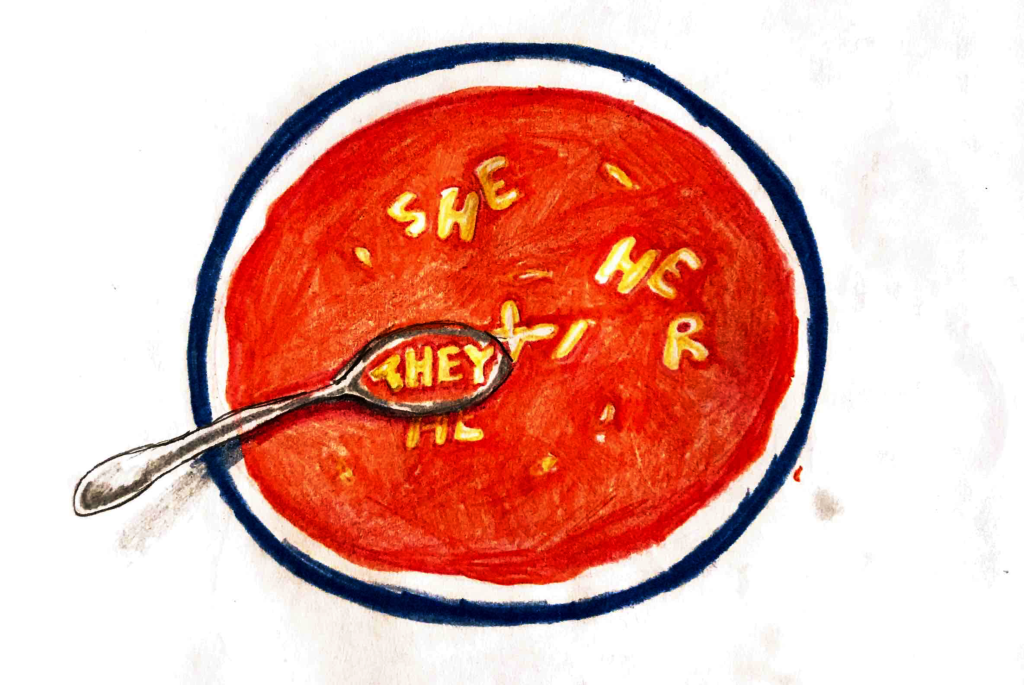
KEEP. Function. Additive. The story teaches the reader how to do something: etiquette guides, how to use pronouns, how to support someone, how to find care. Includes guides for allies. Strong signal for evergreen shelves. Added Oct 10 2026.

Tag Archive for: Function: How-to

Andy Barr in a suit and striped tie smiles at a podium, beside Charles Booker speaking into a microphone, on a dark background.

Kentucky’s U.S. Senate and legislative races: What LGBTQ+ voters should know

Nothing on Kentucky’s ballot this November asks voters about LGBTQ+ rights, but that doesn’t mean they aren’t on the line.

This year, advocates and everyday Kentuckians spent months organizing and lobbying to keep anti-LGBTQ+ bills from becoming law. While none passed, many had been filed in earlier sessions, and at least one sponsor has said he’ll keep pushing. The people they elect on November 3 will be part of deciding what happens next.

Here’s what’s on the 2026 midterm ballot in Kentucky:

The Kentucky House

What’s at stake: All 100 seats are up for re-election.

LGBTQ+ impact: State representatives write Kentucky’s laws and its budget. That includes who can get gender-affirming care, which bathrooms and pronouns trans students can use at school, and whether cities get to keep their own anti-discrimination protections. In March, the House passed HB 468, which as first written, would have made local fairness ordinances harder to enforce. Every two years, every House seat is back on the ballot.

The Kentucky Senate

What’s at stake: Half of its 38 seats are up for grabs.

LGBTQ+ impact: In February, the Senate passed SB 72, which would have let health care workers refuse treatment that violated their conscience. It was the third year in a row the Senate passed a version of the bill, and the House never took it up.

How to find your local races

Every Kentuckian lives in one state House district and one state Senate district, but only half will vote in a state senate race this year. To see who’s actually on your ballot, select your county at web.sos.ky.gov/electionballots or ask your county clerk for a sample ballot. To see who represents you now, use the “Find Your Legislator” tool on the Kentucky General Assembly website (legislature.ky.gov), where you can enter your address or click a map.

U.S. Senate

What’s at stake: One of Kentucky’s two seats in the U.S. Senate is open. After 40 years, Sen. Mitch McConnell is retiring in January, and Kentucky voters will choose who steps in.

LGBTQ+ impact: While a U.S. senator doesn’t write Kentucky’s laws, they vote on federal legislation and judicial nominees that can affect LGBTQ+ Kentuckians. In 2022, the Respect for Marriage Act, which requires the federal government and every state to recognize legal same-sex marriages, cleared the Senate with bipartisan support. Senators also confirm federal judges, including Supreme Court justices, who serve for life and rule on cases involving marriage, workplace discrimination and transgender health care.

It’s crucial to look at who’s running for McConnell’s seat, and where they each stand.

Charles Booker (D)

Charles Booker is the Democratic nominee for U.S. Senate and a former state representative who served from 2019 to 2021.

He was the party’s 2022 Senate nominee and also ran in 2020, and he won this year’s primary with 47% of the vote over Amy McGrath and Pamela Stevenson. He’s running in a state where Democrats haven’t won a Senate race since 1992.

He also founded Hood to the Holler, a grassroots group organizing across race and class.

Message to Kentucky: “I’m running because this is about family. I come from the hood, one of the poorest zip codes in Kentucky. I don’t trust politicians, but nothing will ever change unless we do it. We’re fighting for working people. Standing up for humanity; standing up for justice and change. And an end to the generational problems that have plagued so many hard working people not just across Kentucky, but across this country. This is about regular people lifting our voices from the hood to the holler.” – Charles Booker (TikTok)

Andy Barr (R)

Andy Barr is the Republican nominee who started his career as Mitch McConnell’s intern.

He is the sitting U.S. Representative for Kentucky’s 6th district, and took the nomination as Trump’s endorsed candidate.

Message to Kentucky: “You know what DEI really stands for? Dumb Evil Indoctrination. The woke liberals spew it, corporate losers fall for it. But thanks to Trump, America is rejecting that trash. And I’m leading the fight to end it for good. It’s not a sin to be white, it’s not against the law to be male. And it shouldn’t be disqualifying to be a Christian. I’m Andy Barr, and I approve this message to give woke liberals something else to cry about.” –Andy Barr (YouTube)

Other candidates

In addition to those on the main stage, there are two other candidates running for Kentucky’s seat:

Christopher Campbell is the Kentucky Party’s candidate for U.S. Senate, a contractor who has worked in health care, and a former Kentucky National Guard member. He’s an Eastern Kentucky University graduate with a master’s in public health.

Message to Kentucky: “I am a proud, dues paying member of a labor union (Local 1076). I served in the Kentucky National Guard. I am a Kentucky Colonel. I understand the struggles that Kentuckians face day-in and day-out. I would consider it an honor to represent Kentucky on the national stage and the United States on the global stage.” – Christopher Campbell (Campaign Site)

Thomas Michael Murphy is running as an independent write-in candidate. He filed in March and has no formal campaign website. Little else is publicly known about his platform.

For a closer look at where Barr and Booker stand, read Queer Kentucky’s side-by-side comparison of the two candidates.

How to Vote in the Kentucky Midterms

The deadline to register for this election was October 5. Registered voters can check their status and find their polling place at GoVote.ky.gov. Sample ballots can be viewed through Our People, Our Vote, the nonpartisan voter resource portal run by nonprofit Common Ground Kentucky.

There are two ways to vote in person: No-excuse early voting runs this Thursday through Saturday, October 29-31. Election Day is Tuesday, November 3, from 6 a.m. to 6 p.m. If you plan to vote by mail, the paper ballot must be received by 6pm Election Day to be counted.

Why does this matter so much?

This year’s ballot doesn’t ask Kentuckians to vote on LGBTQ+ rights directly, but it does decide who will.

In Kentucky’s 2022 general election, only 41.9% of registered voters cast a ballot. Turnout climbed steeply with age: just 26.9% of registered voters ages 17 to 24 voted, along with 25.6% of those 25 to 34 and 35.5% of those 35 to 49. Among voters 50 to 61, turnout was 48.0%, and among those 62 and older it was 56.8%, more than double the youngest group’s.

Electoral data also suggest a tendency among voters to downplay the role of these down-ballot races, but, as Queer Kentucky has reported, the decisions shaping health, safety and much of everyday life are most often negotiated in city halls, county fiscal courts and the statehouse.


A computer screen showing license plate reader software results. The same plate number is logged four times on different dates by different cameras, each entry with a close-up of the plate and a photo of the white car it belongs to.

Flock cameras in Kentucky: How license plate readers get approved and how you can track them

Automated license plate reader (ALPR) cameras — widely known by one brand name, Flock — aren’t new technology, and they’re not the only kind of surveillance equipment modern police departments use across the commonwealth. Agencies have used body-worn cameras, cruiser-mounted cameras, gunshot-detection systems (like ShotSpotter), cellular signal interceptor (commonly known as “stingray”) technology, and others for decades.

But as artificial intelligence (AI) increases these devices’ reach and power to surveil the public, local officials face growing questions about how they adopt and deploy police technology in their communities.

What are “Flock cameras,” and how else are police using them?

ALPRs are small, nondescript cameras, usually mounted underneath a solar panel (some are mounted to police cruisers instead). The cameras typically face one direction with a wide-angle frame, and, while stationary, some possess basic pan/zoom capabilities (often multiple cameras will sit facing various directions at a single location).

The video images capture and catalogue numerous identifying features of vehicles that pass, including make, model, color, license plate number and other identifying features like body damage/irregularities, decals or bumper stickers. While some manufacturers’ cameras are capable of facial recognition and even more sophisticated data collection, these are much more common in private security and smart home systems like Google Nest, Ring or Wyze. Police can, however, use Flock cameras to track people walking, as reporting elsewhere in the country has shown, a feature the company has downplayed. With the integration of AI, ALPR cameras are now often plugged into statewide, interstate or national databases that the AI software can process and interpret nearly instantaneously.

Police departments often describe the cameras as a valuable tool for solving crimes and finding missing people and stolen property. Privacy and civil liberties advocates warn the technology carries risks of mistakes and abuse, as reporting by Queer Kentucky and others has documented.

Unlike highway traffic cameras, ALPRs can be installed almost anywhere in a community. ALPR watchdog DeFlock has cataloged more than 100,000 of the cameras across the U.S. (including Flock, Motorola and Genetec, among other unidentified manufacturers) many surveilling city parks, Main Street districts and other common public areas. Readers can check the map to see reported cameras near them.

How are these contracts approved in the first place?

Many of these cameras were approved and installed without much public to-do.

Kentucky jurisdictions vary widely in the details of their budget processes, but they usually follow the same broad patterns. Like most government contracts, agreements with Flock, Axon and other police tech companies usually originate with a police department or sheriff’s office, as they’re budgeting for departments’ resources. Then, once a draft of the terms is laid out, they’ll require approval from the legislative body: city council, commission, metro council, fiscal court (the county’s governing body), etc.

Sometimes these police contracts are passed as one part of a larger city or county budget. Sometimes they’re considered as stand-alone items. Sometimes a police contract will be introduced as part of a larger budget before getting broken out as its own item, for more focused and thorough consideration. If the contract is below a certain dollar amount, it might not require a vote at all (this is less common for larger contracts).

Cameras can also come into a community without a government contract at all. Private businesses, homeowners associations (HOAs) and other property owners can buy their own ALPRs and share access with police. Police departments can also get cameras through grants, free trial periods or donations, which may get less public attention.

Because these decisions often happen during routine meetings, as one item among many, residents have reported not learning about a contract until cameras appear in their neighborhood.

How can you track these contracts?

Cameras owned by a local police department or sheriff’s office generally require approval from local elected officials, such as a city council or county fiscal court. Cameras owned by private businesses, HOAs or state agencies may not, even when police can access their data. While each city and county handles budgets differently, there are steps you can take to stay informed:

  1. Check your city or county’s website for its council or fiscal court meeting schedule. If it doesn’t publish meeting agendas, find contact information for your city clerk or a similar city administrator. Ask to be added to the distribution list for council announcements and agendas.
  2. Examine agenda items — presentations, motions, ordinances, etc. — either introduced by or related to the police department. This will show you what sorts of funding and resources police are considering for your community.
  3. Ask your elected officials directly about this issue, either in person at a meeting or by phone or email. Elected officials vote on these contracts and can answer questions about them.
  4. Attend public hearings, even if you don’t feel comfortable speaking. Public meetings are where officials hear directly from residents. If no public hearing is planned on a contract, you can ask officials to hold one.
  5. Ask your police department or sheriff’s office for its ALPR policy. A 2026 Kentucky law, House Bill 58, requires law enforcement agencies that use ALPRs to adopt a written policy and make it public. The law also generally caps how long captured plate data can be kept at 90 days.
  6. File an open records request. Under the Kentucky Open Records Act, you can request your city’s or county’s contracts and data-sharing agreements with ALPR vendors.
A red HIV awareness ribbon on a white surface beside a pen, keyboard, and stethoscope.

Here’s How You Can Find an HIV-Competent Doctor in Kentucky

Since reporting began in 1982, more than 12,700 people have been diagnosed with HIV in Kentucky. Of those diagnoses, 58 percent of those reported infections progressed to AIDS, according to a 2025 state HIV/AIDS Surveillance Report.
Being diagnosed with HIV can feel overwhelming, and recent federal policy changes, funding cuts, and proposed budget reductions have raised concerns about the future of HIV care and prevention across the country.

But there are still resources out there to connect people who have recently been diagnosed with the virus with good care.

Here is what some health care providers recommend HIV positive Kentuckians do to find the care they need.

Reach out to a primary care provider

Reaching out to a primary care provider for recommendations on how to find HIV-related care is a good first step, according to the National Library of Medicine.

However, some people in rural parts of Kentucky might struggle to find local providers with knowledge of treating a person living with HIV, or they may experience social stigma, according to Alice Thornton, a professor at the University of Kentucky, chief of its division of infectious diseases at its college of medicine and the project director for the Kentucky AIDS Education and Training Center.

“If they have a trusted local provider, they should be able to help,” she told Queer Kentucky. “Their primary care physician may be aware of options in their area and could be a starting place.”

Turn to The Bluegrass Care Clinic at the University of Kentucky

The Bluegrass Care Clinic at the University of Kentucky provides HIV-related care to 2,200 people across 63 counties, with about half of those patients living in rural areas, according to Thornton. The clinic offers a breadth of services for those with HIV and other infectious diseases, including transportation.

Prospective patients can reach a navigator nurse at (859) 323-1688.

Thornton added that the University of Kentucky also recently launched the LINK Project, a community health initiative meant to help those at increased risk for contracting HIV and Hepatitis C receive medical care and continue to get the care they need.

People with HIV can request information about HIV providers in their area by emailing [email protected].

“The LINK team can help with the handoff to care and can assist in removing barriers that the person may have in accessing services,” Thornton said.

Check out The Ryan White HIV/AIDS Program

The Bluegrass Care Clinic is part of a national, federally funded program called the Ryan White HIV/AIDS Program, which provides a system of HIV primary medical care, medications, and essential support services for low-income people with the virus, according to the program’s website.

Thornton recommends that people looking for HIV care do some research on the program and what it provides because of the wealth of resources it supports. The program funds cities, counties, states, and local community-based organizations to provide HIV care, treatment, and services to more than 600,000 people across the country.

“All of our Ryan White Clinics across Kentucky are nationally renowned for their high-quality care, retention in care, and achievement of viral suppression,” said Jon Parker, CEO of AVOL Kentucky.

Every state and U.S. territory has a Health Resources & Services Administration-funded Ryan White Part B program, and Kentuckians can find a map of case managers and qualifying clinics on the state’s Cabinet for Health and Family Services website.

Kentucky is one of many U.S. states that also have Ryan White Part C and Part D programs, which deliver HIV care at greatly reduced or no cost to patients, Thornton said.

People can also find HIV testing sites and HIV care services provided through the Ryan White program via this national website. Those looking for a Ryan White HIV/AIDS Program medical provider can find one here.

The website allows users to enter a ZIP code and find a provider within a defined radius. Thornton urged rural Kentuckians to search for providers via the website within a 60- to 80-mile radius of their homes to help the site find programs close to their location.

The Kentucky State Capitol in Frankfort, symbolizing the legislative process and how bills become law in Kentucky.

How a Bill Becomes a Law in Kentucky: A Step-by-Step Guide to the Legislative Process

How does a bill become a law in Kentucky? 

Kentucky’s legislative process — aka how a bill becomes a law — has several steps, and a fair amount of rules and caveats, and all of it can be tricky to figure out, learn, memorize and apply to what you’re seeing in Frankfort when it isn’t your full-time job. 

That’s where I come in. Hi, I’m Olivia — Queer Kentucky’s lead political writer. I’m an award-winning writer, and 2026 will be my ninth regular legislative session as a reporter. 

Consider this the first installment of a rolling, occasional series from Queer Kentucky on how to navigate and understand the basics of Kentucky politics and policy.

My goal is to catch anyone who needs it at the ground level, or to just provide an easy-to-understand reference guide, so everyone knows what they need to know in order to understand what’s going on. 

Let’s begin.

The bill gets filed

Basically, a lawmaker has an idea for a new law or a way to improve an existing law, so they work with a bill drafter to put it into legalese and file it as a bill. 

The bill gets assigned to a committee

Once filed, a bill goes to a place called the Committee on Committees, which, yes, is a real thing. 

The Committee on Committees is a group of leaders in either the House or Senate, depending on where the bill is, and they decide which committee should be the first round of vetting for this bill.

Committees are topic-based, so, a bill dealing with drivers’ licenses would go to the transportation committee, and a bill dealing with how students learn to read would go to the education committee. 

First committee meeting = first vote

Committee meetings are the first big hurdle for legislation. After being assigned to a committee, a bill needs to then end up on that committee’s agenda — a call typically made by the committee chair, all of whom are Republicans thanks to the GOP’s supermajority in Frankfort. 

Once on the agenda, a bill will get “heard” by the committee. A lawmaker supporting the bill will present the bill to committee members and answer any questions they have about the measure. Sometimes, they may bring supporters of the bill to explain why the bill is important. 

They can also offer up something called a committee sub — short for a committee substitute bill. It is exactly what it sounds like: A different version of the bill that is getting subbed in for the existing version of the bill. If the committee approves to accept the committee sub, then that is the version of the bill they’ll vote on. 

Opponents to the bill can — but not always — testify against the bill in the committee meeting. This is typically at the discretion of the chair. 

After all of that, the committee will then vote on the bill. If it passes, it advances in the legislative process. If it doesn’t, it can be reheard in committee, but that isn’t guaranteed. 

Three readings, three days

Each bill must get three “readings” on the chamber floor, each one on a separate day. (“Chamber” means the House or the Senate.) 

They don’t actually read the entire bill on the chamber floor (can you imagine?). It is just an acknowledgement that the bill exists and is moving through the legislative process. 

The readings can happen before and after the committee vote, and the third reading happens at the same time as the full floor vote on the bill. 

Floor vote

A floor vote is when a bill faces an entire chamber for a vote. Each chamber has slightly different rules on how floor debates and votes go, but typically, a bill comes up for a vote, and the bill sponsor or another lawmaker backing it speaks briefly on what it is and why it should pass. 

Then other lawmakers can ask to speak on the bill and/or ask questions about it. Anyone can also bring up floor amendments — proposals to change the bill in question that will be decided, you guessed it, on the floor. But floor amendments need to be filed beforehand, and if they haven’t been filed to the exact copy of the bill being voted on at least 24 hours ahead of time, they’re typically a nonstarter. (In many situations, the exact version of the bill hasn’t been the working version of the bill for 24 hours, but that is the way things are run.)

The chamber eventually votes on the bill. If it passes, it heads to the other chamber. 

Repeating the process

After passing its first chamber, the bill will then need to repeat much of the same process in the second chamber. (So, if it started in the House, it does the process over again in the Senate, and vice versa.)

It needs to get assigned to a committee, pass out of committee, get three readings on the chamber floor and then pass out of the entire chamber. 

There is one situation where this doesn’t happen, though. Sometimes, lawmakers will file mirror legislation: Copies of the same bills, with one in the House and one in the Senate. If they both pass the same bill out of their chambers, they can shrink how long the overall legislative process takes. 

Concurrence

Once the second chamber votes to pass the bill, things can get a little wonky. 

If the bill did not change between the two chambers, it is considered passed and goes to the governor’s desk.

But if it did change between chambers, it needs to go back to the first chamber and they need to approve of the changes. If they do, to the governor’s desk it goes.

But if they don’t, the second chamber is asked to get rid of their changes to the bill. If they say yes, to the governor. If they don’t, then the bill goes to a place called a conference committee — basically when a bunch of folks look at the existing bill and come to a compromise about what it should look like, within the confines of the bill’s existing language. 

And if that still doesn’t work, the bill goes to a free conference committee — basically a group of folks free to do whatever they want to the legislation to strike some sort of agreement that both chambers will approve and then send to the governor. 

Once both sides come to an agreement

The bill heads to Gov. Andy Beshear’s desk for approval. He has 10 days to either sign the measure into law, veto it, or let it become law without his signature. 

What if Beshear vetoes a bill? 

If he vetoes a bill before the veto period — a break in late March and early April for Beshear to go through all of the bills and veto/sign them — the bill will then go back to the GOP-dominated legislature, which can and almost always overrides his veto. Both the House and the Senate need to vote to override a veto, and they need a simple majority of members of the chamber to vote to override. 

At that point, the bill then goes to the Kentucky Secretary of State, who is required to put the new law on the books. 

But if a bill gets vetoed after the veto period, the legislature cannot override it because they’re no longer in session. This situation rarely happens, though, because the GOP legislature works to make sure all of their controversial legislation gets passed before the veto period.

How long does all of this take?

Each bill is required to receive three readings on three separate days in each chamber, so the whole process typically takes about six legislative days — but they can make it five days by giving a bill a final vote in one chamber and then its first reading in the second chamber on the same day.

There are loopholes, though, to get things through faster, like the mirror legislation tactic. They can also take an existing bill that’s already advanced through some votes, swap out its language, and clear it that way. 

Voice Cracks, Backing Tracks, and Comebacks: How to Steer Your Changing Voice on Testosterone

Editor’s note: This story was published in October 2025. Some information, such as resources and health guidance, may have changed since then.

This story is part of Queer Kentucky’s digital issue surrounding the trans youth experience in the Bluegrass state, featuring personal essays to educational information. Read the full issue here.

In the moments of catharsis post-performance, I receive the most touching reminders of why I keep showing up authentically on stage despite fear. Chugging stale ice water at the bar, I can be pleasantly interrupted by a polite and energetic “would you mind if I asked you a personal question?” Usually, nervous, they follow it up with “so how long have you been on T?” I know how much it would have meant to me pre-transition to have someone like me to talk to. My expertise lies in testosterone gender-affirming hormone replacement therapy’s effects on singing, but the techniques can help singers of all backgrounds. Beyond technique, the most challenging part of my vocal transition has been the emotional one, and this seems to be a shared theme amongst questioning and trans vocalists. 

I wrote my first song in kindergarten. By the age of fourteen, I learned how to play acoustic guitar. I started performing my songs at an open mic in Lexington called LexJam. From there, things accelerated quickly, and soon I was on Woodsongs Old-Time Radio Hour, gaining national radio play. Local news station airtime, local small festivals, and eventually paid gigs. I recorded a single and released it on all platforms when I was 17. Soon, it was getting played on BBC Music Introducing in England, and I was headlining Red Barn Radio just like one of my personal heroes, Tyler Childers, and opening for the great Louisville-based songwriter Mark Charles. I performed in New York City and Ireland. Yet something didn’t feel right. You, dear reader, might know the feeling. 

By the time I was 18, I could no longer ignore that something was wrong. In order to write and sing truly great music, you need to be able to sit with your inner thoughts for extended periods of time. You need to allow your body and voice to take up physical, emotional, and spiritual space. I didn’t feel like I deserved that space anymore. According to Cleveland Clinic, singing activates your parasympathetic nervous system and stimulates the vagus nerve, which runs down from your ears (listening), to your throat (vibrating), to your lungs, diaphragm, and gut (expanding and contracting). I know now that the act of singing was forcing my body to rest and release the tension and trauma I was holding. 

I delayed my transition for a long time due to fears about “ruining” my singing voice or career. How would I adjust to a completely new tone? When I took my first T shot, I began researching transmasc and trans male singer-songwriters like Eli Conley. I learned that cis boys’ vocal cords get thicker and longer during puberty. When undergoing testosterone gender-affirming HRT, the vocal cords just become thicker, not longer. Knowing this, you can deepen your range while at the same time maintaining your higher range, albeit with a different timbre. For me, it became an opportunity, not a negative, and I started to think of it like a fun challenge. 

  1. Finding Your Current Range: Locate a piano, or a free piano app. I recommend singing ascending and descending major scales, alternating between vowel and consonant sounds. Try sliding your voice like a slide-whistle ascending and descending like a siren. Warmup your breathing muscles as well; take long deep breaths and “hiss” until your lungs are emptied. 

Before singing, make sure you have the proper posture: spine straight, and shoulders down and relaxed. If you are sitting, make sure your feet are firmly pressed to the floor. If you are standing, make sure your feet are roughly shoulder-length apart. Press “Middle C.” Match pitch in any way you’d like: humming, vowel sounds, vocalizations, etc. Ascend one piano key at a time and match pitch until you reach a note that feels uncomfortable to sing. The last comfortable note will roughly be the top of your range. If you are using a piano app, it will likely tell you the exact note and octave, such as C4. Write this down. Repeat the same steps as above, but descend. Write that down. Now you have a rough estimate of your vocal range. According to Yale University, the vocal ranges are as follows: 

soprano: C4 to A5

mezzo-soprano: A3-F5

alto: F3-D5

tenor: B2-G4

baritone: G2-E4

bass: E2-C4

  • Find a Model Voice: After you’ve identified your range and vocal type, search for vocalists with your current vocal range, or the vocal range that is adjacent to your current one. For me, that was Tyler Childers. Having a model can help you “place” your changing voice. It’s like going from playing a tenor trombone to a bass trombone – you will have to create muscle memory for new “positions.” Instead of using a slide to change notes like a trombone, you will change the position of your soft palate, larynx (voice box), and facial muscles. Sing along to their songs. Have fun with it and don’t worry about how you sound, just try to match pitch. Try singing their songs while scrunching your nose, raising your eyebrows, or moving your tongue to try and “feel” different methods of vocal resonation. You may find something that feels right for you! 
  • Frequent Practice: Consistency is key. Just like with exercise, it takes frequent practice in order to build up strength. Try these exercises in a consistent routine to build strength, control, and power with your voice. Make sure to rest your voice as well – overusing your vocal cords can lead to injury. 
      1. EE AH: Alternate singing the vowels “EE” and “AH” in succession. This opens up the pharyngeal walls of the pharynx 
      2. Siren: Play the note at the bottom of your vocal range on a piano. Match pitch and slide (like a slide whistle) up to the highest note in your range and back down again. Make sure to take a big breath beforehand. Your shoulders should not be rising significantly each time you breathe. Imagine your breath expanding from your lungs downward into your pelvis. This helps you learn to control your larynx (voice box) and breath.
  • HO HO HO: Locate your diaphragm. A great way to locate your diaphragm is by touching your bottom ribs, then walking your fingers across them to the middle of your body. Do a fake cough. The firm muscle that presses into your fingers is the diaphragm, which helps your lungs push air out of your body.  Take a deep breath while pressing on this muscle, and do a few “HO HO HO’s” like Santa Claus. Some studies show that touching the muscles you are activating increases the mind-muscle connection, muscle activity, and muscle growth (source: Oshita). 
  • Do Mi So Mi Do: This is another classic warmup for a reason. You sing the 1st, 3rd, 5th, and 1st notes in a major scale, vocalizing “Do Mi So Mi Do.” Additionally, “Do Mi So Do So Mi Do” is a great exercise. 
  • Yawn: Intentionally and repeatedly raising your soft palate by “yawning” is an excellent way to strengthen it. Control of the soft palate is vital for vocal tone and resonance. 
  • Sing Your Old Music: It was healing to me to try and sing my old songs using my changing voice. I would recommend the same. Try singing it in a different key, or slightly altering melodies to fit your current range. 
  • Write New Music to Match Your Voice: The biggest breakthrough for me was when I stopped moping about not being able to sing my old songs in the exact same way. Try this exercise: find a chord progression your model voice used. Use the same chords in any order and sing gibberish in any melody you like. This may help you brainstorm new ways to create melodies in your current vocal range. 

Allowing yourself to listen and feel your own vocal changes is essential. I’ve been on T for 2.5 years and can sing deeper with higher altitudes. My voice matches my internal sense of self. I go through vocal “growth spurts” periodically. I’ll have finally “figured out” my voice, range, and tone for a few months, and then suddenly my range will decrease again due to my voice changing. Through performing in public during my transition, I have been able to connect with like-minded queer people and musicians I never would have met otherwise. Feel free to watch my video performing Tyler Childer’s “You’re All Mine” on TikTok. My advice is to give yourself some grace. Voice cracks are a sign of your strength to move forward. It will take time, and it’s different for each individual. If you loved performing before your transition, keep going. Your love of singing and songwriting may be a powerful therapy throughout your transition. 

Access in the Movement: A Shared Byline on Disability & Activism 

By Sage Barr (they/he) & Mo Viviane (they/she/he/it)

This story is part of Queer Kentucky’s digital issue surrounding the trans youth experience in the Bluegrass state, featuring personal essays to educational information. Read the full issue here.

Disability justice is the backbone of trans movements. When navigating through our experiences, we are met with every intersection of being. Here you will find correspondence of two disabled trans individuals, from expansive perspectives and life experiences, that assist in understanding how accessibility is about more than just the physical spaces we enter; it is a collaborative effort to weave together advocacy by prioritizing the most marginalized individuals in planning, execution, and convening.


Sage:
Disability and activism are more intertwined than you might think. When you’re disabled, you get good at advocating for yourself, being persistent, and sometimes getting loud just to be heard. Those same skills show up in my activism every day. I’m young, disabled, deaf, queer, and trans–and my activism started when I was 15, speaking at a library board meeting after anonymous complaints about LGBTQ+ Pride Month displays. 

The library was my second home– tie-dye programs, robotics camps, volunteering at story times, so it mattered to me to show up. I didn’t think of it as “brave” or as activism, just defending something important. But that night lit a bit of a spark. 


Mo: 

To me, that spark is about the moment you speak up because you have to, not because you’re ready to be an activist. For me, in my undergraduate studies at Northern Kentucky University, it meant fighting my own brain before I ever reached a meeting or a die-in on campus. Bipolar disorder, AuDHD, and severe anxiety don’t exactly make activism easy. Some days, just getting out of the door feels like a rally in itself. 

And yet, like Sage, I couldn’t stay silent. My activism was born out of necessity–when spaces I loved and people I loved were under attack (and still are), my body and mind didn’t get to “opt out.”


Sage:
After that library meeting, strangers called me brave. I didn’t see it that way. Soon, I was at school board meetings, speaking against book bans on titles like “Stamped,” “Gender Queer,” and “From the Mixed-Up Files of Mrs. Basil E. Frankweiler.” I joined rallies against SB 150, a bill forcing schools to out trans students. Still, I didn’t call myself an activist – I was just showing up, making signs, lending time. 


Mo:
And that’s the thing – ”just showing up” is activism. But for disabled folks, showing up comes with extra steps: navigating sensory overwhelm, finding safe transit, and figuring out where to position yourself so you’re not boxed in the crowd. For me, being Black and nonbinary adds another layer; entering spaces that claim to fight for racism and transphobia while still carrying both in their culture. 


Sage:
The first time I saw intentional accessibility at a protest was the 2023 Trans Youth Rally in Frankfort. There was an interpreter. For the first time, I didn’t have to scramble for access – I could just be there.

As a Deaf person who also uses a cane and manages sensory needs, navigating crowded events can be exhausting. If there’s no space to move or no thought given to how people can access the event, it’s easy to feel like your presence isn’t welcome. That rally showed me it could be different.

Mo:
That’s exactly it. Accessibility isn’t about being extra; it’s the foundation of sustainable movements. For me, that could mean quiet corners, clear signage, or event leaders who understand that I might need to step away. And mental health access matters too – creating spaces where people can be involved without being pushed past their limits.


Co-creatively, we come to activism from different places, yet our truths coincide with one another. Movements are only as strong as the access they build in from the start. When accessibility is treated as an afterthought, movements exclude the very people they claim to fight for. But when disabled folks are centered, when care and access are built into every step, movements don’t just get bigger – they get stronger, more resilient, and closer to the world that we’re all fighting for.

For allies, here’s what that looks like:
• Ask about accessibility before the event, not the day of.
• Budget for interpreters, captions, and mobility access from the start.
• Make spaces where people can come and go without shame or guilt.
• Share information in multiple formats – written, visual, spoken – so everyone can engage.
• Remember that not all activism happens in the streets; online organizing, mutual aid, and behind-the-scenes care work are just as vital.

True solidarity isn’t about inviting disabled people into a space that’s already been built – it’s about building the spaces with us at the forefront of your planning. 

First Steps for Transitioning: Getting into HRT

Editor’s note: This guide was published in September 2025. Laws, insurance rules, prices and provider details may have changed since then, so check with the providers and organizations listed for the latest information.

This story is part of Queer Kentucky’s digital issue surrounding the trans youth experience in the Bluegrass state, featuring personal essays to educational information. Read the full issue here.

Healthcare is tricky for everyone, but as trans people, we have extra hurdles in the way of our transition journeys and general health-related needs.

Gender affirming care includes mental health care (therapy, support groups)and medical health care (HRT, surgeries). This care is available to Kentuckians who are 18 years and older, but it’s hard to figure out where and how to start. For now, let’s talk about Hormone Replacement Therapy (HRT) through the experience of two young trans women and the routes they took.  


Pearl & Informed Consent HRT

Pearl, a trans woman in rural southeastern Kentucky, began transitioning on her 18th birthday when she called her general practitioner to schedule an appointment for HRT. Her practitioner gave her the phone number for Planned Parenthood.

“Planned Parenthood is an informed consent clinic, meaning they don’t have you go through a diagnosis process for gender dysphoria or get a therapist’s recommendation letter,” Pearl said. “They tell you what the medication’s effects are, and you sign that you understand (the effects) and are okay with what they do.”

Through Planned Parenthood, Pearl scheduled an appointment three months after her call. She said while it felt like a long time, she felt lucky because Planned Parenthood has a limit on how many new patients they can take per month, and patients often experience a much longer wait time. 

Photo provided by Pearl.

“I am happy with how it progressed, but I feel like things move very slowly,” she said. “When you’re looking for gender affirming care, it feels very life or death in the moment, and it took a lot of hanging on and waiting for me.”

A doctor at Planned Parenthood’s Lexington location prescribed Pearl with a pill method estrogen, Estradiol, to start at a low dosage and progressively increase. Pearl said out of the available methods for taking estrogen— injections, pills, and gels— she preferred pills as a “middle of the road” option in terms of maximizing the estrogen’s effectiveness. After six months on estrogen, she started Spironolactone, an antiandrogen that blocks masculine hormone receptors. 

“I feel like I’m gonna be happy with the progress from regular HRT,” Pearl said. “In terms of gender right now, I feel fulfilled having people around me who treat and see me as I’d like to be treated and seen… I’m satisfied with what I’ve been able to accomplish for myself.”

Pearl’s HRT has been covered by Medicaid so far. Still, she said her doctor warned her about legislative meddling with Medicaid’s coverage of gender affirming care, which is being threatened at the state and federal levels. Pearl said she may have to pay out of pocket for the informed consent route or look into other resources like Kentucky Health Justice Network’s transition financial support fund or DIY.


June & DIY HRT

When June, a trans University of Kentucky student, explored informed consent routes through Planned Parenthood and UK’s Transform Health, the wait time wasn’t realistic for her. She said her best option at the time was to get DIY HRT, an admittedly trickier route through countries with over-the-counter hormones. 

“You have to do a lot more research into what you’re doing,” June said. “You don’t have a doctor to guide you, you’re completely on your own. That being said, though, it’s not really hard. You just need to do your research.”

June started her research with a blood test to see how much testosterone her body had and what the appropriate doses of estrogen and antiandrogen would be. She used resources like DIY HRT Directory and YouTube videos to learn about HRT and how to safely use it. Then she bought her medications through “admittedly very shady-looking websites” that buy them in other countries and send them to the U.S.

“It’s pretty much a legal loophole,” she said. “Technically, you have to have a prescription to be on estrogen and testosterone blockers, but because in other countries it’s completely over the counter and legal to ship medications to the United States, you can get them in a way that’s not illegal.”

 June said the first time she ordered her HRT, two weeks’ worth of estrogen and a month of testosterone blockers, was around $70. More recently, she buys a couple of months’ worth, with the price ranging from $150 to $200. 

“It’s not too terribly expensive, but I’m also not someone who’s in a desperate financial situation for a college student,” June said.

June said ordering isn’t very simple because of the research it takes to find a functional, reputable site and deal with foreign currency exchange, and she can see DIY orders being impacted by tariffs implemented by and in response to the Trump administration.

“I’m definitely trying to get into prescription models, mostly because it’s safer if policies do affect the availability of DIY,” she said. “Obviously, in general, gender affirming care is under attack right now, so even legal methods could be harder to obtain.”

June said she is interested in facial feminization and laser hair removal procedures in the future, but she knows they may not be financially viable and is satisfied with the results she’s seeing from HRT.

“The best thing is just to be informed, regardless of whether you’re going to get a diagnosis, informed consent, or go DIY,” June said. “It’s important to know the effects of HRT and other kinds of gender affirming care.”

Pearl and June’s experiences aren’t a comprehensive explanation of HRT treatment, but they’re good examples of what to expect when you start your transition journey. Getting what you need from the healthcare system isn’t easy, but that doesn’t mean there aren’t resources out there for you, like:

Pearl gave some keen advice on those who are beginning their HRT journey by saying, “Everywhere you go is going to try to make it seem like you can’t go forward at all with this and it’s a bad idea, but you know what’s best for yourself.. There are options and ways to get what you need. Don’t let people convince you otherwise.”

Microaggressions matter for Queer health justice

By now, the term “microaggression” is quite common and many people have a general sense of what microaggressions are – especially if they find themselves on the constant receiving end of them. Among researchers who study the phenomenon, microaggressions are typically defined as frequent and seemingly subtle insults, slights, dismissals, or snubs, which communicate bias or hostility to someone on the basis of one or more marginalized identities that they hold.

Though microaggressions can seem like minor and often unintentional “mistakes” from the perspective of those committing them, they can be deeply harmful for those who are on the constant receiving end of microaggressive comments and actions.

LGBTQ+ people are susceptible to microaggressions in all walks of life, given the persistent stigma against LGBTQ+ identities and experiences. Though microaggressions can be detrimental in any and all contexts in which they occur, they can be especially harmful when they occur in healthcare settings. This is because healthcare contexts are especially prone to power imbalances, since patients, especially patients from marginalized groups, are often in vulnerable states when seeking treatment or care. This is especially true in our current sociopolitical context, in which LGBTQ+ people are seeking health care against the backdrop of legislative attacks on their communities, identities, and their very ability to access what can be lifesaving care.

In medical contexts, microaggressions against LGBTQ+ are common, though they might go unnoticed by cisgender/heterosexual providers, staff, and patients. Consider some examples:

  • Patient intake forms often exclude gender-inclusive options for sex and gender identification (thereby erasing trans, non-binary, and intersex people).
  • Clinic staff and practitioners often misgender or deadname trans and non-binary patients.
  • Non-heterosexual and non-monogamous people often face questions about sexual behavior that presuppose heterosexuality and monogamy.
  • Medical brochures and information sheets are often written in a way that exclusively refers to binary gender identity and heterosexual sexual experience.
  • Queer and trans patients are often asked irrelevant questions about their gender identities, physical bodies, or sexual behavior when those things have no bearing on the issue at hand.

These are just a few examples, though similar examples abound, and LGBTQ+ people know them all too well. Though these types of microaggressions and others often occur without malicious intent, they can cause deep harm making LGBTQ+ patients feel like they aren’t being seen, heard, or understood in the ways they deserve to be. And this is important, because feeling as if one is being listened to, understood, and respected are all necessary conditions for the kinds of trust, openness, and communication that quality healthcare requires.

Without these conditions, LGBTQ+ people can be further pushed out of healthcare spaces, and may avoid or delay seeking critically important care. Minimizing the microaggressions that LGBTQ+ people face when interacting with healthcare institutions is imperative as a matter of health justice. LGBTQ+ people deserve to be seen and treated with respect in all settings, but especially in settings in which their health, well-being, and even lives depend on the ability to trust and be open with their providers.

So, how can healthcare clinics create spaces that foster a genuinely inclusive healthcare environment for LGBTQ+ patients beyond simply engaging in performative allyship? To do so requires fostering a genuine sense of belonging for LGBTQ+ patients – that is, a feeling of being recognized, taken seriously, and respected by all people in the clinical space. Here are some tips for doing so:

  • Soliciting names and pronouns on intake forms and then using them consistently.
  • Identifying one’s own pronouns (e.g., having them on staff and provider name badges).
  • Having inclusive language and imagery on medical information sheets, pamphlets, and posters.
  • Avoiding unnecessary and invasive questioning when it is not directly relevant (and when it is relevant, using care to ensure that these issues are approached with due sensitivity).
  • Soliciting input from local queer health advocates about how to be more inclusive (and compensating such advocates for their time and expertise).
  • Advocating for diverse hiring practices to ensure that there is diverse representation among clinic staff at all levels.
  • Advocating for LGBTQ+ patients beyond the clinic – showing up for LGBTQ+ people and communities socially and politically, and being aware of how structural inequalities influence health outcomes.

Though these tips are not perfect, nor are they complete, they offer an important starting place. Those who are tasked with the responsibility of providing care to anyone, and especially to the people and communities society already renders vulnerable in far too many ways, must take every step possible to avoid any preventable harm, and to promote justice at any and all costs.

Gender-affirming care in Kentucky: What’s available and where to find it

Editor’s note: This guide was published in August 2025. Laws, insurance rules, programs and contact details may have changed since then, so check with the providers and organizations listed for the latest information.

It comes as no surprise to say that the Kentucky LGBTQ+ community has been under a series of relentless attacks lately. Gender affirming care is no longer available to trans and gender diverse youth in the state. Medicaid cannot be used for gender affirming care. And Trump’s just-passed Big Beautiful Bill further cuts Medicaid and healthcare funding for millions of people. It’s no exaggeration to say that these laws and rulings have a catastrophic effect on our community. 

It’s more important than ever to equip LGBTQ+ Kentuckians with the knowledge of what healthcare is available to them, and how they can access that healthcare. This is especially pertinent for our queer and trans siblings in rural Kentucky. Outside of urban areas, LGBTQ-friendly healthcare can often be scarce.

Popular opinion may lead you to believe that queer and gender diverse people exist only in places like Louisville or Lexington. But there are significant swaths of LGBTQ+ folk in the vast bluegrass between our populous cities and towns. It’s imperative that healthcare be accessible for all LGBTQ+ Kentuckians, regardless of where they live. 


Paying for healthcare costs

Earlier this year Kentucky lawmakers voted to rescind Medicaid funding for gender affirming care, and the Trump administration is restricting Medicaid even further. This is a devastating blow to those living in rural areas, where many people rely on Medicaid to pay for their healthcare. Because so many rural Kentuckians are dependent on Medicaid, the hospitals that serve these rural areas may soon be at risk of closure if the vital pipeline of Medicaid funding runs dry. Many LGBTQ+ Americans rely on Medicaid, including 21% of trans people and 40% of people living with HIV. Medicaid is the single largest funder for HIV healthcare in the country. 

In light of these setbacks, organizations have cropped up to help support LGBTQ+ Kentuckians in continuing to access healthcare. The Kentucky Health Justice Network provides financial assistance to trans and non-binary Kentuckians for gender affirming care and gender affirming items. They also offer advice and assistance for navigating the confusing and heternormative world of healthcare insurance. 

Southern Equality helps families with grants so trans and gender diverse youth can travel to access gender affirming care out-of-state. Southern Equality also assists with navigating the ins-and-outs of insurance, and provides connections with community support groups and providers in your area.


Finding an LGBTQ-affirming doctor

Not all healthcare practitioners are created equal. Many of us know through experience that not all providers have the knowledge and sensitivity to tend to the needs of the LGBTQ+ community. Finding someone that you’re comfortable with and who has LGBTQ-know-how can feel like an uphill battle. This search can be especially tiresome in rural areas where healthcare resources can already be in short supply. 

It may feel confusing to know where to start. It’s important to think about your goals. What are you looking for: A therapist? A general practitioner? Hormones? Surgery? HIV care? Do you need to find someone who takes your insurance, or can you afford to pay out of pocket? OutCare can help you navigate the practitioners that are available to you based on your location and your insurance. The best part is, everyone listed on the site is qualified to care for LGBTQ+ patients.  

If you are trans or non-binary, it can help to look for clinicians who use a model of informed consent. Providers that operate with a model of informed consent inform patients about the potential risks of gender affirming care, and allow them to access care if the patient decides that they are comfortable with the risks. Clinicians who do not operate with a model of informed consent require letters from mental health specialists before allowing patients access to gender affirming care. Operating on a model of informed consent lessens barriers and makes care more accessible and less stressful to attain. 

A user on reddit compiled a map of every informed consent clinic in the country. Unfortunately, all of the in-person Kentucky providers are in cities, and would require travel for trans and non-binary Kentuckians based in rural areas. Many virtual healthcare providers that offer gender affirming care also operate with a model of informed consent.


In-person care

LGBTQ+ healthcare outside of urban areas may be sparse, but it’s not a total fantasy. The Phyllis D Corbitt Community Health Center is located in Wilmore and has a nurse practitioner that provides LGBTQ+ care one day a week. This clinic helps with primary care, surgery referrals, mental health referrals, hormone therapy for adults, PrEP, and general care/referrals for children and adolescents. 


HIV care

There are a multitude of Ryan White Part B services available to people living with HIV in Kentucky. Every area of the state is serviced by a care organization and each clinic provides comprehensive care for people living with HIV. While many people in rural areas live far away from the HIV services that they need, these outpatient organizations can often provide transportation for clients if the care they are traveling for is HIV related. 

These clinics offer a gamut of healthcare services including HIV medical care, medical case management, primary care, labs and testing, nutrition services, oral healthcare, and mental health services. In addition to healthcare needs, they also help people connect to food, housing, transportation, and legal services.

The Kentucky AIDS Drug Assistance Program helps low-income Kentuckians purchase HIV-related, FDA-approved medications. They are delivered through a mail order service. The Kentucky Health Insurance Continuation Program can help eligible individuals pay for their insurance costs if they are at risk of losing their benefits because of an HIV-related disease. 


Online healthcare options

If you are queer or trans in rural Kentucky and can’t find a LGBTQ+ affirming provider in your area, you may be able to find one online.  The COVID pandemic blew the world of telehealth wide open, and you can now connect with a provider online for primary care concerns, counseling, prescriptions, and a myriad of other healthcare needs. This is a huge boon for rural Kentuckians who can now find an affirming doctor or therapist without the burden of travel. 

If you are searching for a LGBTQ+ affirming therapist or counselor, InclusiveTherapists.com is a good place to start. Open Path Collective is another resource that offers affordable online appointments with vetted therapists ranging $40-$70 per session.

Companies like Folx Health and Plume are virtual healthcare platforms that provide a variety of services including hormone replacement therapy, mental health support, sexual health resources, and primary care services. They will mail hormones and supplies directly to you, or a location close to you where you can pick them up. These companies can be more expensive than many in-person providers, but if you live in a rural area that doesn’t have any LGTBQ-friendly practitioners, these virtual providers can be a literal life-saver. 


Accessing support through hotlines


It’s easy to see healthcare through merely a physical lens and think of it as care that only applies to our body. But tending to our mental health is an indispensable part of our healthcare too. Supportive LGBTQ+ hotlines can be an uplifting place to turn to if you are struggling with your mental health – whether the topic be gender identity, sexual orientation. or something else entirely. The Trump administration is shutting down the National LGBTQ+ Suicide Lifeline on July 17th, which makes these remaining hotlines all the more crucial. 

Catered specifically to the LGBTQ+ community, The Trevor Project is a hotline that offers counseling support for LGBTQ+ youth. Their services are available 24/7 and 365 days a year. You can call to speak with a trained counselor, but you can also text or chat if that feels more comfortable. If you are dealing with issues of identity, coming out, depression, or suicide, please consider reaching out. While this hotline is promoted towards LGBTQ+ youth, it appears that you can still call if you are older. No one will be turned away due to age. It’s important to know that this hotline is a non-consensual active rescue hotline. This means that they will call rescue measures or your local police without your consent if they believe you or someone else may be in danger.

Run by and for trans people, Trans Lifeline is a peer support, suicide prevention hotline. Trans Lifeline encourages you to reach out even if you are not in a crisis, even if you do not identify as trans or non-binary. When you call, your identity is kept anonymous and anything discussed is confidential. This hotline is divested from police and does not engage in non-consensual active rescue. This means that they will not contact the police or an ambulance unless you direct them to do so. When you call there are no intake questions, and they will not ask for any identifying information. They also have a microgrant program (currently paused) that helps redistribute funds to trans and non-binary people. Trans Lifeline’s operating hours are limited. They also have operators who speak Spanish.


Links to resources

Kentucky Health Justice Network 

Southern Equality 

OutCare

A map of every informed consent clinic

Phyllis D Corbitt Community Health Center

Kentucky Outpatient Healthcare and Support Services

Kentucky AIDS Drug Assistance Program

Kentucky Health Insurance Continuation Program

InclusiveTherapists.com

Folx Health

Plume

Trans Lifeline

The Trevor Project

LGBT National Coming Out Support Hotline

Tbuddy – 24/7 peer support and professional mental health services for transmasculine people

Desi LGBTQ+ Helpline for South Asians

Point of Pride – microgrants for accessing gender affirming care and gender affirming items

Black Trans Travel Fund – offering financial support to Black trans women to safely travel

Elevated Access – a program that pairs private pilots with people who need to travel to access gender affirming care

Open Path Collective – affordable online and in-person psychotherapy appointments with vetted therapists ranging $40-$70 per session

Trans Advocacy & Care Team – peer counseling and support groups

If you or someone you know is struggling, call or text the 988 Suicide & Crisis Lifeline at 988. LGBTQ+ young people can press 3 to reach counselors trained in LGBTQ+ care, an option that returned on Sept. 30, 2026 after it was cut in July 2025. The Trevor Project also offers 24/7 support at 1-866-488-7386 or by texting START to 678-678.

To the Homies that Will… Some Notes on Harm Reduction

This story is part of a digital issue of Queer Kentucky surrounding Harm Reduction and its intersection with the LGBTQ+ community.⁠ Check out the full digital issue here.

Picture this: It’s 2015, you’re twenty-one years old, it’s a Saturday night in Louisville, and you were invited to some mansion party. The floor is shaking from the bass; there is glitter all over the place; there are folks dressed in leather; you are wearing only a plaid t-shirt and some jeans and have somehow lost your shoes. There is sex happening in the bathroom, someone is putting their ass in a cake on a picnic table in the front yard, and someone hands you a glow stick bracelet with a knowing nod. 

You’ve never been in a situation like this, but feel inclined to ride it out. Some of the night passes, and a cute person is sitting on a wooden swing in the backyard, looking at you with the eyes and offering you a light blue pill. Next thing you know, you are lying on the ground with them, and your hair is acting as a pillow against the grass. Maybe you think to yourself, “Yeah, this is it. This is what I needed.” 

Now, picture this: You are at a queer bar on a busy corner street. You and your friends have just downed so many PBRs that none of you can feel your face anymore. Now, you have to go to the bathroom. Someone is standing by the door, sweating and pacing. You’re an empath, so you start to feel uncomfortable with them. They’re scratching their arms. The door opens, and they go in. 

You wait a while and knock on the door, asking if they’re okay. No answer. You really have to pee. You check to see if the door is unlocked and open it. They’re passed out on the floor. You crouch, move your hand over their mouth, and feel no breath. There is a needle that is covered in black goo and blood next to the toilet. You yell for help, and a person runs in. They ask if they are breathing; you answer, “No.” They rummage through their purse, pull out a spray, and put it up the person’s nose. “If she doesn’t wake up in a few minutes, we call an ambulance.” Two minutes pass, and the person jolts awake. 

What did you learn? To take care of others and ourselves is of the utmost importance. Even when we aren’t sure what to do, we have tools. Seeing that person on the floor with a black goo’ed-up needle tripped me to understand that there are safe ways for people to do their drugs. As someone who was medically transitioning at the time, I received more than enough clean needles to share with others. I carried them everywhere I went after that. I found friends who had access to Narcan, and I carry that everywhere. 

It’s not my place to sit in judgment, nor do I tolerate anyone else sitting in judgment for me for my previous drug use. Whether you are using drugs for fun or survival, the fact is – use them safely. That’s the real T on harm reduction.  

Queer folks have been the most vulnerable population, most directly impacted by unsafe substance use, and the most in need of community care.  From the AIDS crisis to the ongoing criminalization of sex work and drug use, we know what it’s like to be abandoned by government constituents, public health workers, social workers, organizations that utilize us for clout, and family members who want to care for us when it’s convenient.

Queer folks, particularly Trans-BIPOC folks, are disproportionately affected by homelessness, poverty, and substance use. We have a more challenging time accessing quality, non-judgemental care. These factors make the spread of disease easier within our communities. 



When we talk about harm reduction, we’re talking about protecting each other from HIV, Hepatitis B & C, overdoses, and many other risks associated with substance use. When we talk about harm reduction, we’re talking about needle exchanges, safe injection sites, fentanyl test strips, all of which make sure no one gets left behind because of a choice they made. We’re talking about acknowledging the trauma, discrimination, and mental health implications that often lead to substance use. Instead of punishing people for coping, we should be prioritizing and providing safer ways for them to do so.

When we realize our collective power to care and share care, we can make the world a much better place. Many of us didn’t ask to be on this planet, and somehow, we aid to be here. We must ensure safety in understanding, restorative care, and overall health and well-being. This is for everyone.

So, for the homies that will… 

Here are some practical steps to reduce harm in your life and in the lives of all you may come across:

  1. Carry Narcan: Opioid overdoses are killing our folks, and a dose of Narcan can literally bring someone back from limbo.  
  2. Support Needle Exchanges: These programs aren’t just about providing clean needles; they’re about making sure that people are using drugs as safely as possible. It’s not just “here’s a syringe, good luck” – it’s about education on safer injection practices, reducing the risk of infections and abscesses, and providing people with alcohol wipes and sharps disposal containers. It’s about making sure that no one is reusing or sharing needles, which cuts down the transmission of HIV and Hep C. Many needle exchanges serve as community hubs, offering health screenings, overdose prevention training, and connections to housing and support services.   
  3. Know Your Substances: If you’re going to do drugs (or be with people who do), educate yourself. Know the differences between drugs, understand the risks of mixing them, and test them for contaminants. You never want to think you’re doing one drug but actually be doing something much harder.
  4. Create Safe Spaces: Whether it’s a house party or one night out, designate a sober person to check in with everybody; bring water or snacks, and get you home safely if need be.
  5. Decriminalize and Destigmatize: Support decriminalization efforts, advocate for safe consumption spaces, and don’t treat people like they’re less worthy of respect, dignity, and a quality life because they use drugs or have in the past.

We’ve come a long way from the days when the media only showed drug users as tragic figures doomed to die. But we need more stories, ones that don’t just focus on the struggle but also on the community, resilience, and radical care that harm reduction exemplifies. Queer history is built on mutual aid, and that doesn’t just mean throwing dollars at each other. During the height of the AIDS crisis, when the government wouldn’t lift a finger, it was queer folks, sex workers, and activists who distributed medication, educated one another, and built networks of care. That’s what we needed then, and it’s what we still need today.

At the end of the day, it’s about real, radical love. It’s about making sure that when the party’s over, everyone makes it home safely. 

photo provided by Mo Viviane

Mo Viviane (she/they) – Born in Lebanon, Kentucky. She is an artist who focuses on expansion while using ancestral tools of storytelling, sound frequency, and much more. Their work focuses on the abstractions of life and death and the correspondence to the creativity process. She utilizes laughter and crying as medicine, hoping to make the world a more sustainable and loving place.

If you want to read more from them, their poetry chapbook titled death:ing is out for purchase, and you can find them on Medium and Instagram by visiting: linktr.ee/moviviane.


The Mpox Issue

From the Queer Kentucky archive. This digital special issue is one of our past special projects. Today Queer Kentucky is Kentucky’s LGBTQ+ newsroom, reporting every day. Read the latest news.

Digital special issue, 2025

Strengthen, Inform, Protect

Cover of The Mpox Issue

The Mpox Issue is a digital magazine Queer Kentucky launched in March 2025 to address the ways mpox, formerly known as monkeypox, affects the LGBTQ+ community. Mpox has disproportionately affected queer men, trans people and other groups who already face health disparities and stigma, and the issue treats it as a question of visibility, inclusion and care as much as disease.

Its ten articles cover prevention tips, mpox variants, vaccine history and how to talk about queer health risks without shame. Joshua Brown writes on DoxyPEP, HIV testing in rural Kentucky and Grindr’s 2022 mpox campaign, Olivia Krauth explains what to know about mpox, Richie Goff shares two men’s experiences of the illness, and Deanne Revel offers tips on hand hygiene and cleaning sex gear. Executive Director Missy Spears introduced the issue, which also offered free graphics for organizations working to improve LGBTQ+ health.

Inside this issue

11 stories you can read online, free.

See all special projects

A black rabbit mask and a black belt on a red cloth

You’re Probably Washing Your Sex Gear Wrong: Tips to Prevent Mpox!

The article is from our special issue on Mpox. You can access the full issue here.

Can a dildo give you mpox? Yes. So could a plug, packer, ring, clamp and the vast, infinite multiverse of sex toys and gender-affirming gear. 

Any of these could give you a cornucopia of viral, bacterial and fungal infections if not washed correctly – from HPV to covid to the good old-fashioned yeast infection. However, with mpox cases increasing worldwide and the first confirmed case of the new deadlier mpox strain in the U.S., it’s a great time to refresh your sex gear and gender-affirming gear hygiene. Because you’re probably making one of these cleaning mistakes.

It’s important to note, especially as mpox and other viruses are folded into the larger conversation and context of STIs, that your chances of getting mpox from a sex toy are low. But, as the meme goes, never zero. 

According to the CDC, mpox spreads through close or intimate contact with a person. However, it’s more than just skin-on-skin. “Mpox can survive for several days on toys and other surfaces,” said Dr. Nicholas J. Van Sickels, an internal medicine provider in Lexington who specializes in infectious diseases.  

Full stop: The best way to protect yourself from mpox is getting vaccinated. (DoxyPEP won’t protect you from mpox as it’s a virus.) According to Dr. Keisa Fallin-Bennett, a queer provider in Lexington who welcomes LGBTQ+ patients, your next best line of defense is washing hands, genitals and the perineal region. But it’s also important to wash toys and gear that come into contact with your skin. 

“Unwashed gear or toys could disrupt normal bodily flora to cause yeast infections, colon infection or irritation, or bacterial vaginosis,” said Fallin-Bennett. “They can transmit some bacteria and viruses (e.g., mpox, MRSA, possibly HPV, even Giardia), especially if people share or use them pretty frequently.” 


How often should you wash sex toys? 

Sex toys should be washed after each session and between partners. And Fallin-Bennett said that items should be washed between any “back to front” use or “anally to anally” with more than one person. “People have different [bodily] flora there and they can certainly pass not necessarily traditional STIs as much as things like giardia,” she said. 

“Most modern sex toys are pretty resilient in this way,” said Fallin-Bennett. “But I will put out there, too, that a lot of people use insertive objects that are not made for that. So, for those, you want to think about the surface integrity of that item. Keeping it clean helps it maintain its surface integrity so that it’s not getting cracks and tears and things like that.”


How often should you wash fabric items? 

According to the CDC, mpox can spread through contact with porous fabrics including bedding, towels and fetish gear. So, any clothing or harnesses, from a leather kink vest to a Rodeo brief, should be washed after each use. For gender-affirming pieces such as packers or gaffs and other compression apparel, Fallin-Bennett said to wash items as frequently as you wash your underwear or sheets. Or if using something with a partner, either wash between uses or daily–whichever is more frequent. 

And it’s a misconception that everything in the laundry should be washed in hot water. “Hot water generally kills more microbes, but, as far as I know, it’s never been proven that hot laundry water specifically prevents infection,” said Fallin-Bennett. “The main things are washing with enough water and good agitation.” 


What type of soap should you use to wash sex toys? 

For hand-washing items, stick to basic soap and water. And you don’t need anything fancy or expensive. Opt for a mild soap without fragrance or dye. 

“Soap is better than no soap,” said Fallin-Bennett. “Keep it simple, whatever your body seems fine with. I think the most important thing is whatever your body tolerates.”

“Even though I’m not a fan–for the environmental qualities–of liquid soaps, this seems much better in this situation,” she said. “You can use bar soap, but you’re probably going to have to rub it all over your hands and get a good lather first. Liquid soap is just going to work better to coat everything.” 

Alternatively, the CDC also recommends steam cleaning for mpox prevention on certain surfaces. Steam cleaning is great for stainless steel toys without electronic components, but keep in mind that not all steam cleaners are created equal. The steam temperature needs to be at least 212 degrees Fahrenheit to actually sanitize a surface vs. cleaning it. (This writer is a steam cleaner expert for HGTV and knows way too much about steam cleaning.)


Do you have to use antibacterial soap on sex toys? 

Unless you tend to get MRSA infections, you don’t need antibacterial soap to wash sex toys. “The antibacterial qualities in soaps are not necessary for this purpose,” said Fallin-Bennett. “Any soap is going to get them clean enough as long as you cover the surface, give it some friction and get it clean.”

She also added that people with sensitive skin are likely not going to tolerate antibacterial soap as it tends to be harsh on the skin. 


Can silicone sex toys go in the dishwasher? 

Some materials, such as glass or pure silicone, can go in the dishwasher on the top rack. And pure silicone can even be boiled on the stovetop. But Fallin-Bennett said to check the manufacturer’s guide first and to make sure there are no metal, electric or mechanical parts before throwing your toys in the dishwasher. 

“Consider that dish detergent is more chemical and might be harsh as a residue,” she added. 


How do you clean leather accessories? 

While soap and water are best for metal, nylon and other materials, real leather and water don’t mix. Brown University has a great guide for cleaning porous materials like leather and cyberskin and there are even tips on protecting metal studs on leather accessories so they don’t tarnish. 


Can you sanitize sex toys with cleaning spray? 

There are several sex toy sprays that claim to sanitize, but it’s important to read the ingredients as some contain extremely harsh chemicals. And no one needs to spray anything down with Lysol or wipe anything with Clorox as those chemicals linger. 

“Don’t use bleach,” warns Fallin-Bennett. “That can be very harsh, especially on areas like the vagina and anal canal.” 

However, specific Lysol and Clorox products (as well as other disinfectants listed on the EPA’s approved list for emerging viral pathogens) can and should be incorporated into a post-sex space cleanup. In its mpox cleaning and disinfecting guide, the CDC recommends cleaning and disinfecting high-touch surfaces like door handles, light switches and tables. 

The article is from our special issue on Mpox. You can access the full issue here.

You’re Probably Using Hand Sanitizer Wrong: Hygiene tips for Mpox, Covid and Flu Season 

The article is from our special issue on Mpox. You can access the full issue here.

Queer spaces are historically cramped, from hole-in-the-wall makeshift burlesque theaters to packed bars you have to squeeze through to get anyone’s attention to that club 100% violating the fire marshal occupancy every Friday night. And a lot of queer nightlife is intentionally cramped, from mixers to DJ pop-ups to circuit parties. But whether you brush up against a plethora of folks by accident or (consensual) choice, a bunch of sweaty bodies in an enclosed space has mpox risks. Cue the hand sanitizer. 

With the rise of cases this fall and how easily mpox is spread by touch, hand sanitizer is clutch when soap and warm water aren’t available. However, most hand sanitizers are just cute bottles of perfume and won’t protect you in the slightest. Here’s what you need to know about hand sanitizers and preventing the spread of mpox. 

Full stop: The best way to protect yourself from mpox is getting vaccinated. (DoxyPEP won’t protect you from mpox as it’s a virus.) If you need a refresher from last year: Mpox is a virus that, according to the CDC, spreads through close or intimate contact with a person or “by direct contact with contaminated items and surfaces used by people with mpox.” Symptoms include painful, itchy blisters that can appear on various parts of the body, from hands and feet to the chest, face and even near genitals and anus; so, it’s recommended to avoid skin-on-skin contact. But that’s impossible to avoid at a club, never mind a circuit party. 

With mpox cases increasing worldwide and the first confirmed case of the new deadlier mpox strain in the U.S., it’s important to consider a second and third line of defense after the vaccine. Because contrary to misinformation, you can be contagious without a visible rash and sometimes days before you have any mpox symptoms. According to the CDC, a person can spread mpox “from the time symptoms start until the rash has fully healed and a fresh layer of skin has formed.” 

“You can be infectious before the rash,” said Dr. Nicholas J. Van Sickels, an internal medicine provider in Lexington specializing in infectious diseases. “But we feel the spread of mpox is less common this way. Having the rash is the most common way to spread it, but some people only have a few small bumps and may not notice it. This is why we encourage all in our community to get vaccinated. It is so hard to know even sometimes if you have it!” 

Beyond the vaccine: Wash your hands. According to the CDC, “handwashing is one of the best ways to protect you, your family and your friends from getting sick.”

“Hands touch way more surfaces casually and sexually than genitals ever can,” said Dr. Keisa Fallin-Bennett, a queer provider in Lexington who welcomes LGBTQ+ patients. 

But more often than not, bar bathrooms don’t have the ideal sink setup. Maybe the soap dispenser is out. Maybe it’s freezing water. Maybe folks are having sex on the counter and you can’t get to the sink. That’s when you fall back on hand sanitizer. 

“Soap and water are generally better, but it’s hard to know when you really can’t quantify the soap,” said Fallin-Bennett. “Either way, the key is really getting it on all the surfaces and rubbing them vigorously. Why not wash [your hands] and then use a little sanitizer after?” 

According to the CDC, hand sanitizer should contain at least 60% alcohol. And when using it, you should “put enough sanitizer on your hands to cover all surfaces” and rub your hands together for at least 20 seconds. Yes, 20 seconds. It’s the same amount of time you need to wash your hands with soap and water. 

But how often do we time ourselves with hand sanitizer – especially the trendy spray kind? Smart watches and fitness bands that can detect when you’re washing your hands and time you are great, but these rarely pick up on hand movements when using hand sanitizer. So, it’s on you to count (or sing the “Happy Birthday” song twice) each time you use hand sanitizer or else it’s not that effective. 

And given how long mpox survives on surfaces once touched, you want as much protection as possible from high-touch surfaces like doors, bar stools or even cash tips from a drag performance that may be stuffed close to your body. Is the risk high? No. But mpox cases are increasing this fall in the U.S. and Kentucky. And unlike other STIs and viruses, mpox has so many opportunities to be literally picked up. 

Of course, with more hand sanitizing, especially with the appropriate 20 seconds each time, that’s going to dry out your skin this winter. So, what hand sanitizer won’t wreak havoc on the moisture barrier? 

“None, unfortunately,” said Fallin-Bennett. “Havoc is the definition of alcohol products on dry skin. Use it as a reminder to wash instead whenever that’s available.”

“Also carry some travel lotion,” she added. 

If you need a pocket-sized hand lotion, the all-genders-designed Vitamin B5 Hand Treatment from power gays MALIN+GOETZ has the best bergamot scent. They’re not local queers, but Kentucky-founded luxury chain 21c Museum Hotels stocks the brand in every room. 

The final pro tip for hand sanitizer: Use it at optimal times. If you can’t wash your hands with soap and water, use hand sanitizer after going to the bathroom and before eating and drinking–and that includes before using any utensils, straws and those little black cocktail stirrers that we all awkwardly try to drink out of and love to fidget with when chatting/flirting with folks. Leave the swizzle stick alone. 

And don’t touch your face. No matter what healthy handwashing or hand sanitizer habits you have, what is most often said in tandem with hand hygiene is to keep your hands away from your face. The CDC’s mpox prevention guide advises you to “wash your hands often with soap and water, or use an alcohol-based hand sanitizer, especially before eating or touching your face and after you use the bathroom.” 

In other words, before you touch and after you flush. 

The article is from our special issue on Mpox. You can access the full issue here.

Breaking it Down: How to advocate for yourself in Frankfort

Editor’s note: This guide was first published in January 2025. The advice still stands, but dates mentioned below are from the 2025 General Assembly. For this year’s calendar, see our General Assembly hub.

photo by Jon Cherry

ICYMI: Kentucky’s 2025 legislative session is upon us and, as always, it is shaping up to be a bit of a doozy.

Want to advocate for yourself, your friends or your favorite causes? Want to push for or against a bill? Just want to be more plugged into state politics this year?

Queer Kentucky talked to advocates, activists and political watchers to gather up some helpful tips for navigating Frankfort and making the most of your time with lawmakers.

I, Olivia Krauth, Queer Kentucky’s go-to civics reporter and an award-winning political reporter, also threw in some information that would’ve helped me when I was first trying to figure out Frankfort.


Know the process and lingo

LGBTQ+ activist Mason Kalinsky summed it up best: “Learn as much as you can about the process and how it works. Learn who you need to talk to to make change happen (committee leaders, leadership, etc.) and how to talk to them to make change. What do they care about? What will convince them?” 

Step one: Know the legislative process (at least the basics). 


In Kentucky, this is the fastest way to describe how a bill becomes a law:

  • A bill gets filed.
  • It gets a committee vote. 
  • It gets a full floor vote in the chamber it was filed in (so, House or Senate).
  • If it passes, it goes to the other chamber to repeat the process (committee vote, then a full floor vote). 
  • It then goes to the governor to either be signed into law, vetoed or become law without their signature. 
  • If it is vetoed, the legislature has a chance to override it. Both chambers need to vote to override the veto. If they do, it becomes law. 

And there will probably be a lot of unfamiliar words and phrases. We’re trying our best to explain things in conversational terms in civics and politics coverage, but it will be helpful to bookmark this handy glossary of legislative terms from the LRC. 


And know the dates

Here’s a quick outline of key dates for the rest of the 2025 session:

  • Feb. 4: Lawmakers return to Frankfort. From there, they’ll generally meet Tuesday through Friday each week. 
  • Feb. 18 and 19: The last day for new bills to be filed in the Senate and House, respectively. 
  • March 14: The last day before Gov. Andy Beshear gets a 10-day period to veto or sign any bills passed thus far. Typically, this is the final day for the GOP to pass any controversial bills so that they can override Beshear’s veto during the last two days of session.
  • March 28: The final day of session. This is called sine die. 

And also know the who, what, when and where

We’ll get more into the “who” in a second, but when it comes to the rest of it, the LRC website and social media accounts are your best friend. 

The daily legislative calendar will show you what committees are meeting each day, in what room and at what time. It’ll also show you what they’ll be discussing and voting on.

The standing committee schedule shows the standard committee meeting schedule so you have some sort of baseline to plug into your planner. Be aware, though: Meetings can be canceled and called at any time, and especially so late into session. 

The LRC’s social media accounts are great for reminders about meetings and updates about the cafeteria’s menu for the day. 

You can also rely on organizations you know and trust. 

“Follow an organization you support and sign up for their newsletters, events, and updates. READ THEIR UPDATES, even if it’s just skimming them to see what’s happening,” the ACLU of Kentucky recommended.


‘Lawmakers are just people’


The advocates we spoke to were clear: Get to know your lawmakers, and talk to them. 

“Every Kentuckian has a representative and a senator. Learn who they are, learn how they vote, and talk to them! Ask if you can meet them to talk or even shadow them for a day during the legislative session, even if (especially if) you didn’t vote for them,” the ACLU of Kentucky said. 

(You can find out who represents you in Frankfort by plugging in your address here. You’ll be able to access their contact info from there.)

“Lawmakers are just people,” the folks at the ACLU of Kentucky continued. “It can seem intimidating to attend a committee hearing, testify, or meet with a representative or senator, but legislators are no different than you are. They have been elected to represent YOU, and to do that, they need to hear what you think.”

Nisia Thornton and Jenn Bell from the LGBTQIA Council for Kentucky Democrats agreed: Those state reps and senators are ultimately just people. 

“They’re only in office because voters put them there. Treat them with respect, but don’t be afraid to introduce yourself and start a conversation,” they said.

“Learn their faces and stories: Recognizing your legislator can lead to chance

conversations, but learning their story can help build a real connection. Advocacy is

about relationships, not just requests,” they continued.

One other thing from the ACLU: “They all have different experiences and expertise; they can’t know everything, and we shouldn’t expect them to. Give them the benefit of the doubt and try talking to them about things that are important to you.”


Respect the aides


We love an unsung hero, and legislative aides are top of that list. 

“Become besties with the legislative aides. They are the gatekeepers. Approach them with extra empathy and respect,” Heather Hyden, a former lobbyist, recommended.


How to (get to) talk to lawmakers


Thornton and Bell had plenty of advice when it comes to actually sitting down with your lawmakers:

  • “Say yes to meeting offers: Legislators’ schedules during the session are packed, so if they offer you a meeting time, try to take it — they may not have another opening.”
  • “Virtual meetings are the norm: Since COVID-19, most legislators offer Zoom meetings in lieu of in-person visits. It’s an easy way to stay connected if you can’t make it to the Capitol.” 
  • “Prepare your elevator pitch: Some meetings might only last 15 minutes — or less! Be clear about your message and why it matters. Even a few minutes can make an Impression.” 
  • “Plan for extra time: If your legislator offers more time, don’t feel rushed. Stay for the conversation — you never know where it might lead.” 


Go at it alone vs. with a group (or both)


There are pros to both sides, folks told Queer Kentucky. 

“My biggest advice would be to try and show up as yourself and not be immediately associated with a big name org. It loses credibility for yourself immediately,” Hyden recommended. 

“Legislators are exhausted by the big advocacy orgs and many don’t trust them,” Hyden continued. “Your story and experience are invaluable and we desperately need more people to share as themselves, not coached or wordsmithed. You can go far by building a relationship with your legislator as yourself and then having them help introduce you to others.” 

But when you’re navigating a new and often unfriendly space, it can help to have someone to guide you through the process and tell you what to do and when. And there can be power in numbers.

Chris Hartman, who leads the Fairness Campaign, said: “First, keep a cool head. The Fairness Campaign will let you know when it’s time to light your hair on fire.

“We’ll let you know exactly the right time to send an email, make a phone call, or show up in Frankfort to maximize our collective impact.” 


How to stay in the loop + how to follow bills

You can go through bills on the LRC’s website. There are several ways to search through legislation. Find what works for you. 

Queer Kentucky will be tracking all of the biggest bills — especially those impacting the LGBTQ+ community — in our 2025 legislative session bill tracker. Bookmark that page and check it frequently for updates. 

But one big thing to know: Hundreds of bills will be filed. Very few of them will go anywhere.

“In fact, some of the worst bills will serve as a distraction — sucking up media attention, energy, and the spotlight — while more subtle threats quietly slip under the radar,” Hartman said. “Reserve your knee-jerk reactions. We will be in Frankfort every day doggedly tracking bills to let you know what the real threats are.”

To stay on top of things, obvs, Queer Kentucky has you covered, but so do other folks. 

From the ACLU of Kentucky: “Sign up for updates on our website, sign up to volunteer with us, and come to an event we host! And check out the new ALL ACCESS PASS. It’s a living toolkit we will add to and edit as session continues!” 

And you can find info for the Fairness Campaign here and the LGBTQIA Council here.


Practical tips on navigating the state Capitol

In no particular order: 


  • “Be ready to walk—a lot: You’ll cover more ground than you expect, so wear comfortable shoes and be prepared to walk outside as well.” — Thornton and Bell.
  • “Park in the garage: It’s free, convenient, and sometimes you’ll run into legislators there.” — Thornton and Bell.
  • “The salad bar in the Capitol Annex Cafeteria is legit.” — The ACLU of Kentucky.
  • “You can, and likely will, get lost in the Capitol Building or in the Annex. You may even end up on the roof. It’s okay, just ask someone for directions.” — The ACLU of Kentucky.
  • “Take your time in the building: The Capitol is designed for visitors. You’re not in the way—you belong there just as much as anyone else.” — Thornton and Bell.


Chemsex: Understanding the Risks, Realities, and Resources for LGBTQ+ Communities

Editor’s note: This story was published in January 2025. Data, programs, meeting times and contact details may have changed since then, so check with the organizations listed for the latest information.

Have you heard the term “chemsex?” Maybe you’ve seen phrases like “party and play” or been asked, “you PnP?” or “parTy?” Perhaps during a late-night scroll, you’ve noticed a “🎉” next to a Grindr profile and questioned what it meant. Whatever the coded language, it all boils down to one thing: getting high and having sex.

Let’s talk terms and definitions:

Chemsex: refers to using drugs to enhance and intensify sexual experiences. While “chems” can include substances like poppers, marijuana, or alcohol, the term primarily centers around four main drugs: ketamine, GHB/GBL, cocaine, and of course, crystal methamphetamine.

Ketamine is a dissociative anesthetic used medically for pain relief and anesthesia, and recreationally for its hallucinogenic and euphoric effects, with emerging applications in mental health treatment.

GHB/GBL: GHB (“liquid ecstasy”) and its stronger cousin GBL (a cleaning solvent-turned-party drug) are used for euphoria and relaxation—but mess up the dose, and it’s less party, and more falling out of consciousness…and possible death.

Cocaine: OK, we probably all know a little about coke, but for the sake of argument, let’s define. Cocaine is a powerful stimulant that gives a quick energy boost and heightened alertness, but can quickly lead to intense crashes and cravings once it wears off. 

Methamphetamine: We’ve all seen Breaking Bad, right? Meth is a supercharged stimulant that hijacks your brain unlike any other stimulant, flooding it with an insane rush of dopamine. A high to remember, but a steep price to pay each time. If you’re a millennial, I know you’ve seen the Montana Meth Project, you know what this drug can do to a human.


Prevalence

Anthony Munger, community health manager for the Louisville Pride Foundation, said there is a lack of data focusing on substance use within the LGBTQ+ community in the United States, particularly concerning methamphetamine use and chemsex activities.

“Accurate data about LGBTQ individuals and substance use, particularly around chemsex, is essential because our experiences are unique yet often universal within our community,” he said. “Substances as a coping mechanism against daily discrimination, and without data, policies and resources can’t effectively help us. This data makes our struggles visible and helps create safer practices that are tailored and evidence-based.”

According to the 2020 National Survey on Drug Use and Health by the Substance Abuse and Mental Health Services Administration, approximately 3% of lesbian, gay, or bisexual adults aged 26 and older in the U.S. reported using methamphetamine in 2020.

Adam Neff, M.D., internal medicine and pediatrics primary care physician, Baptist Health, says he sees several LGBTQ+ patients and only a small number of them have come forward about their addictions or participation in chemsex and methamphetamine activities.

“It’s something we don’t ask about as providers whether it’s from a lack of knowledge or hesitancy,” he said. “There is a lot of shame that comes along with this and it can be hard for patients to open up.”

Neff adds that general education to the community, but especially providers would benefit those struggling with chemsex and addiction.

“It’s a tricky area to navigate without the patient feeling super shamed,” he said.

According to a 2023 report from the  Kentucky Office of Drug Control Policy and Kentucky Agency for Substance Abuse Policy, methamphetamine was found in 1,095 drug overdose deaths, representing 55.2% of the total drug overdose deaths and out of those overdoses, 840 involved Fentynal. What does this mean? Meth is being cut with fentanyl…allegedly. 


Health Risks

Chemsex poses significant physical risks, including a heightened likelihood of sexually transmitted infections (STIs) and HIV due to impaired judgment and condomless sex. Prolonged sexual activity, which can happen while under the influence, can cause physical trauma, such as tearing or bleeding, increasing infection susceptibility.

Neff noted that individuals engaging in chemsex may make it more likely to  neglect essential routines like taking daily PrEP or HIV treatment, which reduce the risk of acquiring or transmitting HIV, respectively, or using doxy-PEP, which reduces the risk of gonorrhea, syphilis, and chlamydia. 

“Set an alarm to ensure you don’t miss medication doses as you come down,” he advised.

Drugs like GHB and GBL carry additional risks due to their narrow safety margin, increasing the likelihood of overdose, unconsciousness, or death.

The mental health impact of chemsex can be as severe as its physical consequences. The highly addictive nature of chemsex can lead to dependency, creating a cycle that is difficult to break. The comedown from these drugs often results in anxiety, depression, or even psychosis and paranoia, contributing to ongoing mental health struggles.


Harm Reduction and Resources

If someone is going to participate in chemsex, there are a few things they can do to reduce the harm that can occur during the experience:

Plan Ahead: Set boundaries around substance use, sexual activity, and time limits.

Know Your Substances: Understand the effects, dosages, and interactions of the drugs you’re using. Avoid mixing substances, especially depressants like GHB/GBL and alcohol.

Utilize PrEP, Doxy-PEP: Stay consistent with preventive medications to reduce the risk of HIV and STIs.

HIV treatment: If HIV-positive, stay consistent with medications.

Inform a Trusted Friend: Let someone know your plans and check in periodically.

Stay Hydrated and Nourished: Drink water regularly and eat light meals to maintain energy levels.

Use Protection: Use condoms and lubricants to reduce the risk of STIs and physical trauma.

Use clean supplies: Supplies like syringes and water should be sterile to reduce the risk of HIV, Hep C and other bacterial infections.

Monitor Doses: Keep track of how much and how often you’re using substances to avoid overdosing.

Have Naloxone and fentanyl test strips on Hand: If opioids are involved, ensure someone knows how to use naloxone in case of an overdose. Test strips can help identify if fentanyl is present.

Set Alarms for Medications: Don’t skip doses of PrEP, antiretrovirals, or other necessary medications.

Practice Aftercare: Rest, rehydrate, and nourish your body. Plan for mental recovery, including coping with potential anxiety or depression.

Seek Support: If struggling with dependency or mental health, reach out to harm reduction organizations or support groups.

If you are seeking support in quitting chemsex / methamphetamine or practicing harm reduction please know that there is help locally and internationally.

The Louisville Pride Foundation has a “Queer Men and Meth” support group that meets every Thursday at 7 p.m. at 1244 South Third Street (The LGBTQ+ Center)

Harm reduction supplies including fentanyl test strips and narcan can also be obtained at the LGBTQ+ Center. They will also connect you with therapists and substance use disorder treatment if desired.

Crystal Meth Anonymous Meetings

Harm Reduction Services in Louisville (Syringe exchange and more)

Northern Kentucky Harm Reduction Services

Five actions trans people can take before Trump’s Inauguration

Editor’s note: This story was published in January 2025 to share steps trans people were taking to prepare for federal policy changes. It is not medical advice. Talk with a health care provider before changing your medications or doses.

As uncertainties loom over potential changes to federal policies centered around the trans community under a new administration, it’s essential for trans individuals to act proactively. Kentucky Health Justice Network Trans Health Director Oliver Hall along with Queer Kentucky have compiled a small collection of action items trans people can take before the Trump presidency begins.

Getting your passport renewed / updated.

Trump has indicated that he wants there to only be two options for legal sex on federal documentation and that sex will be whatever your sex assigned at birth is. While we don’t know what the specifics of that policy might look like we can anticipate it will eliminate the “X” option for passports and at least make it harder for all trans people to update our sex/gender markers on federal documentation.

Fairness has passport navigators helping people through this process and they are covering the cost of getting / renewing a passport for trans Kentuckians: https://www.fairness.org/support

Check out A4TE’s Trans Legal Survival Guide.

It has important information regarding any other kind of legal planning (social security card, name changes, etc.) necessary regarding the new administration and is more helpful than us relisting all of them here.

Stockpile Gender-Affirming Medications

With potential disruptions to gender-affirming care under the Trump administration, many are proactively building medication reserves. Strategies include underdosing, obtaining extra prescriptions through supportive physicians, or exploring online sources, though these carry legal and personal risks. One individual extended the use of estradiol vials, while another underdosed to justify larger prescriptions, creating backup supplies. As access faces uncertainty, these efforts highlight the importance of planning, community support, and connecting with knowledgeable healthcare providers.

Resist the urge to isolate.

Trans people have relied on each other to access gender-affirming care since long before we had traditional pathways to do so and relying on each other is how we’ll continue to keep ourselves safe. Our status with the government is up to the whims of people who will never hold us the way we hold each other. Now is the time to lean into community. Go to support groups / meet-ups and get involved in planning community events.

The tab of our resource portal has a list of community organizations and support groups to connect with.

Connect with our history.

Again trans people have survived conditions less ideal than those that might be on the horizon. The Digital Transgender Archive has a wealth of trans history to take in. I particularly enjoy reading through letters between trans people helping each other figure out how to access care. It feels very similar to how we still need to support each other now and serves as a reminder that the state has never gotten us what we need, we have.  https://www.digitaltransgenderarchive.net/


Queer Kentucky’s Guide to Kentucky’s 2025 Legislative Session

Y’all, it is time: Kentucky’s 2025 legislative session has arrived. 

Queer Kentucky compiled this handy guide to all things #KYGA25 so you can stay on top of what’s happening in Frankfort. 

Have ideas of what our team should keep an eye on during the session? We’re all ears: Email civics reporter Olivia Krauth at [email protected].


When does Kentucky’s 2025 legislative session take place? 


Kentucky’s 2025 legislative session is slated to begin at noon Tuesday, despite the recent winter storm and subsequent hazardous road conditions. 

The state constitution requires the session to start on the first Tuesday after the first Monday of the year, which is this Tuesday. But past that, lawmakers can amend their calendar, so take these dates with a grain of (road) salt. 

  • Kentucky’s legislature meets for a “short session” in 2025, so they’ll meet a total of 30 days between Jan. 7 and the end of March. 
  • Lawmakers meet for Part I of the session from Jan. 7 to Jan. 10 before taking the rest of January off.
  • They’ll reconvene and meet Tuesday through Friday in Frankfort starting Feb. 4. 


What will lawmakers focus on during Kentucky’s legislative session?

You can find more details on key topics to watch here, but here’s a quick rundown:


  • Reducing the state income tax
  • Changes to education policy, maybe with a special focus on JCPS
  • Restricting anti-diversity, equity and inclusion programs in higher ed
  • Potentially more anti-LGBTQ+ legislation
  • A focus on smaller bills and technical fixes instead of major overhauls


Who is in charge of Kentucky’s legislature?

Kentucky’s legislature is dominated by the GOP, with Republicans holding about 80% of all seats in the state House and Senate. 

This means Republicans are in charge, their legislation is prioritized and if/when Gov. Andy Beshear vetoes something they passed, they can easily override him. 

Here’s who is in charge of the House:

  • Speaker of the House: Rep. David Osborne
  • Speaker Pro Tem: Rep. David Meade
  • House Majority Floor Leader: Rep. Steven Rudy
  • House Majority Caucus Chair: Rep. Suzanne Miles
  • House Majority Whip: Rep. Jason Nemes


And in charge of the Senate:

  • Senate President: Sen. Robert Stivers
  • Senate President Pro Tem: Sen. David Givens
  • Senate Majority Floor Leader: Sen. Max Wise
  • Senate Majority Caucus Chair: Sen. Robby Mills
  • Senate Majority Whip: Sen. Mike Wilson


As for the Democratic leadership, in the House:

  • House Minority Floor Leader: Rep. Pam Stevenson
  • House Minority Caucus Chair: Rep. Al Gentry
  • House Minority Whip: Rep. Lindsey Burke


And in the Senate:

  • Senate Minority Floor Leader: Sen. Gerald Neal
  • Senate Minority Caucus Chair: Sen. Reggie Thomas
  • Senate Minority Whip: Sen. David Yates


Where can I find copies of bills filed in Kentucky?

The Legislative Research Commission — aka the LRC, the nonpartisan squad that works behind the scenes to make Frankfort happen — regularly updates its website with new bills and progress those bills are making through the legislature. 

You can start at this page, then go to the 2025 link (once it is live) and head to the House and Senate new bills tabs to see lists of legislation. I recommend using the links to House and Senate bills with title and prime sponsor — it can be a bit easier to find what you’re looking for with that information instead of just a bill number. 

Bills often change throughout the session, including right at the start of committee meetings when they’re about to get a vote. Each bill’s page on the LRC site will include information on votes, committee substitutes (so, those new drafts I mentioned earlier) and proposed amendments to the bills. 

But often enough, committee subs aren’t published online before getting a vote. This is when following political reporters and other advocates on social media comes in. If there’s a committee sub, especially on something high-profile, they’ll likely be tweeting and posting about the changes as they face the committee. 


What do all of these words mean? 

Before we go any further, please know there are a lot of words that Frankfort uses and, like, only Frankfort uses. I’ll do my best here and in all of my coverage to explain things in the most conversational way, but I do slip up. 

If you don’t know what a word means, try looking at this glossary.


How do I know when lawmakers meet?

Lawmakers will generally meet Tuesday through Friday during the 2025 session. Typically, they only have committee meetings — where everything gets its first vote — Tuesday through Thursday. 

Here’s this year’s standing committee schedule — but, remember, meetings can pop up whenever. 


How can I watch? 

You can watch legislative happenings a few ways:

  • Show up in-person and watch from a committee room or the House or Senate gallery.
  • Catch the live stream on KET.
  • Tune into the LRC’s YouTube channel for live streams of committee meetings.
  • Check out different groups’ social media platforms — sometimes, they’ll live stream press conferences or other things that are related to what they’re doing in Frankfort.
  • Follow your favorite media outlets and reporters on social media, subscribe to their newsletters and coverage. 


How can I contact my lawmaker? 

First, plug in your address here to find out who represents you in Frankfort.

Then, there are a few ways to contact them:

  • Email them.
  • Call the LRC message line: 1-800-372-7181
  • You could try social media. 
  • And, of course, you can show up to Frankfort in-person. 


Queer Election Guide artwork showing the Kentucky capitol building in Frankfort. LGBTQ+ voter education resource by Queer Kentucky explaining what local and state offices do and how they impact queer lives.

2024 Queer Election Guide: Vote Smart, Vote Local, Vote Queer

While the Presidential race is all over our screens, we know that true decision-making power happens closer to home. Enter our 2024 Queer Election Guide & Toolkit, designed to inform folks about what’s on their ballot, why it matters, and what those big issues are that we keep hearing about.

Why Won’t My Healthcare Provider Use My Chosen Name?

Why won’t my doctor’s office respect my chosen name or pronouns? While many healthcare practitioners are striving to be more inclusive in their forms and documentation, many patients still run into problems with being misgendered or dead-named during healthcare appointments. This can be a very triggering experience for many patients, but there is often more behind this issue than a lack of awareness or respect. 

Our current healthcare system relies on information known as ‘patient identifiers’ which allows everyone from the receptionist to the physician or nurse practitioner to be sure that they are speaking to the correct person. This protects patients in many ways, such as from having their private medical information given out incorrectly, or making sure that the nurse is administering medication to the correct person. The two most commonly used patient identifiers are name and date of birth, but can include other things such as patient photos. 

So why can’t they use my chosen name instead of my legal name? In many cases, this is due to insurance and billing issues. Many facilities use electronic health records, or EHR systems, which allow for easier documentation and billing. However, these systems are usually not designed to allow for alternative names, and must match the name on a patient’s insurance card and photo ID. In order for the office to bill your insurance, they have to show that they provided treatment to the person covered by the insurance, which they do by providing information contained in the EHR. 

This protects patients in many ways, such as from having their private medical information given out incorrectly, or making sure that the nurse is administering medication to the correct person. The two most commonly used patient identifiers are name and date of birth, but can include other things such as patient photos.

Alright, so they have to have my legal name and sex on file, but why can’t they respect my chosen name and pronouns during my appointments? That part is a bit more tricky, but also in many ways comes back to the EHR system. Even if the system used allows for a different name or pronouns to be listed, this information is usually buried somewhere in the system, and is not what is displayed on the screen when the nurse or provider is checking your record during your appointment. A provider who is a strong ally may already be aware of this shortcoming in their system and have created workarounds to ensure that they are using the correct name and pronouns, especially if they see that patient regularly. However, if you only see your provider a few times each year, they are unlikely to personally remember you well enough to realize that they are dead-naming or misgendering you.

What can I do about this? This is where being your own advocate comes in. When you make your appointment, remind the receptionist of your correct name and pronouns. You may also need to remind them when you check in for the appointment. Hopefully, the receptionist will pass this along before you are called back to the exam room, but if not, you may have to remind the nurse as well. A good nurse will make sure to let the practitioner know before they come in. While your healthcare provider may not have any control over the EHR system, as these systems can cost thousands of dollars, they may be open to hearing ideas of other ways they can make their practice more inclusive. 

A Drag Queen’s Quick Guide to Not Being a Dummy at the Drag Show

There’s a time and a place for having fun. That time and that place is when the overture starts at your local drag bar. There’s music, dancing lights and probably a drag queen performing something from the Dua Lipa catalog of certified BOPS. It’s easy to get lost in it all. BUT WAIT – You have a sudden urge to get on stage with the performer during their number? You’ve had three too many and you’ve gone full Aunt Stacey at the Florida Georgia Line concert? Now you’re being escorted out of the club, the DJ is making fun of you on the mic and you can’t find your GBF who brought you here?

Don’t worry, babes, that won’t happen to you. I will guide you through how to behave and keep your wits at The Drag Show. We all like to unwind and have a good time but there are inappropriate ways of participating as an audience member at a show like this. I’ll encourage you to get loosey without getting too goosey.

First, let’s talk about what we DO want to see at a drag show, from the performer’s perspective.

  1. A drink in your hand. There’s an old adage that goes, “the more you drink, the prettier we look,” and this is a fact. If you drink enough, I’ll actually BE Shania Twain on stage and we’ll both be better for it. Additionally, this means you’ve been supporting the bar, and that means our bartenders are happy and those bartenders are our best friends.

2. Hootin’ and Hollerin’. The sound of an audience living for you and your gig sounds an awful lot like clapping, the sound of a few loud whistles and a couple “ICON!” “LEGEND!” “STAR!” So if you’re really living for it, please make it known. Even if you’re not, clap. Everyone who gets on stage has a lot of bravery to do so, and your applause tells them they belong there, or at least fuels their delusion that they do.

3. Cash-ola. Cointhotas. BILLS, baby. There’s few hobbies more expensive than drag. Running a non profit illegal big cat sanctuary, collecting Franklin Mint and a coke habit. And some of these girls do both. So for the sake of my drag and my expansive Franklin Mint collection, if you see me with a wig on, assume I’m begging for money. 

4. You having a damn good time! This can look like a lot of things. Shouting the lyrics to “Misery Business” while Gilda Wabbit does a Lara Croft-ian dodge roll or throwing money on the stage in awe of Diana Rae and Uhstel H Valentine kicking, splitting and buckin’ the HOUSE DOWN to a Megan Thee Stallion medley. It can look like you taking photos and videos and posting them on your socials and tagging the performers.


Ultimately, drag shows are for you to be ENTERTAINED while the people performing for you are getting APPRECIATED for the work and time they put in to present it all to you.

Now, for the things we DO NOT want to see…

I’d like to point out that all of these behaviors I’ve seen from both sober folks and drunk folks. A drag show is a great place to see gender expression, learn a little about queer folks in your community, have a gay ol’ time and be yourself. It’s all achievable by following my guidelines above, I do it every weekend that I’m out watching the show if I’m not in it, and I’m doing it with a belly full of Raspberry White Claws and Saltwater Woody’s Rum. I believe in you!

  1. Never, under ANY circumstance, get on the stage unless expressly asked to do so by the performer. There’s many reasons for this. With my wigs, for example, I have a 30-40 degree cone of vision at times. So if you come up just beyond my peripherals, you risk bodily harm if I am dancing around on stage and you sneak up on me. Some drag queens will do kicks and jump splits. They’re best seen from your seat, not a stiletto in your eye. So for your safety, don’t. Also, the performers have spent literally anywhere from $100 to $2000+ to present to you a look and they only have 3-5 minutes to show you the look and give you a performance. You being up there uninvited only takes away from the performance and that is selfish. You are not the star of the show. No one paid a cover to see you, diva. Siddown. 

2. Please, do not put your money in your mouth when tipping the performers. For obvious reasons. Please visit CDC.gov if you have additional questions about why this is literally so stupid.

3. Don’t occupy the space where the line forms to tip. Every venue where there are drag shows there will be tip lines. Or convenient places to tip performers. The way I see it, if you are in that line, you better have money and it better be for me.

4. Never touch my hair. On or off stage. Never touch my hair. For one thing, it probably costs more than your entire outfit. Secondly, I said don’t. Matter of fact, don’t touch performers in general. Rowdy boys who’ve never been to a drag show do not get a pass. There’s no reason to touch anyone without consent.

5. Don’t assume a performer is a man or a woman. There are drag queens who were assigned female at birth. There are drag queens who are cis-gender men. There’s drag queens that are trans-women. There’s non-binary performers. What I’m getting at, don’t make assumptions. The best way to remedy this is to just call us beautiful.
Example: Instead of, “HE’S so beautiful” try “Beautiful, you are so great and stunning. I love your wig! Here’s a dollar.”
See? Easy!


THINKING QUEERLY: 10 Things you can do for Pride Month during COVID

This year Pride Month coincides with a global pandemic which, much like police brutality, is disproportionately killing the black people in our communities. Here are ten things that you can do this Pride Month to continue the fight for justice for black queers, black trans people, and black people at large.

  1. Protest alongside the black people in your community to end systemic racial injustice. (And wear a mask.)
  2. Vote in the Primary Election on June 23 for leaders who will help dismantle systemic racism.
  3. Donate money: to bail funds in Louisville and other cities, directly to Black Lives Matter, and/or to organizations and funds that support the BLM movement.
  4. Donate supplies to protesters/protest medics: safety goggles, face masks, permanent markers, poster board, food, water bottles
  5. Provide childcare for protesters.
  6. Provide rides to and from hot zones.
  7. Organize on your jobs for fair and equitable practices.
  8. Share links: to bail funds, safety precautions, direction action training classes. *But triple check the source to make sure it’s legitimate.*
  9. Educate yourself on issues of systemic racism, police brutality, white privilege, white allyship.
  10. Use your white privilege to call out racism when you hear it; write articles and blog posts in support of the ongoing protests.

And remember: the first Pride was a riot. A riot instigated by a black transgender woman.

So you’re thinking about sleeping with a trans man

Editor’s note: This story was published in May 2020. Some information, such as language, resources and health guidance, may have changed since then.

Whether you’ve been dating for a while, or just started talking on a hookup app, there are a few things that you should be aware of before hopping in the sheets with a trans man. 

For starters, if you’ve never had sex with this person before, don’t assume you will (or won’t) be compatible. Trans men are men. Our bodies are male bodies. You might be super sexually compatible with him, or you might not be. In this way, he’s really no different from any cis man (non-trans man) that you’re considering sleeping with.  

Not all trans bodies are alike. We may have had top surgery, lower surgery, neither, or both. So don’t assume that just because he is trans, that he has an “extra hole.” If he does have an extra hole, don’t assume that he likes to use it for sex. Receiving/being penetrated might trigger his gender dysphoria: feelings of discomfort or distress around the perceived mismatch between his sex and gender. Or maybe not! He might be a loud and proud bottom, who thoroughly enjoys using all of his holes for sex. Or he might prefer to top/dom, using mental and/or physical means of sexual dominance. He may use a prosthetic dick, his own junk (which often changes as a result of testosterone) or other means to penetrate his partner. The key thing to remember is, regardless of what surgeries we have had or not had, every trans body is different from the next, and so are every trans man’s feelings about their respective body parts.  

By now you might be wondering, how do I figure out what he’s got going on, and whether or not I’m into it? The same way he figures out what you’re into, and whether he’s into you: through communication and consent. This doesn’t have to be a formal, sit-down, serious conversation. It can be fun, flirty, and organic. It can happen in person, on the phone, or over text. It can happen both before and during sex. If you’re cis and he is trans, allow him to take the lead. He will bring it up in his own time, and in his own way. If it’s a hookup situation, chances are he has already made it known what he’s into. If you’re dating, he might be taking it a bit more slowly, testing the waters and making sure that he can trust that you are open-minded, respectful, and not transphobic. 

When he is ready to talk about it, be ready to listen and ask questions. This will show him that you aren’t making assumptions about him or his preferences, and that you respect him as a person—as opposed to seeing him as a fetish. (Note: if you’re both into kink, and he is into being fetishized, then have at it—assuming you’re both consenting adults. Just make sure you aren’t fetishizing sex with trans men in general, or thinking about sex with trans men as a category of kink. This is disrespectful and dehumanizing to trans people.) 

Ask him if there is anything you should avoid doing or saying during sex that might trigger dysphoria. He might not want to be touched in certain ways or in certain places. He might want you to talk about certain body parts or sex acts in certain ways, and not others. Don’t assume that you need to make certain accommodations—again, every trans man is different. But do make sure you’ve created space for him to voice any triggers he does have, and assure him that if you do or say something that makes him uncomfortable/dysphoric during sex, to tell you. 

And finally, be open-minded, responsive, and willing to learn and get creative. This is the key to all good sex: at least in this trans man’s opinion.       

5 ways cisgender queers can show up for trans people

The views and opinions expressed in submissions to Queer Kentucky are those of the authors and do not necessarily reflect the official policy or position of Queer Kentucky. Any content provided by our submissions or regular columnists are of their opinion. As a reader, you are always welcome to submit your op-eds through our submission form.

Trans people and gay people share a number of the same experiences and struggles. Most of us “come out” at one point or another, and many of us experience backlash from family, friends, and from society at large for simply being who we are. But each letter in the LGBTQ+ community has its own set of experiences and struggles that differentiates it from the others. 

If you aren’t trans, you’ve most likely never: dealt with being constantly misgendered by loved ones and strangers, suffered crippling gender dysphoria, experienced medical gate-keeping, or had difficulty accessing life-saving gender affirming care. These struggles are a fact of daily life for many trans folks, and as such they uniquely shape our understanding, our perspective, and our experience of ourselves and the world. 

Here are some ways that you can use your privilege as a cis (or non-trans) queer person to make the world, and our community, a better place for trans people.

  1. Educate yourself 

You can’t show up for someone whose identity, experience, and struggles you don’t understand. So the first thing you can do to show up for trans people is educate yourself about our identities, experiences, and the barriers we face in simply trying to exist in society. But keep in mind that it’s emotionally draining for trans people to have to constantly explain and defend our gender to cis people. Think about how you feel whenever straight people treat you like you’re their tutor for Gay Studies 101. So please don’t treat us like your personal Intro to Gender tutors, especially if we barely know each other! Unless we have established rapport and have made it clear that we’re happy to answer your questions and share our experience, don’t assume that we’re up for it. Do your own research—but please make sure to use reputable sources.

  1. Include us, but don’t tokenize us

To be permitted, or allowed, in a space, is not the same thing as being included in that space. Inclusion means that your presence is expected and your needs are considered before you even walk through the door—so that when you do walk through the door, you feel like you belong there just as much as anyone else.  

Sadly, LGBTQ+ spaces are often not inclusive of trans people. Even though the very first Pride was the result of a trans woman throwing a brick and catalyzing a riot, trans people are often underrepresented on LGBTQ+ boards and committees, and as a result, many LGBTQ+ events, initiatives, and spaces are designed and organized with only cisgender gays in mind. Accordingly, in these spaces, trans folks end up feeling like an afterthought at best, an imposter at worst.

Even trans-specific events can fail to be trans-inclusive when they are spearheaded by cis people or cis-dominant organizations. This is inevitable when trans people are left out of the planning, or when we are included as a mere afterthought—as the “token trans” featured at the event. Tokenization, or the inclusion of a member or members of a minority group for the purpose of appearing inclusive, is not the same thing as inclusion. Personally, I would rather be excluded from an event than be invited to participate as the “token trans.”

So how can you make your LGBTQ+ event, space, or initiative trans-inclusive? By involving us from the get-go, and making sure that we are adequately represented on your boards and planning committees. By actively seeking out and listening to our perspectives and opinions, and giving us credit for our ideas. By compensating us for our time and services, just like you would a cis person with the same skills or credentials. By starting all of your meetings with introductions, and asking folks to state their name and pronouns. By training your teams on the importance of gender neutral language and not assuming others’ genders, so that trans people are not being misgendered by event staff when they show up to a Pride festival. (Yes, this actually happens.)    

  1. Respect our genders—and our sexualities

Respecting someone’s gender means using the appropriate pronouns and terminology when speaking about them, whether or not they are present. So, if someone isn’t a dude, you don’t call them a dude. And if you don’t generally call cis men “hon” or “dear,” then you don’t use those terms when referring to trans men either. It’s really pretty simple: you respect a trans man by treating him / talking to him like you would any man, a trans woman by treating her / talking to her like you would any woman, and a non-binary person by *not* treating them / talking to them like a man or a woman.

Trans people’s sexualities, our sexual orientations, ought also be respected. The main thing I would like to say here is that cis people don’t have a monopoly on gayness. Trans men can be gay (men attracted to men), and trans women can be lesbians (women attracted to women). This means that gay trans men absolutely belong in gay male spaces, and lesbian trans women absolutely belong in lesbian spaces. More on this below.

  1. Acknowledge your biases, and be teachable 

If you’re getting ready to skip over this section because you “don’t have any biases against trans people—you’re totally fine with them” please keep reading. Just because you’re “totally fine with” a group—you have no problem with them existing, identifying, and living as they do—this doesn’t mean you don’t have biases about that group. After all, you live in a society that systematically invalidates, erases, and misrepresents trans people at every turn. If you aren’t one of us, how could you not have some biases regarding trans people?

We are simply asking you to acknowledge that you have biases, and be open to having them pointed out to you. Accept that you, as a cis person, are going to make mistakes. The best thing you can do when that moment comes is apologize, allow the trans person space to feel whatever they are feeling, and when they’re ready correct you. Then make a point of understanding where you went wrong in your thinking. We don’t expect you to become a gender expert overnight. But we do expect you to be open to being corrected, so that you can avoid committing the same mistake/microaggression in the future.

  1. Hold others accountable  

Humans are creatures of conformity. It’s in our DNA. We conform because we are afraid: of being rejected by the herd, of being without our community and support network, of being left in the dust to fight for our survival. Even marginalized people, or people who’ve faced negative consequences as a result of not conforming to the norms of the dominant culture (so, even queers) are afraid to violate the unspoken norms of our subcultures. 

As I discussed, gay spaces and Gay Culture at large tends to be cisnormative: they reinforce cisgender bodies and experiences as the golden standard for gender. So what happens when a trans person enters such a space? If there are no allies in the room, nothing happens. The cis gay men and lesbians in the room will carry on equating their sexuality with their love of dick or vagina, respectively. The gay men will talk about how repulsive vaginas are, and the lesbians will make a show of their disgust toward penises. The trans person will sit in silence, visibly uncomfortable. The group will be oblivious to the trans person’s discomfort, or they’ll choose to ignore it. What do they get out of participating in these exclusionary rituals? A sense of validity, a feeling of belonging to the group.

If an ally is present, they will use their voice, and their cis privilege, to educate and influence their peers so that the trans person doesn’t have to. They will call out any transphobic remarks or jokes. They will point out that not all men have dicks and not all women have vaginas. They will explain that, by equating gayness with dick, lesbianism with vagina, the group is erasing trans people.

Cis allies show up and speak up—not for “ally points” or for the political advantages. They show up because they know what it’s like to be excluded and mistreated, and they know how much it meant when someone showed up for them. They understand that, echoing Marsha P. Johnson, there can be no pride for some of us without liberation for all of us.

Protect your pleasure: Talking safe butt stuff with VOA FIT

Most of us have had some sort of sexual education class during schooling. It was most likely taught to you by a very awkward P.E. teacher who was forced to briefly go over the birds and the bees of cis het sex. Or, you had an eighth grade science and life skills teacher that told you buttholes were for pooping and pooping only.

However, we ALL know that is not true.

We sat down with VOA FIT to discuss what kind of safety precautions people should take while engaging in anal sex. According to the Centers for Disease Control (CDC), anal sex is primarily growing in popularity with couples under age 45. In fact, in a national survey, 36 percent of women and 44 percent of men reported that they’ve had anal sex with an opposite-sex partner.

According to VOA FIT, men who have sex with men make up about 80 percent of new positive HIV tests. So let’s talk safe butt stuff.

Before you start

While some enjoy playing in the mud, cleanliness is often
one of the biggest concerns surrounding anal sex. There are many options out
there, but most of them have significant risks or side effects. Any type of
cleaning will strip away the natural lubrication of your rectum. So, the first
rule is to try to do as little as possible. This will lower the risk of
possible tissue damage during sex.

If you choose to engage in more aggressive cleaning, there are a few things you should know. Many people choose to use enemas for this process. An enema is a device used to inject fluid into the lower bowels to evacuate stool. While enemas can be safe to use, it depends on the fluid used. Prepackaged douches sold in stores are full of very strong chemicals that can damage your tissue. They are not recommended in any situation, but they should never be used anally. Similarly, non-saline enema fluid can contain harmful chemicals and laxatives that can result in long-term constipation and continence issues. The safest option is a reusable or disposable enema with warm water or saline, however even these should be used sparingly.

Preventing STIs

Like any form of human contact, there are diseases that can
be spread through anal sex. One of the easiest ways to prevent sexually
transmitted infections is with barriers. Dental dams, external condoms, and
internal condoms all lower skin contact and fluid exchange. This significantly
reduces the possibility of contracting any STIs.

In some situations, though, you may not want to use a
barrier. Whether you are with an exclusive partner or you just decide it’s
wrong in the moment, there are many times when people choose not to place
anything between themselves and their partner’s body.  At these times it is even more important to be
aware of your body and to take care of your health. If you have any changes in
your body, wait to engage in sexual contact until you see a doctor. Even if
nothing is visibly wrong, get regular STI screenings. Regular testing means
that if you do contract an STI you can get it treated faster and pass it to
less partners.

Whether or not you are using barriers, PrEP could be right for you. PrEP is a medication regimen that helps prevent you from getting HIV. Depending on how you take it, PrEP is up to 99% effective. Talk to your doctor and see how PrEP fits in with your life and sexual practices.

Lubrication

One of the principal differences between vaginal and anal
sex is that, though it does have some natural mucosa, the anus is not capable
of producing extra lubrication during sex in the way that many vaginas can. This
extra friction to be one of the best parts of anal, but it can also cause pain,
tearing, and bleeding. This is why adding additional lubrication can make the
sex more enjoyable and also reduce the chance of STI transmission.

While oils, lotions, and petroleum jellies may aid in lubrication, they will also break down a condom and make it more likely to tear. Water or silicone based lubes are typically the best option. Water based lube will provide a more natural feel and be easier to clean up. On the other hand, it will dry out faster and require more reapplication. Silicone lube provides a long-lasting moisture, but it will be harder to clean and can stain sheets and clothes.

Hands

Fingering can be an excellent way to play with your own or
your partner’s body and build up to anal sex. That said, fingers can also cause
a lot of damage including cuts and infections. If not managed properly, they
can cause cuts and infections. Some choose to keep their nails trimmed close in
order to avoid this, however it is not a fool proof method. If you are worried
about possible pain or injuring from fingering, using a glove or finger condom
can provide a barrier that will limit contact with sharp nails and any open
cuts of the hand.

Communication

As always, talk to your partner. Every sexual encounter is
unique and requires that you communicate your needs and listen to those of your
partner. Sex can be whatever you want it to be. So, take the time to ensure
that you and your partner are working together to gain the most enjoyment
possible.

Well-meaning allies, well-intended microaggressions

Sometimes allies—those who actively support, uplift, and show up for the members of an oppressed group—make mistakes. And sometimes we say things that we intend to be complimentary or affirming, but which are actually microaggressions: instances of subtle, indirect, or unintentional discrimination. The road to hell is paved with good intentions.

“Wow—you seem so stable. I’d have never known you have depression!”

“Who cares if you destroyed your rapist’s career. He destroyed your life and future.”

“Your hair is so cool—can I touch it?”

“That trans guy is gorgeous. I’m gay, but I’d totally date him.” 

“You grow a beard better than my boyfriend can, and he’s cis!”

“Great job with your transition!  I can’t even tell you’re transgender.” 

We’ve all been there. You think you’re being nice, paying someone a compliment. But as soon as the words leave your mouth, you’re met with a wince. Then comes the uncomfortable silence and awkward body language. You can feel the tension building in the room. Your thoughts begin to race: Are they mad at me? What did I do wrong? Don’t they know I meant it as a compliment? Why are they so overly-sensitive? 

Mistakes are an inevitable part of being an ally, and allies would do well to accept this. Mistakes are inevitable because to be an ally is to be in a position of privilege, and when you’re in this position you can’t see the other person’s situation clearly. Privilege obstructs our view of the oppressed, blinding us to the violence they are experiencing. 

What happens when an ally cannot acknowledge their mistakes, or the biases underlying their microaggressions, is they end up taking out their shame or frustration on the party that they were originally trying to support. They end up getting irritated, frustrated, even angry at the other party for being “too sensitive” or “not appreciating my efforts”—instead of doing the important internal work that is checking their privilege, and seeking out and working to undo their biases.

Allyship is not about you. It’s about doing your part to interrupt the violence that you contribute to by simply existing and having privilege. It’s not about feeling good about yourself, or looking good to others, or getting into heaven. It’s about doing what you can to interrupt violence in the here and now, because it’s inhumane to sit back and watch while your fellow humans suffer.

Acknowledging your privilege is not about you, either. To be privileged is to be at an advantage simply by existing—as a white person, a cis person, a straight person, an able-bodied person, a man, etc. Your privilege is not a mark of poor character or weak intellect; it’s a value-neutral fact about the way you happen to be positioned in the world and its power dynamics. Thus acknowledging your privilege is not about receiving atonement for your wrongdoings, it’s about doing your part to dismantle the unjust systems that pre-existed you, that you didn’t choose, but which you benefit from nonetheless.

Just as you didn’t choose your privilege, you also can’t choose to forfeit it. It is forever with you, quietly consoling and benefiting you, giving you an invisible edge, while dulling your perception of the violence others experience. Which is why mistakes are inevitable: no matter how hard you work not to make them, or how good your intentions are. And even the well-intended microaggression still hurts.

The best thing you can do if—or rather when—you commit a well-intended microaggression, is seek out the bias underlying it. Analyze the bias, and trace it to its origins. See the violence at its roots, and ask yourself: Is this something I want to perpetuate?—this blind, irrational, violent striving for power over others? Name the bias. Call it what it is. Call it out. Anything less is negligence, anything more is narcissism. Then you can acknowledge your error, and genuinely commit to doing better.

Photo courtesy of GLAAD.

Pronouns Matter, using them with respect saves lives

by Sarah Gardiner
she/her
[email protected]

Pronouns matter. Apart from name, they are the main way we address other humans in conversation, thought, and identity. So understanding them and getting them right is vital.

Let’s start by defining the concept. Pronouns are the words we use when referring to another person. The three sets you will hear most often are:

The feminine: she/her/hers

The non-binary/gendered: singular they/them/theirs

The masculine: he/him/his

While other sets exist, these are the ones by far most utilized in everyday language. The feminine and masculine are the most commonly used because of the ingrained binary that society has faced prior, but it can be harmful to guess pronouns. If you have not been expressly told someone’s gender, do not assume it. Instead, try introducing yourself and your own pronouns so they feel comfortable doing the same. 

The singular “they” (which has a long history of non-gendered use within the English language, dating back to the 1400’s and used by authors like Jane Austen and Shakespeare) is the most commonly adopted gender-neutral noun, though others do exist. We already use “they” in everyday language. Think of the phrases: “Who do they think they are?” or “You showed them!” We use this language daily, so we have all the skills already. We just need to learn to use them.

Learning new pronouns when your brain has been wired to the binary normative of feminine and masculine can take practice, but learning and growing are an important part of our community and being a human in general. Don’t be afraid to mess up — messing up is part of life. As long as you learn from mistakes, get better, try harder, and be more considerate. And, if you find yourself in a situation where you have been corrected, thank the person for informing you and proceed from there.

Pronouns are some of the most fundamental ways we can be good allies and considerate humans. To respect someone’s pronouns is to respect them, their experience, and their identity. Pronouns can evolve as well, both situationally and because of the fluidity of gender. Respecting pronouns is one the simplest, easiest, and most fundamental ways to show respect and consideration for others.

Listen and respect when someone tells you how to refer to them and understand that they owe you no explanation if their pronouns or identity do shift. Believe and respect what people tell you. It is not for you to question. It is not yours to decide. What people say about who they are is valid. No questions asked.

Since this article was first published in 2018, pronoun usage has evolved exponentially—both in terms of widespread adoption and our knowledge of gendered languages. It’s become common for pronouns to be listed on social media profiles, email signatures, and name tags, and introductions will often come with preferred identifiers. 

“Hi, my name is Sarah—she/her/hers.” 

Multi-pronoun usage has also become more common, such as “She/They,” “He/Them,” or any other combinations for which a person identifies. These can mean different things for different people, but it is often a way of expressing comfort with fluidity on the gender spectrum. 

The more current widespread knowledge of gender identities and pronoun acceptance would have amazed my 2018 self when I first drafted this article. We have grown so much in the past four years, but just like any progress, there is still a far way to go. As we continue to learn and evolve, the core of solution remains the same: be kind, be respectful, and be open to education from those willing to teach you more about themselves.


Preventing HIV with VOA FIT is easy: Safe sex, PrEP

By Pablo Archila

HIV is 100% preventable. We aren’t just limited to condoms and hand jobs anymore, there’s medicine that can prevent HIV infection called PrEP. PrEP, or Pre-Exposure Prophylaxis, is a once daily pill taken to prevent HIV infection. Think of it as the birth control for HIV. Meaning, it only works if you take it.

Deciding to get on PrEP is entirely up to you. Once you’ve decided that you want to do it, here’s how you get it. Doctors, APRNs, physicians assistants and some pharmacists can prescribe PrEP. So if you have a PCP that you’re already established with, and feel comfortable with, you should go to them and have a conversation about getting on PrEP. If you don’t, find one or reach out to your local pharmacy or VOA FIT on where to go.

Whether or not you chose to get on PrEP, going to your doctor is so important, especially for queer folks who can have non-traditional health needs. Depending on where you live, finding an LGBTQ*competent physician can actually be somewhat easy, and there’s plenty of databases online for doctors sensitive to queer healthcare.

Once you have a prescription, now it’s time to get help paying for it. On its own, a one-month supply of PrEP can cost around $1,300, in addition to doctors and lab visits. Most insurances, including Medicaid, cover it. However, it may not cover all of it; here’s where Gilead, the manufacturer of PrEP, can help. If you make less than about $50k a year, they should be able to cover all of it. They have a voucher, or co-pay, card that you can sign up for online at gileadadvancingaccess.com to help offset the cost. There are also resources if you have no insurance too.

Most likely you have seen or heard something around lawsuits or medical issues with PrEP. Well with Truvada there have actually been links to declined kidney functioning and decrease in bone density. While these issues are rare, your medical provider should be monitoring you to be sure they don’t become problematic. On the flip side, Truvada is no longer the only PrEP game in town. Descovy is a new HIV prevention medication option.  It has the same effectiveness with less side effects and is being recommended as the preferred option of PrEP.

Once you have the meds, doctors say you should wait about 2 weeks after taking it daily, to be protected by it, and have sex. You can chose to also use condoms to provide more protection, especially against other STIs, as PrEP only protects against HIV.  However, studies have shown that PrEP and safer sex practices is helping to reduce chlamydia and gonorrhea infections by up to 40%.

Remember, you should be seeing your doctor and doing labs every 3-6 months while on PrEP to make sure it’s working well and not causing any health issues. These labs also include STI screenings. PrEP does have side effects, and its long-term effects are not known completely. 

To sum it up:

  1. Decide that you want PrEP
  2. Find a doctor or healthcare provider that will prescribe it to you
  3. Get help paying for it
  4. Take as directed
  5. Attend your follow-up appointments