
KEEP. Hub tag. Load bearing, the Civic Hub queries this directly in INTERIM mode. Always an EXTRA on top of the story’s normal tags, never a substitute. Renamed from civic-evergreen Sept 28 2026.

Tag Archive for: Hub: Interim evergreen

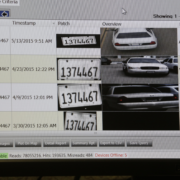
A computer screen showing license plate reader software results. The same plate number is logged four times on different dates by different cameras, each entry with a close-up of the plate and a photo of the white car it belongs to.

Flock cameras in Kentucky: How license plate readers get approved and how you can track them

Automated license plate reader (ALPR) cameras — widely known by one brand name, Flock — aren’t new technology, and they’re not the only kind of surveillance equipment modern police departments use across the commonwealth. Agencies have used body-worn cameras, cruiser-mounted cameras, gunshot-detection systems (like ShotSpotter), cellular signal interceptor (commonly known as “stingray”) technology, and others for decades.

But as artificial intelligence (AI) increases these devices’ reach and power to surveil the public, local officials face growing questions about how they adopt and deploy police technology in their communities.

What are “Flock cameras,” and how else are police using them?

ALPRs are small, nondescript cameras, usually mounted underneath a solar panel (some are mounted to police cruisers instead). The cameras typically face one direction with a wide-angle frame, and, while stationary, some possess basic pan/zoom capabilities (often multiple cameras will sit facing various directions at a single location).

The video images capture and catalogue numerous identifying features of vehicles that pass, including make, model, color, license plate number and other identifying features like body damage/irregularities, decals or bumper stickers. While some manufacturers’ cameras are capable of facial recognition and even more sophisticated data collection, these are much more common in private security and smart home systems like Google Nest, Ring or Wyze. Police can, however, use Flock cameras to track people walking, as reporting elsewhere in the country has shown, a feature the company has downplayed. With the integration of AI, ALPR cameras are now often plugged into statewide, interstate or national databases that the AI software can process and interpret nearly instantaneously.

Police departments often describe the cameras as a valuable tool for solving crimes and finding missing people and stolen property. Privacy and civil liberties advocates warn the technology carries risks of mistakes and abuse, as reporting by Queer Kentucky and others has documented.

Unlike highway traffic cameras, ALPRs can be installed almost anywhere in a community. ALPR watchdog DeFlock has cataloged more than 100,000 of the cameras across the U.S. (including Flock, Motorola and Genetec, among other unidentified manufacturers) many surveilling city parks, Main Street districts and other common public areas. Readers can check the map to see reported cameras near them.

How are these contracts approved in the first place?

Many of these cameras were approved and installed without much public to-do.

Kentucky jurisdictions vary widely in the details of their budget processes, but they usually follow the same broad patterns. Like most government contracts, agreements with Flock, Axon and other police tech companies usually originate with a police department or sheriff’s office, as they’re budgeting for departments’ resources. Then, once a draft of the terms is laid out, they’ll require approval from the legislative body: city council, commission, metro council, fiscal court (the county’s governing body), etc.

Sometimes these police contracts are passed as one part of a larger city or county budget. Sometimes they’re considered as stand-alone items. Sometimes a police contract will be introduced as part of a larger budget before getting broken out as its own item, for more focused and thorough consideration. If the contract is below a certain dollar amount, it might not require a vote at all (this is less common for larger contracts).

Cameras can also come into a community without a government contract at all. Private businesses, homeowners associations (HOAs) and other property owners can buy their own ALPRs and share access with police. Police departments can also get cameras through grants, free trial periods or donations, which may get less public attention.

Because these decisions often happen during routine meetings, as one item among many, residents have reported not learning about a contract until cameras appear in their neighborhood.

How can you track these contracts?

Cameras owned by a local police department or sheriff’s office generally require approval from local elected officials, such as a city council or county fiscal court. Cameras owned by private businesses, HOAs or state agencies may not, even when police can access their data. While each city and county handles budgets differently, there are steps you can take to stay informed:

  1. Check your city or county’s website for its council or fiscal court meeting schedule. If it doesn’t publish meeting agendas, find contact information for your city clerk or a similar city administrator. Ask to be added to the distribution list for council announcements and agendas.
  2. Examine agenda items — presentations, motions, ordinances, etc. — either introduced by or related to the police department. This will show you what sorts of funding and resources police are considering for your community.
  3. Ask your elected officials directly about this issue, either in person at a meeting or by phone or email. Elected officials vote on these contracts and can answer questions about them.
  4. Attend public hearings, even if you don’t feel comfortable speaking. Public meetings are where officials hear directly from residents. If no public hearing is planned on a contract, you can ask officials to hold one.
  5. Ask your police department or sheriff’s office for its ALPR policy. A 2026 Kentucky law, House Bill 58, requires law enforcement agencies that use ALPRs to adopt a written policy and make it public. The law also generally caps how long captured plate data can be kept at 90 days.
  6. File an open records request. Under the Kentucky Open Records Act, you can request your city’s or county’s contracts and data-sharing agreements with ALPR vendors.

WTF is the interim session? What to know about why folks are heading back to Frankfort — and you should too.

My party people, I do fear it is time to return to Frankfort. 

Unfortunately, yes, I am serious.

But this time around, the GOP-dominated legislature won’t be able to pass any laws — just chit-chat about them.

Kentucky’s 2025 interim session kicks off the first week of June and runs until around December. 

Even though lawmakers won’t be able to pass anything, the interim session is a great way to deepen your knowledge of Frankfort, talk with your elected officials or even dip your toes into the warm sands of civic engagement for the first time. 

What is the interim session and why should you care? Allow me to explain. 

What is the interim session?

Think of the interim session as Frankfort’s off-season conditioning. 

Unlike during the regular legislative session, which runs typically from January until April-ish, lawmakers aren’t in Frankfort every day. But during the interim, lawmakers show up maybe a few times a month to attend committee meetings and discuss topics of some sort of importance.

The House and Senate versions of each committee — like, say, education committees — combine into one for joint meetings. You also typically see a few task forces designed to target specific topics or issues meeting during the interim so they can study a topic and give the legislature ideas about how to fix it ahead of the next legislative session.

They can’t pass any legislation, but often, the stuff they discuss during the interim turns into or at least informs the bills they file in the next legislative session. So it is important to pay attention. 

What’s the difference between the interim session and the legislative session?

Simple: Lawmakers can file and pass bills during the legislative session, and they can’t do that during the interim session. 

Why should I care?

Listen, I get it. We’ve fought through yet another legislative session in Kentucky, and no one really wants to think about Frankfort again until the next legislative session. 

But the interim session is a great way to get civically engaged in whatever way feels best for you. For folks who don’t know much about Frankfort or are intimidated by the whole legislative process, the interim session is a great way to get your foot in the door. 

A lot of the conversations are about topics that could potentially turn into bills. This is a time where lawmakers hear directly from experts or key officials, so listening in can help you understand the underlying facts of a situation before everything gets more political. 

You also may be able to testify directly to lawmakers without the stringent time restraints that tend to cut off stakeholder voices during session. The interim generally is a low-pressure time where everyone is focused more on learning and understanding an issue, rather than political rhetoric and yelling. 

This means your lawmaker might have more time free to talk to you about topics you’re interested in, too. Even if it is just a quick introduction, this is a lower-stress time to lay any advocacy groundwork. 

You can learn more about Queer Kentucky’s tips for advocating for yourself and others in Frankfort right here. 

What are some things to watch for during the interim?

2026 is a budget year in Kentucky, so expect a lot of chatter about that.

Past that, I’m expecting some talk about how the Trump administration is — or could be — impacting Kentucky, and how the state government should adapt to federal changes.

On the LGBTQ+ front, I would be on the watch for discussions about bathroom policies on the state Capitol grounds. The 2025 legislative session ended with a bang with a GOP state representative accosting a transgender woman outside of a women’s restroom in the Capitol. The rep pretty quickly vowed to propose legislation to enforce some sort of “bathroom ban” in 2026. 

When is Kentucky’s interim session? 

Kentucky’s interim session starts June 3 and runs for several months. Typically, committees wrap things up in November, but some keep going in December. 

Instead of meeting weekly (if not more) during a legislative session, committees tend to meet monthly during the interim. You’re less likely to see multiple committee meetings happening at the same time, too, making it easier to focus on the one you’re in. 

You can see the full schedule for interim session meetings on the LRC website.

Where do interim meetings happen? 

Generally, meetings happen in the Capitol Annex in Frankfort. 

But a fun part of the interim session is that sometimes, they hold meetings elsewhere in Kentucky. For example, several committees opt to meet at the Kentucky State Fair in Louisville in August rather than going to Frankfort. 

How can I get involved?

You can show up in-person in Frankfort or you can watch a live-stream. KET tends to be a good pick, but the LRC — the nonpartisan group of workers who make everything work behind-the-scenes — has a YouTube page that has never failed me. 

Dobbs v. Jackson: What the Supreme Court’s Abortion Decision Means for Same-Sex Marriage

Why the Future of Same-Sex Marriage is Still in Question

Same-sex marriage became legal across the United States on June 26, 2015, thanks to the Supreme Court’s ruling in Obergefell v. Hodges. This landmark decision was a victory for LGBTQIA+ rights, affirming that same-sex couples have the same fundamental right to marry just like anyone else.

However, this hard-won progress now feels uncertain. In 2022, the Supreme Court overturned Roe v. Wade in Dobbs v. Jackson Women’s Health Organization, ending federal protections for abortion rights. Both cases, Roe and Obergefell, rest on similar legal principles, particularly the constitutional right to privacy. With the Court’s willingness to revisit established precedents and the inauguration of Donald Trump in 2025 adding further uncertainty, many are questioning the future of marriage equality and LGBTQIA+ rights more broadly.

So, why are some people connecting abortion access and same-sex marriage? The answer comes down to a legal concept called precedent.

The Role of Precedent in Legal Decisions 

Precedent refers to when courts rely on past decisions to guide rulings on similar cases. This is rooted in a Latin term, stare decisis, which means “to stand by things decided.” Many important Supreme Court decisions, including Roe and Obergefell, were based on this principle.

The Roe v. Wade ruling didn’t just legalize abortion; it also established that people have the right to make personal choices about their own lives without the government interfering. This idea of a “right to privacy” became the foundation for other cases, like the right for interracial couples to marry, access to birth control, and eventually, same-sex marriage in Obergefell v. Hodges.

When the Supreme Court overturned Roe in 2022, it shook the foundation for all the rights that depend on similar privacy protections.

A New Policy Landscape

One of Trump’s first actions after taking office was to issue an executive order narrowly defining gender in federal policies, erasing recognition of transgender and nonbinary individuals. Such actions magnify concerns that LGBTQIA+ rights may come under further scrutiny in this administration, making the fight for marriage equality and broader protections all the more urgent.

Adding to the anxiety is the current makeup of the Supreme Court. With three conservative justices appointed by Trump during his first term, the Court now has a 6-3 conservative majority. Trump’s 2025 inauguration raises fears that any new Supreme Court vacancies could shift the balance even further, making it more likely that cases like Obergefell could be challenged.

How Are Supreme Court Justices Appointed?

Here’s a quick breakdown of how Supreme Court appointments work:

  1. A Vacancy Happens: A seat on the Court opens up, usually because a justice retires or passes away.
  2. The President Nominates: The President picks someone to fill the spot, often a judge or legal expert.
  3. The Senate Judiciary Committee Reviews: This committee interviews the nominee to decide if they’re qualified.
  4. Senate Votes: The entire Senate votes on whether to approve the nominee. A simple majority is needed.
  5. Lifetime Appointment: If confirmed, the nominee becomes a justice and serves for life or until they choose to step down.

The president and Senate’s political leanings can make a big difference in who gets appointed, which is why Trump’s return to the presidency adds stress to an already tense situation.

A Call to Action for the LGBTQIA+ Community

The fight for civil rights requires vigilance and participation. From advocating for inclusive policies to understanding how Supreme Court nominations impact the judiciary, staying informed and engaged is vital. Above all, the LGBTQIA+ community must continue building coalitions, fostering resilience, and claiming spaces where joy and love can flourish, no matter the challenges ahead.

The future of marriage equality and broader LGBTQIA+ rights remains uncertain, but one thing is clear: this community has a long history of perseverance, and there’s no way in hell it’s stopping now.

Supporting LGBTQ+ Rights in Kentucky and Surrounding States: How Community Action Can Combat Legal Uncertainty

In recent years, the LGBTQ+ community has faced growing uncertainty about the future of their rights, especially following the Supreme Court’s 2022 decision to overturn Roe v. Wade. The ruling not only removed abortion access as a constitutional right but also raised concerns about the stability of other landmark decisions, including Obergefell v. Hodges, which legalized same-sex marriage. With the Court’s conservative shift, many worry that other precedents, like marriage equality, could be under threat. In response to these fears, community organizer Sam Bowling took action, organizing a resource-sharing event in Cincinnati to help LGBTQ+ individuals secure crucial documents like wills and powers of attorney. This article will explore Bowling’s journey in organizing this event, preview a similar upcoming event in Louisville, and provide background on the legal landscape that has fueled such uncertainty for the LGBTQ+ community.

Legally Wed in November 2024: A National Model for Grassroots Organizing

After Roe was overturned in 2022, Sam Bowling found herself uncertain, confused, and concerned about whether this could lead to the overturning of Obergefell v. Hodges. A community organizer, Bowling finds comfort in action. She began researching protections available to her and her wife outside of marriage, but found conflicting advice. Feeling overwhelmed, she thought, “If I’m this overwhelmed, I can’t imagine how other people are feeling too. If I’m already going to do this work to figure this out for me and my family, why not make this information as accessible and widely available as possible?”

Sam Bowling

She organized a successful yet intimate event at a queer bar in Cincinnati, bringing together volunteer notaries, lawyers, and other professionals to assist with important paperwork, including wills and powers of attorney. Bowling witnessed firsthand how the event made a difference for people, and as feelings of uncertainty, confusion, and concern grew within her community following Trump’s 2024 win, she knew it was time to act again, this time on a larger scale.

Initially booking a free room at the library, Bowling responded to an overwhelming social media response and offers from professionals like bakers, photographers, and officiants–alongside notaries and lawyers–by reserving multiple rooms, expanding the event’s capacity. The community pitched in with $800 in donations to cover printing costs for essential legal documents like wills, powers of attorney, and medical proxies.

The Legally Wed event hosted 500+ people, 30+ volunteers, and 11 weddings, complete with 10 wedding cakes from a volunteer baker. Bowling says, “It really rapidly bloomed into this community resource event that we tried to make as accessible as possible.” Despite concerns that it would be a somber occasion in the face of another Trump election, the event turned out to be joyful, loving, and celebratory.

Bowling, now the first out LGBTQ+ Norwood City Council member, explains, “I have a background in community organizing, but that’s not why this event was a success. Anybody could do this event anywhere. All you need is to be able to put the right people in the same room at the same time. I’m not a lawyer, I’m not a notary, and I can’t marry you. But I can find all those people and put them together.”

Even without all the answers, Bowling demonstrated the power of community in the face of fear and uncertainty. She says, “We’ve got to help ourselves. We have to look out for each other.”

Upcoming Event: Continued Support for the LGBTQ+ Community

Building on the momentum of November’s successful event, another gathering is scheduled for February 9th, 2025, in Louisville, Kentucky–the 2025 LGBTQ+ Legal Rights Day at Mandala House. With the ongoing fear of challenges to Obergefell and the continuing conservative influence on the courts, this event promises to be another important opportunity for the LGBTQ+ community to come together, share experiences, and access the legal services they need.

This six-hour event offers a breadth of resources including a coping skill workshop, crafts, legal assistance with volunteer attorneys, a panel on financial and housing resources, a panel on legal rights (non-healthcare topics), a panel on gender-affirming physicians, and a sharing of advocacy opportunities heading into 2025. The full schedule and FAQs can be found here.

Why doesn’t Kentucky have a statewide fairness ordinance?

I’m not going to bury the lede, so I’m going to hold your hand while I say something y’all probably already know: Kentucky doesn’t have a statewide fairness ordinance.

Around 22 states plus Washington, D.C. have such ordinances in some capacity. Kentucky is not one of them.

Plenty of other states — Kentucky included — have counties or cities with local fairness policies. But, even with two dozen localities in Kentucky enacting their own fairness ordinances, less than one-third of Kentuckians live in areas not protected by such policies. 

But it isn’t because state lawmakers — well, at least some state lawmakers — haven’t been trying. Since Kentucky’s 2000 legislative session, nearly 50 bills have been filed to enact some form of statewide fairness. 

Obviously, those efforts haven’t been successful. Why is that? 


Nearly 25 years of legislative efforts

Some sort of statewide fairness legislation has been filed in Frankfort nearly every year since 2000. (For some reason, no such bill came up in 2007’s legislative records.)

And since 2003 (again, not counting the pesky 2007 situation), such legislation has been filed in both the House and Senate. At times, House Democrats have tried their chances at filing two similar bills in the same year. 

But those legislative pushes have failed. Let me be clear — when I say “failed,” I don’t mean the bill got a vote or two and just fizzled out. There was nothing to fizzle out. Outside of a few instances, these bills rarely got even a committee assignment when it wasn’t required. None of them got a vote, according to legislative records.

Now, it’s not uncommon for bills to be filed and not go anywhere in Frankfort. That’s actually the reality of most bills that get filed any given legislative session.

But a recent string of high-profile anti-LGBTQ+ pushes from the GOP, coupled with the GOP’s sheer dominance over Democrats in the state Capitol and their focus on leaving things to local governments rather than “big” governments such as the state, can help explain exactly why a statewide fairness ordinance hasn’t happened.


The power of party (or not)

Let’s start with the numbers. Democrats — who typically sponsor such legislation — make up less than one-fourth of all seats in the House and Senate. Republicans — who have, on rare occasions, cosponsored such legislation — have a supermajority. 

Republicans have repeatedly prioritized anti-LGBTQ+ measures in recent sessions. Keeping trans girls and women out of girls and women’s sports. Multiple efforts aimed at limiting drag queens (FYI: this one failed — twice). Banning gender-affirming health care for minors, even if their parents and doctors agree there is a better path. Allowing teachers to misgender their own students if they’d like. 

And that means that even though Democratic Gov. Andy Beshear has prided himself on his LGBTQ+ record while in office, pro-LGBTQ+ legislation simply does not make it to his desk. 

But, a quick history lesson: Republicans haven’t always been completely in charge of the legislature like they are now. 

After the 2000 election, 59.4% of the seats in Kentucky’s legislature — there are 138 of them — were owned by Democrats and the remaining 40.6% were Republicans. 

Now, Democrats make up just 19.6% of those seats while Republicans have 80.4%. And a Democrat has been in the governor’s mansion 17 out of the last 25 years, too.

Even though in several situations since 2000, fairness legislation was filed and backed by Democrats in a Democrat-led chamber with a Democratic governor, it still never budged. 

“It is far past time for Kentucky to have a statewide fairness law, and we and others in our caucus will never stop trying to make this a reality,” Democratic Reps. Keturah Herron and Lisa Willner — both of whom have sponsored statewide fairness legislation — said in a joint statement. “Whom you love shouldn’t dictate where you can live and work.” 


Without statewide ordinance, efforts must be local

But, the duo continued, “Many of our House and Senate colleagues continue to believe that this issue is better left up to local communities, much like laws governing alcohol sales and public tobacco use.” 

On top of prioritizing anti-LGBTQ+ bills over statewide fairness, many Republicans also generally believe in the concept of small government. Basically, they’d rather leave some decisions up to local communities and their citizens and elected officials, rather than dictate things from a state level. 

Now, there are plenty of instances where Republicans overlooked that particular ideal in favor of a more large government approach, but there is a silver lining when it comes to fairness ordinances. 

Lack of state action means room for local action, whether that’s at the county or city level. Kentucky has 24 local fairness ordinances, though Chris Hartman, the leader of the Fairness Campaign, said that may shift soon. 

But just because local fairness ordinances are allowed right now, doesn’t mean that could last forever. 

Herron and Willner said “with the legislature more and more inclined to preempt local ordinances,” pointing to a recent state removal of some cities’ housing ordinances, “there is growing fear that fairness protections now in place for half of Kentuckians could be next.”

One way to act? Vote, they said.

“If we want a more inclusive, fair, and just commonwealth,” Herron and Willner said, “we must elect leaders who believe in that for everyone, no matter their gender or sexual orientation/preference.”