It’s a Pause, Not a Ban: Liz Sheehan on Lexington’s Data Center Moratorium


During a meeting of the Lexington Fayette Urban County Government Council on June 9, Lexington became the first major Kentucky city to enact a moratorium on data centers.
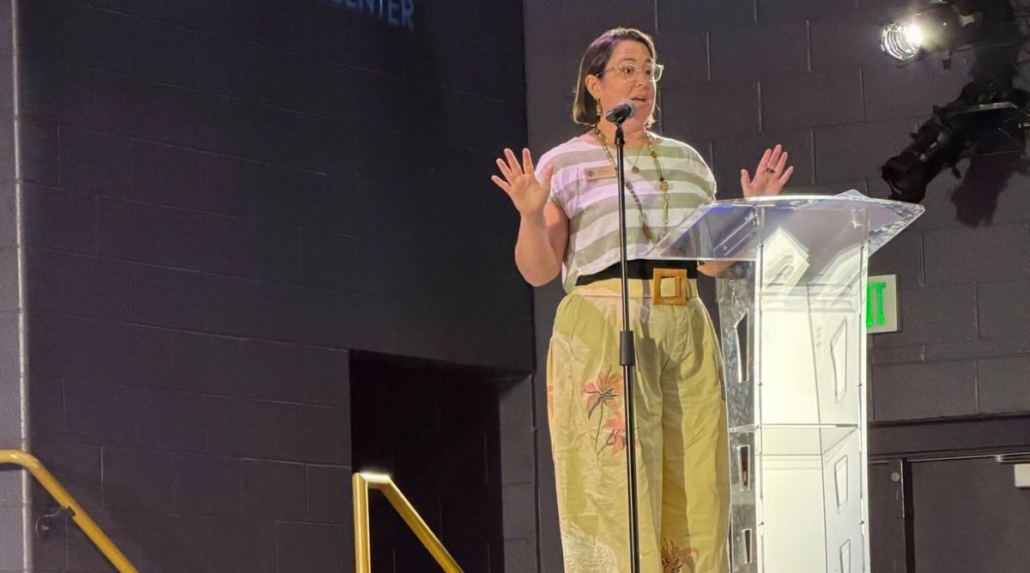
Councilmember Liz Sheehan, who represents Lexington’s 5th district, introduced the resolution, which passed unanimously and without debate.
Sheehan, who is also Kentucky’s first openly bisexual elected official, spoke with Queer Kentucky to help make sense of the moratorium and shed light on all things data center in the Commonwealth.
The following interview has been edited for length and clarity.
What Lexington’s Data Center Moratorium Actually Does
Tell us a little bit about what a moratorium is, and why it might be a useful legislative tool.
The basic definition of a moratorium is that it’s a pause; in this case, it’s a pause on development approvals around data centers. It allows us to pause any approvals, update our policies and definitions, and then resume development after that.
Some people hear the word moratorium and it sounds scarier than it really is.
I think in our community people are also confusing the term moratorium with a ban. A ban is a [permanent] policy, but a moratorium is temporary.
Why does it seem like these data centers always end up impacting marginalized communities?
It comes down to property values. A development company is going to be thinking about their cost and looking for land that is available at a lower cost to them. Due to historically discriminatory practices like redlining, we’re seeing overlap here on where data centers are going.
We see headlines full of protests against data centers. Do you have any constituents contacting you in support of data centers?
I do have constituents on both sides of this issue. Some people see great benefits in increased technology in our world, including AI. Some folks are concerned about limiting data center development because our modern society is supported by online mechanisms.
If you think about newspapers going out of print and moving online, or online banking, or healthcare records, or social media, our world is increasingly online. So we do need infrastructure to support that, but I think there are disagreements about what that infrastructure looks like and where it can go.
What Lexingtonians Can Do
Is there anything that we can do to reduce the demand for data centers?
This story exists because of readers like you. Give $5 a month to keep Queer Kentucky free.
Our world is increasingly online, but I do think we can hold companies to higher standards when it comes to negative environmental impact. For instance, there are differences in cooling systems for data centers; a closed-loop system uses less water. Or you can use alternative energy to support the data centers to reduce energy demands of fossil fuels.
Technology changes so fast. I am worried that we are over-developing. For me, it’s also about whether we take a beat and see if we actually need all of this. Because if technology around computing power changes in the next 2-5 years, and now we have all of these humongous data centers built that could occupy half of the space and need half of the energy, do we need to do this now?
Besides public comment, is there anything Lexingtonians can do to express their opinions?
We have a fact form called Engage Lexington where people can go and give comments and learn more. Not everyone can come to the government center (council meetings), and this provides us an opportunity to not only hear from the public but also educate them about what we’re working on so we can get to those nuanced conversations.
We need people to come to the table to talk with us about the specifics of what they want to see and what they don’t want to see. In Lexington, there isn’t an appetite at all for hyperscale data centers; our communities seem to be against them, our developers aren’t looking to develop hyperscale here. But then we do have to figure out what is the (size) threshold for a data center, versus one that we think is too much.
If you want to see energy caps, tell us what you think that energy cap should be; if you want to see square footage changes, tell us what you think that should be. That’s where our conversation is headed, is trying to find that breaking point of what is acceptable and what is not.
We’re really working to find a solution that supports our community, supports our existing businesses, but that isn’t negatively harming our environment.
Keep reading
 AVOL Kentucky Is Adding Injectable PrEP. One Shot Can Replace Two Months of Pills.
 Kentucky Black Pride Turns 10 in the Park That Sheltered Queer Lexington
 At Black Soil KY’s Farmacy Markets, Narcan Sits Beside the Produce
 Federal Cuts “Handcuffed” BIPOC Harm Reduction in Kentucky. Communities Are Stepping Up.
 Community Celebrates Return of Winchester Pride and Inclusion Festival with this Year’s Theme: The Story of US