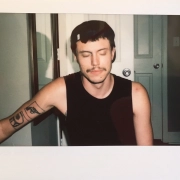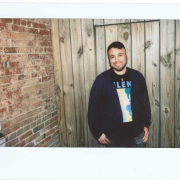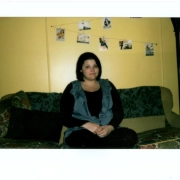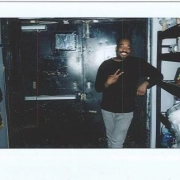

The Magic of DIY Drag: Delusiona Grandeur masters the art of disruption


photos by Anjali Alm-Basu
Delusiona Grandeur doesn’t just perform – she detonates. She is an extension of Autumn Shawen (they/them); the artistic expression of an unapologetic performer whose background in stripping and sex work fuels a drag persona that is equal parts spectacle, sermon, and survival.
She says, “Delusiona Grandeur is an extension of myself. A heightened version of me. She exists to play and reclaim all the negative things about me–trashy, crass, tacky, unpolished, arrogant. It’s a space for me to play off my assigned femininity, to reclaim what it means to be viewed as a sex object… I’m out here in my thong looking amazing–but also disgusting–and doing something shocking or horrifying. Hopefully, you’re turned on and scared.”
A Thong, A Fantasy, A Reckoning
By blending seduction and satire, Delusiona’s artistry: part glam, part grotesque. One minute you may be drawn in by her high-femme aesthetic, the next you’re being sprayed with blood and a Four Loko. The effect is as confusing as it is unforgettable–and exactly as intended.
Starting her career as a stripper at 18, Delusiona’s work has always been deeply informed by sex work and survival. That experience isn’t just an influence – it is the art. And it bleeds into every performance, every act of reclamation, every moment of chaotic, unfiltered being.
“I pride myself on being an actual artist, not just a performer,” she says. “Even if it looks like I don’t sometimes.”
Delusiona’s work ranges from absurdist comedy–coughing up tips while pretending to be a cat–to high-concept pieces on gender, transness, and trauma. In one performance that was captured by a video artist, Rachel Rampleman, Delusiona dons a hooked mouthpiece, forcing her face into a smile as she smashes herself with fake bricks. It’s a haunting meditation on what it means to bring joy to others while suffering internally. The video has been screened in galleries across New York City.
Still, she’s the first to remind you: drag should be fucking fun. It’s not always about perfect lashes or choreography. “You can put the most drag race-ready pageant queen next to me, and nine times out of ten, whatever I do gets people more excited,” she says. “Because I’m being authentic: I’m having fun. I’m expressing myself. People see that.”

Breaking Rules, Because the Rules Were Never Meant to be Anyway…
From the start, Delusiona knew she wasn’t going to fit into a mold. As an AFAB entertainer, she wasn’t taken seriously by many people in the drag world. The answer? Blow up the mold entirely.
“I learned very quickly that if you aren’t going to respect me, whether I’m polished or not, then I’m just going to do what I want. So I go out there in ratty wigs, choreography be damned, lashes falling off..and people eat it up,” she says.
Her disregard for traditional drag rules isn’t rebellion for rebellion’s sake – it’s about truth. The kind of raw, gut-level honesty that queerness deserves. She calls out the elitism and hierarchy embedded in many drag spaces as just another form of respectability politics.
“That shit is decidedly not queer to me,” she says.
Drag isn’t about the money or social capital to Delusiona. She doesn’t care for corporate pride gigs or sanitized performances for straight audiences. What she does care about is making space–real space–for community.
This story exists because of readers like you. Give $5 a month to keep Queer Kentucky free.
For her, artivism isn’t always explicit signage or spoken words. It’s embodiment. It’s existence. It’s the act of performing gender, sexuality, and rage unapologetically. It’s a stage with harm reduction tables and mutual aid. A show that raises money for queer farm sanctuaries. A fundraiser with blood, glitter, and meaning.
“Visibility is a trap,” she explains. “We should reject normal. Reject the normalization of queer bodies. Peaceful protests and calling our reps isn’t working anymore. Watering down our identities for visibility–for what?”
Safety, she says, shouldn’t be the goal. Opposition should.
“Should you have a gun and know how to use it? Yes,” she says. “Because harassment happens, even in queer spaces. And you can’t hide.”

The Magic of DIY Drag
Tired of drag being filtered through gay bar politics and straight spectatorship, Delusiona has carved out a new space–literally. She’s leaning into DIY house parties, underground events, and art-forward productions.
“I’d rather host an event than do a show,” she says. “I want drag that isn’t tied to establishments anymore.”
One of her proudest moments? “Meat Market”, a Halloween show she produced that explored the theme of exploitation through a cannibal slaughterhouse lens. Think gore, satire, and catharsis. “We had acts on veganism, sexual abuse, being trans in a cis world,” she recalls. “The venue might’ve hated me after, but everyone had a fun, messy, powerful night.”
Being a drag artist in a red state comes with daily challenges–from unsupportive family to cultural isolation.
“Some of my family doesn’t talk to me because of drag. Others will like my posts on social media but not actually support me,” she shares. “But I don’t give a fuck. If you don’t like it, cool. If you do, cool.”
She’s faced disrespect from within the queer community too, particularly from cis gay men who don’t take AFAB performers seriously. Rather than try to fit in, she demands respect—and when it’s not offered, she builds her own stages.
Her experience across state lines—like performing in Ohio—has highlighted how shallow queer spaces can become when divorced from radical politics. That’s why she’s turning away from the commercial, the corporate, the expected. In September, she’s planning a massive, sex-worker-centered event that features no profits, just community, art, and mutual support.
Delusiona offers some really keen advice for emerging drag artists: “Do not water yourself down. Whether it’s for other people or a paycheck—don’t swallow what you actually want to do.”
She warns of burnout, of losing yourself in the performance if you don’t ground it in authenticity. Her work is driven by what feels fun, raw, and true. There’s no branding strategy here.
She is more than a character. She’s a challenge to the audience. She invites you to question what you find beautiful and grotesque. To reckon with your own discomfort. To blur the lines between empowerment and objectification, trauma and art, joy and resistance.
And in a world that demands compliance, Delusiona reminds us that through blood, beauty, and filth, we were meant to be disruptive. Meant to survive. Meant to save lives, even if it’s for one night.
She doesn’t want your tolerance–she wants your discomfort. Your awe. Your attention.
Because this isn’t just drag. It’s defiance. It’s art.
Keep reading
 Rural Appalachian LGBTQ+ students shouldn’t have to choose between opportunity and belonging
 JustFundKY to host first Obsidian Ball, a masquerade gala in Lexington
 ‘They Can’t Legislate Community’: Henderson KY Pride’s Haunted Haus of Drag Returns Oct. 23
 Kentucky Black Pride Turns 10 in the Park That Sheltered Queer Lexington
 Time Slip Theatre Opens 13th Year of ‘Rocky Horror’ With a Witchy Twist