‘Teenage Sex and Death at Camp Miasma’ Review: Queer Pleasure, Excess and a Bowling Green Theater


Warning: Spoilers ahead.
I knew very little about Teenage Sex and Death at Camp Miasma when I decided to accompany a friend to the theater. I had seen the iconic poster and knew I adored the work of both Hannah Einbinder and Gillian Anderson. I knew the storyline was queer – a real selling point for me. I had absorbed a handful of press tour clips from social media, watching Einbinder and Anderson riff off one another, but revealing very little about the actual film. Shortly before going to the theater, I viewed the trailer which, as trailers do, primed me for this unhinged viewing experience. I was ready.
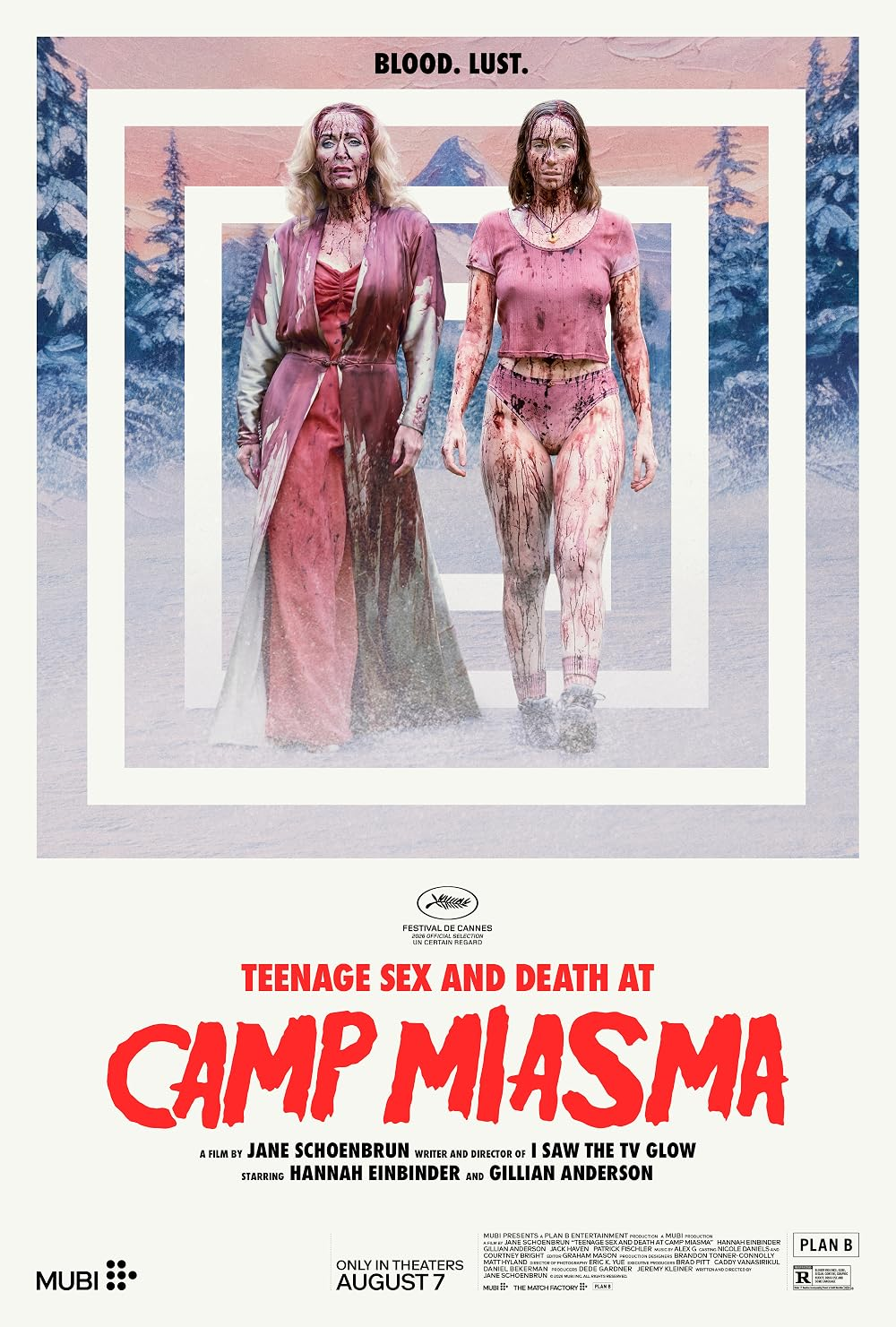
Film poster. Teenage Sex and Death at Camp Miasma (2026). Courtesy of MUBI.
As I sat there in a movie theater in Bowling Green, KY, nestled between two friends, waiting for the opening credits to roll, I felt a heady anticipation. We were about to embark on a journey. This film, an ode to and commentary on slasher films, owed at least a little something to the legacy of a filmmaker who was raised right here in Bowling Green. John Carpenter’s Halloween (1978) is one of the most well-known films in the genre, but my friends and I were about to engage with something new – something that would both honor and critique this beloved category of films.
I had so many questions as I waited for the film to begin. What would this film be? Would I be brave enough to watch it as a relatively wimpy horror viewer? Would this film be queer enough? Would it join the ranks of the growing list of films and TV shows that are slowly but surely filling the gaping hole in my heart that yearned for media like this as a young queer person? How amazing was it that we had arrived here together to watch a film that ten or twenty years ago would have been unlikely to screen in this very theater?
So many of these questions would be answered by the time the credits rolled.
Want Queer Kentucky’s latest in your inbox? Sign up for our newsletter here.
Writer/director Jane Schoenbrun’s latest film came to play. The unhinged nature of slasher films is celebrated throughout. Jump scares and gory deaths set the tone, simultaneously fueling Kris (Hannah Einbinder) as she envisions what her reboot of the franchise could look like. As a Sundance darling and burgeoning writer/director, Kris has a chance to remake this outdated film into what she thinks it should have been, addressing the elephant in the room: negative commentary about transgender and gender-queer individuals and perhaps the queer community as a whole. Kris must find the intersection between her love for the franchise and her desire to update it for a new audience. This film documents that journey – one that becomes much more personal than Kris anticipated.
This film about filmmaking has everything a fan of slasher films could want – from jump scares to over-the-top gore. In one of the opening scenes of the film, geysers of blood literally shoot up as high as the tree line, as an unsuspecting victim meets their end. We view this death, and their companion’s death, from a distance. After all, we have to be pretty far away to appreciate the height of the enormous blood geyser. That, and we are allowed to appreciate this seemingly normal setting, two people out on a walk with their dog (the dog lives, worry not!) for just a few moments before the killer, Little Death, arrives and colors the scene red.
Little Death is as entertaining as any other slasher villain, but they also add something to this genre as a gender-fluid character who presents an almost child-like energy whenever they appear on screen. Little Death brings death, but they also bring joy and playfulness, trotting along like they’re heading off towards an imaginary battle.
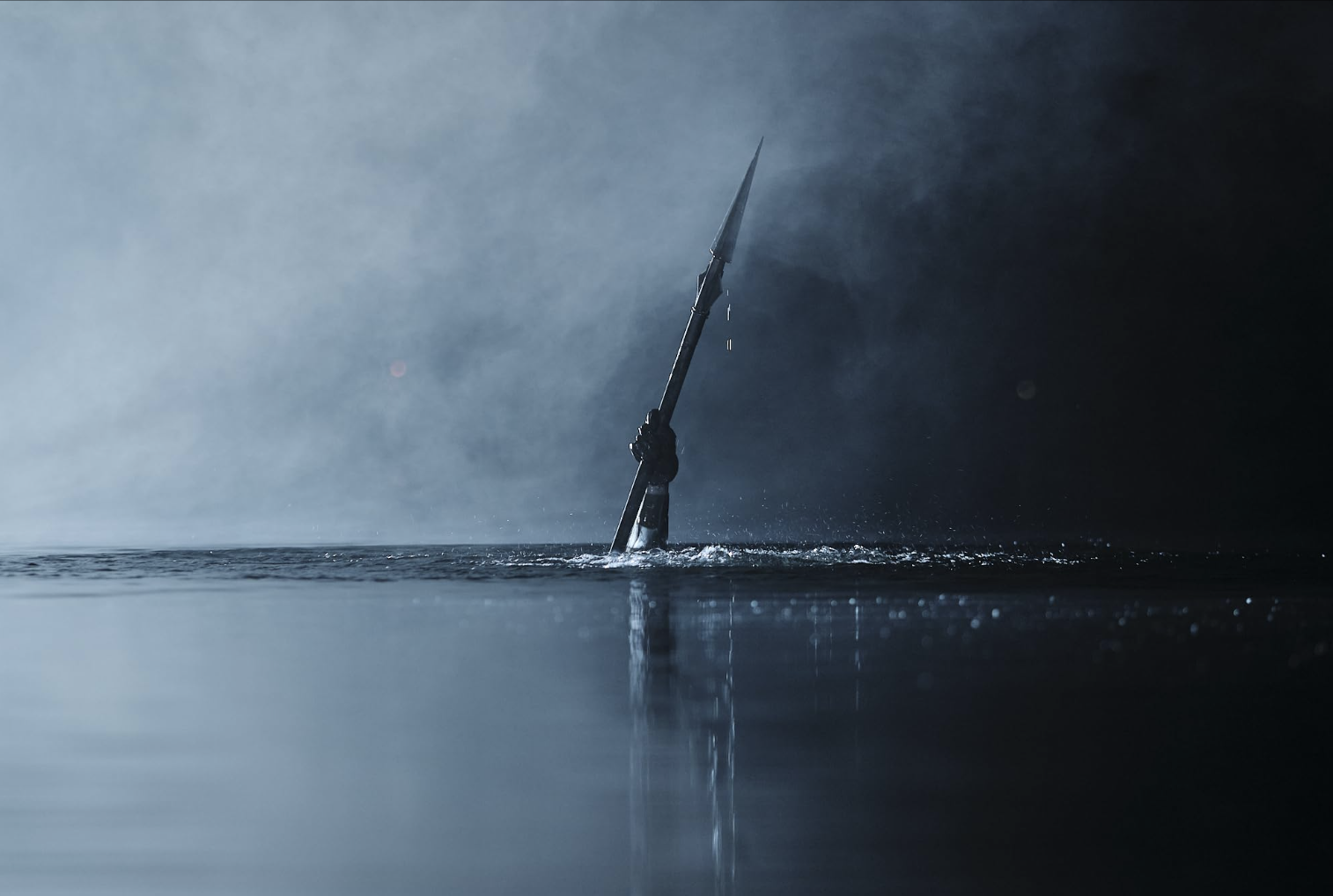
Little Death emerges from the lake. Teenage Sex and Death at Camp Miasma (2026). Courtesy of MUBI.
A synonym for the orgasm, “Little Death,” not only brings pain in this film, but pleasure – and intense pleasure at that. As the final girl from the original film, Billy (Gillian Anderson) says, “If it gets too real, you can always turn it off.” Consent is sexy, after all, and Little Death is on their way to penetrate you – a concept that Kris finds alluring in her sexual fantasies. She seems drawn to the helplessness of a final girl lead, the killer advancing, running from them with her breasts bouncing under a thin t-shirt, death waiting to overtake her. Throughout the film, Little Death and Billy both help bring this fantasy to life.
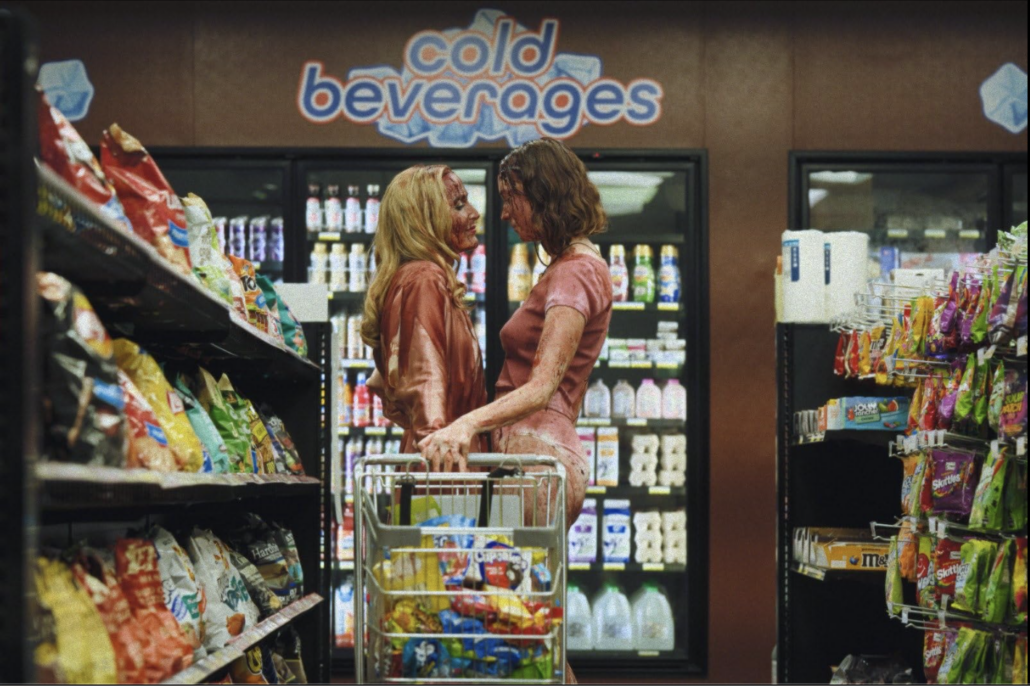
Excess is also a heavy element of this film in multiple categories. Excess of gore, of course, as we see comedically enormous amounts of blood spurting from Little Death’s victims. Excess of food as Kris loads her cart with snacks early in the film, as Billy greets her with two giant buckets of KFC chicken which she carefully stacks on a serving tray, as, covered in blood, Kris and Billy load their cart at the convenience store, ready for another movie night in. Excess of Camp Miasma sequels. Excess of snow. Excess of pleasure. The film asks us to chase this concept of excess, feel it, embody it. After all, it’s there for the taking.
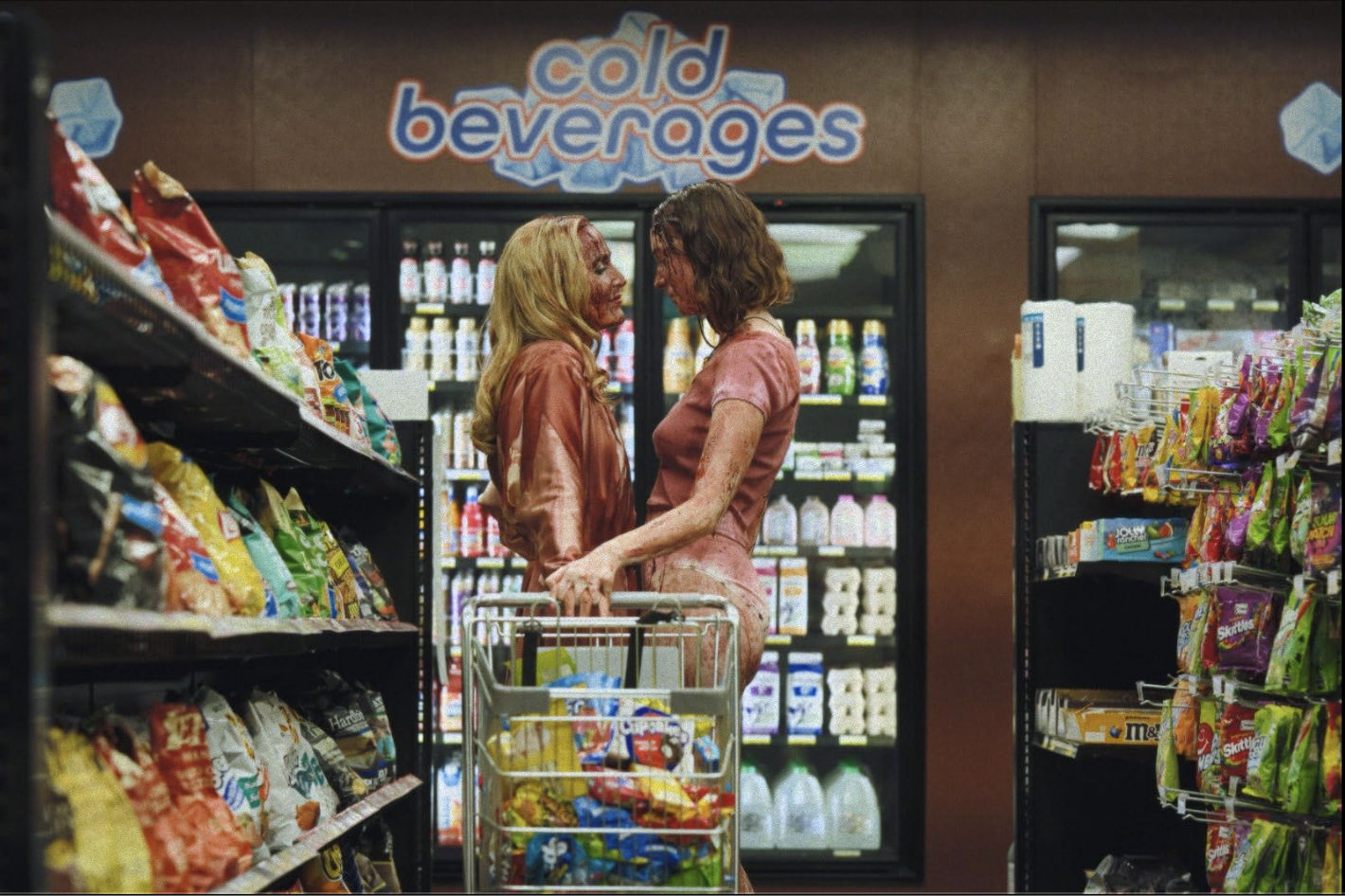
Kris and Billy at the convenience store. Teenage Sex and Death at Camp Miasma (2026). Courtesy of MUBI.
Teenage Sex and Death at Camp Miasma comments upon this excess, particularly in terms of critiquing Hollywood for the mountain of sequels and reboots that have been greenlit over the last few decades. Resurrecting old intellectual property (IP) is a core business strategy for the industry and this film isn’t going to shy away from that concept, notably commenting on the “zombie IP” – IP that has been deemed too problematic to reboot – of this fictional slasher franchise.
This film couches pleasure in excess as Billy and Kris lay on a pile of brightly colored snack packages, their limbs entwined, Billy’s hand down Kris’ shorts. There is excess in the buckets of blood that emerge from their bodies as Billy brings Kris to orgasm towards the end of the film, inviting both pleasure and pain – and Little Death – into their space simultaneously, as Little Death penetrates them and Kris climaxes, replicating Billy’s experience from the earlier film. “Little death,” indeed.
But it’s not pleasure that is critiqued as excess here, rather it is a celebration of pleasure, of what arouses you, what moves you to the brink. This is the sort of excess we crave – pleasure outside of society’s expectations and boundaries. It’s up to Kris and Billy what is “okay” for them to do with one another. It’s not up to us. We do not get to place judgment on their choices or behaviors. We do not need to feel comfortable with what is happening between them. We’re simply the viewers – voyeurs – bringing a little something extra to the experience for Kris and Billy. After all, part of this is about being watched and the pleasure that can bring. We have their consent.
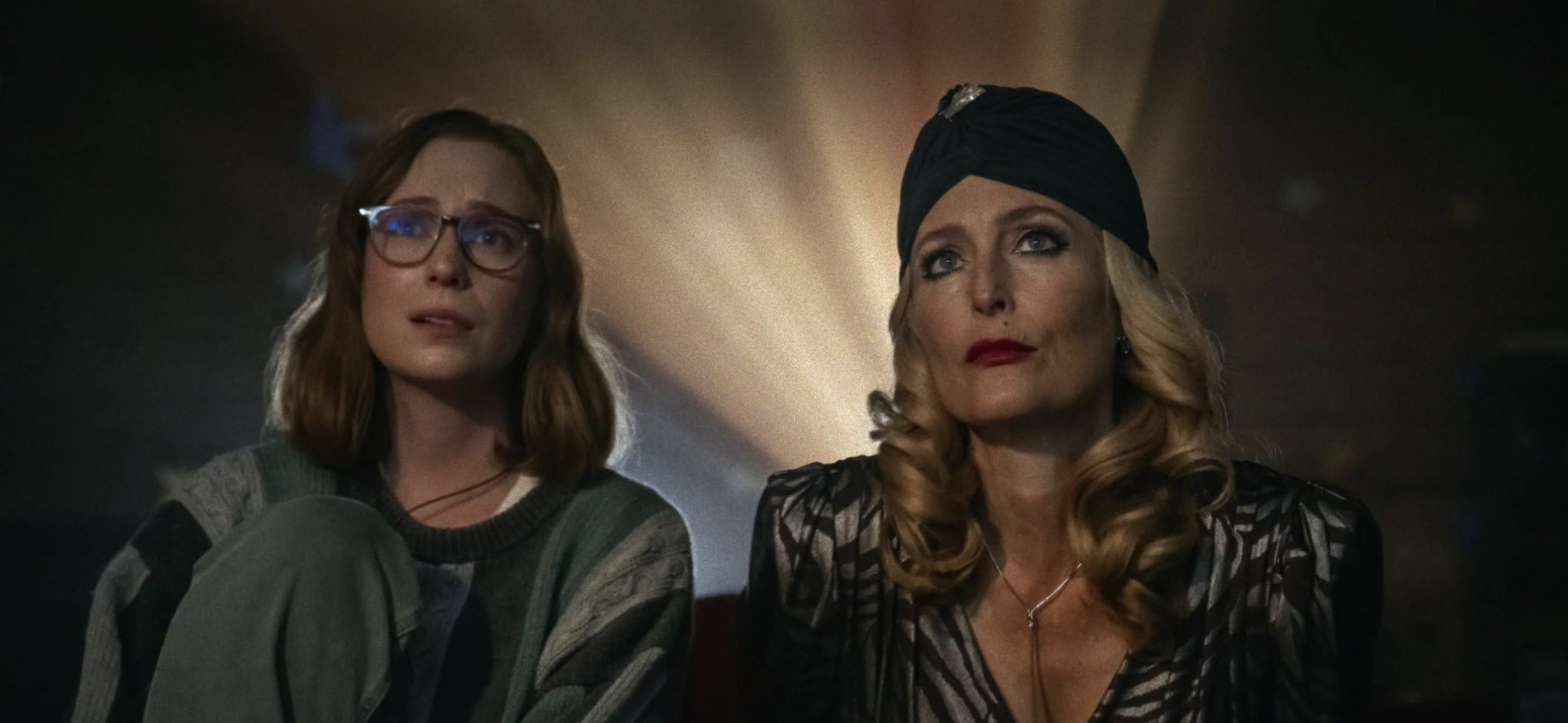
Kris and Billy view the film. Teenage Sex and Death at Camp Miasma (2026). Courtesy of MUBI.
This film was horrifying, yes, but not in the classic sense. I didn’t jump in my seat, I didn’t feel my heart racing in fear, I didn’t feel the need to cover my eyes. Instead, my adrenaline rose as I anticipated the next moment, the next thing the leads would do or say, as I watched them grow more intimate with one another. My pulse rose as I anticipated Little Death’s emergence from the lake – a coming out – something to celebrate, it seemed, rather than a horrific development. Perhaps Little Death isn’t a villain after all and, rather, someone who we seek to understand through the lens of their experience.
One thing is certain, Teenage Sex and Death at Camp Miasma flipped horror on its head, allowing a wider audience to appreciate what so many have appreciated for decades – human pleasure and violence intimately entwined together on screen – concepts so very connected to one another in this bloody escapade.
Jessica L. Folk (she/her) is a screenwriter and an Associate Professor of Scriptwriting at Western Kentucky University. Her favorite way to watch a film is to pause it a million times to chat with her wife about what they just witnessed on screen. Luckily, her wife also enjoys this.
Want Queer Kentucky’s latest in your inbox? Sign up for our newsletter here.
Related
- Paducah’s Cinema Systers Is America’s Only Lesbian Film Festival — And It’s Turning 10
- OutReels Cincinnati returns Nov. 7-9: Queer film, community and talkbacks
- Appalachian Queer Film Festival showcases trans, queer voices through rural filmmakers
- Behind the Scenes: Laura Petrie Reflects on Pride and the Impact of Lesbian Film
- Time Slip Theatre Opens 12th Year of ‘The Rocky Horror Show’