KEEP. Region. One or more per story. Bowling Green, Somerset, Corbin, London, Glasgow, the Cumberland region.

Tag Archive for: Region: South Central

Kris-and-Billy-at-the-convenience-store

‘Teenage Sex and Death at Camp Miasma’ Review: Queer Pleasure, Excess and a Bowling Green Theater

Warning: Spoilers ahead.

I knew very little about Teenage Sex and Death at Camp Miasma when I decided to accompany a friend to the theater. I had seen the iconic poster and knew I adored the work of both Hannah Einbinder and Gillian Anderson. I knew the storyline was queer – a real selling point for me. I had absorbed a handful of press tour clips from social media, watching Einbinder and Anderson riff off one another, but revealing very little about the actual film. Shortly before going to the theater, I viewed the trailer which, as trailers do, primed me for this unhinged viewing experience. I was ready.
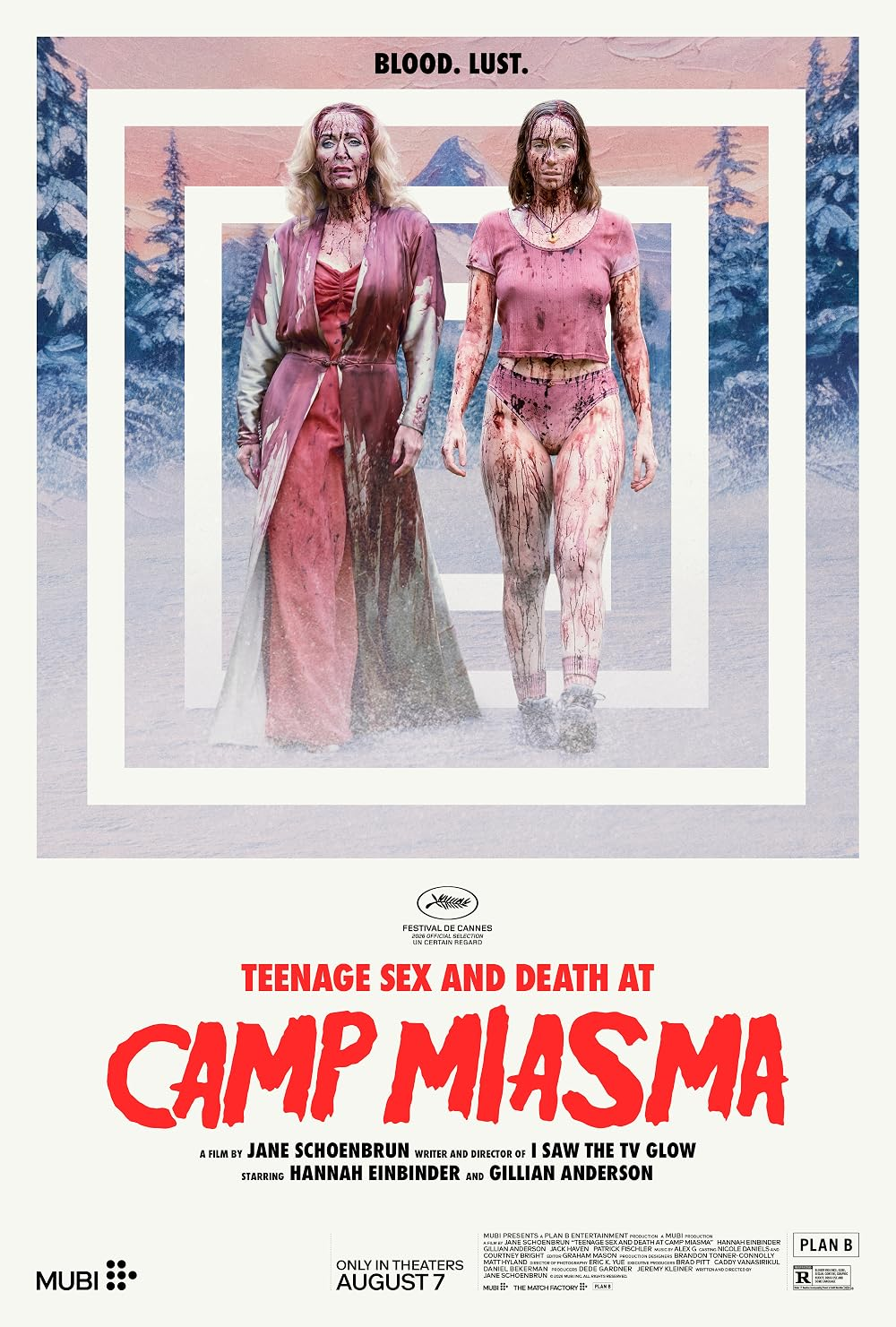
Film poster for Teenage Sex and Death at Camp Miasma (2026), showing two blood-covered women walking through snow

Film poster. Teenage Sex and Death at Camp Miasma (2026). Courtesy of MUBI.

As I sat there in a movie theater in Bowling Green, KY, nestled between two friends, waiting for the opening credits to roll, I felt a heady anticipation. We were about to embark on a journey. This film, an ode to and commentary on slasher films, owed at least a little something to the legacy of a filmmaker who was raised right here in Bowling Green. John Carpenter’s Halloween (1978) is one of the most well-known films in the genre, but my friends and I were about to engage with something new – something that would both honor and critique this beloved category of films.

I had so many questions as I waited for the film to begin. What would this film be? Would I be brave enough to watch it as a relatively wimpy horror viewer? Would this film be queer enough? Would it join the ranks of the growing list of films and TV shows that are slowly but surely filling the gaping hole in my heart that yearned for media like this as a young queer person? How amazing was it that we had arrived here together to watch a film that ten or twenty years ago would have been unlikely to screen in this very theater?

So many of these questions would be answered by the time the credits rolled.
Writer/director Jane Schoenbrun’s latest film came to play. The unhinged nature of slasher films is celebrated throughout. Jump scares and gory deaths set the tone, simultaneously fueling Kris (Hannah Einbinder) as she envisions what her reboot of the franchise could look like. As a Sundance darling and burgeoning writer/director, Kris has a chance to remake this outdated film into what she thinks it should have been, addressing the elephant in the room: negative commentary about transgender and gender-queer individuals and perhaps the queer community as a whole. Kris must find the intersection between her love for the franchise and her desire to update it for a new audience. This film documents that journey – one that becomes much more personal than Kris anticipated.

This film about filmmaking has everything a fan of slasher films could want – from jump scares to over-the-top gore. In one of the opening scenes of the film, geysers of blood literally shoot up as high as the tree line, as an unsuspecting victim meets their end. We view this death, and their companion’s death, from a distance. After all, we have to be pretty far away to appreciate the height of the enormous blood geyser. That, and we are allowed to appreciate this seemingly normal setting, two people out on a walk with their dog (the dog lives, worry not!) for just a few moments before the killer, Little Death, arrives and colors the scene red.

Little Death is as entertaining as any other slasher villain, but they also add something to this genre as a gender-fluid character who presents an almost child-like energy whenever they appear on screen. Little Death brings death, but they also bring joy and playfulness, trotting along like they’re heading off towards an imaginary battle.
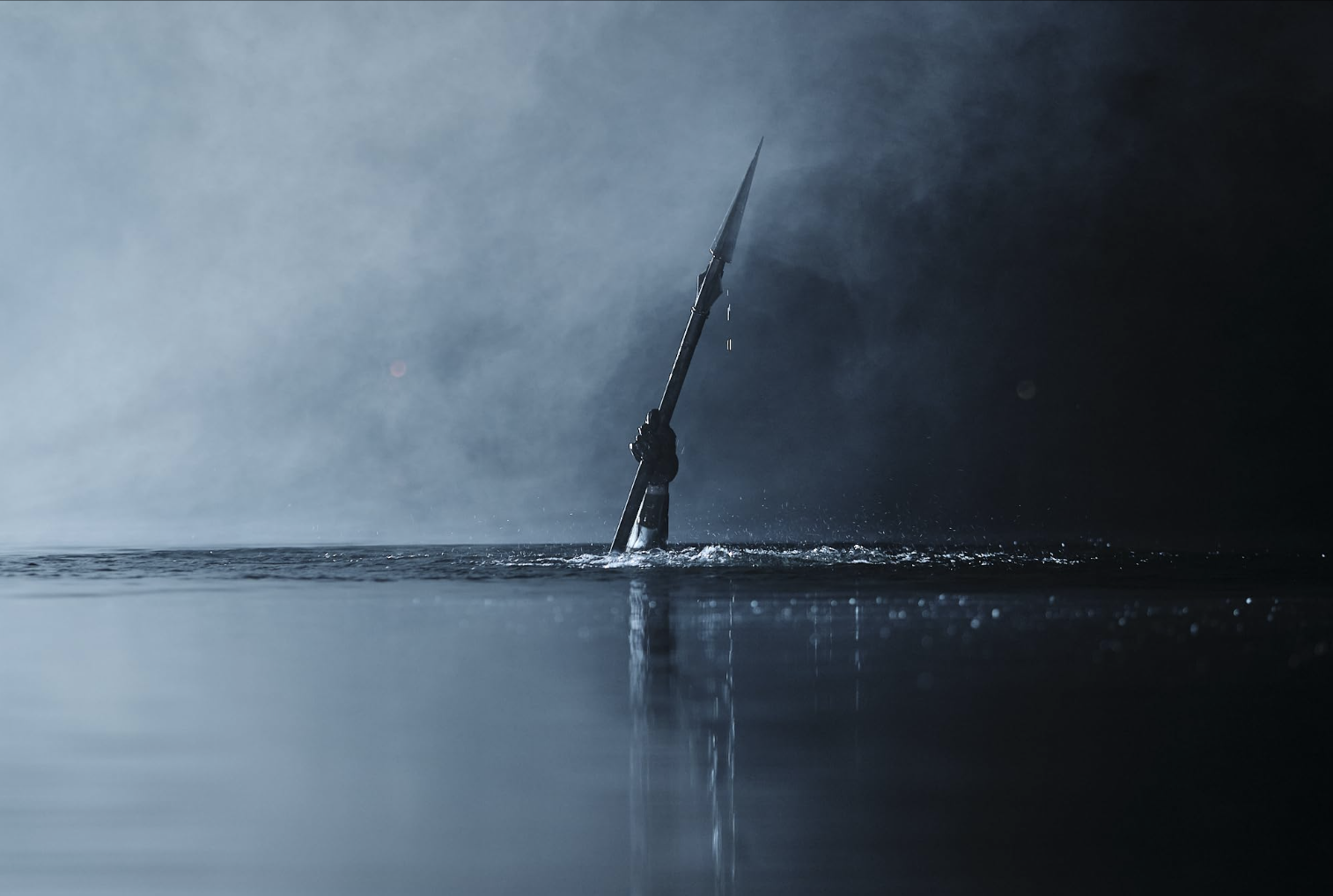
The killer Little Death emerges from a dark lake at night in Teenage Sex and Death at Camp Miasma (2026)

Little Death emerges from the lake. Teenage Sex and Death at Camp Miasma (2026). Courtesy of MUBI.

A synonym for the orgasm, “Little Death,” not only brings pain in this film, but pleasure – and intense pleasure at that. As the final girl from the original film, Billy (Gillian Anderson) says, “If it gets too real, you can always turn it off.” Consent is sexy, after all, and Little Death is on their way to penetrate you – a concept that Kris finds alluring in her sexual fantasies. She seems drawn to the helplessness of a final girl lead, the killer advancing, running from them with her breasts bouncing under a thin t-shirt, death waiting to overtake her. Throughout the film, Little Death and Billy both help bring this fantasy to life.

Excess is also a heavy element of this film in multiple categories. Excess of gore, of course, as we see comedically enormous amounts of blood spurting from Little Death’s victims. Excess of food as Kris loads her cart with snacks early in the film, as Billy greets her with two giant buckets of KFC chicken which she carefully stacks on a serving tray, as, covered in blood, Kris and Billy load their cart at the convenience store, ready for another movie night in. Excess of Camp Miasma sequels. Excess of snow. Excess of pleasure. The film asks us to chase this concept of excess, feel it, embody it. After all, it’s there for the taking.
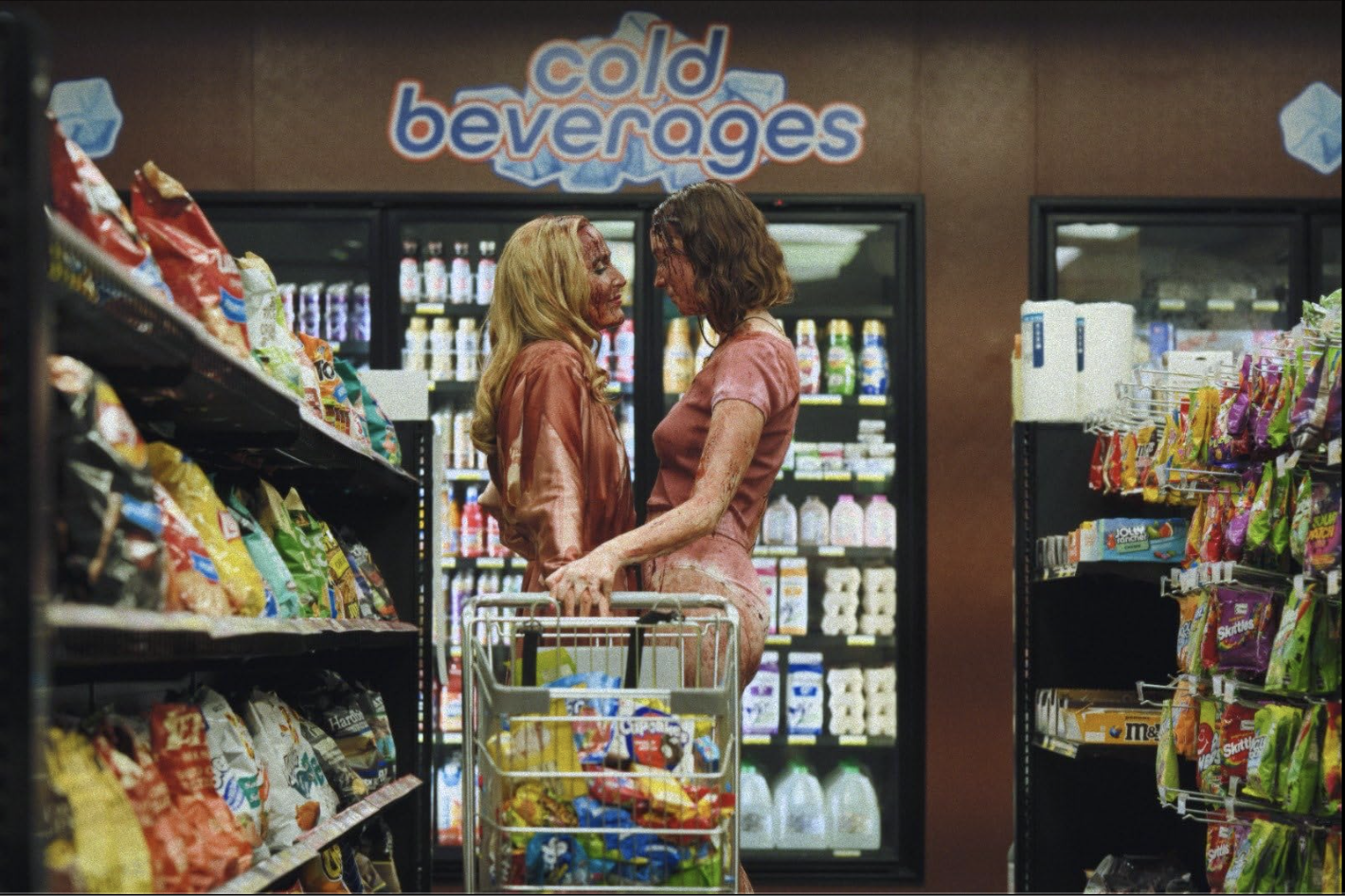
Kris and Billy, covered in blood, face each other beside a cooler case in a convenience store in Teenage Sex and Death at Camp Miasma (2026)

Kris and Billy at the convenience store. Teenage Sex and Death at Camp Miasma (2026). Courtesy of MUBI.

Teenage Sex and Death at Camp Miasma comments upon this excess, particularly in terms of critiquing Hollywood for the mountain of sequels and reboots that have been greenlit over the last few decades. Resurrecting old intellectual property (IP) is a core business strategy for the industry and this film isn’t going to shy away from that concept, notably commenting on the “zombie IP” – IP that has been deemed too problematic to reboot – of this fictional slasher franchise.

This film couches pleasure in excess as Billy and Kris lay on a pile of brightly colored snack packages, their limbs entwined, Billy’s hand down Kris’ shorts. There is excess in the buckets of blood that emerge from their bodies as Billy brings Kris to orgasm towards the end of the film, inviting both pleasure and pain – and Little Death – into their space simultaneously, as Little Death penetrates them and Kris climaxes, replicating Billy’s experience from the earlier film. “Little death,” indeed.

But it’s not pleasure that is critiqued as excess here, rather it is a celebration of pleasure, of what arouses you, what moves you to the brink. This is the sort of excess we crave – pleasure outside of society’s expectations and boundaries. It’s up to Kris and Billy what is “okay” for them to do with one another. It’s not up to us. We do not get to place judgment on their choices or behaviors. We do not need to feel comfortable with what is happening between them. We’re simply the viewers – voyeurs – bringing a little something extra to the experience for Kris and Billy. After all, part of this is about being watched and the pleasure that can bring. We have their consent.
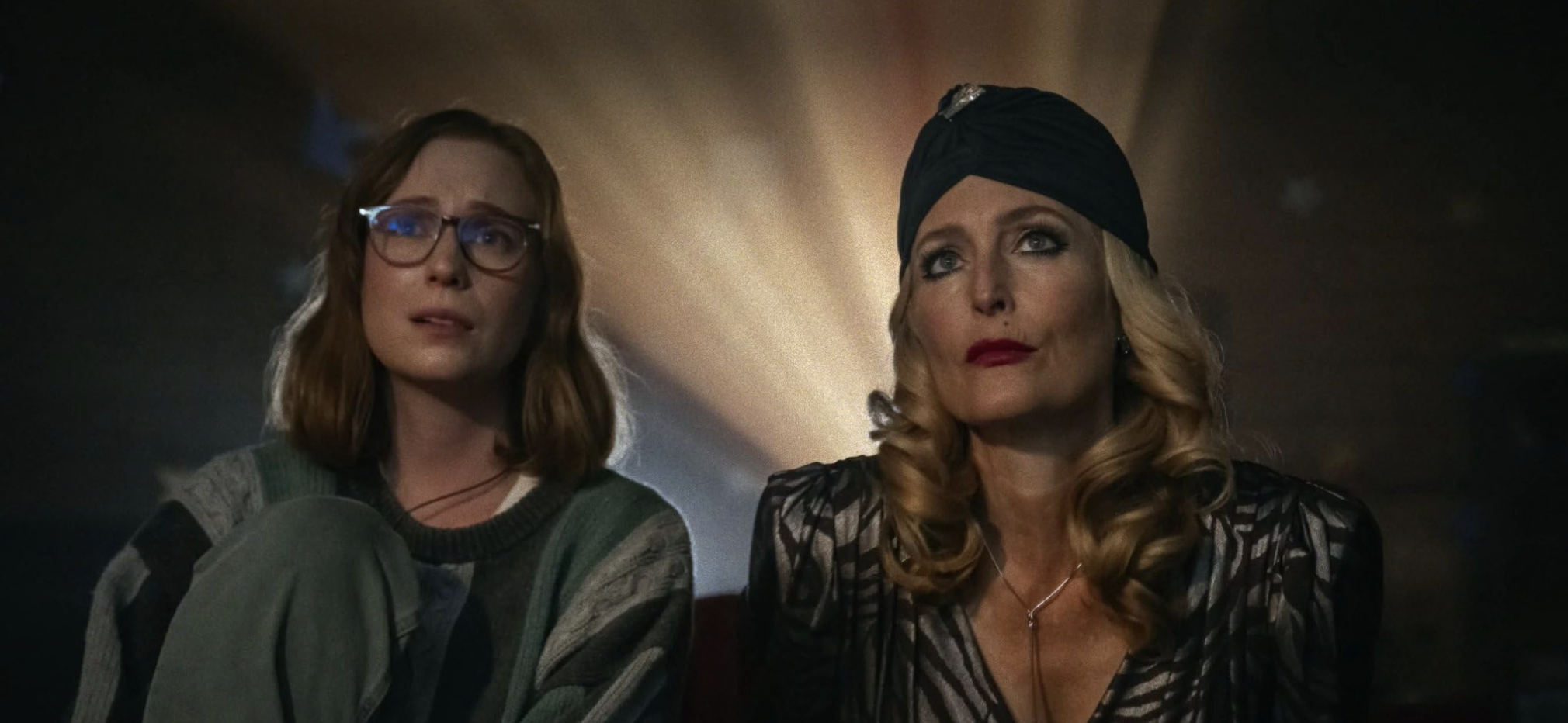
Kris and Billy sit side by side watching a film in Teenage Sex and Death at Camp Miasma (2026)

Kris and Billy view the film. Teenage Sex and Death at Camp Miasma (2026). Courtesy of MUBI.

This film was horrifying, yes, but not in the classic sense. I didn’t jump in my seat, I didn’t feel my heart racing in fear, I didn’t feel the need to cover my eyes. Instead, my adrenaline rose as I anticipated the next moment, the next thing the leads would do or say, as I watched them grow more intimate with one another. My pulse rose as I anticipated Little Death’s emergence from the lake – a coming out – something to celebrate, it seemed, rather than a horrific development. Perhaps Little Death isn’t a villain after all and, rather, someone who we seek to understand through the lens of their experience.

One thing is certain, Teenage Sex and Death at Camp Miasma flipped horror on its head, allowing a wider audience to appreciate what so many have appreciated for decades – human pleasure and violence intimately entwined together on screen – concepts so very connected to one another in this bloody escapade.

Jessica L. Folk (she/her) is a screenwriter and an Associate Professor of Scriptwriting at Western Kentucky University. Her favorite way to watch a film is to pause it a million times to chat with her wife about what they just witnessed on screen. Luckily, her wife also enjoys this.

Kentucky drag artists Mars, Venus Knight, and Braya Grey in a composite portrait photograph against a pink background.

From Appalachia to Western Kentucky, Drag Artists Are Building Queer Community Across the Commonwealth Drag artists from Ashland to Bowling Green share their stories of performance, community, and resilience across Kentucky.

From the hills of Appalachia to the bustling bars of Louisville and Lexington, out to western Kentucky’s rural areas, drag artists in Kentucky have unique experiences and stories to tell.

These artists are living embodiments of how different drag can be in the commonwealth, but also how this art is found across it. Recently, these drag performers shared their tales, ideas, dreams, and connection to the drag community statewide with Queer Kentucky.

Eastern Kentucky

“Everyone has a real care and concern for each other. Someone could hate someone’s guts, but they’ll still make sure you’re fed and housed,” Mars, a drag performer from Ashland in Eastern Kentucky, says.

Mars and Dorian Slay, another local performer, say they have collectively faced some issues with bringing drag to Ashland.

Mars said someone connected to the city once complained about a drag show at a local restaurant, and it got a “zoning violation” for being an “adult event.”

The far-right social media account Libs of TikTok then went after the event. Mars said some performers were sent hateful messages, and sometimes death threats.

Although drag performers do receive some negative pushback from the Kentucky public, Dorian says the good outweighs the bad.

“Honestly, the amount of appreciation and love that I’ve experienced here in eastern Kentucky is way greater than the amount of hate,” Dorian says.

Drag artists are performers, but that’s not all there is to drag. Many of these artists participate in local and national activism in a variety of ways.

Both Mars and Dorian have worked with Advocates for Appalachia, an organization that raises money for charities, hosts food drives, and advocates for people in need by taking part in strategy meetings to address local issues. The organization promotes community with a variety of events, such as a book club or their bi-monthly “Yap Sesh” which gives community members a space to vent and feel less alone.

Mars and Dorian said it’s part of how they give back to a community that shows up for their performances and the queer community in general. Despite government pushback, people always turn out in big crowds for their shows in Ashland, Dorian said.

Mars says he has seen his drag have an impact on drag culture in eastern Kentucky, even though he is a trans man who performs in feminine drag.

“The most important thing to me,” he told Queer Kentucky, “is I have a lot of trans men or transmasculine come up to me and say that watching a trans man do feminine drag so confidently has helped them work through… this expectation that we are supposed to be masculine all the time.”

Central Kentucky

In central Kentucky, artists like Benita Bloom, Braya Grey, Koko Taylor, Jen Erocity, Gemini Jewels, and Corabelle Bundy Jolie come from various backgrounds, but they’ve found a home performing in the central Kentucky drag scene.

The artists in this area say there is a freedom to express themselves more openly and with less fear, especially in cities like Lexington and Louisville.

“I think what makes drag special in central Kentucky is the connection that you feel when you enter a drag show,” Gemini Jewels said.

Jen, a Louisville artist, says Louisville is special because there is diversity throughout the city’s drag scene. She says she likes to perform in some of the lesser-known queer spaces in the city, such as Camp Spaceman, Portal and Kaiju.

“I just feel happier with my performance when it’s a more intimate venue,” Jen says.

Corabelle Bundy Jolie, who resides in Lexington, says she enjoys performing at the more obscure locales as well. She says she particularly loves small-town pride festivals and performing at brunches in Frankfort.

“Why can’t the queer community have their own space in some of these little cities?” she asks, acknowledging that it can be difficult for queer people in rural areas to have access to LGBT+ experiences.

In September, Corabelle is performing at Pikeville Pride this year as Ms. Pikeville Pride. She says she’s excited to share her drag with people in a more rural area.

Benita Bloom-Cox, a nonbinary drag artist, says that while central Kentucky is special and diverse, there are aspects of the drag scene that have potential for growth.

They perform as a “bearded queen”, which has occasionally resulted in not getting booked for certain events, they say.

But that hasn’t stopped Benita from expressing their true colors. Instead, those experiences have driven them to show up for those who are not always given the spotlight, they explain.

“It has been great to be able to stand on those stages and represent people you normally don’t see on stage,” they say. “You don’t see nonbinary people out here.”

Artist Braya Grey says her favorite place to perform in Lexington is the Bar Complex, where she is part of the Johnny’s Angels cast.

“I feel very lucky to have grown up in Lexington,” Braya says. “Old-fashioned drag queens here… have taken me under their wing and have helped me grow.”

Braya says she loves Lexington’s queer community because of its diversity.

“It’s few and far between that you are able to perform with so many different layers of people,” she says.

It’s that acceptance of difference that inspired Koko Taylor, a cisgender, straight queen.

“It’s really lovely to be around people that you can be involved with, share life stories with, and laugh at each other,” she says.

Western Kentucky

For those in Western Kentucky, they wear their Kentucky roots with drag pride. For example, queens Gorgina George and Venus Knight share a love for the Bowling Green community.

“Everyone always says, ‘you’re bigger than Bowling Green,’” Venus Knight tells Queer Kentucky. “Bowling Green has always been my home, and I love Bowling Green. Why not live in a place that you love, and then travel to all the places that you enjoy?”

Venus says the community in Bowling Green is special in the way they show up for each other.

“Bowling Green is my kingdom, and I feel that my supporters, my knights as I call them, have been the best that I’ve ever experienced, and they motivate me in a way that uplifts my heart,” Venus says.

She says she also tries to show up for them, including several years ago when she helped raise money for tornado victims affected by the 2021 storms.

Gorgina, who often uses it/its pronouns as part of its drag persona’s backstory about coming to Earth from another planet, says it also feels welcomed in and connected to the Bowling Green community.

“The Bowling Green scene is very interesting in the sense that they want vulnerability from you,” Gorgina says.

Onwards

Across Kentucky, drag artists are blossoming and are also looking to help the next generation. For those thinking about drag?

“Just do it!” Corabelle says.

These artists emphasized the importance of being open to advice from fellow performers, but they also said it’s equally important to remain authentic.

Drag is forever evolving, and each of these performers says they hope the scene begins to embrace diversity more, and that artists show up for each other despite the sometimes competitive nature of drag.

“It’s on us to protect each other,” Braya says,”…[to] build a community that works for each other, for us.”

A county map of Kentucky showing which communities have local LGBTQ+ fairness ordinances, with western Kentucky counties highlighted in pink to show the region's lack of protections.

Western Kentucky’s LGBTQ+ Crisis: The Most Harm, the Least Protection Queer Kentucky's survey data reveals a region where nearly every measure of harm is at its worst, and state law still leaves trans Kentuckians out entirely.

LGBTQ+ people living in western Kentucky are experiencing a substantially more dangerous environment than anywhere else in the state, reporting being physically attacked at nearly twice the statewide rate. For trans folks, it goes even further: Kentucky’s hate crime statute has no name for what happens to them when they are attacked. A trans Kentuckian can be assaulted for being trans, and the state may prosecute the harm, but not the reason it was done.

Across the Queer Kentucky survey, western Kentucky ranks first or near first on nearly every measure of harm: LGBTQ+ residents with no health care provider, never tested for HIV, refused care by a provider, physical assault, suicidal ideation, drug use, smoking, feeling unsafe at home and deciding to move away. This is a region where nearly every measure of harm, access and community is at risk. And state policy and protections have failed them time and time again.
29.2% of queer residents in western Kentucky reported at least one instance of physical assault, which they attributed to the overarching anti-LGBTQ+ climate in the state. Overall, the statewide rate of physical assault stands at 15.2%.

54.5% of queer individuals report feeling physically unsafe at home, and 52.2% report feeling unsafe in public. Both are the highest of any region.

But it doesn’t stop at physical assault. In most of western Kentucky, a person who discriminates against and refuses an LGBTQ+ person a job, an apartment or service at a counter faces no legal consequences in doing so.

Across all of Kentucky, 24 communities have local Fairness Ordinances — including western Kentucky’s Paducah in 2018 and Henderson in 2019 — but that’s two of the 24, and they sit 130 miles apart. In between and beyond them, Owensboro, Bowling Green, Hopkinsville, Madisonville, Murray and Mayfield have no local fairness ordinances. On a map of who Kentucky has agreed to protect, most of western Kentucky isn’t on it.

What about larger state protections in Kentucky? It turns out that the state of Kentucky does have a hate crime law that protects sexual orientation. But it’s still reliant on individual judgment, and it still doesn’t protect trans people.

KRS 532.031, passed in 1998, applies when someone commits offenses because of a person’s race, color, religion, sexual orientation or national origin. In 2017, the legislature amended the statute to add a category, extending it to victims targeted for their actual or perceived employment as a peace officer, firefighter or emergency medical services worker.

Gender identity is not on the list.

Nine years ago, when the state legislature reopened the statute to add police and first responders, it still left trans Kentuckians out. For example, if a gay man is assaulted in Paducah, it can legally qualify as a hate crime. But if a trans woman is assaulted on the same block, both the state and law enforcement officers can choose to do nothing. The statute, by not including gender identity, allows law enforcement to turn a blind eye and delegitimize incidents against trans people.

Even within the bounds of discrimination against sexual orientation, this hate crime law does “protect,” the statute has no teeth and the law still does far less than what it implies. It might look and sound substantial, but functions as a performative exercise in the court system. As a result, there are many opportunities to create distance between the assault and any consequence for it. For instance, a judge decides at sentencing whether bias was a primary factor. A finding of bias permits denying probation instead of requiring it. The parole board may delay or deny parole.

It’s subject to discretion and personal biases that could creep in all the way down.

The laws already on the books are only part of it. Kentucky’s 2026 General Assembly may not have passed any anti-LGBTQ+ bills, but the climate in western Kentucky still hasn’t improved.

A bill doesn’t have to pass to embolden violence in its communities. Another factor behind why the climate in Western Kentucky still hasn’t improved. A bill only has to be filed, assigned, debated and covered on the local news, which are all separate moments of exposing a Kentuckian to hear whether or not their queer neighbor has the same rights as they do.

For example, Senate Bill 72 would have let health care providers refuse any treatment that violated their conscience. House Bill 468, pitched as a routine civil rights update, would have stripped the enforcement power from the Kentucky Commission on Human Rights and the 22 local commissions that actually enforce fairness ordinances. Both cleared their chamber of origin before stalling.

If House Bill 468 had passed, it would have taken away the only fairness ordinance protections two cities in Western Kentucky have.

And people are responding the only way the law leaves open to them: they blend in, censor their identity and opinions, or leave the state altogether.

According to the same survey, 18.5% of LGBTQ+ individuals living in Western Kentucky have decided to move out of state due to anti-LGBTQ+ policies; statewide, only 8.1% decide to leave. The compounding burden of assault, health care gaps, housing stress, and drug use appears to translate into a concrete intention to leave. One respondent wrote:

“Currently planning to move out of [the] states to a blue state. I have a lot of trans friends that I am scared for. I want them to go somewhere more blue, more safe, more open minded.”

In the face of so much hardship, western Kentucky remains home to LGBTQ+ advocates who keep showing up anyway. In May 2019, 55 residents in Bowling Green spoke in favor of a Fairness Ordinance, while 31 spoke against it. The commission voted it down 3-2. Advocates put it back on the agenda and have continued pushing for it. When a Fairness Ordinance was voted on in January 2018 in Paducah, residents flooded the city commission meeting, forcing the fire marshal to move the overflow into the adjacent hall to listen through open doors. That ordinance passed 4-1.

The people of western Kentucky continue to fight for the safety of their LGBTQ+ neighbors. But with so few fairness ordinances and statewide protections that stop short of covering them, many LGBTQ+ western Kentuckians remain at risk.

If you or someone you know is struggling, call or text the 988 Suicide & Crisis Lifeline at 988. LGBTQ+ young people can press 3 to reach counselors trained in LGBTQ+ care, an option that returned on Sept. 30, 2026 after it was cut in July 2025. The Trevor Project also offers 24/7 support at 1-866-488-7386 or by texting START to 678-678.

Rebecca Chastain smiles at the camera wearing a Corbin Pride t-shirt, overlaid against a purple-tinted photo of vendor tents and attendees at a previous Corbin Pride event.

She Almost Canceled Corbin Pride. White Nationalists Won’t Stop Her Now.

A couple of weeks ago, Rebecca Chastain was ready to cancel Corbin Pride. 

In her second year running the event, Chastain already faced a growing anti-LGBTQ+ political environment nationally. Locally, Corbin Pride had also faced backlash from online harassment last year and a separate protest supporting LGBTQ+ rights in 2023 was targeted by alleged Ku Klux Klan (KKK) members.

The last straw for Chastain was when a community member told her they had heard rumors that white nationalists were already planning to target the Pride event whenever it was going to be held. 

The white nationalists, Chastain said, were supposedly going to “remind us who Corbin belongs to.”

Combined with organizing the event largely alone, the rumor pushed Chastain to consider canceling Corbin Pride altogether. “If I’m busy helping someone over here, I can’t deal with a threat by myself at the same time,” she said.

“It really is hearsay,” Chastain admitted. But because of Corbin’s history and her own experience, she decided she needed to take it seriously and made an announcement with her concerns on Corbin Pride’s Facebook Page. 

Corbin’s history of white nationalism


Corbin, Kentucky’s history is rife with the legacy of white nationalism. It has a reputation for being a sundown town — a locale that was once known to be dangerous for Black people at night. In 1919, an armed group of hundreds of white people racially cleansed more than 200 Black people from Corbin. Going home to home, the mob forced Black residents from their houses and into rail cars out of the city. 

It’s a legacy that many in Corbin still grapple with today. Some have organized racial justice events through a group called the Sunup Initiative since 2018. In 2019, Corbin officially recognized the 100th anniversary of the racial violence.

But clashes with white supremacists still occur.

In June 2023, several Corbin residents gathered at a local park to protest anti-LGBTQ+ legislation. It was disrupted when a couple of men approached some participants, hurled homophobic slurs and one flashed a Ku Klux Klan membership card before reaching for a gun. 

“They wanted to come there and bait us into fighting them so they could get away with murder,” one of the protesters told Queer Kentucky at the time.

The man told one of those protesting, “I’ll burn you and that sign,” referring to a Pride flag.

That recent history isn’t lost on Chastain. In a recent interview, Chastain told Queer Kentucky that she received death threats and harassing messages last year and had her and a fellow organizer’s social media accounts hacked.

“Corbin is a sundown town,” Chastain said, “so it’s not a surprise to get harassed online.”

The Pride, Chastain said, seems to be “ruffling some feathers.” 

This upcoming event will be the third Corbin Pride. “I think people want a change. That’s the response I’ve gotten from so many people, not just from Corbin, but from across the state,” she explained.

Corbin Pride usually brings in between 100 and 150 people. It’s a place where people can experience a safe space in an area where those are few and far between. The event hosts drag performances, has HIV screenings from a local health department, and features LGBTQ+ vendors selling their goods. 

“Every person that I’ve talked to in this area, they all feel the same way — that we don’t have any representation, there’s nowhere for us to be visible,” Chastain said.

“The price of community is inconvenience”


Thinking that people would be upset at her posts announcing her plans to scrap Corbin Pride this year, Chastain instead found a community looking to provide her the support to go on. 

She tells Queer Kentucky that people from Louisville and Lexington have offered their support and so have organizers from other Pride events across the state who are facing similar challenges. 

“I’m honestly at the point of burnout in year two. It’s exhausting to try to do this by yourself while dealing with threats and having your accounts hacked,” Chastain said. The offers of support have comforted her.

“Especially in rural areas, the demographic for queer focus is just so much smaller. If we can all kind of come together and help each other out whenever we’re putting on our events, I think that goes a long way,” Chastain said.

Chastain is hoping that those who have come forward will be able to push Corbin Pride to new heights. She said she’s found people who are sincere in wanting to help and that she’s helping to form a committee for future events. 

“The price of community is inconvenience,” she said. “Money will come. But we have to have the people.”

For Chastain, the answer to the targeting of Corbin Pride and the current anti-LGBTQ+ sentiment lies in queer organizing inspired by Marsha P. Johnson, a prominent queer liberation activist, and her fight on the frontlines of Stonewall. In places like Corbin where local ordinances and policies often don’t carve out protections for LGBTQ+ people, community members coming together and showing up is crucial, she says. 

“I think the first line of defense is building that mutual aid, is building that community,” Chastain said.

Corbin Pride 2026 is scheduled for September 26 from 12 p.m. to 4 p.m. Those wanting to be involved can message the Corbin Pride Facebook page.

Period Y’all founder Skylar Davis stands in front of a truck filled with donated menstrual products while supporting efforts to combat period poverty in Kentucky.

Period Y’all founder Skylar Davis leads Kentucky fight against period poverty

What started as an extension of the Garrard County Food Bank has grown into Kentucky’s leading defense against period poverty: the lack of access to products, resources, and educational materials which ensure a safe and comfortable menstrual cycle. 

Skylar Davis is the founder of Period Y’all, a nonprofit initiative advocating for reproductive justice and accessible period products for all Kentuckians. Founded in 2022, Period Y’all has established period pantries – boxes stocked with period products free for the public – in three counties, donated products to over a hundred schools in the Appalachian region, and educated countless members of the community about the importance of reproductive autonomy. 

Previously, Davis poured her passion for advocacy and reproductive justice into policy work, hoping to combat bills threatening reproductive rights. She found herself disheartened by the constant negativity and decided to search for a way to “bring some joy.”

A bright pink Period Y’all pantry stocked with free menstrual products stands outside a building in Kentucky to provide public access to period supplies.

A Period Y’all pantry stocked with free menstrual products provides public access to pads and tampons for community members in Kentucky. Photo provided by Skylar Davis.

“I really wanted to do something that was meaningful,” Davis said. “To be able to fight for something more positive. Even if it takes years to pass.”

Inspired by Change Today, Change Tomorrow’s “Friday Period” project, which encouraged members of the community to claim free period supplies every Friday, Davis returned to her hometown in Garrard County to establish Period Y’all.

“The first time, I came with one folding table and probably 40 boxes of pads and tampons that people had donated,” Davis said. “And then it grew once I realized how great the need was. It wasn’t just period products, but hygiene products and incontinence products for the elderly.”

Now, with period pantries in Paducah, Berea, and Garrard, dozens of communities can access products, information, and assistance to help manage their menstrual cycles.

“It’s cool to see the variety of people that are thankful for the products,” Davis said. “It’s not just women in the community. It’s grandmothers who are caring for their grandchildren; maybe they’re on a fixed income, so they don’t have the extra money for the products. It’s mothers. It’s teens that come through and ask us for stuff. Men will ask for their partners and know what their partners use.”

McKenna Newman, a Period Y’all volunteer and fellow Garrard County native, teamed up with Davis to “help bring menstrual equality to anyone in need.”

“Growing up in Garrard County, many girls, including myself, had to get creative managing our periods,” Newman said. “Whether it be financially or the mental and physical burden we all had dealing with it. It is a shame rooted in women and no one should be embarrassed of this natural process.”

Reusable pink pouches filled with menstrual products labeled Period Y’all sit inside a tote bag as part of efforts to distribute free period supplies in Kentucky.

Reusable pouches filled with menstrual products prepared by Period Y’all for distribution to communities across Kentucky. Photo provided by Skylar Davis.
Following its success in Garrard County, over 30 requests for pantries arose across the Commonwealth. Davis plans to open 13 additional period pantries in locations such as Richmond, Somerset, Morehead, Hazard, Louisville, and more.

“When Period Y’all first started, we were doing monthly pop-ups… The products we had, we were able to source through donations, cold calling, and advertising on social media,” Newman said. “All it took was one Facebook post, and now, here we are, four years later, providing hygiene products to schools across Kentucky.”

Recalling her experience with policy work, Davis hopes to empower students to make informed choices about their bodies, health, and their administration.

“Within the next few years, I’m really hoping to get more students involved in shaping the education side of the work,” Davis said. “They’re the ones that are experiencing this in school. They don’t have access to products because it’s not in their school’s budget.”

Since the implementation of Senate Bill 150, schools have restricted students from discussions surrounding gender and sexuality – something that affects all students, regardless of identity. Students experiencing their period in school are only allowed to receive certain pre-approved products, while their teachers have been warned to avoid explaining what periods are.

“People don’t realize the correlation between attacks on trans people and LGBTQ people and those who have periods,” Davis said. “These attacks hurt all of us, not just a marginalized group of people. We can fight back against all of this harmful legislation.”

To join Period Y’all’s crusade against period poverty, Davis and Newman encourage volunteers to participate in “packing parties” – where packages of free pads and tampons are assembled – or to host a product drive. 

“If you ever wanted to get involved with reproductive advocacy… Create a conversation. Make a post. Start a group. Connect with other people,” Newman said. “Your voice is your best tool. Be loud, be proud, and don’t be ashamed! Societal shame around periods is one of the many reasons we have a crisis surrounding women’s health.”

Interested in establishing a Period Pantry in your city, hosting a product drive, or donating menstrual products to support underserved Kentuckians? Contact Skylar Davis to support Period Y’all!


Let Your Rainbow Flag Fly: 2025 Rural Pride Events You Won’t Want to Miss

Pride is an important part of celebrating our identities and collective history as LGBTQ+ individuals. In rural areas, these celebrations can be especially important, as queer individuals in rural areas often report experiencing more feelings of isolation than their urban counterparts. Because of this truth, and with Pride Month being right around the corner, it’s important to highlight rural pride festivals located within Kentucky, as well as their dates, times, and locations for your convenience. Come out and show your support and queer joy at one or more of these festivals this summer! 

Richmond Pride Festival:

Richmond, Kentucky is in the southeastern part of the state. Richmond is still a fairly small town despite its status as a University town, and the 2025 Pride festival will be only its fifth pride celebration ever! This event will take place on Saturday, June 7th from Noon to 8pm EST on East Water Street in Richmond, KY. Richmond Pride organizers are still searching for volunteers for the event. You can find more information about volunteering, attending, or view vendor spotlights on their Instagram or Facebook pages. 

photo provided by Richmond Pride.


Mt. Sterling Pride:

Mt. Sterling, a small town in Eastern Kentucky, is celebrating its fourth annual Pride festival this year. This Pride festival will be complete with activities, vendors, and live entertainment shows in the afternoon. Mt. Sterling Pride will take place from 10am-4pm EST on Saturday, June 7th, located at the Dubois Community Center. You can find more information on their social media pages!

photo provided by Mt. Sterling Pride.


Glasgow Pride:

Glasgow, in the southwestern part of the state, is hosting its second annual pride event on Sunday, June 8th from noon-4 pm CST at 115 Beaver Trail. Glasgow Pride’s goals include promoting the diversity that exists within the LGBTQ+ community, and work toward equity for all individuals. You can find more information on their website:https://www.glasgowkypride.org/

Photo provided by Glasgow Pride


Paducah Pride United Together:

This will be Paducah’s third annual pride festival, as in 2024 they had to cancel due to a lack of funding. Paducah is in the far west and south of our state. Paducah Pride aims to use funding for the defending of LGBTQ+ rights. Go support Paducah Pride on June 14th, from 11am-8pm CST at the Paducah-McCracken Co. Convention & Expo Center. Find more information, and volunteer and media creation opportunities on their social media pages.


Augusta Pride in the Park:

Augusta is an incredibly small town in Kentucky, making it even more important that there is an LGBT+ pride celebration in such a slightly populated area. This organization aims to bring together diverse communities. This will be their third annual celebration, taking place at Noon EST on June 14th, at Augusta River Park. More information is available on their social media pages. 

photo provided by Augusta Pride.


Owensboro Blue Bridge Pride:

Owensboro is in the western part of the state. The organization, Blue Bridge Pride, works with Unity Fellowship to celebrate pride in the Owensboro area. This event will take place on Sunday, June 22 starting at Noon CST. It will be located at the Owensboro Unity Fellowship. More information is available on their Facebook page. 


Corbin Pride:

The organizers of Corbin Pride are always working to bring more LGBTQ+ events to the Corbin area. Corbin is a small town in the southeastern part of Kentucky, having a population of around 8000 people. Corbin Pride is still looking for vendors and volunteers, so check out their Facebook page for details! This event will be held from 11am-4pm EST on June 28, located at Nibroc Park in Corbin. 


Henderson Pride:

Henderson, Kentucky is a fairly small town in the western part of Kentucky. The first ever Henderson Pride festival was held in 2024, and it will now be returning for its second year ever on Saturday, June 28th from 2pm-9pm CST at Central Park in Henderson, Kentucky. This organization strives to advocate for inclusivity through community-based action and conversations. To learn more about the organization or the festival, visit https://www.hendersonkypride.org/. 


Murray Pride:

Murray is located in the far southwest of the state. The organizers of Murray Pride are active within the community there, and recently held an open board meeting to discuss the details for the upcoming Pride festival. Murray Pride, which is in need of volunteers and vendors, will take place on August 30th, and more information will be available soon via their facebook page. 


Kentucky Black Pride:

Kentucky Black Pride is an organization that was founded in 2016 to promote pride and awareness for queer and transgender people of color. This Pride festival takes place a bit later in the year, from September 11-14th at Noon-7pm each day. Kentucky Black Pride Festival is located in Woodland Park, Lexington Kentucky. To be a sponsor, vendor, or just to gain more information, go to their website at https://www.kentuckyblackpride.com/. 

photo provided by Kentucky Black Pride.


The Pride of London Picnic:

London is a small town with a population of about 8,000 people. It is in the southeastern area of the state, very near the Daniel Boone National Forest and Corbin. This organization strives to promote awareness of LGBTQ+ issues, as well as providing education and a safe environment for all diverse people and minority groups. The Pride of London Picnic will take place on Saturday, September 20th, and more information will become available on their Facebook page as we draw closer to the date. 

Photo provided by London Pride.


Pikeville Pride:

Pikeville Pride has been celebrating pride events since 2018, founded partially in response to a 2017 neo-Nazi march. Now, Pikeville pride brings hope and joy to rural Kentuckians, in a small town of only around 7500 people in southeastern Kentucky. Pikeville Pride will take place in Appalachian Wireless Arena Park, Pikeville, Kentucky on September 27th. Check out their social media accounts for more information!

photo provided by Pikeville Pride


Capital Pride Festival:

Our state capital, Frankfort, will be having a pride festival later this year. While it is our capital, Frankfort is a fairly rural area. It is very centrally located within the state. The Capital Pride Festival will take place on Saturday, October 11th. You can find more information on their website at https://www.capitalprideky.org/

Attendees at Capital Pride. Photo provided by Capital Pride.


Danville Pride Festival:

Danville, which is southwest of Lexington, has started celebrating pride in their area within the past couple of years. Danville Pride is currently searching for vendors of many types. More information on that is available via their Facebook page! The 2025 Danville Pride festival will take place on October 18th. It begins at Noon EST at the Danville Pioneer Playhouse. 

Attendees at Danville Pride. Photo provided by Danville Pride.


Bowling Green Pride: 

Bowling Green, in the southwestern part of Kentucky, started loudly celebrating Pride in 2017. It is organized by Bowling Green Fairness. Just before the end of LGBTQ+ history month, this event will take place on October 25th from Noon to 5pm EST at Circus Square Park.

Bowling Green Pride attendees at the end of the parade route at Bowling Green City Hall. Photo provided by Bowling Green Pride


Chill Out & Proud Somerset:

Somerset is a small city in the south of Kentucky. This organization aims to promote support from allies for marginalized groups in their community. They strive to host events for LGBTQ+ folks in the Appalachian area. This event takes place October 25th on Festival Field, located at Somerset Community College. There will be drag shows, activities, and a sensory creation space. Donate, volunteer, be a vendor, or find out more at their website: https://chilloutandproud.org/

Attendees at Chill Out & Proud Somerset. Photo provided by Chill Out & Proud Somerset.


Trailblazer: Kentucky’s highest ranking LGBTQ politician, Jim Gray

Jim Gray is sitting beneath a large portrait of him that hangs in the bar of the 21C Hotel in Lexington. In the striking  photo collage created by James Robert Southard, there are many nods to his city-altering term as mayor of Lexington from 2011-2019. There’s the historic courthouse he had restored, an image of a newspaper story about his decision to relocate Confederate statues from the courthouse’s lawn, the remodeled and expanded Rupp Arena and Central Bank Center that has helped to reenergize downtown, and many other allusions to the tremendous impact he had during his eight years in office. 

Gray doesn’t seem to notice I have purposely chosen this spot to sit. He’s just returned from a trip to Japan and South Korea with Governor Andy Beshear, and his sleep schedule has been stunned by jet lag, but he is eager to get back to work. When I tell him I am interviewing him because he’s thought of as a hero of fairness by many, he blushes.

“Well, I never think of myself that way,” he says, as a good politician would. But the difference with Gray is he’s being authentic. Unlike most politicians, one of Gray’s foundational traits is his modesty. Those who have known him for years may not even know he is a graduate of both Vanderbilt and Harvard, where he was a Loeb Fellow in their College of Design, as he never mentions it. When he was 19, he became the second youngest person in history to serve as a delegate to the Democratic National Convention. But he has always been proud that he was the first openly gay mayor in Kentucky. Today, as Kentucky’s Secretary of Transportation, he is the highest-ranking LGBTQ politician in the Commonwealth. 

His counterpart at the federal level is Pete Buttigieg, the nation’s first openly gay cabinet member. When Gray first met him years ago, Buttigieg told him he was “a trailblazer.” Gray still seems surprised by the compliment, even though it’s a word that is often associated with him.

Bernadette Barton is a professor of sociology and gender studies at Morehead State University and one of the founders of Just Fund, an organization dedicated to promoting fairness in the state. She has been grateful for Gray’s service. “Alongside the peace and prosperity Lexington enjoyed under Mayor Gray, I especially appreciate that he was a trailblazer for the LGBTQ community in the Bible Belt, normalizing sexual diversity and helping evaporate the stigma of the closet,” she says. 

“I know he’ll rebuff this statement, but I’m going to say it anyway: Jim Gray is a history-maker,” says Jon Coleman, director of the Faulkner-Morgan LGBTQ Archive in Lexington. “The bravery he has shown…as an openly gay man cannot be understated. I know, for me personally, what it meant just to witness him walking in Lexington’s parades as both a candidate and as mayor, or entering the inaugural ball with [his partner] Eric by his side. What a proud legacy he has made for himself, and for us.”

Gray says one of his proudest achievements as mayor was the controversial move to install rainbow crosswalks in downtown Lexington, near a block that is associated with gay bars and restaurants. He knew he would be attacked, even though no tax dollars were used for the project; it was paid for by a grant from the Bluegrass Community Foundation. 

Those rainbows made many LGBTQ people feel seen, just as Gray’s visibility has. Sometimes the very act of existence as a queer person is a revolutionary act, and Gray is grateful he has had the opportunity to be in the public eye as a gay person during a time of volatile rhetoric and legislation— and a time in which many politicians still cannot come out. “Sadly, people feel they have to be closeted for many reasons, still, and I was lucky that I had a family that was generally embracing…it took a long while to get to that point,” he says. “And there are still ramifications for people who come out, there is still fear and anxiety.”

He knows that from experience. When Gray first ran for mayor of Lexington in 2002, he was still closeted. “There were lots of whispers, lots of speculation. I was not at all comfortable declining or denying it, and wouldn’t do that, so after that I was determined to not go through that again.” He came out later in life, at the age of 53, and in 2016 ran against Rand Paul for the U.S. Senate. On the campaign trail across the entire state, he says he had encounters with a couple of people who were “not violent, but aggressive” about him being openly gay. Meanwhile, the New York Times and other national publications ran pieces about a gay man running for federal office in a red state. 

“I put myself to the full test there of going back to my roots and going to communities around the state where I had done work as a businessman, with the full knowledge that I was out and that I was really challenging the cultural norms,” he says. Although he lost the race, Gray was buoyed by the way his hometown turned out to support him, and talking about that is the only time he grows a bit emotional during our conversation. 

“I’ll never forget going to Glasgow on the final day of the campaign and I didn’t know if it’d be five or ten people or twenty people, but I sure didn’t expect 200,” he says. Gray is proud of his rural Kentucky roots, but he struggled with the overwhelming conservative leanings. “As much as I’m attached through family and history and to my hometown, family that grew up there, I wanted to get out of there because of fear, fear that I couldn’t be authentic, couldn’t live an authentic life,” he says. 

Gray strongly values his LGBTQ community and says he believes that there is “bonding through experiences” as members of marginalized groups. He says that affinity allowed him to better understand the opposition to Lexington’s Confederate statues that he was instrumental in getting removed after the group Take Back Cheapside raised the issue. “Arguably it cost me the 2018 congressional race,” he says, referring to his primary run against  Amy McGrath. “But I felt it was [the right thing], especially after a Black teacher told me, ‘How would you like to walk down the street and see a statue to a fellow who had fought to keep your ancestors and your people in slavery celebrated in the most central public space in the town?’ That really resonated with me.”

These days, Gray serves in the cabinet of Governor Andy Beshear, whom he says is the “most pro-LGBTQ governor, ever, in the  South.” In 2019, Gray and his longtime partner, Eric Orr, were famously the first gay couple to be introduced together at a Kentucky inauguration, and Gray says he’s felt the full support of Governor Beshear. 

“He’s about the golden rule,” Gray says of Beshear. “He transparently lives his values and those are Christian values.  He translates that faith in an unusually positive and affirming way.”

Gray looks back on his early days in politics and hesitantly agrees with me that he’s been a part of change. “When I got into politics I…definitely had an aspiration to make a difference…and to be a role model,” he says, but that’s as far as he will go.  Even if he won’t brag on himself, many others will, and he has earned a permanent place in Kentucky’s fairness and LGBTQ history. 


Clovers: The Queer Pop Persona Redefining Performance Art in Kentucky

She’s just a girl, and she just wants to have fun.

“Clovers,” a performance duo between artists Cooper L. Gibson & Perry K. Wesley

What do you get when you pair up a documentary photographer invested in subcultures like hardcore music and wrestling with an anti-disciplinary queer artist? What you get is the one and only, the girl herself, Clovers. It wouldn’t suffice to call the performance persona Clovers simply an aspiring pop star, but despite her over-the-top aura, the category of drag doesn’t seem to sum it up either. 

Really, Cooper L. Gibson, the artist beneath the wigs and costumes, tells me, “She’s just a girl.” But would we know who Clovers is, or would she have the right sound, without her DJ/Bodyguard/Photographer/Manager Perry K. Wesley? I sat with both in Cooper’s Lexington apartment to gossip and whisper tabloid secrets about the two enigmatic artists behind the more explicit, sequined duo. 

Both Wesley and Gibson found their way to Lexington as many do, hailing from rural Somerset and Eubank, Kentucky. Like many weird Kentucky kids, they grew up in old churches listening to hardcore bands, and it was at one of those shows that the two met. 

Both Gibson’s individual artist practice and the duo’s collaborative star Clovers work to unpack what it means to be a queer person from a rural place. Donning cowboy boots and cheap rhinestone outfits, Clovers uses all the glory of the pop music industrial complex to resculpt Gibson into a girl onstage who can be found having banter with her audience and preaching  “I love the gays!” and “The gays are driving me crazy!” into the mic, all in the same night. 

 “It’s me and it’s not me,” said Gibson, who told me that Clovers became a bastion of fun and playful creativity that countered the oftentimes all-too-serious seriousness of the art school experience. As Clovers, they were free to do “freaky weird shit” that didn’t have to sit through a critique. And while originally conceived as a solo project, Wesley soon became an essential component, playing the aloof managerial role and curating staple pop culture songs into the performance mix. 

Cooper L. Gibson
“Tailspin”
Found toy rocking horse, appropriated motor, PVC, zip ties, silver glitter high heeled boot, and
raccoon tail
2023

Their art involves playing with and building the lore of a problematic, messy, lovable pop culture icon, and in doing so, offering up something that straddles the line of entertainment and art. It’s not that serious, and it is. She’s Yoko Ono, Madonna, Britney, Laurie Anderson. She’s you and me. She’s every girl ever. She is an artist because she isn’t, and so she is. 

Clovers is assemblage. She speaks to where she’s from, who made her, and who is watching her. Onstage, she tells stories, jokes, and lies, and it’s her separation from Gibson and Wesley that allows her the freedom to take these risks. The medium of that experimentation—the simplistic structure and commodified spirit of pop music—makes her an apt vessel to point out the oddities and beauty of the machine that moves her along. 

Cooper L. Gibson
Premium Stud (for the Pink Next Generation)
Lumber, Pink Next Generation fiberglass insulation, denim, Copenhagen chewing tobacco,
bungee cords, and Truck Nutz
2023

One way they have extended this spirit of experimentation is through Clovers’ “rhinestone.jpeg” parties. She’s just a girl, but she’s also a hostess. At Clover’s events, you can expect to find dancing, performance, and a haven for those who just want to have fun. 

The two tell me that Clovers is just getting started, but assure me that if she calls it quits, it’ll surely be due to a dramatic and public falling out between them. This is especially funny because one thing that struck me during my visit was how wonderful their dynamic seemed, with each complimenting the other in turn. Clovers may be a hot mess, but the artfulness of her performance seems to owe some of its magic to a healthy and supportive friendship. Whether she rides the Chappell Roan overnight wave to success or raves onstage about her unfair place in obscurity, the spectacle is sure to catch our attention and have us seated in the audience of performance art whether we know it or not.

Ten Queer-owned businesses to support during the post-holiday sales slump

Hey, you, quit hibernating! Your wrists will get all hairy. Seriously, the urge to couch rot after the holidays and severe weather is legitimate. Across the South, so many of our yards turned into a blown-up snow globe. But businesses owned by and in solidarity with the LGBTQ+ community only get so many snow days before they really feel the need for support. Here’s a quick rundown of 10 queer-friendly gems in Kentucky that could use some warming up.

Bowling Green

Paw-a-Day Inn

A luxury pet resort that emphasizes no cages. When was the last time your furry companions got treated to a nice Spaw Day?


Covington

Creative House of Art and Design

Possibly the coolest CHAD in Kentucky, this shop features art classes for all ages. (Someday it will be warm enough to enjoy the outdoor space, too!)


Lexington

Chaotic Good

A critical hit, this venue is a dynamic coffee spot and tabletop gaming hub. Roll up, have a cinnamon roll, and roll some dice. 


Imperial Flowers

Too impatient to manifest spring? Check out this established florist’s offering of fresh and blooming plants galore.


Third Street Stuff

A funky trifecta of art, activism, and coffee, Third Street is the ideal place to park, break bread, and pick out a niche gift or two.


Louisville

Barret Babes

Cozy, eclectic, and positively witchy, this vintage shop is home to a local art gallery, an apothecary, and more (including weekly tarot readings).


Old Louisville Coffee Co-op

Book swaps, support groups, open-mic poetry nights. Name it and this big-hearted co-op offers it with plenty of caffeine on top.


Set & Setting

This Portland-based bookstore features LGBTQ+ novels and countless titles available for preorder. Set and Setting? I’m sat.


Owensboro

Sugarbutt Sweets 

Rolls and balls and cakes, oh my! Ashley Stewart’s small business packs a sweet punch for any craving.


Simpsonville

Little Mount Lavender

We could all use a 16-inch fiber body brush after the past few months, but this local farm’s specialty in lavender-based goods must be seen (and smelled) to be believed. #Medicinal.


10 Activities to Look Forward to this Spring and Summer

feature photo: https://kypride.com/

Alright, enough of all of this cold. We’ve just endured enough ice and snow to last us all winter and I’m longing for summer days filled with queer connection and activities. Do you think we can top “Brat Summer” in 2025? Or maybe you’re looking for more of a “Red River Gorge” kind of summer. Regardless of your taste in warm weather fun, let’s look at some potential summer pastimes we can look forward to during this cold and wet winter season!


Red River Gorge and other Hiking Locations

The first active activity on our list is Red River Gorge and literally the hundreds of hiking locations around Kentucky. Check out Natural Bridge and crash out in one of the beautiful Canopy Crew Cabins! Not interested in these? Check out all the hiking and camping options here.


Frontrunners Lexington

Join a community of sweaty gays! Frontrunners Lexington is a run/walk club that promotes running and fitness in the entire LGBTQ and allied community. Stay active and make friends.


Big Four Bridge / Louisville Waterfront

The Big Four Walking Bridge is by far the best casual activity to do during the summer months in Louisville. Enjoy the beautiful Waterfront Park and hop on over to the Indiana side for some Parlour pizza!


The Carnegie

Whether on stage, in the classroom or in a gallery, The Carnegie inspires creativity for all.  This summer catch one of many shows including The Color Purple, Always…Patsy Cline and Grease!


Gateway Regional Arts Center 

In June, GRAC will be presenting Mean Girls, Jr, which has to be one of THE gayest ways to celebrate Pride in Mt. Sterling.


Newport Aquarium

One of the best ways to cool off during the hot summer months is having large stingrays swim over your head in the aquarium walkway at the Newport Aquarium. 10/10 would recommend. 


Kentucky Down Under

Who doesn’t love a Kangaroo? Check out Kentucky Down Under where visitors stroll through an open field where kangaroos and emus roam freely.  Interpreters discuss the animals’ habits and habitats.


Lake Cumberland

Whether you’re a skier, tuber, hiker, or just looking to relax, Lake Cumberland offers something for everyone. Check out Lake Cumberland State Resort Park to customize your adventure.


Sunflower Farms

August is by far the best time to snag your favorite sunflowers. Create the most instagrammable moment at Evan’s Orchard. Don’t forget to stop by the gift shop and also grab some ice cream. 


 All The Prides

Simply said — June is full of Pride events. Once dates are available, you will be able to find them all here.

Bowling Green man charged with murdering friend

Editor’s note: This story was published in January 2025. Some details may have changed since then.

This is a developing story and Queer Kentucky will bring you new information when received. 

The Warren County Sheriff’s Office has arrested a Bowling Green man for murdering his friend and allegedly staging a crash scene.

Warren County Sheriff Brett Hightower told Queer Kentucky that Ali Fadil, 30, was taken into custody Thursday for the murder of Michael Scott Lee, 56.

At 2:59 a.m. on Dec. 22, someone reported a vehicle had crashed into a utility pole at the 11000 block of Morgantown Road. When deputies arrived, they found Lee deceased but noted his injuries were inconsistent with the crash.

According to a uniform citation, Fadil’s and Lee’s phones were found to be in the same immediate vicinity of the wreck at around 2:26 a.m. on Dec. 22, tying Fadil to the crime.

Both Lee and Fadil can be seen together in photos on Lee’s Facebook and Hightower added that the sheriff’s department has been told that the two had a friendship.

Michael Scott Lee source: Facebook

Long-time friend of Lee, Joey Upchurch, said everybody loved Lee and that he was known for always supporting the LGBTQ+ community. 

“He was very well respected in the community,” he said. “He had booths at the pride festivals sponsored by his businesses every year.”

Fadil is charged with murder and is lodged at the Warren County Regional Jail. His next hearing will be Jan 8 at 9 a.m. at the Warren County Justice Center.

25 Faces of Fairness: Patti Minter

Patti Minter she/her

Bowling Green 


Use one queer slang word to describe Kentucky! (Have fun with this! For reference, check out this link)

Fierce!


How did you activate and organize your community for equality?

We started monthly Bowling Green Fairness meetings almost ten years ago to organize locally to pass a Fairness Ordinance in our city. From identifying LGBTQ+ supporting local businesses, strategy sessions, and meeting with elected officials to lobby them to pass the Fairness Ordinance, we built both community and power.  We built a movement.


In the last 25 years, what is one moment that gave you hope for Kentucky’s fight in equality?

In 2017, we tried to introduce the Fairness Ordinance at Bowling Green City Commission but failed to get a vote. At the next City Commission meeting, Fairness supporters spoke truth to power during a work session and told commissioners why we desperately need this ordinance. For almost four hours, people came out on camera, shared stories of fear and discrimination, and spoke their truths in the public forum. Sitting there that evening, I realized that Harvey Milk was right when he said “hope will never be silent.” I carry that with me every day.


What do you think is next for Kentucky in the fight for Equality?

In 2025, Bowling Green, the third largest city in the state, will become the 25th city to pass a Fairness Ordinance. Finally.


What are Kentucky’s greatest strengths when it comes to the fight for Queer equality? 

The refusal of the community to shrink away when the going gets tough. Sometimes we have had to retreat a little, but that was only temporary.


Slasher movie “Horrified” filming in Lexington, Bowling Green in 2025

Editor’s note: This story was published in October 2024. Some details may have changed since then.


What’s your favorite scary movie?

If you’re a Kentucky queer, that answer may soon be “Horrified,” a meta-horror comedy on track to film in Bowling Green and Lexington next year. Los Angeles-based queer director and writer Mike Zara is behind the film, and it stars Hallmark superstar Aimee Teegarden, renowned for her roles in “Friday Night Lights,” “Scream 4,” and “Rings.”

Horrified: Behind-the-scenes glimpse into future teaser footage, as captured at Lexington’s Scarefest 2024.

“Horrified” dives into the chaotic world of a down-and-out scream queen who finds herself at a small-town horror convention (think Lexington’s Scarefest), only to be terrorized by a serial killer disguised as the villain from her past franchise. Zara describes it as a mix of 1996’s “Scream” and 1994’s “New Nightmare,” both groundbreaking films due to their witty lines, self-examining nature, and ability to use typical horror tropes to their advantage. These cult classics, known for their blend of humor and horror, heavily influence the tone of “Horrified.” Zara describes the film as a “bloody bubblegum” experience, offering both thrills and emotional depth as the protagonist confronts her vices and emerges as a real-life final girl.

Kentucky may not be the first state that comes to mind when considering horror films, but it has its fair share of creepy tales and spooky settings. From legendary figures like the Bell Witch and the Mothman to abandoned ghost towns and haunted asylums, Kentucky’s rich history appeals to horror enthusiasts (and Halloween-loving queers) everywhere. Many well-known horror movies have been filmed in Kentucky, such as “Friday the 13th Part VI: Jason Lives” and “Scream for Help.” The state’s eerie landscapes and small-town charm provide the perfect backdrop for horror storytelling, and with the appealing tax incentives available for filmmakers, it’s bringing films being made by and for (let’s be honest- it’s horror) the LGBTQ+ community.


Horrified: Writer and Director Mike Zara (right) with the movie’s villain Hell Hog, as played by Aaron Behr.

Zara recently traveled to Kentucky for this year’s “Scarefest,” the long-running horror con held in Lexington. Since the script revolves around a horror convention, the event provided a perfect backdrop for filming teaser footage featuring the film’s menacing villain, played by actor Aaron Behr. While they were in Lexington, I was able to connect with Mike to discuss horror movies, Horrified, and being queer in Kentucky.

Queer Kentucky: What were your influences for this film?

Mike Zara: Freddy Krueger. Nightmare on Elm Street. I think everybody who sort of loves horror has a sort of franchise that they just love. And for me, it’s Freddy. There was always, even in the original, there was always a wink. There’s always a humor mixed with the sort of creepy and scary. And that is kind of what always ticked my boxes for horror. And that’s what this is. It’s emotional. It’s about a woman’s journey to sobriety, really, but through this sort of candy coating. I call it a bloody bubblegum sort of film.


Horrified: Behind-the-scenes glimpse into future teaser footage, as captured at Lexington’s Scarefest 2024. Photo: Mike Zara.

Queer Kentucky: How was your experience, as a gay man from California, coming to Kentucky? What were some of the worries that you had, and what has been your experience here?

Mike Zara: So I think I came with a lot of worry. Sort of like having these stereotypes in my head, like I was going to get, you know, beat up when I got off the plane. But Lexington has been incredible. You know, just going to Lussi Brown’s for coffee and then finding the crosswalk with the rainbow. You know what I mean? It just felt. I felt safe. I went to a bar to meet some local crew, and there was a trans pride flag in there. I felt completely safe. It’s been amazing. It’s one of those things where you don’t know until you try it or see it for yourself, and I’ve been blown away by the community. Yeah, the whole city has just been amazing.

“Horrified” is poised to begin principal production next fall in Lexington and Bowling Green. You can follow the film on Instagram or Facebook, and there is a GoFundMe for production support. Keep an eye out for updates as this exciting project unfolds.


Horrified movie villain Hell Hog, as played by Aaron Behr. Captured at Lexington’s Scarefest 2024. All Photos Thanks to Mike Zara.

LGBTQ+ candidates doubled in Kentucky’s local races this year

Editor’s note: This story was published in October 2024. Some details may have changed since then.

This story is published in partnership with the Queer News Network, a collaboration among 11 LGBTQ+ newsrooms to cover down ballot elections across 10 states.

Kentuckians this year are seeing a record number of LGBTQ+ candidates running in a dozen races, from local school boards to state senate.

It’s a significant jump from 2020, when nine openly out candidates in Kentucky ran for an elected seat, according to Victory Fund’s 2020 Out on the Trail report. That number has increased significantly this election year, with 14 openly queer candidates on the ballot.

In local races, the number of LGBTQ+ candidates looking to fill roles on city councils, school boards and council districts has more than doubled since 2020.

“I think a lot of that stems from Governor [Andy] Beshear’s reelection in 2023,” said Allison Wiseman, President of Kentucky Young Democrats, a youth-led political organization. Wiseman also attributes an increased level of voter “disgust” over SB150, a bill banning gender-affirming care, to more representation on this year’s ballot.

For Wiseman, seeing an increase in LGBTQ+ candidates proves “how open and accepting Kentuckians are of their neighbors.”

The races for Boone County School Board and City Council in areas like Midway and Radcliffe could for the first time see victory for LGBTQ+ candidates.

Meanwhile, Kentucky State Representative Keturah Herron could make history. Running unopposed for state senate in District 35 — which includes parts of Jefferson County and houses the state’s largest city Louisville — her win on November 5 will mark the first time an openly LGBTQ+ person of color is elected to the Kentucky State Senate.

Twenty-six thousand voters have already sent mail-in ballots with Jefferson, Fayette, Kenton, Hardin and Boone among the counties that have the most ballots returned.

Those counties include candidates Serenity Johnson, who if elected would be the first openly out transgender elected official in that position, and Antoine Smith-Rouse who would become the first out LGBTQ+ member elected to the Boone County School Community Board.

Here’s a look at some of the candidates you may come across.

STATE

Keturah Herron (she/them/theirs)

  • Running unopposed for state senate, District 35. Will become the first out LGBTQ+ person of color elected to the state senate.
  • Made history as the first openly LGBTQ+ person elected to the state House of Representatives in February 2022, representing District 42 (parts of Jefferson County and portions of Louisville.)

Kate Farrow (she/her)

  • Candidate for state representative, District 48
  • Began her career as a union laborer and rose through the ranks to retire as an Operations Manager at the Louisville Water Company.
  • Mother of two and Gen Xer

Tyler Chapman (he/him)

  • Candidate for state representative, District 27, representing Battletown, Brandenburg, Ekron, Flaherty, Muldraugh, Payneville, and Radcliff
  • Born and raised in Meade County on his family farm in Ekron.
  • Graduate of Western Kentucky University

Brandon Long (he/him)

  • Candidate for state representative, District 68
  • A survivor of “conversion therapy.” Running on addressing issues that affect Kentucky youth.
  • Work history includes teaching and ministry.

Taylor Jolly (he/him)

  • Candidate for state representative, District 33
  • Born and raised in Louisville
  • Studied actuarial science at The Ohio State University.
  • Married with a 5-year-old daughter

Jamie Skudlarek (she/her)

  • Candidate for Kentucky Senate District 5

LOCAL

Antoine Smith-Rouse (he/him)

  • Candidate for Boone County School Board, District 2
  • Originally from Owensboro and relatively new to Boone County and the Northern Kentucky area.
  • Married to his husband Jeremiah, and father to nine children
  • If elected, Smith-Rouse will be the first out LGBTQ+ member of the Boone County School Board.

Emma Curtis (she/her)

  • Candidate for Lexington-Fayette Urban County Council, District 4
  • Born and raised in Lexington
  • Currently works as an independent filmmaker
  • If elected, Curtis will be the second out transgender person elected to office in Kentucky.

Ian VanSteenbergh (he/him)

  • Candidate for Midway City Council, At-Large
  • If elected, he will be the first out LGBTQ+ person elected to the Midway City Council and one of the youngest elected officials in the state
  • A Gen-Z candidate, only 20 years old.

Liz Sheehan (she/her)

  • Running for re-election, Lexington-Fayette County Council, District 5.
  • Serving since 2020, re-elected in 2022
  • Is the first out bisexual person elected in Kentucky
  • A faculty member in the Department of Psychology at the University of Kentucky

Serenity Johnson (she/her)

  • Candidate for Radcliff City Council, At-Large
  • Born in Fort Worth, Texas and grew up in a military family
  • A resident of Hardin County for nearly fifteen years
  • If elected, Johnson will be one of the first out transgender elected officials in Kentucky.

Tom Haggard (he/him) 

  • Running for re-election to the Covington Board of Education
  • Haggard is the only out LGBTQ+ member of the board
  • A third-generation Covingtonian who grew up in Latonia and now resides in the Peaselburg neighborhood.

William Compton (he/him)

  • Candidate for Plum Springs City Commission.
  • Born and raised in Bowling Green
  • Currently a teacher at Warren East High School, Middle School, and the four elementary schools that lead into Warren East Middle School

Shannon Smith (she/her)

  • Running for re-election for Covington City Commission
    Local attorney and business owner

Personalized Recovery: Gay SOKY men share their ongoing paths to recovery

art by Ceirra Evans

The path of addiction and recovery is not linear. 

That is something that Lucas Blackburn and Josh Shaw can attest to in their recovery journeys. Currently, Blackburn has been sober for nearly four years, and Shaw has been sober for six and a half years. Despite this, it wasn’t always this way. 

The two gay men grew up in the south: Blackburn from Old Hickory, Tennessee, and Shaw from Munfordville.

Alcohol was something that the two men said they were used to being around, but they themselves did not start drinking until their 20s. Blackburn says one of his co-workers started buying alcohol for him, and he could tell within a year of drinking that he knew he was an alcoholic. 

In 2002, Blackburn was admitted to the hospital where he remained sober for 30 days.

Blackburn met his partner in 2003, and by the end of that year, he wanted Blackburn to move in with him with the terms that he quit drinking.

“I finally went to a 12 step program in April 2004,” he said, adding that he stayed with the program for a year, and then spent two years on his own before relapsing again.

In 2008, Blackburn and his partner moved to Louisiana, where he started another program before another relapse. From 2011 to 2020, Blackburn went to eight different rehabs, never staying sober for more than six months. 

It wasn’t until the couple moved to Bowling Green that he was able to complete a 12 step program and stick to it.  Shaw says he grew up around alcohol and drugs, as his family members were users. When he was younger, his goal was to not follow in their footsteps.

At 19, he started drinking, and started going to clubs and bars in Louisville. Shaw says alcohol gave him the push to go on the dance floor, sing karaoke, and interact with other gay men. At 22, Shaw experienced heartbreak and used alcohol to cope. At 29, he started recovery for the first time.

The breaking point was when Shaw’s mother told him to leave after he had driven to her home under the influence. That was the moment he decided to seek help.

“She’d never done that before,” he said. “It came across me … if I don’t do something right now, my life’s not going to get any better.”

Shaw completed 30 days in a rehab and went to stay at a Sober Living Home. He moved out a year later, but continued going to meetings.

He started college at Bowling Green Tech working on his General Education classes. He made friends there and began going out with them to bars. Shaw said he would drink RedBulls.

art by Ceirra Evans https://ceirraevans.com/

“I was a year and a half sober and I decided at a drag show to have a shot of whiskey,” he said.

This was when his addiction gradually made its way back into Shaw’s life, and drinking became the main focus again as he attended Western Kentucky University.

Eventually Shaw returned to the same program he had been through before. He graduated from WKU with his bachelor’s degree and completed his program steps. Shaw lived in a Sober Living House again and worked part time at a Zaxby’s in order to have a work schedule that allowed him to have meetings with his sponsor. 

At this point he had five DUIs and was driving a scooter.

“I was battling my ego every day, thinking I deserve better,” he said. 

Shaw then went to get his master’s degree and worked as a therapist for the center that he started recovery in. Shaw and Blackburn both now sponsor others recovering. Shaw’s professional career works with those in recovery as well. Blackburn said sponsoring others in recovery helps himself as well as the people he sponsors. 

Shaw and Blackburn are not alone in their struggles.

Those in the LGBTQ community statistically face higher odds to have substance addictions. 

Mithra Salmassi, the Educational Content Editor for Partnership to End Addiction, a nonprofit that works to provide support to families of those who might be going through addiction, said research shows the LGBTQ community is twice as likely to use substances over their heterosexual peers.

Salmassi said that trans individuals and LGBTQ people of color are even more at risk.

Salmassi cites SAMHSA, The Substance Abuse and Mental Health Services Administration, who puts out national surveys on drug use and health every year.

Salmassi said the 2021-2022 survey only looked at sexual minority individuals, but did not include non-binary or trans individuals. 

“They found that sexual minority individuals, who are 18 and older, are more likely to have had a substance use disorder in the past year,” she said. “About a third of bisexual males, bisexual females and gay males have had a substance abuse disorder in the past year, almost twice as likely to have been heavy drinkers, two to three times more likely to use marijuana and are twice as likely to have misused stimulants like cocaine and meth.”

Salmassi said that data has only recently been collected studying the abuse habits of the LGBTQ community, adding that there has been a lack of specialized services for those needs.

“For trans individuals, a big problem is inpatient treatment,” she said, adding that there’s a lack of gender neutral facilities.

However, the situation is improving.

“I think there’s more training for professionals on working with the LGBTQ population,” she said. “There is definitely a movement, especially in the past few years, as people have become more aware of the particulars of someone’s identity, especially a marginalized individual. I would say we are generally moving in a good direction.”

Salmassi, Shaw, and Blackburn encourage LGBTQ individuals struggling with addiction to seek help.

“Don’t feel like you have to adapt to what other people are doing,” said Shaw. “Recovery is personalized. It really is.”

“In order for us to get sober, we have to admit that we have a problem,” Blackburn said. 

Big dreams in a small town: Burton James Whiskey puts Adairville on the map

photos by Frankie Fiore

Adairville is a small Kentucky town located in Logan County, about a mile and a half from the Tennessee border. About 800 folks call this farming community home, and most families have resided there for generations. Shawn McCormick is one such resident, and while he wasn’t born in Adairville, his family’s roots have been firmly planted in the lush soil since the early 1900s. 

McCormick, 55, would spend his childhood summers and holidays at his great-grandparents’ farmhouse, and he always had a soft spot for small-town life. He returned often throughout his adulthood to visit family, and when the idea to start his own bourbon distillery struck him in 2012, just as the bourbon boom was beginning, McCormick only had eyes for Adairville. 

Of course there were many obstacles to face, including the fact that the town was dry, but with patience and persistence, he opened B.H. James Distillers in 2022 in the former Adairville Fire Department on West Gallatin Street, adjacent to the town square. (The residents of Adairville voted to allow alcohol sales in 2017).

B.H. James Distillers is named after McCormick’s great-grandfather Burton James, who played professional baseball from 1908-1919. Burton was from Coopertown, Tenn., just across the state line from Logan County, and he met his wife Estelle, from Adairville, at a general store. 

After his baseball career, Burton and Estelle decided to make Adairville home, and they purchased Estelle’s family farm. McCormick wanted to honor his great-grandfather’s legacy with his company. He’s currently producing Burton James Whiskey; Kentucky Grit, a corn whiskey, and a line of flavored vodkas under the name James Lake Spirits. 

Back when McCormick decided to dip his toe into the bourbon pool — after visiting a few distilleries on the Kentucky Bourbon Trail in 2012 — he had the foresight to start buying barrels of bourbon so he would have a supply when the time came to open his own place. So his flagship whiskey, Burton James, is 6-7 years old and packs quite a punch. He’s also distilling his own whiskey on a 25-gallon pot still, and he plans to release his first bourbon on B.H. James’ third anniversary in November of 2025. 

“What is ironic is when we bottled the first Burton James Whiskey, it was 10 years to the very week I was on the Bourbon Trail,” says McCormick, who spent most of his career in product development in the food industry. His goal was to have his own business, and locating it in Adairville is the cherry on top. Every other week, McCormick hosts “Slushie Saturdays” at the distillery, and residents gather to sip some cocktails, play cornhole and enjoy being social. 

“My focus now is on community building and making it a place where people can come hang out, meet their neighbors, and have a fun time,” he says. “Last year when we were doing cornhole for the first time, I had someone say, ‘I’ve lived here for X-number of years and I never met my neighbor, but I finally met him here.’ There’s really no socialization in town other than at churches. So if you’re not a churchgoer, you’re not really meeting your neighbors. There are no bars or restaurants in town, so it’s a little tricky meeting people.”

McCormick identifies as gay, but it’s not something he broadcasts in his new endeavor. 

“Since I’m in small-town Kentucky, I’m not overly involved in the queer life here. But I like to joke, I’m not the only gay in the village,” he says. “I’d love to have more of a connection with the Kentucky LGBTQ community. I’m a member, but I guess I’m not out and proud at the moment. All my employees know and most of my family. At the end of the day, I’m just me. No matter what situation I’m in, I’m always just me.”

Looking ahead, McCormick would like to expand his operation with a larger pot he still has in storage, and also add a 25-seat bar and lounge area. He wants to offer fun distillery tours and experiences and also join the Kentucky Bourbon Trail. But for now, he wants his whiskey to do the talking, so his focus is to get Burton James on bar shelves throughout Kentucky, putting Adairville on the bourbon map, and hopefully garnering fans near and far. 

15 Queer Businesses to Support During Pride Month and Beyond

Pride month is over, y’all. But that doesn’t mean we can’t celebrate queer-owned businesses across the state! Purchasing your goods and services from LGBTQ+ owned businesses is one of the best ways to celebrate pride all year long. Check out these 15 vendors…and by no means is this an exhaustive list.

Lexington

Sam’s Hot Dog Stand

Who doesn’t like a big ole weiner? Lexington has some of the best in the state!

Lussi Brown Coffee Bar

Everyone loves coffee and everyone should love lesbians. Why not group them together? Lussi Brown Coffee Bar does just that.

Custom LogoWare

Need some swag for your big gay event? Custom LogoWare will fix you right up!

Covington

Creative House of Design

Are you a DIY queer? You love a good craft night, eh? Then you won’t want to miss out on this mecca.

Revival Vintage

Maybe you’re the boozin’ type, but you want a classy and unique experience. Find rare bottles of your favorite spirits here.

Crazy Fox Saloon

This neighborhood bar, named in honor of the owner’s late father, is a safe, friendly, and fun environment. The patio is dog and smoker friendly, but the inside is smoke free. Watch their Facebook for special events.

Louisville

Sis Got Tea

Louisville’s very own very queer tea shop. A great place to kiki with friends without the distraction of booze.

KFR Drink

Looking for a social drink for your sober event? Or maybe you just worked out and need to hydrate? OR you need to move that digestive system along… grab this drink! Water Kefir is a fermented, non-alcoholic, probiotic soda made with live, active cultures.

The Sweet Spot Candy Shoppe & Dundee Candy

Who doesn’t like candy? Also, this is a GEM in Louisville’s Highlands neighborhood. It’s bright green, you shouldn’t have any trouble finding it.

Dirty Tease

Need some fun T-shirts? Dirty Tease has you covered.

Pikeville

Moonlight Pathways

Let’s get witchy! There’s nothing like calling the corners and energizing crystals.

Allen

Pur Lux Spa

Need I say more? It’s a spa. Relax.

Bowling Green

Core Element

Get your yoga on, girl!

BG Cake Shop

Get caked up.

Trans-led “The Daddy Sisters” release powerful debut album

by Will Whaley

With their empowering lyrics, energetic stage presence and fashion styles harkening back to glamorous rock icons, The Daddy Sisters, Bowling Green’s very own transgender led punk rock band, is hitting a milestone in 2024.

With the release of their 10-track debut album, “Beast With Two Backs” set for June 29, the rock band led by singer and guitarist Chick Falcon and drummer Jack Quinn has had a journey of performances and hard work since coming together in 2021 at a chance meeting at a Bowling Green coffee shop when Falcon was looking for a new drummer to join her. 

With influences such as Chuck Berry, Mick Jagger and David Bowie, the band’s stage presence and crowd interaction along with Falcon’s self empowerment messages in her songwriting is something that is remembered long after the last song is performed.

“Mick Jagger is one of my favorite front persons,” Falcon said. “We both love performers that are just very animated.”

Falcon has written songs for other bands in the past, mostly about fictitious love stories and partners that Falcon has had in the past that didn’t work out.

“This time it is more focused on self love songs … self empowerment,” Falcon said. “All of the songs are sexy but they’re not pervy. It really is about being your best self, and not all of them are sexual but I would say more sassy.”

During the duo’s time together, Falcon has also been transitioning. She says that her musical influences allowed her to find herself and her identity.

“I grew up really loving punk rock from the 70s,” said Falcon, naming groups like the Sex Pistols, The Ramones, Blondie, David Bowie, Prince and Marc Bolan. “They weren’t afraid to be flamboyant. Even though they weren’t officially queer, I think a lot of queer people had representation with them a little bit because they weren’t afraid to be different than what was expected of them.”

Part of Falcon’s transition journey is vocal therapy, which is being made into a documentary.

“I’ve only been transitioning for four years now,” she said. “I started taking hormones during the pandemic, so I could transition in my room. My idea of what a woman can be has changed during that time … I was really worried about my voice and still kind of am sometimes.”

Falcon began working with a voice coach in Louisville working to use different registers of her voice.

“As time went by there were times I did like hearing myself sound more feminine but I don’t mind it a lot of times also. I’m still a woman whether my voice changes or not.”

From their first show in Franklin, Kentucky to a more recent show in New York City, the duo has performed at many different venues including a spot in the Kentuckiana Pride line-up alongside headlining performers Todrick Hall and Neon Trees. 

“We were originally supposed to perform on Friday. We were rehearsing in the middle of the week, and a talent buyer called us and asked us what we were doing on Saturday,” said Falcon. “He said that Tiffany of ‘I Think We’re Alone Now’ fame needs your spot.”

That schedule change landed them in front of one of their biggest crowds.

 “Kentuckiana Pride was the third show we played together,” said Falcon. “We got on stage and the crowd was humongous. I couldn’t see the end of it. We were like ‘holy shit we made it.’”

In late 2022, the two met Jaxon Swain with sonaBLAST! Records in Louisville, who after hearing about The Daddy Sisters band through mutual friends, reached out to them about a record deal.

They had their first meeting with Swain in March 2023, but the band was already ahead of the game already working on tracks for their debut album. 

“We had almost finished tracking the songs ourselves before we even expected to have a record deal or anything like that,” Quinn said. “It was perfect timing.”

The tracking before sonaBLAST! was in Falcon’s room with the very first song recorded being “I Wanna Be A Girl.”

The band got to work on the album at LaLa Land Studios in Louisville working with head engineer Anne Gauthier, and for Quinn, this was his first time in a professional studio setting.

“Anne was just so good and kind in helping us figure out what we needed to do,” Quinn said. 

After the album releases, the two plan to tour promoting the album, working on new music and learning new songwriting techniques.

“We also just want to try and play as many shows as we can,” Falcon said. 

Apart from the work in the album, Falcon and Quinn say that being part of helping queer audience members find themselves in music is important to them.

“When we play shows on a smaller level like Pride here in Bowling Green, young people will come up to Chick after the show and say things like ‘you make me feel brave’ and ‘I feel like I can be who I am,’ and I think that’s really the best part,” Quinn said. 

For updates and tour information you can find The Daddy Sisters band on Instagram, Spotify, Apple Music, Bandcamp and on their website at www.thedaddysisters.com. The album release show will also be at The Alcove in Jeffersonville, Indiana on June 29. 

Bowling Green born artist curates sexy, uncensored magazine for queer creatives


photos by Brett Loudermilk

I Will Follow You to BG ‘Cause That’s What Us Boys Are For

In 2022, I stumbled upon an Instagram post of a sun-kissed bronze, tatted, and otteresque artist, Zain Curtis. He had recently gained notoriety from screen printing T-shirts with blood infused paint to raise awareness of the homophobic blood ban in the United States. With a bit of “pick-me” energy, I feverishly DMed, “I have to write about you for Queer Kentucky.” Unbeknown to me, Curtis is a Bluegrass-bred boy and was happy to join me in getting back to his Bowling Green roots.

If you’re a queer person who fancies erotic art, raunchy porn, drag culture, and controversy, then you’ve gotten your gooey thumb stuck onto a kink-inspired photo of creator Zain Curtis.

Curtis, also known by his Instagram handle @Happydevilboy or his magazine, SENSITIVE CONTENT @sensitivecontentmag, has built an extensive career in queer media — and he loves creating media around all things sex, specifically kink and fetish.

“I always found it so mind-blowing that we have the most fucked up relationship with what is the most natural to us — blood, urine, cum, menstruation, sex, shitting, vomit — like if everything else in the world disappeared and it was just our bodies, these would be all we know,” says the SENSITIVE CONTENT magazine founder. 

When Curtis began creating art on these topics in a social media-focused world, he was met with post removals, shadow bans, and full account bans. He also started noticing a trend: queer creatives were constantly getting scrubbed and censored from the Internet. 

“Most things I created were things purely to be viewed on social media,” the sex industry entrepreneur said. “I didn’t keep copies of it, so all of my photos of that time in my life, the things I made, and everything about it were just gone forever,” he said. “People are like, ‘Oh, what you post on the internet lasts forever,’ but that’s so not true.”

He adds that Meta, the parent brand of Instagram, has bulldozed any competing apps that would be a suitable outlet for his art and that banks and payment processors have the overall decision on what rules apps have to follow if they want to be used with mass audiences. 

SENSITIVE CONTENT was born out of a reaction to the censoring of queer artists. Curtis describes the magazine as a “visual showcase of artwork and photos by LGBTQIA+ creators that have been removed or restricted by social media platforms.”

“[SENSITIVE CONTENT] came together naturally, and before I knew it, I found so many cool artists going through the same issues with social media,” he explains. “It’s a baby to me. I’m still figuring out what the future of it can be, but right now, it’s been a fun side project when I’m not working on my own things.” 

At first, the Happy Devil Boy painter said the magazine was purely about removed posts, but he realized a rift existed between queer readers’ ideas of what they would see and Curtis’ ideas of what SENSITIVE CONTENT was about.

Curtis wants the magazine to be an unbiased and offline space for any and all ideas by queer and trans people, not a bubble of similar thinking. 

“It’s hard to figure that out and make that a sellable thing to different types of people because no one really wants to listen to anyone that they don’t fully agree with anymore” he said. “There’s a formula to it that I haven’t harnessed yet, but I’m excited for its growth.”

In his magazine, Curtis and his writers cover topics of all sorts: gooning, trans bodies, public sex, political activism and more. With the tagline, “Make the Algorithm Cum,” the featured uncensored creators certainly don’t edge their audience for long. 

Curtis believes that people love collecting things like tangible magazines — something the internet hasn’t taken away from us.

“It is a different feeling to hold content you enjoy in your hands versus seeing it on a screen,” says Curtis. “There’s much more attachment to it, and I think it lingers in people’s minds more.”  

Although Curtis may be known well for his provocative nudey magazine during this portion of his 15 minutes of fame, the well-rounded artist has been in the game since an early age.

After leaving his hometown of Bowling Green, Ky., he landed where many midwestern/southern gays land: Chicago. The Windy City is where Curtis went to film school, began DJing and curating events, and started his first publication, Teen Witch Magazine. 

“[It] was what I called an underground teen magazine that featured all trans and queer artists and social media personalities of the time. It was basically promoting my friends, but I made it look like a teeny-bopper magazine and made fold-out posters, sticker sheets, and puzzles for them,” he said. “It was like a way of finding cool people and instantly idolizing them. I think SENSITIVE CONTENT is like the adult version of that.”

One of Curtis’ projects went viral in 2022 when he used gay men’s blood to protest the blood ban on queer men. In a statement on his Instagram Curtis said, “No, really. Printed with ink infused with the blood of gay men. Using screen printing ink from Stuart Semple × Mother’s GAY BLOOD collection.”

Bold and controversial pieces are at the core of Curtis’ entrepreneurial journey — so is his personality. He said his favorite aspect of being a founder is the independence. And who could blame him?

“If I want to fuck off I can and most likely will, probably to a fault,” he said. “I can create my own world and make something from nothing. That’s got to be a skill within itself.”

Through all of the projects, controversy, and stress Curtis has experienced, he said the best thing he has learned is to ask for help and collaborate with others. 

On Kentucky

Does Kentucky play a role in any of your creations? Do you pull inspiration from home, ever?

I’m really getting into country music, the Southern lifestyle, and cowboy culture and feeling more involved with something I basically ran away from. I spent enough time away that I can appreciate what it is now. I look back at growing up there, and I’m very inspired to write a book about it. I’m hoping to start that this year between everything else. I thought about staying in Kentucky for the summer to really feel it. It would be so emotional, but I see it all. I have to get the story out of me. I also have to do my banjo lessons, so we will see what I have the time for. Sometimes, it’s not what was around me that I get inspired by, but the feeling of when I lived there. It might have been mostly not having to pay for shelter, but there was such a sense of non-urgency that I really tried to hang onto. Like “I will get there when I get there” kind of feeling. The dicking around town with no purpose, but the purpose was just to have fun. Like the most mundane things were my favorite memories, I don’t know if I’m trying to recreate that or push my thoughts away for a moment to live. I’m always fucking worried about something now though, it’s hard.

Do you miss home?

I miss everything. I’m a very nostalgic person. I miss my exes, my old friendships, even the shitty living situations. I constantly live in the past; it’s the only thing that calms me, it seems. I miss Kentucky and my family a lot, but every time I go back, it’s like a shell of what I felt there before. Most people I knew moved away or grew up and had their own families. It’s a weird feeling. I chase those old feelings all the time. When I visited my mom last, I went around town and just visited all the old places I would hang out at. I went and saw a movie alone at the theater I used to work at and just had crazy memories flood my mind. Jackass was my favorite tv show, so my friends would do the absolute worst pranks on each other. One was “borrowing” deer piss from the Wal-Mart hunting section and chasing each other and splashing it on our clothes. One time, I opened my car door and was knocked off my feet by the smell. My friend poured so many bottles of it all over my seats. I never got that smell out of my car. I went to work, and they sent me home because of the smell on me. I drove to the parking lot and was like, “Aww, that’s where my car was parked when that happened.” So yes, I miss home. I miss everything. 


How has the west coast treated you? 

I really love the West; it’s somewhere I never imagined I would be, but it’s indescribable what the desert has done for me and my mental health. I was so painstakingly depressed when I moved to LA; everything seemed like such a challenge and not a ladder I even wanted to climb. I’m so happy I made the choice to live in the desert and basically got to start over. It was the first time I started to feel that Kentucky feeling of non-urgency again. I needed to be alone and recalibrate what I was doing and wanted to do. I recently moved to Las Vegas. Just because it’s cheaper than California and there’s a bit more opportunity than living in the middle of nowhere. It doesn’t feel like home, but a rest stop along the way. It is inspiring, the people are really fucking weird and such characters. It’s so trashy; I fit right in. I have in my head that I’ll live on a little ranch in a trailer outside the city, just far enough to see the glow of the strip. Have chickens, a horse and two goats. That’s all I want is two goats. 


Time for Clack Fans and Flags: Kentucky’s 2024 Pride Festival Schedule

Queer Kentucky’s Covington Kentucky Pride Party

Friday, May 31, 8 p.m. – 11 p.m.

Paducah Pride: United Together
Saturday, June 1, 11 a.m. – 4:00 p.m. CT, 1857 Event Center

Richmond Pride
Saturday, June 1, Noon – 8:00 p.m. ET, Irvine McDowell Park

Shelby County Pride Dragapalooza
Saturday, June 1, 5:00 p.m. ET, The Barrel Room

NKY Pride
Sunday, June 2, Noon – 5:00 p.m. ET, Goebel Park, Covington

Queer Kentucky Pride
Saturday
, June 8, 4:00 p.m. – 12:00 a.m. ET, MileWide Brewery, Louisville

Mt. Sterling Pride
Saturday, June 8, 9:00 a.m. – 4:00 p.m. ET, Dubois Comm. Center

Danville Area Pride Picnic Potluck
Sunday, June 9, 6:00 – 8:00 p.m. ET

Augusta Pride in the Park
Saturday, June 15, Noon ET, River Park (Augusta Boat Dock)

Kentuckiana Pride Parade & Festival
Saturday, June 15, Noon – 10:00 p.m. ET, Big Four Lawn

Lexington Pride Festival
Saturday, June 29, 11:00 a.m. – 9:00 p.m. ET, Central Bank Center

Ashland Pride Picnic
Saturday, July 13, 1:00 p.m. – 5:00 p.m. ET, Ashland Riverfront Park

KY Black Pride Festival (Lexington)
Saturday, September 14, Noon – 7:00 p.m. ET, Woodland Park

Louisville Pride Festival
Saturday, September 14, 11:00 a.m. – 11:00 p.m. ET, Bardstown Road

Capital Pride Festival
Saturday, October 12, 11:00 a.m. – 5:00 p.m. ET, Downtown Frankfort

Pikeville Pride
Saturday, October 12, Noon ET, Appalachian Wireless Arena

Bowling Green Pride Festival
Saturday, October 26, Noon – 5:00 p.m. CT, Circus Square Park

Chill Out & Proud Somerset
Saturday, October 26, Somerset College Festival Field

DETAILS TBA
Berea Pride
Boone County Pride
Harlan County Pride March
Heartland Pride (Elizabethtown)
Latinx Pride (Louisville)
Murray Pride Parade & Picnic
Owensboro Pride

7 Kentucky student newsrooms collaborate on pro-DEI statement, anti-DEI bills likely dead

photo by Jon Cherry for Queer Kentucky

Of the slate of anti-LGBTQ+ legislation this session, it looks like the healthcare discrimination, religious freedom expansion, anti-drag, and anti-DEI bills are all dead. There is always the chance that bills that did not pass will be infused into bills that have passed, like HB 470 was infused into SB 150 last year. We’ll report on the development of all anti-LGBTQ+ bills to ensure that any quiet infusions are covered.

Of the bills named anti-LGBTQ+ this legislative session, the anti-DEI (diversity, equity, and inclusion) bills were the source of some of the widest statewide controversy. However, it looks like both bills dubbed as anti-DEI, House Bill 9 and Senate Bill 6, are dead.

March 28th was the last day for lawmakers to pass veto-proof bills. Even if the bill is revived after lawmakers return from the veto period, lawmakers would not have time to override Governor Andy Beshear’s likely veto. 

There was a House overhaul of SB 6, where elements of the House’s anti-DEI bill, HB 9, were infused into SB 6. This House’s changes to the bill included more extreme anti-DEI measures, like eliminating DEI programs and offices at public universities and colleges. 

Both the House and the Senate are controlled by the Republican Party, and it is common for a political party with control of the chambers to infuse bills into one another in order to pass as much policy as possible.

However, as originally quoted by the Kentucky Lantern, Senate Republican Floor Leader Damon Thayer said the caucus decided to “not concur with the House changes.” 

Republican Senate President Robert Stivers also provided commentary on the bill not moving out of the Republican-controlled Senate. Also quoted by the Kentucky Lantern, “It has been contentious within our caucus, and that’s about all I can say,” Stivers said.

Further, Republican House Speaker David Osborne provided insight into what happened in the House. Also quoted by Kentucky Lantern, Osborne said in regards to SB 6, “There was just a disagreement in the languages. Neither side (was) willing to give substantively on it.” 

This demonstrates controversy within the Republican Party on measures limiting DEI. 

The controversy around these anti-DEI bills is not limited to just the Republican-controlled House and Senate, however. 

Seven independent, student-run newsrooms at seven of Kentucky’s public universities collaborated on an editorial stand in support of DEI initiatives on campus. 

The editorial was drafted and approved by the student editorial boards at The College Heights Herald at Western Kentucky University, The Eastern Progress at Eastern Kentucky University, The Murray State News at Murray State University, The Louisville Cardinal at the University of Louisville, The Northerner at Northern Kentucky University, Thorobred News at Kentucky State University and The Kentucky Kernel at the University of Kentucky.

To the best of our knowledge, this is unprecedented to have student media coordinating at this level. These student newsrooms are providing commentary that encapsulates perspectives from rural, urban, eastern, and western Kentucky.

Price Wilborn (he/him), Commentary Editor for the College Heights Herald, is a junior from Shelbyville, Kentucky, triple majoring in Political Science, History, and Legal Studies. 

In early 2024, the Kentucky Press Association held its annual meeting in Bowling Green, where the Herald’s Editor-In-Chief, Alexandria Anderson, was introduced to several members of leadership and several different independent, student-run news organizations from across the commonwealth.

There was discussion of a joint DEI editorial, and Wilborn’s role as Commentary Editor at the Herald positioned him to use his specialty to take the idea “and run with it.” He reached out to other news organizations involved and drafted the first draft of the editorial. Wilborn stayed in contact with each news organization, providing progress updates and encouraging edits to ensure comfortability with the final editorial.

Wilborn is from rural Kentucky, and he found WKU’s DEI efforts to be “refreshing” when he first arrived on the Hill. With his appreciation only growing for these efforts over his time at WKU, he says, 

“I have been exposed to new ideas, people and experiences that I never would have been introduced to. Protecting these initiatives, scholarships, programs and more is a no-brainer to me. 

I had the opportunity to make a statement, and I knew I had to take it.”

The editorial reads, “We call on the Kentucky General Assembly to do better. We call on the General Assembly to realize that DEI initiatives and the discussion and acceptance of diversity are in the best interest of every single student, faculty and staff member at each public university campus in the commonwealth.”

Another excerpt from the editorial reads, “Despite what certain lawmakers in Kentucky and around the nation might think, diversity is not going away. The world is moving forward, and Kentucky cannot be left behind.”

The editorial discusses how students would likely be discouraged from attending school in Kentucky, especially if they are of a marginalized identity – namely students of color. It is also discussed how this would limit people from diverse backgrounds from feeling welcome in Kentucky’s public colleges, or even in the state at all. As well, there is commentary made on the intent of schooling, “Classrooms are meant to be safe spaces for discussion and debates with the purpose of education, not political theater.”

In regards to how anti-DEI legislation would impact student newsrooms, Wilborn shares that, “Efforts to ban DEI would impact the college experience for student journalists just like it would every other aspect of our campuses. Our programs thrive on diversity of thoughts and views, and this requires students to desire to attend our universities.”

He continues, “Protecting diversity allows us to continue reporting on the diversity that exists on our campus, working to broaden the views and minds of each person who reads our publication.”

Across the country, state lawmakers have been pushing legislation that would restrict or fully ban diversity, equity, and inclusion efforts. In early March, there were over 30 bills across the country “targeting DEI funding, practices, and promotion at schools,” according to BestColleges. Kentucky’s HB 9 and SB 6 were among those bills.

There was a coordinated effort to fight the named anti-DEI bills, HB 9 and SB 6. The Fairness Campaign, Kentucky’s LGBTQ+ advocacy organization, led the advocacy work fighting these bills and other anti-LGBTQ+ bills. Chris Hartman (he/him), Executive Director of the Fairness Campaign, shared the following statement on HB 9, SB 6, and other anti-LGBTQ+ bills likely being dead,

“While it was another very tough legislative session, we made it out relatively unscathed. After two years of crushing anti-LGBTQ defeats, we were able to ward off the worst attacks during this Kentucky General Assembly. Bills that are effectively dead for the year include anti-Fairness House Bill 47, anti-drag Senate Bill 147, and healthcare discrimination Senate Bill 239. 

These victories have been made possible by the thousands of Kentuckians who joined us to raise their voices in opposition.”

This story is part of a series from Queer Kentucky focused on following the 2024 Kentucky General Assembly from a queer lens. Follow Queer Kentucky on your favorite social media platform to stay up-to-date with our GA24 coverage.

Big wigs and big dreams from Bowling Green: Chatting with Eldar Gorak

by Brittany Bennett
she/her
[email protected]

When visiting your favorite local venue to be entertained by some of the badass queens that grace the stage, what snags your attention first? The flawless faces, the snatched body, or the hair that has everyone wishing they had THAT on their head? The hair can transform an outfit and performance from “Okaaaay” to “YAS BABE!” and there’s an immersive process that goes into wig creation to have that perfect moment.

Queer Kentucky’s by Brittany Bennett  sat down with Eldar Gorak, the wig creation, styling, and design extraordinaire to hear his story about how his business has grown exponentially and what we can expect to see from it in the future. 

No video call can start properly without meeting the pets of the house. Eldar brings his tortoiseshell cat, Midnight, into view who quickly becomes disinterested in everything we have to say and that’s where our interview begins. 

photo by Elisabeth Donaldson

Q: Where are you from and where do you call home? 

A: Originally from Kentucky,  but was born and raised in Bosnia. Whenever I tell people my name they’re always like “El what? Is that from Lord of the Rings?” And I just say “No, I’m just a foreigner.” Home is still Bowling Green, but I’m always in Nashville. 

Q: Your family relocated to what part of Kentucky?

A: Bowling Green directly,  in 1995 the war ended and we came here in late 1999. There were two areas on the east coast with refugee centers from that specific war-torn area – Bowling Green and Ellis Island.

Q: What was life like growing up in Bowling Green? 

A: A constant battle. From the sense of growing up a foreigner and finding where I fit in. If it wasn’t being the weird kid to the kids that were from this area to be the odd man out for being feminine. It always felt like a battle. After coming out in 2014, it was literally the day I felt reborn. As happy as that day was, it was also the beginning of a new battle because I grew up concealed and hiding who I was and always felt like I was acting odd by trying to fit in. I felt free after coming out because no matter how weird I acted then I knew it was completely me and how I had always wanted to be. I’m so grateful for the life-changing ness of waking up one day and saying “Enough.” I can’t imagine now living my life the way that it is now. 

Q: It’s crazy that a lot of us feel that way once we come out. It’s hard to imagine living our lives any other way than being out. 

A: It’s honestly mind-blowing! I look at my upbringing and overcoming all of those traumas, it taught me what I want in life. I recently went to Bosnia this past summer and got to visit with family, but seeing the lifestyles there and how regressive it makes me love my life in every shape and form. Your life is what you make it. It’s given me an outlook on life where I couldn’t be happier.

https://www.instagram.com/reel/CkdyAIRPIYm/?utm_source=ig_web_copy_link

Q: When did you get into styling?

A: Honestly, I have no idea. I started a fashion merchandising degree in college. My entire life I knew I liked fashion, I had the creative aspect and loved to draw, so I thought this was the path. I did hair and make-up in Nashville during college, worked at TJ Maxx in Bowling Green, and was also a bartender in Nashville. Styling kind of started when I was working at TJ Maxx and I asked one of my co-workers who wore dollar store wigs if I could fix some of them up since I knew a few things about hair. Thinking back on it now, those wigs are awful! I started living my life a little more loudly then and experiencing different types of entertainment. I then started doing hair for a few of my friends who saw the eye for detail that I had. It really helped me hone my craft. Two years ago, I quit my bartending job and decided to do wig styling full time. I wasn’t classically trained since I was in fashion merchandising, and I had no idea what hair education meant so I took my styling into every aspect of my life. I started teaching stylists wig education and poured my all into it. Over the past year, I officially started my business, Eldar Gorak Styling + Co., and really started to branch off. I’m proud of the fact that I’m in the process of manufacturing my own wigs. We’re working on how to bring it all together. At the end of the day, I don’t care about my notoriety, I care about what I’m doing for this industry. 

Q: Speaking of our designs, the finger waves wig you posted on Instagram this week – OBSESSED!

A: She’s actually going to Melody Valentine at Play Louisville! 

https://www.instagram.com/reel/CisjJ_ZJ0il/?utm_source=ig_web_copy_link

Q: What’s your favorite detail when it comes to styling? 

A: I love big drag hair! I also can’t help but love a good Kim K unit too – I love doing both. It’s a learning experience and an opportunity to grow. 

Q: Is there a favorite wig you’ve styled? 

A: There are so many! I’ve probably done 8,000 wigs. One of my favorites, that ever went viral was my big Glow. And another that I’ve done for an event is the I heart radio awards for Jorgeous and when they announced they were going on Drag Race. Just saying, Season 15 will be amazing! 

Q: Oh, that’s good to know! What’s next for you and your company?

A: A move to Nashville, and hoping by the middle of next year we’ll have a location similar to Drag Stop. You’ll be able to walk in as a man and leave a drag queen all from local artists. We’re ready to be able to have ready-to-wear wigs for whoever wants them and they’ll come with the Eldar Gorak touch. We have big hopes and dreams and can’t wait! 

‘Don’t Ask Don’t Tell’ era veteran wants to people to know that life does get better

Christian Eiden CSW
he/him/his
[email protected]

Jeleena Hall (Ja-lee-na) took to the skies to make history and become part of the first all women Honor Flight in Kentucky, back in June. An all-expense paid one day trip to D.C. was provided to the female veterans to see memorials and visit museums that honored the women who’ve served. She signed up because she wanted to be of service and help escort senior veterans around D.C. At the end she was left with an amazing experience and a feeling that she mattered to her country. 

When Jeleena returned home after an 18 month deployment to both Kuwait and Iraq, she didn’t have anyone with balloons to congratulate her on her return home. This was not the case the day her Honor Flight arrived back home at the Lexington airport. She was touched by the outpouring of support they received when they landed. News channels were there and the airport was full with a crowd to welcome them back. 

This was important to her because “being a black queer women in Kentucky hasn’t been easy,” she said. Not only that but she served during an era, where Don’t Ask, Don’t Tell was still active. She didn’t receive a great deal of push back during that time, but she also didn’t push them. She knew if they didn’t ask she wouldn’t tell. She was still trying to discover who she was, as she joined the army at 17. 

Before joining the army, she grew up in Hardin County, where she called herself a tom boy, and regularly attended church. Her dad moved to Germany to be with her half-sister and it was just herself and her mother, who worked multiple jobs. Often she was alone growing up and felt raised by the television. Because of this she became very active in school. She was on the football team, basketball team, ran track and eventually became the school mascot. It was during her adolescent years, that she was discovering that she also felt an attraction to women. 

It was hard for her to embrace or even discover who she was. Church instilled in her that you just don’t talk about those things. This was compounded by the militaries Don’t Ask, Don’t Tell policy. Jeleena stated it was hard growing up because you didn’t see anyone like you in media or in real life most times. She often ponders how her life may have been if she had received non-judgmental support about discovering who she is. This is why she volunteers to help youth in the same community she grew up in. She said there is a quote she loves from Fredrick Douglas that goes “it is easier to build strong children than to repair broken men.” She wants to be that positive influence in a young kids life that she wishes she would have had. 

She wants people to know that things do get better; you will be ok and don’t consume yourself with people that may not like you. Jeleenas’ story is one that we can all relate to and a story of triumph, a story of someone who worked and lifted herself up. She has obtained two degrees, one in social work and one in organizational leadership and development, and is now using that to lift others up. She is still working on herself and discovering who she is, but maybe that is because as queer people, some of us were and are, cheated of our childhoods/adolescence. Jeleena remembers a quote from her time in the army that has stuck with her. It is, “be good or be good at it.” She is doing her best and is being the good in her community. 

Great Meadows Foundation uplifts Queer artists alongside Queer Kentucky: Vinhay Keo

Vinhay Keo (b. 1994) is an interdisciplinary visual artist, performer, and researcher  who is based in Los Angeles. Keo utilizes photography, video, installation, performance,  sculpture, and writing to navigate hauntological framework of historical residue — the  effects of intergenerational trauma. His work traverses through the legacy of the  Vietnam War, Khmer Rouge Genocide, French Colonialism in Indochina, and queer  futurity/temporality as a cosmos of gravitational forces that inundate our contemporary  lives with the specter of violence.  

He is a recent MFA graduate from the California Institute of the Arts (2020) and  received his BFA from the Kentucky College of Art + Design at Spalding University  (2016). He is a recipient of the Ellen Battell Stoeckel Fellowship, Louisville Visual Art’s  Rising Star Award, and a Great Meadows Foundation grant. He has participated in  various residency programs including Yale at Norfolk, Anderson Ranch Art Center, and  Tropical Lab in Singapore.  

As a member of the LGBTQIA+ community, how do you identify?  

I identified as gay throughout my adolescence. I am a child of the 90s and came into  my own in the 2000s. Lesbian, Gay, Bisexual, and Transgender (LGBT) were the sexual  orientations I was most familiar with at the time. My green mind knew little beyond the fact that I was a kid who felt attractions toward others of the same sex, yet the term “homosexual” felt out-of-date. By default, Gay was the most appropriate label for me. When I moved to Louisville to pursue a Bachelor of Fine Arts (BFA) in visual arts, I  collided with an array of people who introduced me to other formative ideologies. Queer/ness offers me a framework that transgresses beyond gender and sexuality. It rejects essentialist views of identity that reduces people into sub-categories that neatly fit within the larger heteronormative hegemony. All of this is to say that I identify as  queer.  

What is your relationship to Kentucky, either as a child or  an adult, or both? And where do you live now?  

I was born and raised in Cambodia until the age of ten. My immediate family (mother,  older brother, and myself) immigrated to the United States in 2004 and settled in Bowling Green, Kentucky. An inevitable question that frequently arises is “Why did you move to Kentucky?” This is a seemingly innocuous inquiry but it often fails to, at best, realize that I was a child with limited choices and, at worst, it highlights the ignorance  of the inquirer. Like many of us, I am a byproduct of history, specifically the Vietnam War and the Khmer Rouge Genocide. My great aunt and uncle were refugees who settled in Kentucky and became my family’s lifeline. This is how I came to spend my adolescent years in Bowling Green.

I later moved to Louisville where I became a first generation college graduate. After six years in Louisville, I moved to Los Angeles to pursue a Master of Fine Arts. Los Angeles is currently where I reside but I am not a geographically rooted person, perhaps not yet. I am hesitant to call any particular place “home;” however, Kentucky holds a special place in my life as it is where my immediate family lives and it is a place that shaped me.

From show American Appetite

Do you think your Queerness facilitated (or hindered, if it is  the case) your path to becoming an artist?  

The question of whether or not Queerness facilitated or hindered my path to becoming an artist posits a binary that I have been wrestling with both in terms of how to engage and how to expand beyond the limitations of the question. A path, in this figurative  sense, suggests that a road has already been paved, yet my experience is closer to  stumbling through an overgrown field hacking towards an unknown destination.

Similarly to those who come from an immigrant background, my mother wanted me to  pursue a steadfast career in medicine, law, or some other field that ensures upward  economic mobility. While art was not necessarily on her list of possible careers for me,  my mother was happy for me to make a choice that extended beyond her survival  imagination having survived a genocide. This is not to say that I chose to be an artist  as a form of rebellion against societal expectations – or a rejection of them – but rather  that I could not imagine myself in those other careers. I pursued art with little to no prior formal education or training – no one in my family was an artist, I could barely name any famous artists let alone one who looks like me or came from a similar  background, and so on. I chose to be an artist before I even knew what an artist was. Like queerness, art carved out a space and time for me to come into my own.  

Describe your work and your practice.  

I describe my art practice through the saying of “A jack of all trades, master of none.”  Although, the original phrase is closer to “A jack of all trades is a master of none, but oftentimes better than a master of one.” I am more of a generalist rather than a  specialist. I have considered that this trait is possibly a survival strategy resulting from  growing up as a chameleon and needing to be a mirror to fulfill others’ expectations.  My art practice is one of interdisciplinary play through photography, video, installation,  performance, sculpture, and writing.


Upward Mobility, 2019
American Appetite

The various media offers me different modes to  play and learn and, at times, re-learn how to play. History is a central theme within my  work, whether it is the Vietnam War, the Khmer Rouge genocide, French Colonialism,  etc. I am interested in the notion of ‘historical residue’ and its relationship to hauntology, a Jacques Derrida concept. Hauntology situates the specter as the subject —it is neither present nor absent, neither dead nor alive. Simply put, I think a lot about  ghosts and spirits. The Khmer Rouge regime killed nearly a quarter of the Cambodian population between 1975-1979. The extremist group disproportionately targeted artists, musicians, dancers, etc., killing 90 percent of its practitioners and nearly wiping  out the cultural canon. My artist practice contends with what it means to be an artist in  the shadow of near-total erasure. How do I carry forth cultural and ideological practices that can extend beyond essentialist forms of survival and situates other forms of  being?  

Who are some of your Queer heroes, either in the art world or  perhaps from elsewhere? Who or what inspires you?  

This is a short list of artists in their own fields that I adore for their works. There are  many others but these creators are ones who are currently on my mind.  

From the art world: Danh Võ —his exhibition at Guggenheim Museum in 2018, a  comprehensive survey of his work titled “Danh Vo: Take My Breath Away,” simply took  my breath away. Didier William —his work is richly mesmerizing and defies beyond  traditional media. I have had the privilege to study with him and his teachings continue  to challenge me. Felix Gonzalez-Torres, specifically, a piece titled “‘Untitled’ (Perfect Lovers)” (1991). The work is quietly poetic and fiercely tender.  

From literature, Ocean Vuong. He writes with surgical precision dissecting the English  language in sublime candor. James Baldwin.Utterly prolific. Christopher Isherwood,  specifically, his novel titled A Single Man. Plus, Tom Ford’s film adaptation is a gem. 

From music, Years & Years / Olly Alexander. Their music will always make me dance.  Frank Ocean. Channel Orange is my studio mood! Troye Sivan. A skinny legend.  

Perhaps, like a lot of other people, my family (blood and chosen) inspires me. But, also,  mundane life also inspires me: an evening walk through a park, making curry for dinner,  or watering my house plants.  

What does it mean to you to be a Queer artist, and how does it  affect your work?  

In a sense, I am a Queer artist and I am also an artist who is queer. Queer/ness  complicates reductive desires to be socially legible. I have been cloaked under many  social identities (i.e., Cambodian, American, Asian, immigrant, Gay, Person of Color,  brown, poor) and queer/ness allows me to fully encompass my intersectional identity.  In a culture that craves visibility and representation, I am weary of such desire,  especially as a brown person. Visibility and representation under white supremacy is a  trap. To borrow Édouard Glissant’s idea, my work demands a “right to opacity.” Queer/ ness gives me room to play with and pick apart complex ideas without reducing my  work to any clear, legible forms. I love to plant seeds of ideas within my work and leave  people questioning. 

When did you know you wanted to be an artist?  

When I was 20 years old, I did an art residency where I was in a community of artists  who took their role very seriously. I was battling imposter syndrome but it was an  environment that challenged me like never before. In the end, I left the program feeling  like I could, in fact, pursue art. Being an artist allows me to be a life-long learner and to  indulge in my curiosity. Art is a form of communication — a coded language of sorts –  that suits me best. I love a fun puzzle.  

INDO • CTR • I • NATION
2020
sampot (cotton), vegan leather, “Kampuchea Yellow”, “Colonial Red”.

Are there any particular works or experiences that clarified that  choice in your mind?  

I never had a lightbulb moment but John Akomfrah’s The Unfinished Conversation  (2012) is the only artwork I have encountered that made me cry. I love artworks that  haunt me.  

What would you say to someone who asks about the visual art  scene in Kentucky, particularly through the lens of Queerness?  

I want to acknowledge that my experience of Kentucky is limited to my exposure within Bowling Green and Louisville; however, I would encourage people to seek out the queer, the weird, and the peripheral gems that exists in unconventional spaces.  


What does Kentucky’s art scene need to be better?  

I am not sure about a scene but I know that we need to invest in marginalized  communities, champion BIPOC leaders, support community organizers, say GAY, fight for reproductive rights, protect trans folks, make more spaces accessible. Art will not save us. We need art to challenge us.  

What’s next for you?  

I’m living life with my partner and our dog and learning to relish in the mundanities of  daily life. I have also been diving back into leisure reading and listening to endless  podcasts – they are also forms of research for me. The pandemic disrupted my ability  to create work so I’m getting back on the metaphorical bike again. I’m excited to  create new artworks for an upcoming exhibition with Moremen Gallery in Louisville later  year.  

Anything else?  

Don’t forget to dance and move your body once in a while. 

Vette City Roller Derby integrates gender identity inclusion as top priority

by Brittany Bennett
she / her
contact@queerkentucky

In a blur of rainbow colors, thunderous noise, and a lot of shouting – there’s extreme significance in the sport that is known around the world as roller derby. It’s a room full of people who are 100% unapologetically themselves in every aspect of the way. It’s blood, sweat, mascara, and tears as they’re knocking into each other and tumbling around the track, but overall, it’s a big ass party!

However, the last two years have been less of a party for some — including the Vette City Roller Derby in Bowling Green. Like thousands of other people when initial quarantines started, Vette City was at a loss. On top of COVID, there was racial injustice as well as trans violence causing an uproar (as it should) and that’s where Vette City knew they had to do something to make roller derby more accessible for ALL. 

This is where Vette City Roller Derby Captain, Soda POP RUCKUS, started contemplating how to end racial and gender disparities and figure out the true barriers that were keeping people from coming to the roller derby table. From this initial brainstorm, the RIDE (Radically Inclusive Diverse and Equity) Committee was born. The first initiative for this Committee was a 2-hour Zoom training on trans inclusivity. The team loved this and found the aspects helpful and were overall pleased with how the first initiative went. 

Vette City Roller Derby Captain, Soda POP RUCKUS

This only made them want to do more! Around this time, some of the members started to part ways and some of the other newly added initiatives didn’t happen as planned. None of this stopped Soda or the trusty people beside her, though! The group really started taking a look at integrating themselves into marginalized areas of their community. “Roller derby is about the empowerment of women and femme-identifying people and enjoying what you’re doing!” Soda exclaimed – this is part of the legacy she hopes to leave behind when her roller derby days are done. 

This led me to ask what does roller derby mean to you? Soda stopped and thought deeply for a moment, “It means this is my outlet and escape from this capitalist hellscape. This is the power for me to stand in my own body, the power within each body whether you’re super feminine, tall, short, considered traditionally “beautiful” or not – you have the power to do it.”

It’s a beautiful sentiment because truly every person in this world has felt as if they weren’t “enough” to try something new or to do what they loved. I then asked what does roller derby mean to the queer community? Soda smiles as she describes it as a truly safe space. With a handful of queer team members, it means for people to be and feel appreciated and deeply valued. Vette City has always put the safety of its members over “top talent.”  They plan to be vocal and more active about their involvement as well. The goal is to let people know everywhere that there is a place for them in roller derby that’s safe no matter what their identity is. 

The initiatives aren’t stopping for Vette City either. The plans for 2022 and moving forward is to work out a scholarship program for skaters, get more actively involved within the community to level the playing field, and hopefully, a work exchange program. They attend BG Pride every year and plan to continue showing their support for all. 

“It truly does not matter your age, size, race, gender, sexuality, or any other demographic! Roller derby is a welcoming and empowering space, but most of all it’s FUN!” 

The Vette City Roller Derby is kicking ass and you should check out some of the fun stuff they have going on right now. Follow them on Facebook and Instagram at Vette City Roller Derby and meet Soda and the gang on TikTok VetteCityRollerDerby. 

Support your local ass-kickers by joining them on the track, volunteering for their bouts, and of course, showing up and cheering them on.

Glasgow-Barren County Pride set for first street celebration in June

by Brittany Bennett
she / her
[email protected]

Lookout Bowling Green, there’s now competition for the best local pride! Glasgow, known for its annual Scottish-inspired Highland Games, now has a new festival making its way to the historic downtown square. In June 2022, Glasgow-Barren County will host its first-ever pride festival!

Yes, we’re just as shook as you are, and even more excited. What started as an inkling of an idea during a reproductive rights march on the square quickly blossomed into a world of “This is something we can do with the community’s support.”

On November 9th, 2021 a Facebook page was created and the growth took off from there. Housing almost 400 local supporters in the Glasgow area with numerous people offering to help with planning and putting in work to make this festival a thing – it’s officially happening!

On March 15, the state of Kentucky officially approved shutting down the Glasgow Square on June 25, 2022, for Glasgow-Barren County to host its first annual pride festival.

Original organizers, Jessicia Murray and Shannon Rust have worked their queer and queer-friendly asses off to get this festival up and running. When speaking to Jessicia the day after approval you could hear the relief in her voice.

“This is a huge deal for Barren County, it’s about time,” Murray said while going over some of the specifics for the festival that we’ve been anxiously waiting for since the Facebook launch and we’re gagged.

Spaces for vendors are already being booked and you can claim your space by visiting the registration form. Maybe you’re a local business or organization in the Glasgow area that wants to get in on the fun or maybe you’re an entertainer looking to shock an audience. This part is still a work in progress, but things are looking up when it comes to a space to showcase that local talent we’re dying to see.

Now it’s time for what we locals can do. First of all, use that mouth that we use for so many other -ahem- things! Spread the word about Glasgow stepping up for their LGBTQ+ community and creating a much-needed safe space that we don’t have to drive 30+ minutes to find. Volunteer on a local level and get these planning efforts up and running. Donate your muscles for day-of help, donate funds to help this festival get off the ground, and most of all SHOW UP!

For vendor space and to stay up to date on what’s happening follow Glasgow-Barren County Pride Festival 2022 on Facebook and Glasgow_Barrencountypride on Instagram. Werk it queer fam and let’s give Glasgow something to flip out about!

Sissy that Strut: Bowling Green drag queen Spectra Cosmos

feature photo by Jon Cherry

photo by Jess Amburgey

Where were you born and where do you consider home these days?

I was born in Honolulu, Hawaii, but I was a baby so I don’t even remember it really. I live in Lexington, KY, but Bowling Green will always truly be home to me. 

When and where did you first discover drag and how long have you been performing?

A Rupaul’s Drag Race episode caught my eye when I was in high school at age 15. My father blocked all forms of media I could access drag after that. It wasn’t until I visited Play-Nashville in college that I knew drag was my calling. 

Who is your biggest inspiration in life and why?

My mother. She is a first generation immigrant from Korea. Even though she was opposed to me doing drag at first because of her cultural background, she comes to see me at shows now and is my biggest fan! 

What is the one trait your close friends would say describes you to a T?

That I am a “feral creature” to say the least (Laughter). I’m such a weirdo and my friends love me for it. 

Best musical concert you have ever been to?

Glass Animals in Atlanta. I just fucking love them. 

Favorite international drag performer?

Vander von Odd from Dragula

If you had one superstar in the entertainment industry you would love to meet, who would it be? Why?

Anna Nicole Smith. Her entire career and beyond. The rise and the fall. All of it. 

Favorite number you have performed on stage?

I did Queen/Bowie’s “Under Pressure” while I was popping large boils and pimples on life size props on stage. Everyone was audibly grossed out and gasping. I love the shock value aspect of performing! 

Favorite city you have visited?

Vegas. I love networking and exuding weird energy all over that city in and out of drag. 

What adventure is on your bucket list?

I have a goal to walk the Appalachian Trail. Also, super intrigued about a Ayahuasca journey. 

Favorite film of all time?

It’s a tie- “Spirited Away” and both “Kill Bill” movies!

What is the one song that makes you get up and dance any time of the day?

Nancy Sinatra-“Summer Wine” 

What’s a perfect day in your world?

Wake up with no responsibilities. Drink black coffee. Bake bread. Stretch my muscles, dance around and feel myself. Go outside and be barefoot in a creek or a field somewhere. Really a life without capitalism. 

What is your favorite word in the world of profanity?

Fuck. (Laughter) It has such versatility! 

What’s the best advice you have ever been given?

“The only way out is through”

If you could go back in time and give little Spectra Cosmos some words of wisdom, what would it be?

3 things: 1.)“It’s not all about you.” 2.) You can’t help others if you don’t help yourself first. 3.) Learn how to forgive yourself.” 

What’s next for Spectra Cosmos?

I’m super excited to announce that I’ve been invited to be a part of the Austin International Drag Festival in April!

Kentucky’s NGBA Team You Didn’t Know Existed

submitted by Sammy Tabor
special to Queer Kentucky

You probably didn’t know the National Gay Basketball Association even existed. Well… it does. We’re here, we’re queer, and we run like deer! Founded in 2003, the NGBA has grown to over one thousand members and upwards of one hundred teams. It’s mission is to provide the LGBTQ  community and its allies with a well-organized, supportive and welcoming sporting environment in the multiple tournaments it hosts annually.

Kentucky had never been represented on this national stage until this past January, when the Southern Kentucky Magic made their debut in style. Nine guys from Bowling Green may have pulled up to the Jam On It Sportplex in Las Vegas via limo and left with silver metals around their necks, but the origins of this story go back to 2018. That’s when four guys decided to build a roster that was LGBTQ inclusive and register it in the Bowling Green Athletic Club’s adult league. While the first year wasn’t as successful as they had hoped, the Magic hoisted the championship trophy that next summer.

A group of men in white shirts

Description automatically generated with low confidence

The success and momentum of 2019 was short-lived as the entire world was put on hold in 2020. Several players switched jobs, graduated from the local university, or moved away during the pandemic. With all this roster turnover, SoKy Magic had no choice but to reinvent itself if they wanted to continue. August 2021 saw a MASSIVE recruiting effort to get new guys to come out to Wednesday practices. The energy and excitement for the team grew week by week and soon they set their sites on registering a roster in 2022 Sin City Classic in Las Vegas. While this first tournament was very much a learning experience for the team and its board, they came away with a silver metal in the C Division which nobody in the NGBA saw coming.

The Southern Kentucky Magic have arrived and it doesn’t appear that they plan on stepping out of the spotlight anytime soon. They currently plan on sending rosters to the Queen City HoopFest in Cincinnati this spring and the World Pride Basketball Championships in DC this fall. You can see them play in local leagues or even join them for practices. Follow them on Instagram @sokymagic or email them at [email protected] for more information.

Bowling Green drag scene steps up for storm victims

by Spencer Jenkins
he/him
[email protected]

Historically, drag queens stepped up when shit got tough. Queens, along with our trans community members, were just not the demographic to f**k with. Whether we’re talking about Bob the Drag Queen getting arrested during a marriage equality rally, Pepper LaBeija sashaying the runways of balls, or pushing the boundaries of social and gender norms like Divine, drag queens always show up and deliver.

On December 10, 2021, a violent, long-tracked tornado moved across Western Kentucky, producing severe to catastrophic damage in numerous towns, including Bowling Green, Mayfield, Benton, Dawson Springs, and Bremen. It is no surprise that Bowling Green based drag queens physically and financially helped storm victims.

Drag Queen group, the Primadonnas, held a benefit show on December 17 to raise money for storm victims. Also, Queen Venus Knight has been at the forefront of the storm cleanup in Bowling Green through physically helping people. We were able catch up with her recently and what a pleasure it was!

Give us a little background on who you are. Who is Venus and what is your relationship with the state of Kentucky? What do you love most? Hate most? Why are you here still?

I was born and raised in Bowling Green, Kentucky, so Venus embodies all of Bowling Green.  I created Venus to represent not only my hometown, but also Kentucky as a whole.  Having spent my entire life here, I feel I have a connection with all Kentuckians.  Venus is a creation from various aspects of my life, through meeting people, my career as a behavioral counselor, and the change I wanted to see in the world.  I was inspired through the life and works of Princess Diana.  Through my work, I have become “Queen Venus Knight,” but like Princess Diana, I want to earn that title and become the queen of peoples’ hearts.  I want my legacy to be about what Venus represents instead of any national titles and crowns I have acquired.  In addition, in Roman mythology Venus is the goddess of love and beauty.  I selected my name in hopes that those two attributes will shine in Queen Venus as well.  Through meeting people across the Commonwealth, I have a tremendous sense of what Kentucky represents and we are truly genuine, loving people.  

What did you think when you heard there may have been some bad weather?  

My first thought was for the safety and well-being of my family and friends.  So many people are important to my life that I immediately wanted to reach out to them at the start of the storm to ensure they were safe, taking cover, and best prepared for what was to come.  Secondly, I became concerned for all my Knights—the supporters and fans of Queen Venus.  I reached out to my followers on social media to best prepare them.  Since the storm swept through Bowling Green during the early morning hours, I was worried so many would still be asleep, but I knew I had to reach out to them as soon as possible.  My initial concern was not for myself nearly as much as I was for friends, family, and my Knights 

How were you doig the storm? What did you think when you first walked out your door the morning after?

While I was safe, I was worried for everyone else and ultimately I did not sleep any since the storm came through. Driving to a safe location to seek shelter in a basement, I began to get a sense of the strength and magnitude of the storm as my car struggled to remain on the road as the speed and intensity of the winds increased.  While seeking shelter and the storm developed, I could see the tornado dart across the horizon with each flash of lightening and I monitored the incoming videos and pictures on social media.  I tried to prepare for what I was to witness when I walked outside early Saturday morning: the devastation near my own home was a mix of downed trees, broken fences, and toppled outdoor furniture.  However, I was not prepared for what I was to witness when I drove around Bowling Green.  Homes that were destroyed, trees completely uprooted, power lines and poles broken to the ground, and the bodies of those that lost their lives strewn about.  The scenery I surveyed while driving around brought heartache for me, as landmarks in my hometown were wiped away and streets were barely recognizable.  One of our primary roads was changed completely, with businesses gone, many of which were places I patronised before.  One cannot understand the magnitude of such a storm until you first-hand witness the destruction left behind.

I saw you post about running around with a chainsaw to help people? What was going on with that?

I had to contribute to the clean-up in an effort to give back to my community.  Bowling Green has been supportive of me for years and is my hometown.  I had to do whatever I could to help with the clean-up and rebuilding of my community.  With so many trees and limbs brought to the ground, my first instinct was to grab my chainsaw and begin there.  As I drove around, I looked for individuals and families beginning the initial stages of cleaning up their yards.  

What all have you been doing to help the victims of the storm in BG?

Initially, it was about helping with the clean-up efforts and searching for missing individuals.  However, as reports of displaced families began to pour in, I realized there would be a need for basic supplies, especially for those that lost everything.  The reports identified single parents, families, and children that had lost everything and that trauma alone can bring about so much anxiety for these individuals, so with that in mind, I organized a relief drop off center to help more long term.  Knowing many would be reaching out to local agencies and churches for immediate resources, I knew these individuals would need support two or three weeks down the road.  My efforts are focusing on providing that continued support after the Christmas and New Year’s holidays, when other agencies’ supplies have dwindled.  Upon witnessing the immediate efforts at Gasper Brewing Company when I visited Saturday, I knew there was a tremendous need that had to be sustained.  While sitting there, I realized we had to do more and I immediately began to pray for guidance.  At that moment I opened up my email and saw an message from the owner of TKO Custom Designs.  The owner, Kerry, volunteered space to begin a relief and resource center.  From that moment, we began building to what we have thus far – a resource center of supplies and basic essentials to maintain that support for the families.  Likewise, through the collaboration of TKO Custom Designs and Queen Venus Knight, LLC, he has developed and printed Bowling Green Strong t-shirts, with proceeds going to families in need.

LGBTQ+ people always step up to the plate in times of crisis, even if we don’t get credit, why do you think that is? Or why is it for you?

I agree as many times LGBTQ+ individuals are often the silent minority.  However, our history has clearly shown that we prosper through adversity.  We are fighters, whether for our rights or the support of others.  Therefore, it is not surprising to me that others in the LGBTQ+ community are and were so willing to come forward to help with the relief efforts.  However, it is important to recognize that our community has been a hindrance.  My own community of sisterhood has been divided in their support for Venus, with some only wanting to recognize my efforts as self-serving.  While driving around the community, I did not see LGBTQ+ individuals working; I saw human beings coming together.  It is not necessarily about the label of the individual, but the efforts and contributions they provide.

Running across someone that would never give you the time of day may have happened during this time, but I’m guessing you helped them anyway…despite they could be homophobic?

Absolutely!  It is not a time to draw lines in the sand when it comes to sexual orientation, regardless of whether they support or defy the LGBTQ+ community.  I am there to help others and provide the support needed to rebuild our community.  I do not build my life on how others treat me.  As Venus built her image, there were times she was not treated with kindness or respect from others, and I determined to try never to do that myself.  I continue to build my brand with love and acceptance and celebrating the achievements of others.  I only hope that in time, that effort will touch someone and change their perspective on how the LGBTQ+ community truly impacts our region and state as a whole.

What is the scene in bowling green like right now? how do you plan on helping in the future?

It is amazing seeing people from all walks of life come together to help their neighbors.  All around Bowling Green, I see many people working to help clean yards, the streets, or whatever is necessary.  No one expects or anticipates recognition.  It is clearly people – men, women, children – coming together to help the community get back on its feet.  I will continue my efforts even after other relief programs and agencies have finished.  Again, it is about giving back to this community that has provided me with continued support over the past years. 

Bowling green is strong, why do you think that is?

We are a strong community because of our belief in one another.  Adversity builds strength.  We have no choice but to be strong, and Kentuckians step up.  Everyone has come together to help rebuild because we believe in our community and our people.  We know that through adversity, we will prosper and continue the fight.  

Mutual aid, community resources for Kentuckians affected by storms

The following list of recourses was organized by Kentucky Civic Engagement Table and Hood to the Holler.

These resources may be updated as this crisis unfolds. Click here for MOST UPDATED list.

  • Check on your neighbors if it’s safe, stay off the roadways if at all possible
  • Mutual aid form for Bowling Green https://linktr.ee/riseandshinebgky
  • Sign up to volunteer for clean ups/aid at South Warren with the Red Cross at 8140 Nashville Road, Bowling Green or (270) 467-7500 
  • Get help paying bills, finding food, and locating other resources near you by calling United Way at 211
  • Gasper Brewing Company opening at 12 pm CT with free food and a safe place. 302 State Street, Bowling Green. (ALSO VOLUNTEER HERE TO SERVE FOOD)
  • Auburn, KY families contact Mrs. Hope, FRYSC Director 270-542-6398, [email protected] 
  • Bowling Green Community Action at 171 Center St, Bowling Green or 
  • (270) 782-4437 
  • First Christian Church at 1106 State St.Bowling Green or (270) 843-3191
  • Lost River Creamery offering immediate assistance with excavator, Bobcat, and a crew. Russellville, KY or 270-725-7771 
  • CASA Graves County at  229 W Walnut St, Suite 2, Mayfieldor  270-251-2060
  • Cotton BBQ offering free meals, open by 11:30am in the parking lot of Rians Fatted Calf at 1104 Broadway, Bowling Green 
  • Emergency Supply Drive Drop Off at Roebling Point Books at 601 Overton Street, Newport & Newport Fire Department – cleaning supplies, blankets, bottled water, personal hygiene items,
  • Fayrouz Market offering free meals for first responders 1950 Cave Mill Rd Suite B, Bowling Green, KY 42104 
  • Higgins Center for Non-Profits 958 Collett Ave BGKY contact Ashley 270-202-6082
  • Greenville: If you are looking to volunteer, please meet with an official at the Bremen Fire Department @ 51 College St. There’ll be plenty of assignments for volunteers, but please be orderly and coordinated, as they’ll be doing a more thorough search of the widespread damage.
  • If you need to talk to someone because of the Western Kentucky tornadoes (ex: devastation in Mayfield), the Disaster Distress Helpline is here for you. Call or text 1-800-985-5990.
  • Emergency Management is using Catalyst Church as their emergency volunteer hub to bus volunteers where needed– 114 Kings Dr, Mayfield, KY (270) 356-1191 

Places taking donations:

  • Paducah:
    • The Johnson Bar. 133 S. 3rd St. Paducah, KY. 42001 
    • Barrel & Bond. 100 Broadway St. Paducah, KY 42001
  • Drakesboro:
    • Hope 2 All Food Pantry. 307 W. Mose Rager Blvd. Drakesboro, KY 42337 
    • Helix Massage & Wellness. 110 W Everly Bros. Blvd. Central City, KY 42330
  • Presbyterian Disaster Assistance: PDA has reached out to the Presbytery of Western Kentucky after a devastating tornado ripped through the area overnight, killing more than 50 people. Please join us in praying for the community. To support our response:
  • Walnut Grove Baptist Church 2941 Highland Lick Rd, Russellville, KY taking donations at 11am 12/11/21
  • Emily Cornwell in Mayfield KY: “If you would like to help those in need, I’ve started compiling a coordinated list of donation requests. You are welcome to venmo/paypal me and I will post receipts of donation purchases we make with the money and deliver to folks in Graves County. Venmo- @emilycornwell / paypal- [email protected] 
  • Stepstone Family and Youth Services– 78 Caky Dr, Benton, KY (270) 527-8388 
  • Marshall County Exceptional Center 198 Old Symsonia Rd, Benton, KY 270-252-6530
  • Marshall County Elks Lodge 97 Kashway Ln, Benton, KY 270-703-2706 
  • First Baptist Church 2890 Broadway St, Paducah, KY (270) 442-2728 
  • David Curran and Lindsey Strange, Glasgow KY Donations 270-589-9325
  • WKY Red Cross: https://www.wlky.com/…/want-to-help-western…/38491592

Community Safe Spaces:

  • Graves County High- 1220 Eagles Way, Mayfield, KY 42066. 270-328-6242
  • Mayfield High School- 700 Douthitt St. Mayfield, KY 42066. 270-247-4461
  • South Warren Middle School 295 Rich Pond Rd (270) 467-7510 -Warren 
  • South Warren High School 8140 Nashville Rd, Bowling Green, KY (270) 467-7500– Warren
  • Jennings Creek Elementary 2617 Russellville Rd (270) 904-9200– Warren 
  • Dawson Springs High School – 317 Eli Street, Dawson Springs, KY 42408. 270-797-2957
  • Henry F. Moss Middle School open for safe place 2565 Russellville Rd BGKY (270) 843-0166
  • MUHLENBERG COUNTY: If you or someone you know has been displaced from their home due to the catastrophic tornado that has hit the northern end of Muhlenberg County, call 1-855-891-7325for assistance.

Other Resources:
Hood to the Holler is updating a thread of resources as they become available. The info is on Facebook and Twitter.

Bowling Green, from Chief Delaney– To report missing persons, gas leaks, lines down, and severe injury please call 270-393-4116. Do not use this number for damage to vehicles, property damage, or minor injuries. For all other emergencies, call 911. For non emergencies like debris, downed trees, call 270-393-4000. 

Cancellations/Updates on events
Graduation ceremonies at WKU have been cancelled. 

Auburn Christmas Parade is cancelled