KEEP. Story type. Exactly one per story. First person.

Tag Archive for: Type: Essay

Screenshots of Queer Kentucky's homepage results ticker and election results box beside two phones showing Kentucky election results in the Queer Kentucky app.

Tuesday was a big night for Kentucky and for this little newsroom

Tuesday was a big night for Kentucky and for this little newsroom.

This year we partnered with the Associated Press to bring live results to our website as well as our new app that we were able to get launched just in time for the election. One of our political writers, Alejandra O’Connell-Domenech, blew me away with her tenacity and focus as she kept you updated all night. We didn’t sign off until almost midnight. And I’m a little late posting this letter to you now because of it. (I’m sorry.)

Three phones showing the Queer Kentucky app on election night: the Civic Hub, the home screen results card with Andy Barr winning the U.S. Senate race, and the Kentucky legislative balance maps.
Live Associated Press results in the Queer Kentucky app on election night, Nov. 3, 2026.

We know that anti-LGBTQ+ political debate, bills, and rhetoric affect our mental health deeply, and that has been our main driver in working to keep you informed with not just what is happening, but how the system works behind the scenes and how you can get engaged in those decisions. In the last three years we have grown our civics reporting from around 20% of what we published to a solid 50% of the stories we put out. We’ve added bill trackers and queer elections guides. A dedicated reporter following the General Assembly through a queer lens. In-person preview panels, live election night coverage, and a partnership with the Associated Press for visualizations we could never afford. And now, a full time Civic Hub on our revamped website and brand new app that will change to match the current political season. We don’t have the money and resources of other outlets, but we have something they don’t: a lack of red tape. We can take chances, bring on new freelance talent, and tell stories about subjects and in ways that other outlets can’t. And (most importantly) we aren’t beholden to anyone except you. Our audience, the queer Kentuckians across our beautiful and complicated Commonwealth, keeps us honest. Y’all are not afraid to call out something that you see framed harmfully or that doesn’t sit right with you. You let us know when we overstep, when we can be better, and the stories you aren’t seeing but want to read.

The top of the Queer Kentucky homepage on election night, with a live Associated Press bar of U.S. Senate race calls under the menu.
The top of our homepage on election night, with the Associated Press race-call bar under the menu.

You make us better in every imaginable way.

Queer Kentucky only exists because of you, along with the writers and editors and supporters that we surround ourselves with, and we are proud of the work that we are all creating together. Because we are truly in this together. The things that scare you, scare us. The bills that hurt you, hurt us. And the joy and successes I hope we all feel together as well.

Below I’ll paste some of the election night wins and losses that we were sharing on our live blog as well as some updates that came in after we signed off. Our Civic Hub will stay election-focused for the next week, and then you’ll see it switch towards previewing the General Assembly. I couldn’t even name my state senator until I was in my mid-30s. Little did I know that person affected my life more than the Mitch McConnells and Rand Pauls ever could, and you’ll see our focus remain on local and state power because of that.

So expect General Assembly explainers, preview coverage, a return of our in-person panel events, and a few new resources for you. We don’t have the money of the big guys, but if we can improve 15-20% each year we are heading in the right direction.

Thank you, thank you, thank you for all of the support and engagement you’ve given to our tiny little team. Everything that we are is directly because of you.

So keep Kentucky gay, keep Kentucky beautiful, and we already know Kentucky will remain complicated. But it’s our home and we aren’t going anywhere.

Missy

Here are a few easy ways to stay more informed and support over the next few months.

  1. Sign up for our newsletter. It’s free, it helps us reach you on what matters the most, and quite honestly its success helps us sell ads so we can write more articles. So please forward it to a friend, make sure you open it, and click on the links. Making our newsletters even more engaging and helpful is my next project so make sure you’re on the list!
  2. Download our new app on the App Store and give us a 5 star review. This is my first time creating something like this so please reach out with feedback, issues, or questions as you navigate through it. We needed a way to offer more accessibility features without much of a budget and this app allows folks to do Spanish translation for the first time, use text-to-voice for every story, save stories to read later if they don’t have reliable wi-fi, and a few other features. Once we have some folks using this and we feel good about it, we are going to add an Android version.
  3. Become a Bedfellow. Bedfellows support us with a monthly gift of anywhere from $5 to $200, and that has been huge in keeping us going when the grants dried up. And right now all new Bedfellows get their gift doubled thanks to a $20,000 end of year match from NewsMatch. And it gets matched at the full year level so your $5 a month brings in $60. Already a Bedfellow? If you increase your gift they will count that as a new donation.
  4. Keep engaging. Every like, share, comment, and forward tells us what matters to you. The Facebook birthday fundraisers don’t just bring in donations, they share our work with a new audience. Everything y’all do to spread the word is so so impactful.

Kentucky election results: Democrats flip nine legislative seats as Barr wins U.S. Senate race

Democrats flipped nine Republican-held seats in the Kentucky General Assembly on Tuesday, while Republican Andy Barr won Kentucky’s open U.S. Senate seat, according to the Associated Press. Republicans keep large majorities in both chambers.

AP's Kentucky legislative balance near midnight on election night: State Senate 30 Republicans and 7 Democrats, State House 72 Republicans and 21 Democrats, with some seats still uncalled.
Kentucky’s legislative balance as AP had it near midnight Tuesday. More races were called Wednesday.

U.S. Senate

Barr defeated Democrat Charles Booker to win the seat held by Sen. Mitch McConnell, 55% to 43%, according to AP, which called the race at 9:16 p.m. ET Tuesday.

Kentucky Senate

Democrats flipped two Senate seats, according to AP. Christian Furman defeated Republican Sen. Lindsey Tichenor in District 6, and Sarah Cole McIntosh defeated Republican Sen. Julie Raque Adams in District 36. Republicans flipped none. The Senate goes from 32 Republicans and 6 Democrats to 30 Republicans and 8 Democrats.

Kentucky House

Democrats flipped seven Republican-held House seats, according to AP:

  • District 28: Almaria Baker defeated Rep. Jared Bauman
  • District 29: Cassie Blausey defeated Rep. Chris Lewis
  • District 31: Tim Hall defeated Rep. Susan Witten
  • District 33: Jennifer Hardin defeated Rep. Jason Nemes
  • District 39: Ryan Stanford defeated Rep. Matt Lockett
  • District 48: Suhas Kulkarni defeated Rep. Ken Fleming
  • District 65: Aaron Currin defeated Rep. Stephanie Dietz in Northern Kentucky

Republican Tanner Hesterberg flipped the open, Democratic-held District 95 seat. With that result, Democrats no longer hold any House seat in Eastern Kentucky, Louisville Public Media reported.

The House goes from 80 Republicans and 20 Democrats to 73 Republicans and 26 Democrats, with one race still uncalled. In District 36, Republican Rep. John Hodgson leads by less than half a percentage point with about 99% of votes counted.

Many of these races were decided after our live coverage ended late Tuesday night. AP called McIntosh’s Senate win and the House wins by Baker, Blausey, Hardin and Kulkarni early Wednesday morning, and Stanford’s win Wednesday afternoon.

Also on the ballot

Democrat Zach Dembo flipped Kentucky’s 6th Congressional District, according to AP. Voters approved Amendment 1, which limits the governor’s power to pardon and commute sentences, with 70.7% voting yes. Louisville Mayor Craig Greenberg and Lexington Mayor Linda Gorton both won reelection. In Lexington’s 4th District, Brenda Monarrez defeated Council member Emma Curtis, who said there will be no LGBTQ+ representation on the Lexington council for the first time in her adult lifetime.

National results

Democrats won control of both the U.S. House and Senate, according to AP. AP has called 240 House seats for Democrats and 147 for Republicans, with the rest still uncalled; 218 seats are needed for a majority. AP reports Hakeem Jeffries is poised to become the first Black speaker of the House. In the Senate, AP has called 54 seats for Democrats and 44 for Republicans, with two races uncalled.

Democrats clinched the Senate majority when Josh Turek defeated Republican Ashley Hinson for Iowa’s open, Republican-held seat, according to AP. Democrats also won Senate races in Texas (James Talarico), Ohio (Sherrod Brown), North Carolina (Roy Cooper) and Kansas (Adam Hamilton, who defeated Sen. Roger Marshall), and Troy Jackson defeated Republican Sen. Susan Collins in Maine. Abdul El-Sayed won Michigan’s open Senate seat and will be the first Muslim U.S. senator, according to AP. In New Hampshire, Democrat Chris Pappas became the first openly gay man elected to the U.S. Senate.

Governors’ races made history too. In Georgia, Democrat Keisha Lance Bottoms, the former Atlanta mayor, became the first Black woman elected governor in the United States, according to AP. In New Mexico, Democrat Deb Haaland, a member of Laguna Pueblo and former U.S. interior secretary, will be the nation’s first Native American woman governor. Democrat Amy Acton defeated Republican Vivek Ramaswamy to become Ohio’s first woman governor. In Texas, Democrat Gina Hinojosa defeated Republican Gov. Greg Abbott and will be the state’s first Latina governor, NPR reported. Democrat David Crowley will be Wisconsin’s first Black governor, Politico reported. Democrats also won governor’s races in Iowa (Rob Sand) and California (Xavier Becerra), according to AP.

Results are unofficial until certified.

Sources: Associated Press (Kentucky results and live midterm coverage); Louisville Public Media; NPR; Politico; Emma Curtis on Facebook
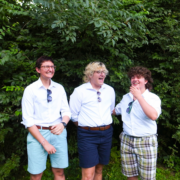
Seth Rane, Grayson Castellucci and Eddy Risimini, three students in white button-down shirts, laugh together in front of a wall of green leaves.

Pushed to the Edge of Campus, These Trans Students Started Their Own Fraternity

This story first appeared in Queer Cincinnati: Beyond the Binary, published Oct. 23, 2026.

In the spring of my freshman year at the University of Cincinnati (UC), Ohio Senate Bill 1 was moving through the state legislature. The bill, which would take effect on June 27th, 2025, requires Ohio’s public colleges and universities to maintain institutional neutrality and “intellectual diversity” on certain “controversial beliefs and policies” including climate policy, electoral politics, foreign policy, immigration, marriage, and abortion. It also bars faculty from “indoctrinating” students toward a position on these topics, bars the institution itself from taking an official stance, and eliminates diversity, equity, and inclusion (DEI) offices, departments, and required trainings at the same institutions.

UC, however, wasted no time adopting these principles, even before the bill became law. UC President Neville Pinto complied in advance, stating in a public email on February 21st, 2025 that “it is untenable to operate as if noncompliance with these directives is an effective option” and that “we are committed to meet our compliance obligations.” Soon after President Pinto’s address, DEI offices including the LGBTQ+ Center, the Women’s Center, Ethnic Program Services (EPS), and the African American Cultural Resource Center (AACRC) were immediately shut down. Many students, myself included, felt this response failed to address their concerns.

That same spring, the university began replacing bathroom signage with new “biological men” and “biological women” signs. This action was a result of Ohio Senate Bill 104, the “Protect All Students Act,” signed by Governor Mike DeWine in November 2024, which prohibits members of one biological sex from using restrooms designated for the opposite biological sex and erases multi-occupancy restrooms open to any gender. The law does require institutions to provide alternative accommodations, such as single-occupancy facilities, but the bathroom signage UC implemented was worded of their own accord. The new signs were adopted quickly, sending a clear message that transgender, nonbinary, and intersex students were not welcome. Because of this, many students became worried that their university housing options would no longer be viable if the available restrooms did not match their “biological sex.” As a trans man living in freshman dorms at the time, I worried for my housing security.

My fears came true when my fellow trans roommates Seth Rane, Grayson Castellucci, and I were relocated to the margins of campus mid-spring semester. We were originally approached in an email by UC’s Director of Resident Education & Development at the time, Trent Pinto, on February 10th, 2025. Pinto invited us to a “conversation regarding upcoming changes to the residential experience.” This meeting was held at UC’s LGBTQ+ Center before it was dissolved, and its conclusion resulted in two options: 1) Stay in our dorms and travel to the women’s dorms to use the restroom, or 2) Relocate to an off-campus apartment where we would have access to a personal restroom.

Option 1 was an unreasonable request for us. Not only was this option directly invalidating our identities as men, but it was also oversaturating the communal space and required us to travel to a different floor or building to use the restroom. Because of this, my roommates and I conceded to option 2 and were relocated to an apartment near campus. While UC quickly responded to a flood of backlash by removing the bathroom signs, the damage had already been done. What was supposed to be an exciting year to make new friends and invest in our studies instead became a year where we were isolated from our peers and pulled from our classes to accommodate the move to our new apartment.

Amidst the predatory legislation and considerable lack of LGBTQ+ spaces, we quickly realized we were not alone in our isolation and observed an almost solemn environment throughout campus. To combat this, my roommates and I decided to make a change.

One day after class, I came home to Seth and Grayson sharing the idea of starting a queer fraternity: Phi Alpha Gama (PAG). At first, we treated it as a joke. After all, it is customary across university Greek life to exclusively allow one gender (women in sororities, men in fraternities). It seemed absurd to imagine visibly queer or transgender individuals enjoying this same staple of college life, but the more we thought about it, the more we realized that PAG’s existence might be a space that UC’s LGBTQ+ community desperately needed: a space made by queer people for queer people to enjoy without consequence.

A fraternity was the best option for us to organize an LGBTQ+-friendly community because we felt that queer individuals deserved to be included in traditional college experiences that they may otherwise shy away from. We gathered a few close friends to join PAG, but we realized that to expand our community past our small clique, we needed to give our fraternity structure. To do this, we created the governing body of PAG, consisting of the following roles: president, vice president, secretary, recruitment officers, philanthropy chair, social media chair, diversity chair, and grievance officer.

We didn’t expect PAG to be more than a small community at first, but soon, friends of friends came to our parties and told their friends about PAG, and it became a vast network of students where all are welcome. During our recent spring rush campaign, we had a great turnout, with around 30 members present and 10 rushees. We implemented different group bonding activities including ice breaker games and a friendly s’mores roasting competition. However, the main standout of this event came about when several people approached our front yard asking about the event we were hosting. What stood out to me the most was how accommodating the members of PAG were to total strangers. Seeing a community that I helped create foster such a kind and welcoming environment made me realize how important PAG was to creating a safe space for queer and allied individuals to be themselves and make new connections.

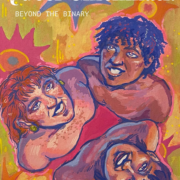
Cover of Queer Cincinnati: Beyond the Binary, a painting of three people seen from above on a bright pink, yellow and green background, by Emil Wiersma

“You Are Not Alone”: A Letter From the Trans Youth Who Made This Magazine

This story first appeared in Queer Cincinnati: Beyond the Binary, published Oct. 23, 2026.

Dear Reader,

As you flip through the pages of the very first issue of the Trans Cincinnati Magazine, I wish to inspire each and every one of you to find hope and community in the stories we have curated.

This magazine is an accumulation of authentic voices, anecdotes of trans joy, and critiques on current predatory legislation. Experiences ranging from liberation, to discrimination, to connection made within the community are depicted. I am more than eager to spotlight residents of the beautiful city of Cincinnati and their real, unembellished trans experiences. I also want to thank Queer Kentucky for the opportunity to expand their outreach to the state of Ohio, giving us the chance to spotlight important resources within our state. Additionally, I would like to mention TransOhio, Transform, Trans Masc Cincy, and Equitas Health. These organizations work to carve out a rightful place for trans youth. Whether that be through creating gathering spaces for the queer community, helping folks understand how to secure affirming care, or simply providing a safe space for those with intersecting identities, these organizations all show up for trans Cincinnatians.

In a world where trans youth are so often made to be silenced, a publication like this is extremely important. The statements within each article are testimonies about trans lives from actual trans individuals. From start to finish, this collection was brought to life by trans youth, for trans youth. Our writers and artists have poured talent, beauty, and truth into this project, and love can be felt throughout every page. When presented with the chance to work as co-editor of this project, I leaped at the opportunity. I am proud to be a part of this community, and to be completely surrounded by visionaries in my day to day life. I am consistently reminded of the radiance that exists in Cincinnati’s trans youth, along with the ambition to actively create a future in which all identities are honored and respected. What you are about to read is not only proof of that ambition, but documentation of firsthand interactions with the current cultural/social state of the world.

If you are not trans and reading this, take it as an opportunity for education and understanding. Question the ignorance you may possess surrounding trans identities. Allow this set of articles to dismantle harmful beliefs and behaviours. If you fall anywhere under the trans umbrella and are reading this, take it as an opportunity to see trans love, joy, and strength reflected back upon yourself. Allow the support of our community to uplift and empower you. So much beauty exists within your identity. Hold onto that love, beauty, and power. Despite those who misunderstand you, despite those with hate in their hearts, despite challenges you are bound to face throughout life. We fight together for your right to be your authentic self. Let these stories act as a vehicle of joy, as something to remind you that you are not alone, and you are worthy of care.

Nyla Davies, Co-Editor

Kris-and-Billy-at-the-convenience-store

‘Teenage Sex and Death at Camp Miasma’ Review: Queer Pleasure, Excess and a Bowling Green Theater

Warning: Spoilers ahead.

I knew very little about Teenage Sex and Death at Camp Miasma when I decided to accompany a friend to the theater. I had seen the iconic poster and knew I adored the work of both Hannah Einbinder and Gillian Anderson. I knew the storyline was queer – a real selling point for me. I had absorbed a handful of press tour clips from social media, watching Einbinder and Anderson riff off one another, but revealing very little about the actual film. Shortly before going to the theater, I viewed the trailer which, as trailers do, primed me for this unhinged viewing experience. I was ready.

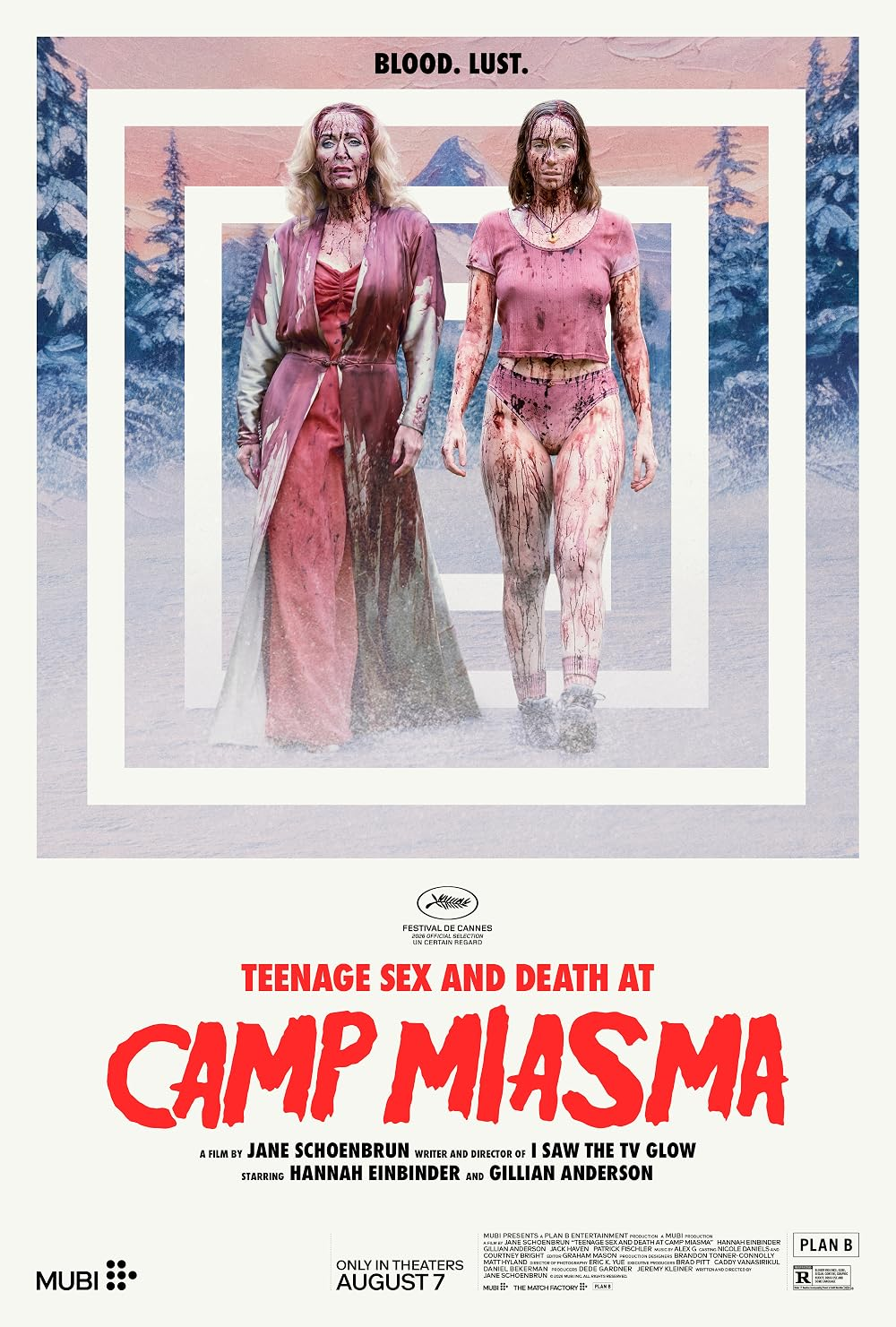
Film poster for Teenage Sex and Death at Camp Miasma (2026), showing two blood-covered women walking through snow

Film poster. Teenage Sex and Death at Camp Miasma (2026). Courtesy of MUBI.

As I sat there in a movie theater in Bowling Green, KY, nestled between two friends, waiting for the opening credits to roll, I felt a heady anticipation. We were about to embark on a journey. This film, an ode to and commentary on slasher films, owed at least a little something to the legacy of a filmmaker who was raised right here in Bowling Green. John Carpenter’s Halloween (1978) is one of the most well-known films in the genre, but my friends and I were about to engage with something new – something that would both honor and critique this beloved category of films.

I had so many questions as I waited for the film to begin. What would this film be? Would I be brave enough to watch it as a relatively wimpy horror viewer? Would this film be queer enough? Would it join the ranks of the growing list of films and TV shows that are slowly but surely filling the gaping hole in my heart that yearned for media like this as a young queer person? How amazing was it that we had arrived here together to watch a film that ten or twenty years ago would have been unlikely to screen in this very theater?

So many of these questions would be answered by the time the credits rolled.
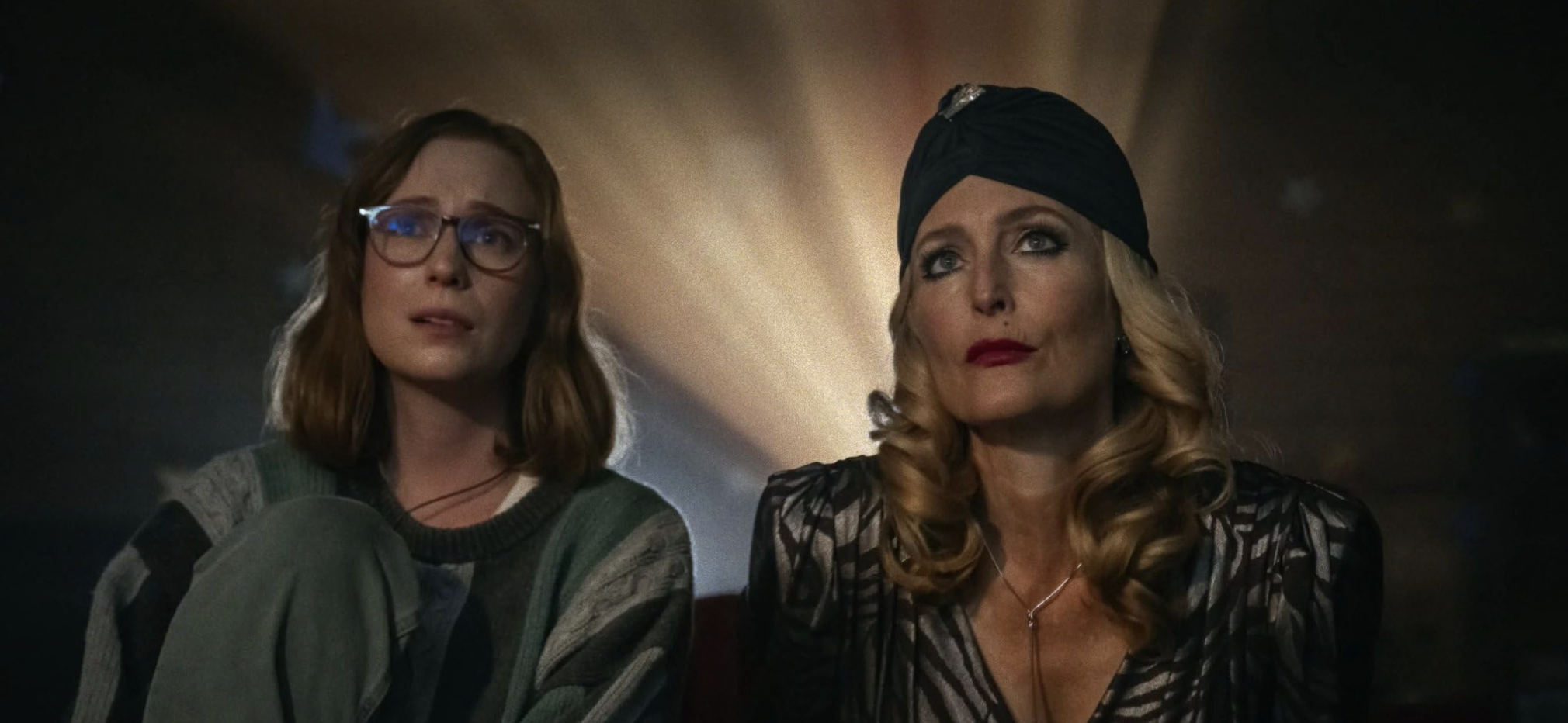
Writer/director Jane Schoenbrun’s latest film came to play. The unhinged nature of slasher films is celebrated throughout. Jump scares and gory deaths set the tone, simultaneously fueling Kris (Hannah Einbinder) as she envisions what her reboot of the franchise could look like. As a Sundance darling and burgeoning writer/director, Kris has a chance to remake this outdated film into what she thinks it should have been, addressing the elephant in the room: negative commentary about transgender and gender-queer individuals and perhaps the queer community as a whole. Kris must find the intersection between her love for the franchise and her desire to update it for a new audience. This film documents that journey – one that becomes much more personal than Kris anticipated.

This film about filmmaking has everything a fan of slasher films could want – from jump scares to over-the-top gore. In one of the opening scenes of the film, geysers of blood literally shoot up as high as the tree line, as an unsuspecting victim meets their end. We view this death, and their companion’s death, from a distance. After all, we have to be pretty far away to appreciate the height of the enormous blood geyser. That, and we are allowed to appreciate this seemingly normal setting, two people out on a walk with their dog (the dog lives, worry not!) for just a few moments before the killer, Little Death, arrives and colors the scene red.

Little Death is as entertaining as any other slasher villain, but they also add something to this genre as a gender-fluid character who presents an almost child-like energy whenever they appear on screen. Little Death brings death, but they also bring joy and playfulness, trotting along like they’re heading off towards an imaginary battle.

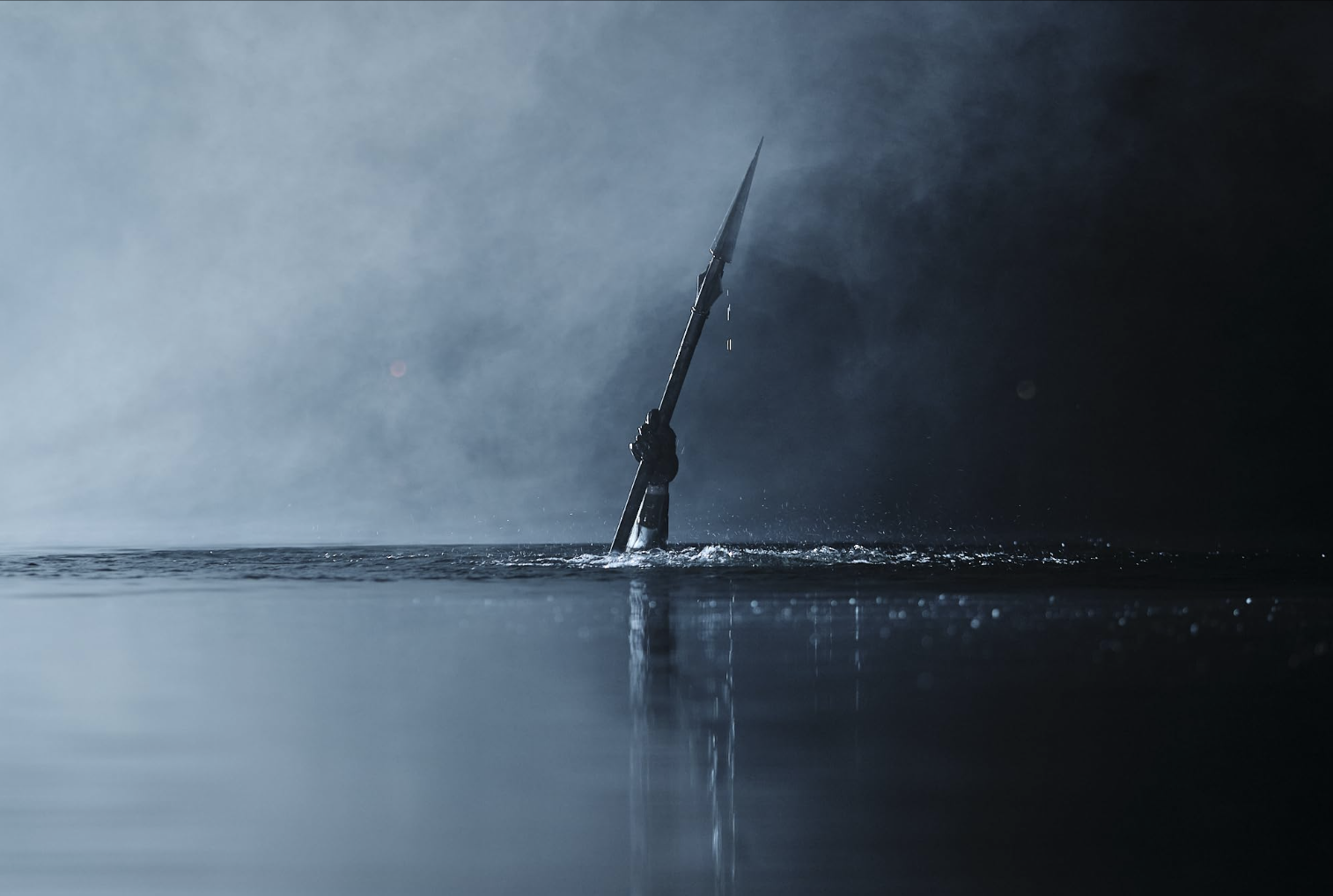
The killer Little Death emerges from a dark lake at night in Teenage Sex and Death at Camp Miasma (2026)

Little Death emerges from the lake. Teenage Sex and Death at Camp Miasma (2026). Courtesy of MUBI.

A synonym for the orgasm, “Little Death,” not only brings pain in this film, but pleasure – and intense pleasure at that. As the final girl from the original film, Billy (Gillian Anderson) says, “If it gets too real, you can always turn it off.” Consent is sexy, after all, and Little Death is on their way to penetrate you – a concept that Kris finds alluring in her sexual fantasies. She seems drawn to the helplessness of a final girl lead, the killer advancing, running from them with her breasts bouncing under a thin t-shirt, death waiting to overtake her. Throughout the film, Little Death and Billy both help bring this fantasy to life.

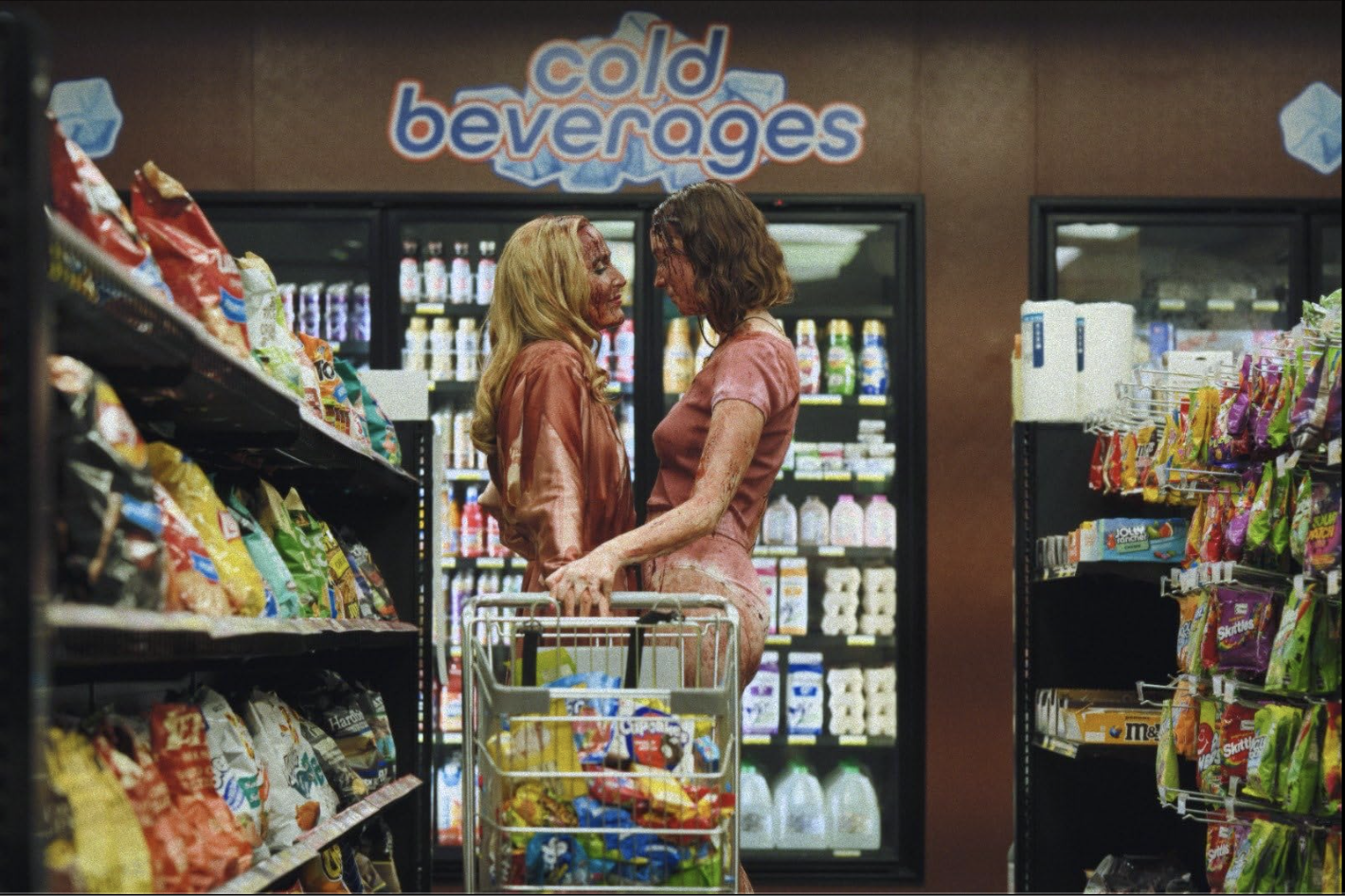
Excess is also a heavy element of this film in multiple categories. Excess of gore, of course, as we see comedically enormous amounts of blood spurting from Little Death’s victims. Excess of food as Kris loads her cart with snacks early in the film, as Billy greets her with two giant buckets of KFC chicken which she carefully stacks on a serving tray, as, covered in blood, Kris and Billy load their cart at the convenience store, ready for another movie night in. Excess of Camp Miasma sequels. Excess of snow. Excess of pleasure. The film asks us to chase this concept of excess, feel it, embody it. After all, it’s there for the taking.

Kris and Billy, covered in blood, face each other beside a cooler case in a convenience store in Teenage Sex and Death at Camp Miasma (2026)

Kris and Billy at the convenience store. Teenage Sex and Death at Camp Miasma (2026). Courtesy of MUBI.

Teenage Sex and Death at Camp Miasma comments upon this excess, particularly in terms of critiquing Hollywood for the mountain of sequels and reboots that have been greenlit over the last few decades. Resurrecting old intellectual property (IP) is a core business strategy for the industry and this film isn’t going to shy away from that concept, notably commenting on the “zombie IP” – IP that has been deemed too problematic to reboot – of this fictional slasher franchise.

This film couches pleasure in excess as Billy and Kris lay on a pile of brightly colored snack packages, their limbs entwined, Billy’s hand down Kris’ shorts. There is excess in the buckets of blood that emerge from their bodies as Billy brings Kris to orgasm towards the end of the film, inviting both pleasure and pain – and Little Death – into their space simultaneously, as Little Death penetrates them and Kris climaxes, replicating Billy’s experience from the earlier film. “Little death,” indeed.

But it’s not pleasure that is critiqued as excess here, rather it is a celebration of pleasure, of what arouses you, what moves you to the brink. This is the sort of excess we crave – pleasure outside of society’s expectations and boundaries. It’s up to Kris and Billy what is “okay” for them to do with one another. It’s not up to us. We do not get to place judgment on their choices or behaviors. We do not need to feel comfortable with what is happening between them. We’re simply the viewers – voyeurs – bringing a little something extra to the experience for Kris and Billy. After all, part of this is about being watched and the pleasure that can bring. We have their consent.

Kris and Billy sit side by side watching a film in Teenage Sex and Death at Camp Miasma (2026)

Kris and Billy view the film. Teenage Sex and Death at Camp Miasma (2026). Courtesy of MUBI.

This film was horrifying, yes, but not in the classic sense. I didn’t jump in my seat, I didn’t feel my heart racing in fear, I didn’t feel the need to cover my eyes. Instead, my adrenaline rose as I anticipated the next moment, the next thing the leads would do or say, as I watched them grow more intimate with one another. My pulse rose as I anticipated Little Death’s emergence from the lake – a coming out – something to celebrate, it seemed, rather than a horrific development. Perhaps Little Death isn’t a villain after all and, rather, someone who we seek to understand through the lens of their experience.

One thing is certain, Teenage Sex and Death at Camp Miasma flipped horror on its head, allowing a wider audience to appreciate what so many have appreciated for decades – human pleasure and violence intimately entwined together on screen – concepts so very connected to one another in this bloody escapade.

Jessica L. Folk (she/her) is a screenwriter and an Associate Professor of Scriptwriting at Western Kentucky University. Her favorite way to watch a film is to pause it a million times to chat with her wife about what they just witnessed on screen. Luckily, her wife also enjoys this.

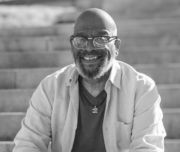
Ron Clemons, Cincinnati community activist and retired social worker, seated on outdoor steps in a black-and-white portrait photograph.

Beyond the Bar: How Cincinnati/NKY Queer Spaces Are Evolving

In an online discussion that recently came up among members of the local queer community in Cincinnati there was one question that stood out: “Why are all of the queer spaces disappearing?”

In recent years, many LGBTQ+ bars have shuttered due to rising costs of rent and, in some cases, a decrease in patrons. 

Notably in Cincinnati, we’ve lost a few bars over the past few years, but there are still more than a dozen bars that identify as queer and/or queer-friendly. While the number of actual queer-owned establishments has lessened over the years, what constitutes a queer-friendly space is evolving — both taking on the roles of serving the community in material ways, and creating spaces of joy and communion. 

In some ways, what’s perplexing is the limiting definition of queer spaces to just bars as the glue that binds the community. Today, the breadth of queer spaces includes sports leagues, queer choruses and sober bars, and they provide home spaces for other organizations doing mutual aid and organizing work.

When I first moved to Cincinnati in the spring of 1975, bars and a few churches were some of the only places we had to congregate, socialize and strategize. Organizations and clubs would begin appearing a few years later, such as the  Cincinnati Bowling League in 1980 and Stonewall Cincinnati in 1982. The bars were instrumental in helping build those and other organizations by providing meeting space and resources for fundraising. They did help to lay the foundations for many of the activities we enjoy today. Queer life started to show itself more outside of bar spaces. In the early 80’s, as it became less dangerous to be out, more and more organizations began to pop up around the city. Social clubs and political organizations became a large part of the queer landscape, and that trend continues today. The organizations give people more options to socialize and connect with other queers and expand the definition of community. 

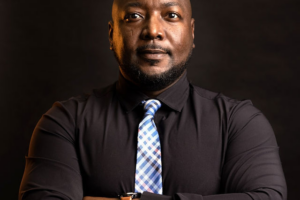
According to local author, Covington School Board member and business consultant, Kareem Simpson, a black queer man, this is a natural process and necessary for the community to grow and for businesses to survive.

A formal portrait of Kareem Simpson, Covington School Board member and business consultant. He stands with his arms crossed against a dark background, wearing a black button-down shirt and a blue plaid tie. He looks directly into the camera with a composed expression.

Kareem Simpson, Covington School Board member and business consultant, and a Black queer man. Photo courtesy: Kareem Simpson

“Community landscapes have expanded so the community looks different. There are about the same number of bars, but now there are more options in addition to bars,” he said.

“Some bars have changed their programming to stay current and attract more customers, such as Bloom providing a space for BIPOC drag performers and their followers. Others in the community have created spaces that feel more safe to marginalized community members, which in addition to younger people consuming less alcohol, can explain why bars are less busy. People want to feel safe, seen and included so they seek out spaces that provide that element,” Simpson said.

And Joshua Petty-Kayes, member of the newly created Cincinnati LGBTQ City Council Commission, a founder of Treehouse Cincinnati and an accessibility advocate emphasizes that community members want to go to spaces that are accessible. And accessibility isn’t just limited to physical access.

“Accessibility barriers can be based on gender identities, racial as well as physical. People want to be in spaces that feel welcoming and reflect their reality, aka being around others who look like them and share similar experiences. TreeHouse was created to meet that need and provide an alternative community space,” Petty-Kayes explained.

TreeHouse Cincinnati, according to their vision statement, is a resource space that uplifts the programming of the LGBTQ+ Community to promote collaboration, diversity, and intersectionality. Petty-Kayes described providing space for community organizations such as PFLAG, Black Power Initiative, Cincinnati Black Pride and Cincinnati Prime Timers. There’s also a plan to create a library of books being banned by the current federal administration.  

Transform Cincy is another organization that not only provides an alternative to bar spaces. It addresses the growing need for affirming spaces and resources for transgender, nonbinary and gender non-conforming youth and young adults. Co-founded in October 2019 by Tristan Vaught and Nancy Dawson, what began as a free clothing and accessory program has grown into a thriving LGBTQ+ community center serving individuals and families throughout Greater Cincinnati. 

Transform Cincy, Vaught said, serves the community through their CARES model: Community Center, Advocacy, Resources, Education, and Support.

“We continue to provide free, curated wardrobes for transgender and gender-diverse youth and young adults while also offering support groups, legal clinics, social and educational programming, community meals, resource navigation, and opportunities for connection that foster belonging, resilience, and hope,” Vaught said.

Transform Cincy also holds an annual Trans Pride Adult Prom, their signature fundraising event, bringing together LGBTQ+ community members and allies to celebrate while supporting the organization’s life-changing work.

And queer organizations here don’t work in silos. Transform Cincy, for example, partners with organizations including NAMI Southwest Ohio, Beech Acres Parenting Center, Community Shares of Greater Cincinnati, Equality Ohio, and many other community partners to provide professional, affirming services. 

As we witness the rollbacks of our rights and freedoms, expanding the way we view and define Cincinnati LGBTQ+ spaces to be more inclusive of BIPOC and marginalized communities helps to ensure we have safe places to gather, be in community, and celebrate our existence. 

Frieda Belinfante as a young woman holding a cello, composited over a photo of Ballyshannon Middle School in Union, Kentucky

Pride and Resistance: The Heroic Story of Frieda Belinfante

Editor’s note: Queer Kentucky is publishing a first person piece by Josie, a middle school student at Ballyshannon Middle School in Union, Kentucky.

Josie found their unsung hero in Frieda Belinfante, and fashioned a dress in honor of Belinfante’s life as a Jewish lesbian woman, a resistance fighter against the Nazis, and her trials as an orchestra conductor — submitted as their entry into the national 2026 ARTEFFECT annual competition.

_______________________________________________________________________________________
When I was looking for an unsung hero, finding someone who was part of the LGBTQIA+ community was important to me. In the climate of our world today, this community is still frowned upon and not fully accepted, much like it was in the 1930s and ‘40s, especially when they were targeted by the Nazis during the Holocaust. In my research , the story of Frieda Belinfante stood out. She was not only part of the LGBTQIA+ community, her work during the Holocaust had saved hundreds, if not, thousands of lives.

Her identity and story represent what it was like to be part of a community disliked by many, yet still having the courage not to let it stop you.

After learning Belinfante’s story, one of her most inspiring traits I found was her courage. She didn’t have to help others during the Holocaust. She was already at risk herself – not only by her presence in the LGBTQIA+ community, but also her religious heritage as being half Jewish. In spite of these challenges, she refused to be a bystander, instead, joining the Dutch resistance and doing everything she could to  protect Jews and preserve Jewish culture, up until she was forced into hiding.

Her story is one of heroism, which would not have been possible if she lacked courage or resolve. This makes her evermore inspiring, making her a role model not only for myself, but the many others who fear that because of who they are, they would not be able make a difference in the lives of others.


Belinfante’s early years

Born in Amsterdam to a half-Jewish household, Belinfante lived as a semi-open lesbian throughout her life, creating a successful career in the music industry playing the cello and conducting prior to the Holocaust. When the Nazis invaded the Netherlands, Belinfante was quick to put her music career on hold and join the Dutch resistance. There, her primary role was  forging IDs and participating in the planning of open resistance movements, one of the most known being the bombing of the Amsterdam population registry.

The goal was to destroy the documentation of Jews in the Netherlands, making it difficult for the Nazis to carry out their forced removal and killing. While the plan was partially successful, the Dutch resistance  did succeed in destroying the records of hundreds of Jews, preventing their deportation. But the resistance was betrayed after the bombing, forcing Belinfante into hiding.

At this time, she disguised herself as a man until she escaped to Switzerland where she resided in refugee camps until she immigrated to the United States. She restarted her career in music, growing in the industry once again. But discrimination she had fought against during the Holocaust found her again.

Frieda Belinfante in men's clothing and a tie, photographed in black and white, while in disguise during the Nazi occupation of the Netherlands

Frieda Belinfante, reportedly dressed in men’s clothing to disguise herself from Nazi informers. Photo credit: United States Holocaust Memorial Museum.


In 1962, she was dismissed from the Orange County Philharmonic Orchestra –where she was artistic director and conductor –due to her sexuality and gender. Despite all she had gone through, the courage she showed during the Holocaust never wavered. She continued teaching music until her death in 1995. It is unclear how many Jewish people Frieda Belinfante saved, but it is estimated to have been hundreds if not thousands, all thanks to her unwavering courage.

Josie’s dress in honor of Belinfante

Throughout the creation of this dress, I researched information about Frieda Belinfante and the Holocaust through the United States Holocaust Memorial Museum and the National Opera and Ballet, where I  found the images used on the pages drawn on this dress.

Belinfante’s dress is inspired by the silhouette of formal wear dating back to the 1930s and 1940s, the fashion of the few who refused to be bystanders and saved their neighbors, whether they knew them or not. The pattern I followed was inspired from her life and struggle. In addition to the style and pattern, there are two major components of the dress that tell Frieda’s story.

A cream-colored ruffled dress on a mannequin with a rainbow painted along the neckline and hand-drawn foam pages depicting Frieda Belinfante's life story cascading down the left side, displayed in a school library

Josie’s ArtEFFECT 2026 dress honoring Frieda Belinfante, displayed at Ballyshannon Middle School. Photo Credit: Ballyshannon Middle school.


Along the neckline of the dress, a gradient rainbow has been painted in between each of these ruffles. The rainbow symbolizes the LGBTQIA+ community, including Frieda and many others who worked tirelessly to save those persecuted during the Holocaust. The placement of the rainbow in between the ruffles represents the many who could not be open about who they were. But just because they could not be open, that didn’t mean that their place in the community changed.

Down the left side of the dress, there are multiple layers of ruffles gathered behind a layer of foam pages depicting Frieda’s story. These ruffles are meant to represent the stories of those Frieda saved, most of which were not known to her, but survived due to her courage and bravery.

The top layer of pages, made of foam and a brighter white to stand out from the rest of the dress, depict different time stages of Frieda’s story. Amongst these pages are three hand-drawn images of Frieda, all from different points of her life. The top image is her in her teens playing the cello, meant to represent what she loved doing and how her life was as complex as any other before the Holocaust. The image below the first is of Frieda wearing a man’s disguise after the resistance was outed and until she escaped Switzerland.


An elderly Frieda Belinfante smiling and raising a conductor's baton, photographed in black and white in her later years

Frieda Belinfante conducting in her later years in the United States. She refused to let the Holocaust or discrimination end her music career, and continued teaching until her death in 1995. Photo Credit: Nationale Opera and Ballet, Netherlands.


The final image is of her later in her life after she immigrated to the US and continued her career in music, not having let the Holocaust put an end to what she loved. The rest of the pages are outlines of fake IDs she put together,  one of the major jobs Frieda had in the Dutch Resistance that ended up saving hundreds, if not thousands of lives during the Holocaust.

At the end of the day, I want my art to be a reminder of the courage that can save lives, if we are willing to let it. The Holocaust itself was a tragedy, taking more lives than anything ever should, all because of power and hatred. But what prevented it from taking more was the courage of those who stood up for their neighbors, refusing to be bystanders as humanity tore itself apart. To this day, power and hatred still tear humanity apart, feeding on those who the powerful deem powerless.

Like this dress, humanity itself is held together only by the thin threads of those who believe that humanity can be better and have the courage to try and make it so. Frieda Belinfante’s story is just one of thousands of others who didn’t let others break the foundation of their courage. This not only inspires me and my actions, but could inspire others and their actions, which could lead to a humanity in which unity drowns out hatred and light drowns out darkness.

Fruiting Bodies: Shapeshifting to survive

On this earthly plane, in this very timeline, many different versions of us will exist. Past selves give way to future selves; older parts are shed to make room for who we are today. There are versions of us that made mistakes, versions of us that dated questionable people, versions of us whose behavior we might never understand and versions of us only few others remember. For many of us, especially as queer people, many versions of ourself exist throughout our days, ebbing and flowing out of us as we navigate our life. Sometimes we don’t realize how we change throughout the day, as some versions might only show themselves in specific environments, under certain circumstances, or around certain people. In some cases, these other versions of us are rooted in a creative outlet. It’s not science fiction nor fantasy, it is very real. For many, including myself, these different versions aren’t just a type of performance, they are a means of adaptation and survival.

“Code-switching” is the practice of adjusting how you express yourself in different contexts, such as changing your language, accent, tone of voice, style of dress, and/or behavior. Some code-switching is intentional, and at other times, we don’t even realize it’s happening. We code-switch to better blend in, or at least be better accepted by the majority of people around us. Whether used to downplay a racial or cultural difference or to be noticed and acknowledged by others, code-switching is a very real part of the queer experience. Oftentimes, folks think of code-switching as something negative, as something disingenuous. “You don’t usually talk like that,” or “why do you act that way around your friends and not me?”. I like to think of code-switching as an artform that many of us must learn to master with age.

Being a Queer Chicano in Kentucky, I’ve done my fair share of code-switching throughout my lifetime-whether or not I wanted to. I have no doubt that you have as well. It should be to no one’s surprise that code-switching is exhausting work, both physically and mentally. It’s a form of mental gymnastics that takes up so much mental real estate. We try our best to dress “appropriately” or act “appropriately” based on the people around us and the situations we are in. This background work goes wildly unnoticed by our co-workers, our family, and even our other queer friends as we try our best to avoid the conflict that can come from showing our truest selves. It is no wonder why so many LGBTQIA folks, myself included, are always fucking exhausted.  

The queer experience is boundless, and our resilience is quite remarkable despite it all. We adapt to a world that wasn’t built for us. We adapt the best way we can because we have to. And yet, that softness we hold, that thing that many find so threatening – can’t be hidden no matter how hard we try. When should I hide the most vulnerable side of me? When is it safe to express it? I certainly don’t wake up every morning and think “What a beautiful day… I am very queer.” Unfortunately, this heteronormative world is obsessed with what people like me are doing with their life and have been trying their damnest to erase us. Because of this, our life experiences are often vastly different than those of our cis, straight, and often white peers who do not understand our struggle.

As queer artists, our identities are often at the root of what and why we create. It is a byproduct of being pushed to think about who we are at every moment, at every step of the day. I find it fascinating how our art pisses off conservatives-as if we do it to be obnoxious-yet I can’t even imagine what a life where I don’t question my every move would feel like. Instead, I have externalized the internal parts of me as many other queers do by changing my outward appearance, creating sound, or curating experiences through nightlife and art installations. Our Drag-our wearable art, our hair, tattoos, and even our hanky codes aren’t just an expression, it is a language that we use to be able to communicate with other queers. While our art is often seen as just entertainment, it is an incredibly important part of our queer experience, our means of storytelling, of expressing our grief, of showcasing our joy. It is our culture.

I often compare being queer to being an ocean animal. Pods of whales sing songs that only others of their kind can understand. Creatures of the deep use bioluminescence in the darkest of places to ward off danger and find love. Fish will school because staying together helps ward off danger-and they all know far too well how vulnerable they are when alone. The ocean, as Kentucky once used to be, is a huge source of inspiration and expression of my own queerness in mind and through my creations. 

As we get older, it is important for us to understand why so many different versions of us exist. We should understand how those parts of us have adapted, how they have helped us perform and navigate our jobs, romantic relationships, sexual partners, and familial relationships. It can be strange to think about, because we don’t always have a clear picture of how someone else may perceive us. It is truly something we cannot control, and how could we in a world unfit for us? It is no surprise that we will never be shocked when the people who have known us the longest do not know, nor understand- the realest, purest version of ourselves. Sometimes we choose to keep it that way because that feels safest. On one hand, having to change who we are in order to make it through the day feels unfair. On another hand, those of us that survive learn to do so in ways that help us thrive, even if it is behind closed doors, and it is up to us to teach the younger queers how to navigate this too. 

The realest version of me wouldn’t have been able to survive cosmetology school, working on political campaigns or training dogs for over a decade.. but today’s version of me feels genuine and real. It is present in my everyday life now as I am able to live through and from my art. For the first time in my life I can say that it feels good and that is a privilege. My work is a physical manifestation of the versions of me I have hidden throughout my life, the mental armor I had to wear to protect myself that is now forming as external wear. Some of my pieces are an expression of the monster that others used to make me believe I was, and some expressions touch on the softer, more feminine side of me that I have finally allowed to blossom over the years. I feel safe enough in my own community to share those versions of me. That too is a privilege. In many ways, my work is an outward expression of my queerness and my connection to this planet. It is a testament to my wildness, my chaos, my sense of being that encompasses various growth patterns. My work even expresses the most non-human side of me, the part that still feels safer blending in with the root systems and insects like I did as a kid. 

Queer art, like queer people, hold a mixture of power, resilience, and pain. Finding an outlet to express this has drastically changed something in me, but I don’t think I fully understand what that is yet. Maybe a future version of me will know and will reflect back on these years. Maybe that’s what they mean when they say your mid 30’s are your prime. Perhaps I will finally become a version of myself that realizes I never owed strangers comfort by trying to hide away my queerness in so many different circumstances. Despite the danger, maybe it really is ok that I let others uncomfortably shift in the presence of my existence and what it means to stand in my own power. After all, most are choosing to feel that way instead of accepting us as we have to most others. Perhaps this means I have survived long enough to become the bioluminescent, ever shifting fruiting body I was meant to be.


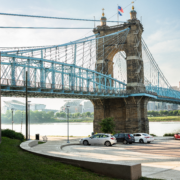
The blue Roebling Suspension Bridge stretches across the Ohio River from the Covington, Kentucky, riverfront toward the Cincinnati skyline on a sunny day.

Radical Joy in a Red State: Queerly Relocating to Northern Kentucky

Photos by Logan Oleson | @l.o.foto

Four years ago, I moved from Boston, MA to Covington, Kentucky, to be closer to my long-distance partner. I was confident that many of the things soon to be changing in my life were going to bring me joy: I was leaving behind terrible icy winters for a longer summer, a cost of living I couldn’t afford on my nonprofit salary for an affordable city, and hundreds of miles of distance between me and the person I wanted to be with. I had just one serious concern: I was a Queer woman moving from a sanctuary city to a red state.

This wasn’t my first big move. I had moved to Boston for college in 2009 from a Philadelphia suburb. I had come out as bisexual my junior year of high school when I started dating a girl, and the harassment that came from being openly Queer convinced me that there were only certain cities that would feel comfortable and safe to me.

Boston was one of those cities. I wanted to walk down the street holding hands with whomever I wanted, and never catch a second glance. I wanted lesbian bars and book clubs, concerts full of Queers, a community built on something shared, and so many gay friends.

Hotel Covington sits at 638 Madison Ave, Covington, KY 41011

Hotel Covington at 638 Madison Ave.

For a while, Boston was a welcome change. I attended Emerson College where being Queer was basically the norm. The Duck Boats that toured the historical downtown would joke about the “chain smoking bisexuals” that the college churned out, and I was proud to represent. I lived with my girlfriend, and we were rarely bothered. But after college and as time went on, my Queer identity felt like a practice that was only personal. I had no community in Massachusetts.

It’s not that Boston wasn’t gay-friendly. Massachusetts was the first state to legalize same-sex marriage. There are Pride flags on the buildings, Queer-owned businesses, and legislative protection. But I felt isolated from anything Queer and bigger than myself. There were two gay bars accessible to me, and both were frequented solely by gay men and straight bachelorette parties. When I did try to make Queer friends in public spaces, I found myself challenged. As a super feminine bisexual cis woman who dates men, I felt I had to come out again and again with every new introduction. I grew tired of it. It almost felt as though part of me had disappeared into the safety of a sanctuary city. When I decided to leave Massachusetts for Kentucky, I was resolved to find people and places that would make me feel safe and seen. I was only worried that it wouldn’t happen.

Ahead of my move and in the depths of COVID-19 quarantine, I joined Lex, a social app for Queer people. I was surprised by how many folks reached out in response to my post about moving to the area and looking for friends. I started chatting with a fellow East Coast transplant who was living in Newport. While still living in Boston, I joined her Northern Kentucky Queer book club, and attended my first meeting on Zoom. Even if I had just this one Queer friend and this little Queer book club, I thought, I would be OK.

The alien named Clive is a large, 30-foot-tall art installation in Covington, Kentucky, located at the Midtown Garage parking lot. He is a green, fiberglass and foam alien who leans out of the garage with a giant magnifying glass, observing people below.

Clive the Alien at the Midtown Garage parking lot in Covington.

When I arrived, my new friend took me to what I can only describe as a gay bagel shop. If I have this one Queer friend, this little Queer book club, and this Queer-ass bagel shop, I will definitely be OK, I thought.

But Kentucky kept opening to me. In Covington, I became an organizer of the book club I joined, and it grows a little bit each month with members of varied age, gender, and orientation. Folks join from rural areas north of Cincinnati and south of Newport. We have all shown up for each other during hard times, even though we meet just once a month. I live two blocks away from an intersection where the pedestrian crosswalks are painted as rainbows, and gay bars face off on the corners. Even closer to home, my block has a strong Queer contingent, and we are a small community within our larger one: we are pet sitters, parcel carriers, diligent watchmen, and well-wishers, checking in with regularity.

It’s not just Covington that has proven welcoming–my first trip to Louisville showed me even more. At Revelry Gallery I spent nearly an hour admiring the art and wares from local artists, a huge number of whom were Queer. There I picked up the first print edition of Queer Kentucky. I was overjoyed to find a publication dedicated to Queer stories in the state. I had never seen such a thing, certainly not in Pennsylvania or Massachusetts where I’d lived before. The stories inside were inspiring in their diversity of voices. In Louisville I learned about the Kentuckiana Pride festival. I coveted a sweater from Crybaby, whose focus on community safety and harm reduction — in addition to their gorgeous chain-stitch pieces — felt like an answer to a question I couldn’t name.

The Carnegie, a historic, light-colored brick arts center in Covington, with a large, columned archway and arched windows.

The Carnegie

Some time later, I finally got to explore Lexington and ended the night with a drag show at the Bar Complex, a huge gay nightclub. Bar Complex felt entirely too good to be true: in all my years dancing and drinking in Boston, there had never been a place that felt so close to home.

In all of these towns and all of these spaces, I’ve been greeted with a smile. I have been looked after and I have looked after others. I have not even been on the receiving end of a sidelong glance when I enter a Queer event with a straight date. In Kentucky, I feel invited by my community to celebrate my Queerness for longer than the month of June.

My position is unique, and I will not suggest that Kentucky, or any place in America right now, is not a dangerous place to be Queer–especially for folks who are also of color or are immigrants. But I often wonder if adversity has a strengthening effect on the community. Perhaps when the government would like to erase our existence, we are less likely to take one another for granted. We resist by welcoming one another. There is nothing more Queer than an insistence on being ungovernable, and in Kentucky we are. I am thankful that we are here to see each other, to fight for each other, and to rejoice in one another.


Portrait of author Katie Eelman with the best boy, Arnie, for Queer Kentucky article “Relocating to Northern Kentucky."

Author Katie Eelman, contributor to Queer Kentucky’s story “Relocating to Northern Kentucky.”

Voice Cracks, Backing Tracks, and Comebacks: How to Steer Your Changing Voice on Testosterone

Editor’s note: This story was published in October 2025. Some information, such as resources and health guidance, may have changed since then.

This story is part of Queer Kentucky’s digital issue surrounding the trans youth experience in the Bluegrass state, featuring personal essays to educational information. Read the full issue here.

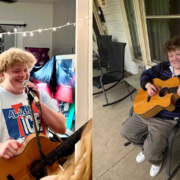
In the moments of catharsis post-performance, I receive the most touching reminders of why I keep showing up authentically on stage despite fear. Chugging stale ice water at the bar, I can be pleasantly interrupted by a polite and energetic “would you mind if I asked you a personal question?” Usually, nervous, they follow it up with “so how long have you been on T?” I know how much it would have meant to me pre-transition to have someone like me to talk to. My expertise lies in testosterone gender-affirming hormone replacement therapy’s effects on singing, but the techniques can help singers of all backgrounds. Beyond technique, the most challenging part of my vocal transition has been the emotional one, and this seems to be a shared theme amongst questioning and trans vocalists. 

I wrote my first song in kindergarten. By the age of fourteen, I learned how to play acoustic guitar. I started performing my songs at an open mic in Lexington called LexJam. From there, things accelerated quickly, and soon I was on Woodsongs Old-Time Radio Hour, gaining national radio play. Local news station airtime, local small festivals, and eventually paid gigs. I recorded a single and released it on all platforms when I was 17. Soon, it was getting played on BBC Music Introducing in England, and I was headlining Red Barn Radio just like one of my personal heroes, Tyler Childers, and opening for the great Louisville-based songwriter Mark Charles. I performed in New York City and Ireland. Yet something didn’t feel right. You, dear reader, might know the feeling. 

By the time I was 18, I could no longer ignore that something was wrong. In order to write and sing truly great music, you need to be able to sit with your inner thoughts for extended periods of time. You need to allow your body and voice to take up physical, emotional, and spiritual space. I didn’t feel like I deserved that space anymore. According to Cleveland Clinic, singing activates your parasympathetic nervous system and stimulates the vagus nerve, which runs down from your ears (listening), to your throat (vibrating), to your lungs, diaphragm, and gut (expanding and contracting). I know now that the act of singing was forcing my body to rest and release the tension and trauma I was holding. 

I delayed my transition for a long time due to fears about “ruining” my singing voice or career. How would I adjust to a completely new tone? When I took my first T shot, I began researching transmasc and trans male singer-songwriters like Eli Conley. I learned that cis boys’ vocal cords get thicker and longer during puberty. When undergoing testosterone gender-affirming HRT, the vocal cords just become thicker, not longer. Knowing this, you can deepen your range while at the same time maintaining your higher range, albeit with a different timbre. For me, it became an opportunity, not a negative, and I started to think of it like a fun challenge. 

  1. Finding Your Current Range: Locate a piano, or a free piano app. I recommend singing ascending and descending major scales, alternating between vowel and consonant sounds. Try sliding your voice like a slide-whistle ascending and descending like a siren. Warmup your breathing muscles as well; take long deep breaths and “hiss” until your lungs are emptied. 

Before singing, make sure you have the proper posture: spine straight, and shoulders down and relaxed. If you are sitting, make sure your feet are firmly pressed to the floor. If you are standing, make sure your feet are roughly shoulder-length apart. Press “Middle C.” Match pitch in any way you’d like: humming, vowel sounds, vocalizations, etc. Ascend one piano key at a time and match pitch until you reach a note that feels uncomfortable to sing. The last comfortable note will roughly be the top of your range. If you are using a piano app, it will likely tell you the exact note and octave, such as C4. Write this down. Repeat the same steps as above, but descend. Write that down. Now you have a rough estimate of your vocal range. According to Yale University, the vocal ranges are as follows: 

soprano: C4 to A5

mezzo-soprano: A3-F5

alto: F3-D5

tenor: B2-G4

baritone: G2-E4

bass: E2-C4

  • Find a Model Voice: After you’ve identified your range and vocal type, search for vocalists with your current vocal range, or the vocal range that is adjacent to your current one. For me, that was Tyler Childers. Having a model can help you “place” your changing voice. It’s like going from playing a tenor trombone to a bass trombone – you will have to create muscle memory for new “positions.” Instead of using a slide to change notes like a trombone, you will change the position of your soft palate, larynx (voice box), and facial muscles. Sing along to their songs. Have fun with it and don’t worry about how you sound, just try to match pitch. Try singing their songs while scrunching your nose, raising your eyebrows, or moving your tongue to try and “feel” different methods of vocal resonation. You may find something that feels right for you! 
  • Frequent Practice: Consistency is key. Just like with exercise, it takes frequent practice in order to build up strength. Try these exercises in a consistent routine to build strength, control, and power with your voice. Make sure to rest your voice as well – overusing your vocal cords can lead to injury. 
      1. EE AH: Alternate singing the vowels “EE” and “AH” in succession. This opens up the pharyngeal walls of the pharynx 
      2. Siren: Play the note at the bottom of your vocal range on a piano. Match pitch and slide (like a slide whistle) up to the highest note in your range and back down again. Make sure to take a big breath beforehand. Your shoulders should not be rising significantly each time you breathe. Imagine your breath expanding from your lungs downward into your pelvis. This helps you learn to control your larynx (voice box) and breath.
  • HO HO HO: Locate your diaphragm. A great way to locate your diaphragm is by touching your bottom ribs, then walking your fingers across them to the middle of your body. Do a fake cough. The firm muscle that presses into your fingers is the diaphragm, which helps your lungs push air out of your body.  Take a deep breath while pressing on this muscle, and do a few “HO HO HO’s” like Santa Claus. Some studies show that touching the muscles you are activating increases the mind-muscle connection, muscle activity, and muscle growth (source: Oshita). 
  • Do Mi So Mi Do: This is another classic warmup for a reason. You sing the 1st, 3rd, 5th, and 1st notes in a major scale, vocalizing “Do Mi So Mi Do.” Additionally, “Do Mi So Do So Mi Do” is a great exercise. 
  • Yawn: Intentionally and repeatedly raising your soft palate by “yawning” is an excellent way to strengthen it. Control of the soft palate is vital for vocal tone and resonance. 
  • Sing Your Old Music: It was healing to me to try and sing my old songs using my changing voice. I would recommend the same. Try singing it in a different key, or slightly altering melodies to fit your current range. 
  • Write New Music to Match Your Voice: The biggest breakthrough for me was when I stopped moping about not being able to sing my old songs in the exact same way. Try this exercise: find a chord progression your model voice used. Use the same chords in any order and sing gibberish in any melody you like. This may help you brainstorm new ways to create melodies in your current vocal range. 

Allowing yourself to listen and feel your own vocal changes is essential. I’ve been on T for 2.5 years and can sing deeper with higher altitudes. My voice matches my internal sense of self. I go through vocal “growth spurts” periodically. I’ll have finally “figured out” my voice, range, and tone for a few months, and then suddenly my range will decrease again due to my voice changing. Through performing in public during my transition, I have been able to connect with like-minded queer people and musicians I never would have met otherwise. Feel free to watch my video performing Tyler Childer’s “You’re All Mine” on TikTok. My advice is to give yourself some grace. Voice cracks are a sign of your strength to move forward. It will take time, and it’s different for each individual. If you loved performing before your transition, keep going. Your love of singing and songwriting may be a powerful therapy throughout your transition. 

‘Til Our Lungs Give Out: Trans Appalachian Love

This story is part of Queer Kentucky’s digital issue surrounding the trans youth experience in the Bluegrass state, featuring personal essays to educational information. Read the full issue here.

Past queer generations sought love through the veils of lavender marriages and speakeasies, Friends of Dorothy and color-coded handkerchiefs. Stigma was rampant, and trust was often dangerous – think of Oscar Wilde’s betrayal that landed him in jail. Love was complicated. Love was terrifying. Love often got you killed, especially if you identified within the trans-umbrella. 

I started my late teenage years as a non-conforming girl, having grown up as a tomboy. I didn’t mind being perceived in any particular way, and I wore what I felt like wearing. If I had known more about pronouns, I likely would have been open to being called anything. In a small town in rural Appalachia, I didn’t learn about gender identity until I was about to graduate high school, and even then, I only somewhat knew about binary trans identities. I didn’t identify as trans until college, though the term only somewhat fit. I didn’t entirely feel like a girl, sure. I just didn’t want to further understand why the term ‘man’ didn’t seem to fit me, either.

I never knew my direction. I didn’t even really know myself or how to start. It took a dorky Ohio boy to show me how.

I had a relationship for most of my college life, from seventeen to twenty-three, where I tried desperately to be better:  more masculine, more attractive, but less outspoken, less independent. I was too much and not enough – all the time. According to the countless hinted remarks, I was less attractive as a feminine girl, but I was less intelligent as a man. I was often accused of being irritable when I was on testosterone, yet I was also told I was way better as Alek. I was fine as my previous self, it was claimed through gritted teeth, but now I was improved. 

I knew that I could never become attractive in their eyes, not without giving up on myself. The creeping realization that I wasn’t binary was something that I often shoved away, because it wasn’t possible for a possibly-nonbinary-me and a relationship to coexist.

Or so I thought.

Now, two years later, I have given up on trying labels. I am just me. I am just Alek.

I realized this because of my current relationship with Sean, a man who transitioned over a decade ago, who went through similar struggles with dating. Too often, people in our community find themselves transitioning while in a relationship, only to discover that partners lose attraction at the same rate that we gain happiness. Too often, our trans friends settle for anything that looks like tolerance. I’ve often heard – and thought – the false notion that maybe mistreatment and cheating are okay, because ‘It’s better than nothing’. 

I am discovering that I  will no longer settle into an identity that doesn’t quite fit anymore. The joys of a trans-for-trans (t4t) relationship are that we understand each other fearlessly. And, even if we cannot fully place ourselves in the shoes of the other’s identity, we love regardless and accept every aspect. Explaining myself to him doesn’t feel like a coming-out. It feels like coming home.

In spite of previous situations similar to my own, Sean has never settled for a version of himself that doesn’t fit his truth, and he has never entertained someone who would prefer him to be different. I admire him because he has always been Sean, and has felt like a man from day one regardless of outside opinions. I sometimes feel like nothing, and sometimes like anything. What I do know is that I am me – everyone else can take their guesses. We are different in expression, but the same in heart. I tell him the inside details about getting top surgery, and he helps me inject my B-12 in the same way he does his testosterone. I know he’s more careful with me than he is with his own injections, though I often feel this may be a universal trans experience. Let me learn the rocky steps so you don’t have to. The messy injections, the nicked veins – all so I won’t have to experience it. 

I used to worry that he might one day lose interest in me. Maybe I will not be masculine enough, or maybe I will not be feminine enough. Every time I express this, he squints in confusion. He’s not overly chatty on most days, but his answer is quizzically firm enough that my worries melt away: “No?” 

No waste of flowery language, no novella-length text reassuring me that I’m oh-so-perfect, no love bombs thrown to disarm me. Sometimes it’s simple: sometimes people just love you. Not your body, not your hair, just you. Every frizzed curl, every chipped tooth, every masculine and feminine, and everything in between day.

[photo provided by Aleksander Perris, drawn by Sean.]

All my life, I wanted a love that would be celebrated, a relationship where we could be loud like everyone else. I think that in today’s age, trans people need to be more unapologetic than ever before. He and I take life at our own pace and carve out our own rules. I find myself receiving the love that I used to beg for without having to ask at all.

I often think about fate, about love, and soulmates. Princesses in towers, curses lifted, glass coffins opened. Honorable, beautiful nonsense. Too often, we think that this sort of happy ending is not for us. However, trans people do not have to be okay with tolerance that only reaches the surface level of our identity. Cis hetero love, in my experience, often has caveats and compromises, with long histories of attraction tied to sexism. This is not to say that all cis hetero couples are unhappy or shallow, but this is to say that plenty of hetero men have hard boundaries on body hair, makeup, hair color, wardrobe, money status, and more. In the 60s, a woman should be quiet. In the 2020s, a woman should stop being so loud and bossy and go back to tradition. The demands are endless.

T4T love in my experience is more fluid. Maybe someone isn’t typically your type but they have the perfect personality, and you could see them becoming something long-term. Oftentimes, the trans community is willing to try if the connection is there. It’s less of an act of ‘making an exception’ and more so the acceptance that maybe love can just be love. The beautiful thing about loving outside of the standard idea of romance is that you can pave your own rules. You don’t have to have the white picket fence unless you dream of it.

The biggest and first difference I ever noticed about T4T relationships is that, after swiping right on Tinder, the first thing Sean and I discussed was ‘What are you looking for?’ Is it children, marriage, or friendship? Is it nothing important or everything? There were no expectations or assumptions, and he still shows me that our relationship can be a canvas for what we want life to be. I don’t exactly dream of a white picket fence, but I often dream of dancing in the kitchen to Tyler Childers, the first song he ever showed me that reminded him of me. There is no ball and chain, but there certainly is freedom.

Where to Sip in NKY: Bourbon & Belonging Event Recap with the Midwestern Lesbian

photos by Caitlin Chrisenée Photo

During the first week of October in 2024, my partner Caitlin and I had the pleasure of experiencing the first official Queer Bourbon Week, Bourbon & Belonging with Queer Kentucky. The week was filled with different events including a kick-off party at New Riff Distilling in Newport, a Bourbon & Smoke tasting tour at The Standard Covington, a Queer prohibition drag show and dance party at Leapin’ Lizard with Midwestern Lesbian, and a rooftop drag brunch at Opal Rooftop.

These were just the events that we were able to enjoy throughout the week in Northern Kentucky–Bourbon & Belonging offered so much for everyone! There were plenty of free events, sober friendly experiences, VIP tours, dance parties, dinner pairings and more!

Kelsey Ference AKA The Midwestern Lesbian | @midwestern.lesbian

The week-long bourbon event spread throughout the state of Kentucky. Since Caitlin and I are based in Cincinnati, we are right over the river from Northern Kentucky, and we got to experience a variety of events in Newport and Covington.

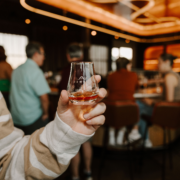
Queer Bourbon Week started at New Riff Distilling for the official kick-off party. Featuring delicious bourbon cocktails, light bites, and a taste of New Riff’s Queer Kentucky special batch bourbon created specifically for Bourbon & Belonging. The evening was filled with great vibes, good people, and flavorful bourbon.

This was a unique experience that offered something new to LGBTQ+ folks, a glimpse into the world of bourbon that is often taken over by the straight, male community. As we walked through The Aquifer Room, we saw people engaging with one another, talking with New Riff distillers and learning about their specialty bourbon.

Each of the employees were knowledgeable about the different types of bourbon they were offering, which cocktails would be best for us, and the proper way to enjoy a glass of bourbon. As a bourbon enjoyer, I wanted a cocktail that was approachable, but with a bourbon flavor that allowed me to explore the different layers of tastes. Caitlin wanted something that was smooth, flavorful, and easier to drink. New Riff had a wide variety of options for everyone to enjoy, and every option was delicious.

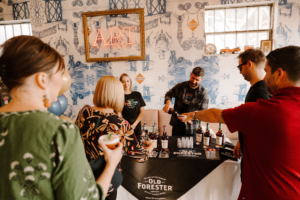
Next on our Bourbon & Belonging agenda was the Bourbon & Smoke tasting event at The Standard in Covington. As you walk into The Standard, you’re greeted by a few different bourbon options from Heaven Hill Distillery, Elijah Craig, Evan Williams, Old Forester, and more. Each brand had a variety of options of bourbons with different flavors and levels of intensity. While the bourbon brands had folks talking us through each option they had, they offered flavor profiles, tasting notes, and history of each bottle they had with them.

Bourbon & Smoke tasting event at The Standard in Covington.

We also visited the bar which had a variety of cocktail options, made with the bourbon brands on site. I had a sweet honey cocktail that was smooth, filled with bourbon flavor and a hint of sweetness—perfect to sip on while enjoying The Standard’s large patio. Each attendee also got to enjoy a buffet of delicious food, made by The Standard’s kitchen. We devoured smoked pulled pork with a bourbon glaze that left me wanting more—I am still dreaming about that sandwich. Bourbon & Smoke was a great event to relax and network, learn some new things about bourbon, and try some amazing food and cocktails.

To start off the weekend, we hosted Gays & Dolls: A Queer Prohibition Party at Leapin’ Lizard. Imagine you’re transported back to the 1920s, where bourbon is illegal, fringe is the latest fashion trend, and jazz is mandatory. As you walk into Leapin’ Lizard, candles fill the tables, bourbon is flowing, music is playing and drag performers are dancing throughout the room.

We were joined by Lola Vuiton, Delusiona Grandeur, and Manuka Honey Stix-Chimera for a drag show straight from the flapper era. After the show, the dance party took over the floor, with a perfect mixture of jazzy 20s tunes and modern upbeat bass. By the end of the night, we were out of breath from dancing the night away.

Closing out Bourbon & Belonging, we headed to Opal Rooftop for a drag brunch, hosted by drag performer P.H. Dee and music by DJ Bobby G. The weather was perfect to sit out, take in the views, and enjoy performances by local drag queens.

Opal Rooftop Drag Brunch.

After a week of drinking, dancing, learning, and mingling, this was the perfect end to Queer Bourbon Week. Each table got up and went through the breakfast buffet that was hands down, the best breakfast buffet we have ever had. Caitlin and I still talk about how good it was almost a year later. As we enjoyed our food, P.H. Dee started the drag show, alongside Manuka Honey Stix-Chimera, Jossie G, and Alana Reign. Each performer brought their own art to each of their performances, doing jump splits and reveals to soulful ballads with flowing gowns to add drama to the number. Every second of this drag brunch was entertaining, from the drag show, to the food & cocktails, to the music. I left with a full stomach, a nice buzz, and a smile on my face.

Bourbon & Belonging offered so much more than just what we experienced in Northern Kentucky. With four different cities and regions participating in the events, there is no doubt that there is something for everyone. Bourbon & Belonging showed me that the Queer community wants to enjoy the things that we may not always be welcomed to. The bourbon world may be an intimidating place, but Queer Kentucky got rid of the intimidation and said, “you’re welcome here, grab a glass and enjoy some bourbon with us.”

I’m so grateful to have been able to experience the first year of Queer Bourbon Week, and I can’t wait to see what’s to come for this year. Attend Bourbon & Belonging Queer Bourbon Week October 3rd to October 5th throughout Kentucky this year, visit https://www.bourbonandbelonging.com/ to learn more.

Acid, Ache, and the Grief Behind the Glamour: A reflection on substance abuse, recovery, and the ghosts, glitter, and grime in between.

Content note: This story discusses suicide, substance use, sexual assault and an eating disorder. Support resources are listed at the end.

This story is part of Queer Kentucky’s digital issue surrounding the trans youth experience in the Bluegrass state, featuring personal essays to educational information. Read the full issue here.

Photos and story by D.L.

It was 2023. The world had been ending for three years, but my world was ceasing to exist. My family home burned to bits two years prior, my uncle’s breath was flattened by fentanyl months later, and my grandfather had just been crushed by cancer. Death followed me like a dog. In my new adulthood, I fled Louisville, thinking it might not find me. I was 19, suicidal, and believed if I wanted to survive, I needed to be numbed. 

Then I tripped.

On acid, I was anything but numb. I was honest with myself. Despite the fact that I was tripping to forget the grief that defined my life, I spent most of my trips remembering the people I’d lost. I could remember their laughs without shutting down. I could remind myself that I’ll never see them again and somehow survive. I felt halfway-human again. 

When I tripped, I acknowledged death and grief as part of the incomprehensible human experience and accepted it the same way I accepted any mind-fuck on psychedelics. When I was sober, only two things mattered:

  1. People I love are dead.
  2. There’s something I can put in my body that makes me feel like I’ll survive that.

I spent seven weekends straight searing my brain too stupid to hurt. I avoided sobriety in an effort to evade sadness and how scared I was. In public, I was uncomfortable. At home, I was anxious, like every second spent sober was grief catching up. 

On acid, I soaked in a technicolor, spiraled version of my world. I felt everything completely. Every touch was 200 volts of pure, white-hot pleasure. Every emotion was an energetic pulse of ecstasy. I saw heart-shattering beauty in everything and everyone. I had never felt so connected to music, strangers, and myself. 

At first, it felt glamorous. I was doing drugs in a big city, mentally unravelling and surrounded by sweat-soaked, sparkling strangers and brain-buzzing bass, held together by nothing but torn fishnets, pasties, and a pink feather boa. I had more fun than fear and got high on the glory of parading my body while destroying it. 

I’d never shown so much skin. I grew up bulimic, and before I started raving, the most positive relationship I’d had with my body was centered more on acceptance than any sort of love or confidence. Being chronically ill, I also had a complex relationship with my body and the physical pain that comes with living in it. 

It shocked me how supportive the community is. I understand the push toward body neutrality, but to be seen so clearly and to have my style, creativity, and appearance complimented constantly was cathartic. It was impossible not to feel good about myself when beautiful women were saying I was the sexiest person they’d ever seen. 

Besides that, I enjoyed the freedom of getting to be topless in rave and festival spaces regardless of my gender. I liked that even if they wouldn’t remember them (typical), nobody looked at me weirdly for saying that my partner and I use they/them pronouns, because to do so wouldn’t uphold PLUR(R) – Peace, Love, Unity, Respect, and (the often omitted) Responsibility. 

With this newfound confidence and freedom, my outfits became increasingly revealing. I knew outwardly, to many, I looked like a party girl who was doing too much for attention. But I adored the euphoria that came from being myself, being comfortable in my skin, and feeling seen. 

At my first raves and festivals, I pretended there were no preconceived notions about my body or gender. I felt like a ninety-percent-naked, genderless fairy flitting around the woods, surrounded by people who only noticed the music, not my body. 

This was delusional. I was groped and misgendered often, sometimes by people I considered friends. People who sexually assaulted me were seeing and enjoying my body and outfits from a place of perversion, not expression. I’m not ashamed of sexuality and value it both in my presentation and as nature, but being groped while incapacitated on drugs is obviously neither a sensual nor consensual experience, and showed me how I was truly perceived: a nearly-naked woman too high to defend myself. 

I can’t say I’ve never harmed people on drugs. I let relationships fizzle out because I was putting more energy into escapism than I was into any of the living people I love. I was selfish. My brain was curdled. Even sober, I was an alien disconnected from everyone – and ironically, it was because of the drugs I took to feel connected to people. 

On acid, I was no better. I was incoherent and often either too affectionate or standoffish. I prayed that people considered my uncomfortable behavior whimsical (at best) or wooky (at worst), but looking back, I was just sloppy. I felt like my substance use couldn’t be as bad as it felt because friends were still seeking me out at events, still saying they loved me, still saying I was fun to party with. But I woke up steeped in shame after every night out. 

Maybe I was fun. Truthfully, I wouldn’t remember. And that was the much larger issue. My feelings on the subject are best summarized by the way my friend explained her sobriety from cocaine: “I’m tired of having no memory of the best nights of my life.” And I’m tired of the memories I do have being shrouded by shame. 

For me, the most euphoric part about any rave is being so overtaken by the love for the music and people that I forget to care about how I look dancing and just move and feel. I deserve to be present in that, and I want to remember it. 

In the darkest depths of my addiction, I needed to understand that the false dichotomy of drugs being “good” or “bad” wasn’t going to save me. More than I needed to quit any substance, I needed to sit with the reality that I was using drugs to distort. Being constantly high was destroying me, but so was stifling the hurt beneath it. 

Two years later, I’m able to find beauty in the world and can feel what is distinctly ugly, painful, and difficult without the buffer of substances – I love the complex, grief-filled world and body I live in enough to not chemically sever myself from them every chance I get.

If you or someone you know is struggling, call or text the 988 Suicide & Crisis Lifeline at 988. LGBTQ+ young people can press 3 to reach counselors trained in LGBTQ+ care, an option that returned on Sept. 30, 2026 after it was cut in July 2025. The Trevor Project also offers 24/7 support at 1-866-488-7386 or by texting START to 678-678.

Transgender Life at the University of Kentucky

This story is part of Queer Kentucky’s digital issue surrounding the trans youth experience in the Bluegrass state, featuring personal essays to educational information. Read the full issue here.

Experiencing life as a transgender person is inherently different from moving through it as a cisgender person. As a nonbinary person, I had to learn how to maneuver many facets of the education system. 

Growing up in rural Scott County, K-12 was incredibly difficult for me. For a long time, I experienced a lot of harassment and bullying, which caused me to view myself very negatively. It also framed my view of the world, making me think that everywhere and everyone would treat me with disdain for being myself. It wasn’t only students who treated me that way, but some of my teachers who joined in on the bullying. 

When I graduated from high school, I decided to attend the University of Kentucky, near my hometown. I expected it to be so similar to my prior school experience, but it was way different than what I had imagined.

I began my undergraduate degree in media arts Studies at the University of Kentucky in 2020. I barely spoke on my first day, and for the first few years of my experience. When walking to classes, I spent more time staring at the ground instead of looking at people’s faces. I did my best to make myself look small, or even more so, invisible. I rarely participated in class discussions. I took every footstep so carefully, someone watching would likely think I was walking over a decaying rope bridge. Anytime people started laughing, my head would dart toward them, thinking it was directed at me. Truthfully, though, it never was. 

As my experience at UK continued, my perspective started to change. My professors were interested in what I was thinking and wanted me to share my ideas with my peers. Instead of being shut down or laughed at when I spoke, I was encouraged to speak more and louder. I slowly became brave enough to use my voice more and more, and I was shocked when I wasn’t being laughed at or harassed later about what I had said. I started feeling like my opinion held value for one of the first times in my life. 

It became increasingly common for professors to state their pronouns and ask everyone else on the introduction day of each course. When I started college, I was terrified for anyone to know I was transgender in any capacity, but as it became more normalized to discuss, I found myself openly saying, “Hi, I’m Jules, and my pronouns are they/them.” I started feeling proud of my identity. Something that changed throughout my experience as a nonbinary person at university was my bravery. I’d always found it easy to stand up for other queer and trans people, but never myself. Because of how supported and safe my professors made me feel, I started correcting my peers when they misgendered me. No one ridiculed me when I did this; instead, they quickly apologized, corrected themselves, and moved on. 

Many of my classes discussed gender identity concerning many topics. I learned a lot about how society is tailored, largely using the gender binary to maintain present power structures. I understood then just how valid my unique experience is from societal standards. University was eye-opening, and it showed me a world far more vast than the small, narrow-minded society I had previously experienced. 

I was studying media creation, and with that comes conversations about including diversity in media projects, and the ethics of the content being created. For myself, it showed that LGBTQ+ people and POC are being brought to the forefront of the conversation. LGBTQ+ people are often creativity-minded, so through my photography classes I found many queer and trans friends. We built community with one another that way, and helped each other navigate through some of the trials of early adulthood. 

Having so many friends who had experienced my struggle, I was inspired to start doing what I could to make a difference. I attended protests whenever possible for the rights of many diverse groups, and for larger, international political movements. I started using my social media accounts almost solely to spread political and social justice awareness. While I wasn’t super involved in on-campus organizations due to social anxiety and other mental health issues I was dealing with throughout college, I found my own ways to generate change. Personally, one of the most important ways to generate this change was showing up for the queer people in my life however I could. 

University life can be eye opening and life-changing for transgender people. I didn’t expect myself to build such a supportive community, particularly from school, but I did. I created a place in the world, and others gave me space to do that. The experience can vary from person to person, and it depends on which university is chosen to attend. I attended university in one of the only blue cities in the state, and I slowly felt very comfortable and supported by my environment. It was worth every late night and the stress spent on my assignments. Finding acceptance and community is a big deal for trans people, and has the power to bring something rare and important to the table: hope.

Access in the Movement: A Shared Byline on Disability & Activism 

By Sage Barr (they/he) & Mo Viviane (they/she/he/it)

This story is part of Queer Kentucky’s digital issue surrounding the trans youth experience in the Bluegrass state, featuring personal essays to educational information. Read the full issue here.

Disability justice is the backbone of trans movements. When navigating through our experiences, we are met with every intersection of being. Here you will find correspondence of two disabled trans individuals, from expansive perspectives and life experiences, that assist in understanding how accessibility is about more than just the physical spaces we enter; it is a collaborative effort to weave together advocacy by prioritizing the most marginalized individuals in planning, execution, and convening.


Sage:
Disability and activism are more intertwined than you might think. When you’re disabled, you get good at advocating for yourself, being persistent, and sometimes getting loud just to be heard. Those same skills show up in my activism every day. I’m young, disabled, deaf, queer, and trans–and my activism started when I was 15, speaking at a library board meeting after anonymous complaints about LGBTQ+ Pride Month displays. 

The library was my second home– tie-dye programs, robotics camps, volunteering at story times, so it mattered to me to show up. I didn’t think of it as “brave” or as activism, just defending something important. But that night lit a bit of a spark. 


Mo: 

To me, that spark is about the moment you speak up because you have to, not because you’re ready to be an activist. For me, in my undergraduate studies at Northern Kentucky University, it meant fighting my own brain before I ever reached a meeting or a die-in on campus. Bipolar disorder, AuDHD, and severe anxiety don’t exactly make activism easy. Some days, just getting out of the door feels like a rally in itself. 

And yet, like Sage, I couldn’t stay silent. My activism was born out of necessity–when spaces I loved and people I loved were under attack (and still are), my body and mind didn’t get to “opt out.”


Sage:
After that library meeting, strangers called me brave. I didn’t see it that way. Soon, I was at school board meetings, speaking against book bans on titles like “Stamped,” “Gender Queer,” and “From the Mixed-Up Files of Mrs. Basil E. Frankweiler.” I joined rallies against SB 150, a bill forcing schools to out trans students. Still, I didn’t call myself an activist – I was just showing up, making signs, lending time. 


Mo:
And that’s the thing – ”just showing up” is activism. But for disabled folks, showing up comes with extra steps: navigating sensory overwhelm, finding safe transit, and figuring out where to position yourself so you’re not boxed in the crowd. For me, being Black and nonbinary adds another layer; entering spaces that claim to fight for racism and transphobia while still carrying both in their culture. 


Sage:
The first time I saw intentional accessibility at a protest was the 2023 Trans Youth Rally in Frankfort. There was an interpreter. For the first time, I didn’t have to scramble for access – I could just be there.

As a Deaf person who also uses a cane and manages sensory needs, navigating crowded events can be exhausting. If there’s no space to move or no thought given to how people can access the event, it’s easy to feel like your presence isn’t welcome. That rally showed me it could be different.

Mo:
That’s exactly it. Accessibility isn’t about being extra; it’s the foundation of sustainable movements. For me, that could mean quiet corners, clear signage, or event leaders who understand that I might need to step away. And mental health access matters too – creating spaces where people can be involved without being pushed past their limits.


Co-creatively, we come to activism from different places, yet our truths coincide with one another. Movements are only as strong as the access they build in from the start. When accessibility is treated as an afterthought, movements exclude the very people they claim to fight for. But when disabled folks are centered, when care and access are built into every step, movements don’t just get bigger – they get stronger, more resilient, and closer to the world that we’re all fighting for.

For allies, here’s what that looks like:
• Ask about accessibility before the event, not the day of.
• Budget for interpreters, captions, and mobility access from the start.
• Make spaces where people can come and go without shame or guilt.
• Share information in multiple formats – written, visual, spoken – so everyone can engage.
• Remember that not all activism happens in the streets; online organizing, mutual aid, and behind-the-scenes care work are just as vital.

True solidarity isn’t about inviting disabled people into a space that’s already been built – it’s about building the spaces with us at the forefront of your planning. 

Death Before Detransition: A Word from the Executive Director and Editor-in-Chief

Dear Reader,

Protect. Trans. Youth.

As a Queer journalism organization, our platform is our greatest power, and it is with complete joy that we hand it over to the trans youth of Kentucky for this special issue. With anti-trans legislation sweeping the nation, and trans Kentuckians no strangers to these attacks, the voices of trans youth need to be uplifted now more than ever.

This year, 953 anti-transgender bills were introduced across the United States. Of those, 120 were passed into law, including Kentucky’s House Bill 495, which bans the use of Medicaid for gender-affirming care, and Senate Bill 2, which prohibits public funding for gender-affirming care for transgender inmates. Let us also not forget Senate Bill 150, which was signed into law in March of 2023 and had the biggest impact on trans youth in Kentucky. The legislation bans gender-affirming care for minors, restricts discussion of gender identity and sexual orientation in schools, limits bathroom and locker room access, and allows teachers to deny the usage of a student’s preferred pronouns.

Experts say the ongoing political and social battles targeting transgender youth are harming their mental health. A 2024 Trevor Project study found suicide attempt rates among trans youth rose by as much as 72% in the first year after states enacted anti-transgender laws. Trans youth are in pain and need to be heard.

For almost a decade, Queer Kentucky has served as a voice for LGBTQ+ Kentuckians, and that is something we take great pride in every day. When we were awarded the Charles and Jack Endowment Fund Grant from the Community Foundation of Louisville, we were posed with a task: create programming to inspire the lives of LGBTQ+ youth in Kentucky.  So naturally, we created a project that specifically boosts the voices of the remarkable trans youth community across the Bluegrass State.

However, as two cisgender leaders of this organization, we knew it was important to hand over the leadership role of this special digital issue to a trans leader and creative genius. Enter Covington native, Mo Viviane. Mo has nurtured this project from inception to fruition—meticulously sourcing writers and artists to curate a unique piece of art to be celebrated by queer people and allies alike. It is a privilege working with Mo, and we thank them for their
dedication to advocating for the queer community and trans youth.

The stories that live in this issue serve to evoke emotion and empathy while also educating readers on the lives of trans youth in Kentucky. Our wish is for you to cherish this piece of art and find value in the voices of trans youth. They are the voice of the future.

Always,
Missy and Spencer
Executive Director and Editor-in-Chief

If you or someone you know is struggling, call or text the 988 Suicide & Crisis Lifeline at 988. LGBTQ+ young people can press 3 to reach counselors trained in LGBTQ+ care, an option that returned on Sept. 30, 2026 after it was cut in July 2025. The Trevor Project also offers 24/7 support at 1-866-488-7386 or by texting START to 678-678.

Death Before Detransition: Letter from the Editor

Dear Reader,

This is not just a magazine issue–it’s a gathering of voices that are raw and radiant. When I was approached to be the assistant editor of this project, I did not hesitate. As someone who falls under the trans umbrella and who has worked directly with trans youth and adults for the past ten years through resource allocation, community building, and collective gatherings, it made sense for me to land here.

Working with each one of these writers and artists has reminded me that there is hope and faith to be had. That the future that we so dearly aspire, is right with us. That we are it. We encapsulate creating a world worth living and loving in.

If you’re here, you’re holding closely, ten pieces by Kentucky’s trans youth, all visualized by a trans collage artist, each carrying their own truth with clarity, courage, and deep care. What you’re about to read isn’t just a set of articles, it’s testimony, it’s resistance. They are love letters to the people we’ve been, the people we’re becoming, and the world we aim to live in.

This collection is deeply personal–not just to those who wrote it, but to many of us who will see our reflections in them. It holds stories of navigating health systems that too often shut us out, and of fighting for the right to use a bathroom in peace. It holds the wisdom of disabled trans activists who remind us that access and liberation must move together. It holds grief, anger, joy, and so much more.

Some of these stories crack open experiences we’re taught to hide–like one writer’s journey through substance use and healing, or another’s vulnerable exploration of how transitioning shaped their songwriting, their sound, and themselves. These are the kinds of stories that don’t often make it to mainstream conversations about trans lives–and that’s exactly why they need to be told.

Every single one of these pieces speaks to something bigger than just one person’s experience. Together, they’re a call–a firm insistence–that we are more than the narratives forced on us by our constituents, families, and societies. We are not problems to be solved or policies to be debated. We are people. And we’ve never needed to prove our humanity to be worthy of care.

Every one of these amazing writers and artists asks us to look deeper—to see trans youth as who they are: leaders, creators, lovers, visionaries, and that space needs to be held for complexity, contradiction, and the beauty of life—shaped by violence AND liberation. I ask that you recognize this collection as a call for radical transformation – of systems, of how we love, support, and fight for one another.

If you’re trans and reading this, especially if you’re young: this is for you.

You are not alone. Your joy matters. Your anger, your softness, your questions, your growth – belong right where you are. I hope you find reflections of yourself here. I hope these words remind you that your life is already powerful, even when it feels hard to be seen and understood.

And if you’re not trans: please read these pieces with care. Let them unsettle you if they need to. Let them expand your understanding. Let them pull you closer to the fight for liberation–because this isn’t just about trans people, it’s about all of us. The work of dismantling harmful systems and building something better will take all of us.

To the writers and artists: thank you for showing up with such honesty, talent, and truth. I’m endlessly grateful to you for trusting Queer Kentucky with your stories. This digital magazine is yours. Keep it real, keep it grounded, keep creating,

Mo Viviane (they/she/he/it)

Assistant Editor

Punk, Pride, and Politics in the Eastern Kentucky Music Scene 

If you wandered into Whitesburg on a Saturday night in the early 2000s, you would have heard the muffled thud of drums and the wail of guitars from the Boone Motor Building before you ever saw the faded brick exterior. Inside, folks packed shoulder-to-shoulder in this small space that once housed an auto dealership in its heyday. It wasn’t uncommon to see metalheads, queers, gender rebels, and misfits of every kind mingling together, waiting to see their favorite bands perform. Pride flags often hung from the walls and homemade zines and patches were traded like currency. No one cared how you dressed, who you loved, or what you looked like. For many of us, it was the first time we’d ever been in a room where we were able to be our selves—our true authentic selves. 

That was my first experience walking into a show as a teenager in 2003. I was wide-eyed, nervous, and deeply unsure of myself and my identity. Stepping into the Boone Motor Building, I was able to let go of these intense feelings and find myself within the music. I was mesmerized by the community that had been built there and how everyone looked out for each other. This community was built by folks like Derek Mullins, who helped form the very foundation of the Whitesburg music scene.

Inside the Boone Motor Building, Whitesburg. Photo credit: Mitchella Phipps.

Derek, who would go on to become something of a “scene elder,” had been playing in bands and booking shows for years by the time I first entered the fold. He became a mentor for many within the scene and held the door open for others to join. 

“Our scene was honestly building something out of nothing,” Derek told me. “We didn’t have a rulebook, or any idea what we were doing—we just knew we needed it.” 

Derek was right. We desperately needed this space and this scene. 

A Scene Without a Blueprint 

Whitesburg is a small town nestled in the heart of coal country with a population of under 2,000 people. While it might seem like an unlikely epicenter of radical queer punk culture, it was exactly that in the late ‘90s and 2000s.

Back then, if you didn’t play sports or go to church, there wasn’t much of a social life to speak of, especially for queer folks. Dial-up internet was unreliable at best, and social media was still a distant dream. In order to communicate, we created our own networks. We found one another at shows and we swapped phone numbers. We used message boards like AppalCore to stay connected. We were isolated, but we were never alone. 

The Boone Motor Building and the budding music scene welcomed everyone, though. It didn’t matter if you were into ska, screamo, anime, or politics—if you were searching for something more than what your hometown could offer, you would find it there in Whitesburg.

Boone Motor Building, Whitesburg. Photo credit: Mitchella Phipps

WMMT and the Birth of Rebellion 

Part of what connected us beyond the shows was the radio. Appalshop’s community radio station (WMMT 88.7) broadcasted through the mountains, and no program had more of an impact than Ska, Punk, and Other Junk. 

Hosted by Ada Smith and other DJs, Ska, Punk, and Other Junk wasn’t just another radio program; it was an education in rebellion. SPOJ, as it was affectionately known, introduced us to bands like Anti-Flag and Against Me!, but also to the weirder side of political punk artists we’d never hear on mainstream radio. I vividly remember hearing the band !!! (Chk Chk Chk) for the first time and connecting with their abrasive, yet funky sound and realizing that music could be weird and make a statement. 

It was during these listening sessions that my own political fire was lit. I didn’t yet know the language of activism, but I knew what it felt like to be angry at injustice. 

The Boone Motor Building: Where We Found Each Other 

Even now, there’s something holy about the Boone Motor Building. Repurposed by Appalshop after outgrowing their theater space (which had “lost all its seats to moshing,” as Derek joked), the Boone Building gave us a place to scream, to cry, to be loud, to be quiet… to just be. 

Show lineups were a mixed-bag and would feature a variety of genres including bluegrass, punk, metal, and more. There were no purists, only people hungry to connect and feel something different from the norm. 

Derek noted, “It didn’t matter what genre you played. [It] was a weird melting pot that reaffirmed that all were welcome.” 

Looking around at these shows, I saw gender non-conforming folks moshing with metal heads. I saw pink triangles painted on amps and anti-fascist stickers plastered on merch tables. It wasn’t branded as a “safe space”, but that’s exactly what it was.

Whitesburg show flyer circa 2004. Photo credit: YouthBored Appalshop Archive

From the Pit to Protest 

For us, these shows were more than the soundtrack to our youth. They were also the gateway to our politics. Flyers for anti-war protests were passed out between sets and zines on police abolition and queer liberation circulated the room. Kids who had never heard of anarchism or mutual aid started asking questions. 

“Politics came later,” Derek admitted, “but kindness, love, and respect were always at the center.” 

That foundation made room for growth and for deeper conversations. These conversations led to organizing and eventually, action. 

GoogleBoys show, 2014

The Power of Organizing and Storytelling in the Scene

One of those former Whitesburg scene kids is Mitchella Phipps, who now serves as frontperson of the riot-grrl inspired band SlutPill. 

“I owe everything to punk and DIY music,” they shared. “It gave me a safe space to step into myself.” 

For Phipps, that meant growing into their queer identity, reclaiming Appalachian storytelling traditions, and using music as a form of protest and community care. Through their work, they challenge gender norms, celebrate queerness, and speak hard truths about rural life. 

“We’re protesting the idea that you have to be quiet. That you have to be a caregiver. That queers don’t belong here.” 

Mitchella Phipps + SlutPill. Photo credit: Mitchella Phipps

Phipps also helped launch eastern Kentucky’s first Girls Rock Camp in 2018, during their time as an AmeriCorps VISTA at Appalshop. This endeavor brought the lessons they learned in the scene full circle. 

“It was the first time I truly felt like I was becoming the person I needed when I was younger,” they said, “and to do that in my hometown? That was everything.”

Appalachia: Not Backwoods, But A Battleground 

There’s a persistent myth that rural places are politically backwards, culturally empty, and artistically dead. Anyone who walked into the Boone Motor Building during this time period would tell you differently, though. 

Phipps sums up this sentiment best, exclaiming, “Go read about Appalachian history. Listen to real country music. Protest is in our blood. This place has always had fighters.” 

The punk scene in Whitesburg wasn’t an anomaly, rather it was the latest chapter in a long history of Appalachian resistance. From union coal miners to queercore bands, this place has always made room for rebellion. 

A Legacy That Still Shakes 

Even as the shows have slowed and the Boone Motor Building sits a little quieter, the echoes of those nights still ring out. Oftentimes, I find myself looking back and wondering who I would be without this place and how it shaped me. For me, that first night in 2003 changed everything. I found my queer identity. I found my politics. I found my people. 

The beauty is that we weren’t waiting for permission to exist. We made space for ourselves, and for each other. That more than anything is what the scene taught us. You don’t have to be accepted to belong—you just have to show up.

(Photo credit: Mitchella Phipps). 

To learn more about the eastern Kentucky music scene, visit the Appalshop digital archives collection at https://www.appalshoparchive.org. 

This piece is dedicated to Lill Prosperino, who embodied the spirit of queer punk in the mountains—fearless, loud, and unapologetically themselves. Their presence lit up the stage and every room, touching hearts in Whitesburg and beyond.

Navigating health care in an anti-fat and anti-Black world

At the time, I couldn’t name the feeling. How can a child, no older than ten-years-old, articulate the unique discomfort of a cold, sterile exam room while adults discuss her weight? Already so used to bottling up my feelings, I sat there trying to choke back tears, the tingle in the back of my throat intensifying with every word that made me fold into myself. High cholesterol. Diet. Lose weight. By the end of the appointment, my pediatrician became another person who made me ashamed of my weight. Another reason to cower and fold into myself. Another lived experience to build onto my impenetrable walls of safety. Those words, dripped in concern and laced with disdain, hurt me.

I walked out of the office with my head hung low in shame and my own weight on my shoulders, almost like the innocence of childhood was taken from me. I had to grow up with a big, fat monster hovering over me, reminding me that I’m not like others. I’m damaged and should be ashamed for the way my body looks. Negative body image has entered the chat, right at the start of my adolescence and the “Childhood Obesity Epidemic.”

On October 26, 1999, the CDC (Centers for Disease Control and Prevention) posted a press release to name and address the problem that needed to be eradicated by any means. In the press release, then CDC director, Jeffrey P. Koplan, expressed grave concern about overweight and physically inactive Americans, stating “obesity is an epidemic and should be taken as seriously as any infectious disease epidemic” (CDC, 1999). Suddenly, fat bodies are classified as diseased and inherently bad, a moral failing of the people living in those bodies. Additionally, this classification created a more acute fear of “catching” fatness, and a desperation to police and get rid of fatness, and opened an even larger market for the weight loss industry.


Art by Andy Mendoza

Although the extremities taken to treat obesity puts the lives of fat people at risk, Cardel and Taveras (2020) suggests a cost-benefit analysis of treatment and potential risks of those treatments. They specifically name disordered eating as a risk, and despite the fact that eating disorders “carry one of the highest mortality risks of any psychiatric disorder,” they continue to suggest that “obesity treatment programs must consider the balance between the harms of excess weight and those that may occur from weight management.” When weight is used as a measure of health, losing weight is always the “cure”. Scientific conclusions like those that prioritize weight loss over lives, aid in the dehumanization of fat people, and lead to medical professionals disregarding symptoms and misdiagnoses for fat people.

Within minutes of my first appointment with a new primary care physician, I was asked if I want to lose weight because I’m a great candidate for weight loss surgery. After reluctantly saying yes (because that’s what I should want, right?), he gave a list of documentaries to watch. One of those being Fat, Sick, and Nearly Dead, a documentary about a man drinking only fruit and vegetable juice for 60 days. A healthcare professional suggested a documentary that showed disordered eating habits. After a few more visits I stopped going, and that experience aided in my reluctance to seek treatment, which significantly informs my slight case of hypochondria.

That anxiety I experience about any health symptoms is one of the main causes of my panic attacks. Knowing that my Blackness and fatness will cause health professionals to not take my symptoms seriously and make me feel embarrassed about my weight, I hesitated on seeking help until I start thinking about my ignored symptoms possibly leading to my death. I now feel comfortable with most of my physicians; that feeling of shame is not so haunting, and I am more equipped with the knowledge and more confident in advocating for myself. Not everyone has those tools, nor should they be expected to fight systemic health inequities.

The onus should be on health professionals, teaching more compassionate care, and educating them on the ways systemic discrimination impacts the healthcare marginalized communities receive.

Let’s discuss the oversexualization of an Appalachian cryptid: Mothman

Appalachia has always been a source of intrigue, pride, and alternatively, fear, for Kentuckians. The history in the Appalachian region is rich, filled with historical accounts and stories about cryptids and mythic beings within the mountains. Appalachia is an important source of culture for all Kentuckians, making it intriguing to look at this history through the lens of queer individuals.

Mothman, a well-known Appalachian cryptid, is a great example of this intersectionality between queer identities and Appalachian culture. In rural areas like Eastern Kentucky, Queer people have been called many things: groomers, predators, evil, etc. Queer culture is reduced to being “all about” sex, and deemed perverted. While sexuality is an important aspect of queer culture, there are other characteristics that are overlooked and ignored.

Historically, queer people have been outcast, seen in a negative light, and mistreated by overarching society. Villains in media are often portrayed with queer stereotypes or heterosexual ideas surrounding queer identities, such as a hypersexualization of the character. For example, Ursula, the villain in Disney’s “The Little Mermaid,” is written based off of the drag queen Divine. While Ursula has been reclaimed by many in the queer community, her original portrayal in the animated Disney film painted drag queens in a negative light. Ursula is written as predatory, teaching Ariel how to use her body to get a man in exchange for her ability to speak. This portrayal indicates the common societal stories told about queer people.

photo by Richie Goff

The way characters are displayed to viewers tells a story all on its own. The famous Mothman Statue in Point Pleasant, West Virginia depicts the legendary creature as an incredibly tall, sculpted creature with hyper-masculine features. His torso is blanketed by chiseled abs, and his backside is adorned with a pair of plump buttocks. This depiction of mothman banks on traditional views of masculinity. Even in a character of folklore, his existence is limited to binary ideas of what a “man should look like.”

Despite his overly masculine characteristics, it’s popular for tourists to take sexualized photos with the Mothman Statue, such as sliding money or credit cards in the crack of his butt. Once a feared creature of the night, he is now treated as an object of sexual innuendo.

While the fear of LGBTQ+ persons is based in hatred and misunderstanding, there is a rhetoric of fear surrounding queer culture and identities. Queer folks are often a scapegoat for cultural or societal issues. Currently, many politicians and political parties are blaming queer people for sexual violence or grooming, particularly against women. These accusations are leading to reduced access to healthcare for queer people with actions like defunding HIV research, and increased rates of acts of violence against queer people. 

Much of this Anti-LGBTQ+ legislation is due to the villainization of queer individuals seen every day by political figures, certain media pieces, and religious groups. Accusations surrounding queer culture are that of being sexually predatory, despite this idea of sexualization stemming from heterosexual ideologies surrounding queer people. We can see this in the arguments that “drag queens should not be allowed around children,” despite drag being a multi-faceted art form. Drag performances are not only or always sexual—they can also be comedic, artistic, transformative, and inspiring.

The Mothman Museum. Photo by Richie Goff

This intersects with the treatment of Mothman as a demonized piece of rural culture, which can be relatable for queer individuals. Some see him as the “bringer of the apocalypse” leading to  the objectification of the statue of his body. This shows the common mistreatment of misunderstood or feared creatures. 

Queer people, depicted by right-wing ideologies as “predators,” have embraced this cryptid. A writer on Shapeshifters, a company dedicated to providing inclusive undergarments and other LGBTQ+ items, shared their idea of Mothman’s relatability to queerness. 

“There’s a certain line the right wing in this country likes to use against The Gays, one I’ve heard since I was a small child. It goes: queer people are threatening our way of life. Queer people are the pebbles that start the avalanche of apocalypse, the collapse of civilization as we know it,” they said, relating their experience to the same rhetoric that surrounds Mothman. “…I can walk past a line of protesters at Planned Parenthood and see the hostility rise up, the anger and revulsion and fear…I think something in them knows that I’m just one of 2.6 million transgender people out here… casually being a harbinger of their doom. Next time they come to Brattleboro, I ought to greet them with red glasses and a twelve-foot wingspan.”

Mothman art at the Mothman Museum. Photo by Richie Goff

Mothman has been claimed as a symbol of queerness for rural LGBTQ+ people, and this has been accelerated by the Internet. John Paul Brammer, a writer at Buzzfeed, wrote about his experience relating queerness to mothman and other villainized creatures. “While in a pit of my listless despair, I came across an odd YouTube video about a creature that had terrorized the small town of Point Pleasant, West Virginia, in the ’60s. It was in that moment that my obsession with the Mothman… was born,” Brammer said, “Where I’m from, a small town in the middle of nowhere, the gay man was the bogeyman… constantly waiting to prey upon the hapless straights… salivating at the prospect of converting them to the gay dark side with his bite.” Brammer was able to find something to relate to in the mothman legends, along with many other queer folks, through the internet.

In online shops, at pride festivals around the state, and at other small queer businesses, a large quantity of Mothman memorabilia can be found. He is depicted on pride flags, in jewelry, as plushies, and so much more. As a misunderstood, mistreated creature of the night, Mothman has found his place in the queer community. 

Behind the Scenes: Laura Petrie Reflects on Pride and the Impact of Lesbian Film

By: Laura Petrie, Executive Director of the Cinema Systers Film Festival in Paducah, KY.

When it comes to movies, no two scenes are the same. 

It’s the unexpected twists, emotional moments, and bittersweet endings that make a movie worth watching over and over again. In a similar way, no two women are the same. Our unique identities and experiences allow us to shape our vibrant communities and write the script of what the future will hold.

As the Executive Director of Cinema Systers Film Festival, the only all-lesbian film festival in the United States, my mission in the months following Pride Month is simple, yet powerful: to create a space where both women and films are celebrated in their full authenticity. 

Our Paducah-based festival each Memorial Day Weekend has transformed into more than just a showcase of talent. Since 2016, it has grown into a community that takes center stage in the lives of countless women who are a part of the LGBTQ+ community. Our films are created and directed by women, for women.

It’s no secret that films are best enjoyed with each other. Today, it has become imperative for the LGBTQIA+ community to remain connected, especially when it comes to the art we share. As beautiful as a film can be, oftentimes it’s the beauty of sharing it with one another that is the real reward. With our film festival being one of the only events in the country with our kind of presence, we must lift it up to share with others.

While the four-day film festival was in-person, I realized the importance of going online to connect with people throughout the rest of the year. So, in 2016, I bought a computer and created my first Facebook profile. Despite my limited knowledge of digital tools, I was determined to find new ways to reach audiences and fill the theater seats during our festival. Once I began to promote our film festival online, in-person attendance increased. Now, almost 10 years later, social media continues to help us share the works of Sapphic filmmakers with our growing network of supporters. 
Through our social media platforms, we have created a stage to share our filmmakers’ art with audiences who might not otherwise see these stories reflected on screen. Year after year, lesbian filmmakers and attendees from across the country not only found our festival, but they showed up in our sweet river town in Western Kentucky. Thanks to creating our Facebook page ten years ago, our festival and community have grown in ways we never imagined. 

Our content is centered around our upcoming film line-ups, which we showcase through Reels, paired with Pride graphics and events that we boost, allowing us to engage with our ever-growing community. While our reach is now across the globe, we have not lost sight of our local community by resharing posts from like-minded organizations next door, like Paducah Pride United Together. 

I’ve found that success stems from having the courage to promote your business and a willingness to learn. In my case, I manage the social media tools available to me, and I encourage anyone looking to build community to explore what social media has to offer. 

The heart of Pride is visibility, and Cinema Systers Film Festival maintains a commitment to this visibility by not only hearing lesbian voices but celebrating them not only during Pride month, but in the other months of the year. Together, this mission and our commitment to leveraging the tools at our disposal allow us to continue to write the next scene–bold, proud, and unmistakably ours. 

Joy and Connection: Celebrating Pride as a trans person in rural Kentucky

Celebrating pride is an important part of reminding transgender people in Kentucky (and worldwide) that there is community and safety to be found, even in the face of much discrimination and anti-trans legislation. 

As a nonbinary person, celebrating pride has been a transformative experience for me. The first time I was able to go as a young teenager, I found myself in the most accepting environment I had ever seen. 

I had struggled with my identity for quite some time, feeling isolated from my peers in my hometown where I was one of few transgender people. When I went to LexPride, a Lexington festival that takes place each June, I was surrounded by people like myself. This changed my perspective, and led me to finding self-acceptance, and even joy in my identity as a trans person. 

For transgender folks especially, pride fosters an environment of education and inclusion. Many nonbinary people find difficulties in feeling like they are “trans enough” for transgender spaces. 

Ripley Morgan, a 24 year old nonbinary individual, said that pride helped them to accept their gender identity. 

“Going to Pride helped me see that there is more to being trans than just MTF or FTM…there are so many people who identify as many unique identities that all fall under the trans umbrella,” they said. “We’re building a community to support each other.” 

Queer education, particularly in rural areas, is not part of the educational curriculum in schools, but is one of many important resources available at pride. 

Ripley Morgan. Photo by Jules Crawley.

“Richmond Pride last year was the first Pride I’ve ever attended,” Morgan said, referring to the 2024 celebration. “I learned about safe sex for all relationships.” In Kentucky and other rural parts of the United States, conversations about sex are often limited. “I was not taught that at all, only to practice abstinence,” they said. “It is really important for people to be educated so they don’t wind up in bad situations in their daily life.” Pride events, Morgan added, serve not only to celebrate queer joy but also to promote queer health and safety.

Pride festivals also offer education on queer history. 

LexPride offers drag shows, and this is where I was able to see my first one. Drag is such a crucial piece of LGBTQ+ culture and history, so it is important to have access to at a celebration of queerness like pride. Moreover, there are resources provided to find more safe spaces, connections for finding safe and inclusive healthcare, and vendors selling merchandise that loudly celebrates queerness. 

These resources showed me the importance of community, particularly for queer and transgender folks. The amount of care and support given at Pride festivals was something I was wholly unacquainted with and surprised by, and it demonstrated to me that I am not alone in the adversities that I face as a trans person every day. 

Crow Miles, 24, found their first pride festival to be a life saving experience. 

“At my first Pride, I found a line of parents wearing ‘free hugs’ shirts,” they said. “One woman hugged me so tight and whispered, ‘I’m glad you’re still here.’” That moment, they said, made them realize that even in a world where their family and classmates had been cruel, there would always be people who were happy simply because they were still here.

Pride can save lives, and transform unhealthy ways of thinking that queer people are instilled with because of an unaccepting culture and environment. Miles said that that moment has kept them going throughout their life, and is a big reason they’re still here, proudly able to be themself. These festivals aren’t just about celebrating queerness, but helping queer people to survive. 

Crow Miles. Photo by Jules Crawley.

I went to my first pride with a trans flag wrapped around my shoulders like a cape. While I was there, I got rainbow face paint that covered my cheeks in a prideful blush. I felt like my outside was reflecting my inner identity for the first time in my life. 

I watched protestors circle outside of the festival, shouting hateful rhetoric and carrying their homophobic and transphobic signs. Even this led to inspiration, though, as all of my queer siblings shouted back, and danced and sang through the adversity. I watched an entire community support each other despite outside hatred, and I felt truly safe. 

Pride is a fun, uplifting event, but it is important to worry about your health and safety while attending! For those who chest bind, below are some important safety tips to consider.

A struggle I faced for many years attending pride was the heat, as I was chest binding for the majority of my teenage years. This taught me to research safer methods of binding in situations where the heat is inescapable, and led to me searching for binders that were more comfortable in those situations. I want to highlight the importance of binding safely, both for health reasons, and the success of desired gender-affirming top surgery. I have attached an article on the safety tips for binding in the summer here. 

Every queer and transgender person deserves to feel included, and to experience places and people that create an environment of safety. Pride accomplishes that goal, and benefits so many of us every year. 


Rural Kentucky Prides offer visibility, community and hope

Pride has always been important for queer communities and individuals. As many of us know, Pride started with the Stonewall Riots in 1969, and one year later, a celebration of the accomplishments made on the anniversary birthed the first LGBTQ+ Pride marches. After thirty years of effort, June became officially recognized as LGBTQ+ Pride Month by the U.S. government. In Kentucky, we have a lot of rural areas, and Pride was fairly uncommon in many towns until roughly the past ten years. However, pride in rural areas is a crucial piece of decreasing experiences of isolation and ostracization felt by many queer Kentuckians. 

I grew up in a small, Kentucky town as a queer, nonbinary individual. I experienced intense loneliness, being one of very few openly queer people in my peer group. This led to ostracization, loneliness, mental health issues, and feelings that something was inherently wrong with me. Despite these overwhelming obstacles, I was able to attend my first Pride event as a teenager. It was Lex Pride in Lexington.

It was at this event that I felt a weight lift off of my shoulders – it was the first time I was able to experience a true sense of community. Until that point, I had no idea what I was lacking, and this pride event showed me that it was a community full of people like myself. While I still struggle with the inherent oppression that LGBTQ+ people face, I can now look back on my many experiences at Pride Festivals and know that I am not alone, and I never will be. 

Furthermore, Pride taught me a lot about queer culture and history, such as Sweet Evening Breeze, who grew up in Scott County just as I did. Sweets was a brilliant activist, managing to protect queer friends by fighting unfair legal action. Her home was open to many LGBTQ+ people, providing a safe space for queer events, conversation, and activism plans. She is an inspiration, and a reminder that queer people from rural areas can achieve great things for our community. 

While these topics are often easier to learn about now, it was quite a feat while I was a teenager. At a Pride festival, one can hear the history straight from the source of a queer person that has experienced it. It is also inspiring as a young queer person to go to an event and see so many like-minded, older people that were able to survive the turmoils of being queer in rural areas. It instills hope, which is something that numerous LGBTQ+ people, particularly youths, deserve and often need to grow into who they truly are. 

Quinn Barnes, 26, who grew up in Lee and Estill County said that Pride Festivals contributed a sense of belonging and freedom to them. 

photo provided by Quinn Barnes.

“I came from an area where being openly queer and gender non-conforming resulted in various forms of hate, from bullying to physical violence,” they said. “Experiencing my first pride at the age of 17 changed me dramatically, and made me realize that not every one would react so aggressively toward my simple existence. I’ve never felt more loved or accepted, nor more normal than I have at my first pride.” 

Not only does pride allow queer people to experience feelings of community and safety, but it also gives queer folks a sense of normalcy, which is often robbed from those in rural areas after experiencing extensive ridicule. 

Willow Morgan, 24, who grew up in Louisville, and now resides in Richmond, responded that their attendance at a few Louisville pride events while growing up were lovely experiences. 

photo provided by Willow Morgan

“The Pride Festivals in Richmond are extra special,” they said. “I meet so many people, all of different backgrounds, and get to see awesome new perspectives. I love seeing people who are proud of their gender and sexual identity, but it’s also so good to befriend those who grew up in very rural areas and didn’t have a lot of support… it helped me realize that I wasn’t the only one who didn’t really know how to label myself when I was a kid.” 

As shown by Morgan’s experiences, Pride also adds community in showing the diversity of what being “Queer” means. These events show that there’s not one, defined way to be LGBTQ+, but so many different options to be one’s authentic self. Morgan also wanted to highlight that the festivals are both celebratory and a reminder of the importance of mutual aid within LGBTQ+ communities. 

Queer organizations like Pride can show LGBTQ+ people that there is community to be found if we search for it. Pride is a great resource for finding a place to be authentic, and still feel safety in doing so. Moreover, Pride can provide resources that queer folks may not be aware of.

Jax Flowers, 26, who grew up near Seattle and partially in Lexington, highlighted the importance of the life-saving resources provided at many Pride Festivals. He said LGBTQ+ people care about each other, and work to provide safety for the entire community. 

Photo provided by Jax Flowers.

“I have a unique experience with pride because I moved from a pretty liberal area to Kentucky–just before I figured out who I was as a queer person,” he said. “When I got the courage to go to Pride for the first time, I realized just how many of us there were…I found resources: places that would take me in if my parents kicked me out, groups that I could talk to when I was feeling overwhelmed by the magnitude of being a closeted queer kid at home and out at school. I started the day dressed in grey, and ended it covered in rainbows and love.” 

Pride is crucial in rural areas, and provides so many benefits to individuals in the queer community. Through the immense efforts taken by queer people before us, LGBTQ+ communities are now able to show just how proud we are, while continuing political action simultaneously, which honors our history, and paves the way for future LGBTQ+ people. We continue to follow in the footsteps of the creators of what we now call Pride, such as Marsha P. Johnson, Sylvia Rivera, and Jackie Hormone.


To the Homies that Will… Some Notes on Harm Reduction

This story is part of a digital issue of Queer Kentucky surrounding Harm Reduction and its intersection with the LGBTQ+ community.⁠ Check out the full digital issue here.

Picture this: It’s 2015, you’re twenty-one years old, it’s a Saturday night in Louisville, and you were invited to some mansion party. The floor is shaking from the bass; there is glitter all over the place; there are folks dressed in leather; you are wearing only a plaid t-shirt and some jeans and have somehow lost your shoes. There is sex happening in the bathroom, someone is putting their ass in a cake on a picnic table in the front yard, and someone hands you a glow stick bracelet with a knowing nod. 

You’ve never been in a situation like this, but feel inclined to ride it out. Some of the night passes, and a cute person is sitting on a wooden swing in the backyard, looking at you with the eyes and offering you a light blue pill. Next thing you know, you are lying on the ground with them, and your hair is acting as a pillow against the grass. Maybe you think to yourself, “Yeah, this is it. This is what I needed.” 

Now, picture this: You are at a queer bar on a busy corner street. You and your friends have just downed so many PBRs that none of you can feel your face anymore. Now, you have to go to the bathroom. Someone is standing by the door, sweating and pacing. You’re an empath, so you start to feel uncomfortable with them. They’re scratching their arms. The door opens, and they go in. 

You wait a while and knock on the door, asking if they’re okay. No answer. You really have to pee. You check to see if the door is unlocked and open it. They’re passed out on the floor. You crouch, move your hand over their mouth, and feel no breath. There is a needle that is covered in black goo and blood next to the toilet. You yell for help, and a person runs in. They ask if they are breathing; you answer, “No.” They rummage through their purse, pull out a spray, and put it up the person’s nose. “If she doesn’t wake up in a few minutes, we call an ambulance.” Two minutes pass, and the person jolts awake. 

What did you learn? To take care of others and ourselves is of the utmost importance. Even when we aren’t sure what to do, we have tools. Seeing that person on the floor with a black goo’ed-up needle tripped me to understand that there are safe ways for people to do their drugs. As someone who was medically transitioning at the time, I received more than enough clean needles to share with others. I carried them everywhere I went after that. I found friends who had access to Narcan, and I carry that everywhere. 

It’s not my place to sit in judgment, nor do I tolerate anyone else sitting in judgment for me for my previous drug use. Whether you are using drugs for fun or survival, the fact is – use them safely. That’s the real T on harm reduction.  

Queer folks have been the most vulnerable population, most directly impacted by unsafe substance use, and the most in need of community care.  From the AIDS crisis to the ongoing criminalization of sex work and drug use, we know what it’s like to be abandoned by government constituents, public health workers, social workers, organizations that utilize us for clout, and family members who want to care for us when it’s convenient.

Queer folks, particularly Trans-BIPOC folks, are disproportionately affected by homelessness, poverty, and substance use. We have a more challenging time accessing quality, non-judgemental care. These factors make the spread of disease easier within our communities. 

When we talk about harm reduction, we’re talking about protecting each other from HIV, Hepatitis B & C, overdoses, and many other risks associated with substance use. When we talk about harm reduction, we’re talking about needle exchanges, safe injection sites, fentanyl test strips, all of which make sure no one gets left behind because of a choice they made. We’re talking about acknowledging the trauma, discrimination, and mental health implications that often lead to substance use. Instead of punishing people for coping, we should be prioritizing and providing safer ways for them to do so.

When we realize our collective power to care and share care, we can make the world a much better place. Many of us didn’t ask to be on this planet, and somehow, we aid to be here. We must ensure safety in understanding, restorative care, and overall health and well-being. This is for everyone.

So, for the homies that will… 

Here are some practical steps to reduce harm in your life and in the lives of all you may come across:

  1. Carry Narcan: Opioid overdoses are killing our folks, and a dose of Narcan can literally bring someone back from limbo.  
  2. Support Needle Exchanges: These programs aren’t just about providing clean needles; they’re about making sure that people are using drugs as safely as possible. It’s not just “here’s a syringe, good luck” – it’s about education on safer injection practices, reducing the risk of infections and abscesses, and providing people with alcohol wipes and sharps disposal containers. It’s about making sure that no one is reusing or sharing needles, which cuts down the transmission of HIV and Hep C. Many needle exchanges serve as community hubs, offering health screenings, overdose prevention training, and connections to housing and support services.   
  3. Know Your Substances: If you’re going to do drugs (or be with people who do), educate yourself. Know the differences between drugs, understand the risks of mixing them, and test them for contaminants. You never want to think you’re doing one drug but actually be doing something much harder.
  4. Create Safe Spaces: Whether it’s a house party or one night out, designate a sober person to check in with everybody; bring water or snacks, and get you home safely if need be.
  5. Decriminalize and Destigmatize: Support decriminalization efforts, advocate for safe consumption spaces, and don’t treat people like they’re less worthy of respect, dignity, and a quality life because they use drugs or have in the past.

We’ve come a long way from the days when the media only showed drug users as tragic figures doomed to die. But we need more stories, ones that don’t just focus on the struggle but also on the community, resilience, and radical care that harm reduction exemplifies. Queer history is built on mutual aid, and that doesn’t just mean throwing dollars at each other. During the height of the AIDS crisis, when the government wouldn’t lift a finger, it was queer folks, sex workers, and activists who distributed medication, educated one another, and built networks of care. That’s what we needed then, and it’s what we still need today.

At the end of the day, it’s about real, radical love. It’s about making sure that when the party’s over, everyone makes it home safely. 

photo provided by Mo Viviane

Mo Viviane (she/they) – Born in Lebanon, Kentucky. She is an artist who focuses on expansion while using ancestral tools of storytelling, sound frequency, and much more. Their work focuses on the abstractions of life and death and the correspondence to the creativity process. She utilizes laughter and crying as medicine, hoping to make the world a more sustainable and loving place.

If you want to read more from them, their poetry chapbook titled death:ing is out for purchase, and you can find them on Medium and Instagram by visiting: linktr.ee/moviviane.
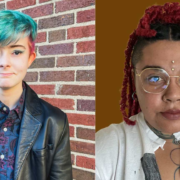
 

A Black Queer Kentuckian’s Thoughts on HIV/AIDS Stigma and History

As a Black, gay, queer man, I understand firsthand the deep and often painful intersection of identity, community, and health when it comes to the history of AIDS and HIV. For far too long, the story of AIDS has been framed in ways that ignore or marginalize the experiences of people like me—Black and queer individuals—who have been disproportionately impacted by this epidemic. Knowing the history of AIDS and HIV within our communities is crucial, not only to understand how we’ve survived, but to honor the lives and legacies of those we’ve lost along the way.

The HIV/AIDS crisis didn’t just ravage communities—it reshaped our cultural landscape, leaving lasting effects on families, relationships, and even how we view health and care within our communities. For Black people, the impact has been multifaceted, compounded by systemic racism, stigma, and a long history of exclusion from vital healthcare resources. The stories of Black lives lost, the strength of our collective resistance, and the ongoing fight for equity are narratives that too often go untold or overlooked.

In Kentucky and across the globe, the repercussions of this epidemic are felt deeply. When we fail to acknowledge this history and its far-reaching effects, we lose more than just medical knowledge—we lose our connection to the resilience that has carried us through. Understanding how AIDS and HIV have affected Black communities is not just an act of remembrance; it is a vital step toward ensuring that our community members today and in the future are given the support, respect, and resources they deserve. This is why the history of AIDS and HIV, and its intersection with race and sexuality, matters now more than ever—it is part of our collective healing and survival.

According to the U.S. Department of Health and Human Services, Office of Minority Health :

  • African Americans were 7.8 times more likely to be diagnosed with HIV infection as compared to their white counterparts. 
  • African American males have 8.1 times the AIDS rate as compared to white men. 
  • African American women have 15 times the AIDS rate as compared to white women. 
  • African American men are 6.0 times as likely to die from HIV infection as non-Hispanic white men. 
  • African American women are 15.3 times as likely to die from HIV infection as white women.

The Centers for Disease Control and Prevention (CDC) reported cases of a rare pneumonia (Pneumocystis carinii pneumonia) in five gay men in Los Angeles in June 1981. This was one of the first official notifications of what would later be understood as AIDS (Acquired Immunodeficiency Syndrome). In 1983, the virus responsible for AIDS was identified as HIV (Human Immunodeficiency Virus). There have been some early documentation that HIV-1 has been around since the 1960’s. HIV is believed to have originated in Central Africa, crossing over to humans from chimpanzees and gorillas, leading to what is now known as HIV-1.

My first encounter in discovering this disease began when I was in my early twenties in the military. However, there was minimal discussion regarding it, if someone did test positive, they would immediately remove you from your duties. I was notified that I had to go and give a blood sample. 

I asked the nurse on duty what was it for and he told me it was for AIDS/HIV detection and the next question he asked me was, “have you had unprotected sex with a man in the last 12 months or ever?!” This was years before Don’t Ask, Don’t Tell. At this time, I was definitely scared and really was not sure where I stood sexually. However, at that time, I had not had sex with a man unprotected or protected. Yet, being asked this question, shook me to my core. If I was good enough to serve this country, why did it matter if I had sex with a man? It felt dehumanizing!
Beginning in the 1980s, as HIV/AIDS emerged, there was a significant lack of awareness as well as an understanding of the virus, particularly within African American communities. AIDS was referred to as a “gay disease” which promoted stigmatization within marginalized groups who were at risk, including gay Black men, people who injected drugs and people with multiple sexual partners. However, the lack of access to education and healthcare, and systemic racism left many communities feeling displaced and vulnerable. 

Prevention strategies in the 1980s , especially in the African American community which often focused on safe sex, yet, due to limited outreach, many members of our Black and Brown communities were left to their own devices. 

Writer N. David Williams, author of “Forever Young: Deceased Men and Women With HIV or AIDS From Kentucky and Southern Indiana,” stated that from prior to the early 1990s, contracting the HIV virus was a death sentence.  Between 1986-1995, in the state of Kentucky, there were only two facilities that accommodated people that were affected by the virus. 

The CDC began the campaign, “AIDS: A Public Health Crisis,” which did very little to address the social, economic and cultural identities within minority communities initially. Beginning in the 1990s, increased opportunities for HIV testing including outreach and support programs for intravenous drug users became relevant including promoting the use of clean needles. Condoms were being promoted to prevent the spread of this disease. The Black church also played a role in helping to reduce the stigma around HIV/AIDS while promoting HIV testing and prevention. In the meantime, every industry in America was being affected through loss and death. 

In a 80s and 90s Kentucky, HIV/AIDS services were concentrated in urban areas such as Louisville and Lexington. As a conservative state, political attitudes and action were slowly emerging. For example, Nazareth Home and Lyndon Lane Nursing Facility were the only two facilities that would take clients under 40 who were affected by this disease during this time. There was a push for prevention. However, outreach efforts faced challenges due to cultural and social perspectives. 

By the 2000s, Kentucky began to provide treatment centers, the University of Kentucky and several other organizations began offering specialized care for those affected by HIV. The state expanded access to testing and prevention resources in high-risk communities with a major focus on men who have sex with men (MSM). Community organizations such as the House of Ruth, Kentucky HIV/AIDS Program and AIDS Interfaith Ministries of Kentucky, and PrEP and Treatment accessibility for high-risk individuals. The state also expanded insurance coverage through Medicaid through the Affordable Care Act, which gives more people living with HIV to access care and treatment.

Today, as we continue to push for a cure. The Kentucky Department for Public Health (KDPH) continues to offer support for people living with HIV, including case management, educational campaigns, and partnerships with local organizations. The fight against HIV/AIDS is ongoing, and our communities, both in Kentucky and across the U.S., continue to face unique challenges related to prevention, care, and stigma. The evolution of treatment and prevention methods, like PrEP and ART, has changed the landscape, but a more targeted and culturally sensitive approach is needed to reduce disparities and improve health outcomes across our state.

The Show Must Go On: Performance as Resistance

Identity is not static. It is a dynamic process, shaped by the spaces we occupy and the relationships we form. In many ways, life itself is a performance. We adapt, survive, and navigate our existence through acts of expression—often without fully realizing the weight of our roles. For me, as a Black Queer Southerner, performance has always been both a survival mechanism and a pathway to self-discovery. It is a practice that allows me to better understand who I am and, perhaps more importantly, who I am becoming. Love, in its truest form, emerges from this ongoing process of understanding—recognizing not only the selves we project to the world but also those we keep hidden or are still learning to embrace.

It is messy, imperfect, and ever-evolving, but it is also what drives me forward. In those moments when doubt and uncertainty threaten to take hold, I remember: the show must go on! As a multidisciplinary artist and filmmaker, my work grapples with the intricacies of personal history, memory, and the legacies of folklore. Performance, in this context, is both an act of defiance and an assertion of presence. It is a method of reclaiming space in a world that was never designed for us. And yet, the creative process often invites doubt. Imposter syndrome lurks at the edges, questioning my right to claim these stories and inhabit these roles. But in these moments, I feel the presence of my ancestors—those who, through their own performances of survival, carved paths for me to walk. Storytelling, I am reminded, is not a privilege, but a birthright. Each story I tell, each frame I create, is an act of resistance to erasure, a refusal to remain invisible. To create is to insist on the value of our narratives, to recognize the complexity of our existence, and to pass down the histories that demand to be carried forward.

photo by Jeremy Grier

Recovery, too, is a performance—a quiet, often invisible act of reassembling what has been broken. To survive in a world that has consistently rejected your humanity is an act of performance in itself. It is an act of endurance. It is the performance of not allowing them to see you falter—of putting on the mask of hope, of code-switching to navigate spaces that were thoughtfully built in your opposition. There are times when the body speaks louder than the will. There are moments when there is no energy left for pretending, no capacity for performance. In those moments, we must lean into the complexity of grief, of exhaustion—because to heal, we must stop the show. We must stop to listen to our bodies, to honor the fullness of our emotions, and to embrace the radical necessity of rest. This pause is not surrender; it is a radical act of self-care and restoration that enables us to return with renewed strength.

In the pauses between performances, I have learned to rely on my Queer kin. It is they who have taught me how to find joy in the cracks, how to dance in the rain, even when despair threatens to swallow us whole. It is through them that I understand that even in the most difficult of times, there is always space to breathe, to move, to begin again. To perform is to survive, to transform, to adapt. It is how we make sense of the fragments of our lives, how we turn brokenness into story, and stories into futures. Each performance, each gesture, each moment of self-expression is a declaration: we are here. And when the show must stop—when we are compelled to rest, to breathe, to heal—let that be an act of radical care. The show must go on, but it is in the pauses, in the moments of stillness, that we gather the strength to keep moving forward!

Building Bridges for Rural Queer Artists

I used to be hesitant to call myself an artist. I didn’t make a living from my art, and I had no formal training. Still, my days revolved around writing whenever they could. When it felt like I had no audience, I kept writing and leaning into my art anyway. What audience did I need other than myself?

Not knowing how to navigate the traditional publishing world, I decided to self-publish my first poetry chapbook, Push and Pull (2022). Two more chapbooks followed: The Observer Effect (2023) and The Holy in the Humdrum (2024). Along the way, I learned that authenticity and genuine love for craft could attract an audience, even without the backing of traditional publishing.

In between these milestones, I started writing for Queer Kentucky. Through this, I discovered a vibrant and inspiring community of Queer artists across the state. The once-blurry concept of being an artist began to take shape, and the geometry wasn’t as complicated as I had thought. While artistry is deeply personal, I learned that the journey doesn’t have to be a solitary one.

Through Queer Kentucky and programs like New Leaders Council Kentucky and the Kentucky Rural-Urban Exchange, I uncovered the existing networks that support artists in Kentucky. After some of my videos about anti-LGBTQIA+ bills in Kentucky and poems about rural culture went viral, I found myself connected to a national community of rural and Southern people.

Leaning into this newfound community, people began reaching out for advice about opportunities for rural Queer writers. While I shared what I knew, I realized a significant gap remained, particularly for rural folks who were not straight and white. Drawing on the connections I had built across Kentucky, I decided to do something about it.

During a conversation with a peer, I mentioned my dream of creating an anthology that showcased diverse rural artists. He told me about a grant with a same-day deadline. I applied, and to my surprise, I got it. A month later, I applied for another grant and was awarded that one too.

Having never received a grant before, I felt out of my depth. The realization that being a working artist involves much more than creating—grant writing, marketing, networking—was both daunting and exhilarating. It lit a fire in me to keep pushing forward. The grants focused on amplifying BIPOC and Queer voices in Appalachia and bridging Kentucky’s rural-urban divide. With that funding, I launched Backwoods Literary Press, an initiative to reclaim and document narratives from rural communities, small towns, and reservations. In November 2024, we published Discarded: A Rural Anthology, featuring 63 artists from 27 states. The book captures a tapestry of experiences, from poetry rich in imagery to challenges against distorted urban stereotypes of rural America. Themes include discussions around Queerness, Christianity, colonialism, racism, and rural identity.

In just six months, I managed to establish a fiscally sponsored nonprofit, compile the works of 63 artists, and publish an anthology. The response has been overwhelmingly positive. We’ve sold enough to sustain the press and are preparing to publish another collection this year, with submissions opening in late spring. For updates, visit www.backwoodsliterarypress.com or follow us on Instagram at @backwoodsliterarypress.

This journey has taught me that being an artist isn’t about financial success or formal accolades. It’s about dedication to your craft and the courage to share your voice, even when it feels like no one is listening. The support I’ve received from organizations that uplift rural and Queer voices has been transformative, and I want to pay it forward by sharing these resources with others.

Affrilachian Arts Institute, Berea

Founded by Malcolm Davis, this institute uplifts Black artists in Appalachia by combining history and creative practice. Upcoming projects include performances at the Smithsonian Folklife Festival and a growing roster of Black Appalachian artists.


Appalshop, Whitesburg

Appalshop is a cultural cornerstone in Kentucky, using education, media, theater, and music to document and revitalize Appalachian traditions. It challenges stereotypes, supports justice, and participates in global dialogue. Notable works include the documentaries I Know My Body and As Long As You Can, which explore Queer experiences in Appalachia.


ArtMarkit, Covington

ArtMarkit, a Queer-owned creative hub in Northern Kentucky, offers access to gently used art supplies, mentorship, and workshops. It aims to make creative expression accessible and provides space for community engagement and artistic growth.


Prism Area Arts Alliance, Owensboro

Based in Western Kentucky, the Prism Arts Alliance promotes Queer expression in Daviess County. It provides a safe space for Queer people to express themselves artistically, with weekly meetups for actors, writers, artists, and poets.


Carnegie Center for Literacy and Learning, Lexington

The Carnegie Center offers classes in writing, publishing, and languages, as well as outreach programs and literary events. Many programs are free or have scholarships available. It celebrates LGBTQIA+ diversity through events like Queer author panels and the Queer Literary Hoedown, with a zero-tolerance policy for discrimination.


Gateway Regional Arts Center (GRAC), Mt. Sterling

GRAC believes in “all the arts for all the people,” connecting the landscapes and cultures of Central and Eastern Kentucky through various art forms. They host the Small Town America Institute for Rural Arts & Culture, which supports rural arts councils with resources and research to enhance community vibrancy.


Kentucky Arts Council, Statewide

The Kentucky Arts Council supports artists across the state with grants and programs like the Al Smith Fellowship, Emerging Artist Program, and others. It also offers the Kentucky Peer Advisory Network, where professionals provide free consultations on areas like grant writing, marketing, and strategic planning. The Kentucky Arts Partnership Grant Program supports arts organizations with operating funding.


In conclusion, my journey as an artist has been centered around discovery, resilience, and the power of community. I have learned that being an artist is not defined by financial success or formal accolades, but by the commitment to craft and the willingness to share your voice, regardless of if you have an audience or not. Through collaboration and support from organizations that uplift rural and Queer voices, I have not only found my own path, but a collective strength in working together to create more inclusive spaces for diverse creators. Together, we can bridge divides, amplify voices pushed to the margin, and continue to develop Kentucky’s artistic landscape. To fellow artists: pursue your craft, connect with your community, and remember that your voice is needed–now more than ever.

Bringing Out Elvis: A Retrospective on the Birth of a Drag King

I stood on a rickety stage in front of my entire school with my head cast down. It was the middle school talent show, and I was about to lip sync “You’re Bringing Out the Elvis” in Me by Faith Hill. I wore a pair of french braids and jean capris, a tank top, a tattoo choker, and Baby-Phats on my feet. I took my starting position on stage and waited for the music. The country singer’s voice blasted through the speakers inside the gym. I rocked with the beat. Swinging my hips with such gusto that I believed in that moment I was the Elvis Presley. The last twang of the harmonica rang out through the speakers as I stuck my last pose, anticipating a roar of applause.

But it never came.

photo by Milkman Photography

As I finally met the audience’s silent, bewildered stares, embarrassment washed over me. The ridicule that followed weeks after cemented my desire to fade into the background.

Now socially scarred, I settled on basketball to carry me through the rest of middle school. But my performance anxiety was too much, even on the court. By the time I was a sophomore, I ditched my high-tops for character shoes, finding the stage was a safer space to play with a script to guide me. In theater, I found true friends and also discovered I was gay. Though primarily closeted, the confidence to embrace myself began to grow, discovering there was a world that would accept me.

What’s more, I couldn’t deny that I loved to act and I wanted to do it for life. After five years as a museum actor and doing community theatre in Louisville, I realized that if I wanted to continue to grow as an actor and do it professionally, I needed formal training. I had a Bachelor of Arts in Theater from Bellarmine University but I knew I needed to go to the next level. I took a Greyhound to Chicago to audition for the University Resident Theatre Association, intent on landing a Masters of Fine Arts program that would take me as a student. I caught the eye of two different schools, and after callbacks, I had an offer from the University of Houston’s Professional Actor Training Program with a full ride. I packed my bags and left Louisville, hoping for a brighter future doing what I loved.

Photo by Milkman Photography

The training at UH was hard, fast, and grueling from day one, and I devoted all that I had for two years. While I was the out and proud lesbian of my ensemble of eight, the program took a toll on me, and by my second year I wasn’t feeling as confident as I did when I arrived. Something was shifting within me. My work became muddy, introspective, and distracted. Grad school stripped us down to rebuild us as actors, but instead of strength, I felt confusion and gnawing depression.

When it came time to decide what I wanted to do after grad school, I felt like I needed to go back to Louisville and be with my then-girlfriend. I returned to civilian life, learning that same year what non-binary meant. I found solace on the Internet with others like me, discovering that there were other options for an identity that felt more like my own experience with gender. It was a painful but necessary metamorphosis. And like I’d always done when I was unsure of where to go, I looked to the stage to find myself.

I secured some work in the last Christmas Carol that Actors Theatre of Louisville would see onstage. Then the world shut down and we entered the COVID-19 pandemic. My girlfriend and I broke up, and I thought maybe moving to Los Angeles would fix me as I was picking up the pieces of my broken heart and trying to “make it” on my own. It didn’t, and I went back to Louisville with my tail between my legs, unsure of what to do with myself once again. I felt stuck in auditioning — my in-between gender was not reading to casting directors. They didn’t know where to put me. I didn’t know where to put me.

photo by Milkman Photography

I returned to drag as a creative outlet, drawn back to it after performing a few open stages at Play Louisville before grad school. There was something about it that made things less chaotic inside me. Being a drag king gave me permission to extend myself and become my own creative salvation, allowing myself to embody a bold, electrified version of Vic that traditional roles never did. The more I leaned in, the more I found myself offstage. And then one day, fresh out the shower drying my legs, it hit me like a bolt from the blue:

I’m transgender.

That realization illuminated my path, allowing me to take the steps to live authentically and confidently as a man. I stopped wearing dresses, bound my chest, started HRT, scheduled my top surgery, and worked at a phone store for insurance to cover the costs. As I made these subtle changes overtime, I began to notice how differently people treated me as a guy. It was a shift I felt deeply—no longer feeling out of place when I said “Thanks, man,” or sat naturally in a chair. I felt how freeing it was to choose when and how we can evolve on our own terms. With self-awareness and unconditional love towards myself, my power began to grow. My spark came back brighter and stronger than ever.

Even in uncertain moments, I still channel the fearless kid on that rickety stage — so joyful and eager to share what it was that made him light up — without a care of what people might think of him. Like Elvis, all I ever wanted to do was share my joy with the world. And even if I didn’t know it then, I was already making moves towards the person I was always meant to be.

Needing No Meeting Place

Performance as an embodied modality of living has always been a central theme in my life. When I Googled the definition of “performance,” I was intrigued by the way the sentence begins: “an act of…”. These three words, I believe, capture the essence of performance. Initially, I thought performance had to involve some illusory or fictitious component, but I soon realized that the practice of performance extends beyond stage presentations. If I base my understanding of performance on “an act of…,” I can include societal roles such as parenting, mentoring, and teaching—all of which, to some extent, are forms of performance. I embody performance through my career, my artistic practice, my relationships, and more.

However, on the flip side, we live in a society that pressures individuals to conform to a dominant narrative of performance, a narrative rooted in the United States’ foundations of white supremacy, anti-Blackness, and Christian extremism. As a result, roles like gender and race are often tainted by misogyny, anti-Black bias, and Christian dogma.

From an early age, I learned the importance of performance, primarily through a raced lens in which, as a Black person, I must always be keenly aware of white people. I must be aware of the way I talk, how they talk to me, and what I share with them. Every Black child is taught the language of the oppressing class as a form of protection. As I grew older and began to notice things about myself, I became acutely aware that I was different from my family and peers at school. Although it was unintelligible to me at the time, the person I am now can clearly see what set me apart, and that is my Queer identity. It is important for me to define my understanding of Queerness as it relates to me.

Martin displays her sculpture that is symbolic of her of journey through the self. The figure is comprised of found objects which reflect her understandings of identity formation. A gathering of unlikely and likely items to create a new thing. photo by Ryan Grant

My existence is Queer because it lives outside the limits of white cis-heteronormativity. To me, Blackness is inherently Queer in this way. At this time, I will not situate myself at an intersection where sexuality, gender, and race meet—because in my life, they have never been separate and need no meeting place. As a trans woman, performance has been crucial for my sense of self and my mental well-being. It has also been both a tool for safety and a source of heartache. I often reflect on the early stages of my transition, particularly the times when I was frequently misgendered. I think about how much I had to focus on my appearance and dress, as it felt like a form of policing. Those mornings often felt like experiments. I spent a lot of time thinking about what skirt, shapewear, jewelry would make me small enough to digest for the male gaze. Before medically transitioning, I felt burdened by my body.

Now, years removed from that time, all I can remember is feeling scared, stressed, and utterly uneasy in my body. A vital aspect of performance is the audience. What do they think? How do they perceive you, and what are their takeaways? These thoughts are exhausting to carry every day. My early morning thoughts were consumed with the desire to pass. I wanted to create a canyon of separation between the person and gender that had been imposed upon me and the person and soul I’ve always known myself to be. This desire to widen that divide led me down very toxic paths of femininity, often rooted in patriarchy and anti-Blackness. I sought to make myself smaller, to speak softer, to wear clothing and accessories that were considered hyper-feminine. If I’m honest with myself, I sought validation from the male gaze.

photo by Ryan Grant

When I think about my womanhood, I think about my mother. As a child, whenever I was asked what I wanted to be when I grew up, my immediate thought was always my mother. This made me feel a bit odd, as no one else seemed to want to be like their parents. I grew up mesmerized by her—she was my first friend and role model. I revered her power and the way she commanded respect. I admired how she could captivate a room and an audience. She was humorous and quite the songstress of her time and community. My desire to be close to her, and to the women in my family, has grounded the performance I call life.

There were moments in my childhood when it felt as though I was living behind a double mirror: I could see out, but others couldn’t see me. I remember being organized in school or church by “boys go here” and “girls go there,” and wanting to scream that I was just like the girls. I was frustrated by the need to advocate for myself just to be considered “one of the girls,” when being a girl felt so natural to me. It was only through the terror imposed by adults in my community that I learned how “unnatural” the world saw me.

I feel terribly confused writing this. Thinking of performance has sparked an interest and analysis of my personhood through the lens of time and unlearning. I am trying to make sense of a journey that seems to have no clear rhyme or reason, and in this attempt, I feel as though I am over-intellectualizing myself. All I’ve ever wanted is to exist in the simple, quiet, and grounded space of being. I envy those who seemingly erupt into this life without the burden of self-actualization.

From Spotlight to Shadow and Back Again: A tale of love, addiction and self-love

Content note: This story discusses addiction and suicide. Support resources are listed at the end.

The shit-show that was life was not always so. Early in life I came to realize I was blessed with God-given talents. How did I know they were from God? Well, the talents I possessed, no one in my family possessed. No one could draw, paint, or sculpt. No one could dance, sing, or act. No one could create stories and put them to paper. So, where did these gifts that came naturally come from? My only explanation was: if it was not genetics then it must have been given by something bigger than myself; a higher power.

Of all the gifts, dance was my passion. The closest I felt to God was in the studio sweating from the execution of intricate combinations of rhythm and physical prowess. I felt the embrace of God as I turned the empty space of a stage into a canvas on which I could create visions charged with emotion, depth, and vibrancy.

With dance I could be unapologetically myself. It was my therapist, my best friend, my companion, and my lover. My first true addiction. Countless hours of literal blood, sweat, and tears made for a journey that sent me to the stars; I believed I was invincible, that nothing could get past my armor and ground me. I was sorely mistaken. I was injured during a rehearsal for the spring concert at the school I attended.

photo by Ryan Grant

Knee crushed by the misguided desires of a ballerina donning her newest dance skirt without considering her partner or the dancer’s code. You never change the dancer or rehearsal code unless discussed with all who are accountable. Vanity once again preyed and fed on the defenseless, taking no prisoners. Within mere seconds I went from center stage of a prominent gilded theatre to a sterile and cold operating theatre.

My career was derailed, not to mention, what I believed, my life. Makes for one hell of a resentment, coupled with a full on “back-turn” to my higher power. This is when my faith in God started to wane. This is when I turned my back on God and eventually dropped my basket. I slowly became addicted to my painkillers, of which I slowly washed down with copious amounts of booze. Yeah, I’m that type. I couldn’t have just one, in any capacity. Consistently living with the knowledge that I was a failure gnawed at my core; like the Nosferatu.

Depression imprisoned me in a dark and cold cell. I was lost, and grieved over the death of the most important spiritual entity of my life. Delusion set in, and I convinced myself after a year that I had processed and healed from the event. The only thing that healed was my body. My heart, soul, and spirit were far from it. I used drugs and alcohol to mask and dull the pain of failure, the ridicule of defeat, and the utter confusion and loss of identity. When one skill set is injured another one steps in to compensate. Another talent took center stage: the actor. I could change my mask at the drop of a hat. Though I could not soar to the rafters anymore, at least physically, I could still cut a rug. I embarked on a new journey fueled by drugs, alcohol, and denial wrapped up in makeup, rhinestones, and stilettoes. I had arrived! I was a glamorous drag queen. That’s what was projected on the outside: confidence, invincibility, and grand fearlessness. On the inside I was a frightened, empty, and lonely shell of a human being.

It wasn’t long before my facade started to fray and unravel, leaving me cowering at the bottom of the darkest emotional pit, devouring myself to the marrow. I single-handedly accomplished every single hedonistic, criminal, and pathetic manipulative act I swore I would never do. I betrayed my very moral fiber. I tore everything I stood for down into a pile of shit. Looking up to the light above; I wondered, “Isn’t that where I came from?” The spotlight. It came to mind that I belonged there, in the light. This would be the first step toward recovery. It happened decades ago. Yet, it took its sweet precious time to set in, so to speak. The journey has been just that: a journey. One that I wouldn’t trade for the world.

Photo by Ryan Grant

I managed to claw and climb my way out, breaking my Lee press-ons and Jimmy Choo’s on the way. I took the boy out of the dress and put on a new layer of costume, hiding the addiction I clung to. I became quite the functioning alcoholic. I buried my emotions and feigned well-being all the while donning a car salesman smile. My skills of manipulation blossomed so as to put a Venus flytrap to shame. This went on for decades through careers and relationships, each well crafted, groomed, and toxic in their own right. It was a deplorable spectacle of desperation and self-loathing.

Near the end of the show, what I thought to be the final act, I had become so isolated and despondent, so saturated with booze and self-pity that I couldn’t recognize the creature in the mirror. The show had gone from a gloriously optimistic musical filled with lights and laughter to a grotesquerie filled with misery and hopelessness; the darkest of Greek tragedies. I longed for the release of it. So much so that I didn’t realize I was subconsciously, systematically, and slowly committing suicide.

With the help of family, a dear friend, therapy, and what I would later come to understand was God, I finally started to wake. It was very important for me to understand that it wasn’t the script that life wrote for me that was the problem. It was me. It was always me. I’m an alcoholic; I’m wired differently. Much like being a homosexual, I did not choose to be. I simply am. It has now been almost three years since that day. I have relapsed once in that time which lasted seven months. I wasn’t finished yet. I still hadn’t been convinced that I could be, much less deserved to be healthy, to love myself again. God had other plans for me. You see, even though I turned my back on God, it didn’t turn its back on me; it never left. I was always being watched over, for there are many occasions I should have not been able to get up and walk away from.

It hasn’t always been easy, life still gets lifey, but it is simple if I stop trying to run the show, put in some action, gratefully play my part and follow the suggestions of a better equipped director. I keep my lipstick around; sometimes you must send in the clowns.

Thank goodness for dress rehearsals. With a new director, an ever-changing cast, and a few rewrites, the shit-show has transformed. Due to the fertilizing power of itself, it is an ever-evolving and thriving garden of love, hope, and serenity. I am eternally grateful to have a leading role in it. No matter what, life will happen, and the show must go on.

If you or someone you know is struggling, call or text the 988 Suicide & Crisis Lifeline at 988. LGBTQ+ young people can press 3 to reach counselors trained in LGBTQ+ care, an option that returned on Sept. 30, 2026 after it was cut in July 2025. The Trevor Project also offers 24/7 support at 1-866-488-7386 or by texting START to 678-678.

I May Have Kept the 50k from Target

I’ve been thinking a lot about the many roles I myself perform as a Queer leader. At 25, I was uncompromising in my activism. I marched, boycotted, protested—fearlessly embodying the “with us or against us” mindset. Back then, I believed any compromise was a betrayal, and I was shocked, even disgusted, when older leaders chose pragmatism over principle. I swore I’d never follow their path.

But life has a way of evolving our perspectives. At 45, I make decisions that 25-year-old me wouldn’t understand—and probably wouldn’t forgive. I’ve learned that leadership is rarely black and white. It’s a balancing act where the stakes include not just yourself, but your entire community. Decisions stop being solely about what feels right to you, and start being about how the fallout of your choices trickles down. Every decision must ask, “Who gets left behind if I say no?” and “Who gets left behind if I say yes?”

Someone recently asked me why I kept a donation from a corporation that walked away from Diversity, Equity, and Inclusion. My answer wasn’t simple, but my reasoning was clear. That money was promised for Queer hands, and in a community that’s perpetually underfunded and underserved, rejecting those funds would have hurt far more people than it helped. Last year, over 80% of Queer Kentucky’s revenue went directly into LGBTQ+ hands—over 100 writers, artists, performers, designers, influencers, journalists and more across Kentucky, Ohio, Indiana, and beyond. That’s real impact. Turning away money that feeds, supports, and uplifts my community isn’t a decision I get to make lightly.

Yet I wrestle with these compromises every day. Whether I’m putting on my “capitalism” hat to keep the lights on, or switching to advocacy mode in conversations about systemic change, the countless roles I perform weigh heavily. They’re not all flattering, and they don’t all reflect the parts of me I’m most proud of. But they make certain that the organization thrives, that the resources keep flowing, and that our Queer community continues to grow stronger.

Performance, in all its forms, is an inherent part of what it means to live and lead in the LGBTQ+ space. Sometimes, it’s glorious. Sometimes, it’s painful. And much of the time, it’s wearing a mask, fighting in the grey area, while striving for a better world underneath it. But no matter how weary we grow, this community continuously proves its resilience.

The show must go on. And because of all of you, it will.