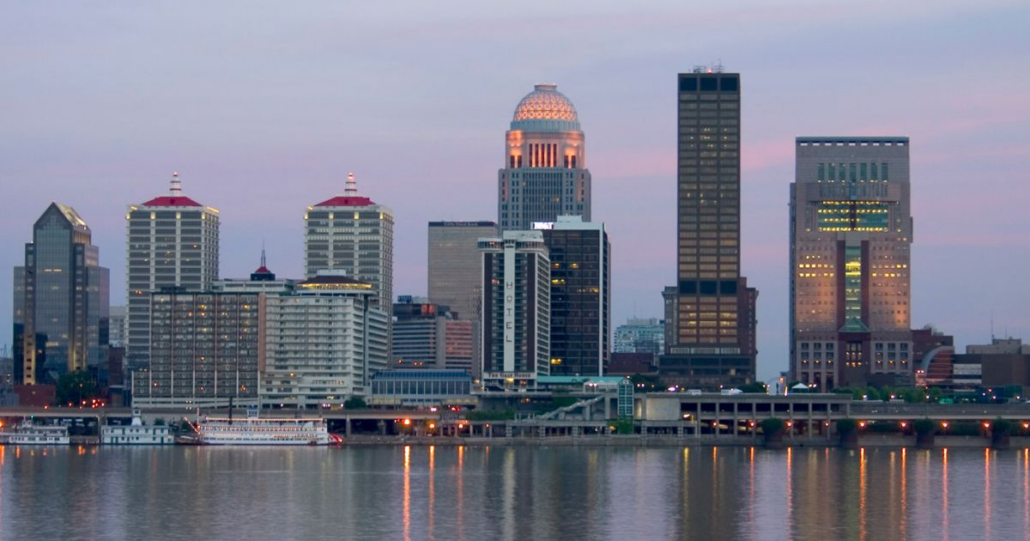
 Chris Watson | Creative Commons
Opinion | J.P. Davis: Louisville Said LGBTQ+ People Were Welcome. That’s Not the Same as Being Chosen.


The views and opinions expressed in submissions to Queer Kentucky are those of the authors and do not necessarily reflect the official policy or position of Queer Kentucky. Any content provided by our submissions or regular columnists are of their opinion. As a reader, you are always welcome to submit your op-eds through our submission form.
I’ve gone back and forth on whether to write this. Part of me didn’t want to. Part of me is tired of having this conversation. Part of me already knows what will happen after I publish it.
But my entire career has been built on relationships – private conversations, picking up the phone before picking a fight. This time I’m putting down the phone and picking up a megaphone.
When the One Louisville board was announced – roughly 65 people chosen to help shape the future of this city – I did what I always do. I looked for us. I looked for openly LGBTQ+ leaders. I looked for openly gay men. And on a board of 65 people, I couldn’t find them.
That’s not an oversight. That’s a choice.
Let me be clear about what this is not. This is not an attack on the individuals who agreed to serve on the board. I know many of them. I respect many of them. And this is not about me not being appointed.
I’ve been fortunate to serve in leadership roles across this city for more than two decades — the White House, the Kentucky Capitol, major nonprofit and fundraising leadership, and as co-founder of the LGBT Chamber of Commerce. I’ve been in the rooms where decisions get made. I know what those rooms look like. I know who tends to be in them.
That’s exactly why I’m writing this.
Because after 26 years of private conversations, quiet advocacy, recommended names, and carefully placed phone calls, I looked at that list and I wasn’t surprised. And that moment, that complete absence of surprise was more damning than the board itself.
Louisville is full of qualified LGBTQ+ leaders. We always have been. But if the people designing these processes cannot identify us without being prompted, their networks are too narrow and their processes are failing. Talent has never been the issue. The recognition has.
What weighs on me most isn’t the board. It’s the people who are gone.
I’ve watched smart, successful, deeply talented LGBTQ people leave Louisville for Atlanta, Chicago, Nashville, Washington, and New York. Not because they didn’t love this city. Many of them did – fiercely. Not because they wanted to leave Kentucky, many of them didn’t. They left because they got tired. Tired of waiting. Tired of being overlooked. Tired of hearing that their time would come. Tired of being welcomed socially but passed over professionally. Tired of being invited to the party but never trusted with the keys.
This story exists because of readers like you. Give $5 a month to keep Queer Kentucky free.
Every time someone leaves, Louisville loses a future board member, a future executive, a future elected official. Then we act surprised when leadership keeps looking the same.
I want to be honest about what real support looks like — because Louisville has gotten comfortable confusing celebration with inclusion. A rainbow logo in June does not mean inclusion. A Pride parade appearance does not mean inclusion. A statement about belonging is not inclusion. Those gestures have value, but they are not the measure of leadership. The measure is who gets recruited. Who gets mentored. Who gets appointed. Who gets trusted. Who gets chosen.
If Louisville wants to call itself an inclusive city, inclusion has to mean more than who is welcomed to celebrate. It has to mean who is invited to lead.
I want to be clear about something else. I am genuinely optimistic about what One Louisville could be. The vision is right. The moment calls for it. And I’ve had the chance to meet the new director. I like him. I believe he’s the right person for this. He’s thoughtful, he’s serious, and he clearly cares about getting it right.
But he’s also new to Louisville.
And when I look at that board — at who was chosen and who wasn’t — I have to ask whether he made those decisions, or whether those decisions were made for him. Because if a leader who wants to do things differently is handed a structure built by the same hands that built every structure before it, the outcome shouldn’t surprise anyone.
That’s not a failure of his leadership. That’s what happens when new leaders inherit old networks.
And that pattern — more than any single board — is what Louisville has to break.
To Louisville’s civic leaders, I ask one thing. Look at the last ten people you appointed to anything — a board, a commission, a task force, a working group. Who was included? Who wasn’t? And what does that pattern tell you about the people in your circle and the reach of your process?
Because diversity is not measured by intention. It is measured by outcome.
To my own community: we are not without responsibility here. Too many of us have waited for permission that was never coming. Apply. Run. Serve. Seek appointments. Join boards. Raise your hand — and if the answer is no, ask why, put it in writing, and ask again. We cannot demand a seat at the table and decline to pull up a chair.
I love Louisville. This city shaped me. It gave me opportunities I am genuinely grateful for. And because I love it, I refuse to keep pretending that the progress matches the story we tell about ourselves. Louisville does not have a pipeline problem. Louisville has a recognition problem.
Being welcomed is not the same as being trusted. Being trusted is not the same as being chosen. And until this city learns the difference — really learns it, in its processes and its appointments and its circles of power — we will keep losing the people who should be helping lead it.
Louisville can do better. It’s time to prove it.
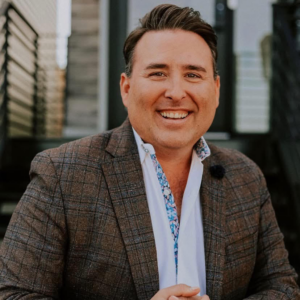
J.P. Davis, Louisville civic leader, co-founder of the LGBT Chamber of Commerce
J.P. Davis is the Founder and CEO of JP Davis Partners, a Louisville-based nonprofit consulting and fund development firm, and CEO of K9s.org, the nation’s leading nonprofit deploying trained K9s to law enforcement and schools. Davis is the Co-Founder of Civitas, a chamber of commerce for LGBTQ+ and ally businesses serving the Ohio River Valley region including Kentucky, Southwestern Ohio, and Southern Indiana. He lives in the Highlands with his labradoodle, Dallas.
Keep reading
 Federal Cuts “Handcuffed” BIPOC Harm Reduction in Kentucky. Communities Are Stepping Up.
 Homeownership Is Radical, Says Mercury Stardust. Her Book Tour Hits Louisville Oct. 8
 Whiskey Row Walking Tour: Louisville Native Drew Shryock Shares Bourbon, History, and Pride
 Louisville Roller Derby Double Header: Camp Crystal Skate
 Old Forester’s Melissa Rift Took the Long Way to Master Taster, and Found Belonging in Bourbon