Tag Archive for: Queer Kentucky

Local LGBTQ+ Media Giving Day, Thursday, October 8, 2026, a national day of giving for local LGBTQ+ newsrooms.

Queer newsrooms are being bought, stripped, and shut down. We’re still here.

In February, equalpride laid off top editors across The Advocate, Out and Pride.com. Days later, the same company bought Them from Condé Nast. By April it had cut Them’s contributors too, leaving a publication that spent most of a decade covering trans life without a full-time staff writer.

That isn’t one company having a bad year. It’s what this field looks like right now. Queer outlets are being consolidated, stripped for parts, or quietly wound down at the exact moment our communities are the subject of more legislation and more manufactured controversy than at any point I can remember.

Kentucky isn’t insulated from it. In September, the Lexington Herald-Leader lost 12 reporters and an editor, and the paper’s eastern Kentucky beat went with them. Six Kentucky counties have no news source at all, and 88 have only one, according to Northwestern University’s Medill Local News Initiative. None of that is good news for us. A thinner press here doesn’t make Queer Kentucky stronger, it makes the state quieter.

So here’s where that leaves us. We built this newsroom because mainstream outlets overlooked queer Kentuckians, got our stories wrong, or treated our lives as a debate. All of that is still true. What’s also true is that we aren’t only reporting for queer people anymore. As the papers around us thin out, we’re one of the few left paying attention to a lot of this state. That isn’t a role we asked for, and it’s bigger than we are.

On Thursday, Oct. 8, we’re asking for help alongside newsrooms carrying the same weight.

Queer Kentucky is taking part in Local LGBTQ+ Media Giving Day, a national day of giving for local queer media, organized through News is Out with the Local Media Foundation. The money goes into one pot and is divided among the participating newsrooms. You don’t have to pick a favorite. The campaign opens with $5,000 in matching funds from the Bob Ross Foundation, so gifts on Thursday stretch further than what you give.

This year the organizers expanded the day to bring in more newsrooms, and Kentucky is on the list. Eighteen of us are in it together: legacy papers like the Washington Blade and the Bay Area Reporter that have been publishing for decades, statewide nonprofits like LOOKOUT in Arizona and The Buckeye Flame, and radio and podcast shops like E3 Radio and The Gaily Show that prove this field was never only print. Every one of them is linked at the bottom of this story.

Those are the outlets we read. Being asked into this room says Kentucky counts in the national picture of queer media and we are proud to be included in this group.

Three ways to show up Thursday

Give. One gift, divided across every participating newsroom, and stretched by $5,000 in matching funds while they last: givebutter.com/LGBTQMediaGivingDay2026

Subscribe. If money is tight, your attention still counts. Sign up for our newsletter.

Share this. Most people have never heard of a giving day for queer media.

And go read the others. Pick one you’ve never read and subscribe to them instead of us. We mean it.

Bay Area Reporter · The Buckeye Flame · Dallas Voice · E3 Radio · The Gaily Show · Los Angeles Blade · LOOKOUT · News is Out · OutSFL · Philadelphia Gay News · Pride Source / Between The Lines · QNotes Carolinas · Seattle Gay News · Tagg Magazine · Uncloseted Media · Washington Blade · Windy City Times
Opinion | J.P. Davis: Louisville Said LGBTQ+ People Were Welcome. That’s Not the Same as Being Chosen.

The views and opinions expressed in submissions to Queer Kentucky are those of the authors and do not necessarily reflect the official policy or position of Queer Kentucky. Any content provided by our submissions or regular columnists are of their opinion. As a reader, you are always welcome to submit your op-eds through our submission form.

I’ve gone back and forth on whether to write this. Part of me didn’t want to. Part of me is tired of having this conversation. Part of me already knows what will happen after I publish it.

But my entire career has been built on relationships – private conversations, picking up the phone before picking a fight. This time I’m putting down the phone and picking up a megaphone.

When the One Louisville board was announced – roughly 65 people chosen to help shape the future of this city – I did what I always do. I looked for us. I looked for openly LGBTQ+ leaders. I looked for openly gay men. And on a board of 65 people, I couldn’t find them.

That’s not an oversight. That’s a choice.

Let me be clear about what this is not. This is not an attack on the individuals who agreed to serve on the board. I know many of them. I respect many of them. And this is not about me not being appointed.

I’ve been fortunate to serve in leadership roles across this city for more than two decades — the White House, the Kentucky Capitol, major nonprofit and fundraising leadership, and as co-founder of the LGBT Chamber of Commerce. I’ve been in the rooms where decisions get made. I know what those rooms look like. I know who tends to be in them.

That’s exactly why I’m writing this.

Because after 26 years of private conversations, quiet advocacy, recommended names, and carefully placed phone calls, I looked at that list and I wasn’t surprised. And that moment, that complete absence of surprise was more damning than the board itself.

Louisville is full of qualified LGBTQ+ leaders. We always have been. But if the people designing these processes cannot identify us without being prompted, their networks are too narrow and their processes are failing. Talent has never been the issue. The recognition has.

What weighs on me most isn’t the board. It’s the people who are gone.

I’ve watched smart, successful, deeply talented LGBTQ people leave Louisville for Atlanta, Chicago, Nashville, Washington, and New York. Not because they didn’t love this city. Many of them did – fiercely. Not because they wanted to leave Kentucky, many of them didn’t. They left because they got tired. Tired of waiting. Tired of being overlooked. Tired of hearing that their time would come. Tired of being welcomed socially but passed over professionally. Tired of being invited to the party but never trusted with the keys.

Every time someone leaves, Louisville loses a future board member, a future executive, a future elected official. Then we act surprised when leadership keeps looking the same.

I want to be honest about what real support looks like — because Louisville has gotten comfortable confusing celebration with inclusion. A rainbow logo in June does not mean inclusion. A Pride parade appearance does not mean inclusion. A statement about belonging is not inclusion. Those gestures have value, but they are not the measure of leadership. The measure is who gets recruited. Who gets mentored. Who gets appointed. Who gets trusted. Who gets chosen.

If Louisville wants to call itself an inclusive city, inclusion has to mean more than who is welcomed to celebrate. It has to mean who is invited to lead.

I want to be clear about something else. I am genuinely optimistic about what One Louisville could be. The vision is right. The moment calls for it. And I’ve had the chance to meet the new director. I like him. I believe he’s the right person for this. He’s thoughtful, he’s serious, and he clearly cares about getting it right.

But he’s also new to Louisville.

And when I look at that board — at who was chosen and who wasn’t — I have to ask whether he made those decisions, or whether those decisions were made for him. Because if a leader who wants to do things differently is handed a structure built by the same hands that built every structure before it, the outcome shouldn’t surprise anyone.

That’s not a failure of his leadership. That’s what happens when new leaders inherit old networks.

And that pattern — more than any single board — is what Louisville has to break.

To Louisville’s civic leaders, I ask one thing. Look at the last ten people you appointed to anything — a board, a commission, a task force, a working group. Who was included? Who wasn’t? And what does that pattern tell you about the people in your circle and the reach of your process?

Because diversity is not measured by intention. It is measured by outcome.

To my own community: we are not without responsibility here. Too many of us have waited for permission that was never coming. Apply. Run. Serve. Seek appointments. Join boards. Raise your hand — and if the answer is no, ask why, put it in writing, and ask again. We cannot demand a seat at the table and decline to pull up a chair.

I love Louisville. This city shaped me. It gave me opportunities I am genuinely grateful for. And because I love it, I refuse to keep pretending that the progress matches the story we tell about ourselves. Louisville does not have a pipeline problem. Louisville has a recognition problem.

Being welcomed is not the same as being trusted. Being trusted is not the same as being chosen. And until this city learns the difference — really learns it, in its processes and its appointments and its circles of power — we will keep losing the people who should be helping lead it.

Louisville can do better. It’s time to prove it.


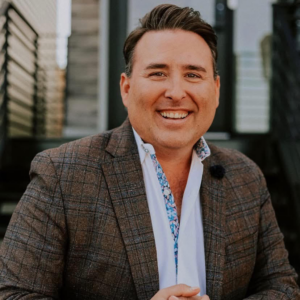
Headshot of J.P. Davis, a white man with dark hair wearing a brown tweed blazer and patterned shirt, smiling outdoors.

J.P. Davis, Louisville civic leader, co-founder of the LGBT Chamber of Commerce


J.P. Davis is the Founder and CEO of JP Davis Partners, a Louisville-based nonprofit consulting and fund development firm, and CEO of K9s.org, the nation’s leading nonprofit deploying trained K9s to law enforcement and schools. Davis is the Co-Founder of Civitas, a chamber of commerce for LGBTQ+ and ally businesses serving the Ohio River Valley region including Kentucky, Southwestern Ohio, and Southern Indiana. He lives in the Highlands with his labradoodle, Dallas.

Queer Kentucky, Moore Lab launch interactive data dashboard featuring experiences of 3,000+ LGBTQ+ Kentuckians

Curious about what is important to LGBTQ+ Kentuckians? Check out this groundbreaking survey.