Kentucky’s U.S. Senate and legislative races: What LGBTQ+ voters should know


Nothing on Kentucky’s ballot this November asks voters about LGBTQ+ rights, but that doesn’t mean they aren’t on the line.
This year, advocates and everyday Kentuckians spent months organizing and lobbying to keep anti-LGBTQ+ bills from becoming law. While none passed, many had been filed in earlier sessions, and at least one sponsor has said he’ll keep pushing. The people they elect on November 3 will be part of deciding what happens next.
Here’s what’s on the 2026 midterm ballot in Kentucky:
The Kentucky House
What’s at stake: All 100 seats are up for re-election.
LGBTQ+ impact: State representatives write Kentucky’s laws and its budget. That includes who can get gender-affirming care, which bathrooms and pronouns trans students can use at school, and whether cities get to keep their own anti-discrimination protections. In March, the House passed HB 468, which as first written, would have made local fairness ordinances harder to enforce. Every two years, every House seat is back on the ballot.
The Kentucky Senate
What’s at stake: Half of its 38 seats are up for grabs.
LGBTQ+ impact: In February, the Senate passed SB 72, which would have let health care workers refuse treatment that violated their conscience. It was the third year in a row the Senate passed a version of the bill, and the House never took it up.
How to find your local races
Every Kentuckian lives in one state House district and one state Senate district, but only half will vote in a state senate race this year. To see who’s actually on your ballot, select your county at web.sos.ky.gov/electionballots or ask your county clerk for a sample ballot. To see who represents you now, use the “Find Your Legislator” tool on the Kentucky General Assembly website (legislature.ky.gov), where you can enter your address or click a map.
U.S. Senate
What’s at stake: One of Kentucky’s two seats in the U.S. Senate is open. After 40 years, Sen. Mitch McConnell is retiring in January, and Kentucky voters will choose who steps in.
LGBTQ+ impact: While a U.S. senator doesn’t write Kentucky’s laws, they vote on federal legislation and judicial nominees that can affect LGBTQ+ Kentuckians. In 2022, the Respect for Marriage Act, which requires the federal government and every state to recognize legal same-sex marriages, cleared the Senate with bipartisan support. Senators also confirm federal judges, including Supreme Court justices, who serve for life and rule on cases involving marriage, workplace discrimination and transgender health care.
It’s crucial to look at who’s running for McConnell’s seat, and where they each stand.
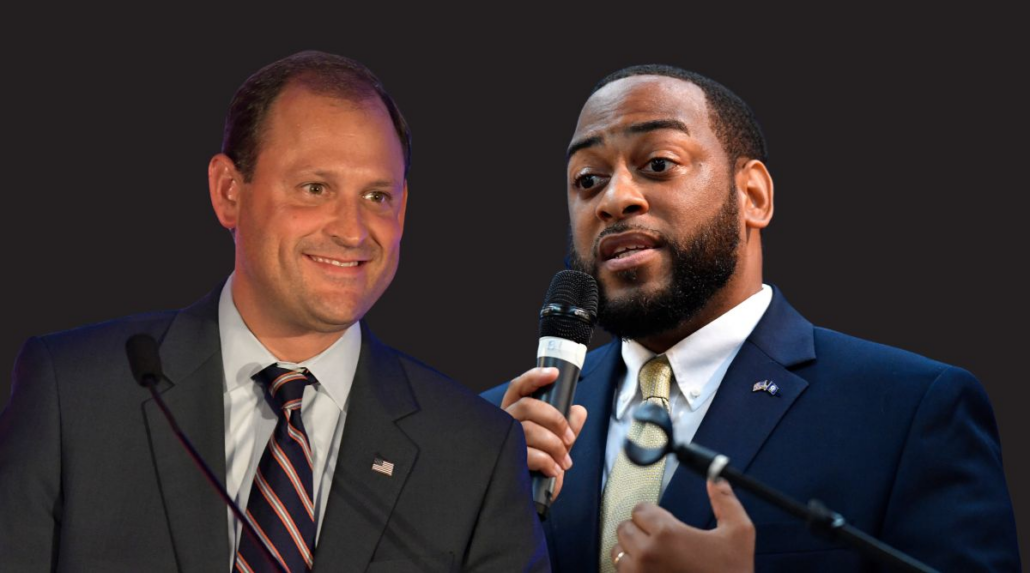
Charles Booker (D)
Charles Booker is the Democratic nominee for U.S. Senate and a former state representative who served from 2019 to 2021.
He was the party’s 2022 Senate nominee and also ran in 2020, and he won this year’s primary with 47% of the vote over Amy McGrath and Pamela Stevenson. He’s running in a state where Democrats haven’t won a Senate race since 1992.
He also founded Hood to the Holler, a grassroots group organizing across race and class.
Message to Kentucky: “I’m running because this is about family. I come from the hood, one of the poorest zip codes in Kentucky. I don’t trust politicians, but nothing will ever change unless we do it. We’re fighting for working people. Standing up for humanity; standing up for justice and change. And an end to the generational problems that have plagued so many hard working people not just across Kentucky, but across this country. This is about regular people lifting our voices from the hood to the holler.” – Charles Booker (TikTok)
Andy Barr (R)
Andy Barr is the Republican nominee who started his career as Mitch McConnell’s intern.
He is the sitting U.S. Representative for Kentucky’s 6th district, and took the nomination as Trump’s endorsed candidate.
Message to Kentucky: “You know what DEI really stands for? Dumb Evil Indoctrination. The woke liberals spew it, corporate losers fall for it. But thanks to Trump, America is rejecting that trash. And I’m leading the fight to end it for good. It’s not a sin to be white, it’s not against the law to be male. And it shouldn’t be disqualifying to be a Christian. I’m Andy Barr, and I approve this message to give woke liberals something else to cry about.” –Andy Barr (YouTube)
Other candidates
In addition to those on the main stage, there are two other candidates running for Kentucky’s seat:
Christopher Campbell is the Kentucky Party’s candidate for U.S. Senate, a contractor who has worked in health care, and a former Kentucky National Guard member. He’s an Eastern Kentucky University graduate with a master’s in public health.
Message to Kentucky: “I am a proud, dues paying member of a labor union (Local 1076). I served in the Kentucky National Guard. I am a Kentucky Colonel. I understand the struggles that Kentuckians face day-in and day-out. I would consider it an honor to represent Kentucky on the national stage and the United States on the global stage.” – Christopher Campbell (Campaign Site)
Thomas Michael Murphy is running as an independent write-in candidate. He filed in March and has no formal campaign website. Little else is publicly known about his platform.
This story exists because of readers like you. Give $5 a month to keep Queer Kentucky free.
How to Vote in the Kentucky Midterms
The deadline to register for this election was October 5. Registered voters can check their status and find their polling place at GoVote.ky.gov. Sample ballots can be viewed through Our People, Our Vote, the nonpartisan voter resource portal run by nonprofit Common Ground Kentucky.
There are two ways to vote in person: No-excuse early voting runs this Thursday through Saturday, October 29-31. Election Day is Tuesday, November 3, from 6 a.m. to 6 p.m. If you plan to vote by mail, the paper ballot must be received by 6pm Election Day to be counted.
Why does this matter so much?
This year’s ballot doesn’t ask Kentuckians to vote on LGBTQ+ rights directly, but it does decide who will.
In Kentucky’s 2022 general election, only 41.9% of registered voters cast a ballot. Turnout climbed steeply with age: just 26.9% of registered voters ages 17 to 24 voted, along with 25.6% of those 25 to 34 and 35.5% of those 35 to 49. Among voters 50 to 61, turnout was 48.0%, and among those 62 and older it was 56.8%, more than double the youngest group’s.
Electoral data also suggest a tendency among voters to downplay the role of these down-ballot races, but, as Queer Kentucky has reported, the decisions shaping health, safety and much of everyday life are most often negotiated in city halls, county fiscal courts and the statehouse.
Keep reading
 Pushed to the Edge of Campus, These Trans Students Started Their Own Fraternity
 What is the state constitutional amendment Kentucky voters will decide on this November?
 For LGBTQ+ Kentuckians Already Wary of Police, Flock Cameras Raise New Surveillance Fears
 Love Out Loud Fest returns to Louisville with pay-what-you-can fall edition Nov. 12
 “You Are Not Alone”: A Letter From the Trans Youth Who Made This Magazine