Louisville Youth Group Director Wants to Reach Rural Kentucky’s Youth


While attending Eastern Kentucky University (EKU), Sandra Carpenter came out as lesbian and joined queer and feminist organizations. That’s where her love for providing support to both LGBTQIA+ youth in metropolitan and rural areas began.
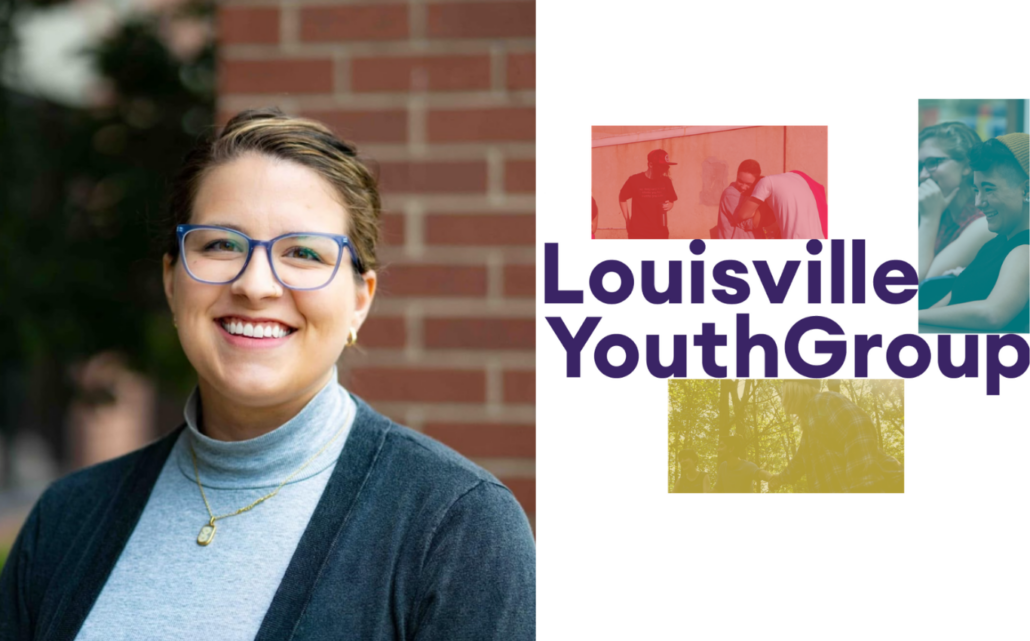
Carpenter was recently appointed as the Executive Director of the Louisville Youth Group, one of Kentucky’s well known LGBTQ+ organizations, and the oldest queer QTBIPOC organization for youth in the south. Now, her mission as director is to reach more rural parts of the state.
“I continued throughout my entire adult life as an out lesbian, so that has been something that has been interesting in terms of reconciling my rural roots with kind of more of the metropolitan queer culture. That is where a lot of my focus is on making sure that we are resources for both kids here in Louisville and continue to also try to build out that network of brave spaces for kids who may also be in more rural parts of the state,” said Carpenter.
Louisville Youth Group (LYG) is a Kentucky-based nonprofit dedicated to empowering and protecting LGBTQIA+ youth and has been active for 35 years providing youth with brave, safe and affirming spaces in which they can connect, develop leadership skills and advocate for themselves.
Carpenter has a decade worth of experience in management and communications that she plans to bring into this role.
“Whenever I came back to Louisville, my big goal was really to get back into this scene where I could use both my research and communication skills alongside my nonprofit experience,” said Carpenter. “I really just wanted to find a professional home where I could merge both in terms of what my values are and what the work is.”
Her background ranges from working with Greater Louisville Inc. as the Community and Talent Engagement Manager to serving as the Communications Coordinator for the Louisville Pride Foundation.
Carpenter believes in the strong impact that strategic storytelling has on extending reach and highlighting LGBTQIA+ communities’ voices.
Carpenter said LYG’s storied history is hugely important in terms of making sure that the actual experiences of youth they serve are being heard.
“Be that through advocacy, in terms of allowing experiences to be shared so that we can advocate for the best interest, but also just allowing folks in our organization, like through our youth leadership council, to have a real voice within the organization,” said Carpenter.
With growing political discrimination against the LGBTQIA+ community across the country, especially in the south, the importance of extending the reach of available resources to more communities is important to Carpenter. That’s why she wants to expand LYG’s footprint to include more rural areas in Kentucky to bridge the urban-rural divide that exists.
“Being from Eastern Kentucky, and realizing that LYG has such a presence here in the Louisville community, I think that we can become more known as a resource,” said Carpenter. “We could see more queer and trans youth organizations and resources being developed throughout Kentucky and Southern Indiana.”
While still in the works, Sandra said she has strong intentions to work with existing GSAs (Gay Straight Alliance) groups across the state and to provide additional assistance to creating GSAs in other communities that request those resources.
“My personal mission is to continue to create safe and brave spaces. These spaces are going to challenge folks in ways that help them grow,” said Carpenter.
Carpenter’s work is driven by giving youth the space to become exactly who they are without fear. She draws from experiences she faced when she was aware of her identity as a high-schooler in rural Kentucky but felt unsafe for her to come out at that time, even with a supportive family.
“It was tricky for me to come out until I was able to find a community where I could see other people and hear from other people who shared my experiences,” said Carpenter.
Carpenter hasn’t been in this role long, but hearing of the years of impact LYG has had on the community feels heartening. “I’ve already heard from folks who’ve said if it weren’t for LYG, I would not be where I am today and it gave them the space to become exactly who they are,” said Carpenter.
“For whatever work that I’m doing,” Carpenter said, “I want it to be intersectional and not just like in kind of the buzzwordy way. I actually want voices to be heard and to matter to actually have a stake in the decisions that we make. I want to make sure that we are both intergenerational and diverse.”