
Queer love songs and rural lineage shine in Sam Gleaves’ new release


There’s a walnut tree in the front yard of Sam Gleaves’s childhood home in southwest Virginia, and its roots stretch across every track on his latest album. “Honest”, released in August 2024, is a ten-song record shaped by tenderness, grief, and Sam’s long journey toward writing love songs that feel like home—to him and to us.
From the first lyric, “Beautiful” is a love letter to his mother. “My first plane ride, Mom and I, Pacific bound,” Gleaves sings, recalling a trip to California as a teenager. In San Francisco, they saw two men holding hands. Sam, who wasn’t yet out, remembers his mom turning to him and saying, “Isn’t that just beautiful?” That moment became the seed for the album.
“This is the most directly queer record I’ve ever made,” Gleaves says. “It really meant something to me that people from all walks of life embraced the music and me.”
Though raised in Virginia, Sam has lived in Berea—a longtime home to Appalachian artists and activists creating space where tradition and transformation meet—since 2010. That spirit infuses Honest, which draws from old-time and folk traditions while making room for stories too often left out of the canon: ones where queer people live, love, and sing in the mountains.
“I love old-time music, the old modal songs from the mountains. ‘No Life is a Crime’ really draws on that,” he says. “And I love western swing, that’s why “Queer Cowboy” lives in that vein.”
The album is a patchwork quilt of influences, stitched together with wit, tenderness, and political clarity. From the strut of “Down Home Diva” to the aching honesty of “Fear,” Sam invites listeners into a world shaped by joy and loss, resistance and belonging. “I’ve always admired artists who told their truth,” he says. “Sometimes that’s political. Sometimes it’s just being human, and the world reads it as political.”
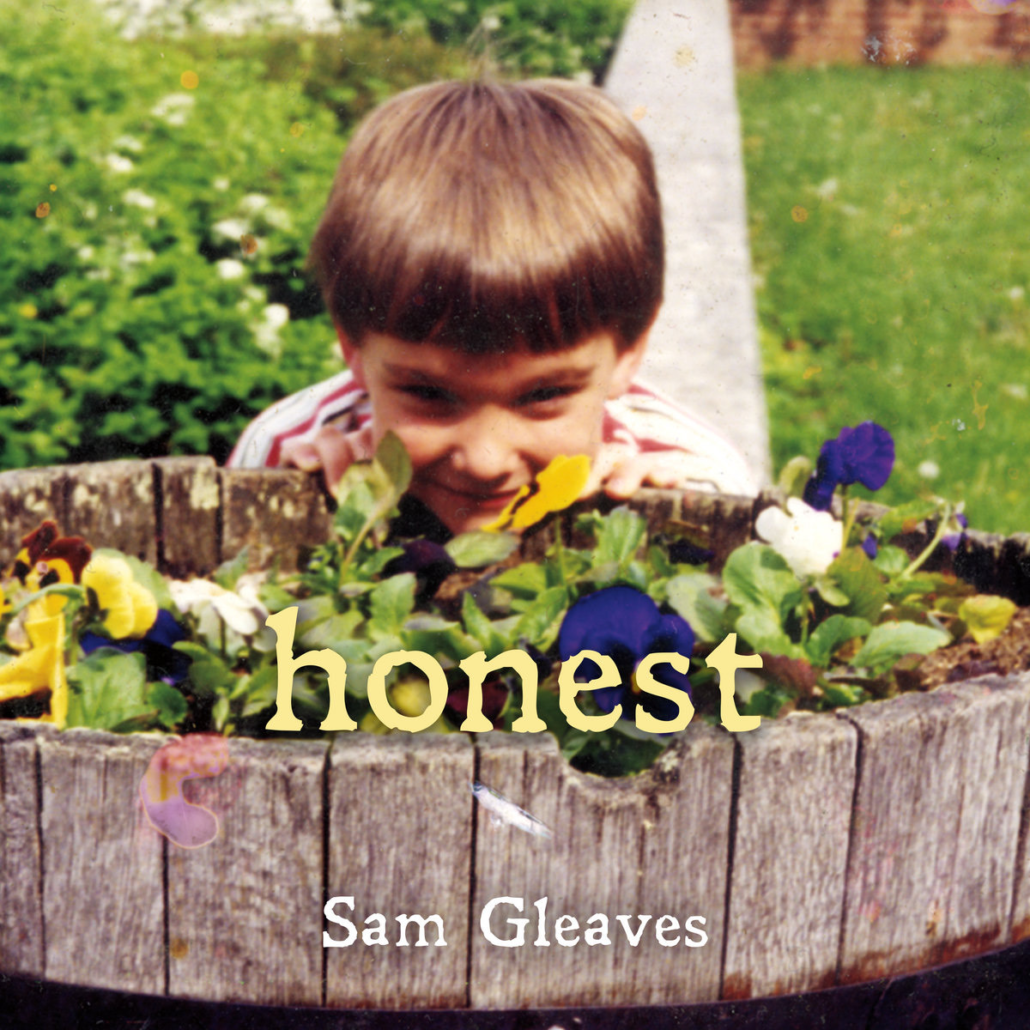
Album art for “Honest.”
Truth-telling takes center stage in “No Life is a Crime,” where Gleaves shares feeling overwhelmed by the ongoing violence against LGBTQ+ people and all those pushed to the margins. “There’s more of a movement now to criminalize people just for being who they are,” he says. “I believe we should celebrate differences and welcome people.”
While Gleaves has long performed other people’s traditional love songs, Honest gave him the space to write his own: love songs that hold queer joy without metaphor or apology. At first, he hesitated to share them. “Then I thought, well, there’s no shame in being who I am and writing love songs from my real experience.”
At the heart of “Honest” is community, not just as an idea, but as a living presence. Gleaves celebrated the album release in his hometown, surrounded by family and friends. “They surprised me by having my grandmother introduce me on stage,” he says with joy in his voice. He performed with close collaborators Josh Goforth and Hasee Ciaccio, who played on nearly every track. “Josh is a genius producer. He’s so sensitive to the lyrics and ethos of a song. Hasee and Josh really made these songs shine.”
Other musicians—including Carla Gover, Chris Rosser, Linda Jean Stokley, Jeff Taylor, and Jared Tyler—added richness to the album’s sound. But what Sam remembers most is the room itself: the joy, the laughter, the feeling of being held. “I felt really loved up,” he says. “That’s what made it all feel so full circle and whole.”
The album ends with “Walnut Tree,” a song for his father. “He used to come into my room before school and say, ‘I love you as big as a walnut tree,’” Gleaves recalls. That tree, that love, still stands. So does Gleaves.

photo by Erica Chambers
For rural queer folks, lineage can be hard to find. But Sam Gleaves is building it in real time. “I won’t say it’s been totally erased,” he says of rural, Southern, and Appalachian LGBTQ+ history. “But there were so many forces that silenced our stories.” He reflects on what is was like to grow up without queer elders or people who weren’t folded into a heteronormative world. “What would it have been like to know their stories? To know what it meant to be both queer and country?”
With “Honest,” Gleaves adds his own answer and a new verse to the queer Appalachian songbook.
“I hope people who hear the album feel something stir in them, a story they’ve been wanting to share,” he says. “I hope they’ll find a way to tell it.”
In these songs, you can hear the threads of family, of place, of community, and queer love. Love that takes root. Love that blooms. Sam Gleaves isn’t trying to be a pioneer of anything; he says he’s just a songwriter. But for him, “The best feeling in the world is knowing something I wrote touched someone who’s lived something like I have.” Isn’t that just beautiful?
Now that you’ve been introduced—if you hadn’t been before—you can find more of Sam Gleaves’s work on his website.