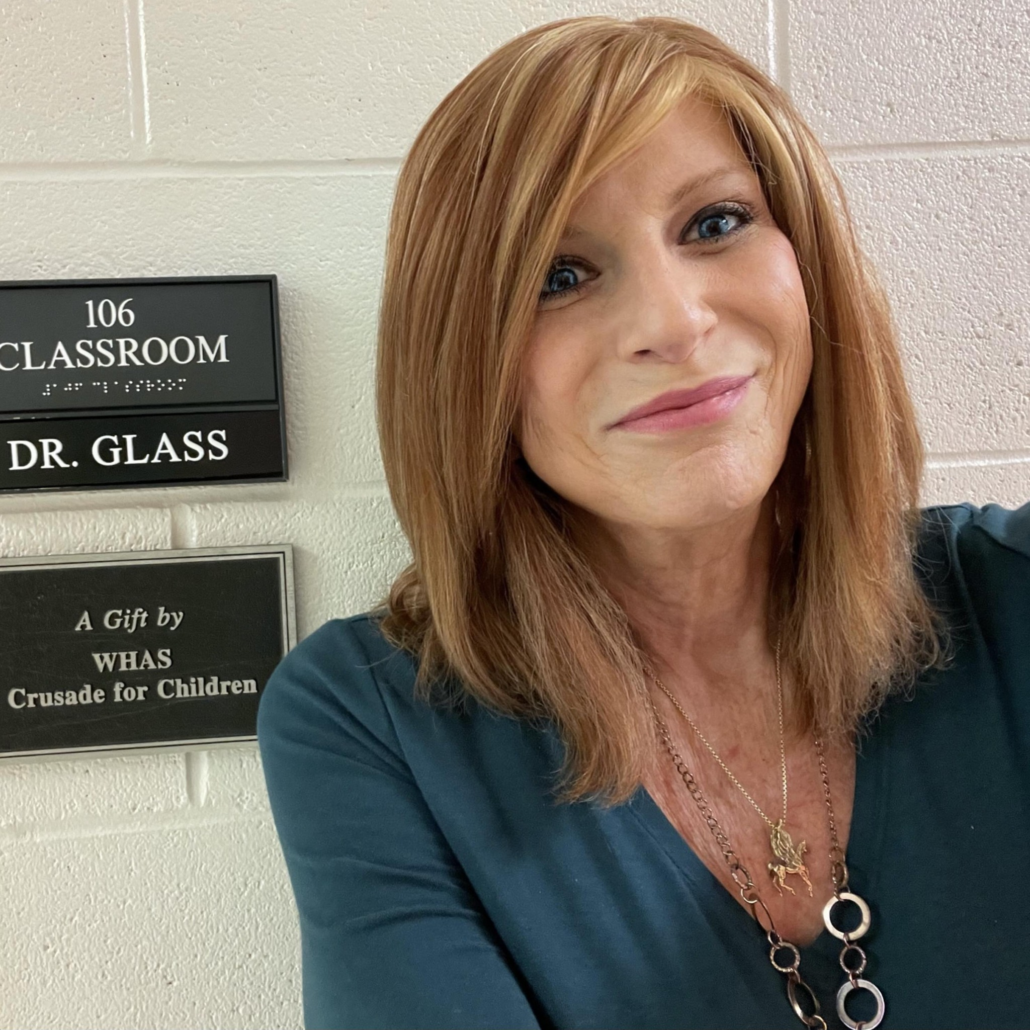
Louisville Advocate Dr. Bobbie Glass Joins The Trevor Project’s Sharing Space Mental Health Series


Louisville educator and transgender advocate Dr. Bobbie Glass has been invited to appear on Sharing Space, a national series produced by The Trevor Project that centers conversations on LGBTQ+ mental health and lived experience.
Sharing Space brings LGBTQ+ people with lived experience into facilitated conversations with licensed mental health professionals. Episodes focus on topics including suicide prevention, crisis response, and the impact of conversion therapy.
Glass said the series is urgently needed.
“A series like Sharing Space is needed right now because silence is still killing people- quietly, privately, and often without witnesses,” she said. A Queer Kentucky 2024 survey of over 3,6000 LGBTQ Kentuckians, found that 26% of trans Kentuckians felt extremely unsafe in public due to political debate and rhetoric around anti-LGBTQ legislation. That number rises to 40% in for trans Appalachians.
With anti-transgender legislation at historic levels, the question of how transgender youth are supported has become increasingly important.
“The most important thing to understand is this: supporting trans youth does not require expertise, special language, or perfection. It requires presence, courage, and consistency.
One of the simplest and most powerful things people can do is interrupt harm when they hear it,” Glass says.
“Allyship sometimes looks as simple as saying, “That’s not okay,” and refusing to let cruelty pass as normal.”
At the same time, renewed attention has focused on conversion therapy and the ongoing debate over how, and whether, the practice should be regulated. Dr Glass is a survivor of conversion therapy and uses that language intentionally.
“Conversion therapy doesn’t try to change behavior,” Dr Glass said. “It tries to replace a human being. For many of us, that replacement demand creates a level of despair that is difficult to describe unless you’ve lived inside it.”
She described the harm caused by those practices as ongoing and personal.
“I’m horrified by the number of times I tried to end my life under the weight of being told that my authentic self was completely incompatible with love, faith, and belonging,” she said.
“I am alive today not because conversion therapy worked, but because I survived it,” she said. “Others did not.”
The Trevor Project reported that 13% of LGBTQ youth nationally are exposed to conversion therapy.
Kentucky currently has no statewide ban on conversion therapy. In 2024, Governor Andy Beshear issued an executive order prohibiting state or federal funds from going to conversion therapy practices for minors. The following year, state legislators passed HB495, which reversed his executive order.
Glass said Sharing Space differs from many mental health discussions by centering people with lived experience rather than speaking about LGBTQ+ communities from the outside.

Screenshot of Dr. Bobbie Glass speaking in a video for The Trevor Project. She is seated on a couch wearing a navy blue dress, gesturing with one finger raised as she talks. On-screen text reads, “There’s no therapy in telling kids.” The YouTube Shorts interface is visible, showing the account @TheTrevorProject and engagement icons along the right side.
“Instead of experts speaking about LGBTQ+ people, Sharing Space allows people with lived experience to speak from inside the reality, in the presence of licensed mental health professionals who understand the risks involved,” she said.
“The harm of conversion therapy isn’t theoretical,” Dr Glass said. “It lives in bodies, in fear, and in years stolen from people who were never broken.”
According to data from The Trevor Project’s national youth mental health survey, 45 percent of LGBTQ+ youth seriously considered attempting suicide in the past year. Rates are significantly higher among transgender and nonbinary youth.
Dr Glass also addressed the conditions facing transgender and gender diverse youth in Kentucky.
“Supporting trans youth in Kentucky is not optional, symbolic, or political- it is lifesaving,” she said.
“Trans youth do not need to be ‘fixed,’” Dr Glass said. “They need to be protected, believed, and allowed to exist without fear.”
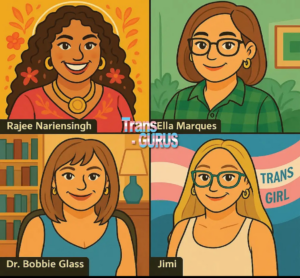
Dr Glass’s appearance on Sharing Space comes alongside her ongoing work in Kentucky. She was recently named an ambassador with the Mayor’s Office for Women in Louisville, a six-month civic engagement and training program focused on city policy and systems. “Being named an ambassador isn’t symbolic- it’s an invitation into the work of changing systems,” Dr Glass explains. She also serves on the boards of the Fairness Campaign in Louisville and CHNK Behavioral Health/One Quest Health in Covington. She is also a co-host of Trans Gurus on YouTube, a global platform with over 135,000 subscribers that offers affirmation and support to transgender people worldwide.
“At its best, Sharing Space does something simple and radical,” Dr Glass said. “It reminds people that they are not broken, not alone, and not required to disappear in order to be loved.”