‘Queer Communion: Religion in Appalachia’ Explores Faith, Sexuality, and Survival in the South


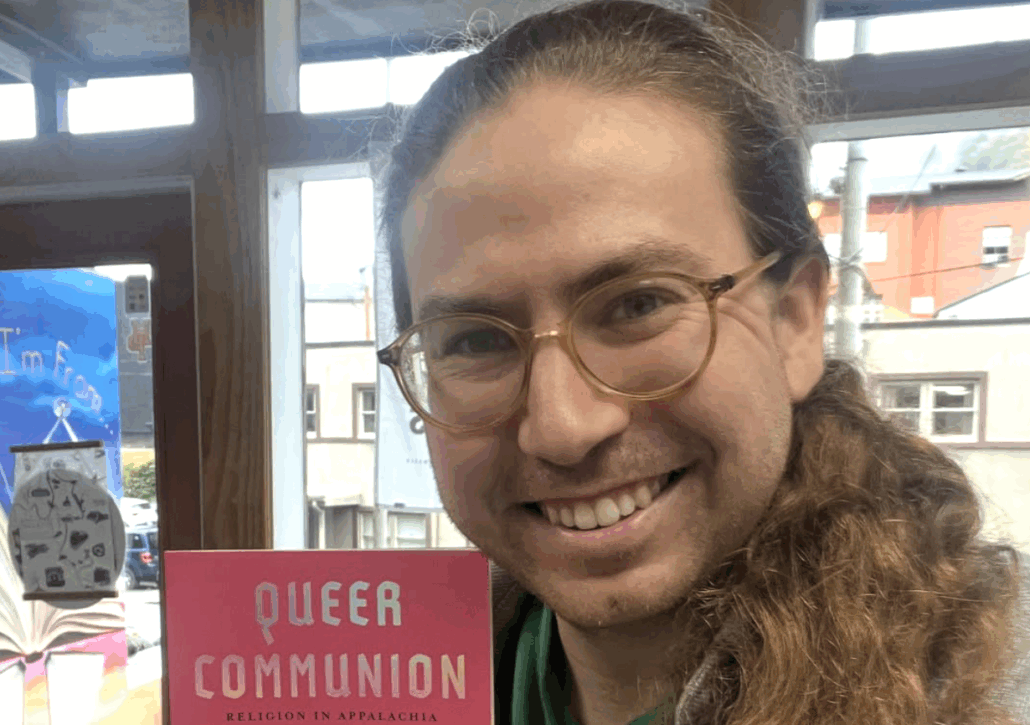
Davis Shoulders proudly defines themselves as a “writer, bookseller, and queer Appalachian”, but over the course of many years editing and compiling stories of queer spirituality and survival in the South, they’ve come to consider themselves something else: the protector of a “shocking preciousness.”
Redefining Queer Faith in the Heart of Appalachia
The University Press of Kentucky published “Queer Communion: Religion in Appalachia”, an anthology series edited by Shoulders, on October 21 of this year. Featuring a foreword by “Gay Poems for Red States”, author Willie Carver and twelve additional essays crafted by queer researchers, educators, and writers, the collection strives to showcase the complex intersection of spirituality and sexuality in an often suppressive Southern culture.
Shoulders summarizes the collection as a bid to remind readers what they often forget when they reduce Appalachia and its complicated religious experiences as relics of a conservative, unchanging world.
“We exist. We are not what you think we are. Look how beautiful we actually are,” he says.
Shoulders is the editor of “Queer Communion: Religion in Appalachia” and an indie bookseller at Read Spotted Newt in Hazard. Formerly, they lived in Washington, DC, and Knoxville, Tenn., where they worked for Politics & Prose and Union Ave Books respectively; they also assisted in the opening of Atlas Books in Johnson City, Tenn.. Inspired by the many great contributions of Kentuckian writers towards Appalachian literature, Shoulders sought opportunities to showcase underrepresented voices in the South.
Now, after years of editing, they’re ready to embark on their next adventure: releasing “Queer Communion: Religion in Appalachia.”
“[‘Queer Communion: Religion in Appalachia’] gave a chance to deal with the particular unpacking of religious trauma, or a relationship between queer individuals. Often, it involves their family, current faith structure, ways of coming out,” Shoulders said. “The region gave us a stronger kind of three-part identity: to be queer, raised religious, in Appalachia.”
Healing Through Storytelling: The Making of Queer Communion
The nuances of these experiences are explored across three parts: “Matriarchs and Mamaws”, “Belonging, Baptism, and Acceptance”, and “Creativity, Performance, and Expression.” Within these sections are vulnerable confessions of struggle, celebrations of survival and strength, and hopeful plans for brighter futures. Many writers brought stories of pain, rejection, and grief – and as editor of the project, it became Shoulders’ mission to offer “Queer Communion: Religion in Appalachia’s” writers “softness.”
“Everyone was just like, ‘sure, here’s my heart,’” Shoulders said. “‘Here’s my grandma dying, here’s me coming out and being rejected.’ People were laying in wait with these exact stories about how they reckoned with that part of themselves… It feels like an honor that people trusted me with the stories.”
Despite being a “tough time to be sharing these types of stories,” the project’s obvious empathy and curiosity towards the queer experience in Appalachia invited many writers to bravely share their stories.
“[‘Queer Communion: Religion in Appalachia’] is a beautiful ache. Tender. Hopeful. On the other side of pain,” Carver said.
Carver is a queer advocate, Kentucky Teacher of the Year, and bestselling author; after anonymously reading “Queer Communion: Religion in Appalachia” in collaboration with the University Press of Kentucky, he found himself “floored by the project.”
“I enthusiastically recommended the book. Then, later, Davis Shoulders reached out to me to see if I happened to be interested in writing the introduction,” Carver said. “I knew immediately what to write about – a moment in my own life that mirrored that feeling and helped me see, just a little bit more clearly, what queer communion really means.”
Faith, Forgiveness, and Finding Belonging
Carver opens the collection with a powerful foreword detailing an experience where his husband was brought to tears with empathy for a film character. This character, a conservative Catholic woman in the sixties, mirrored the matriarchs well-known – for better or for worse – by many queer Appalachians. Carver asks: how can we extend love and forgiveness to the people who cannot accept us, despite shaping us? How would we know love and forgiveness if not for their teachings?
These meaningful, heart-wrenching themes are expanded upon throughout “Queer Communion: Religion in Appalachia’s” pages, whether through essays about the magic of music, makeshift Madonnas of grandmothers, and moving through one spiritual or sexual identity to another. Each passage fights to prove the brilliant, dynamic experiences of some of the most misunderstood members of queer communities: those who often grow up isolated in underserved, rural communities, struggling to make sense of their identity and their spirituality in a world that sometimes seems to reject both.
“They aren’t alone. They never were. They were always in fractured – yet very real – communion,” Carver said.
Shoulders and Carver hope to convince audiences that pride in identity does not contradict safety in spirituality. Their writing inspires healing in the hearts of many queer Southerners who feel estranged from religion as a result of their upbringing in conservative, queerphobic churches.
“Queerness and religion isn’t scary together,” Shoulders insists. “It produces completely, fully formed individuals who have explored so many aspects of their identity, and what they’ve come to is really cool.”
Interested in purchasing a copy of “Queer Communion: Religion in Appalachia”? Support an independent bookshop directly by securing your copy through Read Spotted Newt!
Shoulders hopes to continue Read Spotted Newt’s legacy of being a queer-friendly haven in Hazard – although its commitment to publishing and supporting proudly queer titles speaks for itself.
“Queer people come into [Read Spotted Newt]… They can clearly see the books that they want to buy, whether they can purchase them in front of their current company at the time,” Shoulders said. “I want to elevate that. It’s important for the whole state to perceive the protection of the rights of rural queers.”
Queer Communion: Religion in Appalachia is available now for all readers craving powerful queer voices.