Punk, Pride, and Politics in the Eastern Kentucky Music Scene


If you wandered into Whitesburg on a Saturday night in the early 2000s, you would have heard the muffled thud of drums and the wail of guitars from the Boone Motor Building before you ever saw the faded brick exterior. Inside, folks packed shoulder-to-shoulder in this small space that once housed an auto dealership in its heyday. It wasn’t uncommon to see metalheads, queers, gender rebels, and misfits of every kind mingling together, waiting to see their favorite bands perform. Pride flags often hung from the walls and homemade zines and patches were traded like currency. No one cared how you dressed, who you loved, or what you looked like. For many of us, it was the first time we’d ever been in a room where we were able to be our selves—our true authentic selves.
That was my first experience walking into a show as a teenager in 2003. I was wide-eyed, nervous, and deeply unsure of myself and my identity. Stepping into the Boone Motor Building, I was able to let go of these intense feelings and find myself within the music. I was mesmerized by the community that had been built there and how everyone looked out for each other. This community was built by folks like Derek Mullins, who helped form the very foundation of the Whitesburg music scene.
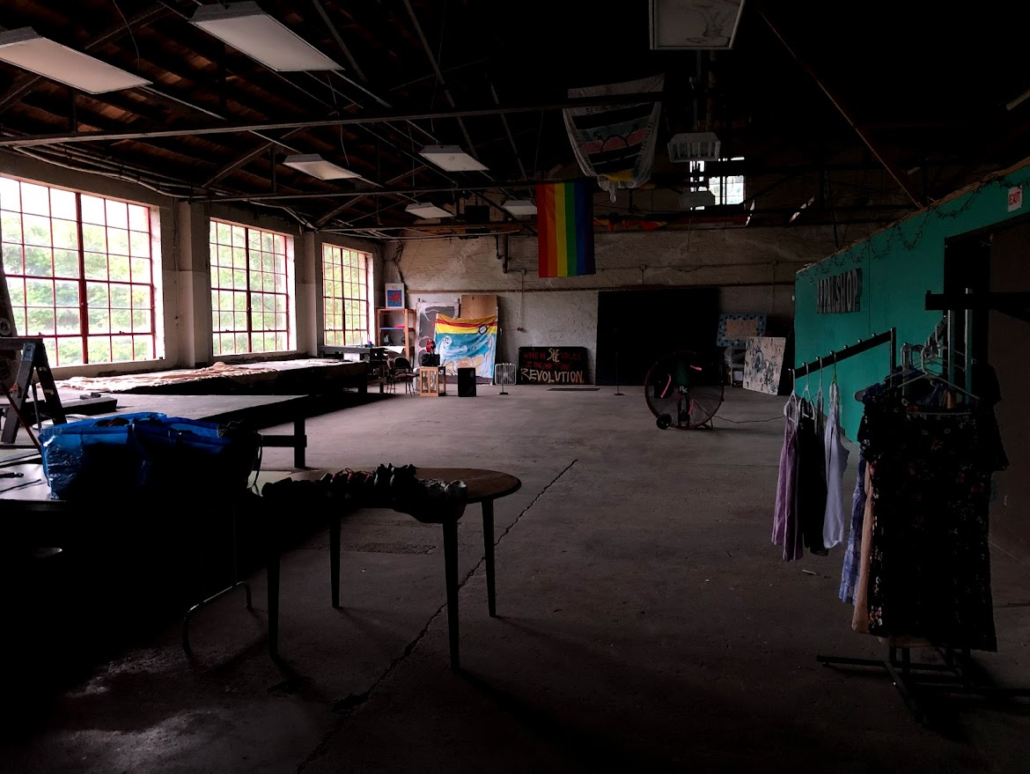
Inside the Boone Motor Building, Whitesburg. Photo credit: Mitchella Phipps.
Derek, who would go on to become something of a “scene elder,” had been playing in bands and booking shows for years by the time I first entered the fold. He became a mentor for many within the scene and held the door open for others to join.
“Our scene was honestly building something out of nothing,” Derek told me. “We didn’t have a rulebook, or any idea what we were doing—we just knew we needed it.”
Derek was right. We desperately needed this space and this scene.
A Scene Without a Blueprint
Whitesburg is a small town nestled in the heart of coal country with a population of under 2,000 people. While it might seem like an unlikely epicenter of radical queer punk culture, it was exactly that in the late ‘90s and 2000s.
Back then, if you didn’t play sports or go to church, there wasn’t much of a social life to speak of, especially for queer folks. Dial-up internet was unreliable at best, and social media was still a distant dream. In order to communicate, we created our own networks. We found one another at shows and we swapped phone numbers. We used message boards like AppalCore to stay connected. We were isolated, but we were never alone.
The Boone Motor Building and the budding music scene welcomed everyone, though. It didn’t matter if you were into ska, screamo, anime, or politics—if you were searching for something more than what your hometown could offer, you would find it there in Whitesburg.
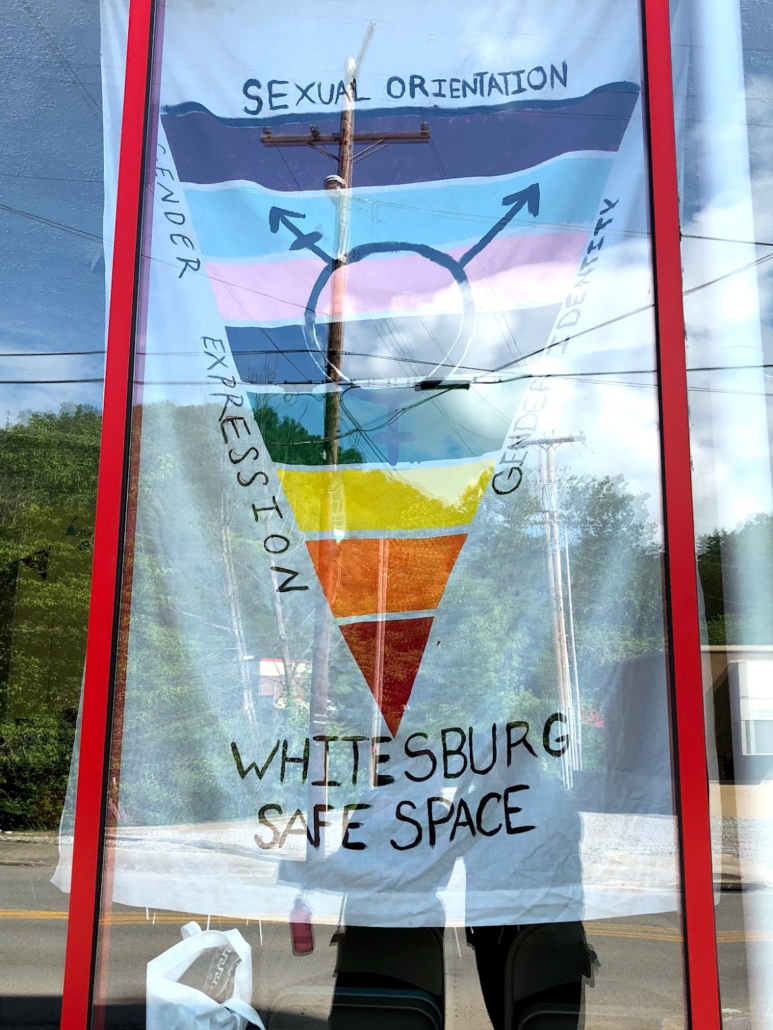
Boone Motor Building, Whitesburg. Photo credit: Mitchella Phipps
WMMT and the Birth of Rebellion
Part of what connected us beyond the shows was the radio. Appalshop’s community radio station (WMMT 88.7) broadcasted through the mountains, and no program had more of an impact than Ska, Punk, and Other Junk.
Hosted by Ada Smith and other DJs, Ska, Punk, and Other Junk wasn’t just another radio program; it was an education in rebellion. SPOJ, as it was affectionately known, introduced us to bands like Anti-Flag and Against Me!, but also to the weirder side of political punk artists we’d never hear on mainstream radio. I vividly remember hearing the band !!! (Chk Chk Chk) for the first time and connecting with their abrasive, yet funky sound and realizing that music could be weird and make a statement.
It was during these listening sessions that my own political fire was lit. I didn’t yet know the language of activism, but I knew what it felt like to be angry at injustice.
The Boone Motor Building: Where We Found Each Other
Even now, there’s something holy about the Boone Motor Building. Repurposed by Appalshop after outgrowing their theater space (which had “lost all its seats to moshing,” as Derek joked), the Boone Building gave us a place to scream, to cry, to be loud, to be quiet… to just be.
Show lineups were a mixed-bag and would feature a variety of genres including bluegrass, punk, metal, and more. There were no purists, only people hungry to connect and feel something different from the norm.
Derek noted, “It didn’t matter what genre you played. [It] was a weird melting pot that reaffirmed that all were welcome.”
Looking around at these shows, I saw gender non-conforming folks moshing with metal heads. I saw pink triangles painted on amps and anti-fascist stickers plastered on merch tables. It wasn’t branded as a “safe space”, but that’s exactly what it was.
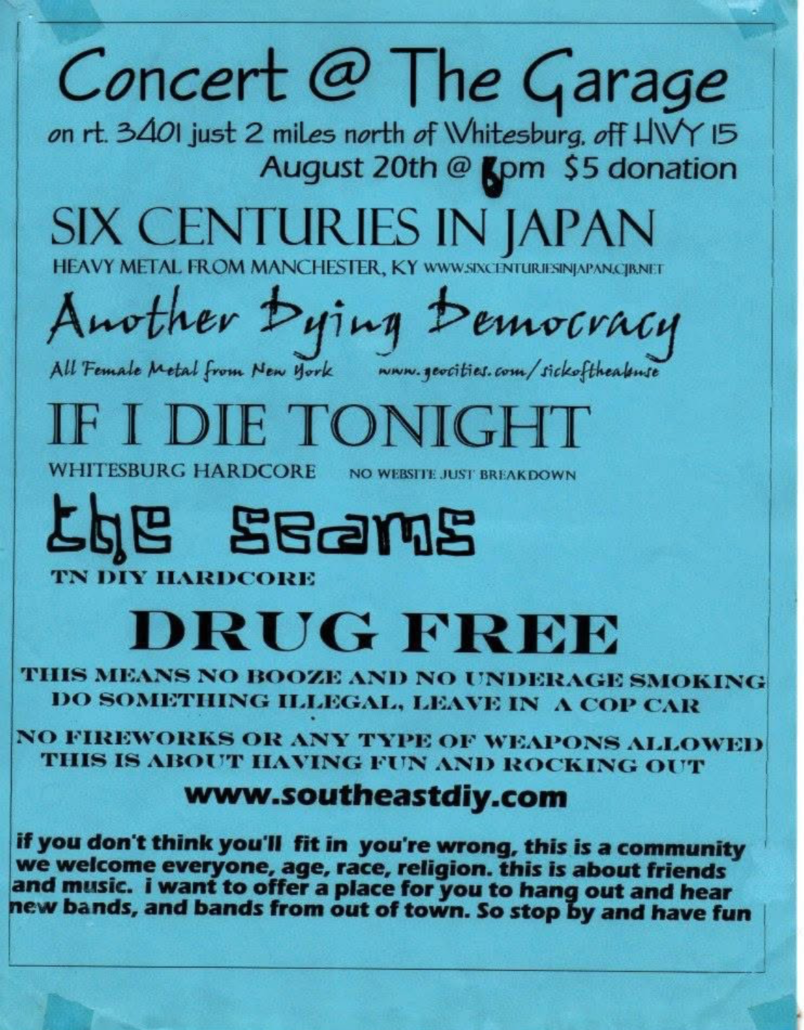
Whitesburg show flyer circa 2004. Photo credit: YouthBored Appalshop Archive
From the Pit to Protest
For us, these shows were more than the soundtrack to our youth. They were also the gateway to our politics. Flyers for anti-war protests were passed out between sets and zines on police abolition and queer liberation circulated the room. Kids who had never heard of anarchism or mutual aid started asking questions.
“Politics came later,” Derek admitted, “but kindness, love, and respect were always at the center.”
That foundation made room for growth and for deeper conversations. These conservations led to organizing and eventually, action.
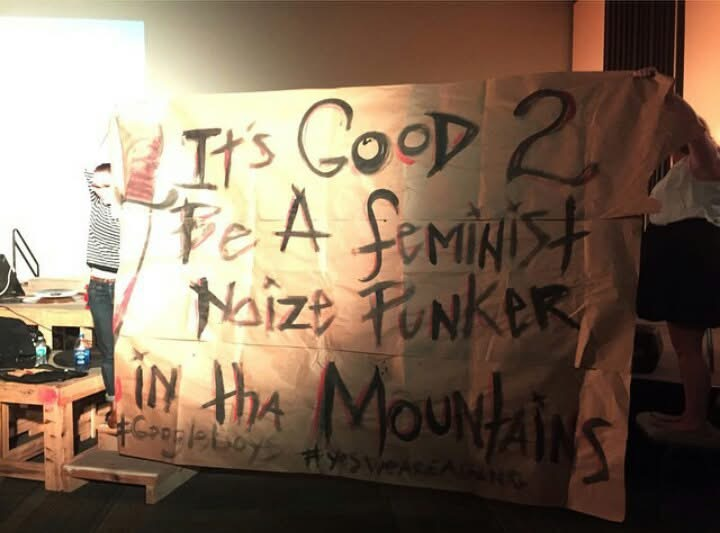
GoogleBoys show, 2014
The Power of Organizing and Storytelling in the Scene
One of those former Whitesburg scene kids is Mitchella Phipps, who now serves as frontperson of the riot-grrl inspired band SlutPill.
“I owe everything to punk and DIY music,” they shared. “It gave me a safe space to step into myself.”
For Phipps, that meant growing into their queer identity, reclaiming Appalachian storytelling traditions, and using music as a form of protest and community care. Through their work, they challenge gender norms, celebrate queerness, and speak hard truths about rural life.
“We’re protesting the idea that you have to be quiet. That you have to be a caregiver. That queers don’t belong here.”
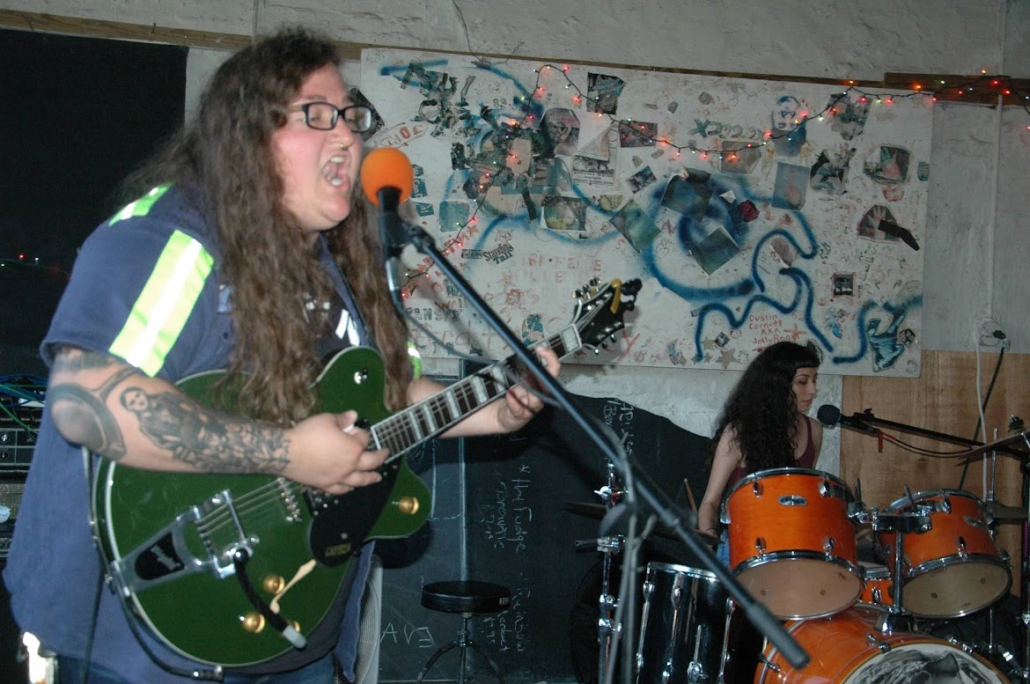
Mitchella Phipps + SlutPill. Photo credit: Mitchella Phipps
Phipps also helped launch eastern Kentucky’s first Girls Rock Camp in 2018, during their time as an AmeriCorps VISTA at Appalshop. This endeavor brought the lessons they learned in the scene full circle.
“It was the first time I truly felt like I was becoming the person I needed when I was younger,” they said, “and to do that in my hometown? That was everything.”
Appalachia: Not Backwoods, But A Battleground
There’s a persistent myth that rural places are politically backwards, culturally empty, and artistically dead. Anyone who walked into the Boone Motor Building during this time period would tell you differently, though.
Phipps sums up this sentiment best, exclaiming, “Go read about Appalachian history. Listen to real country music. Protest is in our blood. This place has always had fighters.”
The punk scene in Whitesburg wasn’t an anomaly, rather it was the latest chapter in a long history of Appalachian resistance. From union coal miners to queercore bands, this place has always made room for rebellion.
A Legacy That Still Shakes
Even as the shows have slowed and the Boone Motor Building sits a little quieter, the echoes of those nights still ring out. Oftentimes, I find myself looking back and wondering who I would be without this place and how it shaped me. For me, that first night in 2003 changed everything. I found my queer identity. I found my politics. I found my people.
The beauty is that we weren’t waiting for permission to exist. We made space for ourselves, and for each other. That more than anything is what the scene taught us. You don’t have to be accepted to belong—you just have to show up.
(Photo credit: Mitchella Phipps).
To learn more about the eastern Kentucky music scene, visit the Appalshop digital archives collection at https://www.appalshoparchive.org.
This piece is dedicated to Lill Prosperino, who embodied the spirit of queer punk in the mountains—fearless, loud, and unapologetically themselves. Their presence lit up the stage and every room, touching hearts in Whitesburg and beyond.