
Closed Chambers, Big Decisions: What Kentucky’s 2026 Legislative Session Means for the LGBTQ+ Community


At last, Kentucky’s 2026 legislative session is upon us.
This year’s session starts on tomorrow, and lawmakers will meet almost daily until April 15. Hundreds of bills and resolutions are expected to be filed, including measures to create the state’s next two-year budget.
Here’s what you need to know as #KYGA26 gets underway.
When do Kentucky lawmakers meet during the 2026 legislative session?
Lawmakers are scheduled to meet almost every business day from Jan. 6 to April 1, then take a quick break so Gov. Andy Beshear can sign or veto legislation, and then finish the session on April 14 and 15.
You can see the full calendar on the LRC’s website.
Typically, the House and Senate gavel in to discuss and vote on bills at 4 p.m. on Mondays, 2 p.m. Tuesdays through Thursdays, and 9 a.m. on Fridays.
Lawmakers often spend the mornings meeting in committees, where they learn about new bills, receive feedback, and then give bills their first vote. Most committees are scheduled to meet somewhere between 8 a.m. and noon, Tuesdays through Thursdays. You can view the full standing committee schedule here.
All of these times can change, and surprise meetings can and will pop up, so it helps to pay attention to the legislative calendar on the LRC’s website. This is where you can see which committees are meeting each day, what they’re scheduled to discuss, plus when and where they’ll meet. You can also follow the LRC on social media for more real-time updates.
Where is Kentucky’s 2026 legislative session?
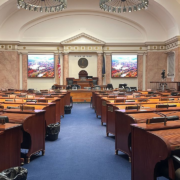
Kentucky’s state Capitol is closed thanks to multi-year renovations, so the House and Senate will meet in a temporary structure built in the Capitol’s parking lot in Frankfort.
Committee meetings will still take place in the Capitol Annex, which is right behind the Capitol and adjacent to the new temporary chambers.
What do the Capitol renovations mean for public access?
The public will no longer be able to watch in-person as the House and Senate debate and vote on bills. When building the temporary House and Senate chambers, they did not include galleries — the public viewing area — in their plans.
Instead, certain committee rooms in the Capitol Annex will be designated live-watch zones where the public can watch a livestream of what’s happening in the House and Senate’s temporary chambers.
The Capitol’s closure also means protests, rallies and other events typically held in the Capitol rotunda will need to find a new venue.
How can I follow along?
You can show up in-person to watch committee meetings, testify or protest at those meetings, rally in the halls of the Annex or outside the building as lawmakers walk to their temporary chambers, and/or watch a livestream of something happening next door in Frankfort.
Panelists at Queer Kentucky’s legislative preview panels repeatedly said showing up in-person if you can, even if it’s just in the Annex for a committee meeting, is perhaps the best way to advocate for yourself and causes you’re interested in.
But there are other ways to stay connected to what’s happening in Frankfort:
- Watch the livestreams from KET or the LRC’s YouTube page anywhere you have internet access, or watch the replays afterwards.
- Follow your favorite politics reporters on social media — media will still be able to be on the floor of the House and Senate chambers.
- Sign up for advocacy groups’ and news outlets’ alerts to know what is the breaking news, especially around the topics you care about.
- See if your lawmakers are active on social media or publish a newsletter with updates about how they voted during the session.
What will lawmakers focus on during Kentucky’s legislative session?
2026 is an even-numbered year, which means Kentucky’s legislature must craft its next two-year state budget. That will almost certainly be the highest priority for lawmakers, but expect budget talks to be a bit of a slow burn over the first two months or so of session before the final details get hammered out as session winds down.
Outside of the budget, here’s a quick look at some of the key issues that could come up:
- Data centers and what restrictions (if any) they should have
- Preparation for looming federal changes to things like SNAP benefits and Medicaid
- How Kentucky can address its lack of affordable housing
- Making child care more accessible or, if Beshear gets his way, offering universal preschool
- Prohibiting diversity, equity and inclusion efforts in K-12 education
- Legislation aimed at the state’s largest two school districts (Jefferson and Fayette counties) following lawmakers’ dissatisfaction with the districts’ financial woes and low test scores
When it comes to LGBTQ-focused legislation that could gain traction this year, here’s a short list:
- “Jackpot justice” measures that could threaten local fairness ordinances
- Measures allowing health professionals to opt out of treating someone on the basis of religious or moral grounds
- Additional attempts to restrict drag performances and artists
- A “bathroom bill” restricting which bathrooms Capitol visitors can use after a GOP lawmaker confronted a transgender woman for using the women’s restroom in the Capitol at the end of the 2025 legislation session.
What will Queer Kentucky cover this session?
You tell us! Fill out this survey and let us know what topics and bills interest you most. Or you can contact lead political writer Olivia Krauth at [email protected].
Want to help fund our journalism? Become a Queer Kentucky Bedfellow.