Judge Lewis Grant Paisley: Kentucky Man Who Advanced LGBTQ+ Rights Remembered for Courage and Allyship


Throughout his life and career, Judge Lewis Grant Paisley of Lexington, committed himself to uplifting and supporting those who were most marginalized in his community. Last week, Paisley, 80, passed away from complications of Parkinson’s Disease on October 27. However, his legacy has already made a lasting impact in Kentucky’s history.
Paisley is most known for bravely ruling Kentucky’s fourth degree sodomy law as unconstitutional in 1986. His landmark ruling was appealed and, after years of litigation, the Kentucky Supreme Court affirmed his ruling in the landmark case of Commonwealth v. Wasson in 1993. This was a decade before the United States Supreme Court would invalidate sodomy laws nationwide in the 2003 case of Lawrence v. Texas.
Paisley’s 1986 Ruling Paved the Way for LGBTQ+ Legal Protections in Kentucky
Paisley’s ruling and the subsequent Kentucky Supreme Court ruling are memorialized in a historic marker in downtown Lexington (one of only four LGBTQ historic markers in the state, dedicated in 2018).
Jeffrey Wasson’s attorney, Ernesto Scorsone, shared how impactful Paisley’s ruling was for the case, LGBTQ+ Kentuckians, and the state at-large.
“It recognizes the rich tradition we have in Kentucky of protecting the rights of privacy of individuals, particularly their privacy rights in the home,” Scorsone told the Lexington Herald-Leader in 1986. “The cases he [Paisley] cites, some of the language in them is really remarkable at just how strong the court system has felt toward the right to privacy, particularly in people’s homes.”
This ruling was a risky move for Paisley to make. At a time when anti-LGBTQ+ sentiment was at an all time high due to the HIV/AIDS crisis, Paisley courageously stood up for the right to privacy for LGBTQ+ Kentuckians.
As a result of this support, he was viciously attacked while running against a homophobic candidate during his 1991 campaign. Despite the onslaught of hatred facing him, Paisley won the election and remained steadfast in his support for all of those in the Lexington community. The bravery of being such a strong ally for the LGBTQ+ community during a time of intense oppression remains incredibly admirable to this day.
Despite the stereotypes of Kentucky as a deeply homophobic state, the Commonwealth has continually served as the site of milestone successes in the fight for LGBTQ+ rights. This sense of legal and community support from allies to the LGBTQ+ community was also later seen with the historic passage of the Fairness Ordinance in Louisville and Lexington on July 9, 1999.

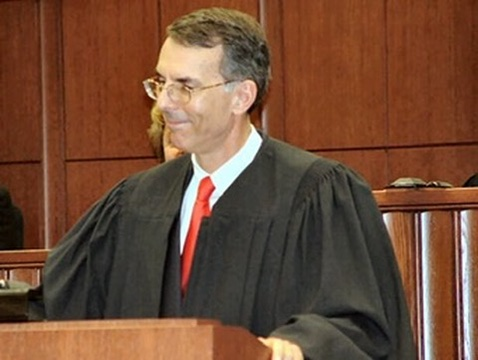
Judge Lewis Grant Paisley, remembered for his landmark ruling advancing LGBTQ+ rights in Kentucky. Photo provided by Ernesto Scorsone.
A Legacy of Allyship and Justice That Still Inspires Kentucky’s LGBTQ+ Community
Paisley’s life and legacy reminds us that allyship is a crucial aspect of LGBTQ+ activism and fighting for equal rights under the law. After the judge’s death, Scorsone emphasized the importance of having more LGBTQ allies like Paisley:
“Judge Paisley was a Vietnam veteran and had no contact with the LGBTQ community. And yet, he had no hesitation in finding that queer Kentuckians deserved to be treated fairly and that the concepts of ‘equal protection of the law’ and ‘privacy’ extended to us, just like everyone else,” he said. “His ruling was based on justice and fairness. We mourn his passing. We need more Lewis Paisleys right now.”
Judge Paisley’s legacy is one of justice, kindness, allyship, and courage, and he will be deeply missed. You can view his full obituary below.
https://www.legacy.com/us/obituaries/kentucky/name/lewis-paisley-obituary?id=59914514