Queer Kentucky launches harm reduction lockers across the Bluegrass State


When Crickett Diggs was working his opening shift at the Old Louisville Coffee Co Op last month, a customer alerted him of a man slumped over a table on the coffee shop’s outdoor patio—seemingly unconscious from a drug overdose.
“They were turning blue,” Diggs said. “I know what the death rattle sounds like and I heard it.”
Fortunately, the Old Louisville Coffee Co Op keeps naloxone, a medication used to rapidly reverse the effects of an opioid overdose, on hand for emergencies. Diggs and the customer administered naloxone several times before paramedics arrived to stabilize the man.
“I thought I was going to have a deceased person on my patio,” Diggs said. “If we wouldn’t have gotten Narcan in his system he would’ve died.”
The Old Louisville Coffee Co Op is among many businesses across the country that have begun carrying naloxone and other harm reduction supplies as a reaction to the increase of overdoses in public spaces. Because of the increase in demand for harm reduction supplies, organizations like Queer Kentucky are now keeping businesses across the Bluegrass State stocked and ready for overdose emergencies.
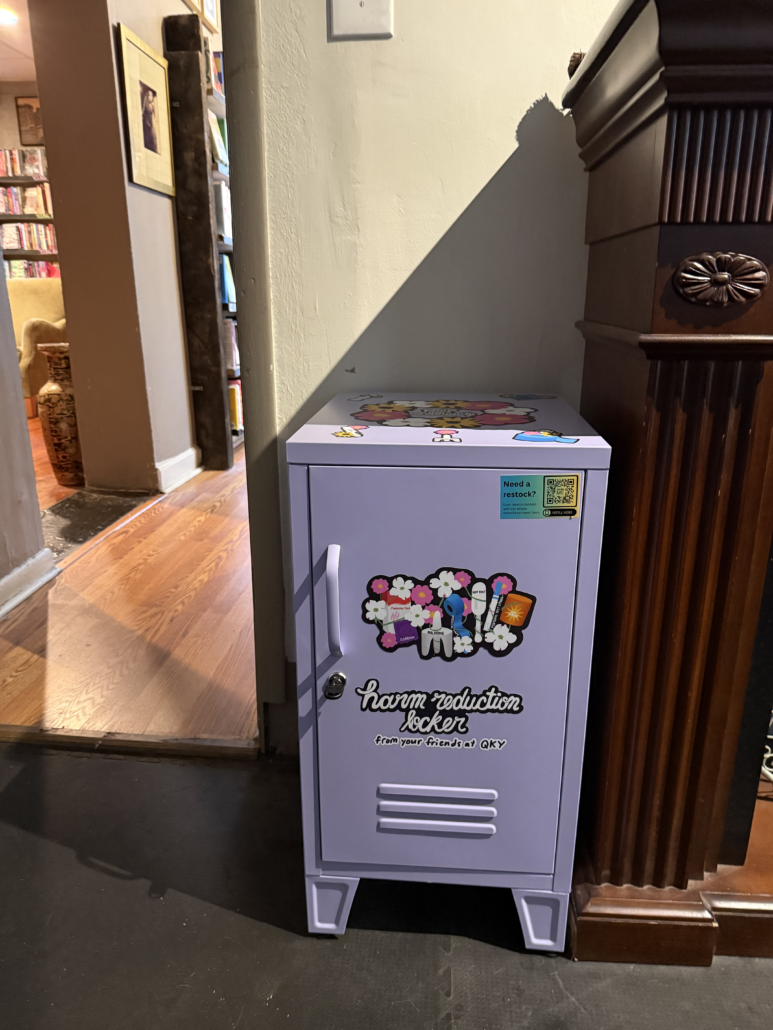
A Queer Kentucky Harm Reduction Locker.
In 2024, 1,410 Kentuckians lost their lives to overdose deaths marking a 30.2% decrease from the previous year. The sharp decline continues a downward trend in overdose deaths, which dropped by 9.8% in 2023 and 2.5% in 2022. Kentucky Gov. Andy Beshear credits harm reduction practices, including the distribution of Narcan, as playing a role in decreasing overdose deaths.
As a journalism organization, we’ve really expanded our content around substance use in the Queer community, including a full digital issue on harm reduction earlier this year,” said Missy Spears, Queer Kentucky’s executive director. “Providing direct resources is not in our normal workday, but we view these lockers as our way of giving back to the community and filling a critical need that we saw being unmet.”
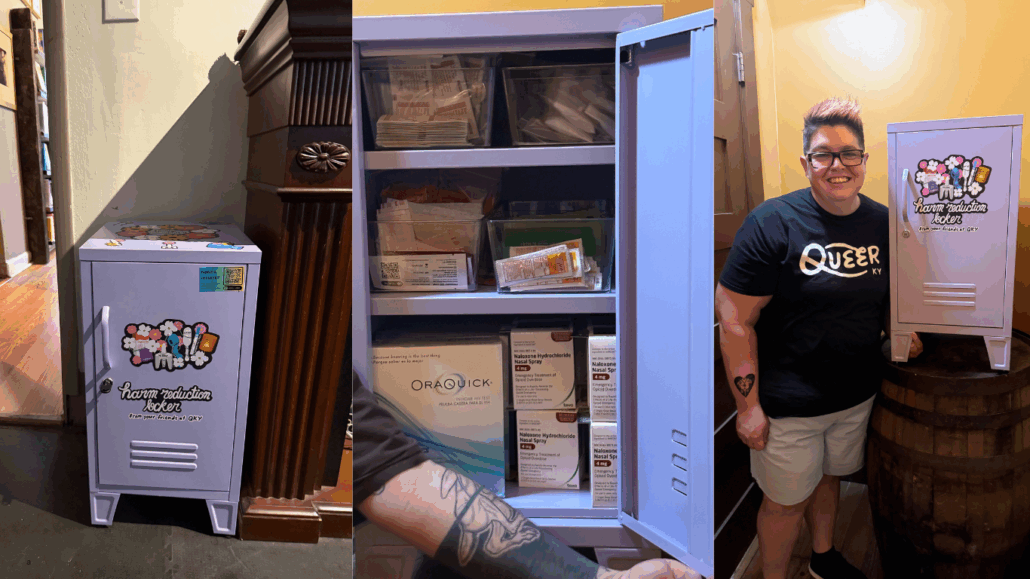
Each locker is designed for discretion as they are about the height of an end table and placed in inconspicuous areas of local businesses that serve at-risk populations. Each locker contains basic harm reduction supplies including free naloxone (generic Narcan), test strips for both fentanyl and xylazine, bandages, condoms, HIV self-testing kits, pregnancy tests, sunscreen, and aloe.
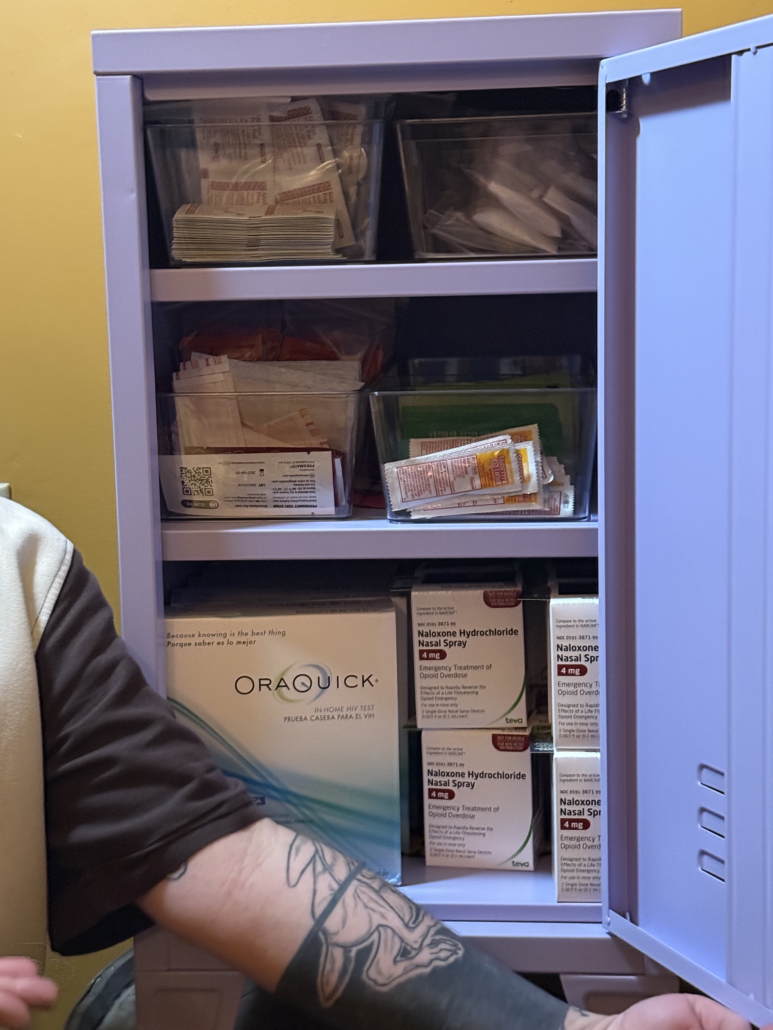
Harm reduction supplies in a QKY harm reduction locker.
“Someone can overdose at any time and fentanyl is in everything,” Digss said. “Everyone deserves a second chance and everyone deserves to be able to change their life. No one deserves to die from a drug overdose.”
In addition to the basic supplies, businesses can also opt to carry safer smoking and snorting kits too. These kits decrease the risk of spreading diseases including HIV and hepatitis.
So far, Queer Kentucky has installed six harm reduction lockers in Northern Kentucky at both Roebling Books locations, Old Kentucky Bourbon Bar, and OLLA Taqueria. Some participating businesses have chosen not to market their harm reduction lockers.
Critics of harm reduction lockers argue that providing access to clean pipes and other supplies encourages drug use and increases substance use in their communities, calling the practice unsafe.
“Some of our partners are operating on a ‘if you know, you know’ basis to avoid harassment,” Spears said. “Some businesses serve communities that have less experience around harm reduction models, so we feel like it’s better to quietly exist for those who need it in those spaces versus bring a lot of attention to it, along with the potential for pushback.”
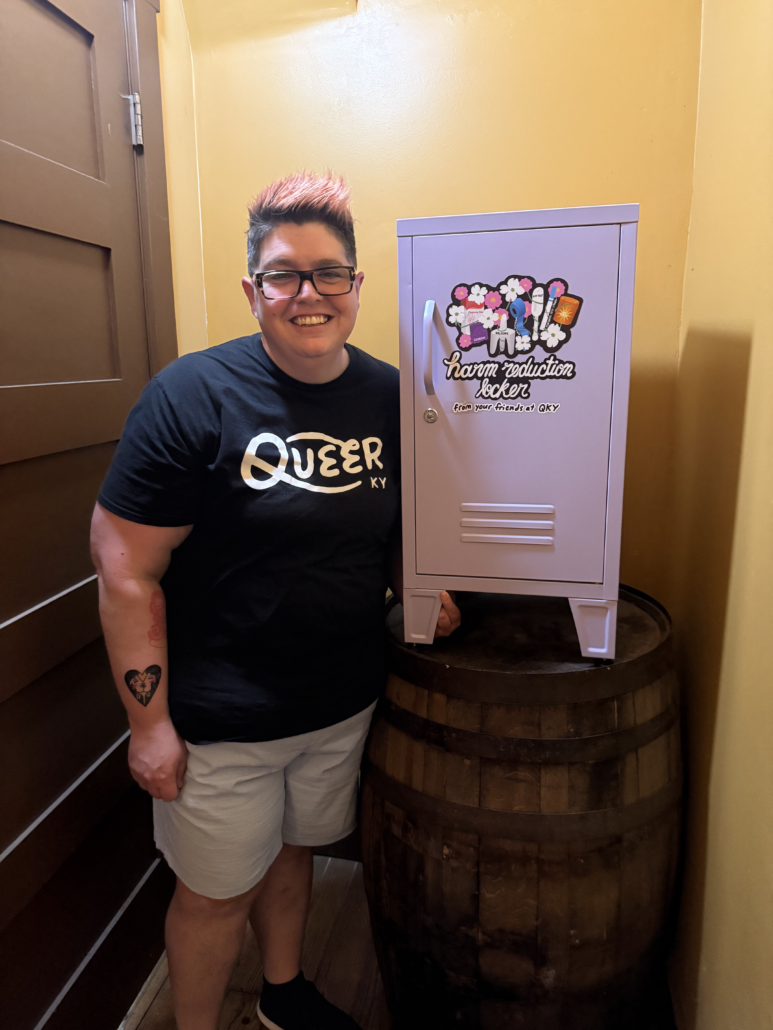
Queer Kentucky Executive Director Missy Spears with a QKY harm reduction locker.
Julia Keister, owner of Roebling Books, says she wants everyone to know that harm reduction supplies can be found under their roof.
“Everyone can benefit from the lockers, so I believe they should be as accessible and public as possible,” she said. “Oftentimes, taking precautions to prevent harm is not something that can be planned or predicted, so being able to see where the lockers are located is important and could even be life-saving.”
In a 2024 NPR article, it was reported that a study conducted in southern Nevada suggests Narcan in vending machines contributed to a 15% reduction in overdose deaths in the first year of operations. In Cincinnati, research found 24/7 access to supplies was associated with a slower spread of HIV.
Keister understands the research and says she’s acting accordingly.
“Much like offering people a bathroom, or a cup of water, being able to provide free and safe harm reduction seems like a basic human right that every business should want to make readily available,” she said.