
First Steps for Transitioning: Getting into HRT


This story is part of Queer Kentucky’s digital issue surrounding the trans youth experience in the Bluegrass state, featuring personal essays to educational information. Read the full issue here.
Healthcare is tricky for everyone, but as trans people, we have extra hurdles in the way of our transition journeys and general health-related needs.
Gender affirming care includes mental health care (therapy, support groups)and medical health care (HRT, surgeries). This care is available to Kentuckians who are 18 years and older, but it’s hard to figure out where and how to start. For now, let’s talk about Hormone Replacement Therapy (HRT) through the experience of two young trans women and the routes they took.
Pearl & Informed Consent HRT
Pearl, a trans woman in rural southeastern Kentucky, began transitioning on her 18th birthday when she called her general practitioner to schedule an appointment for HRT. Her practitioner gave her the phone number for Planned Parenthood.
“Planned Parenthood is an informed consent clinic, meaning they don’t have you go through a diagnosis process for gender dysphoria or get a therapist’s recommendation letter,” Pearl said. “They tell you what the medication’s effects are, and you sign that you understand (the effects) and are okay with what they do.”
Through Planned Parenthood, Pearl scheduled an appointment three months after her call. She said while it felt like a long time, she felt lucky because Planned Parenthood has a limit on how many new patients they can take per month, and patients often experience a much longer wait time.

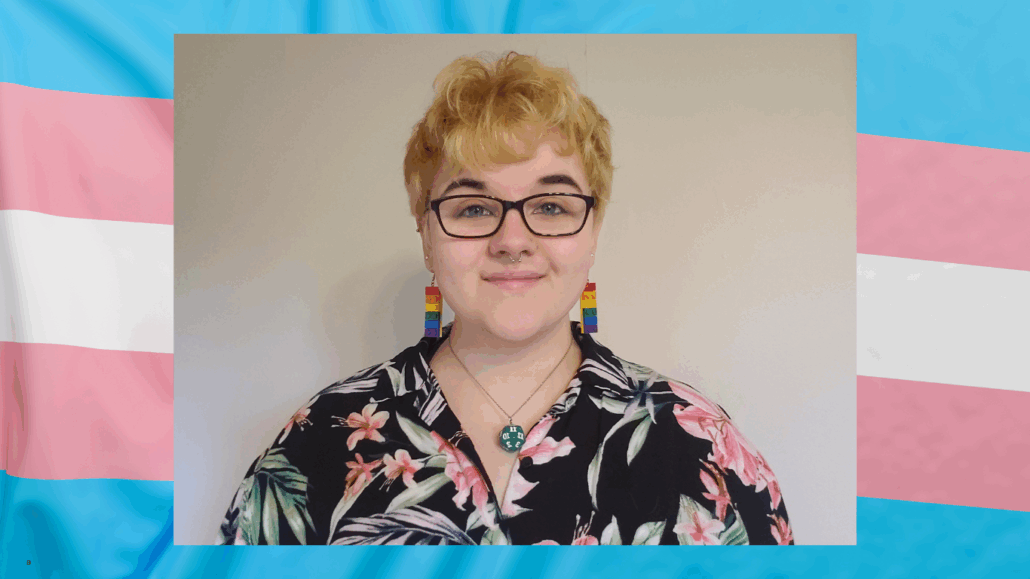
Photo provided by Pearl.
“I am happy with how it progressed, but I feel like things move very slowly,” she said. “When you’re looking for gender affirming care, it feels very life or death in the moment, and it took a lot of hanging on and waiting for me.”
A doctor at Planned Parenthood’s Lexington location prescribed Pearl with a pill method estrogen, Estradiol, to start at a low dosage and progressively increase. Pearl said out of the available methods for taking estrogen— injections, pills, and gels— she preferred pills as a “middle of the road” option in terms of maximizing the estrogen’s effectiveness. After six months on estrogen, she started Spironolactone, an antiandrogen that blocks masculine hormone receptors.
“I feel like I’m gonna be happy with the progress from regular HRT,” Pearl said. “In terms of gender right now, I feel fulfilled having people around me who treat and see me as I’d like to be treated and seen… I’m satisfied with what I’ve been able to accomplish for myself.”
Pearl’s HRT has been covered by Medicaid so far. Still, she said her doctor warned her about legislative meddling with Medicaid’s coverage of gender affirming care, which is being threatened at the state and federal levels. Pearl said she may have to pay out of pocket for the informed consent route or look into other resources like Kentucky Health Justice Network’s transition financial support fund or DIY.
June & DIY HRT
When June, a trans University of Kentucky student, explored informed consent routes through Planned Parenthood and UK’s Transform Health, the wait time wasn’t realistic for her. She said her best option at the time was to get DIY HRT, an admittedly trickier route through countries with over-the-counter hormones.
“You have to do a lot more research into what you’re doing,” June said. “You don’t have a doctor to guide you, you’re completely on your own. That being said, though, it’s not really hard. You just need to do your research.”
June started her research with a blood test to see how much testosterone her body had and what the appropriate doses of estrogen and antiandrogen would be. She used resources like DIY HRT Directory and YouTube videos to learn about HRT and how to safely use it. Then she bought her medications through “admittedly very shady-looking websites” that buy them in other countries and send them to the U.S.
“It’s pretty much a legal loophole,” she said. “Technically, you have to have a prescription to be on estrogen and testosterone blockers, but because in other countries it’s completely over the counter and legal to ship medications to the United States, you can get them in a way that’s not illegal.”
June said the first time she ordered her HRT, two weeks’ worth of estrogen and a month of testosterone blockers, was around $70. More recently, she buys a couple of months’ worth, with the price ranging from $150 to $200.
“It’s not too terribly expensive, but I’m also not someone who’s in a desperate financial situation for a college student,” June said.
June said ordering isn’t very simple because of the research it takes to find a functional, reputable site and deal with foreign currency exchange, and she can see DIY orders being impacted by tariffs implemented by and in response to the Trump administration.
“I’m definitely trying to get into prescription models, mostly because it’s safer if policies do affect the availability of DIY,” she said. “Obviously, in general, gender affirming care is under attack right now, so even legal methods could be harder to obtain.”
June said she is interested in facial feminization and laser hair removal procedures in the future, but she knows they may not be financially viable and is satisfied with the results she’s seeing from HRT.
“The best thing is just to be informed, regardless of whether you’re going to get a diagnosis, informed consent, or go DIY,” June said. “It’s important to know the effects of HRT and other kinds of gender affirming care.”
Pearl and June’s experiences aren’t a comprehensive explanation of HRT treatment, but they’re good examples of what to expect when you start your transition journey. Getting what you need from the healthcare system isn’t easy, but that doesn’t mean there aren’t resources out there for you, like:
- Planned Parenthood
- KHJN
- UK Transform Health
- DIY HRT Directory
- LGBTQ+ Healthcare Directory
- Plume Health (accepts some insurance)
- Folx (accepts some insurance)
Pearl gave some keen advice on those who are beginning their HRT journey by saying, “Everywhere you go is going to try to make it seem like you can’t go forward at all with this and it’s a bad idea, but you know what’s best for yourself.. There are options and ways to get what you need. Don’t let people convince you otherwise.”