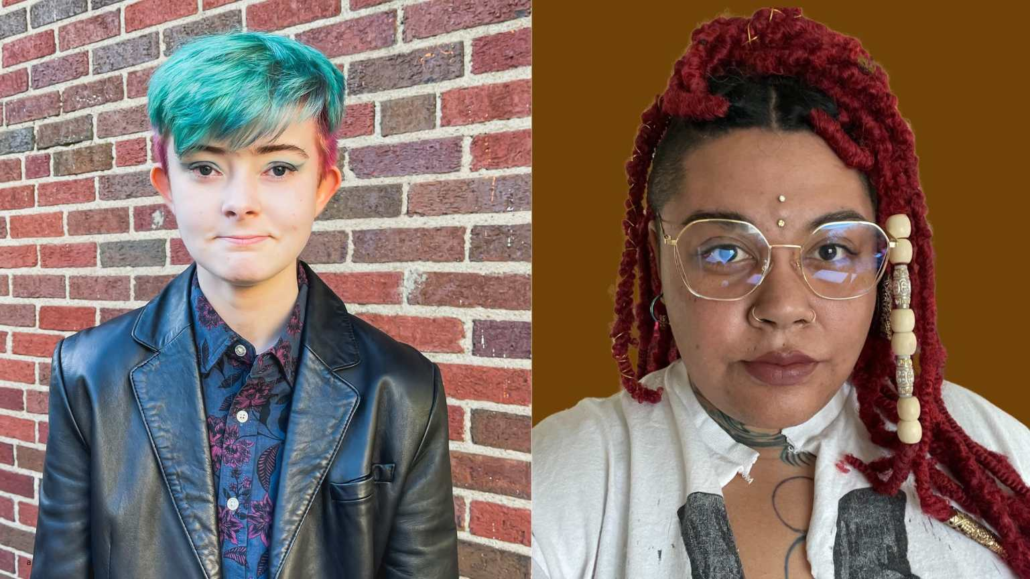
Access in the Movement: A Shared Byline on Disability & Activism


By Sage Barr (they/he) & Mo Viviane (they/she/he/it)
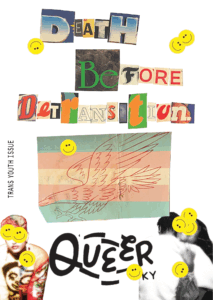
This story is part of Queer Kentucky’s digital issue surrounding the trans youth experience in the Bluegrass state, featuring personal essays to educational information. Read the full issue here.
Disability justice is the backbone of trans movements. When navigating through our experiences, we are met with every intersection of being. Here you will find correspondence of two disabled trans individuals, from expansive perspectives and life experiences, that assist in understanding how accessibility is about more than just the physical spaces we enter; it is a collaborative effort to weave together advocacy by prioritizing the most marginalized individuals in planning, execution, and convening.
Sage:
Disability and activism are more intertwined than you might think. When you’re disabled, you get good at advocating for yourself, being persistent, and sometimes getting loud just to be heard. Those same skills show up in my activism every day. I’m young, disabled, deaf, queer, and trans–and my activism started when I was 15, speaking at a library board meeting after anonymous complaints about LGBTQ+ Pride Month displays.
The library was my second home– tie-dye programs, robotics camps, volunteering at story times, so it mattered to me to show up. I didn’t think of it as “brave” or as activism, just defending something important. But that night lit a bit of a spark.
Mo:
To me, that spark is about the moment you speak up because you have to, not because you’re ready to be an activist. For me, in my undergraduate studies at Northern Kentucky University, it meant fighting my own brain before I ever reached a meeting or a die-in on campus. Bipolar disorder, AuDHD, and severe anxiety don’t exactly make activism easy. Some days, just getting out of the door feels like a rally in itself.
And yet, like Sage, I couldn’t stay silent. My activism was born out of necessity–when spaces I loved and people I loved were under attack (and still are), my body and mind didn’t get to “opt out.”
Sage:
After that library meeting, strangers called me brave. I didn’t see it that way. Soon, I was at school board meetings, speaking against book bans on titles like “Stamped,” “Gender Queer,” and “From the Mixed-Up Files of Mrs. Basil E. Frankweiler.” I joined rallies against SB 150, a bill forcing schools to out trans students. Still, I didn’t call myself an activist – I was just showing up, making signs, lending time.
Mo:
And that’s the thing – ”just showing up” is activism. But for disabled folks, showing up comes with extra steps: navigating sensory overwhelm, finding safe transit, and figuring out where to position yourself so you’re not boxed in the crowd. For me, being Black and nonbinary adds another layer; entering spaces that claim to fight for racism and transphobia while still carrying both in their culture.
Sage:
The first time I saw intentional accessibility at a protest was the 2023 Trans Youth Rally in Frankfort. There was an interpreter. For the first time, I didn’t have to scramble for access – I could just be there.
As a Deaf person who also uses a cane and manages sensory needs, navigating crowded events can be exhausting. If there’s no space to move or no thought given to how people can access the event, it’s easy to feel like your presence isn’t welcome. That rally showed me it could be different.
Mo:
That’s exactly it. Accessibility isn’t about being extra; it’s the foundation of sustainable movements. For me, that could mean quiet corners, clear signage, or event leaders who understand that I might need to step away. And mental health access matters too – creating spaces where people can be involved without being pushed past their limits.
Co-creatively, we come to activism from different places, yet our truths coincide with one another. Movements are only as strong as the access they build in from the start. When accessibility is treated as an afterthought, movements exclude the very people they claim to fight for. But when disabled folks are centered, when care and access are built into every step, movements don’t just get bigger – they get stronger, more resilient, and closer to the world that we’re all fighting for.
For allies, here’s what that looks like:
• Ask about accessibility before the event, not the day of.
• Budget for interpreters, captions, and mobility access from the start.
• Make spaces where people can come and go without shame or guilt.
• Share information in multiple formats – written, visual, spoken – so everyone can engage.
• Remember that not all activism happens in the streets; online organizing, mutual aid, and behind-the-scenes care work are just as vital.
True solidarity isn’t about inviting disabled people into a space that’s already been built – it’s about building the spaces with us at the forefront of your planning.