QUEER KENTUCKY | KENTUCKY'S ONLY LGBTQ+ NEWSROOM

Tag Archive for: covington

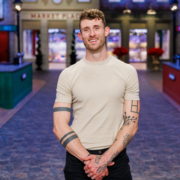
Chase Maus, a Kentucky pastry chef and Season 12 contestant on Food Network’s Holiday Baking Championship, smiles on the show’s holiday themed kitchen set.

Kentucky Pastry Chef Chase Maus Competes on Food Network’s Season 12 of “Holiday Baking Championship”

Kentucky-bred pastry chef Chase Maus grew up watching Food Network after school. This holiday season, the 31-year-old is competing on its biggest stage.

Maus, a former Covington bakery owner now living in Santa Fe, New Mexico, is a contestant on Season 12 of Food Network’s “Holiday Baking Championship,” which premiered Nov. 3. The season centers on a “Naughty vs. Nice” holiday village, where bakers face fast-paced technical challenges and elaborate main-heat builds.

“It is such a vulnerable experience,” Maus told Queer Kentucky. “You are putting not only your personality on display, because it is reality television, but also the work you are doing and the work your life is based around.”

From Covington’s Rose & Mary Bakery to the National Baking Stage

Before he was crafting mulled-spice tarts and coconut chess pie for a national audience, Maus was drawing weekend lines down the block in Northern Kentucky.

He co-owned and ran Rose & Mary Bakery in Covington, where customers routinely waited in freezing temperatures for a chance at his croissants, pies and pastries.

“The line at the bakery was so insane that I do not even think I would stand in it,” he said. “People were dedicated. They stood outside in 10-degree weather for an hour. At that point I thought, holy crap. We have created something out of our hands.”
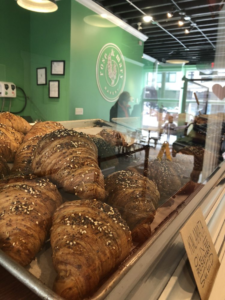
Freshly baked croissants sit on display inside Rose and Mary Bakery in Covington, Kentucky, the former bakery run by pastry chef Chase Maus.

Fresh croissants rest on a tray at Rose and Mary Bakery in Covington, Kentucky. The shop, once operated by pastry chef Chase Maus, became known for its long weekend lines and creative pastries.

The success of Rose & Mary created an unsustainable workload for Maus. He lived above the bakery and sometimes worked from 2 a.m. to 7 p.m. He said friendships and family relationships suffered, and the partnership with the bakery’s investor grew sour — eventually leading to the closure of the bakery.

“I felt like I had shot my ego in the face,” he said. “The namesake of the bakery was no longer mine. I left with nothing.”

After closing Rose & Mary, he took several months off to take a break from his passion and mourn his loss. He eventually joined the Otto’s Restaurant Group, where he helped open a small bakery inside Mama’s and handled desserts and bread service for the company. The job, he said, helped him recover.

“It was an awesome kitchen and a good group of people,” he said. “It allowed me to lick my wounds and get back into the kitchen.”

Inside Season 12 of Holiday Baking Championship and How the Competition Works

“Holiday Baking Championship” is one of Food Network’s flagship competition shows. Each season, professional and home bakers face themed preheat challenges and larger main-heat bakes requiring multiple components and elaborate holiday displays. Judges taste and critique each dish, sending one baker home nearly every week.

During Season 12, bakers are divided into Team Naughty and Team Nice in a holiday village setting, with team wins occasionally providing immunity.

On paper, bakers have about two and a half hours for most main heats. In reality, Maus said, the clock feels crushing.

“Watching the show, it is easy to think, ‘Two and a half hours is plenty of time,’” he said. “But it does not feel that way. You are in a kitchen you do not know, with one walk-through before baking. Everyone is equally scared.”

He added the emotional vulnerability is even more intense than the technical pressure.

“It is really hard to stand in front of Food Network personalities and famous pastry chefs and have them pick apart your plate,” he said.

In the first episode, Maus bakes a brown butter coconut chess pie, a spin on a traditional Kentucky dessert, helping Team Nice win the week and secure immunity. As the season continues, bakers tackle themes ranging from holiday cocktails to Chrismukkah, blending Christmas and Hanukkah elements into plated desserts.

What Competing on Holiday Baking Championship Really Feels Like
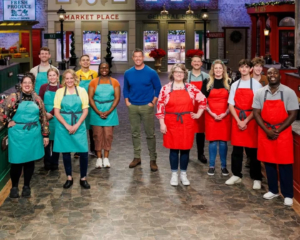
Contestants from Season 12 of Food Network’s Holiday Baking Championship pose together on the show’s festive holiday kitchen set.

Season 12 contestants of Food Network’s Holiday Baking Championship gather on the show’s holiday village set, where they compete in the Naughty vs. Nice themed baking competition.

When Muas watched Episode 3 with friends, an installment he said he does not feel he “shines in.”

“Watching it again is so hard,” he said. “It is such a vulnerable experience. You know exactly what happened, but reliving it is tough.”

He wishes viewers better understood the emotional reality of competition baking.

“I wish people could see the humans running around and thinking,” he said. “Some people online can be so harsh. If I had the bravery to dive into Reddit, which I do not, I know people would have a lot to say about contestants’ mess ups or their looks.”

He hopes fans cheering for him will extend empathy to the entire cast.

“If you are watching the show and you are a fan of Chase, do not be so hard on the other contestants,” he said. “It is still television. It is edited, even though the baking is real.”

Keeping results secret has been one of the season’s biggest challenges.

“It is so hard,” he said. “You want to justify things or explain what happens next, and you just cannot. I have to sit on my hands.”

How Kentucky Roots and Queer Identity Shape Chase Maus’ Baking Style
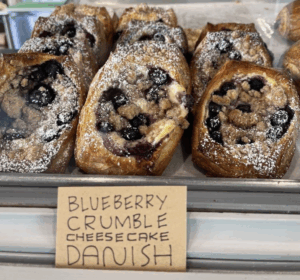
Tray of blueberry crumble cheesecake danishes topped with powdered sugar at a bakery.

Blueberry crumble cheesecake danishes sit freshly baked and dusted with powdered sugar at a local bakery, showcasing one of its popular laminated pastries.

Maus’ baking is grounded in Kentucky traditions and French pastry mechanics. He gravitates toward pies, laminated doughs and anything built around cold butter and mechanical leavening.

“Pie would be one thing I am known for, but croissants were the backbone of Rose & Mary,” he said.

He often incorporates bourbon into recipes, citing Woodford Reserve, Basil Hayden, Elijah Craig and Wild Turkey 101 as family staples.

“Bourbon is a rite of passage in my family,” he said.

Maus said his queerness also shaped his path into food.

“At the same time that I was coming out as a gay man, I was also deciding to leave behind everything I thought I wanted to do and lean into food,” he said. “As I developed my queer self, I stepped into this world of artistry and creation.”

That influence shows most clearly in his plating and decoration.

“There is a very clear, colorful, expressive way in which I decorate or plate something,” he said. “It ties to my queerness and my desire to be different and not fit into a box.”

Community support and next steps

Since the season premiered, Maus’ phone has been flooded with messages from former classmates, teachers and longtime Covington customers.

“It has been overwhelming in the best ways,” he said. “People I have not heard from in years are reaching out. It has been really fun to host watch parties with my friends and my boyfriend.”

Santa Fe slows down in the winter, giving him time to plan what comes next. Maus is at work on a pie-focused cookbook he describes as “fun, sassy, creative” and partly self-help inspired. 

He is also exploring additional competitions, pursuing awards and thinking about where he and his boyfriend may eventually settle.

“I am very open to what that looks like,” he said. “In the long run, there might be a move in my future. One day I want to get back to having my own thing.”

Where that future lands, he said, is still unfolding. But stepping onto the Food Network stage has reminded him of something he needed to feel again after closing his first bakery.

“I grew up watching these shows,” he said. “I felt like I should push myself to dream again. Now I am just trying to enjoy it and see where it takes me.”
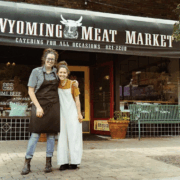
Wives Shelbi and Ashley Nation, known as the Nation wives, stand arm in arm in front of Wyoming Meat Market. They are smiling, wearing work aprons, and standing on the brick sidewalk beneath the shop’s black awning that reads “Wyoming Meat Market.” A bench and storefront windows are visible behind them.

Inside Reka’s, Covington’s Lesbian-Owned Whole-Animal Butchery Reviving Italian Traditions

There are few butcheries in the region offering high quality meat sourced from local farmers, unique and experimental sandwich recipes, and imported Italian groceries – and there may only be one owned by a married pair of queer women. Introducing Reka’s: a butchery prioritizing a whole-animal approach located at 401 Scott St. in Covington. 

A Lesbian-Owned Butchery Rooted in Family and Italian Heritage

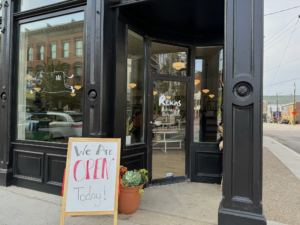
Exterior of Rekas Butchery and Delicatessen in Covington, Kentucky, with a sidewalk sign reading “We Are Open Today” in front of the shop’s black storefront and glass door.

    Photo provided by Rekas Butchery and Delicatessen.

Wives Shelbi and Ashley Nation opened Reka’s in 2024 with the goal of celebrating Shelbi’s great-grandmother’s legacy as a chef and business owner in the male-dominated meat industry. When developing a sister location to their original butchery, Wyoming Meat Market, they borrowed her name – Reka – and her classic Italian recipes. 

“Our roots go back not only to Italy and our Italian heritage, but also to our family members,” Ashley Nation said. “We’re female and we’re business owners. [We’re] something against the norm.” 

Also against the norm is their whole-animal approach: a way to ensure quality control and sustainable practices from the farm to the butchery. The Nations were inspired by the original owner of Wyoming Meat Market, who started the trend in the 1920s. By ordering a whole cow only once a week, butchers can intentionally utilize it to its fullest extent and avoid food waste.

“The idea is that a whole cow can feed a community and nothing goes to waste,” Nation said. “Get a cow once a week, butcher it, and the community would come feed off of it. Whatever we didn’t sell that week, we would grind and make burgers and have a community grill-out, and that still happens in Wyoming.”

“We do that because we know the cow. We know what our cows eat. We know where they live. We know everything about them,” Ashley Nation said. “When you talk to our butchers here… They can tell you just about anything… people really care about their food, and I think that goes a long way.”

A Whole-Animal Philosophy That Connects Food and Community

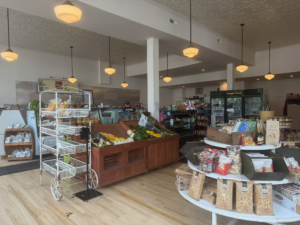
Interior of Reka’s butchery and market, showing displays of fresh produce, Italian groceries, dry goods, and a refrigerated case labeled Fresh Food. Wooden floors, pendant lights, and organized shelves create a clean and welcoming shopping space.

The interior of Reka’s shows a bright, organized market space featuring fresh produce, Italian pantry items, local meats, and prepared foods. Photo provided by Reka’s.

The whole-animal approach corroborates more than just Reka’s commitment to sustainability and meat quality. It also showcases their devotion to their local community, which they aspire to connect with further in future years.

“Especially with the holidays coming around, we’re trying to plan a holiday pop-up,” Nation said. Currently, Reka’s boasts a wide Thanksgiving menu complete with a whole turkey and side dish bundle. “We definitely have plans to be a part of the community.”

With the recent government shutdown pausing food assistance, the Nations feel called to provide for the community and give back to its members now more than ever. Reka’s is sending donations of non-perishable items and a percentage of item sales to Be Concerned in Covington, a food pantry serving eight counties in Northern Kentucky.

“With SNAP coming to an end, we’re partnering with local food banks and starting a food drive,” Nation said. “We want to help our neighbors.” 

Since introducing themselves to their Northern Kentucky “neighbors” over a year ago, Reka’s has developed a strong community of regulars: some who visit the shop every day, twice a day.

“We focus heavily on what our customers want,” Nation notes receiving requests for aged Parmesan cheese and Italian holiday cakes – all things they’re happy to provide. “We’ll have the lunch crowd, so some people come in and get a sandwich… then they’ll come back after work and get chicken or steak.”

Creating Safety, Acceptance, and Belonging for LGBTQ Customers

Whether customers visit to explore the shelves of imported groceries, place orders for their families’ dinners, or snag what Nation calls “bomb sandwiches” for their lunch break, they all share something Nation briefly feared they wouldn’t – a respect for her and her wife’s relationship. 

“There’s still, as always, a bit of ‘what are people gonna say?’” Nation said. 

When beginning their business, Nation worried referring to Shelbi, the primary butcher and founder of Reka’s, as her wife might provoke stares or judgement. Instead, she’s found herself “pleasantly surprised” by the reception from customers.

“If I just say ‘my wife’ – I used to be worried to say that term – people don’t even flinch,” Nation said. “That’s really, really nice, because that’s something that, as a business owner, you really don’t know if that’s gonna affect your business. At this point, if it does, then I don’t really want them as a customer anyways.”

Despite being perhaps the country’s only whole-animal, queer female-owned butchery, Reka’s originality and innovation doesn’t contradict their desire to be a “safe space” for many queer shoppers in the area.

“It’s really fun to have people come in and tell their stories, and just explain how happy they are that we’re here,” Nation said. “It makes me feel really good.”

In the future, Reka’s hopes to partner with Covington Pride to show their appreciation to the community and introduce everyone to the fascinating Italian flavors they offer in store. Until then, customers hoping to sample imported snacks, order extra sides for their Thanksgiving feast, or try a sandwich with a unique fusion of flavors can visit Reka’s from Tuesday to Saturday each week!

From Archive To Action: The queer, sex-positive magazine bridging print media, history, and activism

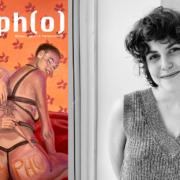
Avery Plummer was finishing her Master’s degree in Art History at Ohio University, considering her thesis, and the COVID-19 pandemic obliterated all opportunities for interpersonal community. In the spell of isolation, she was figuring out her own identity as a queer woman in an increasingly terrifying landscape to be a member of the LGBTQ+ community. And then she found On Our Backs magazine. 

On Our Backs is a vintage lesbian porn magazine, starkly contrasted with its smutty contemporaries (like Playboy) that centered on women, sexual health, education, and advocacy. She channeled this inspiration and created the first issue of nymph(o) magazine to serve as her masters thesis, and still continues the project today. nymph(o) is a modern, sex positive print-only publication that centers queer experience, joy, sexuality, and a masterfully vast breadth of diverse voices on glossy paper in a visually breathtaking delivery system. 

Nothing is off limits in nymph(o). Photos, interviews, poetry, and comics find themselves snugly nestled within its pages. Life is given to the voices of people across gender identities, sexual spectrums, ability levels, ages, and experiences. This is a matter of ethics and principle for Plummer, who conducts herself with this posture in all aspects of her life, but especially in this area. 

When asked about how she navigates the sometimes-problematic attitudes and ideas of our queer forebears, she waxes about honoring our collective past and looking to these blueprints for context and inspiration while building the world we desire to live within. 

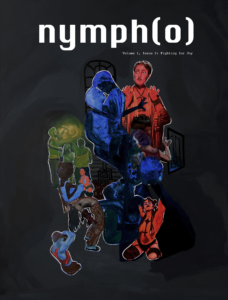
Cover Art by Maddy McFadden

“Constantly looking at things through a critical lens, we can’t accept everything as fact. I had to do this specifically with On Our Backs, it was very white. It was not as trans as something you might see today …There can be a gentleness in that critique, but not accepting it as fact,” she says. 

This is a hard line, and clearly a well-protected boundary for Plummer. It’s of critical importance for her to include as many stories as possible in nymph(o), and to do so with veneration. Utilizing so many elements in this magazine not only makes it a significantly more fun read, it serves the purpose of capturing the work of its subjects exactly as the artists intend their words to be shared; however a contributor wants to tell their story is how it is told within her pages. 

Each issue begins with a loose theme. Concepts like “fighting for joy” or “queer spaces” become the backbone of a deeply collaborative process. She opens submissions for contributions, but will also seek out specific people if there is a topic she knows she has to cover. This duality of reliance on community, while opening the scope, results in multiplicity of content that leaves readers with a satisfyingly juicy experience. 

Between her acting as curator, her partner, Maddy, serving as creative director, and a network of artists, there is “room to devolve,” as she says. This is a piece of art, showcasing the miraculous ways queer people can work together, challenge each other, and craft something cohesive and celebratory. 

While this project may have started as her thesis, it has evolved into an antithesis of the way media is consumed in the modern timeline. In times where endless scrolling is seen as the work, and reposting is tantamount with organizing, nymph(o) is a defiant, stunning piece of revolutionary art that begs us to slow down and immerse ourselves; to linger awhile, languish in textures, and move our eyes across its substantial pages. 

She says, “Context gets left out of many conversations [on social media],” and print media is a way to create a larger body of work that exists only within the spaces it’s meant to belong. The Internet has its virtues of accessibility, which has certainly activated many members of the community, and saved the lives of queer people all over the world. But print media can be something by communities, for communities, away from normative gazes. Creating and preserving spaces for our eyes only bears importance, and can serve as a pivotal organizing space. 

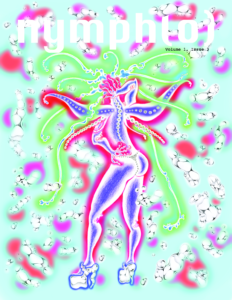
Cover Art by Denver Bastion

“That’s how you move in stealth, that’s how you get these large groups of people to know about things, but not the groups you’re targeting. It’s free from the constraints of a social media platform that is run by the oppressor. There’s a lot of power in it. Where the struggle happens and it falls flat is the ability to access the information,” she says. Plummer laments the lack of grassroots gatherings in the era of social media, and how organizers prompt us to check their social media to know when things are happening, but the exposed nature of that can be a pitfall. Print media is powerful, because it’s made (often by hand) by us, for us, and only has to be seen and loved by the people whose power it is meant to uplift.

Yet the main motivation for nymph(o) being a physical piece of media seems to be rooted in Plummer’s abiding love for archival work. We met to chat in the Ohio Lesbian Archives, a treasure trove of books, magazines, and ephemera meticulously assembled to document the movements of queer people in Ohio. She volunteers at the OLA, and it’s abundantly clear that ensuring the preservation of our history is the key to unlocking a future of liberation. 

The Ohio Lesbian Archive was the womb that birthed nymph(o), and feels very much like a hallowed and sacred ground from which to birth the next queer freedom movement. Its original home was above the iconic Crazy Ladies Bookstore, and has independently housed thousands of pieces of history for over thirty years. 

When I asked Plummer about how archives are activist spaces, she brings up what she calls “The precarious imprecarity” of LGBTQ+ communities. She says, “Archiving is activism because archivism is proof. We have been and always will be here, it’s literal proof of that. When we’re seeing increasing efforts to erase that history and evidence, these grassroots archives become so important. They can’t erase that. Keeping pieces of proof outside of a higher institution. We’re not connected to a university that can cut their DEI funding. We’re keeping this open to the community.” 

Art by Mallory Stowe

The OLA is home to “Jill’s Journals”, which are quite simply the personal journals of a lesbian named Jill. They’re only available to be viewed in the archive, and they’re a real treat. Plummer loves these journals, saying “[we have been] amazing, whimsical creatures throughout history,” and capturing these seemingly mundane moments are powerful ways to remain connected to the humanness, whimsy, aesthetics, and humor of our people. 

When we look upon the world-shattering efforts of Act Up and are inspired by culture-shifting work done in the past, it can be easy to forget that queer people are hilarious, queer people made grocery lists, queer people ran errands. A reminder that there has always been a resilience resting within the daily movements of life is how revolutions are carried out. Archives preserve that, and do so in a physical space where community happens. Collective knowledge and skills are shared, strengthening the solidarity between us all in a way human beings can only do when sharing the air of a room together.  

nymph(o) magazine’s next issue is in the works, and the Ohio Lesbian Archives has open visiting hours biweekly on Wednesday from 6:30-8:30 & Sunday from 11:30-1:30.

Pin It on Pinterest