QUEER KENTUCKY | KENTUCKY'S ONLY LGBTQ+ NEWSROOM

From Lewis County to Louisville

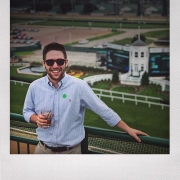
Kaleb McCane, Lewis County

I’m from Vanceburg, KY. I love it in Lewis County, but moving to Louisville was a great decision for me because getting out of the small town environment allowed me to grow as my own person and learn who I truly am. It also taught me how to think independently in many aspects of life. With that being said, growing up there was great.

I’m extremely close to my family, specifically my mom. I’m also still friends with some people I grew up with because with such a small amount of people in a county, you really learn everything about each other growing up. With Lewis County being such a small town full of traditionally conservative people, I was afraid to come out, but truthfully, everyone from back home that knows doesn’t treat me differently or feel differently.

To any person struggling to come into their own identity, I would say stay true to YOU and don’t let anyone interfere. There will always be people trying to knock you down no matter what. Gay, straight, male, female, black, white and everything in-between. But you have to think that at the end of the day, the main person you have is yourself, so if you’re not living up to your full potential of who and what you want to be, you’re only hurting yourself.

Honestly, how I identify doesn’t affect how I carry myself. I act the same now as I did when I identified as straight and was dating girls and when I first came out and everything about being gay was new to me.

I see a few major issues in the queer community – one of which is the standard at which gay men (I only specifically say gay men because that’s what I have seen the most of and have experience with. I know we aren’t the only ones who deal with this) hold themselves to when it comes to psychical appearance.

In the gay community, we are expected to always be dressed well, skinny, muscular, etc. I like to say I am straight skinny but gay fat. In our community if you don’t have a flat stomach or abs, you’re “fat” or “chunky” – which is absolutely ridiculous.

Our community is hated on and discriminated against enough as is, we don’t need to go after our own brothers and sisters. I just wish we could let one another live our best lives while supporting each other no matter what, not tear each other down.

Another big issue that I see and personally deal with myself is politics. I have met so many people that I have hit it off with as friends but then they figure out that I am a republican. Then the whole dynamic of our friendship changes. It almost seems as if they are unaccepting of me not only as a friend but as a member of the community.

I think this is ridiculous as well. Just because we don’t have the same political views/opinions doesn’t mean that I am a terrible person or have turned my back on my community. People’s opinions differ, which is okay. That’s what makes America and our democracy great.

I think if our community took a step back to reflect on ourselves and realize that being gay, lesbian, trans, pansexual, whatever, doesn’t mean that you have to fit into the stereotypical mold that is the LGBTQIA community. We want and expect to be accepted by everyone outside our community but can’t even be accepting of one another. How is that supposed to work? If people outside of our community see us turning on each other and not respecting each other, why would they feel the need/want to respect and accept us?

To answer whether or not I feel excluded from the mainstream queer community, I guess I would have to say I can say both yes and no. No, because I do live up to the stereotypical queer standards; take that as you will. As far as politically, I do somewhat feel excluded. I was raised in a very conservative family and even after moving and learning my own political stance, I still consider myself a proud Libertarian-Republican. Obviously, on some social issues – like gay marriage – I tend to go more towards the center-left, but I still stick to most conservative beliefs. It actually has caused multiple spats between me and friends in the queer community. One of the main arguments I hear is that republicans don’t agree with my lifestyle, but I like to remind them that there are other gay republicans/conservatives out there and that there are many other components in politics besides gay marriage that typically take priority.

I feel my best – which I would describe as safe, happy and comfortable – when I am with my friends, loved ones, and other members of the queer community. Whether it is hanging out at home, going out to the bars, social events like pride, etc. I always feel my best when I am with these people.

I can’t really pinpoint one person who I can say influenced me to life the life I live now. My mother is and always has been my biggest supporter in life. She’s always pushed me to do and be my best. She has always been there for me and encouraged me to chase my dreams, whatever they were. So in part, I can say she is one of the people who have made the biggest impact. But there has also been other people along the way who have done the same. My English teacher/drama club director was basically my second mother during all four years of high school, friends and fraternity brothers I made when I moved to Louisville all helped me realize and come to terms with who I really am and who I want to be. So, all-in-all, many people in my short 22, almost 23, years of life have influenced me to live the life I live today.
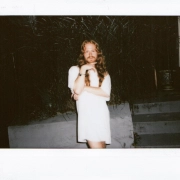


Manhattan visits Kentucky, reflects on southern roots

Queer? To be completely honest, the meaning of the word Queer has been a bit of a conundrum. The definition, personally, changes daily.

When I was initially introduced to the concept of what I think Queer is today, which I think is something quite radical, I didn’t think I was radical enough. What I’ve come to associate queerness with are people who don’t have rigid, black and white definitions of their sexuality and gender.

That’s exactly where I find myself, in a grey area. I prefer humans who identify as men, that’s not to say I’ve never felt attracted to someone who identifies as a woman, sexually. If I have to tick a gender box, I would tick male. However, I don’t subscribe to the stereotypical ideas of what society would consider to masculine. I don’t identify as female, but I certainly am effeminate. For me, this is my queerness.

I would say these are ideas and notions I’ve come to recently. I grew up in Jackson, Mississippi where the culture is very binary. Gay vs Straight – Man, Woman. I’ve lived in New York for ten years, I think this has changed slightly back home.

However, when I was coming of age I didn’t have any references for anything beyond the stereotypes. It was a constant struggle to find where I fit in.

After my recent visit to Kentucky, I’m noticing a change in the south. I think with dawn of social media more people in rural and conservative areas have access to representation and like minded individuals that one may not have known existed. It’s allowed LGBTQIA+ community to form a more global network which is beautiful. Especially for young people – if I had the knowledge that people like me existed in the world when I was coming of age, or examples of people living their life beyond societies definition, everything could have been different.

It’s all so overwhelming, I wish that boxes and definitions and binaries didn’t exist. Can you imagine a world where people just exist freely as they are? No need to create subcultures and sub-subcultures and communities within communities for protection and identification?

I’m not sure I’ll ever see this problem solved as long as we’re human but if we’re aware it’s a start. What’s wild is it’s all just a human attempt to belong but in this attempt to belong we create new communities or scenes that become exclusionary.

The best example that comes to mind is high school, there are kids that don’t identify with the mainstream so they refuse to conform and choose to rebel. In their rebellion they join the goth scene or alt scene, now their rebellion has become about conforming with a new group of like minded individuals that reject a group of people that they feel rejected them.

As it relates to Queers specifically, this behaviour was for protection and safety, mental and physical. I think it’s important and healthy to respect the past, but we have to look towards the future and build on ideas that are actually inclusive.

Gay cis white men have gained a lot and move through the world with much more ease, what’s important now is to use that privilege support and uplift more marginalized members of our collective community.

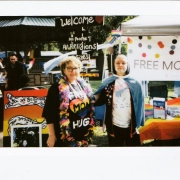
Free mom hugs in Pikeville

Marty Wayman, Frankfort

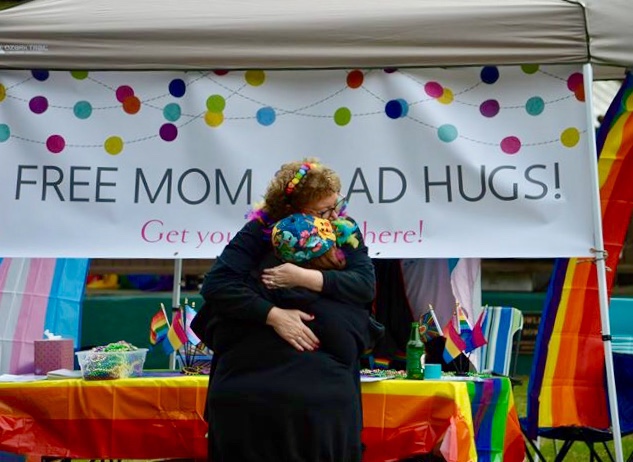
I have a son with autism, a gay son, a “son of my heart,” who came out as trans at the beginning of the year. He’s 16, and one of the reasons Free Mom Hugs has been an organization which I choose to support with all of my energy.

Free Mom Hugs, and assorted offshoots, is an organization started by Sara Cunningham, a mother in Oklahoma. Their goals are:

To be a group of affirming parents who love their LGBTQ+ kids unconditionally and take those hugs of love and acceptance to others. For some, those hugs can be the difference between life or death. We aim to eliminate LGBTQ+ prejudice, and end the abusive practice of conversion therapy. We stand with and love our LGBTQ+ children.

fullsizerender

They started out with parades, but have since branched out into larger, more inclusive efforts. Churches can often be the basis for these offshoot groups . At our events, we often hear:

I haven’t been hugged my mom since I came out.”

My Grandparents won’t talk to me anymore.”

I didn’t find out until after the funeral that my dad died, no one told me.”

Those comments broke their hearts, and mine.

To support and share hugs and love in a judgement-free embrace is a vital thing for individuals of all ages.

Moms, dads, grandparents, big sisters, little brothers, chaplain hugs, a dog to hug—we’ve done it all.

Our volunteers often come from FB pages and one-on-one conversations between people who just want to give back in some small way. We’ve had nothing but happiness and love from our volunteers who often feel they get back even more care than they give.

We try to ensure everyone gets 2-3 hugs, a sticker that says, “Hugged and Loved,” and beads for a “hug to go!” We build mirrors built with self-affirming quotes and signs welcoming people of all religions, sizes, and cultures. All are welcome in our arms.

This is the best and most important thing that I’ve ever done.  The feeling I get by sharing my love is better than any of the opening night excitement I’ve felt on the hundreds of plays I’ve been apart of.  It makes me want to do more for community. In the coming months, we are planning events to support young LQBTQ+ people through the holidays, as family gatherings are a tough time for many people.

One of the things that most encouraged me to get involved with Free Mom Hugs is the work they do outside of festivals and parades. They sit with those who need a friend at the hospital. They will fill in as a parental figure at a wedding. They are astounding.

I’ve worked on assorted boards and fundraisers for LGBTQ+ groups over many decades, but this organization just fit. We all need a hug sometimes.

My favorite part of events is the surprise, big hugs I have with people who may not seem they need one. I will often ask them to, “Bring it in here,” with my arms wide open, and off we go. This has led to amazing hugs with people of all ages, sizes, colors, genders.

My other favorite part is the comments. “Can I have another, my grandma won’t hug me anymore,” and baby, I sure will! I give great hugs.

I’ve yet to have a difficult moment working with the group. I’ve heard about other festivals where some trouble was brewing, but the Free Hugs people helped to diffuse it. I’d like to think that I could help do that as well. I have not had anyone put me in a difficult situation, or need help, but I feel prepared to do so if the need arises.

And when you are wearing the Free Mom Hugs shirt, you will be asked to hug everywhere, even in massively crowded restaurants. When asked, I always say yes. A hug always calms people down!

Pikeville Pride was tremendous. We had had our second Capital Pride here in my hometown of Frankfort the week before and doubled size from year one to year two! I think that will happen in Pikeville as well. The brightness and excitements in the faces of attendees was amazing. Many couldn’t believe it was happening in their town, and the opportunity to hug them was such a gift.

Wow, what an amazing group of festival organizers and participants! We were so delighted to be included!

For us “huggers,” the important thing about Free Hugs is love and acceptance. We want LGBTQ+ youth to have a pair of warm arms, and to come back for more whenever they need.  We want LGBTQ+ adults to know that we love them.  We want festival goers, families, couples, seniors, and kids to know that they are welcome, accepted, we are glad that they are here.

Let your worries go if this is your first time at an event like Pride! If you have any pain in your heart, let me lend you mine for a bit to carry that weight.


Preventing HIV with VOA FIT is easy: Safe sex, PrEP

By Pablo Archila

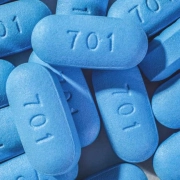
HIV is 100% preventable. We aren’t just limited to condoms and hand jobs anymore, there’s medicine that can prevent HIV infection called PrEP. PrEP, or Pre-Exposure Prophylaxis, is a once daily pill taken to prevent HIV infection. Think of it as the birth control for HIV. Meaning, it only works if you take it.

Deciding to get on PrEP is entirely up to you. Once you’ve decided that you want to do it, here’s how you get it. Doctors, APRNs, physicians assistants and some pharmacist can prescribe PrEP. So if you have a PCP that you’re already established with, and feel comfortable with, you should go to them and have a conversation about getting on PrEP. If you don’t, find one or reach out to your local pharmacy or VOA FIT on where to go.

Whether or not you chose to get on PrEP, going to your doctor is so important, especially for queer folks who can have non-traditional health needs. Depending on where you live, finding an LGBTQ*competent physician can actually be somewhat easy, and there’s plenty of databases online for doctors sensitive to queer healthcare.

Once you have a prescription, now it’s time to get help paying for it. On its own, a one-month supply of PrEP can cost around $1,300, in addition to doctors and lab visits. Most insurances, including Medicaid, cover it. However, it may not cover all of it; here’s where Gilead, the manufactures of PrEP, can help. If you make less than about $50k a year, they should be able to cover all of it. They have a voucher, or co-pay, card that you can sign up for online at gileadadvancingaccess.com to help offset the cost. There are also resources if you have no insurance too.

Most likely you have seen or heard something around lawsuits or medical issues with PrEP. Well with Truvada there have actually been links to declined kidney functioning and decrease in bone density. While these issues are rare, your medical provider should be monitoring you to be sure they don’t become problematic. On the flip side, Truvada is no longer the only PrEP game in town. Descovy is a new HIV prevention medication option.  It has the same effectiveness with less side effects and is being recommended as the preferred option of PrEP.

Once you have the meds, doctors say you should wait about 2 weeks after taking it daily, to be protected by it, and have sex. You can chose to also use condoms to provide more protection, especially against other STIs, as PrEP only protects against HIV.  However, studies have shown that PrEP and sager sex practices is helping to reduce chlamydia and gonorrhea infections by up to 40%.

Remember, you should be seeing your doctor and doing labs every 3-6 months while on PrEP to make sure it’s working well and not causing any health issues. These labs also include STI screenings. PrEP does have side effects, and its long-term effects are not known completely. 

To sum it up:

  1. Decide that you want PrEP
  2. Find a doctor or healthcare provider that will prescribe it to you
  3. Get help paying for it
  4. Take as directed
  5. Attend your follow-up appointments

Making an LGBT+ Hub in Appalachia

by Jordan Roach-Calderone  

Kyle May has always wanted to help people at some capacity, in college he studied counseling. Now he’s currently working in mental health at the Mountain Comprehensive Care Center, as their Healing Program Clinical director, focusing on getting grant assistance to help people in this region who have survived trauma. That’s pretty much just the tip of the iceberg of Kyle’s dedication to helping create a more healing environment in Appalachia. May talked about the stigma of mental health struggles and how people in this area, even though largely affected, are simply just not getting the help they need. From this dream and motivation to sustain and uplift rural Appalachian people he has recently begun another journey, The Big Sandy LGBT+  Safe Zone.

  What’s interesting about the creation of this center is, it was not something he had always planned on doing. His idea grew from a class he took a few years ago while getting his Masters degree, during a class on grant writing they had to create a program they wanted to get funding for.  About a year ago, after hearing from and meeting like-minded people he realized that this center could be made into a reality. Folks around here, both allies and queer people saw a need, so the work came off the page and into the world. May said he’s been very excited by all the support he’s getting from the community, and that when he started putting together real plans and telling others about the center, “It just snowballed and got way more traction than originally thought,”

Kyle said he didn’t receive very much support growing up and realizing he was gay and it didn’t really make him feel any less isolated. This center could change that for many younger queer people in the community, who just need a place to go to find help and support. May hasn’t just thought about the immediate future of getting the center started, he has a whole plan for the future and hopes of what could be.

“My goal is to have a brick and mortar location that people can come to that will house a variety of different services like events or resources in that location.” May said. “Eventually if it grows big enough, have different locations so that there are different services and resources across the region.”

  Currently, the goal is to service the Big Sandy region, which includes Floyd, Johnson, Magoffin, Martin, and Pike counties. Now, he is only a few days away from being officially incorporated, he and a board of three people will then file for not for profit status. Even while the dream has not been fully realized, he and his center have also come in to support Pikeville’s first Pride celebration. He hopes that next year once the Big Sandy LQBT+ Safe Zone is really off the ground that they can do more by either being the parent organization or a financial sponsor for the event. It’s not just the center that Kyle sees as being his goal, it’s creating a sustainable and supportive community for people in this region. He hopes one day it grows beyond him, maybe even being able to hire staff and creating job security for some of the folks around here. By creating a hub that all the various LGBT+ groups, clubs, and organizations can maybe find a home together.  

  As for now, their small board is looking to expand from three to nine members, and maybe some folks who just want to help actualize this dream. Right now they are keeping a low profile, and building a strong foundation. The organization’s Facebook group is private, but Kyle said if you find him on Facebook and message him about wanting to help he’ll add you to the group. If you aren’t on Facebook and still want to throw your hat in the ring to help, email them at [email protected].

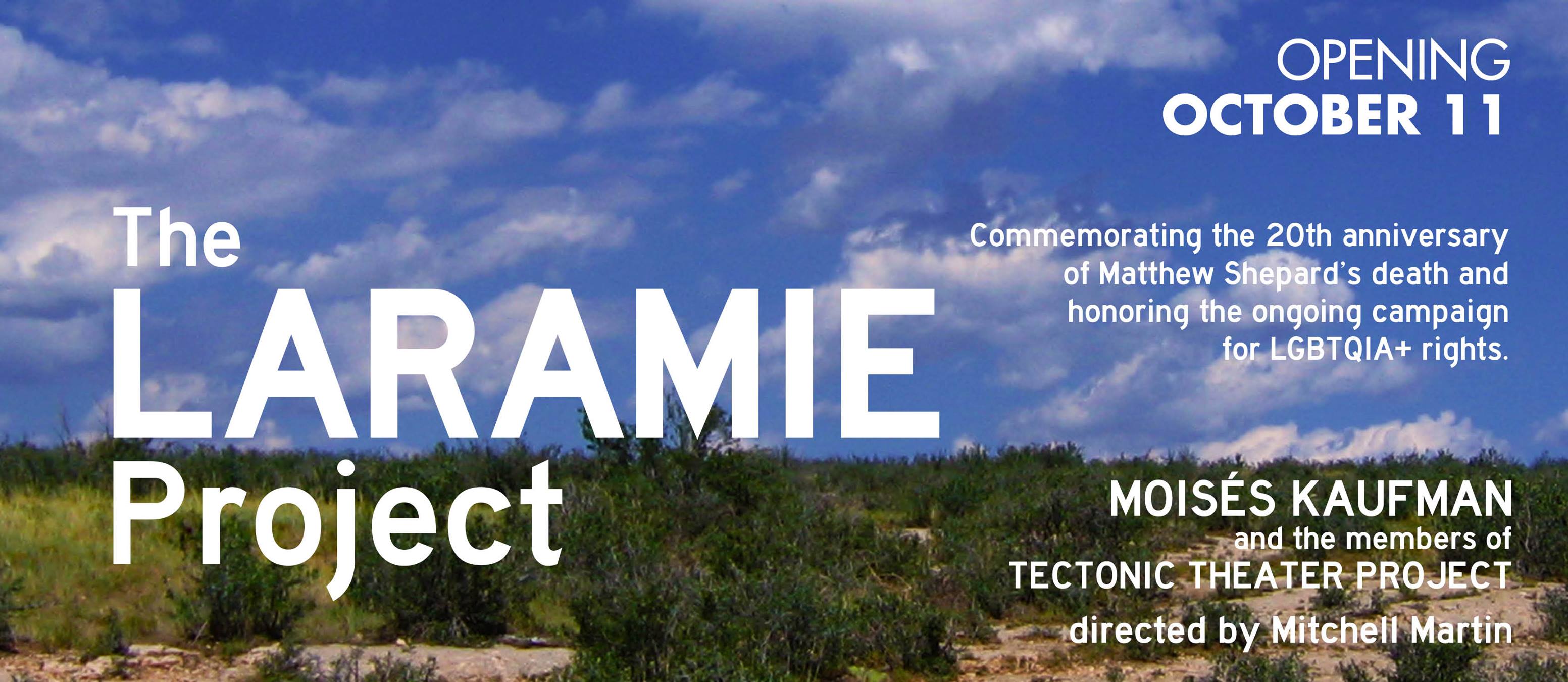
Mitchell Martin on The Laramie Project and Queerness

My first experience with the word queer was that it meant weird. I remember driving home and my mom asked my friend how his day at school was. He sighed and said, “queer”, and then he explained to me that queer meant odd, or weird. Years later, I found out it was a gay slur, butwe’ve taken it back, I think. It does mean weird. I can’t tell you one person who would describe me as “normal”. I’m weird. I’m gay. I’m queer.

Louisville. Born and raised. I knew I was gay when I was in kindergarten. I had crushes on boys and I had a hard time relating to them, so most of my friends were girls. I learned quickly that being gay was looked down upon and I kept a part of myself locked in. That kind of shame plays on you, and you learn to live with secrets. I was always observing the subtleties with which people can hate. I remember watching HBO’s The Laramie Project in middle school which made an impact on my life that I’ll never forget. That was the first time for me that people weren’t censoring themselves on what they thought about homosexuals. It wasn’t taboo, or this fun, sly thing where people make jokes with a smirk. It was real issues, out in the open. I came out when I went to college in Illinois. I didn’t want to deal with coming out in high school. I knew most of their opinions, and I didn’t feel safe.

lar.jpg


“Those who mind don’t matter, and those who matter don’t mind.” I’ve been there. Its not easy. You’re not alone. Talk to a friend who doesn’t mind who you are.

I think being closeted for so many years taught me how to act “masc”, or like a traditional straight dude. Unfortunately, society’s norms on men is that we are emotionless, strong, or protectors. However I’ve always identified with traditional “feminine” stereotypes: I’m sensitive, empathetic, and very compassionate. So what happens when you have a young boy who feels these emotions that are considered “weak”? If they can’t cope, they overcompensate and become aggressive or indifferent. We’ve started calling that toxic masculinity, but its not a new idea–look at The Laramie Project: two young men in 1998 had such a problem with the fact that another man might actually have “feminine qualities” that they killed him. I make a point to be unapologetically me. I laugh when something is funny, and I’m not embarrassed to cry. I show strength in sensitivity. My hope is that young people, especially young men, will see that they don’t have to fit in this “man means strong, woman means weak” mentality that I definitely grew up with.

Cast line silo

I love the queer community. I think we are just trying to find ourselves in whatever 2018 is. I wonder what life would be like if we grew up without gender roles, and stereotypes. There are major problems with body image. I view myself as “gay fat”. I’m “gay fat” because I don’t have a six pack. That doesn’t make me fat–that just means I love pizza. I think it changes with TV and movies: until we start showcasing NORMAL looking people in roles where maybe they are made to be the love interest, we are still going to have this airbrushed view on what we should look like. Good luck with that.

I don’t party as much as my friends, and have been called, “the worst gay” on multiple occasions. I don’t really feel excluded from the mainstream gay culture … If I wanted to be included, I would (and do) insert myself. However, I’d like to meet more gays at not bars… and not apps.

I’m at my best when I’m in a rehearsal room working with others. Devising. Creating. I love to collaborate and come up with something that couldn’t have been made by just me. It’s different as an actor, and a director. I’m used to mostly acting, but as the director of The Laramie Project, I’ve done a lot of improvising. I come in with a plan, and then realize that we need to hit point A, B, C, and D before we can do what I need to. They key is being adaptable.

I’ve had so many teachers who taught me what its like to have a sense of humor. On the opposite end, I’ve had a lot of teachers teach me what it’s like to hate your job. I think that the greatest ability one can have is the ability to laugh at themselves. In the end, we have one life to live, so we might as well giggle our way through it.

QKY Writer Jordan takes on Appalachia

Queerness to me is the ability to talk about a marginalized identity across several cultural lines, it leaves room for identities outside of colonial standards and binaries, even for those of us who don’t have the words in our ancestral languages to talk about them. My identity continues to evolve as I come to understand myself, I’ve pretty much always known that I’m bisexual, more recently I’ve come to recognize that I’m non-binary. Through my journey to reclaim my identity I feel kinship to the Pan Indigenous role of being Two Spirit. Hopefully, as I reclaim more of my history I will be able to find what role my peoples would have had for me before colonization displaced some of my ancestors from here and enslaved those from Africa.

I use those terms because it’s kinda the easiest to convey where I stand, I always had these feeling I just lacked the ability to articulate what I’ve felt.

My sense of self is constantly evolving as I learn more, but I really didn’t think about my sexuality and gender identity until recently. I was kinda busy surviving and recovering from alotta childhood trauma. I’ve always had a very supportive Dad, so like that helps a lot. That part of my family is very pro Queer, and frankly anyone who’s known me for any period of time isn’t surprised when I come out to them. Anybody who is, wasn’t paying attention or way too uncomfortable with themselves to recognize, that’s their problem. For me and most people who really know me, this is not a surprise.

I feel very protective over younger people especially younger queer people. If anybody is mean to you or you don’t have any support, just know, I’m your big sib now.

Find me on social media, we can talk, I’m the much eldest of four kids so I got some experience. You don’t have to have sharp teeth or tongues, embrace whoever you are, if you are gentle, don’t worry people like me got your back.  Even if you aren’t sure what your identity is. You deserve room to figure that out. I hope that anybody who hasn’t found the space to come out yet can find people to become their true family. My advice to them is to take their time, I’m taking mine, there’s no rush, stay safe, and when you buck wild once you do come out, use protection haha.

I hope that when little queer kiddos and young people see me they see the badass I’ve grown into. I five feet tall and full of fury, I love without restriction, space is created around me, because as I’ve gotten older, I’ve started to demand it. BIPOC, especially women and femmes are told we aren’t allowed to do that. I want create space where we can. I’m clearing the way cause I want to be a good ancestor.  My identity as I see it, is carried on the shoulders of the people who came before me, to do less than them wouldn’t suit me. When I was younger and didn’t understand myself, I tried to make myself less, shrink inward, I was born with these broad shoulders, it’s time to grow into them. That means I gotta draw some fire for those who have less privileged than myself, I’m not rising up without bringin the whole hood with me. The first fear I had to conquer was the one of myself and my own strength. People say they hear me before they see me, that used to embarrass me, now I say “Good. You had warning then.”

Things got better for me in my early 20s when I realized that there are many other Black and Brown queer people to be inspired by. Being marginalized within a marginalized community was very confusing to me for years, learning about and understanding intersection helped me out a lot. As far as solving problems in the queer community, basically I take my privileges of being lighter skinned than other Black folks, not being visible genderqueer, having a college education (for some reason people take you more seriously, which is nonsense) and stop bullshit in its tracks. All the time, not only when visibly marginalized people are around, hasn’t made me a ton of friends, but people understand I’m serious business, and humanization of people is serious business. People’s lives and safety aren’t a game to me. My ferocity is inspired by a deep and abiding love for people.

I’m kind of a rambler, I spent a large part of my childhood in central and north east Ohio. I’ve lived in South Dakota, Arizona, and a van as it travelled the country. Recently my partner got a job at a university here, a lot of my mom’s family is from the Ohio part of Appalachia so I was excited to come have this experience, adventures are always good. It’s only been a few weeks so I’m not sure how I feel so far. Last year post graduating college, I shaved my head, got back on reclaiming my Indigeny, took a break from pretty much everything. I let myself mourn things, my lost and miserable childhood, family members who died before their time, pain I had never had the room to articulate. I went to counseling to learn how to control my anger and to direct it into better things.  It’s a new start for me on the other end of these here mountains and I’m ready.


Pin It on Pinterest