Fried Chicken and Jockstraps: “KFC Santería” singer Cain Culto finds queerness in Kentucky Latin Art-Pop music


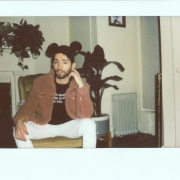
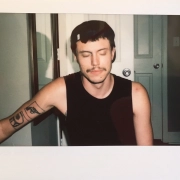
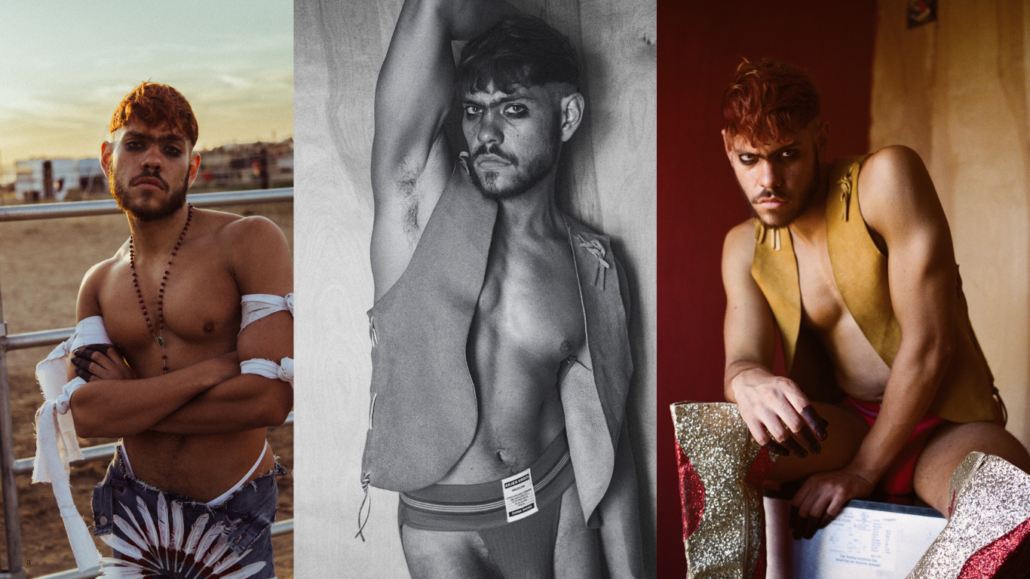
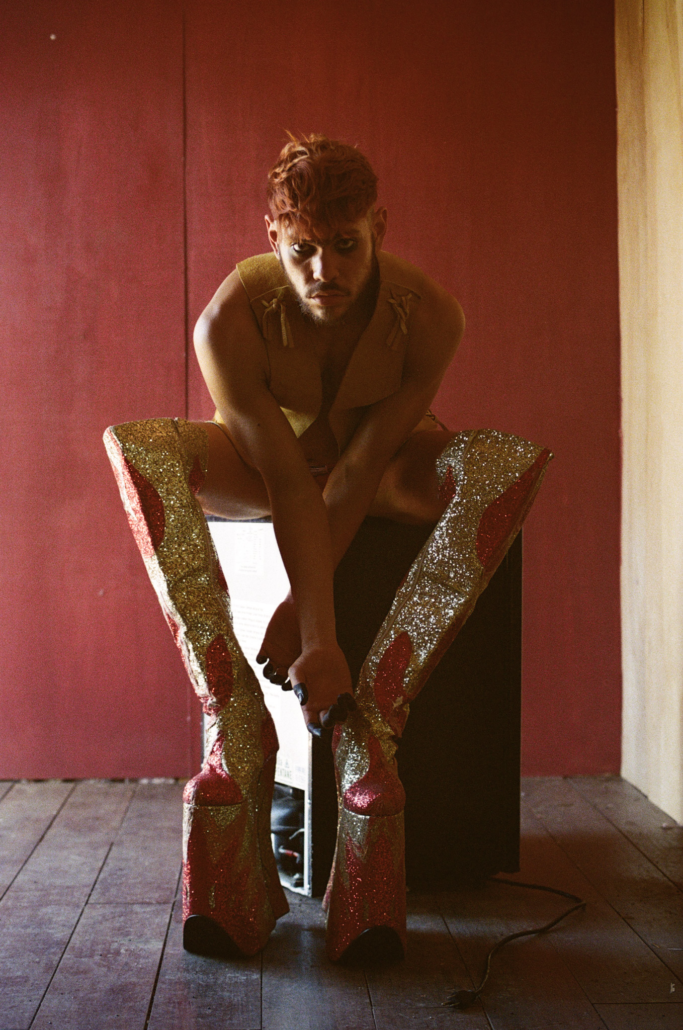
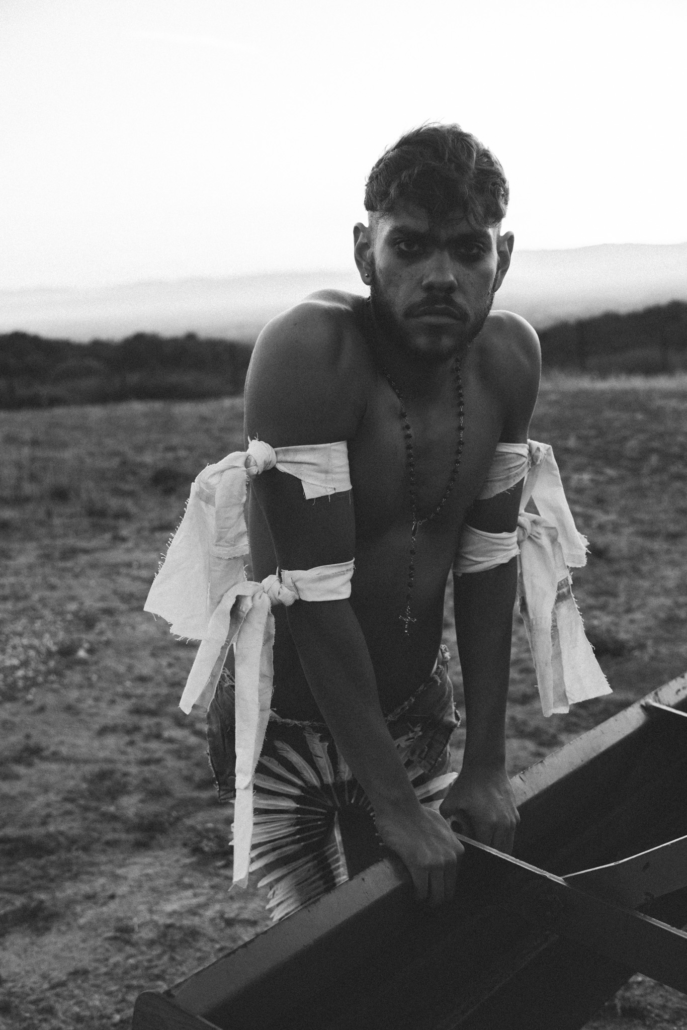
Some would call Cain Culto a fallen angel. Reborn to be authentically himself, Cain Culto is the long-nailed, violin-playing, jock-strap wearing singer who has gained traction with his hit single “KFC Santería” and newest single “Kali Maa”. Breaking from a past of religious fundamentalism, he is now blending his upbringing in Lexington with his Colombian and Nicaraguan heritage to create “Kentucky Latin Art-Pop.”
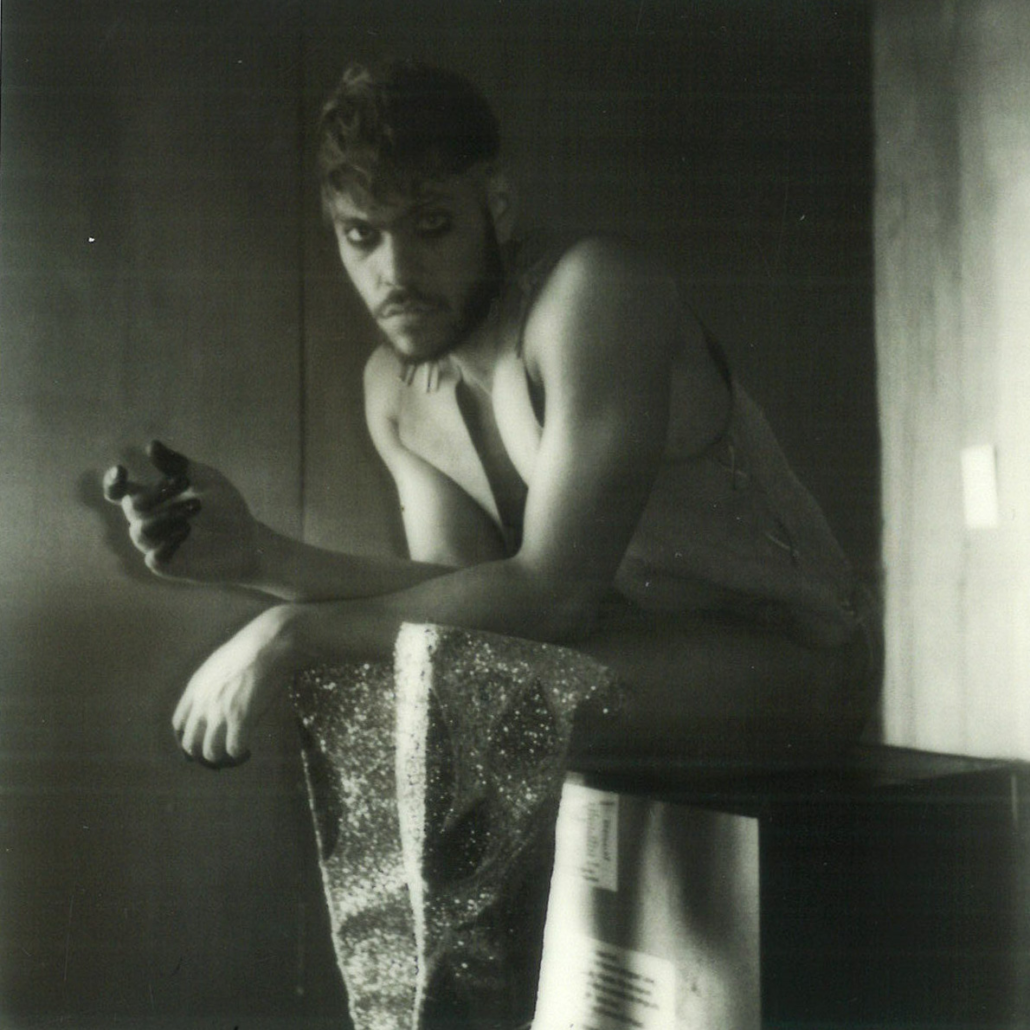
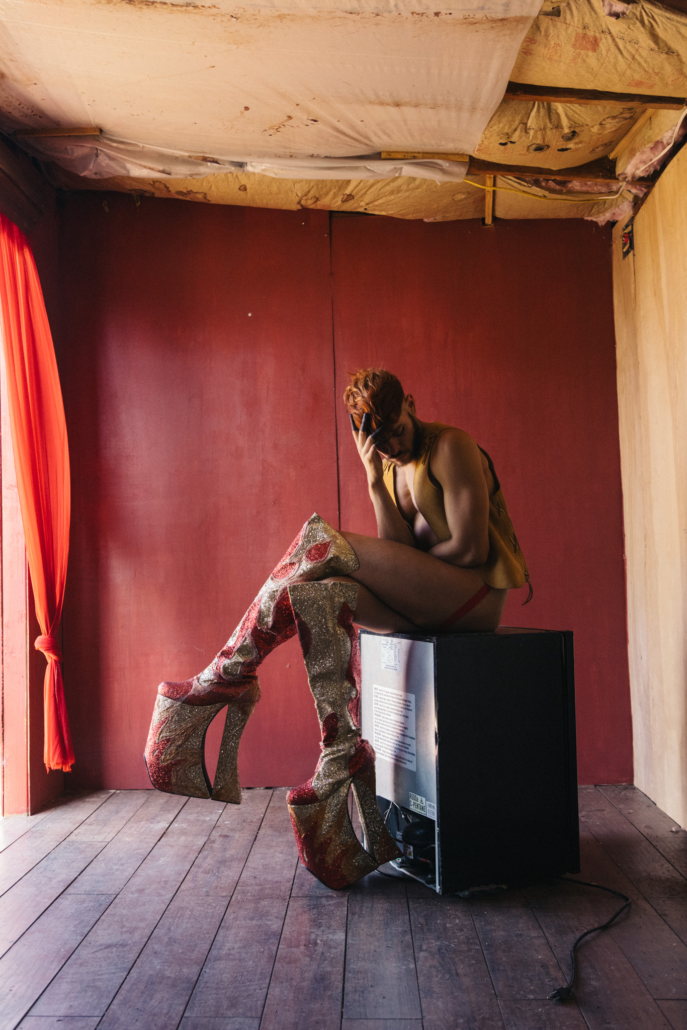
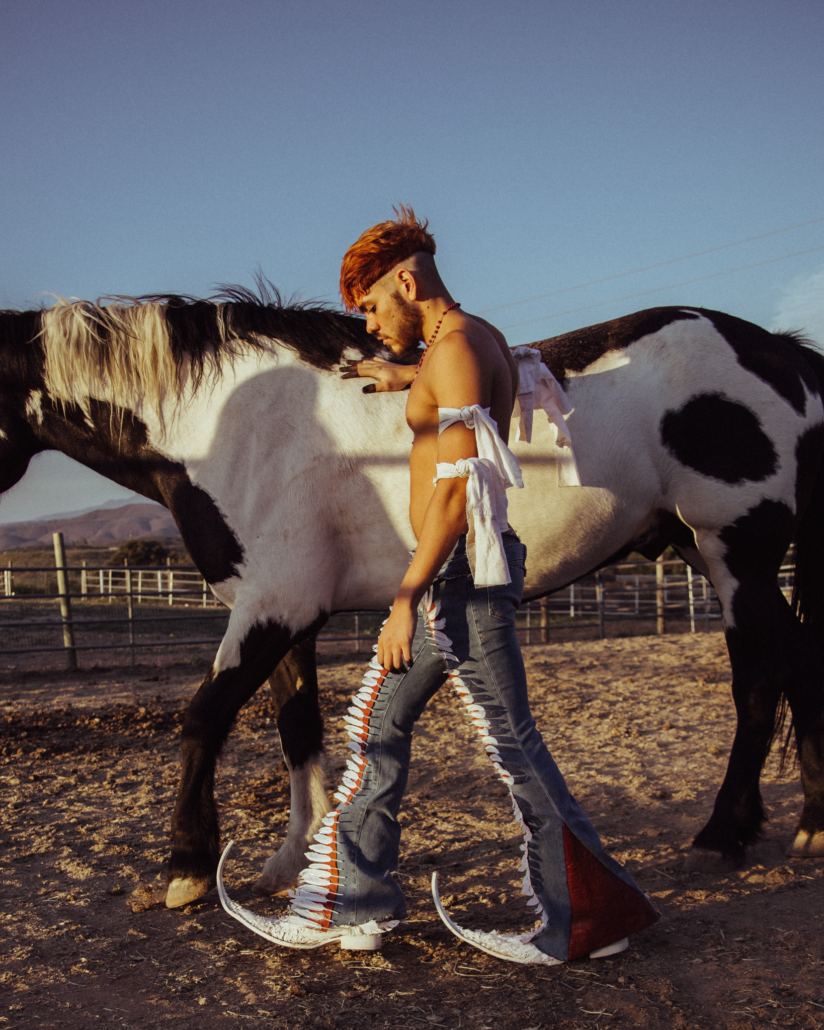
His music takes cues from the folk music of Appalachia and Colombia, specifically vallenato and bullerengue, mixing political lyrics with drums and violin creating a sound that only he could produce. As a visual artist, he blends queerness, witchcraft, and myth, taking listeners on a journey that is just as imminently iconographic as it is auditory.
I recently chatted with Cain about his childhood in Kentucky, his Christian band Ecclesia, and his eventual breakdown and separation from the church that led him to embrace his queerness and move to Los Angeles. Behind his confident image seen on the internet is the gracious and joyous Andrew Padilla looking to find his authentic voice through Cain Culto, his alter ego who allows him to express his queerness to its fullest capacity.
Portions of this interview have been condensed for brevity and clarity.

Richie Goff: Hey Cain! Nice to meet you. I’d love to hear about your time in Kentucky.
Cain Culto: So my parents and I moved to Kentucky when I was five years old from Florida for my dad’s work. He’s like a graphic designer, so he found a job out in Lexington, Kentucky, and he moved us all out there, through sophomore year of high school. So I lived my whole childhood pretty much in Lexington, Kentucky.
I have so many fond memories of Kentucky, and I think part of that is also my parents put me in a performing and creative arts school. So I think that kind of just colored my whole experience of Kentucky in a really safe, creative environment.
Richie Goff: What was the name of the school?
It’s called the School of Creative and Performing Arts (SCAPA). I was majoring in visual arts and I was that nerdy kid that was always sketching and drawing during recess when I was in my previous school. But being in SCAPA exposed me to all the other forms of art—dance, music, musical theater. So it was kind of all that that made me just now. I feel like you see it in my work, the cross-disciplinary aspect of everything.
I’m like, “Okay, what am I going to focus on”? And it ended up being violin. I was a shy kid, honestly, but I was like, no, I want to sing. I want to be on stage in front of people.
I auditioned in sixth grade, and then I got the lead [in the school musical]. And honestly, it’s so silly, because you’re a kid in sixth grade, but that year taught me so much confidence, because that year I got the lead in the musical, and then I was voted [to be the] MC of SNL-type skits before each performance. And I think I can point to sixth grade where I gained so much confidence just by my peers and my teachers acknowledging my gifts.
Richie Goff: How does Kentucky influence your music? I mean, you play the fiddle, which is very Kentucky. And can you define what Kentucky Latin Art-Pop means to you?
Cain Culto: I feel like in my previous work, I was still really finding my sound and even relying on other producers to help me create the work, because I wasn’t really owning the title.
But for my new record, which “KFC Santería” is the first single off of that project, it really is me carrying the bulk of the weight of production. So from the beginning, it’s really me on my laptop in my room producing all of these sounds, whether I’m playing the instruments or sampling myself. And I think that’s why you’re hearing more of the Kentucky sound, because I’m intentionally wanting this record to feel like an exploration of my heritage and upbringing. So it makes sense for me to use all these instruments that feel like childhood to me.
I remember my dad would take me to this radio broadcast called WoodSongs, and they just highlighted really amazing folk and bluegrass musicians. I have those fond memories of going with my dad and seeing these live performances of these groups, playing the fiddle, playing the banjo, dobro, and all of that is just so core to my musical background and my exposure and what has influenced me.
I’m drawing from folk music from Appalachia. So that’s bluegrass, that’s country through mainly the instrumentation, but then the Latin comes in, where a huge reference for this record is Colombian folk music, which, that would be vallenato and bullerengue, which are these drum-centered, percussive-driven genres of the region of different regions of Colombia.
This story exists because of readers like you. Give $5 a month to keep Queer Kentucky free.
I want to announce myself as an artist. And I think it is this Kentucky perspective coming from a Latino person. I think it’s something we haven’t seen enough of. I was like, “What is the thing that only I could release?” Like no one else could authentically create this body of work in the way that I could.
Richie Goff: You used to be in a Christian band called Ecclesia. How is making music now different than making music when you did with Ecclesia?
Cain Culto: I was just graduating high school when I started Ecclesia, a project that started freshman year at a Christian college in Florida. I went to an art school there for the last two years of high school, where I majored in photography and sculptural art, but then I had this kind of moment senior year of like, “Am I going to go to New York and kind of pursue photography?” Or I was kind of having this reckoning moment of really confronting my religious trauma and my queerness too.
I couldn’t be casually Christian. I just take everything to its furthest possible. So I did that with Christianity. And I was like, “Okay, I’m going to seminary.” I was employed at a church as a worship leader, and out of that Ecclesia kind of burst, and it was totally different, because I learned to produce music through Ecclesia. It was my first time ever picking up a mic and recording myself in a studio.
So I’m grateful for it, but it was tough because I never fit into that space. It was like a very inauthentic time for me, but it was my journey to build the confidence to step into who I am now.
Richie Goff: What was your breaking point? What made you decide to eventually step away?
Cain Culto: It was right before COVID. I was touring, I was going at this fast pace and I was actually immersing myself in a lot more progressive theology. I think, honestly, I was reading it as an attempt to write it off, but maybe there was a subconscious part of me that was like, “Oh, this feels like I want to hear someone say that it’s okay to be gay and Christian.”
I think the cognitive dissonance of how true it felt to me and how much everything around me was saying this is evil and wrong and deceived created so much tension within my mind. I was going at a fast pace, my whole framework, my baseline reality, just kind of fell apart.
I just crumbled. It was just the weight of the cognitive dissonance that literally made me have a mental break—I fully dissociated from reality and was genuinely insane for a week of my life. I thought I was seeing God. My mind broke so intensely that it was an extremely psychedelic experience for me—so much of my trauma came up, I had to be hospitalized.
Now in hindsight, I can say it was like a true spiritual psychosis event, and out of that, coming back to my sanity after that week, I was like, “How did I get to this rock bottom place?” I can define that as the breaking point of the rapid transformation of a year-to-year process of burning down my whole Christian identity, moving to LA, and embracing my queerness.
Richie Goff: You posted an Instagram video about talking about purity culture and your reinterpretation of Madonna’s “Like A Prayer” and you said in some ways you still have a lot of ways to grow. So how is Cain Culto helping you learn to be a queer person?
Cain Culto: I still have so much shame in my body, it’s still there right from like we’re taught these ideas and these frameworks from childhood. So I think Cain Culto is a persona that I am able to step into that is separate from my day-to-day identity and the energy that I exist in. But because of that, it provides this like vehicle for me to explore the extremes of my sexuality, the extremes of my anger, my frustration.
It’s like, I’m putting a character on stage or when I turn the camera on, that allows me to not feel like I need to restrain or edit or even be like, “Oh my gosh. Can I say that? People are gonna see this.” I’m like, “No, it’s Cain Culto. Cain Culto said that. I don’t know who she is,” but it’s fun for me.
Vulgarity is a big part of the recent singles I’ve been releasing, you know, just owning my sexuality in the most over-the-top, satirical way. You know, it’s even satire to some extent. And as I do that through Cain Culto, it does trickle down into Andrew in my day-to-day.
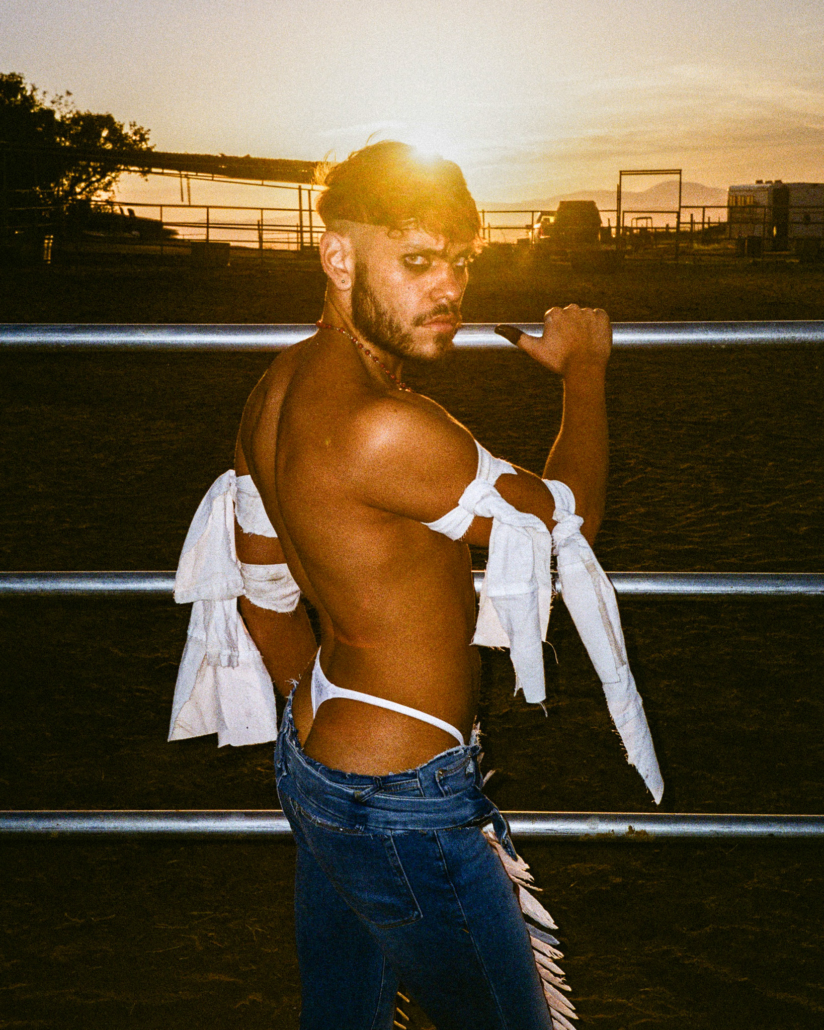
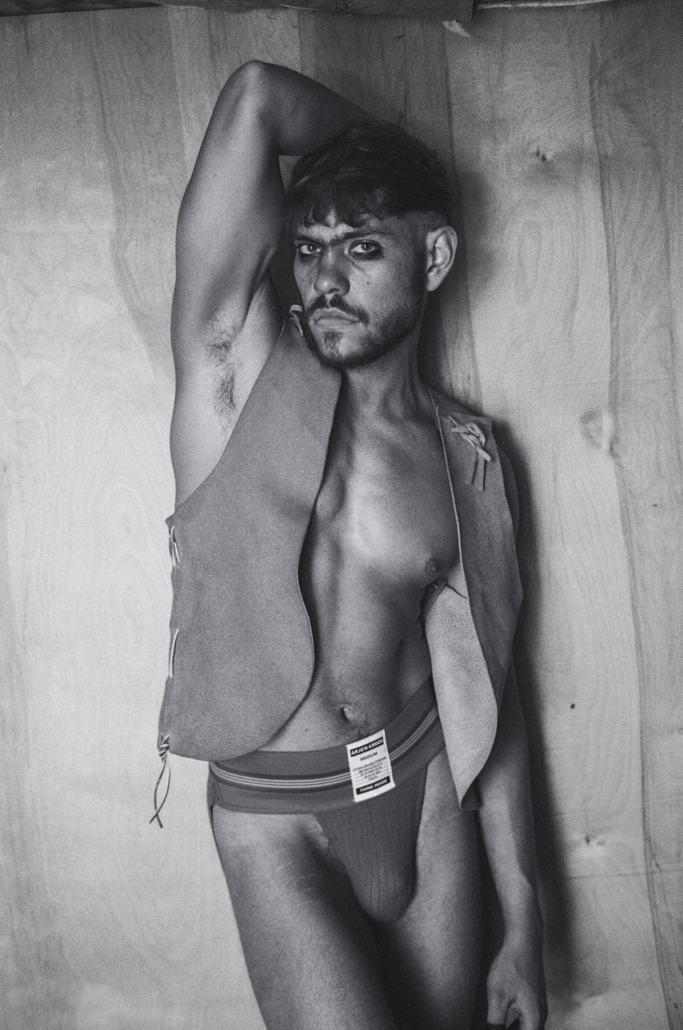
[When] I had recently just come out, I was so unimmersed in gay culture. And even just like, something as simple as a jock strap, I’d be like, “Oh, that’s so cringe. Like, why are people literally showing their ass in a jock strap?” And now that’s a whole part of Cain Culto in all my videos, I’m leaning into queer symbols, and how that feels empowering to me.
It’s the same thing with my journey of diving head first into Christianity, now diving head first into queer culture. I’m pretty all or nothing, so it just takes me a year or so, but like, I’ll be the gayest one out of all of them pretty soon.
Richie Goff: Anything special you want to add about Kentucky? Anything you miss?
Cain Culto: Something about Kentucky that I miss is the four seasons. The seasons were so emotional for me because I had severe allergies as a kid. It was so traumatizing—me being isolated first as a queer person, but just as a nerdy kid that had such severe allergies that I couldn’t even go out to recess for a huge portion of the year.
I even approached the rollouts for my records now around the seasons, because they’re so charged with energy. And I think I only learned that through firsthand feeling the seasons in Kentucky in a way that I haven’t in other regions of the world.
And then the beauty of creating the art and presenting it to people and their joy [at SCAPA], acknowledging the art that I spent time creating… even them acknowledging that and celebrating that felt like such… oh my gosh, I’m getting emotional. But, it’s that world that I spent so much time creating healed others, too, you know? I guess I haven’t realized how emotionally important that was until I’m saying it.
Keep reading
 Kentucky Black Pride Turns 10 in the Park That Sheltered Queer Lexington
 At Black Soil KY’s Farmacy Markets, Narcan Sits Beside the Produce
 Federal Cuts “Handcuffed” BIPOC Harm Reduction in Kentucky. Communities Are Stepping Up.
 It’s a Pause, Not a Ban: Liz Sheehan on Lexington’s Data Center Moratorium
 Community Celebrates Return of Winchester Pride and Inclusion Festival with this Year’s Theme: The Story of US