
Anti-trans politics push some Queer Kentuckians out of state


The current political climate is filled with uncertainty and fear for many queer people, particularly in rural areas, where Kentuckians are all too familiar with hateful rhetoric surrounding queer identities. Many Kentuckians have found it necessary to relocate this year due to the political changes coming from the current administration.
While Kentucky has Gov. Andy Beshear, who has the intent of protecting all members of the commonwealth (including transgender and queer folks), the state House and Senate remain under a Republican supermajority. Therefore, anti-LGBTQ+ legislation is still being put into action, and making queer people afraid to stay put in predominantly conservative areas.
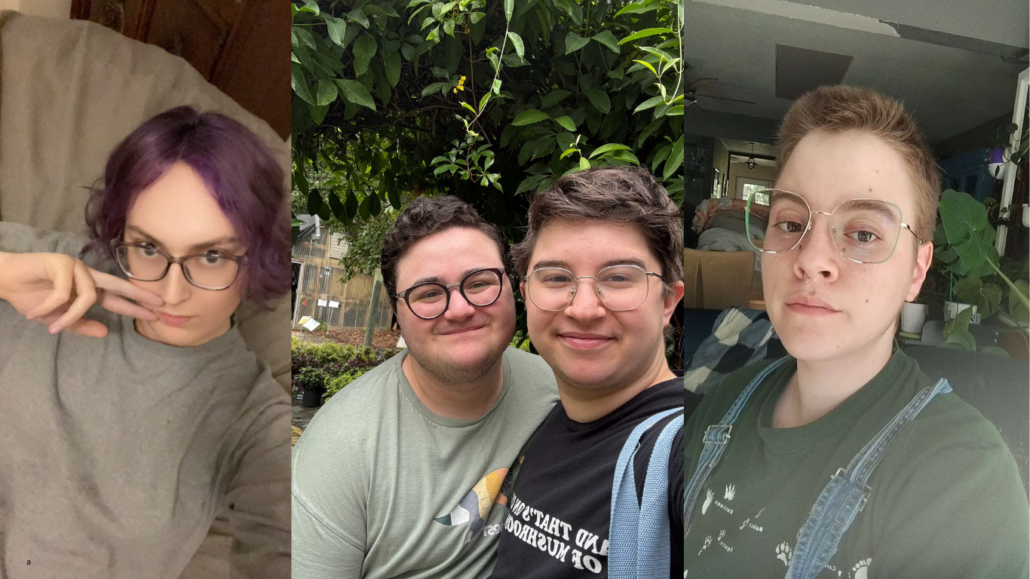
Calvin Silver (23), Elizabeth Uí Ríordáin (21), and Jax Flowers (26), all in their early adulthood, have made the decision to relocate from Kentucky to what they deem as safer areas due to the influx of anti-queer and anti-trans legislation in the state.
Silver and his fiance, both transgender men, decided to move to New York after an incident at a protest on University of Louisville campus. They also moved due to the inaccessibility of gender affirming surgeries in Kentucky, particularly when it is difficult to get covered under Medicaid and some private insurance.
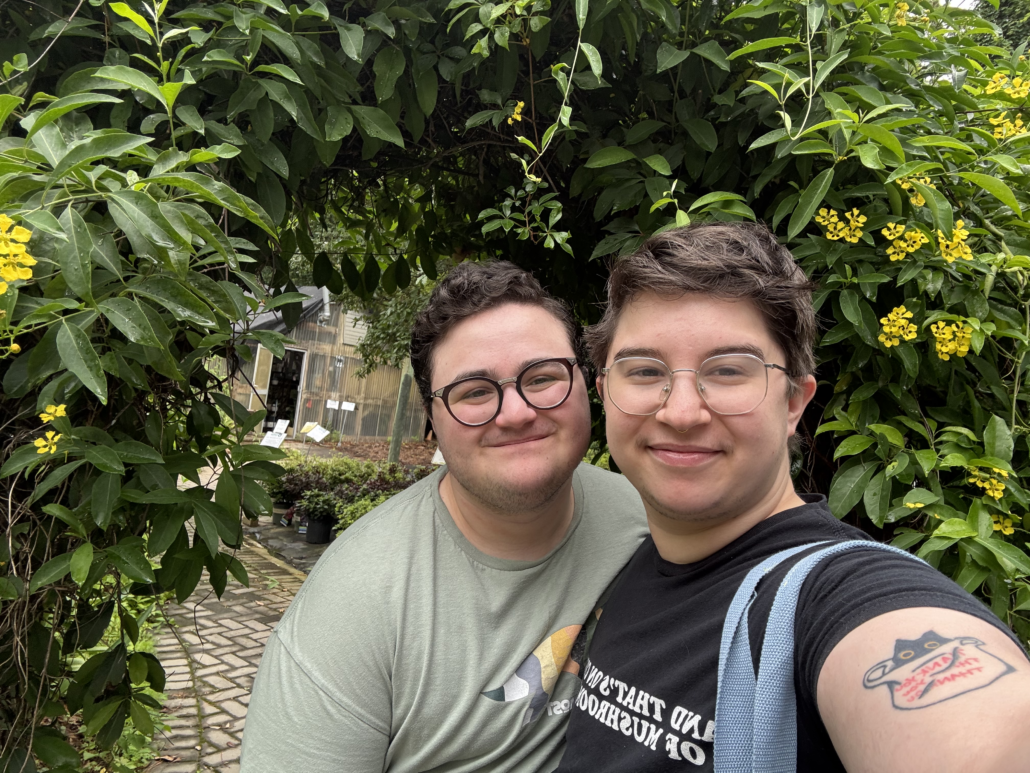
Calvin Silver (left) and his partner Parker (right)
Silver shared that while there are still atrocities committed against diverse communities in New York, such as the murders of Mickey Harmon and Jordan Celotto in Buffalo, he does feel less afraid than he did in Kentucky.
“I am not afraid to hold my partner’s hand. We kiss and hold hands when we stop at gas stations in rural New York,” he said. “We make a point to never do that in Kentucky when we are stopping at isolated gas stations or rest stops.”
Flowers made the difficult choice to relocate to Washington state after the 2024 presidential election. He was fearful of the safety of himself and his partner in a state dominated by conservative ideologies, which has little to offer queer and transgender people in terms of safety, healthcare, and legislative protections.
He relocated to live in what is considered to be a red city in Washington, but has found it to be more accepting than any area he lived in whilst in Kentucky.
“My access to trans healthcare has increased exponentially,” he said. “I genuinely do not fear for my safety at all.”
As many queer folks who have always lived in a conservative area know, it can be difficult to imagine experiencing that kind of fearlessness.

photo provided by Jax Flowers
Uí Ríordáin’s relocation was quite a bit more drastic. Uí Ríordáin, a transgender woman, moved to Ireland when she was faced with the results of the 2024 presidential election, and the rhetoric being used against transgender and queer people in the United States. Uí Ríordáin shared that she feels safer after emigrating, but hopes to make another move when finances allow it.
“Trans rights in Ireland are quite slow to change, both for better and for worse,” she said.
While safety for the LGBTQ+ community is far from perfect worldwide, there are many areas that can feel safer than Kentucky for some individuals. For those hoping to relocate, there are important factors to consider before acting.
In Silver’s experience, pairing relocation with a big life change can make the transition easier. He and his partner chose New York partially to complete graduate school in the state. If relocating seems like an important step, considering future success in that area could help with finding stability.
Uí Ríordáin had similar advice for moving on an international scale.

photo provided by Elizabeth Uí Ríordáin
“Find somewhere that has a good cost of living compared to wages…try as much as you can for work visas,” she said. Without a work visa, finding employment can become a monumental task. Finding legal answers can be daunting.Uí Ríordáin used the online community to find friends and other people in relocation areas to answer her questions.
If relocating means staying within the United States, some areas can be generally safer than others.
“If you can’t make the full move to a blue state, at least get to that purple dot in your home state,” Flowers said, “If you’re able to make the ‘big move,’ plan your stops accordingly. There are certain towns where I would not choose to stop unless I had to.”
Deciding to relocate away from a place known as home, especially due to fearing for the safety of oneself, can be an incredibly difficult choice to make. There is much to consider, and the answers vary from person to person. Ultimately, it’s important to make the decision that works best on a personal level, as these times are uncertain, and there’s not one clear path to take.